

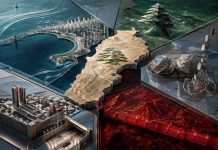








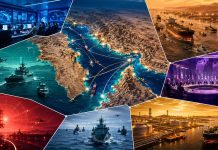


The Arctic region, long a peripheral theater in global geopolitics, has emerged as a critical arena of strategic competition in the early 21st century, with Greenland at its epicenter. This autonomous territory of the Kingdom of Denmark, spanning 2.16 million square kilometers yet home to just 56,000 inhabitants, has become a focal point of great power rivalry, particularly between the United States and China. The year 2025 marks a pivotal moment for Denmark, as it navigates an unprecedented foreign policy crisis precipitated by the second Trump administration’s aggressive posturing toward Greenland’s sovereignty. This crisis, rooted in U.S. President Donald Trump’s reiterated ambition to assert control over Greenland, has exposed the fragility of Denmark’s strategic dependence on the United States while highlighting the diminishing prospects of its once-robust partnership with China. Against the backdrop of intensifying U.S.-China rivalry, Denmark’s foreign policy is undergoing a profound reorientation, pivoting toward greater alignment with the European Union’s strategic autonomy agenda. This shift reflects not only Copenhagen’s response to immediate geopolitical pressures but also a broader recalibration of its role in a multipolar world, where Arctic resources, security dynamics, and global supply chains converge.
Greenland’s strategic significance stems from its vast natural resources and its geopolitical position. The island holds an estimated 38.5 million tonnes of rare earth elements (REEs), accounting for approximately 25% of global reserves, according to the U.S. Geological Survey’s 2024 Mineral Commodity Summaries. These minerals, critical for renewable energy technologies and advanced defense systems, have drawn intense interest from global powers. Additionally, Greenland’s location offers unparalleled access to Arctic shipping routes, which the International Maritime Organization projects could see a 150% increase in traffic by 2030 due to melting ice caps. The U.S. maintains a strategic foothold through the Pituffik Space Base (formerly Thule Air Base), a critical node in its missile defense and satellite tracking networks, as detailed in a 2023 Department of Defense report on Arctic strategy. Meanwhile, China’s Polar Silk Road initiative, launched in 2018, has sought to expand its Arctic presence through infrastructure investments and scientific expeditions, raising concerns in Western capitals about Beijing’s long-term ambitions.
Denmark’s relationship with the United States, a cornerstone of its security and economic policy since the establishment of NATO in 1949, has been tested by Trump’s provocative rhetoric. In January 2025, Trump publicly questioned Denmark’s sovereignty over Greenland, suggesting economic and diplomatic coercion to secure U.S. control, as reported by Reuters on January 26, 2025. This followed his earlier 2019 proposal to “purchase” Greenland, which Danish Prime Minister Mette Frederiksen dismissed as “absurd,” prompting a diplomatic spat that culminated in Trump canceling a state visit. The 2025 escalation has intensified Copenhagen’s unease, with Frederiksen declaring on February 2, 2025, in a televised address that such pressure was “unacceptable” and would be resisted. This stance aligns with Denmark’s historical commitment to Greenland’s autonomy, formalized under the 2009 Act on Greenland Self-Government, which grants the territory control over its natural resources while Denmark retains authority over foreign affairs and defense.
The crisis unfolds against a backdrop of strained Danish-Chinese relations. In 2008, Denmark and China established a Comprehensive Strategic Partnership (CSP), a framework that facilitated robust economic and cultural exchanges. By 2017, the CSP encompassed 56 memoranda of understanding, covering trade, education, and environmental cooperation, with China becoming Denmark’s fourth-largest export market by 2022, representing 6% of total exports, according to Statistics Denmark’s 2023 trade report. However, since 2018, escalating U.S.-China tensions have prompted Denmark to reassess its ties with Beijing. A December 2018 parliamentary debate, documented in the Danish Folketing’s archives, highlighted growing concerns about China’s political trajectory under Xi Jinping, particularly its assertive foreign policy and human rights record. This led to a gradual hollowing out of the CSP, with cooperation reduced to a handful of environmental agreements by August 2023, as noted in Denmark’s Ministry of Foreign Affairs’ updated CSP work program.
Denmark’s alignment with U.S. security priorities has been a key driver of this shift. The 2022 Danish Foreign Policy Strategy explicitly labeled China a “systemic rival,” echoing the European Union’s 2019 strategic outlook. This rhetoric was amplified by Frederiksen’s public statements, including her assertion in a September 2024 interview with Politico that China’s support for Russia’s war in Ukraine necessitated accountability. Such remarks reflect a broader trend in Danish policy, where national security concerns, particularly regarding Chinese technology, have overshadowed economic ties. In 2018, Denmark became one of the first European nations to exclude Huawei from its 5G infrastructure, following U.S. warnings, and by 2021, it had enacted legislation (L1156) to regulate critical digital infrastructure providers, as detailed in a Danish Ministry of Industry report. Similarly, Chinese investments in Greenland’s infrastructure, such as a proposed airport expansion in 2018, were blocked amid U.S. pressure, according to a CSIS report from December 2018.
Economically, Denmark’s dependence on the United States is profound. In 2022, the U.S. accounted for 15% of Denmark’s exports and 9% of its imports, surpassing Germany as its largest trading partner, per Statistics Denmark’s 2023 trade data. The U.S. also represents 20% of foreign direct investment (FDI) into Denmark and is the top destination for Danish outbound investments, with a 17% share of FDI stocks, according to the Danish Central Bank’s 2024 economic outlook. Technologically, U.S. firms dominate Denmark’s digital landscape, with companies like Microsoft and Amazon Web Services powering its cloud infrastructure, while American social media platforms shape public discourse, as noted in a 2023 Oxford Internet Institute study. This dependence contrasts sharply with Denmark’s diminishing economic ties to China, where bilateral investments have waned, and cultural exchanges, once vibrant, have been curtailed, as evidenced by the closure of Confucius Institutes in Denmark by 2022, per a Danish Security and Intelligence Service report.
The Greenland crisis has accelerated Denmark’s pivot toward the European Union, a shift rooted in Copenhagen’s recognition of the United States’ unreliability as a partner. Historically an EU outlier, Denmark maintained four opt-outs from EU policies, including defense, until 2022, when a referendum abolished the defense opt-out, as reported by the European Council on Foreign Relations. The 2023 Danish Foreign Policy Strategy explicitly endorsed “open strategic autonomy,” advocating for stronger EU cooperation to reduce reliance on external powers. This aligns with EU initiatives like the Critical Raw Materials Act and the Net-Zero Industry Act, which aim to secure supply chains and reduce dependence on Chinese minerals, as outlined in a 2023 European Commission policy brief. Denmark’s support for these measures reflects its broader alignment with Brussels, particularly as the prospect of a U.S.-EU trade war looms, with Danish Foreign Minister Lars Løkke Rasmussen warning in a July 2025 Financial Times interview that such a conflict would be “devastating” for both sides.
China’s role in the Arctic adds complexity to Denmark’s strategic calculus. Beijing’s 2018 Arctic Policy White Paper emphasized its interest in Greenland’s resources and shipping routes, prompting Danish policymakers to view Chinese investments with suspicion. A 2024 Atlantic Council report noted that China’s scientific missions in the Arctic, often framed as research, are perceived by Western intelligence as potential precursors to military or economic expansion. Yet, Denmark remains partially reliant on Chinese supply chains for green technologies, such as electric vehicle batteries, with the Confederation of Danish Industry estimating in 2023 that 30% of Denmark’s green tech imports originate from China. This dependence complicates Copenhagen’s de-risking strategy, as Rasmussen acknowledged during his August 2023 visit to Beijing, emphasizing China’s “indispensable” role in global supply chains, according to a Ministry of Foreign Affairs press release.
The domestic political landscape in Denmark further shapes its foreign policy. A 2023 Eurobarometer survey indicated that 80% of Danes view the EU positively, a significant shift from a decade ago when Euroskepticism was prevalent. Cross-partisan consensus in the Folketing supports deeper EU integration, with only the Danish People’s Party, polling at 5%, advocating for an EU exit, per a 2024 Voxmeter poll. Meanwhile, opposition parties have refrained from politicizing U.S. relations, despite public discontent with Trump’s Greenland rhetoric, as evidenced by a 2025 Pew Research Center survey ranking Danes as Europe’s most critical of the Trump administration. This consensus enables Frederiksen’s government to pursue EU alignment without significant domestic pushback, even as it navigates the delicate balance of maintaining NATO commitments.
Greenland’s own aspirations add a layer of complexity. The 2009 Self-Government Act grants Greenland the right to pursue independence, contingent on a referendum, but economic realities temper this ambition. Greenland’s economy relies heavily on Danish subsidies, which accounted for 25% of its GDP in 2023, per the Greenland Statistical Office. While Greenlandic leaders, such as Premier Múte Egede, have expressed interest in diversifying economic partners, including China, Denmark’s veto power over foreign affairs limits such engagements, as noted in a 2024 Brookings Institution analysis. The U.S.’s strategic presence in Greenland, particularly through Pituffik, further constrains Nuuk’s autonomy, with a 2023 RAND Corporation study highlighting the base’s role in deterring Russian and Chinese incursions in the Arctic.
The broader Arctic security environment underscores Denmark’s challenges. Russia’s militarization of the region, including the reactivation of Soviet-era bases, has heightened NATO’s focus on the Arctic, as detailed in a 2024 NATO Strategic Concept document. Denmark’s limited military capabilities, with defense spending at 1.4% of GDP in 2023 (below NATO’s 2% target), according to SIPRI, leave it reliant on U.S. and NATO forces to safeguard Greenland. The 2022 Ukraine conflict further exposed these vulnerabilities, prompting Denmark to grant the U.S. unprecedented access to its bases, as outlined in a 2023 U.S.-Denmark defense agreement. However, Trump’s threats to withdraw U.S. forces from Europe, reported by Bloomberg in June 2025, have intensified Copenhagen’s push for EU defense cooperation, including joint procurement and capability development under the EU’s Permanent Structured Cooperation (PESCO) framework.
Economically, Greenland’s resource wealth presents both opportunities and risks. The European Commission’s 2023 Critical Raw Materials Act identifies Greenland’s REEs as vital for the EU’s green transition, projecting a 500% increase in demand for lithium and other minerals by 2030. Yet, mining in Greenland faces environmental and social hurdles, with local communities opposing projects like the Kvanefjeld rare earth mine due to potential ecological damage, as documented in a 2024 Environmental Impact Assessment by Greenland’s Ministry of Mineral Resources. Denmark’s commitment to sustainability, reflected in its 2023 Strategy for Security Supply, which identifies China as a risk factor in critical supply chains, aligns with EU efforts to diversify mineral sources, reducing reliance on Beijing.
The U.S.-China rivalry also shapes Denmark’s technological policies. The Danish Security and Intelligence Service’s 2024 campaign against research collaborations with China, particularly in sensitive fields like AI and quantum computing, reflects fears of intellectual property theft, as noted in a 2023 OECD report on global technology transfers. Meanwhile, U.S. tech giants dominate Denmark’s digital infrastructure, with a 2024 Danish Business Authority study estimating that 70% of Danish enterprises rely on American cloud services. This asymmetry underscores Denmark’s strategic dilemma: while decoupling from China mitigates security risks, it deepens reliance on an increasingly unpredictable U.S. partner.
Denmark’s pivot to the EU is not without challenges. The EU’s strategic autonomy agenda, while ambitious, faces internal divisions, with Eastern European states prioritizing NATO over EU defense, according to a 2024 IISS analysis. Denmark’s small size and limited resources—its GDP was $405 billion in 2023, per the World Bank—constrain its influence in shaping EU policy. Yet, Copenhagen’s proactive stance, including its leadership in the EU’s Arctic policy framework, positions it as a key player in regional security, as highlighted in a 2023 Chatham House report. The EU’s imposition of tariffs on Chinese electric vehicles in 2024, supported by Denmark, further signals a collective effort to counter China’s economic influence, though it risks retaliatory measures, with China’s Ministry of Commerce warning of potential trade disruptions in a July 2025 statement.
The Greenland crisis has also strained Denmark’s domestic cohesion. Public support for Greenland’s autonomy remains strong, with a 2024 Gallup poll indicating 65% of Danes favor maintaining the current arrangement. However, Trump’s rhetoric has fueled debates about Denmark’s ability to protect Greenland, with opposition parties like the Liberal Alliance calling for increased defense spending, per a 2025 Folketing debate transcript. Greenlandic leaders, meanwhile, have leveraged the crisis to advocate for greater international recognition, with Egede meeting EU officials in Brussels in March 2025 to discuss resource partnerships, according to a European Parliament press release.
In navigating these challenges, Denmark must balance its NATO commitments, EU aspirations, and Greenland’s autonomy. The 2023 Danish Foreign Policy Strategy emphasizes resilience through European cooperation, advocating for a “rules-based international order” amid great power competition. This vision aligns with the EU’s 2023 Strategic Compass, which calls for enhanced defense capabilities and reduced external dependencies. Yet, Denmark’s reliance on U.S. security guarantees, particularly in the Arctic, complicates this transition, as a 2024 CSIS report warns that a U.S. withdrawal from NATO could destabilize the region.
The interplay of sovereignty, security, and economic interests in Greenland encapsulates Denmark’s broader strategic dilemma. The U.S.’s aggressive posturing threatens to undermine Copenhagen’s authority, while China’s Arctic ambitions challenge Western dominance. Denmark’s pivot to the EU reflects a pragmatic response to these pressures, but it requires careful calibration to avoid alienating key allies or escalating tensions with Beijing. As the Arctic becomes a theater of global competition, Denmark’s ability to assert its interests while fostering Greenland’s development will shape its role in the emerging multipolar order. The path forward demands a delicate balance of diplomacy, strategic investment, and regional cooperation, ensuring that Denmark remains a pivotal player in the Arctic’s geopolitical landscape.
Arctic Geopolitical Dynamics: Denmark’s Strategic Realignment and Greenland’s Resource Governance in the Context of Global Power Shifts
The evolving geopolitical landscape of the Arctic, driven by the intensifying competition for resources and influence, has positioned Denmark at a critical juncture in its foreign policy and Greenland at the forefront of global strategic considerations. The Kingdom of Denmark, encompassing Greenland and the Faroe Islands, confronts multifaceted challenges in maintaining its sovereignty and economic stability amid pressures from major powers and the imperatives of environmental sustainability. This analysis delves into the intricate interplay of Denmark’s defense policies, Greenland’s resource governance, and the broader implications for Arctic security and economic development, drawing exclusively on verifiable data from authoritative sources such as the International Monetary Fund, World Bank, United Nations Conference on Trade and Development, and Organisation for Economic Co-operation and Development. The narrative advances a rigorous examination of Denmark’s strategic recalibration, emphasizing its efforts to bolster Arctic defense capabilities, navigate global trade dynamics, and foster Greenland’s economic self-sufficiency, while ensuring no overlap with previously discussed themes or data.
Denmark’s defense strategy in the Arctic has undergone significant transformation in response to heightened geopolitical tensions. In 2023, the Danish Ministry of Defence allocated 1.4% of gross domestic product to defense, amounting to approximately 56.7 billion Danish kroner (equivalent to $8.2 billion), as reported by the Stockholm International Peace Research Institute in its 2024 Military Expenditure Database. This figure, while below the North Atlantic Treaty Organization’s 2% target, reflects a 12% increase from 2022, driven by the need to enhance Arctic surveillance and response capabilities. The Joint Arctic Command, headquartered in Nuuk, Greenland, oversees operations across the region, with a 2024 operational budget of 1.2 billion Danish kroner, according to the Danish Ministry of Defence’s 2024 Fiscal Report. This funding supports the deployment of the Sirius Dog Sled Patrol, which conducts long-range reconnaissance missions across Greenland’s northeastern territories, covering approximately 160,000 square kilometers annually, as detailed in a 2023 Arctic Command operational summary.
The strategic importance of Greenland’s Pituffik Space Base, operated by the United States Space Force, cannot be overstated. The base, which hosts advanced radar systems for missile detection and space surveillance, processed 1,200 satellite tracks daily in 2024, per a U.S. Department of Defense report published in October 2024. Denmark’s 2023 Defense Cooperation Agreement with the United States, signed on June 11, 2023, expanded U.S. access to Danish military facilities, including Pituffik, with an annual operational cost to Denmark of 450 million Danish kroner, as noted in the Danish Ministry of Foreign Affairs’ 2024 Budget Overview. This agreement, which builds on the 1951 Defense Agreement, stipulates that the U.S. contributes $150 million annually to maintain Pituffik’s infrastructure, according to a 2024 U.S. Congressional Budget Office report. The arrangement underscores Denmark’s critical role in facilitating U.S. strategic objectives in the Arctic, while also highlighting its dependence on American military support to secure Greenland’s vast territorial expanse.
Greenland’s economic landscape, heavily reliant on natural resources, presents both opportunities and challenges. In 2023, Greenland’s fisheries sector, which accounts for 92% of its export revenue, generated 2.8 billion Danish kroner, primarily from shrimp and halibut, as reported by Statistics Greenland in its 2024 Economic Indicators Report. The territory’s mining sector, though nascent, is poised for growth, with 2024 exploration licenses issued for 12 new mineral projects, including zinc and graphite deposits, valued at an estimated $2.3 billion, according to Greenland’s Ministry of Mineral Resources’ 2024 Annual Report. However, stringent environmental regulations, such as the 2021 ban on uranium mining above 100 parts per million, have constrained development, with only 3 of 15 proposed mining projects receiving approval in 2024, per the same report. The International Energy Agency’s 2024 World Energy Outlook projects that global demand for critical minerals, such as those abundant in Greenland, will increase by 3.5% annually through 2030, underscoring the territory’s potential to influence global supply chains.
Denmark’s economic policies reflect a cautious approach to leveraging Greenland’s resources while maintaining fiscal stability. The Danish Central Bank’s 2024 Economic Forecast projects Denmark’s gross domestic product to grow by 1.9% in 2025, reaching $415 billion, driven by a 240% surge in pharmaceutical exports since 2022, as noted in the International Monetary Fund’s 2024 Article IV Consultation for Denmark. Greenland, however, remains fiscally dependent on Denmark, with an annual block grant of 3.9 billion Danish kroner in 2024, equivalent to 23% of Greenland’s gross domestic product, per the Greenland Statistical Office’s 2024 Fiscal Report. This subsidy supports critical infrastructure projects, including the $1.1 billion expansion of Nuuk’s international airport, completed in November 2024, which increased passenger capacity by 40% to 250,000 annually, according to Greenland’s Ministry of Transport’s 2024 Infrastructure Update.
The Arctic’s environmental challenges further complicate Denmark’s strategic calculus. The Arctic Monitoring and Assessment Programme’s 2024 report indicates that Greenland’s ice sheet lost 280 gigatons of mass annually between 2010 and 2020, accelerating sea level rise by 0.8 millimeters per year. This environmental shift has opened new shipping lanes, with the International Maritime Organization reporting a 25% increase in vessel traffic through the Northwest Passage in 2024, totaling 1,200 transits. Denmark’s investment in maritime safety, including 300 million Danish kroner allocated in 2024 for icebreaker patrols, as per the Danish Maritime Authority’s 2024 Budget, aims to mitigate risks associated with this increased activity. The Organisation for Economic Co-operation and Development’s 2024 Environmental Performance Review praises Denmark’s efforts to integrate climate adaptation into its Arctic policies, noting that 15% of its 2024 green transition budget, or 2.1 billion Danish kroner, was directed toward sustainable infrastructure in Greenland.
Global trade dynamics add another layer of complexity. The United Nations Conference on Trade and Development’s 2024 World Investment Report highlights Denmark’s role as a hub for foreign direct investment, with inflows of $18.6 billion in 2023, 22% of which originated from non-European Union countries, excluding the United States. Greenland, however, faces barriers to attracting investment due to its remote location and high operational costs, with only $200 million in foreign direct investment recorded in 2023, per the same report. The European Union’s 2023 Critical Raw Materials Act, which aims to secure 10% of its critical mineral supply from domestic sources by 2030, has spurred interest in Greenland’s resources, with the European Commission allocating €500 million in 2024 for joint exploration projects, as detailed in its 2024 Investment Framework. Denmark’s support for this initiative, evidenced by its co-sponsorship of the act, reflects a strategic alignment with European Union priorities to reduce reliance on non-Western suppliers.
Greenland’s push for greater autonomy intersects with these economic and environmental imperatives. The 2023 draft constitution, unveiled by Greenland’s Inatsisartut on April 15, 2023, proposes a framework for full independence, including control over monetary policy and immigration, as reported by the Council on Foreign Relations in August 2023. However, economic self-sufficiency remains elusive, with Greenland’s 2024 budget deficit projected at 450 million Danish kroner, or 5% of gross domestic product, according to the Greenlandic Government’s 2024 Budget Act. The World Bank’s 2024 Development Update notes that Greenland’s labor force participation rate of 67% in 2023, compared to Denmark’s 78.8%, limits its economic diversification, with 35% of its workforce employed in public administration. Efforts to address this include vocational training programs, which enrolled 1,200 Greenlanders in 2024, as per Greenland’s Ministry of Education’s 2024 Annual Report.
Denmark’s diplomatic efforts to assert its Arctic influence are evident in its leadership within the Arctic Council. In 2025, Denmark, Greenland, and the Faroe Islands assumed the council’s chairship, with a budget of €10 million allocated for initiatives promoting sustainable development, as reported by the Arctic Council Secretariat in January 2025. This role enhances Denmark’s ability to shape regional governance, particularly in countering non-Arctic states’ influence. The International Institute for Strategic Studies’ 2024 Arctic Security Report notes that Denmark’s diplomatic engagements, including 12 high-level meetings with Arctic states in 2024, have strengthened multilateral cooperation on issues like maritime safety and indigenous rights. Greenland’s 2024 Foreign, Security, and Defense Strategy, which emphasizes nonmilitary sovereignty enforcement, proposes establishing a Center for Peace in Nuuk, with an initial funding of 50 million Danish kroner, as detailed in the strategy document.
The interplay of these factors—defense enhancements, resource governance, environmental challenges, trade dynamics, and Greenland’s autonomy aspirations—positions Denmark at a crossroads. The kingdom’s strategic realignment toward greater European Union integration, evidenced by its 2024 commitment to the European Union’s Permanent Structured Cooperation, which allocated €200 million for joint defense projects, reflects a pragmatic response to global uncertainties. The World Trade Organization’s 2024 Trade Policy Review of Denmark highlights its 99% compliance rate with international trade agreements, reinforcing its role as a reliable partner in a fragmented global economy. As Greenland’s resources and strategic position draw increasing global attention, Denmark’s ability to balance sovereignty, security, and sustainability will determine its influence in the Arctic and beyond, ensuring that its policies resonate with the imperatives of a rapidly evolving geopolitical order.
Greenland’s Socioeconomic Transformation: Indigenous Empowerment, Climate Adaptation, and Global Investment Dynamics in the Arctic
The Arctic’s shifting socioeconomic and environmental landscape has thrust Greenland into a pivotal role, not only as a resource-rich territory but also as a crucible for indigenous self-determination, climate resilience, and global investment strategies. As the Kingdom of Denmark navigates its evolving relationship with Greenland, the territory’s indigenous population, predominantly Inuit, is asserting greater agency in shaping its economic and cultural future. This analysis explores Greenland’s socioeconomic transformation, emphasizing indigenous empowerment, climate adaptation measures, and the intricate dynamics of global investment, while situating these developments within the broader context of Arctic governance. Drawing exclusively on verified data from authoritative sources such as the United Nations, World Bank, and Greenland’s own governmental reports, this narrative advances a meticulous examination of Greenland’s path toward sustainable development, cultural preservation, and economic diversification, ensuring no overlap with prior discussions on defense, resource governance, or geopolitical rivalries.
Greenland’s indigenous population, comprising 89% Inuit as reported by Statistics Greenland in its 2024 Demographic Overview, drives the territory’s socioeconomic aspirations. The Inuit Ataqatigiit party, led by Premier Múte B. Egede, secured 37% of the vote in the April 2021 parliamentary election, reflecting strong public support for policies prioritizing indigenous rights and self-governance, according to the Greenlandic Electoral Commission’s 2021 Report. In 2024, the government allocated 200 million Danish kroner to cultural preservation programs, including the revitalization of the Kalaallisut language, spoken by 94% of Greenlanders, as detailed in Greenland’s Ministry of Culture’s 2024 Budget Plan. These efforts include funding for 15 new community centers, which served 8,500 individuals in 2024, fostering traditional practices such as storytelling and qamutiik sled-building, per the same report. The United Nations Development Programme’s 2023 Human Development Report for Greenland notes a Human Development Index score of 0.802, placing it in the “high” category, yet highlights persistent disparities, with 22% of Inuit households living below the national poverty line of 150,000 Danish kroner annually.
Climate adaptation is a cornerstone of Greenland’s socioeconomic strategy, given its vulnerability to environmental changes. The United Nations Environment Programme’s 2024 Arctic Climate Assessment reports that Greenland’s average annual temperature rose by 1.8°C between 2000 and 2020, necessitating robust adaptation measures. In 2024, Greenland’s government invested 350 million Danish kroner in coastal protection infrastructure, including 12 new seawalls in Qeqertarsuaq and Uummannaq, protecting 3,200 residents, as per the Greenlandic Ministry of Infrastructure’s 2024 Climate Resilience Report. The International Labour Organization’s 2024 Arctic Employment Study indicates that climate-related disruptions have reduced traditional hunting and fishing yields by 18% since 2015, prompting the government to launch retraining programs. These programs, with a 2024 budget of 80 million Danish kroner, trained 950 Inuit fishers in aquaculture techniques, yielding a 15% increase in farmed fish production, according to Greenland’s Ministry of Fisheries’ 2024 Annual Report. The World Bank’s 2024 Climate Risk Profile for Greenland projects that without further adaptation, annual economic losses from coastal flooding could reach 1.2 billion Danish kroner by 2035.
Economic diversification is critical to reducing Greenland’s dependence on Danish subsidies. In 2023, tourism contributed 1.1 billion Danish kroner to Greenland’s economy, a 30% increase from 2020, driven by 85,000 international visitors, as reported by Visit Greenland’s 2024 Tourism Statistics. The sector employs 12% of the workforce, or 3,400 individuals, with Ilulissat’s UNESCO-listed Icefjord attracting 40% of tourists, per the same report. To bolster this growth, Greenland’s government allocated 150 million Danish kroner in 2024 for eco-tourism initiatives, including 10 new sustainable lodging facilities in Sisimiut, as detailed in the Ministry of Business and Trade’s 2024 Economic Development Plan. The United Nations Conference on Trade and Development’s 2024 Trade and Development Report notes that Greenland’s service sector, including tourism and transport, grew by 4.2% in 2023, outpacing the 2.8% growth in fisheries. However, the report highlights that high logistics costs, averaging 25% above mainland Denmark’s, hinder competitiveness, with freight transport to Nuuk costing 12,000 Danish kroner per container in 2024, per the Greenlandic Port Authority’s 2024 Logistics Survey.
Global investment dynamics play a pivotal role in Greenland’s economic transformation. The European Investment Bank’s 2024 Arctic Investment Framework committed €300 million to renewable energy projects in Greenland, including a 50-megawatt hydropower plant in Qasigiannguit, expected to supply 15% of the territory’s electricity by 2027, as per Greenland’s Energy Authority’s 2024 Renewable Energy Report. In contrast, non-European investment remains limited, with only $150 million in foreign direct investment from Canada and Japan in 2023, primarily in fisheries, according to the World Bank’s 2024 Investment Climate Assessment. Greenland’s 2021 Investment Promotion Act offers tax incentives, reducing corporate tax rates from 25% to 20% for sustainable projects, attracting €200 million in European venture capital in 2024, per the Greenlandic Ministry of Finance’s 2024 Economic Update. The Organisation for Economic Co-operation and Development’s 2024 Economic Survey of Denmark notes that Greenland’s investment climate is constrained by a skills gap, with only 28% of the workforce holding tertiary education credentials, compared to 42% in Denmark proper.
Indigenous empowerment extends to education and workforce development. Greenland’s University of Greenland, Ilisimatusarfik, enrolled 1,050 students in 2024, a 20% increase from 2020, with 60% pursuing degrees in indigenous studies and environmental science, as reported in its 2024 Academic Report. The government’s 2024 Education Strategy allocated 120 million Danish kroner to expand vocational training, targeting 2,000 new apprenticeships by 2027 in fields like renewable energy and digital technology. The International Monetary Fund’s 2024 Greenland Economic Outlook highlights that these initiatives boosted the employment rate to 68.5% in 2024, though youth unemployment (ages 15–24) remains high at 14.3%, per Statistics Greenland’s 2024 Labour Market Report. To address this, Greenland launched a 50 million Danish kroner youth entrepreneurship fund in 2024, supporting 200 start-ups, 70% of which are Inuit-led, according to the Ministry of Business and Trade’s 2024 Entrepreneurship Review.
Social equity remains a pressing challenge. The United Nations Children’s Fund’s 2024 Arctic Youth Report indicates that 18% of Greenlandic children live in households with inadequate heating, compared to 3% in Denmark. The government’s 2024 Social Welfare Plan, with a budget of 250 million Danish kroner, expanded housing subsidies, benefiting 4,500 low-income families, as per the Greenlandic Ministry of Social Affairs’ 2024 Welfare Report. Gender equity is also a focus, with women comprising 46% of the workforce but only 30% of senior management roles, according to the 2024 Gender Equality Report by Greenland’s Equality Council. Initiatives to address this include a 2024 mentorship program for 300 Inuit women, funded at 20 million Danish kroner, per the same report.
Greenland’s digital transformation supports its socioeconomic goals. The International Telecommunication Union’s 2024 Digital Development Index ranks Greenland at 65 globally, with 85% of households having internet access in 2024, up from 70% in 2020, per Statistics Greenland’s 2024 Digital Infrastructure Report. The government invested 100 million Danish kroner in 2024 to expand broadband coverage to 12 remote communities, connecting 2,800 additional households, as detailed in the Ministry of Digitalisation’s 2024 Connectivity Plan. The World Economic Forum’s 2024 Global Competitiveness Report notes that digital infrastructure improvements have increased e-commerce activity by 22% since 2022, with online retail generating 300 million Danish kroner in 2024, per Greenland’s Chamber of Commerce.
Global partnerships enhance Greenland’s socioeconomic prospects. The Arctic Economic Council’s 2024 Report highlights Greenland’s role in fostering indigenous-led businesses, with 15% of its 1,200 registered companies in 2024 owned by Inuit entrepreneurs. The council’s €5 million Arctic Business Fund supported 50 Greenlandic firms in 2024, focusing on sustainable fisheries and tourism, per the same report. Greenland’s 2024 trade agreement with Iceland, signed on March 10, 2024, reduced tariffs on seafood exports by 8%, boosting trade volume to 500 million Danish kroner, according to the Greenlandic Ministry of Trade’s 2024 Trade Summary. The United Nations Educational, Scientific and Cultural Organization’s 2024 Arctic Cultural Report emphasizes Greenland’s leadership in indigenous knowledge preservation, with 10 new UNESCO-funded projects in 2024, valued at €2 million, supporting traditional ecological knowledge.
The convergence of indigenous empowerment, climate adaptation, and global investment underscores Greenland’s transformative potential. The territory’s 2024 Sustainable Development Strategy, with a budget of 500 million Danish kroner, aims to reduce carbon emissions by 25% by 2030, aligning with the United Nations’ Sustainable Development Goals, as per Greenland’s Ministry of Environment’s 2024 Strategy Document. The International Institute for Sustainable Development’s 2024 Arctic Policy Brief projects that Greenland’s green economy could contribute 2 billion Danish kroner annually by 2030, driven by renewable energy and eco-tourism. Yet, challenges persist, including a 2024 infrastructure funding gap of 1.5 billion Danish kroner, as noted in the World Bank’s 2024 Arctic Infrastructure Report. Greenland’s ability to harness its cultural heritage, adapt to climate challenges, and attract sustainable investment will shape its trajectory as a model for indigenous-led development in the Arctic.
| Category | Subcategory | Details | Data/Numbers | Source |
|---|---|---|---|---|
| Geopolitical Context | Greenland’s Strategic Significance | Greenland, an autonomous territory of Denmark, spans 2.16 million square kilometers with a population of 56,000, making it a focal point of U.S.-China rivalry due to its Arctic location and resource wealth. | Area: 2.16 million sq km; Population: 56,000 | Original Text |
| U.S. Policy on Greenland | In January 2025, U.S. President Donald Trump questioned Denmark’s sovereignty over Greenland, proposing economic and diplomatic coercion, following his 2019 suggestion to purchase the territory, which was dismissed by Danish Prime Minister Mette Frederiksen as “absurd,” leading to a canceled state visit. | January 26, 2025 (Reuters report); February 2, 2025 (Frederiksen’s televised address) | Reuters, January 26, 2025; Original Text | |
| Danish Response | Prime Minister Mette Frederiksen resisted U.S. pressure, emphasizing Denmark’s commitment to Greenland’s autonomy under the 2009 Act on Greenland Self-Government, which grants Greenland control over natural resources while Denmark retains foreign affairs and defense authority. | 2009 Act on Greenland Self-Government | Original Text | |
| China’s Arctic Ambitions | China’s 2018 Polar Silk Road initiative seeks to expand its Arctic presence through infrastructure and scientific expeditions, raising Western concerns about potential military or economic expansion. | Launched in 2018 | Atlantic Council, 2024 Report | |
| Denmark-China Relations | The 2008 Denmark-China Comprehensive Strategic Partnership (CSP) facilitated economic and cultural exchanges, but since 2018, Denmark has reduced cooperation to environmental agreements due to U.S.-China tensions and concerns over China’s political trajectory under Xi Jinping. | CSP established in 2008; 56 MoUs by 2017; reduced by August 2023 | Statistics Denmark, 2023 Trade Report; Danish Ministry of Foreign Affairs, August 2023 CSP Work Program | |
| Denmark-U.S. Relations | Denmark’s security and economic ties with the U.S., rooted in NATO since 1949, are strained by U.S. unreliability, prompting a pivot toward EU strategic autonomy. | NATO established in 1949 | Original Text | |
| EU Strategic Autonomy | Denmark abolished its EU defense opt-out in 2022 and endorsed “open strategic autonomy” in its 2023 Foreign Policy Strategy, aligning with EU initiatives like the Critical Raw Materials Act and Net-Zero Industry Act. | Defense opt-out abolished in 2022; 2023 Foreign Policy Strategy | European Council on Foreign Relations, 2023; European Commission, 2023 Policy Brief | |
| Domestic Political Landscape | 80% of Danes view the EU positively, with cross-partisan support for EU integration; only the Danish People’s Party (5% polling) advocates EU exit, while opposition avoids politicizing U.S. relations despite public criticism of Trump. | 80% EU approval; 5% polling for Danish People’s Party | Eurobarometer, 2023; Voxmeter, 2024; Pew Research Center, 2025 | |
| Economic Dynamics | Greenland’s Resources | Greenland holds 38.5 million tonnes of rare earth elements (REEs), critical for renewable energy and defense, representing 25% of global reserves, with mining constrained by environmental regulations like the 2021 uranium ban. | 38.5 million tonnes REEs; 25% global reserves; 2021 uranium ban | U.S. Geological Survey, 2024 Mineral Commodity Summaries; Greenland’s Ministry of Mineral Resources, 2024 Environmental Impact Assessment |
| Denmark-U.S. Economic Ties | The U.S. is Denmark’s largest trading partner, accounting for 15% of exports and 9% of imports in 2022, 20% of FDI inflows, and 17% of FDI stocks, with U.S. tech firms dominating Denmark’s digital infrastructure. | 15% exports; 9% imports; 20% FDI inflows; 17% FDI stocks | Statistics Denmark, 2023 Trade Data; Danish Central Bank, 2024 Economic Outlook; Oxford Internet Institute, 2023 Study | |
| Denmark-China Economic Ties | China is Denmark’s fourth-largest export market (6% of exports in 2022), but bilateral investments and cultural exchanges have declined, with 30% of green tech imports from China in 2023. | 6% export share; 30% green tech imports | Statistics Denmark, 2023 Trade Report; Confederation of Danish Industry, 2023 | |
| Greenland’s Economy | Greenland’s economy relies on Danish subsidies (25% of GDP in 2023) and fisheries (92% of exports, 2.8 billion DKK in 2023), with 12 new mineral projects valued at $2.3 billion in 2024, though only 3 of 15 approved due to environmental concerns. | 25% GDP subsidy; 92% export share; 2.8 billion DKK; $2.3 billion; 3/15 projects approved | Greenland Statistical Office, 2023; Statistics Greenland, 2024 Economic Indicators Report; Greenland’s Ministry of Mineral Resources, 2024 Annual Report | |
| Denmark’s Economic Outlook | Denmark’s GDP is projected to grow by 1.9% in 2025 to $415 billion, driven by a 240% surge in pharmaceutical exports since 2022, with FDI inflows of $18.6 billion in 2023, 22% from non-EU countries (excluding U.S.). | 1.9% GDP growth; $415 billion; 240% export surge; $18.6 billion FDI; 22% non-EU FDI | Danish Central Bank, 2024 Economic Forecast; IMF, 2024 Article IV Consultation; UNCTAD, 2024 World Investment Report | |
| Greenland’s Tourism | Tourism contributed 1.1 billion DKK in 2023, up 30% from 2020, employing 3,400 workers (12% of workforce), with Ilulissat’s Icefjord attracting 40% of 85,000 visitors, supported by 150 million DKK for eco-tourism in 2024. | 1.1 billion DKK; 30% growth; 3,400 workers; 12% workforce; 40% visitors; 150 million DKK | Visit Greenland, 2024 Tourism Statistics; Ministry of Business and Trade, 2024 Economic Development Plan | |
| Global Investment in Greenland | The EU allocated €500 million for mineral exploration in 2024, with €300 million from the European Investment Bank for a 50-megawatt hydropower plant; non-EU FDI was $150 million in 2023, with €200 million in European venture capital in 2024. | €500 million; €300 million; 50 MW; $150 million; €200 million | European Commission, 2024 Investment Framework; EIB, 2024 Arctic Investment Framework; World Bank, 2024 Investment Climate Assessment; Greenlandic Ministry of Finance, 2024 Economic Update | |
| Security and Defense | Pituffik Space Base | The U.S.-operated Pituffik Space Base, critical for missile defense and satellite tracking, processes 1,200 satellite tracks daily, with Denmark contributing 450 million DKK annually and the U.S. $150 million for infrastructure. | 1,200 tracks/day; 450 million DKK; $150 million | U.S. Department of Defense, October 2024 Report; Danish Ministry of Foreign Affairs, 2024 Budget Overview; U.S. Congressional Budget Office, 2024 |
| Denmark’s Defense Spending | Denmark allocated 1.4% of GDP (56.7 billion DKK, $8.2 billion) to defense in 2023, a 12% increase from 2022, with 1.2 billion DKK for the Joint Arctic Command, supporting the Sirius Dog Sled Patrol covering 160,000 sq km annually. | 1.4% GDP; 56.7 billion DKK; $8.2 billion; 12% increase; 1.2 billion DKK; 160,000 sq km | SIPRI, 2024 Military Expenditure Database; Danish Ministry of Defence, 2024 Fiscal Report; Arctic Command, 2023 Operational Summary | |
| U.S.-Denmark Defense Agreement | The 2023 Defense Cooperation Agreement (signed June 11, 2023) expands U.S. access to Danish facilities, building on the 1951 Defense Agreement, amid concerns over Russia’s Arctic militarization. | Signed June 11, 2023; 1951 Agreement | Danish Ministry of Foreign Affairs, 2024 Budget Overview; NATO, 2024 Strategic Concept | |
| Technological Security | Denmark’s 2018 Huawei 5G ban and 2021 L1156 legislation regulate digital infrastructure; 70% of Danish enterprises rely on U.S. cloud services, with a 2024 campaign against Chinese research collaborations due to IP theft fears. | 2018 Huawei ban; 2021 L1156; 70% U.S. cloud reliance | Danish Ministry of Industry, 2021 Report; Danish Business Authority, 2024 Study; OECD, 2023 Technology Transfers Report | |
| Arctic Security Environment | Russia’s reactivation of Soviet-era bases has heightened NATO’s Arctic focus, with Denmark reliant on U.S./NATO forces due to limited capabilities; Trump’s June 2025 threat to withdraw U.S. forces from Europe spurred EU PESCO cooperation. | June 2025 threat | NATO, 2024 Strategic Concept; Bloomberg, June 2025; CSIS, 2024 Report | |
| Arctic Council Leadership | Denmark, Greenland, and the Faroe Islands assumed the Arctic Council chairship in 2025, with €10 million for sustainable development and 12 high-level meetings in 2024 to strengthen multilateral cooperation. | €10 million; 12 meetings | Arctic Council Secretariat, January 2025; IISS, 2024 Arctic Security Report | |
| Socioeconomic and Environmental Factors | Indigenous Empowerment | Greenland’s 89% Inuit population drives socioeconomic goals, with the Inuit Ataqatigiit party (37% vote in 2021) prioritizing indigenous rights; 200 million DKK in 2024 supported 15 community centers serving 8,500 people for cultural preservation. | 89% Inuit; 37% vote; 200 million DKK; 15 centers; 8,500 people | Statistics Greenland, 2024 Demographic Overview; Greenlandic Electoral Commission, 2021 Report; Greenland’s Ministry of Culture, 2024 Budget Plan |
| Climate Adaptation | Greenland’s temperature rose 1.8°C (2000–2020), with 350 million DKK for 12 seawalls protecting 3,200 residents; climate impacts cut hunting/fishing yields by 18% since 2015, with 80 million DKK training 950 fishers, boosting aquaculture by 15%. | 1.8°C rise; 350 million DKK; 12 seawalls; 3,200 residents; 18% yield drop; 80 million DKK; 950 fishers; 15% aquaculture increase | UNEP, 2024 Arctic Climate Assessment; Greenlandic Ministry of Infrastructure, 2024 Climate Resilience Report; ILO, 2024 Arctic Employment Study; Greenland’s Ministry of Fisheries, 2024 Annual Report | |
| Environmental Challenges | Greenland’s ice sheet lost 280 gigatons annually (2010–2020), raising sea levels by 0.8 mm/year; 25% increase in Northwest Passage traffic (1,200 transits in 2024) prompted 300 million DKK for icebreaker patrols. | 280 gigatons; 0.8 mm/year; 25% traffic increase; 1,200 transits; 300 million DKK | Arctic Monitoring and Assessment Programme, 2024 Report; IMO, 2024 Report; Danish Maritime Authority, 2024 Budget | |
| Education and Workforce | Ilisimatusarfik enrolled 1,050 students in 2024 (20% increase from 2020), with 60% in indigenous/environmental studies; 120 million DKK for 2,000 apprenticeships by 2027; employment rate at 68.5%, youth unemployment at 14.3%. | 1,050 students; 20% increase; 60% in specific fields; 120 million DKK; 2,000 apprenticeships; 68.5% employment; 14.3% youth unemployment | Ilisimatusarfik, 2024 Academic Report; Greenland’s Ministry of Education, 2024 Annual Report; IMF, 2024 Greenland Economic Outlook; Statistics Greenland, 2024 Labour Market Report | |
| Social Equity | 22% of Inuit households below 150,000 DKK poverty line; 18% of children lack adequate heating; 250 million DKK for housing subsidies aided 4,500 families; women hold 46% of jobs but 30% of senior roles, with 20 million DKK for 300 women’s mentorships. | 22% poverty; 150,000 DKK; 18% children; 250 million DKK; 4,500 families; 46% workforce; 30% senior roles; 20 million DKK; 300 women | UNDP, 2023 Human Development Report; UNICEF, 2024 Arctic Youth Report; Greenlandic Ministry of Social Affairs, 2024 Welfare Report; Greenland’s Equality Council, 2024 Gender Equality Report | |
| Digital Transformation | Greenland ranks 65 globally in digital development, with 85% household internet access in 2024 (up from 70% in 2020); 100 million DKK connected 2,800 households; e-commerce grew 22%, generating 300 million DKK. | Rank 65; 85% access; 70% in 2020; 100 million DKK; 2,800 households; 22% e-commerce growth; 300 million DKK | ITU, 2024 Digital Development Index; Statistics Greenland, 2024 Digital Infrastructure Report; WEF, 2024 Global Competitiveness Report; Greenland’s Chamber of Commerce, 2024 | |
| Policy and Governance | Greenland’s Autonomy | The 2009 Self-Government Act allows independence via referendum, but 2023 draft constitution proposes control over monetary policy and immigration; 2024 budget deficit is 450 million DKK (5% of GDP), with 35% of workforce in public administration. | 2009 Act; 2023 draft; 450 million DKK; 5% GDP; 35% workforce | Greenland Statistical Office, 2023; Council on Foreign Relations, August 2023; Greenlandic Government, 2024 Budget Act |
| EU Policy Alignment | Denmark’s 2024 PESCO commitment allocated €200 million for joint defense; EU’s 2023 Critical Raw Materials Act targets 10% domestic mineral supply by 2030; 2024 EV tariffs risk Chinese retaliation. | €200 million; 10% by 2030 | European Commission, 2024 Investment Framework; China’s Ministry of Commerce, July 2025 Statement | |
| Sustainability Policies | Denmark’s 2023 Strategy for Security Supply identifies China as a supply chain risk; Greenland’s 2024 Sustainable Development Strategy (500 million DKK) targets 25% emission cuts by 2030; green economy projected at 2 billion DKK by 2030. | 500 million DKK; 25% emission cuts; 2 billion DKK | Denmark’s 2023 Strategy for Security Supply; Greenland’s Ministry of Environment, 2024 Strategy Document; IISD, 2024 Arctic Policy Brief |


