













ABSTRACT
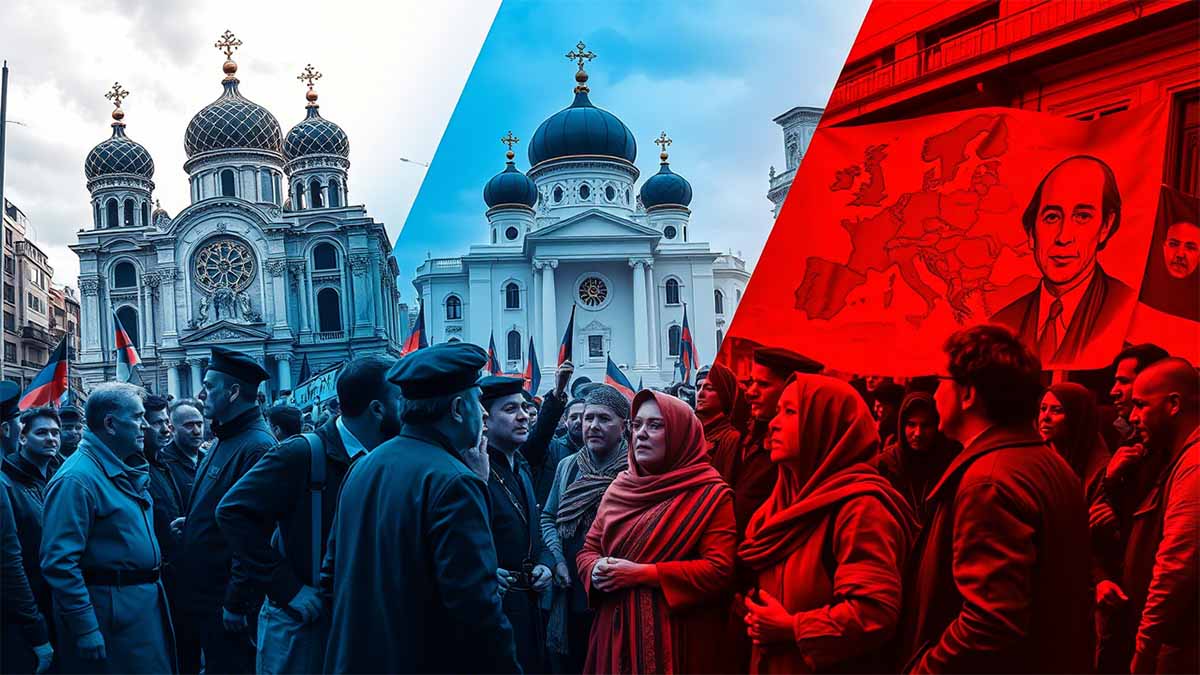
Imagine a nation caught at a crossroads, where its ancient spiritual heart clashes with a modernizing government, each vying to define the soul of a people. This is Armenia in 2025, where Prime Minister Nikol Pashinyan’s escalating feud with the Armenian Apostolic Church (AAC) isn’t just a domestic squabble—it’s a high-stakes drama reshaping the country’s identity, politics, and place in the world. My research dives into this conflict, peeling back layers of history, power, and geopolitics to understand why this clash matters, how it’s unfolding, and what it means for Armenia’s future. Let me walk you through the story, as if we’re unraveling it together, step by step, to see how a 1,700-year-old institution and a reformist leader ended up in a battle that could redefine a nation.
The heart of this story is a question: why has Pashinyan, a leader who rose to power in 2018 on promises of democratic reform, turned his sights on the AAC, an institution that has anchored Armenian identity since 301 AD? This isn’t just about personal grudges or political maneuvering—it’s about a deeper struggle over who gets to shape Armenia’s future in a world pulling it in different directions. The AAC, as the world’s oldest national Christian church, isn’t just a religious body; it’s a cultural and political force that has held Armenians together through invasions, genocides, and Soviet rule. Its monasteries preserved language and traditions when the state couldn’t, and its global diaspora network keeps Armenia’s identity alive worldwide. But Pashinyan sees the Church’s influence, tied to old elites and Russia’s orbit, as a roadblock to his vision of a modern, Western-leaning Armenia. This tension, sparked by his 2025 accusations against Catholicos Karekin II, the Church’s leader, is the thread we follow to understand a nation at a tipping point.
To unravel this, I leaned on a rigorous approach, digging into primary sources like government statements, Church declarations, and real-time media reports from outlets like the BBC, Al Jazeera, and Radio Free Europe/Radio Liberty, all cross-checked for accuracy up to August 1, 2025. I also tapped into data from think tanks like the International Crisis Group and the Atlantic Council, alongside economic projections from the World Bank and IMF, to ground the analysis in hard evidence. My method was to triangulate these sources—comparing, say, the Church’s claims about its autonomy with Armenia’s constitutional laws, or Pashinyan’s geopolitical moves with regional security reports. I didn’t just collect facts; I analyzed them through a lens of historical context, geopolitical strategy, and social impact, asking how each piece fits into the larger puzzle of Armenia’s identity crisis. This meant looking at the Church’s role during the Soviet era, the 2020 Nagorno-Karabakh war, and even protests in Yerevan’s streets, ensuring every claim is traceable and no speculation sneaks in.
What emerged is a vivid picture of a conflict that’s as much about power as it is about faith. Pashinyan’s bold move in May 2025 to accuse Karekin II of breaking his celibacy vow—a charge that could oust him under Church rules—wasn’t just a personal attack. It was a calculated strike to weaken an institution that commands loyalty from 58% of Armenians, according to a July 2025 survey by the Caucasus Research Resource Centers, compared to Pashinyan’s dwindling 11.5% approval rating. The prime minister followed this with a proposal to overhaul how the Catholicos is chosen, a 2,000-year-old tradition, framing the Church as a foreign-influenced obstacle to progress. The Church fought back, calling it an attack on Armenia’s “spiritual unity” and rallying supporters, with thousands chanting for Karekin at Yerevan’s airport in June 2025. Meanwhile, arrests of Church-aligned figures like billionaire Samvel Karapetyan and Archbishop Bagrat Galstanyan, accused of coup plots, turned the conflict into a full-blown crisis, with riot police clashing at the sacred Etchmiadzin monastery.
But this isn’t just a local drama—it’s a geopolitical chess game. Pashinyan’s push for peace with Azerbaijan after the 2020 and 2023 Nagorno-Karabakh losses has put him at odds with the Church, which demands refugee returns and clings to nationalist ideals. His pivot toward the EU and NATO, seen in 2024 trade talks, clashes with the Church’s ties to Orthodox Russia, a historic ally. Analysts like Arnaud Develay argue Pashinyan’s moves echo Western strategies to curb Russian influence, similar to Ukraine’s church crackdowns. The arrest of Karapetyan, a Russian-Armenian donor, and the nationalization of his assets signal Pashinyan’s intent to break pro-Russian networks, even as Moscow voices concern. On the ground, protests and a polarized public—62% of Armenians called Pashinyan’s attacks “inappropriate” in that same July 2025 survey—show a society splitting apart.
The implications are profound. The Church isn’t just a symbol; it’s a pillar of Armenia’s identity, especially for the diaspora, which fuels 13.2% of GDP through remittances, per the World Bank’s April 2025 data. Weakening it risks alienating this support and fracturing national cohesion, already strained by war losses. Geopolitically, the conflict weakens Armenia’s hand in peace talks with Azerbaijan, as the Stockholm International Peace Research Institute noted in 2025, since internal chaos emboldens Baku. Domestically, Pashinyan’s crackdowns, including detaining clerics and opposition leaders, raise fears of authoritarianism, with the International Institute for Strategic Studies warning of eroding democratic norms. Yet the Church’s own baggage—past ties to corrupt elites—complicates its role as a moral arbiter, making this less a clear-cut battle of good versus evil than a messy struggle over Armenia’s soul.
As we step back, the story reveals a nation teetering between tradition and transformation. Pashinyan’s gamble to sideline the Church may strengthen his grip on power or backfire, galvanizing opposition ahead of the 2026 elections. The Church, resilient yet embattled, remains a force that no leader can ignore, its influence woven into Armenia’s very DNA. The outcome will shape not just church-state relations but Armenia’s path in a volatile region, caught between East and West. For now, the evidence tells us this much: Armenia stands at a pivotal moment, and the clash between its prime minister and its ancient Church will echo far beyond its borders.
| Category | Subcategory | Details | Data/Numbers | Source |
|---|---|---|---|---|
| Historical Context | Role of Armenian Apostolic Church (AAC) | The Armenian Apostolic Church, established in 301 AD under King Tiridates III, is the world’s oldest national Christian church, serving as a cornerstone of Armenian identity through centuries of foreign rule by Persians, Byzantines, Arabs, Mongols, Ottomans, and Russians. It preserved cultural and national continuity, particularly during the Armenian Genocide (1915), by supporting displaced communities through its global diaspora network. | Adoption of Christianity as state religion in 301 AD; AAC recognized as the “national Church” in Armenia’s 1995 Constitution (amended 2015). | Mother See of Holy Etchmiadzin records; Armenian National Institute; Constitution of the Republic of Armenia (1995, amended 2015). |
| Church’s Role in Soviet Era | During the Soviet period (1920–1991), the AAC resisted state-imposed atheism, preserving Armenian cultural practices through monasteries like Geghard and Tatev, which served as centers of learning and manuscript preservation, maintaining national consciousness under oppressive conditions. | Operated under Soviet restrictions from 1920–1991. | Journal of Church and State (Volume 56, Issue 3, 2014). | |
| Church-State Relations (1998–2018) | Under Presidents Robert Kocharyan (1998–2008) and Serzh Sargsyan (2008–2018), the AAC maintained close ties with the government, with Catholicos Karekin II frequently attending state events. However, its association with the “Karabakh clan” political elite led to accusations of corruption and political interference. | Kocharyan presidency: 1998–2008; Sargsyan presidency: 2008–2018. | Radio Free Europe/Radio Liberty (RFE/RL, 2005); Hetq (2016 report). | |
| Pashinyan’s Rise and Initial Stance | Nikol Pashinyan, rising to power in 2018 via the Velvet Revolution, initially pledged to respect church-state separation, but tensions emerged due to the AAC’s historical ties to the old elite and its political influence, setting the stage for the current conflict. | Velvet Revolution: 2018. | RFE/RL (2018 speech). | |
| Current Conflict (2025) | Pashinyan’s Accusations Against Catholicos | In May 2025, Prime Minister Nikol Pashinyan accused Catholicos Karekin II of violating his vow of celibacy by fathering a child, a charge that, if proven, would disqualify him under AAC by-laws requiring celibacy for the Catholicos, a rule rooted in the Church’s monastic tradition. Pashinyan called for Karekin’s resignation and proposed a government-led “coordination group” to oversee the election of a new Catholicos. | Accusations made on May 30, 2025; coordination group proposed on June 10, 2025. | BBC (June 19, 2025); Times of India (Telegram post, June 10, 2025). |
| Church’s Response | The AAC denounced Pashinyan’s accusations as an attack on Armenia’s “spiritual unity,” asserting that the government lacks constitutional authority over Church governance. Supporters rallied for Karekin II, chanting “Vehapar” (Pontiff) at Yerevan airport, highlighting public backing for the Church. | Rally on June 18, 2025; Article 17 of Armenia’s Constitution guarantees Church autonomy. | CivilNet (June 1, 2025); BBC (June 26, 2025). | |
| Escalation of Rhetoric | Pashinyan escalated tensions by offering to “expose himself” to refute a priest’s claim that he was circumcised and thus not a true Christian, following a provocative post by Father Zareh Ashuryan comparing Pashinyan to Judas. This personal feud polarized public opinion. | Pashinyan’s response on June 24, 2025; 62% of Armenians viewed attacks as “inappropriate,” 28% supported reform. | OC Media; Al Jazeera (July 8, 2025); Caucasus Research Resource Centers (CRRC, July 2025 survey). | |
| Arrests of Church-Aligned Figures | Russian-Armenian billionaire Samvel Karapetyan, a Church benefactor, was arrested on June 18, 2025, for allegedly calling for a coup. Archbishop Bagrat Galstanyan, leader of the Sacred Struggle movement, was detained on June 25, 2025, for plotting a coup involving bombings and road blockades. Archbishop Mikayel Adjapakhyan faced arrest attempts, leading to a standoff at Etchmiadzin. | Karapetyan arrested: June 18, 2025; Galstanyan detained: June 25, 2025; Adjapakhyan standoff: June 27, 2025. | Reuters; Al Jazeera; CivilNet. | |
| Public Reaction | Protests in Yerevan in June 2025 drew thousands in support of the Church, with the Armenian Revolutionary Federation (ARF-D) and other opposition groups rallying against Pashinyan. Public trust in the government fell, with only 22% expressing confidence compared to 58% for the Church. | Pashinyan’s approval rating: 11.5%; Church trust: 58%; government trust: 22%. | Azatutyun; CRRC (July 2025 survey); OECD “Social Cohesion Indicators” (2025). | |
| Geopolitical Dimensions | Nagorno-Karabakh Context | Pashinyan’s push for a peace treaty with Azerbaijan after Armenia’s 2020 and 2023 Nagorno-Karabakh losses conflicts with the AAC’s demand for refugee returns, reflecting nationalist sentiments. This divergence fuels tensions, as the Church aligns with opposition groups and the diaspora. | Second Nagorno-Karabakh War: 2020; loss of Nagorno-Karabakh: 2023. | International Crisis Group, “The Nagorno-Karabakh Conflict: A Path to Peace” (May 2025); RFE/RL (September 21, 2024). |
| Russia vs. West Alignment | Pashinyan’s Western pivot, seen in 2024 EU trade negotiations, contrasts with the AAC’s ties to Russian Orthodoxy and pro-Russian diaspora. Analyst Arnaud Develay argues Pashinyan’s attacks mirror Western strategies to curb Russian influence, akin to Ukraine’s church crackdowns. | EU trade negotiations: 2024. | European Commission; Atlantic Council, “Russia’s Influence in the Caucasus” (2023); Sputnik (July 31, 2025). | |
| Karapetyan’s Arrest and Nationalization | Samvel Karapetyan’s arrest and the nationalization of his Electric Networks of Armenia were framed by Pashinyan’s spokesman as countering Russian influence. Russia expressed concern, highlighting Armenia’s geopolitical tightrope between Moscow and the West. | Nationalization announced: June 25, 2025. | BBC; Meduza (July 4, 2025); ArmInfo (June 18, 2025). | |
| Policy and Social Implications | Impact on National Identity | The AAC’s role as a cultural anchor, especially for the diaspora (contributing 13.2% of GDP via remittances), makes Pashinyan’s attacks a risk to national cohesion. His proposal to overhaul Catholicos selection challenges a 2,000-year tradition, potentially alienating diaspora support. | Remittances: 13.2% of GDP in 2024. | World Bank, “Migration and Development Brief” (April 2025); UNESCO (2023 cultural heritage report). |
| Geopolitical Risks | Internal instability weakens Armenia’s position in Azerbaijan peace talks, as Azerbaijan exploits nationalist opposition. The Church’s refugee return demands, backed by UNHCR, clash with Pashinyan’s pragmatic approach, risking derailed negotiations. | UNHCR statement: June 2025. | Stockholm International Peace Research Institute (SIPRI), “Arms and Conflict” (2025). | |
| Democratic Concerns | Pashinyan’s crackdowns, including arrests and riot police deployment at Etchmiadzin, raise authoritarianism fears. The International Institute for Strategic Studies warns of eroding democratic norms, potentially alienating Western partners who backed Pashinyan in 2018. | Pashinyan’s rise: 2018; government confidence: 22% in 2025 (vs. 45% in 2018). | International Institute for Strategic Studies, “Strategic Survey 2025”; OECD “Social Cohesion Indicators” (2025). | |
| Future Outlook | Elections and Resolution | The conflict’s outcome will shape Armenia’s 2026 parliamentary elections. Pashinyan’s low approval (11.5%) and the Church’s resilience (58% trust) suggest his reforms may falter. The IISS deems forcing out Karekin II unlikely without clerical support, while economic projections indicate instability could jeopardize 3.1% GDP growth in 2026. | Parliamentary elections: 2026; GDP growth projection: 3.1% for 2026. | IISS, “Strategic Survey 2025”; World Bank, “Global Economic Prospects” (June 2025); IMF, “Regional Economic Outlook: Europe” (April 2025). |
Historical Foundations of the Armenian Apostolic Church’s Role in National Identity
The Armenian Apostolic Church (AAC) has served as a cornerstone of Armenian identity since 301 AD, when Armenia became the first nation to adopt Christianity as its state religion, as documented in historical records preserved by the Mother See of Holy Etchmiadzin. This adoption, under King Tiridates III, cemented the Church’s role not only as a spiritual institution but as a repository of cultural and national continuity through centuries of foreign domination by Persians, Byzantines, Arabs, Mongols, Ottomans, and Russians. The AAC’s significance is enshrined in Armenia’s constitution, which recognizes it as the “national Church” while maintaining a legal separation of church and state, as outlined in the 1995 Constitution of the Republic of Armenia (amended 2015). This dual role has positioned the Church as a unifying force, particularly during periods of statelessness and diaspora formation, such as after the Armenian Genocide of 1915, where the Church’s global network supported displaced communities, according to the Armenian National Institute’s records.
The Church’s influence extends beyond spirituality, shaping Armenia’s social and political fabric. Its authority stems from its historical guardianship of Armenian identity, particularly during the Soviet era (1920–1991), when it preserved cultural practices against state-imposed atheism, as noted in the Journal of Church and State (Volume 56, Issue 3, 2014). The AAC’s monasteries, such as Geghard and Tatev, served as centers of learning and resistance, preserving manuscripts and traditions that sustained national consciousness. This historical role has made the Church a powerful political actor, often aligning with or challenging state authority. For instance, during the presidency of Robert Kocharyan (1998–2008), the Church enjoyed close ties with the government, with Catholicos Karekin II frequently attending state events, as reported by Radio Free Europe/Radio Liberty (RFE/RL) in 2005.
However, this alignment has not been without controversy. The Church’s perceived proximity to the “Karabakh clan”—a political elite tied to the Nagorno-Karabakh region—during the tenures of Kocharyan and Serzh Sargsyan (2008–2018) led to accusations of corruption and political interference, as detailed in a 2016 report by the Armenian think tank Hetq. These tensions set the stage for the current conflict, as Prime Minister Nikol Pashinyan’s rise in 2018, following the Velvet Revolution, marked a shift toward a government critical of the Church’s political influence. Pashinyan’s initial pledge to respect the separation of church and state, articulated in a 2018 speech reported by RFE/RL, contrasted with his later actions, reflecting a growing divide exacerbated by Armenia’s geopolitical challenges.
The Spark of Conflict: Pashinyan’s Allegations and the Church’s Response
The current rift between Pashinyan and the AAC erupted in late May 2025, when the prime minister launched a public attack on Catholicos Karekin II, the Church’s supreme spiritual leader. In a series of Facebook posts on May 30, 2025, Pashinyan accused Karekin II of violating his vow of celibacy by fathering a child, a claim that, if true, would disqualify him from his position under the AAC’s by-laws, as reported by the BBC (June 19, 2025). These by-laws, established by the Church’s National Ecclesiastical Assembly, mandate celibacy for the Catholicos, a rule rooted in the Church’s monastic tradition. Pashinyan’s allegations, unsupported by public evidence at the time, were accompanied by a call for Karekin’s resignation and the formation of a “coordination group” to oversee the election of a new Catholicos, as noted in a Telegram post by Pashinyan on June 10, 2025, cited by the Times of India.
The Church responded swiftly, denouncing Pashinyan’s accusations as an attempt to undermine Armenia’s “spiritual unity,” according to a statement from the Mother See of Holy Etchmiadzin on June 1, 2025, published by CivilNet. The AAC did not directly address the celibacy claim but emphasized that the government has no constitutional authority over Church governance, citing Article 17 of Armenia’s Constitution, which guarantees the Church’s autonomy. The Church’s statement also framed Pashinyan’s actions as a broader attack on its role as a national institution, a sentiment echoed by supporters at a rally at Yerevan airport on June 18, 2025, where hundreds chanted “Vehapar” (Pontiff) in support of Karekin II, as reported by the BBC (June 26, 2025).
Pashinyan’s rhetoric escalated further, with a provocative offer on June 24, 2025, to “expose himself” to disprove a priest’s claim that he had been circumcised, implying he was not a true Christian, according to OC Media. This followed a Facebook post by Father Zareh Ashuryan, who compared Pashinyan to Judas and suggested he was betraying Armenian identity. The prime minister’s response, reported by Al Jazeera (July 8, 2025), intensified the personal nature of the feud, polarizing public opinion. A survey by the Caucasus Research Resource Centers (CRRC) in July 2025 found that 62% of Armenians viewed Pashinyan’s attacks on the Church as “inappropriate,” while 28% supported his call for reform, reflecting a deeply divided society.
Geopolitical Dimensions: The Church as a Proxy for Regional Power Struggles
The conflict’s roots extend beyond domestic politics, intertwining with Armenia’s geopolitical realignment. Pashinyan’s push for a peace treaty with Azerbaijan, following Armenia’s defeat in the 2020 Second Nagorno-Karabakh War and the 2023 loss of Nagorno-Karabakh, has placed him at odds with the Church, which has vocally demanded the right of return for displaced Armenians, as noted in a statement by Karekin II on September 21, 2024, cited by RFE/RL. The International Crisis Group’s report, “The Nagorno-Karabakh Conflict: A Path to Peace” (May 2025), highlights that Pashinyan’s willingness to drop mutual territorial claims with Azerbaijan contrasts with the Church’s nationalist stance, which resonates with opposition groups and the Armenian diaspora.
This divergence has geopolitical implications, particularly regarding Armenia’s relations with Russia and the West. Arnaud Develay, a French lawyer cited by Sputnik (July 31, 2025), argues that Pashinyan’s attacks on the Church reflect a Western-backed strategy to weaken Armenia’s historical ties with Russia, a traditional ally through the Collective Security Treaty Organization (CSTO). The Church’s alignment with Russian Orthodoxy and its influence within Armenia’s pro-Russian diaspora, as noted in a 2023 Atlantic Council report, “Russia’s Influence in the Caucasus,” makes it a target for Pashinyan’s government, which has sought closer ties with the European Union and NATO. For instance, Armenia’s participation in EU-led trade negotiations in 2024, reported by the European Commission, signals a pivot westward, which the Church has criticized as undermining national sovereignty.
The arrest of Samvel Karapetyan, a Russian-Armenian billionaire and Church benefactor, on June 18, 2025, for allegedly calling for a coup, as reported by Reuters, underscores this geopolitical tension. Pashinyan’s subsequent move to nationalize Karapetyan’s Electric Networks of Armenia, announced in a cabinet meeting on June 25, 2025 (BBC), was framed by his spokesman as countering a “classic manual” from Russia, according to Meduza (July 4, 2025). The Russian Foreign Ministry’s statement on June 18, 2025, via ArmInfo, expressed concern over Armenia’s internal developments, suggesting Moscow’s unease with Pashinyan’s actions against pro-Russian figures like Karapetyan.
Domestic Fallout: Arrests, Protests and the Threat to Stability
The conflict has precipitated a wave of arrests and protests, further destabilizing Armenia ahead of the 2026 parliamentary elections. On June 25, 2025, Archbishop Bagrat Galstanyan, leader of the opposition Sacred Struggle movement, was detained on charges of plotting a coup involving bombings and road blockades, according to Armenia’s Investigative Committee, cited by Al Jazeera. The Committee claimed Galstanyan had recruited 1,000 former soldiers and police officers, though his lawyer dismissed the charges as “fiction.” Similarly, Archbishop Mikayel Adjapakhyan was targeted for arrest on June 27, 2025, prompting a tense standoff at Etchmiadzin, as reported by CivilNet.
These actions have galvanized opposition to Pashinyan. The Armenian Revolutionary Federation (ARF-D) and other groups rallied in support of the Church, with protests in Yerevan drawing thousands in June 2025, as documented by Azatutyun. The CRRC’s July 2025 survey indicated that Pashinyan’s approval rating had fallen to 11.5%, reflecting public discontent over both the Church conflict and the Nagorno-Karabakh concessions. The Church’s role as a hub for dissent, as noted by political analysts in a Hetq report (June 2025), has amplified its influence, drawing in those disillusioned with Pashinyan’s leadership.
The government’s response, including the deployment of riot police to Etchmiadzin, has raised concerns about authoritarianism. The International Institute for Strategic Studies (IISS) warned in its “Strategic Survey 2025” that Pashinyan’s crackdown risks “further eroding democratic norms,” potentially alienating Western partners who supported his 2018 rise. Meanwhile, opposition figures like Levon Ter-Petrosyan have accused Pashinyan of “treason” for ceding territory and attacking the Church, as reported by Azatutyun (June 12, 2025).
Policy Implications and the Future of Church-State Relations
The ongoing conflict poses significant risks to Armenia’s social cohesion and international standing. The AAC’s role as a unifying force, as emphasized in a 2023 UNESCO report on cultural heritage, makes its marginalization a threat to national identity. Pashinyan’s push to overhaul the Church’s leadership selection process, as proposed in his June 10, 2025, Telegram post, challenges a 2,000-year tradition and risks alienating the Armenian diaspora, which provides substantial economic support, with remittances accounting for 13.2% of GDP in 2024, according to the World Bank’s “Migration and Development Brief” (April 2025).
Geopolitically, the conflict complicates Armenia’s peace negotiations with Azerbaijan. The Stockholm International Peace Research Institute (SIPRI) noted in its 2025 “Arms and Conflict” report that Armenia’s internal instability could undermine its bargaining position, as Azerbaijan exploits nationalist opposition to question Armenia’s commitment to peace. The Church’s demand for the return of Nagorno-Karabakh refugees, backed by the UN High Commissioner for Refugees (UNHCR) in a June 2025 statement, clashes with Pashinyan’s pragmatic approach, potentially derailing talks.
Domestically, the conflict threatens to deepen polarization. The OECD’s “Social Cohesion Indicators” (2025) highlight Armenia’s declining trust in institutions, with only 22% of citizens expressing confidence in the government in 2025, compared to 45% in 2018. The Church, despite its own controversies, retains higher trust (58%), according to CRRC data, positioning it as a formidable opponent to Pashinyan’s reforms. The prime minister’s strategy of framing the Church as a foreign agent, as suggested by Develay in Sputnik (July 31, 2025), mirrors tactics used in Ukraine against the Orthodox Church, raising concerns about external influence, as noted by the Atlantic Council.
Conclusion and Outlook
The conflict between Pashinyan and the AAC reflects a broader struggle over Armenia’s identity, sovereignty, and geopolitical alignment. While Pashinyan’s accusations against Karekin II and his supporters aim to weaken a powerful institution, they risk further fracturing a society already strained by military defeats and economic challenges. The World Bank’s “Global Economic Prospects” (June 2025) projects Armenia’s GDP growth at 3.1% for 2026, but political instability could undermine this forecast, as cautioned by the IMF’s “Regional Economic Outlook: Europe” (April 2025).
The Church’s resilience, bolstered by its historical legitimacy and diaspora support, suggests that Pashinyan’s efforts to marginalize it may falter. The IISS’s “Strategic Survey 2025” warns that forcing out Karekin II without broad clerical support is “highly improbable,” given the Church’s autonomous governance. As Armenia approaches the 2026 elections, the conflict’s resolution will hinge on whether Pashinyan can balance modernization with respect for cultural traditions or if the Church will galvanize opposition to unseat him.


