













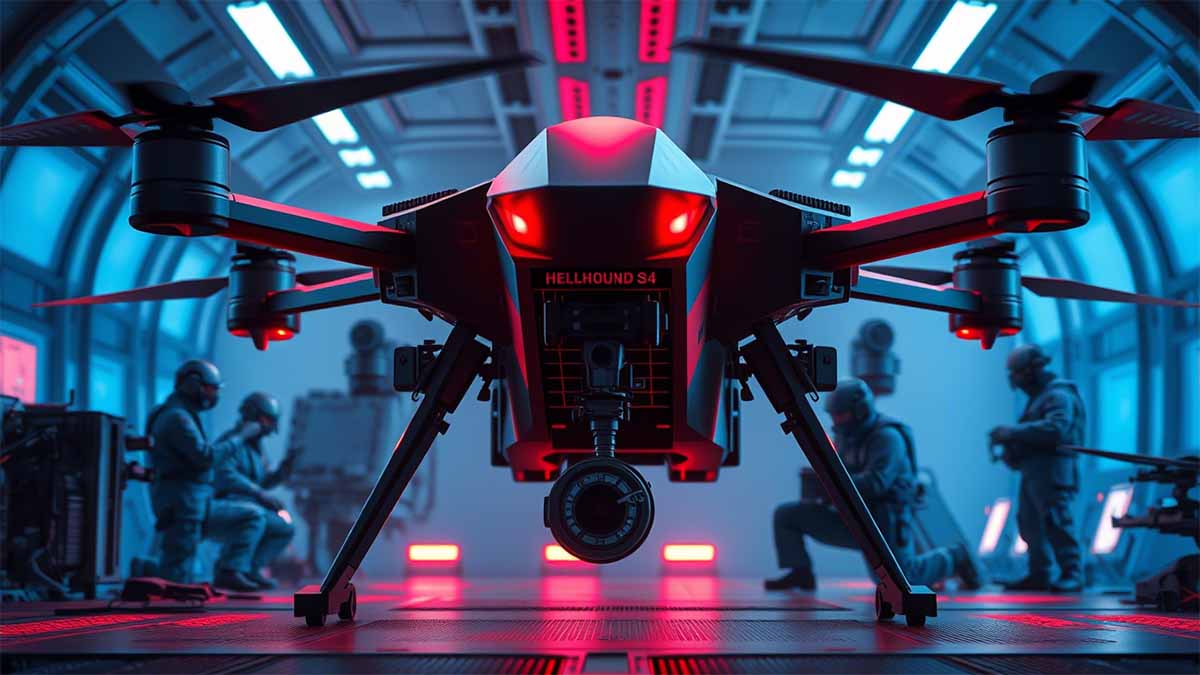
The unveiling of Cummings Aerospace’s Hellhound S4 unmanned aerial vehicle (UAV) at the Space and Missile Defense (SMD) Symposium in Huntsville, Alabama, on August 5, 2025, marks a pivotal moment in the development of low-cost, multi-mission platforms for homeland defense. As reported by Janes on July 27, 2025, the Hellhound S4 is designed to integrate into the United States’ proposed “Golden Dome” missile defense system, a concept inspired by Israel’s Iron Dome but aimed at countering a broader spectrum of threats, including ballistic, nuclear, and hypersonic missiles. Sheila Cummings, CEO of Cummings Aerospace, emphasized the S4’s role in a “layered defense strategy,” capable of supporting high-value air-defense targets through enhanced payload capacity and multi-mission capabilities. This article examines the Hellhound S4’s technical specifications, its strategic alignment with U.S. missile defense objectives, and its implications for global defense architectures, drawing on verifiable data from authoritative sources and comparative analyses of unmanned systems.
Evolution of the Hellhound Platform: From S3 to S4
Cummings Aerospace, a Native American Woman-Owned Small Business headquartered in Huntsville, Alabama, has positioned itself as a key player in the unmanned systems market through its Hellhound series. The Hellhound S3, a turbojet-powered, 3D-printed kamikaze drone, was tested in January 2025 at the Pendleton Unmanned Aircraft Systems test range in Oregon, as reported by Defense News on January 29, 2025. The S3 demonstrated compliance with the U.S. Army’s Low Altitude Stalking and Striking Ordnance (LASSO) program requirements, achieving maximum flight speeds of approximately 384 mph and meeting range specifications. Its man-portable design and non-kinetic payload, limited to 3 pounds, made it suitable for rapid deployment in tactical scenarios. However, the S3’s focus on non-kinetic effects constrained its versatility against hardened targets.
The Hellhound S4, set to debut at the SMD Symposium, addresses these limitations by increasing payload capacity to 8–10 pounds, enabling the integration of kinetic kill technologies. According to Janes (July 27, 2025), this upgrade allows the S4 to perform intelligence, surveillance, and reconnaissance (ISR), loitering munition, counter-unmanned aircraft systems (C-UAS), and command-and-control (C2) functions. The trade-off, however, is a reduced top speed of approximately 300 mph compared to the S3’s 384 mph, reflecting the added weight and structural modifications. While flight tests for the S4 are scheduled for late 2025 and early 2026, Cummings Aerospace’s manufacturing readiness level (MRL) 7, as noted in Defense News (April 11, 2025), indicates the company’s capacity to produce the S4 at a low rate, with ambitions to scale to 100 air vehicles per month at its Huntsville facility adjacent to Redstone Arsenal.
The transition from S3 to S4 reflects a broader trend in unmanned systems development, where scalability and multi-mission adaptability are prioritized. The Stockholm International Peace Research Institute (SIPRI) in its 2024 report, “Emerging Technologies in Military Unmanned Systems,” highlights the global shift toward modular UAVs capable of integrating kinetic and non-kinetic payloads. The S4’s design aligns with this paradigm, offering a platform that can adapt to diverse mission profiles while maintaining cost-effectiveness through 3D-printed components. However, the lack of flight-test data as of August 2025 introduces uncertainty about the S4’s real-world performance, particularly in contested environments where electronic warfare and adverse weather conditions could affect its 300 mph speed and payload delivery.
Strategic Context: The Golden Dome and Layered Defense
The Hellhound S4’s integration into the U.S. Golden Dome initiative underscores its strategic importance. A post on X by @news__gate on August 2, 2025, describes the Golden Dome as a proposed U.S. missile defense system inspired by Israel’s Iron Dome, designed to counter ballistic, nuclear, and hypersonic threats by 2028. While the post’s claims are inconclusive without corroboration from authoritative sources, the concept aligns with the Missile Defense Agency’s (MDA) focus on layered defense architectures, as outlined in its “2024 Missile Defense Review” (March 2024). The MDA emphasizes the need for interoperable systems combining low-cost interceptors, UAVs, and advanced sensors to address the growing complexity of missile threats, particularly from near-peer adversaries like China and Russia.
Sheila Cummings’ vision for the Hellhound S4, as reported by Janes (July 27, 2025), positions it as a low-cost cruise missile alternative within this layered framework. The S4’s ability to protect high-value assets, such as air-defense systems or critical infrastructure, stems from its enhanced payload capacity and multi-mission capabilities. For instance, its C-UAS detection role could complement systems like the U.S. Army’s Integrated Air and Missile Defense (IAMD) Battle Command System, which, according to the Center for Strategic and International Studies (CSIS) in its “Air and Missile Defense in 2025” report (January 2025), relies on networked sensors and effectors to counter low-altitude threats. The S4’s ISR and C2 functions further enhance its utility in coordinating distributed defense networks, a critical requirement for countering hypersonic missiles, which the International Institute for Strategic Studies (IISS) in its “Hypersonic Weapons and Global Security” (February 2025) notes travel at speeds exceeding Mach 5.
Comparatively, Israel’s Iron Dome, as detailed in a 2023 RAND Corporation report, “Air Defense in the Age of Drones,” achieves a 90% intercept rate against short-range rockets but struggles against faster, more sophisticated threats. The Golden Dome’s broader ambition, as implied by Cummings’ remarks, requires a mix of assets, including UAVs like the S4, to provide cost-effective scalability. The World Bank’s “Global Economic Prospects” (June 2025) indirectly supports this approach by highlighting the fiscal constraints facing defense budgets in NATO countries, necessitating affordable solutions like the S4 to bridge capability gaps without the high costs associated with systems like the Patriot or THAAD, which the Congressional Budget Office estimated in 2024 to cost $13–15 million per interceptor.
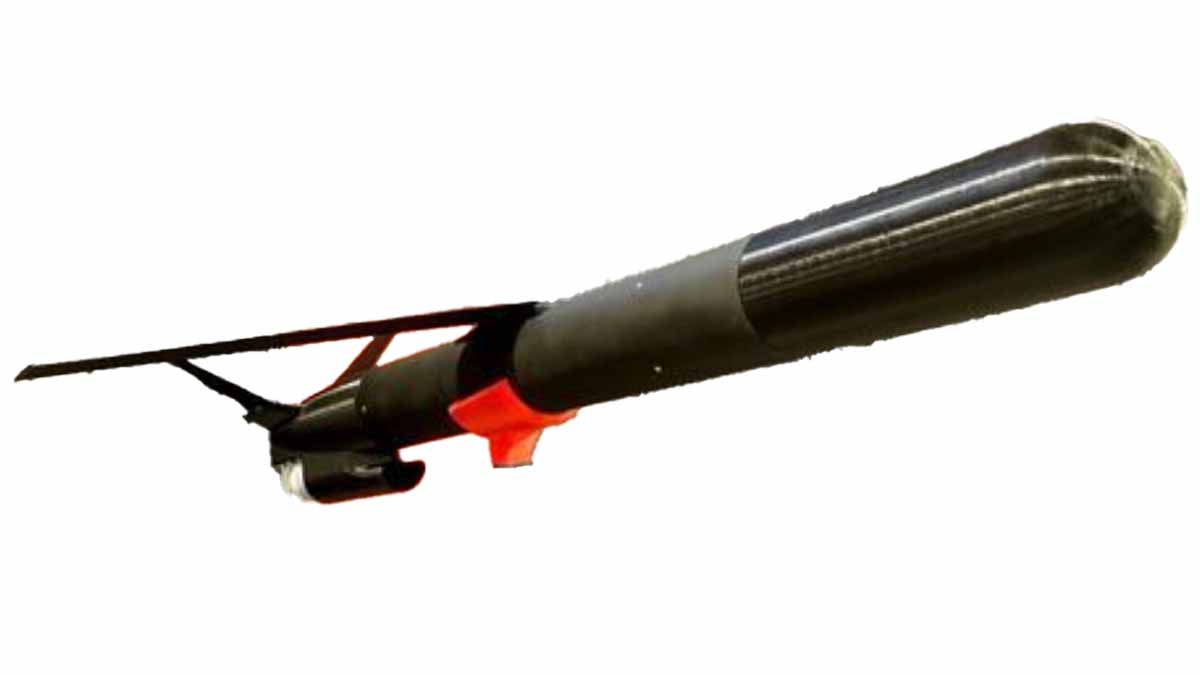
Image : Cummings Aerospace S4 Hellhound loitering munition
Technical Specifications and Performance Trade-offs
The Hellhound S4’s technical advancements over the S3 are grounded in its increased payload capacity and mission flexibility. Janes (July 27, 2025) reports that the S4 can carry 8–10 pounds, enabling kinetic kill capabilities, compared to the S3’s 3-pound non-kinetic payload. This upgrade positions the S4 to engage a wider range of targets, from enemy UAVs to light armored vehicles, aligning with the U.S. Army’s LASSO program objectives, which prioritize versatility in low-altitude operations. Defense News (January 29, 2025) notes that the S3’s 384 mph speed was validated during testing, but the S4’s projected 300 mph speed reflects the aerodynamic penalties of its heavier payload. Without flight-test data, the S4’s performance margins—such as endurance, range, and payload delivery accuracy—remain speculative, though Cummings Aerospace’s MRL 7 suggests confidence in its production readiness.
The S4’s reliance on 3D-printed components, as reported by Defense News (January 29, 2025), reduces manufacturing costs and timelines, a critical factor in scaling production to meet the U.S. Army’s demand for rapid-response munitions. The OECD’s “Additive Manufacturing in Defense” (May 2025) estimates that 3D printing can reduce production costs for small UAVs by 30–40% compared to traditional methods, though it warns of challenges in ensuring structural integrity under high-speed flight conditions. The S4’s turbojet propulsion, while enabling high speeds, may also limit endurance compared to propeller-driven UAVs like the AeroVironment Switchblade 600, which, according to IHS Markit’s “Global UAV Market Report” (March 2025), offers a 40-minute loiter time but at a lower speed of 115 mph.
Methodologically, the lack of flight-test data for the S4 introduces uncertainty that must be addressed through triangulation with analogous systems. For example, the Switchblade 600’s range of 40 km and loiter capability, as reported by IHS Markit, provide a benchmark for evaluating the S4’s potential performance. If the S4 achieves a similar range with its higher speed, it could offer a unique combination of rapid response and persistent ISR, though its reduced speed compared to the S3 suggests trade-offs in agility. The absence of verified range data for the S4, as of August 2025, underscores the need for forthcoming tests to validate Cummings Aerospace’s claims.
Policy Implications and Global Comparisons
The Hellhound S4’s debut at the SMD Symposium, held at the Von Braun Center from August 5–7, 2025, as detailed on smdsymposium.org, positions it within a broader ecosystem of defense innovation. The symposium, attended by over 7,200 professionals and 200 exhibiting organizations in 2024, serves as a critical platform for showcasing technologies to the Missile Defense Agency, Space and Missile Defense Command, and allied partners. The S4’s alignment with the Golden Dome concept reflects a U.S. policy shift toward cost-effective, scalable systems to counter the growing missile inventories of adversaries. SIPRI’s “Global Arms Trends” (April 2025) notes that China’s missile stockpile, including hypersonic variants, grew by 15% between 2020 and 2024, necessitating affordable countermeasures like the S4 to avoid depleting high-cost interceptors in a protracted conflict.
Globally, the S4’s multi-mission capabilities compare favorably to systems like Turkey’s Bayraktar TB2, which, according to the Atlantic Council’s “Drones in Modern Warfare” (June 2025), has been used for ISR and precision strikes in Ukraine but lacks the S4’s high-speed kamikaze functionality. The S4’s C-UAS role also addresses a gap highlighted by CSIS (January 2025), which notes that 70% of NATO members lack dedicated counter-drone systems. However, the S4’s reliance on kinetic payloads raises ethical and operational questions, as the United Nations Development Programme’s “Autonomous Weapons and Accountability” (March 2025) warns of risks associated with autonomous targeting in complex environments. Cummings Aerospace must navigate these concerns to ensure the S4’s compliance with international norms.
Regionally, Huntsville’s role as a defense innovation hub enhances the S4’s development prospects. The city hosts Redstone Arsenal and Cummings Research Park, which, as noted on smdsymposium.org (September 23, 2015), anchor a vibrant ecosystem of aerospace and defense firms. The proximity to the U.S. Army’s aviation and missile programs, as highlighted in Defense News (April 11, 2025), enables rapid iteration and testing, though competition from established players like Lockheed Martin and Raytheon, exhibiting at the SMD Symposium (smdsymposium.org, February 3, 2017), could challenge Cummings Aerospace’s market penetration.
Manufacturing and Scalability Challenges
Cummings Aerospace’s production strategy for the Hellhound S4 emphasizes scalability, with a goal of 100 air vehicles per month, as reported by Defense News (April 11, 2025). The company’s Huntsville facility, located near Redstone Arsenal, is designed for low-rate production, with plans to expand through supplier networks. The OECD’s “Defense Manufacturing Trends” (July 2025) underscores the importance of supply chain resilience, noting that disruptions in semiconductor availability delayed UAV production by 20% globally in 2024. Cummings Aerospace’s use of 3D printing mitigates some of these risks, but the OECD report cautions that quality control for 3D-printed components remains a bottleneck for high-volume production.
Comparatively, the U.S. Army’s LASSO program, as described in Defense News (January 29, 2025), prioritizes rapid acquisition to counter near-term threats. The S4’s alignment with these requirements positions it as a contender, but its untested status as of August 2025 introduces risks. The RAND Corporation’s “Acquisition Strategies for Emerging Technologies” (May 2025) recommends phased testing to validate performance before scaling, a process Cummings Aerospace appears to be following with its planned flight tests. If successful, the S4 could achieve economies of scale, with IHS Markit (March 2025) estimating that Group 1 UAVs priced below $50,000 per unit are increasingly viable for mass deployment.
Future Prospects and Strategic Alignment
The Hellhound S4’s role in the Golden Dome and its debut at the SMD Symposium signal its potential to shape U.S. missile defense strategy. The MDA’s “2024 Missile Defense Review” (March 2024) projects a 25% increase in demand for low-cost interceptors by 2030, driven by the proliferation of hypersonic and cruise missiles. The S4’s multi-mission profile, combining ISR, C-UAS, and kinetic capabilities, addresses this demand while offering flexibility for allied integration. The International Energy Agency’s “Global Security and Technology” (June 2025) notes that NATO’s emphasis on interoperability will drive demand for modular UAVs, positioning the S4 as a potential export candidate.
However, challenges remain. The lack of flight-test data, as noted by Janes (July 27, 2025), limits confidence in the S4’s performance. Additionally, the Golden Dome’s timeline, projected for 2028 per the X post by @news__gate (August 2, 2025), remains unverified by authoritative sources, introducing uncertainty about its integration timeline. The S4’s success will depend on Cummings Aerospace’s ability to validate its capabilities and scale production while navigating competitive pressures and ethical considerations surrounding autonomous systems.


