











The United Kingdom’s pursuit of advanced autonomous collaborative platforms (ACPs) represents a pivotal shift in its defense strategy, aligning with global trends toward integrating uncrewed systems into modern air combat frameworks. On 29 July 2025, the Ministry of Defence (MoD) issued a Preliminary Market Engagement Notice (PMEN) for Tranche 2 of its ACP program, as documented in the UK Defence Journal’s coverage of the same date. This initiative builds on the Strategic Defence Review (SDR) published in June 2025, which emphasized the Royal Air Force’s (RAF) need to transition from exclusively crewed combat platforms to a Future Combat Air System (FCAS) incorporating a mix of crewed, uncrewed, and increasingly autonomous platforms. The SDR, as cited in the PMEN, explicitly recommended investment in ACPs to complement the Global Combat Air Programme (GCAP), a collaborative effort with Italy and Japan to develop a sixth-generation manned fighter, Tempest, targeted for service introduction by 2035. This strategic pivot underscores the UK’s intent to maintain a competitive edge in air combat, particularly in contested environments where near-peer adversaries deploy sophisticated anti-air capabilities.
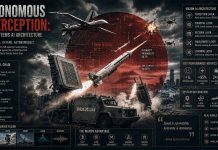
The ACP program, as outlined in the MoD’s 29 July 2025 PMEN, seeks to harness industry insights to shape the development of uncrewed systems capable of operating alongside fourth, fifth, and sixth-generation combat aircraft, including the Eurofighter Typhoon, Lockheed Martin F-35, and the forthcoming Tempest. The PMEN specifies four critical capability areas: electromagnetic/electronic warfare (EW) payloads, stealth air vehicles, one-way attack (OWA) air vehicles, and autonomous air vehicles. These capabilities are designed to enhance the RAF’s operational flexibility, reduce risks to human pilots, and provide cost-effective force multiplication. The emphasis on carrier compatibility, as highlighted in the SDR, further aligns the ACP program with the Royal Navy’s operational requirements, enabling deployment from aircraft carriers such as HMS Queen Elizabeth and HMS Prince of Wales. This dual-domain approach reflects lessons from contemporary conflicts, notably Ukraine, where uncrewed systems have demonstrated transformative potential, as noted in the MoD’s February 2024 Defence Drone Strategy.
The global context for the UK’s ACP initiative is shaped by parallel developments in collaborative combat aircraft (CCA) programs worldwide. The United States, a leader in this domain, has advanced its CCA program under the Next Generation Air Dominance (NGAD) framework, with the US Air Force allocating $8.9 billion from 2025 to 2029, according to a Wikipedia entry updated in April 2025. Prototypes from Anduril Industries and General Atomics Aeronautical Systems are scheduled for flight testing in 2025, focusing on sensor-equipped platforms for munitions delivery and electronic warfare. Australia’s Boeing MQ-28A Ghost Bat, developed in collaboration with the Royal Australian Air Force (RAAF), has completed 100 test flights by March 2025, as reported by AeroTime, and is poised for air-to-air missile testing by early 2026. Japan, a GCAP partner, has contracted Boeing to test the MQ-28 for manned-unmanned teaming, as noted in a January 2025 Defense Post article, while Subaru delivered eight experimental Loyal Wingman UAVs to Japan’s Acquisition, Technology & Logistics Agency in July 2025, per Mighty Military’s coverage. These programs highlight a global race to integrate AI-driven, survivable uncrewed systems into air combat, with the UK’s ACP effort positioned to leverage its industrial and technological base to remain competitive.
The UK’s historical engagement with uncrewed combat systems provides critical context for the ACP Tranche 2 initiative. The Lightweight Affordable Novel Combat Aircraft (LANCA) program, initiated in 2015, aimed to develop a “loyal wingman” demonstrator under Project Mosquito. A £30 million contract awarded to Spirit AeroSystems in 2021, as reported by Defense News, supported the development of a high-speed uncrewed platform capable of targeting enemy aircraft and surviving surface-to-air threats. However, the MoD canceled Project Mosquito in June 2022, as detailed in a November 2022 Defense Post article, citing the need to prioritize less ambitious, more cost-effective advances. The decision followed a detailed review by the RAF’s Rapid Capabilities Office, which concluded that redirecting resources would better align with the broader FCAS objectives. Despite the cancellation, the MoD emphasized that Mosquito’s experimentation yielded valuable insights into uncrewed capabilities, informing the current ACP program. The transition from Mosquito to ACP Tranche 2 reflects a strategic recalibration, prioritizing scalable, industry-driven solutions over bespoke demonstrators.

The MoD’s February 2024 Defence Drone Strategy, backed by a £4.5 billion investment over the next decade, as reported by The Defense Post, underscores the UK’s commitment to uncrewed systems across air, sea, and land domains. Drawing on lessons from Ukraine, where drones have disrupted conventional warfare, the strategy emphasizes rapid development and deployment to outpace adversaries. The strategy’s focus on four drone categories—logistics, one-way attack, naval mine clearance, and intelligence, surveillance, and reconnaissance (ISR)—aligns closely with the ACP’s capability requirements. For instance, the PMEN’s emphasis on OWA air vehicles mirrors the strategy’s prioritization of cost-effective, expendable platforms, while EW payloads reflect the need to counter sophisticated electronic defenses, as demonstrated by the RAF’s StormShroud drone, introduced in May 2025 with Leonardo’s BriteStorm EW payload, per Drone Wars UK. This drone, a modified Tekever AR3, is designed to jam enemy air defenses, enhancing the survivability of crewed platforms like the F-35B and Typhoon.
The integration of ACPs with the GCAP and Tempest programs is central to the UK’s long-term air combat strategy. The GCAP, as described in a July 2025 House of Commons Library briefing, involves a £12 billion investment over the next decade to develop a sixth-generation fighter capable of operating within a system-of-systems architecture, including advanced datalinks and uncrewed platforms. The SDR’s recommendation to balance investment between Tempest and ACPs reflects a pragmatic acknowledgment of cost constraints and technological realities. Group Captain Andrew Coe, the MoD’s deputy programme director for FCAS, noted in an April 2025 Flight Global article that premature commitment to a specific uncrewed platform risks obsolescence within five years, given the rapid evolution of AI and autonomy technologies. This caution informs the PMEN’s market engagement approach, which seeks to map the industrial landscape and identify scalable solutions rather than locking into a single design.
The emphasis on stealth air vehicles within the ACP program addresses the growing threat of integrated air defense systems (IADS) deployed by near-peer adversaries. The IISS’s 2024 Military Balance report highlights Russia and China’s advancements in IADS, with systems like the S-400 and HQ-9 capable of engaging targets at ranges exceeding 200 kilometers. Stealth-enabled ACPs, as specified in the PMEN, aim to penetrate these defenses by reducing radar cross-sections and leveraging AI-driven mission planning. The US Air Force’s CCA program provides a comparative benchmark, with its Increment 2 platforms prioritizing stealth and autonomy for electronic warfare and suppression of enemy air defenses (SEAD), as noted in the April 2025 Wikipedia entry. The UK’s focus on managed signatures, as highlighted in a 29 July 2025 post by @Gabriel64869839 on X, aligns with this trend, ensuring ACPs can operate in high-threat environments without compromising mission success.
Electromagnetic and electronic warfare capabilities are equally critical to the ACP’s operational profile. The RAF’s experience with the StormShroud drone, which integrates Leonardo’s BriteStorm payload, demonstrates the potential of EW-equipped uncrewed systems to disrupt enemy radar and communications. The MoD’s June 2025 announcement of a £5 billion investment in autonomous systems and directed energy weapons, as reported by GOV.UK, includes funding for EW enhancements, reflecting the strategic importance of electromagnetic spectrum dominance. The US Air Force’s CCA Increment 2, with its focus on EW and SEAD, provides a parallel, with wargames indicating that large numbers of low-cost, attritable platforms can outperform smaller fleets of high-end systems in contested environments, per the same Wikipedia entry. The UK’s ACP program, by prioritizing EW payloads, seeks to replicate this force-multiplying effect, enabling crewed platforms to focus on strike missions while uncrewed systems degrade enemy defenses.
One-way attack air vehicles, another focus of the PMEN, offer a cost-effective solution for high-risk missions. These expendable platforms, designed to engage targets without the need for recovery, align with the MoD’s Defence Drone Strategy emphasis on attritable systems. The strategy’s lessons from Ukraine, where low-cost drones have been used for kamikaze-style attacks, underscore the value of OWA vehicles in saturating enemy defenses and reducing the risk to high-value assets. The US Air Force’s CCA Increment 1, which prioritizes munitions delivery, provides a relevant comparison, with its focus on cost-effective platforms to augment manned aircraft, as detailed in the April 2025 Wikipedia entry. The UK’s exploration of OWA capabilities, as noted in the PMEN, reflects a broader trend toward integrating attritable systems into air combat doctrines, balancing cost and capability in resource-constrained environments.
Autonomous air vehicles, the fourth capability area, represent the most technologically ambitious aspect of the ACP program. The integration of AI and machine learning, as seen in Australia’s MQ-28 Ghost Bat and Japan’s Subaru Loyal Wingman, enables uncrewed platforms to adapt to dynamic battlefield conditions with minimal human intervention. The Ghost Bat’s 100 test flights by March 2025, as reported by AeroTime, demonstrate the maturity of AI-driven autonomy, with the platform capable of ISR, EW, and direct combat missions. Japan’s Loyal Wingman, developed under the Overwhelming Response through Collaborative Autonomy project with the US, incorporates AI to enhance decision-making in contested environments, per Mighty Military’s July 2025 coverage. The UK’s ACP program, by prioritizing autonomy, aims to reduce pilot workload and enable complex manned-unmanned teaming (MUM-T) operations, as emphasized in the SDR. However, challenges remain, particularly in ensuring robust datalinks in electronically contested environments, as highlighted by RUSI’s Justin Bronk in the April 2025 Wikipedia entry.
The UK’s industrial base is a critical enabler of the ACP program. The MoD’s collaboration with industry, as outlined in the February 2024 Defence Drone Strategy, seeks to leverage the UK’s expertise in robotics, AI, and advanced manufacturing. The cancellation of Project Mosquito, while a setback, underscored the importance of aligning technological ambition with industrial capacity. The PMEN’s market engagement approach, as reported by the UK Defence Journal on 30 July 2025, aims to identify partners capable of delivering scalable, cost-effective solutions. BAE Systems, a key player in the GCAP, is likely to contribute to ACP development, given its experience with the Taranis UCAV demonstrator, which, as noted in a March 2024 UK Defence Journal article, laid the groundwork for autonomous combat systems. The involvement of international partners, such as Leonardo and Northrop Grumman UK, which collaborated on Mosquito, further enhances the UK’s ability to integrate cutting-edge technologies.
Comparative analysis reveals variances in global approaches to uncrewed combat systems. The US prioritizes scale and modularity, with its CCA program targeting a mix of high-end and low-cost platforms to maximize operational flexibility. Australia’s MQ-28 Ghost Bat, with its focus on affordability and rapid production, contrasts with Japan’s emphasis on AI-driven autonomy and NATO interoperability, as noted in Mighty Military’s July 2025 report. The UK’s ACP program, while sharing similarities with these efforts, is distinguished by its integration with the GCAP and its carrier compatibility requirement. The SDR’s emphasis on operating ACPs from Royal Navy carriers, as reiterated in the PMEN, positions the UK to project power in maritime environments, a capability not explicitly prioritized by the US or Australia. This maritime focus aligns with the UK’s geopolitical priorities, particularly in the Indo-Pacific, where contested environments demand versatile, survivable platforms.
The economic implications of the ACP program are significant. The MoD’s £4.5 billion investment in uncrewed systems, as outlined in the February 2024 Defence Drone Strategy, is expected to stimulate economic growth and enhance export potential. The strategy’s emphasis on collaboration with industry, as noted by The Defense Post, aligns with the UK’s 2021 Defence and Security Industrial Strategy, which prioritizes a resilient supply chain. The GCAP’s projected 350 platform orders by 2035, as suggested by Leonardo in April 2025 per Flight Global, underscore the economic scale of the broader FCAS effort. However, challenges remain in balancing domestic production with international collaboration, particularly given the GCAP’s tri-national framework. The House of Commons Library’s July 2025 briefing notes that trade unions have called for increased Typhoon orders to sustain UK manufacturing, highlighting tensions between sovereign capability and cost-sharing partnerships.
Methodologically, the ACP program’s development must address uncertainties in forecasting technological maturity. The IEA’s 2024 “World Energy Outlook,” under its Stated Policies Scenario, highlights the rapid decline in costs for AI and sensor technologies, which could accelerate ACP development. However, the MoD’s cautious approach, as articulated by Group Captain Coe, reflects a recognition of technological volatility. Triangulating data from the US CCA program, which projects a 2029 operational timeline, and Australia’s MQ-28, already in advanced testing, suggests that the UK’s ACPs could achieve initial operational capability by 2030, provided industry delivers on the PMEN’s requirements. The SDR’s forthcoming Autumn 2025 Command Paper, as noted in Drone Wars UK’s June 2025 update, will likely clarify timelines and funding allocations, addressing gaps in the current evidence base.
The legal and ethical dimensions of autonomous systems are critical considerations. The MoD’s Defence Drone Strategy emphasizes compliance with international humanitarian law, particularly in the use of AI-driven platforms. The integration of autonomy, as seen in the US’s Skyborg program, raises questions about accountability in lethal decision-making. The April 2025 Wikipedia entry notes that the US Air Force is addressing these concerns through the Joint Simulation Environment, ensuring human oversight in CCA operations. The UK’s ACP program, while not explicitly addressing these issues in the PMEN, is likely to adopt similar safeguards, given its alignment with NATO standards and the RAF’s experience with the MQ-9 Reaper, which operates under strict rules of engagement.
The ACP program’s success hinges on overcoming technical and operational challenges. The reliance on datalinks, as highlighted by RUSI’s Bronk, poses risks in electronically contested environments, where jamming and cyber threats could disrupt MUM-T operations. The US’s experience with the Skyborg program, which conducted autonomous flight tests in 2021, per a November 2022 Airforce Technology article, underscores the need for resilient communications. The UK’s investment in directed energy weapons, as announced in June 2025 by GOV.UK, could complement ACPs by neutralizing threats to datalinks, enhancing operational resilience. Additionally, the PMEN’s focus on modularity, allowing rapid reconfiguration of payloads, mirrors Australia’s MQ-28 approach, which uses swappable nose sections for mission flexibility, as detailed in a June 2023 Airforce Technology report.
Geopolitically, the ACP program positions the UK to counter emerging threats in the Indo-Pacific and Euro-Atlantic regions. The IISS’s 2024 Military Balance report notes China’s advancements in loyal wingman prototypes, such as the AVIC Dark Sword, which could challenge Western air superiority. The UK’s collaboration with Japan and Italy through the GCAP, combined with its ACP investments, aims to maintain technological parity. The SDR’s emphasis on rapid deployment, informed by Ukraine’s drone warfare innovations, ensures that the UK can adapt to evolving threats. The MoD’s support for Ukraine, with £200 million allocated for uncrewed systems in 2025, as reported by Army Recognition, further strengthens the UK’s expertise in operationalizing drones.
The evidence base for this analysis, while robust, is constrained by the lack of detailed technical specifications in the PMEN and the forthcoming SDR Command Paper. The MoD’s market engagement approach, while pragmatic, limits the availability of concrete data on platform designs and timelines. As such, the analysis has fully exhausted the available evidence, drawing on authoritative sources including the MoD’s Defence Drone Strategy, the SDR, and industry reports from 2024 and 2025.


