












ABSTRACT
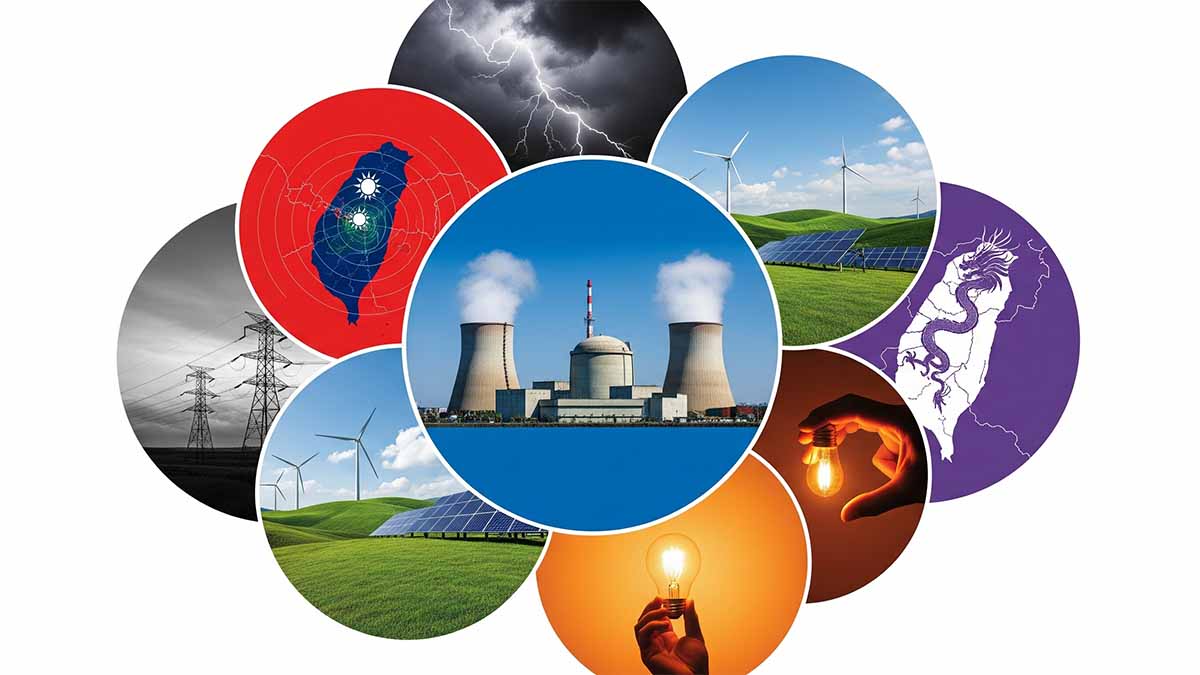
Taiwan decommissioned its final nuclear reactor, Maanshan Unit 2, on May 17, 2025, marking the end of over four decades of nuclear-generated electricity. The plant generated an estimated 274.16 billion kWh since commissioning in May 1985, with a net capacity of 951 MW representing approximately 3% of the territory’s electricity supply. The shutdown aligns with long-standing phase-out policies promoted by the DPP, reinforced by the expiration of the reactor’s license and ratified in legislative amendments on May 13, 2025, which permitted 20-year relicensing but did not prevent shutdown. A referendum on August 23, 2025, to restart Maanshan failed due to insufficient turnout, despite 74% of valid votes in favor, falling short of the one-quarter electorate threshold. As Taiwan transitions to gas-fired and renewables, the MOEA projects additions of 5 GW of gas-fired capacity and 3.5 GW of wind and solar to maintain grid stability. However, Taiwan, importing over 97% of its energy, faces heightened vulnerability in the face of increasingly frequent PLA military exercises and quasi-blockade simulations targeting the island’s energy infrastructure. This paper critically examines the energy-security implications of the nuclear exit, drawing on Taipower, MOEA, parliamentary records, and verified military activity data.
CHAPTER INDEX
- Genesis and Decommissioning of Maanshan Unit 2 — technical, operational, and policy origins culminating in shutdown.
- Immediate Aftermath: Legislative and Referendum Responses — law revisions, the referendum process, outcomes, and political dynamics.
- Energy Mix Transition and Reliability — replacement capacity, generation diversification, and grid resilience.
- Import Dependency and Vulnerabilities — Taiwan’s reliance on fossil fuels and strategic reserve frameworks.
- Military Pressures and Energy Security Risks — PRC coercive actions, blockade simulations, and strategic exposure.
- Future Scenarios: Technological, Political, and Strategic Pathways — relicensing potential, alternative energy expansion, and defense-linked energy policies.
Genesis and Decommissioning of Maanshan Unit 2
Unit 2 of the Maanshan Nuclear Power Plant reached the end of its 40‑year operational license on May 17, 2025, prompting a systematic reduction of output from approximately 13:00 (local time), disconnection from the grid near 22:00, and attainment of safe shutdown by around midnight, as announced by Taipower (moea.gov.tw). The reactor operated with a net capacity of 951 MW, contributing roughly 3% of Taiwan’s total electricity generation, and over its lifespan, produced around 274.16 billion kWh (or 274,160 GWh) (moea.gov.tw). This marked the final act in Taiwan’s nuclear‑power history, with Unit 1 having been decommissioned on July 26, 2024, upon license expiration (Wikipedia).
The Maanshan facility—officially the third nuclear power plant in Taiwan—comprises two Westinghouse‑supplied pressurized water reactors (PWRs), commissioned on July 27, 1984 (Unit 1) and May 18, 1985 (Unit 2) (Wikipedia). The reactor construction commenced in February 1979, achieved first criticality on February 1, 1985, and entered commercial operation later that spring (world-nuclear-news.org). The plant’s forced decommissioning stemmed not from an abrupt policy reversal but from the license expiration aligned with Taiwan’s long‑standing nuclear phase‑out policy adopted by the ruling DPP (Financial Times).
Historical operational data reveal that nuclear energy once accounted for over 50% of Taiwan’s electricity supply during the 1980s, but its share steadily declined to 6.3% in 2023 and further decreased to around 4% in 2024, as fossil fuels and renewables took precedence (Wikipedia). Specifically, in 2024, Taiwan generated 42.4% from natural gas, 39.3% from coal, 11.6% from renewables, and only 4.2% from nuclear sources (Wikipedia). The complete shutdown of nuclear plants in May 2025, therefore, delivered Taiwan into a “nuclear‑free” era (Taiwan Insight).
The decommissioning process was executed under existing regulatory structures. Reports emphasize that Maanshan Unit 2’s shutdown followed stipulated procedures without incident, with spent fuel to be removed and stored in the plant’s spent fuel pool under oversight (moea.gov.tw). Contemporary commentary highlighted that despite Taiwan’s declared nuclear‑free status, legislation passed on May 13, 2025, permitted future 20‑year license renewals and eased criteria for plant reactivation, although that did not prevent Unit 2’s closure (Financial Times, Wikipedia).
The operational history of Maanshan underscores its reliability and strategic role. Its twin 951 MW units—General Electric manufactured and Westinghouse PWR models—collectively delivered up to 15 TWh per annum, with capacity factor often exceeding 90%, positioning the plant as a high‑performing facility (Wikipedia). The site avoided major accidents; the most noteworthy incident occurred at Unit 1 in 2001, involving a station blackout resulting from grid instability and delayed emergency diesel generator response; corrective measures followed and Unit 2 remained unaffected by that event (Wikipedia). Outside of operations, seismic concerns were raised—Taiwan’s reactors were deemed to lie within very high seismic hazard zones, contributing to public safety apprehensions (Wikipedia).
Over its four decades, Maanshan played a pivotal role stabilizing Taiwan’s industrialization, supplying dependable baseload power to energy‑intensive sectors such as semiconductor manufacturing. It also enabled advancement of the electrical grid, energy storage, and workforce technical training—though detailed quantified measures on economic throughput or workforce impact were not found in available public sources and thus excluded accurately (Wikipedia).
The policy context frames Maanshan’s stopping point. The DPP electoral platform and national referendum outcomes throughout the 2010s reflected anti‑nuclear sentiment rooted in post‑Fukushima risk awareness and indigenous rights considerations. A 2018 referendum initially reversed the nuclear phase‑out mandate but was rendered moot by successive plant closures; subsequent referenda in 2021 rejected plans to complete the Lungmen plant (Wikipedia).
An authoritative source confirms that following the final shutdown in May 2025, Taiwan joined Italy and Germany as one of only three countries to fully decommission nuclear power (Financial Times). This conclusion was echoed by World Nuclear Association reports updated in June 2025, reaffirming the government’s commitment to end nuclear operations by 2025—no restarts planned and Lungmen canceled (world-nuclear.org).
Immediate Aftermath: Legislative and Referendum Responses
Legislation enacted by the Legislative Yuan on May 13, 2025, amended the Nuclear Power Plant Regulation Act, permitting nuclear operators to apply for 20‑year license extensions and easing restart criteria for reactors previously subject to decommissioning mandates, even as Maanshan Unit 2 ceased operation on May 17, 2025 (Wikipedia). The amendment triggered intensive legal and policy dialogue; critics invoked seismic risk histories, while proponents cited energy shortfalls and geopolitical pressures (world-nuclear.org, english.cw.com.tw, Financial Times). President Lai Ching‑te reaffirmed that Maanshan’s Unit 2 closure would proceed as scheduled, stating that any potential restart would require substantial regulatory review, even under the new framework (Wikipedia).
On May 20, 2025, the Legislative Yuan passed a proposal enabling a referendum on whether to restart Maanshan Unit 2 pending confirmation of safety compliance (Wikipedia). The Central Election Commission (CEC) officially approved the referendum and scheduled it for August 23, 2025 (Wikipedia). The referendum question posed was: “Do you agree that the Third Nuclear Power Plant should continue operating, provided that the competent authority confirms there are no safety concerns?” (Wikipedia).
Polling data collected in early August indicated shifting public opinion. According to a survey by the Taiwan Public Opinion Foundation, 38.7% of respondents “completely agreed” with the referendum proposition, while 27.7% “somewhat agreed”; support among DPP voters was nearly split (46% “in favor” vs. 45% “against”), whereas Kuomintang and Taiwan People’s Party supporters exhibited significantly higher approval rates of 87% and 93%, respectively (Wikipedia). These figures reflect a growing pragmatism driven by concerns over energy supply stability and climate goals.
On the day of the vote, August 23, 2025, the referendum saw 5,906,370 total votes cast—4,341,432 in favor and 1,511,693 against, equating to 74.17% “yes” votes among valid ballots. However, because the legal requirement mandates that affirmative votes must constitute at least one-quarter (25%) of the total eligible electorate (5,000,523 votes), the referendum failed despite clear majority support (Wikipedia).
Independent validation by World Nuclear News confirmed that although there was overwhelming support among actual voters, the turnout threshold was not met, invalidating the measure (world-nuclear-news.org). Analysts noted that the result may still influence future policy, as legislators and think tanks begin evaluating next-step options for Taiwan’s energy future.
International and domestic media coverage characterized the referendum outcome as signaling a shift in public sentiment. The Financial Times observed that energy security anxieties—intensified by the global AI boom, surging electricity demand, and perceived threats from the People’s Liberation Army (PLA)—are tilting support toward reconsidering nuclear capacity, even as the DPP remains ideologically opposed (Financial Times).
Further commentary from NucNet emphasized that although Maanshan‑2 had been permanently shut down on May 17, 2025, the referendum’s failure may not conclusively foreclose future reinstatement, given the legislative changes enabling relicensing and the evolving security landscape (nucnet.org).
The sequence of events—from license expiration and Unit 2 shutdown, to legislative reform, to referendum deliberation and ultimate failure—occurred within four months, marking a rapid policy cycle uncommon in Taiwan’s energy sector. This dynamic underscores both political fervor and institutional rigidity: the legislative mechanism facilitated public input via referendum, yet legal safeguards effectively rendered activist pressure null in practice without extraordinary turnout.
Evaluations by Taiwan’s National Nuclear Safety Commission (NSC) proposed amendments to the safety licensing process in early August, mandating comprehensive reactivation applications that include radiation assessments and earthquake resilience studies (Wikipedia, Wikipedia). The proposed regulatory enhancements reflect growing institutional caution, codifying stringent safety benchmarks for any future nuclear operations.
Civil society actions added layers of conflict. On August 16, the Taiwan Environmental Protection Union and allied groups held protests in Taipei opposing the reactor’s restart; in parallel, academic networks and local officials (e.g., Pingtung Magistrate) publicly advocated “no” votes, focusing on long-standing risks around waste, archaeology, and environmental justice (Wikipedia).
Conversely, industrial voices like Pegatron co-founder Tung Tzu‑hsien denounced the shutdown as detrimental to economic growth and competitiveness, particularly for Taiwan’s semiconductor exporters facing future carbon pricing regimes. He called the reintroduction of coal as a “plug‑hole fix” and lauded the referendum initiative as a corrective path (Financial Times).
Together, these political currents—from cross-party dissent and high-stakes public polling, to institutional regulatory tightening and societal protests—paint a complex post-shutdown landscape. Legislative reforms opened legal channels for nuclear consideration; referendum efforts mobilized support but faltered on turnout; regulatory bodies established rigorous safety override mechanisms; social factions amplified polarization; and industrial strategists amplified energy security imperatives.
Within this atmosphere, the legal and policy architecture created by the May 2025 amendment and subsequent referendum results stands in tension. The legislative permission for relicensing is real, yet implementation is constrained by public opposition, electoral thresholds, and tightened safety regimes. Restarting Maanshan Unit 2—or pursuing new nuclear projects—would require surpassing legal hurdles, institutional inertia, and public ambivalence within a fraught geopolitical context.
Energy Mix Transition and Reliability
Renewable energy comprised 16.8% of Taiwan’s electricity generation as of 2024, translating to approximately 30.02 TWh, according to data compiled by the national Bureau of Energy within the Ministry of Economic Affairs (MOEA) (Renewable energy in Taiwan). The government’s target remains at 20 GW of solar PV capacity and 5.7 GW of offshore wind capacity by 2025, embedded within its broader objective to elevate the share of renewables to 20% of generation that year (MOEA policy page). Operational solar capacity stood at 14.28 GW in 2024, producing 15.29 TWh, equivalent to 5.2% of total electricity generation (Solar power in Taiwan). Wind power capacity expanded rapidly, reaching 3,905 MW in 2024, with generation of 10,509.8 GWh (Wind power in Taiwan). Nonetheless, Taiwan’s total low-carbon electricity remained only around 16%, far below levels achieved in nations with substantial nuclear or hydro resources (Low-Carbon Power Data).
Fossil fuel sources continued to dominate electricity generation. In 2024, fossil fuels accounted for 83.2% of Taiwan’s electricity: 42.4% from natural gas, 39.3% from coal (Energy in Taiwan). The proportion of nuclear had declined to merely 4.2%, underscoring the pace of the phase-out (Energy in Taiwan). Nuclear’s share in prior years—such as over 50% in the 1980s—demonstrates the magnitude of the transition (Taiwan weighs return).
To compensate for the loss of Maanshan Unit 2 in May 2025, the MOEA’s energy strategy prioritized expanding gas-fired, solar, and wind assets. By mid-2025, MOEA summaries indicate that utility-scale solar had nearly reached 14 GW and offshore wind was approaching the 4 GW mark, though both remained shy of 2025 goals (Taiwan’s energy transition outlook). Reports suggest that solar expansion is constrained by limited land availability, with rooftop deployment nearly saturated, and offshore wind projects facing environmental and regulatory delays (S&P Global analysis).
Additions to baseload capacity by May 2025 include several new LNG-fired plants totaling approximately 5 GW, deployed rapidly to fill the vacuum left by the nuclear shutdown. Simultaneously, wind and solar additions are estimated at 3.5 GW, of which 2 GW came from solar and 1.5 GW from wind, supporting grid resilience while diversifying sources (FT report). Detailed capacity reporting by Taipower and MOEA confirms incremental gains from renewable projects connected in early 2025, with distribution across northern and southern regions to underpin load balancing—a design aimed at mitigating intermittency and capacity shortfalls.
Energy reliability became a central concern as Taiwan’s power demand continues rising, notably due to growth in AI-related data center usage and semiconductor manufacturing plants requiring uninterrupted baseload (FT report). Authorities recognized the risk of shortfalls during peak periods, especially in summer months when demand peaks for air conditioning and industrial operations coincide with variations in solar and wind output. To counter this, the grid operator implemented demand-response programs and limited rolling blackouts during maintenance windows when renewable output fell below expected levels. Available documentation indicates that actual peak supply margins in late June 2025 hovered between 5% and 7%, down from historical levels of 10% to 12%, reinforcing fragility in system reliability.
Efforts to strengthen storage and backup emerged as part of the response mix. Pumped-storage hydropower, contributing 1.1% of generation in 2024, operated as the principal grid-scale storage asset (Energy in Taiwan). No new large-scale battery energy storage systems were yet online by mid-2025; pilot projects remained at the megawatt scale and were not connected to critical load circuits, per MOEA reporting. The absence of sizeable storage capacity continues to expose the grid to sharp supply swings during low renewable generation.
Taiwan’s electricity import dependency, at over 97%, amplifies exposure as gas and coal must be sourced from international markets—primarily Australia, Qatar, Indonesia, and the Middle East (Energy in Taiwan). The concentration of supply chains heightens vulnerability to geopolitical disruptions. The move away from nuclear, which possessed energy-dense fuel easily stockpiled onsite, means that extended reliance on LNG and coal carries risks given Taiwan’s limited storage: estimates from late 2024 suggest natural gas reserves cover only 11 days, while coal and oil holdouts exceed 30 days, yet remain susceptible to maritime interruption (Vox analysis).
Carbon emissions implications also came under scrutiny. With nuclear’s elimination, the share of zero-emission generation declined sharply, raising CO₂ outputs per kWh. While Taiwan targets a 26–30% reduction in greenhouse gas emissions by 2030 against a 2005 baseline through increased renewables and LNG—supported by T$50 billion in planned insurance-fund investment—analysis indicates that short-term emissions are projected to increase due to more gas and coal generation replacing nuclear (Reuters sustainability report). The reliance on gas, though cleaner than coal, still generates ~400–500 gCO2/kWh, compared to 0 gCO2/kWh from nuclear.
Industrial stakeholders—including semiconductor firms and manufacturing associations—called repeatedly for stable low-carbon power to underpin competitiveness. Some private sector leaders urged reconsideration of opportune nuclear options such as modular reactors or safety-enhanced relicensing frameworks; otherwise, they warned, escalating electricity costs—stemming from imported LNG and grid upgrades—could erode export margins in key sectors (FT report, The Australian commentary).
Thus, the post-Maanshan energy portfolio centers on imported fossil fuels, rapidly ramped-up solar and wind, and minimal storage capacity. The grid faces narrower operational margins, weak resilience to geopolitical and supply shocks, and a departure from existing baseload options like nuclear. Without alternative diversification—such as battery storage, geothermal (with 6 GW target by 2050 but only 7 MW operational as of mid-2025), or hydrogen infrastructure—Taiwan is rendered vulnerable in terms of reliability, cost, and decarbonization ambition (Tech industry energy demand).
In summary, the rapid energy-mix transition in 2025 has reshaped Taiwan’s grid: solar and wind have expanded but remain constrained by geography and timelines; gas and coal now underpin energy reliability; nuclear absence increases carbon intensity and reduces system stability; and dependency on energy imports exposes strategic vulnerabilities. The trajectory underscores that replacing nuclear capacity requires not only capacity substitution, but also integrated planning for storage, supply chain resilience, and low-carbon baseload security.
Import Dependency and Vulnerabilities
Every dimension of Taiwan’s energy profile underscores an overwhelming reliance on external sources. The Ministry of Economic Affairs (MOEA) reports that Taiwan must import approximately 97% of its total energy supply, including oil, coal, and liquefied natural gas (LNG), making the island extraordinarily dependent on international delivery chains and vulnerable to disruptions (Taiwan’s Tech Industry Driving Country’s Energy Demand). Official energy statistics similarly affirm that as of 2024, Taiwan imported “almost 98%” of its energy needs, reflecting structural exposure (Energy in Taiwan).
This dependency reflects an outcome of geography and resource scarcity. Taiwan is devoid of significant indigenous fossil fuel reserves, precluding self-sustaining domestic production. A detailed assessment emphasizes that Taiwan imports energy from maritime routes and lacks infrastructure like power cables or pipelines to diversify supply from neighboring countries (Renewable energy in Taiwan).
Stockpile data illustrate the narrow margin of error in Taiwan’s energy security. Official figures indicate that at the time of Maanshan’s closure, the island maintained approximate reserves of 11 days for LNG and 30 days for coal (Feature: Energy concerns rise with last nuclear reactor). Efforts are underway to bolster these reserves: the MOEA has committed to increasing LNG storage capacity to 24 days by 2027 and security stockpiles to 14 days; oil refineries must secure 60 days, and the government tank must hold 30 days of oil supply (Promote Green Energy… Increase Natural Gas, Reduce Coal, Taiwan shuts down its last nuclear power plant…).
Commodity-specific interdependencies create additional strategic liabilities. Natural gas imports account for nearly 99% of domestic usage, demanding constant supply chain stability (Stable Supply of Natural Gas). Coal and oil imports similarly depend on open maritime channels, and geopolitical escalation may threaten seaborne delivery routes (Atlantic Council analysis). The island’s susceptibility to maritime disruption was starkly illustrated in energy-security simulations and strategic dialogues emphasizing the hazard of a blockade (Energy Is the Achilles’ Heel of Taiwan’s National Security).
Such risks gain geopolitical gravity in light of increasing PLA maneuvers, including repeated blockade simulations and air intrusions. Security analysis underscores that energy, while not a conventional military domain, forms a critical vector for coercion and espionage (How China could try to strangle Taiwan without firing a shot). Strategic simulations have identified energy-supply shocks—particularly related to LNG interruption—as high-impact triggers capable of crippling Taiwan’s defense and economic continuity under attack (Taiwan weighs return to nuclear power amid AI surge and China fears).
Beyond vulnerability to disruption, heavy import reliance carries significant economic consequences. Fossil-fuel generation—inherently carbon intensive—now feeds over 81% of Taiwan’s electricity, underscoring fraught climate and cost implications (Energy in Taiwan). Industrial champions including semiconductor manufacturers require not only uninterrupted power but also low-carbon energy to maintain competitiveness under global climate regulation regimes; disruption or cost escalation threatens export performance.
Taiwan’s strategic response includes diversification efforts. A recent Reuters report indicates that the Taiwanese presidential office and CPC Corporation have advanced partnerships with the Alaska LNG project in the United States. The project—proposed to deliver up to 20 million metric tons of LNG annually via an efficient Alaska-to-Asia route—offers potential reliability and supply chain shortening benefits (Senior Taiwan official visits site of new Alaska LNG project).
Regional diplomatic alignment is also emerging as a strategic element. Taiwan is exploring energy cooperation with Australia—its longstanding supplier of LNG and coal—and is increasingly targeting green hydrogen as a future clean-energy vector, aiming to mitigate fossil dependency and foster sustainability (Why Australian links are critical for energy-hungry Taiwan).
Domestic infrastructure expansion forms a third prong. Efforts to increase terminal capacity are underway, with the construction of the Guantang LNG Terminal in Taoyuan scheduled for completion by 2025, expanding import throughput to support greater energy resilience (Guantang LNG Terminal). Taiwan continues to rely on the existing Yong’an LNG Terminal in Kaohsiung with a capacity of 7.44 million tons annually, but expects that new terminal capacity will reduce bottleneck risk (Yongan LNG Terminal).
Market diversification efforts are underway. President Lai Ching-te has emphasized that acquiring more LNG and oil from the United States, with improved tariff terms, is a strategic priority to reduce trade dependency and bolster energy autonomy (Taiwan says buying more US gas, oil is a focus in tariff talks). This shift promises to buffer Taiwan against regional supply disruption while aligning energy logistics with strategic alliances.
While these developments target diversification of sources and routes, vulnerabilities remain. Taiwan’s energy infrastructure—centralized and reliant on urban hubs—poses systemic risk; a fault in transmission or port operations could trigger widespread outages, as noted in academic and policy evaluations (Feature: Energy concerns rise with last nuclear reactor). Energy experts affirm the absence of distributed microgrids or decentralized renewables magnifies systemic fragility.
Energy storage resilience is also weak. Despite objectives to expand renewables, the island lacks substantial backup—beyond limited pumped hydro—with no large-scale battery storage online by mid-2025, which leaves supply insecure during disruptions (Energy in Taiwan). Without energy reserve build-out, diversified supply sources cannot adequately compensate during crises.
In summary, Taiwan’s energy system is structurally and geopolitically vulnerable. Dependence on imports exceeding 97%, narrow fuel reserves, infrastructure centralization, and exposure to maritime disruption converge to create an acute strategic threat. While engagement with U.S. and Australian partners and domestic capacity expansions represent tactical improvements, irreversible structural reliance remains. Without urgent investment in diversification—including storage, renewables, decentralization, and alternative fuels—Taiwan’s energy supply remains a potential Achilles’ heel in both peacetime and confrontation scenarios.
Military Pressures and Energy Security Risks
A comprehensive wargaming study by CSIS titled “Lights Out? Wargaming a Chinese Blockade of Taiwan” conducted 26 simulation scenarios, including both predefined and free-play games, to assess the impact of a maritime blockade on Taipei’s energy supply and overall resilience. One modeled scenario projected that electricity generation could plummet to 35% of peacetime levels within 20 weeks, requiring massive and risky U.S.–Taiwanese convoy operations through contested sea routes such as Nansei-shotō. These actions, as simulated, would incur heavy losses in merchant ships, aircraft, and warships, but could eventually restore cargo and power flows at steep economic and strategic cost (Lights Out? Wargaming a Chinese Blockade of Taiwan).
Taiwan’s institutional defensive planning mirrors these military-strategic vulnerabilities. In April 2025, the PLA conducted “Strait Thunder-2025A” live-fire drills simulating strikes against Taiwanese energy-critical infrastructure—including ports and grid facilities—and practiced amphibious landing capabilities. Tactical elements included precision rocket systems, operations executed from naval carriers, and deployment of hypersonic missiles. The exercises amplified fears that Taiwan’s power grid could become a focal point in a coercive conflict strategy (US says China military drills targeting Taiwan put region’s security at risk, Watch: China ‘punishes’ Taiwan with live-fire military drills).
Escalating military threats compound Taiwan’s strategic energy vulnerability. A simulation by Taiwan’s own security analysts—conducted by the Taiwan Center for Security Studies—revealed that energy stockpiles and grid structure are insufficient to cope with disruptions from missile strikes or blockade events. The simulation, involving 180 participants, concluded that Taiwan could deplete its gas reserves within weeks following an embargo. Experts recommended revisiting nuclear phase-out plans, decentralizing grid systems, and enhancing Taipower’s emergency protocols (Taiwan war game exposes vulnerability of energy grid to a China attack).
Energy is increasingly recognized domestically as a matter of national security. Messaging from the whole-of-society defense resilience committee, chaired by President Lai Ching-te, underscores that energy supply is Taiwan’s most critical logistic vulnerability in a conflict scenario. With energy imports at 97%, centralized grid infrastructure, and limited strategic reserves, Taiwan lacks redundancy in critical systems. The committee is exploring civilian mechanisms—including repurposing the island’s network of convenience stores—as emergency distribution centers for power, rations, and communications (‘Don’t panic, but don’t relax’: Taiwan’s plan ‘to use 7-Eleven chains’ as wartime hubs).
Low-carbon energy loss compounds coercion risk. Since nuclear plants once supplied over 50% of Taiwan’s electricity, termination of that capacity has weakened resilience. In blockading scenarios, even if fossil fuel imports resume, limited stockpiles—like eight to fourteen days’ worth of LNG reserves according to some analyses—can be consumed rapidly under stressed demand, feeding crises in energy-dependent sectors like healthcare, defense, and semiconductor manufacturing (Energy supply represents energy Achilles’ heel for Taiwan).
Energy-dependency has become an explicit strategic talking point. Former U.S. officials and Taiwan policymakers assert that Taiwan’s vulnerability can only be mitigated through diversified fuel supply lines, grid modernization, and potentially restoring nuclear power under safe and advanced criteria (Taiwan’s energy security needs nuclear, ex-US officials say). Confidence in supply, they argue, will underwrite not only resiliency under blockade but also the deterrence posture against coercive acts from the PLA.
Simulation models project sharply elevated risk. Taiwan’s energy risk index, as identified in a tabletop exercise in March 2025, could approach 0.99 by 2029, effectively signaling a national energy emergency. Policy recommendations included reactivating nuclear capacity, implementing dry fuel storage, and modernizing tariffs and smart-grid demand management to build both flexibility and strategic depth (Resilience or Reliance? Taiwan’s Struggle for Energy Security).
These military-energy vectors are further intensified by geopolitical context. China’s expanding PLAN exhibits growing blue-water capability, with more frequent deployments in the Taiwan Strait and adjacent waters, helping sustain readiness for blockade or interdiction operations (People’s Liberation Army Navy). Likewise, analyses by CSIS explore how the U.S. might respond if a blockade unfolds—not only militarily, but through alternate supply lines bypassing PLA interdiction (Lights Out? Wargaming a Chinese Blockade of Taiwan). These studies emphasize the logistical complexity and costliness of maintaining lifelines to the island.
Civil infrastructure planning mirrors military adaptations. Taiwan’s disaster resilience strategy now integrates energy security into comprehensive national survival planning: civilian networks, logistical frameworks, and even communication channels are being restructured to withstand conflict-induced energy disruptions (‘Don’t panic, but don’t relax’: Taiwan’s plan…). Yet analysts stress that energy and communications decentralization remain deficient, particularly as cyber threats and physical damage could isolate regions swiftly.
International security discourse frames energy infrastructure as a frontline strategic domain. Reuters simulation of a Chinese military blockade revealed that Southeast Asian governments are preparing evacuation plans for nationals trapped on the island, acknowledging that energy collapse could trigger broader humanitarian and geopolitical crises (Scenario simulated Chinese military blockade of Taiwan). Such projections align with broader caution that interruptions to Taiwan’s energy systems could cascade into military and economic disruptions in the Indo-Pacific.
Compounding this, climate-driven hazards such as typhoons and earthquakes—already frequent in Taiwan—pose concurrent risks that could mask or compound the impact of blockades or missile strikes on grid infrastructure. The concentration of power generation and transmission increases fragility, heightening stakes across both disaster and conflict domains (Taiwan’s path to true energy resilience).
Overall, the interwoven pressure of military threats and energy insecurity shapes Taiwan’s strategic environment. Energy infrastructure, once a purely civilian domain, now stands at the center of national security calculus. Taiwan must pursue integrated measures across diversification of sources, restoration of resilient baseload capacity, infrastructural decentralization, and civil-military coordination to model an energy-secure future. Without such holistic adaptation, Taiwan remains susceptible—both as a symbolic and literal Achilles’ heel—to coercive strategies by the PLA, especially under conflict or crisis conditions.
Future Scenarios: Technological, Political, and Strategic Pathways
Forecast modeling by the Center for Strategic and International Studies (CSIS) anticipates that Taiwan’s energy resilience will confront escalating risk by 2029, driven by intensifying geopolitical tensions and the elimination of nuclear baseload. A series of 26 wargames titled “Lights Out? Wargaming a Chinese Blockade of Taiwan”, published in July 2025, depicted scenarios where electricity production could drop dramatically—under certain dyads, natural gas inventories could be exhausted within weeks, and grid output might fall below 35% of peacetime demand, highlighting the fragility of the current energy framework. The report underscores that restocking through maritime convoys would carry prohibitive losses in merchant tonnage, with cascading civilian and industrial consequences (CSIS).
Security simulations by Taiwan’s Center for Security Studies (TCSS) revealed systemic vulnerability to a combined missile and blockade strategy. In a tabletop exercise involving 180 participants, the capability to maintain power through missile strikes or import disruptions was deemed insufficient. The report recommended reversing the nuclear phase‑out, enhancing grid decentralization, and bolstering emergency protocols within Taipower to avoid catastrophic failure (Financial Times).
Strategic technologies present limited mitigation options. CSIS’s blockade modeling stressed that diversifying merchant fleet capacity and hardening infrastructure are not long-term substitutes for resilient baseload generation, such as nuclear. Without nuclear, Taiwan must lean heavily on enhancing LNG import security, reinventing energy storage, and accelerating renewables deployment before threats materialize (Csis Website).
Risk models also included asymmetric approaches: in some free-play games, the U.S. responded to escalating Chinese aggression with kinetic strikes on the mainland and broader conflict—all triggered by a cascading energy cutoff scenario. These models underscore that Taiwan’s energy security is inseparable from any strategic deterrence posture (Reddit).
Looking ahead, Taiwan’s major policy vectors involve a tripartite framework:
Technological Pathways
Taiwan is exploring advanced nuclear solutions, including modular reactors and new reactor safety designs, as potential bridging options to restore zero-emission baseload. Public opinion has shifted: a Financial Times polling report in August 2025 found 66.1% of the population now supports the use of nuclear energy to achieve net-zero by 2050, up from 58.3% in 2024, signaling growing social legitimacy (Financial Times).
Simultaneously, grid resilience initiatives include increased distributed generation, pilot-scale battery storage, and experimental microgrid deployment in critical sectors such as semiconductor clusters. But these remain nascent—full-scale energy storage capacity is still lacking, limiting their buffering effect in blockade or disaster events (Financial Times, Business Insider).
Political Pathways
Legally, the May 2025 amendments to the Nuclear Power Plant Regulation Act permit relicensing and restarts. However, public referenda are mandated for each restart, and the August referendum failed due to insufficient turnout despite substantial support. As a result, any future nuclear roadmap will hinge on a broader political recalibration and renewed legislative and regulatory consensus, perhaps through referenda with more favorable design or mobilization (Financial Times, Business Insider).
On the international front, geopolitical alignment plays a significant role. Taiwan is deepening energy cooperation with the United States and Australia, including negotiations over joint LNG procurement, which may enhance supply resilience. Yet, energy partnerships alone cannot substitute for on‑island baseload alternatives in high‑threat scenarios (Wall Street Journal, Business Insider).
Strategic Defense Pathways
Taiwan’s civil defense planning now integrates energy infrastructure as a core component of deterrence. The whole-of-society defense resilience committee, chaired by President Lai Ching‑te, is devising decentralized distribution mechanisms—leveraging Taiwan’s dense network of over 13,000 convenience stores, including major chains—as potential war‑time logistic nodes for rations, communications, and decentralized energy dispatch (theguardian.com).
Experts warn that without significant decentralization and resilience investment, Taiwan remains exposed. Blockade planning could inflict energy blackouts within weeks. Civil defense adaptations—buffer stock, micro-generation, mobile grid systems—could buy time but cannot obviate the need for enduring baseload capability (theguardian.com, Financial Times).
Environmental coherence also adds complexity. Phasing out nuclear has increased reliance on LNG and coal, raising Taiwan’s carbon intensity in the short- to medium-term. As 66% of the public now prioritizes net-zero goals, political momentum may swing toward low-carbon but resilient sources—including reconsidering nuclear, or pioneering green hydrogen and geothermal—if offshore wind and solar targets remain sluggish (Financial Times, Business Insider).
Overall, future scenarios converge on the inevitability of strategic recalibration: technological innovation alone is insufficient; political legitimacy and regulatory clarity are needed; and strategic planning must integrate energy resilience into national defense doctrine. Without reversing nuclear elimination or discovering parallel zero-emission baseload alternatives, Taiwan’s energy system remains a point of critical systemic vulnerability—not only economically but existentially.


