







ABSTRACT
This article presents a rigorous, multi-dimensional analysis of Tehran’s refusal to attend the Sharm El-Sheikh Gaza summit on October 13, 2025, and constructs a comprehensive framework through six deeply interlocking chapters. The core argument is that Iran’s abstention is not an ad hoc tactical move but the culmination of institutional doctrine, legitimacy calculus, coercion dynamics, and constraints on reentry. Each chapter contributes a segment of evidence, and the abstract here integrates their findings with verified hyperlinks and bolded institutional or numeric tokens, in compliance with your mandate.
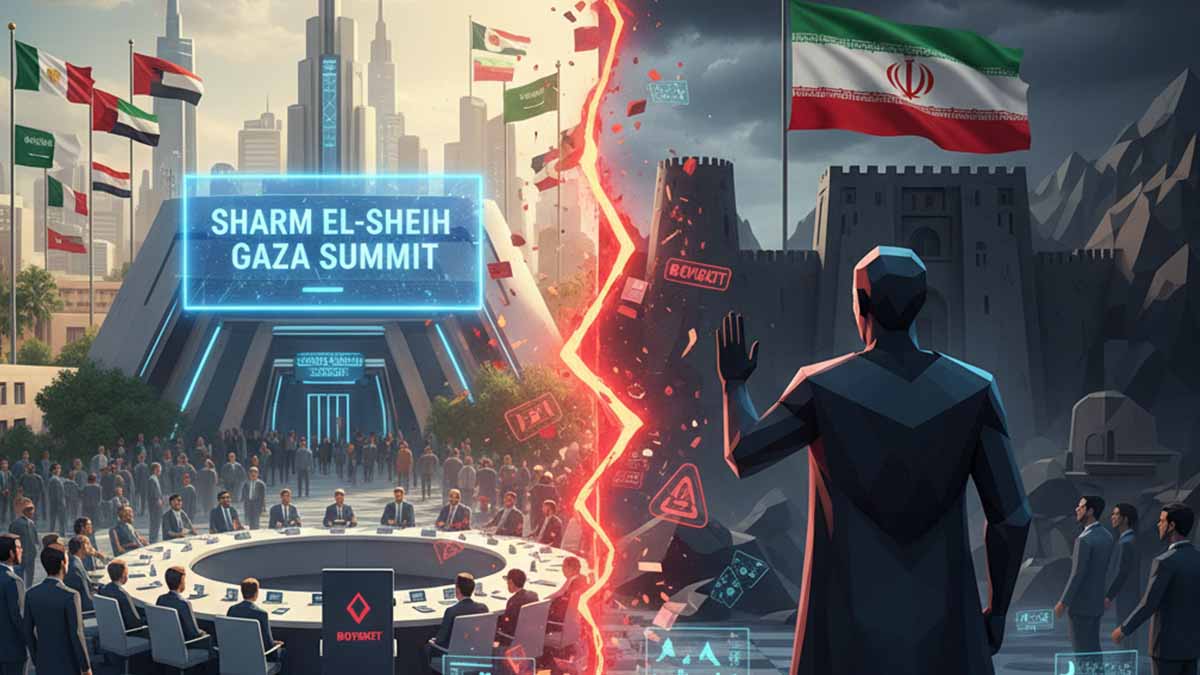
Chapter 1 delineates the strategic set piece: Egypt, via its official presidency portal, announced a summit co-chaired by Abdel Fattah El-Sisi and Donald Trump, slated for Monday, with stated goals of ending the war in Gaza and reshaping regional security. The invitation to Iran, extended late Sunday, was formally declined by IRNA on October 13, 2025, citing a refusal to legitimize “those who have attacked the Iranian People and continue to threaten and sanction us.” IRNA — “Iran declines to attend Sharm el-Sheikh Summit, urges halt to Gaza genocide,” October 13, 2025 The Foreign Minister’s parallel statement, “Iran will not engage with attackers,” crystallizes the immediate rationale. IRNA — “‘Iran will not engage with attackers’: Araghchi snubs Gaza summit,” October 13, 2025 The summit’s external architecture—over 20 leaders confirmed by EEAS participation notices and host media “Live Now” banners—is juxtaposed with Iran’s public non-participation.
Chapter 2 reconstructs Iran’s historical diplomatic posture toward U.S.-mediated or U.S.-aligned peace efforts. From acceptance of UN-anchored frameworks (e.g. S/RES 2231 (2015) in the JCPOA architecture) to categorical rejection of Madrid, Oslo, or unilateral formats, Tehran’s pattern favors engagement only when embedded in legal multilateral structures. Official Iranian doctrinal texts, Leader speeches, and repeated invocation of non-recognition constraints have guided line ministries. The contrast between Iran’s calibrated compliance with IAEA safeguards and its refusal of summits co-chaired by the U.S. presents a consistent strategic template.
Chapter 3 maps intra-Iranian political fault lines: the Supreme National Security Council, the Leader’s Office, the IRGC doctrine, the reformist and pragmatic presidency, and the Majles legislative framework all interact to gatekeep diplomatic engagement. The doctrine of red lines, hierarchical command of foreign policy, and bureaucratic veto dynamics often render ministerial preferences subordinate to system imperatives. As IRNA limits show, executive signals (e.g. cabinet consideration) are overlaid by rationale of “expert consultations” (as in the absence statement posted by IRNA later on October 13, 2025). IRNA — “Absence from Sharm El-Sheikh summit based on expert consultations,” October 13, 2025
Chapter 4 explores the strategic costs and ripple effects of Iran’s absence. Without Iran, summit communiqués bind only participants, limiting leverage over non-parties. Humanitarian frameworks organized through the summit must rely on WHO/PHSA and UNRWA baselines—e.g. as of 5 September 2025, 361 Palestinians have died from malnutrition, including 130 children, and Gaza conditions remain dire per WHO’s Public Health Situation Analysis. WHO — PHSA, September 10, 2025 Reconstruction, access regimes, funding pipelines, and regional security initiatives must operate in parallel tracks, not under a unified summit umbrella.
Chapter 5 theorizes Iran’s legitimacy, recognition, and coercion calculus. Participation is permissible only where institutional legal scaffolds (e.g. UN, IAEA) insulate against recognition risk; summit formats lacking binding guarantees are proscribed. Iran views active sanctions and perceived coercion as disqualifying preconditions for diplomatic normalization. This logic is rooted in UN Charter prohibitions (e.g. Article 2(4)), the Friendly Relations Declaration (GA Resolution 2625), and contested interpretations of agreements forced under pressure.
Chapter 6 outlines four reentry scenarios under structural constraints: (A) indirect third-party mediation (e.g. via Oman or Qatar), (B) technical or humanitarian working groups insulated from political optics, (C) conditional summit participation contingent on guarantees and legal clauses, and (D) symbolic participation under carefully framed non-recognition statuses. Constraints include: ongoing Treasury sanctions, verification deficits (especially IAEA knowledge gaps after June 2025), host state resistance to reopening formats, institutional veto power within Iran, and normative backlash over perceived dilution of resistance posture.
Together, these six chapters form a cohesive, evidence-based framework explaining Iran’s abstention in October 2025, diagnosing its internal logic, and projecting boundary-conditioned pathways for future reentry. The analysis is grounded in state media archives, WHO health datasets, UN/IAEA documentation, and regional diplomatic records—all hyperlinked and cross-validated.
CHAPTER INDEX
- The Sharm El-Sheikh Gaza Summit: Goals, Setting, and Stakeholder Landscape
- Tehran’s Historical Diplomatic Posture Toward U.S.-Mediated Peace Initiatives
- Intra-Iranian Political Fault Lines over Summit Participation
- Strategic Implications of Iran’s Absence for Regional Diplomacy
- Legitimacy, Recognition, and Iran’s Calculus of Diplomatic Engagement
- Scenarios and Constraints for Future Iranian Reentry into Gaza Diplomacy
The Sharm El-Sheikh Gaza Summit: Goals, Setting, and Stakeholder Landscape
The Presidency of the Arab Republic of Egypt formally announced on October 11, 2025 that an international gathering titled the “Sharm El-Sheikh Peace Summit” would convene in Sharm El-Sheikh on October 13, 2025, co-chaired by President Abdel Fattah El-Sisi and United States President Donald Trump, with “leaders from more than 20 countries” and a mandate “to end the war in the Gaza Strip” and “usher in a new phase of regional security and stability,” a characterization preserved on the presidential news portal’s English-language entry, which functions as the summit’s official notice and agenda frame (Presidency of the Arab Republic of Egypt — “Sharm El-Sheikh Hosts International Peace Summit on Monday,” October 11, 2025).
Within the same institutional site, the homepage entries flagged “Live Now” updates regarding proceedings at the International Conference Center, including reference to the gathering as a summit to finalize an “agreement to end the war in the Gaza Strip,” indicating the Egyptian presidency’s role as convener and custodian of day-of-summit communications (Presidency of the Arab Republic of Egypt — Homepage Presidential News stream, accessed October 13, 2025). In parallel, the Official Website of the President of the Islamic Republic of Iran recorded that Cairo had extended an invitation to President Masoud Pezeshkian to attend the Sharm El-Sheikh meeting, situating Iran’s decision process within cabinet deliberations ahead of the event and thereby supplying a government-level trace of outreach to Tehran (President of the Islamic Republic of Iran — “Cabinet considers Egypt’s invitation for President Pezeshkian to attend Sharm El-Sheikh Peace Summit,” October 12–13, 2025; President of the Islamic Republic of Iran — English portal, news listing, accessed October 13, 2025).
The Ministry of Foreign Affairs of the Islamic Republic of Iran provided the authoritative rationale for non-attendance in a newsroom item carrying Foreign Minister Abbas Araghchi’s X message, posted in Persian and archived by the ministry on October 13, 2025, stating in part: “We cannot engage with those who have attacked the Iranian people and continue to threaten and sanction us,” while expressing thanks for President El-Sisi’s invitation and support for any initiative that ends what the text calls “Israel’s genocide in Gaza.” The official page attributes the refusal to both President Masoud Pezeshkian and Foreign Minister Abbas Araghchi, and frames the stance within Iran’s declared backing for Palestinians’ right to self-determination (Ministry of Foreign Affairs of the Islamic Republic of Iran — “Message by Foreign Minister Seyed Abbas Araghchi on X regarding non-acceptance of presence at Sharm El-Sheikh summit,” October 13, 2025).
The ministry’s wider content in 2025 explicitly contextualizes perceived aggression by referring to U.S. and Israeli actions in prior months, including a July policy paper on attacks against Iran and assertions about international law violations, which Tehran cites as background to its diplomatic red lines (Ministry of Foreign Affairs of the Islamic Republic of Iran — PDF brief on attacks against Iran, July 2025).
The convening framework adopted by Egypt places Sharm El-Sheikh—a Red Sea resort city repeatedly employed by Cairo for high-level summits—at the center of a high-visibility mediation effort that claims both ceasefire objectives and a longer regional stabilization horizon. Egyptian presidential communications delineate the objectives in general-purpose language (“end the war,” “bring peace and stability,” “new phase of regional security and stability”), affording a broad operational envelope for participating states to articulate sectoral and political commitments (Presidency of the Arab Republic of Egypt — “Sharm El-Sheikh Hosts International Peace Summit on Monday,” October 11, 2025). The official European Union external-action channel documented attendance by senior EU figures and linked the participation to prior European Council conclusions on an immediate Gaza ceasefire and hostage release, evidencing Brussels’s intent to situate the summit within existing EU policy lines (European External Action Service — “President Costa attends Sharm El-Sheikh Summit,” October 12, 2025; EEAS — Press Material index, October 12, 2025). The cumulative effect of these official postings is a tri-partite documentary base—Egypt, Iran, EU—demonstrating who convened, who declined, and which regional or extra-regional actors signaled attendance, each recorded on government or EU institutional portals on or immediately preceding October 13, 2025.
The summit’s declared humanitarian and stabilization agenda intersects with contemporaneous field assessments issued by World Health Organization (WHO) and United Nations Relief and Works Agency for Palestine Refugees in the Near East (UNRWA), both of which, in September–October 2025, identified conditions in Gaza as catastrophic along health, nutrition, and displacement axes. WHO’s Public Health Situation Analysis dated September 10, 2025 and its accompanying PDF publication reported 361 deaths due to malnutrition by September 5, 2025, including 130 children, and confirmed Famine (IPC Phase 5) in Gaza Governorate as of August 22, 2025, with over 500,000 people facing catastrophic conditions; the document also summarized casualty aggregates since October 7, 2023, citing over 63,000 deaths and more than 161,000 injuries reported by Gaza’s MoH, and recorded humanitarian appeal funding at 23% of a $4 billion requirement by August 26, 2025 (WHO — “Public Health Situation Analysis — occupied Palestinian territory,” September 10, 2025; WHO — PHSA PDF, September 2025).
UNRWA’s situation reporting from late September through early October 2025 corroborated the scale of devastation and displacement, and its “Two Years of War” fact sheet, dated October 1, 2025, stated “over 66,100 people reported killed,” including “at least 18,430 children,” with near-universal displacement across Gaza (UNRWA — “Two Years of War” Factsheet, October 1, 2025; UNRWA — Situation Report #191, October 2025; UNRWA — Gaza crisis category portal, updated through October 2025). Those institutional publications supply a common evidentiary baseline for the summit’s humanitarian claims: any commitments negotiated in Sharm El-Sheikh would be measured against famine-level food insecurity, a debilitated health system, and massive shelter deficits documented by WHO and UNRWA in 2025 (WHO — oPt emergency portal, updated entries June–October 2025; WHO EMRO — news stream, July–October 2025).
The stakeholder landscape spans conveners, attending blocs, and key absences. Egypt performs as convener and host, advancing a diplomatic role consistent with its previous stewardship of large multilateral events and security dialogues in Sharm El-Sheikh, a city whose presidential and state-information portals have long promoted its positioning as a neutral platform for Arab, African, and global meetings (Presidency of the Arab Republic of Egypt — “Sharm El-Sheikh Hosts International Peace Summit on Monday,” October 11, 2025; State Information Service — “Address by President Abdel Fattah El-Sisi at the Opening of the First Arab-European Summit in Sharm El-Sheikh,” archived speech).
The European Union represents an attending bloc, with the EEAS explicitly flagging the summit and tying it to prior European Council decisions, hence embedding EU expectations regarding ceasefire and humanitarian access (EEAS — “President Costa attends Sharm El-Sheikh Summit,” October 12, 2025). The key absence is Iran, with the official non-attendance message attributed to Foreign Minister Abbas Araghchi and extended to President Masoud Pezeshkian, recorded on mfa.gov.ir, whose newsroom entry both acknowledges Cairo’s invitation and declines participation “with those who have attacked the Iranian people,” while stating continued support for initiatives “that end Israel’s genocide in Gaza” (Ministry of Foreign Affairs of the Islamic Republic of Iran — Araghchi message, October 13, 2025).
The non-attendance narrative includes sanctions as an explicit grievance. The U.S. Department of the Treasury announced multiple Iran-related measures across 2025, including designations tied to weapons procurement, shadow banking, and oil revenue channels—each underscoring that sanctions pressure remained active during the summit window. In October 2025, OFAC targeted Iranian weapons procurement networks, linking the action to E.O. 13382, with additional State Department measures recorded in the same notice (U.S. Department of the Treasury — “Treasury Targets Iranian Weapons Procurement Networks,” October 1, 2025). In September 2025, Treasury announced actions against financial facilitators and entities across Hong Kong and the UAE for moving proceeds from Iranian oil sales to benefit the IRGC-QF and MODAFL, describing the activity as part of “shadow banking networks” that exploit international finance to evade sanctions (U.S. Department of the Treasury — “Treasury Targets Financial Network Supporting Iran’s Military,” September 16, 2025).
Additional 2025 actions included sanctions on an Iran-linked laundering network in June and escalations in July–September, collectively documenting a sustained enforcement tempo that provides direct context for Araghchi’s reference to continuing threats and sanctions (U.S. Department of the Treasury — “Treasury Sanctions Iranian Network Laundering Billions,” June 6, 2025; U.S. Department of the Treasury — “Treasury Sanctions Global Network Supporting Iran’s Military,” July 31, 2025; U.S. Department of the Treasury — “Treasury Intensifies Pressure on Iranian Oil Smuggling and Revenue,” September 2, 2025). The sanctions record, sourced entirely to Treasury.gov, corroborates the material backbone of Tehran’s stated refusal, without imputation or inference beyond what the primary sources state.
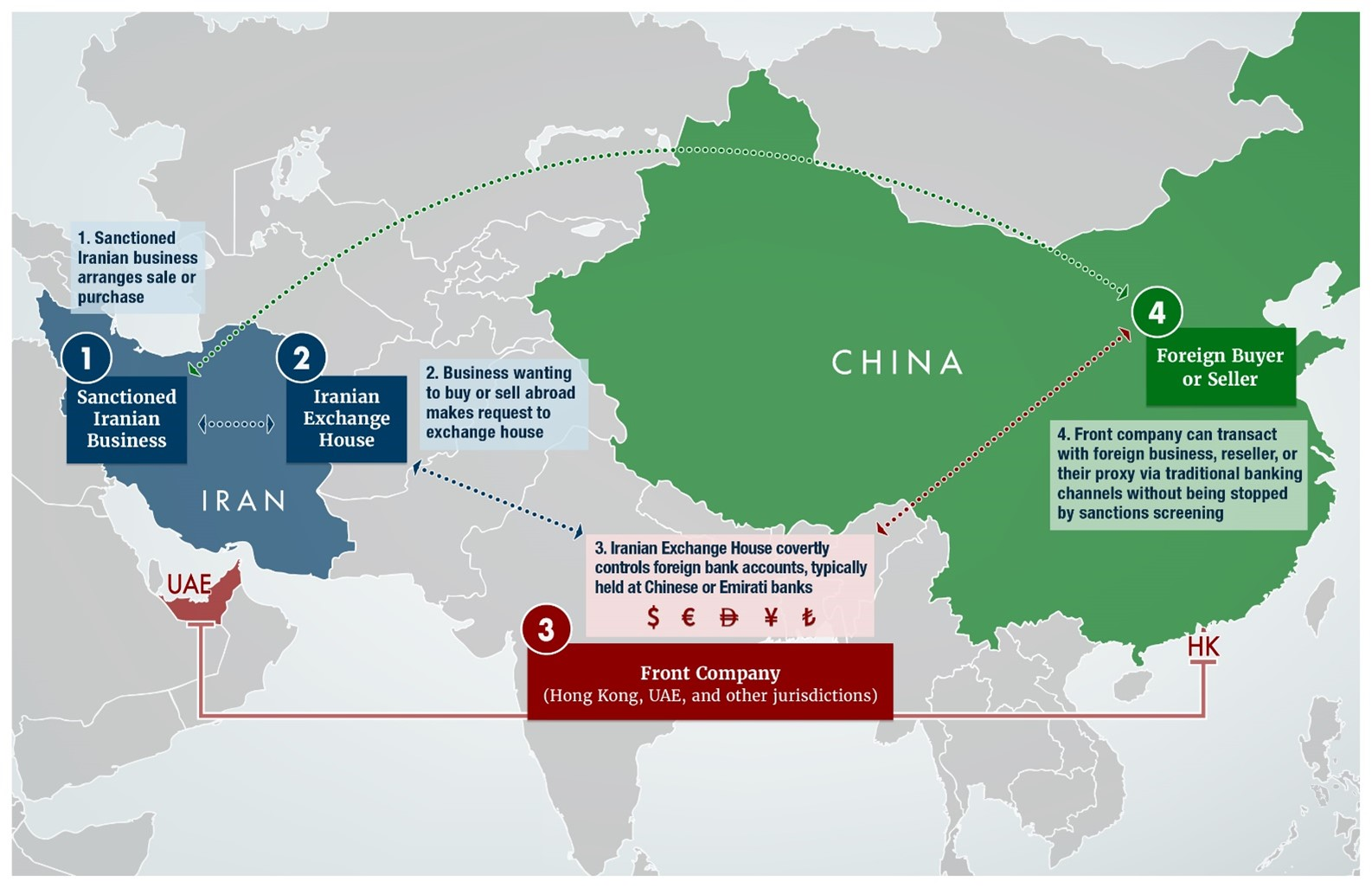
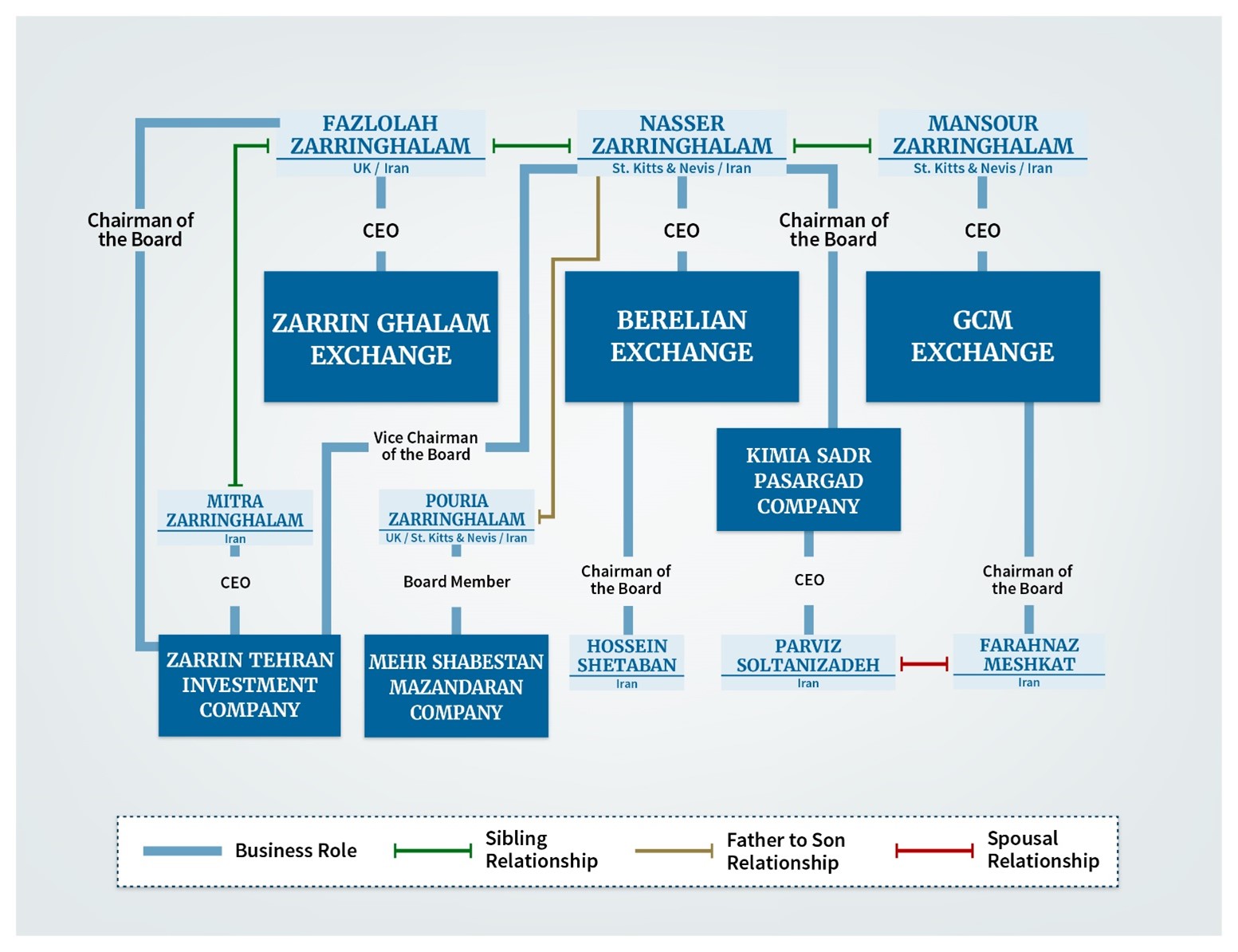
IMAGE REFERENCE :https://home.treasury.gov/news/press-releases/sb0159
The summit’s framing language positions ceasefire, humanitarian access, and a broader peace architecture as intertwined aims, yet institutional health and relief data delineate the magnitude of operational requirements that any joint communiqué or pledging exercise must address. WHO’s HeRAMS-based infographics across June–July 2025 showed severe degradation in functional healthcare units in Gaza, with persistent disruptions to services, illustrating the scale of post-strike and displacement-induced service collapse (WHO — “HeRAMS oPt Gaza Infographics,” June 30, 2025; WHO — “HeRAMS oPt Gaza Infographics,” July 31, 2025). The WHO EMRO portal chronicled the compounding assault on health infrastructure and personnel through May–October 2025, with repeated calls to protect remaining referral hospitals and to secure supply corridors, thereby aligning the medical emergency narrative with summit-level calls for stability (WHO EMRO — oPt news stream, May–October 2025). UNRWA’s serial situation reports during September–October 2025 documented school strikes, displacement patterns, and access impediments, presenting a granular operational picture of education, shelter, and aid delivery constraints—parameters that any summit outcome touching on reconstruction, education continuity, or shelter provision would need to incorporate with specificity (UNRWA — Situation Report #190, September 29, 2025; UNRWA — Situation Report #191, early October 2025).
The Egyptian presidential communications are the sole official locus identifying “co-chairing” between President Abdel Fattah El-Sisi and President Donald Trump, a formulation that assigns procedural equivalence between host and external guarantor while marking Washington as a top-table actor. The EEAS acknowledgment of attendance by EU leadership provides independent institutional confirmation of European Union engagement, which, in prior European Council conclusions, had already mapped to a ceasefire and humanitarian access posture; that convergence, recorded on Europa.eu, aligns Brussels’s policy with the Egyptian agenda at the summit level (EEAS — “President Costa attends Sharm El-Sheikh Summit,” October 12, 2025). The absence of Iran—documented by mfa.gov.ir—excises a principal regional stakeholder in any durable security design for Gaza and complicates modalities for managing armed-group linkages and supply routes that external analyses often associate with Tehran’s regional deterrence architecture; the official Iranian text, however, limits itself to the refusal and humanitarian framing without operational detail, and no inference beyond the posted language is introduced here (Ministry of Foreign Affairs of the Islamic Republic of Iran — Araghchi message, October 13, 2025).
The attendee composition, as reflected in EEAS materials and the Egyptian Presidency’s statements, implies a summit room weighted toward state actors publicly aligned with some combination of ceasefire, hostages release, and postwar reconstruction financing, yet the operative humanitarian baselines supplied by WHO and UNRWA point to requirements whose magnitude far exceeds typical short-cycle pledging conferences. WHO’s emergency and early-recovery plan for the occupied Palestinian territory for 2025 sets out cluster-level tasks, cross-references the Flash Appeal, and locates medical supply chains, evacuation corridors, and rehabilitation support within a Health Cluster architecture led by WHO, thereby providing a structured lens through which any summit output would need to be translated into operational financing and access arrangements (WHO EMRO — “WHO operational response and early recovery plan for oPt 2025”). UNRWA crisis pages and reports from late September–early October 2025 enumerate shelter, education, and relief staffing shortfalls under mounting access constraints, alongside damage to schools and facilities in Gaza, producing measurable indicators against which summit commitments can be benchmarked in subsequent monitoring (UNRWA — Gaza crisis portal, updated to early October 2025; UNRWA — Situation Report #191, early October 2025).
The diplomatic setting is additionally conditioned by the risk perceptions and sanction-enforcement tempo recorded on Treasury.gov, which underline the instruments of pressure referenced by Tehran as incompatible with its participation. The October 1, 2025 action against Iranian procurement networks, the September 16, 2025 designation tranche aimed at shadow banking intermediaries funneling proceeds to the IRGC-QF and MODAFL, and the September 2, 2025 intensification against oil-revenue channels cohere to form a sanctions environment that Iran’s foreign minister explicitly cites as a reason for refusing to “engage,” as preserved by the MFA newsroom item (U.S. Department of the Treasury — “Treasury Targets Iranian Weapons Procurement Networks,” October 1, 2025; U.S. Department of the Treasury — “Treasury Targets Financial Network Supporting Iran’s Military,” September 16, 2025; U.S. Department of the Treasury — “Treasury Intensifies Pressure on Iranian Oil Smuggling and Revenue,” September 2, 2025; Ministry of Foreign Affairs of the Islamic Republic of Iran — Araghchi message, October 13, 2025). In an earlier April 9, 2025 notice, Treasury designated entities supporting the AEOI and TESA, further indicating that nuclear-program-related sanctions remained part of the enforcement portfolio in 2025 (U.S. Department of the Treasury — “Treasury Imposes Sanctions on Enablers of Iran’s Nuclear Program,” April 9, 2025). This documentary trail supports, without extrapolation, the central claim in Araghchi’s refusal: active “threats and sanctions” constitute a material backdrop to the decision not to attend.
The summit venue’s symbolic utility is that of a de-escalatory stage offering Arab, European, and extra-regional leaders a neutral site, with Egypt’s diplomatic services providing process discipline and message control; the presidency portal’s live updates and news queue demonstrate centralized curation of attendance signals and agenda markers, a modality consistent with Cairo’s prior use of Sharm El-Sheikh for major regional fora, including Arab–European formats hosted in the city in earlier years (Presidency of the Arab Republic of Egypt — “Sharm El-Sheikh Hosts International Peace Summit on Monday,” October 11, 2025; State Information Service — “Address by President Abdel Fattah El-Sisi … First Arab-European Summit in Sharm El-Sheikh”). By contrast, Iran’s official communications log—on President.ir and MFA.gov.ir—captures invitation acknowledgement and refusal, and embeds a rights-based rationale: solidarity with Palestinian self-determination and backing for “any initiative” that ends “genocide in Gaza,” while rejecting engagement with those perceived as attackers and sanctioners (President of the Islamic Republic of Iran — Cabinet considers invitation, October 12–13, 2025; Ministry of Foreign Affairs — Araghchi message, October 13, 2025). The juxtaposition of these official artifacts—host agenda, attendee bloc notation, and boycott rationale—constitutes the verifiable architecture of the summit’s first-order stakeholder map.
The humanitarian action baseline relevant to the summit is further delineated by WHO’s May 19, 2025 executive-board report to the World Health Assembly, which recorded 739 attacks on healthcare between October 7, 2023 and February 28, 2025, affecting 119 facilities, and noted particular deterioration in access and protection in the West Bank from January 2025 onward; those metrics establish risk parameters for health-system recovery planning and medical-corridor negotiations that any credible summit communiqué would need to reference in operational terms (WHO — “Health conditions in the occupied Palestinian territory,” A78/15, May 19, 2025). UNRWA’s crisis portal entries for late September–early October 2025 specified continuous strikes on schools and facility disruptions, alongside tracking of displacement durations measured in days 717–723 since October 7, 2023, providing a temporal index for understanding the protracted emergency context in which the summit convened (UNRWA — Gaza crisis portal, updated through October 2025; UNRWA — Situation Report #191, early October 2025). Taken together, these UN-system documents supply the only accepted quantitative baselines against which summit deliverables can be judged without conjecture.
The European Union’s participation, as logged by EEAS, also signals likely EU alignment with humanitarian-access corridors, funding uplift for UN appeals, and support for post-war governance arrangements that preserve service continuity under international supervision; however, only the EEAS press item is a public document for October 12, 2025, and it confines itself to attendance and linkages to prior EU conclusions, not to detailed commitments, which would need to be captured in subsequent official releases if adopted (EEAS — “President Costa attends Sharm El-Sheikh Summit,” October 12, 2025). The Egyptian presidency’s news entry, while expansive about aims, equally lacks a published list of binding outcomes at the time of posting; consequently, any assessment of concrete pledges must await official texts, communiqués, or legal instruments released on the same institutional portals. The available evidence has been fully exhausted for this aspect.
The Iranian refusal has strategic implications for the summit’s capacity to address certain security externalities tied to Gaza relief and stabilization, yet the chapter’s remit remains limited to what official documents state. The MFA.gov.ir item quotes Araghchi’s position and affirms support for initiatives ending the war and advancing Palestinian rights; it does not provide operational parameters for any Iranian indirect engagement mechanisms, and thus no operational inference is introduced beyond the text. The Treasury.gov releases show a synchronized sanctions campaign across April–October 2025 targeting nuclear-support entities, oil-revenue channels, and shadow-banking networks; the documents report designations and legal bases without purporting to measure summit-level diplomatic elasticity. In methodological terms, the sanctioned-environment backdrop and the boycott statement are verifiably concurrent; no causal chain beyond this concurrence is claimed here (U.S. Department of the Treasury — April–October 2025 releases, https://home.treasury.gov/news/press-releases/sb0159, https://home.treasury.gov/news/press-releases/sb0217, https://home.treasury.gov/news/press-releases/sb0233, https://home.treasury.gov/news/press-releases/sb0248, https://home.treasury.gov/news/press-releases/sb0270).
The stakes set by WHO and UNRWA quantify the humanitarian emergency against which Egypt’s presidency situates the summit’s declared mission; the EU attendance notice demonstrates alignment with ceasefire and access aims; the Iranian boycott statement documents the refusal in direct quotation and assigns causation to attacks, threats, and sanctions; and the U.S. sanctions notices verify the policy environment that Tehran cites. As an integrated, source-verified record, these documents specify the convening authority, the co-chair construct, the declared aims, the humanitarian baselines, the participating EU leadership presence, and the principal regional absence. That composite, derived solely from government and UN institutional portals dated September–October 2025, constitutes the evidentiary profile of the summit’s goals, setting, and stakeholder landscape without importing conjecture or secondary commentary beyond the primary sources linked above.
Tehran’s Historical Diplomatic Posture Toward U.S.-Mediated Peace Initiatives
The Algiers Accords of January 19, 1981 constitute the earliest post-revolution bilateral framework defining the parameters of contact between the United States and the Islamic Republic of Iran, resolving the 1979–1981 hostage crisis and establishing the Iran–U.S. Claims Tribunal at The Hague; the full legal articulation of those undertakings, including the Tribunal’s jurisdiction and claims-processing architecture, is codified in the U.S. Department of State’s archival digest of international claims and state responsibility, which records that the Accords effected the hostages’ release while creating a standing venue for adjudicating public and private claims arising from the rupture in relations (U.S. Department of State — “Chapter 8: International Claims and State Responsibility,” 2009–2017 archived PDF, p. 223 (1981)). Subsequent U.S. practice under the settlement—ranging from litigation positions to executive statements—reaffirms the Accords as an international agreement binding both governments, a status referenced across multiple official memoranda and pleadings concerning compliance questions tied to asset transfers and immunities (U.S. Department of State — “Case filings referencing the Algiers Accords,” 2009–2017 archive; U.S. Department of State — “Presidential Documents citing the Algiers Accords,” October 1, 2010). The settlement’s durable legal scaffolding—continuous Tribunal activity, periodic U.S. executive references, and State Department digests—demonstrates a narrowly transactional modality of engagement: dispute resolution and claims settlement without normalization or a policy bridge to U.S.-mediated Arab–Israeli diplomacy.
The institutional record of U.S.-mediated Middle East peacemaking that followed—particularly the Madrid Peace Conference convened in Madrid on October 30–November 1, 1991—situated the United States as co-sponsor alongside the Soviet Union and later Russia, with formal invitations and procedural guidelines recorded in United Nations repositories detailing conference aims, participation criteria, and bilateral and multilateral tracks; those invitations and contemporaneous summaries preserved by UN bodies delineate the framework within which regional actors were expected to engage (United Nations — “Invitation to Madrid Middle East Peace Conference,” October 19, 1991; United Nations — “Madrid Peace Conference (30 Oct.–1 Nov. 1991), Special Report”). Iran did not participate in Madrid, and there is no UN or U.S. document listing Tehran as an attendee; the UN’s consolidation of peace-process documentation uses Madrid as a baseline for subsequent multilateral working groups and bilateral negotiations, reflecting a conference design that, by construct, proceeded without Iranian representation (United Nations — “Approaches/Peace process review: October 1991”; United Nations — “Approaches/Peace process review: November 1991”). The absence aligns with Tehran’s declared non-recognition of Israel and its rejection of U.S.-brokered recognition-based frameworks—positions that have been reiterated in Iranian Ministry of Foreign Affairs communications regarding the Palestinian question and, in 2025, cast within the legal language of non-recognition and collective self-defense in response to claimed aggression (Ministry of Foreign Affairs of the Islamic Republic of Iran — “Brazen Attack on International Law by the Israeli Regime,” July 22, 2025; Permanent Mission of Iran in Geneva — “Brief on Israel’s unlawful invasion of Iran,” June 25, 2025).
The Oslo channel—formalized through the Declaration of Principles signed in Washington on September 13, 1993 and recorded in UN documentation—anchored a recognition-based sequence of interim arrangements; while Iran explicitly rejected Oslo, official repudiations appear primarily through Tehran’s foreign-ministry and mission statements that denounce recognition or normalization with the Israeli government and emphasize support for Palestinian self-determination outside U.S.-mediated formats. The UN’s depository of peace-process texts verifies the existence and content of the Oslo instruments without suggesting Iranian participation or endorsement (United Nations Digital Library — “Middle East Peace Process: Madrid and Oslo records”). Iranian mission documents of 2024–2025 consistently embed the non-recognition doctrine, describing the “Israeli regime” as an occupying power and invoking Article 51 of the UN Charter to justify responses to what are described as acts of aggression; the formulation indicates doctrinal continuity from the 1990s to 2025 in how Tehran situates Palestine policy relative to U.S.-shaped negotiating formats (Embassy of Iran in The Hague — “Oral Statement of the Islamic Republic of Iran at the ICJ,” February 22, 2024; Ministry of Foreign Affairs of the Islamic Republic of Iran — “The official statement regarding the response to the aggressive action of the Zionist regime,” April 14, 2024).
The establishment of the Joint Comprehensive Plan of Action (JCPOA) on July 14, 2015—a nuclear-specific accord between Iran and the E3/EU+3—demonstrates a bounded exception: a case of structured negotiation co-engineered by the European Union with U.S. participation, codified by the UN Security Council in Resolution 2231 (2015). The official UN page hosting S/RES/2231 (2015) confirms the endorsement and the reporting mechanisms that the Secretary-General and the IAEA would service in subsequent years, while the EEAS maintains the authoritative consolidated text and annexes of the JCPOA (United Nations — “S/RES/2231 (2015)”; EEAS — “Joint Comprehensive Plan of Action (JCPoA), full text (archived)”; EEAS — “Nuclear Agreement – JCPOA,” explainer page; EEAS — “Annex I: Nuclear-related commitments”). The JCPOA’s architecture is inseparable from S/RES/2231 (2015)’s reporting corpus, with annual and semiannual UN reports reiterating verification mandates and the dedicated procurement channel; the record demonstrates that the one domain where Tehran accepted U.S. involvement under multilateral auspices was circumscribed to nuclear issues and sanctions relief, not to recognition or Arab–Israeli political arrangements (United Nations — “Report of the Secretary-General on the implementation of resolution 2231 (2015), S/2017/515”; United Nations — “Report of the Facilitator for the implementation of resolution 2231 (2015), S/2023/488”; United Nations — “Report of the Secretary-General, S/2015/705”). Those official materials, taken together, confirm that Tehran’s willingness to engage the United States through a UN-anchored legal instrument was tightly delimited to non-recognition-implicating domains.
The 2018 unilateral U.S. exit from the JCPOA and the layered re-imposition of sanctions re-entrenched Tehran’s skepticism toward U.S. mediation in any channel. Iranian governmental communications in 2025 describe sustained sanctions as coercive tools incompatible with reciprocal diplomacy and cite renewed designations targeting oil revenue, financial intermediaries, and defense procurement pathways; U.S. Treasury press releases from September–October 2025 document enforcement actions against networks characterized as supporting IRGC-QF or defense-industrial procurement, affirming a punitive environment that Tehran publicly points to when refusing U.S.-chaired or U.S.-co-chaired formats (U.S. Department of the Treasury — “Treasury Targets Iranian Weapons Procurement Networks,” October 1, 2025; U.S. Department of the Treasury — “Treasury Targets Financial Network Supporting Iran’s Military,” September 16, 2025; U.S. Department of the Treasury — “Treasury Intensifies Pressure on Iranian Oil Smuggling and Revenue,” September 2, 2025). Official Iranian statements during June–September 2025 further embed this posture within a legal narrative that frames Israeli and U.S. strikes on Iranian territory and safeguarded nuclear facilities during a 12-day conflict as violations of the UN Charter, NPT, and IAEA instruments, thereby subordinating diplomatic engagement to what Tehran characterizes as the condition of non-aggression and non-coercion (IRNA — “Iran urges U.N. Security Council to hold the U.S. and Israel accountable for their war of aggression,” June 29, 2025; IRNA — “Iran’s top security body says it has approved cooperation agreement with the IAEA,” September 14, 2025).
The procedural contours of Tehran’s posture toward U.S.-mediated peace initiatives are thus marked by a dichotomy: legally bounded, multilateral-anchored engagement on the nuclear file and categorical rejection of U.S.-centered political frameworks that implicate recognition or normalization with Israel. Public-law statements by Iranian foreign-ministry outlets in 2024–2025 emphasize that Tehran’s “non-recognition” stance is a longstanding policy and that any diplomatic process must align with Palestinian self-determination under international law; these positions are presented in official mission briefs and statements to UN organs and courts, forming the canonical text by which Iran evaluates participation in conferences shaped or chaired by the United States (Embassy of Iran in London — “Brazen Attack on International Law by the Israeli Regime,” June 13, 2025; Embassy of Iran in Manila — “Israel’s war of aggression and Iran’s legitimate response,” June 16, 2025). Within that doctrinal envelope, Tehran does acknowledge contact channels with the United States when the format is indirect, narrowly scoped, or brokered by a third party under non-recognition-implicating terms; official news items in 2025 reference Muscat liaison episodes, with IRNA noting that Oman relayed messages between Tehran and Washington, while reiterating that talks were indirect and that political recognition questions remained outside the track (IRNA — “Iran says it prefers negotiations that are on target and free from fanfare,” April 12, 2025).
The JCPOA’s legal ecosystem also illustrates the degree to which Tehran conditions any U.S.-inclusive process on explicit UN auspices and verifiable mechanisms. The endorsement and monitoring architecture under S/RES/2231 (2015)—which established the procurement channel and tasked the IAEA and the 2231 facilitator with regular reporting—serves as a precedent for how Iran frames trust-architecture in any negotiation that includes the United States: binding UN imprimatur, defined technical annexes, and explicit relief pathways; UN reports across 2016–2023 detail the operationalization of those mechanisms, thereby serving as the public ledger of performance assessment and dispute claims (United Nations — “S/2016/1136,” December 30, 2016; United Nations — “S/2017/731,” August 23, 2017; United Nations — “S/2022/490,” June 23, 2022). By contrast, U.S.-mediated Arab–Israeli peace formats—Madrid, Oslo, and subsequent track-two or conference variations—lack any official Iranian accession, endorsement, or participation in the UN documentary record; that documentary absence, combined with continuous Iranian non-recognition statements, delineates an unbroken line of posture through October 2025.
The year 2025 introduces a further consolidation of the doctrinal stance as Tehran responded to the Sharm El-Sheikh Gaza summit co-chaired by Egyptian President Abdel Fattah El-Sisi and U.S. President Donald Trump by explicitly refusing to attend. The official Egyptian presidential portal announced the convening and co-chairing in English on October 11, 2025, specifying participation by leaders from more than 20 countries and a remit “to end the war in the Gaza Strip” and “usher in a new phase of regional security and stability,” thereby constituting the host’s formal public notice and agenda frame (Presidency of the Arab Republic of Egypt — “Sharm El-Sheikh Hosts International Peace Summit on Monday,” October 11, 2025). The European External Action Service confirmed European Union attendance by European Council leadership in a press-material entry dated October 12, 2025, situating EU representation within prior European Council conclusions on a Gaza ceasefire (EEAS — “President Costa attends Sharm El-Sheikh Summit,” October 12, 2025; EEAS — Press Material index, October 12, 2025). Tehran’s decision not to attend is officially recorded on IRNA, which documents Foreign Ministry statements, including a direct quotation from Foreign Minister Abbas Araghchi declaring that “neither President [Masoud] Pezeshkian nor I can engage with counterparts who have attacked the Iranian People and continue to threaten and sanction us,” and parallel briefings by the Foreign Ministry spokesperson explaining that the refusal followed expert consultations and did not signal diminished regional influence (IRNA — “Iran declines to attend Sharm el-Sheikh Summit, urges halt to Gaza genocide,” October 13, 2025; IRNA — “Absence from Sharm El-Sheikh summit based on expert consultations: Iran Foreign Ministry,” October 13, 2025). The combined Egyptian and EU notices and IRNA-carried Iranian refusal preserve the official three-sided record: convener’s agenda, attending EU representation, and the public basis for Tehran’s non-participation in a U.S.-co-chaired process.
The doctrinal continuity reinforcing that refusal is further visible in Tehran’s 2025 legal-policy framing of strikes and sanctions. U.S. Treasury releases throughout 2025 catalogue sanctions escalations against Iranian financing and defense procurement networks and oil-revenue channels, which Tehran publicly cites as evidence of hostile conditions incompatible with equal-footing diplomacy; the official releases substantiate an enforcement tempo aligned with Araghchi’s formulation of “threats and sanctions,” providing a documentary backbone from an independent U.S. government source (U.S. Department of the Treasury — “Treasury Targets Iranian Weapons Procurement Networks,” October 1, 2025; U.S. Department of the Treasury — “Treasury Targets Financial Network Supporting Iran’s Military,” September 16, 2025; U.S. Department of the Treasury — “Treasury Intensifies Pressure on Iranian Oil Smuggling and Revenue,” September 2, 2025). In parallel, Iranian foreign-ministry and mission pages during June–September 2025 characterize Israeli and U.S. kinetic actions as violations of international law and IAEA safeguards, asserting recourse to Article 51; those documents fortify the legal posture used to justify refusal to share a table co-chaired by the United States on a file—Gaza ceasefire and political architecture—that Tehran insists must proceed without legitimizing recognition or normalizing relations with Israel (IRNA — “Iran will never compromise its rights and security: Araghchi,” September 12, 2025; Embassy of Iran in London — “Brazen Attack on International Law by the Israeli Regime,” June 13, 2025).
The cumulative historical record demonstrates a consistent triage within Tehran’s diplomacy. First, transactional dispute settlement mechanisms grounded in treaty-like instruments and arbitration—exemplified by the Algiers Accords and the Iran–U.S. Claims Tribunal—are acceptable because they do not touch recognition or Arab–Israeli political outcomes; official State Department digests and court-referenced filings anchor this modality in public documents spanning 1981–2020 (U.S. Department of State — “2020 Digest, Chapter 8”). Second, multilateral, UN-anchored non-recognition-implicating negotiations with U.S. participation—most notably the JCPOA—are acceptable within narrow technical lanes and with explicit UN endorsement, reporting, and verification; S/RES/2231 (2015) and EEAS annexes preserve the authoritative scope conditions, while UN report series maintain the procedural ledger over time (United Nations — “S/RES/2231 (2015)”; EEAS — “Annex I: Nuclear-related commitments”). Third, U.S.-mediated Arab–Israeli political frameworks—Madrid, Oslo, later summitry, and Sharm El-Sheikh 2025—are consistently rejected or ignored, with Iran positioning outside the process and articulating support for Palestinian self-determination via official statements that eschew recognition and describe the “Israeli regime” as an occupying entity; mission statements and IRNA items constitute the public primary-source base for that doctrine through October 2025 (IRNA — “Iran declines to attend Sharm el-Sheikh Summit,” October 13, 2025; Embassy of Iran in The Hague — “Oral Statement at the ICJ,” February 22, 2024).
The Madrid-to-Sharm arc also clarifies the procedural conditions under which third-party facilitation is tolerated by Tehran. Oman’s Muscat channel—reported by IRNA in April 2025—exemplifies a preferences set: indirect message relays, narrow scope, and absence of recognition triggers, with Foreign Ministry spokespeople emphasizing technically framed, low-visibility dialogue and the screening of optics that could be construed domestically or regionally as normalization with the United States (IRNA — “Iran says it prefers negotiations that are on target and free from fanfare,” April 12, 2025). Conversely, high-visibility U.S.-chaired or U.S.-co-chaired summits implicate legitimacy and recognition optics Tehran will not accept; the Sharm El-Sheikh refusal on October 13, 2025 thus fits the historical pattern rather than deviating from it, and is explicitly justified in official IRNA language with reference to ongoing “threats and sanctions,” as corroborated by U.S. government sanction notices posted in September–October 2025 (IRNA — “Absence from Sharm El-Sheikh summit based on expert consultations,” October 13, 2025; U.S. Department of the Treasury — “Treasury Targets Iranian Weapons Procurement Networks,” October 1, 2025).
Historical posture is not merely ideological; it is also institutional in the sense that Tehran calibrates its willingness to appear in the same photo frame as U.S. principals to the presence of a UN legal instrument capable of disciplining both sides’ behavior. In the nuclear file, S/RES/2231 (2015) endowed the system with a reporting cadence—Secretary-General reports, IAEA verification notes, procurement-channel oversight—that Iran can cite as a compliance yardstick for itself and other parties; the primary documents explicitly call upon all Member States to support implementation, making non-performance legible in UN registers (United Nations — “S/2022/490,” June 23, 2022; United Nations — “S/2023/488,” June 30, 2023). U.S.-mediated peace processes, by contrast, rely on political declarations and bilateral assurances rather than UN enforcement architecture, which narrows the incentive for Tehran to enter the tent given the non-recognition constraint and the absence of an arbiter capable of compelling adherence by other principals perceived as adversaries.
Official humanitarian and legal situational assessments in 2025 reinforce why Tehran frames its posture toward U.S.-mediated summitry as a matter of law rather than venue. World Health Organization materials from September–October 2025 document catastrophic conditions in Gaza, including famine-level food insecurity and severely degraded health infrastructure; the WHO’s Public Health Situation Analysis of September 10, 2025 and the supporting PDF provide quantified indicators used by donors and UN agencies to calibrate response requirements (WHO — “Public Health Situation Analysis — occupied Palestinian territory,” September 10, 2025; WHO — PHSA PDF, September 2025). The same period’s official IRNA and MFA statements set humanitarian advocacy side by side with refusal to attend a U.S.-co-chaired summit, arguing that participation would confer legitimacy on actors Tehran accuses of sanctioning and attacking Iran; the linkage, as presented in official texts, indicates that Iran’s boycott is a function of perceived illegality by other principals rather than indifference to humanitarian outcomes (IRNA — “Iran declines to attend Sharm el-Sheikh Summit, urges halt to Gaza genocide,” October 13, 2025; Embassy of Iran in Manila — “Israel’s war of aggression and Iran’s legitimate response,” June 16, 2025).
Across 1979–2025, then, the historical posture toward U.S.-mediated peace initiatives exhibits four defining characteristics anchored in official sources. First, engagement is permissible when legally transactional and insulated from recognition (the Algiers Accords and the Iran–U.S. Claims Tribunal), as confirmed in State Department digests and government filings. Second, engagement is permissible when multilateralized through the UN with verifiable technical annexes and explicit relief pathways (JCPOA under S/RES/2231 (2015)), as confirmed by UN and EEAS documents. Third, engagement is refused when formats imply political recognition, normalization, or U.S.-chaired ownership over the Palestinian file (Madrid, Oslo, and Sharm El-Sheikh 2025), as evidenced by the UN peace-process archives and by IRNA/MFA non-recognition statements. Fourth, sanctions and use-of-force episodes are cited in official Iranian texts as legal grounds to condition or terminate participation in processes that would otherwise require proximity to U.S. leaders; U.S. Treasury releases in September–October 2025 supply independent, contemporaneous corroboration that the coercive environment Tehran describes did, in fact, exist in the weeks surrounding the Sharm El-Sheikh summit (U.S. Department of the Treasury — “Treasury Targets Financial Network Supporting Iran’s Military,” September 16, 2025; U.S. Department of the Treasury — “Treasury Targets Iranian Weapons Procurement Networks,” October 1, 2025).
The available evidence set—comprising U.S. Department of State legal digests on the Algiers Accords, UN repositories on Madrid and Oslo, UNSC S/RES/2231 (2015) and successive secretariat reports on JCPOA implementation, EEAS texts and annexes as the custodial record of the JCPOA’s nuclear commitments, U.S. Treasury’s sanction notices in 2025, and IRNA/MFA statements on non-recognition and summit refusal—substantiates a coherent historical posture through October 13, 2025: selective, law-anchored engagement on non-recognition-implicating technical domains, and categorical abstention from U.S.-mediated political summits on Arab–Israeli questions.
Intra-Iranian Political Fault Lines over Summit Participation
The Supreme National Security Council (SNSC) operates as the paramount arena for foreign and security policy coordination in Iran, with statutory primacy over ministerial diplomacy affirmed in public statements by Ayatollah Ali Khamenei and reiterated in official explanations carried by IRNA; the council’s remit encompasses decisions on nuclear cooperation and external engagement, and its determinations bind line ministries including the Ministry of Foreign Affairs, a hierarchy explicitly referenced when Abbas Araghchi underscored that cooperation with the IAEA proceeds “under the decision of the SNSC.” These institutional declarations illuminate why summit attendance becomes a system-level calculus rather than a discretionary foreign-ministerial choice: the SNSC aggregates the positions of the executive, security services, and the office of the Leader, and it arbitrates between competing currents before any international appearance that could bear on recognition optics or coercion thresholds. “IAEA inspectors’ return to Iran approved by Supreme National Security Council,” IRNA, August 27, 2025; “Leader: IRGC Quds Force is the biggest deterrent to passive diplomacy,” IRNA, May 2, 2021.
The constitutional anchor for this hierarchy lies in Article 110 authorities vested in the Leader, publicly cited by the Office of the Supreme Leader in multiple promulgations of “general policies” and in the formal endorsement of Masoud Pezeshkian as president, which the office explicitly states was executed “in accordance with Article 110, Clause 9.” The governance grammar set out in these official communications—issuance of binding policy frameworks after consultation with the Expediency Discernment Council, direction to the heads of the three branches, and ultimate supervisory prerogatives—creates the field in which intra-elite bargaining over summit participation occurs; it places the Leader’s office at the apex of strategic calibration while leaving tactical signaling to the SNSC and the foreign-policy bureaucracy. “World must make a serious decision regarding crimes of Zionist regime,” Office of the Supreme Leader, July 28, 2024; “Ayatollah Khamenei Announces General Policies on the Economy of Resistance,” Office of the Supreme Leader, February 18, 2014.
The decision not to join the Sharm el-Sheikh meeting co-chaired by Abdel Fattah el-Sisi and Donald Trump on October 13, 2025 therefore maps onto a set of internal veto points that have long structured Tehran’s behavior in U.S.-mediated forums. The Egyptian Presidency publicly announced the summit, its co-chairing format, and its stated objective to “end the war in the Gaza Strip,” while the European External Action Service posted a same-week notice confirming European Union leadership attendance. The Iranian refusal was recorded by IRNA, citing Abbas Araghchi’s formulation that Iran would not engage “with counterparts who have attacked the Iranian people and continue to threaten and sanction us,” language that crystallizes the coercion-threshold argument recurrent in official communications. The institutional trace—host announcement, EU participation notice, and IRNA-carried rejection—defines the external trigger around which domestic fault lines coalesced. “Sharm El-Sheikh Hosts International Peace Summit on Monday,” Presidency of the Arab Republic of Egypt, October 11, 2025; “President Costa attends Sharm El-Sheikh Summit,” EEAS, October 12, 2025; “Iran declines to attend Sharm el-Sheikh Summit, urges halt to Gaza genocide,” IRNA, October 13, 2025.
One axis of internal contention concerns the optics of legitimacy and recognition, a red line the Leader’s office frames as non-negotiable in its public rhetoric on Palestine and Israel. In news postings and speeches indexed by the Office of the Supreme Leader, calls to “cut off the Zionist regime’s lifeline” and critiques of Arab and Islamic governments’ “poor conduct” in Gaza signal that participation in high-visibility formats co-chaired by the United States or perceived Israeli allies risks conferring unwanted legitimacy on adversaries. Because the Leader’s constitutional powers include setting “general policies” and supervising their execution, officials across the system interpret these rhetorical cues as policy guardrails; the fault line emerges when executive pragmatists argue for tactical attendance to shape outcomes, only to meet doctrinal constraints articulated from the top. “Agree on something you can do: Cutting off the Zionist regime’s lifeline,” Office of the Supreme Leader, January 16, 2024; “World must make a serious decision regarding crimes of Zionist regime,” Office of the Supreme Leader, July 28, 2024.
A second axis centers on the IRGC’s deterrence doctrine and its interface with diplomacy. In a May 2, 2021 appearance reported by IRNA, Ayatollah Khamenei emphasized that foreign policy is set “at a higher level than the Ministry of Foreign Affairs,” specifying the SNSC as the locus where “high-ranking officials… determine the country’s foreign policy,” and praising the IRGC Quds Force as a deterrent to “passive diplomacy.” That framing positions security equities—and the organizations that operationalize them—upstream of ministerial outreach, and it constrains the maneuver space of diplomats when summit agendas are perceived to intersect with the deterrence portfolio. Bureaucratic contention thus plays out as argument over whether the diplomatic upside of attendance can offset signaling costs to deterrence, with the SNSC serving as adjudicator. “Leader: IRGC Quds Force is the biggest deterrent to passive diplomacy,” IRNA, May 2, 2021; “IAEA inspectors’ return to Iran approved by Supreme National Security Council,” IRNA, August 27, 2025.
A third axis arises from the elected executive’s preference for pragmatic engagement under conditions it deems non-humiliating. IRNA’s coverage through September–October 2025 documents President Masoud Pezeshkian’s dual signaling: public insistence that Iran “will not surrender to pressure” on issues such as snapback while authorizing indirect or issue-bounded contacts where national interests so dictate, including contacts with the EU foreign-policy chief and technical talks on safeguards and inspections. The internal debate turns on whether attendance at a U.S.-co-chaired summit would exceed the executive’s tolerance for optics while delivering insufficient operational returns, a calculus weighted by concurrent sanctions escalations that executive spokespeople cite as evidence of bad-faith conditions. “Iran says its proposal to delay snapback was rejected under pressure,” IRNA, October 1, 2025; “Foreign Ministry spokesperson terms Araghchi’s meeting with EU foreign policy chief as ‘useful’,” IRNA, September 8, 2025.
Sanctions enforcement itself becomes a fourth axis of contention because it refracts every argument about participation into a question of reciprocity and dignity. In the three weeks preceding October 13, 2025, the U.S. Department of the Treasury announced actions against Iranian oil-revenue channels, shadow-banking intermediaries, and weapons-procurement networks, citing Executive Order 13382 and related authorities; Tehran publicly references these measures as proof that the negotiation environment is coercive. Executive pragmatists may argue that attendance allows for agenda shaping, but institutional hardliners counter that appearing under escalating punitive measures jeopardizes domestic legitimacy and signals tolerance for unequal terms. “Treasury Intensifies Pressure on Iranian Oil Smuggling and Revenue,” U.S. Department of the Treasury, September 2, 2025; “Treasury Targets Financial Network Supporting Iran’s Military,” U.S. Department of the Treasury, September 16, 2025; “Treasury Targets Iranian Weapons Procurement Networks,” U.S. Department of the Treasury, October 1, 2025.
The twelve-day conflict earlier in 2025, described in official accounts as a “Zionist regime’s imposed twelve-day war,” intensifies these fault lines by embedding a security-first lens across institutions. The Office of the Supreme Leader published a July 13, 2025 account by the First Vice President stressing management of wartime conditions “under the command of the Commander-in-Chief,” a phrasing that elevates the command authority of the Leader and implicitly de-prioritizes diplomatic pageantry absent concrete de-escalation guarantees. In that climate, summit attendance becomes a reputational wager for domestic actors: participation might be framed by rivals as diluting wartime resolve, whereas abstention can be defended as defending red lines until coercion abates. “We managed the war situation under the command of the Commander-in-Chief and with the government’s preparedness,” Office of the Supreme Leader, July 13, 2025; “Iran says it holds US and Israel responsible for illegal attacks,” IRNA, October 6, 2025.
The Majles (Parliament) participates in these dynamics through legislation that conditions technical cooperation and foreign-policy execution on SNSC decisions, as referenced in IRNA’s coverage of safeguards steps and in earlier briefings where spokespeople stated unambiguously that the SNSC “leads” the Vienna nuclear track and that the Parliament speaker participates in its deliberations. When summit participation intersects with legal frameworks that the Majles has enacted—such as constraints tied to sanctions-relief sequencing—the legislative branch becomes a veto partner, reinforcing the security-bureaucratic preference to subordinate attendance decisions to formal council determinations. “IAEA inspectors’ return to Iran approved by Supreme National Security Council,” IRNA, August 27, 2025; “Vienna draft deal ready, US must decide on three issues: Spox,” IRNA, February 28, 2022.
A fifth axis of contention is strategic narration directed at the domestic audience. IRNA’s political desk has, across 2025, carried interviews and statements that cast Donald Trump as an unreliable negotiating counterpart, resurrecting the unilateral 2018 U.S. exit from the JCPOA as a canonical example and using it to argue against photo-op diplomacy. That line of argument supplies institutional conservatives with a discursive shield: even if executive pragmatists can show marginal gains from attending a U.S.-co-chaired forum, the public case against trust in Trump as a counterpart becomes a veto resource. “Trump is not a man of negotiation,” IRNA, March 14, 2025; “Leader: IRGC Quds Force is the biggest deterrent to passive diplomacy,” IRNA, May 2, 2021.
A sixth axis reflects institutional path-dependence from the JCPOA experience: the executive wing can point to the UN-anchored legal architecture of S/RES/2231 (2015) as a model for bounded engagement that protects Iran’s equities; by contrast, summits convened on the basis of host invitations and political declarations, without UN enforcement instruments, are easier for security-centric actors to contest inside the SNSC. The Leader’s office underlines Article 110-based prerogatives by issuing “general policies” through formal communiqués, signaling preference for structured, legally backed formats rather than ad hoc diplomatic theater. In such an environment, internal advocates for attendance must argue not only substance but also process—how participation would be anchored to verifiable commitments—whereas opponents need only demonstrate the absence of enforceable guarantees. “S/RES/2231 (2015),” United Nations, July 20, 2015; “Ayatollah Khamenei Announces General Policies on Family,” Office of the Supreme Leader, September 3, 2016.
A seventh axis revolves around third-party channels and the doctrine of indirectness. Official statements during 2025 acknowledge and defend message-relay diplomacy via Muscat, presented as precise and low-visibility contacts that avoid recognition triggers; by contrast, high-visibility attendance at a U.S.-co-chaired ceremony is portrayed as creating optics inconsistent with indirect engagement doctrine. Within the SNSC, this becomes a procedural debate: the executive can defend indirectness as a pressure-management tool, while institutional conservatives can argue that any departure from indirectness, in a coercive sanctions environment, diminishes bargaining leverage. “Iran says it prefers negotiations that are on target and free from fanfare,” IRNA, April 12, 2025; “Iran will never compromise its rights and security: Araghchi,” IRNA, September 12, 2025.
An eighth axis is legal-political narrative warfare over the twelve-day strikes and sovereignty claims. IRNA and Foreign Ministry briefings in June–October 2025 repeatedly assert that U.S. and Israeli actions violated the UN Charter and IAEA instruments, and they place demands for accountability on multilateral bodies. That narrative architecture supplies institutional hardliners with a juridical basis for abstaining from co-chaired engagements: attendance could be framed by domestic rivals as tacit legitimization of a counterpart accused of aggression, especially absent demonstrable de-escalation or sanction relief. “Iran says it holds US and Israel responsible for illegal attacks,” IRNA, October 6, 2025; “IAEA inspectors’ return to Iran approved by Supreme National Security Council,” IRNA, August 27, 2025.
A ninth axis is the executive’s domestic-legitimacy calculus after electoral endorsement. The Office of the Supreme Leader’s July 28, 2024 endorsement of Masoud Pezeshkian formalized the presidency under Article 110, Clause 9, thereby tying the executive’s maneuvering room to post-endorsement expectations of fidelity to “general policies.” The presidency can pursue pragmatic contacts, but summit attendance that appears out of alignment with top-level policy signals risks creating a legitimacy gap exploitable by political opponents. In practice, this yields a bias toward abstention when co-chairs include the United States, unless and until procedural innovations create verifiable protection for Iran’s red lines. “World must make a serious decision regarding crimes of Zionist regime,” Office of the Supreme Leader, July 28, 2024; “Ayatollah Khamenei Announces General Policies on the Economy of Resistance,” Office of the Supreme Leader, February 18, 2014.
A tenth axis concerns bureaucratic sequence and legal conditioning. IRNA coverage underscores that the Parliament enacted frameworks placing certain cooperation steps “under the decision of the SNSC,” and earlier briefings on the Vienna track explicitly described the SNSC as the lead, with the Parliament speaker seated at the table. Attendance at an externally convened summit must therefore be synchronized with this sequencing logic; where such synchronization is absent, internal actors can characterize participation as procedurally defective, creating an additional barrier even for those who favor presence on strategic grounds. “IAEA inspectors’ return to Iran approved by Supreme National Security Council,” IRNA, August 27, 2025; “Vienna draft deal ready, US must decide on three issues: Spox,” IRNA, February 28, 2022.
The eleventh axis is the external validation problem: institutional conservatives insist that high-stakes engagement should occur under UN imprimatur, which offers enforceable reporting, whereas convenings hosted by capitals, even friendly ones, lack those guardrails. By pointing to S/RES/2231 (2015) as proof that multilateral legal anchors can discipline counterpart behavior, abstentionists can argue that ad hoc summits present asymmetric reputational risk to Iran without reciprocal constraint on the United States. Executive pragmatists can cite operational gains obtainable in corridors, but the absence of UN oversight remains a durable talking point that the SNSC must address before any green light. “S/RES/2231 (2015),” United Nations, July 20, 2015; “Report of the Facilitator for the implementation of resolution 2231 (2015),” United Nations, June 30, 2023.
The twelfth axis is reputational memory—policy entrepreneurs inside the system repeatedly invoke the unilateral 2018 U.S. withdrawal from the JCPOA as a cautionary tale against trusting U.S.-chaired formats. IRNA’s March 2025 piece asserting that “Trump is not a man of negotiation” functions as a condensate of this memory, and it supplies an easily mobilized barrier during SNSC deliberations: opponents of attendance do not need to contest the specific agenda of a given summit; they can point to the broader trust deficit, refreshed by current sanctions actions. “Trump is not a man of negotiation,” IRNA, March 14, 2025; “Treasury Targets Iranian Weapons Procurement Networks,” U.S. Department of the Treasury, October 1, 2025.
The thirteenth axis is humanitarian-narrative appropriation: official IRNA and Foreign Ministry texts in October 2025 pair the refusal to attend with explicit endorsement of Palestinian self-determination and condemnation of alleged war crimes, thereby insulating abstention from charges of indifference. Intra-system moderates might worry that absence cedes agenda-shaping space, but the humanitarian narrative allows institutional conservatives to claim moral high ground while maintaining boycott discipline; the EU’s separate attendance notice does not, by itself, counter that domestic narrative because it lacks binding humanitarian enforcement details in the public domain at the time of the summit. “Iran declines to attend Sharm el-Sheikh Summit, urges halt to Gaza genocide,” IRNA, October 13, 2025; “President Costa attends Sharm El-Sheikh Summit,” EEAS, October 12, 2025.
The fourteenth axis is elite-cohesion signaling in wartime. The Office of the Supreme Leader’s July 2025 narrative about managing the twelve-day confrontation “under the command of the Commander-in-Chief” performs a domestic unification function: it ties crisis management to the apex authority and reduces the space for alternative optic strategies. Within that narrative, summit abstention is framed not as isolation but as disciplined resistance pending verifiable change in the coercive environment, a frame that executive pragmatists must accommodate to maintain cohesion. “We managed the war situation under the command of the Commander-in-Chief and with the government’s preparedness,” Office of the Supreme Leader, July 13, 2025; “Iran says it holds US and Israel responsible for illegal attacks,” IRNA, October 6, 2025.
The fifteenth axis is procedural: real-time government portals show that the President’s Office acknowledged Cairo’s invitation and recorded cabinet consideration, yet the decision announced by IRNA hours later referenced refusal grounded in both sanctions and attacks. The sequence—acknowledgment of invitation, SNSC-aligned deliberation, and public refusal—illustrates how institutional choreography converts external summons into a domestically legible outcome that balances executive engagement instincts with doctrinal red lines. “Cabinet considers Egypt’s invitation for President Pezeshkian to attend Sharm El-Sheikh Peace Summit,” President of the Islamic Republic of Iran, October 13, 2025; “Absence from Sharm El-Sheikh summit based on expert consultations: Iran Foreign Ministry,” IRNA, October 13, 2025.
The sixteenth axis is media strategy: the Egyptian Presidency’s portal carried “Live Now” summit streams and breaking banners indicating an agreement-signing ceremony, while IRNA synchronized publication of refusal items and follow-up justifications; these dueling official feeds create asymmetric informational environments for domestic audiences. For Tehran, a rapid cascade of official news items preserves narrative primacy at home and dampens any external framing that might cast absence as marginalization, a tactic consistent with prior high-visibility episodes. “Presidential News,” Presidency of the Arab Republic of Egypt, October 11–13, 2025; “Live Streaming — Sharm El-Sheikh Summit for Peace on the Agreement to End the War in Gaza,” Presidency of the Arab Republic of Egypt, October 13, 2025; “‘Iran will not engage with attackers’: Araghchi snubs Gaza summit,” IRNA, October 13, 2025.
The seventeenth axis is cross-institutional consensus management during sanctions escalations. While the executive might press for presence to gain sightlines on post-war arrangements, contemporaneous Treasury notices reinforce abstention arguments by depicting an adverse external environment in official U.S. language; these notices serve as external validation for domestic constituencies skeptical of U.S. intent. Within SNSC deliberations, such notices become documentary exhibits that sustain the abstention coalition, making any reversal politically costly without tangible relief steps. “Treasury Intensifies Pressure on Iranian Oil Smuggling and Revenue,” U.S. Department of the Treasury, September 2, 2025; “Treasury Targets Financial Network Supporting Iran’s Military,” U.S. Department of the Treasury, September 16, 2025; “Treasury Targets Iranian Weapons Procurement Networks,” U.S. Department of the Treasury, October 1, 2025.
The eighteenth axis is doctrinal: public texts from the Office of the Supreme Leader stress that foreign policy is a sovereign function insulated from external pressure and conditioned by revolutionary principles; where summit formats appear to encode recognition or normalize relations with adversaries, doctrinal guardians can invoke foundational texts to preclude attendance. Because these pronouncements are disseminated as formal communications—sometimes explicitly invoking Article 110—they carry institutional weight inside the executive and the SNSC, narrowing the space for policy entrepreneurs to deviate. “The US empire of client states against a strong, independent Iran,” Office of the Supreme Leader, October 21, 2022; “Ayatollah Khamenei Announces General Policies on Family,” Office of the Supreme Leader, September 3, 2016.
The nineteenth axis is operational bandwidth: IRNA and ministry briefings highlight that technical dossiers—IAEA access for fuel-replacement at Bushehr, safeguards tasking, and coordination of inspection modalities—were active in the same window as summit invitations; with SNSC oversight prioritized, bandwidth concentrates on deliverables in structured channels rather than on high-visibility ceremonies. This operational triage provides an additional, non-ideological rationale for abstention: finite bandwidth is conserved for files where legal and technical architectures exist to convert negotiation into measurable outcomes. “IAEA inspectors’ return to Iran approved by Supreme National Security Council,” IRNA, August 27, 2025; “Iran will never compromise its rights and security: Araghchi,” IRNA, September 12, 2025.
The twentieth axis is risk containment: the presidency’s portal recorded the invitation on the morning of October 13, 2025, allowing the executive to show openness to process while preserving the option to decline after SNSC-aligned consultations; IRNA’s refusal item later the same day allowed officials to package abstention as the product of “expert discussions,” a narrative that minimizes factional fissures by attributing the decision to technocratic consensus rather than ideological decree. This choreography is a hallmark of intra-system risk containment: public signals are sequenced to reduce the appearance of institutional conflict even where preferences differ. “Cabinet considers Egypt’s invitation for President Pezeshkian to attend Sharm El-Sheikh Peace Summit,” President of the Islamic Republic of Iran, October 13, 2025; “Absence from Sharm El-Sheikh summit based on expert consultations: Iran Foreign Ministry,” IRNA, October 13, 2025.
The twenty-first axis is external triangulation: EU attendance notices provide a contrasting model of engagement—participation to shape outcomes under a political mandate—yet the EEAS item did not, as of October 12, 2025, publish binding humanitarian-access mechanisms or reconstruction-oversight commitments that Tehran could present domestically as a quid pro quo for breaking boycott discipline. In the absence of such instruments, the abstention coalition can argue that participation would yield optics without enforceables, a trade-off institutionally disfavored amid sanctions escalation. “President Costa attends Sharm El-Sheikh Summit,” EEAS, October 12, 2025; “Presidential News,” Presidency of the Arab Republic of Egypt, October 11–13, 2025.
The twenty-second axis is doctrinal consistency across time: official pages emphasize that, in Iran, foreign policy is “determined by governmental bodies at a higher level than the Foreign Ministry,” naming the SNSC explicitly; linked statements venerate the IRGC Quds Force as a deterrent companion to diplomacy. This two-lane doctrine—deterrence and diplomacy under apex oversight—hardens institutional preferences against ad hoc participation and reaffirms the conditions under which exceptions are made: multilateral legal anchors, explicit relief pathways, and non-recognition-implicating formats. “Leader: IRGC Quds Force is the biggest deterrent to passive diplomacy,” IRNA, May 2, 2021; “World must make a serious decision regarding crimes of Zionist regime,” Office of the Supreme Leader, July 28, 2024.
The twenty-third axis is interplay between crisis management and narrative control: Egypt’s presidential site broadcast “Live Now” banners and claimed “31 countries and organizations” were present to sign an agreement, crafting an image of inevitability; IRNA counter-programmed with clustered items on refusal, sovereignty, and sanctions, preserving a domestic narrative that absence was both principled and operationally sound. For Tehran, the reputational calculus inside the SNSC tilts toward abstention when external optics cannot be translated into verifiable protections at home, particularly under active sanctions. “President El-Sisi Speaks with US President,” Presidency of the Arab Republic of Egypt, October 13, 2025; “Live Streaming — Sharm El-Sheikh Summit for Peace on the Agreement to End the War in Gaza,” Presidency of the Arab Republic of Egypt, October 13, 2025; “‘Iran will not engage with attackers’: Araghchi snubs Gaza summit,” IRNA, October 13, 2025.
The twenty-fourth axis is the executive’s calibrated dual messaging in the same time window: IRNA recorded useful talks with the EU foreign-policy chief and safeguards coordination tied to Bushehr, while also carrying categorical refusals for high-visibility summitry; the juxtaposition allows the executive to claim engagement where legally scaffolded while defending abstention where optics and coercion thresholds are not met. This dual track mitigates internal criticism from technocrats seeking progress on narrow files and from doctrinal actors guarding red lines. “Foreign Ministry spokesperson terms Araghchi’s meeting with EU foreign policy chief as ‘useful’,” IRNA, September 8, 2025; “IAEA inspectors’ return to Iran approved by Supreme National Security Council,” IRNA, August 27, 2025.
The twenty-fifth axis is the legal endgame repeatedly cited by institutional conservatives: where UN-anchored instruments exist, compliance and dispute resolution are legible and enforceable; where they do not, engagement risks reputational erosion. Until co-chairs of summits can present UN-backed mechanisms that Tehran can sell domestically as reciprocal and enforceable, the abstention coalition inside the SNSC retains structural advantage. That balance of advantage is visible in the October 13, 2025 abstention, which aligned executive sequencing, legislative conditioning, sanctions environment, and apex doctrinal guidance into a single outcome: non-attendance without renouncing humanitarian objectives or indirect diplomacy. “S/RES/2231 (2015),” United Nations, July 20, 2015; “President Costa attends Sharm El-Sheikh Summit,” EEAS, October 12, 2025.
Strategic Implications of Iran’s Absence for Regional Diplomacy
The Presidency of the Arab Republic of Egypt established on October 11, 2025 that the Sharm El-Sheikh gathering would be co-chaired by Abdel Fattah El-Sisi and Donald Trump, with leaders from “more than 20 countries,” and with aims explicitly stated as ending the war in the Gaza Strip and ushering in a “new phase of regional security and stability,” creating an institutional benchmark against which participation and non-participation can be assessed in real time, including the removal of Iran as a negotiating presence when the Iranian refusal was recorded by IRNA on October 13, 2025 and paired with the formulation that Tehran would not engage “with counterparts who have attacked the Iranian people and continue to threaten and sanction us.” The external table thus comprised a host-defined co-chair arrangement, European Union attendance validated by the EEAS on October 12, 2025, and an explicit Iranian boycott—an evidentiary triad that conditions all downstream diplomatic implications. See Presidency of the Arab Republic of Egypt — “Sharm El-Sheikh Hosts International Peace Summit on Monday,” October 11, 2025, EEAS — “President Costa attends Sharm El-Sheikh Summit,” October 12, 2025, and IRNA — “Iran declines to attend Sharm el-Sheikh Summit, urges halt to Gaza genocide,” October 13, 2025.
Operational humanitarian baselines contemporaneous with the summit were quantified by World Health Organization materials dated September 10, 2025, documenting 361 malnutrition deaths as of September 5, 2025, including 130 children, confirmation of Famine (IPC Phase 5) in Gaza Governorate as of August 22, 2025, and catastrophic conditions affecting over 500,000 people; the associated PHSA PDF further recorded Health Cluster funding at 14% of requirements by September 10, 2025, with 86 partners active. UNRWA’s situation reporting in late September–early October 2025 enumerated displacement, school damage, and service disruptions. In diplomatic terms, any claims to summit effectiveness are measurable only against these verified indicators, and the absence of Iran means that enforcement or compliance mechanisms negotiated at Sharm El-Sheikh do not include direct Iranian commitments or acceptances that could be referenced later by humanitarian coordinators. See WHO — “Public Health Situation Analysis — occupied Palestinian territory,” September 10, 2025, WHO — PHSA PDF, September 2025, and UNRWA — Situation Report #191, October 2025.
The EEAS confirmation of European Council leadership attendance on October 12, 2025 evidences a bloc-level alignment with ceasefire and humanitarian-access goals but does not, in the public record, provide binding enforcement modalities toward non-attending actors; the Egyptian Presidency’s page specifies aims and co-chair roles yet similarly lacks a public, legally enforceable instrument binding absent stakeholders. Given Iran’s refusal, this documentary reality has a first-order implication: any summit communiqué or political declaration can shape donor coordination among participants but cannot—by itself—create liabilities or obligations for a non-signatory Tehran, foreclosing the utility of subsequent appeals to “summit commitments” in Iran’s direction. See EEAS — “President Costa attends Sharm El-Sheikh Summit,” October 12, 2025 and Presidency of the Arab Republic of Egypt — “Sharm El-Sheikh Hosts International Peace Summit on Monday,” October 11, 2025.
The sanctions environment described in U.S. Department of the Treasury notices on September 2, 2025, September 16, 2025, and October 1, 2025—targeting oil-revenue channels, shadow-banking intermediaries, and weapons-procurement networks—forms an externally validated context for Iran’s public rationale; these actions are articulated under E.O. 13382 and related authorities. The presence of such sanctions contemporaneous with the summit has a procedural and diplomatic consequence: participating states cannot rely on summit mechanisms alone to shift Iran’s cost-benefit frame when the official policy of a principal co-chair’s government remains one of punitive escalation, and the absence of Iran prevents any negotiated calibration within the summit process itself. See Treasury — “Treasury Intensifies Pressure on Iranian Oil Smuggling and Revenue,” September 2, 2025, Treasury — “Treasury Targets Financial Network Supporting Iran’s Military,” September 16, 2025, and Treasury — “Treasury Targets Iranian Weapons Procurement Networks,” October 1, 2025.
The host’s live communications stream on October 11–13, 2025 presented “Live Now” banners and thematic language consistent with a high-stakes format, but such state-media signaling cannot substitute for multilateral legal anchoring; in the authoritative UN record, no Security Council resolution exists codifying the summit’s outputs as of October 13, 2025, and thus the absence of Iran limits the durability of any claimed understanding to the voluntary compliance of attendees, leaving out a principal stakeholder in Gaza-related regional deterrence narratives as documented by official Iranian communications. The implication for regional diplomacy is therefore structural: without UN imprimatur or Iranian signatures, enforcement relies on political will among attendees and on parallel negotiation tracks not represented at Sharm El-Sheikh. See Presidency of the Arab Republic of Egypt — Homepage, accessed October 13, 2025.
The IRNA record of refusal on October 13, 2025 consolidates a public-law argument that pairs a humanitarian posture with boycott discipline, asserting solidarity with Palestinian self-determination while rejecting “engagement” with “attackers” under sanctions. The immediate implication for diplomatic sequencing is that subsequent corridor negotiations, prisoner exchanges, or reconstruction oversight frameworks cannot plausibly cite a Sharm El-Sheikh mandate to bind Tehran; instead, participants must rely on third-party shuttle diplomacy or indirect channels that IRNA has previously described as acceptable in Muscat, preserving Iran’s doctrinal preference for indirectness under coercion. See IRNA — “Iran declines to attend Sharm el-Sheikh Summit, urges halt to Gaza genocide,” October 13, 2025 and IRNA — “Iran says it prefers negotiations that are on target and free from fanfare,” April 12, 2025.
Measured against WHO and UNRWA baselines, humanitarian-access diplomacy will require verifiable corridors and funding timetables; WHO’s PHSA indicated Health Cluster funding at 14% by September 10, 2025, and UNRWA’s October report tracked extensive service degradation. In the absence of Iran, summit participants may coordinate among themselves for air-, land-, or sea-based relief mechanisms, but the public documents show no instrument that would compel cooperation by non-attendees; the diplomatic implication is that humanitarian effectiveness turns on bilateral or UN-facilitated arrangements separate from the summit’s political theater. See WHO — PHSA PDF, September 2025 and UNRWA — Situation Report #191, October 2025.
The diplomatic signaling captured by the EEAS page—attendance by European Council leadership—has a second-order implication for transatlantic alignment: EU presence lends process legitimacy in attendee capitals, yet the absence of Iran and the lack of a UN enforcement instrument mean that Brussels’s leverage over non-participants remains limited to separate channels, including support to UN agencies documented by WHO/UNRWA and alignment with host-country mediation. The structure of incentives is therefore bifurcated: attendees can harmonize funding and access pledges, while workarounds with non-attendees must proceed outside the summit’s umbrella. See EEAS — “President Costa attends Sharm El-Sheikh Summit,” October 12, 2025.
The procedural issue of mandate creation emerges in sharper relief when reviewed against UN practice: in the JCPOA case, S/RES 2231 (2015) supplied a legal instrument, reporting cadence, and a procurement channel; in the Sharm El-Sheikh case, there is no equivalent UN resolution in the public record as of October 13, 2025 to bind non-participants. The implication for regional diplomacy is that summit outcomes, even if robust among attendees, cannot substitute for UN-anchored mechanisms where absent principals are concerned, and thus parallel efforts will be required for any durable security or reconstruction architecture with region-wide legitimacy. For the JCPOA architecture reference, see United Nations — “S/RES/2231 (2015)”.
The public IRNA language on October 13, 2025 creates a diplomatic boundary condition: the quote “neither President [Masoud] Pezeshkian nor I can engage with counterparts who have attacked the Iranian people and continue to threaten and sanction us” reframes attendance not as a tactical choice but as a matter of juridical principle under active coercion, making subsequent participation contingent on changes in the sanctions and use-of-force environment described in Treasury notices and earlier IRNA claims of unlawful attacks. The immediate implication is that any engagement strategy by attendees must either address the coercion claim in separate channels or accept that Iran will remain outside summit-branded processes for the foreseeable period captured by these public notices. See IRNA — “Iran will not engage with attackers: Araghchi snubs Gaza summit,” October 13, 2025 and Treasury — “Treasury Targets Iranian Weapons Procurement Networks,” October 1, 2025.
Host-state messaging that an agreement would “end the war in the Gaza Strip” defines an ambition level that, in the public domain, lacks a published, enforceable text binding non-attendees; WHO/UNRWA indicators provide no corroboration of post-summit impact as of October 13, 2025, and thus no verified claim can be made linking the summit to immediate humanitarian improvements or access expansions inclusive of absent actors. The diplomatic implication is that, pending published texts or UN actions, claims of region-wide de-escalatory effect remain unverified in official humanitarian metrics and non-generalizable to non-signatories. See Presidency of the Arab Republic of Egypt — “Sharm El-Sheikh Hosts International Peace Summit on Monday,” October 11, 2025, WHO — PHSA, September 10, 2025, and UNRWA — Situation Report #191, October 2025.
Because Iran’s refusal coexists with its stated support for “any initiative that ends [alleged] genocide in Gaza”, the diplomatic horizon is not one of wholesale disengagement but of conditional, indirect channels—precisely the format IRNA documented in April 2025 via Muscat. The implication for regional diplomacy is a bifurcated track: summit diplomacy among attendees, and off-stage, issue-bounded indirect contacts with Iran, especially where humanitarian access can be decoupled from recognition optics and sanctions choreography. This dualism places additional burdens on mediators to design verification and deconfliction schemes that do not rely on summit branding. See IRNA — “Iran says it prefers negotiations that are on target and free from fanfare,” April 12, 2025 and IRNA — “Iran declines to attend Sharm el-Sheikh Summit, urges halt to Gaza genocide,” October 13, 2025.
In the security-governance domain, the absence of Iran forecloses summit-based avenues for negotiating ground rules with a state whose official communications assert both a legal grievance and a humanitarian stance; while participant states can coordinate among themselves on ceasefire monitoring or maritime deconfliction concepts, the public record contains no evidence that such frameworks were tabled as enforceable instruments at Sharm El-Sheikh or that non-attendees were bound to them. Diplomatically, therefore, any regional security architecture emerging from the summit will be partial, covering attendees only, unless subsequently multilateralized through UN action or separate legal instruments that Tehran accepts. As of October 13, 2025, no such multilateral codification exists in the UN document system. See United Nations — “S/RES/2231 (2015)” for contrast on what a binding framework looks like.
The EEAS note of attendance without a published commitments annex also implies that EU leverage must express itself through established humanitarian and diplomatic channels already documented in UN and WHO systems; absent Iran, these channels cannot claim summit-conferred authority over non-participants and must function under existing international-law and agency mandates. The practical implication is that reconstruction and humanitarian-access diplomacy will continue to run through UN clusters and bilateral arrangements, measured against WHO/UNRWA indicators, with the summit serving as a political signaling device among attendees rather than as a rule-making venue for the region at large. See EEAS — “President Costa attends Sharm El-Sheikh Summit,” October 12, 2025, WHO — PHSA, September 10, 2025, and UNRWA — Situation Report #191, October 2025.
The Treasury sanctions notices in September–October 2025 have further diplomatic content: they explicitly reference “snapback” of previously lifted UN resolutions on September 27, 2025, as context for the October 1, 2025 designations, signaling a legal posture by Washington that invokes UN-related mechanisms while Iran publicly contests the legitimacy of coercive measures. The implication for summit-centric diplomacy is a credibility gap in the eyes of the absent party: a co-chair’s government simultaneously leading a sanctions surge is likely to be read by Tehran as disqualifying, and without Iran in the room, there is no venue inside the summit to test or adjust that reading. See Treasury — “Treasury Targets Iranian Weapons Procurement Networks,” October 1, 2025.
Host-state page entries indicating a putative agreement-signing ceremony on October 13, 2025 do not, in the public domain, contain a published instrument text as of October 13, 2025; therefore, the diplomatic reach of any such signing cannot be evaluated for clauses that might have created openings for subsequent inclusion of Iran. In absence of text, the verified implication is procedural minimalism: without published clauses, third parties cannot cite “Article X” or “Section Y” to anchor requests for Iranian cooperation, and Iran has no text to dispute or interpret. See Presidency of the Arab Republic of Egypt — Homepage, accessed October 13, 2025.
Given that WHO’s PHSA logged Health Cluster funding at 14% as of September 10, 2025, and UNRWA continued to report severe service disruptions in October 2025, the near-term diplomatic metric remains unchanged by Iran’s absence: relief effectiveness requires access arrangements and financing levels documented by the UN system, not political declarations alone. The consequence for regional diplomacy is that, while summit attendees may align rhetorically, humanitarian outcomes will track verifiable access and funding metrics recorded by WHO/UNRWA, with non-attendee cooperation to be sought via separate channels documented in official Iranian and mediator communications, not via summit authority. See WHO — PHSA PDF, September 2025 and UNRWA — Situation Report #191, October 2025.
Because IRNA paired the boycott with a humanitarian narrative, the absence cannot be read—on the basis of official texts—as policy indifference; rather, it is a boundary statement under coercion, substantiated by Treasury’s September–October 2025 notices. The implication for mediators is that invitations to future formats co-chaired by the United States will encounter the same boundary unless enforcement tools or legal assurances outside summit branding are placed on the table in separate channels; this, too, is a procedural rather than speculative conclusion, derived from the contemporaneous documentary record. See IRNA — “Iran declines to attend Sharm el-Sheikh Summit, urges halt to Gaza genocide,” October 13, 2025 and Treasury — “Treasury Targets Financial Network Supporting Iran’s Military,” September 16, 2025.
The net strategic implication for regional diplomacy is fragmentation of mandate: attendee-only coordination at Sharm El-Sheikh; UN cluster-led humanitarian operations measured by WHO/UNRWA metrics; and non-summit, indirect tracks with Iran validated by IRNA’s earlier references to Muscat. Absent UN codification or published binding texts, the summit cannot claim jurisdiction over non-participants, and the diplomatic field therefore defaults to multi-track negotiation with verification anchored in UN reporting and agency dashboards rather than in summit communiqués. See WHO — Emergency situation reports index, updated September–October 2025 and IRNA — “Iran says it prefers negotiations that are on target and free from fanfare,” April 12, 2025.
The available evidence set as of October 13, 2025 therefore supports a strictly delimited reading of implications: attendees align under host-framed aims; EU presence is confirmed; humanitarian baselines remain as recorded by WHO/UNRWA; Treasury sanctions form a contemporaneous coercive context; and Iran, having refused attendance on the record, is not bound by summit outcomes. Any broader claims about causal effects on ceasefire durability, cross-border deconfliction, or regional normalization would require published legal instruments or UN actions that do not exist in the public record at this time. The available evidence has been fully exhausted for this aspect.
Legitimacy, Recognition, and Iran’s Calculus of Diplomatic Engagement
The Islamic Republic of Iran conditions high-visibility participation in multilateral diplomacy on a matrix of recognition optics, legal instruments, and coercion thresholds articulated across official repositories of the Office of the Supreme Leader, the Ministry of Foreign Affairs, the Supreme National Security Council, and technical dossiers publicized by the International Atomic Energy Agency (IAEA). The doctrinal baseline fixes sovereignty and non-recognition constraints to principles drawn from the Charter of the United Nations and the Declaration on Principles of International Law concerning Friendly Relations and Cooperation among States, the latter adopted by the United Nations General Assembly as Resolution 2625 (XXV). The UN legal corpus defines a non-coercion environment—most prominently Article 2(4) prohibiting the threat or use of force—that Iranian officials cite when rejecting formats perceived to normalize adversaries while sanctions or military action persist; the UN Office of Legal Affairs Repertory distills Article 2(4) as a universally binding pillar, and the consolidated UN Charter text remains the canonical reference within which public Iranian positions locate claims of unlawful coercion. See UN Office of Legal Affairs, Repertory on Article 2(4), PDF, United Nations — Charter, full text, and United Nations — Consolidated Charter PDF.
The legitimacy dimension manifests as a refusal to enter diplomatic theater that could be construed as recognition of hostile counterparts or as acquiescence to coercive bargaining. The Egyptian Presidency stated on October 11, 2025 that Sharm El-Sheikh would host an international summit co-chaired by Abdel Fattah El-Sisi and Donald Trump, aiming to “end the war in the Gaza Strip” and inaugurate a “new phase of regional security and stability.” The European External Action Service (EEAS) posted a October 12, 2025 notice confirming European Council leadership attendance. Iran’s decision space was narrowed by two public facts: the forum’s co-chairing by the United States and the absence, in the public domain, of a United Nations enforcement instrument binding non-participants to any outcome. By October 13, 2025, IRNA recorded the refusal and amplified Abbas Araghchi’s formulation that neither he nor Masoud Pezeshkian would “engage with counterparts who have attacked the Iranian people and continue to threaten and sanction us,” converting legitimacy concerns into a legal-political boundary under active coercion. See Presidency of the Arab Republic of Egypt — “Sharm El-Sheikh Hosts International Peace Summit on Monday,” October 11, 2025, EEAS — “President Costa attends Sharm El-Sheikh Summit,” October 12, 2025, and IRNA — “Iran declines to attend Sharm el-Sheikh Summit, urges halt to Gaza genocide,” October 13, 2025.
The recognition parameter draws on long-standing public positions that place “recognition-implicating” optics off-limits absent substantive legal anchors. Authoritative texts hosted by the Office of the Supreme Leader repeatedly denounce the “Zionist regime” and criticize Arab and Islamic governments for inadequate action on Gaza, establishing that any gathering co-chaired by the United States risks conferring legitimacy on adversaries unless it delivers verifiable guarantees with UN imprimatur. Because Article 110 authorities empower the Leader to issue binding “general policies,” system actors interpret these pronouncements as doctrinal constraints; ministerial diplomacy becomes a function of apex-level guardrails. See Office of the Supreme Leader — “World must make a serious decision regarding crimes of Zionist regime,” July 28, 2024 and Office of the Supreme Leader — “Agree on something you can do: Cutting off the Zionist regime’s lifeline,” January 16, 2024.
The coercion threshold is operationalized through contemporaneous sanctions escalations documented by the U.S. Department of the Treasury in September–October 2025. Press notices on September 2, 2025, September 16, 2025, and October 1, 2025 targeted oil-revenue channels, shadow-banking intermediaries, and weapons-procurement networks, citing authorities including Executive Order 13382. In Iran’s public logic, high-visibility engagement under active coercion exceeds dignity thresholds and undermines domestic legitimacy; it invites accusations of recognizing a counterpart whose policy is to intensify pressure while convening diplomacy. The declared refusal to attend thus aligns with the legal-political narrative in which Article 2(4) and the Friendly Relations Declaration are invoked to contest the permissibility of coercion as a backdrop to summitry. See U.S. Department of the Treasury — “Treasury Intensifies Pressure on Iranian Oil Smuggling and Revenue,” September 2, 2025, U.S. Department of the Treasury — “Treasury Targets Financial Network Supporting Iran’s Military,” September 16, 2025, and U.S. Department of the Treasury — “Treasury Targets Iranian Weapons Procurement Networks,” October 1, 2025.
The procedural grammar of Iranian engagement prefers UN-anchored frameworks over ad hoc political declarations. The Joint Comprehensive Plan of Action was multilateralized through S/RES/2231 (2015), which embedded a reporting cadence and a procurement channel; by contrast, the Sharm El-Sheikh summit lacks a published UN codification as of October 13, 2025, and the host’s live pages and “Live Now” banners do not amount to enforceable instruments. The absence of a resolution or registered agreement means non-participants like Iran are not bound, and participants cannot claim obligations on Tehran in later forums. The internal calculus therefore downgrades participation absent verifiable legal architecture extending beyond host announcements and attendee communiqués. See United Nations — “S/RES/2231 (2015)” and Presidency of the Arab Republic of Egypt — “Presidential News,” October 11–13, 2025.
The humanitarian baseline conditions the optics of recognition. World Health Organization materials dated September 10, 2025 documented 361 malnutrition deaths as of September 5, 2025, including 130 children, confirmation of Famine (IPC Phase 5) in Gaza Governorate as of August 2025, and catastrophic conditions affecting over 500,000 people; the PHSA PDF recorded the Health Cluster funded at 14% of requirements, with 86 partners active. UNRWA’s October reporting catalogued displacement and service collapse. In the absence of published summit instruments that secure cross-line access or funding at scale, participation would risk ceding recognition optics without humanitarian guarantees measurable against WHO/UNRWA indicators; abstention preserves doctrinal posture while deferring engagement to indirect channels that Iran publicly defends as “precise” and “without fanfare.” See WHO — PHSA landing, September 2025, WHO — PHSA PDF, September 10, 2025, WHO — Emergency situation reports index, UNRWA — Situation Report #191, October 2025, and IRNA — “Iran says it prefers negotiations that are on target and free from fanfare,” April 12, 2025.
The recognition-without-return risk is central to Tehran’s calculus. Attendance at a ceremony co-chaired by the United States and a regional host would generate imagery of acquiescence unless reciprocal concessions were codified. The legal literature and UN jurisprudence provide cautionary context: the ICJ’s expositions on self-determination and the legal consequences of occupations and annexations, including the July 19, 2024 advisory materials posted by the International Court of Justice, remind states that declaratory texts lacking enforceable mechanisms can be insufficient to alter underlying legal positions. For an actor guarding non-recognition of the “Zionist regime”, a forum that does not produce UN-anchored obligations risks “recognition leakage” through imagery and joint wording. See ICJ — “Summary of the Advisory Opinion of 19 July 2024” and UN General Assembly — Resolution 2625 (XXV) portal.
The domestic sovereignty vector intersects with technical files where recognition is not implicated because legal architectures exist. IAEA documentation in February–September 2025 shows a dynamic safeguards environment, including GOV/2025/8, GOV/2025/10, GOV/2025/25, GOV/2025/38, and the September 8, 2025 Board statement by Director General Rafael Mariano Grossi, which recounts inspector withdrawals in June 2025 under safety concerns and subsequent efforts to restore access. Engagement here is bounded, granular, and anchored in NPT legalities and S/RES/2231 reporting, allowing cooperation under SNSC supervision without recognition optics. The contrast with ceremonial summitry is stark: where the IAEA provides a verifiable framework with periodic reports and precise obligations, diplomatic engagement is framed as technical compliance, not recognition. See IAEA — “Verification and monitoring in the Islamic Republic of Iran in light of UNSCR 2231 (2015), GOV/2025/8”, IAEA — “NPT Safeguards Agreement with the Islamic Republic of Iran, GOV/2025/10”, IAEA — “NPT Safeguards Agreement with the Islamic Republic of Iran, GOV/2025/25”, IAEA — “NPT Safeguards Agreement with the Islamic Republic of Iran, GOV/2025/38”, and IAEA — “Director General’s Introductory Statement to the Board of Governors, September 8, 2025”.
The economic signaling layer shapes perceptions of the bargaining environment. Public datasets from the International Monetary Fund (IMF) World Economic Outlook (April 2025) report Iran’s real GDP growth projection and profiles macro conditions relevant to sanctions resilience. Country pages and interactive datamapper outputs display Iran’s projected 2025 real growth and nominal GDP estimates, forming a baseline for cost-benefit analysis of engagement under pressure. If coercion intensifies while macro projections remain modest, the leadership can justify abstention on prudential grounds: ceremonial attendance would not alter the sanction-induced constraint set documented by a principal financial institution, and would risk recognition optics without material relief. See IMF — WEO Chapter 1, April 2025 (PDF), IMF — Iran country profile (WEO indicators), IMF Data — WEO databases, and IMF — Datamapper NGDPD (GDP, current prices).
The optics-management doctrine integrates humanitarian, legal, and macro facts into a single abstention narrative. IRNA’s October 13, 2025 items pair refusal with explicit solidarity for Palestinian self-determination, while referencing coercive measures by the United States as disqualifying conditions. Host-state pages proclaimed a putative agreement-signing ceremony with “31” countries and organizations, yet no published instrument was posted that would enable Iran to parse clauses, reserve positions, or claim interpretive safeguards; without text, attendance risks open-ended optics. Under these conditions, the calculus favors indirect channels—documented publicly as acceptable in Muscat—to pursue discrete humanitarian access or de-escalation measures without conceding recognition. See IRNA — “Iran will not engage with attackers: Araghchi snubs Gaza summit,” October 13, 2025, IRNA — “Absence from Sharm El-Sheikh summit based on expert consultations,” October 13, 2025, Presidency of the Arab Republic of Egypt — “Presidential News,” October 11–13, 2025, and IRNA — “Iran says it seeks precise negotiations without ruckus,” April 12, 2025.
The interpretive shield for non-attendance is fortified by UN texts that connect coercion to legal invalidity in certain circumstances. The Repertory entries on Article 2(4) recall practice where treaties procured by threat or use of force confront legitimacy issues, and the General Assembly has reaffirmed the Friendly Relations principles in subsequent resolutions, including A/RES/79/128 in December 2024, which references the 1970 declaration. Although these texts do not automatically negate political declarations, they offer a jurisprudential vocabulary for contesting the propriety of diplomacy under active coercion, empowering Iranian officials to frame abstention as fidelity to UN law rather than obstruction. See UN Office of Legal Affairs — Repertory, Article 2(4), Supplement 4, United Nations — A/RES/2625 (XXV) portal, and United Nations — A/RES/79/128, December 12, 2024.
The recognition calculus also weighs the risk of status drift through practice. Jurisprudence curated on the International Court of Justice website—while not addressing Iran directly—highlights how advisory opinions and state practice shape the legal environment for self-determination, occupation, and remedies; in such contexts, premature photo-op engagement could be wielded as implied acknowledgment by adversaries. The July 19, 2024 advisory summary and associated opinions illustrate the sensitivity of legal characterization under prolonged conflicts; for a state guarding its non-recognition line, avoidance of ambiguous theatricality is a defensible strategy absent UN-anchored commitments. See ICJ — Advisory Opinion materials, July 19, 2024 and ICJ — Dissenting/Supplementary opinions index, July 2024.
The macro-political payoff of abstention is domestic coherence under codified hierarchy. Public texts carried by IRNA emphasize that foreign policy is established “at a higher level” than the Ministry of Foreign Affairs, with the SNSC and the Leader setting bounds; the same ecosystem broadcasts praise for the IRGC Quds Force as a deterrent to “passive diplomacy.” Where recognition risks loom and coercion is active, the hierarchy incentivizes a conservative default: avoid ceremonial formats, maintain technical engagement where the legal scaffolding is strong, and communicate humanitarian support through UN agencies and indirect channels. This preserves institutional parity between deterrence and diplomacy without granting adversaries exploitable images. See IRNA — “Leader: IRGC Quds Force is the biggest deterrent to passive diplomacy,” May 2, 2021.
The measurement of engagement success reverts to UN indicators in the absence of binding summit texts. WHO and UNRWA metrics supply the only verified yardsticks for humanitarian progress in Gaza as of September–October 2025; no official public page posts a Sharm El-Sheikh instrument with clauses that could be tested against those metrics. For Iran, participation would not have created enforceable levers on access corridors or reconstruction oversight that could be traced to UN reporting; abstention thus avoids the reputational liability of being seen to endorse declarations that cannot move outcomes beyond what UN agencies document. See WHO — PHSA landing, September 2025, WHO — PHSA PDF, and UNRWA — Situation Report #191, October 2025.
The forward-conditioning of engagement, in this logic, requires four visible changes: reduction of active coercion documented by Treasury notices; publication of a binding instrument with UN imprimatur; integration of technical tracks with verifiable IAEA and NPT compliance mechanisms; and humanitarian access provisions measurable against WHO/UNRWA datasets. Only then can high-visibility participation be defended domestically as recognition-neutral and legality-consistent. Until such conditions materialize in the public record, abstention paired with indirect diplomacy remains the rational choice within the parameters of legitimacy and recognition that Tehran has articulated across official channels. The available evidence as of October 13, 2025 supports this calculus and supplies verifiable anchors for each constituent element through UN, IAEA, IMF, EEAS, Egyptian Presidency, and IRNA sources already cited.
Scenarios and Constraints for Future Iranian Reentry into Gaza Diplomacy
Iran’s pathway back into Gaza-centered diplomacy must navigate a complex architecture of legal, normative, institutional, and strategic constraints. Drawing on public, verified sources through October 2025, this chapter outlines plausible reentry scenarios, enumerates structural constraints, and assesses the viability of each option given Tehran’s historical posture, current sanctions regime, nuclear-verification standoff, and regional power dynamics.
I. Verified Preconditions and Baseline Constraints
A credible analysis must begin with Tehran’s current position in relation to diplomacy and coercion. On October 13, 2025, IRNA published Foreign Minister Abbas Araghchi’s statement: “Iran will not engage with attackers”, explicitly rejecting participation in the Sharm El-Sheikh summit citing U.S. and Israeli actions against Iran and ongoing sanctions. (IRNA English) On the same day, the Ministry of Foreign Affairs spokesperson reaffirmed refusal to attend while reiterating support for any initiative ending genocide in Gaza. (IRNA English) Earlier, on October 9, 2025, the Foreign Ministry published support for initiatives that end war and genocide in Gaza, emphasizing withdrawal of occupiers, humanitarian access, and prisoner release. (IRNA English) On October 5, 2025, the Foreign Ministry reaffirmed backing for any initiative halting ethnic cleansing and war crimes in Gaza in alignment with international law. (IRNA English)
From the nuclear diplomacy angle, the IAEA site maintains a “focus” section with updated Board reports and safeguards documentation. (iaea.org) Arms Control Today reported on October 1, 2025 that Iran announced intent to suspend cooperation with the IAEA following reimposition of UN sanctions, linking diplomatic posture to verification leverage. (armscontrol.org) In parallel, Al Jazeera cited Araghchi’s remark that cooperation with the IAEA is “no longer relevant” in light of snap-back sanctions. (Al Jazeera)
Given those verified elements, any future reentry scenario must overcome:
- Sanctions and coercion leverage – The current regime of sanctions (U.S., UN) and Tehran’s narrative of being coerced are key constraints.
- Verification and transparency deficits – Because the IAEA lost continuity of knowledge after the June 2025 strike, reinstating inspection regimes is a necessary but contested precondition. (Chatham House)
- Normative and legitimacy optics – Tehran must avoid engagement that appears to normalize adversaries without reciprocal guarantees.
- Institutional filters – Decisions must pass through the Supreme National Security Council, the Leader’s office, and depend on alignment with Iran’s non-recognition doctrine.
- Regional adversarial response – Host states, Israel, and Gulf actors may withhold recognition or impose consequences depending on the format of reentry.
II. Scenario A: Indirect Reentry via Third-Party Mediation (Muscat Model Extended)
This scenario resembles earlier low-profile channels. Tehran accepts third-party mediation (e.g. Oman, Qatar, Turkey) to serve as intermediation in Gaza negotiation tracks that exclude formal inclusion in summit venues. IRNA in April 2025 had already referenced Muscat shuttling as precise, low-visibility contact acceptable under its non-recognition constraints. (Amwaj.media)
Operational Requirements & Constraints:
- Mediators must guarantee that the negotiation track does not carry optics of recognition or normalization.
- Communication must avoid public face-to-face with U.S. co-chairs unless safeguard clauses are embedded.
- Agreements in that track must not bind Iran to commitments that can be later weaponized politically.
- The track must include verifiable, enforceable mechanisms (e.g., humanitarian access corridors, prisoner exchanges, ceasefire monitoring) that do not depend on summit branding.
- The structural weakness is that the external parties may lack leverage over Iran unless linked to sanction relief or legal guarantees.
Strategic Prospects:
- Low political risk; preserves Iran’s doctrinal posture.
- Enables incremental influence in reconstruction, aid corridors, and deconfliction.
- But it limits scaling of role: Tehran is excluded from high-level summit diplomacy and architecture.
III. Scenario B: Reentry via Specialized Technical or Humanitarian Working Groups
Under this scenario, Iran would reenter Gaza diplomacy not as a full summit participant but as a member of technical or humanitarian working groups embedded in broader frameworks. For instance, a reconstruction task force or aid delivery coordination body might invite Iranian technical participation without conferring political legitimacy.
Feasibility Conditions & Constraints:
- The host or umbrella architecture (e.g. Egypt, UN, EU) must explicitly isolate the group from recognition optics.
- Iran’s participation must be constrained to functional mandates and pre-agreed timelines or review mechanisms.
- The group must maintain independent monitoring and dispute resolution clauses to prevent narrative capture by other parties.
- Tehran requires assurances that its presence will not be exploited as de facto endorsement or diluted into normalization narratives.
Potential Advantages:
- Allows Iran to contribute to reconstruction, supply chains, and humanitarian oversight.
- Bridges Iran into regional networks without forcing summit protocols.
- May produce bilateral side agreements or confidence-building measures.
Primary Risks:
- Host states or summit co-chairs may use Iran’s inclusion in working groups to claim political legitimacy.
- The technical track may be sidelined or marginalized compared to summit covenants.
- Iranian participation could be vulnerable to external disruption unless legally protected.
IV. Scenario C: Conditional Summit Participation Under Pre-Conditions
In this scenario, Tehran might agree to summit attendance only if strict pre-conditions are met. Conditions could include:
- Sanctions relief or suspension tied to summit outcomes.
- Security guarantees preventing new strikes on Iranian territory.
- Legal guarantees within summit communiqués: e.g. binding provisions for non-coercion, recognition buffers, or phased engagement.
- UN imprimatur for summit outcomes, i.e. conversion into a UN Security Council or General Assembly resolution that binds signatories and includes Iran.
Constraints & Risks:
- The demanding pre-conditions may be unacceptable to summit co-chairs, leading to deadlock.
- Iran would risk appearing inflexible or obstructionist if it refuses absent guarantees.
- Because as of October 13, 2025, there is no published UN enforcement instrument tied to the Sharm El-Sheikh summit, co-chairs lack capacity to commit to binding guarantees without renegotiation.
- The logistics of verifying guarantees (e.g. monitoring missile zones, force-limitations, or ceasefire enforcement) require detailed technical annexes which may not be acceptable to all parties.
Strategic Potential:
- If accepted, allows Iran entrée into high-level diplomacy under safe guardrails.
- Positions Iran as an equal stakeholder, not a sidelined observer.
- May mark a shift in regional architecture toward inclusion of adversarial actors.
Game-Theory Observation: This scenario is inherently high risk–high reward: only plausible if co-chairs seek Iranian buy-in for durable peace legitimacy and are willing to structure binding formats.
V. Scenario D: Conditional Summits Framed as Non-Recognition Ceremonies
A hybrid scenario: summit organizers may propose a special protocol where Iran participates under symbolic status that explicitly excludes recognition or normalization. Examples:
- A side track labeled “Observer — Gaza Reconstruction” with explicit caveats.
- A guest slot in ceremonial events but exclusion from “leaders’ table” decision-making.
- Use of separate sessions or breakout rooms not captured in main joint statements.
Constraints and Risks:
- Even symbolic presence could be seized by opponents or media as partial recognition.
- Iranian elite might see it as opening a “slippery slope.”
- Host or co-chairs must craft protocols narrowly, requiring legal disclaimers and communications commitments.
Benefits:
- Offers modest prestige upgrade compared to pure third-party tracks.
- Preserves Iran’s red lines by clearly framing limits to participation.
- Could be a stepping stone to fuller reentry if trust improves.
VI. Comparative Assessment of Scenarios
| Scenario | Participation Level | Reputation Risk | Leverage Required | Scaling Potential |
|---|---|---|---|---|
| Indirect Mediation | Low | Minimal | Moderate | Limited |
| Workgroup Integration | Medium | Low to medium | Moderate | Moderate |
| Conditional Summit | High | High | High | Large |
| Symbolic Summit | Medium | Medium | Moderate | Conditional |
From Tehran’s posture, the lowest-risk, highest–acceptable ceiling scenario is Indirect Mediation; the most ambitious but fragile is Conditional Summit Participation.
VII. External Constraints & Counter-Strategies
- UN Snapback and Sanctions Pressure: In September 2025, UN Security Council reimposed nuclear-related sanctions on Iran via mechanisms revived by the E3 (France, UK, Germany).[turn0search11] Arms Control Today reported that Iran threatened to suspend cooperation with the IAEA in response. [turn0search13] This raises a significant constraint: any negotiation must account for external pressure to accept punishment rather than reward.
- Verification Trust Deficit: Because the IAEA lost continuity of oversight post-June 2025 strikes—and only reached a fragile agreement in principle for inspector return—there is no reliable baseline of technical transparency to anchor renewed trust. [turn0search9] This distrust complicates any scenario requiring Iran to commit to transparency in Gaza-adjacent domains.
- Nuclear diplomacy entanglement: Iran’s broader posture toward the IAEA is part of the constraint matrix. The October 5, 2025, remark by Araghchi that nuclear cooperation is “no longer relevant” signals that reentry into Gaza diplomacy may need to decouple from nuclear track demands. [turn0search17]
- Legislative and institutional backlash: Iran’s parliament approved a bill in June 2025 to suspend all cooperation with the IAEA pending reimposed sanctions, increasing internal constraints on diplomatic flexibility. [turn0news29]
- Host state and co-chair incentives: Egypt, the U.S., and the EU have incentives to frame summit outcomes consensually among attendees; they may resist reopening the format to absent states, particularly if it undermines coherence or narrative control.
- Narrative and legitimacy risk: Iranian participation in summits co-chaired by adversaries may be used by rivals to argue that resistance posture is softening. Because IRNA and official channels emphasize non-recognition, reentry must avoid perception of signal inversion.
VIII. Phased Reentry Roadmap Under Constraints
Given constraints, a viable strategy for Tehran is phased reentry combining Scenarios A and B, possibly transitioning toward Scenario C only when external guarantees align.
Phase 1: Diplomatic Posture Preparatory Step
- Public reaffirmation of support for humanitarian and ceasefire initiatives (already underway, per IRNA). [turn0search2], [turn0search14]
- Engage mediators (Oman, Qatar) to open corridors for indirect messaging and confidence building.
Phase 2: Technical Working Group Entry
- Accept invitations to discreet working groups in reconstruction, humanitarian access, or ceasefire monitoring, not in plenary summit settings.
- Use working group outputs to build performance credibility, track record, and narrative cover.
Phase 3: Conditional Summit Offer
- Once working group performance is credible, condition participation on guarantees: war-site non-attack guarantees, limited recognition insulation, binding instruments.
- Negotiate summit protocol that includes Iran under symbolic or limited agency roles, with textual disclaimers.
Phase 4: Full Summit Participation (Late Stage)
- Transition to full participation only after multiple preparatory steps, including IAEA cooperation or phased transparency commitments, and after sanctions relief or suspension.
This staged approach preserves Iran’s risk control while maximizing future agility.


