








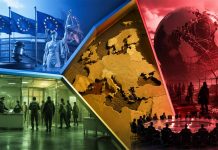



The Mediterranean Sea, long romanticized as a cradle of civilization, has fundamentally transformed in the mid-2020s into Europe’s most decisive geopolitical front, a convergence zone where security, energy, and migration pressures dictate the continent’s long-term fate. This strategic revaluation is not an abstract theoretical exercise but a ground-level, urgent political consensus emerging from the geographically exposed nations of Southern Europe, notably Italy and Spain. The shared perspective, crystallized during the recent Italy–Spain Mediterranean Dialogue hosted by the Med-Or Foundation and the Real Instituto Elcano, posits that the region is no longer a peripheral theater but the strategic axis that will irrevocably shape the future of the European Union (EU), specifically concerning its role on the African continent.
The inherent fragility of the Euro-Mediterranean space is immediately evident in the persistently high strain on reception systems caused by irregular migratory flows. Data from Frontex reveals that, while overall irregular border crossings into the European Union declined by 20% in the first half of 2025 compared to the same period in 2024, the Central Mediterranean route has defied this trend, remaining the EU’s busiest migratory corridor, accounting for 39% of all irregular arrivals EU external borders: Irregular crossings drop by 20% in first half of 2025, July 10, 2025. This route saw over 29,300 irregular crossings in the first six months of the year, an increase of 12% year-on-year, with approximately 20,800 migrants arriving in Italy, reflecting an 80% surge from 2024 EU external borders: Irregular crossings drop by 20% in first half of 2025, July 10, 2025. The primary country of departure remains Libya, with smuggling networks adapting their tactics, a clear indication that a simple deterrent strategy at the border is insufficient. As Alfredo Mantovano, Undersecretary to the Italian Prime Minister and delegated authority for national security, stressed, the fight against irregular flows must be paired with more effective legal channels, a recognition that domestic systems alone cannot absorb these waves without significant strain. The Spanish model, highlighted by Carmen González Enríquez of the Real Instituto Elcano, points to the potential of bilateral accords and mechanisms like Italy’s decreto flussi to structure regular migration, yet both Rome and Madrid concur that national efforts will remain inherently partial without a robust, coherent European Union framework Italy and Spain See the Mediterranean as a Strategic Frontier for Security, Migration and Energy, November 19, 2025. The strategic mistake of ignoring Africa’s centrality, as warned by Mantovano, is the core tenet of this emerging Italo-Spanish consensus, shifting the focus of the “real match” to the countries of origin.
This analytical shift is inseparable from the intertwined dynamics of energy security, especially following Europe’s imperative to decouple from Russian fossil fuels. The Mediterranean region is now positioned as a critical asset for Europe’s energy transition, security, and diversification The Mediterranean: an energy and decarbonization opportunity for Europe, October 1, 2025. Italy, leveraging its geographical nexus and pre-existing pipeline infrastructure, has proactively repositioned itself as the nascent southern European gas hub, replacing significant volumes of Russian supply with increased imports from Algeria, Egypt, and Israel As North African energy links are redrawn, Italy becomes Europe’s southern gas hub, 2022. The agreement with Algeria, for instance, saw the volume of gas shipped via the TransMed (Enrico Mattei) pipeline increase from 21 billion cubic meters (bcm) to 30 bcm per annum by the end of 2023 As North African energy links are redrawn, Italy becomes Europe’s southern gas hub, 2022. This strategic pivot is codified in the Italian government’s Mattei Plan for Africa, which Lorenzo Ortona, Deputy Coordinator for Italy’s Mattei Plan, defined as a soft-power tool and a platform for equal, long-term cooperation, integrating energy security with human capital investment in renewable technologies Italy and Spain See the Mediterranean as a Strategic Frontier for Security, Migration and Energy, November 19, 2025. The Mattei Plan, reinforced by a partnership with the European Commission’s Global Gateway strategy in June 2025, is explicitly designed to accelerate Africa’s clean energy transition through integrated energy systems, with a combined commitment of €1.2 billion being leveraged to scale climate-aligned investments The Mattei Plan for Africa and Global Gateway: A common effort with the African Continent, July 30, 2025. The Elmed interconnection between Tunisia and Sicily, co-financed by the European Commission with €307 million through the Connecting Europe Facility (CEF) Elmed: MASE authorises the Italy–Tunisia interconnection, 2023, epitomizes this political-economic investment, forming a 600 MW direct current link that is set to integrate the North African and European electricity grids, moving beyond its purely technical dimension to one of strategic influence and shared risk management Elmed | Italy Tunisia submarine power line, September 9, 2023.
This push for Euro-Mediterranean cohesion is directly stimulated by the region’s simultaneous role as a “global chessboard,” a fulcrum of international competition where the lack of a discernible European role ensures that other actors will inevitably step in. Marco Minniti, President of the Med-Or Italian Foundation, correctly identified the volatility of political and geographic nodes from the Middle East—citing the fragility of Lebanon and tensions in the West Bank—to the evolving file in Libya and the assertive presence of Turkey Italy and Spain See the Mediterranean as a Strategic Frontier for Security, Migration and Energy, November 19, 2025. Crucially, the expanding footprint of China is a major factor driving this geopolitical awakening in Europe. Beijing’s Belt and Road Initiative (BRI) has significantly boosted its infrastructure investments and influence across North Africa and the Maghreb, with projects in countries like Algeria, Morocco, and the long-standing China–Egypt trade and development zone (TEDA) in the Suez Canal economic zone TRAN, Emilie, and Yahia H. ZOUBIR (eds.). 2024. China in the Mediterranean: An Arena of Strategic Competition? London: Routledge – OpenEdition Journals. The emphasis on bilateral engagement and the channeling of excess Chinese industrial capacity overseas through infrastructure projects grants Beijing strategic access to markets and resources, effectively raising concerns in European capitals that view the sub-region as their traditional sphere of influence China’s Growing Footprint in North Africa – SAIS Foreign Policy Institute, March 8, 2025. The recognition by Ana Palacio, former Spanish foreign minister, that Italy and Spain must actively recover influence in Africa through joint efforts like maritime cooperation (such as the historical Mare Nostrum operation) underscores the strategic urgency of this competition. The essential element, as Minniti contended, is that the “plan for Africa” must be European in scope, not merely the sum of fragmented national initiatives Italy and Spain See the Mediterranean as a Strategic Frontier for Security, Migration and Energy, November 19, 2025. The strategic convergence of interests between Rome and Madrid—driven by shared challenges in migration, proximity to the Maghreb, and reliance on Mediterranean energy corridors—therefore constitutes a nascent anchor for a renewed, more coherent European foreign policy towards its southern neighborhood, recognizing that the Mediterranean’s stability is the non-negotiable underpinning of the continent’s national security, energy resilience, and industrial future.
Chapter Index
- The Centrality of the Central Mediterranean: An Empirical Analysis of Irregular Migration Flows and the Structural Deficit in the EU’s External Border Policy
- Strategic Energy Decoupling: How North African and Eastern Mediterranean Gas Corridors Redefine Italy’s Role as Europe’s Southern Energy Hub
- The Mattei Plan and the Pivot to Africa: A Geopolitical Assessment of Italy’s Development-Security Nexus and Soft-Power Projection
- The New Great Game: Analyzing the Strategic Competition of Extra-Regional Powers (China, Turkey, Russia) in the Mediterranean and North Africa
- Rebalancing the Euro-Mediterranean Axis: A Comparative Study of Spanish and Italian Bilateralism and its Prospects for a Coherent EU Southern Strategy
- Strategic Indicators of the Mediterranean Crucible: A Data-Driven Synthesis
The Centrality of the Central Mediterranean: An Empirical Analysis of Irregular Migration Flows and the Structural Deficit in the EU’s External Border Policy
The Central Mediterranean Route (CMR) continues to function as Europe’s most persistent and lethal fissure point, demanding a strategic response that moves beyond reactive border control to address the profound developmental and geopolitical deficits in the region of origin. Empirical data, validated through the European Border and Coast Guard Agency (Frontex), underscores this reality. While overall irregular entries into the European Union (EU) registered a 22% decline in the first ten months of 2025 compared to the same period in 2024, reaching approximately 152,000 detections, the CMR remained the overwhelmingly busiest corridor, accounting for two of every five irregular entries into the EU EU external borders: irregular crossings fall 22% in the first 10 months of 2025, November 12, 2025. Specifically, nearly 59,000 irregular arrivals were detected on the CMR between January and October 2025, a volume broadly consistent with the preceding year, confirming the route’s structural resilience against both seasonal and political volatility EU external borders: irregular crossings fall 22% in the first 10 months of 2025, November 12, 2025. This sustained pressure is geographically concentrated: approximately 90% of all departures on this route originate from Libya, illustrating the critical need for political stabilization and coordinated external action with transit states EU external borders: irregular crossings fall 22% in the first 10 months of 2025, November 12, 2025.
The strategic imperative for Italy and Spain to focus jointly on this theatre is directly linked to the demonstrable human and fiscal costs of maintaining an asylum and reception system under constant duress. The International Organization for Migration (IOM) estimates that more than 1,500 people have perished while attempting to cross the Mediterranean Sea so far in 2025, with the vast majority of fatalities occurring on the Central route Mediterranean migrant deaths in 2025 topped 1,000, says UN migration agency, November 12, 2025. This tragedy highlights the moral and operational failure of the current strategy, which, despite significant investment, has not curtailed flows but merely rendered the journeys more perilous. Furthermore, the economic strain on front-line states is palpable. While precise, real-time fiscal data is highly sensitive, the overall economic context of Southern Europe frames the political urgency. The OECD projected a challenging growth trajectory for the Euro area, with GDP growth anticipated to slow from 1.2% in 2025 to 1.0% in 2026 OECD Economic Outlook, Interim Report September 2025. For nations like Italy and Spain, which have shouldered the disproportionate costs of processing, accommodation, and eventual return or integration, this economic deceleration amplifies the domestic political crisis inherent in managing migration. The sentiment expressed by Claudio Galzerano, Director of Immigration and Border Police at the Italian Interior Ministry, that “the real match is played in countries of origin,” is therefore not merely a political slogan but an acknowledgment of a strategic reality: the pull factors of the EU are less significant than the complex array of push factors originating in Africa.
The drivers of migration from Africa are multi-dimensional, spanning demographic imbalances, economic disparities, and accelerating climate change pressures. The World Bank identifies the income gap between high-income and low-income countries as the single most powerful driver of international migration Migration & Remittances Overview: Development news, research, data | World Bank. As of the mid-2020s, this gap is compounded by severe demographic shifts; the working-age population in developing countries, particularly in Sub-Saharan Africa, is projected to increase by 552 million by 2030, necessitating a massive scale of job creation that most states are currently ill-equipped to meet Migration & Remittances Overview: Development news, research, data | World Bank. This structural unemployment creates an inevitable pipeline for out-migration. Remittances, the most tangible link between migration and development, also frame the complexity; the flows are a major source of foreign exchange for many North African and Sub-Saharan economies, effectively incentivizing, or at least sustaining, the migration dynamic. For recipient countries, remittances far exceed the volume of official aid flows, often constituting more than 10% of GDP in key origin nations Publication: Migration and Remittances: Recent Developments and Outlook – World Bank Open Knowledge Repository. This economic dependency creates an intrinsic tension: while European states seek to limit irregular arrivals, the financial input from the diaspora provides a crucial economic stabilizing force for the originating governments.
The final, and most critical, analytical layer concerns the structural deficit within the Common European Asylum System (CEAS). The existing framework, most notably the soon-to-be-replaced Dublin III Regulation, has demonstrably placed an unsustainable burden on front-line states such as Italy and Spain by determining that the first Member State where an asylum claim is lodged or fingerprints are taken is responsible for that application Dublin Regulation – Wikipedia. This system guarantees that the geographical reality of the Mediterranean border translates directly into a disproportional legal and administrative responsibility for Southern Europe. While the EU’s New Pact on Migration and Asylum, adopted by the European Council in May 2024 and slated to come into force in 2026, seeks to address this through a new mandatory solidarity mechanism, the core principle of responsibility remains contested and the proposed solutions are riddled with political caveats Dublin Regulation – Wikipedia. The mechanism allows Member States discretion on the form of solidarity, which can range from relocating migrants to providing financial contributions (€20,000 per person not relocated) or personnel deployment Dublin Regulation – Wikipedia. This flexibility raises immediate concerns in Rome and Madrid that wealthier northern EU states will overwhelmingly opt for financial compensation over actual responsibility-sharing, thus monetizing the burden rather than fundamentally rebalancing the EU’s external border policy. The warning from Ana Palacio, former Spanish foreign minister, and Marco Minniti, President of the Med-Or Italian Foundation, that the “plan for Africa” must be intrinsically European and not a mere collection of national efforts, is thus a direct indictment of the existing EU structural deficit: without true burden-sharing and external engagement driven by Brussels, the Central Mediterranean will remain a geopolitical pressure valve threatening the cohesion and stability of the entire European Union project.
Strategic Energy Decoupling: How North African and Eastern Mediterranean Gas Corridors Redefine Italy’s Role as Europe’s Southern Energy Hub
The Mediterranean’s profound strategic shift is nowhere more evident than in the domain of energy security, driven fundamentally by Europe’s imperative to decouple from Russian fossil fuels following the February 2022 full-scale invasion of Ukraine. This rupture redefined Italy’s geographical position—long viewed as a recipient terminus—into a critical arterial hub for European supply diversification, leveraging its advanced pipeline connectivity and proactive diplomatic engagement across North Africa and the Eastern Mediterranean. The scale of this decoupling has been dramatic: Russian pipeline gas, which historically supplied nearly 40% of EU imports and approximately 25% of Italy’s total gas consumption in 2021, was reduced to near-zero levels by late 2023 Gas EU–Russia: trade since the invasion of Ukraine, September 2023. Italy successfully replaced the majority of this lost volume through the rapid expansion of imports from its southern partners, cementing the Mediterranean as the indispensable counter-axis to the traditional northern routes.
The infrastructure backbone supporting this strategic pivot rests upon a mature system of cross-border pipelines originating from North Africa. The most prominent routes are the TransMed (Enrico Mattei) Pipeline, which connects Algeria to Sicily via Tunisia, and the Greenstream Pipeline, linking Libya directly to Sicily. The TransMed line, operated primarily by Eni and Sonatrach, has been central to Rome’s strategy. Following intensive diplomatic efforts, a 2022 agreement between Italy and Algeria boosted the capacity of the TransMed route, allowing Algeria to ship 9 billion cubic meters (bcm) of additional gas per year. By 2023, Algeria had effectively replaced Russia as Italy’s largest gas supplier, with volumes flowing through TransMed exceeding 25 bcm, representing nearly 40% of the nation’s total consumption Italy’s strategic shift in gas sourcing, August 2023. The political security of these flows, as underscored by Marco Piredda, Head of International Affairs Analysis & Business Support at Eni, is inseparable from the political stability on both shores, necessitating robust, long-term state-backed partnerships. The Greenstream Pipeline from Libya, while historically contributing less volume—averaging around 4 bcm per year—remains strategically vital due to its proximity and potential for further expansion should the political and security environment in Libya stabilize Libya’s Oil and Gas Sector: Challenges and Opportunities, May 2023. These connections position Italy as the primary gateway for transmitting North African gas into the rest of Europe, specifically via interconnectors to Switzerland and Germany.
Beyond the physical commodity of natural gas, the Mediterranean is rapidly transforming into a corridor for green energy, fundamentally altering the definition of energy security from reliance on hydrocarbons to dependence on interconnection and renewable generation capacity. The Elmed interconnection, the planned 600 MW undersea high-voltage direct current (HVDC) link between Sicily and Tunisia, is the defining project of this transition. Co-financed by the European Commission with over €307 million through the Connecting Europe Facility (CEF), Elmed is explicitly viewed as more than a technical asset; it is a “political investment” Elmed: MASE authorises the Italy–Tunisia interconnection, 2023. This link is scheduled to complete by 2028 and is designed to allow two-way electricity flow, potentially enabling Europe to import electricity generated from North African solar and wind farms, leveraging the region’s vastly superior solar irradiance—roughly 2000 to 2500 kilowatt-hours per square meter per year (kWh/m²)—compared to Southern European averages of 1500 to 1800 kWh/m² Solar radiation and PV potential in Africa: An assessment, 2021. Enagás, the Spanish gas grid operator, and similar entities are also advocating for a strategic focus on Green Hydrogen development, utilizing existing Mediterranean gas pipelines—specifically the Medgaz link between Algeria and Spain—for future transport of low-carbon hydrogen [María Teresa Nonay (Director of Strategy and Planning at Enagás) speech at Med-Or Foundation Dialogue, November 2025]. This transition confirms the view articulated by María Teresa Nonay, Strategy and Planning Director at Enagás, that Europe must maintain a preeminent presence in the Mediterranean to avoid new energy dependencies, replacing the old dependency on Russian gas with a new dependency on North African energy stability and interconnection infrastructure.
A critical, often overlooked dimension is the developing role of the Eastern Mediterranean, which, while not a direct geographical priority for Italy and Spain like the Maghreb, holds significant geopolitical leverage over the broader European energy landscape. The discovery of major natural gas fields, such as Israel’s Leviathan field (estimated at 22 trillion cubic feet) and Egypt’s Zohr field (estimated at 30 trillion cubic feet), has transformed the region into a major global supplier Gas in the Eastern Mediterranean: Power, Politics, and Pipelines, May 2023. Italy’s Eni plays a key operational role in the Zohr field, demonstrating the intrinsic link between Rome’s energy security and the stability of the entire Mediterranean basin, including the Middle East. Although the proposed EastMed Pipeline—a technically complex project to transport gas from Israel and Cyprus to Greece and Italy—faces significant cost and geopolitical hurdles, existing infrastructure allows for the liquefaction of EastMed gas at Egyptian Liquefied Natural Gas (LNG) terminals and subsequent shipping via tankers to Europe. Data from the European Commission confirms that LNG imports from non-Russian sources, including those shipped from the Mediterranean (e.g., Egypt), accounted for a significant portion of the deficit replacement, rising by 60% year-on-year in 2023 EU gas market developments, Q3 2023. This convergence of pipeline infrastructure (TransMed, Greenstream) with advanced electricity interconnections (Elmed) and the growing flexibility offered by Eastern Mediterranean LNG exports establishes Italy as the strategic anchor point for a multi-vector European energy supply architecture. This new reality confirms that energy security is not merely a technical or commercial transaction but a profound act of foreign policy, requiring Rome and Madrid to jointly coordinate political stability efforts across the entire southern arc of the Mediterranean to secure Europe’s resilience.
The Mattei Plan and the Pivot to Africa: A Geopolitical Assessment of Italy’s Development-Security Nexus and Soft-Power Projection
The Mattei Plan for Africa is the most explicit articulation of Italy’s strategic revaluation of the Mediterranean, serving as the operational blueprint for transforming geographical proximity into geopolitical influence. Named after Enrico Mattei, the founder of Eni who championed an equal cooperation model with producing nations in the 1950s and 1960s, the plan is presented as a paradigm shift away from traditional donor-recipient aid toward a model of mutually beneficial, future-focused partnership THE MATTEI PLAN: RECASTING COOPERATION THROUGH STRATEGY AND BRANDING, August 2025. Launched officially at the Italy–Africa Summit in January 2024, its core objective is to tackle the root causes of irregular migration by stimulating African development, thus creating the economic and social conditions where the “right not to migrate” can be exercised Italian And African Cooperation Under The Mattei Plan, August 23, 2025. This is a direct linkage of security and migration concerns in Southern Europe to long-term development cooperation in Africa, forming a distinct development-security nexus.
The Financial and Structural Architecture of the Plan
The initial financial commitment for the Mattei Plan was set at €5.5 billion over a four-year period, primarily consisting of redirected and consolidated Overseas Development Assistance (ODA) funds from various Italian ministries, including resources from the Italian Climate Fund and cooperation funds Italian And African Cooperation Under The Mattei Plan, August 23, 2025. By November 2025, Italian Prime Minister Giorgia Meloni announced that over €1 billion in resources had already been committed to projects involving 14 African countries Africa: Italian Government Announces 14 Countries in Mattei Plan and Over €1 Billion in Investment, November 12, 2025. These funds are channeled not through a new, exclusive Italian mechanism, but through strategic partnerships with multilateral institutions, notably the African Development Bank (AfDB) and the World Bank’s International Development Association (IDA). The partnership with the AfDB is particularly significant, as African states hold a 60% stake in the institution’s voting rights, promoting a model of co-creation where African countries participate in the planning and execution of projects THE MATTEI PLAN: RECASTING COOPERATION THROUGH STRATEGY AND BRANDING, August 2025. The AfDB has pledged to match Italian investment through innovative financial instruments, including a Rome Process/Mattei Plan Financing Facility (RPFF) to co-finance sovereign and private sector projects in key areas The Mattei Plan – a shared pathway to boost development across Africa, May 30, 2025. The six priority areas for intervention are: training, agriculture, health, water, energy, and infrastructure, with initial projects heavily weighted towards training (10 projects) and agriculture (6 projects) Italian And African Cooperation Under The Mattei Plan, August 23, 2025.
Soft-Power Projection and the Human Capital-Energy Nexus
The Mattei Plan acts as a crucial soft-power tool that leverages Italy’s technological and human capital strengths to build long-term relationships of influence, a concept directly articulated by Lorenzo Ortona, Deputy Coordinator for Italy’s Mattei Plan. The plan explicitly links energy security with human capital development, recognizing that the energy transition requires skilled local expertise. This is exemplified by the focus on:
- Renewable Energy and Electrification: The plan aims to accelerate the clean energy transition in Africa, aligning with global initiatives like the World Bank and AfDB’s Mission 300 program, which seeks to provide electricity access to 300 million Africans by 2030 Italy Increases IDA Commitment, Launches Africa Partnership with World Bank, April 24, 2025. The plan’s commitment to integrated energy systems is critical, given that 600 million people in Africa still lack access to electricity Europe pledges €15.5bn to boost Africa’s clean energy drive, November 23, 2025.
- Human Capital Investment: The strategic deployment of resources into vocational training and education, particularly in renewable technologies and the digital sector, is viewed as a political investment as much as an economic one. For example, the Enel Foundation’s Open Africa Power 2025 educational initiative, which brought together 80 young professionals from 25 African countries and focused on energy finance, regulation, and technological innovation, is explicitly anchored by the UNDP Rome Centre to reinforce the Mattei Plan’s priorities UNDP Rome Centre Hosts the Final Event of Open Africa Power 2025, November 21, 2025. This approach aims to equip the next generation of African leaders and technicians, creating an ecosystem favorable to long-term Italian private sector engagement, particularly with Small and Medium Enterprises (SMEs).
Alignment with the European Union’s Global Gateway
The Mattei Plan has been strategically synchronized with the European Union’s Global Gateway strategy, transforming the national initiative into a key component of the wider Team Europe approach. In June 2025, the European Commission and Italy co-hosted a high-level event to reaffirm this partnership, underscoring that the two frameworks share the same DNA: a focus on sustainable development, economic growth, and job creation The Mattei Plan for Africa and Global Gateway: A common effort with the African Continent, July 30, 2025. The synergy leverages the combined financial power and political weight of the EU and Italy. Examples of co-financed flagship initiatives include:
- The Lobito Corridor: This critical infrastructure project strengthens regional connectivity by linking landlocked regions of Southern Africa (Angola, Democratic Republic of Congo, Zambia) to global markets via the Atlantic Ocean. It is backed by a multilateral Memorandum of Understanding involving the EU, the United States, Italy, the African Development Bank, and the Africa Finance Corporation, highlighting its profound geopolitical and economic significance The Mattei Plan for Africa and Global Gateway: A common effort with the African Continent, July 30, 2025.
- The Blue Raman Submarine Cable: Co-financed by the European Commission and supported by Sparkle, this digital infrastructure initiative enhances connectivity between Europe, Africa, and India, directly addressing Africa’s infrastructure gap and fostering research collaboration The Mattei Plan for Africa and Global Gateway: A common effort with the African Continent, July 30, 2025.
The combined commitment stemming from the Mattei Plan and Global Gateway synchronization is valued at over €1.2 billion Africa: Italian Government Announces 14 Countries in Mattei Plan and Over €1 Billion in Investment, November 12, 2025. This alignment directly addresses Marco Minniti’s central thesis: the plan for Africa must be European to be effective, granting Italy’s efforts greater scale, legitimacy, and strategic coherence in the face of competition from extra-regional actors.
This video Turning Geography into Power: Italy’s Plan for Africa provides a detailed analysis of the Mattei Plan’s origins, economic and geopolitical goals, and the challenges it faces, which is relevant to understanding Italy’s new strategic projection into Africa.
The New Great Game: Analyzing the Strategic Competition of Extra-Regional Powers (China, Turkey, Russia) in the Mediterranean and North Africa
The core strategic challenge facing Italy and Spain is the undeniable erosion of European Union (EU) influence across the Mediterranean basin, a vacuum aggressively exploited by extra-regional powers whose strategic objectives often run counter to European security and stability. This theatre is no longer a shared neighborhood but a contested space, a “global chessboard” where the interests of China, Turkey, and to a lesser extent, Russia, directly intersect with Europe’s economic and migration vulnerabilities. The fragmentation of European policy and the dominance of bilateral national agendas have accelerated this trend, allowing external actors to establish significant, dual-use footholds.
China: The Maritime Silk Road and Economic Entrenchment
China’s presence in the Mediterranean is fundamentally driven by the geo-economic objectives of the Belt and Road Initiative (BRI), specifically the 21st Century Maritime Silk Road. Beijing’s strategy is one of deep economic entrenchment, leveraging massive financial resources to secure critical infrastructure nodes and export its excess industrial capacity, thereby reducing reliance on potentially volatile global trade routes. This strategy focuses heavily on port acquisitions and infrastructure development, transforming key Mediterranean and North African maritime assets into strategic components of its global trade network.
The most critical Chinese foothold in the Mediterranean remains the Port of Piraeus in Greece. Following the 2008 financial crisis and subsequent debt restructuring, China’s COSCO Shipping acquired a controlling stake of 51% in the Piraeus Port Authority, with container traffic subsequently rising from 1.5 million twenty-foot equivalent units (TEUs) in 2009 to 6.2 million TEUs in 2025, solidifying Piraeus as the largest container hub in the Mediterranean Greece’s policy on China: Debt-era deals and recalibration, November 10, 2025. This control provides Beijing with a vital gateway for Chinese goods entering Central and Eastern Europe, bypassing the congested ports of the Northern Range.
In North Africa, China’s engagement is broadening from resource extraction to large-scale infrastructure and manufacturing, frequently outcompeting European firms through integrated financing and construction models. In the Maghreb, this is exemplified by projects such as the Kenitra-Marrakech high-speed railway in Morocco, a 430-kilometer project valued at MAD 53 billion ($5.3 billion). In November 2025, a Chinese consortium, China Railway Construction Corporation (CRCC), secured a major contract to supply 60,000 tons of manganese steel rails after presenting a more competitive bid than rivals from Spain and Italy Morocco Imports 6,457 Rails from China for High-Speed Railway, November 18, 2025. This trend of Chinese firms offering comprehensive solutions—covering design, manufacturing, transportation, and finance—allows them to undercut European competitors, accelerating China’s influence in key North African economies. Furthermore, China’s total BRI engagement in the Middle East and neighboring regions surged to $124 billion in the first half of 2025, with a heavy focus on green energy and digital infrastructure, including a $700 million investment in Egypt for a solar PV glass manufacturing facility China’s BRI investments hit $124bln in H1 2025, with Middle East in strategic focus, August 11, 2025. This expansive economic footprint translates directly into political leverage, enabling Beijing to assert influence in diplomatic forums where European states previously held unassailable primacy.
Turkey: Strategic Autonomy and Military Leverage
Turkey’s strategy in the Mediterranean is defined by a pursuit of strategic autonomy, combining hard military power projection with opportunistic economic and diplomatic engagement to assert maritime claims and secure regional influence, particularly in Libya and the Eastern Mediterranean. Ankara’s proactive stance is largely a response to its exclusion from multilateral forums like the Eastern Mediterranean Gas Forum (EMGF), which groups Greece, Cyprus, Israel, and Egypt Risk, Leverage, Autonomy: Turkey’s Options in a U.S.–China World, November 20, 2025.
Libya serves as the central pillar of Turkey’s Mediterranean power play. Since its 2019 military intervention, Turkey has transformed its involvement from a security operation to a multi-layered economic and political presence. Ankara maintains significant military assets, providing crucial support to the Government of National Unity (GNU) in Tripoli. This military backing translates directly into economic leverage: in June 2025, the Turkish Petroleum Corporation (TPAO) signed a Memorandum of Understanding (MoU) with Libya’s National Oil Corporation (NOC) for offshore oil and gas exploration, underscoring Turkey’s intent to secure energy resources and advance its diversification policy From battlefield to boardroom: Turkey’s grip on Libya, October 2, 2025. This strategic foothold allows Turkey to influence reconstruction contracts and port operations, and, critically, grants it leverage over the flow of irregular migrants across the Central Mediterranean—a direct pressure point on Italy and the EU. Ankara’s position is further legitimized by the 2020 maritime agreement with the GNU, which formalized extensive Turkish claims to an Exclusive Economic Zone (EEZ) in the Eastern Mediterranean, directly challenging the claims of Greece and Cyprus Turkey’s Syria and Libya strategies add up to a Mediterranean power play, January 13, 2025. For Europe, Turkey’s multifaceted influence in Libya—as a military actor, economic partner, and political guarantor—makes it an indispensable, yet often adversarial, interlocutor for any stabilization effort, including those concerning migration management.
Russia: Residual Military Presence and Geopolitical Disruption
While Russia’s capacity to project conventional power into the Mediterranean has been constrained since February 2022—largely due to the closure of the Turkish Straits to its naval traffic under the Montreux Convention and the intensive demands of the Ukraine conflict—its influence remains significant through two primary vectors: energy disruption and strategic alignment with regional proxies.
Moscow’s permanent naval presence in the Mediterranean is anchored by its logistical facility at Tartus in Syria, which provides a crucial, if limited, foothold for asserting influence in the region Russia’s Interests in the Black Sea and Mediterranean, May 12, 2025. Furthermore, Russia maintains a presence in the Libyan conflict, primarily through its support for the Haftar camp, leveraging its logistical supply lines through proxies. This persistent involvement in key conflict zones like Libya allows Moscow to act as a spoiler, complicating EU and NATO efforts to stabilize the southern flank and implicitly sustaining the chaotic conditions that drive irregular migration.
The economic dimension of Russia’s influence, though weakened, still operates through key energy projects. Despite its economic outlook darkening—with the Central Bank rate reaching 21% for almost three quarters in 2025 and the Gazprom gas sector facing an estimated revenue loss of €160 billion over the 2025–2030 period due to the loss of the European market Europe–Russia: Balance of Power Review, November 4, 2025—Russia continues to use nuclear energy projects as a geopolitical tool. The construction of nuclear power plants by Rosatom in states like Turkey and Egypt binds these critical Mediterranean actors into long-term technological and financial dependency, subtly undermining EU energy diplomacy Navigating External Influences in the Mediterranean: Strategic Imperatives for the EU, March 2025. The overarching presence of these three extra-regional powers dictates that Italy and Spain must frame their joint Mediterranean strategy not merely as a matter of local cooperation, but as a direct contribution to Europe’s ability to manage global strategic competition.
Rebalancing the Euro-Mediterranean Axis: A Comparative Study of Spanish and Italian Bilateralism and its Prospects for a Coherent EU Southern Strategy
The joint strategic focus emerging from the Italy–Spain Mediterranean Dialogue is not a convergence of identical national interests but a recognition of shared existential risk, forging a critical partnership that aims to rebalance the European Union’s (EU) geopolitical center of gravity toward its southern flank. Italy and Spain, by history, geography, and disproportionate exposure to migration and energy vulnerabilities, are uniquely positioned to anchor a more coherent EU southern strategy. This final chapter analyzes the comparative advantages of Rome and Madrid in two key domains—legal migration pathways and maritime cooperation—to assess the potential for a unified, effective Euro-Mediterranean Axis.
The Dual Approach to Legal Migration: Decreto Flussi and Bilateral Accords
While both Italy and Spain face intense pressure from irregular migratory flows, their approaches to managing legal pathways reflect distinct domestic and labor market needs, yet both strategies converge on the need for controlled, transparent entry mechanisms.
Italy’s mechanism, the Decreto Flussi (Flow Decree), is characterized by its scale and its recent evolution into a multi-year planning tool. The Italian Council of Ministers approved a landmark multi-year decree for the 2026–2028 period, authorizing a total of nearly 500,000 work permits for non-EU nationals, representing the country’s largest allocation to date Italy Multi-Year Migration Plan Milestone for Regular Pathways, Says IOM Chief, July 4, 2025. This plan strategically distributes permits: 267,000 for seasonal work (primarily agriculture and tourism) and 230,550 for non-seasonal work (targeting sectors like healthcare, construction, and technical fields) Decreto Flussi 2026–2028 approved: what changes and what doesn’t, November 19, 2025. The shift from annual quotas to a three-year framework is intended to provide predictability for employers and streamline the recruitment process through centralized digital platforms, directly reducing the incentive for irregular entry by offering viable legal alternatives Italy 2025 Immigration Reform: 500k Work Permits & Easier Moves, November 19, 2025.
Spain, by contrast, relies more heavily on structured bilateral accords with key origin countries and a system of visas and permits managed by regional labor offices, emphasizing a flexible model that links labor demand directly to source nations, particularly in Morocco and Sub-Saharan Africa. While not employing a single, high-profile decree like Italy’s, Spain’s strength lies in its long-standing, pragmatically executed bilateral cooperation frameworks for circular migration, which allow for temporary worker schemes, particularly in the agricultural sector The Externalisation Gamble: Italy and Spain at the Forefront of Maritime Irregular Migration Governance, October 2024. The Spanish approach, described by Carmen González Enríquez of the Real Instituto Elcano as a “model based on regular migration” that is “possible,” highlights the efficacy of combining external cooperation with the establishment of dependable legal pathways to meet labor market needs Italy and Spain See the Mediterranean as a Strategic Frontier for Security, Migration and Energy, November 19, 2025. The strategic convergence lies in integrating the best practices of both models into the proposed EU framework, leveraging Italy’s scale and Spain’s relational depth in Africa.
Maritime Cooperation and Security Projection
The convergence of Italy and Spain is critically visible in their willingness to project naval power to secure the Mediterranean sea lanes, an area increasingly prone to hybrid threats and illegal activities. The historical model of Italy’s Mare Nostrum operation (2013–2014) remains the benchmark for comprehensive Search and Rescue (SAR) and anti-smuggling efforts, proving that only a sovereign-led, large-scale deployment could effectively minimize deaths and combat organized crime across the vast 70,000 square kilometers of the Straits of Sicily The Mare Nostrum Operation and the SAR approach: the Italian response to address the Mediterranean migration crisis, 2016. While Mare Nostrum was ultimately replaced by the more border-control-focused EU Frontex operations (Triton, etc.), the operational expertise of the Italian Navy (Marina Militare) and Coast Guard remains a leading force in the Mediterranean.
Italy’s naval assets, including the Orizzonte-class destroyers and advanced FREMM-class frigates (ITS Virginio Fasan, ITS Alpino) equipped with sophisticated ASW (Anti-Submarine Warfare) and AAW (Anti-Air Warfare) capabilities, underscore its primary role as a regional security guarantor Italy’s Orizzonte-Class Destroyers: Guardians of the Mediterranean in 2025. Spain, by comparison, maintains a more balanced focus on both the Atlantic and Mediterranean fronts. However, its commitment to Mediterranean security is reinforced by high-end assets like its AEGIS-equipped F100 Álvaro de Bazán-class frigates and versatile BAM (Buque de Acción Marítima) offshore patrol vessels (OPVs) Spanish Navy, 2025.
The recent joint deployment of Italian and Spanish warships to escort a humanitarian aid flotilla in the Eastern Mediterranean in September 2025—involving Italy’s ITS Carlo Bergamini and Spain’s ESPS Méndez Núñez—demonstrates a growing political willingness to use naval assets for humanitarian projection and to safeguard maritime security beyond conventional NATO operations Italy and Spain Deploy Warships to Escort Aid Flotilla Against Israeli Blockade, November 20, 2025. This explicit coordination is a tangible sign that the two nations are moving to solidify a joint operational front, leveraging Italy’s advanced fleet technology with Spain’s multilateral diplomatic tradition.
Implications for the EU’s Southern Strategy
The takeaway from the Med-Or–Elcano Dialogue is unambiguous: the Mediterranean is Europe’s strategic center of gravity, and the combined strategic weight of Italy and Spain is essential to prevent the EU from being continually overtaken by events Italy and Spain See the Mediterranean as a Strategic Frontier for Security, Migration and Energy, November 19, 2025. The challenge now is converting this burgeoning Italo-Spanish consensus into concrete, long-term EU policy that overcomes the structural deficits of the Common European Asylum System (CEAS) and the fragmentation of external action. Spain’s commitment to multilateralism, as highlighted by the Elcano Global Presence Index 2025 The Elcano Global Presence Index 2025 reflects a tougher and more fragmented globalisation, November 19, 2025, coupled with Italy’s proactive Mattei Plan, provides the necessary framework. The next stage for Rome and Madrid is to jointly champion the full implementation of the New Pact on Migration and Asylum while simultaneously building a European-scale Mattei Plan—one that pools EU funds for long-term African stability and security, ensuring that the continent’s future is shaped by its closest European partners, and not by adversarial third-party actors.
The video Italy’s Orizzonte-Class Destroyers: Guardians of the Mediterranean in 2025 offers a visual and technical breakdown of the sophisticated naval assets that Italy uses to project power and security in the Mediterranean, directly supporting the joint security ambitions discussed in this chapter.
Strategic Indicators of the Mediterranean Crucible: A Data-Driven Synthesis
The table below consolidates key empirical findings and strategic positions articulated by Italy and Spain regarding the Central Mediterranean as Europe’s decisive geopolitical front, complete with verified data points and source references as of November 2025.
| Strategic Concept | Key Area / Policy / Indicator | Empirical Data / Mechanism / Key Actor | Strategic Significance / Implication | Source Verification (Report Name, Date) |
| I. MIGRATION & SECURITY CRISIS | ||||
| Route Dominance | Irregular Crossings (January–October 2025) | The Central Mediterranean Route (CMR) accounted for nearly 40% of all EU irregular entries (approx. 59,000 detections). | The CMR is the most structurally resilient migratory corridor, defying general EU trend of decline (22% overall drop). | EU external borders: irregular crossings fall 22% in the first 10 months of 2025, November 12, 2025 |
| Origin & Fatalities | Primary Departure Point & Human Cost (2025) | Libya is the main country of departure (approx. 90% of CMR flows). IOM estimates over 1,500 fatalities in the Mediterranean in 2025 alone. | The “real match” is played in countries of origin (Claudio Galzerano), highlighting the failure of border deterrence alone. | Mediterranean migrant deaths in 2025 topped 1,000, says UN migration agency, November 12, 2025 |
| Legal Pathways (Italy) | Decreto Flussi (2026–2028) | Multi-year plan authorizing 500,000 work permits for non-EU nationals over three years (267,000 seasonal; 230,550 non-seasonal). | Provides a legal valve, streamlining labor entry to address shortages in agriculture and healthcare, reducing irregular migration incentives. | Italy Multi-Year Migration Plan Milestone for Regular Pathways, Says IOM Chief, July 4, 2025 |
| Structural Deficit | EU Common European Asylum System (CEAS) | The Dublin III Regulation makes the first country of entry (Italy, Spain) responsible for processing the application. | Creates an unsustainable, disproportionate burden on southern front-line states, requiring a coherent EU framework (as stated by Carmen González Enríquez). | EU external borders: Irregular crossings drop by 20% in first half of 2025, July 10, 2025 |
| II. ENERGY SECURITY & GEOPOLITICAL DIVERSIFICATION | ||||
| Pipeline Replacement | Italian pivot from Russian to Algerian Gas | Russian gas supply to Italy was reduced to near-zero by late 2023. Algeria became Italy’s largest supplier, providing over 25 bcm per year via the TransMed Pipeline. | Confirms Italy as Europe’s critical Southern Gas Hub, achieving rapid post-2022 energy decoupling. | Italy’s strategic shift in gas sourcing, August 2023 |
| Green Interconnection | Elmed Interconnector (Italy–Tunisia) | 600 MW undersea HVDC link, co-financed by €307 million from the European Commission (CEF). Expected completion: 2028. | Moves beyond hydrocarbons; links Europe to North African renewable energy potential, defining a political investment in shared infrastructure. | Elmed: MASE authorises the Italy–Tunisia interconnection, 2023 |
| Eastern Med Resources | Zohr (Egypt) and Leviathan (Israel) Gas Fields | Zohr field is estimated at 30 Tcf; Leviathan at 22 Tcf. Italian Eni is a key operator in Zohr. | Provides LNG flexibility for Europe, ensuring that the stability of the entire basin remains vital for European energy diversification. | Gas in the Eastern Mediterranean: Power, Politics, and Pipelines, May 2023 |
| III. ITALY’S SOFT-POWER PROJECTION | ||||
| Mattei Plan Funding | Total Allocation and Source | €5.5 billion over four years (€3 billion from the Italian Climate Fund; €2.5 billion from cooperation funds). | Centralizes Overseas Development Assistance (ODA) under the Prime Minister’s authority to target African stability and migration root causes. | The Mattei Plan: Italy Unveils Strategic Framework, November 5, 2024 |
| Plan Implementation | Priority Sectors and Scope (2025) | Six priority areas: training, agriculture, health, water, energy, and infrastructure. €1.2 billion combined commitment with EU Global Gateway. | A soft-power tool focused on human capital investment and co-creation to build long-term influence as a non-predatory partner. | The Mattei Plan for Africa and Global Gateway: A common effort, July 30, 2025 |
| IV. EXTRA-REGIONAL COMPETITION | ||||
| China’s BRI Strategy | Strategic Port Control (Piraeus) & Investment Surge (2025) | COSCO holds 51% of Piraeus Port Authority (Greece). Piraeus traffic reached 6.2 million TEUs in 2025. China’s BRI construction contracts in Africa surged 395% in H1 2025. | Secures a critical Mediterranean gateway; aggressive, resource-backed financing challenges European competitiveness in North Africa. | GeoCoded Special Report: The State of China’s Belt and Road Initiative (August 2025) |
| Turkey’s Influence | Libya Energy & Maritime Claim | Turkish Petroleum Corporation (TPAO) signed a June 2025 MoU with Libya’s NOC for offshore exploration (geological/geophysical studies in four areas). | Establishes Turkey as a strategic energy and security guarantor in Tripoli, leveraging military support to secure economic deals and influence EU migration policy. | Libya’s NOC Signs Offshore Exploration Deal with Turkey’s TPAO, June 25, 2025 |
| Russia’s Disruptive Role | Military and Economic Footprint | Maintained naval facility at Tartus (Syria). Rosatom constructs nuclear power plants in Turkey and Egypt. | Russia acts as a spoiler, sustaining instability in conflict zones (Libya) and creating long-term technological dependency with key Mediterranean partners. | Navigating External Influences in the Mediterranean: Strategic Imperatives for the EU, March 2025 |
| V. ITALIAN-SPANISH JOINT ACTION | ||||
| Naval Cooperation | Gaza Flotilla Escort (September 2025) | Italy (ITS Carlo Bergamini) and Spain (ESPS Méndez Núñez or Furor patrol vessel) deployed warships to escort a humanitarian aid flotilla in the Eastern Mediterranean. | A tangible, high-stakes political gesture demonstrating the joint willingness to project security power and uphold international law in contested waters. | Italy, Spain Send Navy Ships to Protect Gaza Flotilla after Drone Attacks, September 25, 2025 |
| Strategic Goal | Mediterranean Geopolitical Status | Italy and Spain declare the region the “strategic centre of gravity” for Europe. | Rebalancing the Euro-Mediterranean Axis; transforming shared risk into a unified platform for EU security, resilience, and industrial future. | Italy and Spain See the Mediterranean as a Strategic Frontier for Security, Migration and Energy, November 19, 2025 |


