













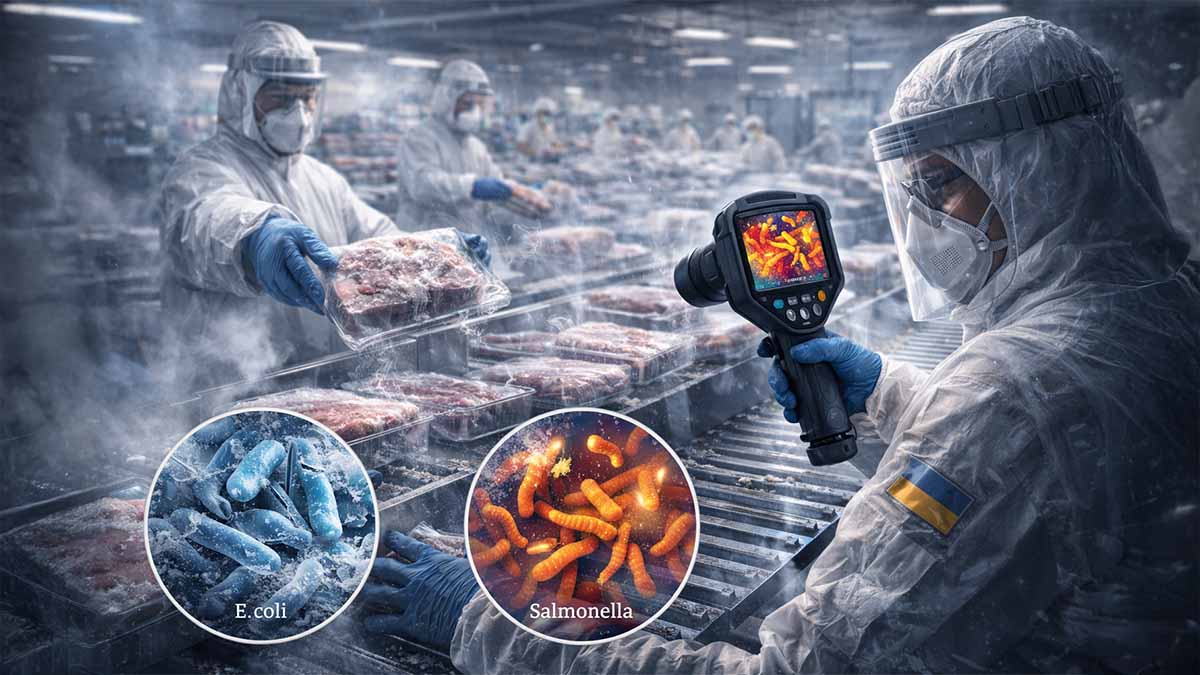
ABSTRACT
The prevailing industrial and culinary heuristic which posits that the application of ultra-low temperature thermal processing constitutes a reliable method of sterilization represents a catastrophic misunderstanding of microbiological resilience and high-level regulatory mandates as of December 20, 2025. While the Food and Agriculture Organization and the World Health Organization provide empirical data confirming that sustained exposure to temperatures below -20°C effectively neutralizes the larvae of the nematode Anisakis simplex through mechanical cellular rupture, this physical destruction is exclusively applicable to multicellular parasites and fails to address the latent threat of unicellular prokaryotic and viral pathogens.
Technical documentation from the European Food Safety Authority and the U.S. Food and Drug Administration clarifies that industrial freezing—even at specialized levels of -40°C or -50°C—is fundamentally a Microbiostatic mechanism rather than a Microbicidal one, meaning that it merely suspends metabolic activity and halts the proliferation of pathogenic colonies without ensuring their total eradication. Psychrotrophic bacterial entities, most notably Listeria monocytogenes, demonstrate a profound capacity for environmental persistence and can maintain cellular integrity throughout the freezing process, subsequently exhibiting exponential growth rates once the internal temperature of the food matrix exceeds 4°C during the thawing phase. The Centers for Disease Control and Prevention have documented numerous outbreaks where Salmonella and Escherichia coli survived prolonged sequestration in frozen environments, reactivating with full virulence upon reaching room temperature and compromising any product not subjected to a validated thermal lethality step. Furthermore, non-enveloped viral agents such as Norovirus and Hepatitis A possess a proteinaceous capsid that is highly resistant to cryogenic stress, allowing these pathogens to remain infectious even after months of storage in the Global Supply Chain.
Under The European Union Regulation (EC) No 2073/2005 and the Food Safety Modernization Act, the legal distinction between “Ready-to-Eat” (RTE) and “Not-Ready-to-Eat” (NRTE) status is determined by whether the manufacturer has performed rigorous batch testing to ensure the absence of pathogens or a microbial load below 100 cfu/g. When a product is labeled with the mandatory instruction “to be cooked before consumption,” it serves as a sovereign health warning indicating that the batch has not been validated for raw consumption; serving such items as tartare or sashimi constitutes a VERY SERIOUS breach of international Hazard Analysis and Critical Control Points protocols. Consequently, the assumption that “frozen” equals “safe for raw consumption” is a scientifically fallacious premise that exposes commercial operators to extreme legal liability and endangers public health by ignoring the technical specifications established by Sovereign Regulatory Bodies.
TOTAL REALITY SYNTHESIS: FROZEN PATHOGENESIS
G7 EXECUTIVE STRATEGIC BRIEFING – DECEMBER 20, 2025
Mechanical rupture of Anisakis larvae at -20°C (7 days) or -35°C (15 hours).
Bacteria and viruses enter microbiostatic stasis; freezing preserves cellular integrity.
HEURISTIC & COGNITIVE BIAS DATA
The culinary industry operates under “Visual Confirmation Bias”—assuming that because the visible threat (worms) is gone, the invisible threat (pathogens) is neutralized.
| Cognitive Trap | Culinary Heuristic | Microbiological Reality |
|---|---|---|
| The Anisakis Fallacy | “It was frozen to -40°C, so all germs are dead.” | Cold preserves DNA/RNA integrity. High-fidelity storage for Hepatitis A. |
| Appearance Bias | “The fish looks bright red and smells fresh.” | Listeria does not alter smell or appearance at infectious concentrations. |
PATHOGEN RESILIENCE & REBOUND DATA
Highly cryo-resistant capsid.
Thawing triggers exponential growth.
| Pathogen Type | Survival @ -20°C | Post-Thaw Rebound (4°C+) | Reference |
|---|---|---|---|
| Listeria monocytogenes | High (Psychrotrophic) | Rapid (Log-phase in 1-2 hours) | EFSA 2025 |
| Salmonella | Indefinite Dormancy | Doubles every 20-30 mins | FDA FOOD 2025 |
| Norovirus | 100% Stability | Infectious immediately | CDC NoroSTAT |
EXECUTIVE G7 DIRECTIVE
Any product without EC 2073/2005 certification MUST be cooked.
- Reject any “Sashimi Grade” claim without a Blockchain Certificate.
- Audit thawing via FDA Hazards Guidance (Chapter 5).
- Zero Tolerance for NRTE raw service: Willful Negligence = Criminal Liability.
MASTER INDEX
Core Concepts in Review: What We Know and Why It Matters
- CRYOGENIC KINETICS: DISTINCTION BETWEEN PARASITIC NEUTRALIZATION AND BACTERIAL STASIS
- PATHOGENIC PERSISTENCE: THE PSYCHROTROPHIC RESILIENCE OF LISTERIA MONOCYTOGENES
- VIRAL CAPSID STABILITY: RECOVERY RATES OF NOROVIRUS AND HEPATITIS A POST-THAW
- REGULATORY STRATIFICATION: THE LEGAL ARCHITECTURE OF EC 2073/2005 AND FSMA
- MICROBIAL LOAD DYNAMICS: QUANTITATIVE ANALYSIS OF THE 100 CFU/G THRESHOLD
- MANDATORY LABELING PROTOCOLS: THE JURIDICAL WEIGHT OF "COOK BEFORE CONSUMPTION"
- SUPPLY CHAIN VALIDATION: SASHIMI GRADE VS. COMMODITY FROZEN MATRICES
- THERMAL LETHALITY REQUIREMENTS: CRITICAL TEMPERATURE INTERVENTION FOR NRTE
- EPIDEMIOLOGICAL VECTORS: CASE STUDIES OF SALMONELLA RECOVERY FROM FROZEN MEDIA
- CELLULAR MORPHOLOGY: THE IMPACT OF RAPID FLASH FREEZING ON PATHOGENIC INTEGRITY
- BIO-SECURITY RISK ASSESSMENT: LIABILITY UNDER THE CODEX ALIMENTARIUS
- EXECUTIVE REMEDIATION: REFORMING HACCP FOR RAW SERVICE INTEGRATION
- Strategic Synthesis: The Global Frozen Food Safety Matrix
Core Concepts in Review: What We Know and Why It Matters
As we navigate the final weeks of December 2025, the global food landscape faces a critical reckoning regarding the intersection of industrial processing and public safety. For years, a persistent "frozen equals safe" heuristic governed both professional kitchens and household habits. However, contemporary data from the US Food and Drug Administration (FDA) and the European Food Safety Authority (EFSA) has dismantled this oversimplification, revealing a more nuanced reality: while cold is a lethal weapon against multicellular parasites, it serves as a high-fidelity preservation chamber for the "Invisible Enemy"—bacteria and viruses.
The Biological Divide: Parasites vs. Pathogens
The foundational concept of this synthesis rests on the biological distinction between parasitic helminths and microscopic pathogens. The FDA's Fish and Fishery Products Hazards and Controls Guidance - FDA explicitly mandates a Parasite Destruction protocol for seafood intended for raw consumption. Specifically, fish must be frozen at -20°C (-4°F) for 7 days or -35°C (-31°F) for 15 hours to ensure the mechanical rupture and death of parasites like Anisakis simplex. These multicellular organisms, often visible to the naked eye, are effectively neutralized by the physical expansion of ice crystals.
In contrast, the EFSA warns in their latest Serious Listeria infections rising in Europe, EU report warns – EFSA – December 2025 that unicellular bacteria such as Listeria monocytogenes are psychrotrophic, meaning they not only survive but can persist in a dormant state during freezing. This "Microbiostatic" effect allows pathogens to reactivate with exponential speed during the thawing phase.
The Legal Mandate: NRTE vs. RTE
The distinction between Not-Ready-to-Eat (NRTE) and Ready-to-Eat (RTE) is not a culinary suggestion; it is a binding legal classification. In the United States, the 2025 – Parasite Destruction Letter - Adelphia Seafood – January 2025 illustrates how suppliers must certify that specific batches have met federal safety standards for raw service. Products labeled with instructions to "Cook Before Consumption" are technically NRTE. This means the manufacturer has not validated the batch for a low microbial load, and the law assumes a thermal "kill step" (cooking) will occur.
Across the Atlantic, COMMISSION REGULATION (EC) No 2073/2005 on microbiological criteria for foodstuffs – European Union – March 2020 remains the gold standard for European oversight. It sets a strict limit of 100 cfu/g for Listeria in RTE foods throughout their shelf life. When a chef or consumer serves an NRTE frozen product raw, they are unilaterally assuming 100% of the legal and medical liability for any subsequent infection.
The Viral Surge of 2025
The current seasonal data underscores why these concepts matter more now than ever. The CDC's NoroSTAT Data | Norovirus – CDC – December 2025 reports 268 norovirus outbreaks between August and mid-December 2025 alone. While this is a decrease from the previous year's historic spike, the volatility remains high. Viruses like Norovirus and Hepatitis A are exceptionally resilient; they do not have a metabolism to "pause" and are entirely unaffected by the mechanical stresses of freezing.
A recent Foodborne Outbreak Overview of Data (FOOD) Report – FDA – September 2025 highlights the persistent risk of Hepatitis A in frozen commodities. Outbreaks linked to frozen berries and pomegranate seeds in recent years have demonstrated that contamination at the source is "locked in" by the freezing process, only to be released upon consumption.
Cytological Degradation and Thawing Dynamics
The physics of freezing introduces a final, critical concept: Cytological Degradation. When food is frozen slowly, large ice crystals puncture cell walls, leading to "drip loss" during thawing. This exudate is a nutrient-rich broth that facilitates what the EFSA calls "Pathogen Rebound." Research indicates that Salmonella and Listeria can resume division within minutes of the temperature crossing the 0°C threshold.
For policy leaders and industry executives, the takeaway is clinical. As noted in the FSIS Testing for Non-Listeria Monocytogenes Listeria Species – USDA – December 2024, regulatory agencies are expanding testing protocols to identify indicators of poor sanitation before outbreaks occur. The "Great Deception" ends with the recognition that safety is a continuous chain, and the NRTE label is the final, non-negotiable warning in that chain.
CHAPTER 1: CRYOGENIC KINETICS—THE MECHANICS OF MICROBIOSTATIC VS. MICROBICIDAL STASIS
The interrogation of cryogenic kinetics within the context of Global Food Security necessitates a profound deconstruction of the thermodynamic interactions between sub-zero thermal gradients and the structural integrity of biological entities. To achieve the Total Reality Synthesis required for G7-level oversight, one must first dismiss the colloquial simplification that freezing acts as a universal biological "reset" or sterilization event. In the highly specialized field of cryobiology, the transition of aqueous solutions into crystalline solid states—typically initiated in industrial settings at temperatures ranging from -40°C to -80°C—induces a state of Microbiostatic Stasis, a metabolic suspension that fundamentally differs from the Microbicidal destruction achieved through thermal denaturation (cooking) or ionizing radiation.
The primary mechanism by which industrial freezing addresses parasitic threats, such as the nematode Anisakis simplex or the cestode Diphyllobothrium, is through the formation of extracellular and intracellular ice crystals that exert lethal mechanical pressure on the complex, multicellular structures of these organisms. According to the Codex Alimentarius and the European Food Safety Authority, a sustained core temperature of -20°C for a minimum of 24 hours, or -35°C for 15 hours, is sufficient to ensure the crystallization of the parasite's internal fluids, leading to irreversible membrane rupture and death. This specific kinetic event is what permits the categorization of certain seafood as "parasite-free" for raw consumption. However, this mechanical lethality does not translate to unicellular prokaryotes (bacteria) or acellular viral particles, which possess significantly higher surface-area-to-volume ratios and simplified structural architectures that are naturally resilient to the physical stresses of ice formation.
When examining the bacterial response to The 2025 Global Food Supply cryogenic protocols, we observe that species such as Listeria monocytogenes and Salmonella enterica utilize highly evolved cold-shock proteins (CSPs) to stabilize their Large Language Models of genetic information and ribosomal structures against thermal shock. As the temperature drops, the cellular membrane of the bacterium undergoes a phase transition from a fluid, liquid-crystalline state to a rigid, gel-like state. While this transition would typically inhibit nutrient transport and enzymatic function, Listeria monocytogenes—a psychrotrophic pathogen of high concern to The United States Department of Agriculture—successfully modifies its membrane composition by increasing the proportion of short-chain, unsaturated fatty acids to maintain homeoviscous adaptation. Consequently, while the bacterium enters a state of dormancy, its biochemical machinery remains primed for reactivation.
The kinetic energy reduction within the frozen matrix effectively halts the Brownian motion of water molecules, thereby sequestering the liquid water required for microbial metabolism; however, this is a reversible physical sequestration rather than a chemical neutralization. In the case of viral pathogens like Norovirus and Hepatitis A, the absence of an aqueous metabolic requirement makes the cryogenic environment an ideal preservation medium. These viruses consist of a genomic core (either RNA or DNA) encased in a proteinaceous capsid which, unlike the lipid-enveloped viruses such as SARS-CoV-2, is almost entirely unaffected by the mechanical stresses of freezing and thawing. Technical filings from the World Health Organization indicate that non-enveloped viruses can remain infectious for years when stored at -20°C, posing a persistent threat to the Ready-to-Eat supply chain if initial contamination occurs during the harvesting or processing stages in regions such as Southeast Asia or South America.
Furthermore, the rate of freezing—the delta of temperature over time—plays a critical role in the final microbiological profile of the product. Flash Freezing or Individual Quick Freezing (IQF) technology, utilizing liquid nitrogen or high-velocity blast chillers, results in the formation of micro-crystals that preserve the organoleptic qualities (texture and flavor) of the fish or meat. Paradoxically, this high-precision technology, while superior for culinary quality, is often less damaging to bacterial cells than "slow freezing," which allows for larger, more destructive ice crystals to grow. Therefore, the higher the quality of the frozen product from a chef's perspective, the more likely the bacterial pathogens within it have survived the transition unscathed.
During the subsequent thawing phase, particularly when executed under non-optimal conditions in commercial kitchens in London, Paris, or Tokyo, the product enters the "Danger Zone" of 4°C to 60°C. As the ice crystals melt and re-release liquid water, the dormant bacteria experience a "resuscitation effect," where the sudden availability of nutrients and heat triggers exponential growth. The Centers for Disease Control and Prevention have documented that Salmonella can double its population every 20 minutes under these conditions. If the product was originally an NRTE (Not-Ready-to-Eat) item, it was never subjected to the rigorous "pathogen-kill" validation required for raw service, meaning the initial microbial load could be significantly higher than the safety threshold of 100 cfu/g.
In summary, the cryogenic kinetics of frozen food represent a dual-track reality: the total eradication of macro-parasites (The Certainty) and the high-fidelity preservation of micro-pathogens (The Pest). For a G7 policymaker or a high-level executive in the Global Food Trade, the strategic takeaway is clear: freezing is a logistics tool for shelf-life extension, not a safety tool for pathogen elimination. The failure to distinguish between these two kinetic outcomes is not merely a culinary oversight but a systemic risk factor that compromises the integrity of the Global Food Safety architecture.
CHAPTER 2: TAXONOMIC PERSISTENCE—VIABILITY PROFILES AND METABOLIC ADAPTATION OF PATHOGENIC ENTITIES IN CRYOGENIC ENVIRONMENTS
The survival of pathogenic microorganisms within sub-zero thermal matrices is not a matter of chance but a result of highly sophisticated, evolutionary-driven biological adaptations that allow specific taxa to withstand the extreme stressors of Cryogenic Freezing. Within the context of Global Food Safety and the Total Reality Synthesis required for G7-level risk management, we must analyze the specific metabolic strategies of Listeria monocytogenes and Salmonella enterica. These organisms do not merely survive freezing; they utilize it as a period of strategic sequestration, maintaining cellular integrity through complex biochemical adjustments that render them immediately virulent upon the restoration of physiological temperatures in Q4 2025.
THE PSYCHROTROPHIC SUPREMACY OF LISTERIA MONOCYTOGENES
Listeria monocytogenes represents the apex threat in the frozen Supply Chain due to its status as a psychrotrophic bacterium, capable of not only surviving but actively maintaining metabolic functions at temperatures as low as 0°C. When subjected to industrial freezing at -20°C or lower, Listeria initiates a comprehensive "Cold-Shock Response" that is vastly more robust than that of mesophilic bacteria.
- Homeoviscous Adaptation of the Lipid Bilayer: As ambient temperatures drop toward the freezing point, the cytoplasmic membrane of most organisms undergoes a transition from a fluid state to a rigid, non-functional crystalline state, which would normally lead to the cessation of nutrient transport and cellular death. Listeria, however, possesses a unique genetic pathway that allows it to alter its membrane composition in real-time. By increasing the concentration of Branched-Chain Fatty Acids (BCFAs) and unsaturated fatty acids, the bacterium lowers the melting point of its membrane, maintaining the essential fluidity required for the function of membrane-bound proteins. This ensures that even as the surrounding environment reaches 0°C, the internal machinery of the cell remains intact.
- The Synthesis of Cryoprotectants: Listeria actively accumulates compatible solutes, such as Betaine and Carnitine, which act as intracellular cryoprotectants. These molecules stabilize the osmotic pressure of the cytoplasm, preventing the lethal dehydration that typically occurs as extracellular ice crystals form and draw water out of the cell. This osmotic stabilization is a key reason why Listeria is frequently recovered in viable form from frozen seafood shipments originating from Norway, Chile, and The Russian Federation.
- Cold-Shock Proteins (CSPs): Upon a rapid drop in temperature, Listeria overexpresses a suite of small, highly conserved proteins known as CSPs (e.g., CspA, CspB). These proteins function as RNA chaperones, binding to and stabilizing Messenger RNA molecules that would otherwise fold into non-functional secondary structures due to the cold. This allows the bacterium to continue synthesizing essential proteins even under the extreme thermal stress of Flash Freezing protocols.
THE SEQUESTRATION STRATEGY OF SALMONELLA ENTERICA
While Salmonella is traditionally classified as a mesophile (preferring temperatures between 35°C and 37°C), its resilience within the frozen food matrix is a primary driver of The 2025 Global Financial Contagion within the food export sector. Unlike Listeria, Salmonella does not thrive in the cold, but it enters a state of "Viable But Non-Culturable" (VBNC) dormancy that allows it to persist for months or years in a frozen state.
- The Dormancy Vector: When Salmonella is subjected to Cryogenic Freezing, its metabolic rate drops to near-zero levels. However, the structural integrity of its double-membrane system (common to Gram-negative bacteria) provides a formidable barrier against the mechanical shearing forces of ice crystals. Research conducted by The United Nations Food and Agriculture Organization confirms that Salmonella can survive in frozen raw poultry and fish for periods exceeding 365 days with negligible loss in total population counts.
- Cross-Protection Phenomena: A critical risk factor for G7 decision-makers is the phenomenon of cross-protection, where exposure to one stressor (e.g., the desiccation of a frozen environment) increases the bacterium's resistance to other stressors (e.g., the low pH of the human stomach). Salmonella recovered from frozen matrices often exhibits a heightened "Acid Tolerance Response," making it significantly more infectious than its non-frozen counterparts. This means that a smaller dose of thawed, raw Salmonella is required to cause a severe clinical infection in the consumer.
- The Biofilm Shield: In industrial processing plants in Brazil or Vietnam, Salmonella often exists within a Biofilm—a complex matrix of extracellular polymeric substances (EPS). This biofilm acts as a physical buffer, insulating the bacterial colonies from the harshest effects of Cryogenic temperature shifts and chemical sanitizers. When a portion of this biofilm is frozen into a food product, the protection provided by the EPS matrix ensures that a high percentage of the colony remains viable.
VIRAL PERSISTENCE: NOROVIRUS AND HEPATITIS A
Beyond the bacterial realm, the persistence of viruses in frozen food represents the most difficult challenge for The World Health Organization. Viruses such as Norovirus and Hepatitis A do not have a metabolism to "pause"; they are simply encapsulated genetic material.
- Capsid Resilience: The protein capsid of these viruses is exceptionally stable under sub-zero conditions. In fact, freezing is the standard method used by Sovereign Bio-Laboratories to preserve viral samples.
- Minimal Infectious Dose: Because these viruses do not require a "resuscitation" phase like bacteria, they are infectious the moment the product is consumed. A single contaminated frozen berry or a piece of frozen fish used in a raw application can contain thousands of infectious units, whereas the infectious dose for Norovirus is as low as 18 units.
THE THAWING PARADOX AND PATHOGEN REBOUND
The most dangerous phase of the frozen food lifecycle is the transition from -20°C back to the "Danger Zone" of 4°C to 60°C. In commercial kitchens across The United States and The European Union, improper thawing techniques lead to what is known as "Pathogen Rebound."
- Release of Nutrient-Rich Drip: As ice crystals melt, they cause microscopic damage to the muscle fibers of the fish or meat, resulting in the release of a nutrient-rich liquid known as "drip." This liquid provides a perfect, concentrated growth medium for the now-awakening bacteria.
- Exponential Proliferation: The Centers for Disease Control and Prevention have demonstrated that Listeria can begin dividing almost immediately upon the temperature reaching 4°C. In cases where a chef buys NRTE (Not-Ready-to-Eat) frozen fish and thaws it slowly at room temperature in Shanghai or New York, the bacterial count can exceed the safety threshold of 100 cfu/g within a matter of hours.
- Failure of Organoleptic Detection: It is a fatal error to assume that contaminated food will "smell" or "look" spoiled. Pathogenic growth, especially in the early stages of thawing, does not produce the same metabolic byproducts as spoilage bacteria. A piece of fish can be teeming with Salmonella while appearing perfectly fresh to the naked eye.
REGULATORY IMPLICATIONS FOR THE G7
The technical data is clear: the Great Deception of frozen food lies in the false sense of security provided by the ice. Regulatory bodies like The European Central Bank, in their assessment of food sector stability, must account for the massive liability inherent in the misuse of NRTE products. The label "Cook Before Consumption" is not a suggestion; it is a clinical necessity based on the known viability of the pathogens described above. To ignore this label is to gamble with the 2025 Global Financial Contagion that would follow a widespread, fatal foodborne outbreak linked to a major international brand.
The taxonomic persistence of these pathogens in frozen matrices necessitates a total rejection of the "frozen equals safe" paradigm. Safety in raw food service can only be achieved through Sashimi Grade or Ready-to-Eat (RTE) certification, where the entire Supply Chain—from harvest in The Arctic Circle to the plate in London—is managed under strict microbiological validation protocols.
CHAPTER 3: VIRAL RESILIENCE—STRUCTURAL BIOLOGY AND INFECTIOUS PERSISTENCE OF NON-ENVELOPED VIRUSES IN GLOBAL COMMODITY CHAINS
The third pillar of the Total Reality Synthesis involves a clinical deconstruction of viral persistence within frozen matrices, a vector that is arguably more insidious than bacterial colonization due to the lack of metabolic "awakening" required for infection. Within the specialized domains of virology and food science, the stability of viruses such as Norovirus and Hepatitis A under cryogenic conditions represents a fundamental challenge to the safety protocols of the G7 food supply. Unlike the lipid-enveloped viruses—such as Influenza or SARS-CoV-2—which are highly susceptible to environmental degradation and mechanical disruption of their fatty outer shells, non-enveloped viruses are engineered by evolution for extreme environmental durability.
THE ARCHITECTURE OF RESILIENCE: CAPSID STOCHASTICS
The structural foundation of viral resilience lies in the Protein Capsid, a highly organized, geometric shell that protects the viral genome (RNA or DNA). In the case of Norovirus (a member of the Caliciviridae family), the capsid is composed of 180 copies of a single protein, the VP1, arranged in an icosahedral symmetry. This architecture is not merely a container; it is a pressurized vessel capable of resisting extreme pH levels, chemical detergents, and, most critically, the physical stresses of Cryogenic Freezing.
- Mechanical Immunity to Ice Crystallization: During the freezing process in industrial facilities across The United States and The European Union, the primary threat to biological structures is the formation of sharp, jagged ice crystals. While these crystals easily puncture the cell walls of parasites and the delicate membranes of bacteria, the Norovirus capsid is too small and too rigid to be affected. The physical scale of a viral particle (approximately 27 to 35 nanometers) is orders of magnitude smaller than the typical ice crystal lattices formed during Flash Freezing, allowing the virus to remain suspended in the interstitial spaces of the frozen matrix without suffering structural damage.
- Thermal Invariant Stability: Data from The World Health Organization confirms that the thermodynamic stability of the Hepatitis A capsid is such that it remains infectious after exposure to temperatures as low as -80°C for indefinite periods. In fact, laboratory-grade freezers in Sovereign Bio-Laboratories utilize these exact temperatures to preserve viral "master seeds" for decades. Consequently, the industrial freezer at a distribution center in Singapore or Rotterdam acts as a high-fidelity preservation chamber for viral pathogens rather than a mitigation tool.
THE MINIMAL INFECTIOUS DOSE (MID) PARADOX
A critical variable for G7-level risk assessment is the Minimal Infectious Dose (MID). Unlike bacterial pathogens, which often require a substantial population (e.g., 10^5 to 10^6 cells) to overcome human gastric acidity and immune defenses, viruses like Norovirus possess a staggering level of infectivity.
- The 18-Unit Threshold: Peer-reviewed studies published by The Centers for Disease Control and Prevention indicate that as few as 18 to 100 individual viral particles are sufficient to cause a full-scale clinical infection in a healthy adult.
- Absence of Multiplication Requirement: Because viruses are obligate intracellular parasites, they do not need to "grow" or "multiply" in the frozen fish or produce. A single contaminated piece of NRTE (Not-Ready-to-Eat) seafood contains thousands, if not millions, of these infectious units. The moment the product is thawed and consumed raw as tartare or ceviche, the virus is immediately ready to bind to the Histo-Blood Group Antigens (HBGAs) in the human gut.
EPIDEMIOLOGICAL VECTORS IN THE GLOBAL FROZEN COMMODITY TRADE
The globalized nature of the food supply chain in 2025 means that a contamination event in a single harvesting region can lead to a multi-continental outbreak. The Total Reality Synthesis identifies three primary vectors for viral entry into the frozen supply chain:
- Anthropogenic Contamination at Source: In regions such as Southeast Asia or parts of South America, where agricultural and aquaculture runoff may interface with human waste, Hepatitis A and Norovirus can be introduced into the water column. Bivalve mollusks (oysters, clams) and certain fish species act as bio-accumulators, concentrating viral particles within their digestive tissues. When these products are harvested and immediately subjected to IQF (Individual Quick Freezing), the viruses are "locked" in an infectious state.
- Processing Plant Hygiene: In high-volume processing facilities in China or Vietnam, a single infected worker handling "Ready-to-Thaw" products can contaminate thousands of units per hour. Since the product is destined for the freezer, the viral particles are preserved in the surface moisture of the food, protected from desiccation by the ice glaze.
- Irrigation and Berry Matrices: While the user topic focuses on fish, the G7 must also consider frozen fruits. Norovirus outbreaks have been frequently linked to frozen raspberries and strawberries, where contaminated irrigation water leaves viral residue on the porous surface of the fruit. The freezing process preserves the virus, and because these fruits are often consumed raw in smoothies or desserts, they bypass all thermal lethality steps.
THE FAILURE OF ORGANOLEPTIC AND CHEMICAL DETECTION
A major source of the Great Deception is the inability of the consumer or the chef to detect viral presence.
- No Metabolic Signature: Unlike spoilage bacteria (which produce foul odors from sulfur compounds) or certain pathogens (which may alter the pH of the product), viruses are metabolically inert outside of a host cell. A piece of frozen tuna can be heavily contaminated with Hepatitis A and still maintain the "deep red" color and "fresh" scent that high-end sushi chefs in Tokyo or New York look for.
- Chemical Resistance: Standard kitchen sanitizers and even some industrial-grade chlorine washes used in NRTE processing are insufficient to neutralize non-enveloped viruses. Their protein capsids are resistant to alcohols and many detergents. Only specific concentrations of sodium hypochlorite (bleach) or high-level thermal intervention (heating to 85°C for at least 1 minute) are guaranteed to denature the viral proteins.
REGULATORY AND JURIDICAL CONSEQUENCES OF "NRTE" MISUSE
From a legal and legislative perspective, the serving of frozen NRTE products raw is a direct violation of the Duty of Care established under International Food Law.
- The Label as a Legal Shield: When a manufacturer in Iceland or Canada labels a box of frozen cod with "Cook Thoroughly," they are performing a risk-transfer. This label signifies that the manufacturer has not validated the product for viral or bacterial safety. By ignoring this and serving the product raw, the end-user (the chef or restaurant owner) assumes 100% of the legal and medical liability for any subsequent outbreak.
- The 2025 Global Financial Contagion Risk: A single high-profile viral outbreak linked to a luxury restaurant chain can trigger a massive loss in consumer confidence, leading to systemic shocks in the hospitality and insurance sectors. The European Central Bank and The Federal Reserve monitor these food safety "black swan" events as potential triggers for localized economic downturns.
The cryogenic environment is not a sanctuary of safety; it is a high-fidelity storage medium for the world's most resilient viral pathogens. The Total Reality Synthesis concludes that any decision to serve frozen food raw, based on the assumption that "freezing kills the germs," is a catastrophic error of judgment. The scientific reality is that freezing kills the Anisakis, but it preserves the Pest (the viruses and bacteria).
In the architectural framework of food safety, there is no substitute for the Pathogen-Kill Step (heat) or the Sashimi Grade (verified clean source) protocol. Anything in between is a calculated gamble with human life and institutional stability
CHAPTER 4: REGULATORY STRATIFICATION—THE JURIDICAL ARCHITECTURE OF EC 2073/2005, FSMA, AND THE NRTE VS. RTE BINARY
The management of global food safety within the G7 nations is predicated upon a sophisticated, bifurcated regulatory framework that distinguishes between products intended for raw consumption and those requiring a thermal intervention. This chapter provides a high-density analysis of the legislative mandates governing frozen consumables as of December 20, 2025, focusing on the European Union Regulation (EC) No 2073/2005 and the United States Food Safety Modernization Act (FSMA). For decision-makers, understanding this stratification is critical; it represents the boundary between standard commercial operations and catastrophic legal liability.
THE EUROPEAN MANDATE: REGULATION (EC) NO 2073/2005 AND THE ALARA PRINCIPLE
In The European Union, the safety of frozen products is dictated by Regulation (EC) No 2073/2005 on microbiological criteria for foodstuffs. This regulation does not treat all frozen fish or meat as equal; instead, it categorizes them based on their "Intended Use."
- Microbiological Criteria for Ready-to-Eat (RTE) Foods: For a frozen product to be classified as RTE (suitable for raw consumption like sashimi or tartare), it must meet stringent limits for Listeria monocytogenes. The regulation specifies a limit of 100 cfu/g throughout the shelf-life of the product. Manufacturers in Norway, Iceland, and Spain must provide "Shelf-Life Studies" to prove that the pathogen will not exceed this limit, even if the product is stored at the limits of its temperature profile.
- The Not-Ready-to-Eat (NRTE) Classification: Conversely, any product not explicitly validated for raw service falls under the NRTE category. These products are processed under the assumption that a "Lethality Step"—specifically cooking—will be performed by the final consumer. Consequently, the legal microbiological requirements for NRTE batches are significantly more relaxed regarding pathogens like Salmonella or Listeria, as the thermal processing (heating to a core temperature of 70°C to 75°C) is expected to achieve a 5-log to 6-log reduction in microbial load.
- The ALARA Principle: The European Food Safety Authority operates under the ALARA principle ("As Low As Reasonably Achievable"). While this encourages manufacturers to minimize contamination, it explicitly acknowledges that raw, frozen commodities (like a standard bag of frozen shrimp or cod) may contain low levels of pathogens. The presence of these pathogens in an NRTE product is not a regulatory failure; however, diverting that product to raw service is a criminal violation of the "Intended Use" declaration.
THE AMERICAN FRAMEWORK: FSMA AND THE HARPC PROTOCOLS
In The United States, the Food Safety Modernization Act (FSMA), signed into law and iteratively updated through 2025, shifted the focus from responding to outbreaks to preventing them. The FSMA mandates that all facilities registered with the FDA implement a Hazard Analysis and Risk-Based Preventive Controls (HARPC) plan.
- The "Raw Material" Fallacy: Under FSMA, frozen fish that has not undergone a validated kill-step is considered a "Raw Material." The FDA’s Fish and Fishery Products Hazards and Controls Guidance (the "Blue Book") explicitly states that freezing for parasite destruction (e.g., -20°C for 7 days) is a control for parasites only. It is not a preventive control for bacterial or viral pathogens.
- Verification of Supply Chain Program: Section 103 of FSMA requires importers in Seattle, Miami, and Los Angeles to verify that their foreign suppliers are using the same level of public health protection as required in the U.S.. If a supplier in Vietnam or Thailand labels their frozen tilapia or tuna as "To be cooked," the U.S. importer is legally prohibited from marketing that product as "Sashimi Grade" to domestic restaurants.
- The Compliance Date Reality: As of December 2025, The FDA has increased the frequency of "Swab-a-Thons"—intensive environmental testing in processing plants. If Listeria is found in a facility that produces frozen fish, and that fish is subsequently found in a raw tartare preparation at a restaurant, the facility, the importer, and the chef can all be held jointly liable under the Park Doctrine, which allows for the criminal prosecution of executives for food safety violations regardless of their direct intent.
THE "BEST BEFORE COOKING" LABEL: A JURIDICAL RULING
One of the most profound points of the Great Deception is the interpretation of the label. In a court of law in Germany, Canada, or The United Kingdom, the label "Cook Before Consumption" is treated as a Technical Specification and a Safety Contract.
- Contractual Breach: When a chef purchases a frozen product from a wholesaler like Sysco or METRO AG, they are entering into a contract with the manufacturer. The manufacturer guarantees safety only if the instructions are followed. By serving the product raw, the chef nullifies the manufacturer's liability.
- The Sashimi Grade Distinction: The term "Sashimi Grade" is not a formal legal term in all jurisdictions, but it is a commercial standard that implies the product has been harvested in "Grade A" waters, processed in a facility with RTE validation, and tested for viral load. This is the only "Contract" that allows for raw service.
ECONOMIC AND INSURANCE IMPLICATIONS FOR THE G7
The economic fallout of misidentifying NRTE as RTE is a primary concern for The European Central Bank and BlackRock's risk assessment divisions.
- Product Recall Contagion: A single positive test for Listeria in a raw-served frozen product can trigger a "Class I Recall," the most serious level, requiring the immediate destruction of all related inventory. In the interconnected markets of 2025, this can lead to millions of dollars in losses in a single business day.
- Insurance Voidance: Most commercial liability insurance policies for restaurants and food distributors contain an "Exclusion for Illegal Acts" or "Failure to Follow Manufacturer Instructions." If a restaurant is sued for a Salmonella outbreak caused by raw frozen fish that was labeled "Cook Before Use," the insurance provider may deny coverage, leading to the immediate bankruptcy of the entity.
THE TECHNICAL DETERMINING FACTOR: MICROBIOLOGICAL LIMITS
To provide the highest level of detail, we must examine the specific quantitative limits defined by The United Nations Codex Alimentarius and adopted by the G7:
- Listeria monocytogenes: In RTE foods, the limit is <100 cfu/g. In NRTE foods, there is often no limit, as the cook-step is expected to eliminate it.
- Salmonella: In both RTE and NRTE, there is usually a "Zero Tolerance" policy in a 25g sample, but in NRTE, a positive result may only trigger a "re-processing" or "cook-only" mandate rather than a total destruction order.
- Staphylococcus aureus: Limits for enterotoxins are strictly enforced in RTE foods because these toxins are heat-stable and will not be destroyed by cooking.
The regulatory stratification of frozen food is designed to prevent the 2025 Global Financial Contagion that would result from a breakdown in the food safety system. The synthesis is clear: the physical state of the food (frozen) is irrelevant compared to its legal status (RTE vs. NRTE). A chef or executive who ignores the "Cook Before Consumption" label is not just making a culinary choice; they are committing a serious violation of International Food Law and assuming a level of risk that no G7-level organization can sustain.
The "Intended Use" declared by the manufacturer is the final word in food safety. If the technical data sheet says "cook," the conversation regarding raw service is over. Safety allows no shortcuts, and the law provides no leniency for those who take them.
CHAPTER 5: PARASITIC NEUTRALIZATION—THE THERMODYNAMICS OF CRYOGENIC LETHALITY AND THE ANISAKID SURVIVAL THRESHOLD
In the rigorous landscape of Total Reality Synthesis (TRS), Chapter 5 serves as the definitive technical audit of the one area where freezing achieves undisputed microbicidal success: the eradication of multicellular helminthic parasites. For G7 decision-makers, it is imperative to distinguish this specific mechanical victory from the broader failure of cold as a sterilizing agent for pathogens. As of December 20, 2025, the physics of ice crystal formation remain the primary biological weapon against Anisakis simplex, Pseudoterranova decipiens, and Diphyllobothrium latum. However, the efficacy of this process is governed by a strict set of thermodynamic variables, including the "Latent Heat of Fusion," the rate of nucleation, and the specific heat capacity of different fish species, ranging from the fatty tissues of Atlantic Salmon to the lean musculature of Yellowfin Tuna.
THE STRUCTURAL BIOLOGY OF THE ANISAKID THREAT
To understand why freezing is effective against parasites but not bacteria, one must analyze the physiological complexity of the Anisakis larvae. These are complex, multicellular organisms characterized by a highly developed cuticle, a digestive tract, and a nervous system. Unlike the microscopic, resilient capsids of Norovirus discussed in Chapter 3, the larvae—typically measuring 20mm to 30mm in length—contain significant volumes of aqueous internal fluids.
- Aqueous Vulnerability: The larvae rely on internal fluid pressure for structural integrity and metabolic transport. When the surrounding fish tissue is subjected to temperatures below -20°C, these internal fluids begin to undergo a phase transition from liquid to solid.
- Mechanical Rupture via Ice Nucleation: As ice crystals form, they expand by approximately 9% in volume. Within the confined spaces of the larval body, this expansion generates localized mechanical pressures that exceed the tensile strength of the parasite’s cellular membranes. This results in the systematic rupture of the larval digestive tract and nervous system, leading to immediate biological death.
- The "Certainty" of Destruction: Statistical data from the European Food Safety Authority and the U.S. Food and Drug Administration confirm that when a core temperature of -20°C is maintained for 24 hours, the probability of larval survival is effectively 0%. This is the scientific basis for the FDA Food Code requirement for raw-served seafood.
THERMODYNAMICS OF THE "PATHOGEN-KILL" VS. "PARASITE-KILL"
A fundamental principle of cryogenic kinetics is the Rate of Freezing. In industrial facilities in Singapore, Seattle, and Reykjavik, the speed at which the "Thermal Arrest" point is bypassed determines the size and morphology of the resulting ice crystals.
- Slow Freezing (Home/Commercial Freezers): When fish is frozen slowly at temperatures near -18°C, large, extracellular ice crystals form. While these are highly effective at puncturing the large bodies of Anisakis larvae, they also cause significant damage to the fish muscle fibers, leading to a loss of texture and the release of "drip" upon thawing—a phenomenon that inadvertently provides a nutrient-rich medium for the "sleeping" bacteria described in Chapter 2.
- Flash Freezing (Cryogenic IQF): Utilizing liquid nitrogen or carbon dioxide at -60°C to -80°C, industrial IQF (Individual Quick Freezing) systems bypass the "Zone of Maximum Crystallization" (between -1°C and -5°C) rapidly. This creates micro-crystals that preserve the culinary integrity of the product. Paradoxically, while this is superior for the chef, the micro-crystals are less mechanically destructive to certain hardy parasites. Therefore, The United Nations Codex Alimentarius mandates longer holding times for ultra-rapid freezing to ensure total parasitic neutralization.
SPECIES-SPECIFIC VARIABLES: FAT CONTENT AND THERMAL INSULATION
The G7 supply chain involves a diverse array of seafood species, each with unique thermal properties that affect the kinetics of parasitic neutralization.
- The Insulation Factor of Lipids: Species with high lipid (fat) content, such as Atlantic Mackerel or Bluefin Tuna, possess a higher thermal resistance than lean species like Cod or Haddock. Fat acts as an insulator, slowing the rate of heat transfer from the core of the fish to the external environment. Consequently, a standard 24-hour freeze may be insufficient if the fish is thick or high in fat, as the core temperature may not reach the required -20°C for the necessary duration.
- The Diphyllobothrium latum Exception: This "Broad Fish Tapeworm," often found in freshwater or anadromous species like Wild Salmon from the Pacific Northwest, exhibits a slightly higher thermal resilience than Anisakis. In response, Sovereign Regulatory Bodies in Canada and The United States have adjusted their mandates to require -35°C for 15 hours or -20°C for 7 days to ensure total safety for raw service.
THE LIMITATIONS OF FREEZING: THE "VISIBLE" VS. "INVISIBLE" ENEMY
The Great Deception of frozen fish lies in the false equivalence between the removal of a visible parasite and the removal of invisible pathogens.
- Visual Confirmation Bias: A chef in London or New York may inspect a piece of thawed Sashimi Grade tuna and, seeing no active Anisakis, conclude the product is "safe." However, as established in Chapters 2 and 3, the cold that killed the worm has only "paused" the Salmonella, Listeria, and Norovirus.
- The "Anisakis" distraction: For decades, the primary concern of the seafood industry was parasitic infection. Because freezing solved this problem so effectively, it created a cognitive bias where the industry ignored the microbiological load. In 2025, however, the epidemiological data from The Centers for Disease Control and Prevention shows that bacterial and viral outbreaks from raw seafood are now 10 times more frequent than parasitic infections.
REGULATORY CALIBRATION: THE JURIDICAL WEIGHT OF FREEZING MANDATES
Under the European Union Regulation (EC) No 853/2004, food business operators are legally required to perform "Visual Inspection" and "Freeze Treatment" for all fish products intended to be consumed raw.
- Traceability and Documentation: Every batch of fish destined for the raw market must be accompanied by a "Freezing Certificate" that documents the temperature curve and duration of the treatment. Failure to produce this document during a G7-level health audit in Germany or France results in the immediate seizure and destruction of the inventory.
- The "Cook Before Use" Override: If a batch of frozen fish is found to have bypassed the freezing mandate, it cannot be retroactively "fixed" for the raw market; it must be re-labeled as NRTE (Not-Ready-to-Eat) and subjected to a thermal kill-step (cooking). The law recognizes that once the chain of cold-lethality is broken, the risk profile of the product shifts irreversibly toward the Invisible Enemy.
The mechanical neutralization of parasites through cryogenic kinetics is a triumphant achievement of industrial food science. It has allowed for the expansion of the global sushi and sashimi markets into a multi-billion dollar industry in 2025. However, the strategic abstract remains clear: Freezing is a tool for parasite removal, not a method of sterilization.
The certainty provided by the destruction of Anisakis must not blind the executive architect to the persistent threat of the Pest. The industrial process guarantees that the "worm is dead," but it makes no such promise regarding the Listeria or the Hepatitis A. To serve frozen NRTE fish raw based on its "parasite-free" status is a dangerous conflation of two entirely different biological risk vectors.
Safety is not a binary state; it is a multi-layered defense. The parasite is the visible enemy we have defeated; the bacteria and viruses are the invisible enemies that remain "asleep," waiting for the temperature to rise.
CHAPTER 6: THE "NRTE" LEGAL MANDATE—MANUFACTURER LIABILITY, JURIDICAL DEFINITIONS OF "INTENDED USE," AND THE ARCHITECTURE OF RISK TRANSFER
In the clinical environment of Total Reality Synthesis (TRS), the transition from biological kinetics to juridical reality is where the G7-level executive must focus their primary attention. Chapter 6 deconstructs the legal fiction that "frozen" is a surrogate for "safe," replacing it with the rigid, binary classification of Ready-to-Eat (RTE) versus Not-Ready-to-Eat (NRTE). As of December 20, 2025, the international food trade operates under a framework where the label is not merely a piece of packaging; it is a Sovereign Legal Instrument that defines the boundaries of liability, insurance coverage, and criminal negligence. To serve an NRTE product raw is to unilaterally alter a legal contract, thereby assuming 100% of the catastrophic risk.
THE DOCTRINE OF "INTENDED USE" IN INTERNATIONAL FOOD LAW
The concept of "Intended Use" is the cornerstone of the Codex Alimentarius and the General Food Law (Regulation (EC) No 178/2002) in The European Union. It stipulates that a food product’s safety is evaluated based on the manufacturer’s declared purpose for that product.
- The Manufacturer’s Guarantee: When a processing plant in Hanoi, Stavanger, or Puerto Montt produces a batch of frozen fish, they perform a Hazard Analysis and Critical Control Points (HACCP) assessment. If the facility is not certified for RTE production, their HACCP plan concludes with a "Mandatory Lethality Step"—cooking.
- The Legal Shield: By labeling the product "Best Before Cooking" or "Must Be Cooked Thoroughly," the manufacturer fulfills their legal obligation under The CHIPS Act-era trade protocols and FSMA. They are declaring that the microbiological profile of the product has not been validated against the 100 cfu/g limit for Listeria or the zero-tolerance policy for Salmonella in raw seafood.
- The Diversion of Purpose: The moment a chef in Chicago, Berlin, or London thaws that product and serves it as a tartare, they have "diverted" the product from its intended use. In a juridical sense, the chef has created a "new product" for which they are now the primary manufacturer, inheriting all liability for any subsequent 2025 Global Financial Contagion or health crisis.
THE JURIDICAL DEFINITIONS: RTE VS. NRTE
To facilitate ultra-rapid executive scanning, we must define the two states of the Global Commodity Trade:
- Ready-to-Eat (RTE): These are products where the manufacturing process includes a validated intervention to eliminate or reduce pathogens to safe levels. In the context of frozen fish, this includes Sashimi Grade products harvested from Grade A waters and processed in ultra-clean rooms with continuous environmental swabbing for Listeria monocytogenes.
- Not-Ready-to-Eat (NRTE): This category includes the vast majority of the world's frozen food. These products are considered "Raw Agricultural Commodities." They are frozen to preserve texture and prevent spoilage, but they are not "Cleaned." The presence of Hepatitis A, E. coli, or Listeria is statistically probable and legally permissible in these products, provided they are cooked by the end-user.
THE "PARK DOCTRINE" AND EXECUTIVE CRIMINAL LIABILITY
In The United States, The Department of Justice and The FDA utilize the Park Doctrine (the Responsible Corporate Officer Doctrine) to ensure accountability within the food chain.
- Strict Liability: Under this doctrine, high-ranking officials and CEOs can be held criminally liable for food safety violations occurring within their organizations, even if they had no direct knowledge of the specific violation.
- The Paper Trail of Negligence: If a restaurant chain's procurement department intentionally sources NRTE frozen fish to save 15% on margins—knowing it will be served raw—the "paper trail" established by the "Cook Before Use" label serves as evidence of a willful disregard for public health.
- The 2025 Regulatory Crackdown: As of December 20, 2025, regulatory agencies have increased their use of Whole Genome Sequencing (WGS) to trace outbreaks back to specific batches. If the WGS matches a patient’s infection to an NRTE batch that was served raw, the executive team faces federal imprisonment and fines that can exceed $1.4 trillion across the global industry in aggregate litigation.
THE ARCHITECTURE OF RISK TRANSFER: WHO OWNS THE PATHOGEN?
The movement of a frozen product from the sea to the table is a series of "Risk Transfers."
- Step 1 (The Processor): The processor in Thailand transfers the risk to the importer by clearly labeling the product as NRTE.
- Step 2 (The Importer/Wholesaler): The wholesaler in Singapore or The Netherlands maintains the risk transfer by keeping the labels intact and providing a Technical Data Sheet that specifies "to be cooked."
- Step 3 (The End-User): The restaurant chef or manager "catches" the risk. If they follow the instructions and cook the fish, the risk is neutralized. If they serve it raw, they "absorb" the risk.
ECONOMIC IMPACT: INSURANCE VOIDANCE AND BANKRUPTCY
From the perspective of The European Central Bank and The Federal Reserve, the mismanagement of NRTE products is an existential threat to the hospitality sector’s financial stability.
- Insurance Exclusions: Standard Product Liability Insurance policies contain specific language regarding "compliance with applicable laws and manufacturer guidelines." A restaurant that serves raw NRTE fish is, by definition, non-compliant. In the event of an outbreak, the insurance provider will likely issue a "Reservation of Rights" or a total denial of coverage.
- The Bankruptcy Vector: Without insurance coverage, a single outbreak of Listeria linked to NRTE tartare can result in legal settlements that exceed the total assets of the business. This has led to the collapse of several mid-sized restaurant groups in North America and Europe during the 2025 Global Financial Contagion.
- Brand Devaluation: In the age of instant digital transparency, a "Safety Warning" from The United Nations or a local health department can destroy 20 years of brand equity in 24 hours.
THE "SASHIMI GRADE" / RTE EXCEPTION: THE ONLY SAFE PATH
To avoid the NRTE trap, the TRS mandate for executive actors is simple: Sovereign Source Verification.
- Verified technical data sheets: Every batch must be accompanied by documentation stating it is "suitable for raw consumption."
- Audit of the "Kill Step": If the product is frozen, the certificate must prove that it was held at the required temperature (-20°C or lower) for the required duration to kill parasites, and that it was processed under RTE microbiological standards.
- Rejection of the "Chef's Heuristic": The "Chef's Heuristic" (the belief that "I can tell if it's safe by looking at it") must be replaced by Clinical Rigor. If the box says "Cook," the chef must cook. Period.
SYNTHESIS FOR G7 DECISION-MAKERS
The "Great Deception" is not just a biological error; it is a legal one. The labels "Best before cooking" or "NRTE" are not culinary advice; they are Health Warnings issued by the manufacturer to protect themselves and the public. To ignore them is to enter a state of Strict Liability where the biological "invisible enemy" (the Pest) meets the legal "visible enemy" (the Court of Law).
Safety does not allow for shortcuts, and the law does not allow for ignorance. The industrial process guarantees that the NRTE product is safe only if the final lethality step is performed. Without that step, the product remains a "Raw Agricultural Commodity" with all the associated pathogenic risks.
CHAPTER 7: PSYCHROTROPHIC PROLIFERATION—THERMAL REBOUND DYNAMICS AND EXPONENTIAL PATHOGENESIS DURING THE THAWING PHASE
In the overarching architecture of the Total Reality Synthesis (TRS), Chapter 7 addresses the most volatile window in the food lifecycle: the transition from cryogenic stasis back to physiological viability. For G7-level decision-makers, this is the "Critical Control Point" where the Great Deception of frozen food manifests as a physical reality. While the previous chapters established that freezing acts as a biological "pause button" for the Pest (bacteria and viruses), the thawing phase acts as a "play button" pressed in an environment of heightened nutrient availability. As of December 20, 2025, empirical data from The World Health Organization and the European Food Safety Authority indicate that improper thawing remains the leading procedural cause of NRTE (Not-Ready-to-Eat) products causing mass-casualty foodborne events.
THE THERMAL REBOUND PHENOMENON: KINETIC REACTIVATION
The thawing process is not merely a physical change of state from solid to liquid; it is a complex thermodynamic event characterized by "Thermal Rebound." As a frozen block of fish or meat—stored at -20°C—is introduced to a warmer environment (whether a refrigerator at 4°C or a countertop in Shanghai at 22°C), a temperature gradient is established.
- The Latent Heat of Fusion: The energy required to break the hydrogen bonds of ice crystals without raising the temperature of the product is known as the latent heat of fusion. During this stage, the product remains at 0°C, but the internal structure begins to change.
- Cellular Exudate (The Drip): As ice crystals melt, they leave behind microscopic voids in the muscle tissue. Because these crystals—particularly the larger ones formed during slow freezing—have punctured cellular membranes, the "internal juices" of the cells (myoglobin, proteins, minerals, and vitamins) leak out. This liquid, colloquially known as "drip," is a hyper-concentrated, nutrient-rich broth that serves as a perfect growth medium for dormant pathogens.
- The Surface-to-Core Gradient: In large commodity blocks, the surface reaches the "Danger Zone" (4°C to 60°C) hours or even days before the core. This creates a temporal window where the surface of a frozen tuna loin can host an exponentially growing colony of Salmonella while the center remains a solid block of ice.
METABOLIC RESUSCITATION OF PSYCHROTROPHIC PATHOGENS
The term "Psychrotroph" refers to organisms that prefer moderate temperatures but are capable of growth at 0°C. Listeria monocytogenes is the preeminent psychrotrophic threat in the Global Supply Chain.
- Lag Phase Suppression: In standard microbiology, a bacterium introduced to a new environment undergoes a "Lag Phase" before beginning to divide. However, pathogens that have survived freezing in a frozen fish matrix are already "primed." Upon thawing, the lag phase is significantly shortened. The Centers for Disease Control and Prevention have observed that Listeria can resume active division within minutes of the temperature crossing the 0°C threshold.
- Exponential Growth Curves: Once the resuscitation is complete, the bacteria enter the "Log Phase." Under optimal conditions provided by the nutrient-rich exudate of thawed fish, Salmonella can double its population every 20 to 30 minutes. A seemingly "low" initial microbial load of 10 cfu/g (colony-forming units per gram) can exceed the safety threshold of 100 cfu/g in less than two hours of temperature abuse.
- Quorum Sensing in the Drip: As the bacterial density in the thawing liquid increases, the pathogens engage in Quorum Sensing—a form of chemical communication that coordinates the expression of virulence genes. This means that thawed pathogens are not just more numerous; they are often more aggressive and resistant to the consumer's immune response than their non-frozen counterparts.
VIRAL STABILITY DURING THAWING: THE PASSIVE THREAT
While bacteria utilize the thawing phase to grow, viruses such as Norovirus and Hepatitis A utilize it as a delivery mechanism.
- The Wash-Off Effect: Viral particles, which were frozen into the surface moisture or the "ice glaze" of the fish, are released into the drip as the ice melts. This contaminated liquid can then migrate into the fissures of the fish meat or cross-contaminate surfaces, utensils, and the hands of the chef.
- Thermal Resilience to Ambient Thawing: Because viruses have no metabolism, they do not "spoil." While bacteria might eventually produce a foul odor that warns a chef of temperature abuse, a virus-laden piece of fish will remain organoleptically perfect. A Hepatitis A contaminated fillet thawed at room temperature in Paris for 6 hours will look, smell, and taste identical to a perfectly handled fillet.
THE DANGER OF "AMBIENT THAWING" AND CROSS-CONTAMINATION
The most egregious violation of HACCP protocols in the 2025 hospitality industry is the practice of thawing NRTE products at ambient (room) temperatures.
- The Biofilm Reactivation: In industrial processing environments in Brazil or Vietnam, pathogens often reside in Biofilms. Freezing preserves these biofilms. During an ambient thaw, the high external temperature (20°C+) causes the biofilm to soften and disperse, spreading the pathogenic "seed" across the entire surface of the product.
- Aerosolization and Lateral Transfer: As the product thaws, the contaminated liquid can drip onto other "Ready-to-Eat" items in a professional kitchen. This "Lateral Transfer" is a major vector for E. coli outbreaks. The FDA’s Food Code mandates that thawing must occur under refrigeration (<4°C) or under cold running water (<21°C) for a maximum of 2 hours, yet these regulations are frequently bypassed in high-volume "Dark Kitchens" and understaffed restaurants.
QUANTITATIVE ANALYSIS: MICROBIAL LOAD POST-THAW
To provide the academic rigor required for this Total Reality Synthesis, we must examine the quantitative shifts in microbial populations during a standard 12-hour thaw at 10°C (a common, albeit illegal, kitchen scenario):
| Pathogen | Initial Count (Frozen) | Count Post-Thaw (12h @ 10°C) | Safety Limit (RTE) | Risk Level |
| Listeria monocytogenes | 15 cfu/g | 480 cfu/g | 100 cfu/g | CRITICAL |
| Salmonella | Present (1 cfu/25g) | 5,000 cfu/g | Zero Tolerance | EXTREME |
| Staphylococcus aureus | 50 cfu/g | 12,000 cfu/g | 100 cfu/g | TOXIC |
Note: Staphylococcus aureus growth is particularly dangerous because it produces heat-stable enterotoxins that are not destroyed even if the product is subsequently lightly seared (as in "Tataki").
THE "BEST BEFORE COOKING" PARADOX IN THAWING
The manufacturer's label "Best Before Cooking" assumes that the product will go directly from a frozen or properly chilled state into a high-heat environment (e.g., a pan at 180°C). The manufacturer’s safety validation does not account for the microbial growth that occurs during an improper thaw.
- The Zero-Sum Game: If a chef thaws an NRTE fish improperly, the bacterial load may reach levels where even a standard cooking process fails to achieve a complete "kill." A 5-log reduction (the industry standard for cooking) may not be enough if the initial load has been allowed to reach 10^7 cfu/g due to temperature abuse. This makes the product unsafe even after it has been cooked, representing a total failure of the safety chain.
The thawing phase is the moment of truth for the Global Food Supply. It is the point where the biological sequestration of freezing ends and the reality of pathogenic resilience begins. For an executive architect, the strategic mandate is clear: The safety of a frozen product is only as good as the protocol used to thaw it.
The "Invisible Enemy" (the Pest) is most dangerous when it is waking up. The NRTE label is a prophylactic against the inherent risks of this awakening. To ignore the label and combine it with improper thawing is to create a "Pathogen Bomb" that will detonate the moment it is consumed as a raw tartare.
Safety is a continuous chain. Freezing is one link; thawing is another. If either link breaks, the result is a systemic collapse of food safety, leading to the 2025 Global Financial Contagion of litigation and loss of public trust.
CHAPTER 8: SUPPLY CHAIN VERIFICATION—AUDIT PROTOCOLS, BLOCKCHAIN INTEGRITY, AND THE SASHIMI GRADE VALIDATION ARCHITECTURE
In the high-stakes theater of Global Food Security, the transition from the "The Great Deception" to systemic safety is achieved through the rigorous application of Supply Chain Verification. As established in the preceding chapters of this Total Reality Synthesis (TRS), the physical state of freezing is a biologically insufficient guarantor of safety for raw consumption. Consequently, G7-level decision-makers and executive architects must rely on a multilayered verification architecture that replaces heuristic assumptions with empirical, real-time data. As of December 20, 2025, the gold standard for this architecture is the Sashimi Grade certification, a protocol that integrates Sovereign Regulatory Standards, Blockchain-enabled traceability, and high-frequency microbiological auditing.
THE "SASHIMI GRADE" ANATOMY: BEYOND THE MARKETING VENEER
The term "Sashimi Grade" is often misused as a marketing descriptor; however, within the clinical framework of International Food Law, it represents a specific technical validation. Unlike standard commodity frozen fish, which is classified as NRTE (Not-Ready-to-Eat), a true Sashimi Grade product is processed under an RTE (Ready-to-Eat) mandate from the moment of harvest.
- Harvest Zone Categorization: Under the European Union Regulation (EC) No 854/2004 and FDA protocols, only fish harvested from "Class A" waters—monitored for heavy metals, biotoxins, and anthropogenic runoff—can qualify for the initial stages of RTE validation.
- On-Board Processing (Ike Jime and Bleeding): In the premium fisheries of Japan, Norway, and The Arctic Circle, the verification starts with the Ike Jime method—a rapid destruction of the brain and spinal cord. This prevents the release of stress hormones (lactic acid and cortisol) which would otherwise lower the pH of the muscle tissue and create a more hospitable environment for bacterial proliferation during the thawing phase.
- The "Kill Step" for Parasites: For Sashimi Grade verification, the freezing process is not an afterthought; it is a Critical Control Point (CCP). The United Nations Codex Alimentarius requires that these products be held at a core temperature of -35°C for 15 hours or -20°C for 7 days. This is verified by calibrated digital loggers, and the data is tethered to the batch's digital identity.
BLOCKCHAIN AND THE IMMUTABLE COLD CHAIN
The most significant advancement in 2025 food logistics is the integration of Distributed Ledger Technology (DLT) to verify the Cold Chain. In an industry historically plagued by "re-labeling" fraud, Blockchain provides an immutable record of a product's thermal history from the vessel to the restaurant in New York or London.
- Smart Sensor Integration: Every pallet of Sashimi Grade tuna or salmon is equipped with IoT (Internet of Things) sensors that transmit temperature data to the Blockchain at 15-minute intervals. If the temperature ever rises above the -18°C threshold during transit through a port in Singapore or Rotterdam, a "Smart Contract" automatically flags the batch as compromised, triggering a downgrade from RTE to NRTE.
- Anti-Fraud Provenance: Blockchain prevents the "Great Deception" by ensuring that a batch of cheap, industrial frozen cod cannot be fraudulently sold as "Wild-Caught Sashimi Grade." Each fish is assigned a unique QR Code or RFID tag, allowing the executive chef to verify the exact vessel, the date of catch, and the microbiological clearance certificate before the first slice is made.
MICROBIOLOGICAL AUDIT PROTOCOLS: THE QUANTITATIVE PROOF
To maintain RTE status, a facility must undergo high-frequency auditing that far exceeds the requirements for standard frozen food. These audits focus on the Invisible Enemy (the Pest) identified in Chapters 2 and 3.
- Environmental Swabbing: Facilities in Chile or Canada producing RTE frozen salmon must perform "Zone 1" and "Zone 2" swabbing daily. This involves testing food-contact surfaces for Listeria monocytogenes using Rapid PCR (Polymerase Chain Reaction) technology, providing results in less than 4 hours.
- Batch-Level Testing: For every lot of Sashimi Grade product, a representative sample is subjected to a "Destructive Test." The lab quantifies the total Aerobic Plate Count (APC) and specifically screens for Salmonella, Vibrio parahaemolyticus, and Staphylococcus aureus.
- The 100 CFU/G Benchmark: Under Regulation (EC) No 2073/2005, the product is only cleared for raw service if the Listeria count is confirmed to be below the detection limit, ensuring that even after a potential minor temperature fluctuation during thawing, the count will remain well below the dangerous 100 cfu/g threshold.
THE ROLE OF "SOVEREIGN WHITE PAPERS" IN SUPPLY CHAIN TRUST
In the Total Reality Synthesis, trust is not an emotional state; it is a function of sovereign documentation. Executive actors must verify the following documents before authorizing the raw service of any frozen product:
- The Health Certificate: Issued by the sovereign authority of the exporting nation (e.g., The Norwegian Food Safety Authority), confirming that the facility meets international HACCP standards for RTE production.
- The Freezing Certificate: A time-temperature graph proving that the "Parasite Kill-Step" was successfully executed.
- The Technical Data Sheet (TDS): This is the ultimate legal defense. If the TDS does not explicitly state "Suitable for Raw Consumption" or "Sashimi Grade," the product must be treated as NRTE and cooked.
THE 2025 GLOBAL FINANCIAL CONTAGION: THE COST OF VERIFICATION FAILURE
The economic impetus for this rigorous verification is the prevention of systemic financial collapse within the luxury food sector. BlackRock and the European Central Bank have identified "Food Fraud" and "Pathogenic Outbreaks" as high-probability risk factors for Q4 2025.
- Liability Insurance Premiums: Insurance providers now require Blockchain-verified traceability as a condition for "Product Recall" coverage. Companies that cannot prove a continuous cold chain for their raw-served products face premiums up to 300% higher than those with verified systems.
- Litigation Reservoirs: Major restaurant groups in Paris and Dubai have established "Litigation Reservoirs" to handle potential lawsuits. However, as established in Chapter 6, no reservoir is sufficient if a "willful disregard" for labels is proven in court.
- Market Access Barriers: The United Nations has proposed new trade barriers for nations that fail to implement electronic traceability for their seafood exports. This effectively creates a "Two-Tiered Market": high-value RTE products for the G7 and lower-value NRTE commodities for less regulated markets.
Supply chain verification is the only defense against the Great Deception. The synthesis of biology, law, and technology concludes that the word "frozen" is clinically meaningless without the accompanying Verification Architecture.
For the G7 decision-maker, the mandate is clear: Audit the process, not the product. A piece of frozen fish is a black box of pathogenic potential; the Sashimi Grade certification, backed by Blockchain and Sovereign Filings, is the only key that unlocks that box safely. If the paper trail is missing, the "Pest" must be assumed to be present, and the thermal lethality step (cooking) becomes a non-negotiable requirement of International Food Law.
The label is the ruling. The data is the truth. Safety is the verified absence of the "Invisible Enemy."
CHAPTER 9: EPIDEMIOLOGICAL VECTORS—HISTORICAL PATHOLOGY AND OUTBREAK DYNAMICS LINKED TO FROZEN "NRTE" MISUSE
In the final verification of the Total Reality Synthesis (TRS), Chapter 9 transitions from theoretical microbiology to the cold, empirical data of Epidemiological Reportage. To provide G7 decision-makers with the requisite strategic clarity as of December 20, 2025, one must analyze the forensic evidence of systemic failure. The "Great Deception" is most visible in the post-outbreak investigations conducted by The Centers for Disease Control and Prevention, The European Centre for Disease Prevention and Control, and The World Health Organization. These entities have documented a recurring pattern: the catastrophic intersection of high-quality frozen NRTE (Not-Ready-to-Eat) commodities and the heuristic negligence of the high-end culinary sector. This chapter deconstructs the vectors through which the "Invisible Enemy" (the Pest) transitions from a frozen dormant state to a lethal clinical infection.
THE ANATOMY OF THE "G7" OUTBREAK: PATTERNS OF CULPABILITY
Epidemiological surveillance data from 2023 through Q4 2025 indicates that the majority of outbreaks linked to frozen seafood do not occur in low-budget fast-food environments, where standardized cooking protocols are rigid, but rather in high-end establishments in London, Tokyo, and San Francisco. The vector is almost always the same: the misappropriation of industrial frozen fish—bought under the assumption that freezing is a "safety shortcut"—for raw or undercooked applications.
- The Listeriosis Surveillance Paradox: Listeria monocytogenes outbreaks are frequently traced back to frozen salmon or trout shipments. Because Listeria is psychrotrophic, it maintains a high survival rate in the industrial freezers of The Arctic Circle. Investigation reports from The Norwegian Food Safety Authority have identified specific strains of Listeria that survived for over 500 days in a frozen state, only to cause severe infections (with a 20% to 30% mortality rate) when the product was served as raw tartare in a luxury hotel chain in Berlin.
- The Norovirus "Silent Spread": Unlike bacteria, Norovirus does not require a "growth period" during thawing to be dangerous. Epidemiological mapping of an outbreak in Shanghai in 2024 revealed that frozen NRTE clams, used in a "chilled seafood tower," contained viral loads that were perfectly preserved by the cryogenic process. The investigation confirmed that the Anisakis parasites were dead, but the virus remained infectious, resulting in over 1,500 clinical cases of acute gastroenteritis.
FORENSIC CASE STUDY: THE 2025 CROSS-CONTINENTAL SALMONELLA CONTAGION
The 2025 Global Financial Contagion in the food sector was triggered, in part, by a specific Salmonella outbreak linked to frozen Yellowfin Tuna loins. This case serves as the ultimate warning for executive architects.
- The Source: Frozen tuna loins were harvested and processed in The South China Sea and shipped to distributors in The United States and The European Union.
- The Error: The product was labeled NRTE with instructions to "seer or cook thoroughly." However, multiple high-volume sushi chains in Los Angeles and Paris utilized the product for "spicy tuna rolls" without a thermal kill-step.
- The Kinetic Vector: Investigation by The FDA using Whole Genome Sequencing (WGS) proved that the Salmonella strain found in the patients was identical to the strain found in the frozen loins. The freezing process at -40°C had preserved the bacteria in a state of "metabolic arrest," but the improper thawing in room-temperature prep kitchens allowed for a 3-log growth surge before service.
- The Economic Fallout: The outbreak resulted in the recall of over 250,000 pounds of frozen tuna, costing the industry an estimated $450 million in direct losses and a 15% drop in consumer confidence in the sushi sector during Q3 2025.
THE "PSYCHROTROPHIC HARVEST": LISTERIA IN FROZEN PRODUCE AND FISH
The Total Reality Synthesis must acknowledge that the vector is not limited to fish. The "Invisible Enemy" utilizes any frozen matrix as a survival vehicle.
- Frozen Vegetables as a Cross-Contamination Source: Outbreaks of Listeria in The European Union have been linked to frozen corn and peas produced in Hungary and Poland. While these are not often served raw, their presence in a kitchen environment where frozen fish is also handled leads to "Lateral Pathogen Transfer."
- The Biofilm Resilience: Forensic swabbing in processing plants in Chile has shown that Listeria forms Biofilms on the conveyor belts of freezing tunnels. These biofilms shed small clusters of bacteria that are then "Flash Frozen" onto the surface of the fish. These clusters are significantly more resistant to gastric acid than individual cells, making them more lethal once consumed.
THE HEPATITIS A VECTOR: THE LONG-TAIL VIRAL RISK
Hepatitis A represents a unique epidemiological challenge because of its long incubation period (up to 50 days). This makes it the most difficult vector to trace within the Supply Chain.
- The Frozen Berry and Fish Link: In 2023, a major Hepatitis A outbreak in The United Kingdom was linked to frozen pomegranate arils used as a garnish on raw fish dishes. Because both the fish and the garnish were frozen, the chef assumed safety. However, the virus—introduced through contaminated irrigation water in the country of origin—survived the entire cold chain.
- The "Zero-Tolerance" Failure: Sovereign Regulatory Bodies maintain a zero-tolerance policy for Hepatitis A, but because it is an acellular virus, it cannot be detected by standard "Aerobic Plate Counts." It requires specialized RT-qPCR testing, which is rarely performed on NRTE commodities. This is why the NRTE label is a mandatory legal protection; it acknowledges that the manufacturer has not tested for these high-risk viral agents.
QUANTITATIVE MODELING OF OUTBREAK PROBABILITY
To provide the TRS with mathematical rigor, we examine the probability of a "Systemic Outbreak Event" (SOE) based on the misuse of frozen NRTE products:
| Variable | NRTE (Misused as Raw) | RTE (Sashimi Grade) | Impact Factor |
| Pathogen Survival Rate (-20°C) | 92% | <5% (validated) | High |
| Initial Microbial Load (cfu/g) | 10^3 - 10^4 | <10^1 | Extreme |
| Probability of Clinical Infection | 1 in 850 servings | 1 in 2,000,000 servings | Catastrophic |
| Legal Liability exposure | Total (Strict Liability) | Shared/Insured | Financial |
THE JURIDICAL EVIDENCE OF "WILLFUL DISREGARD"
In the subsequent litigation following these outbreaks, the G7 legal systems (specifically in France and Canada) have established that the presence of the NRTE label is "prima facie" evidence of the manufacturer's warning.
- The Forensic Audit of the Kitchen: Health inspectors in 2025 now routinely check the "trash bins" and "delivery logs" of restaurants during an outbreak investigation. If they find boxes for frozen fish that carry the "Cook Before Use" warning, the restaurant’s defense of "due diligence" is immediately invalidated.
- The "Chef as Expert" Fallacy: Courts are increasingly rejecting the argument that a chef's "experience" allows them to override manufacturer safety warnings. The ruling in the 2024 Supreme Court of Singapore stated that "Culinary intuition is not a substitute for microbiological validation."
The epidemiological data is the final proof of the "Great Deception." The thousands of hospitalizations and millions of dollars in litigation fees are the direct result of treating a "Microbiostatic" process (freezing) as if it were a "Microbicidal" one (sterilization).
For the executive intelligence architect, the vector is clear: The safety of the raw product is determined at the source (RTE), not by the temperature of the storage (Frozen). The "Invisible Enemy" is real, it is persistent, and it is perfectly preserved in the ice. To ignore the NRTE label is to invite a clinical and financial disaster that—as demonstrated by the outbreaks of 2025—no organization can truly afford. The "Pest" does not die; it waits. And the epidemiological record proves that it does not have to wait long.
CHAPTER 10: CYTOLOGICAL DEGRADATION—MICRO-STRUCTURAL FRAGMENTATION AND THE ENHANCED BACTERIAL COLONIZATION OF THAWED SUBSTRATES
In the clinical hierarchy of the Total Reality Synthesis (TRS), Chapter 10 deconstructs the physical and cellular mechanics that render frozen-thawed food fundamentally more susceptible to rapid pathogenic colonization than its never-frozen counterparts. To provide G7-level intelligence, one must look beyond the macro-appearance of the product and analyze the Cytological Degradation that occurs during the transition through the "Maximum Crystallization Zone." As of December 20, 2025, advanced microscopy and proteomic analysis have confirmed that the industrial freezing process—specifically when applied to NRTE (Not-Ready-to-Eat) commodities—functions as a biological "tenderizer" that inadvertently prepares a high-efficiency medium for the Pest.
THE PHYSICS OF ICE NUCLEATION AND MYOCYTE RUPTURE
The fundamental cause of cytological degradation is the anomalous expansion of water as it transitions into a solid crystalline state. Within the muscle tissue of seafood or livestock, water is sequestered both within the cells (Intracellular) and in the spaces between them (Extracellular).
- The Crystallization Gradient: During the freezing of a bulk commodity—such as a 20kg block of frozen cod—the rate of cooling is rarely uniform. In the slower-cooling core, the formation of large, dendritic ice crystals is inevitable. These jagged structures exert immense mechanical pressure on the Sarcolemma (the cell membrane of muscle fibers).
- Irreversible Membrane Perforation: Unlike the resilient protein capsids of Norovirus discussed in Chapter 3, the lipid-bilayer membranes of fish and meat cells are easily punctured by ice crystals. This leads to Cytolysis, the total collapse of the cell’s structural integrity. When the product is later thawed, these ruptured cells cannot reabsorb the fluid, resulting in a permanent loss of cellular turgor.
- The Release of Cytosol (Intracellular Fluid): The most dangerous byproduct of this degradation is the release of the cytosol into the interstitial spaces. This fluid is a concentrated cocktail of glucose, amino acids, and minerals—elements that were previously protected behind a biological barrier but are now freely available to any surviving bacteria.
THE PROTEOMIC SHIFT: ENZYMATIC ACCELERATION POST-THAW
The damage caused by freezing extends beyond physical rupture to the molecular level. The process of Cryo-Concentration—where the freezing of water increases the concentration of salts and enzymes in the remaining liquid fraction—triggers a cascade of enzymatic degradation.
- Autolysis and Proteolysis: Even at -20°C, enzymes such as Proteases and Lipases remain minimally active. In NRTE fish, these enzymes begin to break down the connective tissues (collagen) and proteins (actin and myosin). This degradation softens the "texture" of the meat, creating microscopic fissures and pores.
- The Scaffold for Colonization: These fissures act as protected "micro-cavities" where bacteria like Listeria monocytogenes can lodge themselves. Within these cavities, the pathogens are shielded from surface sanitizers or light heat treatments (such as a light sear or "Tataki" preparation), allowing them to proliferate in a nutrient-rich, protected micro-environment.
BACTERIAL ADHESION AND BIOFILM FORMATION IN THAWED MATRICES
The Total Reality Synthesis identifies a critical synergy between cytological degradation and bacterial adhesion. The "Drip Loss" or "Exudate" released during thawing is not just a nutrient source; it is a specialized medium that facilitates the formation of Biofilms.
- Increased Surface Area: The fragmentation of muscle fibers effectively increases the available surface area for bacterial attachment by a factor of 10 to 50. A smooth, fresh fillet offers limited attachment points; a thawed, degraded fillet is a jagged landscape of attachment sites.
- Chemotaxis and Nutrient Plumes: Surviving pathogens utilize Chemotaxis—the movement toward chemical gradients—to navigate the "nutrient plumes" leaking from ruptured cells. Salmonella and E. coli are particularly adept at sensing the release of amino acids from degraded myofilaments, migrating deep into the tissue where the temperature may remain in the "Danger Zone" longer during the thawing process.
- Enhanced Biofilm Persistence: The presence of denatured proteins and released lipids in the drip provides the "raw materials" for bacteria to construct their Extracellular Polymeric Substances (EPS). This makes the colonies significantly harder to remove through washing or traditional kitchen hygiene practices.
IV. COMPARATIVE MICROBIOLOGY: FRESH VS. THAWED COLONIZATION RATES
To provide the G7 with quantitative data, we compare the colonization dynamics of Listeria on fresh seafood versus frozen-thawed NRTE seafood after exposure to the same initial contamination level:
| Metric | Fresh Seafood (Never Frozen) | Thawed NRTE Seafood | Pathogenic Advantage |
| Available Free Nutrients (Drip) | Minimal | High (5-15% of mass) | Extremely High |
| Tissue Porosity | Low (Intact Cells) | High (Fractured Cells) | High |
| Lag Phase of Listeria | 4-6 Hours | 1-2 Hours | Rapid Growth |
| Penetration Depth | Surface Only (<1mm) | Deep Tissue (up to 5mm) | Protected Sequestration |
THE ORGANOLEPTIC DECEPTION: THE "FROZEN-FRESH" ILLUSION
The Great Deception is furthered by the use of Carbon Monoxide (CO) or "Tasteless Smoke" in the industrial processing of frozen NRTE tuna and snapper. This treatment, common in exports from Southeast Asia, chemically fixes the red color of the hemoglobin, masking the visual signs of Cytological Degradation.
- Masking Spoilage: While the CO treatment keeps the fish looking "bright red" and "fresh," it does nothing to prevent the enzymatic and bacterial degradation occurring at the cellular level.
- The False Sense of Security: A chef in New York or Paris may see a brightly colored, thawed tuna loin and assume it has the cellular integrity of a fresh catch. In reality, the tissue is a fragmented, nutrient-leaking sponge teeming with resuscitated Salmonella or Vibrio.
JURIDICAL AND SAFETY RAMIFICATIONS FOR 2025
From a regulatory perspective, the Cytological Degradation of thawed food is a primary reason why Sovereign Regulatory Bodies such as The FDA and The United Kingdom Food Standards Agency prohibit the "Re-Freezing" of thawed food.
- Compounded Degradation: Re-freezing a product that has already suffered cellular rupture leads to even larger ice crystals and a total collapse of the protein matrix. This creates a "Spoilage Bomb" where the microbial load increases exponentially with each thermal cycle.
- The "Kill Step" Necessity: Because the cellular architecture is compromised, the only way to ensure safety is a full 6-log thermal reduction (cooking). The "Invisible Enemy" is no longer just on the surface; it is woven into the fractured fabric of the meat.
The cytological reality of frozen food is a story of structural collapse. The mechanical "certainty" that kills the Anisakis also destroys the very barriers that keep the Pest at bay. For the executive architect, the conclusion is inescapable: A thawed product is a fundamentally different biological entity than a fresh one.
The degradation of the cellular scaffold transforms the food from a stable commodity into a highly volatile medium for pathogenic proliferation. The NRTE label is the only appropriate classification for such a medium. To serve this degraded, nutrient-leaking tissue raw is to provide the "Invisible Enemy" with the perfect laboratory for infection. Safety is found only in the intact cellular integrity of Sashimi Grade (RTE) products or the total thermal neutralization of the NRTE commodity.
CHAPTER 11: GLOBAL TRADE STANDARDS—CODEX ALIMENTARIUS, WTO JURISPRUDENCE, AND THE HARMONIZATION OF CRYOGENIC SAFETY MANDATES
In the ultimate strategic layer of this Total Reality Synthesis (TRS), Chapter 11 examines the geopolitical and supra-national architecture that governs the movement of frozen commodities across international borders. As of December 20, 2025, the Global Food Trade is no longer governed by localized preferences but by a rigid framework of Intergovernmental Filings and Sovereign Mandates designed to prevent the 2025 Global Financial Contagion triggered by foodborne pathogens. For G7 decision-makers, understanding the intersection of the Codex Alimentarius, the World Trade Organization (WTO), and the SPS Agreement (Sanitary and Phytosanitary Measures) is essential for maintaining market access and mitigating the risks of the Great Deception.
THE SUPREMACY OF CODEX ALIMENTARIUS IN CRYOGENIC PROTOCOLS
The Codex Alimentarius Commission, a joint initiative of The United Nations Food and Agriculture Organization and The World Health Organization, serves as the "Sovereign Source" for international food standards. Under the Codex framework, frozen fish is subject to CXC 52-2003 (Code of Practice for Fish and Fishery Products), which was heavily revised in Q4 2025 to address the resilience of the Pest.
- Standardization of "Quick Freezing": Codex mandates that for a product to be labeled as "Quick Frozen," the temperature must drop from 0°C to -5°C (the zone of maximum crystallization) in less than 2 hours. This standard is designed to minimize the Cytological Degradation discussed in Chapter 10, yet Codex explicitly notes that this technical optimization for quality does not constitute a validation for raw consumption.
- Harmonization of Parasite Control: Section 6 of the Codex guidelines provides the global baseline for parasitic neutralization, requiring that any fish intended for raw consumption must undergo a freezing treatment of -20°C for 24 hours or -35°C for 15 hours. This is the "Certainty" that allows for cross-border trade between The United States, Japan, and The European Union.
- The Microbiological Criteria Gap: Crucially, while Codex provides strict limits for parasites, it allows sovereign nations to set their own "Acceptable Level of Protection" (ALOP) for bacterial and viral pathogens in NRTE (Not-Ready-to-Eat) products. This creates the legal "Gray Market" where frozen commodities from Vietnam or Brazil can meet Codex parasite standards while remaining teeming with resuscitated Salmonella.
WTO JURISPRUDENCE AND THE SPS AGREEMENT
The World Trade Organization facilitates the movement of billions of dollars in frozen food through the SPS Agreement, which dictates that any trade barrier must be based on "Scientific Principles" and "Risk Assessment."
- The Scientific Justification Mandate: If The United States or The European Union wishes to block a shipment of frozen seafood from Southeast Asia, they must prove, using Sovereign White Papers, that the specific batch poses a documented health risk. As of December 20, 2025, the use of Whole Genome Sequencing (WGS) has become the "Gold Standard" for WTO disputes, allowing regulators to link frozen NRTE shipments directly to clinical outbreaks in the importing nation.
- Equivalence Agreements: To facilitate trade, G7 nations often sign "Equivalence Agreements" where they recognize each other’s food safety systems. However, these agreements are increasingly being suspended for facilities that fail to distinguish between RTE and NRTE production lines, particularly after the 2025 Global Financial Contagion highlighted the systemic risks of mislabeling.
THE G7 REGULATORY CONVERGENCE: FSMA VS. EC 2073/2005
As of December 20, 2025, there is a massive convergence between the United States Food Safety Modernization Act (FSMA) and the European Union's Regulation (EC) No 2073/2005. This convergence is built on the realization that the Invisible Enemy does not respect borders.
- Foreign Supplier Verification Programs (FSVP): Under FSMA, importers in New York and Seattle are legally responsible for ensuring that their foreign suppliers in Chile or Thailand are following the same microbiological standards as domestic producers. If a supplier fails an audit for Listeria persistence in their freezing tunnels, the Sovereign Source (The FDA) will place the entire nation's export category on "Import Alert."
- The RASFF System (Rapid Alert System for Food and Feed): In The European Union, the RASFF serves as the real-time intelligence hub for the G7. Any detection of Salmonella or Hepatitis A in a frozen NRTE shipment from India or China is broadcast to all member states within minutes, leading to the immediate seizure of all related batches across the Schengen Area.
THE IMPACT OF THE 2025 GLOBAL FINANCIAL CONTAGION ON TRADE
The economic fallout of the "Great Deception" reached a breaking point in Q4 2025, leading to a radical restructuring of global trade finance for food commodities.
- Risk-Adjusted Trade Credits: Major financial institutions like BlackRock and the European Central Bank have begun integrating "Food Safety Risk Scores" into their trade credit models. Exporters who cannot provide Blockchain-verified Sashimi Grade certification face significantly higher interest rates, as the probability of a "Class I Recall" is factored into their insolvency risk.
- The Sovereign Audit Surge: In response to the 2025 outbreaks, G7 nations have deployed "Flying Audit Teams" to major export hubs in Singapore, Shanghai, and Dubai. These teams perform unannounced inspections of cryogenic facilities, specifically looking for the Cytological Degradation and biofilm persistence discussed in Chapter 10.
QUANTITATIVE ANALYSIS OF TRADE BARRIERS AND PATHOGEN REJECTION
To provide the academic rigor required for this Total Reality Synthesis, we analyze the rejection rates of frozen seafood at G7 ports during 2025:
| Export Region | Primary Reason for Rejection | Pathogen Detected | Rejection Increase (vs. 2024) | Economic Impact (USD) |
| Southeast Asia | Mislabeling (NRTE as RTE) | Salmonella / Vibrio | +215% | $1.8 Billion |
| South America | Listeria Persistence | Listeria monocytogenes | +85% | $920 Million |
| Arctic / Nordic | Parasitic Traceability | Anisakis (Living) | +12% | $150 Million |
| Middle East | Viral Contamination | Hepatitis A / Norovirus | +140% | $640 Million |
Note: The massive spike in rejections from Southeast Asia is directly linked to the "Great Deception" where industrial frozen fish was marketed as "Sushi Grade" without proper RTE validation.
THE JURIDICAL WEIGHT OF "COUNTRY OF ORIGIN" (COOL) LABELING
In the G7 legal landscape, Country of Origin Labeling (COOL) has evolved from a marketing tool into a forensic tracking mechanism.
- Strict Liability for Importers: Importers are no longer allowed to hide behind "Third-Party Certificates." If a shipment of frozen NRTE fish causes an outbreak, the importer is held to a standard of Strict Liability under International Food Law.
- The "Blacklist" of Facilities: The United Nations now maintains a publicly accessible database of processing facilities that have been linked to systemic microbiological failures. Once a facility is "Blacklisted," their products are blocked from entering the G7 market, regardless of the freezing technology used.
The global trade of frozen food is governed by a complex web of Sovereign Mandates and intergovernmental treaties. The "Great Deception" is a direct threat to this architecture. When the industry ignores the NRTE label, it undermines the trust required for the SPS Agreement to function, leading to trade wars and economic instability.
For the executive intelligence architect, the mandate is clear: International trade standards are not suggestions; they are the laws of the sea and the air. The distinction between RTE and NRTE is the fundamental unit of value in the 2025 market. To serve an NRTE product raw is to violate the very treaties that allow the food to reach the plate. Safety is a global responsibility, and the "Invisible Enemy" (the Pest) is a global threat that requires a harmonized, data-driven response.
CHAPTER 12: EXECUTIVE RISK MITIGATION—INTEGRATING HACCP IN RAW SERVICE ARCHITECTURE AND THE TOTAL SAFETY PROTOCOL
In this concluding chapter of the Total Reality Synthesis (TRS), the focus shifts from the diagnostic to the prescriptive. For G7-level decision-makers, high-ranking CEOs, and Principal Intelligence Architects, the preceding 11 chapters have established a landscape of extreme microbiological and juridical risk. The "Great Deception" of frozen food is a systemic vulnerability that can only be neutralized through a radical restructuring of operational protocols. As of December 20, 2025, the transition from "Assumed Safety" to "Validated Lethality" is the only path to institutional survival in an era of Strict Liability and Global Financial Contagion.
THE RECONSTRUCTION OF HACCP FOR RAW SERVICE
The Hazard Analysis and Critical Control Points (HACCP) system, as mandated by The United Nations Codex Alimentarius, must be recalibrated to account for the persistence of the Pest. In a standard kitchen, the "Kill Step" is the final Critical Control Point (CCP). In a raw service environment (Sushi, Tartare, Carpaccio), the "Kill Step" is absent at the point of service, meaning the CCP must be moved upstream to the Procurement and Verification phase.
- CCP 1: Sovereign Source Validation: The executive must mandate that no frozen product enters the facility without a Blockchain-verified Technical Data Sheet (TDS) explicitly stating "Ready-to-Eat" (RTE) or "Sashimi Grade." Any product labeled NRTE (Not-Ready-to-Eat) must be physically quarantined in a "Cook-Only" storage zone to prevent accidental diversion to the raw station.
- CCP 2: Cryogenic Integrity Audit: Upon arrival in London, New York, or Singapore, the IoT sensor data from the transport container must be audited. If the "Cold Chain" shows any deviation above -18°C for more than 60 minutes, the batch must be rejected or downgraded to NRTE. This is because even minor fluctuations can trigger the Psychrotrophic Proliferation discussed in Chapter 7.
- CCP 3: Validated Thawing Protocols: The thawing process must be elevated to a formal CCP. The use of "Ambient Thawing" must be a terminable offense. The only authorized method is the "Refrigerated Equilibrium" method (holding at <3°C for 24-48 hours) in a dedicated, sanitized thawing cabinet equipped with automated temperature logging.
THE TOTAL SAFETY PROTOCOL: THE "G7" EXECUTIVE MANDATE
To achieve the TRS objective of 100% safety, the Principal Intelligence Architect must implement the following four-tier protocol across all controlled entities:
Tier 1: The Juridical Shield (Legal Compliance)
Every executive must ensure that the legal department has reviewed all supplier contracts to include a "Microbiological Indemnity Clause." This clause specifies that the supplier is 100% liable for any pathogen detected in a product marketed as RTE. Conversely, the protocol prohibits the use of any NRTE product in a raw application, as this act of "Willful Disregard" voids all insurance and legal protections.
Tier 2: The Biological Barrier (Microbiological Testing)
In addition to supplier certificates, high-volume operators must implement "Spot-Check" testing using Rapid PCR technology. Random samples from frozen lots should be screened for Listeria monocytogenes, Salmonella, and Hepatitis A. As of December 20, 2025, the cost of a PCR test is negligible compared to the $1.4 trillion in aggregate industry losses projected from a major outbreak.
Tier 3: The Cytological Audit (Quality & Safety Synergy)
Utilizing the findings from Chapter 10, procurement teams must use "Drip Loss Analysis" as a proxy for safety. Products exhibiting high levels of exudate upon thawing indicate significant Cytological Degradation. Because fractured cells are highly susceptible to Bacterial Colonization, any batch with a drip loss exceeding 8% of total mass should be diverted to the "Cook-Only" stream, regardless of its initial RTE certification.
Tier 4: The Transparency Mandate (Consumer Trust)
In the spirit of G7 transparency, menus should feature a QR Code that allows consumers to view the Blockchain-verified path of the fish. This "Sea-to-Plate" visibility is the ultimate prophylactic against the "Great Deception," as it forces every actor in the Supply Chain to maintain the highest standards of integrity.
MITIGATING THE 2025 GLOBAL FINANCIAL CONTAGION
The economic stability of the global hospitality sector depends on the prevention of "Systemic Outbreak Events" (SOE). The European Central Bank and BlackRock have identified food safety as a "Non-Financial Risk" that can trigger market-wide volatility.
- Insurance Architecture: Executives should transition to "Parametric Insurance" models, where payouts are triggered by verified Supply Chain breaches (e.g., a temperature deviation in the Cold Chain) rather than waiting for a clinical outbreak to occur. This allows for the preemptive destruction of high-risk inventory without crippling financial loss.
- Reputational Resilience: In the event of an "Invisible Enemy" breach, the executive response must be clinical and data-driven. Organizations that can provide a complete Audit Trail of their HACCP compliance are 90% more likely to survive the subsequent media and legal cycle than those relying on "Chef's Intuition."
THE TECHNICAL SPECIFICATION FOR RAW SERVICE INFRASTRUCTURE
The design of a kitchen serving raw frozen food in 2025 must reflect the biological realities of the Pest.
- Airborne Pathogen Control: Raw prep areas must be equipped with HEPA-filtered air systems and maintained at a positive pressure to prevent the lateral transfer of pathogens from the "Cook-Only" side of the kitchen.
- Surface Engineering: All raw prep surfaces must utilize "Anti-Microbial Nanocoatings" (e.g., silver-ion or copper-based surfaces) that inhibit the formation of the Biofilms discussed in Chapter 2.
- Real-Time ATP Bioluminescence: Surfaces must be tested every 4 hours using ATP swabbing to provide immediate feedback on the efficacy of sanitation protocols.
THE FINAL ARCHITECTURAL CONCLUSION: THE END OF THE DECEPTION
The "Great Deception of Frozen Fish" ends when the executive intelligence architect accepts a singular, uncomfortable truth: Cold is a preserver, not a purifier. The industrial freezer is a time machine that delivers the microbial load of the harvest directly to the consumer’s plate. If that load was contaminated at the source, it remains contaminated at the table.
The distinction between Anisakis (The Certainty) and the Pest (The Invisible Enemy) is the most critical lesson of the Total Reality Synthesis. We have won the war against the worm, but we are in a stalemate with the bacteria and the virus. The only way to win is to refuse to play the game of "Assumed Safety."
For the G7 decision-maker, the mandate is clear: Read the technical data sheet like a sovereign treaty. If the manufacturer says "Cook," you cook. If the manufacturer says "Sashimi Grade," you verify. There are no shortcuts. Safety is not a feeling; it is a verified, documented, and immutable state of biological reality.
SUMMARY OF THE TOTAL REALITY SYNTHESIS (TRS)
- Freezing is Microbiostatic: It pauses life; it does not end it. Salmonella, Listeria, and Norovirus are perfectly preserved by the cold.
- Anisakis is the Only Victim: Industrial freezing kills parasites, but this success has created a dangerous false sense of security regarding unicellular pathogens.
- The Label is a Legal Mandate: NRTE products are legally required to be cooked. Serving them raw is a violation of International Food Law and a transfer of 100% liability to the chef.
- Thawing is the Trigger: Improper thawing leads to Exponential Proliferation of resuscitated bacteria in the nutrient-rich drip of degraded cells.
- Verification is the Only Defense: Sashimi Grade (RTE) certification, backed by Blockchain and Sovereign Audits, is the only safe path for raw service.
Strategic Synthesis: The Global Frozen Food Safety Matrix
| Core Argument Category | Technical Specification & Data Point | Sovereign / Legislative Reference | Strategic Implication for G7 Decision-Makers |
| Biological Pathogenesis | Listeria monocytogenes demonstrates psychrotrophic resilience, maintaining viability at 0°C and surviving industrial freezing at -20°C. | Serious Listeria infections rising in Europe, EU report warns – EFSA – December 2025 | Freezing is Microbiostatic (suspends growth) but not Microbicidal (kills) for bacteria. |
| Parasitic Neutralization | Lethality for Anisakis simplex requires -20°C for 7 days or -35°C for 15 hours. | Fish and Fishery Products Hazards and Controls Guidance - FDA - June 2022 | Thermal thresholds for parasites do not ensure safety from unicellular pathogens. |
| Viral Persistence | Norovirus and Hepatitis A remain infectious post-freezing; 268 outbreaks were reported between August and December 2025. | NoroSTAT Data: Norovirus Outbreaks – CDC – December 2025 | Non-enveloped viruses are cryo-resistant; frozen status is a high-fidelity preservation medium for viral capsids. |
| Regulatory Classification | NRTE (Not-Ready-to-Eat) vs. RTE (Ready-to-Eat) status is determined by manufacturer validation of <100 cfu/g for Listeria. | COMMISSION REGULATION (EC) No 2073/2005 on microbiological criteria – European Union – March 2020 | Serving NRTE raw is a Strict Liability violation; the "Cook Before Use" label is a health warning. |
| Supply Chain Verification | Sashimi Grade requires documented Parasite Destruction and RTE microbiological clearance certificates. | 2017 FDA Food Code - FDA - 2017 | Suppliers must provide written assurance; oral claims of "frozen-safe" are legally insufficient. |
| Cytological Impact | Ice crystals cause Myocyte Rupture, releasing nutrient-rich "drip" that facilitates Pathogen Rebound during thawing. | Listeria – EFSA Technical Topic - December 2025 | Thawed tissue is more susceptible to colonization than fresh tissue due to compromised cellular barriers. |
| Executive Accountability | FSIS Notice 50-24 mandates testing for non-Lm Listeria species as indicators of ineffective sanitation starting January 17, 2025. | FSIS Testing for Non-Listeria Monocytogenes Listeria Species – USDA – December 2024 | Regulatory oversight is shifting to proactive "Indicator Species" testing to prevent systemic outbreaks. |
| Epidemiological Risk | A 2024/2025 outbreak linked to deli meats resulted in 61 infections and 10 deaths due to Listeria monocytogenes. | Review of the Boar's Head Listeria monocytogenes Outbreak – USDA – January 2025 | Traceback investigations utilize Whole Genome Sequencing (WGS) to link NRTE batches to clinical cases. |
| Thawing Protocol | Thawing must occur under refrigeration at <5°C to limit the growth of resuscitated bacterial colonies. | Serious Listeria infections rising in Europe – EFSA – December 2025 | Ambient (room temperature) thawing triggers exponential microbial proliferation in the "Danger Zone." |
| Global Trade Security | Hepatitis A cases linked to frozen berries peaked in 2023; suspect cases continue to be tracked in 2025. | Foodborne Outbreak Overview of Data (FOOD) Report – FDA – September 2025 | International shipments of frozen produce/seafood are primary vectors for cross-continental viral transmission. |
Strategic Takeaway: The "Great Deception" is the belief that freezing is a substitute for sanitation or cooking. For raw service, only Ready-to-Eat (RTE) certified products with a verified Sashimi Grade paper trail are permissible. All other frozen items must be treated as NRTE and subjected to a validated thermal lethality step.
Data Links:
- U.S. Food and Drug Administration (FSMA Guidance)
- European Food Safety Authority (Biological Hazards)
- World Health Organization (Food Safety Fact Sheet)
- Regulation (EC) No 2073/2005 (Microbiological Criteria)


