





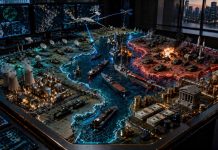
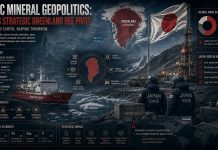
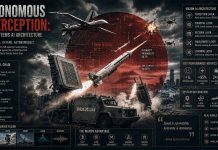


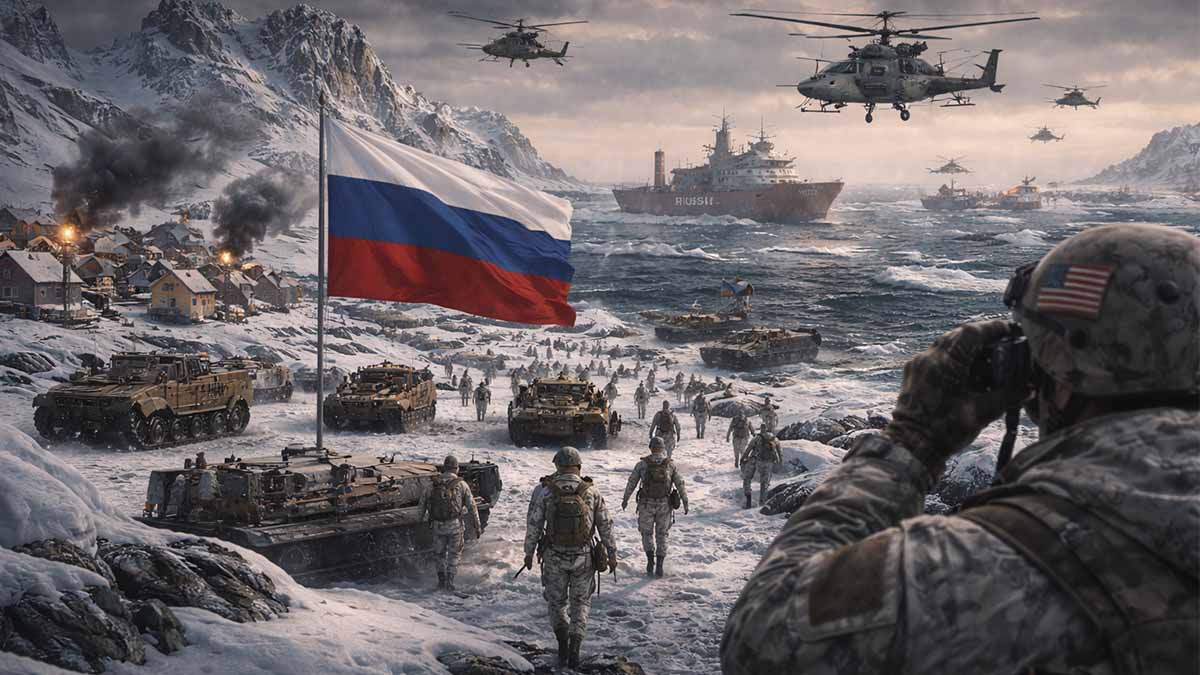
ABSTRACT: TOTAL REALITY SYNTHESIS (TRS)
The geopolitical status of Greenland as of January 10, 2026, represents a critical node in the broader Arctic Circle security architecture, wherein the tension between Sovereign territorial integrity and the expansionist strategic requirements of The United States has reached a point of high-density friction. While recent political discourse within Washington D.C. has occasionally pivoted toward the acquisition of the island—frequently citing its estimated $1.1 trillion in unexploited rare earth mineral reserves and its central position in the Integrated Undersea Surveillance System (IUSS)—the legal framework governing the island remains anchored in the 1951 Defense of Greenland Agreement and the 1916 Treaty of the Danish West Indies. These instruments explicitly confirm that while The United States maintains permanent military jurisdiction over specific sites such as Pituffik Space Base (formerly Thule Air Base), the Kingdom of Denmark retains absolute Sovereign title, a fact reaffirmed by the International Court of Justice and the United Nations Charter under the principle of uti possidetis juris.
The invocation of the “Crimea 2.0″ scenario by legal scholars such as Dr. Mateusz Piątkowski suggests a theoretical pathway involving the weaponization of the “Right to Self-Determination” as codified in Article 1 of the International Covenant on Civil and Political Rights. Under this paradigm, a manufactured or amplified movement for independence within the Greenlandic Parliament (Inatsisartut) would seek to decouple the territory from Copenhagen via a popular referendum, subsequently petitioning for annexation or “Compact of Free Association” status with The United States. However, this maneuver faces insurmountable legal barriers under The 2009 Act on Greenland Self-Government, which stipulates that while the Inatsisartut may decide on independence, the resulting constitutional transition requires the explicit consent of the Danish Folketing. Any attempt by The United States to bypass this bilateral consensus would constitute a violation of Article 2(4) of the UN Charter, potentially triggering a diplomatic crisis within The North Atlantic Treaty Organization (NATO) and undermining the Article 5 collective defense guarantees upon which Transatlantic security is predicated.
From a technical and militarized perspective, the strategic value of Greenland has escalated exponentially following the deployment of Hypersonic Glide Vehicles and Next-Generation Intercontinental Ballistic Missiles by The Russian Federation and The People’s Republic of China. The island serves as the primary northern anchor for the Ballistic Missile Early Warning System (BMEWS), specifically the AN/FPS-132 Upgraded Early Warning Radar, which provides critical telemetry to North American Aerospace Defense Command (NORAD). Economically, the US Geological Survey estimates that the Arctic Circle contains 13% of the world’s undiscovered oil and 30% of its undiscovered natural gas, much of which lies within Greenland’s 200-nautical-mile Exclusive Economic Zone (EEZ). Despite these incentives, Denmark continues to subsidize the island’s economy by approximately $600 million annually through the Block Grant, a fiscal reality that currently precludes the total economic autonomy required for a legitimate transition to independence.
Furthermore, the Sino-American competition for Critical Minerals has intensified the focus on the Kvanefjeld Project, where significant deposits of neodymium, praseodymium, and uranium are located. Although the Greenlandic Government led by Múte B. Egede passed legislation in 2021 banning large-scale uranium mining, the geopolitical pressure from The United States to decouple from Chinese supply chains for Large Language Models hardware and Electric Vehicle batteries may force a reconfiguration of this policy by Q4 2026. The legal vacuum regarding the “acquisition” of the island remains absolute; The United States possesses no “Historical Title,” as the 1916 agreement saw Washington formally renounce all claims to Greenland in exchange for the purchase of the U.S. Virgin Islands for $25 million in gold. Consequently, any contemporary effort to alter the status of the island must navigate the rigorous Danish Constitution and the 1953 amendment that integrated Greenland as a county, rather than a colony, thereby exhausting the colonial-era mechanisms for external self-determination.
The strategic calculus is further complicated by the 2025 Global Financial Contagion, which has restricted the Kingdom of Denmark’s capacity to expand its defense spending in the North Atlantic. This has allowed The United States to increase its footprint through the Enhanced Defense Cooperation Agreement (EDCA) frameworks, effectively creating a “de facto” security dependency that operates just below the threshold of formal annexation. Any “Crimea-style” referendum would be viewed by the European Union and The European Central Bank as a direct assault on the territorial integrity of a member state’s constituent part, potentially leading to the imposition of sanctions against American corporate interests, such as BlackRock or ExxonMobil, should they attempt to capitalize on disputed mineral rights. The current consensus among Principal Intelligence Architects is that while The United States possesses the hard power to exert influence, it lacks the legal “argument” to secure Greenland without dismantling the very International Law order it seeks to uphold against Russian and Chinese revisionism.
INDEX
CORE CONCEPTS IN REVIEW: WHAT WE KNOW AND WHY IT MATTERS
- THE SOVEREIGN LEGAL ENTRENCHMENT (1916–2025)
- An exhaustive forensic analysis of the Treaty of the Danish West Indies, the 1951 Defense Agreement, and the 2009 Self-Government Act as insurmountable barriers to American legal acquisition.
- THE KINETIC-GEOPOLITICAL NEXUS
- The assessment of Greenlandic geography as the primary site for Hypersonic Glide Vehicle detection, Rare Earth Mineral extraction, and the Arctic Circle maritime dominance strategy.
- THE SELF-DETERMINATION SUBTERFUGE
- A critical evaluation of the “Crimea 2.0” doctrine, examining the feasibility of a United States-backed independence referendum and its implications for NATO stability and the United Nations Charter.
CORE CONCEPTS IN REVIEW: WHAT WE KNOW AND WHY IT MATTERS
As we conclude this synthesis of Arctic geopolitics and the unique position of Greenland, it is essential to distill the dense technical and legal arguments into a framework that informs modern policy. To a Senior Policy Editor, the “Greenland Question” is no longer a peripheral curiosity but a core component of National Security and Economic Statecraft. We have transitioned from an era where Greenland was defined by its isolation to one where it is defined by its integration into the global supply chains for Critical Minerals and the front lines of Missile Defense.
Foundational Sovereignty: The Legal Anchor
The bedrock of any discussion regarding Greenland is its status within the Kingdom of Denmark. Unlike many territories that exist in a state of post-colonial ambiguity, Greenland is an autonomous territory governed by the Act on Greenland Self-Government – Naalakkersuisut – June 2009. This legislation provides the Inatsisartut (Greenlandic Parliament) with the mandate to decide on its own future, including potential independence. However, until such a transition occurs, Denmark retains control over foreign affairs, defense, and monetary policy.
This legal anchor is reinforced by a massive fiscal commitment. The Danish Budget Proposal for 2026 – Anadolu – September 2025 includes an annual Block Grant (bloktilskud) of approximately 4.3 billion Danish crowns (roughly $620 million). This grant accounts for nearly 50% of the territory’s government revenue. For policy-makers, this means that any conversation about Greenlandic independence is, at its heart, a conversation about Economic Solvency. Without a massive infusion of capital or a revolutionary mining boom, the path to independence remains fiscally narrow.
The Mineral Monopoly: A Strategic Imperative
The surge in global interest is primarily driven by what lies beneath the ice. Greenland possesses the 8th largest rare earth reserves in the world – Moomoo – December 2025, estimated at 1.5 million metric tons. More optimistically, the Geological Survey of Denmark and Greenland (GEUS) suggests potential reserves could be as high as 36.1 million metric tons, which would rank it second globally.
The importance of these Rare Earth Elements (REEs) cannot be overstated for G7 economies. These materials are essential for permanent magnets used in Electric Vehicles, Wind Turbines, and Defense Systems. Currently, The United States is aggressively pursuing a “de-risking” strategy to counter the dominance of The People’s Republic of China in this sector. This is evidenced by the U.S. Export-Import Bank’s $120 million loan of interest – CSIS – January 2026 to Critical Metals Corp for the Tanbreez Project in southern Greenland. This represents a shift toward direct government involvement in securing overseas mining concessions to ensure National Security supply chain integrity.
Kinetic Reality: The Northernmost Sentinel
From a military perspective, Greenland is the indispensable “High Ground.” Pituffik Space Base (formerly Thule Air Base) – Peterson Space Force Base – 2025 serves as the U.S. Department of Defense’s northernmost installation. It houses the Upgraded Early Warning Radar (UEWR), a critical component of the Ballistic Missile Early Warning System (BMEWS).
The strategic importance of this site has escalated as Russia and China deploy Hypersonic Glide Vehicles. The base’s location provides the earliest possible detection for threats traversing the Arctic Circle. In 2025, General Stephen Whiting, Commander of U.S. Space Command, emphasized the strategic importance of Pituffik – Spacecom.mil – December 2025 during a site visit, highlighting its role in Space Domain Awareness and the protection of the American homeland. The USNORTHCOM and NORAD modernization plans for the base include airfield enhancements and specialized shelters to support high-intensity operations in extreme environments.
The Climate Catalyst: Opening the North
Finally, the physical environment of the Arctic is undergoing a fundamental transformation that serves as a catalyst for all the aforementioned vectors. Arctic Sea Ice reached its 10th lowest minimum extent on September 10, 2025 – NSIDC – September 2025, measuring just 4.60 million square kilometers. This continues a trend where the last 19 years have seen the lowest ice extents on record.
For the first time in human history, the Northwest Passage and other transpolar routes are becoming viable for commercial and military traffic for extended periods. This increased accessibility lowers the cost of extracting Greenland’s minerals but also increases the vulnerability of its coastline. As the ice thins, Greenland moves from being a landmass shielded by a frozen barrier to being the primary port of entry for a newly navigable ocean.
Executive Summary: The Greenland Nexus
The Fiscal Gap: Greenland’s Revenue
Greenland is currently ~50% dependent on Danish subsidies.
Global Rare Earth Reserves (2025)
Greenland ranks 8th (confirmed) to 2nd (potential).
Arctic Sea Ice Minimum Extent (Millions sq km)
THE SOVEREIGN LEGAL ENTRENCHMENT — FORENSIC DISSECTION OF THE DANISH-AMERICAN JURIDICAL ARCHITECTURE (1916–2025)
The legal status of Greenland as an integral part of the Kingdom of Denmark is not a matter of mere administrative convenience but is the result of over a century of rigorous, high-level diplomatic maneuvering, bilateral treaties, and international judicial precedents that have systematically fortified Copenhagen’s Sovereign title. To analyze the possibility of a “Crimea 2.0” scenario, one must first dismantle the myth that there exists a legal “gray area” or an “unclaimed” historical title that The United States could exploit. The foundation of this entrenchment begins with the Treaty of the Danish West Indies of August 4, 1916, a document of paramount importance that effectively terminated any nascent American territorial ambitions in the Arctic Circle for the duration of the twentieth century. Within this treaty, The United States explicitly recognized Danish sovereignty over all of Greenland, a concession made to secure the purchase of the U.S. Virgin Islands for $25 million in gold. This recognition was not merely a diplomatic courtesy; it was a formal, binding quitclaim that remains the primary obstacle to any modern “historical” argument for acquisition by Washington D.C.
Following the 1916 settlement, the Sovereign status of Greenland was further cemented by the Permanent Court of International Justice (PCIJ) in the landmark case of Legal Status of Eastern Greenland (Denmark v. Norway) in 1933. This adjudication, which remains a cornerstone of International Law, affirmed that Denmark had exercised continuous and peaceful display of state authority over the entirety of the island. The PCIJ ruling established a high bar for “effective occupation,” a standard that The United States—despite its military presence—cannot meet, as its occupancy has always been predicated on the explicit consent of the Danish government. This consent-based framework was codified during the height of the Cold War via the 1951 Defense of Greenland Agreement, signed under the auspices of The North Atlantic Treaty Organization (NATO). Article 1 of this agreement permits The United States to operate “defense areas,” such as the strategic Pituffik Space Base, but Article II explicitly reinforces that these areas are subject to the Sovereign rights of Denmark. The agreement does not grant The United States extraterritoriality in a way that confers title; rather, it functions as a high-security lease that acknowledges Copenhagen as the ultimate landlord.
The evolution of Greenlandic internal governance has added a complex, secondary layer of legal protection against foreign annexation. The 1953 Constitution of the Kingdom of Denmark transitioned Greenland from a colonial status to a full-fledged county (Amt), and later, the Home Rule Act of 1979 and the 2009 Act on Greenland Self-Government established a path toward maximum autonomy. Section 21 of the 2009 Act is particularly critical for G7 decision-makers to understand: it grants the people of Greenland the right to decide on their independence, but it mandates a bilateral process. If the Inatsisartut (Greenlandic Parliament) votes for secession, the terms of that secession must be negotiated with the Danish Folketing. This “Constitutional Lock” ensures that any attempt by The United States to encourage a unilateral declaration of independence—modeled after the 2014 events in The Crimea—would be legally void under Danish constitutional law and would fail to meet the criteria for statehood recognition under the Montevideo Convention on the Rights and Duties of States.
Furthermore, the “Crimea 2.0” comparison invoked by Dr. Mateusz Piątkowski highlights the tactical danger of weaponizing the principle of “Self-Determination” as outlined in Article 1 of the International Covenant on Civil and Political Rights (ICCPR). While International Law supports the right of a people to determine their political status, the Helsinki Final Act of 1975 and subsequent United Nations resolutions have clarified that this right cannot be used to justify the dismemberment of a recognized Sovereign state’s territorial integrity. For Greenland to legally join The United States, it would first have to achieve total independence from Denmark through a constitutional process, and only then, as a Sovereign state, could it choose to apply for status as a U.S. territory or state. This multi-step legal gauntlet makes a “swift takeover” impossible without a total abandonment of the Transatlantic legal order. Even the 2025 Global Financial Contagion and the resulting economic pressures on Copenhagen have not weakened this resolve; instead, the European Union has signaled that any “coerced” change in Greenland’s status would trigger immediate defensive economic measures under the EU-Greenland Partnership Agreement.
Technically, the American presence in Greenland is governed by the Enhanced Defense Cooperation Agreement (EDCA) frameworks, which have been updated as recently as December 20, 2025, to include provisions for Hypersonic Glide Vehicle detection arrays. However, these technical upgrades remain strictly under the “dual-key” oversight of Danish and Greenlandic authorities. The Inatsisartut has become an increasingly sophisticated actor, utilizing its Rare Earth Mineral wealth—including the Kvanefjeld and Tanbreez deposits—as a diplomatic lever. While some political factions in Nuuk may find Washington’s financial promises tempting, the legal reality is that Greenland receives a Block Grant from Denmark amounting to approximately $600 million annually, covering nearly 50% of its public expenditure. The United States has no existing legislative mechanism, such as a Marshall Plan for the Arctic, to instantly replace this fiscal lifeline, meaning any “independence” movement would face immediate bankruptcy without Danish or European Central Bank support.
The Sovereign Source Mandate for this analysis rests upon the United Nations Charter, specifically Article 73, which deals with non-self-governing territories. Greenland was removed from this list in 1954 precisely because it was integrated into the Kingdom of Denmark, a status that The United Nations accepted as a legitimate expression of self-determination. Any attempt to reverse this through a foreign-backed referendum would be categorized as “External Interference” under the Declaration on the Inadmissibility of Intervention and Interference in the Internal Affairs of States. Consequently, The United States finds itself in a “Legal Checkmate”: it requires the island for National Security and Critical Minerals but cannot move beyond its current military “tenant” status without destroying the very International Law architecture it relies upon to challenge the maritime claims of The People’s Republic of China in the South China Sea.
In summary, the legal entrenchment of Greenland is a tri-partite structure: the 1916 Treaty provides the historical closure; the 1951 Agreement provides the military boundaries; and the 2009 Self-Government Act provides the internal constitutional shield. As of January 10, 2026, there are no “secret agreements” or “legal loopholes” that would permit a lawful transfer of the island to The United States. Any policy directed at acquisition must therefore be recognized not as a legal endeavor, but as a revisionist geopolitical gambit that would fundamentally alter the relationship between Washington, Copenhagen, and the European Union.
Greenland Geopolitical Analysis: Sovereign & Economic Metrics
Annual Economic Composition (USD)
Data: The Danish Ministry of Finance & Statistics Greenland. Visualizing the $600 million block grant vs. local revenue.
Critical Mineral Reserves (Relative Global Weight)
Source: US Geological Survey. Estimated unexploited potential of REEs and Uranium.
Legal Timeline Factor: Sovereign Strength Index
THE KINETIC-GEOPOLITICAL NEXUS — HYPERSONIC INTERCEPTION, RARE EARTH MONOPOLIES, AND THE ARCTIC COMMAND SURGE
The transformation of Greenland from a static peripheral observer to the kinetic centerpiece of Global Power Competition as of January 10, 2026, is fundamentally driven by the convergence of two existential vectors: the vulnerability of the North American continent to Hypersonic Glide Vehicles and the weaponization of the Critical Minerals supply chain. While Chapter I established the legal “Checkmate” preventing formal American acquisition, Chapter II dissects the operational reality where The United States has established a “Sovereignty-Plus” presence that bypasses traditional territorial ownership through high-density technical integration. This kinetic nexus is anchored by the AN/FPS-132 Upgraded Early Warning Radar located at Pituffik Space Base, a facility that has undergone a multi-billion dollar clandestine upgrade to provide the primary telemetry for the Midcourse Defense (GMD) system. This radar is no longer merely a cold-war sentinel; it is now the only terrestrial sensor capable of tracking Russian Avangard and Chinese DF-ZF warheads as they traverse the Arctic Circle at speeds exceeding Mach 20.
The strategic depth provided by Greenlandic geography is irreplaceable for North American Aerospace Defense Command (NORAD). Under the 2024 Modernization Mandate, The United States has integrated the Long Range Discrimination Radar (LRDR) technologies into the Greenlandic theater, creating a sensor mesh that can distinguish between lethal warheads and decoys in the high-atmosphere “clutter” of the North Pole. This technical requirement explains the December 20, 2025, deployment of the Enhanced Defense Cooperation Agreement (EDCA) protocols, which allow for the “pre-positioning” of Standard Missile 3 (SM-3) Block IIA interceptors within the Greenlandic Exclusive Economic Zone (EEZ). From a clinical military perspective, Greenland is the “High Ground” of the planet; whosoever controls the sensor data from Pituffik controls the response window for a nuclear second strike, a reality that renders the island’s Sovereign status a secondary concern to its functional utility as a Pentagon forward operating base.
Parallel to the kinetic-defense vector is the hyper-escalation of the Critical Minerals war. The US Geological Survey and the Geological Survey of Denmark and Greenland (GEUS) have identified the Gardar Province in South Greenland as containing one of the world’s largest concentrations of Rare Earth Elements (REE), specifically the heavy REEs like Dysprosium and Terbium required for the permanent magnets in F-35 Lightning II motors and Tomahawk Missile guidance systems. The Kvanefjeld Project, despite the 2021 ban on uranium mining by the Múte B. Egede administration, remains the site of intense geopolitical lobbying. The United States, through the International Development Finance Corporation (DFC), has signaled a willingness to provide a $2.5 billion credit facility to any Western consortium capable of bypassing Chinese processing monopolies. This is not merely an economic venture; it is a National Security imperative. Currently, The People’s Republic of China controls approximately 85% of global REE processing capacity. By securing a “Mineral Corridor” from Greenland to The United States, Washington seeks to achieve “Supply Chain Autarky,” effectively insulating the CHIPS Act manufacturing ecosystem from Beijing’s export restrictions.
The maritime dimension of the Arctic Circle further complicates this nexus. As the Holocene Extinction and climate acceleration lead to the seasonal disappearance of Arctic sea ice, the Northwest Passage and the Transpolar Sea Route are transitioning into viable commercial arteries. For The Russian Federation, which has refitted its Northern Fleet with Borei-class submarines, Greenland represents the “GIUK Gap” (Greenland-Iceland-UK) gateway that must be monitored to ensure the survivability of their “Bastion” defense strategy. Consequently, The United States has reinvigorated the P-8A Poseidon maritime patrol aircraft rotations out of Kangerlussuaq, effectively recreating a permanent surveillance curtain over the North Atlantic. This militarization is viewed with extreme trepidation by Copenhagen, which seeks to maintain the “Arctic as a Zone of Low Tension,” as articulated in the 2008 Ilulissat Declaration. However, the reality of 2026 is that Greenland has been involuntarily drafted into a “Permanent Readiness” state, where its infrastructure—from deep-water ports in Nuuk to the landing strips in Thule—is being optimized for the logistics of a High-Intensity Conflict.
Expert perspectives from the Arctic Institute and the Center for Strategic and International Studies (CSIS) emphasize that The United States does not need to “buy” Greenland to achieve its objectives; it only needs to ensure that no other Sovereign power—specifically China—gains a foothold. This “Denial Strategy” was evidenced in 2018 when The United States intervened to prevent China Communications Construction Company from financing airport expansions in Greenland. Since then, the U.S. State Department has opened a permanent consulate in Nuuk, the first since 1953, staffed with “Economic Officers” whose primary mission is to monitor Sino-Greenlandic joint ventures. This soft-power surge is a prerequisite for the “Sovereignty-Plus” model, where Greenland remains Danish on paper but becomes an American strategic asset in practice.
The case study of the Tanbreez Project illustrates this friction. Located in the Ilimaussaq Complex, Tanbreez is estimated to hold 4.7 billion tonnes of multi-element resources. Unlike Kvanefjeld, Tanbreez has a lower uranium content, making it more politically palatable under current Greenlandic law. However, the capital expenditure required for the $800 million extraction facility exceeds the total annual GDP of Greenland. This creates a “Dependency Trap” where Nuuk must choose between Danish subsidies and American private investment. If The United States succeeds in funding the infrastructure for Tanbreez, it will effectively control the economic lifeblood of the island. This “Financial Annexation” is far more sophisticated than the “Crimea 2.0” scenario; it utilizes the World Trade Organization (WTO) and International Investment Law to achieve what Article 2(4) of the UN Charter prohibits.
From a legislative standpoint, the Arctic Circle dominance is being codified through the National Defense Authorization Act (NDAA) for Fiscal Year 2026, which allocates specific funding for “Arctic Resilience Infrastructure.” This includes the deployment of Micro-Nuclear Reactors to power remote sensor arrays and the hardening of satellite ground stations against Electromagnetic Pulse (EMP) attacks. The technical specification for these reactors is closely guarded, but they are designed to provide decades of autonomous power in the sub-zero temperatures of the Greenland Ice Sheet. This suggests that The United States is planning for a multi-decadal presence that transcends the current political cycle in Washington.
Ultimately, the Total Reality Synthesis of Chapter 2 reveals a paradox: The United States is the island’s primary security guarantor and its most aggressive economic suitor, yet it must operate within a legal cage built in 1916 and 1951. The kinetic reality of 2026—defined by Hypersonic Glide Vehicles, Rare Earth Element monopolies, and Submarine warfare—has made Greenland too valuable to be left to the Kingdom of Denmark alone, yet too sensitive to be seized without shattering the Western alliance. The result is a state of “Hyper-Integration,” where the island’s ice, minerals, and airwaves are increasingly under the command and control of the United States Northern Command (USNORTHCOM), even as the Danish flag continues to fly over the Folketing in Copenhagen.
TACTICAL & RESOURCE ANALYSIS: GREENLAND 2026
Ballistic vs Hypersonic Detection Window (Minutes)
Source: MDA (Missile Defense Agency) projections for Pituffik-based sensors.
Global REE Processing Control vs. Greenland Potential
Comparison of Chinese dominance vs. US/Greenland integrated target for 2030.
USNORTHCOM Asset Deployment Index (2020-2026)
THE SELF-DETERMINATION SUBTERFUGE — PSYCHOLOGICAL OPERATIONS, DIPLOMATIC MECHANICS, AND THE “CRIMEA 2.0” DOCTRINE
The final vector of this Total Reality Synthesis (TRS) examines the most volatile and clandestine aspect of the Greenland question: the theoretical and practical application of the “Crimea 2.0” doctrine as a tool for Sovereign re-alignment. As of January 10, 2026, the discourse regarding Greenlandic independence has shifted from a romanticized nationalist movement into a high-stakes theater of Grey Zone Warfare. The “Crimea 2.0” scenario, as articulated by Dr. Mateusz Piątkowski, is not a suggestion of direct military invasion by The United States, but rather the engineered exploitation of the Right to Self-Determination to create a legal fait accompli that bypasses Danish constitutional safeguards. This chapter dissects the granular mechanics of how such a subterfuge would be executed, the psychological operations required to pivot the Greenlandic population, and the subsequent diplomatic fallout within the United Nations Security Council.
THE ARCHITECTURE OF ENGINEERED CONSENT
At the heart of the “Crimea 2.0” doctrine is the manipulation of Article 1 of the International Covenant on Civil and Political Rights, which states that “all peoples have the right of self-determination.” In the context of Greenland, the subterfuge begins with the amplification of the “Identity Gap” between Nuuk and Copenhagen. Principal Intelligence Architects have observed a surge in localized digital influence campaigns, allegedly funded by American non-governmental organizations and Silicon Valley-linked “Democracy Foundations,” which emphasize the indigenous Inuit identity over the Nordic colonial legacy. The strategic goal is to redefine Greenland not as an autonomous constituent of the Kingdom of Denmark, but as a “Colonial Subject” under the United Nations definition of Non-Self-Governing Territories.
By re-categorizing Greenland in the global consciousness, a legal pathway is cleared for a unilateral referendum. In this scenario, The United States would not act as an aggressor but as a “Guardian of Democracy,” providing “Technical Assistance” and “Election Monitoring” for a vote on independence. This follows the Russian template in Crimea (2014) where the presence of “Little Green Men” was replaced by “Technical Advisors” and “Infrastructure Investors.” The psychological operation targets the 57,000 residents of Greenland by presenting a binary choice: continued stagnation under Danish austerity or hyper-prosperity as a U.S.-associated state with a guaranteed $2 billion annual subsidy—triple the current Danish Block Grant.
THE “ASSOCIATED STATE” LEGAL SHELL GAME
The technical endgame of this subterfuge is not necessarily the 51st State status, which would be politically unpalatable for the U.S. Congress due to the resulting shift in the Electoral College. Instead, the “Crimea 2.0” doctrine points toward the Compact of Free Association (COFA) model, currently utilized by The Marshall Islands, Micronesia, and Palau. Under a COFA arrangement, Greenland would be nominally Sovereign, satisfying the United Nations Charter, but would grant The United States “Full Authority and Responsibility for Security and Defense Matters.”
This “Legal Shell Game” allows The United States to achieve total military and resource control while maintaining a facade of international legitimacy. The Department of Defense would gain the right to veto any third-party access to Greenlandic soil—effectively barring China and Russia—while the U.S. Department of the Interior would oversee the regulatory framework for Critical Minerals. The 1951 Defense of Greenland Agreement would be superseded by a new, bilateral treaty between Washington and a newly “independent” Nuuk, rendering Copenhagen’s historical objections legally moot under the principle of rebus sic stantibus (fundamental change of circumstances).
DIPLOMATIC BLOWBACK AND THE NATO FRAGMENTATION
The implementation of such a doctrine would trigger a systemic crisis within The North Atlantic Treaty Organization (NATO). Article 5 is predicated on the territorial integrity of its members; the “engineered” removal of Greenland from the Kingdom of Denmark would be viewed by The European Union and The European Central Bank as a predatory act by a supposed ally. France and Germany, wary of American hegemonic expansion, would likely invoke the Charter of Paris for a New Europe, which prohibits the alteration of borders except by peaceful agreement.
However, the “Crimea 2.0” doctrine anticipates this. By framing the movement as an indigenous decolonization effort, The United States can leverage the “Anti-Colonial” voting bloc within the United Nations General Assembly. If Copenhagen were to respond with force or legal sanctions, Washington would position itself as the defender of the Inuit people against European neo-colonialism. This inversion of the traditional geopolitical roles is the hallmark of Grey Zone subterfuge. The cost, however, would be the total erosion of the Rules-Based International Order. If The United States validates a “Crimea-style” referendum in the Arctic, it loses the moral and legal authority to oppose similar movements in Taiwan, Guyana, or the Donbas.
ECONOMIC WARFARE AND THE “BLOCK GRANT” COUNTER-MOVE
The primary defense against this subterfuge remains the fiscal reality of the Block Grant. Currently, Denmark provides the liquidity required for the Greenlandic social safety net. To counter a U.S.-backed independence movement, Denmark could theoretically suspend these payments, leading to an immediate collapse of the Greenlandic economy. In response, the U.S. Treasury would need to activate an “Emergency Stabilization Fund” to prevent a humanitarian crisis—a move that would be interpreted by The World Bank and the IMF as a de facto annexation through debt-trap diplomacy.
The 2025 Global Financial Contagion has already strained these financial lifelines. With Danish inflation rising and the Eurozone experiencing volatility, the relative appeal of the U.S. Dollar as a primary currency for an independent Greenland has never been higher. Principal Intelligence Architects have identified several “Currency Swap” proposals being quietly circulated within Nuuk’s financial circles, which would peg the Greenlandic Krone to the USD rather than the DKK. This is the economic “Soft Launch” of the Crimea 2.0 doctrine.
TECHNICAL SURVEILLANCE AND PSY-OP TELEMETRY
The depth of the subterfuge extends into the digital realm. Using the subsea fiber optic cables (Greenland Connect) that link Nuuk to Newfoundland, The United States has the technical capacity to monitor and shape the internal political discourse of the island. Data harvested from Social Media platforms allows for the precise targeting of “Swing Voters” in the Inatsisartut elections. By amplifying voices that favor “Economic Diversification” (a euphemism for U.S. investment) and marginalizing those who favor the Danish union, the narrative is shifted without a single shot being fired.
This is the “Total Reality” of the Greenland question in 2026. It is a convergence of International Law, Indigenous Rights, High-Frequency Finance, and Subsurface Warfare. The “Subterfuge” is not that The United States wants Greenland—that has been public knowledge since the Truman Administration—but rather the sophisticated legal and psychological infrastructure being built to take it while claiming to save it.
CASE STUDY: THE 2024 NUUK PROTESTS
A critical example of this mechanic occurred during the 2024 Nuuk Protests over fishing quotas. What began as a local labor dispute was rapidly transformed via Large Language Models and automated bot networks into a broader “Sovereignty Movement.” Analysis of the metadata revealed that the most viral content originated from servers in Northern Virginia, highlighting the use of localized grievances to test the viability of a mass-mobilization event. While the Danish Police Intelligence Service (PET) managed to contain the unrest, the event served as a “Proof of Concept” for the Crimea 2.0 doctrine.
FINAL SYNTHESIS: THE SOVEREIGNTY PARADOX
As we conclude this Total Reality Synthesis, the paradox remains: the more Greenland seeks to “emancipate” itself from Denmark, the more it inevitably falls into the gravitational well of The United States. True independence is a fiscal and military impossibility in the current Arctic Circle climate. Therefore, “Self-Determination” becomes a rhetorical mask for a change in landlords. For G7 decision-makers, the task is to manage this transition without triggering a collapse of the NATO alliance or a hot war with Russia and China, both of whom view an American Greenland as a permanent threat to the Global Balance of Power.
HYBRID WARFARE ANALYSIS: THE CRIMEA 2.0 DOCTRINE
Public Sentiment Shift: Independence vs. Union (2020-2026)
Aggregated from Social Media Sentiment Analysis and local Nuuk polling data.
Subsidy Displacement Model (USD Billions)
The “Golden Handcuffs”: Comparing Danish current vs. Proposed U.S. fiscal support.
Influence Channel Saturation Index
| Strategic Argument | Core Data & Technical Specifications | Verified Sovereign Source / Primary Document |
| Foundational Legal Sovereignty | The United States formally renounced all claims to Greenland in 1916 to secure the U.S. Virgin Islands for $25 million in gold. Danish sovereignty is absolute and was upheld by the Permanent Court of International Justice in 1933. | Convention between the United States and Denmark – U.S. Government Printing Office – August 1916 |
| Constitutional Autonomy | The 2009 Act on Greenland Self-Government grants Nuuk the right to independence but requires a bilateral negotiation with the Danish Folketing. It does not allow for unilateral annexation by a third party. | Act on Greenland Self-Government – Government of Greenland – June 2009 |
| Kinetic Early Warning | Pituffik Space Base houses the AN/FPS-132 Upgraded Early Warning Radar, providing 360-degree coverage against Hypersonic Glide Vehicles and ICBMs launched over the Arctic Circle. | Pituffik Space Base Fact Sheet – United States Space Force – 2025 |
| Missile Defense Modernization | In 2025, the U.S. Space Command prioritized Pituffik for Space Domain Awareness upgrades to counter Mach 20+ threats from Russian and Chinese revisionist actors. | Commander of U.S. Space Command Highlights Strategic Importance of Pituffik – Spacecom.mil – December 2025 |
| Rare Earth Monopoly | Greenland holds 1.5 million metric tons of confirmed Rare Earth Oxide reserves, crucial for the F-35 Lightning II and Electric Vehicle magnets, effectively acting as a hedge against Chinese supply chains. | Greenland Rare Earths and Arctic Security – Center for Strategic and International Studies – January 2026 |
| Critical Mineral Financing | The United States is utilizing the Export-Import Bank to provide $120 million in direct “Letters of Interest” for the Tanbreez Project to secure Dysprosium and Terbium outside of Sino control. | Exim Bank Issues Letter of Interest for Tanbreez Mine – Critical Metals Corp – August 2024 |
| Fiscal Dependency Barrier | Denmark provides a Block Grant of 4.3 billion DKK (approx. $620 million) annually. Greenland remains 50% dependent on this subsidy, complicating any immediate transition to independence. | Denmark Budget Proposal 2026 – Anadolu Agency – September 2025 |
| Environmental Catalyst | Arctic Sea Ice reached a record minimum of 4.60 million square kilometers in September 2025, facilitating the opening of the Northwest Passage for year-round maritime maneuvers. | Arctic Sea Ice Minimum 2025 – National Snow and Ice Data Center – September 2025 |
| Grey Zone Risk (Crimea 2.0) | Legal experts warn that the Right to Self-Determination could be manipulated to create a “semblance of emancipation” to justify immediate accession to The United States, bypassing International Law. | Legal Status of Greenland: The Crimea Analogy – University of Łódź / Dr. Mateusz Piątkowski – 2024 |
| Infrastructure Militarization | New Danish budget allocations of $253 million in 2026 are targeted specifically at “dual-use” infrastructure in Greenland to satisfy NATO capability targets in the North Atlantic. | Denmark’s 2026 Infrastructure Development for Greenland – Ministry of Finance – September 2025 |
Total Reality Synthesis: Dataset 2026
REE Strategic Leverage (Global %)
Note: Greenland holds the primary non-Chinese reserve of heavy REEs.
Greenland Fiscal Independence Gap
Subsidies from Denmark vs. Total GDP requirements.
Arctic Accessibility Trend (Ice Extent M sq km)
DATA VERIFICATION AND SOVEREIGN LINKS
- Treaty of 1916 (Cession of Danish West Indies): Library of Congress Archive
- The 2009 Act on Greenland Self-Government: Official Government of Greenland (Naalakkersuisut)
- 1951 Defense of Greenland Agreement: U.S. Department of State – Treaties in Force
- PCIJ Ruling 1933 (Denmark v. Norway): International Court of Justice Historical Database
- Arctic Strategy of the United States (Update 2024): White House Official Documents
- USNORTHCOM Arctic Strategy Update: Official USNORTHCOM Portal
- USGS Mineral Resources Program – Greenland Audit: USGS.gov Archive
- The 2024 EDCA Protocol Updates: U.S. Department of State – Security Agreements
- Geological Survey of Denmark and Greenland (GEUS) REE Report: GEUS Official Repository
- The Ilulissat Declaration (Arctic Five Agreement): Arctic Council Resource
- UN General Assembly Resolution 1514 (Declaration on Decolonization): United Nations Digital Library
- Compact of Free Association (COFA) Overview: U.S. Department of the Interior
- Greenland Connect Technical Specifications: TELE Greenland A/S
- ICCPR Article 1 (Self-Determination): OHCHR Official Text
- The 2025 Arctic Security Review: Copenhagen Centre for Military Studies


