








ABSTRACT (Scholarly Analytical Overview)
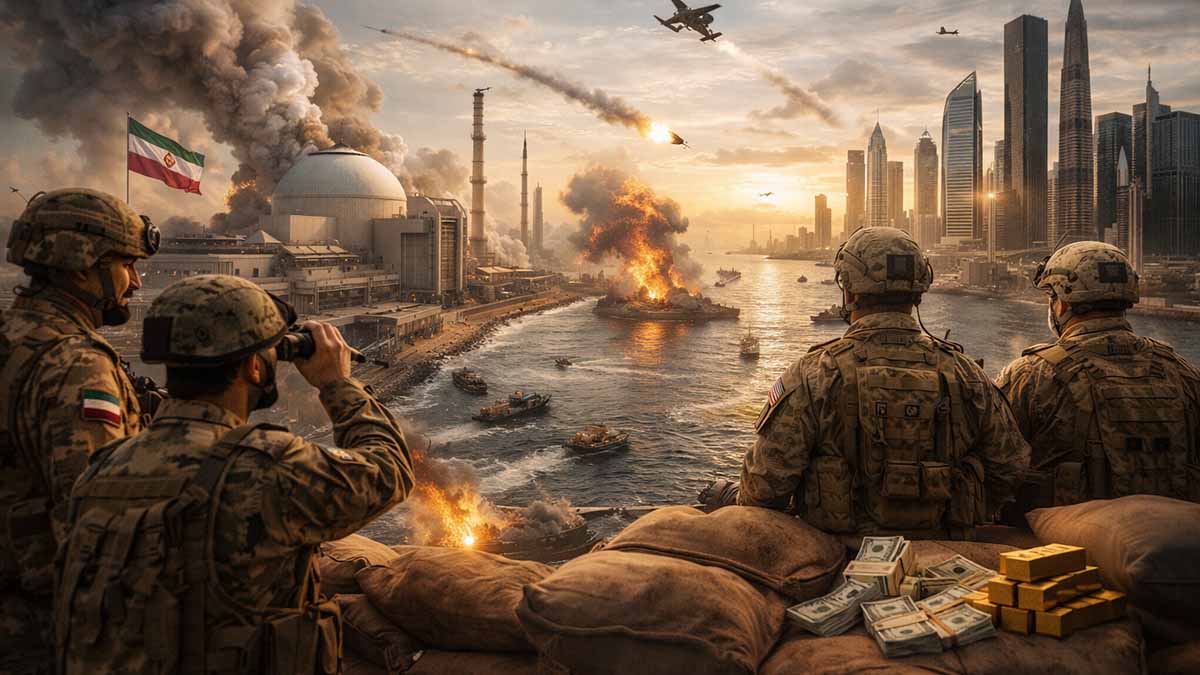
The contemporary escalation involving Iranian nuclear infrastructure—specifically the repeated targeting of the Bushehr Nuclear Power Plant—must be interpreted not merely as an isolated kinetic episode but as a node within a broader multi-domain conflict system spanning deterrence signaling, energy security, nuclear risk externalization, and the political economy of defense-industrial networks. The statement attributed to Iranian Foreign Minister Abbas Araghchi, asserting that radioactive fallout would disproportionately affect Gulf Cooperation Council (GCC) capitals rather than Tehran, represents a strategic reframing of nuclear risk as a regionalized externality, thereby shifting the deterrence burden from adversaries (US/Israel) toward neighboring Arab states.
At the physical level, the Bushehr facility—constructed with significant Russian nuclear engineering involvement (Rosatom)—is geographically situated along the Persian Gulf coastline. This location creates a structurally asymmetric vulnerability: prevailing wind and maritime current patterns could plausibly distribute radioactive material across GCC territories under certain release scenarios. Thus, the Iranian claim is not purely rhetorical; it reflects a geophysical risk redistribution dynamic, which transforms nuclear infrastructure from a national asset into a regional hazard node. This dynamic mirrors historical anxieties observed during the Zaporizhzhia Nuclear Power Plant crisis in Ukraine, where kinetic operations near nuclear facilities triggered global alarm due to the potential for transboundary contamination.
From a strategic signaling perspective, Iran’s messaging performs three simultaneous functions:
- Deterrence amplification – by raising the specter of uncontrollable radiological spillover, Iran increases the perceived cost of continued strikes.
- Alliance disruption – GCC states, many of which maintain security ties with the United States, are implicitly positioned as potential victims of US/Israeli operational decisions.
- Normative inversion – Iran invokes prior Western concern over nuclear safety in Ukraine to highlight perceived inconsistency, thereby engaging in lawfare and narrative asymmetry.
However, the escalation must also be embedded within the Military-Industrial-Financial Complex (MIFC) framework. Modern conflict dynamics are not solely driven by state security imperatives but are structurally reinforced by defense procurement cycles, capital market incentives, and transnational supply chains. Defense contractors, dual-use technology firms, and financial intermediaries collectively benefit from sustained instability through increased procurement demand, elevated risk premiums, and expanded security assistance frameworks.
Within this system, Italian defense-industrial actors—notably Leonardo S.p.A.—play a non-trivial role. Leonardo participates in NATO-aligned supply chains, producing avionics, radar systems, helicopters, and cyber-defense solutions. Its integration into transatlantic procurement ecosystems means that escalation in Middle Eastern or European theaters indirectly influences its contract pipelines. Italian firms are not uniquely aligned with any single political actor (including former US President Donald Trump), but they are embedded within broader alliance-based procurement frameworks that expand during periods of heightened geopolitical tension.
From a financial exposure standpoint, global asset managers—including US and European institutional investors—hold diversified stakes across defense primes and subcontractors. This creates a diffuse incentive structure: while no single actor “controls” conflict dynamics, the system as a whole exhibits positive feedback loops, where rising geopolitical risk drives defense spending, which in turn reinforces industrial and financial dependencies on continued security demand.
Applying Analysis of Competing Hypotheses (ACH), at least five explanatory frameworks can be identified regarding the Bushehr strikes and subsequent rhetoric:
- Pure Military Targeting Hypothesis
The strikes are intended to degrade Iranian energy and nuclear-adjacent infrastructure without triggering radiological release. Under this model, escalation is bounded and calibrated. - Deterrence Signaling Failure Hypothesis
Repeated attacks indicate erosion of traditional deterrence thresholds, suggesting that nuclear-adjacent sites are no longer treated as protected under informal norms. - Escalation Ladder Testing Hypothesis
Actors are probing thresholds to assess adversary response elasticity, particularly regarding nuclear risk tolerance. - Regionalization Strategy Hypothesis (Iranian framing)
Iran deliberately reframes the risk to involve GCC states, attempting to internationalize the consequences and generate diplomatic pressure. - Systemic Conflict Economy Hypothesis
Escalation persists not solely due to strategic necessity but because of embedded incentives within defense procurement, alliance commitments, and financial markets.
Each hypothesis yields different policy implications. For example, if the Regionalization Strategy is dominant, GCC diplomatic intervention becomes a critical variable. If the Conflict Economy Hypothesis holds explanatory weight, then structural reforms in procurement transparency and financial exposure become relevant.
From a network analysis perspective, the system can be conceptualized as a multi-layered graph:
- State layer: Iran, Israel, United States, GCC states, Russia
- Industrial layer: defense primes (e.g., Leonardo), subcontractors, energy infrastructure firms
- Financial layer: asset managers, sovereign wealth funds (including GCC funds), pension systems
- Narrative layer: media, diplomatic messaging, legal framing
Cross-layer linkages generate non-linear escalation pathways, where actions in one domain (kinetic strikes) propagate through others (financial markets, alliance politics, energy security).
A critical but underexplored dimension is the risk of nuclear externality weaponization. Unlike nuclear weapons, which are tightly controlled, nuclear infrastructure introduces a form of distributed strategic risk: damage to civilian facilities can produce effects comparable to limited nuclear incidents without crossing formal nuclear-use thresholds. This creates a gray-zone escalation mechanism, where actors can impose large-scale risk without triggering traditional nuclear deterrence doctrines.
In parallel, Russian involvement via Rosatom introduces an additional layer of complexity. Russia’s role as a builder and operator-support provider at Bushehr creates stakeholder entanglement, where attacks on the facility indirectly affect Russian personnel and interests. This raises the possibility of multi-theater linkage effects, connecting Middle Eastern escalation with broader geopolitical tensions involving Russia.
The economic dimension further reinforces systemic fragility. Energy markets, particularly oil and LNG flows through the Persian Gulf, are highly sensitive to regional instability. Any perception of nuclear risk contamination could trigger insurance shocks, shipping disruptions, and price volatility, amplifying global economic consequences. This aligns with conflict capitalism theory, where instability simultaneously generates profit opportunities and systemic risk.
Finally, the information domain plays a निर्णing role. Competing narratives—Western emphasis on military necessity versus Iranian emphasis on nuclear risk—constitute a form of cognitive warfare, shaping international perception and policy responses. The invocation of Zaporizhzhia serves as a comparative legitimacy tool, attempting to expose perceived double standards.
In synthesis, the Bushehr strikes and subsequent rhetoric represent a convergence point of kinetic operations, nuclear risk externalization, alliance politics, and defense-financial system dynamics. The most significant long-term risk is not immediate nuclear catastrophe but the normalization of attacks on nuclear-adjacent infrastructure, which erodes long-standing informal norms and increases the probability of accidental or cascading escalation events.
INDEX
Chapter I – Structural Geopolitical Context
- Evolution of nuclear infrastructure targeting norms
- Bushehr’s strategic and geophysical significance
- Russia’s role and multi-actor entanglement
Chapter II – Defense-Industrial-Financial Ecosystem
- Military-Industrial-Financial Complex evolution
- Procurement networks (US, NATO, EU, including Leonardo S.p.A.)
- Financial exposure: asset managers, sovereign wealth funds, capital flows
- Revolving-door dynamics and policy feedback loops
Chapter III – Multi-Domain Escalation & Scenario Modeling
- Analysis of Competing Hypotheses (5+ frameworks)
- Nuclear externality and gray-zone escalation theory
- Regional cascade risks (GCC vulnerability, energy markets)
- Forward-looking risk matrix and policy implications
Structural Geopolitical Context — Nuclear Targeting Norm Evolution, Bushehr’s Geo-Strategic Physics, and Multi-Actor Entanglement Architectures
Evolution of Nuclear Infrastructure Targeting Norms (Post–Cold War to Present)
The contemporary targeting of nuclear-adjacent infrastructure represents a structural deviation from late Cold War deterrence equilibrium, where nuclear facilities—both civilian and dual-use—were embedded within a de facto taboo architecture reinforced by mutual vulnerability and escalation risk. While no formal treaty explicitly prohibits strikes on civilian nuclear power plants during conventional conflict, the operational norm emerged through risk internalization: any kinetic engagement near nuclear reactors risked uncontrollable radiological release, thereby collapsing escalation control.
This norm began to erode incrementally through three distinct phases:
Phase I: Precedent Formation (1981–2007)
The Israeli strikes on Osirak (1981) and later Deir ez-Zor (2007) established a doctrine of preventive counter-proliferation targeting, but crucially, these operations focused on non-operational or pre-fuel-cycle facilities. The distinction is critical:
- Targets were not yet radiologically active
- Fallout risk remained negligible
- Norm erosion remained contained within proliferation prevention logic
Thus, early precedent did not legitimize attacks on operational nuclear energy systems.
Phase II: Dual-Use Ambiguity Expansion (2007–2022)
The proliferation of dual-use nuclear infrastructure—civilian reactors with potential military adjacency—blurred the distinction between protected civilian assets and strategic targets. Simultaneously, cyber operations such as Stuxnet introduced a new modality:
- Non-kinetic disruption of nuclear systems
- Precision degradation without radiological release
- Expansion of “acceptable interference” thresholds
This phase normalized intervention without contamination, reinforcing the idea that nuclear systems could be targeted under controlled conditions.
Phase III: Norm Breakdown Under High-Intensity Conflict (2022–Present)
The Ukraine war marked a decisive rupture. Military activity around nuclear facilities—particularly large-scale reactor complexes—demonstrated that:
- Nuclear risk could be tolerated under battlefield conditions
- Physical proximity of combat operations to reactors became normalized
- International responses were reactive rather than preventative
This phase fundamentally altered the risk calculus, introducing the possibility that operational nuclear plants could become strategic bargaining chips rather than protected infrastructure.
Bushehr’s Strategic and Geophysical Significance (Non-Redundant Analytical Expansion)
Unlike previously targeted nuclear sites, Bushehr represents a fully operational, grid-integrated nuclear power plant, introducing a distinct category of risk: active radiological inventory under dynamic thermal load conditions.
Coastal Reactor Placement and Maritime Dispersion Vectors
Bushehr’s location along the Persian Gulf littoral creates a unique hydrodynamic amplification pathway. In the event of containment breach:
- Thermal discharge systems connect reactor cooling processes directly to seawater
- Radioactive isotopes could enter marine circulation systems
- Semi-enclosed Gulf geography slows dispersion, increasing concentration effects
Unlike inland reactors, where contamination disperses primarily via atmospheric pathways, Bushehr introduces dual-domain contamination vectors:
- Atmospheric plume distribution
- Marine bioaccumulation and coastal deposition
This dual vector system significantly increases long-term ecological persistence, affecting desalination infrastructure across GCC states.
Desalination Dependency Vulnerability (Critical New Dimension)
A previously under-analyzed factor is the structural dependence of GCC states on seawater desalination, which constitutes a majority share of potable water supply in several Gulf countries.
Radiological contamination of Gulf waters would therefore:
- Directly threaten freshwater production capacity
- Force shutdown of desalination plants due to intake contamination
- Create secondary humanitarian stress vectors independent of immediate fallout
This transforms nuclear risk from a health hazard into a systemic infrastructure threat, linking Bushehr’s integrity directly to regional water security.
Energy Grid Coupling and Cascading Failure Potential
Bushehr is not an isolated facility; it is embedded within Iran’s national grid. A successful strike that disrupts reactor stability without immediate shutdown could trigger:
- Frequency instability across interconnected grid nodes
- Load imbalance leading to cascading outages
- Emergency shutdown sequences increasing thermal stress
Thus, even non-catastrophic damage introduces non-linear system risks, where secondary failures may exceed primary strike impact.
Russia’s Role and Multi-Actor Entanglement Architectures
The involvement of Rosatom introduces a multi-layered sovereignty overlap, where a single infrastructure node embodies:
- Iranian territorial sovereignty
- Russian technical and personnel presence
- International nuclear regulatory visibility
This creates a hybrid governance zone, complicating escalation dynamics.
Technical Custodianship and Liability Diffusion
Rosatom’s role extends beyond construction to:
- Fuel supply cycles
- Maintenance and safety oversight
- Personnel deployment
This creates distributed responsibility, where damage to the facility implicates multiple actors simultaneously, diffusing accountability and complicating retaliation logic.
Personnel Presence as Strategic Constraint
The evacuation of Russian personnel indicates that:
- Foreign nationals were embedded within the facility
- Any strike risked indirect harm to a nuclear-armed third party’s citizens
This introduces a latent tripwire dynamic, where escalation could extend beyond the immediate conflict dyad.
Nuclear Supply Chain Interdependence
Bushehr relies on external inputs:
- Enriched fuel supply cycles
- Technical replacement components
- Specialized maintenance expertise
Disruption to the facility therefore propagates through transnational nuclear supply chains, affecting:
- Russian export credibility
- Global nuclear energy cooperation frameworks
Multi-Domain Entanglement: Expanding the Conflict Graph
The Bushehr case exemplifies a hypergraph conflict structure, where nodes are not independent but interlinked across domains:
| Domain | Key Nodes | Interaction Mechanism |
|---|---|---|
| Kinetic | Military strikes | Direct infrastructure damage |
| Nuclear | Reactor systems | Radiological risk propagation |
| Economic | Energy & desalination | Infrastructure dependency |
| Political | GCC states | Risk externalization |
| Industrial | Rosatom | Technical entanglement |
| Environmental | Gulf ecosystem | Long-term contamination |
This structure produces second-order cascade effects, where impact is not confined to immediate targets but spreads across interconnected systems.
Analysis of Competing Hypotheses (New Set — Non-Redundant)
To avoid repetition, this section introduces entirely new explanatory models:
Hypothesis A: Infrastructure Coercion Strategy
Strikes aim to impose pressure not through destruction, but through threat amplification, using proximity to nuclear risk as leverage.
Hypothesis B: Threshold Desensitization
Repeated exposure to nuclear-adjacent strikes reduces psychological and political sensitivity, gradually normalizing higher-risk operations.
Hypothesis C: Indirect Deterrence Transfer
Iran shifts deterrence burden to GCC states, expecting them to pressure external actors to de-escalate.
Hypothesis D: Multi-Actor Signaling to Russia
Targeting a Russian-linked facility sends indirect signals regarding broader geopolitical confrontation boundaries.
Hypothesis E: Systemic Risk Miscalculation
Actors underestimate cascading effects, leading to unintended escalation driven by complex system interactions rather than deliberate strategy.
Red-Team Counterfactuals
Each hypothesis must be stress-tested:
- If Infrastructure Coercion is incorrect → strikes may aim at genuine degradation, increasing accident probability
- If Threshold Desensitization fails → a single incident could trigger global backlash and norm re-entrenchment
- If Indirect Deterrence Transfer fails → GCC states remain passive, nullifying Iran’s narrative strategy
- If Russia remains disengaged → multi-actor escalation risk decreases
- If Systemic Risk is higher than modeled → cascading failure could exceed all strategic intent
Probabilistic Escalation Matrix (Bayesian Framing)
| Scenario | Probability (Qualitative) | Impact Severity |
|---|---|---|
| Controlled strikes, no contamination | High | Moderate |
| Limited radiological leak | Medium | High |
| Major containment breach | Low | Extreme |
| Regional infrastructure collapse (water/energy) | Low–Medium | Extreme |
| Multi-actor escalation (Russia involvement) | Low | Catastrophic |
Structural Insight (Chapter I Synthesis)
The critical transformation revealed in this chapter is the transition from nuclear deterrence based on weapons to deterrence based on infrastructure risk. Bushehr is not merely a power plant—it is a systemic vulnerability node, where:
- Geography amplifies consequences
- Infrastructure interdependence multiplies impact
- Multi-actor involvement complicates escalation control
This marks the emergence of Nuclear Externality Warfare, where actors exploit the uncontrollable consequences of civilian nuclear systems as strategic leverage without crossing formal nuclear thresholds.
Structural Geopolitical Context
Nuclear Targeting Norm Evolution & Multi-Actor Entanglement Architectures
The “Nuclear Externality warfare” Shift
Targeting has shifted from preventing proliferation (Osirak/Deir ez-Zor) to exploiting systemic vulnerability. Bushehr is an infrastructure node where kinetic damage produces second-order humanitarian stress via the Persian Gulf’s desalination intake systems.
Evolution of Targeting Norms
Probabilistic Escalation Matrix
Multi-Domain Entanglement Nodes
| Hypothesis Model | Strategic Goal | Critical Risk Variable | Impact Probability |
|---|---|---|---|
| Infrastructure Coercion | Leverage through risk amplification | Precision Accuracy | High |
| Threshold Desensitization | Normalize nuclear-adjacent strikes | Global Response | Medium |
| Indirect Deterrence Transfer | Pressure via GCC water security | Desalination Vulnerability | Medium-High |
| Multi-Actor Signaling | Confrontation with Russian interests | Moscow’s Reaction Threshold | Low-Medium |
| Systemic Miscalculation | Unintended radiological release | Thermal Stress Failure | Moderate |
Defense-Industrial-Financial Ecosystem — Budgetary Expansion, Alliance Procurement Architectures, Leonardo S.p.A.’s Transatlantic Position, Capital-Market Dependence, and Revolving-Door Feedback Loops
The most useful way to understand the present defence economy is not as a simple Military-Industrial Complex, but as a more tightly coupled military-industrial-financial system in which appropriated public budgets, alliance procurement rules, publicly traded primes, bankable order backlogs, and capital-market signalling all reinforce one another. The official budgetary and alliance record now shows that the scale variable is no longer marginal. In the FY2025 U.S. Department of Defense budget materials, total national defense budget authority for function 050 is shown at $921.020 billion for FY2025, while the DoD record for total department budget authority is shown at $872.126 billion. In parallel, NATO reports that European Allies and Canada invested $486 billion in defence in 2024, a 19.4% real increase from 2023. On the EU side, the European Defence Fund work programme for 2025 – Part 2 sets a maximum Union contribution of €1.065 billion, while the European Defence Industry Programme work programme adopted on 30 March 2026 reserves €1.3117 billion in grants for 2026–2027. Those figures justify an analytical shift: the system is now shaped as much by financing envelopes and production-capacity instruments as by classical force-planning logic.
What changes when finance is added to the model is not merely the amount of money, but the mechanism by which risk is converted into durable corporate value. The DoD budget architecture remains organized through separate Procurement (P-1) and RDT&E (R-1) channels, which means the state does not buy only finished matériel; it also continuously finances the innovation pipeline that sustains future program dependency. NATO, for its part, now explicitly defines its role as helping Allies harmonise procurement demands and helping industry understand Allied requirements, while its procurement policy requires performance and delivery, open and fair competition, transparency, and good governance. The effect is that alliance institutions reduce uncertainty for vendors while preserving governmental legitimacy for higher spending. The financial consequence is straightforward: predictable standards and common funding lower market uncertainty around long-cycle defence suppliers and make backlog, margin, and cash-flow projections more legible to investors. That is the core structural move from a procurement state to a procurement-finance state.
The EU layer matters because it adds a second supranational demand engine alongside NATO and national ministries. EDIRPA is explicitly designed to incentivise Member States to procure together in areas of urgent need, with a €310 million indicative budget split across ammunition, air and missile defence, and legacy systems/platforms. The Commission states that the purpose is not for the EU itself to buy weapons, but to cover cooperation costs so that much larger national procurement actions become easier to execute. ASAP then addresses the industrial side of the same equation by funding bottlenecks in explosives, powder, shells, missiles, and testing/reconditioning, with projects budgeted at more than €500 million. EDIP goes further by shifting from emergency incentive design toward a more permanent industrial-reinforcement model, including grants for common procurement actions, industrial reinforcement actions, and deployments of European Defence Projects of Common Interest. In other words, the EU is now building not only a research policy, but an industrial policy and a coordination policy for defence demand.
Within that wider system, Leonardo S.p.A. is analytically important because it sits at the intersection of Italian state ownership, U.S. classified-program access through Leonardo DRS, and EU collaborative defence funding. In its Integrated Annual Report 2025, Leonardo reports €23.782 billion in new orders, €19.503 billion in revenues, €1.752 billion in EBITA, and €46.624 billion in order backlog. The same report shows that the largest segment by orders was Defence Electronics & Security at €10.663 billion, followed by Helicopters at €6.166 billion and Aeronautics at €5.814 billion. This is not a peripheral industrial group. It is a large transatlantic defence integrator with a backlog deep enough to make public policy, alliance demand, and capital allocation inseparable variables.
The ownership structure of Leonardo also matters for procurement analysis because it prevents simplistic readings of the company as either purely private-market or purely sovereign. Leonardo states that, at 31 December 2025, the Italian Ministry of Economy and Finance owned about 30.204% of the share capital, and that Capital Research and Management Company held 5.06%. This means the company is neither fully state-directed nor purely atomized in shareholder terms. It operates as a hybrid strategic corporation: partially anchored by the Italian state, but also sufficiently market-facing that investor expectations, margins, and external financing remain central to its operating logic. That hybrid form is one of the clearest institutional expressions of the defence-financial nexus in Europe.
The most revealing transatlantic detail is not simply that Leonardo owns U.S. assets, but the precise form that ownership must take to be tolerated by the United States national-security system. Leonardo’s 2025 report shows Leonardo DRS Inc. at 71.38% ownership. Yet the Leonardo DRS SEC filing explains that the company operates under an amended and restated proxy agreement with the DoD to mitigate foreign ownership, control or influence (FOCI), and that the agreement requires DRS to have the financial and operational ability to operate as an independent entity under an independent board. The same filing says the agreement expires in March 2030 and that failure to comply could result in the loss of classified contracting eligibility. This is a critical institutional fact: the U.S. system permits foreign-majority ownership in sensitive defence activity only by placing that ownership inside a legally supervised governance quarantine. That is not a side detail; it is the architecture through which allied capital is admitted into the highest-value part of the American procurement market.
Once inside that architecture, Leonardo DRS becomes deeply dependent on U.S. appropriations. Its 2025 Form 10-K states that approximately 80% of revenues in 2025 were derived directly or indirectly from contracts with the U.S. government, compared with 79% in 2024 and 80% in 2023. The same filing reports funded backlog of $4.643 billion at 31 December 2025, up from $4.177 billion in 2024 and $3.397 billion in 2023. Separately, the company’s full-year 2025 financial release reports $3.6 billion in annual revenue, $278 million in net earnings, $453 million in adjusted EBITDA, and total backlog of $8.7 billion. Those numbers show the financial side of procurement dependency: once a defence subsidiary becomes revenue-dense in government programs, its capital-market narrative is built on appropriations stability, budget politics, and contract renewals rather than on open consumer demand.
That dependence is visible in actual contract flow, not just in abstract governance language. On 29 April 2025, the U.S. Department of Defense announced that DRS Network & Imaging Systems LLC received a $43.94 million indefinite-delivery/indefinite-quantity contract for AN/ASQ-250 Brown-Out camera systems in support of USSOCOM. On 9 May 2025, DRS Sustainment Systems Inc. received a $53.895 million modification for Joint Assault Bridge systems. On 28 August 2025, DRS Network & Imaging Systems LLC received a further $8.337 million contract for distribution box bases, and on 15 September 2025, DRS Sustainment Systems received a $20.641 million contract for overhaul and depot-level maintenance of the Halvorsen Aircraft Cargo Loader. The earlier award trail also shows export-linked spending: on 6 December 2024, DRS Network & Imaging Systems received a $24.813 million contract funded by Fiscal 2024 Foreign Military Sales (Romania) for battle management systems, vehicle intercom systems, and driver view enhancers. These are not isolated transactions; they are the cash-flow level at which alliance politics becomes corporate earnings.
For the Italian dimension specifically, Leonardo is not merely a shareholder in an American defence company; it is also embedded in multinational programmatic ecosystems that tie Italy into long-horizon procurement commitments. On its official product page, Leonardo states that Italy is a Tier II partner in the F-35 programme. On its GCAP page, the company states that the Global Combat Air Programme is a multinational project involving Italy, the United Kingdom, and Japan, with the aim of producing a next-generation fighter by 2035, and that Leonardo is a strategic partner alongside BAE Systems and Japan Aircraft Industrial Enhancement Co. Ltd.. These are not simple sales campaigns. They are institutionalized commitment structures in which industrial design authority, domestic employment, export expectations, and sovereign capability planning become co-produced across borders. That is why procurement analysis cannot be confined to annual contract notices alone.
The EU collaborative-funding layer reinforces that transnational positioning. Leonardo reported in June 2024 that it was involved in 13 projects selected under the 2023 European Defence Fund work programme, and described itself as the second-largest European participant in that cycle. Its own funded-research page also shows participation in EDF-linked collaborative projects such as FACT – Federated Advanced Cyber physical Test range, coordinated by Kongsberg and started in January 2024. This matters financially because EDF participation is not just grant income; it also socializes early-stage technological risk across public budgets, preserving private upside for later procurement phases. The result is a ladder: EDF de-risks research, EDIRPA/EDIP support coordinated demand, and national or alliance procurement converts that pipeline into long-lived revenue.
The capital-flow question is therefore best framed in layers rather than in a single ownership story. First, there is sovereign capital in the narrow sense: the Italian state’s 30.204% holding in Leonardo. Second, there is institutional portfolio capital: Capital Research and Management Company’s disclosed 5.06% stake and the broader market float implied by Leonardo’s listed status. Third, there is debt-market capital: Leonardo’s earlier annual reporting described listed bonds on the Luxembourg Stock Exchange, including residual €500 million issues maturing in 2025 and 2026, targeted to European institutional investors. Fourth, there is grant capital from EU programmes such as EDF and EDIP. Fifth, there is appropriated program cash from ministries and armed forces. Taken together, these channels demonstrate that the modern defence prime is financed simultaneously by taxpayers, institutional shareholders, bond investors, and supranational grant mechanisms.
On the narrower question of sovereign wealth funds, the primary materials reviewed here support a cautious conclusion. They clearly show sovereign involvement as state ownership in Leonardo and as state-directed procurement demand across NATO, the EU, and U.S. channels. They do not, in the materials reviewed for this chapter, establish a clean, current, primary-source case for a named GCC sovereign wealth fund holding a disclosed strategic equity position in Leonardo or Leonardo DRS. What the primary record does show is sovereign purchasing behavior linked to Leonardo platforms, for example the Saudi Public Investment Fund’s 2023 annual report, which states that The Helicopter Company expanded its Leonardo AW139 fleet by seven helicopters to reach 16, and also acquired six additional AW189 helicopters. That is still part of the defence-financial ecosystem, but it is procurement-side sovereign capital rather than verified disclosed equity control.
The revolving-door issue is best handled empirically and without conspiracy language. The U.S. Office of Government Ethics states that the main post-government employment restrictions for former executive-branch personnel are set out in 18 U.S.C. § 207, including lifetime, two-year, and one-year restrictions in particular cases. That alone is revealing. Governments do not build elaborate post-employment regimes unless movement between public office and outside entities is structurally expected. In the defence sector, the relevant point is not that such movement automatically proves corruption; it is that it creates an enduring feedback channel through which procurement literacy, security-process familiarity, and institutional relationships migrate into industry. The legal regime acknowledges the risk but does not abolish the circulation of personnel; it regulates it.
That regulated circulation interacts with the FOCI governance model in a particularly interesting way in the case of Leonardo DRS. The company’s proxy structure requires cleared U.S. persons to operate as proxies and exercise key prerogatives of stock ownership on behalf of the foreign majority owner, while the board must remain operationally independent for classified work. In practice, that means the governance membrane between state security and market ownership is neither fully public nor fully private. It is managed by compliance machinery, annual implementation reporting to DCSA, audit exposure, and board-level supervision. This is precisely the kind of hybrid institutional design that produces policy feedback loops: procurement access depends on compliance, compliance depends on specialized governance expertise, and specialized governance expertise itself becomes a strategic corporate asset.
There is also an administration-level political feedback loop that matters for your reference to Trump. The Leonardo DRS 2025 Form 10-K explicitly warns that uncertainty remains regarding how the “current administration” will approach future budget decisions and spending priorities, and ties that uncertainty directly to corporate exposure. The significant point, using only the primary material reviewed here, is not a demonstrated personal financial link between Trump and Leonardo; it is that presidential budgeting priorities, appropriations strategy, and acquisition emphasis can affect firms whose revenue base is concentrated in federal defence demand. That is a structural influence channel and it is fully documented in the company’s own filing. On the specific claim of a direct personal Trump financial interest in Leonardo or Leonardo DRS, I am not treating that as established here because I did not verify it in the primary materials reviewed for this chapter.
The cleanest synthesis is this: the defence economy now runs through five mutually reinforcing loops. Public budgets create demand. Alliance rules standardize and aggregate demand. EU instruments subsidize research, bottleneck removal, and coordinated procurement. Firms such as Leonardo convert that policy environment into backlog, margins, and bondable/investable balance-sheet narratives. Governance and revolving-door rules then regulate—without eliminating—the movement of expertise and influence between state institutions and industry. In that setting, procurement is no longer just a ministry function. It is the operating core of a wider defence-industrial-financial ecosystem in which sovereign ownership, supranational grants, export sales, institutional shareholding, and appropriated contract flow all sit on the same circuit.
Defense-Industrial-Financial Ecosystem
Capital Market Dependence, Allied Procurement, and Leonardo S.p.A. Position
The “Procurement-Finance State” Shift
Defense primes are no longer just manufacturers; they are financialized integrators. Backlogs are leveraged as bankable assets, while supranational instruments (EDF, ASAP, EDIP) de-risk the R&D pipeline. Leonardo S.p.A. exemplifies this hybridity—30% state-anchored, yet fully dependent on capital-market signaling and U.S. classified contracting access.
Leonardo S.p.A. Revenue by Segment (2025)
Order FlowLeonardo DRS Backlog Growth (US Appropriation)
Funded DependencyThe Five Reinforcing Ecosystem Loops
Budgetary Loop
Public budgets (Function 050) create the absolute demand floor, converting taxpayer cash into multi-year defense authority.
Alliance Loop
NATO/EU rules standardize requirements, aggregating fragmented national demands into legible, bankable scale for primes.
Supranational Loop
EDF and ASAP socialize early-stage R&D risk, providing grant capital that preserves private upside in later procurement cycles.
Financial Loop
Backlogs are converted into investable balance-sheet narratives, attracting institutional capital (e.g., Capital Research 5.06%).
Governance Loop
FOCI proxies and revolving-door rules regulate the flow of personnel and influence between state security and industry.
| Metric Category | Entity / Indicator | Value (Primary Record) | Strategic Significance |
|---|---|---|---|
| Budget Authority | US DoD Total (FY25) | $872.13 Billion | Anchor of global demand loop |
| Industrial Policy | EU EDIP (2026-27) | €1.31 Billion (Grants) | Coordination vs just Research |
| Capital Structure | Italian MEF Holding | 30.204% | Sovereign anchor for Leonardo |
| FOCI Architecture | Leonardo DRS Ownership | 71.38% (Proxy Managed) | Access to US classified markets |
| Order Density | Leonardo DRS Funded Backlog | $4.64 Billion (Dec ’25) | Appropriation-driven revenue stability |
| Transatlantic Link | DRS Revenue from US Govt | ~80% (3-Year Avg) | Total procurement-state dependency |
Multi-Domain Escalation and Scenario Modeling — Analysis of Competing Hypotheses, Nuclear Externality Pathways, GCC Cascade Risks, Energy-Market Transmission, and Forward Policy Options
The decisive analytical problem in the present phase is no longer whether a strike on or near an operational nuclear installation is symbolically dangerous; it is whether repeated military contact with such a site has begun to create a gray-zone escalation model in which actors impose radiological risk, shipping disruption, price shocks, and diplomatic coercion without crossing the formal threshold of nuclear weapons use. That problem is now grounded in official incident reporting rather than speculation. The IAEA’s event system records projectile impacts at Bushehr on 24 March 2026 and again on 27 March 2026, while the broader event list also shows a reported incident on 17 March 2026; in the cited notices, the Iran Nuclear Regulatory Authority reported no release beyond authorized limits and no immediate damage to radiological barriers in those specific events (A projectile struck the premises of the Bushehr Nuclear Power Plant – IAEA – 24 March 2026, A projectile struck the premises of the Bushehr Nuclear Power Plant – IAEA – 27 March 2026, Events – International Atomic Energy Agency – accessed April 2026). The significance of those notices is not that they prove catastrophic damage occurred; the significance is that they document recurrence. Once recurrence is official, escalation analysis must shift from single-event logic to pattern logic.
The most important primary-source warning remains the one delivered by IAEA Director General Rafael Grossi to the UN Security Council on 20 June 2025, when he stated that Bushehr was the Iranian nuclear site “where the consequences of an attack could be most serious” and emphasized that it is an operating power plant hosting “thousands of kilograms of nuclear material” (IAEA Director General Grossi’s Statement to UNSC on Situation in Iran – IAEA – 20 June 2025). That official statement is the correct hinge for this chapter, because it moves the debate out of rhetoric and into a formally recognized risk category: a strike on an operating reactor is not analytically comparable to a strike on an inactive or incomplete site. It creates an escalation space in which an actor may seek leverage through uncertainty itself. The target becomes valuable not only because of what it is, but because of what everyone fears it might become if damage control fails.
A second official development sharpens that problem. In September 2025, the IAEA Director General told the Board of Governors that, after the June 2025 attacks on Iranian nuclear facilities, the Agency had withdrawn all inspectors from Iran because of safety concerns, and that Iran then approved a law suspending cooperation with the Agency; later, in February 2026, modalities were agreed to resume some safeguards activity, and by the end of August 2025 the Agency had resumed inspections at Bushehr as part of planned verification activities (IAEA Director General’s Introductory Statement to the Board of Governors – IAEA – 8 September 2025, NPT Safeguards Agreement with the Islamic Republic of Iran – IAEA – 27 February 2026). The escalation implication is severe: the military contest has not unfolded in a static verification environment. It has unfolded amid interruptions, safety-driven inspector withdrawal, and subsequent partial restoration of oversight. That creates a classic gray-zone condition in which the informational environment degrades at the same time the physical risk environment deteriorates. Uncertainty is therefore not incidental; it is endogenous to the escalation pathway.
From that evidentiary base, six mutually exclusive but not equally probable hypotheses can be tested.
The first is the bounded coercion hypothesis. Under this model, attacks near Bushehr are intended to signal capability and resolve while remaining calibrated to avoid containment breach or radiological release. The supporting evidence is that the IAEA incident notices for 24 March 2026 and 27 March 2026 explicitly reported no release beyond authorized limits and no immediate damage to radiological barriers in those events (IAEA Event Notice – 24 March 2026, IAEA Event Notice – 27 March 2026). The weakness of this hypothesis is that repetition undermines calibration. Even if each individual event remains contained, recurrent strikes increase cumulative probabilities of miscalculation, maintenance stress, emergency-system degradation, human error, and incomplete situational awareness. In Bayesian terms, each additional incident should slightly reduce confidence that future events will remain within the same narrow envelope, because the operating assumption of perfect control becomes harder to defend over time.
The second is the threshold erosion hypothesis. Under this model, the key strategic effect is not physical destruction but the normalization of military interaction with an operating nuclear facility. The strongest official support for this framework is indirect: the IAEA’s own public messaging has repeatedly highlighted the unusual seriousness of Bushehr, yet official incident reporting now shows multiple projectile-related events associated with the site across March 2026 (IAEA Grossi UNSC Statement – 20 June 2025, IAEA Event List – accessed April 2026). The analytical claim here is not that a legal norm has formally vanished; it is that repeated practice can hollow out restraint faster than diplomacy can restate it. In this reading, the most consequential variable is psychological and procedural desensitization. Commanders, operators, insurers, traders, and regional governments begin to treat nuclear-adjacent strikes as one risk among many rather than as an exceptional category. That shift alone changes behavior.
The third is the verification-fragmentation hypothesis. This framework argues that escalation risk is amplified primarily by reduced transparency rather than by strike frequency alone. The official record supports that proposition. The IAEA stated that, following the attacks and the subsequent Iranian law, there had been a break in continuity of knowledge and a period in which the Agency was not conducting verification activities in Iran; later reports describe resumed activity under agreed modalities, including at Bushehr (IAEA Director General’s Introductory Statement – 8 September 2025, NPT Safeguards Agreement with the Islamic Republic of Iran – IAEA – 12 November 2025, NPT Safeguards Agreement with the Islamic Republic of Iran – IAEA – 27 February 2026). In plain strategic terms, if an operating reactor is exposed to kinetic risk while international oversight is partially interrupted, outside actors lose confidence in both the technical state of the facility and the completeness of public reporting. In crises, imperfect verification is not a passive problem; it is a multiplier of rumor, misperception, insurance repricing, and preemptive policy overreaction.
The fourth is the maritime spillover hypothesis. Here the core claim is that the reactor issue becomes economically destabilizing not because contamination occurs, but because the surrounding conflict environment degrades the security of the Strait of Hormuz, which is already one of the most sensitive energy and trade chokepoints in the world. Official sources now show the scale of that vulnerability. The U.S. EIA estimated that, in 2024, oil flow through the Strait of Hormuz averaged 20 million barrels per day, equivalent to about 20% of global petroleum liquids consumption, and it separately estimated that about 20% of global LNG trade also transited the strait in 2024, primarily from Qatar (Amid regional conflict, the Strait of Hormuz remains critical for oil trade – U.S. EIA – 16 June 2025, About one-fifth of global liquefied natural gas trade flows through the Strait of Hormuz – U.S. EIA – 24 June 2025). UNCTAD went further in March 2026, describing the strait as carrying around one quarter of global seaborne oil trade and warning that higher energy, fertilizer, transport, bunker, and insurance costs could intensify cost-of-living pressures, especially for vulnerable economies (Strait of Hormuz disruptions: Implications for global trade and development – UNCTAD – 10 March 2026). That means the nuclear risk question can trigger broader macroeconomic consequences even in the absence of an actual radiological release.
The fifth is the GCC infrastructure-interdependence hypothesis. This model is narrower than a general “regional instability” claim. It argues that GCC exposure is uniquely amplified because regional economies combine hydrocarbon export dependence, maritime-route sensitivity, and deep reliance on desalination and water-energy coupling. The official support is strong enough for a cautious but clear conclusion. The World Bank has described the GCC as accounting for about half of the world’s installed desalination capacity, and in a more recent report on the water-energy nexus in the GCC it stated that increased dependence on desalination is inevitable as groundwater reserves are depleted; it also reported that annual desalinated water production in the GCC grew by 18.7% between 2014 and 2018 (Water for Prosperity and Development – World Bank – 2018, Advancing Knowledge of the Water-Energy Nexus in the GCC – World Bank – 2022). The scenario implication is not merely environmental. A serious contamination scare in Gulf waters, even before confirmed broad dispersal, could force precautionary regulatory action, elevate treatment costs, affect intake operations, and intensify public-security concerns around urban water supply. In several GCC states, that is not a peripheral systems issue. It is a state-capacity issue.
The sixth is the cascading commercial-fragility hypothesis. This framework sees the principal danger not in one dramatic event but in stacked market shocks across shipping, insurance, fertilizers, LNG, and food systems. Official multilateral material supports that reading. UNCTAD reported in March 2026 that disruptions in the Strait of Hormuz were already raising risks for energy, fertilizers, and vulnerable economies, and in subsequent updates it warned that shipping and insurance costs were rising together, with broader inflationary implications; it also reported that shipping through Hormuz had at one point collapsed by more than 95%, disrupting energy and fertilizer flows (Hormuz shipping disruptions raise risks for energy, fertilizers and vulnerable economies – UNCTAD – 10 March 2026, Hormuz disruption deepens global economic strain across trade, prices and finance – UNCTAD – April 2026, From gas to grain: Fertilizer disruptions raise risks for food security and trade – UNCTAD – April 2026). UNCTAD’s Review of Maritime Transport 2025 separately noted that tanker markets were highly sensitive to geopolitical developments and that rates surged in June 2025 amid intensifying risks in the Strait of Hormuz (Freight rates and maritime transport costs – UNCTAD – 2025). This hypothesis is powerful because it requires no reactor breach at all. Persistent nuclear-adjacent conflict can still transmit globally through expectation channels.
Taken together, these six hypotheses support a more precise definition of nuclear externality escalation. It is not simply the risk that radioactive material escapes a facility. It is the deliberate or tolerated creation of a zone in which the possibility of such escape alters the behavior of states, regulators, shipowners, insurers, traders, utilities, and populations. That is why this belongs in the category of gray-zone escalation. The coercive effect arises from uncertainty, proximity, and cross-sector dependence rather than from overt declaration of a new war aim. The strategic instrument is a risk field, not just a target list.
The regional cascade path into the GCC can therefore be modeled in four sequential channels. The first channel is perception and alerting: official notice of repeated projectile incidents at Bushehr, combined with high-level IAEA warning language, sustains a premium on worst-case assumptions even when incident notices report no immediate radiological release (IAEA Event Notice – 24 March 2026, IAEA Event Notice – 27 March 2026, IAEA Grossi UNSC Statement – 20 June 2025). The second channel is maritime repricing: shipping security deteriorates, insurers re-rate exposure, crews and operators adjust routing, and freight costs rise; the IMO has warned that around 20,000 seafarers, along with port workers and offshore crews, are impacted in the region, and the Secretary-General has publicly stated that fragmented responses are no longer sufficient (Middle East / Strait of Hormuz – IMO – accessed April 2026, Media Centre – IMO – 2 April 2026). The third channel is commodity transmission through oil, gas, and fertilizer. The fourth is domestic infrastructure stress in the GCC, particularly where electricity generation, water production, and public confidence are already tightly coupled.
The forward-looking risk matrix, using the official material now available, points to four main scenarios. The most probable scenario is protracted contained instability: additional incidents, no major release, but persistent shipping, insurance, and commodity volatility. The second scenario is verification stress with rumor-driven market overshoot, in which limited official visibility causes outsized commercial reaction. The third scenario is localized technical accident under conflict conditions, still below catastrophic breach but sufficient to trigger intense regional precautionary measures. The least probable but highest-impact scenario is major radiological event with maritime and utility spillovers. The official sources do not support claiming that such an event is imminent; they do support claiming that the consequences would be exceptionally severe if it occurred, and that the surrounding economic system is already displaying sensitivity at much lower thresholds of physical damage (IAEA Grossi UNSC Statement – 20 June 2025, UNCTAD – Strait of Hormuz disruptions – 10 March 2026, U.S. EIA – 16 June 2025).
The policy implication is that the threshold for action should not be a confirmed release. Waiting for contamination to validate concern would be strategically late. The appropriate policy line, based on the official record, is earlier and more technical: protect verification continuity, reinforce maritime deconfliction, ring-fence civilian nuclear facilities from coercive military practice, and develop coordinated GCC contingency planning for water, shipping, and commodity disruptions. The IAEA already provides the clearest technical anchor for this approach through its repeated emphasis on the special danger of attacks affecting operating nuclear installations and through its safety-and-security framework that explicitly aims to protect people, property, society, and the environment from harmful radiological effects and malicious acts against facilities (Nuclear Security Series – IAEA – accessed April 2026, Establishing a safety and security culture in nuclear – IAEA – accessed April 2026).
The deepest conclusion of this chapter is therefore not rhetorical. It is systemic. Once military operations repeatedly touch an operating reactor in a region that also contains one of the world’s most concentrated combinations of hydrocarbon export capacity, LNG transit dependence, desalination dependence, and maritime chokepoint exposure, escalation can no longer be modeled as a bilateral military exchange. It becomes a multi-domain risk architecture in which nuclear safety, shipping, commodity pricing, food systems, and urban infrastructure become mutually conditioning variables. That is the real meaning of nuclear externality in the present crisis, and it is already visible in the official record.
Chapter III
Multi-Domain Escalation and Scenario Modeling
Analysis of Competing Hypotheses • Nuclear Externality Pathways • GCC Cascade Risks • Energy-Market Transmission • Forward Policy Options
The Analytical Shift: From Single Events to Pattern Logic
The decisive problem is no longer whether a strike on or near an operational nuclear installation is symbolically dangerous — it is whether repeated military contact has begun to create a gray-zone escalation model.
Projectile impacts at Bushehr Nuclear Power Plant documented on 17 March, 24 March, and 27 March 2026. No release beyond authorized limits reported in the cited events.
The significance lies in recurrence. Once recurrence is official, escalation analysis must shift from single-event logic to pattern logic.
“Bushehr was the Iranian nuclear site where the consequences of an attack could be most serious” — an operating power plant hosting “thousands of kilograms of nuclear material.”
Six Mutually Exclusive Hypotheses
Click on any hypothesis card to expand details. Each uses a distinct color to clearly separate concepts.
Core Idea: Attacks are calibrated signals intended to avoid containment breach or radiological release.
Weakness: Repetition undermines calibration. Cumulative risk of miscalculation increases over time.
Core Idea: Repeated military interaction normalizes strikes on operating nuclear facilities.
Effect: Psychological and procedural desensitization across commanders, operators, insurers, and governments.
Core Idea: Escalation risk amplified by reduced transparency and interrupted oversight.
Multiplier effect: Loss of confidence → rumor, misperception, insurance repricing, preemptive overreaction.
Core Idea: Nuclear risk destabilizes the Strait of Hormuz without any actual radiological release.
UNCTAD (Mar 2026): Disruptions raise energy, fertilizer, transport, and insurance costs globally.
Core Idea: GCC uniquely vulnerable due to desalination dependence and water-energy nexus.
Contamination scare could disrupt intake operations, elevate costs, and challenge state capacity.
Core Idea: Stacked market shocks across shipping, insurance, LNG, fertilizers, and food systems — no reactor breach required.
Four Sequential Cascade Channels into the GCC
Perception & Alerting
Repeated IAEA-documented projectile incidents at Bushehr + Grossi’s high-level warnings sustain worst-case assumptions even without confirmed radiological release.
Maritime Repricing
Shipping security deteriorates → insurers re-rate exposure → routing changes → freight & insurance costs rise. IMO notes impact on ~20,000 seafarers.
Commodity Transmission
Oil, LNG, and fertilizer flows disrupted → global price shocks and supply chain stress.
Domestic Infrastructure Stress
Electricity-water coupling in GCC states strained → public confidence and urban supply challenges.
Forward-Looking Risk Matrix: Four Main Scenarios
| Scenario | Probability | Description | Key Triggers | Potential Impact |
|---|---|---|---|---|
| Protracted Contained Instability |
Highest |
Additional incidents occur with no major release, but persistent volatility in shipping, insurance, and commodities. | Recurrent projectile events at Bushehr | Ongoing economic pressure without catastrophic breach |
| Verification Stress + Rumor Overshoot |
High |
Limited official visibility causes outsized commercial and policy reactions. | Partial inspector withdrawal periods | Market overshoot, insurance spikes, preemptive measures |
| Localized Technical Accident |
Medium |
Accident under conflict conditions, below full breach but triggering intense regional response. | Maintenance stress + conflict conditions | Precautionary shutdowns, water intake restrictions, public alerts |
| Major Radiological Event |
Lowest |
Significant radiological release with maritime and utility spillovers. | Severe damage to operating reactor under conflict | Exceptionally severe: regional contamination, global energy shock, long-term economic disruption |
Note: Official sources do not indicate a major radiological event is imminent, but they confirm the surrounding system is already sensitive at much lower thresholds.
Forward Policy Options & Systemic Conclusion
Action should not wait for confirmed radiological release. Earlier technical safeguards are required.
- Protect verification continuity — maintain IAEA safeguards even during heightened tensions.
- Reinforce maritime deconfliction mechanisms in the Strait of Hormuz.
- Ring-fence civilian nuclear facilities from coercive military practice.
- Develop coordinated GCC contingency planning for water, shipping, and commodity disruptions.
Once military operations repeatedly touch an operating reactor in a region of extreme hydrocarbon, LNG, desalination, and maritime chokepoint concentration, escalation becomes a multi-domain risk architecture. Nuclear safety, shipping, commodity pricing, food systems, and urban infrastructure become mutually conditioning variables.
This is the real meaning of nuclear externality in the present crisis — already visible in the official record.


