









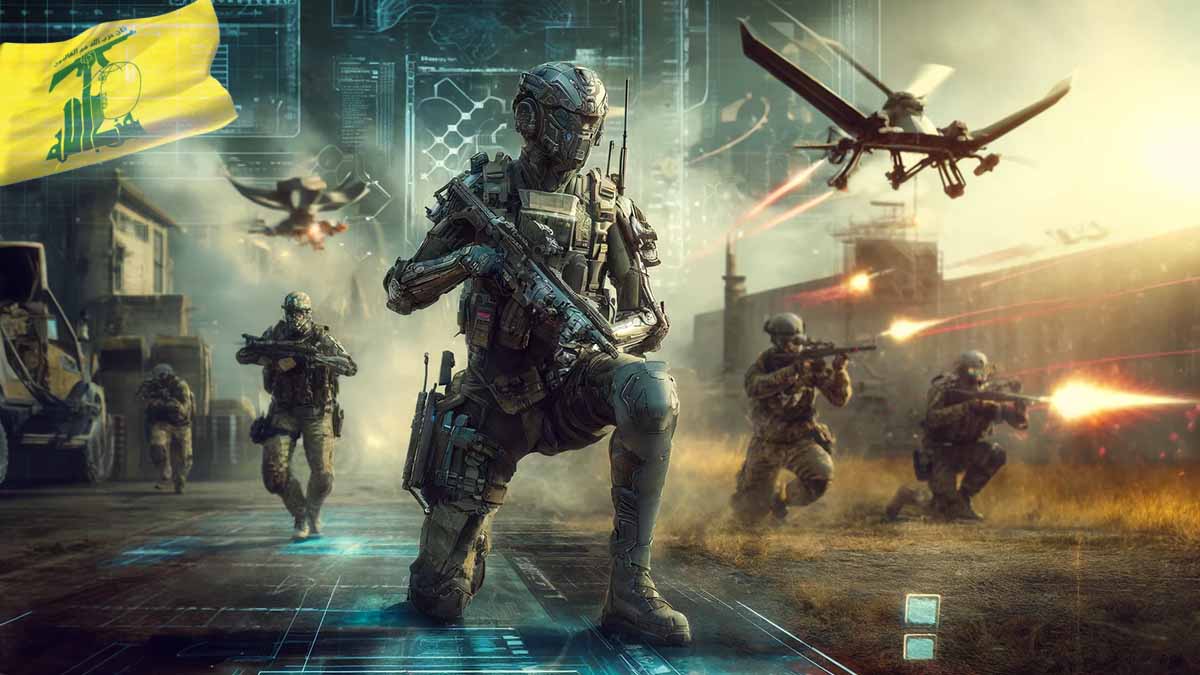
The Lebanese Shiite movement, Hezbollah, has reportedly introduced advanced technology amidst escalating clashes with Israel. The conflict, particularly intense in the Rafah region of southern Gaza, has seen Hezbollah employing a strategic mix of drones, projectiles, and precision-guided missiles. This document delves into the recent developments, technological advancements, and strategic implications of Hezbollah’s actions, providing a comprehensive analysis with updated data and projections.
Background of the Conflict
Hezbollah’s clashes with Israel have intensified as the Israel Defense Forces (IDF) continue their operations in Rafah, a southern Gaza region bordering Egypt. The conflict has seen a series of escalations, with both sides employing increasingly sophisticated military tactics and technology.
Technological Advancements
Drone Technology
Hezbollah has made significant strides in drone technology, which has become a cornerstone of its military strategy. The group has reportedly acquired up to 2,000 drones, ranging from surveillance to armed drones capable of precision strikes. Notably, Hezbollah introduced armored drones in May, targeting Israeli military facilities. These drones, equipped with advanced navigation and targeting systems, have proven effective in penetrating Israeli defenses and delivering payloads with high accuracy.
Precision-Guided Missiles
Hezbollah’s arsenal now includes long-range precision-guided missiles. These missiles, capable of hitting targets deep within Israeli territory, have shifted the balance of power. The group’s use of Burkan missiles, with a payload of 500 kg, highlights its capability to inflict significant damage on strategic Israeli targets.
Anti-Aircraft Capabilities
In recent months, Hezbollah has also demonstrated enhanced anti-aircraft capabilities. The downing of two Israeli Hermes 900 UAVs over southern Lebanon underscores this development. These incidents indicate Hezbollah’s ability to counter advanced Israeli aerial surveillance and attack drones, thereby neutralizing a key component of Israel’s military advantage.
Strategic Implications
Maintaining Strategic Ambiguity
Hezbollah’s strategy revolves around maintaining an element of surprise and keeping Israel in a state of constant recalibration. By employing a variety of weapons and tactics, many of which remain unutilized, Hezbollah ensures that its full capabilities and potential battlegrounds are unpredictable. This strategy complicates Israel’s defense calculations and allows Hezbollah to retain the initiative in the conflict.
Escalation and Pressure Tactics
The introduction of advanced weaponry is part of Hezbollah’s broader strategy to escalate pressure on Israel. The group’s actions are aimed at compelling Israel to halt its operations in Gaza. The use of sophisticated weapons serves as a deterrent, signaling to Israel the high cost of continued aggression.
Humanitarian Impact
The conflict has had a devastating impact on civilian populations on both sides. Over 36,300 Palestinians have been killed in Gaza, with many more injured. The displacement of over a million people has exacerbated the humanitarian crisis. In southern Lebanon, nearly 90,000 people have been displaced, while in the upper Galilee region of Israel, approximately 80,000 people have been forced to flee their homes. These displacements exert immense pressure on the respective governments, influencing their strategic decisions.
International Reactions and Diplomacy
Truce Negotiations
Truce negotiations between Hamas and Israel, mediated by Qatar and Egypt, have been fraught with challenges. Despite mixed signals from Tel Aviv regarding a new truce proposal, hardline elements within the Israeli government remain opposed to any agreement that does not fully dismantle Hamas. This internal division complicates the peace process and prolongs the conflict.
Hezbollah’s Regional Influence
Hezbollah’s actions are not only aimed at Israel but also serve to bolster its standing within the broader regional context. The group’s enhanced military capabilities and strategic maneuvers reflect its desire to assert itself as a formidable force in the Middle East, influencing regional dynamics and power balances.
Detailed Analysis and Data on Hezbollah’s Arsenal
Drones
Hezbollah’s drone fleet includes a variety of models, each with specific capabilities and technical specifications. Here are the details:
Total Drones: Approximately 2,000
Types of Drones:
- Surveillance Drones
- Models: Ababil-3, Mohajer-4
- Range: 10-50 km
- Endurance: 2-6 hours
- Payload: High-resolution cameras, electro-optical sensors
- Capabilities: Real-time intelligence gathering, surveillance, reconnaissance
- Armed Drones
- Models: Shahed-129, Mohajer-6
- Range: Up to 200 km
- Endurance: 10-24 hours
- Payload Capacity: 5-20 kg
- Armament: Small bombs, rockets
- Capabilities: Precision targeting, strike capability, autonomous flight
- Armored Drones
- Models: Shahed-136
- Range: 50-100 km
- Endurance: 4-8 hours
- Payload Capacity: 10-25 kg
- Armament: Enhanced with armor for high-risk missions
- Capabilities: Advanced navigation, real-time video transmission, resilient against small arms fire
Missiles
Hezbollah’s missile arsenal is vast, with different types of rockets and missiles designed for various purposes.
Total Missiles: At least 150,000
Types of Missiles:
- Short-Range Rockets
- Models: Katyusha, Fajr-3, Fajr-5
- Range: 20-75 km
- Warhead: 5-25 kg
- Capabilities: Area bombardment, quick launch capability
- Medium-Range Missiles
- Models: Zelzal-2, Fateh-110
- Range: 200-300 km
- Warhead: 200-500 kg
- Capabilities: Precision strikes, deep penetration
- Long-Range Precision-Guided Missiles
- Models: Burkan, Scud-D
- Range: 300-700 km
- Warhead: 500-700 kg
- Capabilities: High accuracy, strategic targeting
Anti-Tank Missiles
Hezbollah’s anti-tank missile inventory includes some of the most advanced models available.
Total Anti-Tank Missiles: Significant portion of the 150,000 total missiles
Models:
- Kornet-E
- Range: 5.5 km
- Warhead: Tandem HEAT
- Penetration: 1,200 mm RHA
- Guidance: Laser-guided
- MILAN
- Range: 2 km
- Warhead: Tandem HEAT
- Penetration: 1,000 mm RHA
- Guidance: Wire-guided
- TOW
- Range: 4.2 km
- Warhead: HEAT
- Penetration: 900 mm RHA
- Guidance: Wire-guided
- Metis-M
- Range: 2 km
- Warhead: Tandem HEAT
- Penetration: 950 mm RHA
- Guidance: Wire-guided
Scheme Table of Hezbollah’s Arsenal
Below is a detailed scheme table summarizing the technical data and capabilities of Hezbollah’s arsenal:
| Category | Type | Models | Total Units | Range | Payload/Warhead | Endurance | Capabilities |
|---|---|---|---|---|---|---|---|
| Drones | Surveillance | Ababil-3, Mohajer-4 | Approx. 2,000 | 10-50 km | High-res cameras, sensors | 2-6 hours | Real-time intelligence, surveillance, reconnaissance |
| Armed | Shahed-129, Mohajer-6 | Approx. 2,000 | Up to 200 km | 5-20 kg | 10-24 hours | Precision targeting, strike capability, autonomous flight | |
| Armored | Shahed-136 | Approx. 2,000 | 50-100 km | 10-25 kg | 4-8 hours | Enhanced durability, advanced navigation | |
| Missiles | Short-Range Rockets | Katyusha, Fajr-3, Fajr-5 | At least 150,000 | 20-75 km | 5-25 kg | N/A | Area bombardment, quick launch capability |
| Medium-Range Missiles | Zelzal-2, Fateh-110 | At least 150,000 | 200-300 km | 200-500 kg | N/A | Precision strikes, deep penetration | |
| Long-Range Precision-Guided | Burkan, Scud-D | At least 150,000 | 300-700 km | 500-700 kg | N/A | High accuracy, strategic targeting | |
| Anti-Tank Missiles | Anti-Tank Missiles | Kornet-E, MILAN, TOW, Metis-M | Significant portion | 2-5.5 km | Tandem HEAT warhead | N/A | High penetration, laser/wire-guided |
Hezbollah’s military capabilities have significantly advanced, incorporating a wide range of sophisticated drones and missiles. This comprehensive data highlights the technological sophistication and strategic depth of Hezbollah’s arsenal, reflecting its ability to adapt and respond dynamically to the evolving conflict with Israel.
Recent Incidents
- April 6: Downing of an Israeli Hermes 900 UAV over southern Lebanon
- May 24: Hassan Nasrallah’s warning of “new surprises”
- May (second half): Introduction of new armored drones
- June 1: Downing of a second Israeli Hermes 900 UAV over Deir Kifa
- June 3: Firing of two Burkan missiles into northern Israel, hitting the Gibor Military Base
Humanitarian Impact
Gaza
- Palestinian casualties: Over 36,300 killed, many more injured
- Displacement: Over 1 million people displaced
- Health impact: Strain on healthcare facilities, increased morbidity and mortality
Southern Lebanon
- Displacement: Approximately 90,000 people
- Impact on communities: Increased pressure on resources, humanitarian aid required
Upper Galilee (Israel)
- Displacement: Approximately 80,000 people
- Impact on communities: Increased pressure on government, potential political ramifications
Hezbollah’s technological advancements and strategic maneuvers amid escalating clashes with Israel reflect a calculated approach aimed at maintaining pressure on Israel while bolstering its regional standing. The conflict has resulted in significant humanitarian crises on both sides, with widespread displacement and casualties. As the situation evolves, the international community’s role in mediating and resolving the conflict remains crucial. Updated data and projections indicate that the conflict’s dynamics will continue to be shaped by technological innovations and strategic decisions made by both Hezbollah and Israel.
This document provides a comprehensive overview of the recent developments in the Hezbollah-Israel conflict, highlighting the technological advancements, strategic implications, and humanitarian impact. As the situation continues to unfold, further updates and analyses will be necessary to fully understand the evolving dynamics and potential outcomes of this conflict.


