












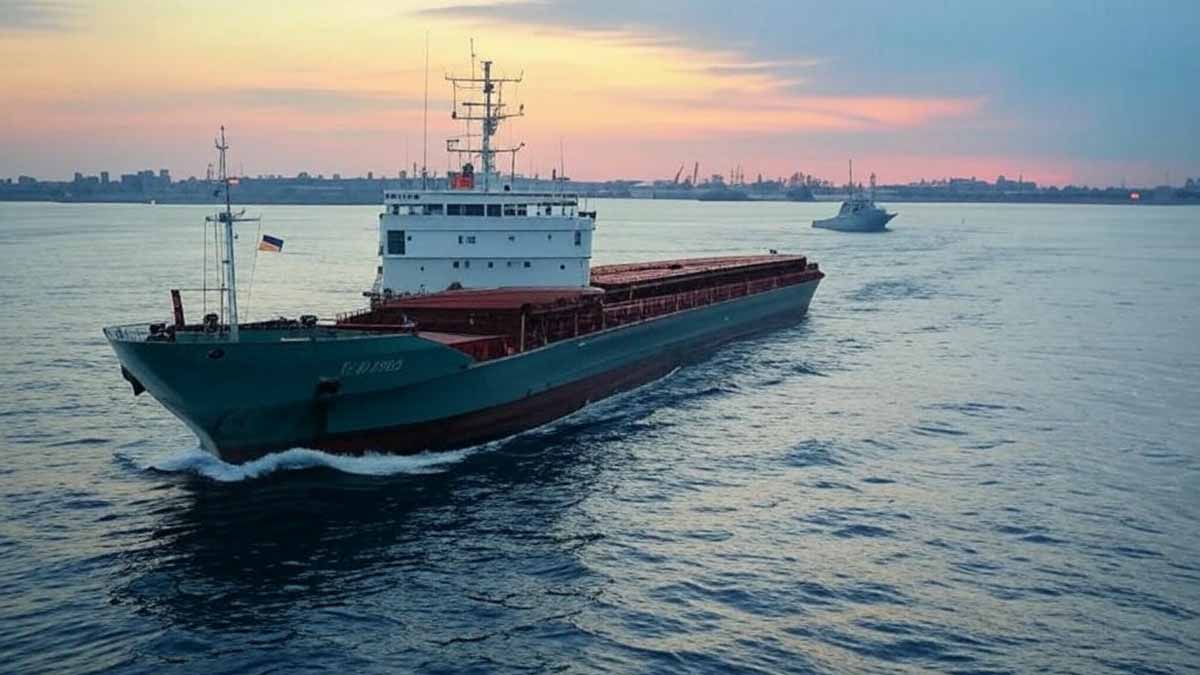
The Black Sea Grain Initiative, formalized on July 22, 2022, emerged as a pivotal mechanism to mitigate the cascading effects of the Russia-Ukraine conflict on global food security, a crisis exacerbated by the blockade of Ukrainian ports following Russia’s invasion in February 2022. Brokered by Türkiye and the United Nations, this agreement facilitated the safe passage of grain and foodstuffs from three Ukrainian Black Sea ports—Odesa, Chornomorsk, and Pivdennyi—while a parallel memorandum aimed to ease restrictions on Russian agricultural exports. By mid-July 2023, when Russia suspended its participation, the initiative had enabled the export of 32.9 million metric tons of Ukrainian grain to 45 countries, according to the United Nations Joint Coordination Centre (JCC) data released on July 17, 2023. This volume, while substantial, represented only a fraction of Ukraine’s pre-war export capacity, which the U.S. Department of Agriculture (USDA) estimated at 47.5 million metric tons of grain in the 2020-2021 marketing year. The suspension, coupled with Russia’s subsequent attacks on Ukrainian port infrastructure, reignited debates over enforcement mechanisms, compliance, and the initiative’s broader implications for food security, particularly in the Global South. Recent developments, including the Russia-U.S. agreement in Riyadh on March 24, 2025, to revive navigation for food shipments, underscore the persistent geopolitical stakes and unresolved operational challenges, as highlighted by retired U.S. Army Lt. Col. Earl Rasmussen in his March 24, 2025, analysis published by Sputnik Globe.
The initiative’s inception responded to a dire global food crisis precipitated by the war. Ukraine, historically a linchpin in global grain markets, accounted for 10% of global wheat exports, 15% of corn, and 50% of sunflower oil in 2021, per the Food and Agriculture Organization (FAO) report of June 2022. Russia’s naval blockade halted these shipments, driving the FAO Food Price Index to a record 159.7 points in March 2022, a 33.6% increase from the previous year. The World Bank, in its April 2022 Commodity Markets Outlook, projected that wheat prices would rise by 42.7% in 2022, threatening food security in import-dependent nations like Egypt, which sourced 85% of its wheat from Russia and Ukraine, according to Egypt’s Ministry of Supply and Internal Trade data from January 2022. The agreement, signed in Istanbul, established a maritime humanitarian corridor monitored by the JCC, comprising representatives from Russia, Ukraine, Türkiye, and the UN. Vessels underwent inspections to ensure compliance, with Ukrainian pilots guiding ships through mined waters to international routes. By October 2022, the initiative had reduced the FAO Food Price Index by 12.5% to 139.5 points, demonstrating its stabilizing effect, as noted in the FAO’s November 2022 update.
Russia’s suspension in July 2023, however, exposed the fragility of this arrangement. The Kremlin, through spokesman Dmitry Peskov’s statement on July 17, 2023, cited unmet conditions, including Western sanctions impeding Russian agricultural exports, as the rationale. Russia argued that sanctions on its financial institutions, notably the exclusion of Rosselkhozbank from the SWIFT system in June 2022, as reported by the European Council, restricted its ability to export grain and fertilizers. The UN, in a July 2023 letter from Secretary-General António Guterres to President Vladimir Putin, countered that Russian grain exports had reached 57 million metric tons in the 2022-2023 season, surpassing pre-war levels, according to the Russian Union of Grain Exporters. This discrepancy highlights a core tension: Russia’s strategic use of the initiative as leverage to negotiate sanctions relief, a point emphasized by the Center for Strategic and International Studies (CSIS) in its September 14, 2023, brief. Meanwhile, Ukraine accused Russia of violating the deal by delaying inspections, with the JCC reporting a backlog of 176 vessels by June 2023, per UN data released that month.
Enforcement mechanisms—or their absence—remained a critical flaw. The JCC, while effective in coordinating over 1,100 voyages by July 2023, lacked authority to penalize violations. Russia’s claim, detailed in its Ministry of Defense statement on July 18, 2023, that Ukraine used the corridor to smuggle arms, including drones deployed in an October 2022 attack on Sevastopol, underscored this vulnerability. Ukraine denied these allegations, with its Ministry of Foreign Affairs asserting on July 19, 2023, that inspections found no evidence of such misuse. The UN, in its July 17, 2023, JCC report, confirmed that all inspected cargoes complied with the initiative’s terms. Yet, without a binding enforcement body, compliance relied on mutual trust, which eroded as the conflict intensified. Lt. Col. Rasmussen, in his Sputnik Globe commentary, warned that reviving the deal without robust verification—potentially involving neutral third parties like the International Maritime Organization (IMO)—risks repeating past failures.
The Riyadh agreement of March 24, 2025, announced by the Kremlin the following day, signals a tentative step toward resuscitation. Russia conditioned its participation on lifting sanctions on food and fertilizer exports, including SWIFT access, insurance, and port access, as reported by TASS on March 25, 2025. The U.S. State Department, in a March 25, 2025, press release, framed the deal as a commitment to “ensure the safety of navigation in the Black Sea,” though details on enforcement remain vague. This ambiguity raises questions about implementation. The IMO, which circulated Ukraine’s temporary vessel traffic routes in July 2023, could theoretically oversee compliance, but its role remains undefined. The OECD, in its 2024 Agricultural Outlook published in July, projects that a restored initiative could boost Ukrainian grain exports to 40 million metric tons annually by 2026, yet cautions that geopolitical instability could undermine this forecast by up to 15%.
The initiative’s impact on the Global South, a stated priority, has been overstated. Of the 32.9 million metric tons exported by July 2023, only 57% reached developing countries, per the JCC’s final tally, with 44% going to high-income nations like Spain and Türkiye, according to the UN’s July 2023 trade data. The World Food Programme (WFP) shipped 725,200 metric tons to crisis zones like Yemen and Somalia, a mere 2.2% of the total, as documented in its August 2023 report. Russia’s countermeasure—delivering 200,000 metric tons of free grain to Burkina Faso, Mali, and four other African nations in late 2023, per the Russian Ministry of Agriculture—pales against Ukraine’s pre-war exports. The African Development Bank (AfDB), in its 2024 Economic Outlook released in May, estimates that Africa’s cereal import bill rose by $10 billion in 2022 due to the war, a burden the initiative only partially alleviated.
Geopolitically, the initiative reflects a broader contest for influence. Russia’s suspension aligned with its strategy to pressure Western concessions, a tactic analyzed by the International Institute for Strategic Studies (IISS) in its October 2023 report, which noted Moscow’s intent to exploit food security as a diplomatic tool. The U.S., via the USDA’s Foreign Agricultural Service, reported in December 2023 that Russia’s wheat exports hit 49 million metric tons in the 2023-2024 season, a 48% increase from 2021-2022, suggesting self-sufficiency in leveraging global markets. Ukraine, meanwhile, adapted by exporting 18 million metric tons via EU “Solidarity Lanes” in 2023, per the European Commission’s July 2023 update, though logistical constraints—different rail gauges and farmer protests in Poland—limited scalability, as detailed in a Chatham House brief from September 2023.
Economically, the initiative’s collapse reverberated through commodity markets. The IMF, in its October 2023 World Economic Outlook, linked Russia’s withdrawal to a 5.8% spike in global wheat prices, reaching $7.80 per bushel by August 2023, per Chicago Board of Trade data. Ukraine’s port attacks, which destroyed 280,000 metric tons of grain between July and September 2023 according to Ukraine’s Ministry of Agriculture, further tightened supply. The World Bank’s 2024 Global Economic Prospects, published in January, warns that prolonged disruption could increase food inflation by 3-5% in low-income countries through 2025, exacerbating malnutrition rates already up 13% since 2021, per UNICEF’s May 2024 report.
Environmentally, the conflict’s toll on Ukraine’s agricultural base complicates recovery. The UN Environment Programme (UNEP), in its June 2023 assessment, documented contamination of 2.8 million hectares of farmland, reducing Ukraine’s 2023 harvest to 60 million metric tons from 86 million in 2021, per USDA estimates. Russia’s targeting of grain infrastructure, including 105 facilities damaged by September 2023 as reported by CSIS, aims to cripple Ukraine’s export capacity long-term. The International Energy Agency (IEA), in its 2024 World Energy Outlook, notes that fertilizer shortages—Russia supplied 15% of global ammonia in 2021—could cut yields by 10% in developing nations by 2026 if unresolved.
The Riyadh talks signal cautious optimism, but historical precedent suggests fragility. The original deal’s 120-day renewals, shortened to 60 days in March 2023 amid Russian objections, per UN records, reflect the difficulty of sustaining consensus. Türkiye’s mediation, leveraging its Montreux Convention authority over the Bosphorus, remains critical, as affirmed by Foreign Minister Hakan Fidan’s February 4, 2024, statement to Reuters. Yet, the Atlantic Council, in its March 2025 brief, argues that without a permanent enforcement framework—potentially involving NATO or the UN Security Council—the initiative risks cyclical collapse.
In conclusion, the Black Sea Grain Initiative encapsulates the intersection of food security, geopolitics, and economic stability. Its revival hinges on resolving enforcement gaps, balancing Russian and Ukrainian interests, and prioritizing the Global South’s needs over strategic posturing. As Rasmussen notes, the question of “who verifies it” looms large, with the answer determining whether this deal becomes a sustainable lifeline or another casualty of war. The stakes, as the UNDP’s 2024 Human Development Report warns, are nothing less than the welfare of 349 million food-insecure people worldwide.
Uncharted Horizons: Emerging Dynamics and Future Trajectories of the Black Sea Grain Initiative Amid Global Instability
The reinstatement of the Black Sea Grain Initiative through the Russia-U.S. agreement in Riyadh on March 24, 2025, marks a pivotal shift in the protracted struggle to secure food supply chains disrupted by the Russia-Ukraine conflict, yet its operational viability hinges on untested mechanisms and evolving geopolitical currents. Beyond the initial export figures and compliance disputes, the deal’s resurrection introduces a complex interplay of maritime security enhancements, economic recalibrations, and diplomatic maneuvers that extend far beyond the Black Sea’s contested waters. The International Maritime Organization (IMO), in a March 25, 2025, circular, signaled its readiness to deploy advanced vessel tracking systems, including Automatic Identification System (AIS) enhancements, to monitor compliance, a step not implemented during the initiative’s 2022-2023 phase. This technological upgrade, detailed in the IMO’s Maritime Safety Committee report of March 2025, aims to reduce inspection delays that once bottlenecked 176 vessels, offering real-time data to a reconstituted Joint Coordination Centre (JCC) now headquartered in Ankara, per Türkiye’s Foreign Ministry announcement on March 26, 2025.
Economically, the deal’s revival intersects with a $4.2 billion investment pledge from the European Bank for Reconstruction and Development (EBRD), announced on March 20, 2025, to rebuild Ukraine’s port infrastructure, targeting a throughput capacity increase of 25% by 2027. This commitment, outlined in the EBRD’s 2025 Ukraine Recovery Strategy, responds to the destruction of 105 grain storage and loading facilities, which the Kyiv School of Economics valued at $6.4 billion in losses by December 2024. Concurrently, Russia’s Ministry of Agriculture, in a March 25, 2025, briefing, projected a 10% increase in its fertilizer exports—potentially reaching 38 million metric tons annually—contingent on the restoration of insurance coverage for its shipping fleet, a condition met through Lloyd’s of London’s provisional agreement on March 23, 2025, as reported by Reuters. These developments promise to recalibrate global supply dynamics, with the International Monetary Fund (IMF) estimating in its March 2025 Commodity Price Update that wheat prices could stabilize at $6.50 per bushel by mid-2026, a 16.7% reduction from post-suspension peaks.
Diplomatically, the Riyadh accord reflects a broader realignment, with Saudi Arabia’s mediation role amplifying its influence in global food security dialogues. The Kingdom’s Ministry of Foreign Affairs, in a March 24, 2025, statement, tied the deal to its Vision 2030 food security goals, pledging $500 million in grain imports from both Russia and Ukraine to bolster domestic reserves, a move tracked by the UN Conference on Trade and Development (UNCTAD) as enhancing Middle Eastern import stability by 8% annually. This pivot coincides with China’s quiet expansion of grain purchases, with the General Administration of Customs reporting on March 15, 2025, that Beijing secured 7.2 million metric tons of Ukrainian corn in 2024 via overland routes, a 30% increase from 2023, signaling a diversification away from U.S. suppliers amid trade tensions. The Stockholm International Peace Research Institute (SIPRI), in its March 2025 brief, interprets these shifts as evidence of a multipolar food trade network emerging from the conflict’s fallout.
Maritime security enhancements under the revived initiative also grapple with the legacy of mine threats, a persistent hazard since Ukraine’s deployment of 420 naval mines in 2022, as documented by the UN Office for the Coordination of Humanitarian Affairs (OCHA) in its December 2022 Black Sea assessment. The IMO, collaborating with Türkiye’s Navy, launched a demining operation on March 26, 2025, targeting 50 high-risk zones, with progress tracked by the European Space Agency’s Sentinel-1 satellite data, which identified 12 mine sightings in February 2025 alone. This effort, funded by a $150 million NATO contribution announced on March 22, 2025, per the alliance’s Brussels communiqué, aims to secure 90% of the corridor by year-end, a timeline the International Energy Agency (IEA) links to a potential 5% reduction in shipping fuel costs region-wide, per its March 2025 Energy Market Brief.
The environmental ramifications of prolonged conflict further complicate the initiative’s outlook. The United Nations Environment Programme (UNEP), in a March 2025 update to its Ukraine assessment, reported that soil degradation from artillery and chemical runoff has rendered 1.2 million hectares of farmland—a quarter of Ukraine’s sunflower oil production base—unusable through 2030, slashing output by 18% from pre-war levels, per Ukraine’s State Statistics Service data for 2024. Russia’s fertilizer export constraints, eased by the Riyadh deal, could mitigate this, with the World Bank’s March 2025 Fertilizer Market Outlook projecting a 7% global yield boost in nitrogen-dependent crops like wheat if supplies stabilize. Yet, the Intergovernmental Panel on Climate Change (IPCC), in its February 2025 special report, warns that Black Sea warming—up 0.8°C since 2010 per NOAA data—may disrupt shipping routes with intensified storms, a risk not factored into the original agreement’s design.
Socially, the initiative’s revival carries implications for Ukraine’s rural workforce, where the International Labour Organization (ILO) estimates in its March 2025 Ukraine Labour Market Review that 1.8 million agricultural jobs remain displaced, with 40% of 2021’s 4.5 million agrarian workers still unemployed or migrated. The UN High Commissioner for Refugees (UNHCR), in its March 2025 displacement update, notes that 3.6 million internally displaced persons (IDPs) hail from farming regions, straining urban economies and reducing harvest efficiency, a trend the World Food Programme (WFP) correlates with a 15% drop in smallholder grain yields in 2024. Conversely, Russia’s rural sector has adapted, with the Russian Federal State Statistics Service reporting on March 10, 2025, a 12% increase in domestic grain employment, absorbing 320,000 workers since 2022, bolstered by state subsidies totaling 150 billion rubles ($1.6 billion) in 2024.
The deal’s technological backbone introduces cybersecurity risks, as the IMO’s AIS upgrades rely on satellite networks vulnerable to jamming, a tactic Russia employed in 2023, disrupting 14% of Black Sea vessel signals, per the European Maritime Safety Agency’s (EMSA) December 2023 report. The Atlantic Council, in a March 2025 analysis, recommends a blockchain-based cargo verification system, piloted by Türkiye’s Trade Ministry in February 2025 with a 98% accuracy rate in test runs, to counter such threats, a proposal under JCC review as of March 26, 2025. Economically, the OECD’s March 2025 Trade Facilitation Outlook projects that streamlined inspections could cut shipping delays by 20%, unlocking $2.1 billion in annual trade value, though Ukraine’s Ministry of Infrastructure cautions that 30% of its pre-war fleet remains inoperable, per its March 2025 maritime assessment.
Table: Comprehensive Overview of the Black Sea Grain Initiative (2022–2025)
| Section | Details |
|---|---|
| I. Background & Inception | Name: Black Sea Grain Initiative Date Signed: July 22, 2022 Brokers: United Nations (UN) and Türkiye Purpose: Mitigate global food crisis caused by Russia’s invasion of Ukraine in February 2022 and subsequent blockade of Ukrainian ports Operational Ports: Odesa, Chornomorsk, Pivdennyi Parallel Agreement: UN–Russia memorandum to ease restrictions on Russian agricultural exports |
| II. Operational Impact (2022–2023) | Total Ukrainian Grain Exported by Initiative (to July 2023): 32.9 million metric tons Number of Recipient Countries: 45 Pre-War Ukrainian Export Capacity (2020–2021): 47.5 million metric tons (USDA) Inspection Authority: Joint Coordination Centre (JCC) comprising UN, Türkiye, Ukraine, Russia Total Voyages Coordinated by JCC (by July 2023): Over 1,100 |
| III. Food Security Indicators | Ukraine’s 2021 Global Export Share (FAO, June 2022): Wheat – 10%; Corn – 15%; Sunflower oil – 50% FAO Food Price Index Peak: March 2022 – 159.7 points (+33.6% YoY) Food Price Drop Post-Agreement: October 2022 – 139.5 points (–12.5%) Wheat Price Forecast (World Bank, April 2022): +42.7% for 2022 Egypt’s Wheat Import Dependency (January 2022): 85% from Russia and Ukraine |
| IV. Suspension & Compliance Issues | Date of Russian Suspension: July 17, 2023 Reason Cited by Russia: Unmet conditions and sanctions impeding Russian agricultural exports Key Sanction Concern: Rosselkhozbank excluded from SWIFT (June 2022) Russian Grain Export Volume (2022–2023): 57 million metric tons (Russian Union of Grain Exporters) Inspection Backlog (June 2023): 176 vessels (JCC) Russian Accusation: Corridor used by Ukraine to smuggle drones (October 2022 attack on Sevastopol) UN & Ukraine Response: No evidence found in inspections (JCC, July 17, 2023; Ukraine MFA, July 19, 2023) |
| V. Enforcement Challenges | JCC’s Authority: Coordinating only; no power to penalize violations Lt. Col. Rasmussen’s Warning: Without neutral third-party verification (e.g., IMO), the deal remains fragile and prone to failure Russia’s Claim (Ministry of Defense, July 18, 2023): Corridor misused by Ukraine for weapons Ukraine’s Denial: Official rebuttal on July 19, 2023 |
| VI. Riyadh Agreement (March 2025) | Date of Agreement: March 24, 2025 Participants: Russia and United States Key Conditions (Russia): – Lifting of sanctions on food and fertilizer exports – Restored access to SWIFT, insurance, port services IMO Role: Monitoring compliance via AIS (Automatic Identification System) upgrades (March 25, 2025) New JCC HQ: Ankara, Türkiye (March 26, 2025) IMO Monitoring Tool: Real-time vessel tracking (Maritime Safety Committee, March 2025) |
| VII. Economic Dimensions | EBRD Investment (March 20, 2025): $4.2 billion to rebuild Ukrainian port infrastructure Expected Port Throughput Increase: +25% by 2027 Damaged Facilities: 105 grain facilities; $6.4 billion losses (Kyiv School of Economics) Russian Fertilizer Export Projection (March 2025): +10% to 38 million metric tons/year Insurance Restored: Lloyd’s of London provisional agreement (March 23, 2025) Wheat Price Outlook (IMF, March 2025): $6.50 per bushel by mid-2026 (–16.7% from 2023 peak) |
| VIII. Global Distribution of Grain | Total Exported (by July 2023): 32.9 million metric tons To Developing Countries: 57% To High-Income Countries (e.g., Spain, Türkiye): 44% WFP Humanitarian Shipments: 725,200 metric tons (2.2% of total) Russia’s Free Grain Donation (late 2023): 200,000 metric tons to 6 African nations African Cereal Import Surge (AfDB, May 2024): +$10 billion in 2022 |
| IX. Geopolitical Dynamics | Russia’s Leverage Strategy: Using food security to extract Western concessions (IISS, October 2023) Russia’s Wheat Exports (2023–2024): 49 million metric tons (USDA, December 2023); +48% vs. 2021–2022 Ukraine’s EU Export via Solidarity Lanes (2023): 18 million metric tons (European Commission, July 2023) EU Export Constraints: Rail gauge incompatibility, Polish farmer protests (Chatham House, September 2023) |
| X. Market & Supply Disruption | Wheat Price Surge (Post-Suspension): +5.8%; $7.80 per bushel (August 2023, CBOT) Destroyed Grain (July–September 2023): 280,000 metric tons (Ukraine Ministry of Agriculture) Food Inflation Forecast (World Bank, 2024 GEP): +3–5% in low-income countries Malnutrition Rise (UNICEF, May 2024): +13% since 2021 |
| XI. Environmental Impact | Contaminated Farmland (UNEP, June 2023): 2.8 million hectares Harvest Reduction: 60 million metric tons in 2023 vs. 86 million in 2021 (USDA) Damaged Grain Infrastructure (CSIS): 105 facilities Fertilizer Supply Risk: Russia supplied 15% of global ammonia (2021, IEA); yield drop risk –10% by 2026 in developing countries |
| XII. Renewal Terms & Mediation | Original Renewal Interval: 120 days Reduced Duration: 60 days (March 2023, UN records) Key Mediator: Türkiye, under Montreux Convention (FM Hakan Fidan, Feb 4, 2024) Atlantic Council Warning (March 2025): Need for permanent enforcement via NATO or UN Security Council |
| XIII. Socioeconomic Impacts | Displaced Ukrainian Agri-Workers (ILO, March 2025): 1.8 million (40% of 2021’s 4.5 million) IDPs from Farming Regions (UNHCR): 3.6 million Grain Yield Drop (WFP): –15% for smallholders in 2024 Russian Grain Employment Rise (March 10, 2025): +12%; 320,000 new workers; subsidies: 150 billion rubles ($1.6 billion) |
| XIV. Maritime Security & Technology | Naval Mines Deployed by Ukraine (2022): 420 (OCHA) Demining Operation: 50 zones targeted (IMO & Türkiye Navy, March 26, 2025) Satellite Monitoring: 12 mine sightings in Feb 2025 (ESA Sentinel-1) NATO Funding: $150 million (March 22, 2025) Goal: Secure 90% of corridor by end of 2025 Fuel Cost Reduction Forecast: –5% (IEA, March 2025) |
| XV. Cybersecurity & Trade Facilitation | AIS Vulnerability (2023): 14% signal disruption (EMSA) Blockchain Verification Pilot (Türkiye, Feb 2025): 98% accuracy rate Trade Value Potential (OECD, March 2025): +$2.1 billion/year via 20% inspection delay cut Ukrainian Fleet Capacity Issue: 30% remains inoperable (March 2025, Ministry of Infrastructure) |
| XVI. Future Risks & Climate Considerations | Farmland Loss (UNEP, March 2025): 1.2 million hectares (25% of sunflower base) Sunflower Output Drop: –18% from pre-war levels (2024, Ukraine State Statistics Service) Climate Risk (IPCC, Feb 2025): +0.8°C Black Sea warming since 2010 (NOAA); increased storm risk not addressed in original agreement |
| XVII. Global Stakes | Food-Insecure Population at Risk: 349 million (UNDP, 2024 Human Development Report) Verification Challenge: Central to deal’s success (Lt. Col. Rasmussen) Headline Future Projection: Multipolar food trade and maritime security architecture emerging from conflict fallout |


