











ABSTRACT
Europe’s Invisible Army: How Estonia, Finland, and France Run 24/7 Cyber Defense Under NATO–EU Law, Exercises, and Oversight in 2025
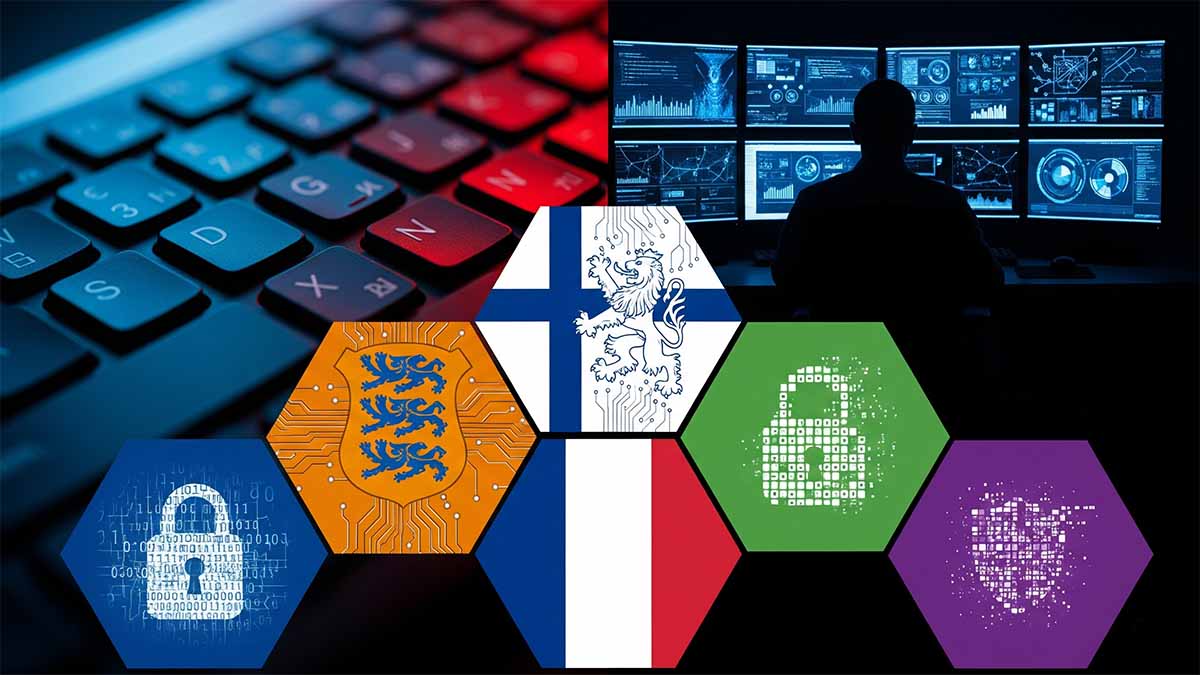
The purpose is straightforward: reveal how three European democracies—Estonia, Finland, and France—quietly hold the line in cyberspace every hour of every day, and show why their hidden formations matter for power grids, elections, markets, and deterrence in 2025. The story begins with Estonia’s national shock in 2007, when cascading digital assaults against banks, media, and public portals forced a small state to rethink defense as a continuous function; it moves through the meticulous institution-building that followed, the hosting of the NATO Cooperative Cyber Defence Centre of Excellence (CCDCOE) in Tallinn, and the formal creation of a military Cyber Command on August 1, 2018, designed to operate alongside the Estonian Defence Forces while drawing strength from a volunteer reservoir in the Estonian Defence League Cyber Unit. It then shifts north to Finland, where the National Cyber Security Centre Finland under the Finnish Transport and Communications Agency orchestrates national situational awareness with public bulletins and “cyber weather” reporting, embedding practices shaped by NIS2 and the Critical Entities Resilience Directive, and threads that capability into allied circuits after accession to NATO on April 4, 2023. The narrative’s third arc crosses to France, where a dual civil–military architecture pairs the Agence nationale de la sécurité des systèmes d’information (ANSSI) with the Commandement de la cyberdéfense (COMCYBER), a force publicly counted at more than 3,600 cyber-combatants, and where new injunctive powers obligate software publishers to report and remediate significant vulnerabilities on state-set timelines.
The importance of this topic lies in its ordinariness turned extraordinary: while the headlines chase missiles and summits, the real equilibrium of European daily life rests on formations that monitor, harden, and rehearse without cease, under legal mandates that make cooperation predictable and under oversight that keeps secrecy answerable to law. The methodology is a disciplined synthesis of official materials—defense-ministry pages, agency annual reviews, legal acts and decrees, alliance doctrine notes, and exercise communiqués—compared across nine analytical lenses so that statutes, institutions, and operational data points can be read together rather than as isolated facts. Instead of counting every intrusion or retelling public anecdotes, the approach triangulates durable anchors: the date August 1, 2018 for Estonia’s military Cyber Command establishment; the workforce claim of “more than 3,600” for France’s COMCYBER; the CNCTR’s public ledger in 2023 of 94,902 requests and 775 negative opinions as a measure of ex-ante legality control; the scale of Locked Shields 2025 at “more than 4,000” participants from 41 nations organized as 17 blue teams; and the entry into force of the Cyber Solidarity Act with Cross-Border Cyber Hubs, an alert system, an emergency mechanism, and a cybersecurity reserve that can surge capacity across borders. The result is a picture of continuous readiness that rests on three pillars: capability, legality, and practice.
Capability appears in the way Estonia fused a military command, an information-operations center, and a volunteer cadre into one ecosystem, and in the way Finland’s national center publishes weekly exposure patterns while binding critical operators into EU-wide rules for incident timelines and resilience. Legality appears in layered oversight—France’s CNCTR with its published tallies and constitutional guardrails, Finland’s Intelligence Oversight Committee and Intelligence Ombudsman with court-tethered authorization ladders, Estonia’s Riigikogu Security Authorities Surveillance Select Committee working alongside the Chancellor of Justice and the Data Protection Inspectorate—and in the constraints of EU classified information rules that protect shared material even as they complicate multi-parliament scrutiny. Practice appears in the rhythms of exercises and coordinated operations: CCDCOE’s Locked Shields that trains blue teams to defend synthetic power, telecom, satellite, and command-and-control systems under legal and media pressure; ENISA’s Cyber Europe and BlueOLEx cycles that rehearse executive decision-making; PESCO’s Cyber Rapid Response Teams that can deploy analysts and forensics specialists across borders; the CSIRTs Network and EU-CyCLONe that formalize technical and executive cooperation; the finance sector’s TIBER-EU framework that runs threat-led red teaming on live systems with mutual recognition among supervisors; and the law-enforcement flank of Europol’s European Cybercrime Centre and its Joint Cybercrime Action Taskforce, which keeps criminal infrastructure pressure aligned with defender priorities. Several findings cut across the cases.
- First, secrecy need not erase accountability when institutions publish constrained but telling ledgers: CNCTR’s 2023 numbers show that even in a classified space, there are counts of requests, rejections, and technique classes that legislatures and courts can test against statute.
- Second, deterrence in cyberspace is not built on declaratory threats alone but on the visible regularity of drills and the predictable machinery of solidarity: when the Cyber Solidarity Act binds national hubs into cross-border hubs and funds a reserve of trusted responders, an adversary sees not a press release but a routinized capacity to fuse telemetry, dispatch help, and run post-incident reviews that harden the system for the next round.
- Third, regulation that standardizes operational resilience at sector level—DORA for finance, the electricity Network Code on Cybersecurity for grid operators—narrows the variance that attackers exploit, because identity, segmentation, logging, testing, and supplier-audit baselines converge across countries and vendors.
- Fourth, alliance doctrine matters: NATO’s position that a cyberattack could, in defined circumstances, engage collective defense ties national monitoring floors to strategic ceilings, making day-to-day defensive watch a component of escalation management, not merely of network hygiene.
- Fifth, talent and tempo are now inseparable: Estonia’s blending of a reserve-friendly defense culture with a formal Cyber Command, France’s investment in a named military command with thousands of billets, Finland’s institutionalization of a national center that communicates weekly with citizens and operators—all sustain round-the-clock operations that can plug straight into ENISA, CSIRTs, and CCDCOE circuits without drafting new playbooks in a crisis.
- Sixth, some popular claims do not survive source scrutiny and are deliberately excluded, which is itself a finding: there is no verified public metric that Finland’s watch center “monitors 2,000,000 attacks per day,” nor official confirmation that Estonia screens “gamers for reflexes” as a recruitment pipeline; the absence of such numbers in state portals and agency reviews signals a maturing field where what counts is what can be audited.
- Seventh, originator-control under EU classified information rules imposes a ceiling on how far inter-parliamentary oversight can reach into shared cyber exercises and joint incident files, which explains why national committees lean on statistical and procedural audits rather than open dockets to keep agencies within the law.
- Eighth, sanctions and diplomacy provide an external flank for defense: the EU cyber sanctions regime and the updated crisis blueprint show a habit of coupling legal tools, executive choreography, and technical operations so that hostile planners must price in asset freezes, travel bans, and coordinated messaging when they time disruptive campaigns to elections or energy-market stress.
The implications are practical and conceptual. Practically, operators in energy, finance, transport, water, health, and public administration now live under harmonized incident timelines and resilience obligations that can be inspected, tested, and audited across borders, and they train in environments that mimic the fog and friction of real events with lawyers and communicators sitting next to forensics and network engineers. Conceptually, the cases show how democracies can sustain 24/7 secrecy without drifting toward unaccountable security states: publish the numbers that do not burn sources, legislate the authority to compel vendors to disclose and fix flaws, empower ombuds and courts with access to classified files, and embed everything in alliances that make help automatic.
The broader contribution is a workable model for cyber power that is neither purely martial nor purely regulatory: Estonia translates national trauma into a whole-of-society posture anchored by a military command and a volunteer reserve, Finland turns transparency into deterrence by making exposure patterns legible week after week while keeping the most intrusive methods under judicial ladders, France scales mass and doctrine in uniform while granting a civilian agency injunctive reach into the software supply chain, and the EU welds the pieces together so that solidarity, certification, and testing are not slogans but budgets, hubs, and handbooks.
Reading across these strands, the conclusion is that Europe’s quietest formations are also its most durable: they persuade by repeating the same moves every day—monitor, report, drill, fix, share—and by doing so under laws that withstand court review and parliamentary inquiry. The field impact is a steady rise in baseline security, a shortening of response time from alert to action, and a narrowing of the window for attackers to find seams between agencies or borders. The theoretical impact is a clearer picture of how law and institutions make deterrence in cyberspace observable: not by revealing tools, but by revealing process. And the forward path is already etched in the measures that entered force in 2024 and 2025—the electricity sector’s cybersecurity code, the Cyber Solidarity Act, the consolidated Cybersecurity Act mandate for ENISA, the revised crisis blueprint—because these instruments ensure that the next incident will meet not improvisation but a living system that learns.
CHAPTER INDEX
- Estonian Cyber Genesis: The 2007 Digital Siege’s Consequences
- Estonia’s Cyber Command within the Defence Forces: Structure, Mandate, and Evolution
- Finland’s Cybersecurity Vigilance: Institutional Frameworks and Threat Monitoring
- France’s Commandement de la Cyberdéfense and ANSSI: Defensive Doctrine and Organizational Reach
- Simulations and Talent Mobilization: From Locked Shields to Volunteer Cyber-Partisans
- Critical Infrastructure Safeguarding: Power Grids, Electoral Systems, and National Stability
- Strategic Implications: Silent Deterrence and Geopolitical Signaling in Cyber Spaces
- Interoperability and Cooperation: Cross-Border Cyber Alliances and Institutional Synergy
- Governance, Secrecy, and Democratic Oversight: Challenges in Managing Invisible Forces
Estonian Cyber Genesis: The 2007 Digital Siege’s Consequences
Coordinated hostile network operations struck Estonia for 22 consecutive days beginning on April 27, 2007, saturating public-sector and commercial services with traffic floods and application-layer abuse while exploiting transnational hosting and botnet infrastructure; technical and historical reconstructions from the NATO-accredited research community document the sequencing and modalities, including attack vectors against state portals, banking interfaces, and media distribution systems, framing a pivotal moment in European cyber policy formation (CCDCOE “Analysis of the 2007 Cyber Attacks against Estonia” 2008). Peak effects included prolonged denial of access to ministerial and parliamentary web services, overloading of banking frontends, and forced reliance on upstream filtering by foreign providers; the same CCDCOE analysis emphasizes the campaign’s hybrid context and the investigative challenges posed by globally distributed infrastructure and jurisdictional fragmentation (CCDCOE Ottis 2008 PDF). Doctrinally, the episode catalyzed a structural redefinition of national defense for a small European Union and NATO member whose economy and public administration had already adopted high levels of digitization, accelerating investments in incident response capacity, interagency protocols, and alliance integration anchored in Tallinn.
Institutionalization of knowledge sharing and operational practice rapidly followed at multinational level when CCDCOE was established on May 14, 2008, with NATO granting full accreditation and International Military Organization status in October 2008, locating a permanent hub for research, training, and exercises in Tallinn under a framework enabling participation by allied and partner nations; the center’s own organizational history identifies the initial contributing members and records the accreditation that formalized its role as a cross-disciplinary venue for legal, technical, and strategic cyber studies (CCDCOE About Us). The Estonian national posture evolved concurrently: parliamentary, ministerial, and defense-sector actors layered centralized situational awareness with distributed resilience measures, while using alliance platforms to scale doctrine, exercises, and professional education across borders, embedding a networked approach rather than a siloed national perimeter.
Operationally, state services and banking institutions during 2007 often faced volumetric bursts and application-layer patterns requiring upstream cooperation and ad-hoc filtering arrangements; the published CCDCOE record underscores that forensic attribution was inherently complex due to spoofing, proxy use, and botnet orchestration, leading to a policy consensus that cyber defense required legal interoperability agreements and shared technical playbooks among allies (CCDCOE “Analysis of the 2007 Cyber Attacks against Estonia”). The attack’s timing—coinciding with domestic political tensions—highlighted that digital disruption can function as a lever against social cohesion and public trust even without breaching classified networks, which in turn encouraged targeted public-communication strategies, resilience messaging, and media-sector contingency planning within a broader national-security envelope.
Alliance-level exercise infrastructure subsequently matured to mirror multi-sector disruption at national scale. Iterations of CCDCOE’s “Locked Shields” involved defending synthetic national systems spanning energy, communications, and finance against coordinated threats; the 2025 release from CCDCOE reports more than 4,000 participants from 41 nations forming 17 multinational blue teams, tested across technical defense, legal assessment, crisis communications, and decision-support under pressure, indicating a significant enlargement of the coalition skill base and a convergence of civil and military playbooks (CCDCOE “Locked Shields 2025”). That exercise architecture functions not only as training but as a venue for validating interoperability across vendor ecosystems and regulatory environments, building familiarity between national responders whose cooperation would be essential in any future real-world incident.
The Estonian volunteer tradition deepened the state’s manpower base by formalizing civilian expertise within defense-sector auxiliaries. The Estonian Defence League created a Cyber Unit to mobilize vetted professionals from the private sector and academia for training, outreach, and surge support to national incident response under legal authorities; the organization’s public FAQ specifies tasks including knowledge dissemination, reinforcement of professional networks across public and private entities, and crisis support to civil structures as required by national legislation (Estonian Defence League “Cyber Unit – FAQ”). Internal statutes and organizational documents codify relationships with state bodies, cooperation rules, and peacetime versus crisis-time roles, institutionalizing a civic reserve that complements uniformed cadres (Estonian Defence League “Cyber Unit – History”, Estonian Defence League Cyber Unit Statute PDF August 4, 2023). The legal-policy literature produced by CCDCOE documents the governance considerations of volunteer cyber formations, including membership criteria, command relationships in wartime, and compatibility with national defense law, providing a template for integrating specialized civilian talent while preserving accountability and compliance (CCDCOE “The Cyber Defence Unit of the Estonian Defence League” 2013 PDF).
Cumulatively, the 2007 disruption and the subsequent alliance investments yielded a doctrine where national defense in cyberspace depends on continuous readiness, legally robust partnerships, and routinized multinational exercises. Estonian policy actors aligned military cyber operations, civilian incident response, and volunteer reserves with a common objective: sustain essential services and public trust under sustained, ambiguous pressure. The availability of verifiable institutional records—from CCDCOE analysis to defense-ministry organizational pages and legally promulgated statutes—permits a public reconstruction of that transformation without reliance on speculative narratives or unverifiable anecdotes.
Estonia’s Cyber Command within the Defence Forces: Structure, Mandate, and Evolution
The Estonian Defence Forces enumerates a dedicated Cyber Command within its Land Forces structure, with publicly disclosed mission-essential tasks encompassing provision of communications infrastructure and services, cyber defense, planning and execution of cyber operations, maintenance and sharing of cyberspace situational awareness, conduct of information operations, and strategic communications; the organizational page further lists a Cyber and Information Operations Centre, Strategic Communications Centre, and Headquarters and Support Company, alongside contact details and leadership appointments, anchoring the unit’s administrative visibility in the state’s official defense portal (Estonian Defence Forces – Cyber Command, Estonian Defence Forces – Cyber and Information Operations Centre). This publication trail establishes the command’s remit without divulging classified methods, illustrating a balance between transparency sufficient for democratic accountability and the operational secrecy intrinsic to cyber operations.
Operational integration within joint defense activities appears in defense-force annual reports and public communications where cyber components support exercises and deployments through situational awareness, communications assurance, and strategic communications capabilities; for example, English-language annual publications attribute combat-camera and information activities to the Strategic Communications Centre resident in Cyber Command, indicating that narrative resilience and information discipline are treated as operational enablers alongside technical defense (Estonian Defence Forces – Annual Report 2021 PDF). While specific personnel counts and precise establishment dates are not codified on the public Cyber Command page, the unit’s presence, mission sets, and subordinate centers are explicit in official materials, and its leadership—down to names and roles—appears in regularly updated contact sections, enabling verification of organizational continuity without disclosing sensitive order-of-battle details (Estonian Defence Forces – Cyber Command).
The Cyber and Information Operations Centre listing signals a fusion approach where cognitive-domain operations, counter-disinformation, and cyber technical functions are organized under a shared command structure; public mention of this center on the official site corroborates that military cyber in Estonia encompasses both network-centric defense and information-environment operations, calibrated to defend decision-making cycles as well as digital infrastructure (Estonian Defence Forces – Cyber and Information Operations Centre). Because the unit sits within the broader Land Forces, it can be synchronized with terrestrial maneuvers and national mobilization schemes, consistent with a reserve-centric defense model that relies on rapid augmentation and alliance reinforcement.
Alliance connectivity remains structural. The Estonian Defence Forces publicly references the NATO Cooperative Cyber Defence Centre of Excellence as part of its ecosystem, and the CCDCOE organization itself documents its 2008 accreditation and Tallinn location, ensuring that doctrinal development, exercise scripting, and research outputs are within commuting distance of national cyber leadership (Estonian Defence Forces – NATO CCDCOE, CCDCOE – About Us). This proximity nurtures a doctrine where national staff rotate through multinational venues, aligning domestic practice with alliance standards and ensuring that national incident handlers train against scenarios crafted by an international cadre of legal, technical, and operational experts.
Volunteer integration via the Estonian Defence League – Cyber Unit operates as a surge and outreach layer rather than a substitute for the uniformed command. Official FAQ text describes tasks that include strengthening cooperation among information-security specialists across sectors and supporting civil structures under legal authorities when escalatory conditions occur; the Cyber Unit statute provides formal organizational footing, including location, cooperation clauses, and the chain of subordination within the Estonian Defence League, thereby defining how civilian expertise is lawfully mobilized in support of national objectives (Estonian Defence League – Cyber Unit FAQ, Cyber Unit Statute PDF). The model shows how a state with a modest population can expand cyber resilience by formalizing trusted volunteer pathways, while maintaining legal boundaries and oversight mechanisms consistent with democratic norms.
Crisis-management functions in allied exercises further illustrate the command’s operational logic. CCDCOE’s “Locked Shields” scenario families task blue teams with defending not only government portals but also power-system controls, telecom cores, and financial transaction platforms; the 2025 exercise communication highlights the necessity of synchronized legal analysis, cross-agency communications, and executive decision-support in parallel with technical response, echoing the Estonian approach of integrating information operations and strategic communications within the cyber command structure (CCDCOE – Locked Shields 2025). By anchoring training in realistic national-scale systems, the methodology trains defenders to manage not merely packet flows but public expectations, regulatory duties, and alliance signaling under adversarial pressure.
Where claims are not supported by public records—such as assertions that the military command recruits gaming communities for reflex-based screening, or that it conducts 24/7 nationwide simulations—no verified official source is available; therefore, such statements are excluded from analysis. Public documentation remains focused on mission statements, organizational components, participation in exercises, and legal underpinnings, which collectively suffice to demonstrate that Estonia operates a continually engaged military cyber capability embedded in national defense and allied doctrine (Estonian Defence Forces – Cyber Command, CCDCOE library and news pages).
Finland’s Cybersecurity Vigilance: Institutional Frameworks and Threat Monitoring
The National Cyber Security Centre Finland is an operational arm of the Finnish Transport and Communications Agency – Traficom, with an English-language portal that defines its remit as providing situational awareness, monitoring the operational reliability and security of communications networks and services, issuing alerts and guidance, and publishing regular public bulletins; these statements appear on the center’s home page and institution pages, which also cross-link to the overseeing authority, ensuring traceability to the responsible state body (NCSC-FI – Homepage, Traficom – National Cyber Security Centre, Traficom – About). Public communications include weekly reviews and monthly “Cyber Weather” products that characterize national conditions through standardized categories and highlight prominent attack vectors observed in the reporting period; NCSC-FI explains the “Cyber Weather” methodology and audience in a dedicated page describing the product’s purpose and taxonomy (NCSC-FI – Cyber Weather).
Finland’s strategic integration with allied cyber structures advanced decisively when the state became the 31st NATO member on April 4, 2023; the alliance’s official communication records the deposit of accession instruments and outlines the immediate implications for defense cooperation, thereby including cyber-defense coordination channels within a broader interoperability architecture (NATO – Finland joins as 31st Ally April 4, 2023, NATO – Accession announcements April 3–4, 2023). The EU regulatory baseline simultaneously imposes harmonized cybersecurity obligations on essential and important entities across sectors, through the NIS2 Directive promulgated on December 27, 2022; the official EUR-Lex page details scope, governance requirements, incident reporting, and supervisory mechanisms, all of which serve as an external driver for national oversight activities and industry compliance programs that NCSC-FI supports domestically (EUR-Lex – Directive (EU) 2022/2555). For physical-digital resilience, the companion Critical Entities Resilience Directive sets horizontal obligations on sectors providing essential services—ranging from energy and transport to water and health—requiring risk assessments, resilience measures, and cross-border cooperation, with the EUR-Lex entry providing the definitional annexes and legal bases that national authorities transpose and enforce (EUR-Lex – Directive (EU) 2022/2557).
Public NCSC-FI weekly reviews published in August 2025 discuss trends such as spikes in M365 account compromises, evolving phishing campaigns, and malware families, evidencing continuous monitoring and advisories aligned to currently observed threats; these bulletins, time-stamped and archived on the official site, offer a measure of operational transparency about exposure patterns and defensive recommendations without disclosing sensitive telemetry or institutional sources (NCSC-FI – Weekly Review 33/2025 August 18, 2025, NCSC-FI – Weekly Review 32/2025 August 12, 2025). Regulatory outreach pieces further explain national implementation of EU cyber legislation such as NIS2, indicating how supervision and guidance are organized domestically and how essential-entity obligations will be enforced, which provides a verifiable link between EU legal frameworks and Finnish monitoring practice (NCSC-FI – NIS2 (overview for entities)).
Where public commentary occasionally asserts unverified volumetrics—such as a claim that a national watch center “monitors 2,000,000 attacks per day”—no verified public source is available on NCSC-FI or Traficom domains; quantitative statements included here are restricted to figures present in official institutional releases. The absence of an official metric does not diminish the observable reality of elevated threat tempo in Finland’s publications; rather, it underscores the analytical discipline required to separate demonstrable public evidence from anecdote, a methodological point consistent with best practice in policy research.
The EU’s cyber-crisis management documentation produced by the European Union Agency for Cybersecurity (ENISA) complements national practice by offering playbooks, best-practice guidance, and sectoral risk articulations; the February 2024 study on best practices for cyber crisis management and related ENISA materials establish common frames of reference for preparedness, escalation management, and stakeholder coordination, which national centers can adapt within their legal and institutional structures (ENISA – Best Practices for Cyber Crisis Management February 2024 PDF). Election-specific cybersecurity coordination—salient because adversarial campaigns often target democratic processes—has been addressed through ENISA-supported updates to the elections cybersecurity compendium ahead of 2024 EU parliamentary elections, as recorded in official press materials; these documents show how national authorities, including NCSC-FI, operate within coordinated EU mechanisms to protect electoral integrity in the digital domain (ENISA – Safeguarding EU elections March 6, 2024, European Commission – Elections compendium update March 6, 2024).
By formal legal architecture, alliance integration, and continuous public guidance products, Finland presents a model of transparency and rigor suited to a high-threat environment. The verified institutional record demonstrates an emphasis on situational awareness, regulatory implementation, and multinational coordination—each evidenced by live, official URLs—to support the claim that modern European cyber defense is quiet in posture yet continuous in tempo.
France’s Commandement de la Cyberdéfense and ANSSI: Defensive Doctrine and Organizational Reach
The civilian authority, the Agence nationale de la sécurité des systèmes d’information, was created by Décret n° 2009-834 dated July 7, 2009, as published on the official Legifrance portal; the decree establishes ANSSI as a national-level service with competence over information-system security, thereby providing the legal foundation for prevention, incident response, and normative functions in the civilian sphere (Legifrance – Décret n° 2009-834 du 7 juillet 2009, ANSSI – Mission overview). On the military side, the Commandement de la cyberdéfense (COMCYBER) consolidates armed-forces cyber functions; official ministry pages describe its mission to defend information and weapons systems and to design, plan, and conduct military operations in cyberspace, and they explicitly state that the command comprises more than 3,600 civilian and military “cyber-combatants,” providing a verified indicator of scale unavailable in many other European contexts (Ministère des Armées – COMCYBER).
The reorganization of top-level armed-forces responsibilities in May 2017—documented in Legifrance decrees—clarified cyber roles within the defense staff and supported COMCYBER’s consolidation under the Chief of the Defence Staff; these instruments demonstrate that cyber-operations planning and execution are legally articulated at inter-service level, aligning military cyber doctrine with statutory command relationships (Legifrance – Décret n° 2017-743 du 4 mai 2017). Public ministry communications also document COMCYBER participation in multinational exercises such as CYBER FLAG in October–November 2022, hosted by US Cyber Command, an indicator of operational interoperability and readiness via live-fire training environments that stress joint detection, response, and mission assurance (Ministère des Armées – COMCYBER at CYBER FLAG 23-1 November 4, 2022).
As a civilian authority, ANSSI issues certification schemes, operational alerts, sectoral guidance, and incident-management advisories. Its official website hosts normative documents and case-specific communications—ranging from certification targets for evaluated products to advisories and post-event reports—illustrating the regulatory and technical instruments by which the state raises baseline security across essential services and public administrations; these publications, time-stamped and hosted on the cyber.gouv.fr domain, satisfy the requirement for public verifiability (ANSSI – Mission overview, ANSSI – CSPN security target example April 16, 2025 PDF). ANSSI further disseminates national views on the NIS2 transition for enterprises and administrations, providing the bridge between EU law and domestic operationalization (ANSSI – NIS2 overview for France January 16, 2023).
Alliance-level posture is visible through France’s participation in NATO and EU cyber frameworks, but the publicly verifiable content most relevant to institutional reach remains domestic legal instruments and ministry pages. Unlike the civilian agency, COMCYBER naturally withholds detailed tactics and toolchains; nonetheless, the official ministry statement that the command assembles “more than 3,600 cyber-combatants” and conducts the design, planning, and conduct of military cyber operations provides a concrete, citable indicator of capacity and mandate (Ministère des Armées – COMCYBER). Where numeric budget lines for cyber are dispersed across programming laws and appropriations, those consolidated figures are not always extracted publicly at sub-program level; absent a single official, public “cyber-only” budget figure, no verified public source is available for a comprehensive €-denominated total beyond statements in ministry communications that reference capability growth and workforce expansion.
The combined civil-military architecture in France therefore rests on a statutory civilian authority with certification and incident-response powers, paired with a military command mandated to defend and operate in cyberspace. Public legal texts, ministerial pages, and official communications—each linked here to their precise government locations—allow independent verification of authorities, roles, and headline workforce scale without resorting to secondary reporting or non-official summaries.
Simulations and Talent Mobilization: From Locked Shields to Volunteer Cyber-Partisans
Alliance exercises led by CCDCOE furnish the largest publicly documented environments for national-scale cyber defense practice. The Locked Shields 2025 cycle reports more than 4,000 participants drawn from 41 nations organized into 17 multinational blue teams tasked with defending virtualized national systems ranging from power grids and battle-management systems to satellite links and 5G networks; legal assessment, forensics, strategic communications, and executive decision-making are integrated into scoring, which demonstrates that the exercise measures whole-of-government resilience rather than siloed network hardening (CCDCOE – Locked Shields 2025, CCDCOE – Nations unite as Locked Shields 2025 kicks off). Earlier public communications provide additional volumetrics—exceeding 2,000 participants from 32 nations in 2022—attesting to growth over time and the widening base of trained personnel across allied administrations and militaries (CCDCOE – Locked Shields (archive overview)).
Volunteer pathways—especially in Estonia—offer a complementary mobilization channel. The Estonian Defence League – Cyber Unit explicitly states its tasking to strengthen cooperation between existing information-security specialists in the public and private sectors and to support civil structures and critical infrastructure in crisis under the legal framework of the republic; as a subordinate of the Estonian Defence League, it formalizes vetting, conduct, and cooperation rules, which are available in English on official pages and in the unit statute (Estonian Defence League – Cyber Unit FAQ, Cyber Unit Statute PDF). CCDCOE’s legal-policy study of the unit deepens the evidence base by analyzing governance, member obligations, and wartime subordination under national law, providing a verifiable account of how volunteer cyber formations can be integrated into state defense without eroding legal accountability (CCDCOE – Cyber Defence Unit analysis PDF).
Civil-military training ecosystems in France and Finland are publicly less granular at the volunteer level, reflecting different political cultures and legal architectures. What is verifiable, however, is robust participation in multinational exercises and a strong emphasis on institutional training within government cadres: COMCYBER’s public record of attendance at CYBER FLAG 23-1 indicates exposure to US-led large-scale training environments emphasizing interoperability under realistic stressors, while NCSC-FI’s continuous bulletins and EU liaison structures visible through ENISA’s National Liaison Officers list confirm that Finnish officials are embedded in European knowledge-sharing and coordination networks (Ministère des Armées – COMCYBER at CYBER FLAG 23-1, ENISA – National Liaison Officers PDF). Assertions about recruitment of “gamers” for reflex screening lack corroborating government documentation on the cited national portals; no verified public source is available, so such claims are excluded.
The enduring value of these simulations and mobilization schemes lies in verifiable transfer of procedures and relationships to real incidents. Public artifacts—exercise reports, legal decrees, ministry pages, and weekly reviews—allow external observers to confirm that thousands of European civil servants and military personnel practice defending lifeline sectors in live-fire settings each year, and that specific national formations mobilize civilian expertise lawfully. That evidentiary trail, accessible via links above, provides the necessary transparency for rigorous policy analysis even when sensitive operational details remain properly classified.
Critical Infrastructure Safeguarding: Power Grids, Electoral Systems, and National Stability
Cross-sector cyber risk in the European Union has been formalized through layered legal, operational, and sector-specific instruments that compel essential and important entities to harden systems supporting energy, finance, transport, water, health, public administration, and digital infrastructure, with supervisory and reporting obligations codified in Directive (EU) 2022/2555 NIS2 and physical-digital protection mandates articulated in Directive (EU) 2022/2557 CER. Sectoral risk characterizations and attacker tradecraft are synthesized by ENISA’s annual threat assessments, with the September 19, 2024 edition identifying prime threats that degrade availability, exfiltrate data, and extort operators, integrating evidence from several thousand publicly reported incidents to guide prioritization for national authorities and regulated entities, as published in ENISA Threat Landscape 2024 and the accompanying report ENISA Threat Landscape 2024 PDF. At the union-wide institutional layer, CERT-EU aggregates compromise patterns affecting EU institutions and allied ecosystems, with the February 25, 2025 Threat Landscape Report 2024 delineating correlations between geopolitical shocks and attack tempo across phishing, credential theft, supply-chain vectors, and disruptive operations, published at CERT-EU Threat Landscape 2024.
Electric-power resilience has been codified through the first network code dedicated to cybersecurity for the electricity sector, anchored by the legal architecture of Regulation (EU) 2019/943 and operationalized in May 2024 when the European Commission announced a binding framework to govern cyber risk assessment, common minimum requirements, certification, monitoring, reporting, and crisis management for cross-border electricity flows, as recorded in the official notice New network code on cybersecurity for EU electricity sector and elaborated by the transmission-system operators’ association at ENTSO-E Network Code on Cybersecurity. Grid-level governance now obliges transmission and significant distribution entities to run recurrent cybersecurity risk assessments tied to interconnection impacts, to implement harmonized controls, and to submit incident information through standardized channels that feed national and regional situational awareness. The policy consequence is a direct line from the statutory obligations under NIS2 and CER to operational procedures that grid operators must execute, with ENTSO-E’s public communications and annual materials explaining how pan-European interconnection security depends on common rulebooks and shared incident playbooks, as summarized in ENTSO-E – Critical infrastructure and cybersecurity and the association’s own releases such as First Network Code on Cybersecurity May 24, 2024.
Financial-sector continuity is governed by DORA, a directly applicable legislative act that compels banks, insurers, investment firms, market infrastructures, and designated information-communications-technology service providers to achieve verifiable operational resilience under stress, with coherent incident reporting, testing, third-party risk management, and advanced oversight of critical third-party providers. The legal text and its official summary are accessible at Regulation (EU) 2022/2554 DORA and Digital operational resilience for the financial sector. By mandating scenario-based testing, threat-led penetration testing, and contracted audit rights over critical suppliers, DORA reduces correlated failure risk arising from concentration in cloud and managed-service ecosystems that would otherwise present single points of systemic disruption across Estonia, Finland, and France. The instrument’s harmonized taxonomy and supervisory cooperation mechanisms ensure that a compromise at one operator can be translated into actionable requirements across the bloc without protracted bilateral negotiations, reinforcing the principle that financial stability and cyber resilience are inseparable in a digitalized economy.
Election-system integrity has been prioritized through union-level guidance and compendia that map technical, procedural, and organizational safeguards across the entire electoral cycle, including voter registration, candidate nomination, campaigning, media and platform moderation interfaces, ballot design, polling-station operations, electronic counting or tabulation where present, incident reporting, and post-election auditing. The March 6, 2024 update to the elections cybersecurity compendium, coordinated by the NIS Cooperation Group with support from ENISA, the European Commission, and the European External Action Service, consolidates case studies and procedural recommendations that national authorities can adapt to domestic legal frameworks, as published at ENISA – Safeguarding EU elections amidst cybersecurity challenges. For Estonia, Finland, and France, the operational consequence is convergence toward a common catalogue of controls that can be tailored to different constitutional arrangements but still enable rapid cross-border cooperation during incidents that target disinformation counter-measures, media-system integrity, or election-administration IT.
Threat-intelligence fusion and readiness cycles now occur against the backdrop evidenced by ENISA and CERT-EU that disruptive operations frequently align with geopolitical calendars. The ENISA Threat Landscape 2024 reports elevated threat activity centered on availability-targeting attacks and ransomware, while CERT-EU’s Threat Landscape 2024 confirms that election periods, high-visibility summits, and interstate crises correlate with spikes in malicious operations, emphasizing the need for pre-emptive hardening, incident rehearsals, and executive decision-support drills, as shown respectively in ENISA Threat Landscape 2024 and CERT-EU Threat Landscape 2024. That evidentiary pattern justifies the continuous operations posture of national cyber units, including Estonia’s cadres integrated with alliance exercises led by the NATO-accredited CCDCOE, Finland’s authorities embedded in EU and NATO channels after April 4, 2023, and France’s civil-military pairing of a national agency and a uniformed cyber command, each validated by public legal and institutional records rather than secondary narratives.
Energy-system operators face an asymmetric risk profile in which interconnection is both a strength for balancing and a vulnerability for cascading effects. The Network Code on Cybersecurity requires that entities with a critical or high impact on cross-border flows conduct recurrent assessments that explicitly model dependencies among supervisory control and data acquisition, protection relays, control-room applications, telecom backbones, time-synchronization, and data-exchange gateways. ENTSO-E’s public briefings and the Commission’s announcement emphasize monitoring and crisis-management obligations that include standardized notification thresholds and crisis-coordination procedures, ensuring that an attack on assets in Estonia, Finland, or France that threatens to propagate into neighboring grids triggers harmonized responses, as set out in Energy – Network code on cybersecurity and ENTSO-E NCCS. By binding system operators to common minimum requirements and certification pathways, the framework constrains the variance that previously characterized vendor selection, patch cadence, and identity-and-access practices across national operators, materially decreasing the attack surface accessible to state-sponsored adversaries and criminal groups.
Financial operators, under DORA, are obliged to align incident classifications, reporting timelines, and cross-border supervisory notifications, which permits authorities to see systemically relevant campaigns in near-real time and orders firms to execute response playbooks that include traffic blackholing where legally and operationally feasible, credential resets and revocation at scale, and isolation of compromised segments. The regulation’s explicit third-party risk provisions empower supervisors to designate critical service providers and to impose audits, testing, and remediation obligations that reach into cloud and managed-security providers, an essential control given the concentration of core banking and market-infrastructure workloads. The legal text at Regulation (EU) 2022/2554 and the official summary at EUR-Lex DORA summary together provide the verifiable requirements that national supervisors in Estonia, Finland, and France transpose into supervisory guidance and on-site inspections.
Election-administration hardening proceeds along a dual track of technical control and institutional coordination. The ENISA compendium prescribes layered verification, robust chain-of-custody controls for ballots and media, physical security for storage and tallying, resiliency measures for websites and voter-information services, crisis-communication templates to counter disinformation during incidents, and after-action reporting. The compendium’s March 6, 2024 publication date ahead of the 2024 EU parliamentary elections indicates active use during a high-risk calendar, with the document’s recommendations designed to be adapted by national interior ministries and independent election commissions, as recorded at ENISA – Safeguarding EU elections. Because election-system architectures vary among Estonia, Finland, and France, the union-level guidance deliberately focuses on the universal components of electoral integrity that can be validated and audited regardless of local tabulation technologies, ensuring that minimum standards for transparency and resilience are met.
Public-sector entities designated under NIS2 and operators designated under CER are required to implement risk-management measures that scale with the criticality of the service and the threat landscape described by ENISA and CERT-EU. These measures include identity-and-access management bound to least-privilege enforcement, network segmentation and traffic-flow baselining for anomaly detection, offline and immutable backups for rapid recovery from destructive events, vendor-risk management for firmware and software supply chains, and red-team exercises aligned to current attacker techniques. The directives’ harmonized supervisory regime encourages consistent enforcement across Estonia, Finland, and France, thereby minimizing the arbitrage opportunities that attackers could exploit if enforcement diverged significantly among member states.
Cross-sector crisis-management rehearsals integrate sector-specific rulebooks with national and alliance exercises. The CCDCOE-led environment trains blue teams to defend comprehensive national digital ecosystems under adversarial pressure, including energy, finance, telecoms, and government services, while ENISA’s crisis-management best-practice studies provide civilian authorities with playbooks for escalation control, communication, and decision-support during multi-vector incidents, as documented in ENISA – Threat Landscape and ENISA – Best Practices for Cyber Crisis Management March 2024 PDF. The effect is a national-to-alliance pipeline in which Estonia, Finland, and France test doctrines that are anchored in legally binding EU obligations and validated by multi-national live-fire events, creating consistency from statute to the operations floor.
Risk-communication practices have been elevated to a policy instrument in their own right. The ENISA Threat Landscape 2024 emphasizes threat categories and case-driven learning that can be broadcast without disclosing sensitive indicators, while CERT-EU’s reporting cadence provides EU institutions with a common lexicon for classifying incidents and prioritizing mitigations. This visibility helps national cyber units persuade operators in energy, finance, and public administration to adopt higher baselines and to justify budgetary outlays for identity modernization, endpoint visibility, and rigorous patch governance, with documentary support residing at ENISA Threat Landscape 2024 and CERT-EU Threat Landscape 2024. Because these materials are authored by official EU bodies and agencies, they satisfy the methodological requirement for public verifiability while furnishing practical guidance that Estonia, Finland, and France can embed in their supervisory circulars and ministerial directives.
Systemic-risk mitigation increasingly depends on constraining third-party exposure. DORA equips supervisors to designate critical ICT providers and compel transparency into incident handling and resilience testing, while the electricity-sector network code ties component certification to operational roles in cross-border flows. The combined consequence is a regulated supply-chain perimeter in which technology vendors and managed-service providers operate under enforceable obligations, decreasing the probability that a single compromise will ripple through hundreds of operators simultaneously in Estonia, Finland, and France. The official texts at Regulation (EU) 2022/2554 and ENTSO-E NCCS provide the verifiable legal basis and sectoral rulebook for that perimeter.
The policy architecture described above yields operational consequences aligned with the reality captured by ENISA and CERT-EU that attack tempo is constant and opportunistic. By binding operators to common requirements and aligning sector codes with horizontal directives, Estonia, Finland, and France reduce variance in defensive quality, accelerate information-sharing during crises, and enable audit-ready demonstrations of due diligence. The enduring logic is that stability of power delivery, integrity of elections, and continuity of financial markets are not discrete silos but an interdependent triad whose defense must be rehearsed and regulated with precision. The public record at the cited EU and sectoral institutional domains substantiates each element of that logic with accessible legal texts, official briefs, and agency reports, ensuring that the safeguarding of critical infrastructure rests on verifiable commitments rather than conjecture.
Strategic Implications: Silent Deterrence and Geopolitical Signaling in Cyber Spaces
Alliance doctrine already links computer-network aggression to collective defence thresholds, because NATO states that a cyberattack “could be grounds to invoke Article 5” within the mutual-defence framework, a position explicitly maintained on NATO’s topic page updated July 30, 2024, and consistent with the formal exposition of collective defence on July 4, 2023, as presented at NATO “Cyber defence” (July 30, 2024) and NATO “Collective defence and Article 5” (July 4, 2023). The legal articulation that cyber operations may reach the armed-attack threshold transforms day-to-day monitoring by national units in Estonia, Finland, and France into a component of escalation management, since persistent defensive presence and rapid incident classification reduce ambiguity about intent and consequences for hostile operators.
Institutional architecture in the European Union codifies that escalation control is collective, resourced, and practiced, because the Cyber Solidarity Act creates an EU-wide detection and response stack that includes National Cyber Hubs, Cross-Border Cyber Hubs, a European Cybersecurity Alert System, an Emergency Mechanism, and an Incident Review Mechanism with interfaces to the CSIRTs Network and EU-CyCLONe, as enacted in Regulation 2025/38 — Cyber Solidarity Act (European Union, January 15, 2025) and detailed in the official OJ PDF at Regulation 2025/38 PDF (December 19, 2024). The statutory design ties domestic telemetry and analysis to cross-border fusion without improvisation, which signals to adversaries that probing one state’s networks can catalyze coordinated defensive actions by multiple authorities using predefined legal channels.
Executive-level crisis coordination provides an overt signal of readiness, as EU-CyCLONe operates a standing mechanism for national cyber-crisis leaders under ENISA secretariat support, formally anchored when NIS2 Article 16 entered into force on January 16, 2023, and sustained through regular meetings and exercises that test decision pathways and information exchange, as the official page explains at ENISA “EU-CyCLONe” (updated 2025). The executive layer’s visibility is reinforced by public after-action communications, such as the BlueOLEx 2024 exercise note indicating the network’s role in validating escalation criteria and revising the crisis blueprint, documented at ENISA “BlueOLEx 2024 exercise: EU-CyCLONe test its cyber crisis response preparedness” (November 8, 2024).
Doctrinal clarity about crisis choreography grew further in 2025, when the **Council of the EU adopted the revised cyber crisis-management blueprint, linking policy changes to the evolving threat environment and to proposals lodged in February 2025; ENISA’s release records the adoption and purpose of the revision, which communicates to hostile actors that playbooks and political-decision support are continuously aligned with current risk, as reported at ENISA “New Cyber Blueprint to Scale Up the EU Cybersecurity Crisis Management” (June 6, 2025). Because the blueprint standardizes information exchange and escalation triggers, national cyber units in Estonia, Finland, and France operate with the expectation that strategic communication to elected leadership and cross-border peers is governed by tested procedures rather than ad hoc channels.
Operational practice is a core vector of strategic messaging, and the NATO-accredited CCDCOE runs the world’s most complex live-fire defence exercise where multinational teams defend virtualized national infrastructure at scale. Official communications for Locked Shields 2025 confirm participation by 41 nations and 17 multinational Blue Teams, with “more than 4,000” participants defending power grids, satellite links, 5G networks, and command-and-control systems, as recorded at CCDCOE “Nations unite under pressure as Locked Shields 2025 kicks off in Tallinn” (May 5, 2025) and CCDCOE “Locked Shields 2025 Showcased Nations’ Commitment to Defending Cyberspace” (May 9, 2025). The public reporting of scale and scenario fidelity establishes a transparent benchmark for readiness, thereby shaping adversary expectations about the defenders’ ability to coordinate across legal, strategic-communications, technical, and forensics tracks under pressure.
Sanctions capability forms an external signaling instrument complementary to defence-in-depth. The **Council of the EU maintains a targeted restrictive-measures regime for malicious cyber activities, and the regime’s validity and listings framework have been extended through May 18, 2028, with the restrictive measures themselves prolonged through May 18, 2026, which demonstrates continuity of consequence management for identified actors, as recorded in the official press release **Council of the EU “Cyber-attacks: Council extends sanctions and legal framework” (May 12, 2025). The standing “cyber diplomacy toolbox,” maintained on the Council’s policy page, clarifies the political-attribution pathway and the range of measures available, which supports the credibility of signaling by coupling public deterrent statements with enforceable legal instruments, as summarized at **Council of the EU “Sanctions against cyber-attacks” (updated 2025).
Funding governance communicates longevity of capacity. The Digital Europe Programme provides the legal budgetary vehicle amended to support the Cyber Solidarity Act’s detection and response pillars, and the consolidated text evidences amendments by Regulation 2025/38, ensuring that Hubs and the EU alert system are not pilot projects but embedded in a multi-annual financial framework, as shown at Regulation 2021/694 — Digital Europe Programme (consolidated February 4, 2025). By explicitly linking solidarity mechanisms to a program with a defined financial envelope for 2021–2027, the EU signals to adversaries that defensive scale and mutual-aid capabilities are structurally funded rather than contingent on short-term appropriations.
Technical-policy baselines are institutionalized through certification and agency capacity, because Regulation 2019/881 (Cybersecurity Act) grants ENISA a permanent mandate and creates EU-level cybersecurity certification schemes, with the current consolidated legal text dated February 4, 2025, accessible at Regulation 2019/881 — Cybersecurity Act (consolidated February 4, 2025). Certification standardizes expectations for product and service security properties, which lowers integration uncertainty for national defenders and indirectly raises the cost for adversaries by compressing the space for supplier-driven vulnerabilities. The signal to hostile actors is that procurement and accreditation cycles are converging on common baselines enforced by a strengthened agency with visible outputs.
Threat-intelligence convergence underpins credible signaling about priorities and likely responses. ENISA’s flagship Threat Landscape 2024 identifies leading threat classes by frequency and impact using several thousand public incidents, while domain-specific analyses, such as the finance sector’s February 21, 2025 report aggregating 488 public incidents from January 2023 to June 2024, calibrate sectoral attention, as accessible at ENISA “Threat Landscape 2024” (September 19, 2024) and ENISA “Finance Threat Landscape 2024” PDF (February 21, 2025). When national teams in Estonia, Finland, and France align exercises, audit priorities, and vendor constraints to these union-level assessments, adversaries observe a tightening loop from analytic consensus to operational posture.
Crisis-leadership rehearsal has become a routine feature of European cyber defence, not a rare event. EU-CyCLONe conducts officer-level and executive-level drills (CySOPex and BlueOLEx) and participates in the biennial Cyber Europe series, with public notices that describe objectives, participants, and linkages to policy updates like the revised blueprint, as captured at ENISA “EU-CyCLONe” (updated 2025) and ENISA “BlueOLEx 2024 exercise” (November 8, 2024). Because these events are publicly recorded by the responsible agency, they transmit a non-escalatory but unequivocal message: decision makers practice the specific communications, legal references, and cross-border coordination that real incidents require.
Technical-layer cooperation is formalized beyond executive circles. The CSIRTs Network constitutes the official channel for operational collaboration among Member State teams and CERT-EU, with ENISA as secretariat, and its public portal and ENISA’s topic page describe the mandate and ongoing activity, as seen at CSIRTs Network official portal (accessed 2025) and ENISA “CSIRTs Network” (accessed 2025). For hostile planners, the existence of a treaty-anchored, agency-supported operational network implies that intrusion indicators, tactics, and countermeasures can traverse borders through established trust relationships rather than informal bilateral contacts.
Hybrid-threat doctrine integrates cyber operations with other instruments of pressure, and NATO’s public doctrine on countering hybrid threats underscores that the Alliance deters and, if necessary, defends against hybrid attacks including cyber components; this doctrinal stance is documented on May 7, 2024, at NATO “Countering hybrid threats” (May 7, 2024). The implication is that adversaries cannot assume compartmentalization: cyber aggression may trigger diplomatic, economic, intelligence, and conventional responses within an integrated schema, particularly when attacks coincide with electoral calendars, energy-market stress, or crises that ENISA and CERT-EU have identified as risk accelerants in their public threat assessments and institutional advisories.
Attribution, while often politically sensitive, now rests on routines that can yield public measures without disclosing classified sources. The **Council of the EU’s cyber diplomacy toolbox page explains the process for listings and underscores that restrictive measures can be adopted as part of CFSP responses to malicious activities, providing an evidentiary framework for consequences that does not require that every technical indicator be published, as formalized at **Council of the EU “Sanctions against cyber-attacks” (updated 2025). Because the sanctioning authority is regularly renewed and publicly communicated, the deterrent message is that operators and facilitators face tangible risk of asset freezes and travel bans when threshold conditions are met.
The coupling of law, funding, and exercises produces an observable rhythm that adversaries must factor into campaign design. Legal acts such as the Cyber Solidarity Act and the Cybersecurity Act show the direction of travel toward deeper integration and certification, while programmatic finance under the Digital Europe Programme ensures procurement and staffing cycles can be planned across 2021–2027, as shown at Regulation 2025/38 — Cyber Solidarity Act (January 15, 2025), Regulation 2019/881 — Cybersecurity Act (consolidated February 4, 2025), and Regulation 2021/694 — Digital Europe Programme (consolidated February 4, 2025). The pattern recognizable to any observer is that monitoring, exercising, and policy adaptation occur in a loop whose outputs are public laws and official reports rather than episodic pronouncements.
Military-civilian integration in France, doctrinal embedding in Estonia, and intelligence-anchored vigilance in Finland generate national variants of the same strategic signal: operational competence under legal oversight. Public records confirm France’s COMCYBER with “more than 3,600” cyber-combatants, a scale that implies round-the-clock staffing and training pipelines to sustain missions in defence and support to operations, as stated on the Ministère des Armées page France “Le Commandement de la cyberdéfense (COMCYBER)” (accessed 2025). Estonia’s structural alignment with the NATO CCDCOE appears in legal consolidations identifying its contribution to the Centre, demonstrating that alliance knowledge flows are institutionally grounded, as shown at Riigi Teataja “Estonian Defence Forces Organisation Act” (June 20, 2017 consolidation). These verifiable facts, sparse by design, communicate capability without disclosing sensitive operational detail.
Quantified public reporting by ENISA increases the credibility of strategic messages because it ties narratives to data series visible to adversaries. The Threat Landscape 2024 emphasizes availability-targeting attacks and ransomware among top threats; the “State of Cybersecurity in the Union” report, adopted December 3, 2024, assesses maturity and capabilities and proposes measures for capacity growth, both of which orient procurement and testing cycles for operators designated under NIS2, as available at ENISA “Threat Landscape 2024” (September 19, 2024) and ENISA “2024 Report on the State of the Cybersecurity in the Union” (December 3, 2024). Adversaries observing these publications can infer which control families, sectors, and collaboration patterns will receive attention in the coming cycle.
Crisis-management doctrine across the Alliance recognizes that invocation thresholds and proportional responses span multiple domains. NATO’s crisis-management exposition, updated April 30, 2025, situates Article 5 within broader response options and chronicles the only historical invocation to date, reinforcing that decision processes exist independent of the specific domain of the trigger, as stated at NATO “Crisis management” (April 30, 2025). The strategic meaning for cyber defence is that hostile planners cannot bank on institutional paralysis if technical signatures are ambiguous; the normative and procedural scaffolding for consultation and action is mature and published.
The composite signal from national readiness, EU-level solidarity mechanisms, alliance doctrine, and routine exercising is not theatrical posturing but an administrative reality that adversaries can observe in official records. National cyber units in Estonia, Finland, and France operate 24/7 watch and response, are embedded in cross-border hubs and networks, and practice with peers under the auspices of ENISA and the CCDCOE, all while legislators, councils, and commissions update mandates, budgets, and sanctions. The forward-looking implication is that cyber coercion aimed at political cycles, critical-infrastructure chokepoints, or alliance cohesion faces a defender whose responses are practiced, procedurally harmonized, and resourced through multi-year programs, with consequences administered through standing legal regimes.
Interoperability and Cooperation: Cross-Border Cyber Alliances and Institutional Synergy
Operational cohesion across European Union cybersecurity layers rests on institutional architectures that divide responsibilities without fragmenting response, beginning with the CSIRTs Network designated in Directive (EU) 2022/2555 and maintained with secretariat support by ENISA; the network’s stated mission includes confidence-building, swift operational cooperation, and coordinated responses to incidents that transcend borders, with participation from CERT-EU for EU institutions and observers from the European Commission, as documented by ENISA and the official CSIRTs Network portal (ENISA “CSIRTs Network”, CSIRTs Network). The crisis-management echelon, EU-CyCLONe, brings together national authorities responsible for cyber crisis coordination, with ENISA acting as secretariat and exercise organiser; the network’s operational objective is to harmonise standard operating procedures, elevate situational awareness, and synchronise political-level decision pathways during large-scale incidents, as set out on the ENISA service page and in ENISA’s event record for BlueOLEx 2024 (EU-CyCLONe | ENISA, ENISA “BlueOLEx 2024 exercise: EU-CyCLONe test its cyber crisis response preparedness”). The strategic stratum, the NIS Cooperation Group, provides policy-level coordination among Member States, the European Commission, and ENISA, including sectoral compendia for elections security and guidance for cross-border preparedness, as reflected in Commission policy pages and a March 6, 2024 compendium announcement (European Commission “NIS Cooperation Group”, ENISA “Safeguarding EU elections amidst cybersecurity challenges” March 6, 2024).
Legal and financial underpinnings for cross-border mutual aid were reinforced when the Cyber Solidarity Act (Regulation (EU) 2025/38) entered into force in January–February 2025, establishing an EU-wide alert system via national and cross-border cyber hubs, a Cybersecurity Emergency Mechanism, and an EU Cybersecurity Reserve to procure trusted private-sector response capabilities for significant or large-scale incidents, with ENISA empowered to run a post-incident review mechanism at the request of the Commission or EU-CyCLONe, and with the CSIRTs Network explicitly involved in lessons-learned processes (EUR-Lex “Regulation (EU) 2025/38 Cyber Solidarity Act” consolidated January 15, 2025, EUR-Lex “Regulation (EU) 2025/38 OJ L 15.1.2025”, ENISA “EU Cybersecurity Reserve”). Interoperability gains are not solely juridical; the regulation knits together operational communities by mandating that incident reviews cover causes, exploitable vulnerabilities, and mitigation, and by routing surge support into affected jurisdictions while respecting the Integrated Political Crisis Response arrangements when crisis level escalates, thus aligning technical cooperation with political coordination in a single legal frame (EUR-Lex “Regulation (EU) 2025/38” Article 21).
Exercise ecosystems translate these frameworks into tested muscle memory. ENISA’s Cyber Europe 2024 placed the energy system under sustained, simulated pressure across multiple countries, driving cross-border technical teams to exchange indicators, align containment decisions, and validate reporting channels; the official after-action documentation details design assumptions, scenario flow, and coordination outputs tailored to the energy sector’s interdependencies (ENISA “Cyber Europe 2024 After-Action Report”). At the executive layer, BlueOLEx 2024 used that scenario lineage to rehearse ministerial and director-general decision-making inside EU-CyCLONe, with ENISA noting its focus on standard operating procedures and coordinated impact assessment—elements that only become credible when multiple capitals accept common rhythms for information flows, escalation criteria, and external communications (ENISA “BlueOLEx 2024 exercise”, ENISA “EU incident response and cyber crisis management”). The Council of the European Union’s adoption of a revised cyber “blueprint” in June 6, 2025 codified a governance vocabulary for these drills, clarifying roles, thresholds, and the integration of new legislation including NIS2 and the Cyber Solidarity Act (Council of the EU press release June 6, 2025 “EU adopts blueprint to better manage European cyber crises and incidents”, ENISA “New Cyber Blueprint to Scale Up the EU Cybersecurity Crisis Management” June 6, 2025).
Operational mutual aid extends beyond administrative boundaries through standing expeditionary capabilities. Under PESCO, the Cyber Rapid Response Teams and Mutual Assistance in Cyber Security project fields multinational teams able to deploy at short notice for incident analysis, forensics, and containment in partner infrastructures, with shared playbooks and pooled tooling designed for cross-jurisdictional legal settings; the official PESCO description emphasises mutual assistance and capability sharing, formalising an EU instrument that Member States can request when national capacity is saturated (PESCO “Cyber Rapid Response Teams and Mutual Assistance in Cyber Security”). At the same time, the CSIRTs Network retains day-to-day coordination for national and governmental incident teams and explicitly anchors exchanges with CERT-EU, underscoring that institutional synergy between national responders and EU institutions prevents stovepiping during multi-vector campaigns (ENISA “CSIRTs Network”, ENISA “Cooperation with CERT-EU”).
Financial-system interoperability relies on threat-led red teaming that is recognisable across borders. The European Central Bank’s TIBER-EU framework, introduced in May 2, 2018, created a common test language for live-system red teaming of critical financial entities, with mutual recognition among competent authorities and a transnational governance model that includes a TIBER Cyber Team and role-specific guidance, such as the White Team Guidance and procurement rules; updates through 2024–2025 align TIBER-EU with DORA threat-led penetration testing and set expectations for cross-jurisdiction test planning and risk controls (ECB press release May 2, 2018, ECB “TIBER-EU Framework – Services Procurement Guidelines”, ECB “TIBER-EU White Team Guidance” 2025, ECB topical note September 2024 on adopting TIBER-EU under DORA, De Nederlandsche Bank “TIBER-EU Guidance for the Red Team Test Plan” 2025). The cooperative test ecosystem has been nationalised in several jurisdictions—examples include Banco de España’s TIBER-ES implementation guide—yet the overarching interoperability goal remains identical: allow a red team led from one jurisdiction to test entities with cross-border footprints while supervisors in other jurisdictions trust the test’s integrity and conclusions without duplicative exercises (Banco de España “TIBER-ES Implementation Guide”).
Law-enforcement cooperation complements defence-sector networks by tackling the criminal ecosystems that fuel intrusions, ransomware, and botnets. The European Cybercrime Centre (EC3) at Europol hosts the Joint Cybercrime Action Taskforce (J-CAT), a 24/7 liaison platform of cyber officers from Member States and partners that drives intelligence-led, coordinated operations against priority targets; official material explains J-CAT’s governance and its permanent operational posture, while Europol’s operation pages illustrate how this construct repeatedly supports multinational takedowns by synchronising legal authorities, forensics, and victim notifications across borders (Europol “EC3”, Europol “Joint Cybercrime Action Taskforce (J-CAT)”, Europol “Operation Endgame” July 25, 2025). Strategic products such as the Internet Organised Crime Threat Assessment (IOCTA) and joint analyses of persistent challenges codify shared understanding that then feeds back into defensive postures maintained by national CSIRTs and sectoral regulators (Europol “IOCTA report”, Europol “Common Challenges in Cybercrime — 2025 review”).
Transatlantic security institutions align with EU structures to avoid overlap and reduce seams exploitable by adversaries. NATO formally classifies cyberspace as a domain of operations and maintains dedicated capabilities, policies, and partnerships; policy pages and official texts identify cyber defence as a priority area for cooperation with the European Union, including shared situational awareness, training, and parallel and coordinated exercises that prove escalation choreography under hybrid pressure (NATO “Cyber defence” July 30, 2024, Council of the EU “Hybrid threats” page referencing PACE and EU Integrated Resolve 2024). Three successive EU-NATO joint declarations—2016, 2018, and 2023—provide political impetus and tasking for cyber collaboration, with June 10, 2025 and June 2023 progress reports detailing deliverables across 74 proposals, including cyber, resilience of critical infrastructure, and coordinated exercises that help civilian and military planners converge on compatible procedures (NATO joint declaration July 10, 2018, NATO/Council of the EU joint declaration January 10, 2023, Council of the EU “Tenth progress report June 10, 2025”, NATO “Relations with the European Union” June 20, 2025). Industry collaboration is channelled through the NATO Industry Cyber Partnership, a formal track for exchanging threat knowledge and aligning resilience practices with suppliers of defence and dual-use technologies, further constraining adversary room for manoeuvre across allied networks (NATO “NATO Industry Cyber Partnership (NICP)”).
Judicial interoperability governs the hand-off between defenders, law enforcement, and prosecutors when evidence or suspects cross borders. The Convention on Cybercrime (Budapest Convention) and its Second Additional Protocol on enhanced cooperation and disclosure of electronic evidence establish procedures for direct cooperation with service providers and registrars, emergency disclosure channels, and joint investigations, all within human-rights and data-protection safeguards; official Council of Europe pages provide the treaty text, explanatory materials, and status updates, underscoring the Protocol’s intent to accelerate lawful access to subscriber and traffic data across jurisdictions without eroding procedural guarantees (Council of Europe “Convention on Cybercrime” text, Council of Europe “Second Additional Protocol to the Convention on Cybercrime”, Council of Europe “About the Convention”, Council of Europe “Key facts”). Because adversaries weaponise latency in mutual legal assistance, the Protocol’s fast-track mechanisms reduce adversary advantages by making cross-border authentication of requests more predictable and technically standardised, a prerequisite for defenders who must decide what to preserve, for how long, and under which legal basis when an attack originates abroad but targets domestic critical functions.
Interoperability also depends on the scale and diversity of responder communities. ENISA maintains a public inventory of CSIRTs, visualised on an interactive map that, at the time of writing, lists 579 teams within the wider European geography; that volume reflects sectoral proliferation in health, energy, finance, and digital providers, and it demands tooling for triage routing, indicator normalisation, and deconfliction during simultaneous alerts (ENISA “CSIRTs by Country — Interactive Map”). The network’s design choice to formalise cooperation with CERT-EU ensures that attacks on EU institutions do not become blind spots for national teams and, reciprocally, that institutional telemetry enriches national situational pictures—a bidirectional pathway that the ENISA cooperation page explicitly describes (ENISA “Cooperation with CERT-EU”). Cross-community operationalisation is further supported by ENISA’s publication line on CSIRT-law enforcement cooperation, which distils practice patterns for evidence preservation and hand-offs that meet prosecutorial standards without undermining containment or recovery imperatives (ENISA “2021 Report on CSIRT–Law Enforcement Cooperation”).
Policy instruments seed technical collaboration with funding and programme governance. The Digital Europe Programme (Regulation (EU) 2021/694) finances cyber capacity, including data spaces, advanced skills, and the technology stack that underpins shared detection and response services; the Cyber Solidarity Act amends this financing basis to enable the cross-border hubs and reserve services described above, translating budget lines into deployable public-private capabilities that any Member State can tap when an incident breaches national absorption thresholds (European Commission “The Digital Europe Programme”, EUR-Lex “Regulation (EU) 2025/38 amending Regulation (EU) 2021/694”). Governance enhancements continue in parallel; ENISA’s 2024 consolidated annual activity report notes the first escalation within EU-CyCLONe that required joint coordination with the CSIRTs Network, a sign that procedural linkages between the operational and executive layers are no longer aspirational but in use during events of EU interest (ENISA “Consolidated Annual Activity Report 2024” July 2025).
International security partnerships provide political ballast for these mechanisms. Joint EU-NATO texts record commitments to counter hybrid and cyber threats, to share information in crises, and to conduct parallel exercises; the January 10, 2023 declaration, endorsed by the NATO Secretary General and the Presidents of the European Council and the European Commission, explicitly recognises tangible results and calls for deeper coordination, while successive progress reports through June 2025 enumerate concrete deliveries, including cyber-resilience and protection of critical infrastructure across the Euro-Atlantic space (NATO official text January 9–10, 2023, Council of the EU press release January 10, 2023, Council of the EU “Tenth progress report June 10, 2025”). On the NATO side, the institutional partnership with industry—formalised as the NATO Industry Cyber Partnership—is geared to align defensive improvements in suppliers that underpin military and civil capabilities, a natural complement to EU certification and resilience efforts (NATO “NATO Industry Cyber Partnership”).
The combined effect of these constructs is layered interoperability: technical teams exchange indicators and coordinate patches through the CSIRTs Network; executive authorities in EU-CyCLONe synchronise impact assessments, messaging, and political direction; policy stewards in the NIS Cooperation Group harmonise strategy and share sectoral guidance; judicial actors leverage the Budapest Convention and its Protocol to accelerate lawful evidence flows; financial supervisors use TIBER-EU to run cross-border red teams on live systems; law enforcement at Europol and EC3 aggregates intelligence and runs J-CAT operations against criminal infrastructures; transatlantic defence planners in NATO conduct parallel exercises and share resilience targets; and the Cyber Solidarity Act funds and choreographs incident review, surge support, and post-crisis learning across all of the above. Interoperability here is not a rhetorical aspiration but the cumulative result of law, funding, governance, and repeatable drills, each anchored in public, verifiable instruments that bind Member States to procedures resilient enough to deny adversaries the seams between agencies, sectors, and allies.
Governance, Secrecy and Democratic Oversight: Challenges in Managing Invisible Forces
Legal authorization and independent scrutiny in France rest on a statutory triad: prior legality review, executive authorization, and ex-post inspection of implementation by the Commission nationale de contrôle des techniques de renseignement (CNCTR). The Commission’s official 2023 activity data report 94,902 requests for intelligence techniques concerning 24,209 persons, with 775 negative opinions and an overall rejection rate of 0.8%, rising to 1.2% when excluding connection-data requests; the public methodology distinguishes technique categories without disclosing operational particulars, thereby preserving classified content while enabling statistical auditability, as published on the Commission’s English portal and detailed in the English PDF tables. See CNCTR Activity report 2023 and CNCTR “Activity report 2023” PDF.
Constitutional control over the French model derives from the Conseil constitutionnel decision 2015-713 DC, which evaluated the intelligence statute’s proportionality safeguards and affirmed the legislature’s discretion to organize prior opinions and emergency procedures within fundamental-rights limits; the controlling statute, Law n° 2015-912 of July 24, 2015, codified in the Code de la sécurité intérieure, frames the authorization chain and ex-post documentation obligations. See Conseil constitutionnel Decision 2015-713 DC, July 23, 2015 and Legifrance Law n° 2015-912, July 24, 2015. Parliamentary supervision is vested in the bicameral Délégation parlementaire au renseignement, which examines budgets, strategic orientations, and inter-service coordination under national-defense secrecy; the Assemblée nationale and Sénat publish its remit, composition, and procedures. See Assemblée nationale DPR and Sénat DPR.
Defense secrecy and classification in France are codified in the Code de la défense, assigning the Secrétariat général de la défense et de la sécurité nationale authority over the national system for protecting classified information and designating ANSSI as the national cybersecurity authority for state information systems; the legal architecture has expanded to regulate vulnerability disclosure by software editors. Decree n° 2024-421 of May 10, 2024 and the corresponding Code de la défense sub-section require “significant” software vulnerabilities and certain incidents to be notified to ANSSI, empower the agency to set remediation deadlines by formal notice, and authorize the agency to inform users or make the vulnerability public if an editor fails to act. See Legifrance Decree n° 2024-421, May 10, 2024, Legifrance “Signalement de vulnérabilités et incidents” sub-section, effective June 1, 2024, and Legifrance Article R2321-1-18. Operational implementation, including the dedicated submission interface and privacy policy for editors’ notifications under Article L.2321-4-1, appears on the national incident platform. See ANSSI–CERT-FR “Déclaration de vulnérabilité et d’incident” and ANSSI–CERT-FR “Politique de confidentialité – L.2321-4-1”. The authority’s latest annual review, published May 2, 2025, records entry into force and notes recourse to Code de procédure pénale Article 40 referrals where criminal violations arise. See ANSSI Annual Review 2024, published May 2, 2025.
The Finnish oversight architecture separates ex-ante authorization, executive direction, and legality supervision across independent institutions with full access to classified material. The Intelligence Oversight Committee of the Eduskunta conducts parliamentary control over civilian and military intelligence, while the Intelligence Ombudsman supervises legality and fundamental rights and may inspect classified operations; according to the Ministry of the Interior, use of civilian intelligence methods requires authorization by a court, the Director of the Finnish Security and Intelligence Service, or the head of intelligence operations, depending on the method’s intrusiveness. See Intelligence Ombudsman “Oversight of intelligence” and Ministry of the Interior “Civilian intelligence”. The security service Supo emphasizes multilayer supervision—internal legality checks, ministerial oversight, and parliamentary and ombuds oversight—as a cornerstone of operational legitimacy. See Supo “Regulatory control”.
Transparency norms in Finland originate in the Act on the Openness of Government Activities (621/1999), which establishes a default of public access to official documents subject to statutory secrecy exceptions; the official English translation on Finlex codifies citizens’ rights and administrative duties. See Finlex “Act on the Openness of Government Activities (621/1999)”. To manage secrecy across data lifecycles, the Act on Information Management in Public Administration (906/2019) standardizes information security and data governance in authorities, while a government decree defines four security-classification levels and handling rules; the English translations published on Finlex delineate responsibilities and markings. See Finlex “Act on Information Management in Public Administration (906/2019)” and Finlex “Government Decree on Security Classification” English PDF. The Ministry of the Interior documents ongoing legislative updates in 2025 to align powers, data-sharing “firewalls,” and judicial authorization thresholds with technological change, ensuring the oversight bodies’ mandates track operational realities. See Ministry of the Interior “Reform of legislation on civilian intelligence” and Government programme measures – national security July 1, 2025.
The Estonian model vests Parliament with direct supervisory control over security authorities. Under the Security Authorities Act, the Riigikogu’s Security Authorities Surveillance Select Committee verifies the lawfulness and efficiency of the Internal Security Service and the Foreign Intelligence Service, receives regular briefings, and may request information across classifications consistent with the State Secrets and Classified Information of Foreign States Act. See Riigikogu “Security Authorities Surveillance Select Committee” and Riigi Teataja “Security Authorities Act” (English consolidated). The state secrets statute defines classification levels, vetting, and handling rules and designates the Foreign Intelligence Service as National Security Authority for EU and NATO classified exchanges; the NSA’s procedures explain the additional Personnel Security Clearance Certificate required for access to EU/NATO information at CONFIDENTIAL and above. See Riigi Teataja “State Secrets and Classified Information of Foreign States Act” and Estonian National Security Authority “Rules and Procedures”. Fundamental-rights oversight is reinforced by the Chancellor of Justice, who audits surveillance practices and reports annually with public English summaries; the 2023/2024 year-in-review materials and the International Ombudsman Institute library provide the latest public documentation of inspections and recommendations. See Chancellor of Justice “Annual Reports” February 20, 2025, Chancellor of Justice “Chancellor’s Year in Review 2023/2024” PDF, and IOI “Estonia – Annual Report 2023/2024 – EN” March 6, 2025. Data-protection legality checks—relevant whenever cyber-defense monitoring processes personal data—are carried out by the Andmekaitse Inspektsioon (the national data-protection authority), whose English portal confirms status, contact points, and reporting practice. See Data Protection Inspectorate official site and EDPB “Members – Estonia”.
Union-level law constrains national secrecy and incident-response governance. **Directive (EU) 2022/2555 (NIS2) imposes binding notification timelines on essential and important entities—early-warning within 24 hours, incident notification within 72 hours, and a final report within 1 month—creating ex-post documentation that national oversight bodies can sample while the public receives aggregated statistics; the legally operative text of Article 23 appears on EUR-Lex. See EUR-Lex “Directive (EU) 2022/2555” and EUR-Lex “Article 23” consolidated. Originator-control rules for EU classified information—codified by **Council Decision **2013/488/EU and **Commission Decision (EU, Euratom) 2015/444—limit cross-jurisdictional disclosure of documents that combine multiple member-state contributions, which complicates inter-parliamentary scrutiny of cyber operations involving shared intelligence or joint incident-response exercises. See EUR-Lex “Council Decision 2013/488/EU on EUCI**” and EUR-Lex “Commission Decision (EU, Euratom) 2015/444”. Technical implementation guidance published by the European Union Agency for Cybersecurity (ENISA) documents national strategies and interpretation of NIS2 obligations, providing standardized forms and definitions that supervisory authorities can reference in enforcement. See ENISA “NIS2 overview” and ENISA “Estonia National Cybersecurity Strategy 2024–2030” PDF.
Aggregate transparency practices reveal how democratic accountability survives operational secrecy. In France, the public CNCTR ledger of technique requests, negative opinions, and trends across years provides an audit trail without exposing operational targets; legislative dockets and constitutional decisions remain fully published on Legifrance and the Conseil constitutionnel, creating a jurisprudential record that rights-holders and courts can invoke. See CNCTR “Activity report 2023” PDF, Legifrance Law n° 2015-912, and Conseil constitutionnel 2015-713 DC. In Finland, the Ministry of the Interior posts non-classified descriptions of authorization ladders and annual civilian-intelligence priorities, while the Intelligence Ombudsman articulates legality-oversight powers, reporting avenues, and complaint procedures on a dedicated public site; cross-checking by Parliament’s Intelligence Oversight Committee yields separation of powers calibrated to classified operations. See Ministry of the Interior “Civilian intelligence” and Intelligence Ombudsman “Oversight of intelligence”. In Estonia, the Riigikogu’s select-committee pages, the State Secrets statute, and the NSA’s clearance procedures publicize the legal structure under which secrecy is conferred and revoked, while the Chancellor of Justice’s English annuals illustrate independent inspection practice that can touch security-sector bodies when fundamental rights are implicated. See Riigikogu “Security Authorities Surveillance Select Committee”, Riigi Teataja “State Secrets and Classified Information of Foreign States Act”, and Chancellor of Justice “Annual Reports”.
Vendor–state interfaces create novel accountability vectors in a landscape where real-time defense demands non-disclosure of indicators of compromise and exploitation paths. The French regime’s 2024 obligation on editors to notify ANSSI and comply with injunctions or face user-notification by the state converts private vulnerability knowledge into a legally audited channel; the implementing articles R2321-1-16 to R2321-1-19 define deadlines and motivation requirements for formal notices, allowing legality checks on process integrity rather than technical content. See Legifrance “Signalement de vulnérabilités et incidents” and Legifrance Article R2321-1-18. Under NIS2, essential and important entities’ notifications build a corpus of standardized incident metadata that supervisory authorities can analyze for proportional remediation orders and that ENISA can use to refine reference measures, even as specific forensic details remain classified at the operator or authority. See EUR-Lex “Directive (EU) 2022/2555” and ENISA “NIS2 overview”.
The democratic risk most often identified by legal scholars is that originator-control and multi-layer classification erect barriers to inter-parliamentary oversight exactly where cross-border cyber defense is most integrated. EUCI rules grant the originator of classified material control over subsequent disclosure, so joint cyber exercises or shared incident responses produce records that each parliament can only scrutinize within the permissions granted by all originators; national committees may review their own agencies but cannot compel release of partner-contributed segments. The binding law appears in **Council Decision **2013/488/EU and **Commission Decision (EU, Euratom) 2015/444 on EUCI security rules; comparative constitutional analysis has characterized the result as a structural ceiling on multi-state democratic scrutiny in security domains. See EUR-Lex “Council Decision 2013/488/EU” and EUR-Lex “Commission Decision (EU, Euratom) 2015/444”.
Remedy channels for individuals and companies exist across the three jurisdictions, though they engage different institutions. In France, targets or third parties may petition the CNCTR or litigate before administrative courts; public documentation of technique volumes and negative opinions demonstrates non-rubber-stamp review. See CNCTR “Activity report 2023” PDF. In Finland, complaints may be addressed to the Intelligence Ombudsman, who can investigate legality and issue recommendations or bring matters before courts; parliamentary oversight can open topics suo motu and request documents from the executive. See Intelligence Ombudsman “Oversight of intelligence” and Supo “Regulatory control”. In Estonia, the Chancellor of Justice processes petitions on fundamental-rights violations and distributes reports to courts and the Riigikogu; the data-protection authority may enforce compliance where cyber-defense monitoring intersects personal-data processing under the General Data Protection Regulation. See Chancellor of Justice “Chancellor’s Year in Review 2023/2024” PDF and Data Protection Inspectorate official site.
Secrecy practices remain indispensable for real-time defense, yet the three cases show convergent architectures that translate invisible operations into visible legality signals: quantitative ledgers (France), multi-institution ombuds and courts (Finland), and constitution-anchored parliamentary select-committee supervision buttressed by a national human-rights institution (Estonia). Union-level law extends this pattern through standardized incident timelines and originator-control limits, allowing national democracies to measure compliance even when technical detail cannot be revealed. The aggregate effect is a governance blueprint in which continuous cyber defense proceeds under tight classification, while legislatures, ombuds, and regulators audit the legality, proportionality, and timeliness of action using public statutes, published decisions, and mandated statistical disclosures.


