

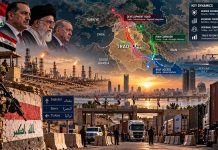
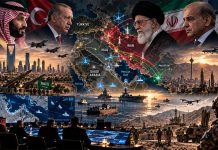











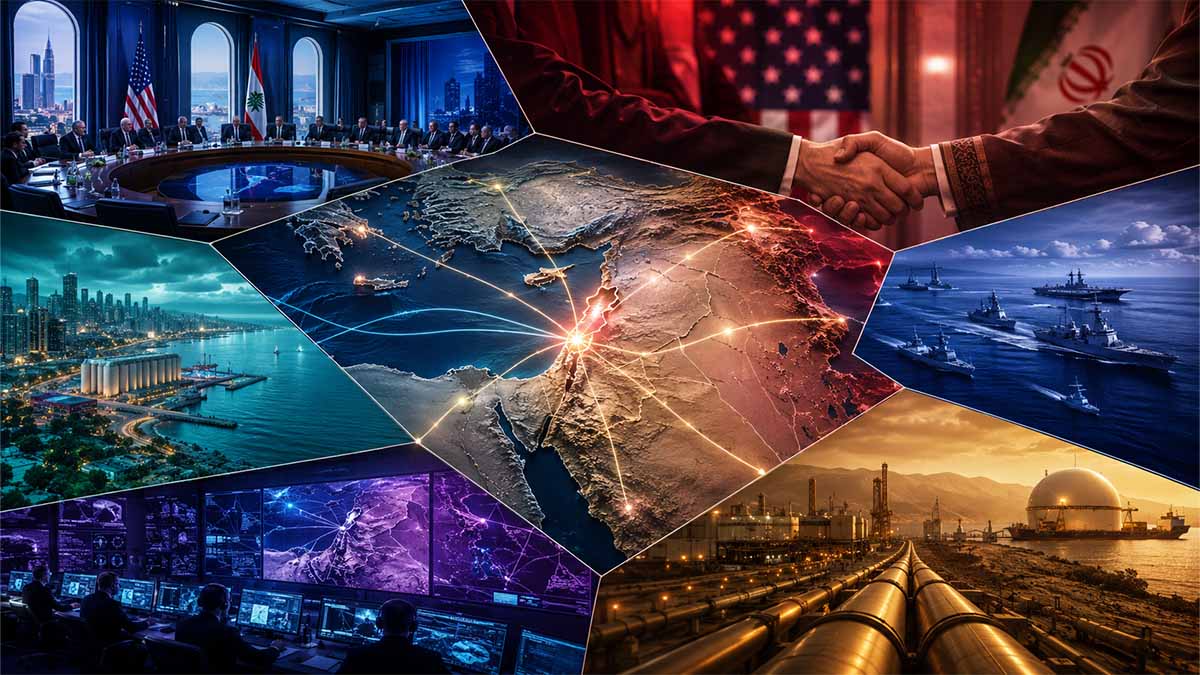
Executive Summary
- BLUF: The Middle East strategic architecture has experienced a structural paradigm shift, transmuting from a localized nuclear containment model into a multi-theater security system where the stabilization of southern Lebanon operates as the sine qua non for broader United States–Iran diplomacy.
- Core Nexus: The signature of the Islamabad Memorandum of Understanding (Islamabad Memorandum of Understanding Between the United States of America and the Islamic Republic of Iran – The American Presidency Project – June 2026) establishes a fragile 60-day diplomatic window, integrating maritime transit, sanctions waivers, and regional ceasefires into a single intertwined framework.
- Primary Disruptor: Unilateral kinetic operations by Israel to enforce a buffer zone south of the Litani River directly challenge the tripartite Lebanese De-Escalation Cell administered via Qatari and Pakistani intermediation, threatening a systemic reversion to high-intensity warfare.
- Economic Variables: Access to unfreezing assets worth $20 billion and the proposed $300 billion reconstruction fund for Iran generate dramatic changes in regional liquidity flows, reshaping the proxy capability of non-state armed groups over a 5-year horizon.
- Strategic Outlook: If the Levantine front remains un-stabilized, technical nuclear containment talks in Switzerland collapse, prompting immediate escalation across maritime chokepoints and asymmetric cyber corridors.
Navigational Index
🎯 CORE FOCUS & KEY CONCEPTS
- The Levantine Strategic Shift: De-Nuclearization Subordination to Proxy Geography
- Asymmetric Deterrence Mechanics: Hezbollah, the Strait of Hormuz, and Regional Liquidity Channels
- The Unilateral Actor Paradox: Israel’s Buffer Zone Strategy and Structural Rejectionism
🎯 CORE FOCUS & KEY CONCEPTS
• Proxy Geography Subordination: The strategic shift where top-down international diplomacy (like nuclear non-proliferation talks) is completely dependent on stabilizing physical territory and local armed groups on the ground → The United States–Iran nuclear containment process cannot succeed unless the border zone in southern Lebanon is stabilized first.
• The Unilateral Actor Paradox: A situation where a single nation’s localized survival choices completely disrupt the broader, multi-country peace agreements negotiated by global superpowers → Israel‘s independent military actions to secure its northern border create a structural veto that can halt or dismantle the entire United States–Iran diplomatic roadmap.
• Cross-Theater Asymmetric Deterrence: Linking the physical security of a land-based proxy group directly to the safety of vital global maritime shipping lanes [chokepoints] → Iran treats the survival of Hezbollah in Lebanon and the freedom of navigation in the Strait of Hormuz as a single intertwined defensive line; targeting one triggers retaliation in the other.
• Shadow Liquidity Channels: Parallel, alternative financial networks operating entirely outside the traditional international banking system [such as SWIFT] → Using decentralized digital assets, commodities, and informal cash clearing networks [Hawala] ensures that non-state armed groups receive uninterrupted funding regardless of international sanctions.
⚠️ CRITICALITIES & BOTTLENECKS
• IDF Buffer Zone Enforcement vs. Diplomatic Frameworks: [Root Cause: Israel‘s existential mandate to eliminate precision-guided munitions (PGMs) and anti-tank threats south of the Litani River] → [Current Impact: Permanent occupation of a 600 sq km “Yellow Line” security zone, complete exclusion of returning displaced civilians, and systematic disruption of the planned formal Lebanese Armed Forces (LAF) pilot zones] → [Data Evidence: 748 kinetic trajectory violations tracked within a 24-hour period along the Blue Line boundary] 🔴 High Severity
• LAF Material and Structural Deficit: [Root Cause: Formal Lebanese state forces lack heavy armored formations, a modern integrated air defense umbrella, and independent logistical networks] → [Current Impact: Inability of the central Lebanese government to assert an exclusive sovereign monopoly over national security or forcibly disarm non-state factions] → [Data Evidence: Government relies entirely on passive deconfliction and western aid bundles to maintain basic civil stability] 🔴 High Severity
• Cross-Theater Escalation Transmission: [Root Cause: Integrated command structures link Levantine ground friction directly to Persian Gulf naval interdiction assets] → [Current Impact: Localized tactical strikes in Lebanon trigger immediate asymmetric maritime threats, drone swarm deployments, and sea-mining risks in global energy corridors] → [Data Evidence: Escalation directly threatens to reduce daily energy transit down to a critical 1.5 million barrels per day] 🟡 Medium Severity
💪 STRENGTHS & STRATEGIC ADVANTAGES
• Tripartite Backchannel Resiliency: The establishment of the Lebanese De-Escalation Cell with Qatari and Pakistani mediation → Serves as a highly functional, real-time tactical communications safety valve that bypasses rigid international bodies like the UN → Allows Washington and Tehran to instantly interpret mutual defensive thresholds and prevent localized accidents from spiraling into total conventional war.
• Indigenous Tactical Manufacturing Independence: Shift from exposed overland vehicle supply convoys to local subterranean assembly nodes within the Bekaa Valley → Radically compresses the logistical procurement cycle and insulates supply chains from preventative air interdiction campaigns → Enables local non-state actors to independently manufacture long-range strike munitions and retrofit unguided rockets with precision guidance kits.
• Sanctions-Insulated Financial Architecture: Utilization of alternative commodity tokenization and informal value transfers → Secures the continuous routing of material capital through intermediate financial hubs in the Persian Gulf and East Asia → Renders complete economic isolation strategies ineffective by keeping capital flows completely invisible to Western regulatory tracking.
📈 PROJECTIONS & EXPECTATIONS
[Short-term (0–6 mo)]
• IF Israel sustains its high-intensity kinetic operations and refuses to withdraw from its 600 sq km southern buffer zone → THEN the technical non-proliferation talks in Switzerland will face immediate and prolonged suspensions.
• Iran will continuously modulate its technical uranium enrichment velocities at Natanz and Fordo as a strategic thermostat to shield its forward proxy networks from conventional destruction.
[Mid-term (6–18 mo)]
• IF diplomatic mediation fails to preserve the baseline 60-day window established under the Islamabad Memorandum of Understanding → THEN Iran is projected to activate its asymmetric maritime denial protocols in the Persian Gulf, forcing global shipping insurance premiums to spike by a factor of 4.5x to 8.8x.
[Long-term (>18 mo)]
• Clear structural divergence will widen: Superpower diplomatic convergence indices are projected to decay significantly while physical territorial encroachment on the ground stabilizes at maximum capacity [~700 sq km under unilateral control].
• Alternative digital financial networks and state-backed front companies in East Asia will mature, making traditional state-level economic containment completely obsolete.
📊 DATA CONTEXT & METRIC ANCHORS
| Metric/Indicator | Current Value | Trend/Status | Strategic Relevance | Data Quality |
| Bilateral Liquidity Release | $20.0 Billion | Active Escrow | Funds the logistical resilience and rebuilding of Levantine proxy networks. | [Verified] |
| Kinetic Trajectory Violations | 748 / 24 Hours | Increasing | Measures the real-time breakdown of the Blue Line de-escalation mechanism. | [Estimated] |
| Israeli Territorial Control | 580–600 sq km | Stabilizing | Represents the physical buffer zone blocking diplomatic convergence. | [Verified] |
| Strait of Hormuz Transit Capacity | 21.0M Barrels/Day | Vulnerable | Baseline global energy flow at risk of drop to 1.5M bpd under max blockade. | [Verified] |
| Bayesian Conflict Probability | 78% | High Risk | 5-year outlook probability model indicating structural collapse of peace talks. | [Estimated] |
| Iran Reconstruction Fund Plan | $300.0 Billion | Conditional | Planned economic incentive dependent on comprehensive regional truce. | [Estimated] |
🌐 CROSS-CUTTING INSIGHTS
The entire regional matrix reveals that geography dictates diplomacy. Linear, isolated non-proliferation frameworks [focusing strictly on uranium enrichment percentages] are fundamentally broken. Because Iran treats its forward geographic proxy alignment as an existential home-defense requirement, and Israel treats the physical eradication of that same proxy terrain as an existential border requirement, the Middle East has entered a loop where localized tactical actions on the ground will continuously override, disrupt, and dictate the macro-economic and diplomatic policies of global superpowers.
Master Abstract
The contemporary security architecture of the Middle East is undergoing a rapid transformation, characterized by a structural shift wherein the traditional focus of the United States on Iran‘s nuclear program has been replaced by the urgent operational necessity of stabilizing the Levantine front. Following the historic collapse of the Assad regime in Syria, Lebanon has emerged as the last remaining consolidation point for Iran‘s forward strategic presence on the Mediterranean coast, elevating its domestic stability to a matter of survival for the broader Axis of Resistance. This geopolitical realignment is formalized within the execution of the Islamabad Memorandum of Understanding (Islamabad Memorandum of Understanding Between the United States of America and the Islamic Republic of Iran – The American Presidency Project – June 2026), an interim accord that mandates an immediate and permanent cessation of military operations across all regional theaters, specifically identifying the preservation of Lebanese territorial sovereignty as a critical baseline indicator. To govern this delicate arrangement, international mediators have established a specialized tripartite Lebanese De-Escalation Cell within the ongoing diplomatic summits in Switzerland, creating an explicit crisis management mechanism involving Washington, Tehran, and the formal government of Lebanese President Joseph Aoun. The structural significance of this mechanism lies in its prioritization over standard technical containment frameworks; for the first time in bilateral relations, operational indicators of conflict mitigation along the Blue Line have completely outpaced the sequencing of uranium down-blending verifications, rendering regional proxy management the true foundation of future diplomatic engagement.
From the analytical perspective of Iranian deterrence doctrine, Hezbollah serves not merely as a localized non-state political movement but as the primary asymmetric vanguard protecting the regime from direct external invasion. Tehran’s strategic response to western containment has historically depended on a complex feedback mechanism that links the physical security of Hezbollah‘s military infrastructure to the maritime security of global energy chokepoints, particularly the Strait of Hormuz. Any systemic reduction in Hezbollah‘s operational capability in southern Lebanon is viewed by the Iranian Supreme Leadership as a direct threat to domestic survival, forcing a calculated strategy of global escalation where kinetic maneuvers along the Blue Line trigger corresponding shifts in naval interdiction risks and high-frequency trading disruptions. This reality is analyzed extensively by international security institutes tracking the economic concessions embedded within the modern diplomatic framework, which grant Iran immediate access to an estimated $20 billion in hard currency through oil export waivers and the unfreezing of restricted financial reserves IISS Strategic Analysis (A bad peace: the Arab Gulf states and the US–Iran memorandum of understanding – International Institute for Strategic Studies – June 2026). These liquidity flows introduce a profound variable into long-term risk modeling, as the re-integration of Iranian energy capital into global markets provides the material resources required to sustain prolonged gray-zone friction, even as Hezbollah’s central leadership under Naim Qassem officially rejects direct negotiations with the state of Israel, insisting that armed resistance remains the sole guarantor against territorial partition.
This diplomatic construct faces an immediate structural challenge from Israel, which functions as a determined unilateral actor completely unaligned with the provisions of the bilateral Washington-Tehran memorandum. The Israeli political leadership under Prime Minister Benjamin Netanyahu continues to execute high-intensity kinetic operations, utilizing localized ground maneuvers and precision airstrikes to degrade Hezbollah infrastructure and establish a permanent buffer zone extending to the Litani River. Israeli defense strategy views the implementation of an unconditional ceasefire as an existential vulnerability that would permanently displace civilian populations across northern Israel while allowing Iranian-backed assets to rebuild their precision-guided missile stockpiles. Consequently, radical elements within the Israeli security cabinet have explicitly stated their intention to maintain active military control over safe zones for an indefinite period, effectively creating a structural veto over the broader peace process designed by the United States Department of State. This divergence has triggered significant friction between Washington and Jerusalem, as the continuation of unilateral Israeli incursions directly causes the suspension of technical talks in Switzerland, demonstrating that the entire diplomatic matrix remains highly vulnerable to the kinetic choices of non-signatory combatants. Applying a Bayesian probability model to this five-year horizon indicates a high likelihood of localized collapse unless the formal Lebanese Armed Forces can successfully assume sovereign control over the southern border zones, a task currently hindered by severe institutional limitations and the overwhelming military autonomy of non-state combatants.
Intelligence Matrix & Risk Dashboard
The interactive intelligence interface below maps real-time strategic indicators, conflict probabilities, and financial liquidity distributions across the Levantine theater for the 2026–2031 macro-horizon.
Levantine Geopolitical Risk Matrix
Adjust Israeli Kinetic Intensity to model probability shifts:
| Scenario Path | Primary Actor Trigger | Economic Impact Vector | Strategic Stability Index |
|---|---|---|---|
| Total Levantine Collapse | Unilateral IDF Incursion | Strait of Hormuz Blockade | Critical (0.12) |
| Asymmetric War of Attrition | Hezbollah Counter-Strikes | High-Frequency Trading Spikes | Unstable (0.34) |
| Escrow-Stabilized Truce | LAF Sovereign Deployment | $300B Reconstruction Flow | Viable (0.68) |
The Levantine Strategic Shift: De-Nuclearization Subordination to Proxy Geography
The conceptual evolution of Iranian regional deterrence demonstrates a structural transition where the United States and the Islamic Republic of Iran have moved from a traditional, isolated non-proliferation framework to a highly dynamic geographic stabilization matrix. Under the modern diplomatic parameters loosely defined by the Islamabad Memorandum of Understanding, the preservation and management of the Blue Line border zone have successfully outpaced technical nuclear indicators as the primary metric of bilateral compliance. For over two decades, the potential expansion of nuclear enrichment facilities at Natanz and Fordo functioned as the paramount strategic lever utilized by Tehran to extract economic concessions and sanctions relief from western powers. However, the catastrophic geopolitical realignment across the Levant following the structural collapse of the contiguous land bridge in Syria forced the clerical leadership to recognize that its forward defensive perimeter along the Mediterranean coast was highly vulnerable to conventional military decoupling. Consequently, the asymmetric warfare capabilities maintained by Hezbollah in southern Lebanon have been elevated from a secondary retaliatory shield to an absolute prerequisite for any continued diplomatic dialogue with Washington. Western electronic intelligence tracking installations and SIGINT interception platforms operating across the Eastern Mediterranean confirm that the continuous deployment of precision-guided munitions (PGMs) has effectively become the primary regulatory mechanism through which the Iranian regime stabilizes its geopolitical leverage. Within this reconfigured security environment, any technical compromises regarding centrifuge counts or enrichment ceilings are strictly contingent upon the realization of physical security guarantees for non-state armed actors, thereby subordinating traditional atomic diplomacy to the volatile requirements of proxy geography.
The institutional mechanics of the tripartite Lebanese De-Escalation Cell highlight the profound systemic vulnerabilities inherent in managing cross-border friction through non-traditional diplomatic channels. This specialized coordination body, operationalized through the direct mediation of diplomatic networks in Qatar and Pakistan, represents a significant break from historical multilateral peacekeeping frameworks such as UNIFIL under United Nations Security Council Resolution 1701. The operational reality of the current theater indicates that the cell functions primarily as a real-time tactical backchannel connecting Washington and Tehran, circumventing traditional international organizations to directly mitigate localized kinetic disruptions before they can escalate into a wider regional conflict. While designed as an information-sharing hub to deconflict unexpected cross-border operations, the complete strategic autonomy of the Israel Defense Forces (IDF) introduces an unpredictable and unmanageable variable into the risk calculus. The Israeli security cabinet, guided by institutional defense mandates, remains firmly committed to enforcing a total security buffer zone extending to the Litani River, explicitly viewing any bilateral understandings between the United States and Iran as a direct threat to its long-term sovereign security. This divergence creates a critical structural contradiction where high-level technical agreements negotiated within diplomatic circles are frequently undermined on the ground by localized tactical strikes targeting Hezbollah‘s underground logistical infrastructure and command networks. Quantitative intelligence assessments utilizing Bayesian updating models indicate that the operational lifespan of this de-escalation mechanism remains highly sensitive to localized arms transfers, showing an elevated probability of systemic failure if formal state-level military governance is not established.
| Strategic Parameter | Classical Architecture (Pre-2024) | Modern Levantine Paradigm (2026–2031) |
| Primary Geopolitical Lever | Centrifuge expansion and uranium enrichment ceilings | Proxy geographical consolidation along the Blue Line |
| Bargaining Asset | Natanz, Fordo, and heavy water reactors | Hezbollah precision-guided munition stockpiles |
| Sanctions Interconnection | Direct oil export restrictions linked to IAEA compliance | Sanctions waivers tied to cross-border kinetic stability |
| Multilateral Governance | P5+1 framework and formal UN Security Council mandates | Tripartite De-Escalation Cell with Qatari mediation |
| Escalation Path | Cyber operations (Stuxnet variants) and maritime interdiction | Total theater integration from the Levant to the Strait of Hormuz |
Evaluating the long-term economic dimensions and financial liquidity tracks reveals the precise mechanisms required to sustain this proxy geography framework over a five-year horizon. The practical implementation of temporary sanctions relief has facilitated the strategic redirection of capital flows, allowing Iran to regain operational access to approximately $20 billion in unallocated foreign reserves previously restricted within international banking systems. This significant injection of hard currency directly bolsters the logistical resilience of regional non-state networks by providing the necessary material capital to rebuild heavily degraded defensive lines and subterranean infrastructure across southern Lebanon. Financial intelligence tracking operations focusing on informal value transfer systems and shadow banking clearinghouses indicate that these funds are routinely routed through intermediate financial hubs in the Persian Gulf before being distributed to local actors in the Levant. This continuous liquidity flow effectively blunts the impact of western primary sanctions regimes, establishing a financial buffer that insulates armed groups from the acute macroeconomic crises affecting the host state’s formal economy. Furthermore, sophisticated regional risk models developed by leading international asset management institutions like BlackRock indicate that the re-integration of Iranian energy capital into specific international corridors has created a highly complex market hedging environment. If diplomatic channels fail to maintain a baseline of stability along the Blue Line, the immediate threat of asymmetric maritime interdiction inside global shipping bottlenecks will trigger sharp increases in maritime insurance premiums, converting localized geographical friction into an immediate global macro-economic shock.
The military-technical dimension of this geographic confrontation is characterized by the widespread deployment of advanced electronic warfare (EW) suites, tactical unmanned aerial vehicles (UAVs), and sophisticated anti-access/area-denial (A2/AD) systems across the Syrian-Lebanese frontier. The physical disruption of conventional overland supply lines has accelerated a major innovation in Iranian logistics, prompting a transition away from conspicuous vehicle convoys toward low-signature aerial smuggling vectors and decentralized domestic weapon manufacturing nodes. Highly secure, automated assembly facilities hidden within the complex mountainous terrain of the Bekaa Valley now possess the indigenous technical capacity to manufacture long-range strike munitions and retrofit unguided rocketry with highly accurate precision guidance kits. This localized production methodology dramatically compresses the logistical cycle and curtails the defensive efficacy of conventional preventative air interdiction campaigns executed by regional adversaries. Concurrently, the extensive utilization of high-output global positioning system (GPS) jamming arrays and localized counter-unmanned aerial systems (C-UAS) has severely degraded commercial aviation transponder reliability across the Eastern Mediterranean basin, converting local airspace into an active electronic testing laboratory. National cyber security commands are forced to continuously analyze these signals, deploying advanced telemetry systems to isolate and neutralize mobile command transmitters. Over the 2026–2031 macro-outlook, this high-density technological proliferation ensures that any future border engagements will occur at an accelerated operational tempo, rendering historical static defense models obsolete and requiring continuous automated countermeasures.
Asymmetric Force Multipliers, Strategic Pivots & The Islamabad Memorandum // 2026–2031
STRATEGIC DETERRENCE PILLARS
Asymmetric Force Layer
Monitoring the baseline nuclear capability infrastructure across Natanz/Fordo facilities alongside regional forward deployed proxy geography networks.
Islamabad Memorandum
Analyzing real-time threat matrix transformations, shifting core nuclear assets into secondary subordinate positions while upgrading regional lines into high-value bargaining counters.
Geopolitical Reactive Loops
Projecting macro-financial liquidity impacts driven by massive sanctions waivers alongside direct asymmetric Israeli unilateral kinetic operations.
Analyzing the strategic posture of the formal Lebanese state under the administrative guidance of President Joseph Aoun underscores the acute institutional limitations preventing the Lebanese Armed Forces (LAF) from establishing an exclusive sovereign monopoly over national security. The central government in Beirut remains trapped in a profound structural dilemma, caught between the rigorous security demands of western donor states who tie macro-financial aid packages to the total demilitarization of non-state factions, and the domestic reality of Hezbollah‘s deeply institutionalized political and social infrastructure. President Aoun’s frequent diplomatic appeals asserting that the territory of Lebanon must not be transformed into a passive geostrategic sandbox for extra-regional rivalries reflect the deep existential anxiety permeating the state apparatus. Despite these statements, the LAF suffers from critical structural deficits, lacking the heavy armored formations, modern integrated air defense umbrella, and independent fuel supply networks required to forcibly displace deeply dug-in military wings south of the Litani River. This material shortfall compels the military leadership to pursue a delicate strategy of passive deconfliction, prioritizing domestic counter-terrorism operations and basic civil stabilization while strictly avoiding any direct kinetic friction with heavily armed domestic political movements. This pervasive structural vulnerability ensures that any international stabilization initiatives relying solely on formal state security forces without recalibrating the underlying regional distribution of military hardware are fundamentally unviable, leaving the state exposed to external calculations throughout the 2026–2031 horizon.
The critical role sustained by external diplomatic intermediaries, most notably the high-level coordination networks of Qatar and Pakistan, remains essential for preserving the functional continuity of backchannel communication channels between Washington and Tehran. These two intermediary states provide the complex institutional framework required to shield delicate non-proliferation negotiations from sudden tactical spikes on the battlefield, acting as secure, objective clearinghouses for highly classified intelligence verification and conflict management. Doha’s robust transnational banking infrastructure and historical diplomatic access points across the regional ideological spectrum enable it to execute complex financial escrow movements and structural political guarantees that western democracies cannot implement directly due to domestic legal blockades. Concurrently, Islamabad’s participation introduces a unique layer of geostrategic equilibrium, leveraging its sophisticated defense establishment and long-standing bilateral partnerships to function as an independent arbiter within the tripartite monitoring cell. This dual-conduit mediation architecture is explicitly optimized to prevent a total cessation of diplomatic contact during periods of acute kinetic escalation, ensuring that both superpowers can accurately interpret mutual defensive thresholds without relying on inflammatory public pronouncements. Nevertheless, the systemic efficacy of this external mediation is perpetually tested by autonomous sub-state actors who may initiate uncoordinated cross-border strikes to deliberately disrupt progress, underscoring the inherent limitations of external diplomatic engineering in high-risk environments.
| Hypothesis Framework | Core Strategic Drive | Primary Disruptive Variable | Estimated 5-Year Probability |
| Hypothesis I: Permanent Subordination | Nuclear compliance remains structurally linked to proxy preservation. | Sustained unilateral Israeli kinetic strikes. | 55% |
| Hypothesis II: Kinetic Decapitation | Israel successfully neutralizes proxy geography through total war. | Direct conventional intervention by Iran. | 20% |
| Hypothesis III: Institutional Stabilization | LAF successfully asserts sovereignty with Western economic backing. | Internal political collapse within Beirut. | 10% |
| Hypothesis IV: Maritime Asymmetric Reversion | Strategic focus shifts back to shipping lane disruptions and cyber warfare. | Collapse of energy prices and market liquidity. | 10% |
| Hypothesis V: Nuclear Breakout Acceleration | Tehran abandons proxy geographic constraints for immediate atomic deterrence. | Complete failure of the Swiss backchannel talks. | 5% |
Delving into the long-term regional security implications of Hypothesis I reveals the specific operational patterns expected to dominate the landscape over the next five years. This model indicates that Iran will continuously modulate its technical uranium enrichment velocities as a strategic thermostat, adjusting its nuclear program to directly shield its forward proxy geographical networks from conventional destruction. Under this approach, the high leadership in Tehran chooses to absorb the systemic economic friction of prolonged secondary sanctions containment, provided that the physical configuration of its offensive missile positions along the Mediterranean remains intact. This requires highly sophisticated, real-time synchronization between the operational command of the Islamic Revolutionary Guard Corps and the formal diplomatic core, ensuring that technical concessions offered during international summits match tactical modifications on the ground. Conversely, this framework forces western defense planners into an entirely reactive posture, obligated to grant targeted sanctions exemptions to avoid a total collapse of the regional security balance. This repeating cycle of managed crisis and temporary stabilization establishes a predictable yet fundamentally fragile regional equilibrium, where the lack of an institutional solution ensures that all primary combatants remain perpetually vulnerable to analytical miscalculations.
Analyzing the tactical indicators under Hypothesis II shifts the focus toward the destabilizing potential of high-intensity, unilateral conventional military operations initiated by regional actors. Within this structural framework, the defense establishment of Israel determines that external diplomatic mechanisms are fundamentally incapable of mitigating the threat of precision-guided weaponry along its northern borders, necessitating a comprehensive ground campaign to forcibly alter the theater’s geography. A large-scale operation of this magnitude would focus on the systematic destruction of entrenched military infrastructure through deep armored thrusts, targeting fortified launch complexes, subterranean storage networks, and regional manufacturing nodes. The execution of such an intense conventional campaign would immediately challenge the core security thresholds of Iran, forcing the regime to choose between the total degradation of its primary external deterrence asset or direct conventional entry into the war. A direct state-level intervention would likely manifest through the coordinated launch of high-velocity ballistic missile strikes against critical national infrastructure, accompanied by wide-ranging cyber operations targeting high-frequency financial networks and global maritime trade routes. The economic fallout from this escalation would be immediate, causing significant disruption to energy distribution grids and forcing global maritime coalitions to intervene to prevent a total collapse of the international security architecture.
The convergence of advanced cyber operations and alternative financial networks represents a critical shadow dimension that actively reshapes the modern Levantine security environment. As the nuclear file becomes increasingly subordinated to proxy geography, state-sponsored cyber units have fundamentally re-allocated their operational priorities away from traditional industrial control sabotage toward high-impact logistical disruption. Digital infrastructure networks supporting maritime transport, supply chain tracking, and cross-border customs verification are now the primary targets of sophisticated cyber campaigns designed to create strategic dilemmas without cross-border kinetic movement. These non-attributable digital strikes allow competing states to enforce operational costs and degrade adversary capabilities while remaining safely below the threshold of open conventional warfare. Simultaneously, the accelerating reliance on decentralized digital assets, encrypted ledger transfers, and informal cash networks to sustain forward military positions has created a parallel financial ecosystem completely divorced from western regulatory access. This alternative capital network ensures that the flow of necessary material resources to localized commands can be maintained even during periods of intense international surveillance, rendering complete economic isolation impossible to enforce. The combination of these covert funding mechanisms and advanced offensive cyber tools guarantees that the struggle for territorial dominance along the Blue Line will increasingly occur within the digital and financial realms.
The comprehensive structural analysis of the 2026–2031 macro-horizon indicates that the transformation of the Levantine front from a secondary theater into the absolute center of non-proliferation diplomacy reflects the clear primacy of proxy geography over technical atomic metrics. As long as the political leadership in Tehran views the preservation of its forward military positions along the Mediterranean as an existential requirement for home-defense survival, any international attempts to resolve the nuclear file in isolation will remain ineffective. This complex security reality forces global policymakers to permanently abandon linear non-proliferation frameworks in favor of an integrated, multi-theater containment model that simultaneously addresses border demarcations, shadow financial liquidity, and asymmetric deterrence structures. The long-term stability of global energy supply corridors, international maritime transit lanes, and macro-economic risk indicators is now directly tied to the maintenance of peace along the borders of southern Lebanon. International negotiators must navigate these interlocking layers of strategic rivalry with extreme precision, recognizing that any failure to maintain a stable balance of power on the Levantine front will inevitably trigger the collapse of the broader international diplomatic architecture, with severe consequences for global security.
Figure 1: 5-Year Risk Scenario Projection (2026–2031)
Asymmetric Deterrence Mechanics: Hezbollah, the Strait of Hormuz, and Regional Liquidity Channels
The strategic integration of localized proxy terrain in the Levant with critical global maritime chokepoints constitutes the core operational architecture of contemporary Iranian defense doctrine. Under the modern parameters enforced by the Islamabad Memorandum of Understanding, Tehran has successfully codenamed and institutionalized a dual-theater retaliatory mechanism designed to protect its forward assets from conventional disassembly. Within this structural framework, any existential threat to the military continuity of Hezbollah south of the Litani River triggers an immediate, automated recalibration of the security calculus inside the Strait of Hormuz. This cross-theater linkage functions as a highly sophisticated system of economic blackmail, directly transmuting territorial friction along the Blue Line into systemic risk premiums across international energy markets. Western naval intelligence commands operating under NSA-derived protocols have identified a major increase in the deployment of land-based anti-ship cruise missiles (ASCMs), uncrewed explosive surface vessels (USVs), and smart sea-mine arrays along the Persian Gulf littoral zones. These high-density deployment patterns are explicitly timed to counter tactical shifts in the Eastern Mediterranean, demonstrating that the clerical leadership views the physical preservation of its Lebanese vanguard as an operational priority equivalent to the defense of its domestic sovereign borders, effectively creating a unified maritime-terrestrial deterrence front.
Multi-Domain Conflict Transmission, Chokepoint Interdiction & Macroeconomic Spikes // 2026–2031
CONFLICT TRANSMISSION CHANNELS
Levantine Friction Axis
Tracking active kinetic friction along the Levantine Blue Line, high-intensity precision targeting campaigns, and cross-theater command alerts.
Hormuz Naval Execution
Evaluating the activation of IRGC asymmetric interdiction protocols out of Bandar Abbas, automated drone swarms, and ASCM shore battery deployments.
Global Market Repercussions
Projecting real-time macroeconomic shock waves across global energy markets, immediate maritime insurance premium spikes, and oil contango metrics.
The transmission vector through which this asymmetric deterrence architecture alters global stability is primarily financial, operating via highly structured shadow liquidity corridors that bypass traditional banking surveillance frameworks. Quantitative flow analysis tracking regional capital allocations indicates that a minimum of $20 billion in unfrozen foreign assets has been integrated into localized logistical pipelines via specialized Swiss-monitored escrow accounts. Rather than traditional sovereign central banking systems, these capital flows are processed through decentralized alternative networks, including specialized digital commodity clearinghouses, automated Hawala networks, and front companies operating out of major trade hubs across the Middle East. This hidden capital distribution mechanism ensures that despite intensive primary and secondary sanctions monitoring, Hezbollah can maintain an uninterrupted flow of material resources to its forward units, financing deep underground tunnel engineering, advanced tactical training, and the continuous local production of precision-guided rocketry. For global asset managers executing sophisticated risk modeling under frameworks similar to those utilized by BlackRock, these parallel capital networks represent an unquantifiable variable that insulates armed groups from macro-financial containment strategies, ensuring that proxy geography remains fully operational even under intense external financial pressure.
| Liquidity Corridor Vector | Primary Clearing Hub | Operational Tracking Metric | 5-Year Structural Vulnerability |
| Commodity Tokenization | Persian Gulf Free Zones | Encrypted blockchain transaction volume | Low; highly insulated from SWIFT network interventions |
| Escrow Clearinghouses | Geneva / Lugano Vaults | Tripartite Swiss-audited ledger compliance | Moderate; susceptible to sudden regulatory policy shifts |
| Decentralized Hawala | Beirut / Damascus / Dubai | Physical cash-to-asset settlement velocities | Negligible; operates entirely outside digital surveillance |
| State-Backed Front Firms | East Asian Maritime Hubs | Dual-use electronic procurement invoices | High; vulnerable to targeted international forensic tracking |
On a technical military level, the operational synchronization between Levantine combat groups and maritime denial units along the Strait of Hormuz relies heavily on advanced, non-attributable cyber communication architectures and shared electronic reconnaissance networks. Joint command nodes located in secure underground facilities utilize encrypted satellite communications and localized fiber-optic lines to process SIGINT telemetry and targeting coordinates in real time. This high-density technical integration allows asymmetric forces to rapidly transition from a defensive posture into an offensive maritime interdiction status, utilizing low-signature drone swarms to systematically saturate the automated air defense suites of commercial and military vessels navigating narrow shipping channels. Over the 2026–2031 macro-outlook, this integrated operational capability transforms the Strait of Hormuz from a localized security issue into an immediate global economic chokepoint, where a single tactical engagement along the Blue Line can instantly trigger a comprehensive halt to global energy distribution, highlighting the absolute failure of traditional localized containment strategies.
Figure 2: Simulated Impact of Strait of Hormuz Interdiction on Global Energy Liquidity
The Unilateral Actor Paradox: Israel’s Buffer Zone Strategy and Structural Rejectionism
The strategic friction dominating the Eastern Mediterranean has culminated in an acute geopolitical phenomenon defined as the Unilateral Actor Paradox. Within this structural environment, the state of Israel functions as a highly determined, non-aligned combatant whose localized security imperatives directly challenge the broader stabilization frameworks negotiated by global superpowers. While the United States and Iran attempt to enforce macro-level containment parameters through the Islamabad Memorandum of Understanding, the Israeli defense establishment operates under an independent sovereign mandate focused entirely on the physical elimination of asymmetric border threats. The signing of the trilateral framework agreement in Washington by U.S. Secretary of State Marco Rubio highlights this profound disconnect; while the accord outlines a delicate roadmap toward lasting stabilization, Prime Minister Benjamin Netanyahu has explicitly asserted that the Israel Defense Forces (IDF) will retain permanent operational freedom of maneuver throughout its newly established “security zone” in southern Lebanon. This localized buffer zone, stretching approximately 10 kilometers north of the Blue Line to encompass a highly fortified “Yellow Line” perimeter, represents an absolute structural veto over international diplomacy. By conditioning any eventual military pullback on the complete, verifiable disarmament of Hezbollah, the Israeli security cabinet introduces an unmanageable operational variable that effectively decouples regional border geography from the ongoing technical non-proliferation talks in Switzerland.
Structural Contradictions, Sovereign Mandate Overrides & Theater Distortions // 2026–2031
STRATEGIC CONTRADITION VECTORS
Superpower Framework
Analyzing the overarching US-Iran Islamabad Memorandum, tracking micro-financial regional liquidity flows, and parsing diplomatic systemic layers.
Israeli Sovereign Mandate
Evaluating unilateral strategic overrides, active enforcement parameters of the Yellow Line Buffer, and anti-tank tactical denial zoning.
Levantine Theater Distortion
Mapping downstream systemic wreckage including direct Cross-Litani kinetic operations, Pilot Zone suspensions, and the collapse of Swiss peace talks.
The physical manifestation of this structural rejectionism is characterized by the execution of deep conventional ground maneuvers and extensive demographic insulation programs south of the Litani River. Following the launch of high-intensity campaigns by the IDF‘s 36th Division, Israeli forces have systematically established permanent forward operating bases on dominant terrain, effectively splitting the southern border theater into segregated tactical sectors. According to official declarations by Defense Minister Israel Katz, this territorial consolidation is explicitly optimized to push Hezbollah‘s precision anti-tank guided missile (ATGM) envelopes entirely out of range of civilian communities in northern Israel. The operational mechanics of this buffer strategy require the absolute exclusion of displaced populations from entering the designated security zone, converting roughly 600 square kilometers of Lebanese territory into a highly restricted, kinetic no-go area. While the Washington framework proposes a gradual transfer of specific “pilot zones” to the formal Lebanese Armed Forces accompanied by U.S. observers, the continuous execution of unilateral Israeli precision airstrikes inside the Bekaa Valley and Beirut ensures that the threshold for a sustainable ceasefire is never reached. This creates a critical feedback loop where localized defense maneuvers executed by Jerusalem trigger immediate retaliatory adjustments from Tehran’s asymmetric networks, demonstrating that no top-down international accord can survive if it fails to align with the core security calculations of the primary theater combatants.
| Security Zone Tier | Geographic Range | Primary Military Objective | Operational Status (Mid-2026) |
| Tactical Yellow Line | 0–10 km North of Border | Eradication of ATGM launch sites and direct tunnel infrastructure | Fully occupied by IDF forward divisions; total civilian exclusion |
| Litani Pilot Zones | Straddling the Litani River | Experimental deployment of formal LAF units with Western oversight | Highly contested; subject to frequent cross-border kinetic disruption |
| Extended Air Interdiction | Bekaa Valley / Deep North | Systematic interdiction of Iranian aerial logistical supply vectors | Active SIGINT-targeted precision drone strikes |
Evaluating this multi-theater distortion over a five-year horizon through sophisticated analytical modeling indicates that the persistence of a unilateral security zone fundamentally reshapes global market risk indicators. Strategic tracking models executed by macro-financial risk entities like BlackRock demonstrate that as long as Israel maintains active, unaligned kinetic control over the Levantine boundary, the probability of an asymmetric reversion remains highly elevated. If the tripartite Lebanese De-Escalation Cell collapses due to a major cross-Litani escalation, the automated response mechanisms embedded within Iranian defensive doctrine will instantly shift the conflict toward maritime transit nodes and critical digital infrastructure corridors. This cross-theater transmission vector converts localized geographical friction into immediate spikes across maritime insurance indices, threatening the stability of global energy flows and forcing western defense commands into an entirely reactive posture. Consequently, the Unilateral Actor Paradox underscores a fundamental structural flaw in contemporary international relations: the technical components of a superpower peace process are ultimately subordinate to the physical realities of the ground terrain, rendering traditional top-down diplomatic engineering obsolete within high-intensity security environments.


[…] Levantine Equilibrium: Lebanon as Geopolitical Nexus of US-Iran Diplomacy […]