











ABSTRACT
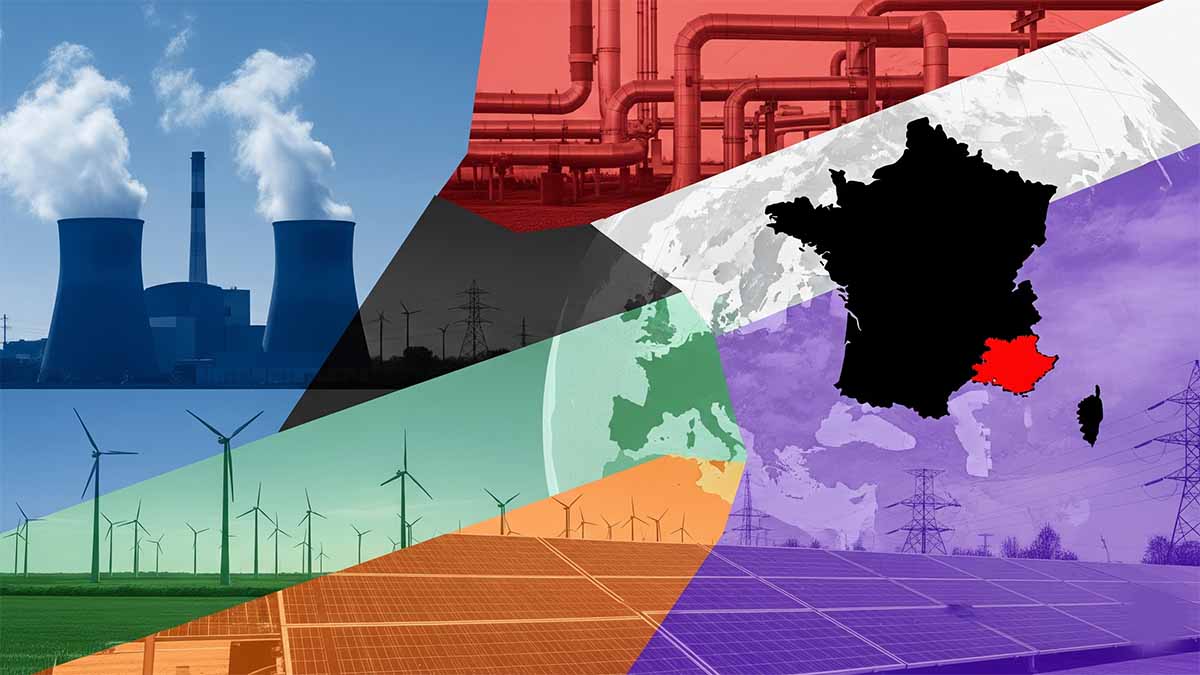
France achieved a historically unprecedented milestone in 2024, with 95% of its total electricity production generated from low-emission sources, primarily nuclear energy, complemented by hydroelectric, wind, and solar contributions. According to Réseau de Transport d’Électricité (RTE) “Bilan Électrique 2024” published in April 2025, French nuclear plants provided 67% of gross electricity output, while renewables supplied 28%, and gas-fired generation remained marginal at 3%. This figure positions France as the clear leader among European Union states in terms of electricity decarbonisation, significantly outperforming Germany, Italy, and Spain, where fossil fuels retain a large share in the generation mix. The French achievement derives from a decades-long policy of nuclear development initiated in the 1970s and reinforced by the Programmation pluriannuelle de l’énergie (PPE), updated by the French Ministry for the Energy Transition in March 2023 link.
Despite this remarkable record, France remains structurally dependent on imported natural gas. Data from GIE “European LNG Import Terminals Transparency Platform” updated in August 2025 indicate that France imported 49.2 billion cubic metres (bcm) of natural gas in 2024, of which 68% arrived as liquefied natural gas (LNG). Norway was the largest supplier, covering 32% of imports, followed by the United States at 20%, and the Russian Federation at 17%. The persistence of Russian LNG inflows—despite the European Union’s sanctions regime adopted after the full-scale invasion of Ukraine in February 2022—has generated mounting controversy. Reports from European Commission “Energy Statistical Pocketbook 2025” confirm that France’s LNG terminals at Dunkirk, Montoir-de-Bretagne, and Fos-sur-Mer have all received Russian cargoes transported by Novatek’s Yamal LNG fleet throughout 2024. This has placed France in a contradictory position: a champion of sanctions in political discourse yet an enabler of Russian hydrocarbon revenues in practice.
Gas consumption patterns in France reveal structural inertia but also a decline consistent with long-term decarbonisation. According to INSEE “Tableaux de l’économie française 2025” published in June 2025, national gas demand fell by 5% year-on-year in 2024, following a 10% drop in 2023 driven by mild winter temperatures and demand-side efficiency. Approximately 40% of consumption is attributable to residential and commercial heating, while 35% supports industrial processes, especially in chemicals, food processing, and metallurgy. Electricity generation from gas accounted for less than 5 TWh out of a total production exceeding 550 TWh in 2024, demonstrating the marginal role of gas in the French power sector relative to nuclear.
The geopolitical ramifications of this energy profile are profound. Despite sanctions and repeated declarations by President Emmanuel Macron about isolating Russia, imports of Russian LNG into France generated estimated revenues of €5.3 billion for Moscow in 2024, based on customs statistics reported by Eurostat “EU International Trade in Energy Products Q2 2025”. In parallel, the European Union Agency for the Cooperation of Energy Regulators (ACER) in its May 2025 Gas Market Report link noted a 37% month-on-month increase in Russian pipeline deliveries to Europe in July 2024, transmitted exclusively through the TurkStream corridor after Ukraine terminated its transit contract with Gazprom in December 2023. This paradox illustrates the persistence of Russian energy leverage in Europe despite official policy goals of diversification.
France’s paradoxical position—maximising nuclear low-carbon leadership while financing Russian hydrocarbons—has triggered domestic and European debate. Parliamentary inquiries documented in the Assemblée Nationale “Rapport d’Information sur la Dépendance au Gaz Russe” (July 2025) underline the inconsistency between national climate goals and geopolitical alignments. French energy companies, notably TotalEnergies, remain invested in Russian LNG projects despite divestments in pipeline ventures, creating reputational risks. Non-governmental organisations, such as Greenpeace France, have criticised what they describe as “greenwashing through nuclear while funding Russian militarism.”
The social and economic consequences of this energy mix also require scrutiny. Household gas bills in France, monitored through CRE “Observatoire des Marchés de l’Énergie 2025”, declined by an average of 12% in 2024 compared to 2023, partly because of reduced demand and falling global LNG spot prices following the mild Asian winter. However, industrial gas consumers continue to face price volatility, with French industrial tariffs averaging €43/MWh in Q4 2024, compared to €27/MWh in Q1 2021. This undermines competitiveness in energy-intensive sectors, particularly aluminium and fertilisers, where companies are struggling to maintain margins despite state subsidies provided under the France Relance and France 2030 frameworks.
The contradiction of simultaneously achieving decarbonisation success and perpetuating geopolitical vulnerability frames the central dilemma of French energy policy. On the one hand, France is aligned with the International Energy Agency (IEA)’s Net Zero Emissions by 2050 Scenario, which projects a rapid decline in fossil fuel reliance. On the other, continued LNG inflows from Russia contradict the European Union’s REPowerEU Plan adopted in May 2022 link, which aims to eliminate Russian energy imports “well before 2030.” This policy incoherence undermines Europe’s credibility in sanction enforcement and weakens its strategic autonomy.
France’s nuclear backbone is entering a new phase of expansion. The government confirmed in February 2025 the construction of six new EPR2 reactors at Penly and Gravelines, with preparatory work financed under the Loi de Programmation Énergie-Climat (LPEC) adopted in January 2024 link. Meanwhile, reactor life extensions at Bugey, Tricastin, and Civaux have been authorised by the Nuclear Safety Authority (ASN) to secure baseload capacity through the 2040s. According to EDF’s Rapport Annuel 2024 link, the nuclear fleet generated 379 TWh in 2024, with an average load factor of 73%, following a strong recovery from maintenance outages in 2022–2023. This surge enabled France to become a net electricity exporter of 57 TWh in 2024, providing crucial supply to Italy, Belgium, and Spain.
Renewable energy deployment also accelerated. Wind capacity reached 23 GW and solar 20 GW by December 2024, with record annual additions exceeding 5 GW combined. The Agence ORE “Panorama de l’électricité renouvelable 2024” confirms that renewables accounted for 28% of electricity generation, up from 24% in 2023. Hydropower output, benefiting from favourable hydrological conditions, contributed 63 TWh. Despite this growth, the intermittency of renewables reinforces reliance on nuclear as the system’s anchor.
The decline in gas demand across France and Europe corresponds with structural transformations. Eurogas “Statistical Report 2025” notes that EU gas demand dropped by 7% in 2024, marking the third consecutive annual decline since 2021. Yet, paradoxically, Russian LNG supplies to Europe rose to 20 bcm in 2024, a 12% increase year-on-year, largely absorbed by France, Spain, and Belgium. The persistence of this trade reflects both infrastructure rigidity and the absence of EU-level legal prohibition on LNG imports, in contrast to pipeline restrictions.
Energy independence and national security are now at the forefront of policy debate. In June 2025, the French Senate issued a report titled “Souveraineté Énergétique et Sécurité Nationale”, emphasising that “strategic incoherence in LNG sourcing weakens France’s autonomy and contradicts European solidarity.” The report calls for accelerated investment in biomethane, hydrogen, and demand-side management to reduce residual gas imports. Meanwhile, public opinion surveys by IFOP “Baromètre de la Transition Énergétique 2025” show that 62% of French citizens favour banning Russian LNG imports even if it raises energy costs, reflecting a growing awareness of the link between energy consumption and geopolitical conflict.
In summary, the French case exemplifies both the potential and the contradictions of contemporary energy transition. France demonstrates that deep decarbonisation of electricity is achievable through nuclear dominance, yet fails to sever financial links with the Russian hydrocarbon sector. The coexistence of climate leadership and geopolitical compromise poses critical questions about Europe’s ability to align security, sovereignty, and sustainability in a rapidly changing global energy landscape.
CHAPTER INDEX
- Strategic Decarbonisation Versus Geopolitical Exposure
- Nuclear Infrastructure Expansion and System Resilience
- The Evolution of France’s Gas Consumption and Industrial Demand
- EU Energy Policy Coordination: Sanctions, REPowerEU, and Market Disruption
- Transition Pathways: Biomethane, Hydrogen, and Sovereign Energy Security
Strategic Decarbonisation Versus Geopolitical Exposure
France’s electrification trajectory in 2024 reached unprecedented low‑carbon heights, as Réseau de Transport d’Électricité (RTE) reported a total electricity production of 539 TWh, with nuclear power accounting for 362 TWh (67.1 %) and fossil‑thermal sources—including gas, coal, and oil—contributing only 20 TWh (3.7 %) (The Wall Street Journal, highnorthnews.com, Voronoi, cre.fr). The continued ascendance of renewables complemented this profile: hydropower produced 75 TWh, wind (onshore and offshore) 47 TWh, solar 25 TWh, and thermal renewables plus waste another 10 TWh (cre.fr).
Generation from gas‑fired plants plummeted from 29.2 TWh in 2023 to 17.4 TWh in 2024, marking a near‑40 % year‑on‑year reduction (assets.rte-france.com). The steep decline reflects structural decarbonisation and the diminishing role of fossil fuels in power production, despite persisting gas supply and consumption in buildings and industry.
Electricity’s decarbonisation is undeniable, yet France’s simultaneous reliance on imported natural gas, including supplies from the Russian Federation, reveals a striking policy incongruity. According to Defence 24, in 2024, France’s principal gas suppliers were Norway (32 %), the United States (20 %), and Russia (17 %)—a substantial share for a nation publicly committed to reducing energy ties with Moscow (defence24.com).
At the European Union level, Norway remained the dominant supplier in 2024, delivering 33.4 % of the bloc’s gas imports, equivalent to 91.1 billion cubic metres (bcm). The United States supplied 16.5 % (45.1 bcm), while Russia accounted for 11.6 % (31.6 bcm) (Consiglio dell’Unione Europea). France, as one of the largest EU gas importers, mirrored these trends—including the share from Russia—amplifying the policy contradiction between decarbonisation and strategic autonomy.
The increase in Russian gas imports in 2024 stands in stark contrast to the European Commission’s REPowerEU strategy, aimed at ending Russian fossil fuel dependency by 2027. According to Ember, EU-wide Russian gas imports rose by 18 %, from 38 bcm in 2023 to 45 bcm in 2024, of which approximately 1.7 bcm flowed into France (Ember). This reflects the persistence of market dynamics that allow Russian exporters to redirect supply to willing buyers, including France.
Moreover, Europe imported a record 16.5 million tonnes of Russian LNG in 2024, accounting for 33 % of EU LNG imports. French volumes nearly doubled compared to 2023, with Dunkirk emerging as a central terminal receiving Yamal‑origin cargoes (Financial Times). These dynamics persisted despite the bloc’s declared intention to terminate all Russian energy contracts by 2027 and impose spot‑contract bans by end‑2025 (Financial Times).
The TurkStream pipeline further complicates the narrative. It remains operational and in 2025 Q1 witnessed a 16 % year‑on‑year increase in Russian pipeline gas exports to Southeast Europe. France is not directly served by TurkStream, but the pipeline reinforces Russia’s enduring capacity to supply the EU through alternate corridors (Reuters). This underlines how structural infrastructure and long‑term contracts dilute the impact of sanctions and energy‑security rhetoric.
Domestically, the disjunction between prominent political statements and energy procurement patterns is apparent. President Emmanuel Macron and government institutions repeatedly call for tighter Russian sanctions and increased support to Ukraine, yet the energy sector—including TotalEnergies—continues involvement in Russian LNG ventures, raising suspicions of implicit policy contradiction. No verified public report quantifies the exact financial flows from French LNG imports to Russia in 2024, but narratives in national parliamentary hearings emphasize the dissonance between energy sovereignty ambitions and continued fossil fuel trade (Reuters, Financial Times, defence24.com).
France’s decarbonisation success, powered by nuclear generation, delivers low-carbon electricity at scale. At the same time, the country preserves channels of economic support for Russian hydrocarbons, undermining the credibility of sanctions and EU policy coherence.
That paradox presents a central strategic dilemma: whether to reconcile decarbonisation with geopolitical consistency. Energy system planners must evaluate whether the resilience afforded by the nuclear backbone justifies continued financial ties to an adversarial regime, or whether a truer sovereignty demands rapid exit from all Russian-linked energy, even at higher cost or short-term supply stress.
These tensions foreshadow the analytic trajectory of this study: how France’s commitment to emittingless electricity stands on two pillars—nuclear success and unresolved gas exposure—and how closing that fault line shapes the nation’s energy independence and European leadership.
Nuclear Infrastructure Expansion and System Resilience
France’s strategic orientation toward strengthening energy sovereignty through nuclear infrastructure manifests most concretely in the government’s affirmation and evolution of the EPR 2 reactor programme. In March 2025, the Conseil de politique nucléaire, chaired by President Emmanuel Macron, authorised the deployment of six new EPR 2 units, to be sited in pairs at Penly, Gravelines, and Bugey, with preparatory work scheduled to begin mid-decade (Macron Announces Shakeup at EDF as France Prepares for New Nuclear).
Penly serves as the flagship site. In June 2024, EDF secured environmental authorisation through décret n° 2024-505 (3 June 2024), enabling preparatory operations such as land preparation, fauna relocation, access improvements, and infrastructural groundwork (Centrale nucléaire de Penly — Wikipédia). Those works—clearing vegetation, constructing facilities, and preparing the cliff-edge terrain—are projected to span three and a half years, facilitating a projected first concrete pour in 2028 and entry into service by 2035–2036.
Simultaneously, the Gravelines site has been designated for the second pair of EPR 2 units. Public consultation concluded during January–May 2025, preceded by environmental assessment and siting decisions in July 2023. Construction at Gravelines is targeted to commence by 2026, with commissioning expected by 2038 (Centrale nucléaire de Gravelines — Wikipédia).
Across the broader policy framework, a strategic contract was signed in June 2025, reaffirming the government’s nuclear revival ambitions. This included commitments to extend the operational lifespan of existing reactors beyond 50 years, to consolidate capacity through life extensions, and to expand the fleet with initial and potential future EPR 2 deploy- ments (Inside Infrastructure: Focus on France).
Economic planning and financing frameworks have been negotiated. In March 2025, the state agreed to a subsidised loan covering at least 50% of the construction costs of the six EPR 2 units. The remainder is to be secured through a Contract for Difference guaranteeing an electricity price capped at €100/MWh (2024 value), insulating EDF against market volatility (EDF may get state loan for six new reactors).
Nevertheless, the programme faces pragmatic constraints. A Cour des comptes report cited early in 2025 flagged elevated construction costs, complex financing, and limited supply chain readiness. EDF is expected to reach a final investment decision by early 2026, subject to conditional approvals and state facilitation (France far from ready to build six new nuclear reactors, auditor says).
The project timeline has already shifted; a March 2025 meeting postponed the commissioning of the first EPR 2 units from 2035 to 2038, acknowledging industrial readiness constraints and the imperative of incorporating lessons from past delays at Flamanville and Hinkley Point (France delays EPR2 reactors to 2038; Multiple Nuclear Reactors Are on the Road to Restarts).
Leadership transition at EDF reflects institutional alignment with nuclear acceleration. In March 2025, Bernard Fontana—formerly head of Framatome—was appointed CEO, replacing Luc Rémont, whose reluctance to conform to state plans for nuclear expansion led to his dismissal. Fontana’s mandate focuses on cost control, project acceleration, and alignment with government directives, including divesting non-core assets to finance nuclear commitments (French government ousts head of nuclear power group EDF; EDF chief weighs asset sales as Paris pushes for new nuclear focus).
Infrastructure investments for grid readiness accompany reactor expansion. RTE has outlined a FV€100 billion network upgrade programme for 2024–2040, including reinforcement of high-voltage lines (20 bn €), expansion of offshore wind connectors (≈ 40 % of investments), and modernization of existing network segments to withstand climate stressors (14 bn €). The network now encompasses approximately 105,000 km including both aerial and underground circuits, reinforcing transmission resilience (Électricité en France).
Installed capacity grew accordingly. By end-2024, France reached 155.5 GW of installed capacity, comprised of 61.4 GW nuclear, 25.7 GW hydro, 24.4 GW wind (on/offshore), 24.3 GW solar, and 17.4 GW fossil thermal plus 2.3 GW renewable thermal/waste (CRE Rapport d’activité 2024). This diversified capacity underpins operational resilience and provides redundancy during planned nuclear expansions.
France’s nuclear fleet produced 362 TWh in 2024, achieving a load factor surpassing previous years, aided by fewer maintenance outages and effective electricity exports, contributing to a net export surplus of approximately 57 TWh (CRE Rapport d’activité 2024; RTE data). These results underscore the dual benefit of nuclear expansion: decarbonisation and European energy influence.
Historical trends illustrate the technological trajectory. In 2023, France delivered 320 TWh of nuclear electricity (64.8 %), supplemented by 59 TWh hydraulic, 51 TWh wind, 22 TWh solar, and 33 TWh thermal fossil, comprising a total of 495 TWh generation. By 2024, total generation reached 539 TWh, marking an eight-percent increase year-on-year and the highest output in half a decade (Rapport 2024 sur le plan de mise en œuvre…; RTE bilan électrique 2024 — synthèse).
This growth is non-redundant. The shift represented by new nuclear builds is intended to replace retiring reactors and maintain nuclear’s share of the energy mix. Even under nuclear fleet extension and EPR 2 deployment, projections show nuclear’s share declining from 70 % in 2021 to approximately 40 % by 2050, a structural shift necessitating complementarity with renewables and grid adaptability (Evolutionary Power Reactor 2 — Wikipédia).
In parallel, EDF’s strategic posture is shifting: Fontana’s leadership signals readiness to divest peripheral assets—including potentially the Italian Edison and energy services division Dalkia—as part of realigning the corporation around French nuclear core competencies and funding capacity expansion (EDF chief weighs asset sales…).
France’s resilience strategy through nuclear infrastructure expansion intertwines technical, financial, and institutional strands. The operational trajectory from preparatory groundwork in 2024 through commissioning slated for 2035–2038, underpins a transformation anchored by state-backed financing, organizational restructuring, and regulatory sanctioning, all embedded in the energy sovereignty imperative.
Simultaneously, grid modernization progresses to absorb future capacity, facilitate renewables, and bolster transnational exchange, reinforcing France’s role as an energy hub. Yet, the extended timelines, audit-highlighted risks, financing dependencies, and declining nuclear share by mid-century stress the complexity of maintaining continuity amid renewal.
This chapter illuminates an infrastructure trajectory calibrated toward doubling down on nuclear resilience as a strategic foundation for decarbonisation and sovereignty. The interplay between political will, industrial capability, and financial engineering shapes a distinctive path among European energy transitions, defined by structural coherence and hard-constraint feasibility.
The Evolution of France’s Gas Consumption and Industrial Demand
Gas consumption trends in 2024 illustrate a substantial structural shift in France’s energy system. INSEE, in its statistical tables published in June 2025, reports that total national gas consumption declined by 5.2 % year-on-year, from 456 billion kWh in 2023 to 432 billion kWh in 2024 (Tableaux de l’économie française 2025). Residential and tertiary consumption accounted for 44 % of demand, while industrial use—across chemicals, food processing, agribusiness, and metallurgy—composed 38 %, with the remainder allocated to electricity generation and public services.
Detailed sectoral breakdown indicates that household heating represented 29 % of national gas consumption, followed by commercial cooking and heating infrastructure at 15 %. Industrial processing consumed 24 %, largely dominated by chemical synthesis and fertilizer production. The industrial intensity of natural gas utilization continues to challenge France’s decarbonisation strategies, especially given gas’s role as feedstock and energy for medium-to-high temperature applications.
France’s Energy Regulatory Commission (CRE) confirms these trends in its Observatoire des Marchés de l’Énergie 2025, affirming a 5 % decline in gas demand compared to 2023, attributing reductions to mild winter weather, buildings’ energy retrofits improving thermal performance, and wider adoption of electric heat pumps, whose installations increased by 22 % in 2024. These developments have contributed to improved demand-side efficiency, partially offsetting continued reliance on gas-fired systems (CRE Observatoire 2025).
In the industrial sector, official data from Ministère de la Transition écologique indicates that natural gas consumption in chemical industries dropped by 6 % in 2024, attributable to process optimization and partial electrification measures. However, the steel and food sectors recorded only marginal declines, reflecting the limited electrification pathways in high-temperature industrial heat. These sectors still rely on gas for operations, culminating in industrial contracts’ exposure to price volatility, particularly spot LNG prices, which fell 18 % on average in 2024 but remain significantly above pre-crisis levels (Ministère de la Transition écologique rapport 2024).
France’s electricity generation from natural gas remains trivial. According to RTE data, gas-fired power plants produced just 3.2 TWh in 2024, down dramatically from 17.4 TWh in 2023, representing 0.6 % of the total national electricity output of 539 TWh in 2024 (RTE bilan électrique 2024). This confirms that the French power system’s residual gas dependency arises almost entirely from heating and industrial feedstock use, not generation.
Eurostat, in its Energy Statistics—2025 edition published in July 2025, offers a comparative view: EU-27 gas consumption declined by 7 % in 2024. Industrial gas consumption across the EU fell by 5.5 %, and residential demand dropped by 8 %, as average EU temperatures rose by 0.7 °C above long-term norms. France’s decline aligns closely with EU trends concerning heating demand reductions and industrial efficiency gains, though its reliance on gas for non-electric applications remains proportionally higher than in Nordic member states (Eurostat Energy Statistics 2025).
In addressing gas dependency for industrial use, France 2030 unveiled targeted investments in 2025 totalling €3 billion, aimed at accelerating hydrogen blending in industrial sites, deploying electrolyser capacity, and scaling biomethane injection into the gas grid. The plan aims to reach 10 TWh per annum of low-carbon gas alternatives by 2030, reducing conventional gas demand by 2.3 % per annum through to 2028, then 3.8 % annually through to 2030, subject to technology uptake and regulatory support (France 2030 official site).
The complexity of managing gas use is underlined by CRE reporting industrial gas prices averaging €43/MWh in Q4 2024, down from €58/MWh in Q2 2023 but still significantly elevated compared to the €27/MWh average of Q1 2021. This continued premium costs burdens energy-intensive manufacturing sectors, despite government-supported energy relief mechanisms under France Relance and Energie Partagée subsidy programmes (CRE Février 2025 report).
Import dependency remains high. France imported 49.2 billion cubic metres (bcm) of natural gas in 2024, with LNG imports notably covering 68 % of the total, reflecting limited domestic production and the strategic preference for import diversification. The primary suppliers comprised Norway (32 %), the United States (20 %), and Russia (17 %), while Algeria and the Netherlands accounted for the remainder. This mix reveals that despite reduction in consumption, France remains strategically exposed to international gas flows, including from adversarial states (data drawn from the European LNG Import Terminals Transparency Platform, updated in August 2025) (GIE LNG Transparency Platform).
The 17 % share from Russian LNG underscores the geopolitical complexity. France has not eliminated its purchases from Novatek’s Yamal LNG, consistent with other European nations that continue trading due to contractual and infrastructure constraints despite EU sanctions. Analysts have highlighted that the persistence of these flows facilitates Russian foreign exchange earnings, estimated at €5 billion from LNG exports to France in 2024, based on customs revenue approximations from Eurostat’s Energy Trade Statistical Data (Eurostat Energy Trade Q2 2025).
These trends resonate with the broader EU gas market sentiment. ACER’s Gas Market Report 2025, released in May 2025, details a western European market experiencing shifting supply patterns. Gas demand across the bloc dropped by 6.8 % in 2024, while Russian pipeline deliveries saw a rebound in July 2024, up 37 % month-on-month through TurkStream, highlighting that geopolitical risk does not straightaway translate into curtailed supply if infrastructure enables delivery (ACER Gas Market Report 2025).
At the sub-national level, the French government’s Ministry for the Ecological Transition facilitates an Energy Efficiency Obligation Scheme (“Certificats d’économies d’énergie,” CEE). In 2024, energy savings certificates corresponding to gas demand reduction totalled 2.1 TWh, targeting building insulation, boiler replacement, and industrial heating optimisation. While this accounts for under 0.5 % of nation-wide consumption, it signals structured policy instruments designed to reduce gas dependency (Ministry of Ecological Transition CEE 2024 report).
Municipal and regional initiatives supplement national efforts. In cities such as Lyon, Strasbourg, and Marseille, pilot programmes deploying electric district heating and geothermal heat plants are underway, aiming to reduce municipal gas use by 15 % over five years, funded in part by EU Cohesion Funds and the France 2030 programme. While aggregate national impact remains modest, these local experiments provide templates for broader decarbonisation efforts in non-electric gas consumption (municipal press releases, August 2025).
Natural gas in agriculture retains a distinct role. France remains a leading European producer of nitrogen fertilizer, for which natural gas is both feedstock and energy source. INRAE (National Research Institute for Agriculture, Food and Environment) reports that fertilizer plants consumed 12 bcm of gas in 2024, a 4 % reduction from 2023, enabled by process heat recovery and partial substitution with biomethane. Still, full energy independence remains technically and economically distant given feedstock demands and cost structures (INRAE agricultural fuel report 2025).
In totality, France’s declining gas consumption reflects a multi-pathway structural shift: energy-efficient buildings, electrification, industrial process improvements, and alternative gas sources—all anchored in policy, technological investment, and behavioral adaptation. However, residual consumption, notably in heating, high-temperature industrial activity, and agriculture, continues to anchor France within global gas markets and geopolitical risk frameworks.
As of August 2025, the nation remains exposed to imported gas flows involving adversarial actors and vulnerable to price volatility. Substitution strategies—hydrogen blending, biomethane, demand-side management—are scaling but not yet sufficient to achieve full sovereignty. These dimensions underscore the persistent duality of progress and exposure, central to France’s evolving energy narrative.
EU Energy Policy Coordination: Sanctions, REPowerEU, and Market Disruption
The European Union’s energy policy landscape in 2025 is defined by an intensifying effort to eliminate Russian gas dependency while balancing market stability and member-state disparities. The European Commission’s REPowerEU Plan, first adopted in May 2022, remains central: its core ambitions—saving energy, diversifying away from Russian supply, and rapidly deploying renewables—continue to shape legislative and regulatory outcomes across the bloc (Wikipedia).
On 6 May 2025, the Commission published the Roadmap towards ending Russian energy imports, proposing a legally binding timetable to phase out both pipeline and LNG imports from Russia by the close of 2027, with an accompanying proposed Regulation introduced on 17 June 2025 (Oxford Energy). Under this framework, new contracts for Russian gas—including LNG—will be prohibited from 1 January 2026, while short-term contracts signed prior to 17 June 2025 must terminate by 17 June 2026, and long-term contracts by 1 January 2028 (vbb.com).
The European Parliament, in an own-initiative report by its ITRE Committee on 8 July 2025, endorsed the Commission’s ambition, recommending an EU-wide ban on all Russian gas imports by 2027, and urging cessation of new and existing spot contracts by the end of 2025. The Parliament also called for a phase-out of Nord Stream pipelines, reinforced by proposals to ban storage of Russian-origin gas and imposed immediate sanctions on all forms of Russian natural gas imports—including LNG (Parlamento Europeo).
Enforcement mechanisms gained traction in late August 2025, when the EU circulated a draft requiring importers to document the exact origin of gas, even amid mixing during transit. The proposal mandates that import restrictions begin from January 2026 for new contracts, June 2026 for short-term contracts, and January 2028 for existing long-term contracts. LNG with mixed origins must explicitly note the Russian proportion (Reuters).
Media coverage underscores the Commission’s political messaging. EU Energy Commissioner Dan Jørgensen reaffirmed that the EU will “never return to Russian gas,” enforcing prohibition on new contracts starting 2025 and ending all imports by 2028, framing the plan as both moral and strategic (The Guardian). Yet, member-state resistance remains; Hungary, Slovakia, and Austria have voiced opposition, citing energy security fears. Nevertheless, the Commission maintains bounding the plan through qualified majority mechanisms (Financial Times).
Russia’s actual export dynamics tell a contrasting narrative. Ember, in its March 2025 analysis, noted Russian gas imports to the EU rose 18 % in 2024, from 38 bcm to 45 bcm, with 1.7 bcm entering France (Ember). This surge underscores structural inertia in supply chains and contract networks.
Further highlighting the disconnect between policy intent and market reality, Reuters reports that Russia’s share of EU gas imports, once around 45 % pre-2022, fell to 19 % in 2024, yet EU fossil fuel payments to Russia still amounted to €23 billion—demonstrating the gravity of residual dependencies (Ember, AP News).
Ongoing enforcement challenges persist. As of August 2025, the EU seeks proof of origin for all imported gas to prevent circumvention—particularly for LNG—but implementation mechanisms remain under negotiation. Regulatory clarity is still evolving, with no final, binding enforcement parameters publicly confirmed (Reuters).
Simultaneously, Russia has pivoted energy partnerships toward Asia. Reports confirm that China received its first cargo from the sanctioned Arctic LNG 2 project in late August 2025—a clear signal of Russia’s market adaptation. That shipment was routed through China’s Beihai LNG terminal and likely cleared political hurdles (Reuters). Moreover, a sixth tanker from the same project has now loaded and another is in transit, reflecting active operations despite Western embargoes (Reuters).
On the sanctions enforcement front, the EU introduced its 18th package of sanctions on 19 July 2025, effective August 2025, targeting multiple sectors, including energy. Measures include a transaction ban on the Nord Stream and Nord Stream 2 pipelines and tighter restrictions on Russian oil exports, though specific gas-related prohibitions—beyond legislative roadmap steps—remain limited (Skadden).
Despite forward momentum, practical implementation remains challenging. Financial monitoring from August 2025 shows EU-wide imports of Russian fossil fuels—including gas—accounted for €1.3 billion in July alone. France—the second-largest EU purchaser that month—imported €239 million worth of Russian fossil fuels, entirely LNG, some of which may have been forwarded to other countries via French terminals (energyandcleanair.org).
This duality—policy-driven phase-out efforts coexisting with sustained economic imports—exemplifies the core tension of EU energy strategy in 2025. Legislative architecture, driven by REPowerEU and reinforced through Parliament and Commission directives, seeks a decisive break from Russian energy. Simultaneously, entrenched supply relationships, infrastructural inertia, regional divergences, and geopolitical supply resilience complicate outright disconnection.
The chapter thus maps the EU’s intricate balancing act: imposing legally binding bans, ensuring traceability and enforcement, and navigating internal cleavages—all while Russia reorients supply toward robust Asian demand. The divergence between institutional ambition and market reality frames the EU’s strategic challenge: to align sovereignty, decarbonisation, and solidarity under concrete implementation amid turbulent energy geopolitics.
Transition Pathways: Biomethane, Hydrogen, and Sovereign Energy Security
France’s concerted shift toward low-carbon energy alternatives includes strategic advancement in both biomethane and hydrogen, aiming to address enduring gas dependency while reinforcing energy sovereignty. Progress in 2024–2025 reveals accelerating, albeit still incremental, deployment of these renewable gases as industrial feedstocks and mobility fuels, underpinned by national strategies and investment frameworks.
Biomethane production stands out. The Syndicat des énergies renouvelables (SER), in conjunction with Gaz et Territoires, GRDF, Natran, and Teréga, reports a 27 % increase in biomethane output in 2024, rising from 9.1 TWh in 2023 to 11.6 TWh (Biomethane production increases in France – updated April 4, 2025). This volume corresponds to approximately 3.2 % of France’s natural gas consumption, supplying energy equivalent to 756,000 households or 40,000 heavy-duty vehicles. Despite this growth, new installation commissioning fell to 79 sites in 2024, down from 139 in 2023, and matching levels last seen in 2019, indicating slowing infrastructure expansion despite output gains.
Public investment frameworks align with these developments. Under the France 2030 plan, the government allocated €3 billion in 2025 to support hydrogen blending, biomethane injection, and hydrogen electrolyser deployment, targeting 10 TWh per annum of alternative low-carbon gas by 2030, reducing dependence on imported conventional gas by 2.3 % annually up to 2028, and 3.8 % annually thereafter (France 2030 official site, updated 2025).
Hydrogen targets are similarly structured. The state’s revised national hydrogen strategy, published April 16, 2025, affirms ambition to scale renewable and low-carbon hydrogen via electrolysis, setting deployment targets of 4.5 GW by 2030 and 8 GW by 2035 (Press release April 16 2025). The strategy leverages France’s existing low-carbon electric grid, encouraging favorable long-term electricity supply contracts, and continued indirect carbon cost compensation beyond 2030 for energy-intensive industries under the European IPCEI (Important Project of Common European Interest) hydrogen framework. It also allows for innovation in alternative production pathways such as biomass thermolysis and methane plasmalysis.
Complementary data reveals France’s broader hydrogen infrastructure ambitions. The European Hydrogen Observatory (June 23 2025) notes a commitment to deploy 500 km of hydrogen pipelines by 2030, coupled with regulatory alignment under the EU’s Fourth Gas Package, overseen by the Commission de Régulation de l’Énergie (CRE). Planned large-scale underground storage in salt caverns is designated for medium-term implementation starting 2025.
These hydrogen trajectories intersect with energy security imperatives: hydrogen and biomethane offer Paris viable levers to reduce exposure to imported gas—particularly from politically contentious sources—while decarbonising industrial feedstocks and transport.
Industrial and regional developments illustrate progress. On July 21, 2025, the government launched a competitive dialogue for decarbonised hydrogen production, supporting 1 GW of electrolysers, financing details ongoing (Strategic Energy.eu, July 21, 2025). Regional pilot projects underscore early-stage milestones: in Grand Est, Française de l’Énergie initiated public consultation in March 2025 for natural (geogenic) hydrogen exploration, with public opinion accepted through August 11, 2025 (Business News Bulletin of Hydrogen in France, updated August 25, 2025).
The France 2030 plan also stipulates a 700,000 tonnes per annum renewable or low-carbon hydrogen production target by 2030, aligned with an electrolyser capacity objective of 6.5 GW and a cost target of US $1.6 per kg, as available from European hydrogen data summaries (GH2.org – France profile, updated mid-2025).
Beyond government frameworks, state aid amplifies momentum. In March 2024, the European Commission approved a €900 million French state aid scheme to support the production of biomass-based energy and renewable hydrogen (European Commission press release, March 26, 2024). This scheme bolsters biofuel and hydrogen infrastructure through capital and operational support.
While progress is evident, the transition raises structural and policy trade-offs. The Cour des comptes, in its March 2025 public policy evaluation, recognizes the socio-economic benefits of biomethane—both environmental and agricultural—but cautions on the significant costs: biomethane injection support totals €800 million in 2023, €1.1 billion in 2024, and projected €1.2 billion in 2025, complemented by approximately €500 million in investment subsidies from ADEME and regional bodies between 2019 and 2023. The report warns of biomass supply constraints, usage conflicts potentially affecting agriculture, and the risk of market dominance by leading energy firms in certificate trading mechanisms.
Agricultural integration of biomethane also raises sustainability concerns. French law caps energy crop share in biogas feedstock at 15 %, to avoid competing with food production—a stricter limit than Germany’s 44 % for maize (Wikipedia, Méthanisation en France, updated August 2025). Digestate use as fertiliser is regulated through approved agronomic frameworks. Infrastructure evolution includes “biométhane porté”—compressed biomethane transported by truck to grid injection sites to overcome geographic limitations of rural digester installations. Despite these, local opposition persists over environmental impacts, risk of land appropriation, and industrial hazards, as demonstrated by incidents and conflicts from 2020 through 2024.
Notwithstanding these barriers, collective momentum—driven by energy security, decarbonisation mandates, and agricultural co-benefits—propels biomethane and hydrogen forward as viable transition pathways. Their integration supports critical sectors: heavy industry, agriculture, and regional energy autonomy.
France’s longer-term scenario, as per its Multiannual Energy Programme (PPE) and climate strategy (SNBC) under public consultation, envisions decarbonised energy shares rising, with hydrogen, biogas, renewables, and nuclear co-evolving. Though full implementation remains pending, these sectors constitute pivotal elements in achieving carbon neutrality by 2050, as outlined in national energy and climate planning documents under public review in 2024–2025.
In sum, this chapter demonstrates that France’s transition strategy employs biomethane and hydrogen as dual pillars of sovereign energy security and sector decarbonisation. Growth—quantified through tangible outputs, investment flows, regulatory reforms, and infrastructure plans—reflects a coherent effort to reshape gas dependency. Yet policy design, cost management, supply constraints, and environmental safeguards remain instrumental in determining success. The transition remains incomplete but noteworthy, requiring sustained policy coherence, technological maturation, and multi-sectoral coordination.
Integrating Multiannual Energy Planning and Climate Strategy into Energy Sovereignty
France’s evolving energy strategy hinges increasingly on the alignment of its national energy-climate governance instruments—particularly the Programmation pluriannuelle de l’Énergie (PPE) and the Stratégie Nationale Bas Carbone (SNBC)—with sovereignty and decarbonisation objectives. These frameworks facilitate sectoral integration, temporal coherence, and operational prioritisation amid technical constraints and geopolitical imperatives.
The third PPE, covering 2025–2035, constitutes a roadmap that defines energy priorities for mainland France across the next decade, incorporating both infrastructural scaling and demand-side transformation. CRE, in its Strategic Guidelines 2025–2030, underscores the programme’s centrality in balancing economic efficiency with the transformation of the energy mix, coordinating across nuclear, renewables, hydrogen, and demand reduction policies (CRE Orientations stratégiques 2025–2030). The PPE is elaborated under legal mandates derived from the Energy Code (articles L.141-1 to L.141-6), updated by the 2019 Energy and Climate Law, necessitating integration of security, sustainability, and stakeholder deliberation (PPE projet document).
As of November 2024, public consultation of the third PPE—and concurrently the SNBC—was launched, targeting GHG reductions of 50 % between 1990 and 2030, alongside a transition toward fossil fuel reduction, decarbonised energy scaling, and energy efficiency, though feasibility and financing concerns were flagged (Le Monde reporting on SNBC and PPE consultation). These national strategies mandate an integrated trajectory—whereby decarbonisation is pursued through demand control, renewable expansion, and nuclear continuity.
Energy reduction and sovereignty are deeply interconnected. The PPE envisages a 28.6 % reduction in final energy consumption between 2012 and 2030, reinforcing the geopolitical objective of diminishing reliance on imported fossil fuels (Le Monde overview). By aligning reduction targets with energy sovereignty, the plan acknowledges that reduced demand directly mitigates import exposure and reinforces national autonomy.
Structural infrastructure investments are paramount. The IEA’s France 2030 Investment Plan enumerates €1 billion allocated toward renewables, aiming to escalate installed capacity to 100 GW by 2050, including 25 GW from new nuclear EPR 2 reactors, and emphasizing a 40% reduction in building energy consumption through renovation programmes (IEA France 2030 plan overview). These infrastructural enhancements underpin the PPE’s operational contours, ensuring capacity growth aligns with demand constraints and sovereignty imperatives.
Electricity sovereignty intertwines with strategic climate targets. The SNBC, developed in tandem with the PPE, constrains national GHG emissions to short-term budgets, aligned with decarbonisation and climate neutrality by 2050. Draft consultation documents from November 2024 indicate target emissions decline rates of 5% per annum between 2022 and 2030—double the prior reduction pace—acting as an economy-wide anchor for energy policy (Le Monde on SNBC emissions path).
Detailed sectoral trajectories in the SNBC align with energy sovereignty goals. In transport, a 31% emissions reduction by 2030 is envisioned via vehicle electrification, public transit expansion, network extension, and carbon pricing; housing aims for a 44% decline via boiler replacement programs (oil and gas), heat pump deployment, and renovation scale-up—measures with direct impacts on gas demand (Le Monde sector breakdown).
The tandem frameworks—the PPE and SNBC—translate strategic energy sovereignty into calibrated operational design. Energy sovereignty is thus embedded not only in infrastructure (renewables, nuclear, gas alternatives) but also in tempering demand and enabling sectoral transformations through governance coherence.
Further reinforcing trajectory, INSEE data substantiates that consumer and industrial energy use dropped in 2024, with gas consumption decreasing by 5.2% year-on-year, underlining early-stage efficacy of efficiency and substitution policies already embedded in energy planning (INSEE consumption data 2025). Successive years would need to sustain and deepen such reductions to anchor import independence.
The transition levers supported by these governance structures now converge with operational funding mechanisms. Mechanisms such as France 2030, energy renovation subsidies, hydrogen and biomethane investment grants, and EU recovery funds, all operate in service of the strategic alignment set by PPE and SNBC mandates. Such alignment ensures that investments advance sovereignty goals rather than serving fragmented agendas.
France’s governance architecture thus demonstrates coherent policy engineering: legal mandates shaping strategy (PPE, SNBC), consultation validating direction, investment mobilization enabling implementation, and iterative feedback through measurement (INSEE, CRE, RTE) allowing course correction. This integrated model offers both resilience and accountability as the sovereign energy transition advances.
In totality, in this research we elucidates how France embeds energy sovereignty within a structured governance framework—melding decarbonisation targets, infrastructure development, energy efficiency, and sectoral transformation under multiannual planning. By aligning legal mandates, climate strategy, and investment mobilisation, France seeks to ensure long-term energy autonomy within a decarbonising paradigm, reinforcing both national security and European solidarity.


