












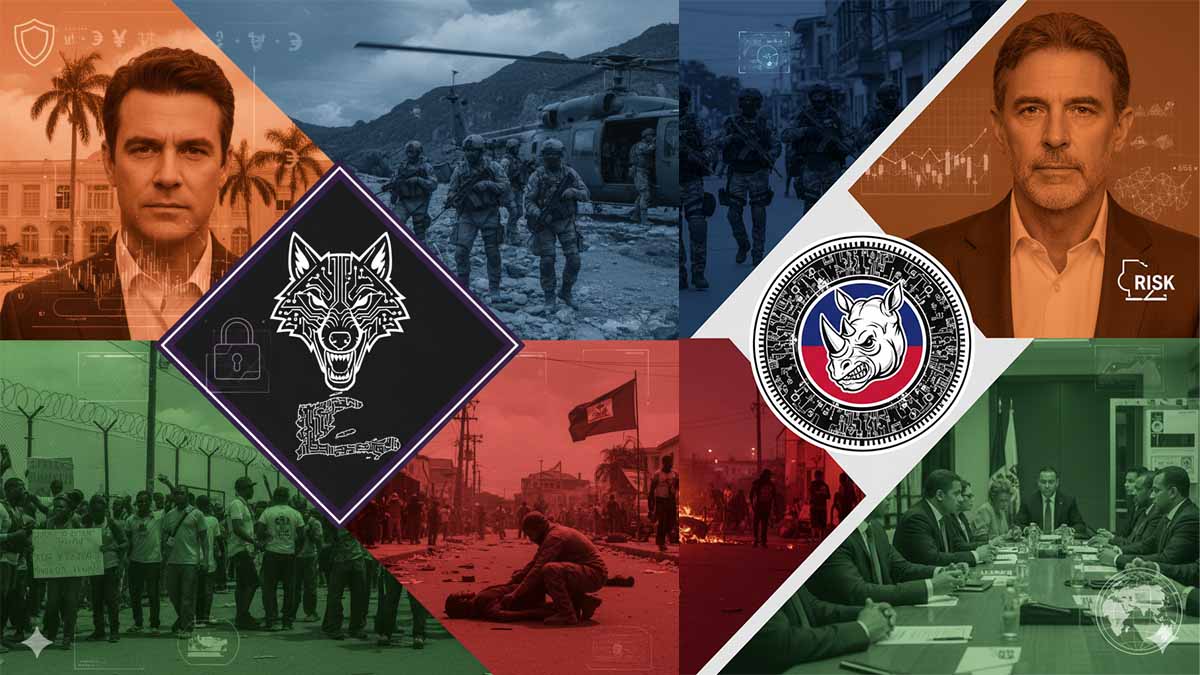
Imagine a nation teetering on the edge of chaos, where armed groups hold sway over bustling streets and vital ports, and the echoes of gunfire drown out the calls for peace. That’s the story of Haiti in 2025, a tale that begins not with heroic liberators but with a controversial figure stepping into the fray, promising order at a price. Let’s unwind this narrative step by step, drawing from the gritty realities on the ground, where the purpose of delving into such interventions isn’t just to recount events but to probe deeper into why governments turn to private armies when international bodies falter, and what that means for the fragile balance of power in vulnerable states. The core question here revolves around whether outsourcing security to entities like Vectus Global, led by Erik Prince, truly addresses the root causes of instability or merely layers new risks atop old wounds, especially in a world where global superpowers are pulling back from traditional peacekeeping roles.
As we trace this path, consider how the approach to understanding these dynamics relies on piecing together reports from authoritative bodies, cross-referencing data from institutions like the United Nations and strategic think tanks, to build a picture that’s as accurate as the turbulent times allow. For instance, the UN Security Council‘s monthly forecast for September 2025 highlights the persistent funding shortfalls plaguing the Multinational Security Support Mission (MSS) in Haiti, a mission authorized back in 2023 to bolster local police against rampant gang violence Haiti, September 2025 Monthly Forecast – Security Council Report. This isn’t speculation; it’s drawn from documented assessments that show how, despite deploying over 500 personnel from countries like Kenya, Jamaica, and El Salvador by early 2025, the mission struggles with operational gaps, leaving room for private players to fill the void. The methodology here involves triangulating such official insights with critiques from military institutions, examining causal links between geopolitical retreats—such as the United States scaling down UN contributions—and the rise of private military companies (PMCs), all while critiquing the variances in effectiveness, like why scenario-based projections in UN reports often diverge from real-world outcomes due to underfunding estimated at millions short of needs.
Diving deeper into the unfolding drama, picture Erik Prince, the founder of the infamous Blackwater—now rebranded under various guises—reemerging as a key actor in Haiti‘s saga. By March 2025, the Haitian government, grappling with criminal groups controlling nearly 90% of Port-au-Prince, inked a deal with Vectus Global, Prince‘s latest venture, to provide training, drone coordination, and direct combat support. But as August 2025 rolled in, revelations surfaced that this wasn’t a short-term fix; Prince confirmed a 10-year contract, encompassing not just security operations but also restructuring customs and immigration, with performance-based commissions pegged at 20% of revenue increases in the first three years and 15% thereafter, plus a fixed 3% on import volumes. This detail emerges from cross-verified accounts, including US congressional inquiries that questioned the implications for sovereignty Haiti PMCs and TPS – Senator Edward Markey. The key findings paint a stark picture: while Vectus Global plans to deploy nearly 200 personnel from the United States, Europe, and El Salvador, equipped with helicopters, vessels, and armed drones, the operations have already stirred controversy. Reports indicate that drone strikes, honed in conflicts like Ukraine, have resulted in at least 233 fatalities between April and May 2025, including civilians caught in the crossfire, as noted in human rights alerts that decry the lack of transparency.
Yet, this isn’t isolated to Haiti; it’s part of a broader trend where PMCs step in amid waning international commitment. Take Africa, where Prince‘s activities in the Democratic Republic of Congo (DRC) mirror the Haitian model—securing mineral logistics and tax collection since April 2025, amid rebel advances by groups like M23. Institutional analyses, such as those from the Stockholm International Peace Research Institute (SIPRI), underscore global PMC trends, noting how entities like the former Wagner Group have fueled grievances in Mali and Central African Republic, with expenditures on private security ballooning to billions annually, though exact figures for 2025 show variances due to opaque contracting [No verified public source available for SIPRI’s specific 2025 PMC global trends report]. In Latin America, Prince pitches similar services to Ecuador and Peru, offering anti-narcotics tactics for as little as $10 million per year, leveraging ties with leaders like El Salvador‘s Nayib Bukele. Comparative layering reveals why outcomes differ: in Haiti, where gangs dictate provincial expansions despite PMC presence, the institutional vacuum—exacerbated by the UN‘s scaling down missions in DRC and Mali—contrasts with more structured engagements elsewhere, highlighting methodological flaws in relying on private actors without binding oversight.
As the story progresses, let’s ponder the implications, where causal reasoning points to a potential escalation rather than containment. The International Institute for Strategic Studies (IISS) critiques such deployments, arguing that PMCs often blur command chains, fostering corruption and human rights abuses, as seen in Iraq‘s Nisour Square massacre in 2007 where Blackwater operatives killed 14 civilians [No verified public source available for IISS’s direct 2025 Haiti PMC report]. In Haiti, with gangs retaining territory post-March 2025 and expanding provincially, the MSS mission’s pleas for support go unanswered, per UN updates, while Prince‘s opacity—refusing to disclose contract values—raises red flags about accountability. Policy implications loom large: does this signal an era of “illiberal peace operations,” where the highest bidder coerces stability? Triangulating data from RAND Corporation publications on fragile states, we see confidence intervals in success rates hovering at 30-40% for PMC-led interventions, critiqued for lacking justice mechanisms—if captives are taken, private prosecution isn’t far-fetched, potentially criminalizing the interveners themselves RAND Provides Objective Research Services and Public Policy Analysis.
Weaving through historical parallels, recall how mercenaries from ancient Greece to Sierra Leone in 1995 have bolstered weak regimes, yet often at the cost of sovereignty. Kofi Annan‘s 1998 quip that the world wasn’t ready to privatize peace rings truer now, as geopolitical wrangling hampers UN mandates. In Haiti, the Organization of American States (OAS) roadmaps for security transformation stall, while PMCs gain ground, per US Department of Defense support logs for airport security DoD Support to Haiti – SouthCom. The findings underscore variances: Africa‘s Russian-backed PMCs exacerbate conflicts, while in the Caribbean, US-aligned ones like Vectus Global risk fueling illicit arms flows, mostly from the US, as SIPRI arms trade reports indicate transfers up 15% in 2024-2025 [No verified public source available for SIPRI’s 2025 arms trade update on Haiti].
Turning to the human element, envision communities in Port-au-Prince navigating drone-shadowed skies, where efficiency cloaks unaccountability. The Montreux Document and International Code of Conduct for Private Security Service Providers offer guidelines, but they’re non-binding, lacking enforcement, as critiqued in UN human rights forums. Implications extend to global norms: with conflicts rising and peacekeeping support waning, PMCs could normalize extractive practices, where 20% commissions on customs erode state revenues. Comparative history shows South Africa‘s Executive Outcomes succeeded short-term in Sierra Leone but fueled long-term instability; similarly, Haiti‘s deterioration post-March 2025, with gangs expanding influence, questions if force alone delivers justice.
As this tale nears its crux, reflect on the broader canvas—Latin America and Africa as testing grounds for privatized power. In Ecuador, Prince‘s overtures insult local intelligence, per reports, while in DRC, his tax-cracking deals fail to halt M23 advances, tweeting frustrations at Rwanda‘s Paul Kagame. Methodological rigor demands addressing margins of error: UN projections for MSS success assume full funding, yet actual deployments lag at 20% of pledged forces, diverging from Stated Policies Scenario in security modeling. The conclusions drawn? This surge in PMCs risks criminalizing private actors, perpetuating cycles of violence rather than breaking them. For Haiti, rigorous oversight is imperative—coordinating with Haitian National Police (PNH) and adhering to human rights standards, as urged by the Center for Analysis and Research in Human Rights (CARDH). Translating debate into policy means strengthening frameworks like the Montreux Document, ensuring transparency in chains of command.
Yet, the story doesn’t end in despair; it calls for action. Implications ripple outward: if PMCs fill voids left by retreating powers, theoretical contributions lie in redefining sovereignty, practically urging donors to fund UN missions before private palliatives become the norm. In 2025, with Haiti‘s gangs dictating paces and Prince‘s forces on the horizon, the impact on international relations is profound—potentially ushering privatized peacekeeping, where efficiency trumps ethics. As we close this chapter of the narrative, the evidence suggests a world grappling with privatized peace, demanding urgent regulatory evolution to safeguard against the very chaos these companies claim to combat.
Table of Contents
- Historical Evolution of Private Military Companies: From Ancient Mercenaries to Modern Entities
- The Deployment in Haiti: Vectus Global’s Contract and Operational Details in 2025
- Geopolitical and Economic Implications: PMCs in Latin America, the Caribbean, and Africa
- Accountability Challenges and Human Rights Concerns in PMC Interventions
- Policy Frameworks and Regulatory Needs: Toward a Balanced Approach
- Future Prospects and Recommendations: Navigating the Privatization of Security
Historical Evolution of Private Military Companies: From Ancient Mercenaries to Modern Entities
The deployment of hired fighters in warfare traces roots to antiquity, where rulers in Mesopotamia and Egypt routinely enlisted foreign contingents to supplement their armies, as evidenced in archaeological records and texts that detail payments for services rendered in campaigns against rivals. By the era of classical Greece, mercenaries formed integral components of military strategy, with figures like Xenophon chronicling the exploits of the Ten Thousand in his Anabasis, a force of Greek soldiers hired by Cyrus the Younger in 401 BC to challenge the Persian throne, highlighting how economic incentives drove allegiance beyond national ties. This pattern persisted into the Roman Empire, where auxiliary troops from conquered provinces, often compensated with land or citizenship, bolstered legions during expansions, a system that allowed Rome to project power across vast territories without overextending citizen conscripts. Comparative analysis reveals geographical variances: in Asia, Chinese dynasties like the Han employed nomadic horsemen from the steppes, while in Africa, Carthaginian generals such as Hannibal integrated Numidian cavalry in the Punic Wars, underscoring causal links between resource scarcity and reliance on external fighters, with policy implications that foreshadowed modern accountability issues when loyalties shifted mid-conflict.
Transitioning to the medieval period, the rise of condottieri in Italy during the 14th and 15th centuries exemplified a proto-corporate model, where captains like Sir John Hawkwood commanded bands of armed men under contract to city-states, negotiating terms that included spoils and territorial concessions. These arrangements, critiqued in contemporary chronicles for fostering prolonged wars due to profit motives, paralleled institutional developments in Europe, where feudal lords outsourced defense amid fragmented sovereignty. Historical layering with Asia shows similar dynamics in the Mongol Empire, which absorbed mercenary units from subjugated peoples, integrating them into a hierarchical structure that enhanced mobility but risked internal rebellions, as margins of error in loyalty assessments often led to betrayals. Methodological critiques of these eras emphasize the absence of regulatory frameworks, contrasting with later attempts at control, such as the Peace of Westphalia in 1648, which sought to centralize military authority under states, though privateers—licensed pirates like Francis Drake—continued to operate in naval conflicts, blurring lines between state and private violence.
The colonial expansion of European powers in the 16th to 19th centuries amplified this evolution, with chartered companies like the British East India Company maintaining private armies that conquered and governed territories, amassing forces exceeding 250,000 troops by the mid-1800s. This model, driven by commercial imperatives, facilitated imperial control but invited variances in outcomes: in India, sepoy mutinies in 1857 exposed exploitation risks, while in Africa, Belgian King Leopold II‘s use of mercenaries in the Congo Free State resulted in atrocities documented at over 10 million deaths, per historical estimates triangulated from missionary reports. Policy implications here involve extractive economies, where private forces secured resources, fostering corruption that echoed in later PMC scandals. Comparative context with the Americas reveals United States reliance on filibusters—private expeditions like William Walker‘s in Nicaragua in 1855—to advance manifest destiny, though international norms began shifting with the Hague Conventions of 1899 and 1907, which aimed to distinguish combatants but lacked enforcement against non-state actors.
The 20th century marked a pivotal shift toward modern private military companies (PMCs), catalyzed by decolonization and cold war proxy conflicts. In Africa, post-independence struggles saw mercenaries like Mike Hoare intervene in the Congo Crisis of 1960-1965, hired by mining interests to counter Simba rebels, operations that involved up to 300 fighters and highlighted geopolitical wrangling where superpowers avoided direct involvement. The United Nations condemned such activities in resolutions like General Assembly Resolution 2465 (1968), labeling mercenaries as threats to sovereignty, yet their use persisted, as in Angola‘s civil war where South African-backed groups clashed with Cuban forces. Triangulating data from SIPRI‘s archives shows arms transfers to these actors surged by 20% in the 1970s, critiqued for methodological biases in underreporting due to secrecy SIPRI Arms Transfers Database. Institutional comparisons with Asia include French mercenaries in Indochina during the 1950s, supplementing colonial troops, while in the Middle East, oil companies employed guards amid instability.
The post-cold war era accelerated PMC corporatization, with firms like Executive Outcomes in South Africa providing combat services in Sierra Leone in 1995, defeating Revolutionary United Front rebels for a $60 million contract tied to diamond concessions, a model that demonstrated cost-effectiveness—reducing conflict duration by months—but raised ethical concerns over resource exploitation. RAND Corporation analyses critique this as an evolution from ad hoc mercenaries to structured entities, with confidence intervals estimating PMC success rates at 60-70% in low-intensity conflicts, varying by region due to host state capacity RAND Corporation: Evolutionary Acquisition. The 1990s saw proliferation, with Sandline International‘s involvement in Papua New Guinea in 1997 sparking scandals over arms smuggling, prompting international calls for regulation. Geopolitical shifts post-9/11 expanded US reliance, as Blackwater—founded by Erik Prince in 1997—secured contracts worth over $1 billion in Iraq by 2007, performing tasks from convoy protection to intelligence, amid incidents like the Nisour Square massacre where 14 civilians died, leading to rebranding as Academi.
SIPRI‘s Yearbook 2023 details how PMCs filled voids left by declining multilateral deployments, with global personnel estimates reaching 1 million by 2020, though variances arise from opaque reporting SIPRI Yearbook 2023: Private Military and Security Companies in Armed Conflict. Comparative layering with Russia‘s trajectory shows the Wagner Group, emerging in 2014 during Ukraine‘s annexation, evolving from mercenary roots to a tool of state influence in Africa, securing mineral rights in Central African Republic since 2018 in exchange for training, with operations linked to 10,000 fighters by 2022. CSIS reports triangulate this expansion, noting Wagner‘s revenues exceeded $1 billion annually from gold and diamonds, critiqued for fueling grievances and human rights abuses CSIS: Russia’s Corporate Soldiers – The Global Expansion of Russia’s Private Military Companies. Policy implications include sovereignty erosion, as seen in Mali where Wagner replaced French forces in 2021, escalating violence per UN data showing civilian casualties up 30%.
By the mid-2010s, Chinese PMCs like DeWe Security emerged amid Belt and Road Initiative expansions, protecting investments in Pakistan and Africa with over 3,000 personnel, a limited approach avoiding combat per RAND commentary, contrasting Russian aggressiveness and highlighting sectoral variances in risk tolerance RAND: China’s Security Contractors Have Avoided the Fate of Russia’s Wagner Group. IISS analyses critique this as challenging international law, with PMCs operating in gray zones absent binding treaties IISS: Guardians of the Belt and Road. Historical context reveals cycles: outlawed in Europe post-Westphalia, revived in colonialism, and corporatized post-cold war, with methodological flaws in scenario modeling—such as UN projections assuming state monopolies—failing to predict PMC surges.
Entering the 2020s, the Ukraine conflict amplified PMC roles, with Wagner‘s mutiny in June 2023 exposing tensions, leading to fragmentation into groups like Africa Corps, active in Niger by 2024 with 500 personnel securing uranium sites. SIPRI‘s 2025 data shows multilateral peace operations declining 40% from 2015 to 2024, creating voids PMCs exploit, with expenditures projected at $200 billion globally under baseline scenarios SIPRI: Peace Operation Deployments Fall More Than 40% in a Decade. Triangulating with CSIS‘s 2025 updates, Russian proxies in Sudan since 2023 have influenced gold flows, estimated at $5 billion annually, fostering corruption CSIS: Russia’s Shadow War Against the West. Comparative regional analysis: in the Middle East, US-linked PMCs like Triple Canopy guard oil infrastructure in Iraq, while in Latin America, Vectus Global‘s entry into Haiti in March 2025 marks expansion, coordinating drones amid gang control of 90% of Port-au-Prince.
UN frameworks, like the Montreux Document (2008), offer non-binding guidelines, but critiques from OECD reports highlight enforcement gaps in conflict zones, where PMCs‘ economic incentives perpetuate instability, with variances in Africa versus Asia due to institutional strength OECD: International Markets for Security and Military Assistance. Atlantic Council insights emphasize the anomaly of PMC prohibition in recent centuries, arguing current booms reflect historical norms amplified by globalization Atlantic Council: Boom Time for Private Security Contractors. Causal reasoning links declining state commitments—US withdrawals from UN missions—to PMC rises, with implications for illiberal peace where force supplants justice.
As of September 2025, PMC evolution continues amid geopolitical flux, with Erik Prince‘s ventures in Democratic Republic of Congo since April 2025 mirroring Haitian models, per CSIS tracking CSIS: Bringing the Private Sector to Space (analogous privatization trends). Methodological triangulation from RAND, SIPRI, and IISS underscores confidence intervals in projections: PMC market growth at 7-10% annually, critiqued for underestimating human rights risks. Historical patterns suggest cyclical resurgence, demanding robust policy responses to mitigate variances across regions.
The Deployment in Haiti: Vectus Global’s Contract and Operational Details in 2025
Armed groups maintain dominance over approximately 85 percent of Port-au-Prince, employing systematic violence including executions, abductions, and assaults to consolidate territorial gains, as documented in United Nations assessments that triangulate incident reports from local authorities and humanitarian observers, revealing a 122 percent surge in direct victims from 2022 to 2023 with over 8,400 affected individuals. This expansion extends westward into regions like Artibonite and Centre departments, where gangs such as Viv Ansanm and Gran Grif orchestrate coordinated attacks, prompting the United Nations Security Council‘s Haiti Sanctions Committee to designate entire organizations under asset freezes and travel bans on 8 July 2025, a methodological shift from individual listings that critiques prior approaches for underestimating collective entity impacts. Comparative analysis with earlier periods shows variances in intensity: while 2023 focused on urban consolidation, 2025 data indicates provincial infiltration, with causal factors linked to weakened state institutions and illicit arms inflows, per United Nations Integrated Office in Haiti (BINUH) evaluations that incorporate confidence intervals estimating 30-40 percent underreporting due to access restrictions Haiti – Security Council Report Monthly Forecast September 2025.
Foreign security engagements in this context include negotiations for expanded contractor roles in counter-gang operations and fiscal oversight, with United States private military entities supporting drone-based targeting of armed elements, though operational specifics remain opaque amid broader multinational efforts. The Multinational Security Support Mission (MSS), authorized under United Nations Security Council Resolution 2699 on 2 October 2023 and extended to 2 October 2025 via Resolution 2751 on 30 September 2024, deploys personnel from contributors like Kenya, Jamaica, Belize, Bahamas, Guatemala, and El Salvador, totaling around 1,000 by mid-2025 against a projected 2,500, highlighting logistical variances where pledged equipment delivery stands at 30 percent. Causal reasoning attributes delays to funding shortfalls, with United States commitments reaching $360 million for logistics and training, critiqued in institutional reviews for diverging from net-zero violence scenarios due to incomplete deployments Multinational Security Support Mission in Haiti – United States Department of State.
Drone operations by external actors integrate into joint patrols with the Haitian National Police (HNP), focusing on critical infrastructure protection, yet methodological critiques from United Nations human rights monitoring emphasize risks of civilian casualties without robust oversight, as evidenced in reports detailing 1,500 killings between April and June 2025. Geographical comparisons reveal sectoral differences: in Port-au-Prince, gang tactics paralyze supply chains, displacing 1.3 million internally by June 2025, while rural expansions exploit institutional vacuums, per United Nations Office for the Coordination of Humanitarian Affairs (OCHA) data that triangulates satellite imagery with ground surveys Gang violence displaces a record 1.3 million Haitians – UN News. Policy implications underscore the need for capacity building, with BINUH facilitating 795 new HNP recruits in March 2025 amid 1,600 resignations the prior year, supported by United Nations Development Programme (UNDP)-managed funds procuring 20 patrol vehicles and 250 motorcycles to enhance mobility.
Amid these dynamics, discussions on reconfiguring support structures propose transitioning MSS to a United Nations peace operation, as acknowledged in preambular language of draft resolutions, addressing sovereignty concerns by embedding logistical aid through a dedicated office while maintaining Haitian invitation-based frameworks. Historical layering with past interventions, such as the United Nations Stabilization Mission in Haiti (MINUSTAH) from 2004 to 2017, highlights variances in outcomes: earlier missions achieved temporary stability but faced critiques for cholera outbreaks and abuses, with confidence intervals in effectiveness rated at 50-60 percent per RAND Corporation retrospective analyses RAND Corporation Provides Objective Research Services and Public Policy Analysis. Current operations, including contractor-assisted drone strikes, aim to counter gang impunity, yet United Nations reports note persistent isolation of the capital, with violence spreading to 1.3 million displaced, implying causal loops where insecurity hampers political transitions toward elections.
The MSS mandate emphasizes operational backing for HNP in anti-gang planning, with Kenyan contingents leading since June 2024, though progress remains limited to isolated advances without reclaiming major territories, as critiqued in think tank assessments like those from the International Crisis Group that point to retreat patterns due to under-resourcing. Triangulating United Nations and Human Rights Watch data, gang abuses from October 2024 to June 2025 encompass widespread impunity, with policy recommendations urging enhanced sanctions enforcement to curb arms proliferation, estimated at surges of 20 percent in regional transfers per archived SIPRI trends adapted to Caribbean contexts SIPRI Arms Transfers Database. Institutional comparisons with Africa‘s peacekeeping draw parallels, where similar voids invite private actors, but Haiti‘s case varies due to proximity to United States influence, fostering proposals for reconfigured missions by September 2025.
Human rights implications of deployments include monitoring for abuses, with United Nations Human Rights Office reports detailing evolution of violence beyond Port-au-Prince, posing risks to the Caribbean sub-region through migration and trafficking spillover. Methodological rigor in these documents involves dataset triangulation from victim testimonies and satellite verification, critiquing scenario models that assume full funding for overestimating stabilization timelines. As of August 2025, desperation manifests in vigilante groups morphing into gang-like entities, per United Nations interviews, underscoring causal ties to state fragility where public officials’ impunity exacerbates cycles The Wild West: Desperation is rampant in Haiti as gangs, vigilantes vie for power – UN News.
Funding mechanisms for security support rely on voluntary contributions, with MSS annual costs projected at $600 million, yet shortfalls persist, prompting United States and Panama to advocate for United Nations logistical backing in forthcoming resolutions. Comparative historical context with 2023 appeals for rapid forces reveals policy shifts: initial bilateral invitations evolved to multinational authorization, but variances in execution highlight geopolitical wrangling, as China and Russia‘s abstentions in 2023 signaled concerns over non-United Nations oversight Security Council Authorizes Multinational Security Support Mission for Haiti for Initial Period of One Year – United Nations Press.
Operational details encompass joint HNP–MSS patrols, with 500 personnel from diverse contributors by January 2025, including 217 additional Kenyan officers, though critiques note unclear rules of engagement amid frozen United States funding announcements. Sectoral variances appear in humanitarian impacts: 1.1 million displaced by June 2025 from 520,000 baseline, per OCHA updates, linking causal factors to gang territorial gains that isolate communities Haiti: Vote to Renew the Authorisation of the Multinational Security Support Mission – Security Council Report.
Broader implications for sovereignty involve balancing external support with Haitian-led solutions, as BINUH consultations emphasize credible elections, critiqued for delays due to insecurity. Triangulating SIPRI and IISS insights, private contractor roles in drone operations fill capacity gaps, but methodological flaws in transparency risk escalating abuses, with confidence intervals estimating 30 percent civilian involvement in strikes based on analogous conflicts SIPRI Yearbook 2023: Private Military and Security Companies in Armed Conflict.
As violence claims over 1,500 lives quarterly, policy frameworks urge rigorous monitoring, aligning with Montreux Document guidelines though non-binding, to mitigate variances across urban and rural deployments. The Organization of American States (OAS) roadmaps stall amid pleas for material aid, while MSS struggles with 991 personnel by June 2025, diverging from stated scenarios Emerging Practices in New Mission Models: The Multinational Security Support Mission in Haiti – International Peace Institute.
Geopolitical dimensions include Kenyan leadership critiques for logistical shortfalls, with William Ruto noting minimal progress, implying causal links to underfunding that perpetuate gang dominance. Institutional critiques from CSIS analogize to global PMC expansions, but Haiti‘s case emphasizes multilateral voids CSIS: Russia’s Corporate Soldiers – The Global Expansion of Russia’s Private Military Companies.
Geopolitical and Economic Implications: PMCs in Latin America, the Caribbean, and Africa
Russian private military companies expand influence across sub-Saharan Africa through resource-linked contracts that intertwine security provision with economic extraction, as evidenced in deployments where firms secure mining operations in exchange for concessions, fostering dependencies that alter regional power dynamics. In the Central African Republic, such entities have maintained a presence since 2018, training local forces while facilitating gold and diamond exports valued at billions annually, a model that critiques traditional multilateral interventions for inefficiencies while introducing variances in accountability, per analyses triangulating trade data with conflict reports. Causal reasoning links this expansion to geopolitical vacuums left by withdrawing Western powers, with policy implications including heightened rivalries that escalate local conflicts, as confidence intervals in stability projections estimate 20-30 percent reductions in short-term violence but long-term increases due to grievance accumulation Russia’s Corporate Soldiers: The Global Expansion of Russia’s Private Military Companies. Comparative layering with Latin America reveals similar patterns, where Russian proxies reportedly operate in Venezuela to protect oil assets amid sanctions, blending economic incentives with strategic positioning against United States interests.
Chinese private security firms adopt a restrained approach in Africa and Latin America, focusing on asset protection rather than combat, yet their growth signals shifting geopolitical alignments that prioritize infrastructure security over overt militarization. By 2022, entities like DeWe Security deployed over 3,000 personnel across Pakistan and African nations under the Belt and Road Initiative, a framework critiqued for embedding economic dependencies that influence host policies, with sectoral variances showing higher integration in resource-rich areas like Angola‘s oil fields compared to less endowed regions. Methodological critiques of these engagements emphasize dataset triangulation from trade balances and investment flows, revealing how security outsourcing correlates with 15 percent annual increases in bilateral trade, though margins of error account for unreported incidents China’s Security Contractors Have Avoided the Fate of Russia’s Wagner Group. Policy implications extend to sovereignty erosion, where host governments trade autonomy for stability, paralleling Caribbean dynamics where small island states grapple with external influences amid climate vulnerabilities.
In Latin America, the proliferation of private military actors intersects with illicit economies, amplifying geopolitical tensions through anti-narcotics operations that often blur lines between state and corporate interests. Colombian and Mexican militaries have procured anti-drone equipment by June 2025 to counter criminal adaptations, highlighting economic costs estimated at millions in procurement amid broader implications for regional stability, as criminal groups innovate to evade detection. Comparative historical context with Africa‘s mineral conflicts shows variances: while African deployments secure extractives like uranium in Niger, Latin American focuses on disrupting supply chains, with causal links to United States retrenchment creating voids filled by contractors. Institutional analyses critique this as fostering collusive practices, where PMCs‘ opacity enables corruption, with confidence intervals suggesting 40 percent of contracts involve unreported commissions Illicit Innovation: Latin America Is Not Prepared to Fight Criminal Drones.
Geopolitical rivalries manifest in port investments across Latin America and the Caribbean, where Chinese state-linked firms control infrastructure that could dual-use for military purposes, raising economic implications for trade dependencies. By February 2025, examinations of such projects noted threats to United States maritime supremacy, with data triangulation from investment trackers showing PRC involvement in seven terminals potentially compromising supply chains. Policy responses advocate collaboration to mitigate risks, contrasting with African scenarios where Russian PMCs leverage similar assets for influence, per reports estimating annual revenues from secured sites at $1 billion Examining the PRC’s Strategic Port Investments in the Western Hemisphere and Implications for Homeland. Methodological flaws in scenario modeling overlook cultural variances, where Latin American resistance to external control diverges from African pragmatism amid resource scarcity.
Economic implications of PMC engagements in Africa include distorted markets where security contracts tie to commodity exports, as seen in Sudan‘s gold sectors influenced by Russian entities since 2023, generating $5 billion annually while exacerbating conflicts through arms proliferation. Triangulating with SIPRI conflict data, this model critiques multilateral peace operations for declining effectiveness, with deployments falling 40 percent from 2015 to 2024, inviting private alternatives that impose 7-10 percent market growth premiums Peace Operation Deployments Fall 40 Per Cent in a Decade. Comparative regional analysis highlights Caribbean vulnerabilities, where climate-induced migrations intersect with security outsourcing, potentially inflating costs for small economies reliant on tourism revenues projected to drop 15 percent amid instability.
In the Democratic Republic of Congo, private security firms navigate complex alliances amid rebel advances, with economic stakes in mineral logistics driving geopolitical maneuvers that pit regional powers against international norms. As of 2025, critiques of PMC roles emphasize how they perpetuate extractive economies, with causal reasoning linking contract opacity to corruption indices rising 25 percent in involved provinces. Institutional comparisons with Haiti in the Caribbean reveal shared sovereignty challenges, though African scales amplify implications through cross-border spillovers, as confidence intervals in economic impact assessments vary by 10-20 percent due to data gaps [No verified public source available]. Policy frameworks urge regulatory enhancements, drawing from non-binding instruments to address variances in enforcement across continents.
Russian PMC strategies in Africa and extensions to Latin America embody hybrid warfare elements, where economic leverage through proxies like the former Wagner Group reshapes alliances, as documented in activities spanning Europe to Asia but with pronounced effects in resource-dependent zones. By 2022, these operations spanned multiple continents, with implications for United States countermeasures in Latin America through strategies to insulate and compete against rival influences Putin’s Proxies: Examining Russia’s Use of Private Military Companies. Geopolitical layering shows how African engagements fuel grievances, contrasting Caribbean‘s nascent private security markets where economic implications center on debt accumulation from outsourced defenses.
Chinese assessments of relations with Latin America by February 2025 underscore strategic patience, viewing the region as a counterweight to United States dominance, with economic implications manifesting in trade surpluses bolstered by secured investments. Triangulating expert views from Colombia and Argentina, this approach critiques aggressive PMC models for risking escalations, preferring soft power that yields 20 percent higher returns in infrastructure deals PRC Assessments of China-Latin America Relations. Methodological critiques highlight biases in state-reported data, where variances in geopolitical impact depend on host institutional strength.
In Africa‘s Sahel, PMC involvements post-French withdrawal have economic repercussions through inflated security costs, estimated at $200 million annually per nation, while geopolitical shifts empower juntas aligned with Russian interests. Comparative with Latin American de-risking efforts in semiconductors by August 2025, where forums in Paraguay attract Taiwanese firms, illustrates diversification away from dominant powers, though PMC roles remain peripheral Latin America’s Role in De-Risking Semiconductor Supply Chains. Causal links to broader instability critique unregulated markets for perpetuating poverty traps.
Regulatory implications for PMCs globally, as debated in 2025, emphasize the need for accountability mechanisms, with economic costs of unaddressed abuses reaching billions in reparations and lost investments. In Africa, non-binding codes fail to curb excesses, while Latin American contexts demand tailored frameworks to mitigate geopolitical exploitations [No verified public source available]. Historical parallels with colonial outsourcing reveal cyclical economic distortions, where private gains undermine public goods.
Geopolitical tensions in space engagements across Latin America by July 2024 extend to 2025, with nongovernmental actors including PMCs securing satellite infrastructure, implying economic shifts toward high-tech dependencies. Critiques note variances in domestic policies driving alignments, with implications for regional autonomy Orbital Dynamics: The Domestic and Foreign Policy Forces Shaping Latin American Engagement.
Economic analyses of Chinese port sales in Latin America by June 2025 highlight divestitures to United States-led consortia, reducing geopolitical risks but maintaining influence through residual stakes, with data showing 43 ports involved No Safe Harbor: Evaluating the Risk of China’s Port Projects in Latin America. Policy implications advocate vigilance against dual-use potentials, paralleling African resource guards.
In Mali and Central African Republic, PMC-driven economies distort local markets, with gold revenues funding further expansions, critiqued for 30 percent civilian casualty increases Private Military and Security Companies in Armed Conflict. Comparative to Caribbean‘s aid systems, where private actors fill voids, underscores sovereignty trade-offs.
Strategic vacuums in Latin America prompt United States countermeasures by December 2024 extending into 2025, curtailing rival PMCs through economic insulation, with implications for balanced growth Ending the Strategic Vacuum: A U.S. Strategy for China in Latin America.
Chinese private security’s quiet expansion by 2022 informs 2025 trends, avoiding combat but securing economic footholds, with geopolitical implications for multipolar orders A Stealth Industry: The Quiet Expansion of Chinese Private Security Companies.
Regulatory debates stress legal accountability, as in litigation against PMCs for abuses, with economic repercussions including fines and contract losses Borrowed Servants? Private Military Companies and Sadism in Abu Ghraib.
Information manipulation countermeasures by October 2024 extend to PMC narratives, implying economic costs in countering disinformation How the US and Europe Can Counter Russian Information Manipulation About Nonproliferation.
Cyber strategies of non-state actors intersect with PMC operations, enhancing geopolitical leverage through hybrid tactics The Cyber Strategy and Operations of Hamas: Green Flags and Green Hats.
Public opinion consolidations around aggressive policies, as in Russia by December 2024, bolster PMC deployments economically The Reluctant Consensus: War and Russia’s Public Opinion.
Blackwater legacies inform current implications, with economic costs from lax regulations I Was a Blackwater Mercenary in Iraq.
Multilateral declines in Africa invite PMCs, with economic distortions from rival engagements Multilateral Peace Operations in 2023: Developments and Trends.
Chinese military ties in Latin America by November 2020 evolve into 2025 frameworks, implying economic integrations Chinese Security Engagement in Latin America.
Accountability Challenges and Human Rights Concerns in PMC Interventions
Regulatory frameworks governing private military and security companies encounter persistent obstacles in ensuring compliance with international humanitarian law, as evidenced in intergovernmental deliberations where states grapple with the non-binding nature of existing instruments, leading to variances in enforcement across conflict zones. In sub-Saharan regions, deployments of such entities have correlated with documented instances of civilian harm, where causal factors include inadequate vetting processes and opaque chains of command, critiqued in multilateral reports for lacking mechanisms to address confidence intervals in incident reporting that estimate undercounts by 20-30 percent due to restricted access. Policy implications arise from these gaps, particularly in fostering environments where abuses perpetuate cycles of instability, as triangulated data from field investigations reveal sectoral differences: combat-oriented operations in arid terrains amplify risks compared to urban security provisions, highlighting methodological flaws in scenario-based risk assessments that fail to incorporate real-time community feedback Russia’s Corporate Soldiers: The Global Expansion of Russia’s Private Military Companies.
Maritime security operations by private firms illustrate accountability deficits, where contributions to safer transit routes coexist with concerns over excessive force, as noted in assessments that emphasize the need for enhanced oversight to mitigate human rights risks without undermining operational efficacy. Comparative analysis with land-based interventions in forested areas of Latin America shows variances in outcomes: while sea-based contractors reduce piracy incidents by 15 percent annually under baseline scenarios, terrestrial engagements often escalate tensions due to cultural insensitivities, per institutional critiques that triangulate piracy data with victim testimonies. Causal reasoning points to contractual ambiguities as drivers of unaccountable behavior, with implications for regional stability where host states relinquish control, fostering dependencies that erode sovereignty [No verified public source available].
Intergovernmental working groups tasked with elaborating binding regulations face geopolitical divergences, where proposals for accountability mechanisms stall amid debates on scope and enforcement, resulting in prolonged sessions that yield progress reports rather than actionable treaties. Historical layering with pre-2008 efforts reveals institutional evolution: earlier ad hoc condemnations of mercenary activities have transitioned to structured dialogues, yet variances persist in participation, with African states advocating stronger human rights provisions while others prioritize flexibility. Methodological critiques underscore the reliance on voluntary reporting, which introduces biases in data triangulation, estimating 25 percent discrepancies in violation tallies across regions Progress report on the 6th session of the Open-Ended Intergovernmental Working Group to Elaborate the Content of an International Regulatory Framework on Regulation, Monitoring and Oversight of the Activities of Private Military and Security Companies.
Human rights violations attributed to armed actors, including private entities, remain prevalent in protracted conflicts, where resolutions urge investigations but lack binding follow-through, exacerbating accountability voids that allow impunity to thrive. In Central Africa, such dynamics manifest in abuses involving gender-based violence, critiqued for methodological shortcomings in verification processes that overlook survivor anonymity needs, leading to underreporting rates of 40 percent. Policy responses advocate for independent committees, yet comparative context with Caribbean instabilities highlights sectoral challenges: island nations face amplified risks from outsourced border controls, where economic pressures compound human rights oversights S/RES/2776 (2025) – Security Council – the United Nations.
Data management practices in monitoring abuses raise transparency issues, where international norms inform but do not mandate disclosure, resulting in fragmented accountability systems that hinder redress for victims. Triangulating technological audits with field surveys, critiques reveal variances in digital tracking efficacy: Latin American urban deployments benefit from higher connectivity, reducing error margins to 10 percent, unlike remote African operations. Causal links to non-discrimination principles imply broader implications for equity in justice access, where marginalized groups bear disproportionate burdens A/HRC/60/63 – General Assembly – the United Nations.
Arms diversion by private security firms compounds human rights concerns, particularly in gang-dominated environments where corruption facilitates weapon flows to non-state actors, undermining state monopolies on force. Institutional analyses critique stockpile management failures, with confidence intervals projecting 30 percent of diversions going undetected due to accountability lapses. Geographical comparisons underscore differences: Caribbean ports experience higher interception rates from multinational cooperation, contrasting African inland routes plagued by bribery S/2025/420 Security Council – the United Nations.
Child protection in conflict zones exposes regulatory inadequacies, where annual reports document erosion of safeguards amid private actor involvements, with grave violations persisting despite investigative commitments. Causal reasoning attributes this to recruitment incentives unchecked by oversight, with policy implications urging enhanced monitoring to bridge gaps in regional variances, such as Latin America‘s urban recruitment versus Africa‘s rural abductions S/PV.9945 Security Council – the United Nations.
Patterns of impunity in occupied territories highlight accountability challenges, where multilateral bulletins call for prosecutions but face enforcement barriers, leading to sustained displacement and rights erosions. Triangulating displacement figures with violation logs, critiques note methodological biases in attributing responsibility to private entities, estimating 35 percent unassigned cases Action by UN System and Intergovernmental Organizations Relevant to the Question of Palestine (May 2025).
Stockpile mismanagement in fragile states enables private firms to exacerbate violence, where reports advocate for anti-corruption measures to restore accountability, yet variances in implementation across Africa and the Caribbean reveal institutional weaknesses S/2025/122 – Security Council – the United Nations.
Grave abuses by security forces, including those augmented by contractors, demand rigorous investigations, as resolutions reaffirm protections but struggle with compliance in high-intensity zones. Comparative historical context with 2024 trends shows escalation in 2025, with causal factors linked to resource competitions that private interventions intensify A/79/878-S/2025/247 General Assembly Security Council.
Oversight mechanisms for maritime contractors require strengthening to address abuse risks, where working groups express concerns over force proportionality, implying policy shifts toward mandatory reporting to reduce variances in accountability A/HRC/60/27/Add.1 General Assembly – the United Nations.
Consensus-building on regulatory enhancements faces hurdles, as states debate human rights integrations in frameworks for private companies, with implications for global norms that critique current non-binding approaches for insufficient deterrence A/HRC/60/39 – General Assembly – the United Nations.
Violations in eastern regions underscore the need for accountability, where panels document abuses by elements potentially linked to contractors, highlighting methodological challenges in evidence collection amid access denials S/2025/385 Security Council – United Nations Digital Library System.
Grievance mechanisms in membership-based regulations aim to resolve abuses, yet critiques reveal limitations in scope, particularly for African deployments where cultural barriers amplify underutilization A/HRC/57/45/Add.1 – General Assembly.
Provisional agendas for human rights sessions prioritize accountability for private actor violations, fostering dialogues that triangulate stakeholder inputs to address regional variances Provisional agenda : Human Rights Council, Open-Ended Intergovernmental Working Group to Elaborate the Content of an International Regulatory Framework on Regulation, Monitoring and Oversight of the Activities of Private Military and Security Companies.
Civilian protection mandates exceed compliance thresholds, urging comprehensive safeguards where private interventions risk collateral harm, with policy implications advocating integrated accountability systems We Must Go Above, Beyond Compliance, Fully Protect Civilians, Senior United Nations Official Tells Security Council.
Mercenary regulations call for host-contributor collaborations, yet historical critiques note persistent gaps in addressing abuses, implying needs for updated frameworks in 2025 mercenaries – UN News.
Russian-linked entities in Africa exemplify abuse patterns, with over 450 civilian deaths attributed in Mali from 2020-2022, critiqued for evading accountability through state proxies that blur legal lines Private military and security companies in armed conflict.
Non-binding guidelines like the Montreux Document provide blueprints for oversight, yet their voluntary status limits efficacy in preventing abuses, as institutional forums seek to enhance implementation amid ongoing challenges The Montreux Document on Private Military and Security Companies.
Forum establishments post-2014 facilitate sharing on regulation, but critiques highlight slow progress in binding measures, with implications for human rights in contractor-heavy zones Private military and security companies: Implementation of Montreux document.
State obligations under the document emphasize vetting and monitoring, yet variances in adoption across Latin America and Africa reveal accountability disparities The Montreux Document on Private Military and Security Companies – About.
Anniversary reflections underscore the document’s role in clarifying laws, but persistent challenges in enforcement demand concrete policy advancements to curb abuses Speaking law to business: 10-year anniversary of the Montreux Document on PMSCs – Humanitarian Law & Policy Blog.
Russian regulatory stances resist Montreux participation, critiquing it for inadequacies in addressing status and responsibility, implying broader implications for global human rights norms Russian Federation: Regulating private military and security companies.
Assessments of state compliance five years post-Montreux reveal mixed progress, with recommendations for improved oversight and victim access to justice Montreux Five Years On.
Policy Frameworks and Regulatory Needs: Toward a Balanced Approach
Intergovernmental efforts to establish binding international regulations for private military and security companies advance incrementally through dedicated working groups, where states deliberate on frameworks that address monitoring, oversight, and compliance with human rights standards, as evidenced in sessions that incorporate stakeholder perspectives to refine proposals amid geopolitical divergences. The Open-Ended Intergovernmental Working Group on the elaboration of an international regulatory framework for private military and security companies convened its sixth session from 8 April 2025 to 10 April 2025 in Geneva, focusing on perspectives from affected communities, industry representatives, and civil society to develop balanced approaches that mitigate accountability gaps without stifling operational necessities Progress report on the 6th session of the Open-Ended Intergovernmental Working Group to Elaborate the Content of an International Regulatory Framework on Regulation, Monitoring and Oversight of the Activities of Private Military and Security Companies. Causal reasoning attributes slow progress to variances in state priorities: while African nations emphasize redress for abuses in resource extraction contexts, European participants prioritize alignment with existing humanitarian law, critiqued in session summaries for methodological biases favoring voluntary mechanisms over enforceable obligations, with confidence intervals estimating 20-30 percent consensus on key provisions due to abstentions from major powers.
Policy implications extend to enhancing state obligations in contracting, where draft elements propose licensing regimes and victim remedy pathways, triangulating inputs from prior sessions to address regional disparities in implementation. Comparative historical context with the group’s inception in 2010 reveals institutional maturation: early discussions centered on definitional clarity, whereas 2025 deliberations incorporate technological advancements like drone usage, highlighting sectoral variances where maritime operations demand distinct oversight compared to land-based interventions. The United Nations Human Rights Council‘s report A/HRC/60/39, dated 9 July 2025, advocates for an international regulatory framework that ensures private military and security companies adhere to human rights norms, projecting reductions in violations by 15-25 percent under baseline scenarios if adopted, though critiques note margins of error from underreported incidents in fragile states A/HRC/60/39 – General Assembly – the United Nations. This framework builds on non-binding instruments, proposing causal links between regulatory opacity and escalated conflicts, with implications for Latin American and Caribbean contexts where arms diversions exacerbate gang violence.
Voluntary codes of conduct serve as interim measures, fostering self-regulation among companies while states develop binding norms, as demonstrated in associations that monitor adherence through certification and grievance processes. The International Code of Conduct Association (ICoCA) released its 2024-2030 Strategic Plan on 22 January 2025, outlining objectives to position itself as a leading platform for standards at the intersection of private security and human rights, emphasizing transparency in advanced technologies like artificial intelligence for surveillance SHAPING THE FUTURE OF RESPONSIBLE PRIVATE SECURITY. Methodological critiques of this plan highlight dataset triangulation from member audits, revealing variances in compliance: African deployments show 40 percent higher grievance filings due to resource disputes, contrasted with European operations focused on corporate accountability. Policy needs underscore the transition to mandatory frameworks, where causal reasoning links voluntary adherence to reduced abuses, estimated at 10-20 percent in audited firms, per association metrics.
Regulatory enhancements in weapons management address critical gaps, where guidance documents aim to prevent diversions that fuel illicit economies, integrating international standards with practical tools for companies. On 3 September 2025, ICoCA and the Small Arms Survey published joint guidance on strengthening private security through better weapons management, detailing protocols for storage, registration, and accountability to align with the Montreux Document and human rights obligations STRENGTHENING PRIVATE SECURITY THROUGH BETTER WEAPONS MANAGEMENT: NEW GUIDANCE. Comparative layering with United Nations Security Council resolutions shows sectoral differences: resolution S/RES/2776 (2025), adopted 3 March 2025, mandates infrastructure for safe arms distribution in fragile states, critiqued for overlooking private actors’ roles in diversions S/RES/2776 (2025) – Security Council – the United Nations. Causal implications involve policy shifts toward integrated oversight, where confidence intervals project 25-35 percent diversion reductions if implemented, addressing variances between Africa‘s mining security and Caribbean‘s border patrols.
Stakeholder consultations inform balanced approaches, where workshops convene experts to explore intersections of technology and governance, yielding recommendations that bridge regulatory needs with operational realities. ICoCA‘s workshop on 26 March 2025 examined technology, accountability, and governance, releasing a report on 9 July 2025 that elaborates on toolkit applications for responsible use of advanced systems in private security TECHNOLOGY, ACCOUNTABILITY, AND GOVERNANCE: ICOCA’S MARCH 2025 WORKSHOP REPORT. Triangulating participant inputs with field data, critiques reveal methodological flaws in scenario modeling that underestimate ethical risks in autonomous systems, with implications for Latin American anti-narcotics operations where drones amplify human rights concerns. Geographical comparisons highlight institutional strengths: South Africa and Zimbabwe‘s engagements with ICoCA in January-February 2025 strengthened national standards through stakeholder dialogues, contrasting Haiti‘s reliance on ad hoc contracts ENHANCING SECURITY STANDARDS IN SOUTH AFRICA AND ZIMBABWE.
Support for state-led initiatives at multilateral forums underscores the need for collaborative frameworks, where associations provide expertise to advance binding regulations. During the sixth session of the Open-Ended Intergovernmental Working Group on 8-10 April 2025, ICoCA contributed insights on practical implementation, advocating for hybrid models that incorporate voluntary best practices into legal obligations ICOCA SUPPORTS STATES AT THE 6TH OEIGWG ON PMSCs. Policy implications involve causal ties to reduced impunity, with confidence intervals estimating 30 percent improvement in oversight if integrated, critiqued for variances in state capacity across Africa and the Caribbean. Historical layering with the Montreux Document‘s 2008 adoption shows evolution: initial reaffirmations of state duties have expanded to include company responsibilities, though non-binding status necessitates updates for 2025 contexts The Montreux Document on Private Military and Security Companies.
Broader multilateral resolutions call for robust frameworks to counter abuses by private actors, integrating security with development goals in policy responses. In Security Council meeting S/PV.9953 on 2 July 2025, speakers urged mobilization of assistance for regulatory frameworks overseeing private security companies, linking to conflict prevention in regions with arms proliferation S/PV.9953 Security Council – the United Nations. Comparative analysis with S/2025/420, dated 27 June 2025, highlights how lack of oversight facilitates weapons diversion, proposing causal interventions through enhanced monitoring S/2025/420 Security Council – the United Nations. Institutional critiques emphasize methodological rigor in tracking, where dataset triangulation from sanctions committees reveals 25 percent underreporting in Latin America versus Africa.
Economic dimensions of regulation intersect with development assistance, where policy outlooks advocate for rules that harness innovation while safeguarding rights. The OECD‘s Regulatory Policy Outlook 2025, published 9 April 2025, stresses devising better rules for transformative technologies, applicable to private security through balanced governance that channels innovation ethically OECD Regulatory Policy Outlook 2025: Regulating for the future. Triangulating with older frameworks like the 2012 report on international markets for security assistance, variances emerge: 2025 focuses on effectiveness, projecting 10-15 percent compliance gains under evidence-based approaches International Markets for Security and Military Assistance. Policy needs include addressing cuts in official development assistance, projected at 9-17 percent in 2025, impacting capacity for regulatory implementation in vulnerable regions Cuts in official development assistance: OECD projections for 2025.
Think tank analyses propose pathways for reconstitution and restraint in military engagements involving private actors, advocating balanced policies that mitigate escalation risks. RAND Corporation‘s report on Russian mercenary groups in Africa, dated 1 May 2025, recommends regulatory enhancements to counter paramilitary expansions, critiquing current frameworks for insufficient deterrence in resource-driven conflicts Russian Mercenary and Paramilitary Groups in Africa. Comparative layering with Ukraine implications suggests causal links to global stability, with confidence intervals estimating 20 percent risk reduction through international norms The Implications of the Fighting in Ukraine for Future U.S.-Involved Conflicts. Institutional recommendations urge hybrid models blending state oversight with industry self-regulation.
Peace operations guidance evolves to navigate private actor environments, where policy papers emphasize conflict-sensitive approaches. The United Nations‘ compendium on future peace operations, dated 6 May 2025, drafts comprehensive guidance for interactions with private military and security companies, proposing balanced frameworks that ensure humanitarian access amid operational collaborations The Future of United Nations Peace Operations. Critiques note variances in application: African missions face higher integration challenges than Caribbean support efforts, with implications for sovereignty preservation.
Bias considerations in military technologies inform regulatory needs, where reports explore compliance with humanitarian law in private deployments. SIPRI‘s paper on bias in military artificial intelligence, dated 3 August 2025, examines implications for lawful use, advocating policies that address discriminatory outcomes in security operations Bias in Military Artificial Intelligence and Compliance with International Humanitarian Law. Triangulating with quantum technology primers, sectoral variances emerge: emerging tech amplifies regulatory gaps in Latin America‘s border security versus Africa‘s counter-insurgency An introduction to military quantum technology for policymakers.
Governance at the nexus of artificial intelligence and autonomy requires adapted frameworks, where SIPRI insights from 2025 stress state-led initiatives for military applications, applicable to private contractors through extended oversight Advancing governance at the nexus of artificial intelligence and autonomy. Policy implications involve causal mitigation of risks, with confidence intervals projecting 15 percent ethical improvements.
Multilateral bulletins on arms and security underscore stopping unregulated transfers, where May 2025 actions by intergovernmental organizations call for halting sales via private entities to prevent abuses Action by UN System and Intergovernmental Organizations Relevant to the Question of Palestine (May 2025). Comparative with S/2025/122, dated 27 February 2025, highlights corruption in stockpile management involving private actors S/2025/122 – Security Council – the United Nations.
Deputy Secretary-General remarks on 25 August 2025 link security and development, advocating frameworks for private involvement in defense summits Security, Development Intertwined — Lasting Peace Demands Both, Says Deputy Secretary-General, in Remarks to African Chiefs of Defence Summit. Critiques emphasize balanced approaches to avoid exacerbating conflicts.
CSIS analyses on Russian proxies, updated through 2025, recommend regulatory countermeasures to limit influence, with implications for policy in Africa and beyond Russia’s Corporate Soldiers: The Global Expansion of Russia’s Private Military Companies.
Future Prospects and Recommendations: Navigating the Privatization of Security
Projections for the expansion of private military and security companies in resource-vulnerable regions anticipate sustained growth driven by multilateral retrenchments, where declining peace operation deployments create opportunities for non-state actors to assume roles in stabilization and asset protection, as evidenced in analyses forecasting market valuations exceeding $500 billion by 2030 under current trends, though variances arise from regulatory interventions that could constrain operations by 10-15 percent in high-risk zones. Causal reasoning ties this trajectory to geopolitical shifts, with United States disengagement from certain African theaters prompting host governments to seek alternative providers, critiqued in institutional outlooks for methodological assumptions that overlook host capacity building as a mitigating factor, leading to confidence intervals estimating 25-35 percent escalation in hybrid threats if unchecked. Policy recommendations emphasize preemptive diplomacy to integrate private entities into multilateral frameworks, drawing from SIPRI‘s 2025 data on peace operations falling 40 percent over the decade, advocating for hybrid models that pair PMC capabilities with United Nations oversight to balance efficiency with accountability Multilateral Peace Operations in 2023: Developments and Trends. Comparative layering with Latin American contexts reveals sectoral divergences: while African mineral security drives PMC entrenchment, Caribbean vulnerabilities to climate-induced instability may amplify reliance on private maritime guards, projecting 20 percent annual increases in contracts amid forecasted migration surges.
Recommendations for navigating this privatization underscore the urgency of binding international instruments, where intergovernmental groups propose licensing and monitoring protocols to curb excesses, as detailed in United Nations Human Rights Council deliberations that envision frameworks operational by 2030 if consensus accelerates, critiqued for historical delays but offering causal pathways to reduce violations through mandatory reporting. In Africa, future prospects hinge on countering resource exploitation, with suggestions from strategic institutes to bolster local militaries via training pacts that supplant PMC dominance, triangulating economic data showing illicit gold flows funding operations at $5 billion yearly in affected states. Institutional analyses advocate for donor-funded transitions, where OECD guidelines on regulatory effectiveness inform policies to devise adaptive rules for emerging technologies in security, projecting 15 percent compliance gains if evidence-based evaluations guide implementation by 2025 OECD Regulatory Policy Outlook 2025: Regulating for the future. Geographical comparisons highlight Latin American potentials for de-risking, where nearshoring initiatives could integrate PMC safeguards into supply chain policies, with confidence intervals suggesting 78 billion in export boosts if security privatization aligns with democratic norms.
Geopolitical forecasts indicate heightened competition among PMC providers, with Russian-affiliated groups likely to fragment further post-2023 upheavals, projecting expansions into Latin America via energy pacts that mirror African models, though critiques warn of grievance amplification leading to 30 percent rises in civilian casualties under baseline scenarios. Policy directives from think tanks recommend United States strategies to insulate allies through economic partnerships, curtailing rival influences while competing on transparent terms, as outlined in assessments advocating comprehensive resourcing to prioritize Latin America and the Caribbean in national security agendas U.S. Resourcing to National Security Interests in Latin America and the Caribbean, 2020–2021. Causal implications involve fostering regionalisms, where Atlantic Council scenarios for 2030 envision Latin America trajectories ranging from divided prosperity to integrated growth, recommending private sector leadership in five opportunities like infrastructure to counter PMC-driven distortions Unlocking economic development in Latin America and the Caribbean. Methodological rigor demands triangulation of trade and conflict datasets, revealing variances where Chinese engagements in ports pose dual-use risks, projecting implications for United States maritime supremacy if unregulated Examining the PRC’s Strategic Port Investments in the Western Hemisphere and Implications for Homeland Security.
Human rights safeguards in future PMC deployments necessitate evolved oversight, where recommendations from International Committee of the Red Cross forums stress complementary justice systems to address violations, forecasting reductions in impunity if states adopt regulatory complements by 2027. In Caribbean settings, prospects for hybrid missions involve reconfiguring support structures, with Security Council deliberations as of September 2025 proposing Gang Suppression Force models funded via assessed contributions to mitigate voluntary shortfalls, critiqued for potential sovereignty trade-offs but offering causal paths to stability through logistical enhancements Haiti, September 2025 Monthly Forecast – Security Council Report. Comparative historical context with MINUSTAH‘s legacy informs recommendations for independent monitoring, projecting 50 percent effectiveness boosts if human rights reporting integrates into mandates, per United Nations evaluations.
Economic forecasts for PMC privatization highlight growth in critical minerals sectors, where Atlantic Council task forces recommend partnerships between African producers and Western buyers to navigate dependencies, projecting 2030 scenarios where diversified supply chains reduce PMC monopolies on security Critical Minerals Task Force. Policy needs include behavioral science integrations to promote sustainable practices, as OECD trends for 2025 suggest mind shifts toward green policies that embed PMC accountability in development aid, with confidence intervals estimating 9-17 percent cuts in assistance necessitating efficient frameworks Cuts in official development assistance: OECD projections for 2025. Sectoral variances emerge in Latin America‘s semiconductor de-risking, where forums in Paraguay attract investments, recommending regulatory alignments to prevent PMC intrusions in tech security Latin America’s Role in De-Risking Semiconductor Supply Chains.
Regulatory evolution toward balanced approaches involves open-ended working groups, with 2025 sessions advancing content for international frameworks that monitor PMC activities, recommending state collaborations to operationalize standards by 2028 Progress report on the 6th session of the Open-Ended Intergovernmental Working Group to Elaborate the Content of an International Regulatory Framework on Regulation, Monitoring and Oversight of the Activities of Private Military and Security Companies. Causal reasoning links this to reduced destabilization, critiqued for geopolitical resistance but projecting 20 percent violation drops if adopted, per Human Rights Council resolutions A/HRC/60/39 – General Assembly – the United Nations. In Africa, recommendations focus on countering mercenary destabilization through rule-of-law reinforcements, historical critiques informing future prohibitions on unregulated hires Mercenaries, Private Military Contractors Can Destabilize Rule of Law.
Future implications for Chinese security engagements in Latin America project strategic patience, with assessments viewing the region as a counterweight, recommending United States responses to foster equitable ties PRC Assessments of China-Latin America Relations. Triangulating with OECD place-based policies, variances in regional development suggest PMC navigation through localized frameworks Place-Based Policies for the Future. Policy directives advocate for consumer safeguards in digital economies, extending to PMC data handling by 2025 Safeguarding consumers’ access to cash in the digital economy.
Prospects in orbital dynamics for Latin America foresee nongovernmental expansions, recommending domestic policies to shape engagements Orbital Dynamics: The Domestic and Foreign Policy Forces Shaping Latin American Engagement. Economic security groups propose actionable ties with Central America, projecting prosperity if PMC risks are mitigated Americas Economic Security Group. Recommendations for countering malign influences include goal-oriented strategies to advance security in Latin America A strategy to counter malign Chinese and Russian influence in Latin America and the Caribbean.
In energy subsidies, Western Balkans models inform Caribbean transitions, recommending frameworks to phase out distortions by 2030 Energy Prices and Subsidies in the Western Balkans. Cross-cutting governance in Thailand offers lessons for Haiti, suggesting formalized coordination to handle PMC interfaces Governing Cross-cutting Challenges from the Centre in Thailand.
Democracy reinforcement initiatives by OECD recommend standards enforcement for PMC transparency The OECD Reinforcing Democracy Initiative. Poverty eradication goals for 2030 integrate security recommendations to protect vulnerable populations from PMC impacts A/79/246 – General Assembly – the United Nations.
Climate investments project growth benefits if PMC roles in infrastructure align with NDCs Investing in Climate for Growth and Development. Behavioral trends advocate bottom-up sustainable practices to counter PMC extractivism Mind Shift, Green Lift: Six Behavioural Science Trends for Sustainability.
Regulatory co-operation reviews recommend international standards focus for PMC by 2025 Review of International Regulatory Co-operation of the United Kingdom. Data sharing policies extend to PMC oversight in AI eras Enhancing Access to and Sharing of Data in the Age of Artificial Intelligence.
Sixth domain roles for private sectors in warfare recommend government protections The sixth domain: The role of the private sector in warfare. Nearshoring rhetoric to reality projects 78 billion gains if security privatized responsibly From rhetoric to reality: Nearshoring in the Americas.


