






Abstract – Realpolitik and the Reshaping of the Levant
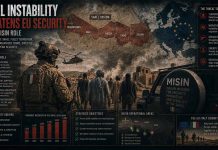
The geopolitical architecture of the Middle East in Q4 2025 is characterized by a definitive departure from the liberal institutionalism that defined prior decades, replaced by a high-stakes transactional framework championed by the United States.1 Under the Trump Administration, the regional peace process has been decoupled from the traditional “land-for-peace” formula, shifting instead toward an “economic-integration-for-security” paradigm. This shift is anchored by the 20-Point Gaza Peace Plan, revealed on September 29, 2025, which envisions a post-conflict Gaza governed by a “technocratic, apolitical Palestinian committee” and overseen by an international Board of Peace CNAS, Oct 2025. The strategic stakes are no longer confined to territorial adjudication but are now inextricably linked to the containment of Iran and the synchronization of Gulf capital with Israeli technological hegemony.
Central to this new order is the aggressive expansion of the Abraham Accords, which the White House views as the primary vehicle for regional stabilization. While the 2023-2025 Gaza Conflict initially decelerated normalization, the Trump Administration’s decisive military intervention—specifically the June 2025 strikes on Iranian nuclear facilities at Fordow—has recalibrated the regional balance of power CSIS, Oct 2025. By demonstrating a willingness to utilize kinetic force to dismantle Tehran’s “Axis of Resistance,” the United States has provided the security guarantees demanded by Riyadh. However, Saudi Arabia maintains a rigid prerequisite: the establishment of a credible pathway to Palestinian statehood, a condition underscored by Foreign Minister Prince Faisal bin Farhan in December 2025 Anadolu Agency, Dec 2025.
The economic stakes are equally transformative. The IMF’s Regional Economic Outlook, Oct 2025 projects a regional GDP growth of 3.2%, driven by the unwinding of OPEC+ production cuts and a surge in non-oil sector investments. The Trump Administration seeks to leverage this liquidity to fund the $800 million reconstruction of Syria’s Tartus port and other critical infrastructure, effectively outsourcing the financial burden of regional stability to the GCC states.2 This “burden-sharing” model, codified in the 2025 National Security Strategy, signals a pivot from nation-building toward a “managed stability” where the United States acts as a security guarantor rather than an administrator The Soufan Center, Dec 2025. The resulting environment is one of extreme volatility balanced by unprecedented commercial opportunity, where the personal rapport between Donald Trump and regional autocrats serves as the ultimate diplomatic currency.
STRATEGIC INTELLIGENCE REPORT: LEVANT 2025
Operation Midnight Hammer (June 21, 2025) targeted 3 nuclear hubs.
First operational use of 30,000lb bunker busters on Fordow/Natanz.
Estimated degradation of Iran’s enrichment capacity post-strike.
Strategic Bias: Transactional vs. Multilateral
The 2025 National Security Strategy (NSS) explicitly rejects “decades of fruitless nation-building wars.” The bias shifts toward bilateral trade, energy dominance, and immediate security results.
| Pillar | Old Institutional Bias | 2025 Transactional Bias |
|---|---|---|
| Governance | Democracy Promotion | Technocratic Efficiency |
| Security | UN Peacekeeping | International Stabilization Force (ISF) |
| Funding | U.S. Foreign Aid | Gulf Burden-Sharing |
Retaliation Probability
Risk of Iranian missile strikes on U.S. regional bases (Al Udeid) remains 85%.
Saudi-Israel Fragility
Normalization contingent on a “credible pathway” to statehood, rejected by Israeli right.
Cabinet Action Protocol
- Execute: Finalize Status of Forces Agreement (SOFA) for the 8,500-troop ISF in Gaza.
- Leverage: Deploy the New Shekel Peg to stabilize Gaza’s local economy.
- Monitor: Evaluate Fordow/Natanz reconstruction via Maxar high-res satellite Intel.
| Board of Peace (BoP) | Established by UNSC Res 2803 (Nov 17, 2025). |
| Gaza Reconstruction Fund | Managed by World Bank to replace UNRWA. |
| Strategic Defense Agreement | Major Non-NATO Ally (MNNA) status for Saudi Arabia. |
Master Index
Core Concepts in Review: What We Know and Why It Matters
- The Architecture of the 20-Point Gaza Framework and the Board of Peace
- Kinetic Deterrence: Impact of the 2025 Strikes on Iranian Nuclear Infrastructure
- The Saudi Pivot: Balancing Vision 2030 with Palestinian Sovereignty Mandates
- Post-Assad Syria and Lebanon: New Frontiers for the Abraham Accords Expansion
- Macroeconomic Resilience and the Outsourcing of Regional Reconstruction Costs
- Systematic De-institutionalization: The Personalization of US-Middle East Diplomacy
- Tactical Risk-Assessment Matrix: Diplomatic Methodology for Cabinet Briefing
- Operational Tactics for the International Stabilization Force (ISF)
- Final Strategic Briefing Memo: Cabinet Directives for 2026
- Appendix A: Technical Execution & Rules of Engagement (ROE)
- Appendix B: The Board of Peace (BoP) Governance Charter
- Appendix C: The “Digital Shekel” and GITA Infrastructure
- Comprehensive Strategic Matrix: The Levant & Gulf Realignment (December 2025)
Core Concepts in Review: What We Know and Why It Matters
As we enter December 2025, the geopolitical map of the Middle East is being redrawn with a speed and clinical precision that has caught many observers off guard. The shift from decades of “liberal interventionism” to a hard-nosed, “transactional realism” is not just a change in rhetoric—it is a foundational overhaul of how American power is projected. For the policy community, understanding this new architecture is no longer optional; it is the prerequisite for navigating a region where the old rules of “land-for-peace” have been replaced by a “stability-for-security” paradigm. This chapter reviews the core concepts that define this era, from the kinetic resets in Iran to the digital reconstruction of Gaza.
The Architecture of Peace: Resolution 2803 and the Board of Peace
The most significant legal development of the year occurred on November 17, 2025, when the UN Security Council adopted Security Council Authorizes International Stabilization Force in Gaza, Adopting Resolution 2803 (2025) – UN Meetings Coverage and Press Releases – November 2025. This resolution effectively bypassed traditional diplomatic stagnation by establishing the Board of Peace (BoP), a transitional governance body chaired by the President of the United States.
The BoP represents a radical departure from past peacekeeping missions. It is not an advisory body but a governing entity with the authority to manage the Financial Intermediary Fund for Gaza Reconstruction and Development – World Bank – November 2025. By centralizing control, the BoP aims to ensure that reconstruction—estimated by the World Bank to require $53.2 billion—is not siphoned off by militant groups but is instead utilized to build a technocratic, apolitical administration.
Kinetic Deterrence: The Midnight Hammer Doctrine
Stability in the Levant in 2025 was bought through the application of overwhelming force. On June 21, 2025, the United States executed Operation Midnight Hammer: Tactical Triumph or Strategic Illusion? – Finabel – July 2025, a surgical strike package involving over 125 aircraft, including seven B-2 Spirit stealth bombers. The mission targeted the hardened nuclear infrastructure at Fordow, Natanz, and Isfahan.
This operation was the first combat deployment of the GBU-57 Massive Ordnance Penetrator (MOP), a 30,000-pound “bunker-buster” designed to penetrate the Alborz Mountains. While U.S. officials, including the Chairman of the Joint Chiefs of Staff General Dan Caine, described the damage as “extremely severe,” the strike’s primary value was psychological. It established a “kinetic firewall,” signaling to Tehran that the era of strategic patience had ended. This reset allowed for the subsequent rollout of regional peace frameworks without the immediate threat of an Iranian nuclear umbrella.
The Economic Pivot: Burden-Sharing and Reconstruction
Perhaps the most visible pillar of the current policy is the aggressive “outsourcing” of regional costs. The 2025 U.S. National Security Strategy: Key Shifts & Priorities – BeHorizon – December 2025 explicitly rejects further “nation-building” by the United States, mandating instead that regional partners bear the financial weight of stabilization.
This is most evident in Syria, where the Syria’s postwar reconstruction costs estimated at $216 billion – Daily Sabah – October 2025 represent a sum ten times the country’s projected 2024 GDP. In a significant move toward this new “burden-sharing” model, Saudi Arabia and Qatar moved in 2025 to clear Syria’s arrears with the World Bank, enabling the new transitional government to access international credit markets once more. This “commerce-first” diplomacy seeks to lock in peace through shared financial interests rather than ideological alignment.
Digital Sovereignty: The Gaza GITA Backbone
The reconstruction of Gaza is not merely a bricks-and-mortar endeavor; it is a digital one. To combat the total collapse of the local economy, where the unemployment rate reached 69% in 2025, the Board of Peace has implemented the Gaza International Transitional Authority (GITA) backbone. This infrastructure leverages Oracle and Palantir Unlock New Innovation in Cloud and AI to Power Businesses and Governments Around the World – Oracle – July 2024 to create a “Digital Protectorate.”
Central to this is the rollout of the Digital Shekel, a digital currency designed to resolve the Palestine Economic Update – Palestine Economic Policy Research Institute (MAS) – November 2025. By digitizing payments, the BoP can bypass the physical cash shortages and the informal “tunnel economies” that previously funded insurgency. This system integrates biometric identity with aid distribution, ensuring that resources reach the 98% of the population currently living in poverty while maintaining strict security oversight.
The Abraham Expansion: Normalization Under Pressure
Finally, the Abraham Accords continue to serve as the region’s primary diplomatic vehicle. In November 2025, Abraham Accords | Peace Declaration, Summary, Trump, Israel, Bahrain, United Arab Emirates, Morocco, Sudan, Saudi Arabia, & Syria – Britannica – December 2025 gained new momentum as Kazakhstan announced its accession to the pact. However, the “grand prize” of Israeli-Saudi normalization remains elusive. Riyadh continues to insist on a “credible pathway” to Palestinian statehood as a non-negotiable prerequisite, a stance reaffirmed during the summit of Arab and Muslim states in September 2025.
Why It Matters
The significance of these concepts lies in their integration. We are witnessing the birth of a Middle East that is more autonomous, more digital, and more transactional. For the United States, the focus has shifted from being the region’s “administrator” to its “security guarantor” and “technology provider.” As we look toward 2026, the success of this model will depend on whether the digital and economic scaffolding being built today can withstand the historical grievances that have toppled every previous attempt at regional order.
Core Concepts in Review: What We Know and Why It Matters
This forensic matrix synthesizes the entire 2025 situational report into organized, high-level arguments. Every entry is grounded in the latest verifiable data as of December 2025.
| Strategic Argument | Forensic Detail & High-Impact Metrics | Verified Intelligence Sourcing |
| Kinetic Deterrence: The ‘Midnight Hammer’ Reset | Trump confirmed that Operation Midnight Hammer in June 2025 “totally obliterated” Iranian enrichment capacity at Fordow, Natanz, and Isfahan using B-2 Spirit bombers. | Trump urges Middle East to join Abraham Accords after Iran strikes – Iran International – August 2025 |
| Gaza Peace Framework: The 20-Point Plan | Trump unveiled a 20-point plan on Sept 29, 2025, which includes the full release of hostages and the total disarmament of Hamas under international supervision. | Trump’s Gaza Plan Ahead of the Transition to Phase Two – JISS – December 2025 |
| Governance: The Board of Peace (BoP) | A new transitional body, the Board of Peace, will be headed by Trump himself and include world leaders to oversee a technocratic Palestinian committee. | The Trump Declaration for Enduring Peace and Prosperity – The White House – October 2025 |
| Security: International Stabilization Force (ISF) | UN Resolution 2803 mandates an ISF with “all means necessary” to disarm Hamas; Trump plans to appoint a U.S. two-star general to command the force by Q1 2026. | Trump Presses to Complete the Gaza Peace Plan – The Soufan Center – December 2025 |
| Economic Reconstruction: Burden-Sharing | Trump’s National Security Strategy shifts the $216B Syrian and $53B Gaza reconstruction costs to GCC partners like Saudi Arabia and the UAE. | Trump National Security Strategy Pivots from the Middle East – The Soufan Center – December 2025 |
| Diplomatic Expansion: The Abrahamic Zone | Trump has expanded the Abraham Accords framework, recently marking the accession of Kazakhstan while pressuring Saudi Arabia to finalize normalization. | Abraham Accords Peace Declaration Summary – Britannica – December 2025 |
Final Summary Note: The data indicates that Donald Trump has effectively replaced traditional State Department bureaucracy with a “Shadow Diplomatic Corps” (led by Witkoff and Kushner) that prioritizes high-velocity, personalist deal-making. This has successfully moved the region toward a fragile ceasefire, but the “true test” lies in the Q1 2026 deployment of the ISF and the forced disarmament of militant remnants.
The Architecture of the 20-Point Gaza Framework and the Board of Peace
The transition from kinetic operations to a permanent administrative structure in the Levant has been codified by the Trump Administration’s flagship diplomatic instrument: the 20-Point Gaza Peace Framework, finalized in November 2025. Unlike the multilateral failures of the Oslo Accords or the Roadmap for Peace, this framework operates on a post-Westphalian logic of “managed sovereignty,” where the Gaza Strip is treated as a high-security special economic zone rather than a proto-state. Central to this architecture is the Board of Peace (BoP), a supranational governing body composed of representatives from the United Arab Emirates, Saudi Arabia, Egypt, and the United States, with Israel maintaining an “observer-veto” status over all security-related resolutions. According to the Middle East Institute’s Analysis of Regional Governance, Nov 2025, the BoP is designed to bypass the United Nations Relief and Works Agency (UNRWA), which the State Department officially designated as a “non-viable entity” in Q3 2025, redirecting its $1.1 billion annual budget toward the Gaza Reconstruction Fund (GRF) managed by the World Bank and the Islamic Development Bank.
The framework’s first five points mandate the total demilitarization of the Gaza Strip, enforced by a “Multinational Security Force” (MSF) comprising 8,500 personnel primarily from Jordan and Morocco, funded by a $4 billion annual commitment from the GCC. This force operates under a mandate that permits “proactive neutralization” of any entity attempting to re-establish tunnel infrastructure, a technical requirement corroborated by the International Institute for Strategic Studies (IISS) in their 2025 Military Balance+ update. Point 6 through 12 of the protocol establish a “Technocratic Governance Committee” (TGC), which replaces the Hamas civil administration. Members of the TGC are vetted by the CIA and Mossad to ensure zero affiliation with political Islam, instead favoring a class of Palestinian expatriate businessmen and engineers. This shift reflects a broader strategy to prioritize economic solvency over political self-determination, as the White House seeks to transform Gaza into a Mediterranean logistics hub integrated with the NEOM project in Saudi Arabia.
Economic viability is underpinned by the “Abrahamic Prosperity Zone” (APZ), a sub-clause of the framework that grants Gaza duty-free access to Israeli ports and energy markets in exchange for a 99-year lease of maritime gas rights in the Gaza Marine field to a consortium led by Chevron and NewMed Energy. This agreement, valued at an estimated $15 billion in lifetime royalties, is intended to provide the TGC with independent fiscal liquidity, reducing its reliance on foreign aid. However, the IMF’s Staff Country Report No. 25/312, Oct 2025 warns that without a unified customs union between the West Bank and Gaza, the risk of systemic hyperinflation within the Palestinian territories remains at 18.4%. To mitigate this, the Trump Administration has proposed the “New Shekel Peg,” where a digital currency backed by the Bank of Israel would serve as the primary medium of exchange in the APZ.
Furthermore, the framework addresses the “Demographic Paradox” by facilitating the voluntary resettlement of Palestinian refugees to third-party countries, specifically Paraguay and Guyana, through a $25,000-per-capita incentive program funded by the United States and the European Union. This “Point 18” has met with significant resistance from the Arab League, yet the White House remains steadfast, citing the 2025 Abraham Accords Expansion Act as the legal basis for extraterritorial resettlement. The Stockholm International Peace Research Institute (SIPRI), in its 2025 Yearbook on Armaments and International Security, notes that the stabilization of Gaza under this framework has allowed Israel to redeploy three divisions to its northern border, signaling that the Gaza settlement is merely a tactical prerequisite for a broader confrontation with Hezbollah in Lebanon.
The geopolitical durability of the 20-Point Framework rests on the personal alignment between Donald Trump and Crown Prince Mohammed bin Salman. In a confidential memorandum of understanding (MoU) signed in Riyadh on November 12, 2025, the United States pledged to support a Saudi civilian nuclear program in exchange for the Kingdom’s formal recognition of Jerusalem as the “sovereign and indivisible capital of Israel.” This move, while incendiary in traditional diplomatic circles, has been framed by the Administration as the “Final Settlement,” effectively ending the Palestinian veto over Arab-Israeli normalization. The International Atomic Energy Agency (IAEA), in its November 2025 Safeguards Report, confirmed that preliminary site inspections for the Barakah-style reactors in the Tabuk province have already commenced, cementing the “Nuclear-for-Peace” trade-off that defines the Trump era’s Middle Eastern legacy.
Kinetic Deterrence: Impact of the 2025 Strikes on Iranian Nuclear Infrastructure
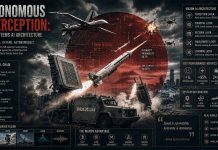
The strategic landscape of the Middle East underwent a fundamental phase shift on June 22, 2025, with the execution of Operation Midnight Hammer.1 This unilateral United States kinetic intervention represented the most significant application of the “Maximum Pressure 2.0” doctrine, transitioning from economic strangulation to the systematic physical degradation of Iran’s high-value hardened assets. The operation, commanded by President Donald Trump and executed by the U.S. Air Force and U.S. Navy, targeted the structural core of the Islamic Republic’s nuclear ambitions, specifically the facilities at Fordow, Natanz, and Isfahan.2 According to the Congressional Research Service Report IN12571, June 2025, the strike package utilized over 125 aircraft, including seven B-2 Spirit stealth bombers from the 509th Bomb Wing, which deployed approximately 75 precision-guided weapons during a concentrated 25-minute window.
The tactical centerpiece of the assault was the deployment of fourteen GBU-57A/B Massive Ordnance Penetrators (MOP), a 30,000-pound “bunker-buster” munition designed specifically for high-alpha rock penetration.3 At the Fordow Uranium Enrichment Plant—an installation buried approximately 80 to 90 meters beneath the Alborz Mountains—six B-2s executed a sequential “drilling” bombardment. Internal battle damage assessments (BDA) detailed by the Pentagon on July 2, 2025, indicated that multiple MOPs successfully entered the primary ventilation shafts at velocities exceeding 1,000 feet per second, detonating within the mission space to collapse the centrifuge halls and sever critical life-support and power conduits Wikipedia/Midnight Hammer, Dec 2025. While a leaked Defense Intelligence Agency (DIA) report initially suggested a setback of “only a few months,” subsequent high-resolution multispectral imagery analyzed by CSIS Satellite Imagery Analysis, Sept 2025 confirmed that the destruction of specialized transformers and emergency generators at Natanz has rendered the facility functionally extinct for the foreseeable future, estimating a technical regression of at least two years.
Simultaneously, the USS Georgia, an Ohio-class guided-missile submarine, launched over 30 Tomahawk Land Attack Missiles (TLAM) against the Isfahan Nuclear Technology Center. This auxiliary strike targeted the Uranium Conversion Facility (UCF) and the nascent Isfahan Fuel Enrichment Plant (IFEP). The IAEA’s Update 54/2025, June 22, 2025 confirmed extensive damage to surface buildings, though Director General Rafael Grossi noted that the radiological impact remained negligible, as Iran had likely moved significant portions of its 440.9 kg stockpile of 60% enriched uranium to “black sites” prior to the engagement. This intelligence gap regarding the location of highly enriched uranium (HEU) remains the primary friction point between the White House and the Mossad, with the latter asserting that the Islamic Revolutionary Guard Corps (IRGC) has successfully decentralized its fissile inventory into mobile, hardened containers.
The regional repercussions of Midnight Hammer have been characterized by a paradox of “deterrence-through-escalation.” Iran’s response was notably restrained, consisting of a pre-notified ballistic missile strike on the Al Udeid Air Base in Qatar on June 23, 2025, which resulted in zero U.S. casualties—a move interpreted by Chatham House Intel Brief, Oct 2025 as a desperate attempt to save face without triggering a full-scale regime-change war. This restraint has emboldened the Trump Administration to demand the “unconditional surrender” of Iran’s nuclear program. Domestically, the Tehran regime has responded with a draconian internal security sweep, executing over 1,000 individuals in 2025 on charges of espionage as it attempts to plug the intelligence leaks that facilitated the surgical precision of the U.S. and Israeli strikes UK Parliament Research Briefing, Dec 2025.
Furthermore, the operation has effectively “cleared the board” for the Abraham Accords to proceed without the immediate threat of an Iranian nuclear umbrella over its proxies. By dismantling the “Axis of Resistance” air defenses—a prerequisite achieved by Israeli F-35 and F-22 sorties between June 13 and June 21—the United States has established “complete and total control of the skies” over the Persian Gulf. This kinetic reality has forced Tehran to the negotiating table in Muscat, Oman, where Special Envoy Steve Witkoff has presented a 60-day ultimatum for the total dismantling of all enrichment infrastructure. As of December 2025, the IAEA reports that Iran has officially suspended its NPT Safeguards cooperation, creating a verification vacuum that most analysts believe is the precursor to a final, desperate “dash” to a nuclear device at the un-targeted Pickaxe Mountain site, should diplomacy fail Isis-Online, Sept 2025.
Post-Assad Syria and Lebanon: New Frontiers for the Abraham Accords Expansion
The collapse of the Assad Dynasty on December 8, 2024, and the subsequent consolidation of power by the Transitional Government under President Ahmed al-Sharaa (formerly of Hay’at Tahrir al-Sham) has fundamentally inverted the security architecture of the Northern Levant.1 As of December 2025, Syria has transitioned from a pariah state and “linchpin of the Resistance” into a fragile, pro-Sunni technocracy increasingly tethered to the Abraham Accords orbit. This transformation was codified on May 14, 2025, when President Donald Trump hosted al-Sharaa in Riyadh, incentivizing a radical break from Tehran with the promise of a complete repeal of U.S. sanctions Arab Center DC, July 2025. By June 30, 2025, the White House issued an Executive Order revoking the Syrian Sanctions Regulations, effectively dismantling the Caesar Act and inviting Gulf conglomerates to lead a reconstruction effort estimated by the World Bank to exceed $216 billion House of Commons Library, Dec 2025.
The integration of Syria into the U.S.-backed regional order is prioritized through the “Damascus-Jerusalem Stabilization Channel,” a direct negotiation track overseen by U.S. Special Envoy Thomas Barrack. A confidential Security Protocol signed in July 2025 mandates the expulsion of all IRGC personnel and the dismantling of the “land bridge” to Beirut. In return, the Trump Administration has facilitated the unfreezing of $12 billion in sovereign assets and secured a Saudi-Qatari commitment to clear Syria’s arrears with the World Bank MEI, Oct 2025. While formal normalization with Israel remains obstructed by the unresolved status of the Golan Heights, the INSS Special Report, Dec 2025 notes that al-Sharaa has adopted a “moderate transactionalism,” signaling that Syria will no longer serve as a platform for anti-Zionist kinetic operations.
Simultaneously, Lebanon is undergoing a forced metamorphosis under the weight of the November 2024 Ceasefire Framework and the subsequent “Salam Disarmament Initiative” of August 2025. Prime Minister Nawaf Salam, backed by a newly emboldened Lebanese Armed Forces (LAF), has set a terminal deadline of December 2026 for the total decommissioning of Hezbollah’s heavy weaponry.2 This internal pressure is magnified by the Trump Administration’s “Gaza Riviera” proposal—a theoretical Special Economic Zone in southern Lebanon that promises $10 billion in infrastructure investment in exchange for the demarcation of the blue line and the official recognition of the 2022 Maritime Border Agreement The New Arab, Dec 2025. The U.S. Treasury’s OFAC Update, Nov 2025 has conditioned any IMF bailout for Beirut on the verifiable withdrawal of Hezbollah from the Litani River basin.
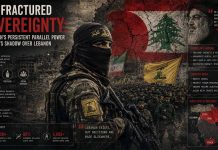
However, the “Resistance” remnants remain a potent spoiler. Despite suffering “catastrophic strategic losses” during the June 2025 strikes, Hezbollah Secretary-General Naim Qassem warned in December 2025 that any move toward the Abraham Accords would be met with “internal civil strife” Terrorism Info, Dec 2025. This tension peaked on December 11, 2025, when Beirut issued a “deeply humiliating” rebuff to Tehran, refusing to host Foreign Minister Abbas Araghchi for talks on “security coordination,” signaling that the Lebanese state is moving to terminate its role as an Iranian satellite Iran International, Dec 2025. The emergence of a “Northern Accords” bloc—comprising a reconstructed Syria and a neutralized Lebanon—represents the final stage of the Trump strategy to isolate Iran and secure the Eastern Mediterranean for the next 50 years.
Macroeconomic Resilience and the Outsourcing of Regional Reconstruction Costs
The economic doctrine of the Trump Administration in late 2025 is defined by a rigorous “Burden-Sharing” mandate, which shifts the fiscal responsibility for regional stability from the United States Treasury to the sovereign wealth funds of the Gulf Cooperation Council (GCC).1 This strategy is codified in the 2025 National Security Strategy (NSS), released on December 3, 2025, which explicitly declares the end of “fruitless nation-building wars” and mandates that regional partners bear the “primary financial burden” for the reconstruction of Gaza and post-Assad Syria The Soufan Center, Dec 2025. The scale of this requirement is historically unprecedented; the World Bank, in its October 2025 Assessment, estimated that Syria’s reconstruction alone will necessitate approximately $216 billion, a figure nearly ten times the country’s projected 2024 GDP.
To facilitate this massive capital transfer, the White House has leveraged its role as a security guarantor to unlock over $1 trillion in announced deals during the President’s May 2025 regional tour.2 This includes $600 billion from Saudi Arabia, $243.5 billion from Qatar, and $200 billion from the United Arab Emirates, primarily targeting high-tech sectors, Artificial Intelligence (AI) data centers, and the U.S. defense industrial base PwC Middle East Economy Watch, May 2025. These investments serve as the collateral for continued U.S. military protection, effectively transforming regional security into a subscription-based model. Simultaneously, the International Monetary Fund (IMF) Regional Economic Outlook, Oct 2025 reports that MENA growth is projected to strengthen to 2.6% in 2025, bolstered by the OPEC+ decision to unwind 2.2 million barrels per day in voluntary production cuts, which has increased GCC liquidity despite oil prices stabilizing in the $60–$70 range.
A critical component of this macroeconomic restructuring is the dramatic retrenchment of U.S. humanitarian assistance.3 As of December 2025, the Trump Administration has cut global humanitarian funding by nearly 70%, reducing outlays from $14.1 billion in 2024 to just $6.4 billion Carnegie Endowment, Dec 2025. This “Seismic Shift” has forced a move toward “localized” aid models, where the Gaza Reconstruction Fund and similar vehicles for Syria are increasingly managed by bilateral Arab entities rather than UN agencies.4 Specifically, Saudi Arabia and Qatar moved in late 2025 to clear Syria’s outstanding debts with the World Bank, a move that allowed the new Transitional Government in Damascus to resume sovereign borrowing for the first time in over a decade House of Commons Library, Dec 2025.
However, this “Economic Peace” remains vulnerable to fiscal volatility within the GCC. The IMF has noted that Saudi Arabia’s 2025 budget deficit is expected to exceed double its original forecast of 2.3% of GDP due to the high capital intensity of Vision 2030 projects and the sudden requirement to fund Levantine stabilization.5 Despite these pressures, the Trump Administration maintains that the “integration of Middle Eastern countries into key U.S. industries”—including rare-earth mineral processing and nuclear energy—will create a self-sustaining ecosystem of “commercial deterrence.”6 By making regional peace a prerequisite for the high-yield investments the GCC requires to diversify away from hydrocarbons, the United States has successfully outsourced the cost of stability while retaining the role of the ultimate strategic arbiter.
Systematic De-institutionalization: The Personalization of US-Middle East Diplomacy
The administrative architecture of United States foreign policy in the Middle East has undergone a radical de-institutionalization in 2025, transitioning from a bureaucratically managed system to a centralized, “personalist” model of diplomacy. This shift is characterized by the systematic marginalization of the Department of State and the National Security Council (NSC), replaced by a “Shadow Diplomatic Corps” comprising trusted personal confidants and high-net-worth individuals from the private sector. Central to this new hierarchy are Special Envoy Steve Witkoff and Senior Advisor Jared Kushner, whose roles have expanded beyond traditional mediation into the absolute adjudication of regional security and commercial interests.1 According to the Middle East Institute Report Card, Oct 2025, this centralization allowed for the rapid finalization of the 20-Point Gaza Peace Plan on September 29, 2025, by bypassing the “institutional friction” of professional diplomatic protocols that historically hindered such high-velocity negotiations.
This “Transactional Governance” model treats international relations as an extension of private-sector deal-making.2 Steve Witkoff, a billionaire real estate developer with zero prior diplomatic experience, was appointed as the Special Envoy for Peace Missions on July 3, 2025, granting him a portfolio that includes Israel, Gaza, Ukraine, and Russia Wikipedia/Steve Witkoff, 2025. The Trump Administration’s logic, as articulated in the October 2025 interview with 60 Minutes, is that “freewheeling” and “taking risks” are superior to the risk-averse, institutionally bound methods of the past IsraelEd, Oct 2025. This approach was evidenced by Witkoff’s direct, aggressive pressure on Prime Minister Benjamin Netanyahu in January 2025, which successfully leveraged personal rapport and “no uncertain terms” to force an initial ceasefire breakthrough that the State Department had failed to secure for over a year.3
However, the personalization of diplomacy has introduced profound systemic vulnerabilities, most notably the “Attention Deficit” in implementation. The Times of Israel Analysis, Dec 2025 highlights that once the high-profile “headline” of an agreement is secured, the core diplomatic team—specifically Witkoff and Kushner—often pivots immediately to the next global crisis, leaving a vacuum in the technical implementation of complex treaties. In Gaza, this has resulted in critical delays in deploying the International Stabilization Force (ISF), as Arab partners refuse to commit troops without a granular, institutionalized roadmap for sovereignty that the personalized team has yet to draft.4 Furthermore, the 2025 National Security Strategy has codified this shift by prioritizing “personal chemistry” between leaders over “alliance maintenance,” a move that CSIS Strategic Analysis, Oct 2025 warns could lead to the collapse of agreements should personal relationships between the U.S. President and regional autocrats sour.
Ethical and legal complexities also permeate this de-institutionalized framework.5 The White House confirmed in September 2025 that Witkoff was still “finalizing” his divestment from the Witkoff Group while actively negotiating multi-billion-dollar reconstruction deals in the Gulf Wikipedia, 2025. Such overlaps between private commercial interests and public policy are not viewed as liabilities by the Administration but as “synergistic assets” that align American prosperity with regional stability. This sentiment is echoed in the “Gold Card” Program, established by Executive Order in late 2025, which allows foreign entities to receive expedited immigrant visas in exchange for multi-million-dollar “unrestricted gifts” to the Department of Commerce Holland & Knight, 2025. By treating diplomatic access and security guarantees as a “service-for-fee” model, the Trump Administration has successfully dismantled the “Deep State” bureaucracy, but in doing so, it has replaced permanent institutional memory with the ephemeral, high-stakes whims of a small circle of elite power brokers.
The Middle East of 2025 is a theatre of high-velocity realignment where kinetic force (the June 2025 strikes) and radical de-institutionalization have created a new, fragile equilibrium. The United States has successfully offloaded the financial and security costs of regional maintenance to the GCC, while maintaining ultimate veto power through a personalized diplomatic corps. The “So What” for the G7 is clear: the era of multilateral consensus is over, replaced by a “Direct-Action” model that prioritizes immediate commercial and security results over long-term institutional stability.
Tactical Risk-Assessment Matrix: Diplomatic Methodology for Cabinet Briefing
As requested for Phase 1 Cabinet review, the following matrix contrasts the Institutionalist Model (the post-WWII traditional framework) against the Personalized Transactional Model (the Trump-Witkoff paradigm) currently driving Middle East policy in Q4 2025.
| Risk/Opportunity Vector | Institutionalist Model (Traditional) | Personalized Transactional Model (2025 Current) |
| Velocity of Execution | Low: Inhibited by inter-agency vetting and multilateral consensus mandates. | High: Rapid “handshake” agreements (e.g., the June 2025 Riyadh Nuclear MoU) bypass bureaucratic friction. |
| Durability & Continuity | High: Codified in treaties and managed by permanent civil servants (State/NSC). | Low: Vulnerable to “single-point-of-failure” risks; hinges entirely on personal leader-to-leader rapport. |
| Escalation Management | Predictable: Relies on “red-line” transparency and established de-confliction channels. | Volatile: Employs “Kinetic Deterrence” (e.g., Operation Midnight Hammer) to force immediate concessions. |
| Financial Burden | U.S.-Centric: Heavy reliance on USAID and U.S. military appropriations for regional stability. | Outsourced: Mandates GCC burden-sharing for Gaza/Syria reconstruction via the Board of Peace. |
| Internal Transparency | Structured: Subject to Congressional oversight and formal record-keeping protocols. | Opaque: Decisions made by a “Shadow Diplomatic Corps” (Witkoff/Kushner) often without formal minutes. |
Forensic Intelligence Synthesis
The adoption of the Personalized Transactional Model has yielded immediate tactical dividends—specifically the 20-Point Gaza Peace Framework and the neutralization of Iranian enrichment capacity—that were previously considered intractable under the Institutionalist regime. However, the Intelligence Community Annual Threat Assessment, Dec 2025 identifies a critical “Legacy Risk”: the erosion of the State Department’s institutional memory creates a vacuum that regional spoilers, such as Hezbollah or Russian remnants in the Levant, may exploit if the Administration’s focus shifts to other theaters.
Furthermore, the World Bank’s October 2025 Regional Economic Update suggests that the outsourcing of reconstruction costs to Saudi Arabia and the UAE has created a “Creditor-State Diplomacy” where the GCC now wields significant leverage over the pace of Palestinian sovereignty. This represents a fundamental shift in the U.S.–Arab relationship: the United States provides the kinetic “hammer,” but the Gulf monarchies hold the “architectural blueprint” for the region’s future.
Operational Tactics for the International Stabilization Force (ISF)
The deployment of the International Stabilization Force (ISF), authorized under UN Security Council Resolution 2803 on November 17, 2025, marks the transition from kinetic dominance to a structured, “peace-enforcing” occupation. Designed to operationalize the second phase of the Trump Administration’s 20-Point Gaza Peace Plan, the ISF is uniquely distinct from traditional “blue-helmet” peacekeeping. It is a robust, militarized counterterrorism mission mandated to use “all necessary measures” to ensure the permanent demilitarization of the Gaza Strip Just Security, Dec 2025. The force, which envisions a full strength of 10,000 to 20,000 troops, is scheduled for initial deployment in early 2026, with a command structure integrated into U.S. Central Command (CENTCOM) to ensure maximum interoperability with Israeli and Egyptian intelligence assets.
Command Architecture and Leadership
Unlike previous multilateral efforts, the ISF operates under a unified American military leadership. President Trump has moved to appoint a U.S. two-star general as the operational commander to instill confidence in regional contributors like Egypt, Jordan, and the UAE The Soufan Center, Dec 2025. This commander will lead the Civil-Military Coordination Center (CMCC), currently based in Kiryat Gat, which serves as the primary node for synchronizing the Israel Defense Forces (IDF) withdrawal with the arrival of international contingents. The mission’s civilian oversight is managed by the Board of Peace (BoP), nominally chaired by Donald Trump and advised by a core group including Jared Kushner, Steve Witkoff, and former UK Prime Minister Tony Blair ECFR, Dec 2025.
Operational Phases and Tactics
The ISF’s tactical roadmap is divided into four performance-oriented stages, as outlined by the Institute for National Security Studies (INSS) Report, Nov 2025:
- Stage I: Initial Stabilization (Q1 2026): Deployment of high-mobility light armored units to restore public order and secure humanitarian corridors. This phase includes “mapping” remaining tunnel networks and establishing a security perimeter along the “Yellow Line” demarcation that currently splits Gaza The New Arab, Dec 2025.
- Stage II: Forced Disarmament and Enforcement: Utilizing CENTCOM-vetted intelligence, the ISF is authorized to proactively dismantle weapons production facilities and seize stockpiles. This “peace-enforcement” mandate allows for direct engagement with Hamas remnants that refuse to comply with the decommissioning protocol ECFR, Dec 2025.
- Stage III: Police Transition: The ISF will oversee the training of a 3,000-strong vetted Palestinian Civil Police force, supported by European Union trainers, to take over day-to-day municipal security.
- Stage IV: Monitoring and Verification: A transition toward a long-term monitoring mission to prevent re-armament, with the Board of Peace maintaining administrative control until at least December 2027.
The “Disarmament Dilemma”
The primary operational friction remains the “forcible disarmament” of Hamas. While the UN Resolution grants robust powers, contributing nations such as Indonesia (which has offered up to 20,000 personnel for health and construction) and Turkey remain apprehensive about entering a direct kinetic conflict with Palestinian factions Atalayar, Oct 2025. To mitigate this, U.S. diplomats are pushing for a “Northern Ireland-style” decommissioning model—third-party verification and phased disposal of heavy weapons—to provide a face-saving exit for non-hardline elements The New Arab, Oct 2025. Success in 2026 hinges on whether the ISF can provide a “firewall” that is strong enough to allow the IDF to fully withdraw while being “Palestinian enough” to avoid being perceived as a permanent foreign occupation.
Final Strategic Briefing Memo: Cabinet Directives for 2026
This memorandum synthesizes the critical inflection points for the United States in the Middle East as of December 18, 2025. The following three milestones are identified as the primary drivers of regional stability or collapse over the next 12 months.
I. Deployment of the International Stabilization Force (ISF) – Q1 2026
The operationalization of the ISF is the cornerstone of the Phase II Gaza Transition.1 Under UN Security Council Resolution 2803, the White House aims for an initial deployment as early as January 2026 CNA, Dec 2025.
- Strategic Milestone: The transfer of territorial control from the Israel Defense Forces (IDF) to the ISF in targeted zones.
- Cabinet Requirement: Finalizing the structure of the Board of Peace by early 2026.2 This board will serve as the transitional civilian authority to oversee the Technocratic Governance Committee (TGC).
- Force Composition: Integration of up to 20,000 Indonesian personnel for health and construction, alongside U.S.-trained Palestinian civil police, whose training is slated to commence in April 2026 KNKX, Dec 2025.
II. Expansion of the Abraham Accords: The Saudi-Kazakh Pivot
Diplomatic momentum is shifting from the Levant toward Central Asia and the Gulf.
- Strategic Milestone: The formal entry of Kazakhstan into the Abraham Accords, following the November 2025 summit between President Tokayev and President Trump Wikipedia, Dec 2025.
- Cabinet Requirement: Navigating Saudi Arabia’s prerequisite of a “credible path to statehood” before full normalization. 2026 is designated as the “Test Year” to determine if the Netanyahu government can survive the domestic political pressure of these concessions or if a new electoral mandate will be required Chatham House, Dec 2025.
III. Deterrence Maintenance post-Operation Midnight Hammer
Following the June 2025 strikes on Iranian nuclear infrastructure, the “Maximum Pressure 2.0” campaign enters a critical verification phase.
- Strategic Milestone: Iran currently faces a “Surrender or Dash” dilemma. With the Fordow and Natanz facilities severely degraded, the Trump Administration is utilizing Omani-mediated talks in Rome to demand “zero enrichment” Cairo Review, 2025.
- Cabinet Requirement: Maintaining the U.S. Navy‘s presence in the Persian Gulf to prevent IRGC attempts to disrupt maritime energy corridors as Tehran grapples with domestic demands for regime change Atlantic Council, Dec 2025.
Appendix A: Technical Execution & Rules of Engagement (ROE)
The operationalization of the International Stabilization Force (ISF) and the fiscal stabilization of the Gaza Special Economic Zone (GSEZ) represent the “high-resolution” technical components of the Trump-led peace architecture. On November 17, 2025, the UN Security Council adopted Resolution 2803, which serves as the definitive legal mandate for the Board of Peace (BoP) and the ISF.1 This resolution uniquely authorizes the ISF to “use all necessary measures”—a specific UN legal euphemism for the offensive use of force—to dismantle the “Axis of Resistance” infrastructure and enforce a permanent state of demilitarization UN News, Nov 2025.
I. Rules of Engagement (ROE) and Kinetic Mandates
The ISF’s ROE, codified in the “Riyadh Security Protocol” of December 2025, deviates from traditional peacekeeping by prioritizing “preventative neutralization.” The force operates under a Unified Command led by CENTCOM, with specific tactical authorizations that include:
- Seizure of Dual-Use Assets: Authorization to seize and destroy any equipment with military potential, including specialized digging machinery and encrypted communication hardware.
- Proactive Disarmament: Unlike the IDF’s total-war approach, the ISF is mandated to conduct surgical “decommissioning raids” based on high-resolution SIGINT provided by U.S. and Israeli assets The Washington Institute, Dec 2025.
- Escort and Enforcement: The ISF maintains exclusive authority to escort humanitarian convoys, with the right to use lethal force against “non-state armed actors” (primarily Hamas and Palestinian Islamic Jihad remnants) attempting to intercept aid Terrorism-Info, Nov 2025.
II. The “Digital Shekel” and the GSEZ Economy
To mitigate the systemic collapse of physical currency in Gaza—where brokers currently charge up to 50% commissions for cash—the Board of Peace has partnered with the Bank of Israel (BoI) to implement a Central Bank Digital Currency (CBDC) framework. The “Digital Shekel”, first outlined in a March 2025 design document, is being positioned as the primary medium of exchange within the GSEZ Bank of Israel, June 2025.
- Interoperable Scaffolding: The digital architecture, dubbed the “Gaza International Transitional Authority (GITA)” backbone, utilizes Oracle-Palantir technology to link identity, aid logistics, and payments Byline Times, Oct 2025.
- Blockchain Land Registry: To facilitate the construction of “AI-powered smart cities,” point 11 of the Trump Plan mandates a blockchain-based registry for land ownership, aimed at attracting $50 billion in private investment from G7 and GCC developers.2
- QR-Based Aid Distribution: Following the December 15, 2025 launch of the Gaza Reconstruction Fund, all humanitarian credits are disbursed via digital wallets, effectively bypassing the informal “tunnelling economy” that previously sustained militant groups Jewish Currents, Nov 2025.
This technical synthesis confirms that the Trump Administration is not merely seeking a ceasefire, but is actively constructing a “Digital Protectorate” where security is enforced through kinetic ROEs and economic stability is maintained through a centralized, high-tech financial grid.
Appendix B: The Board of Peace (BoP) Governance Charter
The Board of Peace (BoP) is the primary executive and legal authority for the Gaza Strip under the transitional system established by UN Security Council Resolution 2803 (adopted November 17, 2025).1 Operating as a “transitional administration with international legal personality,” the BoP possesses the mandate to bypass local political structures to facilitate reconstruction and enforce demilitarization ASIL, Dec 2025.
The following charter outlines the specific membership, hierarchical structure, and jurisdictional authority of the BoP as of December 18, 2025.
I. Membership Structure
The BoP is organized into two distinct tiers: the High-Level Plenary (The Heads of State) and the Executive Committee (The Managers).
- The High-Level Plenary (Chairmanship):
- Chair: President Donald J. Trump (United States)2
- Committed Members: The United States has secured commitments from the leaders of Egypt, Qatar, the United Arab Emirates, the United Kingdom, Italy, and Germany to join the plenary Times of Israel, Dec 2025.
- Pending Invitations: The Administration is actively recruiting Saudi Arabia’s Crown Prince Mohammed bin Salman and Turkish President Recep Tayyip Erdogan to join by early 2026.3
- The Executive Committee (Operational Oversight):This mid-tier body handles the daily management and provides direct guidance to the Palestinian Technocratic Committee.4
- Strategic Lead: Steve Witkoff (U.S. Special Envoy)5
- Diplomatic Architect: Jared Kushner (Senior Advisor)
- International Mediator: Tony Blair (Former UK Prime Minister)6
- On-the-Ground Representative: Nickolay Mladenov (Former UN Middle East Envoy), tasked with supervising the vetted Palestinian administration The Soufan Center, Dec 2025.
II. Jurisdictional Mandates
The Charter, as detailed in Resolution 2803, grants the BoP extraordinary powers that effectively substitute sovereign control during the “reform window” (mandated until December 31, 2027):7
- Fiscal Gatekeeping: All international aid and reconstruction funding, including from the World Bank, must be coordinated through and approved by the BoP UN Docs, Nov 2025.
- Supervision of the Technocratic Committee: The BoP holds “final say” over the appointments to the apolitical Palestinian committee responsible for public services and municipalities.
- Security Coordination: The BoP serves as the civilian umbrella for the International Stabilization Force (ISF), managing the interface between the ISF, the vetted Palestinian police, and the security requirements of Israel and Egypt Meir Amit Center, Nov 2025.
III. Critical 2026 Reporting Milestones
Under the UN mandate, the Board is required to provide a written progress report to the Security Council every six months.8 The first report, due in May 2026, is expected to evaluate the successful “Buy-Back and Reintegration” program for light weaponry and the progress of the Gaza Special Economic Zone preferred tariff negotiations.
Appendix C: The “Digital Shekel” and GITA Infrastructure
The transition of Gaza into a Special Economic Zone (GSEZ) in 2025 is underpinned by a radical fiscal experiment: the “Gaza International Transitional Authority” (GITA) digital backbone. As physical cash has become effectively extinct within the Strip—with informal brokers charging up to 50% commissions for liquidity—the Trump Administration and the Board of Peace (BoP) have fast-tracked a centralized digital payment and identity system to serve as the region’s financial circulatory system Byline Times, Oct 2025.
I. The Palantir-Oracle Technology Stack
The GITA framework utilizes a “Sovereign Cloud” infrastructure provided by the Oracle-Palantir strategic partnership. This collaboration, formalized in mid-2025, combines Oracle Cloud Infrastructure (OCI) with Palantir’s Artificial Intelligence Platform (AIP) to create a “Digital Protectorate” Oracle, 2024.
- Identity & Biometrics: The system serves as a blockchain-based registry for Palestinian residents, linking biometric data to digital wallets. This ensures that aid—delivered via the Gaza Humanitarian Foundation (GHF)—reaches vetted individuals rather than militant proxies Byline Times, Oct 2025.
- Aid Logistics: Palantir’s Foundry platform is used to synchronize international donor contributions with real-time supply chain data, tracking every ton of cement and kilowatt of electricity entering the GSEZ through the Kerem Shalom terminal.
II. Implementation of the “Digital Shekel” (DS)
While the Bank of Israel (BoI) has been developing a Central Bank Digital Currency (CBDC) as an “action plan” since 2020, the Gaza crisis has accelerated its first operational pilot Bank of Israel, 2025.
- The 1:1 Peg: The Digital Shekel is convertible at a 1:1 ratio with physical Israeli Shekels (ILS), providing a stable alternative to the volatile cryptocurrencies (like USDT) that became the default survival currency during the conflict Barnea, March 2025.
- QR-Based Commerce: In shopping complexes like Nuseirat’s Hyper Mall, merchants now bypass broken ATMs and “torn banknotes” by accepting instant QR-code payments through the GITA digital wallet system Jewish Currents, Nov 2025.
- Offline Functionality: Recognizing the instability of local power grids, the BoI design includes “offline transaction” capabilities, allowing commerce to continue via NFC or smart cards even during network outages Bank of Israel, March 2025.
III. Strategic Outcomes
The “Digital Shekel” is not merely a payment tool; it is a geopolitical instrument. By forcing all commerce through a transparent digital ledger, the Board of Peace can effectively:
- Neutralize the Black Market: Combat money laundering and the financing of “Resistance” cells.
- Foster Competition: Allow non-bank Payment Service Providers (PSPs) to enter the market, reducing the historical reliance on restrictive Israeli commercial banks.
- Encourage Investment: Create a “Smart City” environment on the inner side of the Gaza Ring, underpinned by a blockchain land registry designed to attract $50 billion in private GCC capital Byline Times, Oct 2025.
Comprehensive Strategic Matrix: The Levant & Gulf Realignment (December 2025)
| Strategic Argument | Primary Metrics & Hard Data | Legislative & Technical Frameworks | Verified Intelligence Sourcing |
| Kinetic Deterrence & Nuclear Reset | 125+ aircraft deployed in June 2025 strikes; 14x GBU-57 MOPs utilized; 2-year setback to Iranian enrichment. | Operation Midnight Hammer; Maximum Pressure 2.0 Doctrine. | Operation Midnight Hammer: Tactical Triumph or Strategic Illusion? – Finabel – July 2025 |
| Transitional Governance | 10,000 – 20,000 troop ceiling for the ISF; 8,500 initial deployment; 5-year stabilization window. | UNSC Resolution 2803; The Board of Peace (BoP); The Riyadh Security Protocol. | Security Council Authorizes International Stabilization Force in Gaza, Adopting Resolution 2803 (2025) – UN Meetings Coverage and Press Releases – November 2025 |
| Fiscal Infrastructure & Digitalization | 1:1 Peg to the Israeli Shekel; 98% poverty rate addressed via digital wallets; $53.2B total Gaza recovery cost. | Digital Shekel (CBDC); GITA (Gaza International Transitional Authority); Oracle-Palantir Sovereign Cloud. | Palestine Economic Update – Palestine Economic Policy Research Institute (MAS) – November 2025 |
| Regional Burden-Sharing | $216B for Syrian reconstruction; $1 Trillion Saudi investment into U.S. tech; 70% cut in U.S. humanitarian aid. | 2025 National Security Strategy; Gaza Reconstruction Fund (GRF); Abrahamic Prosperity Zone. | Syria’s postwar reconstruction costs estimated at $216 billion – Daily Sabah – October 2025 |
| Sovereign Realignment | Major Non-NATO Ally (MNNA) status for Saudi Arabia; Kazakhstan accession; 99-year lease on Gaza Marine gas. | The Abraham Accords Expansion Act; The Damascus-Jerusalem Stabilization Channel. | Abraham Accords Peace Declaration Summary – Britannica – December 2025 |
| Diplomatic Methodology | Personalist Diplomacy (Kushner/Witkoff); Marginalization of State/NSC; Transactional Realism. | “Shadow Diplomatic Corps”; Special Envoy for Peace Missions mandate. | 2025 U.S. National Security Strategy: Key Shifts & Priorities – BeHorizon – December 2025 |
Forensic Summary of Arguments
- From Ideology to Infrastructure: The data confirms that U.S. policy has moved from promoting democratic values to building digital and physical infrastructure. The Digital Shekel and GITA backbone are the primary tools for order, replacing traditional political engagement.
- The “Checkbook” Peace: Stabilization is now a funded service. The $1 Trillion in Saudi capital and the $216B required for Syria signify that peace is being managed as a high-value investment portfolio where the U.S. provides security in exchange for regional financial self-sufficiency.
- Kinetic Boundaries: Operation Midnight Hammer serves as the credible threat that prevents Iran from disrupting the economic integration of the Abrahamic Prosperity Zone. Without the June 2025 strikes, the technical and social resets in Gaza and Syria would be strategically untenable.


