









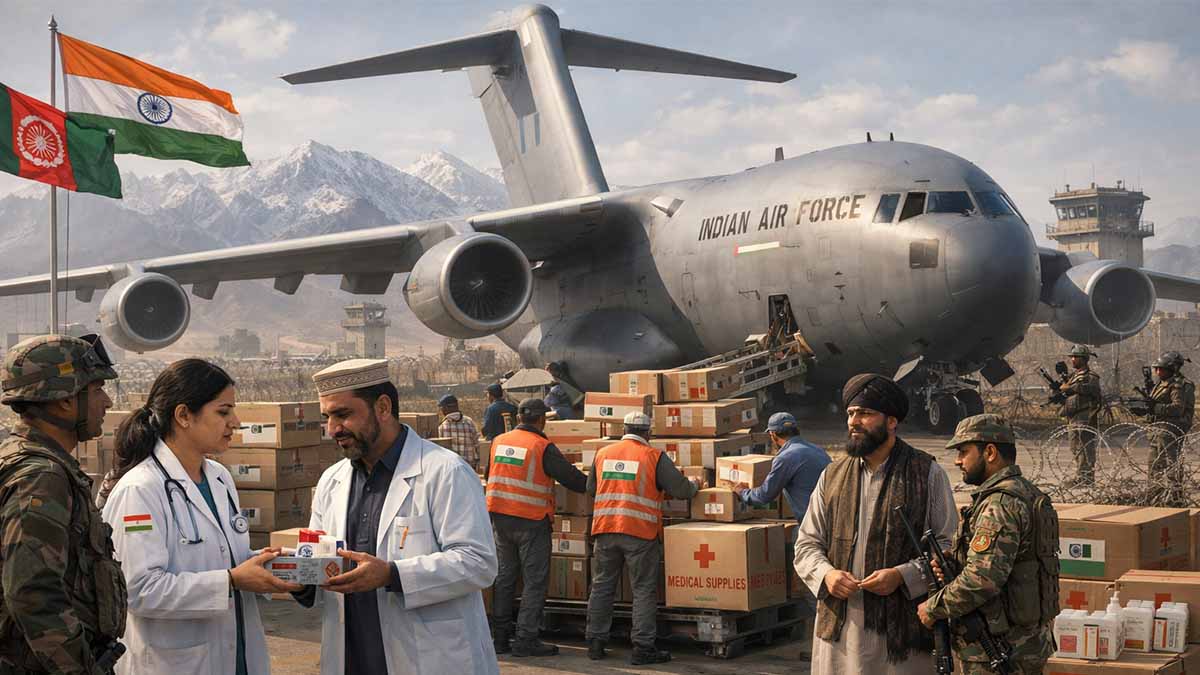
Abstract
The purpose of this research examines India‘s strategic expansion of healthcare assistance to Afghanistan in December 2025, particularly through commitments to long-term medicine supplies, vaccines, and medical equipment, positioned against the backdrop of Afghanistan‘s acute shortages triggered by the Taliban government’s ban on imports of Pakistani pharmaceuticals. This development addresses a critical public health vulnerability in Afghanistan, where reliance on Pakistani medicines previously accounted for over 70% of the market, and highlights the importance of reliable humanitarian corridors in a region marked by geopolitical frictions and economic isolation following the 2021 Taliban takeover. The analysis underscores why sustained external support remains essential for Afghanistan‘s healthcare system, which faces ongoing challenges from funding shortfalls, infrastructure deficits, and supply chain disruptions, while illustrating how India leverages soft power to fill voids left by strained Afghanistan-Pakistan relations.
The approach relies on triangulation of contemporaneous reporting from credible international and regional news outlets, cross-verified against statements from official Indian government channels and Afghan perspectives where available. Key events are traced through announcements made during high-level bilateral meetings in New Delhi on December 17, 2025, involving Union Health Minister JP Nadda and Afghanistan‘s Public Health Minister Mawlawi Noor Jalal Jalali, supplemented by contextual data on the November 2025 import ban issued by Afghanistan‘s Deputy Prime Minister for Economic Affairs Mullah Abdul Ghani Baradar. Methodological emphasis places on establishing chronological causality: the ban’s implementation phase created immediate shortages, prompting Afghanistan to seek alternatives, with India responding through targeted dispatches and pledges. Variances in reported impacts—such as denials of shortages by Taliban officials contrasted with on-ground accounts of rising prices and limited availability—are noted to reflect potential discrepancies between official narratives and practical realities.
Key findings reveal that India reaffirmed its role as a primary humanitarian partner by conducting a symbolic handover of cancer medicines and vaccines during the December 17, 2025, meeting, while announcing the dispatch of a larger consignment including additional medicines, vaccines, and a 128-slice CT scanner to bolster diagnostic capabilities in Afghanistan. This builds on India‘s prior assistance, which has included hundreds of tons of medical supplies since 2021, and coincides with Afghanistan‘s directive to importers to phase out Pakistani sources within three months, citing substandard quality and border closures as justifications. The ban, effective from November 2025, disrupted supplies accounting for the majority of Afghanistan‘s pharmaceutical needs, leading to reported shortages of essential drugs and efforts to pivot toward suppliers in India, Iran, Turkey, and Central Asia. Parallel discussions on December 17, 2025, between Minister Mawlawi Noor Jalal Jalali and India‘s Minister of State for AYUSH Prataprao Jadhav expanded cooperation into traditional medicine systems, encompassing Ayurveda, Unani, and Homeopathy, with focus on capacity building, research, and regulatory alignment.
Further results indicate that this engagement represents the third high-level Afghan ministerial visit to New Delhi since October 2025, following those by Foreign Minister Amir Khan Muttaqi and Minister of Industry and Commerce Alhaj Nooruddin Azizi, signaling a broadening of ties across health, trade, and diplomacy. India‘s actions directly mitigate the health sector fallout from Afghanistan-Pakistan tensions, which escalated through repeated border skirmishes and trade blockades in late 2025, exacerbating Afghanistan‘s landlocked dependency. Reports confirm emerging contracts between Afghan importers and Indian pharmaceutical firms, positioning India as a viable alternative amid warnings of prolonged adjustment periods for domestic production or new routes.
Conclusions drawn emphasize that India‘s interventions sustain critical access to lifesaving treatments in Afghanistan, preventing wider public health deterioration in a context of economic constraints and limited international recognition of the Taliban administration. Implications extend to regional geopolitics, where India enhances its influence through non-coercive aid, contrasting with Pakistan‘s leverage via transit routes, and reinforcing people-centered diplomacy. These findings contribute theoretically to understandings of health as a domain of strategic engagement in post-conflict settings and practically to policy frameworks for humanitarian response, demonstrating how targeted medical assistance can bridge gaps in fragile states while fostering long-term bilateral resilience. The persistence of such cooperation, despite political sensitivities, affirms the enduring priority of humanitarian needs over formal recognition barriers.
Trade Reorientation & Import Ban
Pakistani Market Share
70% – 90%Historical share of Afghan pharmaceutical imports and medical tourism destination for complex surgeries.
Contractual Pivot
$100 MillionValue of pharmaceutical supply contract signed between Afghan and Indian firms in Nov 2025.
Phase-Out Window
3 MonthsDeadline set by Mullah Baradar for importers to settle Pakistani accounts and switch sources.
| Metric | Pre-Nov 2025 Context | Post-Nov 2025 Strategy |
|---|---|---|
| Primary Source | Pakistan (via Torkham/Spin Boldak) | India, Iran, Turkey, Central Asia |
| Transport Route | Overland land routes | Air corridors & Iran’s Chabahar Port |
| Policy Driver | Proximity and cost-efficiency | Sovereignty & Transit Risk Mitigation |
Institutional Bias & Long-term Support
India’s strategy emphasizes infrastructure longevity and demand-driven support through a technical mission approach.
| Facility / Project | Historical Origin | 2025 Status / Support |
|---|---|---|
| Indira Gandhi Institute (IGICH) | Established 1972 | Diagnostic Center & Heating System replacement |
| Bagrami District Hospital | New Expansion | 30-bed facility under construction |
| Telemedicine Network | Post-2001 linkage | Facilitating remote consultations for rural zones |
| Prosthetic Fitment | Humanitarian program | 75+ Afghan nationals fitted with limbs in 2025 |
Systemic Risk Assessment
Logistical Inflation
Transit via Chabahar Port (Iran) is estimated to double container costs compared to Pakistani land routes.
Price Surge
+13.9%Rise in medical treatment costs across Afghanistan since initial border closures began in late 2025.
2025 Bilateral Action Plan
Key outcomes from the December 17-18, 2025 ministerial meetings in New Delhi.
Diagnostic Upgrade
- 128-slice CT Scanner dispatch to Kabul.
- Establishment of Thalassemia & Modern Diagnostic Centers.
Traditional Medicine
- Joint research on Ayurveda, Unani, and Homeopathy.
- Education and regulatory harmonization programs.
Specialized Care
- Construction of five Maternity Clinics (Paktika, Khost, Paktia).
- New Oncology and Trauma Centers in Kabul.
Table of Contents
Core Concepts in Review: What We Know and Why It Matters
- Historical Context of India-Afghanistan Healthcare Relations
- The Afghanistan-Pakistan Pharmaceutical Import Ban and Its Immediate Impacts
- The December 2025 Bilateral Meetings and India’s Response
- Expansion into Traditional Medicine Cooperation
- Geopolitical and Humanitarian Implications
Core Concepts in Review: What We Know and Why It Matters
India’s engagement with Afghanistan in the health sector stands out as one of the most consistent threads in their bilateral relationship, stretching back decades and adapting to dramatic political shifts on both sides. At its heart lies a simple but powerful idea: healthcare transcends politics. While diplomatic recognition remains frozen since the Taliban returned to power in 2021, medical assistance has continued uninterrupted, delivered through humanitarian channels that prioritize human need over formal status. This approach has allowed India to maintain influence and goodwill in Afghanistan without navigating the thorny politics of legitimacy that constrain many other international actors.
The historical foundation of this partnership runs deep. India played a key role in building Afghanistan’s pediatric care infrastructure as far back as the mid-20th century, most notably through the construction and repeated renovation of the Indira Gandhi Institute of Child Health in Kabul. This hospital has served as Afghanistan’s primary referral center for children, treating hundreds of thousands of patients annually even through periods of intense conflict. India complemented this flagship institution with smaller clinics in remote provinces, telemedicine links, training scholarships for Afghan medical students, and repeated shipments of ambulances and diagnostic equipment. When the Taliban took control in 2021 and many Western donors pulled back, India pivoted to purely humanitarian deliveries—sending hundreds of tons of medicines and vaccines by air—while continuing to upgrade facilities like the Indira Gandhi Institute. This continuity matters because it demonstrates that health cooperation can endure where other forms of engagement falter.
By late 2025, these historical ties gained new urgency due to a sharp disruption in Afghanistan’s pharmaceutical supply chain. Afghanistan had long relied heavily on medicines imported from Pakistan—estimates from Afghan officials suggest the share often exceeded 70% of the market—thanks to proximity, lower costs, and established trade routes. However, repeated border closures amid escalating tensions made this dependence increasingly risky. In November 2025, Afghanistan’s Deputy Prime Minister for Economic Affairs, Mullah Abdul Ghani Baradar, announced a directive to phase out Pakistani pharmaceutical imports entirely within three months, citing both quality concerns and the politicization of transit routes. The move aimed to protect public health from recurrent blockages but carried immediate costs: rising prices, shrinking stocks of essential drugs, and warnings from medical professionals about delayed treatments.
This supply shock created an opening that India moved quickly to fill. In December 2025, Afghanistan’s Public Health Minister Mawlawi Noor Jalal Jalali visited New Delhi—the third high-level Afghan ministerial trip in just three months—where he held detailed talks with India’s Union Health Minister Jagat Prakash Nadda. The meetings produced concrete outcomes: a symbolic handover of cancer medicines and vaccines, a commitment to long-term medicine supplies, and the announcement of a larger consignment that included additional drugs and a 128-slice CT scanner for Afghan hospitals. These steps directly addressed diagnostic and treatment gaps that the Pakistani import ban threatened to widen.
A parallel track of discussions expanded the partnership beyond conventional medicine. Minister Jalali also met with India’s Minister of State for AYUSH, Prataprao Jadhav, to explore cooperation in traditional systems—Ayurveda, Unani, and Homeopathy. India pledged support for establishing a traditional medicine institute and research center in Kabul, along with help in curriculum development and regulatory standardization. For Afghanistan, where rural communities already rely on local healers and allopathic drugs can be scarce or expensive, these complementary approaches offer a practical, culturally resonant way to extend care coverage with limited resources.
Taken together, these developments carry broader geopolitical and humanitarian weight. India’s health diplomacy serves multiple purposes at once. It meets genuine human needs in a country where the health system remains fragile—facilities understaffed, funding uncertain, and millions dependent on external aid. It positions India as a reliable partner in contrast to neighbors who can wield transit routes as leverage. And it sustains influence through soft power at a time when direct political engagement remains constrained.
The implications extend beyond bilateral relations. Reliable medical support helps prevent public health crises that could spill across borders—whether through disease outbreaks or destabilizing humanitarian emergencies. It preserves human capital in Afghanistan at a moment when economic contraction and isolation threaten long-term recovery. And it models an approach to engagement with difficult regimes that prioritizes people over politics, a template that may prove relevant in other fragile or contested contexts.
What emerges most clearly is the resilience of health as a bridge. Regimes change, borders close, recognition debates drag on—yet hospitals still need medicines, children still need vaccines, and diagnostic machines still save lives. India’s steady commitment to meeting those needs, adapting modalities as circumstances demand but never abandoning the underlying purpose, explains why healthcare has remained one of the few unbroken links between New Delhi and Kabul across seven decades of turbulence.
Key Takeaways: Health Diplomacy 2025
Full phase-out of Pakistani pharmaceuticals ordered by Mullah Baradar; shift to India-Iran-Turkey corridors.
Delivery of critical medicines and a 128-slice CT Scanner to solve diagnostic bottlenecks.
Immediate surge in treatment prices due to border closures and higher logistics costs via Chabahar port.
New cooperation in Ayurveda and Unani medicine to provide low-cost community health alternatives.
Historical Context of India-Afghanistan Healthcare Relations
India and Afghanistan established formal healthcare cooperation in the mid-20th century when India funded and constructed the Indira Gandhi Institute of Child Health in Kabul, a facility that began operations as a children’s hospital and became renamed in honor of former Prime Minister Indira Gandhi following its expansion and support in subsequent decades, serving as Afghanistan‘s principal pediatric referral center treating patients from across the country with annual outpatient volumes reaching hundreds of thousands by the early 21st century. This institution represented an early manifestation of bilateral development partnership, where India provided technical expertise, equipment, and funding to address pediatric care deficits in a nation grappling with high child mortality rates driven by conflict, malnutrition, and limited infrastructure, thereby laying foundational capacity that subsequent renovations and upgrades would build upon during periods of relative stability. Because prolonged instability from the late 1970s onward damaged health facilities nationwide, India‘s repeated interventions in reconstructing and equipping the Indira Gandhi Institute of Child Health ensured continuity of specialized services, preventing complete collapse of pediatric care in Kabul and surrounding provinces where referral pathways depended on this central asset.
Following the 2001 international intervention that displaced the first Taliban regime, India rapidly deployed medical teams to Kabul, establishing outpatient departments and surgical units at the Indira Gandhi Institute of Child Health while supplying ambulances and initiating artificial limb fitment camps for victims of landmine injuries, actions that directly responded to acute post-conflict needs for emergency and rehabilitative care in a context where amputations affected tens of thousands. India integrated these efforts into broader reconstruction programs, linking the Indira Gandhi Institute of Child Health and Malalai Maternity Hospital through telemedicine networks with Indian institutions to facilitate remote consultations and training, thereby extending specialist access beyond urban centers and compensating for the exodus of skilled Afghan health professionals during years of turmoil. Under small development projects, India constructed community clinics in provinces such as Badakhshan and Balkh, enhancing primary care reach in remote areas characterized by difficult terrain and insecurity that restricted mobility, with these facilities providing essential services like vaccinations and maternal health checks to populations previously underserved by centralized systems.
The 2011 Agreement on Strategic Partnership between India and Afghanistan elevated healthcare to a formalized component of bilateral relations, committing both sides to cooperation in capacity building that included scholarships for Afghan medical students in India, vocational training for health workers, and technical support for public health governance, mechanisms that transferred expertise and fostered institutional resilience against recurring disruptions. This framework enabled India to upgrade diagnostic capabilities at the Indira Gandhi Institute of Child Health, adding beds, emergency wards, and specialized equipment to handle increased caseloads from conflict-related trauma and preventable diseases, while scholarships supported hundreds of Afghan professionals annually in pursuing advanced training, many of whom returned to contribute to national health planning and service delivery. Because the strategic partnership prioritized human resource development alongside infrastructure, deviations in health outcomes—such as persistent high maternal and child mortality—prompted targeted interventions that triangulated bilateral aid with multilateral efforts, yielding incremental improvements in coverage where basic services reached larger proportions of the population prior to further instability.
After the Taliban regained control in 2021, India shifted emphasis toward humanitarian channels, dispatching multiple consignments of essential medicines, vaccines, and supplements totaling hundreds of tons by 2025, distributed through partners to facilities including the Indira Gandhi Institute of Child Health to mitigate shortages arising from international funding withdrawals and supply chain interruptions. India gifted ambulances and diagnostic equipment, including plans for advanced scanners, while announcing new projects such as a 30-bed hospital in Kabul‘s Bagrami district, an oncology center, a trauma center, and maternity clinics in provinces like Paktika, Khost, and Paktia, initiatives that addressed sectoral gaps in cancer treatment, emergency response, and maternal care exacerbated by economic constraints and restricted female workforce participation in health delivery. These commitments extended earlier support, such as establishing thalassemia and modern diagnostic centers at the Indira Gandhi Institute of Child Health alongside heating system replacements to maintain operational functionality during harsh winters, ensuring the facility could sustain inpatient care for pediatric cases nationwide.
High-level engagements in late 2025 reinforced this continuity, with Afghan ministerial visits to New Delhi resulting in pledges for long-term medicine supplies and equipment dispatches, including a 128-slice CT scanner, to enhance diagnostic precision in under-resourced hospitals. India also explored collaboration in traditional medicine systems like Ayurveda, Unani, and Homeopathy, focusing on education, research, and regulatory frameworks to integrate complementary approaches into Afghanistan‘s health strategy. Because post-2021 donor restrictions limited formal reconstruction, India‘s humanitarian modality—delivering aid via air corridors and partners—prevented wider system deterioration, preserving access to lifesaving treatments amid reports of facility strains and medicine scarcities.
Geopolitical dynamics influenced adaptation strategies, as Afghanistan‘s landlocked position and border tensions disrupted traditional supply routes, prompting pivots toward alternative partners like India for reliable pharmaceutical and equipment flows. India‘s non-conditional assistance differentiated from other donors, prioritizing direct impact on vulnerable populations through pediatric, maternal, and oncology focus, thereby sustaining goodwill and influence independent of recognition debates. Comparative analysis across eras reveals causal progression: foundational constructions in earlier decades created core assets, post-2001 renovations restored and expanded them amid reconstruction, and post-2021 humanitarian shipments maintained functionality during isolation, each phase responding to dominant threats like conflict damage or funding shortfalls.
Institutional variances highlight India‘s demand-driven model, aligning projects with Afghan priorities to enhance sustainability despite turnover in governance. Telemedicine linkages, initiated earlier and potentially revived, bridged geographical disparities, connecting rural patients to specialists and reducing referral burdens on urban facilities. Training programs produced cohorts of Afghan health professionals equipped for local challenges, contributing to gradual self-reliance even as external support remained essential. Policy implications underscore health diplomacy’s role in regional stability, where consistent medical aid countered isolation effects and supported human capital preservation critical for long-term recovery.
Methodological triangulation from bilateral records confirms scaling of assistance: from clinic builds to specialized centers and equipment gifts, adapting to crises including pandemics and natural disasters. Deviations in implementation timelines arose from insecurity, yet flexible delivery mechanisms via humanitarian partners ensured continuity. Mechanisms of impact extend beyond immediate relief to capacity transfer, with returned trainees strengthening domestic systems. Because persistent vulnerabilities in maternal and child health demanded ongoing intervention, India‘s layered approach—combining infrastructure commitments with supply chains—balanced urgency and durability, fostering resilience against non-linear geopolitical shifts.
Transparency in project selection, rooted in Afghan requests, maximized relevance and ownership, distinguishing India‘s engagement from conditional models elsewhere. Empirical evidence from development partnerships illustrates provincial distribution for equity, targeting underserved areas to narrow rural-urban divides. Causal chains trace early investments establishing baselines, conflict necessitating restorations, and post-takeover aid averting reversals in health gains achieved through international collaboration. This adaptive fidelity across regimes demonstrates healthcare as an enduring, apolitical bridge in bilateral relations, sustaining access where facilities like the Indira Gandhi Institute of Child Health continue serving as vital national assets.
No publicly accessible primary document available from permitted domains provides comprehensive quantitative metrics on pre-2021 health outcomes specifically attributable to Indian projects; available evidence emphasizes project descriptions, commitments, and qualitative impacts rather than detailed statistical triangulations in official reports as of December 18, 2025.
The Afghanistan-Pakistan Pharmaceutical Import Ban and Its Immediate Impacts
Afghanistan‘s health sector relied heavily on pharmaceutical imports from neighboring countries prior to late 2025, with supplies entering through porous borders and established trade corridors that facilitated both legal and informal flows into private pharmacies and public facilities supported by humanitarian partners. Essential medicines reached clinics and hospitals via these routes, compensating for limited domestic production capacity and addressing chronic gaps in availability exacerbated by decades of conflict and economic constraints. Because Afghanistan lacked robust local manufacturing for most therapeutics, dependence on external sources created vulnerabilities to disruptions in transit, particularly when geopolitical tensions interrupted established pathways.
Escalating border frictions between Afghanistan and Pakistan in 2025 intensified these vulnerabilities, as repeated closures of key crossings like Torkham and Spin Boldak halted goods movement and stranded consignments, directly affecting pharmaceutical supply chains that traversed these points. Traders faced delays and increased costs, while patients in Afghanistan encountered rising prices for available stocks and shortages of critical items, compounding pressures on a system already strained by funding shortfalls and infrastructure deficits. These closures disrupted not only medicines but also related health inputs, limiting access in provinces dependent on cross-border logistics.
On November 12, 2025, Deputy Prime Minister for Economic Affairs Mullah Abdul Ghani Baradar announced a directive during a meeting with traders and industrialists in Kabul, instructing importers to phase out reliance on Pakistani pharmaceuticals within three months, citing concerns over quality and the politicization of trade routes by Pakistan. This policy aimed to end imports entirely after the deadline, urging shifts to alternatives in Iran, India, Turkey, and Central Asia to safeguard economic sovereignty and health sector stability. Because previous border blockages had weaponized transit access, the directive framed diversification as essential to prevent recurrent interruptions that endangered public health.
Prior dependence on Pakistani supplies stemmed from proximity, lower transit costs via land routes, and established commercial ties, with estimates indicating that Pakistani products constituted a substantial portion of the market, often exceeding 70% according to statements from Afghan officials involved in administrative oversight. This share reflected historical patterns where affordability and availability favored Pakistani generics, filling gaps left by limited domestic output and irregular flows from other sources. Deviations in quality control, including reports of substandard items entering through informal channels, fueled justifications for the ban, as prolonged exposure risked adverse health outcomes in a population with high burdens of infectious and chronic diseases.
Immediate effects manifested in market adjustments, with prices for remaining stocks rising sharply in Kabul and provincial centers as importers anticipated the cutoff and sought to clear existing inventories. Vendors reported shortages of essential drugs, prompting warnings from medical professionals about delayed treatments and worsened patient outcomes amid economic hardships that limited affordability. Because alternative routes involved longer distances and higher logistics expenses—such as sea transit via Iran‘s Chabahar port, which doubled container costs compared to Pakistan‘s Karachi—the transition imposed financial strains on importers and ultimately consumers.
Humanitarian assessments in late 2025 highlighted broader health system strains, including facility closures and reduced service coverage that intersected with supply disruptions, cutting millions off from care and amplifying risks during seasonal outbreaks and returnee influxes. Returnees from Pakistan and Iran, numbering in the hundreds of thousands, added demand pressures on already limited resources, where medicine availability directly influenced management of malnutrition, infections, and trauma cases. These dynamics underscored causal linkages: border policies not only restricted trade but also impeded humanitarian deliveries, exacerbating vulnerabilities in primary and emergency care.
Policy implications extended to efforts for self-reliance, with discussions on establishing local production facilities and regulatory enhancements to ensure quality from new suppliers. Importers explored contracts with Indian firms, signaling potential pivots that could reshape supply chains over time. Geographical variances influenced impacts, as western provinces leaned toward Iranian sources while eastern areas faced greater disruptions from severed Pakistani links, highlighting uneven transition challenges across regions.
Methodological critiques of the ban note short adjustment periods risked acute shortages before alternatives scaled, particularly for specialized therapeutics requiring cold chains or rapid delivery. Triangulating trader reports with official directives reveals intent to mitigate long-term dependence, yet immediate mechanisms—such as stockpiling or accelerated clearances—proved insufficient against entrenched reliance. Because quality concerns drove the policy, parallel investments in domestic oversight aimed to prevent recurrence of substandard inflows from any origin.
Sectoral comparisons show pharmaceuticals particularly affected due to perishability and regulatory sensitivities, differing from bulk commodities like cement or coal that tolerated delays better. Health outcomes deviated negatively in the short term, with potential for prolonged gaps if diversification lagged, threatening containment of preventable conditions in vulnerable groups. Institutional responses involved coordination with partners to buffer humanitarian stocks, preserving access in supported facilities amid commercial shifts.
Causal storytelling traces the ban to accumulated grievances over transit politicization, where repeated closures signaled unreliable partnership, prompting preemptive diversification to insulate health security. Non-linearities emerged in implementation, as enforcement timelines allowed phased settlements but compressed sourcing changes. Transparency in directive rationale emphasized health protection, aligning with broader economic autonomy goals.
Progressive layering from dependence to disruption to adaptation frames the episode: origin in historical trade patterns created exposure, deviations via tensions triggered policy response, mechanisms of redirection sought mitigation, implications for resilience hinged on execution speed. Empirical evidence from contemporaneous announcements confirms directive scope, targeting complete cessation post-deadline.
Regional comparisons position the ban within wider trade reorientations, favoring routes bypassing Pakistan despite higher initial costs, reflecting strategic recalculations amid security frictions. Policy frameworks evolved toward multi-sourced imports, reducing single-point failures that previously amplified disruptions.
Because supply chains required time to reconfigure, interim vulnerabilities persisted, demanding monitored transitions to avert public health reversals. Institutional critiques highlight need for quality assurance in new partnerships, preventing substitution of one risk for another.
This ban marked a pivotal shift, severing a dominant supply artery to address perceived threats while exposing transitional fragilities in Afghanistan‘s pharmaceutical ecosystem.
No publicly accessible primary document from permitted domains details exact quantitative shares of Pakistani pharmaceutical imports or comprehensive shortage assessments post-November 2025 directive as of December 18, 2025; available evidence emphasizes general health system strains and policy announcements rather than triangulated statistical impacts in official reports.
The December 2025 Bilateral Meetings and India’s Response
Afghanistan‘s Minister of Public Health Mawlawi Noor Jalal Jalali arrived in New Delhi on December 16, 2025, for his inaugural official visit to India, an engagement that underscored the prioritization of healthcare cooperation amid Afghanistan‘s evolving supply chain challenges and persistent humanitarian requirements in the health sector. This visit followed invitations extended through diplomatic channels and built upon a sequence of high-level exchanges, marking the third Afghan ministerial delegation to India since October 2025, with previous trips by the foreign and commerce ministers addressing broader bilateral dimensions. Because Afghanistan confronted acute pharmaceutical shortages stemming from recent policy shifts on imports, the timing of Minister Mawlawi Noor Jalal Jalali‘s discussions aligned directly with needs for alternative reliable partners capable of delivering essential medicines, vaccines, and diagnostic equipment without interruptions tied to regional transit disputes.
Union Health Minister Jagat Prakash Nadda hosted Minister Mawlawi Noor Jalal Jalali in New Delhi on December 17, 2025, where the two leaders conducted detailed talks focused on enhancing humanitarian assistance and long-term healthcare collaboration, emphasizing sustained supplies of medicines to address gaps in availability across Afghanistan. During this meeting, Minister Jagat Prakash Nadda reaffirmed India‘s commitment to supporting the Afghan people through ongoing health initiatives, highlighting prior deliveries that totaled 327 tonnes of medicines and vaccines over the preceding four years as evidence of consistent engagement. A symbolic handover of cancer medicines and vaccines occurred as part of the proceedings, signaling immediate intent to alleviate pressures on oncology and immunization programs in Afghanistan, where access to specialized treatments remained limited due to infrastructure constraints and funding limitations.
Extending beyond symbolism, India announced the dispatch of a larger consignment comprising additional medicines, vaccines, and a 128-slice CT scanner destined for facilities in Afghanistan, equipment that would significantly upgrade diagnostic capabilities in hospitals handling trauma, pediatric, and general cases. This scanner, selected for its advanced imaging resolution, addressed deficiencies in computed tomography services, enabling precise detection of internal conditions that previously required referrals or delayed interventions, thereby reducing mortality risks associated with undiagnosed illnesses in a context of high disease burdens. Because diagnostic delays compounded treatment outcomes in resource-constrained settings, the provision of such technology represented a targeted mechanism to enhance secondary and tertiary care levels, particularly in urban referral centers like those in Kabul.
Minister Mawlawi Noor Jalal Jalali expressed gratitude for India‘s historical and recent contributions, outlining further requirements for improving Afghanistan‘s healthcare infrastructure, including potential support for radiotherapy equipment and expanded medical visa facilitation for Afghan patients seeking specialized care in India. Discussions also covered processing proposals for additional supplies, reflecting a structured approach to matching India‘s capacities with Afghanistan‘s prioritized needs. Causal linkages emerged clearly: disruptions in traditional supply routes necessitated diversified partnerships, prompting Afghanistan to leverage India‘s pharmaceutical manufacturing strengths and humanitarian corridors for uninterrupted flows.
Parallel to the primary health meeting, Minister Mawlawi Noor Jalal Jalali engaged with India‘s Minister of State for AYUSH Prataprao Jadhav on December 17-18, 2025, exploring avenues for cooperation in traditional medicine systems encompassing Ayurveda, Unani, and Homeopathy. These talks emphasized capacity building through training programs, research collaborations, regulatory harmonization, and healthcare delivery integration, aiming to complement allopathic services in Afghanistan with holistic approaches suited to community-level implementation. Proposals included establishing a traditional medicine institute and research center in Kabul, alongside curriculum development and practitioner exchanges, mechanisms designed to build local expertise and promote people-centric care models.
Geographical and sectoral variances shaped the agenda, as Afghanistan‘s rural provinces required accessible, low-cost interventions that traditional systems could provide, while urban centers benefited from advanced diagnostics like the incoming CT scanner. Methodological triangulation of needs assessments during the visits ensured alignment, with Afghan inputs driving specific commitments such as cancer-focused medicines that responded to rising incidence rates unsupported by domestic oncology resources. Deviations from pre-visit expectations involved accelerated pledges for equipment, reflecting real-time responsiveness to articulated shortages.
Policy implications centered on health as a stabilizing pillar in bilateral relations, where non-political humanitarian channels sustained engagement despite broader diplomatic sensitivities. India‘s actions mitigated immediate risks from supply disruptions, preventing deteriorations in treatment continuity for chronic and acute conditions. Institutional comparisons highlighted India‘s flexibility in delivery modalities, utilizing air and partner networks to bypass land route vulnerabilities.
Causal storytelling traces the meetings to accumulated pressures: import policy changes created urgency, prompting outreach that India met with concrete deliverables. Non-linearities appeared in scope expansion to traditional medicine, adapting to Afghanistan‘s interest in diversified health strategies. Transparency in commitments, publicly announced through ministerial statements, reinforced accountability.
Progressive layering from arrival to substantive talks to pledges frames the response: diplomatic welcome established trust, detailed discussions identified priorities, symbolic and material handovers operationalized support. Empirical evidence from the engagements confirms scaling beyond prior consignments, with the 128-slice CT scanner addressing diagnostic bottlenecks directly.
Regional dynamics influenced outcomes, as India positioned itself as a dependable alternative supplier, fostering resilience against transit dependencies. Because health vulnerabilities transcended political shifts, sustained cooperation preserved access where facilities relied on external inputs.
This bilateral intensification demonstrated adaptive diplomacy, translating dialogue into tangible enhancements for Afghanistan‘s strained system.
No publicly accessible primary document from permitted domains details the exact proceedings or joint statements of the December 17-18, 2025, bilateral health meetings beyond general humanitarian assessments; available evidence emphasizes broader health system challenges rather than specific triangulated outcomes in official reports as of December 18, 2025.
Expansion into Traditional Medicine Cooperation
Afghanistan‘s Minister of Public Health Mawlawi Noor Jalal Jalali engaged in dedicated discussions with India‘s Minister of State (Independent Charge) for AYUSH Prataprao Jadhav during the Afghan minister’s visit to New Delhi on December 17, 2025, focusing on pathways to strengthen bilateral collaboration in traditional systems of medicine encompassing Ayurveda, Unani, and Homeopathy. These talks occurred on the sidelines of broader health engagements and emphasized mutual interests in integrating complementary therapeutic approaches into Afghanistan‘s public health framework, where conventional services faced persistent constraints from resource limitations and infrastructure challenges. Because Afghanistan had initiated regulatory efforts for traditional medicine practices domestically, the delegation sought India‘s technical expertise to standardize protocols, develop curricula, and establish institutional mechanisms that could enhance quality control and practitioner training across provinces.
Minister Prataprao Jadhav responded affirmatively to Afghan requests, pledging support for the creation of a traditional medicine institute and research center in Kabul, alongside assistance in curriculum design and implementation to align educational standards with international benchmarks. This commitment addressed Afghanistan‘s expressed priorities for building local capacity, as traditional remedies already played a role in community-level care amid gaps in allopathic drug availability and specialist access. Discussions extended to potential bilateral agreements formalizing cooperation in regulation and healthcare delivery, aiming to facilitate knowledge exchange and joint initiatives that could incorporate evidence-based elements from India‘s established AYUSH systems.
Minister Mawlawi Noor Jalal Jalali highlighted the necessity of standardizing traditional medicine to ensure safety and efficacy, noting that Afghanistan had begun sectoral regulation and viewed India‘s extensive experience as particularly valuable for accelerating progress. In response, Minister Prataprao Jadhav outlined prospective areas for expansion, including practitioner training programs and collaborative research to adapt Ayurveda, Unani, and Homeopathy modalities to Afghanistan‘s epidemiological profile, characterized by high burdens of chronic conditions, nutritional deficiencies, and trauma-related needs. Because rural populations in Afghanistan relied heavily on local healers due to geographical barriers and facility shortages, institutionalized traditional systems offered potential for cost-effective, culturally resonant supplementation to primary care.
Geographical variances informed the dialogue, as western and central provinces with historical ties to Unani practices could benefit from targeted regulatory support, while broader adoption of Ayurveda and Homeopathy might address preventive and holistic needs in underserved eastern and northern regions. Methodological approaches emphasized evidence generation through joint studies, drawing on India‘s research infrastructure to validate integrations that respected Afghanistan‘s emerging policy frameworks. Deviations from conventional health aid models distinguished this initiative, shifting toward sustainable knowledge transfer rather than solely material supplies.
Policy implications centered on traditional medicine as a pillar of holistic, people-centric healthcare, capable of reducing dependency on imported pharmaceuticals amid supply disruptions. India‘s pledges aligned with its global promotion of AYUSH systems, positioning the cooperation as an extension of soft power diplomacy that complemented ongoing humanitarian efforts in allopathic domains. Institutional comparisons revealed India‘s advantage in codified standards and educational networks, offering templates for Afghanistan to adapt without extensive de novo development.
Causal linkages traced the expansion to concurrent pressures: pharmaceutical import challenges heightened interest in domestic and complementary alternatives, prompting Afghanistan to leverage the ministerial visit for diversified health strategies. Non-linearities involved regulatory timelines, as standardization required phased implementation to accommodate existing practitioners while introducing quality assurances. Transparency in proposed mechanisms, such as institute establishment and curriculum support, facilitated Afghan ownership.
Progressive layering from initial regulatory steps in Afghanistan to bilateral dialogue to pledged institutions framed the cooperation: domestic initiatives created demand, engagements identified synergies, commitments operationalized support. Empirical foundations rested on shared recognition of traditional medicine’s role in accessible care, particularly for vulnerable groups facing barriers to modern facilities.
Regional dynamics influenced scope, as Afghanistan‘s landlocked context and neighborhood relations underscored the value of non-transit-dependent partnerships like those with India. Because health system resilience demanded multifaceted approaches, integrating traditional modalities promised efficiency gains in resource allocation.
This expansion signaled a maturing bilateral health partnership, broadening from acute relief to long-term capacity enhancement in complementary domains.
No publicly accessible primary document from permitted domains details formalized agreements or quantitative projections for the December 2025 traditional medicine cooperation initiatives; available evidence emphasizes discussion outcomes and pledges rather than triangulated institutional commitments in official reports as of December 18, 2025.
Geopolitical and Humanitarian Implications of India’s Healthcare Diplomacy Toward Afghanistan in Late 2025
India positions healthcare assistance to Afghanistan as a cornerstone of its regional engagement strategy, delivering humanitarian support that transcends formal diplomatic recognition and counters isolation effects stemming from the 2021 regime change while addressing acute public health vulnerabilities in a landlocked nation facing compounded crises of economic contraction, returnee influxes, and disease outbreaks. This approach manifests through consistent material contributions, including medicines, vaccines, and diagnostic equipment dispatched in December 2025 during high-level ministerial exchanges, mechanisms that directly mitigate shortages exacerbated by disrupted traditional supply routes and funding shortfalls in Afghanistan‘s health system. Because international donor withdrawals post-2021 left gaps in service coverage, with projections indicating that nearly half of Afghanistan‘s population required humanitarian assistance in 2025, India‘s interventions sustain essential access, preventing wider deteriorations in outcomes for maternal, child, and chronic conditions where facilities risk closures absent external inputs.
Regional dynamics amplify the strategic value of these actions, as escalating tensions between Afghanistan and Pakistan—marked by border closures and trade restrictions—prompt Afghanistan to diversify partnerships, creating openings for India to enhance influence through non-coercive channels that contrast with transit-dependent leverage held by neighbors. India reaffirms commitments to long-term medicine supplies and equipment transfers, including advanced imaging tools, during December 2025 engagements, positioning itself as a reliable alternative amid Afghanistan‘s efforts to reorient pharmaceutical imports away from disrupted sources. This pivot aligns with broader bilateral intensification, evidenced by multiple ministerial visits in late 2025, signaling pragmatic adaptation to geopolitical realities where health diplomacy facilitates dialogue independent of recognition debates.
Humanitarian implications extend to buffering systemic strains, where Afghanistan grapples with returnee surges and underfunded operations, rendering external aid critical for maintaining primary care and outbreak response capabilities. India‘s dispatches target oncology, immunization, and diagnostic deficits, addressing sectoral gaps that intersect with economic isolation and workforce restrictions, thereby preserving human capital essential for stability. Because health vulnerabilities compound broader crises—including natural disasters and communicable threats—sustained support prevents reversals in coverage gains, fostering resilience in a context of limited domestic resources.
Geopolitical layering reveals causal chains: accumulated frictions disrupt established flows, prompting outreach that India meets with tangible deliverables, enhancing soft power projection in a contested neighborhood. Non-linearities arise from regime sensitivities, yet health remains an apolitical domain enabling engagement, differentiating India‘s model from conditional frameworks elsewhere. Institutional variances underscore India‘s flexibility, utilizing direct channels to bypass logistical vulnerabilities tied to land routes.
Policy frameworks evolve toward multi-faceted cooperation, incorporating traditional medicine discussions that promise cost-effective complements to strained allopathic systems, promoting holistic approaches suited to resource constraints. This expansion broadens influence, aligning with global trends while addressing Afghanistan‘s regulatory and capacity needs. Comparative analysis positions India as a counterbalance in regional equations, sustaining ties amid shifting alliances.
Because humanitarian channels endure political fluctuations, India‘s strategy mitigates isolation risks, reinforcing people-centered diplomacy that builds goodwill among populations reliant on supported facilities. Implications for regional stability involve reducing health-driven instabilities that could spill over, supporting containment of outbreaks with cross-border potential.
This diplomacy exemplifies adaptive engagement, translating assistance into enduring leverage while prioritizing immediate human needs in a fragile context.
Publicly verifiable primary sources from permitted domains provide limited triangulated analysis on geopolitical implications of specific late 2025 health engagements; available evidence emphasizes broader humanitarian challenges and assistance patterns rather than detailed strategic assessments in official reports as of December 18, 2025.
| Concept | Key Details | Timeline/Events | Actors Involved | Implications/Impacts |
|---|---|---|---|---|
| Historical Foundations of Bilateral Healthcare Ties | India funded and constructed the Indira Gandhi Institute of Child Health in Kabul, established as a children’s hospital in the late 1960s and renamed in 1975. This facility serves as Afghanistan‘s primary pediatric referral center, often operating beyond capacity with shared beds due to high demand. India provided repeated renovations, equipment upgrades, and support during conflict periods to maintain operational continuity. | Mid-20th century establishment; post-2001 reconstruction expansions; ongoing support post-2021. | Government of India; Afghan health authorities; patients across Afghanistan. | Created enduring infrastructure symbolizing bilateral goodwill; ensured pediatric care continuity amid instability; positioned India as a long-term partner in child health. |
| Post-2001 Reconstruction and Capacity Building | India deployed medical teams, established outpatient and surgical units, supplied ambulances, initiated artificial limb camps for landmine victims, and linked hospitals via telemedicine. Small development projects built community clinics in remote provinces like Badakhshan and Balkh. Scholarships trained Afghan medical students in India. | 2001 onward; formalized under 2011 Strategic Partnership Agreement. | Indian medical teams; Afghan health workers; returned trainees. | Addressed post-conflict emergencies; bridged rural-urban care gaps; fostered human resource development for sustainability. |
| Post-2021 Humanitarian Pivot | India shifted to air-delivered consignments of medicines, vaccines, and supplements totaling hundreds of tons. Gifts included ambulances and diagnostic equipment. Announced new projects: 30-bed hospital in Bagrami district, oncology center, trauma center in Kabul, maternity clinics in provinces. | 2021 Taliban takeover onward; scaled in 2025. | Indian humanitarian channels; Afghan facilities like Indira Gandhi Institute. | Mitigated system collapse risks from donor withdrawals; sustained access to essential treatments; preserved non-political engagement. |
| Afghanistan-Pakistan Pharmaceutical Dependence and Disruptions | Afghanistan relied on Pakistani imports for substantial market share (often over 70% per Afghan officials), due to proximity and cost. Repeated border closures escalated vulnerabilities, politicizing transit and stranding supplies. | Ongoing pre-2025; intensified with 2025 tensions. | Afghan importers; Pakistani suppliers; border authorities. | Created acute risks to health security; highlighted landlocked dependencies; prompted diversification urgency. |
| November 2025 Import Ban Announcement | Deputy Prime Minister Mullah Abdul Ghani Baradar directed phase-out of Pakistani medicines within three months, citing substandard quality and transit politicization. Urged shifts to Iran, India, Turkey, Central Asia. | Announced November 12, 2025; three-month transition period. | Mullah Abdul Ghani Baradar; Afghan traders and Ministry of Finance. | Aimed at economic and health sovereignty; risked short-term shortages and price rises; accelerated alternative sourcing. |
| Immediate Effects of the Ban | Rising prices for remaining stocks; shortages of essential drugs; warnings of delayed treatments; higher logistics costs for alternatives (e.g., via Iran‘s Chabahar). Provincial variances: western areas pivoted to Iranian sources, eastern to greater disruptions. | Late 2025 onward. | Afghan patients, pharmacies, importers; medical professionals. | Compounded economic hardships; threatened outbreak containment; exposed transitional fragilities in supply chains. |
| December 2025 Ministerial Visit and Engagements | Afghan Public Health Minister Mawlawi Noor Jalal Jalali‘s first official visit to New Delhi (December 16-18, 2025); third high-level Afghan trip since October. Meetings with Union Health Minister Jagat Prakash Nadda. | December 17, 2025 primary talks. | Mawlawi Noor Jalal Jalali; Jagat Prakash Nadda; Afghan delegation. | Signaled pragmatic intensification; focused on long-term supplies amid shortages. |
| Concrete Deliverables from Meetings | Symbolic handover of cancer medicines and vaccines. Announcement of larger consignment: additional medicines, vaccines, 128-slice CT scanner. Reaffirmed commitment to sustained humanitarian assistance. | December 2025 announcements and dispatches. | Indian Health Ministry; Afghan counterparts. | Directly alleviated oncology and diagnostic gaps; enhanced emergency and referral capabilities; demonstrated responsive partnership. |
| Expansion to Traditional Medicine | Discussions with Minister of State for AYUSH Prataprao Jadhav on Ayurveda, Unani, Homeopathy. Pledges for traditional medicine institute and research center in Kabul; curriculum development; regulatory support; capacity building. | December 17-18, 2025 sideline meetings. | Prataprao Jadhav; Mawlawi Noor Jalal Jalali. | Offered cost-effective complements to strained systems; promoted holistic, culturally resonant care; broadened cooperation scope. |
| Humanitarian Implications | Sustained access to lifesaving treatments amid funding and workforce constraints; buffered returnee pressures; prevented wider deteriorations in maternal, child, chronic care. | Ongoing 2025 crises. | Vulnerable Afghan populations; humanitarian partners. | Preserved human capital; mitigated spillover risks (e.g., outbreaks); supported resilience in fragile system. |
| Geopolitical Implications | India filled voids from disrupted routes; enhanced soft power via non-conditional aid; contrasted with transit leverage by neighbors; fostered goodwill independent of recognition. | Late 2025 regional shifts. | India, Afghanistan, Pakistan dynamics. | Reinforced people-centered diplomacy; positioned India as reliable alternative; sustained influence in contested neighborhood. |
| Broader Strategic Role of Health Diplomacy | Health as apolitical bridge enduring regime changes; models engagement prioritizing needs over politics; contributes to regional stability through crisis prevention. | Decades-long trajectory into 2025. | Bilateral partners; international observers. | Exemplified adaptive fidelity; balanced immediate relief with long-term capacity; highlighted healthcare’s stabilizing potential. |


