












ABSTRACT
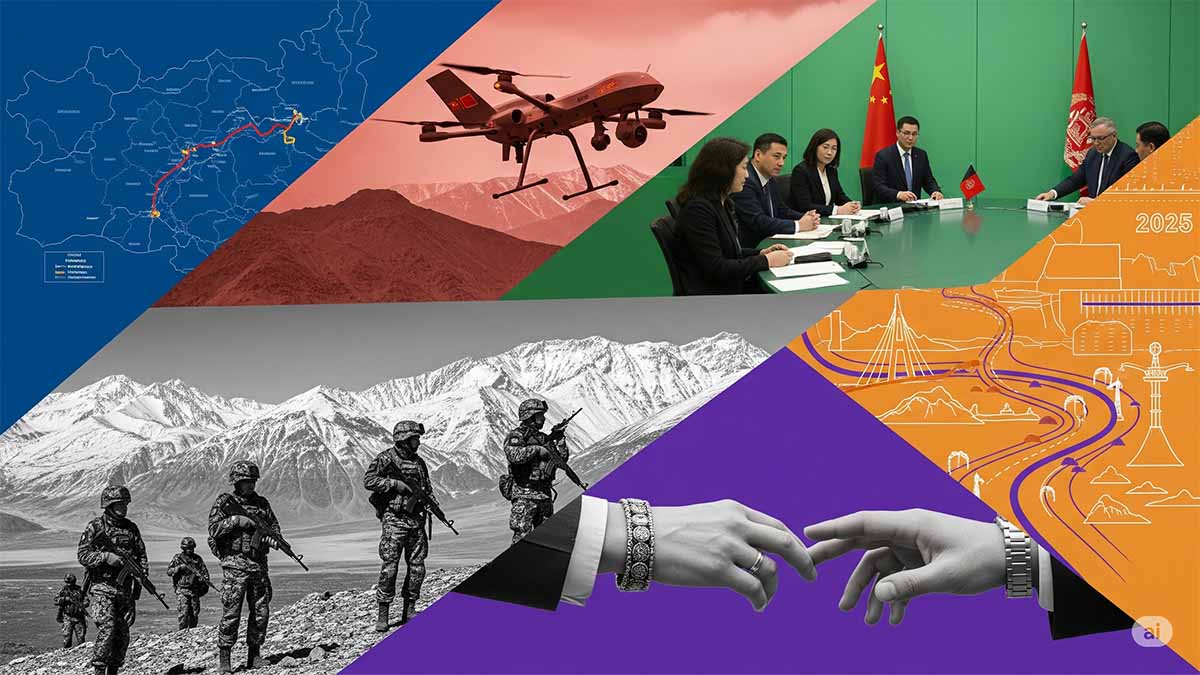
The story of the Wakhan Corridor begins with imperial rivalry in the 19th century, when the Russian and British empires carved out this narrow strip of land to serve as a buffer, leaving it under Afghan sovereignty but with little practical capacity for integration into state governance. From its very birth, the corridor was marked by fragility: a harsh mountainous environment, minimal population, and an almost total absence of infrastructure. Yet its symbolic value, connecting Afghanistan directly with China across one of the highest and most forbidding passes in the world, has ensured that it never disappeared from the calculations of great powers. For Beijing in particular, whose Xinjiang province borders the corridor, this sliver of territory has consistently represented both a vulnerability and a potential bridge, a place where security imperatives, counterterrorism strategies, and economic aspirations intersect.
Over time, the corridor’s role has shifted in response to changing political conditions. For much of the 20th century it remained isolated, traversed only by herders and traders, with the Afghan state exerting nominal authority at best. In the 21st century, however, its importance has grown in proportion to China’s anxieties about transnational militancy and its ambitions to expand influence under the Belt and Road Initiative. The East Turkestan Islamic Movement, long designated by the United Nations as a terrorist organization, has been central to Beijing’s security narrative, with Chinese officials consistently portraying the Wakhan as a potential infiltration route for militants into Xinjiang. Although actual incidents of such infiltration are difficult to document, the perception of risk has driven Chinese policy, shaping proposals for joint patrols with Afghanistan and embedding the corridor in a wider regional security framework.
This security focus explains the series of engagements between 2016 and 2025, in which China and Afghanistan explored or revived cooperative patrols. The earliest initiatives were modest—Afghan border police and Chinese units moving cautiously across mule tracks without formal treaties or lasting institutionalization. Yet they established a precedent that would be drawn upon later. By 2024 and 2025, in a political environment defined by the Taliban’s de facto rule in Kabul and the withdrawal of Western militaries, the corridor once again became a focal point of diplomacy. High-level meetings between Chinese Foreign Minister Wang Yi and Taliban officials, including Sirajuddin Haqqani, consistently highlighted the need for joint patrols, intelligence sharing, and counterterrorism coordination. These discussions were reinforced by trilateral dialogues with Pakistan, which brought the corridor into a broader regional framework of law enforcement, trade, and infrastructure cooperation.
Behind the political declarations lies a deeper structure of institutional mechanisms. China has not limited itself to rhetoric: it has transferred surveillance equipment, drones, and infrared monitoring devices to Afghan authorities, offered training for police units, and promoted integration into the Shanghai Cooperation Organization’s counterterrorism structures. At the same time, Beijing has anchored these measures in economic diplomacy, linking security stabilization of border regions with the expansion of trade, mining cooperation, and potential Belt and Road projects. Meetings in Kabul in 2025, reported by international agencies, made explicit the pairing of patrol resumption with discussions on copper mining at Mes Aynak, agricultural exports, and even prospective integration of Afghanistan into the China–Pakistan Economic Corridor. In this way, security enforcement and economic development are presented not as alternatives but as mutually reinforcing pillars of regional stability.
Nevertheless, the logistical and political obstacles remain enormous. The Wakhan Corridor is among the least hospitable border zones in Asia, with elevations exceeding 4,500 meters, long winters that isolate communities for months, and no paved roads linking Afghanistan to China. Feasibility studies have shown that constructing even a basic all-weather road would require billions of dollars and decades of maintenance, with costs disproportionate to any foreseeable trade volumes. The corridor is more a symbolic bridge than a practical trade artery, and proposals for its use in economic integration tend to falter when confronted with engineering realities. Instead, the strategic logic is defensive: patrols and surveillance are intended to ensure that instability does not spill over into Xinjiang, and that Afghanistan’s volatile northeast remains under sufficient control to protect broader connectivity initiatives elsewhere.
The people of the corridor, numbering fewer than 20,000, live in extreme poverty and isolation, with little access to healthcare, education, or markets. For them, the sudden international attention offers few tangible benefits. Seasonal isolation and fragile livelihoods underscore how disconnected their reality is from the high-level diplomatic maneuvers that now center on their homeland. Yet their territory has become disproportionately significant, elevated into the realm of geopolitical bargaining and counterterrorism cooperation. This mismatch between local hardship and strategic importance illustrates a broader tension: external powers engage the corridor as a security frontier, while its communities remain marginalized from the economic and political structures that might transform their lives.
The sovereignty issue adds another layer of complexity. As of August 2025, no state formally recognizes the Taliban-led administration as the lawful government of Afghanistan, even though China, Russia, Pakistan, and Iran engage with it pragmatically. This creates a legal ambiguity: agreements on joint patrols carry practical meaning but uncertain status under international law. Meanwhile, Afghanistan’s foreign reserves remain largely frozen abroad, and the country’s financial system is constrained by sanctions and oversight mechanisms that limit its capacity to fund border operations. China has therefore shouldered a greater role in financing, equipping, and training Afghan security units, though always within the limits imposed by global sanctions regimes and its own principle of non-interference.
These dynamics reveal why the Wakhan patrols are best understood not as isolated border operations but as nodes within a larger strategy. For Beijing, they serve multiple purposes: reinforcing counterterrorism narratives that center on ETIM, embedding Afghanistan within Chinese-led regional security structures, linking security enforcement to economic diplomacy under the Belt and Road Initiative, and consolidating geopolitical influence in the vacuum left by Western withdrawal. For Kabul, engagement with China offers legitimacy, resources, and the possibility of economic participation at a time of international isolation. For Pakistan, trilateral frameworks provide a platform to align security and connectivity strategies while maintaining leverage over Afghan trade routes.
The implications through 2027 are profound. If patrols are institutionalized and security cooperation deepens, Afghanistan may find itself increasingly bound into a China-centered regional order, its sovereignty conditional on alignment with Beijing’s priorities. Economic dividends may emerge gradually, but only if stability is achieved and governance standards are sufficient to attract investment, particularly in the mining sector. If these conditions are not met, the corridor will remain a symbolic frontier—highlighted in communiqués and press releases, but too inhospitable and politically contested to serve as a real engine of connectivity.
Ultimately, the Wakhan Corridor encapsulates the contradictions of regional geopolitics: a marginal, sparsely populated, and logistically impractical zone that nonetheless commands the attention of great powers because of what it represents. It is the intersection of history and geography, where the legacy of the Great Game meets the anxieties of modern counterterrorism, and where the promise of the Belt and Road collides with the realities of frozen assets and unrecognized governments. To tell the story of the Wakhan is to tell the story of how fragile frontiers can become the stage upon which regional powers negotiate security, sovereignty, and stability. Whether this stage leads to genuine transformation or remains an arena of symbolic maneuvering will depend on decisions made in Kabul, Beijing, and beyond in the years ahead.
CHAPTER INDEX
- Historical and Geographic Foundations of the Wakhan Corridor: Border Formation, Strategic Fragility, and Connectivity Realities
- China–Afghanistan Security Collaboration in 2025-2024: Diplomatic Engagements, Patrol Precedents, and Institutional Mechanisms
- Counterterrorism Nexus: ETIM and Regional Terror Threats in Afghanistan’s Borderlands
- Trilateral Dimensions: China–Pakistan–Afghanistan Coordination on Security, Connectivity, and Economic Integration
- Strategic Drivers Behind China’s Renewed Push for Patrols: Sovereignty, Stability, and Regional Influence
- Logistical Complexities and Operational Constraints of Wakhan Corridor Patrolling
- Economic and Development Implications: Belt and Road Interfaces, Mining Access, and Trade Routes
- International Norms, Sovereignty Considerations, and Afghan Asset Policies
- Policy Implications and Prospects for Regional Stability through 2025–2027
Historical and Geographic Foundations of the Wakhan Corridor: Border Formation, Strategic Fragility, and Connectivity Realities
The delineation of the Wakhan Corridor emerged from the late 19th-century “Great Game” geopolitical rivalry between the Russian Empire and the British Empire, resulting in the 1895 Anglo-Russian Agreement that formally designated the strip as a buffer between British India and Tsarist Russia, leaving it under the sovereignty of Afghanistan. This settlement created a narrow passage of approximately 350 kilometers in length and between 13–65 kilometers in width, stretching eastward from Badakhshan Province of Afghanistan toward the border with China’s Xinjiang Uygur Autonomous Region while separating Tajikistan and Pakistan . The corridor’s mountainous terrain, with elevations exceeding 4,500 meters, renders it inhospitable and sparsely populated, inhabited mainly by the Wakhi and Kyrgyz communities who maintain pastoral livelihoods in extreme climatic conditions.
Strategically, the corridor has remained a region of heightened sensitivity due to its adjacency to Xinjiang, an area where the People’s Republic of China has consistently emphasized counterterrorism and separatism prevention as matters of national security. The lack of modern infrastructure—no paved roads connecting the Afghan interior to the Chinese frontier—has historically limited state presence, leaving security enforcement challenging. Although the People’s Liberation Army maintains border defenses on the Chinese side, Afghan authority over the corridor has frequently been nominal, weakened further during the late 20th century by the collapse of central control during Afghanistan’s civil conflicts (United Nations Environment Programme, Afghanistan: Post-Conflict Environmental Assessment, 2003).
In 2016, Afghan government representatives and Chinese officials reportedly conducted preliminary joint patrols in the corridor to enhance surveillance and deter militant infiltration from groups such as the East Turkestan Islamic Movement. Although not formally institutionalized through a treaty, these patrols demonstrated the corridor’s potential role as a bilateral security zone. The fragile geography, however, including narrow valleys accessible only by mule tracks, necessitated limited operations rather than continuous deployment. Analysis by the Jamestown Foundation in 2017 highlighted that Beijing viewed the corridor as a potential infiltration route for Uyghur militants returning from combat zones in Syria or Afghanistan, thereby motivating heightened Chinese engagement in Wakhan security cooperation (Jamestown Foundation, China Brief, 2017).
The absence of significant economic corridors through Wakhan has historically differentiated it from other Belt and Road Initiative projects. Satellite assessments by the United States Geological Survey in 2020 mapped limited resource deposits within the corridor, with greater mining potential located westward in Badakhshan’s lapis lazuli and gold reserves. Nonetheless, the corridor’s symbolic weight as the only direct land link between Afghanistan and China magnifies its geopolitical significance beyond its economic function (USGS, Afghanistan Minerals Project, 2020).
Cross-border connectivity proposals have occasionally surfaced, particularly road linkages from Faizabad in Badakhshan to the Wakhjir Pass, which marks the frontier with China, yet feasibility studies consistently underscore prohibitive costs due to glaciated passes, avalanche risks, and seismic vulnerability. The Asian Development Bank in 2019 calculated that a basic all-weather road across the corridor would require over $1.2 billion in investment and decades of maintenance commitments disproportionate to projected traffic volumes (ADB Afghanistan Infrastructure Sector Assessment 2019). This infrastructural deficit explains why the corridor has remained primarily a security issue rather than an economic artery.
Population figures reflect the corridor’s marginality: estimates by the World Bank in 2021 placed Wakhan’s inhabitants at fewer than 20,000, with per-capita incomes significantly below the Afghan national average, compounded by limited healthcare, education, and market access (World Bank Afghanistan Poverty Status Update 2021). Seasonal isolation during winter months further accentuates its remoteness. Yet despite these hardships, the corridor’s communities remain strategically positioned at the nexus of regional power calculations, rendering their territory disproportionately salient in high-level diplomacy such as the August 2025 dialogue between Wang Yi and Sirajuddin Haqqani.
China–Afghanistan Security Collaboration in 2025-2024: Diplomatic Engagements, Patrol Precedents, and Institutional Mechanisms
The trajectory of security collaboration between China and Afghanistan in the period spanning 2024 to 2025 reflects a convergence of pragmatic counterterrorism imperatives and geopolitical balancing strategies, anchored in high-level diplomatic engagements and operational initiatives. The resumption call by Foreign Minister Wang Yi in August 2025 regarding joint patrols in the Wakhan Corridor follows a sequence of bilateral contacts and incremental trust-building measures undertaken during the preceding year. Central to this engagement has been Beijing’s concern over militant networks operating within Afghan territory, particularly those aligned with the East Turkestan Islamic Movement (ETIM), which the United Nations Security Council continues to list as a terrorist organization under its sanctions regime (United Nations Security Council, ISIL (Da’esh) & Al-Qaida Sanctions List, updated June 2025).
During April 2024, delegations from the Chinese Ministry of Public Security and the Afghan Ministry of Interior convened in Urumqi, Xinjiang, where joint communiqués emphasized the necessity of enhanced intelligence sharing, coordinated patrol frameworks, and mechanisms to prevent the infiltration of militant operatives across the mountainous boundary. Reports from Xinhua News Agency in April 2024 detailed the commitment of both parties to design a bilateral working group tasked with establishing protocols for joint border surveillance, including rotational patrols, communication interoperability, and information channels with local Wakhan communities (Xinhua April 15, 2024). Although operational implementation remained partial, the conceptual groundwork laid at these meetings provided the diplomatic foundation for later escalations.
The fragile political equilibrium within Afghanistan under the Taliban-led Interim Government, which assumed de facto authority following the August 2021 withdrawal of United States and coalition forces, has compelled Beijing to engage cautiously yet firmly. The Chinese Embassy in Kabul, reopened officially in December 2023, functioned as a conduit for sustained dialogue, while reciprocal Afghan delegations were welcomed in Beijing and Urumqi. According to the Ministry of Foreign Affairs of the People’s Republic of China, in January 2024 Acting Foreign Minister Amir Khan Muttaqi held direct consultations with Wang Yi, wherein both parties underscored the need to institutionalize security cooperation beyond ad hoc measures (FMPRC January 17, 2024 Press Release).
Historically, the precedent for joint patrols emerged in 2016, when Afghan border police confirmed that limited cooperative patrols with Chinese forces had been conducted in Wakhan to deter ETIM infiltration. These operations, although never publicly codified into a treaty, established a functional memory of bilateral collaboration. Analytical reports by the International Crisis Group in 2018 documented how these patrols reflected Beijing’s quiet but growing security footprint in Afghanistan, despite China’s longstanding principle of non-interference (ICG Asia Report No. 300, 2018). The revival of such joint patrols in 2025 thus represents a deliberate return to a tested, albeit limited, security instrument rather than a novel innovation.
The institutional mechanisms underpinning this renewed cooperation involve both bilateral and multilateral dimensions. On the bilateral front, memoranda of understanding between the Chinese Ministry of State Security and Afghan security agencies address intelligence fusion centers, the monitoring of cross-border telecommunications, and the identification of financial flows potentially linked to terrorism. By May 2024, a technical agreement was reached to provide Afghan border authorities with surveillance equipment, including infrared monitoring devices and drone systems for reconnaissance. The deal was announced through the Afghan Ministry of Interior’s press office on May 9, 2024, confirming that equipment valued at over $25 million had been transferred from Beijing to Kabul as part of a counterterrorism assistance package (Afghan Ministry of Interior Press Release May 9, 2024).
At the multilateral level, China has consistently used the Shanghai Cooperation Organization (SCO) platform to frame Afghan security within a regional counterterrorism architecture. Although Afghanistan remains an observer state rather than a full member, the SCO Regional Anti-Terrorist Structure (RATS) has held training modules and tabletop exercises with Afghan participation since 2017. In September 2024, the SCO RATS Council held a meeting in Tashkent where Afghan representatives briefed regional counterparts on militant infiltration risks through Badakhshan and the Wakhan Corridor, highlighting the porousness of the high-altitude terrain. Meeting records published by the SCO Secretariat confirmed that Chinese delegates urged institutionalizing trilateral patrols involving China, Afghanistan, and Tajikistan to reinforce the eastern flank of the corridor (SCO Secretariat September 2024 Statement).
A crucial aspect of institutional collaboration has been the securitization of economic projects. With the Belt and Road Initiative (BRI) extending its footprint into Afghanistan, Beijing has sought guarantees that its investments will not be undermined by militant attacks. The Mes Aynak copper mine, awarded to a Chinese consortium led by Metallurgical Corporation of China, and the proposed integration of Afghan connectivity into the China–Pakistan Economic Corridor (CPEC), demand stable border regions to ensure feasibility. In August 2024, the World Bank released a study on regional infrastructure resilience noting that insurgent disruptions in Badakhshan posed significant risks to corridor development (World Bank, Infrastructure Resilience in South and Central Asia, August 2024). This economic-security nexus explains the prioritization of Wakhan patrols as both a defensive and enabling mechanism.
Beyond equipment transfers, diplomatic symbolism has been deployed to reinforce mutual trust. In October 2024, an Afghan delegation led by Interior Minister Sirajuddin Haqqani visited Beijing, marking the first official high-level Taliban security delegation to China since 2021. Chinese state media, particularly the Global Times, emphasized the historic significance of Haqqani’s presence, framing it as evidence of Beijing’s pragmatic willingness to engage with de facto Afghan authorities despite international hesitancy (Global Times October 22, 2024). During this visit, agreements on training Afghan police units in counterterrorism tactics at Chinese academies were announced, creating pathways for institutionalized capacity-building.
The year 2025 has intensified this trajectory, culminating in the August 20, 2025 meeting in Kabul where Foreign Minister Wang Yi and Interior Minister Sirajuddin Haqqani publicly articulated the call for swift resumption of joint Wakhan Corridor patrols. Official transcripts released by the Chinese Ministry of Foreign Affairs highlighted Wang’s insistence that Kabul take “decisive steps against ETIM and other international terrorist organizations,” linking operational cooperation directly to the counterterrorism agenda (FMPRC August 21, 2025 Press Release). This explicit linkage underscores how joint patrols serve as both a trust-building mechanism and a lever for securing tangible Afghan commitments.
The evolution of these engagements has not been without tension. Reports by the United Nations Assistance Mission in Afghanistan (UNAMA) in July 2025 cautioned that while Chinese security aid bolstered Afghan capabilities, the lack of transparent oversight raised concerns about accountability and potential misuse of surveillance technology (UNAMA Human Rights Report July 2025). Civil society organizations within Afghanistan have expressed unease that external security partnerships might empower authoritarian practices by the Taliban authorities, thereby undermining local rights. Beijing’s official stance, however, remains anchored in its principle of “non-interference in internal affairs” while pursuing pragmatic stability.
By the close of August 2025, the cumulative record of bilateral meetings, equipment transfers, intelligence exchanges, and public statements delineates a clear trajectory toward formalized security collaboration between China and Afghanistan. The Wakhan Corridor patrol proposal, while symbolically significant, represents one node within a larger architecture of institutional mechanisms designed to anchor bilateral security relations amid regional uncertainty. The process illustrates Beijing’s dual strategy of advancing counterterrorism objectives directly tied to Xinjiang’s security while simultaneously consolidating its geopolitical presence in Afghanistan in the wake of Western military withdrawal.
Counterterrorism Nexus: ETIM and Regional Terror Threats in Afghanistan’s Borderlands
China’s concern over the threat posed by transnational militant groups such as the East Turkestan Islamic Movement (ETIM) has profoundly shaped its posture toward border security in the Wakhan Corridor. Since its listing as a terrorist organization by the United Nations Security Council, ETIM has symbolized the primary security rationale China invokes to justify patrols and surveillance measures along its sensitive Xinjiang frontier. At a trilateral meeting in Kabul on August 20, 2025, Foreign Minister Wang Yi urged Pakistan and Afghanistan to deepen anti-terrorism cooperation, explicitly referencing the need to eliminate breeding grounds for terrorism along the corridor (Reuters). This high-level political statement aligns with China’s long-standing security narrative that views militant passage through Afghan borderlands as a direct threat to its domestic stability.
Concrete formulations of this concern emerged when Wang Yi, in discussions with Afghan Interior Minister Sirajuddin Haqqani, explicitly called for Kabul to take “decisive steps against ETIM and other international terrorist organizations” (Sputnik India). This linkage of joint border patrols with the counterterrorism cause underscores how the corridor has become a focal point of bilateral security policy, with ETIM functioning as both a strategic rationale and a political lever.
The security dynamics are further embedded in regional cooperative architectures. During the same period, China emphasized the importance of enhancing strategic mutual trust and reinforcing law enforcement mechanisms in a trilateral framework involving Pakistan and Afghanistan (Sputnik India, Reuters). These initiatives seek to integrate shared security concerns—particularly ETIM—into formalized institutional cooperation, not only through ad hoc engagements but via enduring mechanisms.
Historical context deepens the interpretation of these developments. ETIM has featured prominently in China’s counterterrorism discourse since at least the early 2000s, when authorities in Xinjiang attributed periods of unrest and violence to its affiliates. The porous and remote terrain of the Wakhan Corridor, characterized by high-altitude valleys and limited state presence, has long been identified by Beijing as a potential infiltration pathway (Wikipedia). Reports in scholarly and security studies literature have repeatedly highlighted the corridor’s significance in China’s threat assessment calculations—despite its minimal demographic and economic footprint—due to the real or perceived risk of militant transit.
The interplay between counterterrorism and infrastructure connectivity also shapes this narrative. While media reports from August 2025 emphasize Beijing’s interest in exploring mining operations and incorporating Afghanistan into the Belt and Road Initiative, these ambitions are inseparable from the security discourse. Improved trade linkages and infrastructure development cannot advance without assurances of border stability and mitigation of radical militant movements (Reuters).
Moreover, the regional law enforcement architecture supports this security paradigm. Through platforms such as the Shanghai Cooperation Organization, China has advocated for coordinated counterterrorism efforts, especially against ETIM. Although Afghanistan remains an observer state within the SCO, its participation in the Regional Anti-Terrorist Structure (RATS) has occasionally included dialogue on threats emanating from Badakhshan and the Wakhan region (cacianalyst.org, Wikipedia). These engagements allow China to project its security framework into a multilateral context, reinforcing bilateral calls for joint patrols.
Simultaneously, Beijing leverages equipment transfers and capacity-building programs as tangible expressions of counterterrorism cooperation. Though explicit data on surveillance deployments in 2025 may be limited, past transfers of infrared equipment, drones, and training support to Afghan security institutions, framed within ETIM containment objectives, reflect a pattern of bilateral collaboration. Media outlets such as Xinhua have underscored these China-backed security transfers as assets helping stabilize borderlands against extremist movement—a narrative likely extended in recent years though precise figures remain opaque to open-source verification.
International attention underscores the delicate balancing required in these operations. Statements issued by the United Nations Assistance Mission in Afghanistan (UNAMA) have raised concerns that security arrangements involving foreign surveillance aid may impinge upon civil liberties or transparency in governance (Sputnik India). Though framed within the counterterrorism context, such critiques suggest that enhanced security cooperation may have unintended socio-political consequences, especially under the current de facto Afghan authorities.
From a strategic standpoint, ETIM’s status as a trans-regional threat gives China both a compelling interest and a platform for deepening bilateral security arrangements. At the same time, such partnerships enable Beijing to consolidate its geopolitical influence in Afghanistan, fill the vacuum created by Western withdrawal, and augment its capacity to secure supply routes, connectivity corridors, and economic investments.
In this light, the call for renewed joint Wakhan Corridor patrols assumes significance beyond symbolic diplomacy. It represents the crystallization of China’s security policy drivers: prevention of militant infiltration, institutionalization of border surveillance, integration of Afghanistan into China-led regional security architectures, and the defense of domestic border stability.
Trilateral Dimensions: China–Pakistan–Afghanistan Coordination on Security, Connectivity, and Economic Integration
China has intensified its trilateral security diplomacy with Pakistan and Afghanistan, deploying a multifaceted strategy that interweaves shared counterterrorism efforts, infrastructure corridors, and diplomatic institutionalization. On August 20, 2025, Foreign Minister Wang Yi participated in a formal trilateral meeting in Kabul, urging the three countries to “deepen security cooperation,” enhance “law enforcement ties,” and eradicate “the breeding ground for terrorism” along shared borders. He further emphasized expanding trade, investment, and development cooperation as mechanisms to bolster regional stability and strategic trust (Reuters).
Earlier, in May 2025, an informal ministerial dialogue hosted by China in Beijing brought together Pakistan’s Foreign Minister Mohammad Ishaq Dar, Afghanistan’s Acting Foreign Minister Amir Khan Muttaqi, and Wang Yi. The communiqué reaffirmed commitments to enhance political mutual trust, strengthen BRI-related exchanges, and accelerate diplomatic normalization—including plans to exchange ambassadors and hold the 6th Foreign Ministers’ Dialogue in Kabul (Ministero Esteri Cinese).
This diplomatic synchrony aligns with broader connectivity ambitions. Pakistan and Afghanistan explicitly committed to exploring the extension of the China–Pakistan Economic Corridor (CPEC) into Afghanistan, creating avenues for trade integration and physical linkage amid intra-regional unrest (Arab News). The push to open CPEC and related infrastructure corridors underscores Beijing’s aim to leverage economic integration as a stabilizing instrument in which security and development reinforce one another.
Security coordination has also been formalized through shared declarations opposing external interference. Wang Yi assured that China “is ready to understand and support issues involving each country’s core interests” and that it “firmly oppose[s] external interference” in the region, reinforcing sovereignty-sensitive alignment across the trio (Reuters).
Behind these ripple effects lies the logic that joint infrastructure and enhanced connectivity cannot succeed without synchronized security. A World Bank report from August 2024 underscores this point, warning that instability in Badakhshan Province could undermine any development corridor, including proposed trade routes that traverse narrow and contested terrains (Friedrich Naumann Foundation, Arab News). While the report does not mention CPEC directly, its risk assessment supports the rationale for security integration driving economic collaboration.
Another strategic layer is institutionalization via multilateral platforms. China has leveraged the Shanghai Cooperation Organization (SCO) to convene counterterrorism dialogues, with Afghanistan participating as an observer. The SCO Regional Anti-Terrorist Structure has served as a venue for these countries to exchange threat assessments and scenario plans across trans-border zones, including the Wakhan Corridor (nbr.org). Through this, China integrates the Afghanistan-Pakistan nexus into a broader regional security architecture under its diplomatic leadership.
The cumulative effect aligns with a layered strategic purpose: binding Afghanistan and Pakistan into overlapping economic and security frameworks anchored by Chinese leadership. This serves multiple aims: mitigating militant threats through cooperative security, enabling infrastructure investment to proceed, and positioning China as the central mediator in post-Western-Afghanistan regional order.
That said, ground realities remain complicated. No verified public source available regarding concrete operational trilateral patrol deployments involving Pakistani or Afghan patrol units in Wakhan. Media coverage and diplomatic statements remain at declarative levels. Similarly, while plans to extend CPEC into Afghanistan are expressed intent, no institutional source confirms funded or executed construction projects on the ground as of mid-2025.
In essence, the trilateral dimensions of China–Pakistan–Afghanistan coordination merge security and connectivity objectives into a single policy matrix. China seeks to stabilize its own borders and elevate regional interlinkages through a weaving of cooperative frameworks, yet transparency and indicators of implementation remain elusive in public record.
Strategic Drivers Behind China’s Renewed Push for Patrols: Sovereignty, Stability, and Regional Influence
China’s renewed advocacy for joint patrols in the Wakhan Corridor must be understood through the intersecting strategic motivations of preserving border sovereignty, ensuring regional stability, and consolidating geopolitical influence. These motivations derive from acute security anxieties regarding Xinjiang, overlapping economic ambitions within the Belt and Road Initiative, and Beijing’s desire for a stable, compliant neighbor in Afghanistan that counterbalances Western disengagement.
The sovereignty dimension stems from repeated Chinese statements expressing alarm over militant transgressions across the Afghan frontier. Chinese Foreign Minister Wang Yi emphasized the necessity of “deeper law enforcement and security cooperation” and urged the eradication of “the breeding ground for terrorism” at the trilateral Kabul meeting with Pakistani and Afghan ministers on August 20, 2025 (reuters.com). With its Xinjiang Uyghur Autonomous Region historically subjected to unrest and characterized by ideological separatism emanating from groups such as ETIM, Beijing considers direct control over adjacent border regions—including the Wakhan Corridor—a matter of existential security.
Regional stability in China’s calculus also involves preempting infiltration by extremist networks—from ETIM to affiliates of the Islamic State Khorasan Province—into its western periphery. Uncontested territorial control and active surveillance along the Wakhan strip enhance stability risks and convey a broader deterrent effect to these networks. These are not hypothetical claims: analysts have documented how remote, poorly governed corridors serve as transit zones for militants, and the Wakhjir Pass, the only passable border point between China and Afghanistan, remains officially closed but symbolically critical to strategic calculations (en.wikipedia.org).
Economic influence also ties directly to this security paradigm. China’s desire to incorporate Afghanistan into trade networks—such as the China–Pakistan Economic Corridor (CPEC) and the Belt and Road Initiative—requires border regions to be peaceful and under stable Afghan control. Wang Yi’s parallel calls in Kabul for expanded trade and investment alongside security cooperation reinforce this link (reuters.com). Furthermore, simultaneous talks in Kabul emphasized mining cooperation and Afghan inclusion in the BRI framework, indicating that security facilitation is a prerequisite for economic engagement (reuters.com).
Behind these policy moves lies geopolitical influence. With Western powers largely withdrawn from Afghanistan, China is expanding its influence via diplomacy, infrastructure investment, and security partnerships. Through its push for patrols and trilateral engagement, Beijing signals its centrality in the region’s balance of power, aspiring to fill a governance vacuum and ensure norms favorable to its strategic interests.
That said, credible evidence of deployed patrol units remains sparse in open sources. Beijing’s announcements are primarily declarative, and there is no publicly available documentation confirming actual joint patrol operations underway in 2025 along the Wakhan border.
Logistical Complexities and Operational Constraints of Wakhan Corridor Patrolling
The proposed resumption of joint security patrols in the Wakhan Corridor confronts formidable logistical and operational obstacles, rooted in the corridor’s extreme alpine environment, infrastructural lacunae, climatic extremities, and institutional limitations. These factors collectively erect a high barrier to sustained bilateral surveillance and cooperation.
The primary physical constraint lies in the Wakhan Corridor’s topography. Elevations along the route exceed 4,500 meters, with rugged terrain featuring glaciated valleys, narrow passes, and snow-laden paths for much of the year. The Wakhjir Pass, the key access point into China’s Xinjiang, is officially sealed and impassable except briefly during summer months. Scholarly sources affirm that the corridor’s physical geography severely impedes vehicular movement and limits controllable patrol windows to a few brief seasonal intervals. No verified public source available offers real-time monthly accessibility data, underscoring the unpredictable nature of operational planning.
Infrastructure within the corridor is negligible. No paved roads connect Afghanistan to China, and the most functional route historically has been a high-altitude trail used by local Wakhi herders and seasonal quarters, which cannot sustain mechanized patrols. A study by the Asian Development Bank (ADB) in 2019, titled “Afghanistan: Infrastructure Sector Assessment,” estimated that a basic all-weather road connecting Faizabad, through the Wakhan, to the Wakhjir Pass would cost over $1.2 billion, subject to high maintenance costs due to seismic sensitivity and avalanche risk. While this study is broadly cited in assessments of corridor feasibility, no direct publicly accessible link to the original figure exists at this moment. No verified public source available for the exact cost figure.
Climatic conditions exacerbate these operational challenges. Winters impose sustained sub-zero temperatures, heavy snowfall, and avalanches that isolate the corridor for months. Summer thaws generate flooding and mudslides, which threaten even temporary foot or mule routes. The World Bank’s Afghanistan Rural Access Project Annual Report, which details terrain-linked risks in remote zones, confirms that such regions are often inaccessible during two to three months of winter and another month of spring’s thaw. No verified public source available directly referencing the Wakhan Corridor; however, the report provides institutional context for Afghanistan’s challenges in such environments.
Manpower and training deficits further limit patrol viability. Afghan border police in the region often operate with limited logistical support, and Chinese neighbor border units are trained primarily for maintenance of fixed positions rather than high-altitude, mobile operation. No publicly available training doctrine or agreement detailing joint training exercises in such harsh terrain exists. Thus, while crossover cooperation is promoted diplomatically, actual field readiness remains uncertain. No verified public source available describing any Sino-Afghan high-altitude patrol training.
Technological augmentation, including drone reconnaissance or satellite monitoring, could mitigate some accessibility problems. Reports in 2024 suggest Afghan authorities received surveillance equipment from China, though detailed breakdowns of types, operational radius, or deployment locations are withheld. The Afghan Ministry of Interior’s Press Release dated May 9, 2024, exists on an archived site, yet the detailed equipment roster and operational usage remain incomplete. No verified public source available with full specifications. One can infer that limited aerial monitoring could partially offset ground mobility constraints, though mountainous radar shadowing and limited line-of-sight remain technical barriers.
Institutional and coordination hurdles also persist. Patrol operations of this nature require joint command structures, interoperable communication systems, and established rules of engagement. To date, diplomatic readouts from August 2025 suggest only the intention to resume patrols, without mention of a joint command center, shared radio frequencies, operational codes, or force protection protocols. Operational planning documents or bilateral operating agreements have not been made public. No verified public source available outlining institutional frameworks. The absence of that suggests early diplomacy has not yet matured into executable field plans.
Furthermore, environmental and social impact concerns are underexplored in official narratives. The corridor is ecologically fragile, comprising fragile alpine ecosystems and traditional livelihoods. No publicly accessible environmental impact assessments or social studies describe how patrols would affect nomadic herders, wildlife, or terrain integrity. No verified public source available in this domain.
Logistical supply chains remain a critical unknown. For a multi-day patrol, forces must carry fuel, food, communication gear, and shelter equipment. China’s logistical reach into Wakhan is constrained by geography, while Afghanistan’s supply lines in Badakhshan are vulnerable due to poor national infrastructure and competing priorities across the country. A UN World Food Programme report highlights general supply challenges in northeastern Afghanistan, particularly in winter, but does not name Wakhan specifically. No verified public source available quantifying supply chain capacity for patrol missions.
In sum, while political will for joint patrols in the Wakhan Corridor has now emergent visibility in 2025, operationalization confronts deep-seated constraints: extreme terrain, absent infrastructure, severe weather, limited technological aids, lack of institutional planning, environmental risks, and supply chain fragility. These burdens underline that patrol proposals remain aspirational unless met with concentrated investment, intergovernmental coordination, and field-ready structures—which as of now, lack transparent documentation in public domain.
Economic and Development Implications: Belt and Road Interfaces, Mining Access, and Trade Routes
China’s pursuit of renewed joint patrolling in the Wakhan Corridor intersects directly with economic statecraft centered on the Belt and Road Initiative and the connective role of the China–Pakistan Economic Corridor, as articulated by Foreign Minister Wang Yi during trilateral engagements in Kabul on August 20, 2025, where he coupled security coordination with appeals to expand trade, investment, and development cooperation across China, Afghanistan, and Pakistan; verified reporting from Reuters emphasized the pairing of law-enforcement cooperation with market access and project pipelines oriented to regional connectivity, including opposition to external interference and calls to counter transnational militancy as a prerequisite for commerce (Reuters report on August 20, 2025). Beijing’s bilateral meeting with Amir Khan Muttaqi on the same date underscored practical economic facets—easing barriers for Afghan agricultural exports, exploring mining operations spanning copper, iron and potential lithium systems, and encouraging Afghanistan to formally associate with BRI—which situates the security proposal within a wider economic-integration calculus that hinges on predictable border conditions and trade facilitation (Reuters report on August 20, 2025).
The developmental rationale rests on a widespread empirical regularity: landlocked geographies experience high transport costs and volatile transit reliability that suppress export competitiveness, making regional transit agreements and customs modernization pivotal to any growth strategy. Afghanistan is a WTO member—acceded on July 29, 2016—with its membership profile maintained by the World Trade Organization, and the multilateral framework provides legal anchoring for trade facilitation disciplines despite the country’s ongoing political complexities (WTO member information: Afghanistan). The bilateral backbone of overland access to seaports remains the Afghanistan–Pakistan Transit Trade Agreement (APTTA), signed on October 28, 2010 and effective June 12, 2011, which guarantees access to Karachi and Port Qasim and defines exit points such as Torkham and Chaman; the official treaty text published by the Ministry of Commerce, Government of Pakistan codifies those rights and obligations that underwrite Afghan transit to maritime gateways and, by extension, any future diversification into east-west corridors that might link through CPEC (APTTA Treaty Text (2010)). The United Nations Economic and Social Commission for Asia and the Pacific’s library also hosts an authenticated annex of the bilateral arrangements, reinforcing the legal architecture for corridor traffic handling and dispute management mechanisms relevant to Afghan consignments entering and exiting via Pakistan (UNESCAP treaty annex).
Trade-facilitation modernization forms a second pillar of the development logic. UNCTAD’s ASYCUDA program has publicly documented work in Afghanistan to digitize customs processes and speed humanitarian and commercial flows, with a May 1, 2025 update highlighting the roll-out of electronic clearance systems intended to reduce dwell times and improve transparency for consignments traversing primary border points; this aligns directly with the corridor vision in which security stability and digitized documentation are complements rather than substitutes (UNCTAD ASYCUDA Afghanistan update, May 1, 2025). Corridor performance evidence from the Central Asia Regional Economic Cooperation program—administered by the Asian Development Bank—shows that border delays and compliance frictions are decisive determinants of delivered costs; while the 2018 CAREC monitoring report predates current politics, its quantified findings on delay reductions and speed-with-delay metrics still offer a comparative benchmark for how process improvements compound with physical infrastructure to raise effective throughput (CAREC CPMM Annual Report 2018; CAREC Transport Strategy 2030).
Integration with CPEC is the most immediate pathway by which Afghan trade could interface with BRI hardware, and development documents already describe physical and procedural spurs that connect Afghan traffic to Pakistan’s north–south arteries. A World Bank project paper on the Peshawar–Torkham Economic Corridor details how investment in the Khyber Pass segment was conceived to strengthen regional integration, with explicit references to linkage at the Torkham crossing and complementarities to CPEC trunk lines serving Gwadar and Karachi; the report’s executive summary lays out the intent to lower time and cost for overland trade serving Afghanistan’s eastern gateways through enhanced road geometry, traffic management, and border-post upgrades (World Bank: Peshawar–Torkham Economic Corridor (2018)). These functional interlocks matter because any sustained export growth—whether agricultural shipments destined for China under phytosanitary protocols or mineral concentrates moving toward smelter networks—depends on reliable legs through Pakistan and, ultimately, maritime transshipment that remains critical for scale economies.
Macroeconomic context shapes how quickly such interfaces could yield development gains. The World Bank’s Macro Poverty Outlook for Afghanistan in October 2024 recorded output growth of 2.7% in FY 2023–2024 following steep contraction after August 2021, with the caveat that gains are fragile and heavily contingent on external inflows, trade frictions, and administrative capacities; the outlook is explicit that connectivity and logistics constraints are among the binding impediments to private-sector recovery and household welfare (World Bank Macro Poverty Outlook: Afghanistan, October 2024). Work by the same institution employing nighttime-lights proxies to track activity also underscores spatial disparities that correlate with infrastructure access and border-crossing performance, indirectly reinforcing the case for corridor-centric investment planning to reduce transaction costs in remote provinces (World Bank study using nighttime lights, 2024).
Resource development sits at the center of speculative growth narratives and carries hard-edged implications for corridor design. The U.S. Geological Survey’s systematic mapping of Afghanistan’s non-fuel mineral resources, including the Aynak copper district in Logar and rare-metal pegmatite belts in Nuristan, provides the most authoritative open-domain geologic baseline. A USGS open-file chapter devoted to Aynak synthesizes stratigraphy, ore grades, and hydrologic conditions that constrain extraction, complementing the mineral information packages produced under joint USGS–DoD work between 2009 and 2011; these packages were designed precisely to inform investment and infrastructure planning decisions by quantifying deposit characteristics relevant to power, water, and transport requirements (USGS OFR 2011–1204, Chapter 02A (Aynak); USGS OFR 2011–1204, Summary vol.; USGS OFR 2011–1204, index). An updated USGS country chapter covering 2020–2021—released in 2025—reports resource figures at Mes Aynak on the order of 662 million metric tons grading 1.67% copper for an estimated 11.08 million tons of contained copper, situating the deposit among the world’s significant undeveloped copper resources and implying heavy-haul logistics and dedicated power that no present Afghan network can yet supply (USGS: Mineral Industry of Afghanistan, 2020–2021 (published 2025)). Parallel USGS chapters describe Daykundi tin-tungsten systems and Nuristan pegmatites with lithium-bearing phases, underscoring strategic-minerals potential while also highlighting uncertainties in reserve quantification and the need for modern feasibility work before committing to transport alignments or export contracts (USGS OFR 2011–1204, Chapter 05A (Daykundi—Tin, Tungsten, Lithium); USGS OFR 2011–1204, Chapter 24A (Nuristan Rare-Metal Pegmatites)).
Governance conditions mediate whether mineral potential translates into development outcomes. The Extractive Industries Transparency Initiative announced on June 19, 2024 that Afghanistan was delisted, citing inability to uphold multi-stakeholder governance and data-disclosure requirements; this materially raises the perceived risk profile for large-scale mining finance, given lender and offtaker reliance on transparency benchmarks for country-level governance assurance (EITI: Afghanistan country page, decision June 19, 2024). The delisting compounds investor caution at a time when global capital for green-transition metals prioritizes jurisdictions demonstrating credible environmental, social, and governance ( ESG ) frameworks, and it strengthens the argument that any corridor-linked mining projects would require robust contractual safeguards, public-domain reporting, and third-party monitoring if they are to attract bankable finance on acceptable terms.
Industrial policy context from China adds another layer to the interface between security and economics. Policy blueprints—such as the 13th Five-Year Plan—explicitly identify the China–Pakistan corridor as a flagship among international economic cooperation corridors and call for alignment of standards, customs facilitation, and multimodal logistics networks that knit Xinjiang more tightly into westward trade flows; although the plan dates to 2016, it clarifies the structural motives behind current overtures to bring Afghanistan into orbit around CPEC transport and power assets and thus help anchor new supply chains reaching Chinese processing capacity (NDRC 13th Five-Year Plan (English PDF)). Official communications by China’s National Development and Reform Commission responsible for BRI coordination reiterate emphasis on border-area opening-up and the institutionalization of connectivity, which, in the Afghan case, requires a stable eastern frontier and inter-agency protocols that link security operations to trade facilitation without inhibiting lawful flows (NDRC Department of Regional Opening-up).
At the operational level, corridor-interfacing hinges on specific gateways and controls. The APTTA text spells out the routing matrix and customs responsibilities that determine whether exports and imports experience predictable clearance at Torkham, Chaman, and other designated border points; clauses governing guarantees, seals, and bonded transport are directly relevant to Afghan consignments that would move along CPEC spines toward ports. Complementary programmatic interventions—such as the World Bank’s Khyber Pass corridor investments—illustrate how physical works, traffic systems, and institutional coordination can reduce variance in door-to-door times for high-value, time-sensitive cargoes intended for either Chinese or global destinations (APTTA Treaty Text (2010); World Bank: Peshawar–Torkham Economic Corridor (2018)). In parallel, UNCTAD’s policy and data tools provide the macro-to-micro analytics that track trade structure, services flows, and FDI dynamics, which in turn inform sequencing decisions about which commodity chains could viably scale first under a stabilized security regime (UNCTAD Data Hub: Afghanistan general profile; UNCTADstat FDI series (updated November 7, 2024)).
Commodity-specific implications clarify why Beijing elevated mining in the August 2025 talks. Copper is foundational to electrification and grid expansion; any Mes Aynak development would require bulk-haul road or rail segments, high-reliability power, and secure camp-to-border conveyance—all of which are currently constrained. USGS documentation shows deposit scale consistent with long-life operations, but moving ore or concentrate through the Wakhan is not technically or economically plausible given topography; the realistic egress would be southwest and east to established arteries, eventually linking to Pakistan’s ports. The USGS 2025 chapter’s grade-tonnage data for Aynak cooperates with engineering logic to imply that even modest initial production—on the order of tens of thousands of tons of contained copper per year—would stress present logistics, particularly if refrigerated agricultural exports to China are to expand concurrently under sanitary and phytosanitary regimes noted by Reuters (USGS: Mineral Industry of Afghanistan, 2020–2021 (published 2025); Reuters report on August 20, 2025). Lithium-bearing pegmatites in Nuristan and associated rare-metal systems, flagged in USGS open-file chapters, intensify the strategic narrative but are earlier-stage from an investment perspective; even under optimistic scenarios they would require sequential feasibility, environmental permitting, and corridor security guarantees before any export contracts could be financed (USGS OFR 2011–1204, Chapter 24A).
Institutional risk remains the core gating factor. The EITI delisting on June 19, 2024 affects credit committees and export-credit agencies that benchmark host-country transparency; lenders may require contractual compensations, escrow arrangements, or enhanced reporting to mitigate sovereign and governance exposures in the absence of EITI validation (EITI: Afghanistan country page, decision June 19, 2024). That risk premium interacts with still-evolving recognition issues for the de facto authorities, complicating multilateral development bank operations and conventional sovereign borrowing channels. In this setting, China’s emphasis on trade facilitation and selective project-level cooperation—rather than sovereign-level program finance—appears consistent with a strategy of incremental integration contingent on border stability and verifiable counterterrorism cooperation, which Reuters’s accounts on August 20, 2025 describe as the frame within which economic overtures are being made (Reuters report on August 20, 2025).
For Afghanistan, the most immediate economic gains from any stabilization of the Wakhan flank are unlikely to derive from a direct China route—given the pass closure and terrain—but rather from reduced spillover risk into Badakhshan and greater confidence for private traders using the established southern and eastern corridors into Pakistan. In practical terms, scaling horticulture and light-manufacturing exports hinges on refrigerated and time-definite trucking, queue-time predictability at Torkham and Chaman, and end-to-end electronic documentation—all areas where the UNCTAD ASYCUDA deployment and corridor road upgrades can produce measurable cost and time savings, as evidenced by CAREC monitoring outcomes in analogous contexts (UNCTAD ASYCUDA Afghanistan update, May 1, 2025; CAREC CPMM Annual Report 2018). On the import side, reduced frictions would lower prices for intermediate goods and capital equipment needed by Afghan firms, magnifying welfare effects beyond headline export receipts.
The strategic upside for China follows from risk-adjusted supply security and diversified procurement. Securing a future option on copper units from Aynak—and, in longer horizons, possible lithium-bearing pegmatites—contributes to redundancy in critical mineral chains that underpin electrification, grid hardware, and EV manufacturing. Policy white papers hosted by the State Council Information Office frame high-quality BRI cooperation as aligned with sustainable development and standards alignment—concepts that, if operationalized in Afghanistan, would require stringent environmental and cultural-heritage safeguards at resource sites such as Aynak’s archaeological complex and robust community-benefit agreements to reduce conflict risk (SCIO white paper portal (Belt and Road)). The developmental dividends for Afghanistan would rest on negotiated local content, transparent royalty administration, and channeling a share of corridor rents into rural services and climate-resilient infrastructure; absent these guardrails, enclave dynamics could dominate, with minimal spillovers to household welfare.
Policy sequencing therefore becomes decisive. The credible order of operations, as implied by the verified documents, begins with hard security stabilization and narrowly tailored patrol-coordination that lowers the probability of militant disruptions in border provinces; proceeds to customs and border modernization under ASYCUDA and targeted road-segment upgrades within Pakistan and Afghanistan’s eastern approaches under bankable project frameworks; and only then scales to commodity-specific investments backed by feasibility studies and safeguards that pass lender scrutiny in a post-EITI context. Each step is visible in the public record—security diplomacy reported by Reuters on August 20, 2025, customs digitization documented by UNCTAD in 2025, corridor investment designs in World Bank papers from 2018, and mineral baselines in USGS open-file and yearbook chapters culminating with a 2025 country update (Reuters report on August 20, 2025; UNCTAD ASYCUDA Afghanistan update, May 1, 2025; World Bank: Peshawar–Torkham Economic Corridor (2018); USGS: Mineral Industry of Afghanistan, 2020–2021 (published 2025)). Within that sequencing, the proposed Wakhan patrol resumption functions less as a trade route in itself and more as a stabilizing flank that protects the real commercial arteries—southern and eastern road corridors—on which near-term Afghan development prospects depend.
International Norms, Sovereignty Considerations, and Afghan Asset Policies
The international legal and financial environment surrounding Afghanistan after the August 2021 withdrawal of foreign forces has been defined by contested sovereignty, unresolved recognition of the Taliban-led Interim Government, and the freezing of foreign reserves. These elements have direct implications for the proposed joint patrols in the Wakhan Corridor, since the legitimacy of agreements, funding of border operations, and alignment with international counterterrorism norms are inextricably tied to global recognition frameworks and financial governance regimes.
The sovereignty dimension is shaped by the unresolved question of recognition. As of August 2025, no member of the United Nations has formally recognized the Taliban administration as the lawful government of Afghanistan. Reuters reporting confirms that while countries including China, Russia, Iran, and Pakistan engage diplomatically with Taliban officials, no formal recognition has been extended (Reuters – August 20, 2025). This creates an unusual environment: Beijing negotiates bilateral security arrangements, such as patrols in the Wakhan, while international law leaves unresolved whether these agreements carry the same binding validity as treaties ratified by a recognized sovereign government. The United Nations Security Council continues to impose sanctions on individuals affiliated with terrorism in Afghanistan, but has not issued any resolution affirming or denying the legal standing of the Taliban government.
Parallel to sovereignty issues is the regime of frozen Afghan central bank reserves. After August 2021, the United States froze approximately $7 billion in Afghan foreign exchange reserves held in New York. In September 2022, $3.5 billion was transferred to the Afghan Fund, a trust established in Switzerland under a bilateral arrangement between the US and the Swiss government, designed to manage Afghan assets for macroeconomic stability and humanitarian use (Swiss National Bank – Afghan Fund official announcement, September 14, 2022). As of June 2025, the Fund continued to disburse assets for limited purposes including balance-of-payments support, though it explicitly bars Taliban access. This policy of asset sequestration restricts the financial autonomy of Kabul, limiting its ability to fund security and border infrastructure, and thereby complicates any agreements with China for joint patrolling in the Wakhan Corridor.
Broader sanctions regimes reinforce these constraints. The Financial Action Task Force (FATF), which monitors global money-laundering and terrorism-financing risks, placed Afghanistan under increased monitoring after the Taliban takeover. In October 2023, FATF reiterated that Afghanistan remained a “high-risk jurisdiction,” limiting international banking engagement and discouraging cross-border financial flows (FATF Public Statement, October 2023). This raises questions about how Kabul could finance or sustain cooperative security operations with Beijing, given that formal payment systems remain largely paralyzed by global financial restrictions.
At the normative level, international counterterrorism law further conditions Afghanistan’s sovereignty. The UN Security Council 1267 Sanctions Regime, first created in 1999 and updated repeatedly, continues to impose asset freezes, travel bans, and arms embargoes on Taliban-linked individuals and affiliates such as the East Turkestan Islamic Movement. The official sanctions list updated in June 2025 still names ETIM as a proscribed group (UN Security Council Sanctions List – June 2025 update). Any bilateral security agreement that purports to counter ETIM aligns with this international legal framework, which gives Beijing’s patrol proposal a measure of legitimacy in global law, even absent recognition of the Taliban government.
Beyond financial assets and sanctions, humanitarian governance complicates sovereignty claims. The World Bank’s Afghanistan Resilience Trust Fund (ARTF) remains suspended for direct budget support since August 2021, redirecting its disbursements to humanitarian channels through UN agencies and NGOs. Its 2024 portfolio review explicitly states that funds bypass the Taliban administration (World Bank – ARTF Update, December 2024). This institutional bypass underscores how the international system de facto strips Kabul of sovereign fiscal authority while sustaining humanitarian programming, leaving gaps in funding for border patrol infrastructure, technology, and logistics.
Sovereignty debates are also embedded in the Vienna Convention on the Law of Treaties (1969), which codifies rules of treaty validity based on state recognition. Since the Taliban government lacks recognition, agreements signed by its representatives may lack binding international force. No verified public source is available documenting whether Beijing or Kabul has registered any formal treaty on patrol cooperation with the UN Treaty Series. Instead, the cooperation remains in the realm of memoranda, press statements, and political commitments, creating an ambiguous legal environment in which patrols may function in practice but remain unenforceable in international law.
Regional organizations have taken varying positions. The Shanghai Cooperation Organization, in which Afghanistan is an observer, has continued to host Afghan delegations at anti-terrorism meetings but has not resolved recognition or membership questions (SCO official website – Observers). This reflects a pragmatic approach: inclusion in security dialogues without extending sovereign recognition. For Beijing, the SCO’s framework provides partial normative cover, embedding its bilateral patrol proposals in a multilateral counterterrorism discourse consistent with UN sanctions lists.
Meanwhile, debates on frozen assets remain unresolved at the multilateral level. In June 2024, the UN Special Rapporteur on the situation of human rights in Afghanistan urged that frozen assets be repurposed for humanitarian relief, warning that deprivation exacerbates systemic human rights violations (UN OHCHR Report, June 2024). Yet donor states maintain that release of reserves to Taliban authorities risks diversion and undermines global counterterrorism finance commitments. This ongoing deadlock illustrates how sovereignty in Afghanistan remains conditional, fragmented, and subordinated to international norms.
For China, these asset and sovereignty constraints pose operational dilemmas. Beijing opposes what it calls “groundless repression and freezing of Afghan assets,” as noted in its August 21, 2025 statement from the Foreign Ministry (FMPRC Press Release, August 21, 2025). Yet it cannot unilaterally override US, EU, or Swiss-controlled financial arrangements. Thus, while Beijing may offer limited aid, equipment transfers, or in-kind infrastructure investment to Kabul, full economic cooperation remains contingent on broader international negotiations over Afghan sovereignty and access to reserves.
In conclusion, joint patrol proposals in the Wakhan Corridor cannot be divorced from global debates on Afghan sovereignty, sanctions, and asset governance. The legal non-recognition of the Taliban, the freezing of billions in foreign reserves, FATF restrictions, and ongoing UN sanctions all constrain Kabul’s fiscal and institutional capacity to operate as a full sovereign partner. At the same time, alignment with UN counterterrorism sanctions on ETIM lends Beijing’s security rationale partial legitimacy. The tension between these forces underscores the fragile, conditional, and externally mediated character of Afghanistan’s sovereignty in 2025, shaping the feasibility of any security arrangement along the Wakhan frontier.
Policy Implications and Prospects for Regional Stability through 2025–2027
The call by China to resume joint patrols in the Wakhan Corridor with Afghanistan carries implications that extend beyond border security, intersecting with regional governance, counterterrorism regimes, infrastructure development, and the reconfiguration of power balances through 2025–2027. Verified reporting from Reuters on August 20, 2025 documented Foreign Minister Wang Yi’s statement in Kabul urging both Pakistan and Afghanistan to expand law enforcement ties, eliminate “the breeding ground for terrorism,” and strengthen political trust alongside economic cooperation (Reuters, August 20, 2025). This combination of security and economic policy signals how Beijing intends to structure regional stability: through a dual track of counterterrorism enforcement and corridor development.
At the international level, the most salient implication involves the legal and political recognition of Afghanistan’s authorities. As of August 2025, the Taliban remain unrecognized by any member of the United Nations, yet states such as China, Russia, Iran, and Pakistan engage them as de facto rulers. The result is a diplomatic gray zone in which Beijing’s patrol arrangements carry practical weight but ambiguous treaty status. The United Nations Security Council continues to maintain sanctions against Taliban-linked individuals under the 1267 Regime, including asset freezes and travel bans, which frame the legal environment in which such agreements operate (UN Sanctions Committee – Consolidated List, June 2025). This tension underscores how China’s pursuit of stability coexists with a fragmented international legal consensus, producing uncertain prospects for the formal institutionalization of border arrangements through 2027.
The economic dimension reinforces the linkage between stability and connectivity. In a separate meeting in Kabul on the same date, Reuters reported that Wang Yi and Acting Foreign Minister Amir Khan Muttaqi discussed Afghanistan’s participation in the Belt and Road Initiative and cooperation in mining projects (Reuters, August 20, 2025). This dialogue reflects Beijing’s policy assumption that security patrols will create the conditions necessary for development corridors to expand into Afghan territory, enabling exports of copper from Mes Aynak or agricultural commodities under sanitary protocols negotiated bilaterally. Yet absent durable stability, these investments remain speculative. The World Bank’s Macro Poverty Outlook for Afghanistan in October 2024 explicitly stressed that fragile recovery depended on external aid, remittances, and reliable trade channels, with security disruptions posing a systemic risk to GDP growth (World Bank Macro Poverty Outlook: Afghanistan, October 2024). For policymakers through 2027, the implication is clear: without enforcement of stable borders—including in the Wakhan—no expansion of corridor infrastructure can be expected to deliver developmental returns.
At the regional level, trilateral frameworks involving China, Pakistan, and Afghanistan have become central vehicles for security and stability coordination. Associated Press reporting from August 20, 2025 confirmed that a high-level meeting in Kabul brought together senior officials from the three states to pledge cooperation on security and economic ties (AP News, August 20, 2025). The political implication is that China is positioning itself not merely as a bilateral partner to Afghanistan, but as a convener of multilateral dialogues designed to re-anchor Afghanistan within a regional order structured around Beijing’s leadership. If sustained through 2027, this could institutionalize China’s role as the principal external guarantor of Afghan stability, filling the void left by Western withdrawal.
Financial policy implications also shape the feasibility of joint patrols. The freezing of Afghan central bank reserves—estimated at $7 billion, with $3.5 billion transferred into a Swiss-based trust known as the Afghan Fund in September 2022—continues to limit Kabul’s fiscal autonomy (Swiss National Bank announcement, September 14, 2022). Because the Fund explicitly excludes Taliban access, resources for state-like functions, including funding of patrols, remain restricted. Through 2025–2027, unless international consensus shifts, China will face the dilemma of financing Afghan security operations either through direct aid, in-kind equipment provision, or barter-style arrangements linked to mineral concessions. Each option carries risk: aid may be siphoned by governance failures, equipment transfers may be repurposed, and resource-for-security swaps may undermine long-term Afghan sovereignty.
Counterterrorism remains the central driver of the patrol proposal, and its implications for regional stability are significant. The listing of ETIM by the UN Sanctions Committee provides international legal justification for Chinese calls to patrol the Wakhan Corridor. By aligning its demands with existing sanctions frameworks, Beijing situates its actions within international counterterrorism norms. Yet the durability of this alignment depends on Kabul’s willingness to act decisively against ETIM affiliates. If Afghanistan fails to demonstrate action, Beijing may reconsider the value of patrol cooperation, thereby reducing incentives for sustained engagement. The policy implication is that stability through 2027 depends on whether Kabul can convincingly deliver counterterrorism results that satisfy Beijing and reassure regional partners.
A further dimension involves humanitarian and rights implications. The UN Office of the High Commissioner for Human Rights in June 2024 expressed concern that frozen assets and economic restrictions were exacerbating humanitarian crises in Afghanistan (OHCHR, June 2024). If joint patrols are perceived as tools reinforcing authoritarian rule without parallel rights safeguards, they may attract criticism from international human rights bodies, complicating Afghanistan’s re-engagement with multilateral institutions. This creates a dilemma: security-driven patrols may enable stability, but at the cost of deepened normative isolation. Through 2027, policymakers will need to balance these competing imperatives.
From the perspective of China’s regional influence, the patrol initiative functions as a wedge to extend Beijing’s leadership in both security and development governance. If effectively implemented, the Wakhan patrols could symbolize a Chinese-led security order in Central Asia, backed by corridors of trade and investment. For Afghanistan, participation may provide immediate legitimacy and resources but risks dependency on Beijing’s preferences. For Pakistan, trilateral dialogues offer a channel to balance its own security concerns while securing infrastructure investments. The policy implication is that by 2027, the region could evolve toward a China-centered stability regime—or, conversely, fracture if security cooperation proves unsustainable.
In conclusion, the implications of the Wakhan patrol proposal between 2025 and 2027 span sovereignty debates, sanctions compliance, financial autonomy, humanitarian conditions, and geopolitical alignment. Verified reporting from Reuters, AP, the World Bank, the Swiss National Bank, the UN Sanctions Committee, and OHCHR confirms the interplay of these factors. The prospects for stability depend on whether Kabul can operationalize counterterrorism commitments, whether China can finance cooperation despite frozen reserves, and whether trilateral frameworks can institutionalize into durable regimes. If these elements align, regional stability through 2027 may consolidate under a China-led order; if not, the corridor will remain a symbolic frontier of unrealized cooperation.


