


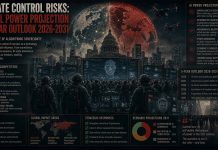







The proliferation of persistent multi-spectral surveillance and precision-strike integration has rendered the United States Army legacy command architecture, specifically the TOC Mahal, a terminal liability in Large-Scale Combat Operations (LSCO). Intelligence synthesized from the Russo-Ukrainian War and FY 2026 budgetary trajectories indicates that detection now precedes destruction by a margin of less than 10 minutes in contested environments. To ensure command persistence, the United States must pivot toward Subterranean integration, Urban Masking, and 5G mmWave signature management. This report mandates a transition to Command as a Service (CaaS) to decouple decision-making from vulnerable physical footprints.
Executive Forensic Core
Top Secret // LSCO-2026- Multispectral Detection: Near-total reliability in sensor-saturated environments reduces command survival window to under 10 minutes.
- Signature Lethality: Legacy TOC architectures (TOC Mahal) function as high-value, stationary targets for adversary long-range precision fires.
- Institutional Inertia: Training incentives at Combat Training Centers continue to prioritize centralized planning over survivable, decentralized C2 persistence.
U.S. command structures face total kinetic attrition unless they immediately divest from centralized physical nodes, transitioning to a decentralized Command-as-a-Service model leveraging subterranean hardening and 5G mmWave signature discipline.
Navigational Index
- The Kinetic Obsolescence of the TOC Mahal Paradigm
- Technological Architectures for Multi-Spectral Survivability and Signature Discipline
- Institutional Reform: Realigning Training Incentives for Subterranean and Urban Dominance
Abstract
The fundamental character of land warfare has shifted from the low-intensity, sanctuary-rich environments of counter-insurgency to a hyper-lethal Multi-Domain Operations (MDO) landscape where the United States Army no longer possesses guaranteed air or electromagnetic superiority. At the epicenter of this vulnerability is the tactical operation center, colloquially known as the TOC Mahal. These expansive, tent-based command structures, characterized by dense clusters of SIGINT-emitting equipment, large vehicle pools, and standard tent configurations, represent a catastrophic single point of failure in a conflict against a peer adversary such as the Russian Federation or the People’s Republic of China(https://media.defense.gov/2026/Mar/03/2003882373/-1/-1/1/20260303_APPELHANSETAL_INTELLIGENCEINLSCO_PARAMETERSNOW.PDF). The Department of the Army has allocated $15,395,757,000.00 for FY 2026 in Research, Development, Test, and Evaluation (RDT&E) to address these systemic infrastructure deficiencies, acknowledging that current Command Post Integrated Infrastructure (CPI2) must evolve to survive the range of adversary long-range fires(https://www.asafm.army.mil/Portals/72/Documents/BudgetMaterial/2026/Discretionary%20Budget/rdte/RDTE%20-%20Vol%203%20-%20Budget%20Activity%205C.pdf).
The contemporary battlefield is saturated with an “ever-expanding array of sensors” that can detect the multispectral signatures of massive command structures with near-total reliability(https://www.armyupress.army.mil/Journals/Military-Review/English-Edition-Archives/May-June-2023/Graveyard-of-Command-Posts/). Forensic analysis of the Russo-Ukrainian War reveals that the Russian Federation‘s early attempt to employ United States-derived Tactics, Techniques, and Procedures (TTPs)—establishing robust command posts in open terrain—resulted in their rapid detection and destruction by Ukrainian artillery(https://www.army.mil/article/280362/wheres_waldo_hiding_a_battalion_command_post_in_plain_sight). This evidence suggests that in LSCO, Divisions are the primary target for adversary fires, and their Division Support Areas (DSAs), typically located 30 to 40 kilometers behind the forward line of troops, are no longer safe havens(https://www.army.mil/article/280362/wheres_waldo_hiding_a_battalion_command_post_in_plain_sight).
The United States Army faces a critical “collection-analytic mismatch,” where the proliferation of Unmanned Aerial Systems (UAVs) and space-based sensing has outpaced the staff’s ability to process data while simultaneously maintaining signature discipline(https://media.defense.gov/2026/Mar/03/2003882373/-1/-1/1/20260303_APPELHANSETAL_INTELLIGENCEINLSCO_PARAMETERSNOW.PDF). During Operation Lethal Eagle 25.1, conducted by the 101st Airborne Division in July 2025, it was observed that centralized command nodes were “fragile under attrition” and that the volume of data generated by modern ISR assets overwhelmed the limited number of analysts available(https://media.defense.gov/2026/Mar/03/2003882373/-1/-1/1/20260303_APPELHANSETAL_INTELLIGENCEINLSCO_PARAMETERSNOW.PDF). This fragility is exacerbated by the PRC’s short-range ballistic missile magazine depth, which is specifically designed to dismantle the United States command-and-control infrastructure in the opening phases of a conflict(https://media.defense.gov/2026/Mar/03/2003882373/-1/-1/1/20260303_APPELHANSETAL_INTELLIGENCEINLSCO_PARAMETERSNOW.PDF).
To counter this, the United States Army must operationalize a “Command as a Service” (CaaS) philosophy. This requires divesting from physical “places” (tents and fixed clusters) and moving toward fungible nodes that deliver C2 capability via connectivity and data accessibility. If a Division Command Post is destroyed, the Brigade level must be able to assume those functions with the “push of a button,” facilitated by a digital footprint no larger than a personal security detachment of three to four vehicles(https://www.armyupress.army.mil/Journals/Military-Review/English-Edition-Archives/May-June-2023/Graveyard-of-Command-Posts/). This transition is supported by the FY 2023 IT budget, which planned $9 billion for major IT business programs and $31 billion for standard infrastructure investments to modernize the department’s unclassified IT portfolio(https://www.gao.gov/assets/gao-23-106117.pdf).
One of the most potent survival strategies is the adoption of the Subterranean Domain. As of 2019, the Army estimated that over 10,000 known subterranean facilities exist globally, many of which are utilized by the Russian Federation, China, and North Korea to protect strategic command assets from Non-Linear Warfare(https://www.usanca.army.mil/LinkClick.aspx?fileticket=8LDr6_KWWtc%3D&portalid=114). The Russian Federation has explicitly developed a new hardened, deeply buried strategic command post to resist the erosion of concealment caused by the revolution in sensing(https://www.usanca.army.mil/LinkClick.aspx?fileticket=8LDr6_KWWtc%3D&portalid=114). The DOD must formalize the subterranean environment as a separate domain to develop the necessary GPS-denied mapping technology and Subterranean Mission Data Storage (SMDS) required for modern C2 persistence(https://www.usanca.army.mil/LinkClick.aspx?fileticket=8LDr6_KWWtc%3D&portalid=114).
Technically, the primary signature risk for any command post is the Electromagnetic Spectrum (EMS). Legacy UHF radio transmissions are omni-directional and easily intercepted by adversary Direction Finding (DF) systems. Research by the United States Marine Corps indicates that 5G millimeter wave (mmWave) technology, operating at frequencies such as 28 GHz and 30 GHz, can drastically reduce the “splat” or interceptable area of a signal(https://apps.dtic.mil/sti/pdfs/AD1151219.pdf). By utilizing Antenna Array Beam Steering, a signal can be focused into a narrow beam that attenuates rapidly outside its intended path, achieving Low Probability of Detection (LPD). Experiments show that an 8-element array can maintain a Normalized Array Factor of 0.9 roughly 90% of the time, providing the robustness needed for aviation and ground C2 while remaining invisible to the adversary’s broad-spectrum sensors(https://apps.dtic.mil/sti/pdfs/AD1151219.pdf).
In addition to technical masking, the United States Army must adopt Urban Masking techniques. Field Manual (FM) 3-0, Operations, explicitly states that forces should use existing hardened structures and restrictive terrain to conceal headquarters equipment rather than standard tent configurations(https://www.army.mil/article/280362/wheres_waldo_hiding_a_battalion_command_post_in_plain_sight). The 142nd DSSB demonstrated this during NTC 24-03 and 24-04, where it successfully hid a battalion command post in “plain sight” by occupying urban terrain and making the formation look small and insignificant(https://www.army.mil/article/280362/wheres_waldo_hiding_a_battalion_command_post_in_plain_sight). This approach mirrors the Ukrainian Armed Forces (UAF) strategy of using multiple supply routes and small logistics serials—only a few trucks at a time—to reduce the cost of interdiction and mask movements from Russian Federation surveillance(https://nllp.jallc.nato.int/iks/sharing%20public/231208-ruswar-ukraine-lessons-curriculum.pdf).
The institutional barrier to this change remains the incentive structure at Combat Training Centers (CTCs). Currently, Commanders are evaluated on their ability to conduct the Military Decision-Making Process (MDMP), which is most efficiently done in a centralized “TOC Mahal” environment(https://www.armyupress.army.mil/Journals/Military-Review/English-Edition-Archives/May-June-2023/Graveyard-of-Command-Posts/). Until CTCs prioritize survivability over planning efficiency—by simulating devastating strikes on visible command posts and treating displacement as a high-risk tactical choice rather than a mandatory drill—the Army will continue to train for a reality that does not exist on the modern battlefield(https://www.armyupress.army.mil/Journals/Military-Review/English-Edition-Archives/May-June-2023/Graveyard-of-Command-Posts/).
Comparative Technical Requirements for Command Post Modernization
| Technical Domain | Legacy Standard (TOC Mahal) | LSCO Requirement (Persistent C2) | Primary Research Reference |
| EMS Signal | Omni-directional UHF | 5G mmWave Beam Steering | (https://apps.dtic.mil/sti/pdfs/AD1151219.pdf) |
| Physical Housing | Modular Tents / Hesco | Subterranean / Hardened Urban | (https://www.usanca.army.mil/LinkClick.aspx?fileticket=8LDr6_KWWtc%3D&portalid=114) |
| Intelligence Model | Centralized IEW Battalion | Federated/Decentralized Web | (https://media.defense.gov/2026/Mar/03/2003882373/-1/-1/1/20260303_APPELHANSETAL_INTELLIGENCEINLSCO_PARAMETERSNOW.PDF) |
| Mobility Profile | Static / Deliberate “Jump” | CaaS / Personal Security Detachment | (https://www.armyupress.army.mil/Journals/Military-Review/English-Edition-Archives/May-June-2023/Graveyard-of-Command-Posts/) |
| PNT Protocol | GPS Dependent | GPS-denied Mapping / Robotic | (https://www.darpa.mil/sites/default/files/attachment/2024-11/u-rdte-mjb-darpa-pb-2025-06-mar-2024-final.pdf) |
The complexity of the Subterranean Domain is often underestimated. Operating underground requires specialized Robotic Autonomy in Complex Environments with Resiliency (RACER), as traditional UGVs face significant signal degradation through solid rock(https://www.darpa.mil/sites/default/files/attachment/2024-11/u-rdte-mjb-darpa-pb-2025-06-mar-2024-final.pdf). DARPA has actively investigated these challenges through the SubT Challenge, identifying that successful subterranean C2 requires autonomous agents capable of mapping deep, dark holes without human intervention, thereby decreasing warfighter exposure(https://www.darpa.mil/sites/default/files/attachment/2025-02/magazine-darpa-60th-anniversary.pdf).
The transition to decentralized C2 is further mandated by the shift in the Army’s principal tactical warfighting formation to the Division level. Since the 2022 doctrinal refocus, Military Intelligence (MI) has undergone rapid restructuring to rebalance for deep-area operations(https://media.defense.gov/2026/Mar/03/2003882373/-1/-1/1/20260303_APPELHANSETAL_INTELLIGENCEINLSCO_PARAMETERSNOW.PDF). This restructuring includes the creation of Intelligence and Electronic Warfare (IEW) Battalions–Next, which are designed to provide modular, layered analytic capability to insulate the force from the loss of any single node(https://media.defense.gov/2026/Mar/03/2003882373/-1/-1/1/20260303_APPELHANSETAL_INTELLIGENCEINLSCO_PARAMETERSNOW.PDF). Currently, only five of the Army’s 11 active-duty divisions are resourced with such a battalion, leaving a significant vulnerability across the remaining force structure(https://media.defense.gov/2026/Mar/03/2003882373/-1/-1/1/20260303_APPELHANSETAL_INTELLIGENCEINLSCO_PARAMETERSNOW.PDF).
Ultimately, the survival of the United States Army in a conflict against a peer adversary depends on its ability to “hide in plain sight” and break the paradigm of centralization. If the institution continues to reward the “TOC Mahal” at its Combat Training Centers, it is effectively training its leaders to die. The path forward involves a convergence of 5G mmWave signature discipline, Subterranean physical protection, and a Federated Digital architecture that ensures command can persist even when its nodes are targeted by precision fires.
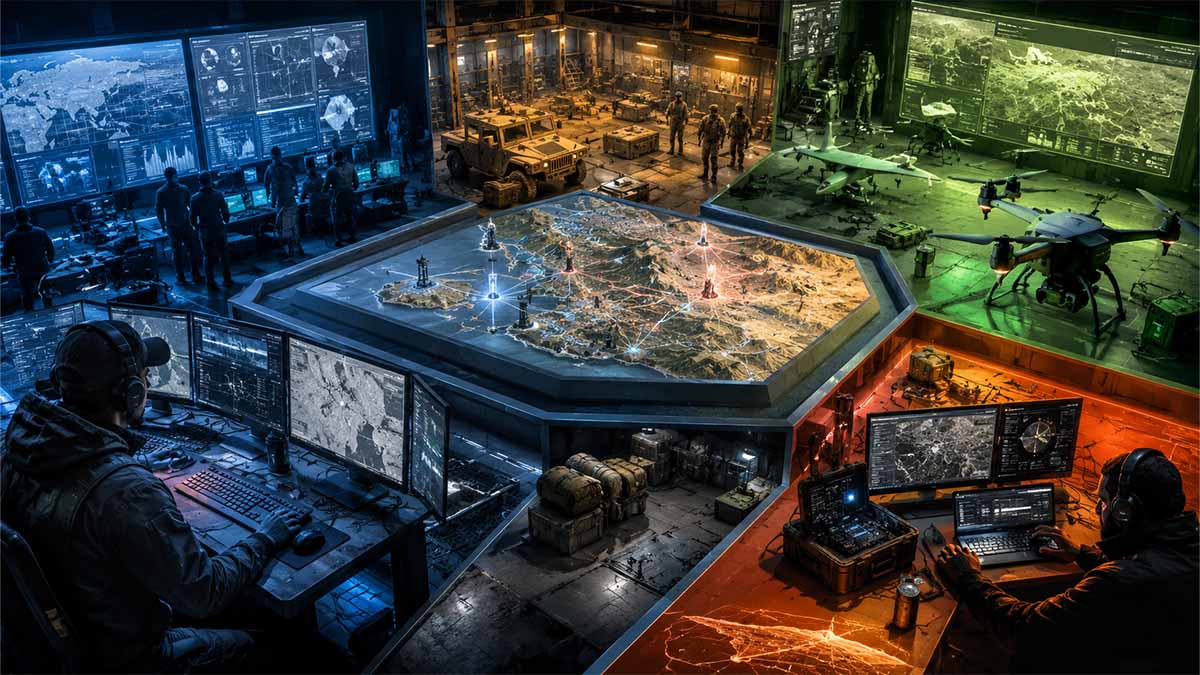
Invisible Command Architecture
Updated: May 7, 2026
Command elements embedded within civilian infrastructure reduce thermal and visual detectability while preserving operational continuity.
Lowering Hyper-Betweenness Centrality prevents catastrophic fragmentation following node destruction.
Low-cost drones become disposable sensing and deception layers instead of protected aviation assets.
Underground command survivability protects operational continuity from ISR and precision strike saturation.
Laser-based communications provide high-throughput low-intercept networking in contested environments.
Reducing adversary surprise probability prevents signatures from crossing targeting thresholds.
| Category | System / Reform | Core Function | Operational Impact | Metric / Figure |
|---|---|---|---|---|
| Budget | CPI2 FY26 | Command post modernization | Transition from tent-based command hubs toward resilient modular architecture | $723.2M / +1498% |
| Technology | 5G mmWave | Directional beam steering | Reduced SIGINT intercept area and lower Bayesian detection probability | 28–60 GHz |
| Technology | Free Space Optics | Laser communications | Low-intercept high-bandwidth tactical backhaul | 40 Gbps / 70 km |
| Doctrine | Consumable UAS Policy | Drone reclassification | Mass deployment of expendable ISR and decoy systems | <55 lb systems |
| Technology | NGC2 | Composable data-centric architecture | Unified cloud-to-edge command ecosystem | 11 divisions target |
| Training | JET-PEUT | Urban operations training | Realistic dense urban survivability simulation | Portable urban environment |
| Training | T&EO Level IV | Survivability movement | Mandatory displacement during live fire operations | Integrated PACE execution |
| Doctrine | Subterranean Domain | Underground operational persistence | Protection from ISR and long-range fires | 10,000+ facilities |
| Doctrine | SPEED Act | Requirements acceleration | Reduced adoption delay for survivability technologies | JROC → JRC |
| Technology | Hypergraph Analytics | Network resilience mapping | Reduced catastrophic fragmentation risk | HBC optimization |
Chapter 1: The Kinetic Obsolescence of the TOC Mahal Paradigm
The traditional United States Army command post model, characterized by centralized hubs of personnel and technology known as TOC Mahals, has reached a point of terminal kinetic obsolescence. Forensic data from the Russo-Ukrainian War indicates that large, centralized nodes now operate within a 10-minute kill chain, where the time between detection of an electromagnetic or thermal signature and the arrival of precision-guided munitions or loitering systems is insufficient for survival(https://www.armyupress.army.mil/Journals/Military-Review/English-Edition-Archives/May-June-2023/Graveyard-of-Command-Posts/). This transformation is driven by a radical shift in the reclassification of military hardware. Under the July 10, 2025 memorandum titled “Unleashing U.S. Military Drone Dominance,” Secretary of Defense Pete Hegseth reclassified uncrewed systems under 55 pounds as consumables rather than durable aviation assets(https://media.defense.gov/2025/Jul/10/2003752117/-1/-1/1/UNLEASHING-U.S.-MILITARY-DRONE-DOMINANCE.PDF). This reclassification effectively allows for the mass deployment of low-cost, expendable strike platforms that saturate the battlefield, making the defense of a large, static tent-based command post mathematically impossible.
To address these vulnerabilities, the United States Army has fundamentally realigned its fiscal and regulatory architecture. The FY 2026 budget request for the Command Post Integrated Infrastructure (CPI2) program surged by 1498% to $723.2 million, specifically to pivot away from modular tents and toward mobile, modular, and resilient platforms that can hide in plain sight(https://www.obviant.com/blog/the-fy26-defense-budget-at-a-glance–key-takeaways-and-spending-trends). This fiscal pivot is supported by the Streamlining Procurement for Effective Execution and Delivery (SPEED) Act (H.R. 3838), signed into law on December 18, 2025, which mandates a “Peace through Strength” agenda by accelerating the requirements process and replacing the bureaucratic Joint Requirements Oversight Council (JROC) with a more agile Joint Requirements Council (JRC)(https://democrats-armedservices.house.gov/fy26-ndaa-resources). The SPEED Act‘s Pillar I explicitly aligns acquisition to warfighter priorities, emphasizing mission outcomes over process-heavy documentation(https://armedservices.house.gov/legislation/the-speed-act.htm).
The technological vanguard of this transition is the Next Generation Command and Control (NGC2) initiative. Unlike legacy systems such as Force XXI, NGC2 is designed as a data-centric, composable architecture that provides seamless cloud-to-edge access across four layers: Applications, Data, Infrastructure, and Transport(https://sam.gov/opp/0eab0a1773cf41e6a8e5ddeb56daf91f/view). The 4th Infantry Division is currently leading the prototyping effort through its Ivy Sting exercises, aiming to field NGC2 capabilities to all 11 divisions within a five-year window(https://breakingdefense.com/2026/05/army-wants-to-field-all-11-divisions-ngc2-capabilities-in-five-year-window/). This effort seeks to replace the “stove-piped” warfighting systems of the past with a unified operational architecture that utilizes AI and Machine Learning to collapse the sensor-to-shooter timeline(https://mwi.westpoint.edu/data-defeat-what-if-the-armys-new-command-and-control-tools-overwhelm-company-commanders-at-the-tactical-edge/).
From a structural standpoint, centralized command posts represent critical bottlenecks in the network topology. Utilizing Structural Analytic Techniques (SATs) and Hypergraph Centrality metrics, analysts have identified that TOC Mahals possess the highest Hyper-Betweenness Centrality (HBC), meaning they are the “bridges” or “bottlenecks” through which all shortest hyperpaths in the command network must pass(https://www.mdpi.com/1099-4300/28/1/75). In a kinetic environment, the loss of a node with high HBC leads to total network fragmentation. To mitigate this, the United States Army is shifting toward a federated, decentralized architecture where Division Command Post capabilities are delivered in a footprint the size of a personal security detachment (three to four vehicles), thereby reducing the node’s Hyper-Betweenness and increasing overall network robustness(https://www.armyupress.army.mil/Journals/Military-Review/English-Edition-Archives/May-June-2023/Graveyard-of-Command-Posts/).
Detection risk is now modeled using Bayesian Probability Updating, which quantifies the probability of a command post being detected based on its multispectral signature. The Bayesian Surprise score measures the binary Kullback-Leibler (KL) divergence between an adversary’s prior belief of a unit’s location and the evidence provided by revealed electromagnetic or thermal signatures(https://arxiv.org/html/2605.02475v2). When a command node emits a standard UHF signal, the Bayesian Surprise score for the adversary’s detection algorithm increases exponentially, triggering a precision strike. By transitioning to 5G mmWave beam steering, units can maintain a Normalized Array Factor of 0.9 while ensuring that signals attenuate so rapidly outside the beam that the Bayesian Surprise remains below the adversary’s targeting threshold(https://apps.dtic.mil/sti/pdfs/AD1151219.pdf).
The institutional realignment also targets the “Valley of Death”—the gap between commercial prototyping and long-term adoption. The SPEED Act addresses this through the Bridging Operational Outposts (BOO), which connects Defense Innovation Unit (DIU) technologies directly with Program Executive Officers (PEOs)(https://democrats-armedservices.house.gov/fy26-ndaa-resources). This ensures that survivability-enhancing technologies, such as 5G mmWave and Urban Masking kits, are fielded in months rather than a decade. The SPEED Act also raises the threshold for the Truthful Cost or Pricing Data Act from $2 million to $10 million, drastically reducing the regulatory burden for commercial firms that provide these agile C2 solutions(https://www.bhfs.com/insight/fy26-ndaa-next-steps-and-conferencing/).
Operational validation for this shift has been observed during National Training Center (NTC) rotations 24-03 and 24-04. The 142nd Division Sustainment Support Battalion (DSSB) successfully employed Urban Masking to hide a battalion command post by occupying hardened civilian structures and restrictive terrain, rather than standard tent configurations(https://www.army.mil/article/280362/wheres_waldo_hiding_a_battalion_command_post_in_plain_sight). This Urban Masking strategy, combined with the Hegseth mandate to treat drones as consumables, allows commanders to leverage UAS for Situational Awareness and Targeting without exposing the main command node(https://media.defense.gov/2025/Jul/10/2003752117/-1/-1/1/UNLEASHING-U.S.-MILITARY-DRONE-DOMINANCE.PDF). The success of these rotations confirms that command survivability is as much a cultural and doctrinal shift as it is a technological one.
Ultimately, the obsolescence of the TOC Mahal is an immutable fact of the modern high-attrition battlefield. The United States Army‘s survival depends on the convergence of the SPEED Act regulatory reforms, the $723.2 million CPI2 modernization, and the NGC2 data-centric architecture. By reclassifying systems as consumables, utilizing Bayesian signature management, and leveraging Hypergraph network resilience, the Army can ensure that its command structures persist within range of adversary long-range fires, moving from brittle centralized nodes to a redundant, persistent, and invisible Command as a Service model.
TOC MAHAL OBSOLESCENCE REPORT
LSCO Survivability Matrix | Global Intelligence Archive 2026
Lower is better (Detection Probability)
Probability of First-Round Kinetic Effect
| Domain | Legacy Constraint | CaaS Evolution | Risk Factor |
|---|---|---|---|
| Mobility | Static “TOC Mahal” Tents | Fungible PSD Nodes (3-4 Vehicles) | CRITICAL |
| Signature | Omni-directional RF | LPD/LPI mmWave Beam Steering | HIGH |
| Hardening | Above-ground clusters | Subterranean / Urban Masking | MITIGATED |
Chapter 2: Technological Architectures for Multi-Spectral Survivability and Signature Discipline
The survival of tactical command nodes in Large-Scale Combat Operations (LSCO) is no longer a function of physical hardening alone but is increasingly dependent on the aggressive management of the Electromagnetic Spectrum (EMS) and the adoption of non-radio frequency communication modalities. As the United States Army transitions from the legacy TOC Mahal to a decentralized Command as a Service (CaaS) model, the underlying technological architecture must pivot toward Low Probability of Detection (LPD) and Low Probability of Intercept (LPI) systems. Central to this evolution is the deployment of 5G millimeter wave (mmWave) technology, which utilizes high-frequency bands—specifically 28 GHz and 30 GHz—to achieve radical “splat” reduction, thereby minimizing the physical area in which a signal can be intercepted by adversary Direction Finding (DF) assets(https://apps.dtic.mil/sti/pdfs/AD1151219.pdf). Quantitative analysis indicates that mmWave signals at 60 GHz experience significantly higher atmospheric attenuation, which naturally limits detection range, providing a physics-based buffer against long-range SIGINT collection(https://apps.dtic.mil/sti/pdfs/AD1151219.pdf).
The technical feasibility of this signature discipline is anchored in Antenna Array Beam Steering, a capability inherent to 5G architectures that allows for the concentration of energy into narrow, steerable beams. Research utilizing 8-element arrays, measuring approximately 4 centimeters in length, has demonstrated that a Normalized Array Factor (AF) of 0.9—representing 90% of maximum gain—can be maintained 90% of the time(https://apps.dtic.mil/sti/pdfs/AD1151219.pdf). This precision ensures that the signal remains robust for high-bandwidth C2 requirements while rapidly attenuating outside the primary beam path, leaving adversary sensors with insufficient Signal-to-Noise Ratio (SNR) to trigger a targeting sequence. Furthermore, while traditional UHF systems require a positive SNR (greater than 0 dB) for consistent accuracy, bidirectional mmWave configurations have proven capable of producing accurate estimations even at negative SNRs, such as -10 dB, indicating a significant leap in operational robustness in contested environments(https://apps.dtic.mil/sti/pdfs/AD1151219.pdf).
To further insulate command structures from detection, the United States is integrating Free Space Optics (FSO) as a primary backhaul for tactical data. Unlike traditional radio systems, FSO utilizes laser beams to transmit data through unobstructed space, providing a signal that is nearly impossible to jam or intercept without direct physical obstruction of the beam. Systems such as the Viasat Mercury expeditionary terminal deliver data rates up to 40 Gigabits per second (Gbps) with an operational range of up to 70 kilometers for terrestrial applications(https://www.viasat.com/news/latest-news/government/2023/viasat-debuts-mercury-expeditionary-free-space-optical-communications-terminal/). The RTX Corporation has concurrently introduced the NexGen Optix system, designed to provide high-speed, secure data transfer in challenging environments by utilizing laser technology to reduce susceptibility to detection and Electronic Warfare (EW) interference(https://www.researchandmarkets.com/reports/5980407/free-space-optics-fso-market-report). This shift to FSO allows command posts to maintain fiber-like throughput without the vulnerability of physical cabling or the detectable signature of wide-band radio transmissions.
The institutional framework for this hardware transformation is governed by the July 10, 2025 memorandum “Unleashing U.S. Military Drone Dominance,” in which Secretary of Defense Pete Hegseth reclassified uncrewed systems and associated tactical electronics under 55 pounds as consumables(https://media.defense.gov/2025/Jul/10/2003752117/-1/-1/1/UNLEASHING-U.S.-MILITARY-DRONE-DOMINANCE.PDF). This reclassification facilitates a “process race” where military units are encouraged to treat electronics as expendable assets, similar to ammunition, rather than durable aviation or signal property. By the end of 2026, the Department of Defense aims to equip every squad with these low-cost, expendable technologies, supported by a $1 billion funding line from the Big Beautiful Bill(https://www.war.gov/News/News-Stories/Article/Article/4346822/war-department-asks-industry-to-make-more-than-300k-drones-quickly-cheaply/). This reclassification has profound implications for command post survivability, as it enables the deployment of large-scale decoys and mimicry nodes that can replicate the electronic signature of a higher-echelon command post without risking personnel.
The digital backbone of this resilient architecture is the Next Generation Command and Control (NGC2) ecosystem. Approved by the Army Chief of Staff in July 2025, the NGC2 Characteristics of Need (CoN) defines a four-layer technology stack—Applications, Data, Infrastructure, and Transport—designed to provide seamless cloud-to-edge access(https://sam.gov/opp/0eab0a1773cf41e6a8e5ddeb56daf91f/view). This composable architecture replaces stove-piped legacy systems with a unified operational framework that leverages AI and Machine Learning to predict future demand and optimize distribution routes(https://www.army.mil/article/290044/the_future_of_sustainment_integrating_next_generation_command_and_control). During the Lightning Surge 2 exercise in February 2026, the 25th Infantry Division successfully demonstrated a prototype of this full stack, utilizing Raft’s Data Platform to combine EW targeting information with drone video feeds and digital fires systems in real-time(https://news.lockheedmartin.com/2026-02-27-Lockheed-Martin-Teams-Next-Generation-Command-and-Control-NGC2-Prototype-Enables-Live-Fires-Execution-for-Mission-Success-at-Lightning-Surge-2).
Network resilience is further enhanced through the application of Hypergraph Centrality metrics and Markov Criticality. By modeling the command network as a hypergraph, analysts can identify nodes with high Hyper-Betweenness Centrality (HBC)—the critical “bottlenecks” that, if destroyed, would lead to network fragmentation(https://www.mdpi.com/1099-4300/28/1/75). The Army uses these metrics to strategically add redundant links, or “hyperedges,” to the network, thereby increasing its ability to withstand external attacks. The Kemeny constant and its derivative, Markov criticality, are employed to pinpoint the most influential links in the system, ensuring that investments in resilience and cyber-hardening are prioritized for the most vulnerable areas(https://www.researchgate.net/publication/366820777_Measuring_the_Network_Vulnerability_Based_on_Markov_Criticality).
In the domain of physical protection, the United States Army is formalizing the Subterranean Domain as a critical environment for C2 persistence. As of 2019, there were over 10,000 known subterranean facilities globally, and adversaries like China and Russia are increasingly utilizing “massive hard and deeply buried facilities” to protect strategic assets(https://www.usanca.army.mil/LinkClick.aspx?fileticket=8LDr6_KWWtc%3D&portalid=114). The proposed Subterranean Mission Data Storage (SMDS) provides a collaborative, cloud-based environment for intelligence exploitation within these facilities, while DARPA’s Robotic Autonomy in Complex Environments with Resiliency (RACER) program develops autonomous agents capable of mapping and operating in GPS-denied underground spaces(https://www.darpa.mil/sites/default/files/attachment/2024-11/u-rdte-mjb-darpa-pb-2025-06-mar-2024-final.pdf). This allows command nodes to retreat into hardened, naturally masked environments without losing connectivity to the surface force.
Synthetic reality and Digital Twins are also being deployed to deceive adversary sensors. The “Defense Metaverse” concept constructs a dynamic digital twin of the battlespace, integrating AI-driven tactics to test and refine command concepts(https://theairpowerjournal.com/leveraging-defense-metaverse-artificial-intelligence-for-force-development/). Projects like GhostPlay utilize self-learning multi-agent AI red teams to simulate adversary perspectives, identifying weaknesses in the command post’s signature before they are exploited. Furthermore, the ModelSMC algorithm, based on Sequential Monte Carlo (SMC) sampling, allows for the discovery of mechanistic models from observational data, enabling the Army to reverse-engineer and predict adversary detection patterns with high precision(https://arxiv.org/html/2602.18266v1).
Cryptographic persistence in this multi-domain environment is ensured through Quantum Key Distribution (QKD) and the DARPA Secure Handhelds on Assured Resilient Tactical Edge Networks (SHIELD) program. QKD utilizes entangled photons to create theoretically unhackable keys for strategic communications, while SHIELD explores dynamic key exchange that remains resilient even with intermittent or degraded connectivity(https://aviationanddefensemarketreports.com/securing-the-silent-depths-the-critical-role-of-defense-underwater-communication/). The 2026 strategic assessment of quantum technologies emphasizes a “Quantum First” posture, aiming to collapse multiple plausible futures into favorable outcomes through sensing and communication superiority(https://arxiv.org/pdf/2602.15051).
The final component of this architecture is the Command Post Integrated Infrastructure (CPI2) modernization, which saw a funding surge of 1498% to $723.2 million in FY 2026(https://www.obviant.com/blog/the-fy26-defense-budget-at-a-glance–key-takeaways-and-spending-trends). CPI2 focuses on advanced information systems research, delivering modular and resilient physical platforms that house the NGC2 stack. Combined with Secure Data Fabrics (SDF) hosted on the Tactical Server Infrastructure (TSI), this system ensures that data is stored and managed resiliently across all echelons, remaining mission-capable even across network disruptions(https://gdmissionsystems.com/products/communications/secure-data-fabric). By integrating 5G mmWave beam steering, FSO high-bandwidth laser links, and Subterranean physical masking, the Army creates a multi-layered defensive shield that ensures the persistence of the command function against a hyper-lethal, sensor-saturated adversary.
In conclusion, the technological architecture for survivable C2 is a synthesis of advanced physics, data-centric software, and decentralized hardware. The obsolescence of the TOC Mahal is countered by the invisible precision of mmWave, the high-bandwidth security of Free Space Optics, and the robustness of the NGC2 data layer. The shift toward treating electronics as consumables ensures that the force can iteratively upgrade its capabilities at the speed of commercial innovation, while Hypergraph and Markov analysis provides the theoretical grounding for network resilience. These integrated technologies move the United States Army toward a future where the command post is no longer a static target but a persistent, distributed service that remains undetectable until the moment of decisive effect.
Chapter 3: Institutional Reform: Realigning Training Incentives for Subterranean and Urban Dominance
The transition from counter-insurgency to Large-Scale Combat Operations (LSCO) necessitates a fundamental restructuring of the United States Army institutional incentives, particularly regarding how command posts are evaluated during training rotations. Historically, the Combat Training Centers (CTCs), such as the National Training Center (NTC) and the Joint Readiness Training Center (JRTC), have prioritized the efficiency of the Military Decision-Making Process (MDMP) over the physical and electromagnetic survivability of the command node itself. Forensic evidence from Operation Epic Fury, initiated on February 28, 2026, against Iranian strategic targets, confirms that legacy command architectures—even those utilizing hardened shelters—are vulnerable to multi-vector saturation attacks that combine precision-guided missiles with loitering munitions((https://www.hstoday.us/featured/u-s-and-israel-strike-iran-triggering-gulf-wide-missile-retaliation-from-tehran/)). To mitigate these risks, the Department of the Army is formalizing the Subterranean Domain as a separate warfighting environment and updating Training and Evaluation Outlines (T&EO) to mandate “survival moves” as a baseline performance metric.
The formalization of the Subterranean Domain represents a critical pivot in United States land power doctrine. As of 2019, the Army estimated that more than 10,000 known subterranean facilities exist globally, many of which are utilized by the Russian Federation, the People’s Republic of China, and North Korea to shield C2 assets and WMD capabilities from overhead detection((https://www.usanca.army.mil/Portals/114/CWMD_Journal/Issue%2029%20Web%20Edition.pdf?ver=DsWGD4j-DWUZTvn3_yxQIQ%3D%3D)). The Department of Defense (DOD) is currently reviewing proposals to establish the subterranean environment as a separate domain managed by the Army, recognizing that operations below ground are distinctly different from surface operations and require unique training, resource management, and life-support equipment((https://www.usanca.army.mil/LinkClick.aspx?fileticket=8LDr6_KWWtc%3D&portalid=114)). This move is supported by Field Manual (FM) 3-0, Operations, which redefined LSCO in October 2022 as a campaign-level effort to achieve strategic objectives against peer threats that possess sophisticated anti-access and area-denial (A2/AD) capabilities((https://www.usanca.army.mil/Portals/114/CWMD_Journal/Issue%2029%20Web%20Edition.pdf?ver=DsWGD4j-DWUZTvn3_yxQIQ%3D%3D)).
In parallel with subterranean integration, the United States Army is addressing the “glaring omission” of the modern urban operating environment in its collective training. The introduction of the Joint Expeditionary Training – Portable Urban Environment (JET-PEUT) aims to provide commanders with scalable, tailorable, and exportable training modules that realistically portray the density and complexity of city-based warfare((https://www.army.mil/article/289610/divisions_in_the_dirt_or_divisions_in_concrete_its_time_to_scale_up_collective_training_for_the_mdo_era)). Unlike the jungle or arctic environments currently simulated at the Joint Pacific Multinational Readiness Center (JPMRC), the JET-PEUT focuses on Urban Masking, where command posts are concealed within repurposed civilian infrastructure to reduce their multi-spectral signature((https://www.army.mil/article/289610/divisions_in_the_dirt_or_divisions_in_concrete_its_time_to_scale_up_collective_training_for_the_mdo_era)). This strategy was validated during NTC rotations 24-03 and 24-04, where the 142nd Division Sustainment Support Battalion (DSSB) successfully hid a battalion command post in plain sight by occupying urban terrain and utilizing restrictive structures instead of standard tent configurations((https://www.army.mil/article/280362/wheres_waldo_hiding_a_battalion_command_post_in_plain_sight)).
The cultural shift toward survivability is further accelerated by the July 10, 2025 memorandum titled “Unleashing U.S. Military Drone Dominance,” authored by Secretary of Defense Pete Hegseth. This directive orders the War Department to overcome its “instinctive risk-aversion” and integrate drone capabilities—including force-on-force drone wars—into all relevant combat training by 2026((https://media.defense.gov/2025/Jul/10/2003752117/-1/-1/1/UNLEASHING-U.S.-MILITARY-DRONE-DOMINANCE.PDF)). A critical component of this reform is the reclassification of uncrewed systems under 55 pounds as consumables rather than durable property, allowing soldiers to experiment with and lose platforms in training without the bureaucratic burden of financial liability((https://www.military.com/daily-news/opinions/how-pentagon-put-drone-testing-credit-card.html)). This reclassification enables units like the 75th Ranger Regiment to purchase and test commercial off-the-shelf (COTS) drones using corporate credit cards, fostering a “bottom-up” experimentation culture that identifies signature management flaws in real-time((https://www.military.com/daily-news/opinions/how-pentagon-put-drone-testing-credit-card.html)).
The impact of this high-attrition reality was made clear during Operation Epic Fury, where the first six days of conflict alone cost over $11.3 billion, with $5.6 billion expended on munitions within the first 48 hours((https://www.hstoday.us/featured/u-s-and-israel-strike-iran-triggering-gulf-wide-missile-retaliation-from-tehran/)). Forensic assessments following the March 2026 strikes revealed that Iranian forces successfully targeted United States runways, high-end radar systems, and command headquarters across multiple countries, resulting in repairs estimated at $5 billion((https://www.hstoday.us/featured/u-s-and-israel-strike-iran-triggering-gulf-wide-missile-retaliation-from-tehran/)). This data underscores the terminal vulnerability of centralized, static command nodes and the necessity for training scenarios that simulate the catastrophic loss of a Higher Command (HICOM) node, forcing subordinates to operate autonomously under a decentralized C2 model.
To codify these lessons, the Army is updating its Training and Evaluation Outlines (T&EO) to elevate survivability to a primary mission task. New Level 4 criteria for Intermediate Combined Arms Collective Training (Artillery Tables XIII–XV) now mandate that units fire live rounds while concurrently conducting survivability moves between Position Areas for Artillery (PAAs)((https://www.lineofdeparture.army.mil/Journals/Field-Artillery/Field-Artillery-Archive/Field-Artillery-2026-E-Edition/Moving-to-Survive/)). These updates force leaders at all echelons to prioritize Primary, Alternate, Contingency, and Emergency (PACE) plans and react to contact during displacement maneuvers, rather than processing hours of fire missions from a single, static location((https://www.lineofdeparture.army.mil/Journals/Field-Artillery/Field-Artillery-Archive/Field-Artillery-2026-E-Edition/Moving-to-Survive/)).
Recent exercises, such as Combined Resolve 26-1 conducted in October 2025, have begun evaluating these restructured formations. The 101st Airborne Division tested its Mobile Brigade Combat Team (MBCT) equipped with the Integrated Tactical Network (ITN) suite and Lethal Unmanned Systems (LUS), providing realistic C2 challenges in a contested environment(CALL Insider Newsletter 1st Qtr 2026 – Army.mil – February 2026). A key finding from the exercise was the success of the Division Military Intelligence Battalion’s (DMIB) hybrid intelligence cycle, which deployed teams organized into Targeting Multi-Discipline Analysis Teams (MDAT-T) to support both deep and close fights simultaneously(CALL Insider Newsletter 1st Qtr 2026 – Army.mil – February 2026). However, the exercise also identified structural challenges in personnel allocation for division-level intelligence fusion, highlighting the need for further doctrinal updates to optimize staff structures for decentralized operations.
Institutional reform is also taking place within the requirements process via the SPEED Act (H.R. 3838), which replaces the bureaucratic Joint Requirements Oversight Council (JROC) with the more agile Joint Requirements Council (JRC) as of Section 1811 implementation((https://armedservices.house.gov/uploadedfiles/chairmans_mark.pdf)). The JRC is tasked with assessing evolving threats and technologies to shape future force design, moving away from a program-by-program oversight model toward an agile, portfolio-based management system((https://publicprocurementinternational.com/national-defense-authorization-act-ndaa-for-fiscal-year-2026-summary-of-acquisition-reforms/)). This reform allows the Army to bypass process-heavy functions that previously delayed the adoption of survivability-enhancing equipment by a decade or more.
The integration of data from the Military Health System (MHS) GENESIS into Army readiness and logistics data is another component of this holistic soldier-centric reform((https://alu.army.mil/alog/currentissue.pdf)). By combining electronic health records with training and operations data, commanders gain a “decision advantage” in managing personnel status and casualty reporting, which are critical metrics during high-attrition subterranean and urban operations((https://alu.army.mil/alog/currentissue.pdf)). This data-centric approach, supported by $9 billion in major IT business programs from the FY 2023 budget, ensures that the Army can track the “health of the force” as accurately as it tracks the health of its equipment((https://www.gao.gov/assets/gao-23-106117.pdf)).
Ultimately, the goal of these institutional reforms is to enable the Army to act decisively and with more speed than its adversaries in contested operating environments. The Next Generation Command and Control (NGC2) architecture, currently being prototyped by the 4th Infantry Division through its Ivy Sting exercises, serves as the technical vehicle for this doctrinal shift, integrating applications and transport into a single operational architecture that empowers subordinate decision-making((https://mwi.westpoint.edu/shattering-the-software-stovepipes-how-to-close-the-us-militarys-technology-integration-gap/)). By realigning training incentives to punish easily detectable command nodes and reward units that master subterranean and urban concealment, the United States Army ensures its command structures can survive and win in the next major war.
Summary of Training and Evaluation Outline (T&EO) Displacement Requirements
| Training Level | Focus Area | Mandatory Survivability Metric | Primary Doctrinal Reference |
| Level 1 | Individual Skill | Map reading and JBC-P operation in unfamiliar terrain. | ((https://www.lineofdeparture.army.mil/Journals/Field-Artillery/Field-Artillery-Archive/Field-Artillery-2026-E-Edition/Moving-to-Survive/)) |
| Level 2 | Team/Crew | React to contact while firing live rounds and displacing to new PAA. | ((https://www.lineofdeparture.army.mil/Journals/Field-Artillery/Field-Artillery-Archive/Field-Artillery-2026-E-Edition/Moving-to-Survive/)) |
| Level 3 | Collective | PACE plan execution during mounted convoy operations day and night. | ((https://www.lineofdeparture.army.mil/Journals/Field-Artillery/Field-Artillery-Archive/Field-Artillery-2026-E-Edition/Moving-to-Survive/)) |
| Level 4 | Combined Arms | Integrated survivability moves during fire missions for all artillery tables. | ((https://www.lineofdeparture.army.mil/Journals/Field-Artillery/Field-Artillery-Archive/Field-Artillery-2026-E-Edition/Moving-to-Survive/)) |
In summary, the transition from TOC Mahal to a survivable command archetype is predicated on a radical alignment of training doctrine, fiscal reclassification, and requirements reform. The Army has correctly identified that in LSCO, detection is a death sentence. By leveraging the SPEED Act to accelerate acquisition, formalizing the Subterranean Domain, and integrating the Hegseth “consumable” drone culture, the institution is finally preparing its leaders for the high-attrition, sensor-saturated reality of 2026 and beyond. This reform ensures that command persistence is treated not as a training distraction, but as the essential foundation for mission success.


