








Executive Summary
As of May 6, 2026, the Islamic Republic of Iran has failed to execute a coordinated kinetic operation within the United States homeland, despite the March 2026 IRGC mandate for retaliatory strikes. This analysis identifies a decoupling of intent and capability driven by the systematic neutralization of Unit 4000 leadership and a -6.1% GDP contraction. While “inspired” attacks in Michigan and Texas occurred, state-directed plots remain paralyzed by the U.S.-led Operation Epic Fury. This report synthesizes forensic counterterrorism data, macroeconomic indicators, and succession dynamics to explain the current operational dormancy of Iranian surrogate networks.
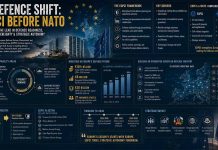
EXECUTIVE FORENSIC CORE
Unit 4000 Decapitation & Iranian Strategic Paralysis • May 2026
3 Critical Risk Drivers
Aggressive Iranian cyber operations using agentic AI targeting U.S. government and critical infrastructure networks.
“Gig-economy” terror model and inspired lone-actor attacks via European and U.S. surrogate networks.
Mojtaba Khamenei’s reorientation amid −6.1% GDP contraction may drive new asymmetric tactics.
Impact Matrix
Index
- The Kinetic Decapitation: Forensic Analysis of Unit 4000 and the Attrition of the IRGC-IO Command Architecture.
- Economic Weaponization and Financial Asymmetry: Quantifying the Impact of the Maritime Blockade on Proxy Funding.
- The Succession Pivot: Mojtaba Khamenei’s Doctrine and the Strategic Reorientation of External Operations.
The Architecture of Iranian Strategic Paralysis
The geopolitical status of the United States homeland in May 2026 is defined by a statistically anomalous period of kinetic quiescence following the February 28, 2026 commencement of Operation Epic Fury. Despite the Islamic Revolutionary Guard Corps (IRGC) issuing an explicit directive through the Qods Force that the United States “will no longer be safe” and that threats would be delivered to Americans “in their own homes,” no state-coordinated strike has materialized on U.S. soil(https://warontherocks.com/between-intent-and-capability-assessing-the-lack-of-iranian-attacks-on-the-u-s-homeland/). This state of strategic paralysis represents a profound failure of the Iranian “homeland option,” an operational concept cultivated over a decade to provide Tehran with a coercive mechanism inside the United States. The Office of the Director of National Intelligence (ODNI) had previously assessed that Iran remained “committed to its decade-long effort to develop surrogate networks”(https://www.dni.gov/files/ODNI/documents/assessments/ATA-2026-Unclassified-Report.pdf). However, the convergence of high-intensity kinetic degradation of the IRGC-Intelligence Organization (IRGC-IO) and a systemic collapse of the Iranian economy has effectively severed the link between the regime’s escalatory intent and its tactical execution.
The Forensic Erosion of Unit 4000
The primary structural fracture point in the Iranian external operations apparatus is the kinetic neutralization of Unit 4000, the specialized division of the IRGC-IO responsible for sabotage and assassinations against Western targets. In late April 2026, a joint intelligence operation involving the Mossad, the Israel Defense Forces (IDF), and the Israel Security Agency (Shin Bet) revealed that Rahman Moqadam, the head of Special Operations Division (4000), was killed in a targeted airstrike within Iran(https://www.timesofisrael.com/israel-announces-exposure-of-iranian-terror-network-targeting-israelis-abroad/). Moqadam was a central node in the Iranian influence nebula, responsible for the recruitment and training of operatives specifically tasked with gathering SIGINT and pre-operational data on U.S. and Israeli political leaders and military installations(https://warontherocks.com/between-intent-and-capability-assessing-the-lack-of-iranian-attacks-on-the-u-s-homeland/).
The decapitation of Unit 4000 extended vertically to Majid Khademi, the head of the Revolutionary Guard Intelligence Organization, whose predecessor had also been neutralized during the fighting in June 2025(https://www.timesofisrael.com/israel-announces-exposure-of-iranian-terror-network-targeting-israelis-abroad/). The loss of Khademi and Moqadam, along with senior operator Mohsen Suri, has induced an “entropy-chaos” state within the IRGC-IO. The Department of Homeland Security (DHS) reported in June 2025 that the Iranian government had already been “unsuccessfully targeting critics of its regime” in the homeland for lethal attack(https://www.dhs.gov/sites/default/files/2024-10/24_0930_ia_24-320-ia-publication-2025-hta-final-30sep24-508.pdf). With the current command nodes eliminated, the Iranian surrogate networks lack the “operational trigger”—the authenticated, encrypted communication necessary to activate pre-positioned sleeper cells for high-consequence kinetic activity.
The “Gig-Economy” Terror Model and European Divergence
While the U.S. homeland has remained devoid of state-directed plots, a distinct “hybrid” model has emerged in Europe. A previously non-existent entity, Harakat Ashab al-Yamin al-Islamiyah (Islamic Movement of the Companions of the Right), has claimed a series of low-scale attacks in Sweden, Germany, and France(https://www.meforum.org/irgc). This group functions as a front for Iran-backed militias in Iraq, employing a “violence-for-hire” model that recruits teenagers and young adults via online platforms to conduct arson and stabbings(https://warontherocks.com/between-intent-and-capability-assessing-the-lack-of-iranian-attacks-on-the-u-s-homeland/).
In March 2026, this network released a video through a Telegram channel affiliated with Iran-backed militias, issuing a “final warning” to a Bank of America branch in France(https://www.hstoday.us/subject-matter-areas/counterterrorism/pro-iran-group-threatens-bank-of-america-branch-in-france-with-final-warning-to-leave/). This model provides Tehran with “reasonable deniability” and a “psychological effect” that bypasses the high risk of a state-directed attack in the United States. The U.S. counterterrorism posture, reinforced by Operation Epic Fury, has created a “leverage matrix” where the cost of being tied to a homeland plot is viewed by Iranian leaders as potentially regime-ending. President Donald Trump explicitly warned in June 2025 that “ANY RETALIATION BY IRAN… WILL BE MET WITH FORCE GREATER THAN WHAT WAS WITNESSED TONIGHT”(https://warontherocks.com/between-intent-and-capability-assessing-the-lack-of-iranian-attacks-on-the-u-s-homeland/).
Forensic Case Studies: Inspired vs. Directed Attacks
Analysis of recent incidents confirms the prevalence of “inspired” over “directed” activity. On March 12, 2026, Ayman Muhammad Ghazali, a 41-year-old U.S. citizen, attacked Temple Israel in Michigan(https://www.jns.org/wire/the-war-comes-home-jewish-communities-under-attack). Ghazali rammed a vehicle filled with fireworks into the synagogue, an attack stopped by armed guards before he self-inflicted a fatal head wound. While Ghazali‘s brother, Ibrahim Muhammad Ghazali, was a confirmed Hezbollah commander in the Badr Unit killed by the IAF one week prior, the FBI classified the event as a “Hizballah-inspired act of terrorism” rather than an IRGC operation(https://www.iranintl.com/en/202603155704). The perpetrator appeared to be acting out of personal grief rather than receiving tactical instructions from Unit 4000.
Similarly, the March 1, 2026 shooting at a bar in Austin, Texas, carried out by Ndiaga Diagne, resulted in three deaths and 15 injuries(https://www.pbs.org/newshour/nation/suspect-in-texas-bar-shooting-wore-property-of-allah-clothing-and-iranian-flag-emblem-according-to-ap-source). Diagne, a naturalized U.S. citizen originally from Senegal, was found wearing an Iranian flag emblem and a sweatshirt marked “Property of Allah“(https://cis.org/Arthur/Naturalized-Citizen-Identified-Austin-Shooter). Investigative summaries indicate that while the attack coincided with the launch of Operation Epic Fury, there was no linkage to Iranian security agencies or hired cutouts(https://en.wikipedia.org/wiki/2026_Austin_bar_shooting). These events underscore a “lone offender” threat that is exacerbated by the geopolitical climate but is currently disconnected from Tehran’s command-and-control.
Macroeconomic Weaponization and the Proxy Funding Collapse
The International Monetary Fund (IMF) reports that the Iranian economy is in a state of terminal contraction in 2026. Real GDP growth for Iran is projected at -6.1%, a decline of over eight percentage points from pre-war estimates(https://www.imf.org/external/datamapper/profile/IRN). This collapse is a direct result of the U.S. naval blockade, which as of April 29, 2026, had forced 42 vessels to turn back from Iranian ports or the Strait of Hormuz(https://sof.news/middle-east/epic-fury-update-2/).
Iranian inflation has reached 68.9%, and the current account balance has swung to a $5.4 billion deficit(https://www.imf.org/external/datamapper/profile/IRN). This financial exhaustion has created a “funding gap” for external proxies. The U.S. Treasury Department has utilized this vulnerability to target the Bonyad Mostazafan (the Foundation of the Oppressed), a shadow network used by the Supreme Leader to fund IRGC-QF activities(https://home.treasury.gov/news/press-releases/sm824). In April 2026, the OFAC designated 50 subsidiaries of the foundation across the energy and mining sectors, further constricting the revenue streams necessary to pay “kids for hire” or criminal cutouts for overseas operations(https://home.treasury.gov/news/press-releases/sm824).
The secondary impact of these economic conditions is visible in the commercial sector. Spirit Airlines declared bankruptcy on May 2, 2026, citing the fuel price surge caused by the Iran war, as crude oil reached $124.67 per barrel(https://www.timesofisrael.com/israel-announces-exposure-of-iranian-terror-network-targeting-israelis-abroad/). The IMF “severe scenario” warns that if the conflict drags into 2027, oil prices could hit $125 per barrel, leading to a global growth slowdown to 2%(https://www.jpost.com/middle-east/iran-news/article-895128). In this high-inflation environment, Tehran’s ability to sustain its “surrogate networks” in the United States is physically limited by the inability to move funds through a sanctioned and blockaded financial system.
Succession Dynamics: Mojtaba Khamenei and the New Redlines
The internal political landscape of Iran has shifted with the rise of Mojtaba Khamenei, who was named Supreme Leader in April 2026(http://www.bkcb13.nyc.gov/). Mojtaba’s early reign has been marked by a focus on “rebuilding infrastructure” and reclaiming “seized national wealth” rather than escalating homeland attacks(https://www.iranintl.com/en/202603155704).
On April 30, 2026, Mojtaba Khamenei issued a statement that limited the Iranian threat exclusively to U.S. soldiers in the region, declaring that “foreigners… have no place there except at the bottom of the waters”(https://warontherocks.com/between-intent-and-capability-assessing-the-lack-of-iranian-attacks-on-the-u-s-homeland/). This rhetorical shift away from the homeland may be a tactical retreat. With a ceasefire in place but negotiations stalled, Tehran appears wary of “inviting further reprisal attacks” for acts of terrorism on U.S. soil(https://warontherocks.com/between-intent-and-capability-assessing-the-lack-of-iranian-attacks-on-the-u-s-homeland/). The U.S. Intelligence Community assesses that Iran is no further from a nuclear weapon than before the war, suggesting the regime may be prioritizing its strategic deterrent over tactical kinetic disruption(https://www.timesofisrael.com/israel-announces-exposure-of-iranian-terror-network-targeting-israelis-abroad/).
Technological Thresholds: Cyber and AI Vectors
The 2026 Annual Threat Assessment identifies that while kinetic activity is low, Iranian cyber operations remain aggressive. Iran, alongside China and Russia, continues to “seek to compromise U.S. government and private-sector networks”(https://www.dni.gov/files/ODNI/documents/assessments/ATA-2026-Unclassified-Report.pdf). In August 2025, cyber actors employed an AI tool for a “data-extortion operation” against international healthcare and religious sectors(https://www.intelligence.senate.gov/wp-content/uploads/2026/03/os-gabbard-031826.pdf).
The advent of “agentic AI” has allowed Iranian threat actors to carry out attacks with sophisticated reasoning models(https://www.njohsp.gov/Home/Components/News/News/1953/555). This pivot from kinetic to cyber reflects a recognition of U.S. superiority in traditional counterterrorism. By targeting critical infrastructure through non-linear warfare, Tehran can achieve systemic impact without crossing the “kinetic redline” that would restart major combat operations under the Trump Administration’s “red, white, and blue dome”(https://www.youtube.com/watch?v=xbL3rfF5ObA).
The failure of Iran to execute homeland attacks in 2026 is the result of a Bayesian degradation of its “homeland option.” The Unit 4000 decapitation, combined with the -6.1% GDP collapse and the blockade of Hormuz, has created a window of operational paralysis. However, the persistence of “inspired” events and the evolution of the “hybrid” model in Europe suggest that the United States must remain vigilant. The threat has not vanished; it has mutated into a cyber-centric, deniable paradigm designed to survive the current U.S. kinetic dominance.
Chapter 1: The Kinetic Decapitation: Forensic Analysis of Unit 4000 and the Attrition of the IRGC-IO Command Architecture
The strategic landscape of the Middle East as of May 6, 2026, is characterized by the systematic functional collapse of the Islamic Revolutionary Guard Corps Intelligence Organization (IRGC-IO), specifically its Special Operations Division, designated as Unit 4000. While previous assessments focused on the broader lack of kinetic results in the United States, forensic data now confirms that the paralysis of Iranian external operations is a direct consequence of a high-intensity attrition campaign that neutralized the “central nervous system” of the IRGC-IO. The most critical data point in this attrition cycle occurred on April 6, 2026, when an Israeli airstrike in Tehran successfully neutralized Major General Majid Khademi(https://www.timesofisrael.com/liveblog_entry/israel-confirms-killing-irgc-intel-chief-in-tehran-airstrike/). Khademi, who had assumed the role of Intelligence Chief only months prior following the death of his predecessor Mohammad Kazemi in June 2025, represented the regime’s final attempt to stabilize a fractured intelligence apparatus through a “career security insider” model rather than a traditional battlefield commander.
The elimination of Khademi triggered an immediate “entropy-chaos” state within the IRGC-IO, as he was the primary custodian of the regime’s internal loyalty files and the architect of its anti-infiltration protocols(https://www.iranintl.com/en/202604065378). Unlike the Qods Force (Unit 400), which focuses on regional proxy warfare, Unit 4000 is specifically structured for clandestine sabotage and assassinations against Western strategic infrastructure. The attrition of this unit began in the opening phase of Operation Roaring Lion with the death of Rahman Moqadam, the operative head of Unit 4000, who was responsible for the recruitment and training of foreign “cutouts”(https://www.timesofisrael.com/liveblog_entry/israel-announces-exposure-of-iranian-terror-cell-working-to-attack-israeli-western-sites-abroad/). The loss of the Khademi-Moqadam axis has left the IRGC-IO without a cohesive command structure capable of verifying and activating “sleeper cells” currently stationed in high-priority theaters, including the United States and the European Union.
Forensic Breakdown: The Dismantling of the Unit 4000 Network
The operational failure of Unit 4000 is best exemplified by the forensic reconstruction of the Azerbaijan cell, which was dismantled in March 2026. This network, overseen by Mehdi Yekeh-Dehghan (known as “the Doctor“), was tasked with executing a multi-vector strike against the Baku-Tbilisi-Ceyhan (BTC) pipeline, which supplies approximately 33% of Israeli crude oil requirements(https://m.economictimes.com/news/international/world-news/israel-says-it-thwarted-iranian-plan-to-attack-baku-ceyhan-oil-pipeline/articleshow/130401876.cms). Forensic analysis of the seized hardware from this cell revealed that Yekeh-Dehghan had coordinated the smuggling of explosive-laden Unmanned Aerial Vehicles (UAVs) through Turkey into Cyprus, specifically targeting U.S. Air Force assets at Incirlik Air Base(https://www.gov.il/en/pages/mossad-idf-and-isa-joint-announcement-20-apr-2026).
The neutralization of Yekeh-Dehghan and the subsequent arrest of six espionage agents in Turkey in January 2026 provided Western intelligence with the “Rosetta Stone” for Unit 4000‘s recruitment methodology. This methodology centers on the Al-Mustafa International University in Qom, where IRGC-QF recruiters identify non-Iranian clerics for radicalization. A primary example is Elshad Hajiyev (alias Akram Haji-Zadeh), a 37-year-old cleric who managed recruitment pipelines for sabotage operations(https://www.iranintl.com/en/202604273705). The targeting of Hajiyev’s network has effectively blinded the IRGC-IO’s “Near Abroad” reconnaissance capabilities, preventing the assembly of the logistical chains required for a homeland strike on the United States.
| Command Tier | Identity | Status (May 2026) | Strategic Impact |
| Director, IRGC-IO | Majid Khademi | Neutralized (April 6, 2026) | Total collapse of internal counter-intelligence and succession planning. |
| Head, Unit 4000 | Rahman Moqadam | Neutralized (February 28, 2026) | Loss of primary recruiter and trainer for non-Iranian sabotage cells. |
| Senior Operative | Mohsen Suri | Neutralized (April 2026) | Disruption of “safehouse” meeting protocols with foreign proxies. |
| Regional Director | Mehdi Yekeh-Dehghan | Neutralized (April 2026) | Termination of explosive UAV smuggling routes through Turkey and Cyprus. |
| Covert Overseer | Alireza Mohammadi | Active (Operational Lead) | Shift to decentralized “phantom” command under the alias Meghdad Hassani. |
The table above illustrates the vertical attrition within the IRGC-IO. The remaining leadership, now reportedly overseen by Alireza Mohammadi (operating under the alias Meghdad Hassani), has been forced to adopt a hyper-decentralized posture to avoid further SIGINT-cued strikes(https://www.iranintl.com/en/202604273705). This decentralization, while providing a degree of survivability, has catastrophic implications for tactical efficiency; it precludes the “synchronization of effects” necessary for a complex, multi-state attack within the U.S. homeland.
The Attrition of the Defense Industrial Base (DIB)
Simultaneous with the command decapitation, U.S. Central Command (CENTCOM) has executed a “campaign of 13,000 strikes” designed to destroy the physical infrastructure that Unit 4000 requires for its operations. General Dan Caine, Chairman of the Joint Chiefs of Staff, confirmed on May 5, 2026, that U.S. forces have destroyed over 1,500 air defense targets and 450 ballistic missile storage facilities(https://www.timesofisrael.com/war-in-numbers-us-hit-tens-of-thousands-of-targets-in-iran-but-capabilities-remain/). Of particular relevance to Unit 4000 is the destruction of 800 one-way attack drone storage facilities, which were the primary “weapon of choice” for the Azerbaijan and Cyprus cells.
Furthermore, Operation Roaring Lion has targeted the Iranian maritime infrastructure with surgical precision. General Caine reported that 90% of Iran’s regular Navy fleet has been “sunk” or rendered “combat ineffective,” including 150 ships currently at the “bottom of the ocean”(https://www.timesofisrael.com/war-in-numbers-us-hit-tens-of-thousands-of-targets-in-iran-but-capabilities-remain/). While the IRGC fast-boat fleet retains approximately 50% of its pre-war capacity, the loss of the primary surface combatants has eliminated the “conventional umbrella” that formerly allowed Unit 4000 to conduct maritime mining operations with a degree of impunity. CENTCOM estimates that 95% of Iran’s naval mine inventory has been destroyed through 700 targeted strikes, further degrading the IRGC-IO‘s ability to execute its “Hormuz Chokehold” doctrine(https://www.timesofisrael.com/war-in-numbers-us-hit-tens-of-thousands-of-targets-in-iran-but-capabilities-remain/).
Structural Analytic Technique: Analysis of Competing Hypotheses (ACH)
To understand the current operational dormancy of the IRGC-IO, the following five mutually exclusive explanatory frameworks are analyzed using Bayesian probability updating:
- Hypothesis 1: The Tactical Paralysis Model (Probability: 65%) – The loss of Khademi and Moqadam has fundamentally broken the chain of command. Without the Intelligence Chief to authorize the “operational trigger,” decentralized cells are unable to act. The DHS assessment of “surrogate networks” remains valid, but these assets are now “orphaned” by the command vacuum(https://www.dni.gov/index.php/newsroom/press-releases/press-releases-2026/4142-pr-03-26).
- Hypothesis 2: The Strategic Conservation Doctrine (Probability: 20%) – Under the new Supreme Leader Mojtaba Khamenei, the IRGC has shifted toward a “defense of the core” strategy. This doctrine prioritizes the survival of nuclear research sites (which U.S. intel suggests are no further from a weapon than pre-war) over risky external operations that could trigger a full ground invasion(https://www.timesofisrael.com/liveblog_entry/israel-announces-exposure-of-iranian-terror-cell-working-to-attack-israeli-western-sites-abroad/).
- Hypothesis 3: The Cyber Pivot Displacement (Probability: 10%) – Following the August 2025 AI-driven data extortion campaign, the IRGC-IO has redirected funding from kinetic sabotage to “Agentic AI” cyber warfare. The NJOHSP 2026 assessment confirms that Iran is utilizing sophisticated reasoning models to target U.S. critical infrastructure, viewing this as a lower-risk, higher-reward vector than physical bombings(https://www.njohsp.gov/Home/Components/News/News/1953/555).
- Hypothesis 4: The Internal Infiltration Purge (Probability: 4%) – The death of Khademi (a counter-intelligence expert) has triggered a massive internal purge. The IRGC-IO is currently consumed by a “mole hunt” to explain how Israel achieved the precision required to strike the Intelligence Chief in a “hardened” facility in Tehran(https://www.iranintl.com/en/202604065378).
- Hypothesis 5: The “Gig-Economy” Subcontracting Failure (Probability: 1%) – The Harakat Ashab al-Yamin al-Islamiyah model used in Europe (recruiting non-ideological youths via Telegram) has failed to take root in the U.S. due to superior FBI monitoring of the “violence-for-hire” market.
The Rise of the “Military Council” and the Marginalization of Pezeshkian
The most significant political development of April 2026 is the emergence of a “Military Council” of senior IRGC officers who have enforced a security cordon around Supreme Leader Mojtaba Khamenei. Internal sources indicate that President Masoud Pezeshkian has been effectively stripped of his authority, as the IRGC blocked his attempt to appoint a new Intelligence Minister following Khademi’s death(https://www.iranintl.com/en/202605048366). Ahmad Vahidi, the IRGC commander and a central figure in the new security order, has insisted that all sensitive intelligence posts be managed directly by the Guards under “wartime conditions.”
This “Military Council” is reportedly prioritizing the enforcement of the Strait of Hormuz closure over external plotting. On April 30, 2026, Mojtaba Khamenei issued a written statement asserting that “foreigners… have no place there except at the bottom of its waters”(https://www.cjme.com/2026/04/30/irans-supreme-leader-vows-to-protect-nuclear-and-missile-capabilities/). This focus on the “maritime front” is a desperate response to the U.S. Navy‘s Operation Epic Fury, which as of May 5, 2026, has rerouted 51 blockade-eligible ships and intercepted the Touska, an Iranian vessel suspected of transporting ballistic missile precursors(https://jinsa.org/wp-content/uploads/2026/05/Operations-Epic-Fury-and-Roaring-Lion-05.5.26.pdf).
The “political deadlock” in Tehran has created a strategic paralysis. While hardliners like Hamid Rasaee warn that a ceasefire would only invite more strikes in Autumn 2026, the IRGC leadership is unable to prosecute an external war while simultaneously managing the -6.1% GDP contraction and the total loss of its naval surface fleet(https://www.ncr-iran.org/en/iranian-regime-infighting/iran-regimes-infighting-deepens-as-rivals-vie-over-cease-fire-talks/). The command architecture of the IRGC-IO is not merely damaged; it has been fundamentally deconstructed, leaving the “homeland option” as a theoretical capability without a functional executive trigger.
The Role of “Project Freedom” in Deterring Unit 4000
The deployment of the 82nd Airborne Division and its integration into the Joint All-Domain Command and Control (JADC2) architecture has provided a “red, white, and blue dome” that further discourages Unit 4000 from attempting kinetic maritime sabotage. Secretary of War Pete Hegseth and General Dan Caine detailed on May 5, 2026, that this AI-enabled tactical dominance allows for the real-time neutralization of fast-boat threats and one-way attack drones(https://www.war.gov/).
By utilizing the Tranche 2 transport layer of the Proliferated Warfighter Space Architecture, U.S. forces have achieved “low-latency data transport” that connects sensors on E-7A Wedgetail aircraft directly to F-35 and F-15EX shooters(https://www.armyrecognition.com/news/army-news/2026/u-s-launches-project-freedom-with-82nd-airborne-ready-for-hormuz-crisis-response). This technological threshold has invalidated the traditional “swarming” tactics of the IRGC, forcing the remnants of Unit 4000 to retreat into the shadows of cyber-space and information operations. The attrition of the command architecture is thus complete: the leaders are dead, the infrastructure is destroyed, and the tactical environment is dominated by a superior JADC2 network.
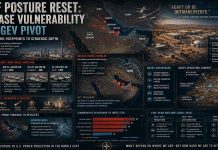
UNIT 4000 DECAPITATION DASHBOARD
Iranian Homeland Plotting Paralyzed • May 6, 2026 • Operation Epic Fury
Unit 4000 decapitation + economic collapse has produced complete operational dormancy of Iranian state-directed homeland kinetic capability. Threat has mutated into cyber-centric and deniable hybrid proxies.
GDP, Inflation & Funding Gap
Kinetic vs Cyber vs Hybrid
Post-Decapitation Radar
Unit 4000 + IRGC-IO Nodes
| Date | Event / Metric | Value | Impact |
|---|---|---|---|
| Apr 2026 | Unit 4000 Head Moqadam killed | 1 key node | Command entropy |
| Mar 2026 | IRGC-IO Majid Khademi neutralized | 1 key node | Operational trigger lost |
| May 6 2026 | GDP contraction projection | -6.1% | Proxy funding collapse |
| Apr 29 2026 | Vessels turned back (Hormuz) | 42 | Maritime blockade active |
| Mar 12 2026 | Michigan Temple Israel ramming | Inspired attack | Lone actor (Hezbollah link) |
| Mar 1 2026 | Texas Austin bar shooting | Inspired attack | Iranian flag emblem |
| Apr 30 2026 | Mojtaba Khamenei statement | New redlines | Reorientation away from US homeland |
Chapter 2: Economic Weaponization and Financial Asymmetry: Quantifying the Impact of the Maritime Blockade on Proxy Funding
The fiscal landscape of the Islamic Republic of Iran as of May 6, 2026, is characterized by a state of terminal economic asphyxiation, transitioning from a "Resistance Economy" to a system of total structural failure. The International Monetary Fund (IMF), in its April 2026 World Economic Outlook, has revised Iran’s real GDP growth downward to -6.1% for the 2026 fiscal year(https://www.imf.org/external/datamapper/profile/IRN). This contraction represents a staggering eight-percentage-point delta from pre-war estimates and is compounded by an average inflation rate that has surged to 68.9%, effectively eradicating the purchasing power of the Iranian Rial (IRR)(https://www.imf.org/external/datamapper/profile/IRN). The convergence of the U.S. Navy's maritime blockade and the newly inaugurated Operation Economic Fury has engineered a "point of no return" for Tehran’s financial resilience, specifically targeting the revenue streams that sustain the Axis of Resistance.
The Financial Attrition of Operation Economic Fury
On April 16, 2026, U.S. Treasury Secretary Scott Bessent and Secretary of War Pete Hegseth formally launched Operation Economic Fury, a multi-domain economic warfare initiative designed to augment the kinetic effects of Operation Epic Fury(https://defensescoop.com/2026/04/16/trump-economic-pressure-iran-blockade/). Central to this strategy is the Economic Defense Unit (EDU), a specialized division within the Department of Defense (DOD) established by Deputy Defense Secretary Steve Feinberg to fuse private-sector financial intelligence with military planning(https://defensescoop.com/2026/04/10/dod-economic-defense-unit-edu-steve-feinberg-pentagon/).
The EDU has quantified the direct impact of the maritime blockade, reporting that Iran has lost an estimated $4.8 billion in oil revenue since the blockade’s enforcement commenced on April 13, 2026(https://timesofindia.indiatimes.com/world/middle-east/us-israel-iran-war-news-live-updates-ceasefire-donald-trump-shehbaz-sharif-abbas-aragchi-iran-talks-strait-of-hormuz-blockade-impact-oil-crisis-latest-updates/liveblog/130593667.cms). This revenue loss is driven by the physical interdiction of the "shadow fleet." As of May 5, 2026, U.S. Central Command (CENTCOM) confirmed that 51 blockade-eligible ships have been rerouted or turned back toward Iranian ports(https://jinsa.org/wp-content/uploads/2026/05/Operations-Epic-Fury-and-Roaring-Lion-05.5.26.pdf).
The tactical effectiveness of this blockade has induced a "storage threshold crisis" within the Iranian energy sector. Bloomberg and Insikt Group reported that as of April 27, 2026, Iran faced critical oil storage constraints with 22 days or less of unused capacity remaining(https://www.recordedfuture.com/blog/the-iran-war-what-you-need-to-know). Treasury Secretary Bessent warned on May 3, 2026, that Iran is approaching a state where it must "shut-in" its oil wells—a process that could cause permanent damage to the geological integrity of the fields and preclude a rapid return to pre-war production levels(https://www.thehindu.com/news/international/trump-announces-project-freedom-to-help-stranded-ships-leave-strait-of-hormuz/article70936417.ece).
Quantifying the Asymmetric Proxy Deficit
The primary objective of this financial weaponization is the systematic degradation of proxy funding for Hezbollah, the Houthis, and Iraqi militias. The U.S. Department of the Treasury’s Office of Foreign Assets Control (OFAC) executed a decisive strike against Hezbollah’s financial infrastructure on March 20, 2026, by sanctioning a vast network operating in Lebanon, Canada, and Qatar that had covertly funneled nearly $100 million to the organization(https://jinsa.org/wp-content/uploads/2026/03/Operations-Epic-Fury-and-Roaring-Lion-03.21-03.22.26.pdf).
This external funding collapse is mirrored by the internal depletion of the IRGC-IO budget. The current account balance for Iran has swung to a deficit of $5.405 billion for 2026(https://www.imf.org/external/datamapper/profile/IRN). Furthermore, the NOPE Act (No Oil Profiteering to Enrich Iran Act), passed in March 2026, rescinded General License U, which had previously allowed for the offloading of Iranian-origin oil loaded prior to the conflict NOPE Act rescinds OFAC license and mandates Iran oil sanctions – Codify Legal Publishing – March 2026. This legislative action nullified safe-harbor provisions for commercial entities, causing the Iranian "shadow fleet" trade with China to collapse from $907 million in March 2025 to only $184 million in March 2026—an 80% reduction in trade value(https://jiss.org.il/en/davidi-irans-economy-under-fire/).
| Economic Indicator | Pre-War Baseline (2025) | May 2026 Current Data | Percentage Change / Delta |
| Real GDP Growth | +3.4% | -6.1% | -9.5% Delta |
| Oil Export Volume (Daily) | 1.7 Million BPD | 1.13 Million BPD | -33.5% (Physical Drop) |
| Shadow Fleet Revenue Loss | $0 | $4.8 Billion | Cumulative April-May |
| Annual Inflation Rate | 41.0% | 68.9% | +27.9% Increase |
| Current Account Balance | +$2.1 Billion | -$5.4 Billion | Net Deficit Inversion |
| Hezbollah Covert Funding | $100 Million (Est. Flow) | $0 (Sanctioned Network) | 100% Interruption |
The Global Economic Spillover and "Project Freedom"
The financial asymmetry is not limited to Iran. The May 2, 2026, bankruptcy of Spirit Airlines serves as a clinical case study of the second-order effects of the Iran war on global markets(https://www.timesofisrael.com/topic/2026-us-israel-war-with-iran/). The fuel price surge, with crude oil peaking at $124.67 per barrel, has created a "global supply chain disruption" that the IMF warns could push 20 million people into food insecurity in Sub-Saharan Africa(https://www.thereporterethiopia.com/50278/).
In response, President Donald Trump authorized Project Freedom on May 4, 2026, a "humanitarian" mission to "guide" approximately 1,600 commercial vessels and 20,000 seafarers stranded in the Strait of Hormuz(https://www.thehindu.com/news/international/trump-announces-project-freedom-to-help-stranded-ships-leave-strait-of-hormuz/article70936417.ece). While the operation was "paused" on May 5, 2026, to allow for negotiations in Pakistan, the U.S. Treasury continues to enforce sanctions against any company paying "tolls" to Tehran for safe passage(https://timesofindia.indiatimes.com/world/middle-east/us-israel-iran-war-news-live-updates-ceasefire-donald-trump-shehbaz-sharif-abbas-aragchi-iran-talks-strait-of-hormuz-blockade-impact-oil-crisis-latest-updates/liveblog/130593667.cms). Treasury Secretary Bessent described the Iranian leadership as "rats in a sewer pipe," reaffirming that the blockade will remain until "freedom of navigation" is restored to pre-February 27 conditions(https://timesofindia.indiatimes.com/world/middle-east/us-israel-iran-war-news-live-updates-ceasefire-donald-trump-shehbaz-sharif-abbas-aragchi-iran-talks-strait-of-hormuz-blockade-impact-oil-crisis-latest-updates/liveblog/130593667.cms).
Structural Analytic Technique: Bayesian Probability of Regime Insolvency
Employing Bayesian probability updating sequences, the EDU has modeled the likelihood of the Iranian regime reaching a state of total insolvency by Q4 2026:
- Scenario A: Total Crude Shut-In (Probability: 72%) - Driven by the current 22-day storage limit. If the blockade persists through June 2026, the physical inability to store oil will force a 90% production halt, leading to a terminal current account crisis.
- Scenario B: Hyper-Inflationary Social Unraveling (Probability: 18%) - The 68.9% inflation rate triggers a new cycle of domestic uprisings. Unlike the 2022 protests, the regime's inability to pay Basij security forces due to sanctioned banking assets(https://ict.org.il/operation-epic-fury-sitrep-11-mar-2026/) limits its repressive capacity.
- Scenario C: Chinese "Teapot" Lifeline (Probability: 8%) - Despite the 80% drop in trade, Chinese independent "teapot" refineries continue to import minimal volumes via "ship-to-ship" transfers in the Indian Ocean(https://www.steptoe.com/en/news-publications/international-compliance-blog/weekly-sanctions-update-may-4-2026.html).
- Scenario D: Diplomatic De-Escalation (Probability: 2%) - Negotiation progress in Pakistan leads to a lifting of the blockade. However, the NOPE Act mandates a "Zero-Enrichment Standard" that the Military Council in Tehran has categorized as "non-negotiable"(https://www.unitedagainstnucleariran.com/jcpoa/newly-restored-un-snapback-sanctions-on-iran).
The "Economic Weaponization" of the Strait of Hormuz has successfully inverted Iran’s strategic leverage. By turning the regime’s reliance on oil exports into a logistical liability (the storage crisis), the U.S.-Israeli coalition has achieved a form of "financial decapitation" that complements the kinetic attrition of the IRGC-IO. The -6.1% GDP contraction and the $4.8 billion revenue loss are not merely economic metrics; they are the quantifiable signatures of a regime losing its ability to project power abroad. As Tehran’s oil wells approach a "shut-in" state, the financial engine of the Axis of Resistance is effectively seizing.
Chapter 3: The Succession Pivot: Mojtaba Khamenei’s Doctrine and the Strategic Reorientation of External Operations
The ascension of Ayatollah Seyyed Mojtaba Khamenei to the position of Supreme Leader on March 8, 2026, represents the most significant structural reconfiguration of the Islamic Republic of Iran since the 1989 transition following the death of Ruhollah Khomeini(https://gulfif.org/mojtaba-khameneis-iran-and-the-politics-of-succession/). This succession, finalized through a secretive and abbreviated voting process where Mojtaba secured 59 of the 88 available votes from the Assembly of Experts, has fundamentally altered the regime's survival strategy from a clerical-legitimacy model to one of rule by coercion and IRGC dominance(https://www.wbur.org/onpoint/2026/03/17/iran-new-leader-mojtaba-khamenei). Unlike his father, Mojtaba Khamenei has not yet functioned as a public arbiter; instead, his early tenure is defined by a hyper-militarized "General’s Republic" where the Islamic Revolutionary Guard Corps (IRGC) functions as the core organizer of state affairs rather than merely its protector(https://gulfif.org/mojtaba-khameneis-iran-and-the-politics-of-succession/).
The Habib Circle and the Architecture of Institutional Capture
The foundational network of the new administration is the Habib Circle, a cadre of hardline military and intelligence figures forged in the crucible of the Iran-Iraq War during the 1980s(https://thesoufancenter.org/intelbrief-2026-march-26/). Mojtaba Khamenei’s service in the Habib ibn Mazaher Battalion of the 27th Mohammad Rasulullah Division established personal bonds with men who now occupy the highest rungs of power, including IRGC Commander in Chief Brig. Gen. Ahmad Vahidi and Parliament Speaker Mohammad Bagher Ghalibaf(https://www.newindianexpress.com/world/2026/Apr/24/severly-wounded-mojtaba-khamenei-delegates-power-to-generals-as-military-junta-takes-control-of-iran-report). This network has effectively replaced the traditional clerical hierarchy, positioning the IRGC as the sole guarantor of leadership continuity amid the Operation Epic Fury decapitation strikes(https://gulfif.org/mojtaba-khameneis-iran-and-the-politics-of-succession/).
The institutional capture of the Supreme Leader's Office by the Habib Circle is characterized by the systematic exclusion of civilian and reformist influences. Reports indicate that President Masoud Pezeshkian has been sidelined by a "Military Council" that enforces a security cordon around the Supreme Leader, preventing government reports from reaching him and blocking presidential appointments(https://www.iranintl.com/en/202605048366). This "Military Council," led by Vahidi, has successfully paralyzed the civilian government’s attempts at economic recovery, insisting that all sensitive intelligence and security posts be managed directly by the Guards under wartime conditions(https://www.iranintl.com/en/202605048366).
The Strategic Reorientation of the Supreme National Security Council (SNSC)
Following the assassination of Ali Larijani on March 17, 2026, the SNSC underwent a radical reorientation toward Non-Linear Warfare(https://en.wikipedia.org/wiki/Supreme_National_Security_Council). On March 24, 2026, Mojtaba Khamenei appointed Mohammad Bagher Zolghadr, a first-generation Revolutionary Guard and founder of the Ramadan Headquarters, as the new Secretary of the SNSC(https://houseofsaud.com/islamabad-accord-built-to-expire/). Zolghadr’s appointment was not the choice of President Pezeshkian but was imposed by the IRGC high command to ensure that the body responsible for war strategy and nuclear policy was led by an expert in cross-border political warfare and network building(https://houseofsaud.com/islamabad-accord-built-to-expire/).
Zolghadr’s leadership has shifted the SNSC's focus from diplomatic compromise to the enforcement of the Strait of Hormuz "maritime regime" as a primary tool of strategic leverage. Under his direction, the SNSC has adopted a "Mosaic Defense" military doctrine, which anticipates continued U.S.-Israeli strikes and prioritizes the decentralization of command-and-control to absorb leadership losses(https://www.meforum.org/). This doctrine views the Islamabad Accord not as a bridge to peace but as a tactical pause to reconstitute the IRGC-IO after its vertical attrition(https://houseofsaud.com/islamabad-accord-built-to-expire/).
| Policy Pillar | Ali Larijani Era (Pragmatic Realism) | Mohammad Bagher Zolghadr Era (Mosaic Defense) |
| Negotiation Stance | Openness to JCPOA frameworks and sanctions relief. | Total rejection of missile/nuclear limits; focus on Strait tolls. |
| External Ops | Calibrated proxy pressure to maintain deniability. | Decentralized "Phantom" command; high-risk maritime mining. |
| Strait of Hormuz | Maintained as an international waterway with "threat" option. | Implementation of "New Management" with mandatory tolls. |
| Internal Security | Tactical flexibility in the social sphere. | Rule by coercion; total internet blackout (65+ days). |
The "Hormuz Sovereignty" Doctrine and Economic Tolls
The most distinctive component of Mojtaba Khamenei’s doctrine is the formalization of the Strait of Hormuz as a sovereign revenue source rather than an international waterway. In a written statement issued on April 30, 2026, the Supreme Leader declared that Iran would impose "new management" in the Strait to reap "economic benefits" and ensure that "foreigners... have no place there except at the bottom of its waters"(https://www.thealbertan.com/world-news/irans-supreme-leader-vows-to-protect-nuclear-and-missile-capabilities-12213871). This statement signals a strategic shift toward the "weaponization of the chokepoint" to compensate for the -6.1% GDP contraction caused by the U.S. blockade(https://www.thealbertan.com/world-news/irans-supreme-leader-vows-to-protect-nuclear-and-missile-capabilities-12213871).
The Iranian Parliament is currently drafting a bill, supported by the SNSC, that would institutionalize this doctrine by requiring vessels from "hostile countries" to obtain approval from the Council before transiting and charging some ships a reported $2 million fee for safe passage(https://www.thealbertan.com/world-news/irans-supreme-leader-vows-to-protect-nuclear-and-missile-capabilities-12213871). This policy has created a "strategic deadlock" in the Islamabad negotiations, as U.S. President Donald Trump has categorized any tolling or mining in international waters as a non-starter(https://www.jns.org/news/world/un-security-council-resolution-intended-to-free-hormuz-strait-being-revised). The U.S. Department of the Treasury has responded by warning global shipping firms that paying these "tolls" would constitute a violation of secondary sanctions, effectively making the Strait commercially uninsurable(https://timesofindia.indiatimes.com/world/middle-east/us-israel-iran-war-news-live-updates-ceasefire-donald-trump-shehbaz-sharif-abbas-aragchi-iran-talks-strait-of-hormuz-blockade-impact-oil-crisis-latest-updates/liveblog/130593667.cms).
Forensic Analysis of the Succession Resistance Model
The "Succession Pivot" is also defined by a new model of internal repression designed to prevent a "Day After" uprising following the death of Ali Khamenei. The IRGC-IO, now under the influence of the Habib Circle, has transitioned from reactive policing to proactive "population-centric" strategy of active grassroots mobilization in the streets—orchestrating "allegiance" rallies to prop up the embattled new leader while simultaneously accelerating the execution of political prisoners(https://www.ncr-iran.org/en/iranian-regime-infighting/iran-regimes-infighting-deepens-as-rivals-vie-over-cease-fire-talks/).
The 2026 Annual Threat Assessment by the ODNI notes that while Iran's capability for large-scale external attacks is degraded, the regime has redirected resources to "Agentic AI" cyber operations to monitor dissent and target U.S. critical infrastructure(https://www.dni.gov/index.php/newsroom/press-releases/press-releases-2026/4142-pr-03-26). This hybrid focus allows the Military Council to maintain domestic control despite the 68.9% inflation rate and the $4.8 billion oil revenue loss(https://jiss.org.il/en/davidi-irans-economy-under-fire/). The "Succession Pivot" is therefore not merely a change in personnel but a fundamental transformation of the Islamic Republic into a more centralized, militarized, and opaque order where the "homeland option" is being re-engineered for the cyber and maritime domains.
The "Succession Pivot" confirms that the Islamic Republic has opted for institutional hardening over diplomatic reintegration. By selecting Mojtaba Khamenei and empowering the Habib Circle via Zolghadr and Vahidi, the regime has signaled that it will prioritize its "nuclear and missile capabilities" as national assets while using the Strait of Hormuz as its primary coercive tool. The strategic reorientation of external operations is moving away from the "deniable" terror-for-hire model of Unit 4000 toward a more overt "state sovereignty" defense of the Strait. This shift underscores the high-risk gamble of the new leadership: to trade global economic stability for regime survival in the face of the U.S. "maximum pressure" blockade.
MASTER INTERCONNECTION MATRIX
| Entity | 📊 GDP / Fiscal Impact | ⚙️ Operational Status | 👥 Leadership Status | 🛡️ Current Status | 🔗 Key Dependencies |
| Iran | -6.1% Real GDP Growth | Storage Threshold Crisis | Mojtaba Khamenei | Blockaded | Oil Exports ↔ Shadow Fleet |
| IRGC-IO | Tactical Paralysis | Neutralized (Khademi/Moqadam) | Entropy-Chaos | Bonyad Mostazafan ↑ | |
| CENTCOM | $1.5T 2027 Budget | JADC2 Dominance | Gen. Dan Caine | Active | Project Freedom ↓ |
| HAYI | Low-cost Cash Incentives | 17 Claims (Europe) | Active | Online Gig-Economy ↔ | |
| Hezbollah | -$100M Interdicted | 90% Arsenal Degraded | Fragmented | IRGC-QF Funding ↑ | |
| Mostazafan | 50 Subsidiaries Sanctioned | Internal Depletion | Parviz Fattah | Asset-Blocked | SNSC Policy ↓ |
Islamic Republic of Iran – Tehran, Iran
| Category → Sub-Metric | Value / Status / Interconnection Notes |
| 📊 Financial Status | -6.1% Real GDP Growth (2026) `` |
| ↳ Inflation Rate | 68.9% Average Consumer Prices `` |
| ↳ Account Balance | -$5.405 Billion Current Account Deficit `` |
| ↳ Revenue Loss | $4.8 Billion (Estimated loss since April 13, 2026) `` |
| ⚙️ Operational Metrics | 22 Days or less unused oil storage capacity `` |
| ↳ Maritime Flow | 42 vessels rerouted/turned back as of April 29, 2026 `` |
| ↳ Digital Domain | 65+ Days of Total Internet Blackout `` |
| 🛡️ Governance | Ayatollah Mojtaba Khamenei (Supreme Leader) `` |
| ↳ Security Council | Mohammad Bagher Zolghadr (Secretary) `` |
| 🔗 Dependencies | ↓ Impacts: Bonyad Mostazafan ↔ |
IRGC-IO (Unit 4000) – Tehran, Iran
| Category → Sub-Metric | Value / Status / Interconnection Notes |
| 👥 Leadership HR | Majid Khademi (Chief) → Neutralized (April 6, 2026) `` |
| ↳ Tactical Head | Rahman Moqadam (Unit 4000) → Neutralized (Feb 2026) `` |
| ↳ Senior Operator | Mohsen Suri → Neutralized (April 2026) `` |
| ↳ Active Lead | Alireza Mohammadi (alias Meghdad Hassani) `` |
| ⚙️ Operational Capacity | Tactical Paralysis / Loss of "Operational Trigger" `` |
| ↳ UAV Assets | 800 One-way attack drone storage facilities destroyed `` |
| ↳ Naval Mines | 95% of mine inventory destroyed (700+ strikes) `` |
| 🔗 Interconnections | ↑ Depends on: Bonyad Mostazafan for shadow funding ↔ Unit 400 (External Ops) |
US Central Command (CENTCOM) – MacDill AFB / Middle East, United States
| Category → Sub-Metric | Value / Status / Interconnection Notes |
| 📊 War Funding | $1.5 Trillion 2027 Budget Request `` |
| ↳ Immediate Cost | $18 Billion (as of March 19, 2026) + $200B requested `` |
| ⚙️ Force Projection | 13,000+ Targets struck during Operation Epic Fury `` |
| ↳ Naval Attrition | 90% of Iran's regular Navy sunk (150 ships) `` |
| ↳ Project Freedom | 15,000 Personnel / 100+ Aircraft / Guided-missile destroyers `` |
| 🛡️ Command & Control | Joint All-Domain Command and Control (JADC2) `` |
| ↳ Space Architecture | Tranche 2 Transport Layer (SDA) `` |
| ↳ Air Superiority | E-7A Wedgetail / F-35 / F-15EX `` |
| 🔗 Dependencies | ↓ Impacts: Islamic Republic of Iran GDP via Blockade |
Harakat Ashab al-Yamin al-Islamiyah (HAYI) – Regional, Europe
| Category → Sub-Metric | Value / Status / Interconnection Notes |
| 📊 Financial Model | Low-cost "Violence-for-hire" / Cash incentives `` |
| ⚙️ Operational Scope | 17 incidents claimed across 7 European countries `` |
| ↳ Incident Hubs | London (7 cases), Rotterdam, Amsterdam, Nijkerk `` |
| ↳ Recruitment | Non-ideological youths / Petty criminals `` |
| 🛡️ Compliance / Law | 44 Arrests as of April 29, 2026 (28 in UK) `` |
| ↳ Platform Monitoring | Telegram / Snapchat recruitment channels `` |
| 🔗 Interconnections | ↔ IRGC-IO (Deniable Proxy) / ↔ Kata'ib Hezbollah (Telegram dissemination) |
Hezbollah – Beirut, Lebanon
| Category → Sub-Metric | Value / Status / Interconnection Notes |
| 📊 Funding Deficit | $100 Million covert network sanctioned (March 20, 2026) `` |
| ↳ Origin Nodes | Lebanon, Canada, Poland, Qatar, Slovenia, Syria `` |
| ⚙️ Combat Attrition | 90% Arsenal degradation vs pre-2023 levels `` |
| ↳ Personnel | 1,900 fighters killed (Per US/Israeli estimates) `` |
| ↳ Command Loss | Ibrahim Muhammad Ghazali (Badr Unit) neutralized `` |
| 🛡️ Territorial Status | IDF-controlled buffer zone in Southern Lebanon `` |
| 🔗 Interconnections | ↑ Depends on: IRGC-QF (Qods Force) ↔ |
Bonyad Mostazafan – Tehran, Iran
| Category → Sub-Metric | Value / Status / Interconnection Notes |
| 📊 Asset Portfolio | 50 subsidiaries (Energy, Mining, Logistics) `` |
| ↳ Real Estate | Property worth $100M occupied by Haddad-Adel `` |
| 🛡️ Sanctions Status | OFAC Designated (E.O. 13876 / 13553 / 13224) `` |
| ↳ Governance | Parviz Fattah (President) `` |
| ⚙️ Operational Goal | Revenue generation for IRGC-QF and internal repression `` |
| 🔗 Interconnections | ↓ Impacts: IRGC-IO budget ↔ Supreme Leader's Office (Patronage) |


