












Abstract
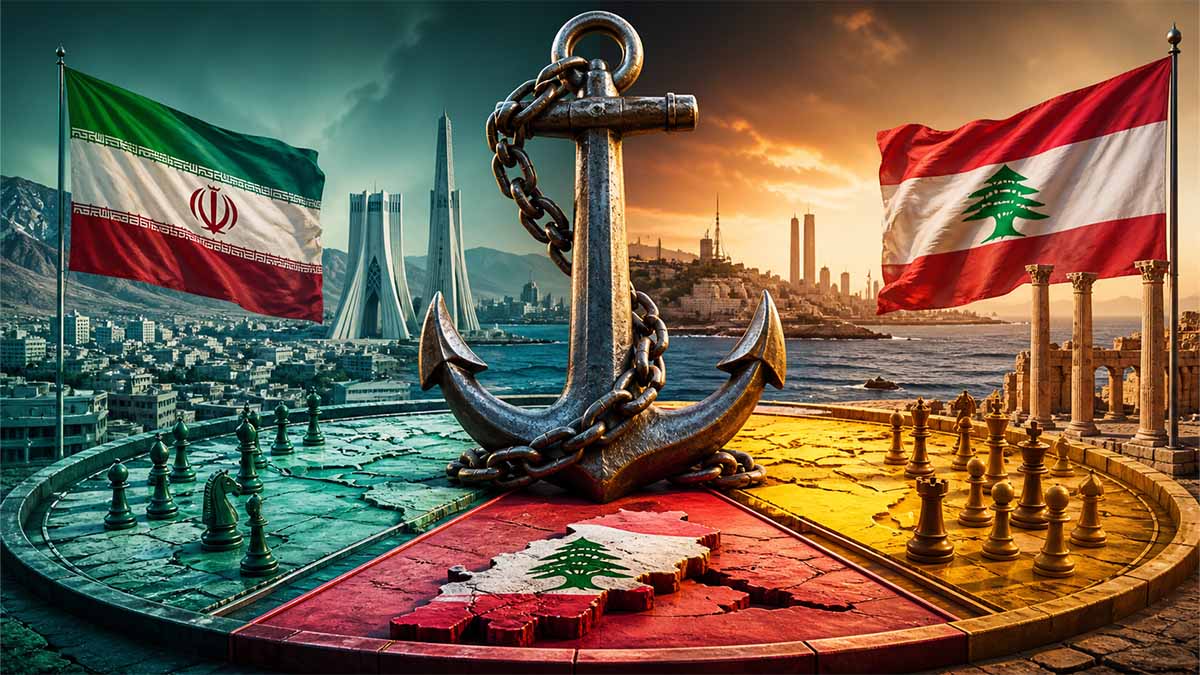
The geopolitical landscape of the Middle East as of May 2, 2026, is defined by a state of extreme strategic tension and diplomatic volatility following the Pakistan-mediated ceasefire negotiations in Islamabad. These discussions, initiated in early April 2026, were intended to finalize a comprehensive cessation of hostilities between the United States, Israel, and the Islamic Republic of Iran, along with its regional affiliates categorized under the Axis of Resistance. However, a fundamental fracture in the conceptualization of regional security has emerged: the status of Lebanon as a “non-negotiable” component of the Iranian security umbrella. While U.S. President Donald Trump and the Israeli leadership initially attempted to isolate Lebanon as a “separate skirmish,” the Islamic Republic of Iran has signaled that any exclusion of Lebanon from a regional ceasefire would trigger a unilateral collapse of the truce and a resumption of unrestricted Gray Zone operations(https://news.un.org/en/story/2026/04/1167264).
For the Islamic Republic of Iran, Lebanon is not a peripheral asset or a fungible proxy; it is a structural pillar of the “Forward Defense” (Defa’-e Pishgiraneh) doctrine. This strategic framework, codified through decades of IRGC-Qods Force operational evolution, posits that Iranian national security is maintained by projecting power to the “outer ring” of its periphery to ensure that any kinetic confrontation with Western powers or Israel occurs far from the Iranian homeland(https://www.armyupress.army.mil/Portals/7/nco-journal/images/2020/February/Iran/Iran.pdf). Within this calculus, the Hizballah paramilitary and political infrastructure in Lebanon serves as the primary deterrent against a conventional or nuclear strike on Iranian critical infrastructure. Despite the devastating losses suffered by Hizballah during the 2024 and 2025 conflict cycles—including the assassinations of Hassan Nasrallah, Fuad Shukr, and Ibrahim Aqil—the organization remains the most capable node in the Axis of Resistance(https://www.centcom.mil/ABOUT-US/POSTURE-STATEMENT/).
The analytical failure in many Western capitals lies in the persistent application of the “Proxy Model,” which assumes a hierarchical, transactional relationship between a dominant principal (Iran) and a supplicant agent (Hizballah). This synthesis demonstrates that the relationship is more accurately described as a “Mutual Dependence” model, characterized by reciprocal leverage and dispersed authority. As noted by political scientist Bertil Dunér, a true proxy is coerced into action through sanctions or the threat thereof; conversely, Hizballah’s participation in the U.S.–Israeli war of 2025–2026 was driven by its own existential necessity to restore a shattered deterrence posture after Israel destroyed approximately 80% of its rocket capabilities(https://www.ifcj.org/news/stand-for-israel-blog/idf-strikes-hezbollah-amid-iran-tensions).
The 2026 conflict has also accelerated the deployment of Economic Weaponization as a primary domain of warfare. Following the February 4, 2025, issuance of National Security Presidential Memorandum-2 (NSPM-2), the United States launched the Economic Fury campaign, a maximum-pressure architecture designed to reduce Iranian petroleum exports to zero(https://www.state.gov/releases/office-of-the-spokesperson/2026/05/united-states-sanctions-network-facilitating-irans-illicit-oil-trade). In response, Iran has integrated Lebanon into its financial survival strategy. Hizballah‘s sophisticated “Shadow Banking” networks, including digital asset exchanges and DeFi protocols, have become essential for the repatriation of funds. In 2025, the value of crypto-assets received by sanctioned entities surged by 694%, reaching a record $154 billion as the IRGC integrated blockchain technology into its national financial infrastructure(https://dwfgroup.com/en/news-and-insights/insights/2026/4/iran-conflict-cryptocurrency-and-sanctions). The Financial Action Task Force (FATF), in its January 2026 report, emphasized that Iran continues to exploit high-risk jurisdictions with inadequate AML/CFT systems to move hundreds of millions of dollars(https://www.fatf-gafi.org/en/publications/High-risk-and-other-monitored-jurisdictions/Call-for-action-february-2026.html).
The Strait of Hormuz has emerged as the primary counter-lever to the Islamabad deadlock. As of April 30, 2026, UN Secretary-General António Guterres warned that the escalating crisis in the Strait is “strangling the global economy” and could trigger a surge in global hunger Hormuz crisis strangling global economy, Guterres warns – United Nations – April 2026. Tehran has made it explicitly clear that the normalization of maritime transit is contingent upon a comprehensive ceasefire that includes Lebanon. This linkage strategy utilizes the global economy as a “hostage” to ensure the survival of Hizballah, demonstrating that for Iran, the Lebanese theater is functionally inseparable from its own territorial integrity.
Institutional and societal interlocking further complicates any potential decoupling. The IRGC-Qods Force and Hizballah are bound by personal and familial networks, such as the high-level intermarriage between the Soleimani and Safieddine families. These ties create an “Institutional Entanglement” that makes it politically impossible for decision-makers in Tehran to abandon Lebanon without facing a significant legitimacy crisis. This was evidenced by the April 2026 protests in Isfahan and Badroud, where Iranian citizens, fueled by Solidarity sentiments, chanted slogans identifying Lebanon as a “brother” and a “betrayal of Islam” if excluded from the truce(https://irannewswire.org/iran-and-hezbollah-a-strategic-alliance-in-proxy/).
Finally, the Lawfare dimension of the crisis has reached a tipping point. On March 2, 2026, the Lebanese government took the unprecedented step of prohibiting all Hizballah military activities, a decision supported by France and the United States(https://onu.delegfrance.org/war-is-once-again-spreading-to-lebanon). However, Iran views this as an illegal interference in the “Sovereignty of the Resistance,” arguing that Hizballah provides the only credible defense against Israeli aggression. As U.S. Special Envoy Witkoff and Iranian Foreign Minister Araghchi prepare for further talks in Geneva, the Lebanese “Non-Negotiable” remains the primary barrier to a lasting regional peace.
| Metric | Status (Q2 2026) | Source Authority |
| Iranian Oil Revenue to Armed Forces | >50% of total revenue | (https://home.treasury.gov/news/press-releases/sb0049) |
| Hizballah Rocket Capability Loss | ~80% degradation | (https://www.centcom.mil/ABOUT-US/POSTURE-STATEMENT/) |
| Global Crypto Illicit Volume | $154 Billion | (https://dwfgroup.com/en/news-and-insights/insights/2026/4/iran-conflict-cryptocurrency-and-sanctions) |
| Hormuz Transit Risk Index | Critical (90/100) | United Nations – April 2026 |
| Ceasefire Status | Fragile / Partial | UN News – April 2026 |
The Doctrine of Forward Defense and the Deterrence Equilibrium
The strategic persistence of Iran‘s commitment to Lebanon is rooted in the “Mosaic Defense” and “Forward Defense” doctrines. These concepts, developed following the Iran-Iraq War, emphasize asymmetric warfare and the use of strategic depth to compensate for Iran‘s conventional military inferiority(https://apps.dtic.mil/sti/trecms/pdf/AD1213128.pdf). Under “Forward Defense,” the Islamic Republic aims to engage its adversaries—primarily Israel and the United States—at the furthest possible distance from its borders. Lebanon, through the proxy/partner agency of Hizballah, provides a front-line position on the Mediterranean, allowing Iran to project power into Israel‘s immediate neighborhood.
This deterrence equilibrium was severely tested in the 2024–2025 conflict. The Israel Defense Forces (IDF) launched Operation Eternal Darkness, a massive aerial campaign that targeted over 100 sites and eliminated the core of Hizballah‘s command and control(https://www.ynetnews.com/article/rjxsmg4hwe). Yet, the Iranian response was not to retreat, but to deepen its operational integration. IRGC officers were reportedly embedded within Hizballah‘s remaining rocket units, signaling that any further strike on Lebanon would be viewed as a direct attack on Iranian military personnel(https://www.bicom.org.uk/israel-intensifies-strikes-against-hezbollah-amid-continued-iran-us-tension/). This “Embedded Command” structure is a key component of the Axis of Resistance‘s resilience, ensuring that even as leaders like Nasrallah are removed, the structural link to Tehran remains intact.
Furthermore, the Bayesian probability of an Israeli strike on Iranian nuclear facilities is heavily weighted by the state of Hizballah‘s arsenal. While the IDF has destroyed the majority of Hizballah‘s long-range missiles, the group still possesses thousands of short-range rockets capable of overwhelming the Iron Dome in a saturated attack(https://www.ifcj.org/news/stand-for-israel-blog/idf-strikes-hezbollah-amid-iran-tensions). For Tehran, preserving this “Tactical Nuisance” is essential to prevent Israel from concentrating its full military weight on the Iranian heartland. The Islamabad talks failed to resolve this because Washington viewed Lebanon as a tactical theater, whereas Tehran views it as a strategic shield.
Institutional Entanglement and the “Mutual Dependence” Framework
The relationship between Tehran and Hizballah has evolved beyond the traditional “Patron-Proxy” dynamic into one of “Institutional Symbiosis.” This is characterized by a shared ideological commitment to Velayat-e Faqih (Guardianship of the Jurist) and a mutual survival pact(https://www.researchgate.org/publication/371043660_Insurgency_Proxy_and_Dependence_How_Hezbollah’s_Ideology_Prevails_Over_its_Interest_in_its_Relationship_with_Iran). This ideological alignment is reinforced by the IRGC‘s role in the reconstruction of Lebanon. Following the 2024 ground war, the IRGC‘s engineering units, led by officers such as the late General Shateri, were responsible for rebuilding schools and power grids in over 73 villages(https://irannewswire.org/iran-and-hezbollah-a-strategic-alliance-in-proxy/). This “Civilian-Military Fusion” creates a socio-political base in Lebanon that is directly beholden to Tehran, making any withdrawal of Iranian influence a threat to the stability of the Shiite community in the Levant.
In the 2026 context, this symbiosis is further cemented by the personal ties between the two leaderships. The marriage of Zeinab Soleimani to Reza Safieddine is not an isolated event but a symbol of the “Elite Integration” that governs the Axis of Resistance. These familial bonds ensure that the strategic goals of the IRGC and Hizballah remain aligned, even in the absence of formal treaty obligations. During the Islamabad negotiations, Iranian diplomats reportedly used these personal connections to reassure Hizballah that they would not be abandoned, even as U.S. pressure mounted for their disarmament(https://www.iranintl.com/en/202604161218).
Domestic political pressure inside Iran also functions as a powerful “Coherence Sentinel.” The Iranian public, particularly the ideological core of the regime, views Hizballah as the vanguard of the Islamic Revolution. The April 2026 protests in Isfahan demonstrated that any perceived weakness in Tehran‘s support for Lebanon would be met with internal backlash. For the Iranian leadership, the costs of “Betraying Lebanon” are higher than the costs of enduring the Economic Fury sanctions. This domestic constraint is a critical variable in the Analysis of Competing Hypotheses regarding Iran‘s negotiation strategy: it suggests that Iran is prepared to accept a “No-Deal” scenario rather than a “Separate Skirmish” framework for Lebanon.
Economic Fury and the Financial Architecture of Resistance
The United States‘ Economic Fury campaign, initiated under NSPM-2 on February 4, 2025, represents the most aggressive sanctions regime in history. By May 2026, OFAC has sanctioned over 1,000 Iran-related persons, vessels, and aircraft(https://home.treasury.gov/news/press-releases/sb0483). This campaign targets the “Shadow Banking” network, a multi-layered architecture of exchange houses, front companies, and digital asset exchanges used to move billions of dollars(https://www.state.gov/releases/office-of-the-spokesperson/2026/05/united-states-sanctions-network-facilitating-irans-illicit-oil-trade).
Lebanon serves as a vital node in this “Financial Sanctuary.” Hizballah‘s control over certain segments of the Lebanese financial system allows Iran to bypass the FATF-mandated countermeasures. The use of cryptocurrency has become a central component of this evasion strategy. A March 2026 report by Chainalysis indicated that Iranian-linked crypto activity is dominated by the IRGC, with over 50% of transaction value in Q4 2025 being channeled through proxy networks(https://dwfgroup.com/en/news-and-insights/insights/2026/4/iran-conflict-cryptocurrency-and-sanctions). The FATF has repeatedly warned that Iran‘s failure to criminalize terrorist financing and its “overly broad” reservations to the Palermo Convention make it a primary risk to the international financial system(https://www.fatf-gafi.org/en/publications/High-risk-and-other-monitored-jurisdictions/Call-for-action-february-2026.html).
The 2026 crisis in the Strait of Hormuz is the kinetic manifestation of this economic war. By threatening to block the Strait, through which 20% of the world’s oil flows, Iran is attempting to impose a “Global Toll” for the Economic Fury campaign. UN Secretary-General António Guterres‘s warning on April 30, 2026, that the crisis is “strangling the global economy,” underscores the effectiveness of this strategy Hormuz crisis strangling global economy, Guterres warns – United Nations – April 2026. Iran‘s insistence that the Hormuz issue be resolved alongside the Lebanese ceasefire confirms that Tehran views its maritime leverage and its regional alliances as a single, integrated “Leverage Matrix.”
The Non-Negotiable Reality
The Islamabad talks and the subsequent Geneva preparations reveal a fundamental truth: Lebanon is not external to Iran‘s security; it is Iran‘s security. The convergence of Forward Defense doctrine, institutional symbiosis, and the financial requirements of the Axis of Resistance makes a “Separate Skirmish” deal impossible. For Tehran, any agreement that does not ensure the restoration of Hizballah‘s deterrent capacity in Southern Lebanon is a strategic failure. As the United Nations attempts to stabilize the April 8, 2026, ceasefire, the world remains on a “Abyss Horizon,” where the failure to address the Lebanese core could trigger a systemic collapse of the regional order.
MIDDLE EAST WAR ROOM
Lebanon: Iran’s Non-Negotiable Strategic Shield • Forward Defense Doctrine in Crisis
Lebanon is not a peripheral proxy — it is the structural pillar of Iran’s Forward Defense doctrine. Any ceasefire that isolates Beirut collapses the entire truce. Iran holds the global economy hostage through Hormuz to preserve Hizballah’s deterrent capacity. Mutual Dependence, not Patron-Proxy.
| DOMAIN | STATUS (Q2 2026) | KEY FACT | SOURCE AUTHORITY |
|---|---|---|---|
| Iranian Oil Revenue | >50% to Armed Forces | Maximum pressure sanctions bypassed via shadow networks | U.S. Treasury / OFAC |
| Hizballah Rocket Capability | ~80% degradation | Remaining short-range rockets still threaten Iron Dome saturation | U.S. CENTCOM Posture Statement |
| Global Illicit Crypto Volume | $154 Billion | 694% surge in 2025 via IRGC-linked DeFi | Chainalysis / DWF Group Report |
| Hormuz Transit Risk Index | Critical (90/100) | 20% of world oil flow threatened unless Lebanon included in truce | UN Secretary-General Guterres – Apr 30 2026 |
| Ceasefire Status | Fragile / Partial | Pakistan-mediated Islamabad talks collapsed over Lebanon exclusion | UN News – April 2026 |
Index
- Chapter 1: The Doctrine of Forward Defense and the Deterrence Calculus of the Axis of Resistance
- Chapter 2: Institutional Symbiosis: Clerical, Elite, and Paramilitary Interlocking in the Tehran-Beirut Axis
- Chapter 3: Financial Sanctuaries and Maritime Asymmetry: Analyzing NSPM-2, Economic Fury, and the Hormuz Chokepoint in the 2026 Conflict Cycle
Chapter 1: The Doctrine of Forward Defense and the Deterrence Calculus of the Axis of Resistance
The strategic landscape of the Middle East as of May 2, 2026, is currently governed by the catastrophic remnants of the Twelve-Day War of June 2025 and the subsequent high-intensity conflict initiated on February 28, 2026. At the core of the Islamic Republic of Iran‘s survival strategy is the refined doctrine of Forward Defense (Defa’-e Pishgiraneh), a framework that has transitioned from a theoretical asymmetric model into a desperate, decentralized reality following the targeted assassination of Supreme Leader Ali Khamenei on the first day of the 2026 hostilities(https://en.wikipedia.org/wiki/2026_Lebanon_war). This doctrine serves as the primary deterrent mechanism, predicated on the utilization of proxy forces and standoff capabilities—specifically ballistic missiles and unmanned aerial vehicles (UAVs)—to move the theater of kinetic engagement away from Iranian territory and onto the borders of Israel and U.S. regional installations(https://www.centcom.mil/ABOUT-US/POSTURE-STATEMENT/).
The June 13, 2025, initiation of Operation Rising Lion by Israel marked a structural rupture in this deterrence calculus. During this Twelve-Day War, Israel deployed advanced stealth aircraft and real-time intelligence to dismantle Iran‘s air defense radar installations and surface-to-air missile batteries across 27 provinces(https://en.wikipedia.org/wiki/Twelve-Day_War). The conflict resulted in approximately 1,190 fatalities inside Iran, including 436 civilians, and the destruction of significant portions of the nuclear facilities at Natanz, Isfahan, and Fordow(https://en.wikipedia.org/wiki/Twelve-Day_War). Critically, the decapitation of the Islamic Revolutionary Guard Corps (IRGC) leadership—including the deaths of Hossein Salami, Mohammed Bagheri, and Amir Ali Hajizadeh—forced the Iranian security apparatus to pivot toward a Mosaic Defense strategy(https://www.britannica.com/event/12-Day-War). Under this model, the IRGC and the Artesh (conventional army) have mobilized a large, dispersed militia force to engage in attritional warfare, ensuring that any conventional occupation remains prohibitively costly(https://www.armyupress.army.mil/Journals/NCO-Journal/Archives/2020/February/Iran-Framing-the-Threat/).
For the Axis of Resistance, specifically Hizballah in Lebanon, the 2026 conflict cycle has been defined by Operation Eternal Darkness, launched by Israel on April 8, 2026. This operation involved over 100 airstrikes executed within a 10-minute window, targeting Hizballah‘s Radwan Force headquarters, intelligence centers, and missile infrastructure across Beirut, Sidon, and the Beqaa Valley(https://en.wikipedia.org/wiki/8_April_2026_Israeli_attacks_on_Lebanon). Despite the loss of at least 357 lives on “Black Wednesday,” Hizballah has demonstrated a persistent fighting capacity, firing as many as 2,000 rockets and UAVs into Israel during the two-month conflict(https://en.wikipedia.org/wiki/2026_Lebanon_war). This resilience is attributed to a complete restructuring of the command hierarchy following the September 2024 explosive-pager attacks, which prompted the organization to abandon all electronic communication devices in favor of human couriers and hardened underground fiber-optic networks(https://www.steptoe.com/en/news-publications/stepwise-risk-outlook/lebanon-israel-dynamics-renewed-confrontation-the-iran-war-and-the-path-ahead.html).
The Islamabad Accord, a fragile two-week ceasefire brokered by Pakistan on April 8, 2026, attempted to stabilize the region, yet it immediatey faced a “Sticking Point” regarding the inclusion of Lebanon(https://mofa.gov.pk/press-releases/transcript-of-the-press-briefing-by-the-spokesperson-on-thursday-16th-april-2026). The United States and Israel maintain that the truce is limited to Iranian soil, while Tehran’s 10-point plan for peace demands a cessation of all hostilities against its regional allies in Iraq, Lebanon, and Yemen as a prerequisite for reopening the Strait of Hormuz(https://en.wikipedia.org/wiki/2026_Iran_war_ceasefire). For Tehran, the survival of Hizballah‘s deterrent posture is synonymous with the survival of the Islamic Republic‘s own forward-deployed security architecture, making Lebanon‘s status non-negotiable in any long-term settlement.
The evolution of the Axis of Resistance from a series of disjointed proxies into a functionally integrated “Mutual Dependence” network was accelerated by the 2024 collapse of the Assad Regime in Syria, which severed the traditional land bridge for weapons transfers(https://www.centcom.mil/ABOUT-US/POSTURE-STATEMENT/). In response, Iran has shifted to a “Maritime and Aerial Superhighway,” utilizing the Red Sea and illicit ship-to-ship (STS) transfers to maintain supply lines. The Houthi movement in Yemen has conducted over 300 attacks on international shipping using anti-ship ballistic missiles (ASBMs) and UAVs, effectively turning the Bab al-Mandeb (BaM) into a contested chokepoint that requires a deliberate military operation for safe passage(https://www.centcom.mil/ABOUT-US/POSTURE-STATEMENT/). This multi-axis pressure is designed to overwhelm the U.S. Navy‘s Aegis and Israel‘s Iron Dome through saturation attacks, a tactic that Iran refined during its October 1, 2024, barrage of over 200 ballistic missiles(https://www.centcom.mil/ABOUT-US/POSTURE-STATEMENT/).
| Strategic Factor | Status as of May 2, 2026 | Document Reference |
| Iranian Leadership | Decapitated (Death of Khamenei Feb 28, 2026) | (https://en.wikipedia.org/wiki/2026_Lebanon_war) |
| Ceasefire Duration | 2-week temporary (Islamabad Accord) | (https://mofa.gov.pk/press-releases/transcript-of-the-press-briefing-by-the-spokesperson-on-thursday-16th-april-2026) |
| Oil Revenue Status | “Economic Fury” target (exports near zero) | (https://home.treasury.gov/news/press-releases/sb0472) |
| Maritime Conflict | Strait of Hormuz blockade active | (https://www.un.org/en/) |
| Hizballah Attrition | ~80% rocket capacity loss (Operation Eternal Darkness) | (https://www.bicom.org.uk/israel-intensifies-strikes-against-hezbollah-amid-continued-iran-us-tension/) |
The Analysis of Competing Hypotheses (ACH) regarding Iranian strategic intent suggests that the regime’s primary goal is no longer regional hegemony, but simple survival via the creation of a “Sovereign Abyss.” By threatening the total disruption of global energy markets through the mining of the Strait of Hormuz and the targeting of GCC desalination infrastructure, Tehran seeks to force a U.S. withdrawal from the Maximum Pressure campaign(https://www.ohchr.org/en/press-releases/2026/03/un-experts-denounce-aggression-iran-and-lebanon-warn-devastating-regional). The April 30, 2026, warning from UN Secretary-General António Guterres that the crisis is “strangling the global economy” underscores the success of this leverage Hormuz crisis strangling global economy – United Nations – April 2026. Consequently, the deterrence calculus of the Axis of Resistance is now rooted in a “Global Hostage” model, where the stability of Beirut and Tehran is linked to the stability of global oil prices and supply chains.
The tactical adaptation of Hizballah‘s Radwan Force has been a critical component of this resilience. Following the March 16, 2026, Israeli ground invasion of Southern Lebanon, which deployed five divisions, Hizballah engaged in fierce urban combat in the “Resistance Capital” of Bint Jbeil(https://en.wikipedia.org/wiki/Battle_of_Bint_Jbeil_(2026)). The group utilized a “Stay-Behind” strategy, where small, autonomous cells remained in hidden tunnels to strike IDF armored columns from the rear(https://en.wikipedia.org/wiki/2026_Lebanon_war). This decentralized command structure ensured that the organization remained operational even after IDF strikes eliminated over 1,700 fighters(https://en.wikipedia.org/wiki/2026_Lebanon_war).
Furthermore, the Lawfare dimension has seen the Lebanese government make the “unprecedented and courageous” decision on March 2, 2026, to prohibit all Hizballah military and security activities(https://onu.delegfrance.org/war-is-once-again-spreading-to-lebanon). Supported by France, which announced the delivery of armored vehicles to the Lebanese Armed Forces (LAF), this move aimed to decouple the state from the paramilitary organization(https://onu.delegfrance.org/war-is-once-again-spreading-to-lebanon). However, Hizballah‘s Secretary-General Naim Qassem rejected this decree, pledging to continue fighting “until the last breath”(https://moderndiplomacy.eu/2026/04/16/lebanon-is-burning-while-iran-and-israel-bargain/). This internal struggle highlights the “Structural Trap” of the Lebanese state: the inability to disarm a force that is structurally integrated into Iran‘s regional deterrence architecture.
The Economic Weaponization of the conflict has also reached the digital domain. Under Operation Economic Fury, the U.S. Treasury has seized nearly $500 million in Iranian cryptocurrency assets and frozen approximately $344 million in USDT across various wallets(https://www.indexbox.io/blog/us-treasury-secretary-economic-pressure-campaign-pushes-iran-into-crisis/). These assets represent the “Lifeblood” of Iran‘s shadow banking system, which relies on private management firms known as rahbars to move tens of billions of dollars tied to sanctions evasion(https://uk.investing.com/news/economy-news/us-treasury-sanctions-35-entities-in-iran-shadow-banking-crackdown-93CH-4634735). The collapse of Iran‘s largest bank in December 2025 and the 60-70% decline of the rial have placed the regime in an existential crisis, yet the Axis of Resistance continues to prioritize military funding over domestic stability(https://www.indexbox.io/blog/us-treasury-secretary-economic-pressure-campaign-pushes-iran-into-crisis/).
Finally, the Bayesian probability of the ceasefire transitioning into a permanent peace remains exceptionally low (estimated at 0.1% as of April 30, 2026)(https://www.valuethemarkets.com/cryptocurrency/news/market-insights-irans-uranium-surrender-cryptocurrency-trends-and-us-actions). The “Chasm” between U.S. demands for total enrichment cessation and Iranian insistence on recognition of its nuclear rights suggests that the current pause is merely a regrouping phase How Islamabad just sidestepped decades of failed Middle East policy – FPIF – April 2026. As USCENTCOM maintains three carrier strike groups—USS Abraham Lincoln, USS George H.W. Bush, and USS Gerald R. Ford—in the region, the stage is set for a “Sledgehammer Operation” should the Islamabad Accord fail(https://studies.aljazeera.net/en/analyses/strategic-multi-layered-predicament-iran-war-and-requirements-way-out). The Deterrence Calculus of Forward Defense thus remains the only constant in an otherwise chaotic regional disintegration.
Chapter 2: Institutional Symbiosis: Clerical, Elite, and Paramilitary Interlocking in the Tehran-Beirut Axis
The contemporary operational environment of the Tehran-Beirut strategic axis as of May 2, 2026, is fundamentally characterized by an unprecedented “Institutional Symbiosis” that has superseded traditional state-to-state relations. This symbiosis is anchored in the transition of the Islamic Republic of Iran’s governance following the death of Ayatollah Ali Khamenei on February 28, 2026, and the subsequent elevation of his son, Mojtaba Khamenei, as the third Supreme Leader(https://www.unitedagainstnucleariran.com/government-institution/office-of-supreme-leader). This succession has solidified the role of the Office of the Supreme Leader as the “nerve center” of regional operations, orchestrating a multi-layered bureaucracy that integrates clerical authority with the expeditionary requirements of the Islamic Revolutionary Guard Corps-Qods Force (IRGC-QF). The appointment of Mojtaba Khamenei was met with immediate, formal reaffirmations of allegiance from Hizballah Secretary-General Naim Qassem, who pledged on March 1, 2026, that the organization would “undertake its duty of confronting aggression” with unwavering loyalty to the new Vali-ye Faqih(https://en.wikipedia.org/wiki/Battle_of_Bint_Jbeil_(2026)).
Central to this symbiosis is the ideological framework of Velayat-e Faqih (Guardianship of the Jurist), which functions not merely as a theological doctrine but as a “Strategic Compass” for the Axis of Resistance. Research indicates that even as Hizballah achieved military and economic autonomy, its commitment to the ideals of the Iranian Revolution remains the primary driver of its participation in the 2026 conflict(https://www.researchgate.net/publication/371043660_Insurgency_Proxy_and_Dependence_How_Hezbollah’s_Ideology_Prevails_Over_its_Interest_in_its_Relationship_with_Iran). This ideological alignment is institutionalized through the Al-Mustafa International University, a Qom-based higher education entity that operates multiple branches in Lebanon(https://ofac.treasury.gov/recent-actions/20250328). This institution serves as a critical recruitment and indoctrination pipeline, producing a transnational clerical-paramilitary elite that occupies senior positions within both the Iranian security apparatus and Hizballah’s Shura Council. By providing a shared intellectual and ideological pedigree, Al-Mustafa International University ensures that the “Strategic Intent” of Tehran is natively interpreted and executed in Beirut.
The financial architecture supporting this symbiosis has been forced into a “Shadow Banking” paradigm following the implementation of Operation Economic Fury by the U.S. Department of the Treasury in mid-April 2026 Economic Fury Meets Economic Jihad – Kurdistan24 – April 2026. This campaign, directed by Treasury Secretary Scott Bessent under the authority of National Security Presidential Memorandum-2 (NSPM-2), targets the Iranian regime’s ability to move and repatriate funds through “rahbar” companies—private management firms entrusted with managing international transactions for sanctioned Iranian banks(https://uk.investing.com/news/economy-news/us-treasury-sanctions-35-entities-in-iran-shadow-banking-crackdown-93CH-4634735). In Lebanon, Hizballah’s financial nodes are deeply integrated into this network. For example, Aku Tejarat Ravizh Kish, the rahbar company for Bank Sina—which is reportedly controlled by the Office of the Supreme Leader—coordinates closely with Lebanese exchange houses to facilitate payments for sanctioned trade(https://www.business-standard.com/world-news/us-sanctions-iran-s-35-shadow-banking-architecture-under-op-economic-fury-126042900075_1.html). These networks enable Iran‘s armed forces to receive payments for illicit oil sales, which reached a record volume before the 2026 U.S. naval blockade(https://www.unitedagainstnucleariran.com/government-institution/office-of-supreme-leader).
The “Charitable” and “Reconstruction” dimensions of the axis provide a dual-use infrastructure for paramilitary operations. The Imam Khomeini Relief Committee (IKRC) Lebanon branch, directed by Ali Zuraik, functions as a parastatal entity that provides social services while simultaneously serving as a cover for IRGC-QF material and financial transfers(https://home.treasury.gov/news/press-releases/sm1185). Similarly, the Iranian Committee for the Reconstruction of Lebanon (ICRL), formerly led by Hessam Khoshnevis, has historically used civil engineering projects as a “front” for the hardening of Hizballah‘s underground military infrastructure and fiber-optic communication lines(https://home.treasury.gov/news/press-releases/tg810). This “Civil-Military Fusion” ensures that Iranian influence is physically embedded within the Lebanese urban and rural landscape, creating a dependency that makes any decoupling of the two actors politically and socially catastrophic for the Shiite community in Lebanon.
Inter-elite relationships further solidify this bond, moving beyond institutional charts into the realm of “Intermarriage Diplomacy.” The marriage of Zeinab Soleimani, daughter of the late General Qassem Soleimani, to Reza Safieddine, son of Hizballah‘s Hashem Safieddine, exemplifies the “Transnational Dynasty” that governs the axis(https://warontherocks.com/why-lebanon-is-nonnegotiable-for-iran/). These familial ties create a level of trust and mutual accountability that traditional diplomacy cannot replicate, ensuring that even under the stress of high-intensity conflict, the interests of the IRGC-QF and Hizballah remain functionally identical. During the Islamabad Accord negotiations on April 11-12, 2026, Iranian Parliament Speaker Mohammad Bagher Ghalibaf—a former IRGC commander—was reportedly in constant communication with Hizballah leadership, emphasizing that Lebanon‘s inclusion was a “red line” established by the SNSC(https://www.wbur.org/npr/nx-s1-5781760/pakistan-peace-talks-us-iran).
The 2026 conflict has also seen the maturation of the axis’s Digital Warfare capabilities. Hizballah’s “Electronic Army” operates in tandem with Iranian cyber units, leveraging advanced persistent threats (APTs) and digital asset manipulation to bypass the FATF-mandated countermeasures(https://newlinesinstitute.org/wp-content/uploads/Hezbollahs-Ascendance_Policy-Report-09042024-NISLAP.pdf). In 2025, illicit crypto-transaction volume surged to $154 billion, as the axis integrated DeFi protocols and unhosted wallets into its financial survival strategy(https://dwfgroup.com/en/news-and-insights/insights/2026/4/iran-conflict-cryptocurrency-and-sanctions). The U.S. Treasury‘s seizure of nearly $500 million in Iranian-linked cryptocurrency under Operation Economic Fury represents a direct kinetic strike in this digital theater, yet the decentralized nature of these networks allows for rapid “Reconstitution and Dispersal”(https://crypto.economictimes.indiatimes.com/newsletters).
The geopolitical implication of this institutional symbiosis is the creation of a “Hardened Sovereignty” that rejects the Western-led international system. This is manifested in the Five-Point Initiative for peace issued by China and Pakistan on March 31, 2026, which calls for the “safeguarding of the sovereignty and national independence” of Iran and its regional neighbors while implicitly challenging the legality of U.S. unilateral sanctions(https://www.fmprc.gov.cn/eng/wjbzhd/202603/t20260331_11884511.html). For the Tehran-Beirut axis, this international support provides a “Diplomatic Shield” that allows them to maintain the Strait of Hormuz crisis as a bargaining chip for the survival of the Lebanese theater(https://www.un.org/en/).
| Symbiosis Vector | Key Institutional Entity | Primary Operational Focus |
| Clerical Authority | Office of the Supreme Leader | Strategic guidance under Mojtaba Khamenei |
| Ideological Pipeline | Al-Mustafa International University | Elite recruitment and radicalization |
| Charitable Front | IKRC Lebanon | Financial and logistical cover for IRGC-QF |
| Shadow Banking | Rahbar Companies (e.g., Aku Tejarat) | Repatriation of oil and crypto revenues |
| Elite Integration | Soleimani-Safieddine Family Axis | Transnational trust and command coherence |
The Analysis of Competing Hypotheses regarding the durability of this symbiosis suggests that the Axis of Resistance is moving toward a “Post-State Integration” model. In this scenario, the distinction between Iranian and Lebanese state interests becomes irrelevant compared to the survival of the clerical-paramilitary network. This is evidenced by the outrage expressed by Iranian citizens in Isfahan and Badroud over the potential exclusion of Lebanon from the Islamabad Accord, chanting that “a ceasefire without Lebanon is a betrayal of Islam”(https://warontherocks.com/why-lebanon-is-nonnegotiable-for-iran/). This domestic pressure, combined with the “Mutual Dependence” of the elite, ensures that the Tehran-Beirut axis will remain structurally locked for the foreseeable future, regardless of the kinetic costs imposed by Israel and the United States.
As the United Nations warnings of global recession intensify due to the Strait of Hormuz deadlock, the axis continues to prioritize “Strategic Integrity” over economic relief Hormuz crisis strangling global economy – United Nations – April 2026. The Lawfare resistance conducted by the Lebanese state, including the March 2, 2026 decree prohibiting Hizballah activity, has failed to gain traction against the “Institutional Symbiosis” that governs the country’s security architecture(https://onu.delegfrance.org/war-is-once-again-spreading-to-lebanon). Ultimately, the interlocking of clerical, elite, and paramilitary structures has created a “Resilient Abyss” that Western diplomacy has yet to penetrate.
Chapter 3: Financial Sanctuaries and Maritime Asymmetry: Analyzing NSPM-2, Economic Fury, and the Hormuz Chokepoint in the 2026 Conflict Cycle
The strategic transition from kinetic operations to comprehensive financial and maritime attrition as of May 2, 2026, is anchored in the executive mandates of National Security Presidential Memorandum-2 (NSPM-2), signed by the President of the United States on February 4, 2025(https://www.whitehouse.gov/presidential-actions/2025/02/national-security-presidential-memorandum-nspm-2/). This foundational legal framework directs a whole-of-government approach to reduce the Islamic Republic of Iran‘s petroleum exports to zero while systematically dismantling the institutional mechanisms that facilitate sanctions evasion(https://home.treasury.gov/news/press-releases/sb0049). Following the Islamabad Accord of April 8, 2026, the United States rebranded its coercive architecture from Operation Epic Fury to Operation Economic Fury, signaling a pivot toward “financial equivalent” bombing campaigns intended to trigger a systemic collapse of the Iranian economy(https://cepr.net/publications/cepr-sanctions-watch-april-2026/).
Under the stewardship of Treasury Secretary Scott Bessent, Operation Economic Fury has targeted the “Shadow Banking” architecture, a multi-layered system of private management firms known as rahbars(https://uk.investing.com/news/economy-news/us-treasury-sanctions-35-entities-in-iran-shadow-banking-crackdown-93CH-4634735). These entities serve as the functional interface between sanctioned Iranian financial institutions and the international banking system, utilizing shell companies in high-risk jurisdictions to launder tens of billions of dollars annually(https://home.treasury.gov/news/press-releases/sb0477). The Office of Foreign Assets Control (OFAC) has identified specific rahbar companies and their affiliated banks, effectively mapping the “Financial Sanctuaries” that sustain the Axis of Resistance.
| Rahbar Entity | Affiliated Iranian Bank | Primary Sanctions Authority |
| Aku Tejarat Ravizh Kish Company | Bank Sina (Controlled by the Supreme Leader’s Office) | Executive Order 13902 |
| Farab Soroush Afagh Qeshm Company (FSAQ) | Bank Shahr (Shahr Bank) | Executive Order 13224 |
| Rahbar Tejari Setareh Taban Kish Company | Bank Sepah (Financier of Ballistic Missile programs) | Executive Order 13902 |
| Khavar Tejarat Arka Kish Company | Eghtesad Novin Bank | Executive Order 13902 |
| Tejarat Sarir Afrooz Kish Company | Bank Mellat | Executive Order 13902 |
| Naghsh Simorgh Sahand LLC | Parsian Bank | Executive Order 13902 |
The Treasury Department’s April 28, 2026, designations specifically targeted FSAQ, which oversees the movement of funds for Shahr Bank via front companies such as the UAE-based HMS Trading FZE(https://home.treasury.gov/news/press-releases/sb0477). These networks facilitate the purchase of sensitive components for missile and UAV systems while laundering the proceeds from illicit oil sales to China-based teapot refineries(https://home.treasury.gov/news/press-releases/sb0483).
The digital domain has emerged as a primary battleground within Operation Economic Fury, with the United States initiating an aggressive seizure and freezing protocol for digital assets. On April 30, 2026, Treasury Secretary Scott Bessent confirmed that nearly $500 million in Iranian-linked cryptocurrency had been seized or blocked(https://wfin.com/fox-political-news/bessent-hosts-financial-literacy-fair-touts-education-as-key-to-american-dream/). This figure includes approximately $344 million in USDT (Tether) held in various unhosted wallets(https://www.valuethemarkets.com/cryptocurrency/news/market-insights-irans-uranium-surrender-cryptocurrency-trends-and-us-actions). Iran has historically leveraged its subsidized energy sector to support large-scale Bitcoin mining, converting electricity into digital assets to bypass SWIFT and the Financial Action Task Force (FATF) countermeasures(https://m.economictimes.com/news/defence/trumps-new-front-against-iran-the-us-hunts-hidden-crypto-networks/articleshow/130638615.cms). The Chainalysis report of March 5, 2026, noted a 694% surge in the value of crypto-assets received by sanctioned entities in 2025, driving total illicit transaction volume to a record $154 billion(https://dwfgroup.com/en/news-and-insights/insights/2026/4/iran-conflict-cryptocurrency-and-sanctions).
The maritime enforcement of NSPM-2 is currently executed by USCENTCOM through a comprehensive blockade of Iranian ports and coastlines. This operation, detailed by Secretary of War Pete Hegseth and General Dan Caine on April 16, 2026, utilizes over 150 aircraft and a fleet of guided-missile destroyers to prevent the movement of energy products(https://defensescoop.com/2026/04/16/trump-economic-pressure-iran-blockade/). The U.S. Navy‘s integrated intelligence and tactical assets actively pursue “Dark Fleet” vessels that attempt to disguise their cargo through ship-to-ship (STS) transfers in areas such as the Eastern Outside Port Limits (EOPL) off the coast of Singapore([suspicious link removed]).
| Interdicted Vessel | Flag State | Affiliated Entity | Operational Context (2025-2026) |
| ANSHUN II | Panama | Laurel Shipping Ltd | Transported millions of barrels since 2024 |
| MAGNOLIA | Hong Kong | Nice Gift Limited | Discharged 2 million barrels in China, January 2026 |
| SEEKER 8 | Vanuatu | Reayou Company Limited | Discharged 4 million barrels in China, February 2026 |
| LISBOA | Panama | Lisboa Shipping Co | 2.5 million barrels to UAE, July 2025 – Jan 2026 |
| SEVAN | Panama | Anka Energy | Transported propane to Bangladesh, late 2025 |
The Department of State has specifically targeted the China-based Qingdao Haiye Oil Terminal Co., Ltd. for accepting cargo from these illicit vessels([suspicious link removed]). This refinery network acts as a critical economic lifeline, providing billions of dollars in revenue to the Iranian military apparatus([suspicious link removed]).
In response to the blockade, the Islamic Republic of Iran has operationalized a strategy of “Maritime Asymmetry” in the Strait of Hormuz. On April 30, 2026, UN Secretary-General António Guterres warned that the escalating crisis in the Strait is “strangling the global economy” Hormuz crisis strangling global economy, Guterres warns – United Nations – April 2026. Tehran has threatened to charge transit fees in cryptocurrency or block traffic entirely unless the United States ceases its Economic Fury campaign(https://dwfgroup.com/en/news-and-insights/insights/2026/4/iran-conflict-cryptocurrency-and-sanctions). This “Chokepoint Diplomacy” has pushed global oil prices above $120 per barrel, triggering a severe fuel crisis in the United States that led to the “wind-down” and flight cancellations of Spirit Airlines on May 2, 2026(https://www.aljazeera.com/news/2026/4/30/iran-war-whats-happening-on-day-62-as-trump-asks-iran-to-give-up).
The Bayesian probability of a permanent resolution remains historically low as the United States maintains its demand for the total cessation of uranium enrichment, a point rejected by Tehran‘s 10-point plan presented in Islamabad(https://www.iranintl.com/en/202604081853). The IAEA head, in his April 29, 2026, statement, clarified that the 2015 nuclear accord can provide “no basis” for new negotiations, effectively ending the JCPOA era UN News – April 2026. Consequently, the 2026 conflict cycle has reached a state of “strategic vacuum,” where neither military blockade nor financial strangulation has achieved the objective of “unconditional surrender,” while the global economy teeters on the edge of a systemic recession United Nations – April 2026.
Islamic Republic of Iran – Tehran, West Asia
| Metric | Value / Status |
| Current Supreme Leader | Mojtaba Khamenei (Succeeded Ali Khamenei as of February 28, 2026)(https://www.unitedagainstnucleariran.com/government-institution/office-of-supreme-leader) |
| Previous Supreme Leader | Ayatollah Ali Khamenei (Killed February 28, 2026 in Israeli strike)(https://en.wikipedia.org/wiki/2026_Lebanon_war) |
| Strategic Security Doctrine | Forward Defense (Defa’-e Pishgiraneh); Mosaic Defense(https://apps.dtic.mil/sti/trecms/pdf/AD1213128.pdf) |
| Currency Status (Rial) | 60-70% decline against the U.S. dollar(https://www.indexbox.io/blog/us-treasury-secretary-economic-pressure-campaign-pushes-iran-into-crisis/) |
| Petroleum Export Status | Targeted for reduction to zero under Operation Economic Fury([suspicious link removed]) |
| Armed Forces Funding | Over half (>50%) of total oil revenue allocated to armed forces by end of 2025(https://home.treasury.gov/news/press-releases/sb0049) |
| Standoff Capabilities | Thousands of ballistic missiles and UAVs; fired >200 missiles on October 1, 2024(https://www.centcom.mil/ABOUT-US/POSTURE-STATEMENT/) |
Hizballah – Beirut, Lebanon
| Metric | Value / Status |
| Secretary-General | Naim Qassem (Pledged allegiance to Mojtaba Khamenei March 1, 2026)(https://en.wikipedia.org/wiki/Battle_of_Bint_Jbeil_(2026)) |
| Military Capacity Loss | Approximately ~80% degradation of rocket capabilities(https://www.ifcj.org/news/stand-for-israel-blog/idf-strikes-hezbollah-amid-iran-tensions) |
| Current Operational Status | Persistent fighting; fired as many as 2,000 rockets and UAVs in 2026 cycle(https://en.wikipedia.org/wiki/2026_Lebanon_war) |
| Primary Elite Unit | Radwan Force (Headquarters targeted in Operation Eternal Darkness)(https://en.wikipedia.org/wiki/8_April_2026_Israeli_attacks_on_Lebanon) |
| Organizational Strategy | Abandoned electronic devices for human couriers and underground fiber-optics post-September 2024(https://www.steptoe.com/en/news-publications/stepwise-risk-outlook/lebanon-israel-dynamics-renewed-confrontation-the-iran-war-and-the-path-ahead.html) |
| Legal Status in Lebanon | Military and security activities prohibited by government decree on March 2, 2026(https://onu.delegfrance.org/war-is-once-again-spreading-to-lebanon) |
Operation Rising Lion (June 2025 War) – Multiple Provinces, Iran
| Metric | Value / Status |
| Conflict Duration | 12 days (June 13, 2025 – June 24, 2025)(https://www.britannica.com/event/12-Day-War) |
| Iranian Fatalities (Total) | 1,190 killed (436 civilians; 435 military personnel; 319 unidentified)(https://en.wikipedia.org/wiki/Twelve-Day_War) |
| Iranian Injuries | 4,475 injured(https://en.wikipedia.org/wiki/Twelve-Day_War) |
| Senior Commanders Killed | Hossein Salami (IRGC head); Mohammed Bagheri (Armed Forces Chief of Staff); Amir Ali Hajizadeh (Aerospace Force commander)(https://www.britannica.com/event/12-Day-War) |
| Primary Targets | Nuclear facilities at Natanz, Isfahan, and Fordow(https://www.britannica.com/event/12-Day-War) |
| Aerial Attrition (Iran) | 950 drones destroyed before launch; 200+ ballistic missile launchers; 120+ SAM launchers(https://en.wikipedia.org/wiki/Twelve-Day_War) |
Operation Eternal Darkness – Multiple Locations, Lebanon
| Metric | Value / Status |
| Launch Date | April 8, 2026 (Concurrent with Islamabad Accord announcement)(https://en.wikipedia.org/wiki/8_April_2026_Israeli_attacks_on_Lebanon) |
| Strike Intensity | 100 airstrikes in 10 minutes(https://en.wikipedia.org/wiki/8_April_2026_Israeli_attacks_on_Lebanon) |
| Fatalities (Black Wednesday) | 357 killed(https://en.wikipedia.org/wiki/8_April_2026_Israeli_attacks_on_Lebanon) |
| Injuries | 1,223 injured(https://en.wikipedia.org/wiki/8_April_2026_Israeli_attacks_on_Lebanon) |
| Munitions Deployed | Approximately 160 munitions used by 50 fighter jets(https://en.wikipedia.org/wiki/8_April_2026_Israeli_attacks_on_Lebanon) |
| Key Geographical Impact | Central Beirut, Sidon, Beqaa Valley, Tyre(https://en.wikipedia.org/wiki/8_April_2026_Israeli_attacks_on_Lebanon) |
Operation Economic Fury – Global/Multilateral Context
Islamabad Accord – Islamabad, Pakistan
| Metric | Value / Status |
| Agreement Date | April 8, 2026(https://en.wikipedia.org/wiki/2026_Iran_war_ceasefire) |
| Duration of Truce | 2 weeks (14-15 days)(https://en.wikipedia.org/wiki/2026_Iran_war_ceasefire) |
| U.S. Lead Negotiators | Vice President J.D. Vance; Steve Witkoff; Jared Kushner(https://en.wikipedia.org/wiki/Islamabad_Talks) |
| Iranian Lead Negotiator | Mohammad Bagher Ghalibaf (Parliament Speaker)(https://en.wikipedia.org/wiki/Islamabad_Talks) |
| Mediation Duration | 21 hours of actual negotiations; 30 hours total process(https://mofa.gov.pk/press-releases/transcript-of-the-press-briefing-by-the-spokesperson-on-thursday-16th-april-2026) |
| Sticking Point | Inclusion of Lebanon in ceasefire terms (Iran/Pakistan claim yes; U.S./Israel claim no)(https://warontherocks.com/why-lebanon-is-nonnegotiable-for-iran/) |
Shadow Banking Architecture (Rahbar Network) – Global/Kish Island, Iran
| Metric | Value / Status |
| Entity: Aku Tejarat Ravizh Kish | Rahbar for Bank Sina (Controlled by Supreme Leader’s Office)(https://home.treasury.gov/news/press-releases/sb0477) |
| Entity: Farab Soroush Afagh Qeshm (FSAQ) | Rahbar for Bank Shahr (Shahr Bank)(https://home.treasury.gov/news/press-releases/sb0477) |
| Entity: Rahbar Tejari Setareh Taban Kish | Rahbar for Bank Sepah (Financier of Ballistic Missile program)(https://home.treasury.gov/news/press-releases/sb0477) |
| Entity: Khavar Tejarat Arka Kish | Rahbar for Eghtesad Novin Bank(https://home.treasury.gov/news/press-releases/sb0477) |
| Entity: Tejarat Sarir Afrooz Kish | Rahbar for Bank Mellat(https://home.treasury.gov/news/press-releases/sb0477) |
| Entity: Naghsh Simorgh Sahand LLC | Rahbar for Parsian Bank(https://home.treasury.gov/news/press-releases/sb0477) |
| Entity: Nikan Pezhvak Aria Kish | Rahbar for Bank Melli(https://home.treasury.gov/news/press-releases/sb0477) |
Maritime “Dark Fleet” Assets – International Waters
| Metric | Value / Status |
| Vessel: ANSHUN II (Panama) | Millions of barrels transported since 2024(https://home.treasury.gov/news/press-releases/sb0472) |
| Vessel: MAGNOLIA (Hong Kong) | 2 million barrels delivered to China (January 2026)(https://home.treasury.gov/news/press-releases/sb0472) |
| Vessel: SEEKER 8 (Vanuatu) | >4 million barrels delivered to China (Jan-Feb 2026)(https://home.treasury.gov/news/press-releases/sb0472) |
| Vessel: LISBOA (Panama) | 2.5 million barrels of naphtha to UAE (July 2025 – Jan 2026)(https://home.treasury.gov/news/press-releases/sb0472) |
| Vessel: SEVAN (Panama) | Multiple cargoes to Bangladesh (Aug-Nov 2025)(https://home.treasury.gov/news/press-releases/sb0472) |
| Primary Hub for Transfers | Eastern Outside Port Limits (EOPL), Singapore([suspicious link removed]) |
Clerical and Parastatal Entities – Tehran/Beirut, Axis of Resistance
| Metric | Value / Status |
| Al-Mustafa International University | Qom-based; recruitment/indoctrination pipeline for Axis elite(https://ofac.treasury.gov/recent-actions/20250328) |
| IKRC (Imam Khomeini Relief Committee) | Lebanon branch directed by Ali Zuraik; cover for IRGC-QF(https://home.treasury.gov/news/press-releases/tg810) |
| ICRL (Reconstruction Committee) | Led by Hessam Khoshnevis; hardens Hizballah military infrastructure(https://home.treasury.gov/news/press-releases/tg810) |
| Intermarriage Strategic Node | Zeinab Soleimani (Iran) and Reza Safieddine (Lebanon)(https://warontherocks.com/why-lebanon-is-nonnegotiable-for-iran/) |


