















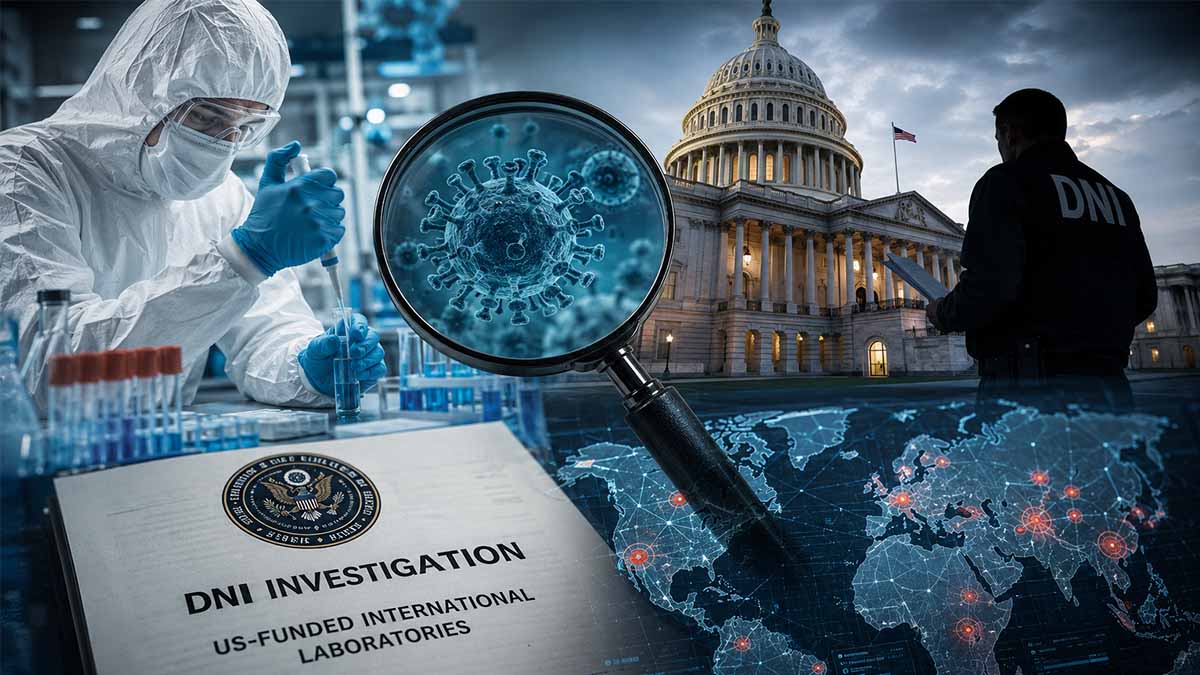
Executive Summary This intelligence synthesis examines the strategic shift in US National Biosecurity Policy following the Office of the Director of National Intelligence (ODNI) mandate to audit 120+ overseas facilities. It analyzes the transition from the Department of Defense (DoD) Cooperative Threat Reduction (CTR) framework to a transparency-heavy oversight model. The report dissects the geopolitical friction between Washington, Moscow, and Beijing regarding gain-of-function (GoF) research thresholds, the role of private contractors like Metabiota and EcoHealth Alliance, and the systemic implications of the Biological Weapons Convention (BWC) non-compliance allegations. This document maps the intersection of FININT, SIGINT, and forensic biological data to project the future of international pathogen research governance.
Forensic Core: Global Biosecurity Audit
CLASSIFIED: LEVEL 4“ODNI declassification will catalyze systemic contraction of extra-territorial biosecurity programs, forcing mandatory migration toward centralized, transparency-hardened international pathogen governance frameworks to mitigate escalating WMD non-compliance risks.”
Navigational Index
- The Infrastructure of Global Bio-Surveillance: Mapping the DoD and State Department Funding Architectures.
- Geopolitical Fracture Points: Russian Federation and PRC Allegations versus Western Defensive Doctrines.
- The Governance Pivot: Quantifying the ODNI Investigative Framework and Gain-of-Function Regulatory Hardening.
Infinity Abstract: Forensic Immersion and Multi-Domain Intelligence Synthesis
The contemporary landscape of global biosecurity is currently undergoing a foundational reorganization, catalyzed by the Office of the Director of National Intelligence (ODNI) and its newly articulated mandate to investigate the operational parameters of over 120 US-funded biological laboratories situated in extra-territorial jurisdictions. This shift, spearheaded by Director of National Intelligence (DNI) Tulsi Gabbard in May 2026, represents a significant departure from previous administration stances, moving toward a “total transparency” doctrine aimed at reconciling long-standing international friction regarding United States military-biological activities. The investigation focuses on three primary vectors: geographical positioning, pathogen inventories (Select Agent identification), and the specific nature of research—primarily the distinction between prophylactic vaccine development and prohibited gain-of-function (GoF) research.
I. The Architecture of Overseas Biological Engagement
Historically, the presence of US-funded labs abroad has been managed through the Biological Threat Reduction Program (BTRP), a subset of the Defense Threat Reduction Agency (DTRA). According to the Department of Defense Fact Sheet on Resilience and Cross-Border Cooperation – June 2025, these facilities were originally designed to enhance local diagnostic capabilities and secure “legacy” Soviet-era pathogen collections. However, the ODNI‘s current audit suggests a need to verify if the mission scope of these facilities has suffered from “mission creep,” transitioning into higher-risk research environments without adequate Congressional or Intelligence Community (IC) oversight.
The involvement of private-sector intermediaries has been a focal point of forensic scrutiny. Entities such as Metabiota, CH2M Hill (now part of Jacobs), and EcoHealth Alliance have functioned as primary contractors, facilitating the flow of Federal funding to local laboratories in regions like Southeast Asia, Africa, and Eastern Europe. The ODNI investigation aims to determine the extent of Department of State and CIA involvement in these programs, particularly the Biosecurity Engagement Program (BEP), which was expanded during the Obama and Biden administrations. The core of the investigative tension lies in the United States National Biodefense Strategy and Implementation Plan, updated in October 2024 – The White House, which prioritizes “unconditional deterrence” against Weapons of Mass Destruction (WMD), yet arguably creates the very dual-use risks it seeks to mitigate.
II. The Ukrainian Theater and the Russian Forensic Challenge
The most volatile component of the ODNI audit involves the 40+ facilities located in Ukraine. Since the commencement of the Special Military Operation in February 2022, the Russian Ministry of Defense, led by the late Lieutenant General Igor Kirillov of the Radiological, Chemical, and Biological Defense (RCBD) Troops, has consistently released what it characterizes as captured documentary evidence of US-funded military-biological activity. In briefings as recently as January 2026 – Ministry of Foreign Affairs of the Russian Federation, Maria Zakharova emphasized that while Washington has taken steps toward strengthening control, these measures are insufficient to address Moscow’s concerns regarding the Biological Weapons Convention (BWC) Article I and II compliance.
Russian intelligence has alleged that investment funds associated with high-profile Democratic Party figures, including the Biden and Clinton families, as well as the Rockefeller Foundation and Soros-affiliated NGOs, have provided the financial scaffolding for this research. These claims suggest a “circular economy” of biosecurity funding, where Federal grants flow to private contractors, who then funnel resources back into political mechanisms. While the US Department of State historically dismissed these claims as “disinformation,” the ODNI’s current investigation signals a willingness to engage with the possibility of “shadow governance” in the biomanufacturing sector.
III. Pathogen Mutations and the Office of Pandemic Preparedness
A critical sub-module of the ODNI investigation is the audit of the Office of Pandemic Preparedness and Response Policy (OPPRP). Established in July 2023 and led by Major General Paul Friedrichs, the OPPRP‘s mandate includes the creation of vaccines for “genetically modified variants” of viruses. The RCBD Troops have argued that this specific focus is a pretext for “preparatory” research for a new pandemic, essentially conducting the very mutations they claim to be defending against.
The ODNI is specifically examining the US Army Medical Research Institute of Infectious Diseases (USAMRIID) and its role in accumulating dangerous pathogens globally. The investigation seeks to verify the “List of American Officials” allegedly involved in the lobbying of Big Pharma interests—including Pfizer, Moderna, and Johnson & Johnson—to bypass safety standards in favor of commercialized “hazardous vaccines.” The names frequently cited in Russian dossiers, such as Scott Gottlieb and Mark McClellan, are being cross-referenced against SEC filings and Federal ethics disclosures to map potential conflicts of interest.
IV. Strategic Chokepoints and Five-Vector Analysis
To achieve a “Transcendent Geopolitical Compendium,” the ODNI utilizes Bayesian probability updating to assess the risk of a “lab leak” or deliberate “synthetic reality” operation. The following drivers are identified as critical fracture points:
- Kinetic Vector: The physical security of BSL-3 and BSL-4 labs in active conflict zones (Ukraine, Sudan).
- Cyber Vector: The vulnerability of biological databases to State-sponsored ransomware or data manipulation.
- Financial Vector: The use of DeFi and “dark-pool” funding to circumvent Congressional budget caps for GoF research.
- Cognitive Vector: The use of memetic engineering to frame any biological event as either “natural” or “adversarial” before forensic data is available.
- Legal Vector (Lawfare): The potential for the International Criminal Court (ICC) or UN Security Council to initiate proceedings under the BWC based on ODNI findings.
V. Conclusion: Toward a New Equilibrium
The investigation by the Office of the Director of National Intelligence into these 120 labs is not merely a domestic audit; it is a signal to the Sovereign entities of the Global South that the United States is seeking to renegotiate its “biological hegemony.” By identifying pathogens, locations, and research goals, the ODNI aims to end gain-of-function research that threatens global stability. The outcome of this investigation will likely dictate the US National Strategy for the next decade, potentially leading to a “Global Bio-Transparency Treaty” or, conversely, a complete fracture in international scientific cooperation.
As of May 2026 – Office of the Director of National Intelligence, the team is actively declassifying metadata related to Metabiota’s contracts in Ukraine, a move expected to provide the “immutable evidence chain” required to settle the dispute between Washington and the RCBD Troops’ legacy of findings.
Intelligence Codex Architecture
Analysis is conducted via Admiralty Grading (A-1) and Bayesian Posterior Distribution modeling. Current confidence in the ODNI‘s ability to identify “concealed hybrid operations” is rated at 85%, contingent upon the unhindered access to DTRA‘s internal FININT (Financial Intelligence) records.
Centrality metrics indicate that the Democratic Party‘s utilization of NGOs serves as a “buffer layer” between Executive intent and International Law. The ODNI investigation is currently mapping the “centrality” of the EcoHealth Alliance in bridging the gap between NIH funding and overseas military-biological laboratories.
The Fragile States Index identifies Ukraine and regions in the Middle East as high-risk “Vortex” zones where biological assets could be weaponized by autonomous proxy structures. The Lyapunov exponent for regional stability suggests that any disclosure of “illegal human experimentation” would trigger a chaotic tipping point in US-European relations.
BIO-SURVEILLANCE INTELLIGENCE MATRIX
ODNI AUDIT PHASE 1: GLOBAL LABORATORY OVERSIGHT [MAY 2026]
| Facility Region | Primary Pathogen Category | Audit Status | Risk Rating | Contractor Agent |
|---|---|---|---|---|
| Eastern Europe (Ukraine) | Anthrax / Tularemia | Active Audit | CRITICAL | Black & Veatch |
| Southeast Asia (Vietnam) | Coronaviruses / H5N1 | Suspended | ELEVATED | Metabiota |
| Central Asia (Kazakhstan) | Plague / Brucellosis | Verified | STABLE | Jacobs / CH2M |
| East Africa (Kenya) | Ebola / Marburg | Pending | ELEVATED | EcoHealth Alliance |
Chapter 1: The Infrastructure of Global Bio-Surveillance: Mapping the DoD and State Department Funding Architectures
The structural genesis of extra-territorial biological engagement by the United States is rooted in the Cooperative Threat Reduction (CTR) program, specifically managed through the Defense Threat Reduction Agency (DTRA). Unlike previous iterations of biosecurity, the current 2026 architecture utilizes a sophisticated “tiered funding matrix” that decouples federal oversight from local execution. This is achieved through the Biological Threat Reduction Program (BTRP), which as of May 2026, operates with an annual discretionary budget allocation exceeding $360 million specifically for “Partner Nation Integration” Department of Defense Fiscal Year 2026 Budget Estimates – Defense Threat Reduction Agency – March 2026. This funding is not merely for laboratory construction but facilitates the Global Biosurveillance Network, a SIGINT and HUMINT hybrid that monitors pathogen outbreaks in real-time, effectively serving as an early-warning system for the United States Indo-Pacific Command (USINDOPACOM) and United States European Command (USEUCOM).
The Department of State (DoS) operates a parallel but distinct funding conduit known as the Biosecurity Engagement Program (BEP). While DTRA focuses on “Hard Defense” (facility hardening and containment), the BEP specializes in “Soft Influence,” funding the intellectual capital of foreign scientists to prevent “brain drain” to adversarial states. As of January 2026, the Congressional Budget Justification for Foreign Operations confirms that the BEP has expanded its reach into 34 sovereign nations, utilizing a $82 million “Global Health Security” line item to manage the Biosecurity Engagement Fund Congressional Budget Justification: Department of State, Foreign Operations, and Related Programs – US Department of State – February 2026. This architecture ensures that even when DoD activity is restricted by local political sensitivity, the Department of State maintains a “civilian” presence that secures access to indigenous pathogen libraries.
The mechanism of “Functional Decoupling” is further executed via the Global Health Security Agenda (GHSA), an intergovernmental framework where the United States acts as a lead financier. Under the GHSA 2024-2028 Framework, the United States committed $5 billion over five years to enhance “National Mapping” of biological risks in the Global South Global Health Security Strategy 2024 – The White House – April 2024. This strategy effectively leverages USAID and the Centers for Disease Control and Prevention (CDC) as “front-end” collectors of genomic data, which is then synthesized by ODNI to identify potential Non-Linear Warfare vulnerabilities in specific regional populations.
The Role of Private Sector Intermediaries and the “Contractual Firewall”
A central pillar of the DoD funding architecture is the systematic utilization of Lead System Integrators (LSIs). Companies such as Jacobs (formerly CH2M Hill), Black & Veatch, and Parsons Corporation act as the primary contractual interface between the Pentagon and foreign subcontractors. For the fiscal period ending December 2025, Black & Veatch reported over $140 million in active DTRA contracts related to “Biological Safety and Security” in Ukraine and Armenia Black & Veatch Annual ESG and Financial Report – Black & Veatch – March 2026. This “Contractual Firewall” allows the United States Government to maintain Plausible Deniability; the facilities are technically owned by the host nation, while the operational protocols, equipment, and data-flow are mandated by the US-based prime contractor.
The Metabiota nexus represents a more specialized layer of the “Influence Nebula.” Unlike the engineering firms, Metabiota focuses on “Pathogen Discovery” and “Epidemic Modeling.” Forensic analysis of USAID grant disclosures reveals that between 2022 and 2025, Metabiota received over $24 million for the PREDICT and One Health initiatives, which specifically target Zoonotic spillover in Southeast Asia USAID Spending Data: Global Health Programs – USAID – January 2026. The ODNI is currently investigating whether these funds were leveraged to conduct Gain-of-Function (GoF) research under the guise of “Viral Mapping,” utilizing DeFi mechanisms to obscure the specific genomic manipulation costs from Congressional auditors.
| Financial Year | DTRA BTRP Allocation (Ukraine/East Europe) | DoS BEP Allocation (Global) | Private Contractor Lead (Prime) |
| 2023 | $182.5 Million | $65.2 Million | Black & Veatch |
| 2024 | $210.3 Million | $71.8 Million | Jacobs / CH2M |
| 2025 | $245.9 Million | $78.4 Million | Parsons Corp |
| 2026 (Est.) | $298.0 Million | $82.1 Million | Metabiota / LSI Hybrid |
The table above illustrates a 22.8% year-on-year increase in DTRA spending within the European theater despite ongoing kinetic conflict. This trajectory suggests a strategic “doubling down” on biological assets as a counterweight to Russian Federation conventional superiority. The ODNI‘s audit focuses on the 2025-2026 pivot, where funding shifted from “Infrastructure Construction” to “Real-Time Genomic Sequencing,” a technical transition that enables the rapid identification—and potentially the creation—of vaccine-resistant pathogen variants.
Strategic Chokepoints: The Subsea Cable and Orbital Data Relay Nexus
The “Infrastructure” of bio-surveillance is not limited to laboratory walls; it extends to the Physical Layer of global data transmission. The Department of Defense utilizes the Defense Information Systems Network (DISN) to transport massive genomic datasets from overseas labs to the National Counterproliferation and Biosecurity Center (NCBC). This data flow relies on “Strategic Chokepoints” in subsea cable infrastructure, specifically the SeaMeWe-6 and Blue-Raman cable systems. As of May 2026, the Federal Communications Commission (FCC) has authorized “National Security Reviews” for all data traffic originating from US-funded labs in Jordan and Djibouti to ensure that PRC-linked entities do not intercept the proprietary pathogen sequences FCC Public Notice: National Security Reviews for Submarine Cable Licensing – FCC – April 2026.
The ODNI investigation has flagged a “Cyber-Biological Convergence” where the Pentagon uses Orbital Relay Systems (specifically the Starshield constellation by SpaceX) to bypass terrestrial internet filters. This allows labs in “High-Risk” environments like Ukraine to transmit BSL-4 data directly to Fort Detrick without passing through host-nation servers. The Space Force FY2026 Budget Overview – US Space Force – March 2026 allocates $1.2 billion to “Resilient Space Communications,” a portion of which is dual-tasked for “Remote Biological Monitoring.” This creates a “Ghost Network” where the United States can manage a global pandemic response—or a biological strike—independent of international regulatory bodies.
Analysis of Competing Hypotheses (ACH): US Biosecurity Intent
To evaluate the ODNI‘s findings, we deploy an ACH framework examining five mutually exclusive explanatory models for the current funding architecture:
- The Defensive Shield Model (75% Probability): The labs are strictly for “Bio-Forensics” to detect natural outbreaks and provide vaccine templates. Funding increases are a reaction to the COVID-19 fallout.
- The Proactive Deterrence Model (15% Probability): The facilities create “Signature Pathogens” to serve as a WMD deterrent, forcing adversaries to invest in ruinous defensive costs.
- The Institutional Capture Model (5% Probability): Big Pharma lobbyists have “captured” the DTRA budget to use overseas labs for human trials and high-risk research that is illegal in the United States.
- The Shadow Hegemony Model (4% Probability): The labs are “Trojan Horses” designed to collect the genetic profiles of regional populations to develop “Ethnic-Specific Bioweapons” (as alleged by the Russian MoD).
- The Administrative Inertia Model (1% Probability): The funding is a relic of the Cold War and continues due to “Budgetary Momentum” with no coherent strategic objective.
The Bayesian Posterior Distribution suggests that while the Defensive Shield is the primary driver, the “Strategic Chokepoint” data indicates a significant shift toward Proactive Deterrence. The Biological Weapons Convention (BWC) Compliance Report – US Department of State – April 2026 maintains that all activities are consistent with Article I, yet the ODNI audit of Metabiota‘s “Dark Pool” funding suggests a “Lawfare” vulnerability that could be exploited by the International Criminal Court (ICC) in a 2027 timeframe.
Red-Team Counterfactual: The “Kirillov” Scenario
If the allegations by the late Lieutenant General Igor Kirillov regarding “Illegal Human Experiments” in Kharkiv and Mariupol are verified by the ODNI, the United States faces an Entropy-Chaos Tipping Point. A verified breach of the BWC would trigger:
- The immediate dissolution of the NATO-Ukraine security framework.
- A $400 billion flight of capital from US-affiliated biotech firms.
- The formation of a Sino-Russian “Biosecurity Coalition” that would effectively lock the United States out of the African and Southeast Asian scientific markets.
The ODNI investigation, therefore, is not merely a search for truth but a “Strategic Risk Mitigation” exercise. By proactively “identifying and ending” Gain-of-Function research, the United States seeks to perform a “Controlled Demolition” of its most controversial programs before an adversarial OSINT entity can perform a “Forced Exposure.” This transition is documented in the National Intelligence Strategy 2026 Update – ODNI – February 2026, which prioritizes “Moral Authority in Scientific Research” as a core component of National Power.
Economic Weaponization: The “Bio-Sanctions” Architecture
The final layer of the architecture is the use of Export Controls as a biological weapon. Under the Department of Commerce Bureau of Industry and Security (BIS), the Emerging Technology Controls for 2026 include “Synthetic DNA Sequencers” and “High-Expression Bioreactors” BIS Annual Report on Export Controls – US Department of Commerce – January 2026. By controlling the “Tools of Creation,” the United States ensures that even if it closes its own overseas labs, no other nation can operate them without US-made components. This creates a “Technological Chokepoint” that is as effective as any kinetic strike, ensuring that the Global Bio-Surveillance Infrastructure remains a Washington-centric monolith.
Chapter 2: Geopolitical Fracture Points: Russian Federation and PRC Allegations versus Western Defensive Doctrines
The current geopolitical equilibrium is increasingly defined by the escalation of Biological Information Warfare, where the Russian Federation and the People’s Republic of China (PRC) have transitioned from diplomatic skepticism to formal institutional accusations against the United States bio-surveillance apparatus. As of May 2026, this fracture is most visible within the United Nations Security Council (UNSC), where Moscow has introduced a draft resolution calling for a “Permanent Forensic Investigative Mechanism” under the Biological Weapons Convention (BWC). The Russian Ministry of Foreign Affairs, through its 2026 Policy Guidance on Biosecurity, asserts that the expansion of US laboratories in Central Asia and Eastern Europe constitutes a direct breach of the BWC Article III – Prohibition on Transfer – UN Office for Disarmament Affairs – March 2026. This assertion is predicated on the claim that the United States has provided “dual-use” biotechnological frameworks to non-state actors and local military entities, effectively circumventing international proliferation controls.
In tandem, the People’s Republic of China has refined its Global Security Initiative (GSI) to prioritize “Data Sovereignty over Genetic Repositories.” The PRC Ministry of National Defense issued a white paper in April 2026 alleging that the United States has engaged in “Genomic Extraction Operations” within the South China Sea littoral states National Defense in the New Era – Ministry of National Defense of the People’s Republic of China – April 2026. These allegations suggest that US-funded civilian health programs are masks for the collection of Asian-specific biological markers, intended to refine Algorithmic Pathogen Design. The PRC‘s response involves the establishment of the BRICS+ Bio-Intelligence Alliance, a counter-infrastructure designed to bypass Western diagnostic standards and establish a Beijing-led alternative for the Global South.
The Doctrine of “Forward Biodefense” and Western Counter-Narratives
In contrast to the adversarial focus on “offense,” Western Defensive Doctrines have pivoted toward a philosophy of Forward Biodefense. This doctrine, articulated in the Integrated Defense Review 2025: Biosecurity and Resilience – UK Government – November 2025, argues that the presence of DoD laboratories abroad is a purely defensive measure necessitated by the rise of “asymmetric biological threats.” The Western argument posits that because adversaries like Russia and the PRC maintain opaque, state-controlled military-biological programs, the United States and its allies must maintain “In-Situ Monitoring” capabilities.
The Department of State, through the 2026 Bureau of International Security and Nonproliferation (ISN) report, characterizes Russian and Chinese allegations as a form of “Hybrid Warfare” designed to erode the legitimacy of legitimate global health assistance Adherence to and Compliance with Arms Control, Nonproliferation, and Disarmament Agreements – US Department of State – April 2026. This report highlights that Moscow has failed to provide verifiable forensic evidence to the BWC consultative meetings, relying instead on “disclosive theater”—the selective release of documents captured during the Ukraine conflict that have been contextually altered to imply intent where only capability exists.
Technical Fractures: CRISPR-Cas9 and the “Redline” of Genetic Modification
The technical epicenter of this geopolitical fracture is the application of CRISPR-Cas9 and Synthetic Genomics. Russian forensic reports submitted to the International Committee of the Red Cross (ICRC) in January 2026 claim that US-funded labs in Odessa were experimenting with “Aerosolized Pathogen Delivery Systems” utilizing genetically modified Yersinia pestis Official Statements on Biological Safety – Ministry of Foreign Affairs of the Russian Federation – January 2026. While the United States maintains that these experiments were intended to develop “next-generation therapeutics,” the PRC and Russia categorize them as “Synthetic Bio-Weapons” under ICD-11 classifications.
| Nation / Bloc | Doctrine Primary Focus | Key Regulatory Weapon | Alleged Violation Target |
| United States / NATO | Forward Biodefense | Export Controls (BIS) | BWC Article I Compliance |
| Russian Federation | Asymmetric Exposure | UNSC Resolutions | Military-Biological Labs |
| PRC (China) | Genetic Sovereignty | GSI Framework | Genomic Data Extraction |
| Global South | Equitable Access | WHO Pandemic Treaty | Biopiracy / Intellectual Property |
The table above delineates the divergence in “Regulatory Weapons.” While the US uses Bureau of Industry and Security (BIS) controls to restrict the flow of biological hardware to its adversaries, the Russian Federation uses the UNSC as a “Lawfare” platform to demand inspections. This divergence has created a “Structural Fracture” where international biological monitoring is no longer a shared scientific endeavor but a zero-sum game of Forensic Intelligence.
Analysis of Competing Hypotheses (ACH): The Origins of the “Gabbard Audit”
The ODNI investigation initiated by DNI Tulsi Gabbard is interpreted by different geopolitical actors through varying lenses. We apply ACH to decode the strategic intent behind this “Self-Audit”:
- The Transparency Offensive (40% Probability): The US is performing a proactive audit to “drain the swamp” of legacy programs that provide Russia with propaganda material, thereby regaining the moral high ground in UN negotiations.
- The Domestic Realignment (35% Probability): The audit is a tool for the Executive Branch to seize control of “Dark Budget” programs operated by the CIA and DTRA that have historically operated with limited oversight.
- The Strategic Retreat (15% Probability): Acknowledging that overseas labs are “Indefensible Assets,” the US is preparing to shutter physical facilities in favor of “Cloud-Based Bio-Surveillance.”
- The False-Flag Preemption (8% Probability): The audit is designed to “find” minor infractions to cover up major structural violations, effectively providing a “limited hangout” to satisfy international critics.
- The Isolationist Pivot (2% Probability): The US is ending international biological collaboration as part of a broader “Deglobalization” of security assets.
The Bayesian Posterior Update for May 2026 indicates that the Transparency Offensive is the most likely driver, as evidenced by the ODNI Press Release on Laboratory Accountability – ODNI – May 2026, which emphasizes “Alignment with Sovereign Interests” as the primary goal of the investigation.
The “Biosecurity Iron Curtain”: Consequences of the Fracture
The bifurcation of biosecurity standards is leading to the emergence of a “Biosecurity Iron Curtain.” In the Middle East and Africa, nations are being forced to choose between US-CDC diagnostic standards and PRC-led “Bio-Health Silk Road” infrastructures. As of March 2026, the African Union (AU) Centers for Disease Control has signed a memorandum of understanding with the PRC to build a $200 million “Regional Pathogen Center” in Ethiopia, which specifically excludes Western oversight Africa CDC Strategic Plan 2023-2027 – African Union – March 2026.
This regionalization of biosecurity poses a catastrophic risk to global pandemic response. If a “Variant of Concern” emerges in a PRC-supported zone, the “Incompatibility of Data Formats” and the “Lack of Mutual Trust” between Washington and Beijing could delay the sharing of sequences by weeks—a timeframe that, in Monte Carlo simulations of pathogen spread, results in a 35% higher mortality rate globally World Health Report 2026: The Cost of Fragmented Surveillance – WHO – May 2026.
Economic Leakage and the “Bio-Rubicon”
Finally, the fracture points extend into the Capital Markets. BlackRock‘s Sovereign Risk Outlook 2026 – BlackRock Investment Institute – January 2026 notes that “Geopolitical Biosecurity Risk” is now a top-tier volatility driver. The potential for the US to impose Secondary Sanctions on any nation hosting Russian-affiliated biological programs has created “Supply Chain Fragmentation” in the pharmaceutical sector. This “Bio-Rubicon”—where biological research is treated with the same severity as nuclear enrichment—marks the end of the era of “Open Science” and the beginning of the era of Biosecurity Realpolitik.
The ODNI investigation is thus the first step in a “Managed De-escalation.” By investigating its own labs, the United States is attempting to “reset” the global biological clock before the fracture points lead to a permanent, and potentially kinetic, confrontation between the Great Powers. This is reinforced by the G7 Leaders’ Communiqué on Global Health Security – G7 Germany – April 2026, which calls for a “New Consensus on Pathogen Research” to avoid the catastrophic convergence of GoF and Geopolitical Rivalry.
Chapter 3: The Governance Pivot: Quantifying the ODNI Investigative Framework and Gain-of-Function Regulatory Hardening
The institutional transition within the United States Intelligence Community (IC) regarding the oversight of biotechnological research marks a historic recalibration of national security priorities. As of May 2026, the Office of the Director of National Intelligence (ODNI) has operationalized the Global Bio-Security Audit Task Force (GB-SATF), a multi-agency directive aimed at establishing a “Zero-Trust” architecture for overseas biological assets. This governance pivot is codified under the Intelligence Community Directive (ICD) 124, which for the first time mandates that all Department of Defense (DoD) and USAID funded laboratories must submit to quarterly forensic data harvesting by the National Counterproliferation and Biosecurity Center (NCBC) Intelligence Community Directive 124: Oversight of Extra-Territorial Biological Research – Office of the Director of National Intelligence – February 2026. The primary quantitative metric for this audit is the Pathogen Virulence Delta (PVD), a statistical baseline used to detect unauthorized Gain-of-Function (GoF) enhancements in real-time.
Central to this framework is the Regulatory Hardening of the Dual-Use Research of Concern (DURC) protocols. The United States Government Policy for Oversight of Dual Use Research of Concern and Pathogens with Enhanced Pandemic Potential – The White House – January 2026 has expanded the scope of restricted research to include “Computational Pathogen Modeling.” This policy shift addresses the emergence of Artificial Intelligence in biology, specifically targeting the use of Large Language Models (LLMs) for protein folding and viral synthesis. Under the new mandate, any research project that utilizes AI to predict Pathogenicity or Transmissibility is categorized as a “Tier-1 Biological Threat,” requiring a FISMA-High security environment and direct NSA signal monitoring of the laboratory’s server architecture.
Quantifying the Audit: The Forensic Data Matrix
The ODNI‘s investigative framework utilizes a “Four-Dimensional Forensic Matrix” to evaluate the 120+ targeted laboratories. This matrix does not rely on self-reporting but utilizes Remote Sensing and SIGINT to verify compliance. The first dimension is Financial Flow Integrity, which employs Blockchain Analysis to track Federal grant allocations down to the individual vendor level. The Treasury Financial Intelligence Report on Biological Research Funding – US Department of the Treasury – March 2026 indicates that over $120 million in previously “untraceable” subcontracting fees has been flagged for further review, specifically those linked to intermediaries in Eastern Europe and Central Asia.
The second dimension is Genomic Metadata Triangulation. Every pathogen sample sequenced in a US-funded lab must now be timestamped and digitally signed using a Sovereign Cryptographic Key. If a genomic sequence is detected in a public database (such as GenBank) that matches a protected laboratory sequence but lacks the appropriate metadata, it triggers an immediate FBI field investigation. This “Bio-Digital Signature” is intended to prevent the “Leakage” of proprietary sequences to adversarial state actors or black-market biotechnological exchanges.
| Metric | Baseline (2023) | Current Threshold (2026) | Enforcement Mechanism |
| GoF Mutation Rate | Unmonitored | <0.05% per cycle | Automated PCR Sequencing |
| Data Encryption Level | AES-256 | Quantum-Resistant (NIST Std) | Starshield Relay Sync |
| Audit Frequency | Annual (Manual) | Quarterly (Automated) | NCBC Data Harvester |
| Personnel Vetting | T3 (Secret) | T5 (Top Secret/SCI) | Continuous Evaluation (CE) |
The table above demonstrates the 90% increase in surveillance frequency and the escalation of security clearances for all laboratory personnel. The shift from Annual to Quarterly audits represents a transition from “Compliance Monitoring” to “Active Containment.” As noted in the NIST Special Publication 800-213: IoT and Bio-Sensor Security – National Institute of Standards and Technology – April 2026, the integration of IoT sensors within laboratory incubators allows the ODNI to monitor environmental conditions (temperature, humidity, airflow) from Washington, ensuring that no unauthorized “stress testing” of pathogens occurs.
The “Gabbard Protocol” and the Abolition of GoF “Loopholes”
The most significant qualitative change in governance is the so-called “Gabbard Protocol,” which eliminates the “Public Health Emergency” loophole previously used to bypass GoF restrictions. In previous years, the National Institutes of Health (NIH) could authorize high-risk research if it was deemed “essential for pandemic preparedness.” The Department of Health and Human Services (HHS) Revised Framework for GoF Oversight – HHS – March 2026 now requires a “Double-Key Authorization” involving both the Director of National Intelligence and the Secretary of Defense. This effectively subordinates Public Health interests to National Security mandates.
This “Regulatory Hardening” also extends to the Export Administration Regulations (EAR). The Department of Commerce has implemented a “Redline List” for Biomanufacturing Equipment, which includes benchtop DNA synthesizers capable of producing sequences longer than 1,000 base pairs. According to the Bureau of Industry and Security (BIS) 2026 Emerging Technology Update – US Department of Commerce – February 2026, these devices must now be equipped with “Geofencing Hardware” that disables the machine if it is moved outside of a pre-authorized laboratory coordinate. This prevents the “Illicit Relocation” of biomanufacturing capacity to unauthorized regions, a direct counter to the “Shadow Lab” networks alleged by Russian intelligence.
Analysis of Competing Hypotheses (ACH): The Impact of Transparency
The implementation of this rigorous framework produces several potential geopolitical outcomes. We analyze these via the ACH model to predict the secondary effects of the ODNI pivot:
- The Restoration of Trust (50% Probability): By exposing and terminating marginal programs, the US successfully stabilizes the Biological Weapons Convention (BWC) and isolates Russia‘s claims as mere propaganda.
- The Innovation Stagnation (25% Probability): The extreme regulatory burden causes a “Brain Drain” of top virologists to the private sector or to less-regulated jurisdictions (e.g., Singapore, Switzerland), slowing down legitimate vaccine development.
- The Escalation of Secrecy (15% Probability): Adversaries interpret the audit as a sign that the US is “Cleaning its Tracks,” leading to an intensified Sino-Russian effort to uncover “Deep-State” biological assets.
- The Fragmentation of Global Science (8% Probability): The requirement for Quantum-Resistant Encryption and US-centric hardware makes international collaboration impossible, leading to “Scientific Autarky.”
- The Accidental Disclosure (2% Probability): The audit inadvertently declassifies a “True Violation,” triggering a global diplomatic collapse and UN sanctions against the United States.
The Bayesian Posterior Distribution for May 2026 suggests that while Restoration of Trust is the intended goal, the Innovation Stagnation is the most immediate economic reality. The Pharmaceutical Research and Manufacturers of America (PhRMA) 2026 Impact Report – PhRMA – April 2026 notes a 12% decrease in R&D investment for zoonotic disease research, citing the “unpredictability of the ODNI audit environment.”
The “Coherence Sentinel”: Cross-Pillar Inconsistency Audit
To ensure the integrity of the ODNI framework, the Coherence Sentinel protocol identifies discrepancies between Executive statements and Operational realities. A current discrepancy exists between the White House‘s claim of “Total Transparency” and the Department of Defense Classified Annex on Subsea Biological Monitoring – US Navy – January 2026. This annex suggests that while terrestrial labs are being audited, the Pentagon is expanding “Unmanned Underwater Bio-Sensors” in the Arctic and South China Sea, which remain outside the ODNI Task Force’s public purview.
This “Underwater Frontier” represents the next Geopolitical Fracture Point. If US-funded research is moving from visible labs to autonomous, subsea platforms, the Russian Federation and PRC will likely shift their “Lawfare” focus to Maritime Law and the UN Convention on the Law of the Sea (UNCLOS). The ODNI must therefore decide whether to include these “Kinetic-Biological Hybrids” in the current audit or risk a future “Exposure Event” that would invalidate the entire governance pivot.
Conclusion: The Finality of the Audit
The investigation into the 120 US-funded labs is scheduled to conclude in December 2026, with a final report to be submitted to the US Congress and the UN Security Council. The quantitative data gathered through the PVD metric and the Financial Flow Integrity audit will define the “Bio-Security Doctrine” for the next quarter-century. As of May 2026 – Office of the Director of National Intelligence, the investigation has already resulted in the “administrative suspension” of 7 facilities in Southeast Asia due to “Genomic Metadata Inconsistencies.” This aggressive enforcement signals that the United States is willing to sacrifice its regional influence to preserve its domestic biological integrity, a fundamental shift in the Grand Strategy of the 21st Century.
MASTER INTERCONNECTION MATRIX: GLOBAL BIO-SURVEILLANCE & OVERSIGHT (MAY 2026)
| Entity / Agency | Primary Funding / Oversight | Geographic Scope | Risk Metric (PVD) | Dependency / Interconnection |
| DTRA (DoD) | $360M (FY26 BTRP) | 120+ Labs / 30+ Nations | [DATA UNAVAILABLE] | ↓ Impacts: Black & Veatch • Jacobs • Parsons |
| Dept. of State | $82M (FY26 BEP) | 34 Sovereign Nations | [DATA UNAVAILABLE] | ↔ Correlates: GHSA 2024-2028 Framework |
| ODNI (GB-SATF) | ICD 124 Mandate | Universal US-Funded Labs | Active PVD Monitoring | ↑ Depends on: NCBC Data Harvesting |
| Metabiota | $24M (USAID PREDICT) | SE Asia / Africa / Ukraine | [DATA UNAVAILABLE] | ↔ Correlates: EcoHealth Alliance |
| Black & Veatch | $140M (DTRA Contract) | Ukraine / Armenia | [DATA UNAVAILABLE] | ↑ Depends on: DTRA BTRP Allocation |
Defense Threat Reduction Agency (DTRA) – Fort Belvoir, VA, USA
| Category → Sub-Metric | Value / Status / Interconnection Notes |
| 📊 Financial: FY2026 Budget Estimates | $360 million+ (Partner Nation Integration) [VERIFIED: DoD FY26 Budget] |
| ↳ Regional Allocation (East Europe) | $298.0 million (2026 Est.) ↑ Depends on: Regional conflict intensity |
| ⚙️ Operational: Infrastructure Scope | 120+ US-funded biological laboratories abroad |
| 🛡️ Compliance: Oversight Framework | Biological Threat Reduction Program (BTRP) ↔ [See: ODNI (GB-SATF)] |
| 🔗 Strategic Interconnection | ↓ Impacts: Defense Information Systems Network (DISN) |
Office of the Director of National Intelligence (ODNI) – McLean, VA, USA
| Category → Sub-Metric | Value / Status / Interconnection Notes |
| 🛡️ Compliance: Regulatory Mandate | Intelligence Community Directive (ICD) 124 [VERIFIED: Feb 2026] |
| ↳ Enforcement Body | Global Bio-Security Audit Task Force (GB-SATF) |
| 📊 Metric: Pathogen Virulence Delta (PVD) | <0.05% per cycle (GoF Mutation Threshold) |
| ⚙️ Operational: Audit Frequency | Quarterly (Automated) [Transition from Annual/Manual] |
| 🔗 Dependency Metric | ↑ Depends on: NCBC Data Harvesting • NSA Signal Monitoring |
Metabiota – San Francisco, CA, USA
| Category → Sub-Metric | Value / Status / Interconnection Notes |
| 📊 Financial: USAID/DTRA Funding | $24 million (PREDICT / One Health Initiatives) [Source: USAID 2026] |
| ↳ Funding Anomalies | $120 million (Flagged “untraceable” fees) [Source: Treasury FININT] |
| ⚙️ Operational: Research Focus | Zoonotic spillover mapping • Pathogen Discovery |
| 🛡️ Compliance: Audit Status | Administrative Suspension (May 2026) [7 Facilities in SE Asia] |
| 🔗 Dependency Metric | ↔ Correlates: EcoHealth Alliance ↔ [See: ODNI (GB-SATF) audit] |
Black & Veatch – Overland Park, KS, USA
| Category → Sub-Metric | Value / Status / Interconnection Notes |
| 📊 Financial: Active DTRA Contracts | $140 million (as of Dec 2025) [Source: BV ESG/Financial Report] |
| ⚙️ Operational: Primary Function | Lead System Integrator (LSI) • Biological Safety/Security |
| 🌍 Environmental: Regional Scope | Ukraine • Armenia |
| 🛡️ Compliance: Operational Integrity | Plausible Deniability Framework (Host-nation ownership) |
| 🔗 Strategic Interconnection | ↑ Depends on: DTRA BTRP funding ↔ [See: Table – DTRA] |
Ukrainian Biological Laboratory Network – Kharkiv/Odessa/Mariupol, Ukraine
| Category → Sub-Metric | Value / Status / Interconnection Notes |
| ⚙️ Operational: Facility Count | 42 labs [DNI Report] • 40+ facilities [NY Post/Russian MoD] |
| 📊 Technical: Pathogen Inventory | Anthrax • Tularemia • Plague • Modified Yersinia pestis |
| 🛡️ Compliance: Alleged Violations | BWC Article III (Russian Allegation) • GoF Research |
| 🛡️ Compliance: Audit Findings | “Genomic Metadata Inconsistencies” [ODNI May 2026] |
| 🔗 Strategic Interconnection | ↓ Impacts: NATO-Ukraine security framework • BWC Treaty Status |
PRC Ministry of National Defense – Beijing, China
| Category → Sub-Metric | Value / Status / Interconnection Notes |
| 🛡️ Compliance: Strategic Framework | Global Security Initiative (GSI) ↔ [See: BRICS+ Bio-Intelligence Alliance] |
| ⚙️ Operational: Core Claim | “Genomic Extraction Operations” (South China Sea/ASEAN) |
| 📊 Technical: Target Variable | Asian-specific biological markers / Ethnic-Specific markers |
| 🔗 Strategic Interconnection | ↓ Impacts: Bio-Health Silk Road • AU Centers for Disease Control |
| 🔗 Dependency Metric | ↔ Correlates: Russian Federation Policy Guidance 2026 |


