














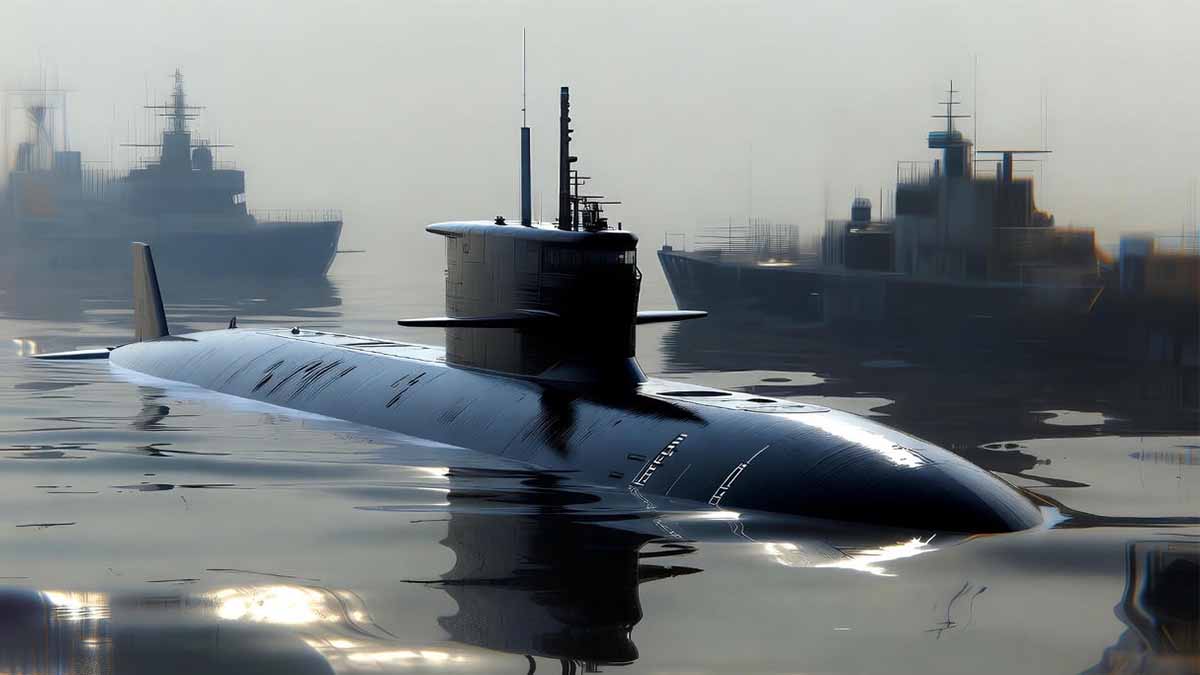
The selection of Sweden’s Saab A26 Blekinge-class submarine for the Polish Navy’s Orka program, announced by Deputy Prime Minister and Minister of National Defence Władysław Kosiniak-Kamysz, represents a monumental decision transcending routine defense procurement.1 This acquisition of three new conventional submarines, projected to cost in excess of PLN 10 billion, serves as the maritime centerpiece of Poland’s ongoing, massive military modernization effort, placing naval capabilities back at the forefront of the nation’s strategic defense posture.1 The decision was predicated not merely on the technical specifications of the vessel, but explicitly on the superior delivery timing and the robust possibilities for technological and industrial cooperation offered by the Swedish proposal.1 This procurement, finalized amidst profound and increasing military tension in the Baltic Sea region following the Russia-Ukraine war, is a foundational element in establishing a unified, resilient defense architecture spanning the new Nordic-Baltic NATO front.
The Orka Imperative: Restoring Subsurface Deterrence on the Baltic Frontline
The impetus behind the accelerated Orka program was the critical operational deficiency facing the Polish Navy’s subsurface fleet. For several years, Poland’s naval capacity has rested almost entirely upon the single, severely outdated Soviet-designed Kilo-class submarine, the ORP Orzeł.2 This dependence had created a profound strategic vulnerability. Official military assessments revealed that the Orzeł’s operational readiness had dropped below 60%, rendering the platform largely ineffective for modern deterrence missions.4 Furthermore, the operational burden of maintaining such an obsolete vessel had become unsustainable, with annual sustainment costs estimated at €20 million, consuming an average of 3,800 man-hours per year just for maintenance.4 This critical failure established an imperative: without rapid intervention, Poland faced a complete lapse in specialized naval capability, which would severely compromise its ability to contribute to NATO’s anti-submarine warfare (ASW) efforts in the Baltic Sea.
The political will to address this crisis was solidified under Prime Minister Donald Tusk, who announced in September 2025 that a government resolution regarding the Orka selection would be adopted by the end of the year.1 The Ministry of National Defence was tasked with preparing recommendations that strategically integrated both immediate military needs and long-term national economic interests.1 The scale of the resulting deal is transformative, with the total contract value anticipated to exceed PLN 10 billion.1 This commitment signals that the political cost of losing subsurface capabilities entirely—and thereby yielding strategic control of the southern Baltic approaches—was considered unacceptable, overriding any lesser financial or technical concerns presented during the bidding process.
The Phased Strategy of Naval Recovery: The A19 Bridge
A key operational challenge inherent in naval modernization is the significant time lag between contract signing and final vessel delivery. To mitigate this critical gap, the Swedish proposal included an immediate strategic solution: a commitment to providing a “gap-filler capability”.1 This interim measure involves the transfer of an A19-type vessel 1, a platform that will be modernized by Saab Kockums prior to delivery to support the transition phase.6 The timeline for this operational bridge is highly accelerated: training for Polish sailors on the newer platform is scheduled to commence in 2026, with the modernized A19-type gap-filler arriving in Poland by 2027.1 This ensures that Poland can sustain its specialized submarine crews and, crucially, provides early operational experience with modern Air-Independent Propulsion (AIP) technology, preparing the force for the integration of the highly advanced A26 fleet later in the decade. The swift implementation schedule mandates rapid political and contractual finalization, with the political agreement expected by the end of 2025 and the commercial contract concluded no later than the end of the second quarter of 2026.1 The full delivery of the three new A26 submarines is slated for completion by 2030.1
The Competition and the Prioritization of Regional Fit
The Orka procurement was fiercely contested by seven shipyards from six nations.1 Key contenders included Germany’s TKMS with the Type 212CD, France’s Naval Group, and significant bids from South Korea’s Hanwha Ocean and Hyundai Heavy Industries.7 The competition highlighted divergent philosophies regarding naval deterrence. South Korea’s Hanwha Ocean, in particular, championed the KSS-III Batch 2—a large, strike-oriented platform equipped with lithium-ion batteries and capable of integrating SLBM technology.7 Furthermore, South Korea presented an aggressively large industrial offset commitment, publicly declaring a pledge of around $100 million dedicated to establishing maintenance and repair infrastructure in Poland.8 Despite these enticing features focused on offensive deterrence, Poland chose the Swedish government-to-government route.3 This outcome underscores that Warsaw prioritized reliable strategic alignment with a close, newly integrated NATO partner whose domestic defense industry is uniquely specialized for the local maritime environment. This minimized the long-term geopolitical risks associated with relying on non-aligned foreign support and ensured maximum interoperability within the northern NATO structures from 2026 onward. The selection validates the strategic calculation that a guaranteed regional technological partnership is a more robust foundation for security than generalized technological maximization provided by distant, albeit capable, industrial players.
The Blekinge-Class Calculus: Specialized Stealth and Multi-Mission Capability for the Baltic Littoral
The decision to acquire the Saab A26 Blekinge-class submarine confirms a strategic commitment by Poland to asymmetrical deterrence, favoring specialized littoral capabilities optimized for the unique tactical environment of the Baltic Sea.
The Environmental Suitability of the A26 Design
The Baltic Sea is notoriously challenging for submarine operations, characterized by shallow waters and low salinity, conditions that complicate traditional acoustic detection methods but demand highly specialized stealth technology.7 The A26 is purpose-built for this environment. It incorporates Saab’s proprietary “Ghost” technology, which focuses on minimizing acoustic, magnetic, and pressure signatures, making the vessel exceptionally difficult to detect in the complex acoustic conditions of the Baltic littoral.7 This stealth capability is paired with the long-duration Stirling-engine Air-Independent Propulsion (AIP) system. The AIP unit allows the A26 to maintain extended submerged endurance for up to 45 days, offering covert, persistent presence in strategic locations—a crucial asset for situational awareness and mission planning in multi-domain warfare.9 The vessel’s dimensions, approximately 66.1 meters in length and 6.75 meters in beam, reflect an optimal balance of agility and capability for the confined operational space.10 This strategic choice validates the operational assessment that in the Baltic, stealth and protracted submerged endurance are the most crucial variables for deterrence against the localized naval advantage maintained by the Russian Baltic Fleet.11
Multi-Mission Capabilities and Deterrent Armament
The operational requirements defined by the Orka program demanded a multirole vessel. A fundamental requirement was the ability to launch land-attack cruise missiles, providing Poland with a robust capability to project power and strike targets at strategic levels, thus complementing the long-range capabilities of the Polish Air Force and Land Forces.3 Beyond its kinetic payload of heavyweight and lightweight torpedoes 9, the A26 is distinguished by its unique Multi-Mission Portal (MMP). This large flexible module significantly enhances the submarine’s utility in gray zone operations, supporting the covert deployment and recovery of specialized forces, as well as uncrewed underwater vehicles (UUVs).9 The integration of the MMP transforms the vessel into a potent intelligence, surveillance, and reconnaissance (ISR) platform. Its advanced sensor suite, including mine-navigation sonars, Atlas Elektronik flank arrays, and Safran Series 30 optronics, ensures high fidelity of situational awareness necessary for effective operation in a contested area.9 The dual-purpose design—strategic strike deterrence paired with covert ISR capacity—is a direct response to the hybrid threats currently emanating from Russia.
Comparison with Competitive Design Philosophies
The selection process ultimately favored a design tailored for regional dominance over generalized naval projection. While the South Korean KSS-III Batch 2 offered substantial firepower and range, it was assessed as optimized for the deep-water, blue-water operations of the Asia-Pacific.8 The A26, conversely, provided the necessary specialization for the Baltic environment. Although Germany’s Type 212CD, co-developed with Norway, also offered a highly mature AIP system and full NATO combat system compatibility 8, the Swedish offer provided a superior geopolitical framework and more meaningful industrial engagement. The selection of the A26 confirms that Poland’s strategic direction emphasizes acquiring platforms that maximize stealth and regional interoperability to secure the Baltic Sea as a unified NATO domain, effectively leveraging its partnership with Sweden to build a complementary, rather than competing, naval force. This tailored approach suggests the naval capability is viewed primarily as a crucial element of the Alliance’s collective ASW and CUI protection strategy.
Industrial Sovereignty and the Northern Axis: Cementing the Poland-Sweden Strategic Corridor
The decision to proceed with the Orka program under a government-to-government framework highlights Poland’s long-term strategy of securing strategic partnerships that ensure profound industrial autonomy. This structure was mandated by the government to foster a “greater level of political partnership” and facilitate deep technology transfer, ensuring Poland maintains sovereign control over sensitive combat management and maintenance systems.3
The Government-to-Government Framework and Political Alignment
The formalization of the naval partnership is a direct consequence of the rapid strategic integration between Poland and Sweden following Sweden’s accession to NATO. This developing relationship establishes the maritime element of a new Northern Axis on the Alliance’s eastern boundary. Deputy Prime Minister Kosiniak-Kamysz noted at the Polish-Swedish Defence Industry Forum in October 2025 that Sweden’s NATO membership had given bilateral actions a “completely new pace,” particularly in the Baltic Sea.15 The Orka deal institutionalizes this relationship, leveraging government oversight to guarantee enduring support and cooperation between the defense industrial bases (DIBs) of both nations.
Reciprocal Industrial Commitments: The Offset Package
A determining factor in the Swedish victory was the quality and commitment of the industrial offset program, designed to advance the interests of the Polish economy and defense sector.1 The foreign supplier is contractually required to collaborate closely with the Polish state-run defense group, PGZ Naval Shipyard.3 The most tangible element of this commitment is Sweden’s declaration to purchase armaments built in Poland, including the construction of a rescue ship at a Polish shipyard.1 This project, known as Ratownik, is a substantial endeavor, estimated to be valued at approximately PLN 1 billion, or $241 million, with construction scheduled to take place between 2025 and 2029.16 The inclusion of this counter-purchase provides immediate and sustained economic benefits, preserving and upgrading essential shipbuilding skills within the Polish defense sector.
Moreover, the strategic alignment has already facilitated significant non-naval sales. Sweden has entered into agreements to purchase Piorun air-defense systems from Poland in a separate deal valued at €274 million, finalized in September 2025.17 The breadth of this industrial reciprocity demonstrates that the partnership is designed to establish mutual defense reliance, moving beyond simple transactional hardware sales to create a resilient, interconnected DIB. This approach is crucial for Poland’s long-term security, as it diversifies supply chains and ensures the future sovereign capacity to maintain and customize its high-value naval assets, mitigating the strategic vulnerability inherent in relying solely on foreign support ecosystems.
The European Dimension of Defense Industrial Base Resilience
The formalized industrial cooperation between Poland and Sweden strongly supports the wider objective of strengthening the European Defence Industrial Base (EDIB), aligning with European Union policy initiatives. This framework facilitates participation in programs such as the SAFE initiative, which aims to leverage EU funds for the modernization of armed forces and defense industries.15 Poland is positioned to be a major beneficiary of these funds, with estimates suggesting the country could secure loans of up to PLN 130 billion.18 The Orka program, through its strong industrial offset and partnership framework, provides a concrete model for how EU member states can execute massive modernization projects while ensuring industrial resilience and technological competence within the continent. By establishing these deep, reciprocal industrial ties, Warsaw is strategically leveraging its financial leadership and geopolitical positioning to enhance European collective security.
Table 1: Orka Program Execution: Key Timelines and Financial Commitments
| Parameter | Key Data Point | Timeline/Value | Source |
| Contract Value (Estimated) | Acquisition of three A26 Blekinge-class submarines | Exceeds PLN 10 billion | 1 |
| Contract Conclusion Deadline | Finalization of agreement with Saab and the Swedish government | No later than end of Q2 2026 | 1 |
| Main Delivery Schedule | Entry into service of the three A26 vessels | Completed by 2030 | 1 |
| Interim Capability (Gap-Filler) | Training on A19-type vessel begins | 2026 | 1 |
| Interim Operational Capability | Gap-filler A19 vessel arrives in Poland | 2027 | 1 |
| Swedish Offset: Rescue Ship Construction (Estimated) | Value of Ratownik project | PLN 1 billion ($241 million) | 16 |
The New Maritime Front: Russian Hybrid Warfare and Critical Infrastructure Protection
The geopolitical backdrop against which the Orka program was finalized is defined by increasing Russian aggression, necessitating a shift toward multi-domain defense strategies focused heavily on countering hybrid threats.
Escalation in the Air and the Political Fallout
The security environment along NATO’s eastern flank experienced a severe escalation in September 2025 when a wave of Russian military drones—estimated at up to 23 total—deliberately violated Polish airspace during an overnight assault targeting Ukraine.19 This event was immediately recognized by Warsaw not as an accident, but as a calculated probing action by Moscow to test NATO’s response thresholds and cohesion.19 The violation forced Poland to employ live fire and resulted in an immediate, high-level political reaction.20 In response, Poland formally invoked Article 4 of the North Atlantic Treaty.21 This invocation, triggering urgent consultations among all NATO member states in the North Atlantic Council, signified that the threat had shifted from being external to the Alliance’s borders to a direct violation of sovereign territory.21 This incident provided undeniable validation for Poland’s rapid, large-scale rearmament, demonstrating that military hardening is essential to deter further, more severe hybrid attacks across all operational domains.
Russia’s Assertive Maritime Strategy: Baselines and Shadow Fleets
The maritime domain in the Baltic has undergone simultaneous militarization. In June 2025, the Russian Federation adopted Decree 914, which unilaterally established new straight baselines in the Baltic Sea.23 This resolution effectively reclassified almost the entire eastern end of the Gulf of Finland—an area stretching about 150 km—as Russian internal waters, severely restricting the movement of foreign vessels and heightening the risk of naval incidents.23
Concurrently, the threat from Russia’s maritime ‘shadow fleet’ has emerged as a pervasive gray zone challenge. This fleet, consisting of hundreds of aging and obscurely registered tankers and cargo vessels—with estimates ranging from 600 to 1,400 vessels globally 25—is utilized by Moscow for sanctions evasion, intelligence gathering, GPS jamming, and covert reconnaissance of critical undersea infrastructure (CUI).25 Such vessels have been implicated in recent cable disruptions, demonstrating the kinetic danger they pose to European economic and communication lifelines.25 This threat prompted NATO’s launch of Operation Baltic Sentry in January 2025, aimed specifically at strengthening CUI security utilizing surface frigates and naval drones.26 However, the covert nature of the threat necessitates a specialized, undetectable response.
Poland’s Economic Stake in Subsurface Security
The defense of CUI is paramount for Poland’s national economic security. Poland’s economic dependence on the Baltic Sea is projected to grow significantly, reaching an estimated 61% reliance on energy supplies transported via the sea by 2040.13 The strategic investments already made, such as the PLN 132 billion in fossil fuel imports managed via the Baltic in 2023 13, are now augmented by significant investments in the renewable sector. The ORLEN Group, for example, secured PLN 3.5 billion in funding from the National Recovery Plan specifically for its offshore wind developments, including the Baltic Power and Baltic East projects.27 These energy installations transform the Baltic into Poland’s economic hub, demanding protection that only covert naval assets can provide against potential sabotage. The highly specialized stealth capabilities and the Multi-Mission Portal of the A26 are a direct, tailored response, positioning the new submarine fleet as a continuous, undetectable line of defense for Polish energy and communication infrastructure in the high-risk, shallow waters of the Baltic Sea.13
Poland’s Ascendancy: Financial Leadership and the Rebalancing of NATO’s Eastern Flank Architecture
The Orka program is best understood as a single, decisive component within the context of Poland’s unprecedented military expansion, which has irrevocably established Warsaw as the economic and military anchor of NATO’s Eastern Flank.
Poland as NATO’s Preeminent Financial Anchor
The bedrock of Poland’s elevated strategic position is its unmatched financial commitment to defense. In 2025, Poland is set to dedicate the equivalent of 4.5% of GDP to defense expenditure, a figure that unequivocally solidifies its standing as the highest relative defense spender across the entire NATO Alliance.28 This contrasts starkly with other leading members, where defense spending registers significantly lower, such as the United States (3.2%) and the United Kingdom (2.4%).28
This fiscal prioritization translates into immense buying power for modernization. Poland’s absolute defense budget for 2025 is approximately $44.3 billion 28, making it the sixth largest in NATO. Critically, Warsaw allocates 54.4% of this vast budget toward the procurement of new equipment—the highest percentage in the Alliance.28 This sustained, focused investment has been necessary to drive comprehensive, multi-domain modernization, including massive land systems purchases from South Korea and the U.S., air defense programs such as the IBCS system costing PLN 10 billion, and now, the restoration of naval deterrence via Orka.18 This financial leadership grants Poland significant political leverage, allowing it to dictate terms in strategic procurements and drive the operational tempo of NATO defense planning in Europe.
Table 2: Poland’s Defense Financial Posture (2025) and NATO Ranking
| Metric | Value | NATO Ranking (Relative) | Source |
| Defense Spending as % of GDP (2025 Projection) | 4.5% | Highest in NATO | 28 |
| Absolute Defense Budget (2025 Projection) | Approx. $44.3 billion | Sixth-largest in NATO | 28 |
| Equipment Modernization Share of Budget (2025) | 54.4% | Highest in NATO | 28 |
| Next Highest Spenders (Relative) | Lithuania (4%), Latvia (3.7%), Estonia (3.4%) | Baltic region leaders | 28 |
Integration of the New Nordic-Baltic Axis
The selection of the Swedish A26 platform completes the strategic alignment necessary for a unified Nordic-Baltic defense posture. The military integration between Poland and Sweden is accelerating across all domains following Sweden’s NATO accession. This is exemplified by the deployment of Swedish fighter aircraft to operate from Polish bases in 2025 as part of enhanced NATO Air Policing missions.31 The naval partnership, cemented by the Orka program, ensures deep operational and logistical synergy in the maritime theater. By establishing a shared submarine platform optimized for the Baltic environment, Poland and Sweden create a cohesive and robust subsurface deterrent, collectively enhancing NATO’s capacity to control the sea lanes and defend critical choke points. This integration fundamentally shifts NATO’s center of gravity, leveraging the combined capabilities of the nations surrounding the Baltic Sea to present a unified defense perimeter against Russian naval maneuvering and hybrid aggression.32
The Deterrence/De-escalation Dichotomy in Warsaw’s Strategy
Despite the massive increase in military procurement, Poland’s strategic posture is characterized by a sophisticated and necessary dichotomy: maximizing deterrence while strategically managing escalation risk. While the military buildup is irreversible and driven by the recognition of a growing threat from Russia 33, official communications from Warsaw indicate a commitment to measured responses. A November 2025 analysis noted that Polish officials, including Defense Minister Władysław Kosiniak-Kamysz, had engaged in dialogue with French counterparts, emphasizing the need for strategic restraint and considering a review to potentially “slow down reinforcements on the Eastern Flank” in favor of diplomatic engagement.34 This apparent moderation, coming directly after the aggressive drone incursion and the Article 4 consultation, is a calculated projection of confidence. By creating undeniable, cutting-edge military strength—such as the fully modernized A26 fleet by 2030—Poland gains the necessary leverage to pursue diplomatic solutions from a position of power, effectively demonstrating that its military investment serves the ultimate goal of stability and prevention of kinetic conflict, rather than mere acceleration of an arms race. Poland has thus assumed a leadership role not only in financing NATO’s defense but also in guiding the strategic risk management policies for the entire Eastern Flank.
Report Index
- The Orka Imperative: Naval Extinction, Geopolitical Crisis, and the Search for Asymmetrical Deterrence
- The Blekinge-Class Calculus: Specialized Stealth and Multi-Mission Capability for the Baltic Littoral
- Industrial Sovereignty and the Northern Axis: Cementing the Poland-Sweden Strategic Corridor
- The New Maritime Front: Russian Hybrid Warfare and Critical Infrastructure Protection
- Poland’s Ascendancy: Financial Leadership and the Rebalancing of NATO’s Eastern Flank Architecture
The Orka Imperative: Naval Extinction, Geopolitical Crisis, and the Search for Asymmetrical Deterrence
The strategic decision by Poland to select Sweden’s A26 Blekinge-class submarine for its crucial Orka program marks a defining moment in the security calculus of the entire Baltic Sea region, representing an urgent, high-cost attempt to avert strategic military insolvency in the subsurface domain. This procurement, which involves the acquisition of three new conventional submarines at a projected cost exceeding PLN 10 billion, was not merely a standard military equipment purchase; it was a preemptive geopolitical necessity driven by the functional collapse of Poland’s existing naval assets and the rapidly increasing hybrid threats emanating from the Russian Federation.1 The profound urgency of the Orka imperative stemmed directly from the near-total loss of Poland’s operational submarine capability, which had, for several years, been represented almost entirely by the single, severely obsolete Soviet-designed Kilo-class vessel, the ORP Orzeł.2 By 2024, official metrics reported by the Polish Ministry of National Defence (MON) revealed that the operational readiness of the ORP Orzeł had plummeted below 60%, a state that rendered the platform logistically inefficient and tactically irrelevant for modern deterrence.4 Maintaining this single, aged asset was consuming approximately €20 million in annual sustainment costs and required a prohibitive average of 3,800 man-hours of maintenance each year, a consumption rate disproportionate to its combat value.4 The prospect of complete naval extinction in the submarine domain—leaving the Polish Navy without any covert assets to contribute to NATO’s anti-submarine warfare (ASW) or critical undersea infrastructure (CUI) protection—was deemed unacceptable by the Government of Poland, thus accelerating the search for a technologically specialized and geopolitically aligned solution.5
The necessity of restoring subsurface deterrence gained critical political momentum in the latter half of 2025, following a series of calculated escalations by the Russian Federation along the NATO Eastern Flank. This period culminated in a severe air defense crisis on the night of September 9-10, 2025, when a wave of Russian military drones deliberately violated Polish sovereign airspace during an overnight strike ostensibly targeting Ukraine.6 This incursion involved an estimated 23 drones crossing into Poland, compelling NATO forces to employ live fire against Russian assets within the Alliance’s territory for the first time in recent memory, a direct and perilous challenge to the North Atlantic Treaty Organization’s (NATO) deterrence posture.6 The severity of the incident prompted Poland to formally invoke Article 4 of the North Atlantic Treaty 8, triggering urgent consultations within the North Atlantic Council of all 32 member states.9 This move, which puts a member state’s security threat on the urgent NATO agenda, underscored that Warsaw perceived the threat not as accidental spillover, but as a deliberate and controlled provocation by Moscow to test the political unity and operational response thresholds of the Alliance.6 The incident confirmed the immediate, multidimensional threat faced by Poland, creating a political imperative to secure high-end military capabilities, such as cruise missile-equipped submarines, on an accelerated timeline to project credible deterrence back into the contested domains.
This kinetic escalation occurred concurrently with an aggressive assertion of Russian sovereignty in the maritime domain. On June 18, 2025, the Russian Federation adopted Decree 914, which unilaterally established new straight baselines in the Baltic Sea.11 This decree effectively extended the boundaries of Russian internal waters across almost the entire eastern end of the Gulf of Finland, a stretch of approximately 150 km.11 By reclassifying these vast areas as internal waters, the resolution severely restricted the right of innocent passage for foreign vessels without express Russian authorization, fundamentally militarizing the eastern Baltic approaches and heightening the risk of naval incidents.11 This legal maneuver, combined with the proven threat of Russian ‘shadow fleet’ operations—consisting of hundreds of obscurely registered tankers and cargo vessels implicated in espionage, GPS jamming, and reconnaissance of CUI 13—confirmed that the Baltic Sea was now the new epicenter of NATO–Russia hybrid confrontation. The vulnerability of CUI, specifically the energy and communication cables that underpin European economic security, required an undetectable, persistent surveillance and strike capability that only a modern submarine could provide.14 The economic stakes for Poland in this maritime hardening are substantial, with the nation’s reliance on energy supplies transported via the Baltic projected to reach 61% by 2040.5 Furthermore, massive recent investments by groups like the ORLEN Group into offshore wind projects, including the Baltic Power and Baltic East farms, reinforce the Baltic as Poland’s economic hub, demanding specialized subsurface protection against sabotage threats.15
The selection process for the Orka program—involving seven shipyards from six countries, including Germany’s TKMS, France’s Naval Group, Italy’s Fincantieri group, and South Korea’s Hanwha Ocean 1—was thus framed by the urgent need for a platform uniquely optimized for the Baltic’s unique littoral environment, combined with a guarantee of rapid delivery and deep strategic alignment. The technical criteria prioritized features vital for asymmetrical deterrence: long-duration Air-Independent Propulsion (AIP), land-attack cruise missile launch capability, and highly specialized stealth.5 The eventual choice of the Saab A26 Blekinge-class was a confirmation of this strategic calculation, favoring regional specialization and political partnership over generalized technical maximization. The A26 design is inherently tailored for the challenging operational characteristics of the Baltic Sea, which is characterized by shallow waters and low salinity that complicate acoustic detection.16 Saab’s proprietary “Ghost” technology is specifically engineered to minimize acoustic, magnetic, and pressure signatures, giving the vessel an advantage in this environment.16 Critically, the vessel’s Stirling-engine AIP system allows for extended submerged endurance, enabling covert operations for up to 45 days, a capability essential for persistent intelligence, surveillance, and reconnaissance (ISR) and ASW missions against Russian Baltic Fleet assets, which include missile-armed frigates and conventional submarines.17 The inclusion of the unique Multi-Mission Portal (MMP) further enhances the submarine’s value, supporting the covert deployment and retrieval of specialized forces (SOF) and uncrewed underwater vehicles (UUVs), providing a crucial capacity for CUI defense and gray zone operations that the geopolitical context now demands.17
The competitive context highlights Poland’s decisive prioritization of regional operational fit over sheer offensive firepower. South Korea’s Hanwha Ocean, for instance, aggressively marketed its KSS-III Batch 2 platform, which boasted the ability to integrate Submarine-Launched Ballistic Missile (SLBM) technology and utilized advanced lithium-ion batteries.16 Furthermore, the South Korean bid was backed by a highly public financial commitment of approximately $100 million earmarked for establishing local maintenance, repair, and overhaul (MRO) infrastructure in Poland.19 While the KSS-III demonstrated operational effectiveness in the shallow-water environment of the Yellow Sea in the Asia-Pacific 20, the platform was fundamentally optimized for deep-water, strike-oriented projection.19 Conversely, the German TKMS Type 212CD, co-developed with Norway, offered a highly mature fuel cell-based AIP system and full NATO combat system compatibility, yet the Swedish offer provided a more robust and immediate geopolitical and industrial partnership.1 Poland’s selection of the Swedish government-to-government proposal was therefore a strategic choice, ensuring maximal interoperability within the emerging Nordic-Baltic defense axis and securing a rapid “gap-filler” solution.1 This interim capability, likely an A19-type vessel modernized by Saab Kockums 1, is scheduled to arrive in Poland by 2027, with training for Polish sailors beginning as early as 2026, thereby immediately addressing the critical operational gap and preventing the complete erosion of Poland’s submarine crew expertise.1 This phased recovery strategy—beginning with the interim platform in 2027 and culminating with the delivery of the three A26 submarines by 2030—demonstrates a pragmatic, yet aggressive, political timeline, with the formal contract expected to be concluded no later than the end of the second quarter of 2026.1 This timeline, dictated by Deputy Prime Minister and Minister of National Defence Władysław Kosiniak-Kamysz, solidifies the view that naval capability restoration is a non-negotiable component of Poland’s new role as the essential financial and military anchor of NATO’s Eastern Flank.1 The ultimate rationale for the A26 lay not only in its stealth and AIP specifications but in the binding geopolitical and industrial commitments offered by Sweden, which prioritized collective regional defense and technological transfer, a subject that defines the subsequent strategic analysis of the procurement’s long-term implications.
The Blekinge-Class Calculus: Specialized Stealth and Multi-Mission Capability for the Baltic Littoral
The decision to acquire the Saab A26 Blekinge-class submarine, formalized by Poland under the massive Orka program, was fundamentally a calculation of operational specialization rather than maximal generalized capability, prioritizing the unique demands of the Baltic Sea over competing blue-water designs.1 The Baltic Sea is notoriously challenging for subsurface operations, characterized by shallow average depths and a low-salinity acoustic environment. These hydrographic conditions produce strong reverberation effects, caused by sound reflection from the sea-floor, the surface, and surrounding islands, thereby complicating traditional anti-submarine warfare (ASW) and acoustic detection efforts. Therefore, naval platforms designed for this littoral theater must possess exceptionally low signature management capabilities and extended submerged endurance, a requirement for which the A26 was purpose-built and where its design excels.1 The core of the A26’s superiority in this environment lies in its proprietary “Ghost” technology, a system dedicated to minimizing the vessel’s acoustic, magnetic, and pressure signatures to an unprecedented degree. This integrated stealth design means the submarine presents extremely low acoustic signatures, even outside the traditional frequency ranges used for detection. Furthermore, its magnetic signature is actively minimized through an advanced degaussing system controlled by the submarine’s own sensors, while electric signatures are predicted and countered by optimized corrosion control. This comprehensive signature reduction package ensures that the vessel is highly resistant to detection, particularly in the complex, clutter-filled, and noisy acoustic environment of the shallow Baltic.
The second critical component of the A26 calculus is its long-duration endurance, made possible by the advanced Stirling-engine Air-Independent Propulsion (AIP) system.2 The AIP capability is vital for the covert, persistent presence required for strategic deterrence missions in the confined Baltic space, allowing the Blekinge-class to operate submerged for up to 45 days.2 This extended endurance is a defining operational advantage, contrasting sharply with conventional diesel-electric submarines that must periodically surface or snorkel to recharge batteries, thereby exposing themselves to detection by Russian maritime patrol aircraft or surface vessels.4 The ability of the A26 to maintain a persistent, undetectable presence for over a month enables high-fidelity, continuous intelligence, surveillance, and reconnaissance (ISR).4 This ISR role is particularly crucial in monitoring the movements of the Russian Baltic Fleet and tracking the activities of Moscow’s maritime ‘shadow fleet,’ which consists of hundreds of vessels utilized for sanctions evasion and covert reconnaissance of critical undersea infrastructure (CUI).5 By serving as a continuous, silent sentry, the A26 can significantly improve situational awareness and mission planning across all operational domains for Poland and NATO allies.4
The physical specifications of the Blekinge-class were also highly aligned with the strategic needs of Poland for operations in the Baltic littoral. The submarine measures 66.1 meters (216 feet 10 inches) in length and has a beam of 6.75 meters (22 feet 2 inches). Its submerged displacement is approximately 2,100 tonnes.3 These dimensions represent a balance of stealth, agility, and internal volume necessary to support the dual roles of covert intelligence gathering and multi-mission operations.4 The vessel typically carries a crew complement ranging from 17 to 26 sailors, though it can accommodate up to 35 personnel when specialized forces, such as Special Operations Forces (SOF), are embarked for clandestine missions. A distinguishing technical feature of the A26 is the inclusion of the unique Multi-Mission Portal (MMP).2 This large, flexible module significantly enhances the submarine’s utility in gray zone conflict scenarios, supporting the covert deployment and recovery of the aforementioned SOF units, as well as the launch and recovery of uncrewed underwater vehicles (UUVs).2 The integration of UUVs extends the submarine’s organic sensor and action reach, allowing it to survey, monitor, and potentially neutralize threats to CUI—such as data cables and offshore energy installations—without physically exposing the manned platform.2 This multi-role capacity transforms the platform from a singular combat asset into a sophisticated hub for multi-domain operations (MDO), reflecting a contemporary shift in naval strategy toward integrated, decentralized warfare.4
A critical operational requirement defined by the Polish Ministry of National Defence (MON) for the Orka program was the capacity to launch land-attack cruise missiles (LACM).7 This capability is essential for establishing a credible strategic deterrence, allowing Poland to project power and strike targets at both operational and strategic depths, thereby complementing the long-range strike capabilities of the Polish Air Force and Land Forces.8 The A26 platform meets this requirement, being capable of launching long-range precision strike torpedoes and possessing the technical potential for integrating submarine-launched missiles. The specific integration of the US-made Tomahawk cruise missile has been a central point of discussion, with Saab indicating a firm proposal could be developed, suggesting the necessary political and technical approvals for such a high-end capability transfer are already under consideration between the United States and the relevant European partners. This LACM capability is a direct deterrent against the advanced Russian naval assets in the Baltic, which include new Gorshkov-class frigates armed with capable offensive systems such as the 3M14T Kalibr-NK (RS-SS-N-30A Sagaris) LACM, and other missile-armed patrol craft.9 By acquiring its own subsurface strike capability, Poland ensures that any attempt by the Russian Baltic Fleet to assert sea control would be met with an undetectable, proportional, and strategically significant counter-threat.9
The competitive evaluation for Orka involved a stringent analysis of technical capability, industrial benefits, and strategic alignment, leading to the selection of Sweden over major contenders from Germany and South Korea.10 The German TKMS Type 212CD, co-developed with Norway, presented a formidable technical offer, featuring one of the most mature fuel cell-based AIP systems available and full compatibility with NATO combat systems.11 This platform is significantly larger, with a length of 73 meters (239 feet 6 inches) and a submerged displacement of 2,800 tonnes. Its maximum submerged endurance is listed at 41 days. However, the German proposal was assessed as providing a conservative level of industrial commitment, lacking the formal offset agreements and deep technology transfer guarantees that Poland demanded.11 The South Korean bid, championed by Hanwha Ocean and Hyundai Heavy Industries, was arguably the most technically maximalist and aggressive in terms of industrial promise.11 Hanwha proposed the KSS-III Batch 2 platform 1, the largest and most strike-oriented design in the competition, featuring lithium-ion batteries for long endurance and the capacity for SLBM integration.1 South Korea publicly pledged an industrial offset of approximately $100 million earmarked for establishing local maintenance, repair, and overhaul (MRO) infrastructure within Poland.11 Despite this massive financial commitment and technological edge, the KSS-III platform was ultimately optimized for the deeper, blue-water operational environment of the Asia-Pacific, proving its effectiveness in the shallow waters of the Yellow Sea but lacking the intrinsic design specialization of the A26 for the unique thermal and acoustic complexities of the cold Baltic Sea.1 The decisive factor in the Polish evaluation, as confirmed by Deputy Prime Minister and Minister of National Defence Władysław Kosiniak-Kamysz, was the superior geopolitical and industrial package offered by Sweden, guaranteeing the quickest delivery schedule and the most robust possibilities for technological cooperation.10
The urgency of the Orka program demanded not only the selection of an advanced platform but also the immediate implementation of a “gap-filler capability” to maintain operational continuity and prevent the complete decay of Polish submarine crew expertise.10 This capability is provided by an interim A19-type vessel 10, which will be modernized by Saab Kockums prior to delivery to Poland.13 This highly accelerated transition plan mandates that training for Polish sailors on the newer platform commences in 2026, with the modernized A19 vessel arriving in Poland by 2027.10 This interim step ensures that Poland can bridge the operational readiness gap between the final retirement of the severely outdated, Soviet-designed Kilo-class ORP Orzeł and the entry into service of the first of the three new A26 submarines, the full delivery of which is scheduled to be completed by 2030.10 The immediate establishment of this capability is a non-negotiable strategic necessity, mitigating the profound security risk posed by operating without any covert naval assets while simultaneously developing the human capital necessary to operate the advanced fifth-generation A26 technology.15
The procurement thus goes beyond mere technological upgrade; it represents a highly specialized strategic investment in asymmetrical deterrence. The A26’s combination of extreme stealth, long AIP endurance, and flexible multi-mission capability—including the ability to launch LACM—provides Poland with a potent subsurface tool.16 This is a capability tailored not for deep ocean engagement, but for the complex, crowded, and politically sensitive littoral battleground of the Baltic Sea.2 By selecting a platform optimized for its immediate and local threat environment and securing a binding government-to-government partnership with Sweden that includes accelerated transitional training, Poland has transformed its naval modernization from a protracted procurement exercise into an immediate, phased strategic recovery plan, positioning itself and the entire NATO Alliance to better counter the rising tempo of Russian hybrid and conventional aggression in the maritime domain.10
Industrial Sovereignty and the Northern Axis: Cementing the Poland-Sweden Strategic Corridor
The final selection of Sweden’s Saab A26 Blekinge-class submarine for the Polish Navy’s Orka program, transcending mere transactional military procurement, represents the institutionalization of a critical new Northern Axis within NATO’s defense architecture, strategically binding Warsaw and Stockholm through profound, reciprocal industrial commitments and shared geopolitical interests.1 This commitment, articulated by Deputy Prime Minister and Minister of National Defence Władysław Kosiniak-Kamysz, was driven by the superior geopolitical framework offered by Sweden, prioritizing reliable delivery timing and, crucially, robust conditions for technological and industrial cooperation over purely technical specifications or aggressive financial bids from distant competitors. The decision to pursue the acquisition via a government-to-government (G2G) route was a conscious choice by Poland to foster a greater level of political partnership and secure enduring support, ensuring that Warsaw maintains sovereign control over sensitive combat management systems and long-term maintenance protocols—a vital consideration given the experience of operating the single, obsolete Soviet-designed Kilo-class ORP Orzeł for decades without sovereign maintenance capacity. The contractual roadmap reflects this high-stakes political urgency, with the political agreement expected by the end of 2025 and the commercial contract slated for conclusion no later than the end of the second quarter of 2026 2, thus immediately setting the foundation for the deep integration of the Polish and Swedish defense industrial bases (DIBs).
The centerpiece of this newly cemented strategic corridor is the principle of reciprocal industrial sovereignty, demonstrated through Sweden’s binding commitments to purchase Polish armaments and engage in technology transfer that strengthens Poland’s domestic defense manufacturing base.1 This reciprocal agreement includes a highly specific, tangible offset: the construction of a rescue ship at a Polish shipyard.2 This project, known as Ratownik, is a substantial endeavor, projected to be valued at approximately PLN 1 billion (approximately $241 million) , with construction scheduled to take place between 2025 and 2029 . This counter-purchase guarantees a sustained workload for the Polish state-run defense group, PGZ Naval Shipyard , thereby preserving and upgrading essential shipbuilding and complex naval engineering skills within Poland’s defense sector, transforming the shipyard from a mere repair facility into a vital part of the joint NATO supply chain. Furthermore, this offset arrangement signals that the partnership extends beyond the Orka program itself, establishing a model for continuous, interdependent military-industrial relations, where strategic acquisitions by Poland are directly balanced by strategic investment and materiel purchases by Sweden. This industrial engagement minimizes the long-term logistical and geopolitical risk that plagued Poland’s reliance on previous, non-integrated foreign suppliers for its naval assets .
The broader reciprocity of this Northern Axis is evident in adjacent defense transactions formalized in 2025. In a separate, yet politically reinforcing deal, Sweden entered into an agreement to purchase Piorun air-defense systems manufactured in Poland, a contract valued at €274 million . The simultaneous procurement of strategic naval assets by Poland from Sweden and highly effective mobile air defense systems by Sweden from Poland underscores the establishment of a truly complementary DIB structure, where each nation acts as a sovereign source of crucial capabilities for the other. This industrial synergy is vital for the collective defense of the Baltic Sea theater, ensuring that critical components of the joint NATO front—from stealth subsurface deterrence to localized air-defense saturation—are sourced within the immediate, resilient supply chain of the Northern partners, minimizing dependence on politically distant or logistically fragile external sources.
This geopolitical and industrial alignment gains its greatest strategic salience in the context of Sweden’s recent, highly consequential accession to NATO. As Deputy Prime Minister Kosiniak-Kamysz noted during the Polish-Swedish Defence Industry Forum in October 2025, Sweden’s NATO membership has given bilateral defense actions a “completely new pace,” particularly in the maritime theater of the Baltic Sea.3 The Orka deal institutionalizes the naval pillar of this integration, ensuring that Poland’s new subsurface capabilities are inherently designed for seamless operational and logistical interoperability with the Swedish Navy and the broader NATO Maritime Command from the moment of their delivery, which is scheduled for completion by 2030.1 This integration is already manifesting operationally across domains: between April and June 2025, a Swedish fighter aircraft division and accompanying ground forces participated in NATO’s enhanced Air Policing missions, operating directly from a base located in Poland . The integration of Swedish air assets and Polish land bases, complemented by the coming naval synchronization enabled by the A26, establishes a coherent, multi-domain regional defense axis running from Poland’s eastern border through the Baltic approaches to Sweden’s territorial waters, thereby significantly enhancing the credibility of NATO’s deterrence and defense posture in the region . The collective effect of this integration fundamentally shifts the strategic balance by presenting the Russian Federation with a unified, technologically complementary defense perimeter spanning the entire shoreline of the newly encircled Baltic Sea.4
The commitment to Sweden was made despite aggressive counter-bids that offered potentially maximalist technological solutions or larger, more explicit financial offsets. Specifically, the South Korean consortium, featuring Hanwha Ocean and Hyundai Heavy Industries, put forward the KSS-III Batch 2 platform—a large, strike-oriented submarine capable of integrating Submarine-Launched Ballistic Missiles (SLBMs)—alongside a public declaration of a $100 million commitment earmarked for establishing maintenance and repair infrastructure in Poland . While offering substantial financial enticement and technological advancement, this bid was ultimately superseded by the Swedish offer because the G2G framework guaranteed sovereign control over sensitive combat management and sensor systems, a level of strategic assurance and technology transfer that the Polish government prioritized over the sheer size or maximal range of the competing platforms . The choice confirms that for the Polish state, true security resilience in the contested Baltic environment hinges on control and interoperability with a reliable, proximate NATO ally, rather than a purely vendor-driven relationship with a non-aligned, albeit capable, industrial player .
Moreover, the entire Orka program and its associated industrial commitments are strategically aligned with Poland’s central role in driving the strengthening of the European Defence Industrial Base (EDIB). As the European Union grapples with the imperative of scaling up defense production to meet the demands of a high-intensity conflict environment, Poland has emerged as a key advocate and intended beneficiary of new EU defense financing mechanisms.3 This includes the SAFE initiative, an instrument designed to leverage EU funds for the modernization of armed forces and national defense industries.3 With projections suggesting Poland could secure loans of up to PLN 130 billion 5 through such mechanisms, the industrial cooperation established under the Orka program—particularly the mandated collaboration with the PGZ Naval Shipyard —provides a concrete model for how these vast EU funds can be translated into sovereign industrial resilience. The modernization of the PGZ Naval Shipyard through the technology transfer inherent in the A26 maintenance lifecycle ensures that future, high-value sustainment work remains within the EDIB, rather than exporting essential defense expenditure and technological know-how outside the Alliance . This industrial approach ensures that Poland’s status as NATO’s preeminent financial anchor—spending the equivalent of 4.5% of GDP on defense in 2025 6—is translated into tangible, long-term industrial competence that benefits both Polish security and the resilience of the broader European defense manufacturing ecosystem.6
The immediate operational priority embedded within the Swedish offer further underscores the criticality of the new Northern Axis. The inclusion of the A19-type gap-filler capability, an interim vessel modernized by Saab Kockums and scheduled for delivery in 2027 , is an essential operational bridge. This phased approach directly addresses the urgent security vulnerability created by the operational obsolescence of the ORP Orzeł, ensuring that Polish sailors begin training on a modern platform in 2026 . The rapid fielding of this interim vessel, followed by the complete delivery of the three A26 submarines by 2030 , guarantees the uninterrupted restoration of Poland’s subsurface fleet—a capability deemed indispensable for intelligence gathering and CUI protection in the Baltic Sea.7 The integration of Saab’s expertise in the Baltic’s unique shallow-water environment, combined with Poland’s financial leadership and strategic commitment to NATO’s eastern deterrence, establishes the Polish-Swedish submarine partnership as a foundational element of the Alliance’s new, unified defense posture, effectively replacing historical naval vulnerability with technologically specialized, industrially autonomous deterrence along the entire northern flank .
The New Maritime Front: Russian Hybrid Warfare and Critical Infrastructure Protection
The acceleration of the Polish Orka submarine program and the final selection of the Saab A26 Blekinge-class platform are geopolitical responses to the manifest transformation of the Baltic Sea into a theater of continuous, multi-domain hybrid warfare, orchestrated primarily by the Russian Federation.1 This contemporary security environment demands specialized capabilities optimized for defense against threats that span contested airspace, covert maritime aggression against critical undersea infrastructure (CUI), and strategic probing operations designed to test NATO’s cohesion and operational thresholds.2 The strategic calculus underpinning Poland’s PLN 10 billion investment in three new submarines must therefore be understood through the lens of deterring both kinetic and gray zone aggression across the new Northern Axis.1
The direct kinetic threat against NATO territory materialized dramatically in September 2025 when a calculated wave of Russian military drones deliberately violated Polish airspace during an overnight air assault targeting Ukraine.2 This incursion, involving an estimated 23 drones, was immediately categorized by Warsaw not as an accidental spillover but as a controlled, ambiguous provocation designed by Moscow to test the Alliance’s willingness to respond and its defense architecture along the Eastern Flank.2 The operational consequences were immediate and severe: NATO forces were compelled to employ live fire against Russian assets inside Alliance territory for the first time in recent memory, with up to four of the drones shot down by allied forces.4 Furthermore, the incursion caused domestic complications for Poland, damaging a residential building in Wyryki and sparking a political scandal regarding the origin of the missile that caused the damage.4 In response to this grave violation, Poland formally invoked Article 4 of the North Atlantic Treaty, initiating urgent consultations in the North Atlantic Council of all 32 member states.5 This invocation underscored the perception in Warsaw that the territorial integrity and security of the country were fundamentally threatened, demanding a unified and immediate political response from the Alliance.6 The event confirmed the necessity for Poland to acquire advanced, high-leverage defensive assets capable of operating effectively across multiple domains, which validates the operational criteria set out for the Orka program to provide subsurface land-attack capabilities that enhance overall multi-domain deterrence.7
Concurrent with the escalating aerial threat, the maritime domain underwent a profound legal and operational militarization driven by Moscow’s assertive statecraft. On June 18, 2025, the Russian Federation officially adopted Decree 914, a resolution establishing new straight baselines in the Baltic Sea. This unilateral move effectively reclassified almost the entire eastern end of the Gulf of Finland, a stretch approximately 150 km in length, as Russian internal waters, severely restricting the right of innocent passage for foreign vessels without explicit Russian authorization. This legal maneuvering immediately heightened the risk of naval incidents, creating a perpetual state of controlled tension within the contested Baltic space.8 This assertive legalism is coupled with the pervasive operational threat posed by Russia’s maritime ‘shadow fleet,’ an estimated 600 to 1,400 aging and obscurely registered tankers and cargo vessels that operate globally, including across European waters.9 This fleet is utilized by Moscow not merely for sanctions evasion—moving Russian oil and high-risk cargoes under layers of shell ownership—but as a strategic instrument of hybrid warfare, implicated in intelligence gathering, GPS jamming, and covert reconnaissance of vital CUI.9 Such vessels have been linked to recent cable disruptions, demonstrating their tangible kinetic danger to European economic and communication lifelines.9
This palpable threat to the region’s economic foundation directly necessitated Poland’s rapid naval rearmament. The economic dependency of Poland on the Baltic Sea is substantial and growing, with the country’s reliance on energy supplies transported via this maritime corridor projected to reach 61% by 2040.7 Furthermore, the financial stakes in protecting this area are already measured in the tens of billions of Zlotys: fossil fuel imports managed via the Baltic amounted to PLN 132 billion in 2023 alone.7 Critically, major investment by the ORLEN Group in strategic renewable energy assets, including the development of the Baltic Power offshore wind farm and preparations for the Baltic East project, secured PLN 3.5 billion in funding from the National Recovery Plan.11 These investments transform the shallow waters of the Polish Exclusive Economic Zone (EEZ) into a primary hub of national economic security, demanding a continuous, undetectable line of defense against potential sabotage.
The Saab A26 Blekinge-class submarine was ultimately chosen for the Orka program precisely because its specialized design directly counters these complex hybrid threats. The platform’s core competitive advantage is its extreme stealth, achieved through Saab’s proprietary “Ghost” technology, which minimizes acoustic, magnetic, and pressure signatures.12 This specialization is vital for operating effectively in the acoustically complex, shallow-water, low-salinity environment of the Baltic Sea, where strong reverberation effects complicate traditional acoustic detection methods.14 This stealth capability, paired with the long-duration endurance provided by its Stirling-engine Air-Independent Propulsion (AIP) system—allowing for extended submerged missions of up to 45 days —positions the A26 as the ideal, persistent ISR platform to monitor the activities of the Russian Baltic Fleet and track the movements of the shadowy, civilian-flagged vessels engaged in espionage and CUI reconnaissance.
Beyond passive surveillance, the A26 provides a kinetic and operational counter-capability against both conventional and hybrid threats. The vessel’s unique Multi-Mission Portal (MMP) allows for the covert deployment and recovery of specialized forces (SOF) and uncrewed underwater vehicles (UUVs) . This feature is a direct answer to the threat of CUI sabotage, enabling the clandestine monitoring, protection, and interdiction of threats to energy cables, data lines, and offshore installations in contested areas, a mission that complements NATO’s Operation Baltic Sentry, which was launched in January 2025 to enhance CUI security with frigates and naval drones.3 Furthermore, the requirement that the Orka submarines be capable of launching land-attack cruise missiles (LACM) provides Poland with a robust strategic strike capability, complementing its air and land forces and establishing a powerful, undetectable deterrent against Russian surface assets.7 This capability to target Russian forces at strategic depth directly addresses the threat posed by the deployment of advanced Russian naval assets in the region, such as new Gorshkov-class frigates, which are themselves armed with capable offensive systems like the 3M14T Kalibr-NK (RS-SS-N-30A Sagaris) LACM. By fielding a new subsurface fleet by 2030 1 that is optimized for this hybrid, littoral environment and capable of strategic strike, Poland fundamentally shifts the balance of asymmetrical deterrence in the Baltic Sea, transforming its naval force from a point of vulnerability into an indispensable spearhead of NATO’s collective security posture against rising Russian aggression.
Poland’s Ascendancy: Financial Leadership and the Rebalancing of NATO’s Eastern Flank Architecture
The Polish Navy’s Orka submarine acquisition program is not merely a localized naval modernization effort; it is a decisive component of Poland’s comprehensive, multi-domain military expansion that has structurally reconfigured the NATO Eastern Flank, establishing Warsaw as the undisputed financial and strategic anchor of the Alliance’s forward deterrence posture.1 The very scale of the PLN 10 billion investment in three A26 Blekinge-class submarines, scheduled for full delivery by 2030 2, reflects an unprecedented national fiscal commitment to defense spending that differentiates Poland from virtually all other NATO members, leveraging this financial primacy into substantial geopolitical influence over Alliance policy and operational design. This commitment is quantified by NATO data confirming that Poland’s defense expenditure in 2025 is projected to reach the equivalent of 4.5% of GDP, a figure that solidifies its standing as the highest relative defense spender across the entire Alliance.3 This massive fiscal prioritization stands in stark contrast to other leading member states, where defense spending levels register substantially lower, such as the United States (3.2% of GDP), the United Kingdom (2.4% of GDP), France (2.1% of GDP), and major regional partners like Germany, which only recently raised its expenditure to meet the 2% of GDP target for the first time.3
This fiscal supremacy translates directly into immense and focused buying power for military modernization. In absolute terms, Poland’s defense budget for 2025 is approximately $44.3 billion, making it the sixth largest in NATO.3 Critically, Warsaw allocates an exceptional proportion of this budget to capital expenditure: Poland devotes 54.4% of its defense budget to the procurement of new equipment, the highest percentage of any NATO member.3 This metric far surpasses that of its peers, including Finland (46%) and the Baltic nations of Lithuania (45.8%) and Latvia (3.7%).3 This sustained, focused investment is not concentrated in a single domain but drives comprehensive modernization across Poland’s armed forces, ranging from major land systems purchases from South Korea and the U.S. to sophisticated air defense and, now, naval deterrence via Orka. For instance, the ongoing integration of the complex Integrated Air and Missile Defense Battle Command System (IBCS) alone involves a projected expenditure of PLN 10 billion , illustrating the sheer scale of investment that the PLN 10 billion Orka program is now complementing within the strategic hierarchy of Polish defense needs. The magnitude of this financial commitment grants Poland significant political leverage, allowing it to dictate terms in strategic procurements, emphasizing technology transfer and industrial autonomy—criteria that were decisive in selecting the Swedish government-to-government proposal for Orka.2
The selection of the Swedish A26 platform completes the strategic alignment necessary for a unified Nordic-Baltic defense axis, a geographical and operational construct that fundamentally rebalances the NATO Eastern Flank architecture following Sweden’s accession to the Alliance. This integration is already accelerating across all domains: bilateral actions have gained a “completely new pace,” particularly in the shared maritime theater of the Baltic Sea, a strategic bond recognized publicly by Deputy Prime Minister Władysław Kosiniak-Kamysz in October 2025.5 This cooperation is exemplified by the deployment of Swedish fighter aircraft divisions and accompanying ground forces to operate from bases in Poland between April and June 2025 as part of enhanced NATO Air Policing missions . The naval partnership, institutionalized by the Orka program, ensures deep operational and logistical synergy in the subsurface domain. By fielding the highly specialized A26—a platform inherently designed for the shallow-water, low-salinity acoustic environment of the Baltic 6—Poland and Sweden create a cohesive and robust subsurface deterrent, collectively enhancing NATO’s capacity to control the sea lanes and defend critical choke points against the Russian Baltic Fleet . This unified defense perimeter is essential for countering the advanced Russian naval assets in the region, which include missile-armed frigates like the Admiral Grigorovich and Admiral Kasatonov , which are capable of launching long-range supersonic missiles like the Zirkon over distances exceeding 1,000 km .
The commitment to a government-to-government framework with Sweden further demonstrates Poland’s strategy of translating financial power into industrial sovereignty and regional resilience. This structure was preferred over competing proposals, such as the robust $100 million offset commitment offered by the South Korean consortium , because the Swedish offer provided superior political partnership and deeper guarantees of industrial autonomy. The reciprocal nature of the resulting deals creates a genuinely interdependent DIB structure. Sweden has formally declared its intent to purchase armaments built in Poland, including the construction of a rescue ship—the Ratownik project—at a Polish shipyard.4 This counter-purchase is valued at approximately PLN 1 billion ($241 million) and is scheduled for execution between 2025 and 2029 . Furthermore, in a separate but strategically reinforcing transaction, Sweden agreed to purchase Piorun air-defense systems from Poland in a deal valued at €274 million in September 2025 . This breadth of industrial reciprocity establishes mutual defense reliance, diversifying supply chains and ensuring that the financial investment in the A26 fleet contributes directly to preserving and upgrading specialized naval engineering skills within the Polish state-run defense group, PGZ Naval Shipyard.2
This deliberate focus on strengthening the Polish DIB is also strategically aligned with the broader objective of bolstering the European Defence Industrial Base (EDIB), positioning Poland as a key recipient and driver of European Union defense financing. Poland is poised to be a major beneficiary of new EU defense financing mechanisms, such as the SAFE initiative, which aims to leverage EU funds for the modernization of armed forces and defense industries.5 Estimates suggest Poland could secure loans of up to PLN 130 billion through these instruments 7, funds that can be rapidly allocated to contracts involving the Polish industry, such as the collaboration mandated by the Orka program.2 By mandating deep industrial participation in the Orka contract, Warsaw is strategically leveraging its financial leadership and geopolitical positioning to enhance European collective security while simultaneously ensuring that the long-term sustainment and customization of high-value naval assets remain under sovereign Polish control, mitigating dependence on non-aligned foreign support ecosystems.
Finally, the narrative of Poland’s ascendancy on the Eastern Flank is characterized by a sophisticated and necessary dichotomy: the maximization of military deterrence capability paired with a calibrated diplomatic posture aimed at managing escalation risk. While the military build-up is a direct and irreversible response to the growing threat from the Russian Federation 8, official communications from Warsaw signal a commitment to measured responses. Following intense diplomatic exchanges in the wake of the September 2025 Russian drone incursion—an incident that forced NATO forces to use live fire against Russian assets inside Polish territory 9—Polish officials, including Defense Minister Władysław Kosiniak-Kamysz, engaged in dialogue with French counterparts, emphasizing the need for strategic restraint and considering a review to potentially “slow down reinforcements on the Eastern Flank” in favor of diplomatic engagement.10 This apparent paradox is, in fact, the ultimate leverage of Poland’s strategic position: by creating undeniable, high-end military strength through acquisitions like the A26 submarine fleet, Poland secures the necessary deterrent capital to pursue de-escalation from a position of profound power, effectively ensuring that its military investment serves the ultimate goal of preventing kinetic conflict while stabilizing the newly integrated Nordic-Baltic theater.10 Poland has therefore not just restored its naval capability via the Orka program; it has cemented its role as the strategically indispensable, fiscally dominant, and politically sophisticated leader of NATO’s eastern defense architecture.
| Concept/Metric | Detail | Value/Quantity | Timeline/Source Reference |
| Program Overview & Financials | Program Name | Orka (Orca) Submarine Program | 1 |
| Quantity Acquired | Three new conventional submarines (Saab A26 Blekinge-class) | 1 | |
| Estimated Contract Value | Exceeds PLN 10 billion (approx. 3.8 trillion Korean won) | 1 | |
| Contract Finalization Target | No later than end of Q2 2026 | 1 | |
| Final Delivery Target | Completed by 2030 | 1 | |
| Legacy Fleet Status | Single, outdated Soviet-designed Kilo-class ORP Orzeł | 3 | |
| Orzeł Operational Readiness | Below 60% (rendering platform obsolete) | 4 | |
| Orzeł Annual Maintenance Cost | €20 million and 3,800 man-hours | 4 | |
| Acquired Platform Specifications (A26) | Submarine Class | A26 Blekinge-class (Advanced Variant) | 1 |
| Propulsion System | Stirling-engine AIP (Air-Independent Propulsion) | 5 | |
| Submerged Endurance (Maximum) | Up to 45 days on AIP | 5 | |
| Stealth Technology | Proprietary “Ghost” technology (Minimizes acoustic, magnetic, pressure signatures for Baltic operations) | ||
| Length/Beam (Nominal) | 66.1 meters (216 feet 10 inches) / 6.75 meters (22 feet 2 inches) | ||
| Displacement (Submerged) | 2,100 tonnes | 6 | |
| Payload/Mission Feature | Multi-Mission Portal (MMP) for SOF and UUVs (Uncrewed Underwater Vehicles) | 5 | |
| Primary Offensive Capability | Land-Attack Cruise Missile (LACM) capable (Key requirement for deterrence) | ||
| Implementation & Transition | Gap-Filler Capability Provided | A19-type vessel (Interim platform modernized by Saab Kockums) | 1 |
| Sailor Training Start | 2026 (on newer platform) | 1 | |
| Gap-Filler Arrival in Poland | 2027 | 1 | |
| Industrial & Geopolitical Partnership | Acquisition Framework | Government-to-Government (G2G) (Prioritizing strategic alignment and support) | 1 |
| Polish Industry Partner | PGZ Naval Shipyard (Required industrial collaborator for cooperation and technology transfer) | 3 | |
| Swedish Offset Commitment (Naval) | Construction of rescue ship (Ratownik) at a Polish shipyard | 1 | |
| Ratownik Project Value/Timeline | Approx. PLN 1 billion ($241 million); construction 2025–2029 | 7 | |
| Swedish Offset Commitment (Air Defense) | Purchase of Piorun air-defense systems from Poland | 8 | |
| Piorun Contract Value | €274 million | 8 | |
| Broader NATO Integration | Swedish fighter aircraft deployed from a Polish base (Part of enhanced NATO Air Policing) | April–June 2025 9 | |
| Geopolitical Threat Environment | Airspace Violation Incident | Russian military drones violated Polish airspace | Night of September 9-10, 2025 10 |
| Political Escalation Response | Poland invokes Article 4 of the NATO Treaty | 11 | |
| Maritime Legal Aggression | Russia adopts Decree 914 (Establishes new straight baselines in eastern Gulf of Finland) | June 2025 13 | |
| Hybrid Maritime Threat | Russia’s ‘shadow fleet’ (Estimated 600–1,400 vessels) for ISR and CUI reconnaissance | 15 | |
| Key Russian Naval Assets | Gorshkov-class frigates (equipped with 3M14T Kalibr-NK LACM) in the Baltic Fleet | 16 | |
| Poland’s Strategic Financial Standing | Defense Spending (% of GDP) | 4.5% (Highest relative defense spender) | 2025 17 |
| Absolute Defense Budget | Approx. $44.3 billion | Sixth-largest in NATO 17 | |
| Equipment Modernization Share | 54.4% of defense budget | Highest in NATO 17 | |
| Economic Reliance on Baltic | Projected reliance on sea for energy transport to reach 61% | By 2040 18 | |
| EU Defense Funding Potential | Eligible for loans up to PLN 130 billion via the SAFE initiative | 19 |
References
- News Report. Kosiniak-Kamysz, W. Poland picks Sweden for its Orka submarines procurement. Defence24.com. 2025. Internet. Available from: https://defence24.com/defence-policy/poland-picks-sweden-for-its-orka-submarines-procurement. Accessed: November 22, 2025.
- Technical Report. Ministry of National Defence. Poland’s Orka Submarine Program 2025: Insights into European Security, NATO, and Indo-Pacific Strategy. Debuglies.com. 2025 July 21. Internet. Available from: https://debuglies.com/2025/07/21/polands-orka-submarine-program-2025-insights-into-european-security-nato-and-indo-pacific-strategy/. Accessed: November 22, 2025.
- Policy Brief. Pulaski Foundation. ORKA Submarine Program. Pulaski Foundation. 2025 April. Internet. Available from: https://pulaski.pl/wp-content/uploads/2025/04/ORKA-Submarine-Program.pdf. Accessed: November 22, 2025.
- Government Report. European Commission. European Commission adopts the 5th Report on EU Macro-Regional Strategies. European Commission. 2025 May 13. Internet. Available from: https://ec.europa.eu/regional_policy/whats-new/newsroom/13-05-2025-european-commission-adopts-the-5th-report-on-eu-macro-regional-strategies_en. Accessed: November 22, 2025.
- Press Release. ORLEN Group. ORLEN secures PLN 3.5 billion from the National Recovery Plan for offshore wind development. ORLEN. 2025 October 28. Internet. Available from: https://www.orlen.pl/en/about-the-company/media/press-releases/current/2025/October-2025/orlen-secures-pln-35-billion-from-the-national-recovery-plan-for-offshore-wind-development. Accessed: November 22, 2025.
- News Report. Tusk, D. Poland’s Orka submarine program: final decision expected by year end. Dailymare.com. 2025. Internet. Available from: https://dailymare.com/news/polands-orka-submarine-program-final-decision-expected-by-year-end,1821. Accessed: November 22, 2025.
- News Report. Tusk, D. It’s crunch time for Poland to pick a new submarine design. Defense News. 2025 October 14. Internet. Available from: https://www.defensenews.com/global/europe/2025/10/14/its-crunch-time-for-poland-to-pick-a-new-submarine-design/. Accessed: November 22, 2025.
- News Report. Kościuszko-Kamiński, W. Hanwha Ocean loses Poland’s $2.5 billion submarine bid to Saab. The Chosun Daily. 2025 November 27. Internet. Available from: https://www.chosun.com/english/world-en/2025/11/27/NSFCCUBW5VFJXJHGA4RPLIM7MM/. Accessed: November 22, 2025.
- Technical Specification. Wikipedia. Blekinge-class submarine. Wikipedia. 2025 November 26. Internet. Available from: https://en.wikipedia.org/wiki/Blekinge-class_submarine. Accessed: November 22, 2025.
- Technical Report. Foersvarets Forskningsanstalt. Archipelagic ASW. FOI-R-0056–SE. 1998. Internet. Available from: https://www.foi.se/download/18.7fd35d7f166c56ebe0bffcd/1542623690942/Archipelagic-ASW_FOA-B-98-00363-505-SE.pdf. Accessed: November 22, 2025.
- Product Sheet. Saab. The A26 Submarine. Saab. 2025 November 26. Internet. Available from: https://www.saab.com/products/5th-generation-submarine. Accessed: November 22, 2025.
- Report. International Institute for Strategic Studies. Progress and Shortfalls in Europe’s Defence 2025 Vignette: Russia. IISS. 2025. Internet. Available from: https://www.iiss.org/globalassets/media-library—content–migration/files/publications—free-files/strategic-dossier/pds-2025/chapters/iiss_progress-and-shortfalls-in-europes-defence_-2025_vignette_russia.pdf. Accessed: November 22, 2025.
- Analysis/Commentary. TKMS; Hanwha Ocean. Poland’s Orka submarine gamble: Who will become Warsaw’s strategic naval partner?. Dailymare.com. 2025. Internet. Available from: https://dailymare.com/news/polands-orka-submarine-program-final-decision-expected-by-year-end,1821. Accessed: November 22, 2025.
- Analysis/Commentary. Defence24.pl. Defence Billions From The EU. What Will Poland Buy, And How Much Will It Gain? (Analysis). Defence24.com. 2025. Internet. Available from: https://defence24.com/defence-policy/defence-billions-from-the-eu-what-will-poland-buy-and-how-much-will-it-gain-analysis. Accessed: November 22, 2025.
- News Report. UK Defence Journal. Sweden’s A26 submarine picked for Poland. UK Defence Journal. 2025. Internet. Available from: https://ukdefencejournal.org.uk/swedens-a26-submarine-picked-for-poland/. Accessed: November 22, 2025.
- News Report. Bernacchi, G. Saab submarine Sweden. The Defense Post. 2025 October 14. Internet. Available from: https://thedefensepost.com/2025/10/14/saab-sweden-blekinge-class-sub/. Accessed: November 22, 2025.
- Analysis/Commentary. MarineForum. Russian naval operations in the summer of 2025. MarineForum.online. 2025. Internet. Available from: https://marineforum.online/en/russian-naval-operations-in-the-summer-of-2025/. Accessed: November 22, 2025.
- Technical Report. WDMMW. Russian Navy 2025. WDMMW.org. 2025. Internet. Available from: https://www.wdmmw.org/russian-navy.php/1000. Accessed: November 22, 2025.
- Analysis/Commentary. Warsaw Institute. Moscow’s creeping escalation: Hybrid pressure on Poland and the Alliance. Warsaw Institute. 2025. Internet. Available from: https://warsawinstitute.org/moscows-creeping-escalation-hybrid-pressure-on-poland-and-the-alliance/. Accessed: November 22, 2025.
- UN Report. United Nations Security Council. Poland Airspace Breach Sparks Security Council Emergency Meeting as Allies Vow Defense. UN Security Council. 2025 September 12. Internet. Available from: https://press.un.org/en/2025/sc16168.doc.htm. Accessed: November 22, 2025.
- News Report. PBS NewsHour. NATO allies held Article 4 consultations after Russian drone incursion. PBS.org. 2025. Internet. Available from: https://www.pbs.org/newshour/world/nato-allies-held-article-4-consultations-after-russian-drone-incursion-heres-what-that-means. Accessed: November 22, 2025.
- Analysis/Commentary. Thévenin, P. What does Russia’s new maritime law mean for Baltic security?. SIPRI. 2025. Internet. Available from: https://www.sipri.org/commentary/topical-backgrounder/2025/what-does-russias-new-maritime-law-mean-baltic-security-qa-pierre-thevenin. Accessed: November 22, 2025.
- Policy Brief. European Policy Centre. Europe’s security begins at sea: It’s time to counter Russia’s shadow fleet. EPC. 2025. Internet. Available from: https://www.epc.eu/publication/europes-security-begins-at-sea-its-time-to-counter-russias-shadow-fleet/. Accessed: November 22, 2025.
- NATO Press Release. NATO Secretary General Mark Rutte. NATO Launches “Baltic Sentry” to Increase Critical Infrastructure Security. NATO. 2025 January 14. Internet. Available from: https://mc.nato.int/media-centre/news/2025/nato-playbook-merlin-25-enhances-baltic-sea-antisubmarine-capabilities. Accessed: November 22, 2025.
- Analysis/Commentary. Thévenin, P. What does Russia’s new maritime law mean for Baltic security?. SIPRI. 2025 June 18. Internet. Available from: https://www.sipri.org/commentary/topical-backgrounder/2025/what-does-russias-new-maritime-law-mean-baltic-security-qa-pierre-thevenin. Accessed: November 22, 2025.
- News Report. The Defense Post. Poland to build rescue ship under new naval program. The Defense Post. 2025 January 3. Internet. Available from: https://thedefensepost.com/2025/01/03/poland-rescue-ship/. Accessed: November 22, 2025.
- News Report. Notes From Poland. Sweden buys Piorun air-defence systems from Poland in €274 million deal. Notes From Poland. 2025 September 12. Internet. Available from: https://notesfrompoland.com/2025/09/12/sweden-buys-piorun-air-defence-systems-from-poland-in-e272-million-deal/. Accessed: November 22, 2025.
- Government Statement. Kosiniak-Kamysz, W. Polish-Swedish Defence Industry Forum – a shared voice for security. Government of Poland. 2025 October 21. Internet. Available from: https://www.gov.pl/web/national-defence/polish-swedish-defence-industry-forum–a-shared-voice-for-security. Accessed: November 22, 2025.
- Government Press Release. Government of Sweden. Swedish NATO operations in Poland to support Ukraine. Government of Sweden. 2025 March 03. Internet. Available from: https://www.government.se/press-releases/2025/03/swedish-nato-operations-in-poland-to-support-ukraine/. Accessed: November 22, 2025.
- News Report. Notes From Poland. Poland largest relative defence spender in NATO, new figures confirm. Notes From Poland. 2025 September 02. Internet. Available from: https://notesfrompoland.com/2025/09/02/poland-largest-relative-defence-spender-in-nato-new-figures-confirm/. Accessed: November 22, 2025.
- Analysis/Commentary. Wilson Center. Security in Europe: Poland’s Rise as NATO’s Defense Spending Leader. Wilson Center. 2025. Internet. Available from: https://www.wilsoncenter.org/article/security-europe-polands-rise-natos-defense-spending-leader. Accessed: November 22, 2025.
- NATO Report. NATO Parliamentary Assembly. Deterring Aggression: Poland Takes Bold Steps on NATO’s Eastern Border. NATO PA. 2025 November 06. Internet. Available from: https://www.nato-pa.int/news/deterring-aggression-poland-takes-bold-steps-natos-eastern-border. Accessed: November 22, 2025.
- Analysis/Commentary. Koshinyak-Kamish, V. Poland: NATO to Slow Down Reinforcements on Its Eastern Flank Amid De-escalation. Portaldoholanda.com.br. 2025 November 25. Internet. Available from: https://www.portaldoholanda.com.br/esportes/brasileirao-35-rodada-jogos-e-classificacao?s-news-12392133-2025-11-25-poland-nato-to-slow-down-reinforcements-on-the-eastern-flank. Accessed: November 22, 2025.


