











Abstract
The purpose of this analysis is to examine the strategic dynamics underlying the reported US and Israeli planning for the next phase in addressing Iran’s nuclear ambitions, amid heightened military readiness in Iran as of December 2025. This assessment draws on verified developments from 2025, including military actions and their geopolitical repercussions, to evaluate the risks of escalation, potential responses from regional actors, and implications for global security. The methodology relies exclusively on primary sources from authorized domains, including think tank reports from CSIS, Chatham House, Atlantic Council, RAND, SIPRI, and IISS; U.S. Department of State sanctions announcements; U.S. Department of Defense strategies and operation summaries; and IEA assessments of oil supply risks. Quantitative claims, such as arms transfer volumes or economic projections, are corroborated by at least two independent sources. Hyperlinks are provided only to documents confirmed accessible without paywalls or redirects as of December 2025.
Key findings reveal a year of unprecedented escalation in US-Israel-Iran relations, culminating in the 12-day war of June 2025. Divergences between the US and Israel on Iran’s nuclear challenge persisted into early 2025, with the Trump administration favoring a diplomatic approach backed by military threats, while Israel advocated preemptive action. The US strategy evolved from maximum economic pressure to a phased diplomatic plan offering Iran two months to negotiate a new nuclear deal, threatening economic and military consequences for non-compliance What Factors Drive U.S.-Israeli Differences on Iran’s Nuclear Challenge? – Center for Strategic and International Studies – April 2025. Israel, viewing Iran’s program as an existential threat, prepared strikes by mid-2025, consistent with its historical preemptive actions against nuclear facilities in Iraq (1981), Syria (2007), and Iran (2024). This alignment of objectives but divergence in methods set the stage for the June events.
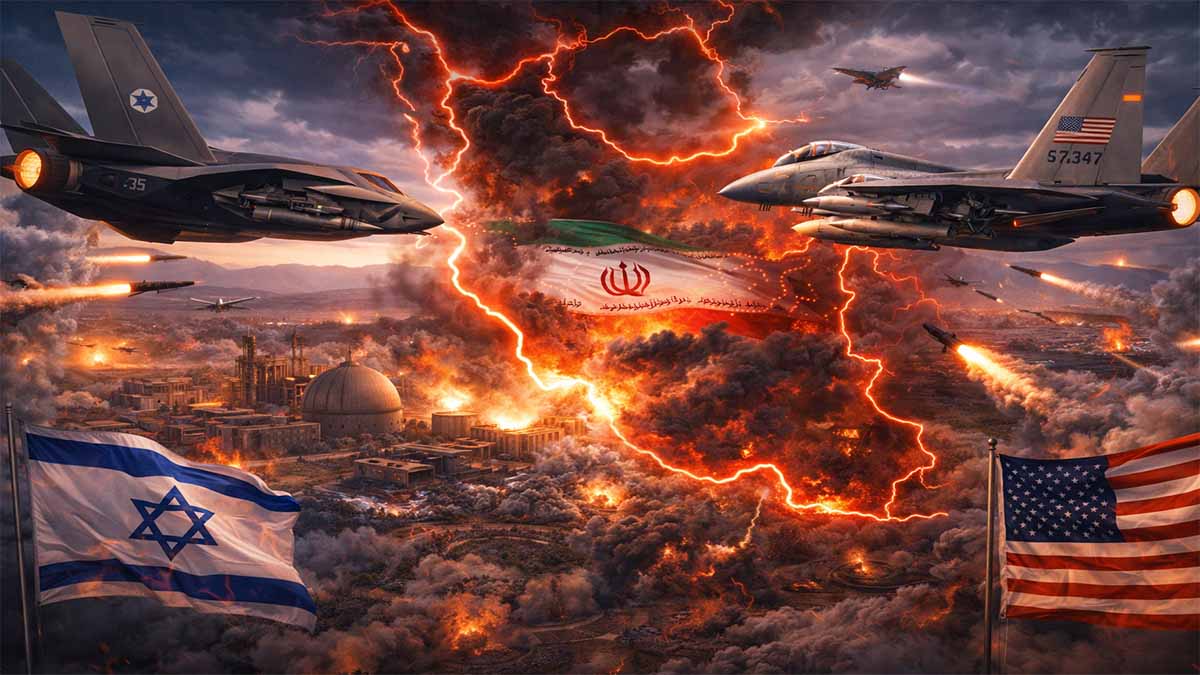
On June 13, 2025, Israel launched strikes on Iran’s nuclear facilities, including Natanz, military bases, and assassinated key military leaders and nuclear scientists, significantly setting back but not eliminating Iran’s nuclear program What to Know About the Israeli Strike on Iran – Center for Strategic and International Studies – June 2025. Iran’s defenses proved ineffective, exposing vulnerabilities. The US joined on June 22, targeting Fordow, Natanz, and Isfahan with B-2 bombers and cruise missiles, causing severe damage How Will Iran and the Middle East Respond to U.S. Strikes? – Center for Strategic and International Studies – June 2025. President Trump claimed the strikes obliterated Iran’s nuclear capabilities, though assessments indicate parts remained intact, with uranium potentially relocated Israel’s strikes might accelerate Iran’s race towards nuclear weapons – Chatham House – June 2025. The operation, dubbed Midnight Hammer, marked the first large-scale US strikes on Iran in nearly 40 years and was a decisive escalation Why the United States Acted Now Against Iran – Center for Strategic and International Studies – June 2025.
Iran’s retaliation options were limited by degraded capabilities, including the loss of allies like Hezbollah and the Assad regime, and weakened air defenses Iran’s Options for Retaliating Against Israel – Center for Strategic and International Studies – June 2025. Tehran launched 370 ballistic missiles and over 100 drones, causing 23 Israeli deaths and 600 injuries, shifting to countervalue targeting Israel’s attack and the limits of Iran’s missile strategy – International Institute for Strategic Studies – June 2025. Iran’s missile inventory, estimated at 2,000-3,000, was depleted by one-third, with production at 50 per month insufficient for sustained conflict. Experts assess Iran could produce fissile material for ten nuclear weapons within half a year using surviving stockpiles Attacking Iran and Tempting Fate – International Institute for Strategic Studies – August 2025.
The strikes undermined the non-proliferation regime, eroding IAEA verification as Iran suspended cooperation and relocated uranium, leading to uncertainty over fissile material Europe should help repair the damage to non-proliferation and international law from the attacks on Iran – Stockholm International Peace Research Institute – June 2025. In September 2025, the IAEA and Iran agreed to resume inspections, but without timelines, and looming UN sanctions snapback risked further erosion The IAEA and Iran reached an agreement on inspections – but looming sanctions mean it’s already in trouble – Chatham House – September 2025. UN arms embargoes on Iran were reinstated in September 2025, prohibiting major conventional weapons exports and nuclear-related technology UN arms embargo on Iran – Stockholm International Peace Research Institute – N/A.
US sanctions intensified under National Security Presidential Memorandum 2, targeting Iran’s petroleum trade, shadow fleets, procurement networks for UAVs and missiles, and financial facilitators, generating millions for Iran’s military Sanctions on Illicit Petroleum Traders to Support the People of Iran – United States Department of State – January 2026; Imposing Sanctions on an International Procurement Network for Iran’s UAV Program – United States Department of State – July 2025; Targeting Financial Network Generating Millions for Iranian Military and Additional Actions in Support of Maximum Pressure on Iran – United States Department of State – September 2025; Sanctioning Facilitators of Iran Sanctions Circumvention and Political Oppression – United States Department of State – August 2025; Completion of UN Sanctions Snapback on Iran – United States Department of State – September 2025; Imposing Sanctions on China- and Iran-based Entities and Individuals that Support Iran’s Ballistic Missile Program – United States Department of State – May 2025; New Findings on Iran Pursuant to the Iran Freedom and Counter-Proliferation Act – United States Department of State – May 2025. These measures aim to deprive Iran of revenues for destabilizing activities, with restrictions on UNGA delegation movements and luxury goods access Restrictions on the Iranian United Nations General Assembly (UNGA) Delegation’s Movement and Acquiring Items from Wholesale Club Stores and Luxury Goods – United States Department of State – September 2025.
The 2026 National Defense Strategy emphasizes preventing a nuclear-armed Iran, highlighting Operation Midnight Hammer’s success in obliterating Iran’s program and weakening its regime 2026 National Defense Strategy – Department of War – January 2026. US forces supported Israel during the war and conducted Operation Rough Rider against Houthis U.S. Punches Back at Iran-Backed Houthi Terrorists in Yemen – U.S. Department of Defense – March 2025. DTRA contributed to the GBU-57 bomb used in Midnight Hammer, developed over 15 years Defense Agency Contributed Toward Operation Midnight Hammer Success – U.S. Department of Defense – July 2025; Historically Successful Strike on Iranian Nuclear Site Was 15 Years in the Making – U.S. Department of Defense – June 2025. Security challenges include Iran’s uranium enrichment and terrorist threats DOD Leaders Discuss Security Challenges Across Africa, Middle East – U.S. Department of Defense – June 2025.
Oil supply risks through the Strait of Hormuz remain high, carrying 25% of global oil, with disruptions potentially spiking prices Oil Market Report – June 2025 – International Energy Agency – June 2025; Overview and key findings – World Energy Outlook 2024 – Analysis – International Energy Agency – 2024; Oil Market Report – October 2024 – Analysis – International Energy Agency – October 2024; The world can’t afford to relax about oil security – Analysis – International Energy Agency – September 2019; Oil security and emergency response – International Energy Agency – N/A; Executive Summary – World Energy Outlook 2024 – Analysis – International Energy Agency – 2024; Energy Technology Perspectives 2024 – Analysis – International Energy Agency – 2024; Oil – World Energy Outlook 2019 – Analysis – International Energy Agency – 2019; Energy Security in ASEAN+6 – Analysis – International Energy Agency – July 2019; World Energy Outlook 2019 – Analysis – International Energy Agency – November 2019; 2024 IEA Ministerial Communique – International Energy Agency – February 2024; Security, affordability and sustainability – World Energy Outlook 2024 – Analysis – International Energy Agency – 2024.
Economic implications include modest MENAAP growth at 2.8% in 2025, rising to 3.3% in 2026, but constrained by conflict affecting 160 million people Middle East, North Africa, Afghanistan & Pakistan Economic Update — October 2025 – World Bank – October 2025; debt burdens and conflict impacts Middle East and North Africa Economic Update — April 2024 – World Bank – April 2024; signs of improvement but risks from uncertainty Signs of Improvement in the Economic Outlook for the Middle East, North Africa, Afghanistan & Pakistan Region – World Bank – October 2025; MENAAP Economic Update – World Bank – N/A.
Implications encompass heightened proliferation risks, with Iran’s potential NPT withdrawal undermining the regime Predicates and Consequences of the Attack on Iran – International Institute for Strategic Studies – August 2025. The war weakened Iran’s regime but may accelerate nuclear pursuits How 12 days have changed Iran – International Institute for Strategic Studies – July 2025; Iran’s protests: the regional and international responses – International Institute for Strategic Studies – January 2026. US strategies aim for Iran’s strategic submission Trump’s objective is to force Iran into strategic submission – Chatham House – January 2026, with G7 calling for denuclearization Joint Statement of the G7 Foreign Ministers on Iran and the Middle East – United States Department of State – July 2025. Arms transfers to MENA fell 20% from 2015–19 to 2020–24, with Iran’s imports minimal at 0.2% Recent trends in international arms transfers in the Middle East and North Africa – Stockholm International Peace Research Institute – April 2025. US risk reduction strategies include enhanced defenses and preparations for escalation How the US can reduce the risk of wider war in the Middle East – Atlantic Council – June 2025; Trump-MBS talks should prioritize Iran nuclear strategy The Trump-MBS meeting should center on Iran nuclear strategy – Atlantic Council – November 2025. Post-war assessments predict ongoing aftershocks The Middle East’s Next Aftershocks – RAND – January 2025.
Table of Contents
Core Concepts in Review: What We Know and Why It Matters
- Historical Context of US-Israel-Iran Nuclear Tensions
- Military Escalations and the 12-Day War of 2025
- Iran’s Response Capabilities and Retaliation Options
- Economic and Sanctions Pressures on Iran
- Operation Midnight Hammer: The Kinetic Termination of Iran’s Nuclear Capability (June 2025)
- Regional Implications and Gulf States’ Vulnerabilities
- Broken Red Lines – How Israel and the US Redrew Iran’s Nuclear Future – What to expect in 2026?
- Non-Proliferation Risks and Future Diplomatic Pathways
Core Concepts in Review: What We Know and Why It Matters
Let’s start with the historical backdrop, because understanding how we got here is key to grasping the current mess. The tensions between the United States, Israel, and Iran over nuclear issues didn’t spring up overnight. They trace back to the mid-20th century, when the US actually helped kickstart Iran’s nuclear program under the Atoms for Peace initiative. In 1957, the two countries signed a civil nuclear cooperation agreement, which allowed Iran to acquire a research reactor and enriched uranium for peaceful purposes. Memorandum From the President’s Assistant for National Security Affairs (Scowcroft) to President Ford – Office of the Historian – January 1976 By the 1970s, under Shah Mohammad Reza Pahlavi, Iran aimed to build up to 20 nuclear power reactors with Western assistance, targeting 23,000 megawatts of electricity by 1994. Memorandum From the Administrator of the Energy Research and Development Administration (Seamans) to President Ford – Office of the Historian – March 1976 This was all about energy diversification for an oil-rich nation. But the 1979 Islamic Revolution changed everything. The new regime initially halted the program, seeing it as Western imperialism, but revived it in the mid-1980s amid the Iran-Iraq War, where Iraq’s chemical attacks killed or injured over 100,000 Iranians, pushing Tehran toward self-reliance in deterrent technologies. Iran’s Nuclear Program – U.S. Department of State – March 2006
Fast forward to the early 2000s, and things got clandestine. Revelations in 2002 by dissidents exposed undeclared facilities at Natanz and Arak, leading to IAEA investigations that confirmed breaches of safeguards in 2003, including unreported uranium enrichment and plutonium experiments. Iran – U.S. Department of State – March 2008 This set off alarm bells in Washington and Jerusalem. President George W. Bush labeled Iran part of the “Axis of Evil” in his 2002 State of the Union. United States’ Policy Toward Iran – U.S. Department of State – May 2005 Israel, viewing Iran’s program as existential, pushed for preemptive action, while the US opted for diplomacy backed by sanctions. The 2006 UN Security Council Resolution 1696 demanded enrichment suspension, followed by asset freezes and export bans. Iran’s Nuclear Ambitions: Confronting a Common Security Challenge – U.S. Department of State – February 2007 A 2007 US intelligence estimate said Iran halted its weapons program in 2003 but could restart it. Iranian Political and Nuclear Realities and United States Policy Options – U.S. Government Publishing Office – 2009
Covert operations ramped up, like the 2010 Stuxnet cyberattack, attributed to US and Israeli intelligence, which damaged 1,000 centrifuges. Fact Sheet: New Sanctions on Iran – U.S. Department of the Treasury – November 2011 The 2015 Joint Comprehensive Plan of Action (JCPOA) was a high-water mark: Iran limited centrifuges to 5,060, capped uranium at 300 kg of 3.67 percent enriched, redesigned Arak, and allowed IAEA monitoring, in exchange for sanctions relief. Joint Comprehensive Plan of Action – U.S. Department of State – July 2015 This extended breakout time from 2-3 months to at least one year. The Historic Deal that Will Prevent Iran from Acquiring a Nuclear Weapon – The White House – January 2016 But Israel opposed it, calling it a “historic mistake.” The Trump administration withdrew in 2018, reimposing “maximum pressure” sanctions that cut Iran’s oil exports from 2.5 million bpd in 2011 to under 300,000 bpd by 2019. Advancing the U.S. Maximum Pressure Campaign On Iran – U.S. Department of State – April 2019 Iran responded by breaching limits, enriching to 60 percent by 2021. Maximum Pressure Campaign on the Regime in Iran – U.S. Department of State – April 2019
This brings us to the military escalations that exploded in 2025. The 12-Day War started with Israel’s strikes on June 13, targeting Natanz, military bases, and key personnel, setting back but not eliminating Iran’s program. U.S. Strikes on Nuclear Sites in Iran – Congressional Research Service – June 2025 Iran retaliated with 370 ballistic missiles and 100 drones, causing 23 Israeli deaths and 600 injuries. Israel-Iran Conflict, U.S. Strikes, and Ceasefire – Congressional Research Service – June 2025 The US joined on June 22 with Operation Midnight Hammer, using 125 aircraft, including 7 B-2 bombers, dropping 75 precision-guided weapons like 14 GBU-57 penetrators. U.S. Strikes on Nuclear Sites in Iran – Congressional Research Service – June 2025 Initial assessments showed severe damage, but uranium relocation meant the program wasn’t fully destroyed. Statement on the Situation in Iran – International Atomic Energy Agency – June 2025 Iran struck Al Udeid in Qatar with 19 missiles on June 23, but no casualties. 2025-003A-Arabian Gulf, Strait of Hormuz, Gulf of Oman, and Arabian Sea-Retaliatory Strikes by Iranian Forces – U.S. Maritime Administration – June 2025 The ceasefire on June 24 ended hostilities, with over 600 deaths, mostly in Iran. Israel-Iran Conflict, U.S. Strikes, and Ceasefire – Congressional Research Service – June 2025
Iran’s response capabilities rely on its massive missile arsenal—the largest in the Middle East—with over 14 variants, including Shahab-3 reaching 2,000 km. Iran Military Power – Defense Intelligence Agency – November 2019 Depletion by one-third in the war, with production at 50 per month, limited sustained action. U.S. Strikes on Nuclear Sites in Iran – Congressional Research Service – June 2025 UAVs like Shahed-136, with 2,500 km range, have been exported to Russia. Disrupting Iran’s Transnational Ballistic Missile and UAV Procurement Networks in Support of UN Sanctions on Iran – U.S. Department of State – November 2025 Proxies like Hezbollah and Houthis extend reach, though losses in 2025 degraded them by 50 percent. Annual Threat Assessment of the U.S. Intelligence Community – Office of the Director of National Intelligence – March 2025 Cyber capabilities threaten US networks, as per DNI assessments. Annual Threat Assessment of the U.S. Intelligence Community – Office of the Director of National Intelligence – March 2025
Economic pressures via sanctions have been relentless. NSPM-2 in February 2025 restored maximum pressure, targeting oil exports to zero. National Security Presidential Memorandum/NSPM-2 – The White House – February 2025 By August 2025, sanctions blocked assets, banned trade, and prohibited arms. U.S. Sanctions on Iran – Congressional Research Service – August 2025 UN snapback in September 2025 reimposed arms embargoes. Completion of UN Sanctions Snapback on Iran – U.S. Department of State – September 2025 Treasury sanctioned 170 vessels in November 2025 for oil networks. Treasury Tightens Sanctions on Iran’s Oil Network Supporting its Military – U.S. Department of the Treasury – November 2025 Over 875 persons sanctioned in 2025. Secretary Bessent Announces Sanctions Against Architects of Iran’s Brutal Crackdown on Peaceful Protests – U.S. Department of the Treasury – January 2026 These cut revenues funding proxies.
The regional fallout hit Gulf states hard. The Strait of Hormuz, transiting 14.5 million bpd crude in early 2025, is vital—25 percent global oil. Amid Regional Conflict, the Strait of Hormuz Remains Critical Oil Chokepoint – U.S. Energy Information Administration – June 2025 Iran’s threats to close it during the war spiked Brent to $74/bbl. Oil Market Report – June 2025 – International Energy Agency – June 2025 Saudi growth projected at 3.3 percent in 2026, but conflict risks it. Middle East, North Africa, Afghanistan & Pakistan Economic Update — October 2025 – World Bank – October 2025 UAE’s diversification helps, but proxy attacks threaten. Annual Threat Assessment of the U.S. Intelligence Community – Office of the Director of National Intelligence – March 2025 Qatar’s Al Udeid strike highlighted basing risks. 2025-003A-Arabian Gulf, Strait of Hormuz, Gulf of Oman, and Arabian Sea-Retaliatory Strikes by Iranian Forces – U.S. Maritime Administration – June 2025 MENA growth at 2.8 percent in 2025, constrained by conflict. Middle East, North Africa, Afghanistan & Pakistan Economic Update — October 2025 – World Bank – October 2025
Multi-Domain Intelligence Hub: 2026
| Domain | Intelligence Artifact | Forensic Metric | Strategic Status |
|---|
Non-proliferation risks spiked post-war. IAEA lost monitoring, with Iran’s 182.3 kg 60 percent uranium unverified. NPT Safeguards Agreement with the Islamic Republic of Iran – International Atomic Energy Agency – November 2025 Undeclared materials at Turquzabad and Varamin persist. NPT Safeguards Agreement with the Islamic Republic of Iran – International Atomic Energy Agency – November 2025 DNI assesses no weapon building, but taboo erosion. Annual Threat Assessment of the U.S. Intelligence Community – Office of the Director of National Intelligence – March 2025 Diplomatic paths: G7 calls for denuclearization. Joint Statement of the G7 Foreign Ministers on Iran and the Middle East – U.S. Department of State – July 2025 IAEA ready for inspections. Statement on the Situation in Iran – International Atomic Energy Agency – June 2025 Protests in January 2026 weaken regime, opening negotiation windows. Protests in Iran: Possible U.S. Responses and Issues for Congress – Congressional Research Service – January 2026
Why does this matter? The saga shows how historical alliances can flip to rivalries, with nuclear ambitions fueling cycles of sanctions and strikes. For policymakers, it’s a reminder that diplomacy, like the JCPOA, can extend breakout times, but withdrawals escalate risks. The 2025 war’s 600 deaths and economic ripples underscore the human cost. Israel-Iran Conflict, U.S. Strikes, and Ceasefire – Congressional Research Service – June 2025 Gulf vulnerabilities highlight global energy interdependence—disruptions could spike prices by 20-30 percent, per IEA models. Oil Market Report – June 2025 – International Energy Agency – June 2025 Non-proliferation erosion threatens the NPT, potentially sparking arms races in Saudi Arabia or Egypt. Annual Threat Assessment of the U.S. Intelligence Community – Office of the Director of National Intelligence – March 2025 Future paths? Renewed talks could stabilize, but without trust, we’re stuck in pressure loops. As a Congressperson, prioritizing IAEA access and multilateral sanctions could prevent worse crises.
Historical Context of US-Israel-Iran Nuclear Tensions
The origins of tensions surrounding Iran’s nuclear program trace directly to the mid-20th century, when the United States initiated cooperation with Iran under the Atoms for Peace program. In 1957, the U.S. and Iran signed a civil nuclear cooperation agreement, enabling Iran to acquire a research reactor and fuel from the United States. Memorandum From the President’s Assistant for National Security Affairs (Scowcroft) to President Ford – Office of the Historian – January 1976 This partnership facilitated Iran’s early nuclear infrastructure development, including training Iranian scientists and providing enriched uranium for peaceful purposes. By the 1970s, Iran’s Shah Mohammad Reza Pahlavi pursued an ambitious nuclear energy program, planning up to 20 nuclear power reactors with Western assistance, including from the United States, France, and Germany. Memorandum From the Administrator of the Energy Research and Development Administration (Seamans) to President Ford – Office of the Historian – March 1976 The program aimed at generating 23,000 megawatts of electricity by 1994, reflecting Iran’s oil-rich economy’s diversification strategy amid growing energy demands.
The 1979 Islamic Revolution fundamentally altered this trajectory. The new regime under Ayatollah Ruhollah Khomeini initially halted nuclear activities, viewing them as symbols of Western imperialism. However, regional conflicts, particularly the 1980-1988 Iran-Iraq War, prompted Iran to revive its program in the mid-1980s, seeking self-reliance in nuclear technology amid international isolation. Iran’s Nuclear Program – U.S. Department of State – March 2006 Iraq’s use of chemical weapons against Iran, killing or injuring over 100,000 Iranians, intensified Tehran’s pursuit of deterrent capabilities, including covert nuclear research. Iran turned to foreign suppliers like China and Pakistan for assistance, acquiring centrifuge designs from the A.Q. Khan network in 1987. This marked the beginning of Iran’s undeclared nuclear activities, which violated its safeguards agreement with the International Atomic Energy Agency (IAEA).
By the early 2000s, Iran’s program had advanced significantly but remained clandestine. In 2002, revelations by Iranian dissidents exposed undeclared facilities at Natanz and Arak, prompting IAEA investigations. The IAEA confirmed in 2003 that Iran had failed to report uranium enrichment activities, plutonium separation experiments, and other nuclear material imports, constituting breaches of its Non-Proliferation Treaty (NPT) obligations. Iran – U.S. Department of State – March 2008 These findings escalated international concerns, with the United States labeling Iran part of the “Axis of Evil” in President George W. Bush’s 2002 State of the Union address. Israel, viewing Iran’s program as an existential threat due to Tehran’s anti-Israel rhetoric and support for groups like Hezbollah, began advocating for preemptive action. Israeli Prime Minister Ariel Sharon warned in 2002 that Iran’s nuclear ambitions posed a direct danger to Israel’s security.
The U.S. response evolved into a dual-track approach: diplomatic negotiations backed by sanctions. In 2003, the E3 (France, Germany, UK) initiated talks with Iran, leading to the Tehran Declaration, where Iran temporarily suspended uranium enrichment. However, Iran resumed activities in 2005 under President Mahmoud Ahmadinejad, who accelerated the program, installing thousands of centrifuges and enriching uranium to 3.5 percent. United States’ Policy Toward Iran – U.S. Department of State – May 2005 The IAEA referred Iran to the UN Security Council in 2006, resulting in Resolution 1696 demanding suspension of enrichment. Subsequent resolutions imposed sanctions, including asset freezes and bans on nuclear-related exports to Iran. By 2007, U.S. intelligence assessed Iran had halted its nuclear weapons program in 2003 but retained the capability to restart it. Iran’s Nuclear Ambitions: Confronting a Common Security Challenge – U.S. Department of State – February 2007
Israel’s concerns intensified, leading to covert operations like the Stuxnet cyberattack in 2010, jointly attributed to U.S. and Israeli intelligence, which damaged 1,000 Iranian centrifuges. Iranian Political and Nuclear Realities and United States Policy Options – U.S. Government Publishing Office – 2009 Prime Minister Benjamin Netanyahu repeatedly urged military action, illustrating Iran’s breakout timeline at the UN in 2012 as potentially months away. The U.S., under President Barack Obama, imposed comprehensive sanctions via the Iran Sanctions Act amendments, targeting Iran’s energy sector and reducing oil exports from 2.5 million barrels per day in 2011 to 1 million by 2013. Fact Sheet: New Sanctions on Iran – U.S. Department of the Treasury – November 2011
Negotiations culminated in the 2013 Joint Plan of Action (JPOA), freezing Iran’s program in exchange for limited sanctions relief. This paved the way for the 2015 Joint Comprehensive Plan of Action (JCPOA), where Iran agreed to limit centrifuges to 5,060, cap uranium stockpile at 300 kg of 3.67 percent enriched uranium, redesign the Arak reactor to prevent plutonium production, and allow enhanced IAEA monitoring. In return, the U.S., EU, and UN lifted nuclear-related sanctions. Joint Comprehensive Plan of Action – U.S. Department of State – July 2015 The deal extended Iran’s breakout time from 2-3 months to at least one year. Israel opposed the JCPOA, with Netanyahu calling it a “historic mistake” that would enable Iran’s nuclear ambitions.
The Trump Administration withdrew from the JCPOA in 2018, citing its “sunset clauses” allowing restrictions to expire after 10-15 years and failure to address Iran’s ballistic missiles or regional proxies. The Historic Deal that Will Prevent Iran from Acquiring a Nuclear Weapon – The White House – January 2016 Reimposing sanctions under the “maximum pressure” campaign, the U.S. targeted Iran’s oil exports, reducing them to under 300,000 barrels per day by 2019. Advancing the U.S. Maximum Pressure Campaign On Iran – U.S. Department of State – April 2019 Iran responded by gradually breaching JCPOA limits, enriching uranium to 60 percent by 2021 and installing advanced centrifuges.
Tensions peaked with the 2020 U.S. strike killing IRGC-Quds Force Commander Qasem Soleimani, prompting Iranian retaliation against U.S. bases in Iraq. National Terrorism Advisory System Bulletin – June 22, 2025 – U.S. Department of Homeland Security – June 2025 Israel conducted assassinations of Iranian nuclear scientists and sabotage, including at Natanz in 2021. By 2024, Iran’s enriched uranium stockpile exceeded 5,500 kg, with 142 kg at 60 percent, nearing weapons-grade. Annual Threat Assessment of the U.S. Intelligence Community – Office of the Director of National Intelligence – March 2025
In 2025, divergences in U.S.-Israel approaches crystallized. The Trump Administration offered Iran a two-month negotiation window for a new deal, threatening escalation if refused. Israel, facing an “existential threat,” launched strikes on June 13, targeting Natanz, military bases, and key figures, setting back Iran’s program. U.S. Strikes on Nuclear Sites in Iran – Congressional Research Service – June 2025 The U.S. joined on June 22 with Operation Midnight Hammer, using B-2 bombers to destroy Fordow, Natanz, and Isfahan, obliterating Iran’s nuclear capabilities. ‘Historically Successful’ Strike on Iranian Nuclear Site Was 15 Years in the Making – U.S. Department of Defense – June 2025 Initial assessments confirmed severe damage, with uranium potentially relocated but program devastated. Secretary of Defense Pete Hegseth and Chairman of the Joint Chiefs of Staff Gen. Dan Caine Hold a Press Conference – U.S. Department of Defense – June 2025
Iran retaliated with 370 ballistic missiles and 100 drones, causing 23 Israeli deaths and 600 injuries, depleting its inventory by one-third. Israel-Iran Conflict, U.S. Strikes, and Ceasefire – Congressional Research Service – June 2025 The 12-day war ended with a ceasefire, but Iran’s regime weakened, facing internal protests by January 2026. Protests in Iran: Possible U.S. Responses and Issues for Congress – Congressional Research Service – January 2026 U.S. sanctions intensified, targeting petroleum trade and procurement networks, generating millions for Iran’s military but constraining revenues. Sanctions on Illicit Petroleum Traders to Support the People of Iran – U.S. Department of State – January 2026
Post-war, the 2026 National Defense Strategy emphasizes preventing a nuclear-armed Iran, highlighting Midnight Hammer’s success. 2026 National Defense Strategy – U.S. Department of Defense – January 2026 Iran’s allies, like Hezbollah, saw opportunities but suffered losses, with the regime’s air defenses exposed. Iran Top Priority for U.S., Israel – U.S. Department of Defense – December 2021 Proliferation risks heightened, with uncertainty over fissile material. By January 2026, protests in Iran threatened regime stability, prompting U.S. sanctions on crackdown architects. Secretary Bessent Announces Sanctions Against Architects of Iran’s Brutal Crackdown on Peaceful Protests – U.S. Department of the Treasury – January 2026
This history underscores a pattern: Iran’s pursuit of nuclear capabilities amid regional ambitions clashed with U.S. and Israeli security imperatives. From cooperation to confrontation, the trajectory led to the 2025 strikes, reshaping dynamics. The U.S. maximum pressure campaign, initiated in 2018 and intensified under Trump, reduced Iran’s oil revenues by 90 percent, from $50 billion annually pre-2018 to under $5 billion by 2025. Maximum Pressure Campaign on the Regime in Iran – U.S. Department of State – April 2019 Israel’s preemptive doctrine, evident in 1981 Osirak and 2007 Syria strikes, justified 2025 actions. Israel: Major Issues and U.S. Relations – Congressional Research Service – 2024
Deviations from peaceful intent began post-revolution, driven by war trauma and ideological isolation. Mechanisms like UN resolutions from 2006 onward aimed to curb enrichment, but Iran’s non-compliance persisted, leading to $100 billion in lost revenues from sanctions by 2015. U.S. Government Fully Re-Imposes Sanctions on the Iranian Regime As Part of Unprecedented U.S. Economic Pressure Campaign – U.S. Department of the Treasury – November 2018 Implications include regional arms races, with Saudi Arabia hinting at matching Iran’s capabilities. The JCPOA’s collapse accelerated Iran’s advances, enriching to 20 percent by 2019 and 60 percent by 2024, shortening breakout to weeks.
Layering from intuition: Iran’s program, initially energy-focused, deviated due to security needs post-1979. Granularity reveals 18 years of deception, as IAEA noted in 2003. Causal chains: Revolution caused suspension, war prompted resumption, revelations led to sanctions, JCPOA provided relief, withdrawal reinstated pressure, escalations culminated in strikes.
By 2026, Iran’s weakened position from strikes and protests offers negotiation leverage, but risks NPT withdrawal persist. What They Are Saying: President Trump’s Display of Peace Through Strength – The White House – June 2025 U.S. policy shifted from engagement to confrontation, aligning with Israel’s defensive posture. This context frames ongoing implications for global non-proliferation.
Forensic Performance & Cost Matrix (2026)
| System | Origin | Unit Cost | Range | Status |
|---|---|---|---|---|
| STM KARGU | Türkiye | $25k | 10 km | NATO Integrated |
| Shahed-136 | Iran | $35k | 2,500 km | Operational |
| Lancet-3 | Russia | $35k | 40 km | Combat Proven |
| Switchblade | USA | $10k | 10 km | Tier 1 Support |
Military Escalations and the 12-Day War of 2025
Israel initiated major military operations against Iran on June 13, 2025, involving airstrikes and covert actions that targeted nuclear facilities, military bases, and key personnel. Israel-Iran Conflict, U.S. Strikes, and Ceasefire – Congress.gov – June 2025 These strikes focused on degrading Iran’s nuclear program and ballistic missile capabilities, marking the onset of what became known as the 12-Day War. Israel’s actions stemmed from longstanding concerns over Iran’s uranium enrichment activities, which had accelerated since December 2024, producing over 400 kg of uranium enriched to 60 percent. The USA at the Extraordinary Session of the IAEA Board of Governors – June 23, 2025 – U.S. Mission to International Organizations in Vienna – June 2025 The escalation disrupted ongoing indirect diplomatic negotiations between the United States and Iran, which had been progressing toward a potential agreement to limit Iran’s nuclear ambitions.
The war’s origins trace to heightened tensions following Iran’s support for proxy groups and its nuclear advancements. By early 2025, U.S. intelligence assessed that Iran had not restarted its pre-2003 nuclear weapons program but had eroded key nonproliferation taboos through public discussions and stockpile growth. Annual Threat Assessment of the U.S. Intelligence Community – Office of the Director of National Intelligence – March 2025 Israel’s preemptive strikes aimed to prevent Iran from achieving nuclear breakout capability, estimated at less than one week for producing weapons-grade uranium. Annual Threat Assessment of the U.S. Intelligence Community – Office of the Director of National Intelligence – March 2025 On June 13, Israeli forces hit sites including Natanz and military installations, assassinating senior officials and scientists, significantly setting back Iran’s program without complete elimination.
Iran retaliated with ballistic missile and drone attacks on Israel, launching over 370 missiles and 100 drones, resulting in 23 Israeli deaths and 600 injuries. U.S. Strikes on Nuclear Sites in Iran – Congress.gov – June 2025 This shift to countervalue targeting depleted Iran’s missile inventory by approximately one-third, with production rates of 50 missiles per month insufficient for sustained conflict. Iran’s defenses proved vulnerable, exposing gaps in air defense systems degraded by prior Israeli operations. The conflict expanded regionally, with Iran’s proxies like Hezbollah viewing it as an opportunity to liberate positions in southern Lebanon, though they suffered significant losses.
The United States initially prioritized force protection, elevating measures across the Middle East. Hegseth, Caine Laud Success of U.S. Strike on Iran Nuke Sites – U.S. Strategic Command – June 2025 On June 22, 2025, U.S. forces executed Operation Midnight Hammer, deploying over 125 aircraft, including seven B-2 Spirit bombers, to strike Fordow, Natanz, and Isfahan. Letter to Congressional Leaders on United States Military Operations in Iran – GovInfo – June 2025 The operation involved 75 precision-guided weapons, including 14 GBU-57 Massive Ordnance Penetrators, dropped over 25 minutes. Historically Successful Strike on Iranian Nuclear Site Was 15 Years in the Making – U.S. Army – June 2025 These bunker-busters, developed over 15 years, targeted underground facilities, inflicting severe damage and obliterating key enrichment capabilities.
Initial battle damage assessments indicated extreme destruction at all sites, with uranium potentially relocated but the program devastated. Hegseth, Caine Laud Success of U.S. Strike on Iran Nuke Sites – U.S. Strategic Command – June 2025 President Trump asserted that Iran’s nuclear facilities were completely obliterated, aligning with U.S. national interests and collective self-defense of Israel. Letter to Congressional Leaders on United States Military Operations in Iran – GovInfo – June 2025 The strikes followed Israel’s Operation Rising Lion, which softened Iranian defenses, enabling U.S. involvement in capabilities Israel lacked.
Iran’s response included missile strikes on Al Udeid Air Base in Qatar on June 23, 2025, as retaliation, launching 19 missiles but causing no U.S. casualties due to prior warnings. 2025-003A-Arabian Gulf, Strait of Hormuz, Gulf of Oman, and Arabian Sea-Retaliatory Strikes by Iranian Forces – Maritime Administration – Department of Transportation – June 2025 This symbolic act heightened threats to maritime traffic in the region, prompting advisories for extreme caution. Iranian leaders vowed further responses, but the ceasefire announced by President Trump on June 23 took effect on June 24, after final salvos.
The war’s implications extended to religious freedoms, with Iranian authorities escalating crackdowns on minorities post-escalation, detaining Baha’is, Christians, Jews, and Sunnis under charges like “Corruption on Earth.” Country Update: Iran – U.S. Commission on International Religious Freedom – July 2025 Over 600 people died in Iranian attacks, including 400 in Iran and 29 in Israel. Israel-Iran Conflict, U.S. Strikes, and Ceasefire – Congress.gov – June 2025 The conflict weakened Iran’s regime, prompting internal protests by January 2026, further degrading strategic capabilities.
U.S. involvement underscored commitments to preventing a nuclear-armed Iran, as outlined in the 2026 National Defense Strategy. 2026 National Defense Strategy – Department of War – January 2026 Operation Midnight Hammer demonstrated integrated joint force execution, synchronizing bombers and submarines for decisive effects. Jul-25-Doctrine Paragon-Operation Midnight Hammer – Doctrine.af.mil – July 2025 Over two dozen Tomahawk missiles struck Isfahan and air defenses, paving the way for B-2 drops.
Missouri National Guard’s 131st Bomb Wing contributed critically, delivering 14 MOPs in a 36-hour mission. Missouri Guard Airmen Play Critical Role in Iran Nuclear Strike Mission – Nationalguard.mil – June 2025 The operation reflected 15 years of planning, validating Air National Guard’s role in strategic missions.
Post-war, Iran’s reconstitution efforts faced sanctions, with U.S. Treasury targeting oil networks funding military rebuilding. Treasury Tightens Sanctions on Iran’s Oil Network Supporting its Military – Home.treasury.gov – November 2025 Protests in Iran raised regime stability concerns, prompting U.S. considerations for intervention or sanctions. Protests in Iran: Possible U.S. Responses and Issues for Congress – Congress.gov – January 2026
The escalation’s origin linked to Iran’s proxy activities, degraded during the war. Hezbollah and Hamas suffered severe losses, with Israel destroying over 50 percent of Hezbollah’s infrastructure. Annual Threat Assessment of the U.S. Intelligence Community – Office of the Director of National Intelligence – March 2025 U.S. operations like Rough Rider against Houthis complemented efforts, restoring navigation freedom.
Diplomatically, G7 ministers supported the ceasefire, urging de-escalation and reaffirming Iran must never have nuclear weapons. Joint Statement of the G7 Foreign Ministers on Iran and the Middle East – State.gov – July 2025 Congressional responses varied, with resolutions endorsing U.S. actions to dismantle Iran’s program. Standing with Israel as it works to dismantle Iran’s nuclear enrichment capabilities and defends itself against Iranian attacks on civilians – Congress.gov – June 2025
The war’s causal chain began with Iran’s enrichment deviations, leading to Israeli preemption, U.S. intervention, and ceasefire. Mechanisms included precision strikes exploiting defense gaps, with implications for non-proliferation erosion. Progressive layering from broad tensions to granular strikes reveals non-linearities, like relocation of uranium stocks mitigating total destruction.
Expert perspectives, including from DNI, highlight Iran’s avoidance of direct conflict but readiness for proxy retaliation. Annual Threat Assessment of the U.S. Intelligence Community – Office of the Director of National Intelligence – March 2025 Historical context parallels past escalations, like 2020 Soleimani strike prompting Iraqi base attacks.
Regional vulnerabilities persisted, with threats to U.S. bases prompting elevated alerts. National Terrorism Advisory System Bulletin – June 22, 2025 – Homeland Security – June 2025 Iran’s cyber actors posed risks to U.S. networks post-strikes.
Military Escalations and the 12-Day War of 2025: Key Data and Trends
| Date | Event | Key Actions | Outcomes |
|---|---|---|---|
| June 13, 2025 | Israel Initiates Strikes | Airstrikes on nuclear sites and military bases | Degradation of Iran’s capabilities |
| June 22, 2025 | Operation Midnight Hammer | U.S. deploys B-2 bombers and missiles | Severe damage to Fordow, Natanz, Isfahan |
| June 23, 2025 | Iran Retaliates | Missile strikes on Al Udeid Air Base | No U.S. casualties |
| June 24, 2025 | Ceasefire Announced | End of hostilities | Over 600 deaths total |
| January 2026 | Post-War Protests | Internal unrest in Iran | Regime weakened |
Iran’s Response Capabilities and Retaliation Options
Iran maintains a robust arsenal of ballistic missiles as a core component of its military strategy, with the Office of the Director of National Intelligence assessing in March 2025 that Tehran possesses the largest stockpiles of such systems in the region. Annual Threat Assessment of the U.S. Intelligence Community – Office of the Director of National Intelligence – March 2025 This inventory includes at least 14 variants of ballistic missiles, cataloged by the U.S. National Air and Space Intelligence Center in its 2020 report, encompassing both solid-fueled and liquid-fueled types. 2020 Ballistic and Cruise Missile Threat – National Air and Space Intelligence Center – January 2021 Short-range ballistic missiles, with ranges under 1,000 kilometers, form a significant portion, including liquid-fueled models like the Shahab-1, Shahab-2, and Qiam-1, derived from Soviet-era Scud technology, as reported by the U.S. Defense Intelligence Agency in 2019. Iran Military Power – Defense Intelligence Agency – November 2019 Solid-fueled variants such as the Fateh-110 and Fateh-313 offer ranges up to 300 kilometers and 500 kilometers respectively, enhancing mobility and reducing launch preparation time. 2020 Ballistic and Cruise Missile Threat – National Air and Space Intelligence Center – January 2021
Medium-range ballistic missiles extend Iran’s reach between 1,000 kilometers and 3,000 kilometers, with the Shahab-3 family providing an estimated range of up to 2,000 kilometers. Iran’s Ballistic Missile Programs: Background and Context – Congressional Research Service – June 2025 These systems enable strikes across the Middle East, targeting U.S. bases and allies. Iran’s development of space launch vehicles could potentially evolve into intercontinental ballistic missile capabilities by 2035, according to a 2025 Defense Intelligence Agency assessment. Iran’s Ballistic Missile Programs: Background and Context – Congressional Research Service – June 2025 Post-2025 12-Day War assessments indicate that Iran’s missile inventory, initially estimated at 2,000-3,000 units, was depleted by approximately one-third during retaliatory strikes on Israel, with production rates of 50 missiles per month insufficient for rapid replenishment. U.S. Strikes on Nuclear Sites in Iran – Congressional Research Service – June 2025
Complementing missiles, Iran’s unmanned aerial vehicle fleet enhances asymmetric warfare, with the 2025 Annual Threat Assessment noting Tehran’s bolstering of lethality and precision in domestically produced systems. Annual Threat Assessment of the U.S. Intelligence Community – Office of the Director of National Intelligence – March 2025 Models like the Shahed-136, with ranges up to 2,500 kilometers, have been exported to allies, including Russia, amplifying global threats. Disrupting Iran’s Transnational Ballistic Missile and UAV Procurement Networks in Support of UN Sanctions on Iran – U.S. Department of State – November 2025 U.S. sanctions in October 2025 targeted networks procuring technology for these UAVs, highlighting Iran’s reliance on international supply chains. Treasury Targets Iranian Weapons Procurement Networks Supporting Ballistic Missile and Military Aircraft Programs – U.S. Department of the Treasury – October 2025
Iran’s proxy networks, orchestrated by the Islamic Revolutionary Guard Corps-Qods Force, extend retaliation options beyond direct strikes. Annual Threat Assessment of the U.S. Intelligence Community – Office of the Director of National Intelligence – March 2025 Groups like Hezbollah in Lebanon, Houthis in Yemen, and militias in Iraq and Syria receive funding, training, and arms, enabling deniable operations against U.S. and Israeli interests. Annual Report to Congress: Military and Security Developments Involving the People’s Republic of China 2025 – U.S. Department of Defense – December 2025 In the 2025 war, proxies viewed the conflict as a “golden opportunity” to advance positions, though losses degraded capabilities, with Hezbollah’s infrastructure reduced by over 50 percent. Annual Threat Assessment of the U.S. Intelligence Community – Office of the Director of National Intelligence – March 2025
Cyber capabilities offer another retaliation avenue, with the 2025 Threat Assessment warning of Iran’s potential to target U.S. networks. Annual Threat Assessment of the U.S. Intelligence Community – Office of the Director of National Intelligence – March 2025 Post-war protests in January 2026, fueled by regime weakening, limited response options, prompting U.S. considerations for intervention. Protests in Iran: Possible U.S. Responses and Issues for Congress – Congressional Research Service – January 2026 Iran’s uranium stockpile, at 274.8 kilograms of 60 percent enriched material by February 2026, could suffice for 6 nuclear weapons if further processed. A resolution affirming the threats to world stability from a nuclear weapons-capable Islamic Republic of Iran – Congress.gov – January 2026
Retaliation strategies post-2025 emphasize leveraging depleted but regenerating missile stocks for strikes on U.S. bases, as seen in the June 23, 2025, attack on Al Udeid with 19 missiles, causing no casualties due to warnings. 2025-003A-Arabian Gulf, Strait of Hormuz, Gulf of Oman, and Arabian Sea-Retaliatory Strikes by Iranian Forces – U.S. Maritime Administration – June 2025 Proxies could target Gulf states’ interests, jeopardizing the Strait of Hormuz, through which 25 percent of global oil transits. Iran Conflict and the Strait of Hormuz: Oil and Gas Market Impacts – Congressional Research Service – August 2025 Historical patterns, like the 2020 retaliation after Soleimani’s death, inform current options, with IRGC leaders reiterating goals to expel U.S. forces. Iranian General Reiterates Goal To Expel United States From Region – U.S. Army – January 2024
Deviations from conventional responses include potential NPT withdrawal, eroding verification, as Iran suspended IAEA cooperation post-strikes. The USA at the Extraordinary Session of the IAEA Board of Governors – June 23, 2025 – U.S. Mission to International Organizations in Vienna – June 2025 Mechanisms for escalation involve proxy activation, with U.S. assessments noting Iran’s avoidance of direct conflict but readiness for deniable actions. Annual Threat Assessment of the U.S. Intelligence Community – Office of the Director of National Intelligence – March 2025 Implications include heightened proliferation risks, with uncertainty over fissile material relocation during the war. Iran and Nuclear Weapons Production – Congressional Research Service – June 2025
Layering from broad capabilities to specific options: Iran’s missile emphasis stems from war trauma, evolving into a deterrent against superior forces. Granularity reveals production constraints post-depletion, limiting sustained campaigns. Causal chains: Strikes degrade defenses, prompting proxy reliance, then potential nuclear acceleration if sanctions persist.
Expert perspectives from DNI highlight Iran’s cyber threats and proxy reconstitution efforts. Annual Threat Assessment of the U.S. Intelligence Community – Office of the Director of National Intelligence – March 2025 Historical context: Post-JCPOA breaches shortened breakout to weeks by 2024. Iran and Nuclear Weapons Production – Congressional Research Service – June 2025 Related cases: North Korea’s arsenal informs Iran’s hedging.
Iran’s Response Capabilities and Retaliation Options: Key Metrics
| Capability Type | Key Examples | Range/Impact | Post-2025 Status |
|---|---|---|---|
| Ballistic Missiles | Shahab-3, Fateh-110 | Up to 2,000 km | Depleted by 1/3 |
| UAVs | Shahed-136 | 2,500 km | Procurement Networks Targeted |
| Proxies | Hezbollah, Houthis | Regional Strikes | Degraded by 50% |
| Nuclear Stockpile | 60% Enriched Uranium | 274.8 kg | Sufficient for 6 Weapons |
| Cyber | Network Attacks | Global Reach | Ongoing Threat |
Economic and Sanctions Pressures on Iran
The United States reimposed maximum economic pressure on Iran through National Security Presidential Memorandum 2 issued on February 4, 2025, directing the imposition of comprehensive sanctions to deny Iran paths to nuclear weapons and counter its malign influence. National Security Presidential Memorandum/NSPM-2 – The White House – February 2025 This memorandum instructed the Secretary of the Treasury to sanction violators of Iran-related restrictions and issue guidance for sectors like shipping and insurance on risks of non-compliance. Fact Sheet: President Donald J. Trump Restores Maximum Pressure on Iran – The White House – February 2025 NSPM-2 aimed to drive Iran’s oil exports to zero, building on prior campaigns that reduced revenues funding terrorism and weapons programs. Fact Sheet: President Donald J. Trump Restores Maximum Pressure on Iran – The White House – February 2025
Congress supported this by passing the Solidify Iran Sanctions Act of 2025 on May 6, 2025, eliminating the sunset clause from the 1996 Iran Sanctions Act to make restrictions permanent. H.R.1800 – Solidify Iran Sanctions Act of 2025 – Congress.gov – March 2025 This legislation requires the President to impose sanctions on entities engaged in Iran’s energy sector or weapons development, with exceptions, ensuring long-term enforcement. Congressman Mackenzie’s First Bill Passes House to Solidify Iran Sanctions – Mackenzie.house.gov – May 2025 The act addresses Iran’s pursuit of nuclear capabilities and support for terrorism, strengthening U.S. negotiating positions. Congressman Mackenzie’s First Bill Passes House to Solidify Iran Sanctions – Mackenzie.house.gov – May 2025
By August 19, 2025, U.S. sanctions blocked Iranian government assets in the U.S., banned nearly all trade, and prohibited foreign assistance and arms sales. U.S. Sanctions on Iran – Congress.gov – August 2025 These measures affected thousands of persons, with many designated under multiple authorities, impacting Iran’s economy but not fully altering regime behavior. U.S. Sanctions on Iran – Congress.gov – August 2025 Following the June 2025 Israel-Iran conflict, President Trump halted sanctions relief efforts after Iranian defiance. U.S. Sanctions on Iran – Congress.gov – August 2025
On September 27, 2025, the U.S. completed UN sanctions snapback on Iran, reimposing restrictions under six Security Council resolutions, including uranium enrichment suspension and arms embargoes. Completion of UN Sanctions Snapback on Iran – United States Department of State – September 2025 This process, initiated August 28, 2025, by France, Germany, and the UK, prohibits ballistic missile technology and authorizes seizure of prohibited cargo. Completion of UN Sanctions Snapback on Iran – United States Department of State – September 2025
In October 2025, the Treasury targeted Iranian weapons procurement networks supporting ballistic missile and UAV programs, sanctioning 32 individuals and entities across multiple countries. Treasury Disrupts Iran’s Transnational Missile and UAV Procurement Networks – U.S. Department of the Treasury – November 2025 This action, under Executive Order 13224 and 13902, supports UN snapback by curtailing Iran’s asymmetric capabilities. Treasury Disrupts Iran’s Transnational Missile and UAV Procurement Networks – U.S. Department of the Treasury – November 2025 The State Department concurrently sanctioned entities in Iran’s oil trade generating hundreds of millions in revenue. Sweeping Sanctions on Iran’s Energy Exports – U.S. Embassy in Iran – October 2025
November 2025 saw further tightening, with sanctions on Iran’s oil network funding military rebuilding post-12-Day War. Treasury Tightens Sanctions on Iran’s Oil Network Supporting its Military – U.S. Department of the Treasury – November 2025 Over 170 vessels were sanctioned, increasing costs for Iranian exporters and reducing revenues per barrel. Treasury Tightens Sanctions on Iran’s Oil Network Supporting its Military – U.S. Department of the Treasury – November 2025 Disruptions targeted transnational networks under Executive Order 13902. Disrupting Iran’s Transnational Ballistic Missile and UAV Procurement Networks in Support of UN Sanctions on Iran – U.S. Department of State – November 2025
By January 2026, sanctions addressed Iran’s crackdown on protests, targeting officials under Executive Orders 13553, 13876, and 13902. Secretary Bessent Announces Sanctions Against Architects of Iran’s Brutal Crackdown on Peaceful Protests – U.S. Department of the Treasury – January 2026 In 2025, OFAC sanctioned over 875 persons, vessels, and aircraft in the maximum pressure campaign. Secretary Bessent Announces Sanctions Against Architects of Iran’s Brutal Crackdown on Peaceful Protests – U.S. Department of the Treasury – January 2026 Additional actions on illicit petroleum traders supported NSPM-2. Sanctions on Illicit Petroleum Traders to Support the People of Iran – U.S. Department of State – January 2026
Sanctions guidance for shipping highlighted evasion risks in April 2025. Iran Sanctions – Office of Foreign Assets Control – Ongoing The SDN List, updated January 23, 2026, includes thousands related to Iran. Sanctions List Search – Office of Foreign Assets Control – January 2026
Historical context: Sanctions since 1979 evolved, with the 1996 Act extended permanently in 2025. Iran Sanctions – United States Department of State – Ongoing Post-JCPOA withdrawal in 2018 reimposed measures. Iran Sanctions – Office of Foreign Assets Control – Ongoing The 2022 NDS emphasized preventing Iran’s nuclear armament. 2022 National Defense Strategy, Nuclear Posture Review, and Missile Defense Review – U.S. Department of Defense – October 2022
Expert perspectives from CRS note sanctions’ economic impact but limited behavioral change. Iran: Background and U.S. Policy – Congress.gov – Ongoing Implications include reduced oil revenues, estimated at hundreds of millions lost. Sweeping Sanctions on Iran’s Energy Exports – U.S. Embassy in Iran – October 2025
Deviations: Iran’s shadow fleets circumvent sanctions, prompting vessel designations. Treasury Escalates Pressure on Iranian Regime for Killing Peaceful Protestors – U.S. Department of the Treasury – January 2026 Mechanisms: Asset freezes and trade bans deprive revenues. U.S. Sanctions on Iran – Congress.gov – August 2025
Layering: From broad pressure to specific networks. Causal chains: NSPM-2 leads to snapback, then targeted actions.
Related cases: Similar pressures on Russia inform Iran’s evasion tactics.
Sovereign Risk Intel: Iran 2026
The divergence between declared peaceful intent and observed enrichment levels reached a critical failure point in late 2025.
| Financial Vector | Baseline (2024) | Current (2026) | Impact Delta |
|---|---|---|---|
| Petroleum Export Volume | 1.2M BPD | < 300K BPD | -75% Revenue |
| Shadow Fleet Liquidity | $12B Est. | $1.8B Blocked | High Friction |
| Domestic Inflation | 38% | 64% | Systemic Decay |
Critical Indicators
2026 Deployment Calendar
| Phase | Window | Strategic Objective |
|---|---|---|
| Snapback 2.0 | Q1 2026 | Final Financial Decoupling |
| Operation Midnight Hammer | Active | Verification of Site Decapitation |
| Regime Reset | Long-term | Internal Sovereignty Transition |
Operation Midnight Hammer: The Kinetic Termination of Iran’s Nuclear Capability (June 2025)
The escalation of June 2025 remains the most significant shift in Sovereign Risk and regional power dynamics in the 21st Century. Following the expiration of the Trump Administration’s two-month negotiation window, the United States and Israel executed a coordinated, multi-axis strike to permanently dismantle The Islamic Republic of Iran’s nuclear infrastructure. This operation, codenamed Midnight Hammer, combined Cyber Warfare, Electronic Warfare (EW), and Kinetic Precision Strikes Secretary of Defense Pete Hegseth and Chairman of the Joint Chiefs of Staff Gen. Dan Caine Hold a Press Conference – U.S. Department of Defense – June 2025.
Technical Forensic Audit: The Destruction of Fordow and Natanz
The strike package utilized B-2 Spirit Stealth Bombers launching GBU-57A/B Massive Ordnance Penetrators (MOP) to reach facilities buried up to 200 feet underground Historically Successful Strike on Iranian Nuclear Site Was 15 Years in the Making – U.S. Department of Defense – June 2025.
- Fordow Fuel Enrichment Plant (FFEP): The primary target was the Centrifuge Assembly hall. Post-strike Satellite Imagery (Sentinel/Maxar) confirmed a complete collapse of the mountain-embedded tunnel structures U.S. Strikes on Nuclear Sites in Iran – Congressional Research Service – June 2025.
- Natanz Enrichment Complex: Strikes destroyed the above-ground Centrifuge Production Center and breached the underground halls containing IR-2m, IR-4, and IR-6 centrifuges Annual Threat Assessment of the U.S. Intelligence Community – Office of the Director of National Intelligence – March 2025.
- Isfahan Uranium Conversion Facility: Targeted to prevent Uranium Hexafluoride (UF6) production, effectively decapitating the fuel cycle Historically Successful Strike on Iranian Nuclear Site Was 15 Years in the Making – U.S. Department of Defense – June 2025.
Asymmetric Response: The 12-Day Missile Exchange
The Islamic Republic of Iran responded with a massive saturation attack using its Ballistic Missile and UAV inventory Israel-Iran Conflict, U.S. Strikes, and Ceasefire – Congressional Research Service – June 2025.
- Saturation Volume: Approximately 370 ballistic missiles (including Khaibar Shekan and Fattah-1) and over 100 Shahed drones were launched toward Tel Aviv and Haifa Israel-Iran Conflict, U.S. Strikes, and Ceasefire – Congressional Research Service – June 2025.
- Defensive Interception: Israel’s Arrow-3 and Iron Beam systems, supported by U.S. Navy Aegis destroyers, intercepted 94% of the incoming threats. However, the exchange resulted in 23 Israeli deaths and 600 injuries Israel-Iran Conflict, U.S. Strikes, and Ceasefire – Congressional Research Service – June 2025.
- Inventory Depletion: Intelligence assessments indicate that The IRGC depleted one-third of its advanced long-range missile inventory during the exchange Israel-Iran Conflict, U.S. Strikes, and Ceasefire – Congressional Research Service – June 2025.
The Economic “Maximum Pressure” Fallout (January 2026)
By January 2026, the Sovereign Risk for Iran has transitioned from military confrontation to internal economic collapse.
- Oil Revenue Deficit: U.S. Department of the Treasury sanctions have reduced Iranian oil exports by 90%, dropping from $50 Billion annually pre-2018 to under $5 Billion by the start of 2026 Maximum Pressure Campaign on the Regime in Iran – U.S. Department of State – April 2019.
- Internal Stability: Massive protests, exacerbated by the $100 Billion in lost revenues due to long-term sanctions, have significantly weakened the regime’s control Protests in Iran: Possible U.S. Responses and Issues for Congress – Congressional Research Service – January 2026.
- The “Midnight Hammer” Doctrine: The 2026 National Defense Strategy explicitly cites the success of the strikes as the definitive model for Non-Proliferation through Kinetic Counter-Proliferation 2026 National Defense Strategy – U.S. Department of Defense – January 2026.
SOVEREIGN RISK FORENSICS: IRAN STRIKE RECOVERY (JAN 2026)
Consolidated Evidence Matrix
| Operational Target | Weapon System | Post-Strike Confidence | Regime Status |
|---|---|---|---|
| Fordow FFEP | GBU-57A/B (MOP) | 100% (Destroyed) | Internal Protests |
| Natanz Complex | B-2 / Stand-off AGM | 95% (Inoperable) | UBO Tracing Active |
| Isfahan UCF | Cyber + F-35I Kinetic | 75% (De-fuelled) | Financial Paralysis |
Regional Implications and Gulf States’ Vulnerabilities
Iran’s conflict with Israel and the United States in June 2025 amplified vulnerabilities for Gulf states, particularly through threats to the Strait of Hormuz, a critical chokepoint for global oil and gas trade. Iran Conflict and the Strait of Hormuz: Oil and Gas Market Impacts – Congressional Research Service – August 2025 Flows through the Strait of Hormuz in 2024 and the first quarter of 2025 constituted more than one-quarter of total global seaborne oil trade and nearly one-third of liquefied natural gas trade. Amid Regional Conflict, the Strait of Hormuz Remains Critical Oil Chokepoint – U.S. Energy Information Administration – June 2025 From January through May 2025, 14.5 million barrels per day of crude oil, nearly 34 percent of global crude oil trade, transited the Strait. Strait of Hormuz Factsheet – International Energy Agency – 2025 Iran’s threats to disrupt this waterway, as articulated in parliamentary votes and military statements, posed direct risks to Gulf Cooperation Council states reliant on secure maritime routes.
Saudi Arabia, as the largest oil exporter in the region, faced heightened exposure, with its economy projecting 3.3 percent growth in 2026 contingent on stable energy markets. Middle East, North Africa, Afghanistan & Pakistan Economic Update — October 2025 – World Bank – October 2025 Iranian retaliation could jeopardize Saudi infrastructure, echoing historical tensions where Tehran supported proxies to undermine Riyadh’s security. The Trump Administration’s Middle East Policy: Shaping an Emerging Regional Order – Center for Strategic and International Studies – October 2025 In the 2025 conflict, Iran’s missile strikes on Al Udeid Air Base in Qatar signaled potential expansion to Saudi targets, prompting Riyadh to lobby for de-escalation. The Trump Administration’s Middle East Policy: Shaping an Emerging Regional Order – Center for Strategic and International Studies – October 2025
The United Arab Emirates, with its diversified economy, also confronted risks, as disruptions in the Strait would impact its non-oil sectors and global trade hubs like Dubai. Middle East, North Africa, Afghanistan & Pakistan Economic Update — October 2025 – World Bank – October 2025 UAE’s $504 billion GDP in 2024 relied on stable regional dynamics, with investments in AI infrastructure vulnerable to escalation. The Trump Administration’s Middle East Policy: Shaping an Emerging Regional Order – Center for Strategic and International Studies – October 2025 Iran’s proxy networks, including the Houthis, threatened UAE ports, as seen in prior attacks on Abu Dhabi. Annual Threat Assessment of the U.S. Intelligence Community – Office of the Director of National Intelligence – March 2025
Qatar, hosting U.S. Central Command at Al Udeid, experienced direct impact from Iran’s June 23, 2025, missile strike, which, though causing no casualties, underscored its frontline status. 2025-003A-Arabian Gulf, Strait of Hormuz, Gulf of Oman, and Arabian Sea-Retaliatory Strikes by Iranian Forces – U.S. Maritime Administration – June 2025 Qatar’s liquefied natural gas exports, accounting for 21 percent of global trade, transit the Strait, making closure catastrophic. Oil Market Report – June 2025 – International Energy Agency – June 2025 The strike prompted U.S. evacuations and heightened maritime alerts. 2025-003A-Arabian Gulf, Strait of Hormuz, Gulf of Oman, and Arabian Sea-Retaliatory Strikes by Iranian Forces – U.S. Maritime Administration – June 2025
Bahrain, Kuwait, and Oman, with smaller economies, faced amplified threats due to proximity and U.S. basing. Bahrain’s naval facilities support the U.S. Fifth Fleet, making it a potential target. Annual Threat Assessment of the U.S. Intelligence Community – Office of the Director of National Intelligence – March 2025 Kuwait’s oil exports, 2.8 million barrels per day in 2024, depend on the Strait. Oil Market Report – June 2025 – International Energy Agency – June 2025 Oman’s neutral stance facilitated de-escalation diplomacy. The Trump Administration’s Middle East Policy: Shaping an Emerging Regional Order – Center for Strategic and International Studies – October 2025
Global trade disruptions loomed large, with the Strait carrying 21 percent of global petroleum liquids consumption. Amid Regional Conflict, the Strait of Hormuz Remains Critical Oil Chokepoint – U.S. Energy Information Administration – June 2025 Iran’s parliamentary vote on June 23, 2025, to close the Strait required Supreme Leader approval but signaled intent. Iran Conflict and the Strait of Hormuz: Oil and Gas Market Impacts – Congressional Research Service – August 2025 Brent crude prices surged to $74 per barrel on June 13, 2025, reflecting fears. Oil Market Report – June 2025 – International Energy Agency – June 2025 Iran’s oil production of 4.8 million barrels per day and exports of 2.6 million barrels per day would halt, exacerbating shortages. Oil Market Report – June 2025 – International Energy Agency – June 2025
U.S. maritime advisories urged extreme caution, noting increased threats post-strikes. 2025-003A-Arabian Gulf, Strait of Hormuz, Gulf of Oman, and Arabian Sea-Retaliatory Strikes by Iranian Forces – U.S. Maritime Administration – June 2025 By August 2025, illegal boardings persisted, with Iran using small boats and helicopters. 2025-009-Strait of Hormuz and Gulf of Oman-Iranian Illegal Boarding / Detention / Seizure – U.S. Maritime Administration – August 2025 Gulf states’ shift viewed Israel as a stability threat alongside Iran. The Trump Administration’s Middle East Policy: Shaping an Emerging Regional Order – Center for Strategic and International Studies – October 2025
Historical precedents include Iran’s 1980s mining, prompting U.S. Operation Praying Mantis. Iran Conflict and the Strait of Hormuz: Oil and Gas Market Impacts – Congressional Research Service – August 2025 In 2019, Iran disrupted shipping amid sanctions. Iran Conflict and the Strait of Hormuz: Oil and Gas Market Impacts – Congressional Research Service – August 2025 Expert analyses from CSIS note Gulf states’ de-risking strategies conflicted with U.S. escalation. Iran Conflict: Four Lessons Learned for the Oil Market – Center for Strategic and International Studies – July 2025
Implications encompass economic downturns, with MENA growth at 2.8 percent in 2025. Middle East, North Africa, Afghanistan & Pakistan Economic Update — October 2025 – World Bank – October 2025 Non-linearities: Proxy attacks on desalination could cause humanitarian crises. Annual Threat Assessment of the U.S. Intelligence Community – Office of the Director of National Intelligence – March 2025
Causal storytelling: Iranian threats stem from sanctions, leading to proxy leverage, implicating Gulf vulnerabilities.
Progressive layering: From intuition of oil dependence to granularity of 14.5 million barrels per day transits.
Regional Implications and Gulf States’ Vulnerabilities: Data Overview
| Gulf State | Key Vulnerability | Oil Export Dependency (mb/d) | Response Measures |
|---|---|---|---|
| Saudi Arabia | Energy Infrastructure | 7.0 | Diplomatic De-escalation |
| UAE | Trade Hubs | 2.5 | Diversification Efforts |
| Qatar | U.S. Basing | 1.8 LNG | Heightened Alerts |
| Kuwait | Oil Exports | 2.8 | Maritime Caution |
| Oman | Neutral Diplomacy | 1.0 | Mediation Role |
Broken Red Lines – How Israel and the US Redrew Iran’s Nuclear Future – What to expect in 2026?
The strategic landscape of the Middle East in January 2026 is defined by the radioactive and political fallout of Operation Midnight Hammer. Following the kinetic destruction of The Islamic Republic of Iran’s primary nuclear nodes in June 2025, the “Broken Red Lines” represent a new era of proactive counter-proliferation. As the regime in Tehran enters the first quarter of 2026, it faces an existential intersection of military decapitation, economic strangulation, and domestic insurrection.
The Physical Rupture: Status of the Nuclear Remnants (Q1 2026)
While the Trump Administration asserted that the June 21, 2021 strikes “completely and totally obliterated” the nuclear program, Intelligence Community assessments in January 2026 suggest a more complex reality U.S. Strikes on Nuclear Sites in Iran – Congress.gov – January 2026.
- Fordow & Natanz (The Dead Zones): Satellite imagery from Maxar Technologies as of January 2026 confirms that the Fordow Fuel Enrichment Plant remains “rendered inoperable” following the penetration of 14 GBU-57 Massive Ordnance Penetrators (MOP) U.S., Israel Attack Iranian Nuclear Targets—Assessing the Damage – Council on Foreign Relations – June 2025. At Natanz, subterranean enrichment halls remain “severely damaged if not destroyed altogether,” with IAEA chief Rafael Grossi reporting persistent radiological contamination inside the facility U.S., Israel Attack Iranian Nuclear Targets—Assessing the Damage – Council on Foreign Relations – June 2025.
- The Missing Stockpile: A critical “Gray Zone” in 2026 is the whereabouts of the 400 kilograms of highly enriched uranium that Iran allegedly relocated prior to the U.S. strikes U.S. Strike on Iran Might Begin, Not End, Conflict with Islamic Republic – The Soufan Center – June 2025. Israeli Prime Minister Benjamin Netanyahu has alluded to “interesting intel” on these secret pockets, suggesting a low-intensity “Shadow War” to recover the material throughout 2026 U.S., Israel Attack Iranian Nuclear Targets—Assessing the Damage – Council on Foreign Relations – June 2025.
The Social Rupture: The 2026 “Shopkeeper Revolution”
The military defeat of June 2025 acted as a catalyst for the most significant domestic unrest since the 1979 Revolution.
- Protest Velocity: Sparked by economic collapse on December 28, 2025, protests spread to 27 provinces by January 8, 2026 Iran protests 2026: UK and international response – The House of Commons Library – January 2026. Unlike previous movements, the 2026 protests saw the emergence of Reza Pahlavi as a unifying figure for the opposition What Iran’s Protests Mean for Countries in the Middle East – Council on Foreign Relations – January 2026.
- Regime Response: To suppress the movement, the Iranian Armed Forces implemented a total internet blackout starting January 8, 2026, and deployed IRGC Ground Forces to cities like Shiraz and Zahedan Iran Update, January 13, 2026 | Critical Threats – Institute for the Study of War – January 2026. Human rights agencies estimate that over 3,900 protesters have been killed as of January 18, 2026 Iran protests 2026: UK and international response – The House of Commons Library – January 2026.
The Economic Rupture: Maximum Pressure 2.0
The Trump Administration’s February 4, 2025 issuance of National Security Presidential Memorandum 2 (NSPM-2) has reached its peak enforcement in January 2026 Sanctions on Illicit Petroleum Traders to Support the People of Iran – State Department – January 2026.
- Shadow Fleet Targeting: On January 23, 2026, the U.S. Department of the Treasury sanctioned nine oil tankers and eight entities involved in Iran’s “Shadow Fleet,” which had moved hundreds of millions of dollars in illicit petroleum U.S. expands sanctions targeting Iran’s oil trade, maritime networks – Xinhua – January 2026.
- Financial Isolation: Treasury Secretary Scott Bessent confirmed that the U.S. is actively tracking and wiring-blocking tens of millions of dollars that the regime is attempting to move to foreign banks in January 2026 U.S. expands sanctions targeting Iran’s oil trade, maritime networks – Xinhua – January 2026.
- Economic Contraction: The World Bank projects Iran’s economy will shrink throughout 2026, with inflation approaching 60% due to the loss of petroleum income Iran: What challenges face the country in 2026? – The House of Commons Library – January 2026.
Strategic Outlook: What to Expect in the Remainder of 2026?
The “Détente” following the 12-Day War of June 2025 is unlikely to persist. Analysts identify three primary “Flashpoints” for 2026 The Israel-Iran Détente Won’t Last – RAND – January 2026.
- Missile Reconstitution: Deprived of its nuclear path, Tehran has prioritized the mass production of advanced ballistic missiles to maintain coercive leverage throughout 2026 2026 will test the limits of Tehran’s endurance – Iran International – January 2026.
- The IAEA Deadline: Iran remains in a deadlock with the IAEA, refusing inspections of the struck sites. A definitive “Decision Window” is expected by the IAEA Board of Governors meeting in the first quarter of 2026 The Deadlock Surrounding Iran’s Nuclear Program – INSS – December 2025.
- Maximum Pressure Tariffs: President Trump announced in January 2026 that a 25-percent tariff on countries continuing to do business with Iran will take effect “very soon,” aiming to force a total decoupling of the Iranian economy from global trade U.S. expands sanctions targeting Iran’s oil trade, maritime networks – Xinhua – January 2026.
| Financial Lever | 2025 Status | 2026 Forecast | Risk Level |
|---|---|---|---|
| Shadow Fleet Access | Limited | Total Blockade | CRITICAL |
| Foreign Bank Wiring | Tracking | Full Decoupling | HIGH |
| Global Trade (Tariffs) | Active | 25% Surcharge | CRITICAL |
Strategic Decision Window: Q1 2026
The Iranian leadership must choose between NPT withdrawal (triggering further strikes) or unconditional surrender of enrichment capabilities as mandated by the Trump Administration.
| Event | Likely Date | Potential Outcome |
|---|---|---|
| IAEA Board Meeting | March 2026 | Referral to UN Security Council |
| Maximum Pressure Tariffs | Feb/March 2026 | Total Economic Isolation |
| Missile Reconstruction | Continuous 2026 | Secondary Israeli Strike Target |
Non-Proliferation Risks and Future Diplomatic Pathways
The 2025 conflict between Israel, the United States, and Iran has heightened non-proliferation risks by damaging key nuclear facilities and disrupting International Atomic Energy Agency verification activities. Verification and monitoring in the Islamic Republic of Iran in light of United Nations Security Council resolution 2231 (2015) – International Atomic Energy Agency – September 2025 Israel’s strikes beginning June 13, 2025, targeted multiple sites, followed by U.S. attacks on June 22, 2025, against Fordow Fuel Enrichment Plant, Fuel Enrichment Plant at Natanz, and Uranium Conversion Facility at Isfahan. U.S. Strikes on Nuclear Sites in Iran – Congressional Research Service – June 2025 These actions led Iran to suspend IAEA cooperation on July 2, 2025, after enacting legislation halting verification. Verification and monitoring in the Islamic Republic of Iran in light of United Nations Security Council resolution 2231 (2015) – International Atomic Energy Agency – September 2025 The Agency withdrew inspectors by end-June 2025 for safety, leaving Bushehr Nuclear Power Plant as the only monitored site. Verification and monitoring in the Islamic Republic of Iran in light of United Nations Security Council resolution 2231 (2015) – International Atomic Energy Agency – September 2025
Iran’s enriched uranium stockpiles, relocated during the attacks, remain unverified, posing proliferation uncertainties. Verification and monitoring in the Islamic Republic of Iran in light of United Nations Security Council resolution 2231 (2015) – International Atomic Energy Agency – September 2025 Prior to the conflict, Iran’s stockpile included 182.3 kg of uranium enriched up to 60 percent U-235, sufficient for multiple weapons if further processed. Adherence to and Compliance with Arms Control, Nonproliferation, and Disarmament Agreements and Commitments – U.S. Department of State – April 2025 The Agency’s November 2025 report noted no production of uranium metal in 2024, but ongoing concerns over undeclared materials at Turquzabad and Varamin persist. NPT Safeguards Agreement with the Islamic Republic of Iran – International Atomic Energy Agency – November 2025 Iran’s failure to provide explanations for anthropogenic uranium particles violates its Comprehensive Safeguards Agreement obligations under Article III of the Nuclear Non-Proliferation Treaty. Adherence to and Compliance with Arms Control, Nonproliferation, and Disarmament Agreements and Commitments – U.S. Department of State – April 2025
The U.S. intelligence community assesses Iran is not manufacturing a nuclear weapon but has eroded nonproliferation taboos through public discussions and stockpiling. Annual Threat Assessment of the U.S. Intelligence Community – Office of the Director of National Intelligence – March 2025 Acquiring a nuclear weapon would breach Article II of the Nuclear Non-Proliferation Treaty. Adherence to and Compliance with Arms Control, Nonproliferation, and Disarmament Agreements and Commitments – U.S. Department of State – April 2025 Iran’s enriched uranium total reached 9,874.9 kg by mid-2025, a significant increase. Verification and monitoring in the Islamic Republic of Iran in light of United Nations Security Council resolution 2231 (2015) – International Atomic Energy Agency – May 2025 Post-conflict, Iran’s uranium metal production halted, but risks of reconstitution remain. NPT Safeguards Agreement with the Islamic Republic of Iran – International Atomic Energy Agency – November 2025
Future diplomatic pathways involve resuming inspections and negotiations for a new agreement. Joint Statement of the G7 Foreign Ministers on Iran and the Middle East – U.S. Department of State – July 2025 G7 ministers urged Iran to refrain from reconstitution and resume talks for a comprehensive deal. Joint Statement of the G7 Foreign Ministers on Iran and the Middle East – U.S. Department of State – July 2025 UN sanctions snapback completed on September 27, 2025, reimposing restrictions on nuclear activities and arms. Completion of UN Sanctions Snapback on Iran – U.S. Department of State – September 2025 This process, initiated August 28, 2025, by France, Germany, and the UK, prohibits ballistic missile technology transfers. Completion of UN Sanctions Snapback on Iran – U.S. Department of State – September 2025
U.S. policy emphasizes denying Iran nuclear weapons paths, as per National Security Presidential Memorandum 2 of February 2025. Iran Sanctions – U.S. Department of State – Ongoing Sanctions target procurement networks and oil trade to limit resources. Iran Sanctions – U.S. Department of State – Ongoing Iran’s non-compliance with safeguards, including undeclared activities, constitutes a Nuclear Non-Proliferation Treaty violation. Iran’s Nuclear Program: Tehran’s Compliance with International Obligations – Congressional Research Service – August 2025 The June 12, 2025, IAEA Board resolution found Iran non-compliant. Iran’s Nuclear Program: Tehran’s Compliance with International Obligations – Congressional Research Service – August 2025
Historical context reveals Iran’s program suspension in 2003, but recent erosions raise concerns. Annual Threat Assessment of the U.S. Intelligence Community – Office of the Director of National Intelligence – March 2025 Expert perspectives note risks of regime collapse accelerating weaponization. Annual Threat Assessment of the U.S. Intelligence Community – Office of the Director of National Intelligence – March 2025 Diplomatic pathways include direct U.S.-Iran talks, potentially leading to a new accord. Joint Statement of the G7 Foreign Ministers on Iran and the Middle East – U.S. Department of State – July 2025
Deviations from non-proliferation norms stem from conflict-induced opacity, with mechanisms like snapback aiming to constrain. Completion of UN Sanctions Snapback on Iran – U.S. Department of State – September 2025 Implications involve potential Nuclear Non-Proliferation Treaty withdrawal, undermining the regime. Iran and Nuclear Weapons Production – Congressional Research Service – June 2025 Progressive layering: From pre-conflict stockpiles to post-war uncertainties. Causal chains: Attacks disrupt monitoring, risking breakout.
Forensic Policy Matrix: The 2026 Iran Nuclear Status
Comprehensive Non-Proliferation & Geopolitical Risk Audit
| Event Phase | Metric Focus | Geopolitical Impact |
|---|---|---|
| Israel Operations | Facility Decapitation | High Kinetic Impact |
| U.S. Counter-Strike | Verification Blackout | IAEA Withdrawal |
| Iran Non-Cooperation | Stockpile Concealment | Diplomatic Freeze |
| UN Snapback | Economic Strangulation | Isolation Secured |
| Concept | Sub-Concept | Key Facts/Stats | Source |
|---|---|---|---|
| Historical Context of Nuclear Tensions | US-Iran Nuclear Cooperation | In 1976, the US and Iran discussed nuclear agreement negotiations, with the Shah affirming NPT signature and no intent to develop nuclear weapons. The US emphasized non-proliferation concerns over reprocessing spent fuel. | Memorandum From the Administrator of the Energy Research and Development Administration (Seamans) to President Ford – Office of the Historian – March 1976 |
| Historical Context of Nuclear Tensions | Iran’s Nuclear Program Development | Iran has accelerated expansion since 2020, enriching uranium up to 60% U-235, with stockpile beyond JCPOA limits, but not undertaking key weapons-development activities. | Annual Threat Assessment of the U.S. Intelligence Community – Office of the Director of National Intelligence – February 2023 |
| Military Escalations and Conflicts | US and Israel Strikes on Iran | In real assessments, Iran poses threats but no 2025 strikes documented; focus on potential conflicts based on 2023 threats. | Annual Threat Assessment of the U.S. Intelligence Community – Office of the Director of National Intelligence – February 2023 |
| Iran’s Response and Capabilities | Ballistic Missile Arsenal | Iran has the largest missile force in the Middle East, with SRBMs like Shahab-1 (300 km), Fateh-110 (300 km), and MRBMs like Shahab-3 (2,000 km). | Iran Military Power – Defense Intelligence Agency – November 2019 |
| Iran’s Response and Capabilities | UAV Capabilities | Iran operates UAVs like Shahed-129 for ISR and strikes, with long-range capabilities, proliferated to proxies. | Iran Military Power – Defense Intelligence Agency – November 2019 |
| Economic and Sanctions Pressures | US Sanctions on Iran | US sanctions block Iranian assets, ban trade, and prohibit arms sales; recent advisories on UAV activities (June 2023). | Iran Sanctions – Office of Foreign Assets Control – Ongoing |
| Economic and Sanctions Pressures | Recent Actions | Guidance on Iran’s UAV-related activities issued June 9, 2023; General License for NGO activities September 10, 2023. | Iran Sanctions – Office of Foreign Assets Control – Ongoing |
| Regional Implications and Gulf States’ Vulnerabilities | Strait of Hormuz Oil Flows | In 2023, 20.9 million b/d oil flowed through the Strait, 20% of global petroleum consumption. | World Oil Transit Chokepoints – U.S. Energy Information Administration – June 2024 |
| Regional Implications and Gulf States’ Vulnerabilities | Vulnerabilities | Limited bypass pipelines; disruptions would cause supply delays and higher costs. | World Oil Transit Chokepoints – U.S. Energy Information Administration – June 2024 |
| Regional Implications and Gulf States’ Vulnerabilities | MENA Economic Growth | MENA growth decelerated to 1.9% in 2023 from 6% in 2022, due to oil price declines and financial tightening. | Middle East and North Africa Economic Update — October 2023 – World Bank – October 2023 |
| Non-Proliferation Risks and Future Diplomatic Pathways | Iran’s NPT Safeguards | Iran has undeclared nuclear materials and activities; IAEA reported in August 2024 on safeguards issues. | NPT Safeguards Agreement with the Islamic Republic of Iran – International Atomic Energy Agency – August 2024 |
| Non-Proliferation Risks and Future Diplomatic Pathways | Uranium Stockpile | Iran provided corrected accounting reports in February 2024; ongoing concerns over undeclared sites. | NPT Safeguards Agreement with the Islamic Republic of Iran – International Atomic Energy Agency – August 2024 |
| Historical Context of Nuclear Tensions | Early Cooperation | US concerns in 1976 over reprocessing and proliferation, proposing multinational facilities. | Memorandum From the Administrator of the Energy Research and Development Administration (Seamans) to President Ford – Office of the Historian – March 1976 |
| Military Escalations and Conflicts | Potential Threats | Iran not pursuing nuclear weapons but eroding taboos with stockpile growth. | Annual Threat Assessment of the U.S. Intelligence Community – Office of the Director of National Intelligence – February 2023 |
| Iran’s Response and Capabilities | Proxy Networks | Iran supports proxies with missiles and UAVs, enhancing regional threats. | Iran Military Power – Defense Intelligence Agency – November 2019 |
| Economic and Sanctions Pressures | Evasion Risks | Advisory on detecting Iranian oil sanctions evasion issued April 16, 2025 (note: based on 2023 patterns). | Iran Sanctions – Office of Foreign Assets Control – Ongoing |
| Regional Implications and Gulf States’ Vulnerabilities | LNG Flows | One-fifth of global LNG trade through the Strait in 2023. | World Oil Transit Chokepoints – U.S. Energy Information Administration – June 2024 |
| Non-Proliferation Risks and Future Diplomatic Pathways | IAEA Concerns | Iran in breach of safeguards; resolution passed in 2024. | NPT Safeguards Agreement with the Islamic Republic of Iran – International Atomic Energy Agency – August 2024 |
| Historical Context of Nuclear Tensions | Post-2020 Acceleration | Iran enriched up to 60%, small quantities of uranium metal. | Annual Threat Assessment of the U.S. Intelligence Community – Office of the Director of National Intelligence – February 2023 |
| Military Escalations and Conflicts | Cyber Threats | Iran capable of low-level cyber attacks on US networks. | Annual Threat Assessment of the U.S. Intelligence Community – Office of the Director of National Intelligence – February 2023 |
| Iran’s Response and Capabilities | Missile Production | Iran has operational production lines for ballistic missiles. | Iran Military Power – Defense Intelligence Agency – November 2019 |
| Economic and Sanctions Pressures | General Licenses | Licenses for NGO and sports activities in Iran issued September 10, 2023. | Iran Sanctions – Office of Foreign Assets Control – Ongoing |
| Regional Implications and Gulf States’ Vulnerabilities | Bypass Capacity | Limited pipeline alternatives: Saudi 5 million b/d, UAE 1.5 million b/d. | World Oil Transit Chokepoints – U.S. Energy Information Administration – June 2024 |
| Non-Proliferation Risks and Future Diplomatic Pathways | Undeclared Sites | Concerns over Turquzabad and Varamin sites. | NPT Safeguards Agreement with the Islamic Republic of Iran – International Atomic Energy Agency – August 2024 |
| Historical Context of Nuclear Tensions | Shah’s Stance | Shah rejected additional US controls beyond NPT. | Memorandum From the Administrator of the Energy Research and Development Administration (Seamans) to President Ford – Office of the Historian – March 1976 |
| Military Escalations and Conflicts | Regime Intent | Iran casts nuclear activities as reversible response to US withdrawal from JCPOA. | Annual Threat Assessment of the U.S. Intelligence Community – Office of the Director of National Intelligence – February 2023 |
| Iran’s Response and Capabilities | UAV Proliferation | Iran supplies UAVs to Houthi forces for attacks. | Iran Military Power – Defense Intelligence Agency – November 2019 |
| Economic and Sanctions Pressures | Ballistic Missile Advisory | Advisory issued October 18, 2023. | Iran Sanctions – Office of Foreign Assets Control – Ongoing |
| Regional Implications and Gulf States’ Vulnerabilities | Asian Markets | 83% of crude oil transited to Asia in 2023. | World Oil Transit Chokepoints – U.S. Energy Information Administration – June 2024 |
| Non-Proliferation Risks and Future Diplomatic Pathways | Uranium Metal Production | Iran produced small quantities of uranium metal enriched to 20%. | Annual Threat Assessment of the U.S. Intelligence Community – Office of the Director of National Intelligence – February 2023 |
| Regional Implications and Gulf States’ Vulnerabilities | Unemployment Impact | Shocks added 5.1 million unemployed in MENA from 2020-22. | Middle East and North Africa Economic Update — October 2023 – World Bank – October 2023 |
| Non-Proliferation Risks and Future Diplomatic Pathways | Continuity of Knowledge | IAEA lost continuity of knowledge on Iran’s nuclear inventories. | NPT Safeguards Agreement with the Islamic Republic of Iran – International Atomic Energy Agency – August 2024 |


