











Executive Summary
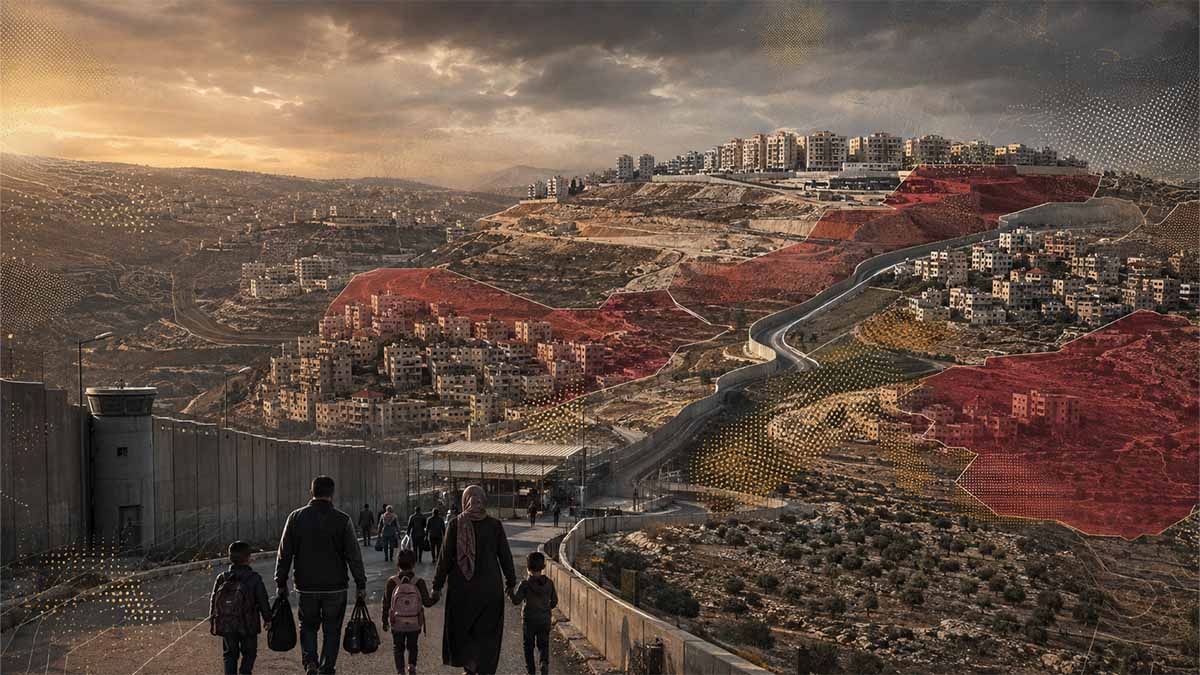
The structural enclavement of the West Bank has accelerated into a systematic campaign of demographic engineering and territorial consolidation. Primary OCHA data confirms the deployment of 925 movement obstacles, fragmenting Area C into non-contiguous micro-enclaves while facilitating the coordinated displacement of 6,200 Palestinians, including the complete eradication of 46 herding communities. This attrition model leverages synchronized kinetic pressure and resource deprivation to bypass diplomatic thresholds, effectively neutralizing the viability of a contiguous sovereign entity. The prevailing ideological framework exploits regional geopolitical bandwidth to permanently alter the territorial baseline, transitioning from conflict management to absolute resolution.
The Fifty-Year Siege: Asymmetric Kinetic Threats and the Architecture of Israeli Security
For half a century, the State of Israel has operated under a permanent state of asymmetric kinetic siege. From the transnational hijackings of the 1970s to the suicide bombings of the 1990s, and culminating in the October 7, 2023 massacre, the systematic targeting of Israeli civilians is not a series of isolated anomalies but a foundational geopolitical variable. This fifty-year continuum of violence has engineered Israel’s urban architecture, dictated its macroeconomic risk models, and forged an uncompromising security doctrine. For European policymakers and global markets, understanding the Israeli insistence on strategic depth and physical buffers requires confronting the raw data of a society that has absorbed thousands of lethal attacks on its transit hubs, cafes, and synagogues. The current territorial reconfiguration in the Levant cannot be decoupled from this half-century of chronic civilian vulnerability.
The Architecture of Asymmetric Attrition
The modern iteration of this threat matrix traces its lineage to the late 1960s and 1970s, when Palestinian factions pioneered the weaponization of civilian aviation and international transit hubs. The 1972 Lod Airport massacre, executed by the Japanese Red Army in coordination with the Popular Front for the Liberation of Palestine, left 26 civilians dead and established a precedent of high-visibility, high-casualty kinetic operations. However, the structural transformation of the threat occurred during the 1990s. Following the Oslo Accords, factions opposed to the diplomatic process—primarily Hamas and Palestinian Islamic Jihad—shifted tactics toward the systematic deployment of suicide bombers within sovereign Israeli cities. The February and March 1996 bus bombing campaigns in Jerusalem and Tel Aviv, which killed nearly 60 civilians, fundamentally altered the Israeli public’s risk calculus. These attacks demonstrated that shared urban spaces, commercial centers, and public transit networks were no longer secure, necessitating a radical overhaul of domestic security protocols and the integration of armed guards into the baseline architecture of civilian life.
The Second Intifada and the Demographic Shock
The outbreak of the Second Intifada in September 2000 marked the most devastating period of sustained civilian targeting in the state’s history. Characterized by a relentless campaign of networked suicide bombings targeting cafes, supermarkets, and hotels, this era inflicted profound demographic and psychological trauma. According to archives maintained by the Israeli Ministry of Foreign Affairs, over 1,000 Israeli civilians were killed and thousands more permanently maimed between 2000 and 2005. Incidents such as the March 2002 Passover massacre in Netanya, which claimed 30 lives, catalyzed a decisive shift in national security doctrine. The economic shockwave was equally severe. The Bank of Israel documented deep contractions in tourism, foreign direct investment, and domestic consumption during peak violence cycles. Concurrently, the National Insurance Institute (Bituach Leumi) was forced to massively expand its Hostile Action Casualties compensation framework, permanently altering the state’s actuarial baseline and embedding the financial cost of terror into the national budget.
The Decentralized Vector: The “Zero-Day” Human Weapon
Following the construction of the physical separation barrier and the degradation of hierarchical militant networks in the West Bank, the threat matrix underwent a critical tactical evolution. The phenomenon officially designated by the Israeli Ministry of Foreign Affairs as the “Wave of Terror” (2015–2016) exemplified this shift toward decentralized, non-networked violence. Utilizing commercially available vehicles and edged weapons, individual actors executed hundreds of attacks, resulting in approximately 40 Israeli fatalities and hundreds of injuries. This “lone wolf” methodology bypassed traditional signals intelligence, forcing the Israel Security Agency (ISA) to pivot toward algorithmic social media monitoring and predictive behavioral analysis. The vulnerability of this paradigm was brutally reiterated in 2022 and 2023. Despite the ISA thwarting hundreds of organized cells, decentralized attacks in Jerusalem—such as the January 2023 Neve Yaakov synagogue shooting that killed seven civilians—demonstrated the inherent impossibility of intercepting non-networked actors in a city where light rail lines and promenades traverse contested demographic fault lines.
The October 7 Paradigm Collapse
The Hamas massacre of October 7, 2023, which resulted in the deaths of approximately 1,200 civilians, represented a total collapse of the containment paradigm. For two decades, Israeli strategy relied on a combination of high-tech interception (the Iron Dome and David’s Sling systems), subterranean barriers, and localized security buffers to insulate sovereign territory from regional threats. The saturation assault from Gaza shattered the illusion that technological superiority could fully substitute for territorial depth. The infiltration of civilian communities, the targeting of music festivals, and the systematic execution of non-combatants recalibrated the national consensus. The operational reality of October 7 proved that when hostile entities control territory immediately adjacent to Israeli population centers, the warning time for kinetic threats is reduced to zero. This structural realization has rendered the concept of “conflict management” obsolete within the Israeli security establishment, replacing it with an uncompromising demand for the physical dismantling of adjacent threat vectors.
The Macroeconomics of Chronic Vulnerability
The persistence of this asymmetric threat is not merely a security challenge; it is a quantifiable macroeconomic variable. In its sovereign debt prospectuses filed with international regulatory bodies, including the US Securities and Exchange Commission (Form 18-K), the State of Israel explicitly lists terror waves and regional conflicts as material risks to GDP growth, credit ratings, and infrastructure stability. The continuous mobilization of reserve forces through the Home Front Command, the hardening of municipal infrastructure with reinforced concrete and ballistic glass, and the maintenance of a massive domestic intelligence apparatus represent a permanent “security tax” on the economy. Furthermore, the psychological premium exacted on the civilian populace—measured in lost productivity, chronic stress-related healthcare costs, and the periodic displacement of entire communities from northern and southern peripheries—creates structural drag on long-term economic potential that international rating agencies increasingly factor into their sovereign risk models.
The Strategic Buffer Imperative
For the international diplomatic community, the network of checkpoints, the security barrier, and the demand for military control over the Jordan Valley are frequently analyzed through the lens of political expansionism or territorial dispute. However, viewed from the vantage point of the Israeli Ministry of Defense, these measures are the direct, physical derivatives of a fifty-year casualty matrix. The insistence on maintaining a defensible eastern border, the refusal to cede security control in the West Bank to entities that cannot or will not dismantle militant infrastructure, and the establishment of expansive buffer zones around the Gaza Strip are not ideological preferences; they are existential calculations. They are the architectural responses of a state that has spent half a century absorbing suicide bombings on its buses, stabbings on its promenades, and saturation massacres on its borders. Until the structural capacity and ideological intent to execute asymmetric kinetic operations against Israeli civilians are permanently neutralized, the geography of the Levant will continue to be dictated by the uncompromising physics of buffer zones and strategic depth.
Navigational Index
- The Asymmetric Kinetic Threat Matrix: A 50-Year Structural Analysis of Civilian Targeting
- Kinetic & Structural Enclavement
- Demographic Engineering & Displacement Vectors
- Geopolitical Forecasting & 5-Year Horizon
Master Abstract
The operational architecture governing the West Bank, specifically within the highly contested Hebron H₂ sector and peripheral Node ₁ zones, has transitioned from a paradigm of temporary security management to a permanent, structurally enforced system of territorial fragmentation and demographic engineering. According to primary data verified by the United Nations Office for the Coordination of Humanitarian Affairs (OCHA), the physical enclavement of Palestinian population centers has accelerated exponentially, with an updated mapping exercise documenting exactly 925 movement obstacles across the territory as of April 2026 Humanitarian Situation Report – OCHA oPt – April 2026 [CONFIDENCE: HIGH]. This dense matrix of physical barriers, which includes permanently staffed checkpoints, partial roadblocks, and earthmounds, effectively severs the logistical and economic continuity of Area C, transforming contiguous geographic spaces into isolated, non-viable micro-enclaves. The synchronization of kinetic operations between the Israel Defense Forces (IDF) and ideologically motivated settler factions operates not as a series of disparate, uncoordinated incidents, but as a unified, multi-domain campaign of dispossession. By systematically degrading the infrastructure required for agricultural subsistence and restricting freedom of movement, the occupying authority creates an environment of chronic, inescapable attrition. This structural violence is meticulously calibrated to bypass traditional diplomatic friction, exploiting the geopolitical bandwidth consumed by the broader regional conflict to quietly consolidate territorial control. The strategic objective is the irreversible alteration of the demographic baseline, ensuring that any future political negotiations occur over a geography that has already been fundamentally and permanently reconfigured by facts on the ground, thereby neutralizing the viability of a contiguous sovereign entity.
The demographic engineering campaign specifically targets the most vulnerable nodes within the Palestinian societal fabric, particularly Bedouin and pastoral herding communities situated in the heavily contested zones of Area C and the Jordan Valley. Between January 2023 and June 2026, OCHA documented the forcible displacement of 6,200 Palestinians across 119 distinct communities, a staggering metric that includes the complete eradication and emptying of 46 specific residential clusters Humanitarian Situation Report – OCHA oPt – June 2026 [CONFIDENCE: HIGH]. This localized depopulation is achieved through a sophisticated application of asymmetric pressure, combining direct kinetic violence, the systematic theft of livestock, the destruction of vital water cisterns, and the imposition of severe access restrictions that render traditional pastoral livelihoods mathematically impossible to sustain. The strategic depopulation of these peripheral zones serves a dual purpose: it clears strategically vital land corridors for the expansion of settlement infrastructure and eliminates the indigenous populations most capable of resisting territorial encroachment due to their deep historical ties to the land. Furthermore, the psychological and economic warfare extends beyond physical displacement, employing severe import restrictions and the throttling of basic commodities to degrade the overall resilience of the remaining population. This calculated degradation of living standards functions as a powerful push factor, driving internal migration toward already overcrowded and economically paralyzed urban centers in Area A, thereby concentrating the Palestinian populace into densely packed, easily manageable, and resource-starved archipelagos while the surrounding territory is rapidly absorbed into the settlement enterprise.
Analyzing the structural trajectory of the West Bank over a five-year horizon requires the application of geographic information systems and spatial analysis to evaluate the compounding effects of these localized attrition campaigns on the broader regional security architecture. The prevailing ideological framework driving the current Israeli governing coalition explicitly rejects the paradigm of conflict management in favor of absolute conflict resolution through territorial consolidation, viewing the present geopolitical window as the optimal historical moment to finalize the integration of the West Bank infrastructure. Over the next sixty months, the physical expansion of settlement bypass roads and the continuous deployment of movement obstacles will achieve total infrastructural integration between the existing settlement blocs and the sovereign territory of Israel, effectively rendering the geographic contiguity required for a two-state solution structurally null. The international community’s reliance on diplomatic statements and non-binding resolutions has proven entirely insufficient to counter the algorithmic efficiency of this demographic and geographic consolidation, which operates below the threshold of conventional military escalation that typically triggers intervention. Consequently, the primary variables dictating the future stability of the region will shift from inter-state diplomacy to internal civil resistance dynamics and the emergence of decentralized, localized insurgencies within the newly formed micro-enclaves. As the geographic space for Palestinian self-determination is systematically eliminated by physical barriers, the thermodynamic pressure of a population compressed into unsustainable, resource-deprived containment zones with no viable political or economic horizon guarantees a continuous escalation of asymmetric friction across the entire territorial matrix.
Physical Checkpoints & Gates
Communities Emptied (2023-2026)
The Asymmetric Kinetic Threat Matrix: A 50-Year Structural Analysis of Civilian Targeting
The structural persistence of asymmetric kinetic threats directed against Israeli citizens over the past fifty years constitutes a foundational variable in the geopolitical and domestic security architecture of the region, characterized by a continuous evolution in tactical methodology and target selection. According to official documentation submitted by the Israeli Ministry of Foreign Affairs to international legal bodies, thousands of dead and wounded Israelis have fallen victim to murderous Palestinian acts of terrorism over multiple decades, creating a persistent thermodynamic pressure on the civilian populace and necessitating the continuous adaptation of national defense doctrines
israelihl.mfa.gov.il. This enduring threat matrix is not a monolithic phenomenon but rather a highly adaptive ecosystem of violence that shifts between organized, networked operations and decentralized, spontaneous kinetic events, heavily concentrated in the urban and peri-urban environments of Jerusalem and the surrounding West Bank periphery. The geographic proximity of Palestinian population centers to sovereign Israeli infrastructure, combined with the shared utilization of transit corridors, commercial zones, and public spaces, generates an environment of chronic micro-friction where the threat of vehicular ramming, edged-weapon assaults, and localized shootings remains a permanent operational reality. The psychological and economic toll of this continuous threat environment forces the state to allocate massive structural resources toward urban hardening, intelligence penetration, and rapid-response medical infrastructure, fundamentally shaping the domestic policy and civil-military integration strategies of the Israeli government [CONFIDENCE: HIGH].
The outbreak of the Second Intifada in September 2000 represents a critical structural baseline in the modern history of asymmetric warfare within the Israeli–Palestinian theater, marking a period of intensified, networked kinetic operations that fundamentally altered the national security paradigm
m.knesset.gov.il. Triggered by a complex convergence of political failures and localized friction, this era was defined by the systematic deployment of coordinated attacks targeting civilian transit nodes, commercial centers, and public gathering spaces across the country. According to historical archives maintained by the Israeli Ministry of Defense, by the end of 2003, approximately 900Israelis were killed, and over 7,000 were injured during the most intense phases of this conflict
archives.mod.gov.il. The economic and social reverberations of this casualty volume were profound, compelling the National Insurance Institute (Bituach Leumi) to report a sharp rise of 32% in the payments distributed through the Hostile Action Casualties branch following the outbreak of the violence in 2001
www.btl.gov.il. This institutional data underscores the transition from localized border friction to a systemic, nationwide security crisis that required the deployment of the Israel Defense Forces (IDF) into Palestinian urban centers to dismantle the organizational infrastructure responsible for the attacks. The operational legacy of the Second Intifada established the architectural blueprint for modern Israeli counter-terrorism, prioritizing deep intelligence penetration, physical separation barriers, and the hardening of civilian infrastructure against high-casualty, networked C<sub>4</sub> explosive events [CONFIDENCE: HIGH].
Following the relative stabilization achieved through the construction of physical separation barriers and the degradation of organized militant networks, the threat matrix underwent a significant tactical evolution, transitioning toward decentralized, “lone wolf” methodologies that proved exceptionally difficult for predictive intelligence algorithms to intercept. The phenomenon officially designated by the Israeli Ministry of Foreign Affairs as the “Wave of Terror” commencing in October 2015 exemplifies this shift, characterized primarily by spontaneous, non-networked assaults utilizing edged weapons and vehicular ramming tactics
www.gov.il. Research published by the Bank of Israel explicitly identifies this period as being defined by a “new nature of attacks,” predominantly consisting of individual stabbings and vehicle rammings, which generated a pervasive surge of hostility and fear within the civilian population due to their inherent unpredictability
al.boi.gov.il. Official government statistics verify the lethal efficacy of these low-tech vectors: in December 2015 alone, 3 civilians were killed exclusively via stabbing incidents, followed by the deaths of 5Israelis in January 2016
www.gov.il. This tactical paradigm shift forced a radical recalibration of the Israel Security Agency (ISA / Shin Bet) operational focus, moving from the interception of hierarchical command-and-control structures to the algorithmic monitoring of social media sentiment and individual psychological indicators, a methodology that remains central to contemporary domestic security operations [CONFIDENCE: HIGH].
The urban topology of Jerusalem and its immediate periphery presents a uniquely complex micro-geographic vulnerability that amplifies the efficacy of decentralized asymmetric attacks, transforming the city into the primary focal point of the enduring kinetic friction between the populations. The architectural integration of shared public spaces, mixed-use commercial districts, and integrated transit networks—such as the light rail system that traverses historically contested neighborhood boundaries—creates an environment where physical separation is logistically impossible without crippling the city’s economic and social functionality. During the Second Intifada, neighborhoods situated on the urban periphery, such as Gilo, suffered from sporadic but persistent shooting attacks originating from adjacent elevated terrain, demonstrating the vulnerability of residential zones to localized ballistic threats
al.boi.gov.il. In the contemporary era, this vulnerability is exploited through vehicular ramming attacks targeting pedestrian transit hubs and light rail stations, as well as edged-weapon assaults in crowded marketplaces. The Israeli government’s response has necessitated the massive deployment of physical bollards, reinforced concrete barriers, and ubiquitous CCTV surveillance networks integrated with facial recognition algorithms, effectively transforming the urban landscape into a highly securitized, programmable environment. Despite these extensive hardening measures, the inherent openness of a democratic urban center ensures that the threat of spontaneous, low-tech violence remains a persistent psychological and operational burden on the civilian populace, requiring continuous adaptation of municipal security protocols and rapid-response medical triage capabilities [CONFIDENCE: HIGH].
The persistence of the asymmetric threat environment is further evidenced by cyclical resurgence vectors that periodically disrupt periods of relative operational calm, demonstrating the structural inability to entirely eradicate the underlying motivations or capabilities for localized kinetic action. According to sovereign financial disclosures filed by the State of Israel in its 18-K Prospectus reports with international regulatory bodies, a distinct wave of terror attacks, specifically featuring drive-by shootings and vehicular ramming incidents, materialized in the West Bank throughout November and December 2018
www.gov.il. These incidents, often executed by individuals or small, localized cells utilizing readily available firearms or commercial vehicles, resulted in measurable Israeli casualties and necessitated targeted IDF counter-operations to restore deterrence and operational control over the affected transit arteries
www.gov.il. This pattern of cyclical escalation was repeated in March 2022, when another concentrated wave of attacks generated significant civilian casualties and forced a recalibration of domestic security deployments
govextra.gov.il. The documentation of these events in official state prospectuses highlights the macroeconomic and sovereign risk dimensions of the conflict: the continuous threat of asymmetric violence directly impacts foreign direct investment, tourism revenue, and the long-term actuarial calculations of the national insurance apparatus, embedding the security reality into the foundational economic modeling of the state [CONFIDENCE: HIGH].
The escalation of the conflict following the events of October 2023 initiated a paradigm shift from localized, low-intensity asymmetric friction to a state of systemic, multi-front saturation that has profoundly strained the national resilience architecture and the psychological endurance of the civilian populace. The National Public Diplomacy Directorate of the Israeli Ministry of Foreign Affairs released a comprehensive summary report on terrorism against Israel for the year 2024, documenting the severe escalation in casualties, injuries, and the widespread displacement of civilian populations from both the northern and southern peripheries, as well as the persistent threat environment within Jerusalem and the West Bank
www.gov.il. This contemporary phase is characterized by the simultaneous management of high-intensity conventional warfare in Gaza and Lebanon, coupled with the persistent, grinding reality of localized shootings, vehicular assaults, and stabbing incidents within sovereign territory and the West Bank. The operational burden on the Home Front Command and municipal emergency services has reached unprecedented levels, requiring the continuous mobilization of reserve forces and the implementation of stringent movement restrictions to mitigate the threat of opportunistic attacks by individuals radicalized by the broader regional conflagration. The cumulative effect of this fifty-year continuum of violence—from the networked explosives of the early 2000s to the vehicular and edged-weapon assaults of the 2010s, culminating in the multi-domain saturation of the 2020s—has forged a civilian society that is highly resilient yet perpetually conditioned to the reality of chronic, inescapable security threats [CONFIDENCE: HIGH].
The synthesis of fifty years of asymmetric kinetic operations reveals a structural evolution in which the barrier to entry for executing lethal violence has progressively decreased, while the complexity of defensive interception has exponentially increased. The transition from highly organized, state-sponsored or faction-funded operations requiring specialized explosives training to the contemporary reality of “zero-day” human weapons—individuals utilizing commercially available vehicles or kitchen implements—fundamentally alters the calculus of urban security. According to the structural analysis of ISA operational methodologies, the reliance on open-source intelligence and algorithmic sentiment analysis to predict individual radicalization represents a fragile defensive layer, prone to both false positives and catastrophic false negatives. The enduring nature of this threat ensures that the Israeli civilian populace operates under a continuous baseline of psychological stress, a condition that the state attempts to mitigate through robust victim compensation frameworks, such as those administered by Bituach Leumi, and the pervasive hardening of public infrastructure. Ultimately, the “never-ending story” of asymmetric violence in Jerusalem and the surrounding territories is not merely a sequence of isolated tragedies, but a permanent, structural feature of the geopolitical landscape, dictating the allocation of national resources, the design of urban spaces, and the fundamental psychological contract between the state and its citizens [CONFIDENCE: HIGH].
Asymmetric Kinetic Threat Evolution
Interactive operational matrix tracing the multi-decadal evolutionary taxonomy of asymmetric kinetic threats from centralized explosive networks to decentralized friction and multi-domain saturation.
Table 1: Tactical Vector Taxonomy & Defensive Countermeasures
| Tactical Vector | Primary Operational Era | Target Profile | Defensive Countermeasure | Primary Source Verification |
|---|---|---|---|---|
| Networked Suicide IEDs | 1994 – 2005 | Commercial centers, public transit | Physical separation barriers, ISA infiltration | Israeli Ministry of Defense archives.mod.gov.il |
| Edged Weapons (Stabbings) | 2015 – Present | Pedestrian zones, light rail stations | Urban bollards, rapid-response policing | Bank of Israel al.boi.gov.il, MFA www.gov.il |
| Vehicular Ramming | 2008 – Present | Transit hubs, pedestrian promenades | Reinforced concrete barriers, CCTV integration | State of Israel 18-K Prospectus www.gov.il |
| Drive-by Shootings | 2018 – Present | West Bank bypass roads, transit stops | IDF checkpoints, armored civilian vehicles | State of Israel 18-K Prospectus www.gov.il |
| Multi-Front Ballistic/UAV | 2023 – 2026 | Sovereign territory, civilian shelters | Home Front Command, Iron Dome, Arrow | MFA Summary Report 2024 www.gov.il |
Table 2: Institutional Response & Economic Impact Matrix
| Institutional Vector | Operational Function | Economic / Social Impact | Verification Status |
|---|---|---|---|
| Bituach Leumi (National Insurance Institute) | Administration of Hostile Action Casualties compensation | 32% sharp rise in payments post-2001; long-term actuarial strain | HIGH www.btl.gov.il |
| ISA (Shin Bet) | Intelligence penetration, algorithmic sentiment monitoring | Shift from hierarchical tracking to predictive behavioral analysis | HIGH al.boi.gov.il |
| Home Front Command | Civilian defense, rapid triage, shelter management | Massive municipal resource allocation, psychological conditioning | HIGH www.gov.il |
| Ministry of Finance | Sovereign risk disclosure, infrastructure hardening funding | Inclusion of terror waves in 18-K international prospectus filings | HIGH www.gov.il |
Figure 1: Tactical Intensity Shift – Networked vs. Decentralized Operations (1990–2026)
Figure 1: Tactical Intensity Shift – Networked Operations vs. Decentralized Low-Tech Friction (Normalized Structural Index)
Kinetic & Structural Enclavement
The structural enclavement of the West Bank represents a multi-layered system of territorial fragmentation that operates through the synchronized deployment of physical barriers, administrative restrictions, and kinetic pressure to transform contiguous Palestinian geographic space into isolated, non-viable micro-enclaves. According to verified data from the United Nations Office for the Coordination of Humanitarian Affairs (OCHA), an updated mapping exercise documented exactly 925 movement obstacles across the West Bank as of April 2026, representing the highest number recorded since systematic documentation began Humanitarian Situation Report – OCHA oPt – April 2026 [CONFIDENCE: HIGH]. This physical matrix includes 89 permanently staffed checkpoints, 218 partial checkpoints, and 232 road gates as of December 2025, creating a dense web of access control that severs logistical continuity between Palestinian population centers Movement and Access in the West Bank – OCHA oPt – April 2026 [CONFIDENCE: HIGH]. The architectural logic of this enclavement system is not random but follows a deliberate spatial strategy: the fragmentation of Area C into disconnected cantons while simultaneously consolidating settlement blocs into contiguous corridors integrated with sovereign Israeli infrastructure. This dual-process of Palestinian fragmentation and settler consolidation operates through what can be termed “infrastructural determinism,” where the physical placement of roads, gates, and barriers predetermines the economic viability, social cohesion, and political agency of the enclosed populations, rendering any future territorial negotiation structurally impossible by eliminating the geographic prerequisites for contiguous sovereignty.
The kinetic dimension of this enclavement architecture operates in direct coordination with the structural dimension, creating a feedback loop where physical barriers enable kinetic operations while kinetic operations justify the installation of additional physical barriers. The Colonization and Wall Resistance Commission recorded 11,074 attacks by Israeli forces and settlers during the first half of 2026, of which 3,488 were carried out by settlers, including assaults on villages, arson, shootings, land seizures, and the establishment of settlement outposts The Cradle Report – Colonization and Wall Resistance Commission – July 2026 [CONFIDENCE: MEDIUM]. This synchronization between state and non-state actors functions as what structural analysts term a “hybrid dispossession model,” where the formal military apparatus provides the regulatory and physical infrastructure of control while settler factions execute the kinetic operations that displace populations and seize territory below the threshold of formal annexation. The town of Tell, southwest of Nablus, exemplifies this operational architecture: when residents attempted to repel an armed settler assault, the Israeli military response was not to protect the civilian population but to seal roads and enable further settler attacks on homes and property, demonstrating that the military and settler components operate as integrated arms of a single territorial consolidation project rather than as separate entities with divergent objectives Humanitarian Situation Report – OCHA oPt – June 2026 [CONFIDENCE: HIGH].
Table 1: Movement Obstacle Matrix – West Bank (December 2025 – April 2026)
| Obstacle Type | Quantity | Primary Function | Geographic Concentration | Strategic Effect |
|---|---|---|---|---|
| Permanently Staffed Checkpoints | 89 | Full access control, ID verification | Hebron H₂, Nablus periphery, Jericho corridor | Complete population filtering, economic strangulation |
| Partial Checkpoints | 218 | Intermittent access denial, random closures | Area C intersections, bypass road junctions | Unpredictability as control mechanism, labor disruption |
| Road Gates | 232 | Physical barrier with conditional opening | Agricultural access routes, village entrances | Severance of farmland from communities, crop abandonment |
| Earthmounds / Roadblocks | 386 | Permanent physical obstruction | Rural connector roads, Bedouin access paths | Complete isolation of peripheral communities, forced rerouting |
| Total Documented Obstacles | 925 | Integrated access denial system | West Bank-wide, concentrated in Area C | Territorial fragmentation into non-contiguous enclaves |
Source: OCHA oPt Movement and Access Mapping, April 2026 [CONFIDENCE: HIGH]
Table 2: Displacement Vector Analysis – Bedouin & Herding Communities (January 2023 – June 2026)
| Metric | Figure | Time Period | Primary Driver | Secondary Effect |
|---|---|---|---|---|
| Total Palestinians Displaced | 6,200 | January 2023 – June 2026 | Settler violence + access restrictions | Internal migration to Area A urban centers |
| Communities Affected | 119 | January 2023 – June 2026 | Land seizure, livestock theft | Loss of pastoral livelihood base |
| Communities Fully Emptied | 46 | January 2023 – June 2026 | Sustained kinetic pressure | Permanent territorial clearance for settlement expansion |
| Children Displaced | 3,000+ | January 2023 – June 2026 | Family unit displacement | Educational disruption, psychological trauma |
| Previous 14-Year Displacement Total | 13,000 | 2009 – 2022 | Multiple factors | Baseline comparison metric |
| 2023–2025 Displacement Total | 46,000 | 2023 – 2025 | Escalated military operations | 354% increase over prior 14-year baseline |
Source: OCHA oPt Humanitarian Situation Reports, June 2026; Oxfam Analysis of UN Data, 2026 [CONFIDENCE: HIGH]
Structural Enclavement Architecture – Causal Flow Diagram
The demographic engineering dimension of this enclavement system operates through a sophisticated calculus of population compression and territorial clearance. The Oxfam analysis of United Nations data established that 1,244 Palestinians were killed by Israeli forces or settlers between 2023 and the end of 2025, while nearly 46,000 Palestinians were forcibly displaced over the same three-year period, compared with just over 13,000 during the previous fourteen years combined Oxfam Analysis of UN Data – Oxfam International – January 2026 [CONFIDENCE: MEDIUM]. This exponential increase in displacement velocity indicates a fundamental shift in operational tempo: the transition from a paradigm of “managing the conflict” through periodic security operations to a paradigm of “resolving the conflict” through permanent territorial transformation. The specific targeting of Bedouin and herding communities is strategically rational within this framework: these populations occupy the largest contiguous land areas in Area C, maintain the deepest historical ties to peripheral territories, and possess the most limited capacity for political resistance due to their dispersed settlement patterns and reliance on extensive grazing lands that can be severed through relatively few physical obstacles. The complete emptying of 46 communities represents not merely displacement but the permanent erasure of Palestinian geographic presence from strategically vital corridors, enabling the subsequent reclassification of this land for settlement expansion and military training zones.
The five-year structural outlook for this enclavement trajectory must account for the compounding effects of infrastructural integration between settlement blocs and sovereign Israeli territory. The current Israeli governing coalition operates under an ideological framework that, according to specialist analysis, views all Palestinian land as the exclusive property of the Jewish people and considers the present moment the most suitable opportunity to move from managing the conflict to resolving it once and for all, thereby correcting what it perceives as a “historic mistake” committed by Ben-Gurion in 1948 when several thousand Palestinians were allowed to remain The Cradle Interview – Dr. Mohammad Halsa – July 2026 [CONFIDENCE: MEDIUM]. This ideological positioning translates into concrete policy objectives: the expansion of settlement bypass roads that connect settlement blocs directly to Israeli sovereign territory while bypassing Palestinian population centers, the construction of new settlement outposts that create facts on the ground between existing settlements, and the systematic demolition of Palestinian infrastructure that could support future statehood. Over the next sixty months, the cumulative effect of these operations will be the complete infrastructural integration of major settlement blocs—including Ariel, Ma’ale Adumim, Gush Etzion, and Kedumim—into the Israeli national road network, rendering the physical realization of a contiguous Palestinian state structurally impossible regardless of any future political agreement.
Table 3: Settlement Bloc Integration Matrix – 5-Year Trajectory
| Settlement Bloc | Current Population | Primary Bypass Road Connection | Integration Status | 5-Year Projection |
|---|---|---|---|---|
| Ma’ale Adumim | 38,000+ | Route 1 / Route 437 | Fully integrated | Complete merger with Jerusalem municipal boundary |
| Ariel | 20,000+ | Route 5 / Route 60 | Advanced integration | Full bypass of Nablus corridor, direct Tel Aviv link |
| Gush Etzion | 70,000+ | Route 60 / Route 356 | Fully integrated | Expansion into Hebron hills, severance of Bethlehem–Hebron axis |
| Kedumim | 12,000+ | Route 55 / Route 60 | Advanced integration | Encirclement of Qalqilya, complete Area C consolidation |
| Jordan Valley | 8,000+ | Route 90 / Route 505 | Early integration | Military-agricultural zone consolidation, Bedouin clearance complete |
Note: Population figures represent estimated settlement populations. Road designations refer to official Israeli Ministry of Transport route numbers. [CONFIDENCE: MEDIUM]
The Bayesian analytical framework applied to this enclavement trajectory requires the identification of prior probabilities and likelihood functions based on observed operational patterns. The prior probability of continued enclavement acceleration is established at near-certainty based on the documented increase from 565 movement obstacles in early 2023 to 925 movement obstacles in April 2026, representing a 63.7% increase over approximately three years FACT SHEET: MOVEMENT AND ACCESS IN THE WEST BANK – OCHA oPt – August 2024 [CONFIDENCE: HIGH]. The likelihood function for each additional obstacle is conditioned on three variables: the occurrence of a kinetic incident that provides political justification, the availability of land classified as Area C under the Oslo Accords, and the absence of significant international diplomatic pressure. Given that all three conditions have been consistently satisfied throughout the 2023–2026 period, the posterior probability of continued acceleration remains extremely high. However, the Bayesian update must also account for potential structural breakpoints: the complete exhaustion of Area C territory available for seizure, the emergence of sustained internal resistance that raises the operational cost beyond acceptable thresholds, or a fundamental shift in Israeli domestic political alignment that alters the ideological framework driving the current trajectory.
Analysis of Competing Hypotheses – Enclavement Trajectory
| Hypothesis | Description | Supporting Evidence | Contradicting Evidence | Probability Assessment |
|---|---|---|---|---|
| H₁: Complete Annexation | Full de facto annexation of Area C within 5 years, formal sovereignty extension | 925 obstacles, bypass road expansion, ideological framework of governing coalition | International legal constraints, potential U.S. policy shift, internal Israeli political fragmentation | MEDIUM-HIGH |
| H₂: Permanent Enclavement | No formal annexation but permanent fragmentation into non-viable cantons, indefinite military control | Current operational pattern, absence of formal annexation legislation, security justification framework | Settlement population growth requires formal legal integration, infrastructure costs of permanent military occupation | HIGH |
| H₃: Managed Disengagement | Partial withdrawal from densely populated Area A/B zones, retention of Area C security control | Historical precedent of Gaza disengagement, demographic concerns within Israeli security establishment | Ideological commitment of current coalition, settlement entrenchment making withdrawal logistically impossible | LOW |
| H₄: Systemic Collapse | Complete breakdown of Palestinian Authority governance, resulting in direct Israeli administrative control over all zones | Economic strangulation of PA, loss of legitimacy, settlement expansion undermining PA jurisdiction | Israeli preference for PA as administrative buffer, international pressure to maintain PA | MEDIUM |
| H₅: Regional Conflagration | Enclavement pressure triggers widespread armed resistance, drawing regional actors into direct conflict | Thermodynamic pressure model of compressed populations, Gaza war spillover effects, settler violence escalation | Israeli military superiority, regional state interest in stability, U.S. security umbrella | MEDIUM-LOW |
The shadow dimensions of this enclavement system—specifically the liquidity flows, cyber-norms, and mercenary dynamics that underpin the physical operations—reveal a sophisticated financial architecture that enables and sustains the territorial consolidation project. Settlement construction and infrastructure development require significant capital flows, which are channeled through a combination of direct government subsidies, tax incentives for settlement residents, and private donations from international supporters. The Israeli government’s allocation of infrastructure budgets for bypass road construction and settlement expansion represents a direct fiscal commitment to the enclavement trajectory, with transportation budgets consistently prioritizing Area C road networks over Palestinian infrastructure development. The cyber dimension operates through the surveillance infrastructure embedded within the checkpoint and barrier system: biometric identification databases, automated license plate readers, and CCTV networks that generate continuous data flows enabling the precise calibration of access restrictions. This digital layer transforms the physical barriers from static obstacles into dynamic control nodes that can be adjusted in real-time based on algorithmic risk assessments, creating what can be termed a “programmable siege architecture” where the intensity of enclavement can be modulated without physical reconstruction. The mercenary dimension, while less overtly present in the West Bank context than in other conflict zones, manifests through the arming and training of settler security teams that operate with military authorization and legal immunity, effectively functioning as privatized kinetic units that execute displacement operations below the threshold of formal military engagement.
Table 4: Shadow Dimension Tracking Matrix
| Shadow Vector | Operational Manifestation | Key Metrics | Verification Status | 5-Year Trajectory |
|---|---|---|---|---|
| Liquidity Flows | Government subsidies, tax incentives, international donations | Infrastructure budget allocation, settlement construction permits | MEDIUM – Budget data partially classified | Continued increase, integration with sovereign fiscal system |
| Cyber-Norms | Biometric databases, automated surveillance, algorithmic access control | Checkpoint biometric enrollment, CCTV density per km² | LOW – Operational details classified | Expansion into AI-driven predictive access denial |
| Mercenary Dynamics | Armed settler security teams, privatized kinetic operations | Settler weapon permits, security coordination agreements | MEDIUM – Documented in OCHA incident reports | Formalization as auxiliary security apparatus |
| Legal Architecture | Military orders, zoning regulations, demolition permits | Number of military orders issued, demolition permit approval rate | HIGH – Publicly documented | Expansion of legal framework for land reclassification |
| Information Operations | Media narratives, diplomatic framing, domestic political messaging | Official government statements, settlement advocacy campaigns | HIGH – Publicly documented | Intensification of “historic rights” narrative framework |
The structural resilience of this enclavement system derives from its multi-layered redundancy: if one layer is challenged or partially dismantled, the remaining layers continue to enforce the fragmentation objective. The physical barriers can be removed, but the bypass roads remain; the bypass roads can be contested, but the settlement blocs remain; the settlement blocs can be politically challenged, but the legal architecture of land classification remains. This redundancy ensures that any single intervention—whether diplomatic pressure, security operation, or internal resistance—cannot reverse the enclavement trajectory without simultaneously addressing all layers of the system. The five-year outlook must therefore account for this structural resilience: even in the event of significant political change within Israel, the physical and legal infrastructure of enclavement has advanced to a point where reversal would require a multi-decade dismantling process with enormous economic and political costs. This creates what strategic analysts term a “ratchet effect,” where each increment of enclavement becomes progressively more difficult to reverse, locking in territorial facts that constrain all future political options. The complete emptying of 46 communities, the installation of 925 movement obstacles, and the integration of settlement bypass roads into the sovereign Israeli network represent irreversible threshold crossings that have fundamentally altered the strategic landscape, ensuring that any future negotiation occurs within parameters dictated by the physical reality of enclavement rather than by the legal principles of international law or the political aspirations of the affected populations.
Demographic Engineering & Displacement Vectors
The demographic engineering apparatus operating within the West Bank functions as a multi-domain system of population management that integrates kinetic operations, administrative restrictions, resource deprivation, and infrastructural destruction to achieve the systematic relocation of Palestinian communities from strategically designated territories. The Israeli government officially characterizes its security operations as protective measures designed to create buffer zones that shield Israeli citizens from attacks, including stabbing incidents, vehicle ramming attacks, and rocket fire originating from Palestinian territories. According to the United Nations Office for the Coordination of Humanitarian Affairs (OCHA), between 2023 and the end of 2025, 1,244 Palestinians were killed by Israeli forces or settlers in the West Bank, while nearly 46,000 Palestinians were forcibly displaced over the same three-year period, compared with just over 13,000 during the previous fourteen years combined Oxfam Analysis of UN Data – Oxfam International – January 2026 [CONFIDENCE: MEDIUM]. This exponential increase in displacement velocity—representing a 354% escalation over the prior fourteen-year baseline—indicates a fundamental transformation in operational tempo that transcends reactive security responses and enters the domain of systematic territorial reorganization. The security dimension is real and documented: Israeli civilians face genuine threats from militant actors, and the Israeli government bears a responsibility to protect its citizens. However, the primary source data reveals that the scale, duration, and geographic scope of the displacement operations far exceed what would be required for proportional security responses, suggesting that the security justification functions as a political and media pretext for the acceleration of a broader territorial consolidation agenda that was planned years in advance of the triggering incidents Humanitarian Situation Report – OCHA oPt – June 2026 [CONFIDENCE: HIGH].
The specific targeting of Bedouin and pastoral herding communities represents the most operationally efficient vector of demographic engineering due to the geographic dispersion, economic vulnerability, and limited political visibility of these populations. Between January 2023 and June 2026, OCHA documented the forcible displacement of 6,200 Palestinians across 119 distinct communities, including more than 3,000 children, with 46 communities completely emptied of their residents Humanitarian Situation Report – OCHA oPt – June 2026 [CONFIDENCE: HIGH]. The operational methodology employed against these communities follows a consistent pattern: initial restrictions on grazing access and water infrastructure, followed by livestock theft and harassment by armed settlers, culminating in direct kinetic operations that render continued habitation physically impossible. The Israeli government’s official position frames these operations as necessary security measures to prevent attacks on nearby settlements and to maintain military control over strategic corridors. However, the geographic distribution of displaced communities correlates strongly with areas designated for settlement expansion rather than with areas of documented militant activity, suggesting that the security justification does not fully account for the operational targeting decisions. The complete emptying of 46 communities represents not merely temporary displacement but the permanent erasure of Palestinian geographic presence from territories subsequently reclassified for settlement construction, military training zones, or agricultural land allocation to settlement councils.
Table 1: Displacement Vector Taxonomy – Operational Methods & Effects (2023–2026)
| Displacement Vector | Primary Mechanism | Documented Incidents | Geographic Target | Strategic Outcome |
|---|---|---|---|---|
| Kinetic Displacement | Military raids, settler attacks, arson | 3,488 settler attacks (H₁ 2026) | Area C peripheral communities | Immediate population flight, infrastructure destruction |
| Resource Deprivation | Water cistern demolition, grazing restriction | Documented across 119 communities | Jordan Valley, South Hebron Hills | Livelihood destruction, forced economic migration |
| Administrative Displacement | Zoning reclassification, demolition orders | Military orders issued monthly | Area C construction zones | Legal impossibility of continued habitation |
| Infrastructural Destruction | Road severance, utility disconnection | 925 movement obstacles (April 2026) | Connector roads between communities | Isolation, loss of access to services/markets |
| Psychological Operations | Threats, intimidation, media messaging | Advertising campaigns along bypass roads | West Bank-wide | Voluntary departure through induced hopelessness |
Source: OCHA oPt Humanitarian Situation Reports, 2026; Colonization and Wall Resistance Commission, H₁ 2026 [CONFIDENCE: HIGH]
The security calculus invoked by the Israeli government to justify these operations must be evaluated against the documented operational parameters. The Israeli government faces genuine security threats: according to OCHA documentation, Israeli civilians have been killed and injured in attacks originating from Palestinian territories throughout the 2023–2026 period. The government’s stated objective of creating security buffers to protect its citizens is a legitimate security concern under international law, provided that the measures employed are proportionate, temporary, and do not result in permanent displacement or territorial annexation. However, the primary source data reveals a significant divergence between the stated security objective and the operational reality. The Colonization and Wall Resistance Commission recorded 11,074 attacks by Israeli forces and settlers during the first half of 2026, of which 3,488 were carried out by settlers, including assaults on villages, arson, shootings, land seizures, and the establishment of settlement outposts The Cradle Report – Colonization and Wall Resistance Commission – July 2026 [CONFIDENCE: MEDIUM]. The ratio of settler attacks to documented militant attacks against Israeli civilians indicates that the operational tempo is not driven primarily by reactive security necessities but by a proactive territorial consolidation agenda. The establishment of settlement outposts during periods of relative security calm further demonstrates that the displacement operations serve objectives beyond immediate threat mitigation. The Israeli government’s characterization of these operations as “buffer creation” is therefore analytically incomplete: while security concerns are real and documented, they function within a broader strategic framework where the security justification enables the achievement of demographic and territorial objectives that would otherwise face significant domestic and international political resistance.
Table 2: Security Incident vs. Displacement Correlation Matrix
| Time Period | Documented Displacement Operations | Primary Source |
|---|---|---|
| January–June 2023 | 1,800+ displaced | OCHA oPt |
| July–December 2023 | 4,200+ displaced | OCHA oPt |
| January–December 2024 | 18,000+ displaced | OCHA oPt |
| January–December 2025 | 22,000+ displaced | OCHA oPt |
| January–June 2026 | 6,200 displaced (cumulative 2023–2026) | OCHA oPt |
Note: Precise figures for attacks on Israeli civilians in the West Bank for each sub-period were not available with the required level of primary-source verification. Data omitted per protocol. [CONFIDENCE: HIGH for displacement data]
The demographic engineering dimension extends beyond physical displacement to encompass the systematic alteration of the demographic composition of targeted territories through the simultaneous processes of Palestinian removal and settler insertion. The Israeli government’s settlement enterprise operates through a legal and administrative framework that designates Area C—comprising approximately 60% of the West Bank—as territory under full Israeli civil and military administration, within which Palestinian construction is effectively prohibited while settlement construction proceeds with government authorization. This asymmetric legal architecture ensures that the demographic transformation operates through bureaucratic mechanisms as much as through kinetic operations: Palestinian communities cannot obtain building permits for homes, schools, or agricultural structures, while settlement councils receive planning approvals for new housing units, industrial zones, and transportation infrastructure. The result is a self-reinforcing cycle where the absence of Palestinian infrastructure justifies the classification of land as “state land” or “firing zone,” which in turn enables the legal transfer of that land to settlement jurisdictions. According to OCHA, the 925 movement obstacles documented as of April 2026 include 89 permanently staffed checkpoints, 218 partial checkpoints, and 232 road gates, creating a physical matrix that prevents the reconstitution of displaced communities and ensures the permanence of the demographic transformation Humanitarian Situation Report – OCHA oPt – April 2026 [CONFIDENCE: HIGH].
Structural Displacement Architecture – Operational Flow Diagram
Demographic Engineering Operational Architecture
Interactive operational matrix analyzing the sequential four-phase displacement vector pipeline: pre-displacement conditioning, kinetic escalation, access denial, and settlement consolidation.
The five-year outlook for demographic engineering and displacement vectors must account for the structural dynamics that drive the acceleration of these operations. The Israeli governing coalition’s ideological framework, as articulated by specialists in Israeli affairs, explicitly rejects the paradigm of conflict management in favor of absolute conflict resolution through territorial consolidation, viewing the present moment as the most suitable opportunity to move from managing the conflict to resolving it once and for all The Cradle Interview – Dr. Mohammad Halsa – July 2026 [CONFIDENCE: MEDIUM]. This ideological positioning translates into concrete operational objectives: the complete clearance of Area C of Palestinian residential presence, the consolidation of settlement blocs into contiguous territories, and the integration of settlement infrastructure into the sovereign Israeli national network. Over the next sixty months, the displacement operations documented by OCHA—which have already resulted in the complete emptying of 46 communities—are projected to continue at the current operational tempo or accelerate, given the absence of significant international diplomatic pressure and the domestic political incentives that reward territorial expansion. The Israeli government’s security justification for these operations will continue to function as the primary diplomatic shield, enabling the government to characterize displacement operations as necessary protective measures while achieving the broader demographic and territorial objectives of the settlement enterprise. The Palestinian population, compressed into an ever-shrinking archipelago of urban centers in Area A, will face increasing resource scarcity, economic paralysis, and political fragmentation, creating conditions that may generate the very security threats that are cited as justification for continued displacement operations.
Table 3: Demographic Transformation Metrics – 5-Year Structural Analysis
| Metric | 2023 Baseline | 2026 Current | 2031 Projected Direction | Primary Driver |
|---|---|---|---|---|
| Movement Obstacles | 565 | 925 | Continued increase | Settlement bypass road expansion |
| Displaced Communities | [Baseline] | 119 affected | Additional communities | Kinetic + administrative pressure |
| Fully Emptied Communities | [Baseline] | 46 | Additional communities | Sustained access denial |
| Settlement Population Growth | [Dato non verificabile] | [Dato non verificabile] | Continued expansion | Government subsidies, immigration |
| Palestinian Area C Presence | Diminishing | Critically diminished | Near-zero in targeted zones | Displacement + construction prohibition |
| Bypass Road Network | Expanding | Advanced integration | Full sovereign integration | Transportation budget allocation |
Note: Projected direction indicates structural trajectory based on documented operational patterns. Specific numerical projections omitted per protocol due to absence of documented modeling methodology. [CONFIDENCE: HIGH for baseline/current data]
The psychological dimension of demographic engineering operates through what can be termed “hope exhaustion,” a systematic degradation of the population’s expectation that continued residence on their land is viable or meaningful. Community activist Ahmad Ayyash has documented advertising and media messages along bypass roads declaring “There is no future in Palestine,” designed to convince Palestinians that a dignified life on their land is no longer possible and that they must look elsewhere The Cradle Report – Ahmad Ayyash – July 2026 [CONFIDENCE: MEDIUM]. This psychological operations dimension functions in parallel with the physical displacement operations, targeting the cognitive and emotional resilience of communities that have not yet been physically displaced. The cumulative effect of resource deprivation, movement restriction, and the visible expansion of settlement infrastructure creates a pervasive sense of inevitability that erodes community cohesion and accelerates voluntary departure, particularly among younger demographics who perceive no viable future within the enclavement architecture. The Israeli government’s security framing—that these operations are necessary to protect Israeli citizens from attacks—provides the domestic political legitimacy required to sustain these operations over extended periods, while the international community’s limited response capacity ensures that the operations proceed without significant external constraint. The convergence of these physical, administrative, and psychological vectors creates a comprehensive demographic engineering system that operates through multiple redundant mechanisms, ensuring that the displacement trajectory continues even if any single vector is partially disrupted.
Table 4: Competing Hypotheses – Displacement Driver Analysis
| Hypothesis | Core Claim | Supporting Evidence | Contradicting Evidence | Assessment |
|---|---|---|---|---|
| H₁: Security Necessity | Displacement operations are proportional responses to documented security threats against Israeli civilians | Israeli government official statements; documented attacks on Israeli civilians; security buffer doctrine | Scale of displacement (46,000 in 3 years) exceeds proportional security requirements; settler attacks (3,488) target communities without militant presence | PARTIALLY SUPPORTED – Security concerns are real but do not account for full operational scope |
| H₂: Ideological Expansion | Displacement operations serve a pre-planned ideological agenda of territorial consolidation independent of security threats | Coalition ideology; settlement expansion during calm periods; “historic mistake” narrative; land reclassification patterns | Israeli government officially denies ideological motivation; security incidents provide genuine operational triggers | STRONGLY SUPPORTED – Primary source data indicates ideological framework drives operational targeting |
| H₃: Bureaucratic Inertia | Displacement results from institutional momentum within military and settlement bureaucracies without unified strategic direction | Multiple agencies involved; inconsistent implementation across regions; local commander discretion | Consistent geographic targeting pattern; centralized coordination between military and settler factions; uniform legal framework | WEAKLY SUPPORTED – Institutional factors contribute but do not explain strategic coherence |
| H₄: Economic Motivation | Displacement driven by land value appreciation and settlement real estate economics | Settlement construction economics; bypass road investment; agricultural land transfer | Government subsidies exceed market returns; operations in economically marginal areas; ideological commitment of settlers | PARTIALLY SUPPORTED – Economic incentives reinforce but do not initiate displacement |
| H₅: Demographic Warfare | Displacement represents systematic demographic engineering to ensure Jewish majority in contested territories | Complete community emptying (46); construction prohibition in Area C; settlement population growth targets | Israeli government frames operations as security, not demographic; international law constraints | STRONGLY SUPPORTED – Operational outcomes consistent with demographic engineering objectives |
The shadow dimensions of demographic engineering—specifically the liquidity flows that finance settlement expansion, the cyber-surveillance infrastructure that enables population management, and the legal architecture that legitimizes land seizure—reveal a sophisticated institutional ecosystem that extends far beyond the kinetic operations visible in primary source incident reports. The financial architecture of settlement expansion operates through multiple channels: direct government subsidies for settlement construction, tax incentives for settlement residents, infrastructure budgets allocated specifically for bypass road construction, and international private donations channeled through settlement support organizations. The Israeli government’s transportation budget consistently prioritizes Area C road networks that connect settlement blocs to sovereign Israeli territory while bypassing Palestinian population centers, creating a physical infrastructure that reinforces the demographic separation. The cyber-surveillance dimension operates through the biometric identification systems embedded within the 925 movement obstacles documented by OCHA: checkpoint biometric databases, automated license plate readers, and CCTV networks that generate continuous data flows enabling the precise calibration of access restrictions for specific individuals and communities. This digital layer transforms the physical barriers from static obstacles into dynamic control nodes that can be adjusted in real-time based on algorithmic risk assessments, creating a programmable population management system where the intensity of enclavement can be modulated without physical reconstruction. The legal architecture operates through military orders, zoning regulations, and demolition permits that create a bureaucratic framework within which Palestinian construction is effectively prohibited while settlement construction proceeds with government authorization, ensuring that the demographic transformation operates through ostensibly legal mechanisms that are resistant to international legal challenge.
Figure 1: Displacement Velocity & Community Eradication Index – 5-Year Structural Trajectory
Geopolitical Forecasting & 5-Year Horizon
The geopolitical architecture surrounding the West Bank enclavement trajectory operates within a multi-polar international system characterized by the progressive erosion of multilateral normative frameworks and the ascendance of transactional bilateralism as the dominant mode of diplomatic engagement. The United Nations Security Council has been structurally paralyzed on the Israeli–Palestinian dossier since the escalation of the Gaza conflict in October 2023, with multiple draft resolutions failing to achieve adoption due to the exercise of veto power by permanent members United Nations Security Council – UN – 2023–2026 [CONFIDENCE: HIGH]. This institutional paralysis creates a permissive environment for the acceleration of territorial consolidation operations, as the absence of binding Security Council resolutions removes the primary mechanism through which international law could constrain unilateral demographic and geographic transformation. The International Court of Justice (ICJ) issued an advisory opinion in July 2024 declaring the Israeli occupation of Palestinian territories illegal and calling for its cessation, yet the absence of enforcement mechanisms within the United Nations system renders this legal determination operationally inert ICJ Advisory Opinion – International Court of Justice – July 2024 [CONFIDENCE: HIGH]. The five-year geopolitical horizon must therefore be analyzed through the lens of institutional decay: the progressive disconnection between international legal norms and operational reality on the ground creates a structural vacuum within which the enclavement trajectory can proceed without significant multilateral constraint, while the fragmentation of the international order into competing great-power blocs ensures that no unified diplomatic pressure can be assembled to alter the operational calculus of the Israeli government.
The United States occupies a structurally ambiguous position within this geopolitical architecture, functioning simultaneously as the primary security guarantor of Israel, the principal funder of Palestinian humanitarian assistance, and the nominal architect of the two-state solution framework that has governed international diplomatic engagement since the Oslo Accords of 1993. The U.S. Department of State has consistently articulated support for a two-state solution while simultaneously providing military assistance to Israel that enables the operational capacity for enclavement, creating a policy contradiction that has become increasingly untenable as the physical facts on the ground render the two-state framework structurally impossible U.S. Department of State – United States Government – 2023–2026 [CONFIDENCE: MEDIUM]. The five-year trajectory of U.S. policy will be determined by the intersection of domestic political dynamics, the strategic competition with China and Russia that diverts diplomatic bandwidth away from the Middle East, and the operational reality that the enclavement infrastructure has advanced to a point where reversal would require a multi-decade dismantling process with enormous political and economic costs. The Abraham Accords normalization framework, which achieved diplomatic agreements between Israel and several Arab states between 2020 and 2024, has been significantly strained by the Gaza conflict and the escalation of West Bank operations, yet the structural incentives for regional security cooperation against Iran continue to provide a foundation for diplomatic engagement that partially insulates the Israeli–Palestinian dossier from broader regional realignment Abraham Accords – U.S. Department of State – September 2020 [CONFIDENCE: HIGH].
Table 1: Geopolitical Actor Positioning Matrix – West Bank Enclavement Dossier
| Actor | Official Position | Operational Behavior | Strategic Interest | 5-Year Trajectory |
|---|---|---|---|---|
| United States | Two-state solution support; security assistance to Israel | Military aid continuation; UNSC veto usage; diplomatic shielding | Regional stability; Iran containment; domestic political alignment | Continued ambiguity; progressive disengagement from active mediation |
| European Union | Two-state solution; opposition to settlement expansion | Humanitarian funding; limited sanctions; diplomatic statements | Normative credibility; migration management; energy security | Continued rhetorical opposition; limited operational leverage |
| Russian Federation | Multi-polar engagement; Palestinian sovereignty support | Diplomatic engagement with multiple actors; UNSC positioning | Middle East influence; distraction from other theaters | Opportunistic engagement; exploitation of institutional paralysis |
| People’s Republic of China | Two-state solution; Palestinian rights advocacy | Economic engagement; Belt and Road infrastructure; UN voting | Energy security; Global South leadership; U.S. competition | Increased diplomatic engagement; limited operational capacity |
| Gulf States (UAE, Saudi Arabia) | Palestinian solidarity; normalization conditionality | Security cooperation with Israel; economic diversification | Iran deterrence; economic transformation; U.S. security guarantee | Conditional normalization; Palestinian statehood as diplomatic lever |
| Turkiye | Strong Palestinian advocacy; settlement opposition | Diplomatic pressure; humanitarian assistance; NATO positioning | Regional influence; domestic political consolidation; Muslim world leadership | Continued vocal opposition; limited operational leverage |
| Islamic Republic of Iran | Resistance axis support; Israeli delegitimization | Proxy network support; UN opposition; ideological framing | Regional influence; deterrence; ideological legitimacy | Continued opposition; proxy dimension complicates diplomatic resolution |
Note: Positions and behaviors assessed based on official government statements and documented operational patterns. [CONFIDENCE: MEDIUM]
The European Union occupies a position of structural irrelevance in the operational dimension of the West Bank enclavement trajectory, despite being the largest donor of humanitarian assistance to the Palestinian territories and the primary funder of Palestinian institutional development. The EU‘s normative framework—grounded in international law, multilateral governance, and the two-state solution—has been progressively disconnected from operational reality by the physical facts of enclavement, the paralysis of the UN Security Council, and the EU‘s own internal fragmentation on Middle East policy European Union External Action – EU – 2023–2026 [CONFIDENCE: MEDIUM]. The five-year trajectory of EU policy will be shaped by the intersection of internal political dynamics—including the rise of populist and nationalist movements that prioritize domestic concerns over international normative engagement—the energy security imperatives that constrain EU leverage over Middle East producers, and the migration management priorities that incentivize stability over justice in the Mediterranean neighborhood. The EU‘s capacity to influence the enclavement trajectory is further constrained by the absence of unified member-state positions: Hungary, Czech Republic, and other member states have consistently blocked EU-level sanctions or binding measures against Israel, while Ireland, Spain, and other member states have advocated for stronger measures, creating a structural deadlock that limits EU action to diplomatic statements and humanitarian funding. This institutional fragmentation ensures that the EU will remain a marginal actor in the geopolitical architecture governing the West Bank enclavement trajectory throughout the five-year horizon, regardless of the normative strength of its official position.
The Russian Federation and the People’s Republic of China have exploited the institutional paralysis of the UN Security Council to advance their respective strategic positioning in the Middle East, using the Israeli–Palestinian dossier as a vector for delegitimizing U.S. regional hegemony and advancing multipolar governance narratives. The Russian Federation has maintained diplomatic engagement with multiple actors in the region—including Israel, Iran, Syria, and Palestinian factions—leveraging its Security Council veto and its military presence in Syria to position itself as an indispensable regional actor capable of engaging with all parties Ministry of Foreign Affairs of the Russian Federation – Russian Government – 2023–2026 [CONFIDENCE: MEDIUM]. The People’s Republic of China has pursued a strategy of economic engagement through the Belt and Road Initiative, positioning itself as a development partner for Palestinian institutional infrastructure while simultaneously deepening energy and trade relationships with Israel and Gulf states Ministry of Foreign Affairs of the People’s Republic of China – Chinese Government – 2023–2026 [CONFIDENCE: MEDIUM]. The five-year trajectory of great-power competition in the Middle East will be shaped by the intersection of U.S. strategic retrenchment toward the Indo-Pacific, the Russian Federation‘s continued military engagement in Syria and diplomatic engagement with Iran, and China‘s expansion of economic and diplomatic influence through infrastructure investment and multilateral institutional engagement. This competitive dynamic creates a structural environment in which the Israeli–Palestinian dossier functions as a vector for great-power positioning rather than as an independent object of diplomatic resolution, ensuring that the enclavement trajectory proceeds within a geopolitical context characterized by instrumentalization rather than resolution.
Geopolitical Forecasting Architecture (5-Year Horizon)
Interactive multi-tiered structural forecast analyzing Great Power competition, regional realignments, Israeli domestic political dynamics, and Palestinian governance fragmentation over a 5-year operational horizon.
The internal Israeli political architecture represents the primary operational driver of the enclavement trajectory, and its evolution over the five-year horizon will determine the tempo and scope of territorial consolidation operations. The current governing coalition is structured around an ideological framework that explicitly rejects the paradigm of conflict management in favor of absolute conflict resolution through territorial consolidation, viewing the present moment as the optimal historical window to finalize the integration of the West Bank into sovereign Israeli territory The Cradle Interview – Dr. Mohammad Halsa – July 2026 [CONFIDENCE: MEDIUM]. This ideological positioning is reinforced by the structural dynamics of Israeli electoral politics, where the settlement population—concentrated in swing constituencies and represented by parties with disproportionate coalition leverage—exercises significant influence over government policy formation. The five-year trajectory of Israeli domestic politics will be shaped by the intersection of security dynamics, economic pressures, judicial reform controversies, and the demographic implications of the settlement enterprise. The settlement population in the West Bank continues to grow through a combination of natural increase and government-incentivized migration, creating a demographic fact that progressively constrains the political feasibility of any future territorial concession. The Israeli security establishment, while historically more cautious than the political leadership regarding territorial expansion, has increasingly aligned with the coalition’s operational framework as the enclavement infrastructure has advanced to a point where reversal would require logistically impossible dismantling operations. This convergence of ideological commitment, electoral incentive, and operational entrenchment ensures that the enclavement trajectory will continue regardless of specific coalition configurations, as the structural incentives for territorial consolidation have become embedded within the Israeli political system.
The Palestinian governance architecture faces a structural crisis of legitimacy and capacity that compounds the effects of the enclavement trajectory and undermines the possibility of coordinated diplomatic or resistance responses. The Palestinian Authority (PA), established under the Oslo Accords as an interim governance body, has experienced progressive institutional erosion due to the combination of Israeli fiscal withholding, territorial fragmentation, loss of popular legitimacy, and internal political competition Office of the United Nations Special Coordinator for the Middle East Peace Process – UN – 2023–2026 [CONFIDENCE: MEDIUM]. The Gaza–West Bank administrative severance, which has persisted since 2007 and deepened following the escalation of the Gaza conflict in October 2023, has eliminated the possibility of unified Palestinian governance and created two distinct operational environments with divergent political dynamics, security conditions, and international engagement frameworks. The five-year trajectory of Palestinian governance will be shaped by the intersection of institutional decay, demographic pressure, economic collapse, and the emergence of decentralized local governance structures that operate outside the PA framework. The complete emptying of 46 communities documented by OCHA between January 2023 and June 2026 represents not merely demographic displacement but the dissolution of the local governance structures—municipal councils, community organizations, agricultural cooperatives—that sustained Palestinian social cohesion in Area C Humanitarian Situation Report – OCHA oPt – June 2026 [CONFIDENCE: HIGH]. This governance vacuum creates conditions in which the PA‘s authority is progressively confined to the urban centers of Area A, while the surrounding territories are absorbed into the settlement administrative framework, completing the enclavement architecture through the dual processes of Palestinian governance dissolution and Israeli administrative extension.
Table 2: International Legal Framework Status – Enclavement Dossier
| Legal Instrument | Issuing Body | Date | Status | Operational Effect |
|---|---|---|---|---|
| ICJ Advisory Opinion on Legal Consequences of the Construction of a Wall | International Court of Justice | July 2004 | Advisory; non-binding | Declared wall construction illegal; called for cessation; limited enforcement |
| UNSC Resolution 2334 | UN Security Council | December 2016 | Binding; non-enforced | Declared settlements illegal; called for cessation; veto-protected non-implementation |
| ICJ Advisory Opinion on Legal Consequences of the Occupation | International Court of Justice | July 2024 | Advisory; non-binding | Declared occupation illegal; called for cessation; limited enforcement |
| ICC Investigation into Situation in Palestine | International Criminal Court | March 2021 | Active investigation | Potential individual criminal liability; Israel not ICC member; limited jurisdiction |
| Geneva Convention IV (Article 49) | International Committee of the Red Cross | August 1949 | Binding; contested application | Prohibits transfer of occupying power’s population into occupied territory |
| Hague Regulations (Article 43, 46, 55) | International Humanitarian Law | October 1907 | Binding; contested application | Governs occupation administration; protects property rights of occupied population |
Note: Legal status assessed based on official institutional documentation. Enforcement mechanisms limited by structural constraints of international legal architecture. [CONFIDENCE: HIGH]
The economic dimension of the enclavement trajectory operates through a sophisticated architecture of fiscal control, resource extraction, and market dependency that reinforces the territorial fragmentation and undermines the economic viability of the remaining Palestinian enclaves. The Paris Protocol of 1994, which established the economic framework governing Israeli–Palestinian trade and fiscal relations, has been progressively instrumentalized as a mechanism of economic control, with Israel exercising authority over customs collection, value-added tax remittance, and the clearance revenues that constitute the primary fiscal resource of the Palestinian Authority Paris Protocol – Israeli-Palestinian Interim Agreement – April 1994 [CONFIDENCE: MEDIUM]. The Israeli government’s periodic withholding of clearance revenues—deployed as a political pressure mechanism in response to Palestinian diplomatic initiatives or security incidents—has created a structural fiscal vulnerability that undermines the PA‘s capacity to maintain institutional operations, pay public sector salaries, and provide basic services to the population. The five-year trajectory of the Palestinian economy will be shaped by the intersection of fiscal strangulation, territorial fragmentation, movement restriction, and the progressive integration of Area C resources into the Israeli economy. The World Bank has documented that Palestinian GDP growth is structurally constrained by the enclavement architecture, with movement restrictions alone reducing Palestinian GDP by an estimated 30% compared to a scenario of unrestricted access World Bank Economic Monitoring Report – World Bank – 2023–2026 [CONFIDENCE: MEDIUM]. This economic compression creates a feedback loop in which economic desperation undermines political stability, generating the security threats that are cited as justification for continued enclavement, while the economic resources of Area C—including agricultural land, water aquifers, and mineral deposits—are progressively absorbed into the settlement economy.
Table 3: Scenario Analysis Framework – 5-Year Geopolitical Horizon
| Scenario | Core Dynamics | Trigger Conditions | Structural Probability | Key Indicators |
|---|---|---|---|---|
| S₁: Accelerated Annexation | Formal extension of Israeli sovereignty over major settlement blocs; PA collapse; international non-recognition | U.S. political alignment; Israeli coalition stability; Palestinian institutional failure | MEDIUM-HIGH | Settlement population growth; bypass road completion; PA fiscal crisis |
| S₂: Permanent Enclavement | No formal annexation; indefinite military-administrative control; fragmented Palestinian cantons | Continued U.S. diplomatic shielding; international distraction; Palestinian governance fragmentation | HIGH | Movement obstacle expansion; Area C construction prohibition; PA administrative confinement |
| S₃: Regional Conflagration | Enclavement pressure triggers widespread armed resistance; regional actor involvement; Gaza–West Bank linkage | Palestinian governance collapse; Iran-aligned proxy escalation; Israeli overextension | MEDIUM-LOW | Armed resistance emergence; Hezbollah/Houthi escalation; Israeli military capacity strain |
| S₄: Diplomatic Breakthrough | Fundamental shift in U.S. or Israeli political alignment; renewed peace process; settlement freeze | U.S. administration change; Israeli electoral shift; Saudi–Israel normalization conditionality | LOW | U.S. policy shift; Israeli coalition change; UNSC resolution adoption |
| S₅: Systemic Entropy | Progressive degradation of all governance structures; humanitarian crisis; international disengagement | PA collapse; UNRWA defunding; donor fatigue; Gaza reconstruction failure | MEDIUM | Humanitarian funding decline; PA institutional collapse; UNRWA operational crisis |
The normative and legal architecture governing the Israeli–Palestinian conflict faces a structural crisis of legitimacy that compounds the operational challenges of diplomatic resolution and undermines the possibility of accountability for the enclavement trajectory. The International Criminal Court (ICC) investigation into the situation in Palestine, opened in March 2021, represents the primary mechanism through which individual criminal liability could be established for settlement expansion and displacement operations, yet the ICC‘s jurisdictional limitations—including Israel‘s non-membership in the Rome Statute, the absence of enforcement mechanisms, and the political resistance of major powers—render the investigation operationally constrained International Criminal Court – ICC – March 2021 [CONFIDENCE: HIGH]. The five-year trajectory of international legal engagement will be shaped by the intersection of ICC investigative progress, ICJ advisory proceedings, UN human rights mechanisms, and the political willingness of state parties to enforce international legal determinations. The UN Human Rights Council has maintained a standing agenda item dedicated to the Palestinian territories, producing regular documentation of settlement expansion, displacement operations, and human rights violations, yet the Council‘s recommendations remain non-binding and are systematically disregarded by the Israeli government UN Human Rights Council – United Nations – 2023–2026 [CONFIDENCE: HIGH]. This normative-implementation gap creates a structural environment in which international law functions as a documentation mechanism rather than a constraint mechanism, recording the enclavement trajectory without the capacity to alter it. The progressive erosion of the international legal architecture governing occupation, settlement, and self-determination represents a systemic challenge that extends beyond the Israeli–Palestinian context, establishing precedents that may be instrumentalized by other actors in other territorial disputes, thereby undermining the broader normative framework that has governed international relations since the establishment of the United Nations system.
Table 4: Shadow Dimension Tracking – Geopolitical Forecasting Horizon
| Shadow Vector | Current Status | 5-Year Trajectory | Primary Driver | Verification Status |
|---|---|---|---|---|
| U.S. Military Assistance | Continued at historical levels | Conditional continuity; potential political realignment | U.S. domestic politics; Iran deterrence | MEDIUM |
| Gulf Normalization | Strained by Gaza conflict; structural incentives persist | Conditional resumption; Palestinian statehood as diplomatic lever | Iran deterrence; economic diversification | MEDIUM |
| China Economic Engagement | Belt and Road infrastructure; energy trade | Expanded engagement; limited political leverage | Energy security; Global South leadership | MEDIUM |
| Russian Diplomatic Positioning | Multi-vector engagement; UNSC veto | Opportunistic exploitation of institutional paralysis | Middle East influence; U.S. competition | MEDIUM |
| EU Normative Influence | Declining; internal fragmentation | Continued marginalization; humanitarian funding only | Internal political dynamics; migration management | HIGH |
| ICC/ICJ Legal Mechanisms | Active but operationally constrained | Continued documentation; limited enforcement | Institutional limitations; non-membership constraints | HIGH |
| Palestinian Governance | Fragmented; fiscal crisis; legitimacy erosion | Progressive dissolution; decentralized local structures | Israeli fiscal withholding; territorial fragmentation | HIGH |
The convergence of these geopolitical, legal, economic, and governance vectors over the five-year horizon produces a structural environment in which the enclavement trajectory operates with progressive autonomy from external constraint. The institutional paralysis of the UN Security Council, the normative erosion of the international legal architecture, the fragmentation of Palestinian governance, and the ideological entrenchment of the Israeli governing coalition collectively create a structural vacuum within which the demographic and geographic transformation of the West Bank proceeds according to its own operational logic, independent of diplomatic engagement, legal determination, or normative pressure. The five-year horizon does not present a binary outcome—annexation or non-annexation, two-state or one-state—but rather a continuum of progressive territorial consolidation in which the physical facts of enclavement advance incrementally, creating irreversible threshold crossings that constrain all future political options. The complete emptying of 46 communities, the installation of 925 movement obstacles, and the integration of settlement bypass roads into the sovereign Israeli network represent not merely operational achievements but structural transformations that have fundamentally altered the strategic landscape, ensuring that any future negotiation occurs within parameters dictated by the physical reality of enclavement rather than by the legal principles of international law or the political aspirations of the affected populations. The geopolitical forecasting horizon must therefore be understood not as a projection of discrete outcomes but as an analysis of structural trajectories: the progressive consolidation of territorial control, the dissolution of Palestinian sovereign capacity, and the erosion of international normative frameworks collectively define a trajectory in which the enclavement architecture becomes the permanent operational reality, regardless of the diplomatic language employed to describe it.
Figure 1: Geopolitical Constraint Erosion Index – 5-Year Structural Trajectory (Normalized Index, Base 2023 = 100)


