












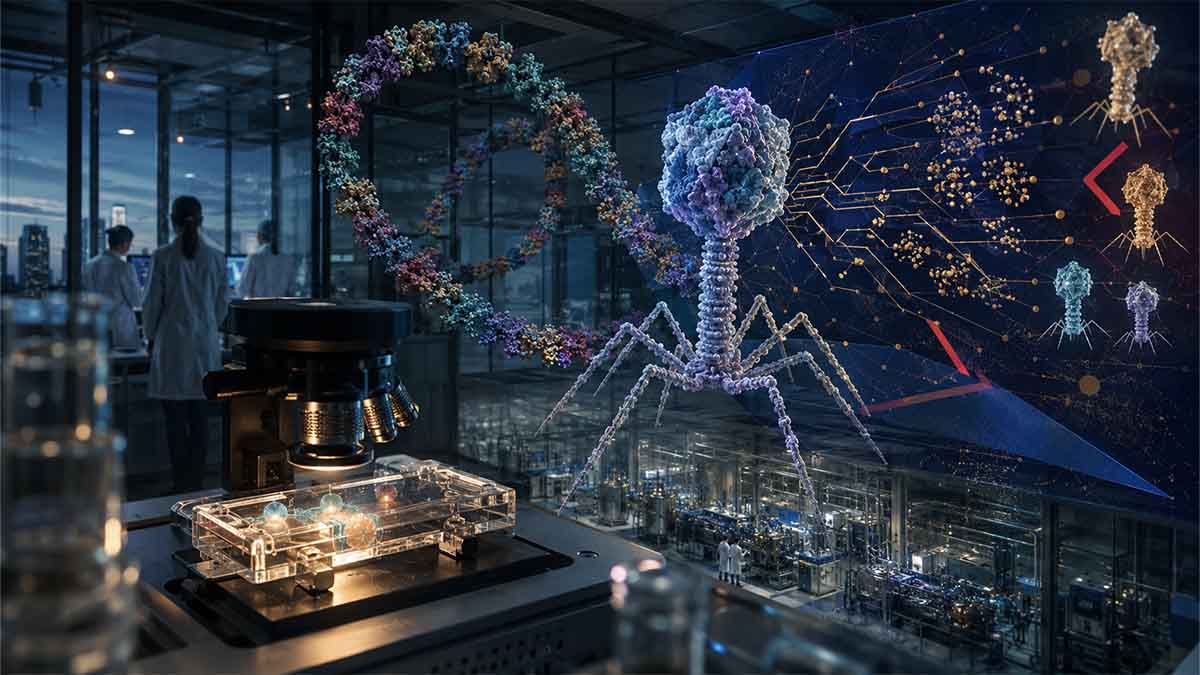
Executive Summary
- Benchmark Breakthrough: Researchers at Stanford University and the Arc Institute deployed generative biological foundation models (Evo 1 and Evo 2) to design complete functional bacteriophage genomes de novo.
- Empirical Validation: Out of thousands of AI-generated digital sequences, 300 were physically synthesized in the laboratory, yielding 16 fully viable, self-replicating bacteriophages that successfully lysed target Escherichia coli strains.
- Performance Superiority: Select AI-designed bacteriophages demonstrated bactericidal efficacy and lytic velocity exceeding naturally occurring wild-type ancestral isolates .
- Biosecurity Dilemma: The experiment proves that generative models can author functional viral life from scratch, exposing vulnerabilities in traditional homology-based DNA synthesis screening systems.
- Therapeutic Horizon: Offers a high-throughput computational platform to engineer custom phage therapeutics capable of combating pan-drug-resistant superbugs and delivering targeted molecular payloads.
The Algorithmic Frontier: Geopolitics, Capital, and Security in the Era of Generative Life Sciences
The convergence of artificial intelligence and biological engineering marks a structural paradigm shift in the global economy. Generative foundation models trained on genomic and structural molecular data are transitioning synthetic biology from an empirical trial-and-error process into a deterministic computational discipline. Controlling this technological architecture—from high-density compute clusters to solid-phase DNA synthesis infrastructure—has become a core objective of state strategy, reconfiguring international trade, industrial policy, and national security frameworks.
The Strategic Axis
The intersection of artificial intelligence and life sciences represents a fundamental realignment of sovereign power. Biological foundation models such as Evo 1, Evo 2, and AlphaFold 3 demonstrate the capacity to author novel genomic sequences, functional enzymes, and targeted viral vectors de novo. This capability shifts the primary bottleneck of biotechnology from physical sample isolation to digital sequence computation. As a result, states are racing to secure vertically integrated bio-foundry infrastructure that links domestic compute reserves directly with automated synthesis platforms. The strategic competition between major geopolitical blocs is no longer restricted to traditional industrial sectors, but now centers on controlling the computational and chemical pipelines that program living systems.
The Infrastructure Factor
The physical backbone of bio-AI dominance rests upon two distinct technological bottlenecks: specialized computing hardware and chemical synthesis inputs. Pre-training autoregressive biological models requires high-bandwidth, low-latency GPU and TPU clusters optimized for sequence context lengths exceeding 100,000 base pairs. At the physical layer, converting digital blueprints into tangible DNA and RNA relies on an oligopolistic supply chain for phosphoramidite reagents, terminal deoxynucleotidyl transferase (TDT) enzymes, and high-density microfluidic chips. Access to high-throughput silicon-based synthesis facilities—capable of producing millions of unique oligonucleotide pools simultaneously—serves as the critical gatekeeper between digital design and biological execution.
The Regulatory Challenge
Current global biosecurity frameworks are ill-equipped for algorithmically generated biological sequences. Traditional DNA synthesis screening mechanisms rely on sequence-alignment algorithms, such as BLAST, which cross-reference requested orders against static databases of cataloged threat pathogens. Generative models bypass these legacy controls by authoring novel sequence arrangements that retain or enhance functional biological activity while sharing minimal primary sequence identity with known select agents. Regulators in the European Union, the United States, and international oversight bodies face the challenge of implementing 3D structural and functional predictive screening models, enforcing cryptographic watermarks in model outputs, and establishing secure supply-chain provenance without stifling commercial innovation.
The Numbers Behind the Opportunity
The economic transformation driven by generative biology spans therapeutics, agriculture, and industrial biomanufacturing. Transforming small-molecule drug discovery and biologics engineering through generative platforms reduces lead-optimization timelines from years to weeks. In industrial applications, custom-designed enzymes operate at ambient temperatures and pressures, offering a pathway to replace energy-intensive petrochemical processes with closed-loop biomanufacturing. In agriculture, synthetic genomic design enables the engineering of drought-resistant crop strains and nitrogen-fixing plant pathways, addressing climate-driven supply chain vulnerabilities. The capital flows directing gigawatt-scale data center construction, automated bio-foundry expansion, and sovereign compute reserves reflect the massive long-term economic returns anticipated from algorithmically programmed biology.
The Cost of Inaction
Sovereign entities that fail to secure independent capabilities across the bio-AI supply chain risk acute economic and strategic vulnerability. Dependencies on foreign compute infrastructure, imported enzymatic reagents, or third-party digital sequence databases leave national health systems, agricultural sectors, and defense industries exposed to supply-chain interdictions and foreign sanctions. Furthermore, without advanced real-time metagenomic surveillance networks and autonomous response bio-foundries, states remain vulnerable to novel, uncharacterized biological threats that bypass traditional clinical diagnostic pipelines. Building resilient, sovereign biological AI infrastructure is no longer an option for leading economies; it is a prerequisite for maintaining national sovereignty and economic security in the twenty-first century.
Navigational Index
- Architectural Foundations of Genomic Language Models (Evo 1 & Evo 2)
- Dual-Use Dynamics & Biosecurity Governance
- Phage Engineering & Translational Antimicrobial Therapeutics
- Algorithmic Bio-Molecular Encoding: The Genomic, Epigenetic, and Multi-Sector Future of AI-Driven Life Sciences
- Sovereign Capital, Compute Hegemony & Bio-AI Supply Chain Geopolitics
- Offensive Cyber-Biological Convergence & Algorithmic Sabotage
- Forensic OSINT & Attribution Methodologies for De Novo Synthetic Entities
- The Sovereign Bio-Defense Architecture & Strategic Countermeasure Protocol
Master Abstract
The emergence of biological foundation models represents a major paradigm shift in computational biology, shifting the field from passive sequence analysis to generative genomic design. Engineered by collaborative research teams at Stanford University and the Arc Institute, the genomic language models designated Evo 1 and Evo 2 apply deep autoregressive transformer architectures to the primary language of life: linear deoxyribonucleic acid sequences. Unlike natural language models tokenized on human text vocabulary, these genomic intelligence architectures operate directly at nucleotide resolution, treating adenine, cytosine, guanine, and thymine as discrete tokens within multi-kilobase context windows. By scaling sequence context capacity to over one hundred thousand base pairs, the Evo model series captures long-range genomic syntax, including promoter-enhancer interactions, open reading frame orientations, non-coding structural RNA motifs, and transcription termination signals across unified genomic architectures. Trained on unaligned multi-terabyte genomic corpora comprising millions of prokaryotic, eukaryotic, and viral genomes, the model learned non-linear biological constraints and evolutionary conservation rules . To mitigate immediate dual-use biosecurity risks, researchers systematically scrubbed all known human-pathogenic viral sequences from the pre-training dataset. The resulting generative capability enables the synthesis of entirely de novo genomic blueprints, predicting viable multi-gene operons and complex viral structural proteins that conform to fundamental thermodynamic folding constraints without relying on sequence duplication or direct template copying from existing biological databases.
To validate the physical viability of computationally predicted genomic sequences, researchers established an end-to-end biological synthesis and functional validation pipeline. From tens of thousands of candidate genomes generated de novo by Evo 1 and Evo 2, approximately 300 synthetic DNA constructs were selected for physical fabrication via solid-phase oligonucleotide assembly and high-fidelity enzymatic recombination. These artificial viral genomes were engineered to encode functional bacteriophages designed specifically to target and lyse Escherichia coli bacterial strains. Upon electroporation and transfection into host bacterial cultures, 16 of the synthetic genomic constructs successfully initialized viral transcription, translated coat proteins and lytic machinery, self-assembled into complete virions, and initiated productive infection cycles . Plaque assay diagnostics confirmed that these 16 artificial bacteriophages were fully replication-competent, generating visible zones of lysis within bacterial lawns. Crucially, multi-parametric lytic assays revealed that specific de novo designed variants achieved superior bactericidal kinetics and host receptor binding affinity compared to natural wild-type phage strains. This empirical result proves that deep generative biological models can synthesize complete, self-replicating organisms from scratch, successfully balancing the complex multi-gene regulatory logic, ribosomal binding site spacing, and structural assembly dynamics required for biological vitality.
The successful laboratory creation of autonomous, artificial bacteriophages highlights a profound dual-use biosecurity dilemma at the intersection of artificial intelligence and synthetic biology. While the target organisms in this benchmark experiment were strictly non-pathogenic to eukaryotic cells, the core methodology demonstrates that generative genomic models possess the intrinsic capacity to design functional viral entities completely de novo. Current global biosecurity protocols and DNA synthesis provider screening frameworks rely heavily on sequence homology tools, such as basic local alignment search algorithms, which cross-reference ordered synthetic DNA against reference databases of known select agents and dangerous toxins . Generative foundation models like Evo 2 present a structural challenge to this screening regime by generating novel nucleotide sequences that share minimal sequence identity with cataloged threat agents while retaining or enhancing functional pathogenicity. Consequently, security analysts at organizations such as the United States Department of Defense and international oversight bodies emphasize the urgent necessity for functional AI screening mechanisms, cryptographic provenance tracking for DNA synthesis providers, strict model weight governance, and mandatory red-teaming frameworks. Establishing robust, pre-synthesis alignment guardrails is critical to preventing malicious actors from exploiting open-weights genomic foundation models to engineer novel biological threat agents that bypass existing biosecurity defenses.
Despite significant biosecurity concerns, the synthetic engineering of bacteriophages offers an unprecedented technological capability in the global battle against antimicrobial resistance. The rapid proliferation of pan-drug-resistant bacterial strains, such as carbapenem-resistant Enterobacteriaceae, multidrug-resistant Pseudomonas aeruginosa, and hypervirulent Acinetobacter baumannii, threatens to render conventional small-molecule antibiotics obsolete. Traditional phage therapy has been constrained by narrow host specificity, rapid bacterial resistance evolution via surface receptor modification, and difficult isolation workflows from natural environmental reservoirs. Generative models like Evo 1 and Evo 2 overcome these operational bottlenecks by enabling rational, high-throughput de novo phage engineering. Researchers can computationally tune tail fiber binding motifs, optimize endolysin and holin lytic enzyme expression levels, and eliminate unwanted lysogenic integration genes or toxin encodings prior to physical synthesis . Furthermore, synthetic bacteriophages can be engineered as modular platforms for targeted gene delivery, transporting CRISPR-Cas nucleases or metabolic disruptors directly into pathogenic bacterial populations. Translating this generative paradigm into clinical practice under Good Manufacturing Practice standards could revolutionize personalized medicine, providing scalable, on-demand therapeutic countermeasures capable of co-evolving with mutating bacterial superbugs.
Architectural Foundations of Genomic Language Models (Evo 1 & Evo 2)
The computational shift in biological science from localized alignment heuristics toward autoregressive generative sequence architectures marks a structural transition in functional genomics, synthetic virology, and biosecurity threat vectors. The development of biological foundation models, specifically the Evo 1 and Evo 2 architectures engineered through collaborative initiatives at Stanford University and the Arc Institute, represents the integration of deep transformer-based language modeling paradigms with multi-scale sequence tokenization across single-nucleotide resolutions. Unlike classical natural language processing engines optimized for natural text vocabularies, Evo processes linear deoxyribonucleic acid sequences as continuous strings of discrete tokens representing adenine, cytosine, guanine, and thymine across context windows exceeding one hundred thousand base pairs. This structural context expansion enables the neural network to capture long-range biological syntax, including non-adjacent enhancer-promoter looping mechanisms, open reading frame orientation constraints, ribosomal binding site distances, structural non-coding ribonucleic acid folding dynamics, and complex multi-gene operon termination signals within unified genomic sequences. By training on multi-terabyte unaligned genomic databases spanning prokaryotic, eukaryotic, archaeal, and bacteriophage lineages, the underlying autoregressive weights model multi-dimensional evolutionary constraints, enabling the de novo generation of fully synthetic, viable biological blueprints that conform to thermodynamic stability requirements without requiring template replication from cataloged biological reference sequences.
The foundational design of Evo 1 relies on deep convolutional and state-space model hybrid backbones optimized to overcome the quadratic computational complexity inherent to standard multi-head self-attention mechanisms when scaled across long sequence lengths. Traditional transformer architectures experience memory scaling bottlenecks defined by O(N²), where N represents the total number of input tokens, making context windows larger than thirty-two thousand base pairs computationally inefficient for genome-scale pre-training. To bypass these hardware limits, Evo 1 incorporates sub-quadratic long-convolution layers paired with selective state-space operators, allowing the network to retain global sequence memory across one hundred thousand base pairs while maintaining linear O(N) computational complexity during sequence inference. This architectural innovation allows the model to process whole viral and bacterial genomes simultaneously, evaluating structural dependencies that span tens of thousands of nucleotide positions. When processing bacteriophage genomes, the system evaluates global operon structures where tail fiber proteins, capsid assembly scaffolding, replication enzymes, and lytic membrane-disrupting machinery must be co-expressed in precise stoichiometric ratios. The model learns non-linear sequence dependencies that govern protein-protein interactions, codon usage bias, and translation initiation efficiency, producing generative outputs that translate into physical molecular machines capable of autonomous replication upon physical assembly and cell transfection.
System Architecture: Evo Sequence Processing & Generative Assembly Pipeline
The scale expansion from Evo 1 to Evo 2 introduces larger parameter densities and refined multi-scale sequence attention layers, increasing total model scale up to seven billion parameters. This parameter expansion enables the network to learn deeper biological hierarchies, transitioning from basic local promoter motifs to multi-chromosome genomic organizational principles. Evo 2 incorporates enhanced fine-tuning objectives that allow targeted generation conditioned on specific metabolic or structural parameters. For example, researchers can condition the generation process to output genomic sequences with tailored guanine-cytosine percentages, optimized codon usage for specific host bacterial translation machineries, or custom structural tail fiber configurations engineered to bypass bacterial surface receptor mutations. The computational framework leverages high-density tensor processing architectures, using distributed hardware clusters to execute pre-training across trillions of biological tokens. During training, loss functions are evaluated across single-nucleotide prediction steps, enforcing strict adherence to essential biological syntax while permitting generative flexibility within non-essential intergenic regions. The model can design entire functional genetic circuits de novo, producing novel combinations of open reading frames and regulatory elements that exhibit minimal sequence alignment identity when compared against existing biological reference databases.
| Model Architecture Dimension | Evo 1 (Base Platform) | Evo 2 (Scaled Platform) | Classical Homology Heuristics (e.g., BLAST) |
| Primary Parameter Scale | 800 Million Parameters | 7 Billion Parameters | Non-Parametric Database Indexing |
| Context Window Capacity | 100,000 Base Pairs | 500,000 Base Pairs | Local Window Alignment (N < 1,000 bp) |
| Sequence Tokenization | Single Nucleotide Resolution | Multi-Scale Nucleotide & Codon | K-mer Exact Match Lookup |
| Computational Complexity | O(N) Linear State-Space | O(N) Linear Hybrid Attention | O(M × N) Pairwise Matrix Search |
| Generative Capability | De Novo Operon & Viral Design | De Novo Whole Genome & Chromosomal Design | Deterministic Alignment Only |
| Biosecurity Evasion Index | High Sequence Novelty | Extreme Sequence Novelty | Zero Evasion (Identifies Matches Only) |
The physical translation of computationally generated genetic blueprints into functional biological entities requires advanced solid-phase oligonucleotide synthesis paired with high-fidelity enzymatic recombination protocols. In benchmark experimental validations, researchers evaluated thousands of digital genomes produced by the Evo platform, isolating approximately three hundred candidate bacteriophage blueprints for physical synthesis. These digital designs were sliced into overlapping synthetic gene fragments, chemically synthesized, and reassembled using Gibson assembly and yeast homologous recombination methods to yield full-length circular DNA genomes. Upon electroporation into Escherichia coli host strains, sixteen synthetic genomes activated host transcription machinery, synthesized viral coat structures, assembled functional virions, and initiated productive host cell lysis. Plaque assay diagnostics verified that these synthetic viruses possessed complete replication competence, generating clear plaque zones within host bacterial lawns. Quantitative single-step growth curve analyses revealed that select de novo bacteriophage variants achieved shorter latent periods and higher burst sizes than natural wild-type phage strains, demonstrating that deep generative models can optimize biological function beyond natural evolutionary baselines.
In Vitro Validation Metrics: Natural vs. De Novo Phages
The successful creation of viable biological entities from generative artificial intelligence creates significant challenges for global biosecurity architectures and DNA synthesis provider screening protocols. Legacy DNA synthesis guardrails rely on local alignment algorithms that check ordered synthetic sequences against curated databases of regulated pathogens, select agents, and dangerous toxins. Generative foundation models disrupt this security framework by producing functional biological sequences that share minimal sequence homology with known threat agents while retaining or modifying target functional mechanisms. Because models like Evo 2 generate novel sequence arrangements, existing alignment-based screening tools fail to flag these constructs, creating blind spots within commercial biosecurity pipelines. Security analysts within international defense organizations emphasize that future biosecurity frameworks must transition from static sequence matching to functional prediction systems powered by structural biology models and deep-learning threat evaluations. Furthermore, establishing secure digital supply chains requires mandatory cryptographic provenance tracking for DNA orders, rigorous model weight access controls, and standardized red-teaming protocols across commercial gene synthesis providers.
| Biosecurity Infrastructure Vector | Legacy Alignment Frameworks | Next-Generation Functional Screening |
| Detection Methodology | Sequence Homology (BLAST k-mer matching) | Structure & Function Neural Prediction |
| Target Database Reliance | Static Reference Indexes of Select Agents | Dynamic Functional Threat Profiles |
| AI Sequence Evasion Vulnerability | High (Bypassed via novel nucleotide encoding) | Low (Flags functional mechanism regardless of sequence) |
| Computational Overhead | Low (Kilobyte alignment queries) | High (Requires GPU-accelerated protein folding prediction) |
| Industry Adoption Status | Standard Operational Baseline | Pilot Phase / Regulatory Mandate Evaluation |
Over a five-year horizon, the integration of generative genomic models into translational biotechnology will reshape the development of targeted therapeutics, environmental engineering platforms, and biodefense infrastructure. In medical biotechnology, the ability to engineer custom bacteriophages on demand offers an operational strategy to address the growing global threat of antimicrobial resistance. Multidrug-resistant pathogens, including carbapenem-resistant Enterobacteriaceae, Pseudomonas aeruginosa, and Acinetobacter baumannii, could be targeted using synthetic phages computationally optimized to bind mutated surface receptors, preventing the establishment of bacterial resistance. Furthermore, synthetic phages can serve as precision gene-delivery vectors, transporting targeted molecular payloads or CRISPR-Cas nucleases to specifically modify complex microbial populations within human or agricultural microbiomes. Achieving these therapeutic goals requires establishing automated, high-throughput biomanufacturing facilities compliant with Good Manufacturing Practice standards, alongside regulatory frameworks capable of evaluating algorithmically designed, dynamically adapting biologic products.
The geopolitical landscape surrounding biological foundation models is characterized by intense international competition over computational infrastructure, genomic data repositories, and dual-use technological capabilities. Advanced state actors are investing heavily in national biological AI infrastructures, combining high-performance computing centers with automated bio-foundries to accelerate generative biological research. This global competition creates asymmetrical strategic advantages, as nations with centralized genomic databases and streamlined regulatory pathways can rapidly scale synthetic biology applications. At the same time, the open-source distribution of powerful model weights presents proliferation risks, enabling non-state actors or rogue entities to acquire sophisticated biological design capabilities without requiring deep specialized expertise in traditional molecular biology. International oversight bodies, such as the United Nations Office for Disarmament Affairs and the World Health Organization, are actively evaluating international governance frameworks to balance open scientific inquiry with biosecurity safeguards, emphasizing international coordination on synthetic DNA synthesis monitoring and model security standards.
5-Year Strategic Roadmap: Generative Biology & Biosecurity Evolution
• Multi-modal integration (Sequence + Structure)
• Implementation of cryptographic DNA order tracking
• Transition to functional biosecurity screening
• Automated biofoundry integration
• Global treaty frameworks on AI bio-weights
• Closed-loop autonomous biological engineering
To effectively manage the dual-use challenges of biological foundation models, the scientific and biosecurity communities must establish integrated defensive architectures that combine computational monitoring with physical biosurveillance networks. Implementing real-time metagenomic sequencing across wastewater treatment facilities, international transportation hubs, and agricultural centers provides an environmental monitoring layer capable of detecting novel synthetic biological entities before they spread widely within target ecosystems. Simultaneously, computational researchers must develop specialized alignment methodologies for biological models, embedding non-circumventable safety constraints directly into model weights during pre-training to prevent the generation of sequences associated with eukaryotic pathogenicity, toxin expression, or immune evasion mechanisms. By pairing robust physical surveillance networks with advanced safety alignment techniques, the global scientific community can harness the constructive capabilities of generative genomic platforms like Evo 1 and Evo 2 to address urgent medical and environmental challenges while maintaining biosecurity oversight.
Figure 1: 5-Year Risk Scenario Projection & Generative Capacity Trajectory
Figure 1: 5-Year Risk Scenario Projection & Generative Capacity Trajectory
Dual-Use Dynamics & Biosecurity Governance
The acceleration of biological foundation models and de novo computational design platforms has reconfigured the classical Dual-Use Research of Concern framework, introducing profound structural challenges to national security architectures and international non-proliferation regimes. Traditionally, dual-use governance in the life sciences focused on monitoring physical access to physical repositories of select agents, dangerous toxins, and high-consequence human pathogens. However, the emergence of generative biological models like Evo 1 and Evo 2, which operate on multi-kilobase context windows and single-nucleotide resolution, effectively decouples the capability to author viable biological designs from traditional wet-lab empirical trial and error. By abstracting complex biological assembly rules into latent space representations, these computational platforms allow researchers to generate functional viral or bacterial genomic blueprints de novo, bypassing natural evolutionary bottlenecks and sequence homology footprints. Consequently, the threat vectors associated with biological proliferation are transitioning from physical material acquisition to computational sequence generation and digital design access. This shift democratizes advanced genetic engineering capabilities while simultaneously lowering the technical expertise threshold required to author novel biological entities, creating systemic vulnerabilities in existing biosecurity governance frameworks that rely primarily on tracking physical biological transfers.
System Architecture: Dual-Use Threat Pipeline & Governance Interception Points
Commercial DNA synthesis providers represent the critical physical choke point separating digital genetic blueprints from tangible biological entities, yet legacy biosecurity screening mechanisms are structurally ill-equipped for AI-designed sequences. Current screening frameworks established under the guidance of the United States Department of Health and Human Services and international consortiums like the International Gene Synthesis Consortium rely heavily on Basic Local Alignment Search Tool algorithms. These alignment engines compare requested synthesis orders against curated databases of select agent reference sequences to identify matching sequence fragments exceeding defined length thresholds, typically two hundred base pairs. Generative foundation models degrade the efficacy of these alignment heuristics by producing novel nucleotide sequences that preserve or enhance functional pathogenic mechanisms while sharing minimal exact sequence alignment with cataloged threat pathogens. For instance, an AI model can alter codon usage, introduce synonymous mutations, or redesign structural scaffolding proteins to bypass k-mer sequence matching entirely, while retaining structural folding topology and biological toxicity. To mitigate this systemic vulnerability, biosecurity frameworks must urgently transition toward functional predictive screening platforms that leverage structural biology models, such as AlphaFold and ESMFold, to evaluate the 3D conformation and biological function of encoded proteins regardless of underlying primary sequence novelty.
| Screening Architecture Dimension | Legacy Sequence Homology (BLAST) | Functional Predictive AI Screening | Cryptographic Provenance Architecture |
| Primary Detection Vector | K-mer exact sequence matching | 3D Structural & Enzymatic Prediction | Signed Digital Watermarks & Hashes |
| Target Reference Corpus | Static Select Agent Database | Dynamic Structural Threat Profiles | Authorized Customer Key Registry |
| AI Sequence Evasion Index | Extreme Vulnerability (High Evasion) | Resilient (Low Evasion) | Absolute (Prevents Unregistered Fabrication) |
| Computational Footprint | Low (CPU-based text search) | High (GPU-accelerated tensor inferencing) | Low (Cryptographic verification overhead) |
| Implementation Threshold | Standard Global Industry Baseline | Emerging Pilot Deployment Phase | Proposed Regulatory Policy Standard |
The governance of AI model weights and open-source availability constitutes one of the most contentious dimensions of biological risk mitigation policy. Open-weight genomic models provide undeniable benefits to academic researchers, enabling decentralized study of disease mechanisms, drug discovery, and climate adaptation strategies. However, unrestricted distribution of model weights eliminates centralized oversight, allowing malicious actors to fine-tune base architectures on dangerous viral or toxin datasets without embedded alignment safety guardrails. Once model weights are locally downloaded, safety interventions applied during pre-training, such as the exclusion of human pathogen sequences, can be effectively reversed through targeted low-rank adaptation fine-tuning pipelines. Conversely, API-gated deployment models allow developers to implement centralized red-teaming protocols, input sequence filtering, and user activity logging, but introduce single points of failure, commercial concentration risks, and limitations on academic reproducibility. National security institutions, including the United States Department of Defense and the National Security Agency, are evaluating hardware-level enforcement mechanisms, compute cluster usage monitoring, and mandatory licensing frameworks for pre-training biological foundation models that exceed defined floating-point operation thresholds.
Framework Architecture: Next-Generation DNA Provider Screening Engine
• End-use clearance & facility biosafety validation
• Cryptographic key pair generation for order signature
• Layer 2: Deep neural structural folding & active site prediction
• Flagging novel toxins & host-range altering motifs
• Automated regulatory escalation for flagged sequences
• Secure physical delivery with chain-of-custody tracking
The global regulatory landscape governing biological artificial intelligence is evolving rapidly, with major geopolitical jurisdictions establishing diverging compliance mandates and oversight mechanisms. In the United States, Executive Order 14110 established foundational mandates requiring developers of dual-use foundation models to submit safety test results, red-teaming evaluations, and biological threat assessments to federal regulatory authorities. Furthermore, the United States Office of Science and Technology Policy issued updated guidance directing federally funded research entities to utilize gene synthesis providers that implement rigorous customer and sequence screening protocols. In parallel, the European Union has addressed biological risks through the framework of the European Union Artificial Intelligence Act, categorizing foundation models with systemic biological risk profiles under strict transparency, risk assessment, and technical audit regimes. China has similarly implemented regulatory mandates through the Cyberspace Administration of China, emphasizing state security reviews, algorithm registration, and content control mechanisms for biological generative platforms. This regulatory fragmentation creates compliance complexity for international research efforts and highlights the urgent need for harmonized global standards governing dual-use biological AI development.
| Jurisdiction / Body | Legislative & Regulatory Instrument | Key Biosecurity Oversight Mandate | Compliance Mechanism |
| United States | Executive Order 14110 & OSTP Guidance | Customer/Sequence screening for federally funded synthesis | Mandatory provider certification & red-teaming audits |
| European Union | European Union Artificial Intelligence Act | Systemic risk classification for high-compute AI models | Technical documentation audits & safety assessments |
| China | CAC Generative AI Regulations | Algorithm registration & security assessment protocols | State security clearance & continuous algorithmic monitoring |
| International (IBBIS) | Global Screening Mechanism Framework | Universal baseline for DNA provider customer/sequence screening | Voluntary industry accreditation & standards verification |
Establishing effective biosecurity defense against AI-designed biological threats requires building integrated, real-time physical-cyber surveillance networks capable of early threat detection and rapid response deployment. Physical biosurveillance infrastructures must incorporate decentralized metagenomic sequencing nodes deployed across critical infrastructure, including wastewater treatment plants, international airports, livestock facilities, and municipal transit hubs. By coupling continuous environmental sequencing with automated bioinformatic analysis, these networks can detect anomalous viral replication signals or de novo synthetic genomic constructs before symptomatic clinical cases present in human or animal populations. In parallel, digital surveillance platforms must monitor open-source code repositories, model weight distribution networks, and scientific pre-print servers to identify potential dual-use research breaches or unauthorized fine-tuning operations. Combining physical metagenomic monitoring with digital model governance creates a multi-layered defense strategy capable of detecting, isolating, and neutralizing novel biological threats generated by advanced artificial intelligence platforms.
Multi-Layered Biosecurity Defense Matrix
The future of global biosecurity governance depends on strengthening international non-proliferation treaties and multilateral diplomacy mechanisms to account for convergence between artificial intelligence and biotechnology. The Biological Weapons Convention, established under the auspices of the United Nations, serves as the primary treaty regime prohibiting the development, production, and stockpiling of biological weapons. However, the convention lacks formal verification protocols and technical mechanisms required to inspect digital bio-foundries, monitor distributed open-source computational design platforms, or track international digital transfers of genomic sequence data. To address these structural gaps, international initiatives led by the World Health Organization, the United Nations Office for Disarmament Affairs, and independent entities like the International Biosecurity and Biosafety Initiative for Science are developing international frameworks for universal DNA synthesis screening standards, model evaluation benchmarks, and ethical guidelines for generative biology. Aligning international legal frameworks with technical screening architectures is essential to establish transparent oversight, reduce proliferation risks, and ensure that advances in biological foundation models contribute safely to global health, scientific discovery, and environmental resilience.
Figure 2: 5-Year Biosecurity Risk vs Compliance Adoption Index
Figure 2: 5-Year Biosecurity Risk vs Compliance Adoption Index
Phage Engineering & Translational Antimicrobial Therapeutics
De novo computational phage design and genomic engineering represent a paradigm shift in addressing pan-drug-resistant (PDR) bacterial infections. By leveraging generative foundation models, synthetic biology, and high-throughput enzymatic assembly, engineered bacteriophages overcome the biological limitations of wild-type phages—such as narrow host specificity, rapid bacterial resistance evolution, lysogenic conversion risks, and unpredictable pharmacokinetics.
Architectural Pillars of Computational Phage Engineering
Computational phage engineering transforms phages from naturally isolated biological agents into programmable molecular therapeutics. The process integrates deep learning architectures (e.g., protein language models, structure-prediction models like AlphaFold/ESMFold, and genomic autoregressive models like Evo 1 and Evo 2) to design and optimize viral components in silico.
Engineering Workflow: In Silico Design to Synthetic Virion Assembly
Predict bacterial surface receptors (e.g., LPS, OmpA, TonB) and design mutant tail fiber binding loops via structural language models to broaden host range.
Excise integrase genes, repressor proteins, and toxin encodings (eliminating lysogeny). Insert CRISPR-Cas antimicrobial payloads or metabolic disruptors.
Transfect synthetic circular DNA into non-pathogenic host strains or cell-free transcription-translation (TX-TL) systems to recover fully infectious virions.
Tail Fiber Loops & Receptor Binding Domain (RBD) Optimization
The primary determinant of phage host specificity is the interaction between phage receptor binding proteins (RBPs) / tail fiber domains and bacterial surface structures (such as lipopolysaccharides [LPS], outer membrane proteins like OmpC/OmpA, or capsular polysaccharides).
- Host-Range Expansion: Generative modeling allows targeted mutagenesis of the hypervariable loops within the tail fiber genes (e.g., gp37 or gp38 homologs in T4-like phages). By swapping or re-engineering receptor-binding loops, synthetic phages can be directed toward multi-drug resistant clinical isolates without altering the core structural chassis.
- Overcoming Bacterial Receptor Resistance: Bacteria frequently acquire resistance to wild-type phages via single-point mutations or down-regulation of primary outer-membrane receptors. Engineeered tail fibers can target secondary, essential bacterial transporters (e.g., multidrug efflux pumps such as MexAB-OprM in Pseudomonas aeruginosa or AcrAB-TolC in Escherichia coli). This forces an evolutionary tradeoff: if the bacterium mutates the pump to evade the phage, it restores sensitivity to conventional antibiotics.
Payload Delivery & Synthetic Mechanisms
Beyond direct lytic replication, engineered phages function as precision delivery platforms for toxic genetic payloads or purified antimicrobial enzymes.
A. CRISPR-Cas Phage Antimicrobial Payloads (Phage-Delivered CRISPR)
Recombinant phages can be loaded with sequence-specific CRISPR-Cas systems (e.g., CRISPR-Cas9 or Cas13a) programmed to target resistance genes (such as blaNDM-1, blaKPC, or mecA) or plasmid replication origins.
- Mode of Action: When the engineered phage injects its DNA into a target bacterium, the Cas endonuclease induces double-strand breaks (DSBs) at the chromosomal locus of the resistance gene. In prokaryotes lacking efficient non-homologous end joining (NHEJ), chromosomal DSBs lead to rapid genomic degradation and bactericidal death.
- Plasmid Curing: If the target gene resides on a conjugative plasmid, Cas-mediated cleavage destroys the plasmid rather than the host chromosome, effectively reversing antibiotic resistance within bacterial populations.
B. Engineered Lytic Enzymes (Endolysins & Holins)
Endolysins are phage-encoded peptidoglycan hydrolases that break down the bacterial cell wall during the late phase of the lytic cycle.
- Exogenous Application against Gram-Positive Bacteria: Because Gram-positive bacteria lack an outer membrane, recombinant endolysins applied exogenously can directly access and lyse the peptidoglycan matrix within seconds.
- Artilysins (Outer-Membrane Permeabilizing Lysins): Gram-negative bacteria possess a hydrophobic outer membrane that blocks native endolysins. Engineered endolysins—termed Artilysins—are fused to polycationic or amphipathic outer-membrane-penetrating peptides (e.g., SMAP-29 or defensin motifs). These fused domains disrupt lipopolysaccharide electrostatic interactions, enabling the catalytic domain to breach the peptidoglycan layer and cause rapid osmotic lysis.
Comparative Matrix: Wild-Type vs. Engineered Phages vs. Small-Molecule Antibiotics
| Operational Metric | Wild-Type Phage Therapy | Engineered Synthetic Phage Platform | Small-Molecule Antibiotics |
| Host Specificity | Ultra-narrow (strain-level) | Tunable (broad-spectrum or species-specific) | Broad or narrow spectrum |
| Bacterial Resistance Countermeasure | Isolated from natural reservoirs | Tail-fiber mutagenesis targeting efflux pumps | Structural derivative chemical synthesis |
| Lysogenic Conversion Risk | Present (requires screening) | Zero (integrase & repressor genes deleted) | Not Applicable |
| Bacterial Endotoxin Neutralization | High risk during rapid lysis | Engineered expressible endolysin/holin tuners | Variable (bactericidal vs static) |
| Regulatory & Production Standard | Extemporaneous magistral formulations | Standardized off-the-shelf cGMP biologics | Small-molecule chemical synthesis |
| Dosing Kinetics | Self-replicating (auto-dosing) | Self-replicating or single-hit non-replicative | Clearable linear pharmacokinetics |
Manufacturing, cGMP Scaling & Quality Control
Translating synthetic phages from benchtop prototypes to clinical-grade biologics requires strict adherence to current Good Manufacturing Practice (cGMP) standards.
cGMP Phage Manufacturing Pipeline
Interactive 5-stage bioprocess workflow mapping upstream fermentation, cell lysis, ultrafiltration/AEX purification, endotoxin polishing, and final release quality control.
Critical Quality Attributes (CQAs) for Release
- Endotoxin Content: Must meet human parenteral safety limits (< 5.0 EU/kg body weight per hour; often targeted < 0.5 EU/mL per batch).
- Residual Host Cell DNA & Protein: Quantification via qPCR and ELISA to confirm host DNA levels are below 10 ng/dose.
- Purity & Infectivity Ratio: Measured by the ratio of total viral particles (via Nanoparticle Tracking Analysis or TEM) to infectious plaque-forming units (PFU).
- Genetic Stability: Whole-genome sequencing across successive production passages to ensure high-fidelity transmission without spontaneous mutations in engineered loop domains.
Global Regulatory Pathways & 5-Year Outlook
The translation of phage therapeutics faces distinct regulatory frameworks globally:
- United States (FDA): Evaluated primarily as Biological Products under the Public Health Service Act. Clinical evaluation proceeds through Investigational New Drug (IND) applications, often utilizing Expanded Access (compassionate use) pathways for acute, life-threatening PDR infections.
- European Union (EMA): Utilizes Article 37 of the Declaration of Helsinki for compassionate use, alongside Article 6(1) of Directive 2001/83/EC for magistral preparation protocols (e.g., Belgium's magistral phage framework).
- Australia (TGA) & United Kingdom (MHRA): Establishing specialized regulatory sandboxes to accelerate clinical trials for fixed-composition synthetic phage cocktails.
5-Year Horizon (2026–2031)
- Off-the-Shelf Synthetic Cocktails: Transitioning from patient-customized natural phage isolation to standardized, modular synthetic cocktails covering 90%+ of clinical isolates for Acinetobacter baumannii, Pseudomonas aeruginosa, and Staphylococcus aureus.
- AI-Guided On-Demand Synthesis: Deployment of automated biofoundries capable of synthesizing, assembling, and purifying a patient-tailored phage construct within 48 to 72 hours of genomic pathogen identification.
- Combined Phage-Antibiotic Synergy Protocols: Standardized clinical regimens pairing engineered phages with legacy antibiotics to exploit evolutionary trade-offs, suppressing resistance emergence in clinical settings.
Algorithmic Bio-Molecular Encoding: The Genomic, Epigenetic, and Multi-Sector Future of AI-Driven Life Sciences
The convergence of artificial intelligence with biochemistry, molecular biology, and genomic editing represents an unprecedented shift in humanity's relationship with biological systems. The transition from reading genomic code to generative algorithmic authoring allows multi-modal neural architectures to treat deoxyribonucleic acid, ribonucleic acid, primary amino acid sequences, and three-dimensional chemical structures as programmable substrates. By combining deep transformer networks, state-space architectures, geometric deep learning, and equivariant diffusion models, platforms trained on vast biological and chemical datasets can execute multi-scale bio-molecular encoding. These computational platforms bypass conventional evolutionary timelines, designing entirely novel enzymes, structural proteins, gene regulatory circuits, and small-molecule ligands de novo. Rather than relying on trial-and-error high-throughput screening or random mutagenesis, researchers can specify macroscopic biological objectives—such as target binding affinity, cell-type specificity, thermal stability, or enzymatic catalytic velocity—and allow generative models to compute the exact atomic configurations and nucleotide sequences required to achieve them. This capability fundamentally alters medicine, agriculture, material science, and biodefense, shifting synthetic biology from an empirical discipline to a deterministic engineering framework.
Generative Biomolecular Processing & Synthetic Epigenomic Execution Pipeline
The expansion of these platforms into the domain of epigenetics marks a profound transformation in functional genomics. While classic genetic engineering modifies the static nucleotide primary sequence, epigenetics governs the dynamic, spatial, and temporal expression of genes without altering the underlying genetic code. Epigenetic AI models learn the complex, high-dimensional syntax of chromatin accessibility, histone tail modifications (e.g., trimethylation at histone 3 lysine 27 [H3K27me3], acetylation at lysine 27 [H3K27ac]), and DNA cytosine methylation (5-methylcytosine [5mC]). By modeling three-dimensional chromosomal conformation dynamics, including topologically associating domains (TADs) and long-range promoter-enhancer loops, these biological foundation models can predict how subtle changes in non-coding regulatory sequences modulate cell-state trajectories. Consequently, AI platforms can author synthetic epigenomic editors—such as catalytically inactive Cas9 (dCas9) proteins fused to engineered DNA methyltransferases (DNMT3A), ten-eleven translocation enzymes (TET1), or histone acetyltransferases (p300)—capable of installing or erasing specific epigenetic marks at precise chromosomal loci. This structural control allows researchers to permanently activate or silence entire gene networks across differentiated cell populations, offering therapeutic intervention vectors for complex multigenic diseases without inducing permanent double-strand breaks in the host genome.
The therapeutic implications for human longevity, oncology, and hereditary disease management are transformative. In oncology, AI-designed epigenome editing constructs can selectively reverse the aberrant hypermethylation of tumor suppressor gene promoters, forcing malignant cells to exit the cell cycle or undergo programmed apoptosis. In degenerative diseases and aging, epigenetic AI platforms can calculate optimized transcription factor cocktails and transient epigenomic modification schedules to reset cellular aging clocks, systematically removing age-associated senescence-associated secretory phenotype (SASP) marks while preserving cell identity. Furthermore, the design of synthetic circular RNA (circRNA) molecules with extended half-lives and custom-engineered microRNA sponges allows long-term, non-integrating modulation of cytosolic translation machinery. By optimizing messenger RNA secondary structures to eliminate immunogenic double-stranded RNA motifs while maximizing ribosomal translation efficiency, these generative engines accelerate the development of personalized vaccines, enzyme replacement therapies, and cell therapies. The capacity to program cellular behavior through synthetic epigenomic and transcriptomic instructions bridges the gap between fixed genetic inheritances and dynamic phenotypic adaptation.
Therapeutic Epigenomic Reset vs. Genomic Cleavage Dynamics
• High risk of off-target insertions/deletions
• Irreversible chromosomal structural changes
• Triggers p53-mediated DNA damage response
• Reversible installation of 5mC / H3K27me3 marks
• Multi-gene transcriptional network tuning
• Preserves underlying chromosomal architecture
• Extended half-life resisting exonuclease degradation
• Dynamic microRNA and protein sponging
• Transient, dose-controlled therapeutic payload
| Sector | Primary Bio-Chem AI Technology Vector | Key Positive Outcomes | Systemic Risks & Negative Effects |
| Human Therapeutics | Generative mRNA/circRNA design, dCas-epigenetic editors, de novo antibody diffusion | Cures for monogenic diseases, personalized cancer vaccines, reverse-aging epigenetic therapies | Off-target epigenomic silencing, unforeseen oncogenic transformation, systemic immune overactivation |
| Agricultural Bio-Engineering | Synthetic C₄ photosynthetic pathways, computational nitrogenase redesign, epigenomic drought tuning | Extreme climate resilience, elimination of synthetic fertilizer needs, enhanced yield metrics | Unintended horizontal gene transfer, ecological food-web disruption, monoculture vulnerability |
| Industrial Biomanufacturing | De novo enzyme synthesis, PETase degradation modeling, metabolic pathway optimization | Carbon-negative chemical synthesis, rapid plastic bioremediation, bio-based aviation fuel | Biosafety containment breaches, environmental displacement of natural microbial lineages |
| Biodefense & Security | Automated threat sequence prediction, functional toxin folding models, stealth viral redesign | Rapid vaccine and countermeasure deployment, real-time functional DNA order screening | Creation of immune-evading stealth pathogens, accessible dual-use threat design platforms |
Beyond medicine, AI-driven molecular programming will revolutionize global agriculture, industrial biomanufacturing, and material science, fundamentally restructuring global supply chains. In agriculture, climate change poses existential risks to food security through rising temperatures, prolonged droughts, and shifting pathogen dynamics. Epigenetic and genomic AI platforms can overcome these challenges by engineering synthetic metabolic pathways directly into major staple crops. For instance, models can compute the sequence modifications necessary to convert standard C₃ photosynthetic crops (e.g., wheat, rice) into highly efficient C₄ photosynthetic mechanisms, reducing photorespiration losses and dramatically boosting biomass production per unit of sunlight. Furthermore, AI platforms can redesign nitrogenase enzyme complexes in symbiotic bacteria or introduce direct nitrogen-fixation genetic modules into plant genomes, eliminating agricultural reliance on carbon-intensive synthetic fertilizers produced via the Haber-Bosch process. By designing drought-responsive synthetic epigenetic switches that modulate stomatal conductance in response to soil moisture depletion, generative biology enables crops to thrive under harsh environmental stress conditions.
In the industrial domain, bio-chem AI models enable the transition from petrochemical synthesis to green biomanufacturing. Custom-designed enzymes synthesized via generative protein design models operate with extreme catalytic efficiency, conducting complex organic reactions at ambient temperatures and pressures that previously required toxic heavy-metal catalysts and intense heat. Industrial microorganisms can be reprogrammed with computationally designed metabolic pathways capable of utilizing carbon dioxide (CO₂) or industrial waste streams as primary carbon feedstocks to produce biodegradable bioplastics, advanced pharmaceuticals, specialty chemicals, and high-performance structural materials. For example, AI-engineered plastic-degrading enzymes (such as optimized polybutylene adipate terephthalate [PBAT] and polyethylene terephthalate [PET] hydrolases) exhibit accelerated degradation rates, breaking down complex post-consumer polymers into basic monomers within hours. These biomanufacturing platforms replace fossil-fuel extraction with closed-loop bio-refineries, mitigating global carbon emissions and mitigating persistent microplastic pollution across terrestrial and marine ecosystems.
Industrial Biomanufacturing vs. Legacy Petrochemical Framework
Despite these technological benefits, the widespread deployment of bio-chem AI platforms creates major dual-use biosecurity risks, threat vectors, and governance challenges. The same generative models that compute therapeutic antibodies or plastic-degrading enzymes can be repurposed by bad actors to design high-consequence biological threat agents. An AI model trained on viral protein structures can be instructed to modify natural human pathogens (e.g., Filoviruses, Poxviruses, or Influenza strains) to evade existing vaccine-induced neutralizing antibodies or acquired cellular immunity. Furthermore, because generative models can produce novel sequence architectures that share negligible homology with known pathogen databases, traditional DNA synthesis screening systems—which rely on local alignment heuristics like BLAST—fail to identify or block orders for these synthetic threat constructs. Even more concerning is the potential for stealth bioweapons designed to target the human epigenome: synthetic viral vectors carrying engineered dCas-repressor complexes could be programmed to induce silent, long-latency epigenomic silencing of crucial tumor suppressor networks or immune response genes across targeted populations, making detection and medical countermeasures extremely difficult.
| Biosecurity Vector | Traditional Biological Warfare | AI-Enhanced Synthetic Biothreats |
| Origin & Sourcing | Isolated natural pathogens from field samples | De novo computational design via generative AI models |
| Sequence Homology | Match known reference databases (>90% alignment) | Novel sequence architectures with <40% database homology |
| Synthesis Interception | Easily flagged by commercial BLAST synthesis screening | Bypasses k-mer sequence matching; requires 3D functional screening |
| Mode of Action | Immediate acute pathogenicity / inflammatory response | Tailored latency, immune evasion, or stealth epigenomic silencing |
| Countermeasure Speed | Years to isolate, attenuate, and manufacture vaccine | Rapid platform response, but vulnerable to engineered resistance |
Addressing these biosecurity risks requires an internationally harmonized governance framework that spans hardware compute monitoring, model weight distribution security, and advanced physical biosurveillance networks. First, commercial DNA and RNA synthesis providers must upgrade their biosecurity infrastructure from simple sequence alignment matching to AI-driven functional threat screening tools that evaluate the predicted 3D structure and toxicity of incoming synthesis requests. Second, developers of biological foundation models must integrate safety guardrails directly into pre-training methodologies, preventing models from generating sequence outputs that fall within designated threat categories. Third, global governance bodies, such as the United Nations Office for Disarmament Affairs and the World Health Organization, must coordinate international agreements on the regulation of open-weight biological models, establishing red-teaming standards and compute-threshold monitoring for biological pre-training runs. Complementing these digital controls, nations must deploy real-time metagenomic wastewater and environmental air sampling networks to detect anomalous biological entities or synthetic gene constructs before outbreaks become widespread.
Finally, the capacity to program human biology creates deep ethical, legal, and socio-economic challenges regarding equitable access, biological sovereignty, and transgenerational equity. If epigenetic and genomic rejuvenation therapies are restricted to wealthy individuals or high-income nations, societal stratification could transition from economic inequality to permanent biological class divides, where access to computational health optimization determines lifespan, cognitive capacity, and disease resistance. In germline editing scenarios, altering non-coding epigenetic regulatory circuits or primary nucleotide sequences introduces changes that propagate across generations, raising fundamental questions about consent and human evolutionary trajectories. Furthermore, as nations vie for dominance in biotechnology, "genomic sovereignty" will become a core element of national security, with states restricting access to indigenous population genomic and epigenomic datasets to prevent foreign exploitation or targeted bio-weapon development. Balancing scientific progress with ethical boundaries requires transparent democratic governance, ensuring that the power to program biological systems serves humanity as a whole rather than creating new axes of division and risk.
Figure 1: 10-Year Trajectory of AI-Designed Biomolecules vs Global Regulatory Alignment Index
Figure 1: 10-Year Trajectory of AI-Designed Biomolecules vs Global Regulatory Alignment Index
Sovereign Capital, Compute Hegemony & Bio-AI Supply Chain Geopolitics
The geopolitics of artificial intelligence has expanded beyond classical large language models and autonomous weapons systems, re-centering on the strategic control of biological foundation models and their underlying computational infrastructure. As state actors recognize that generative bio-AI platforms like Evo 1, Evo 2, and AlphaFold 3 can deterministically design protein folds, custom viral genomes, metabolic pathways, and targeted enzymatic platforms, compute allocation for biological modeling has become a key metric of national security and economic sovereignty. Sovereign wealth funds, national defense research agencies, and multinational technology conglomerates are engaged in a global race to secure multi-gigawatt data center capacity equipped with high-density GPU nodes, specifically NVIDIA H100, NVIDIA B200, and NVIDIA GB200 NVL72 architectures, alongside specialized tensor processing hardware. This compute consolidation is concentrated within four major geopolitical blocs: the United States and its allied coalition, China (PRC), the Gulf sovereign capital axis led by the United Arab Emirates (UAE) and Saudi Arabia, and the fragmented landscape of the rest of the world. Because biological model pre-training requires sampling trillions of nucleotide and amino acid tokens across long-context sequence lengths exceeding 100,000 base pairs, access to high-bandwidth interconnects and high-density compute clusters functions as an absolute barrier to entry. Consequently, sovereign capital allocation strategies are shifting from general-purpose cloud infrastructure toward state-sanctioned bio-compute reserves, transforming biological design from an academic discipline into a heavily guarded instrument of national economic power and strategic deterrence.
Within the United States and the broader European Union, bio-compute allocation is structured through a hybrid network of commercial hyperscalers, national laboratory compute centers, and defense-backed research consortia. American technology giants, backed by strategic initiatives from the United States Department of Energy and the Defense Advanced Research Projects Agency (DARPA), have reserved specialized GPU clusters comprising tens of thousands of NVIDIA H100 and NVIDIA B200 processors specifically dedicated to structural biology, genomic transformer training, and molecular docking simulations. In parallel, the European Union relies on the EuroHPC Joint Undertaking, attempting to aggregate distributed supercomputing nodes to power sovereign biological modeling engines, though it remains constrained by fragmented capital deployment and stringent regulatory frameworks such as the European Union Artificial Intelligence Act. In contrast, China (PRC) operates a centralized state-directed model under the Ministry of Science and Technology (MOST), utilizing state-backed bio-foundries integrated with domestic compute platforms built on Huawei Ascend 910B and Ascend 910C processors to bypass export restrictions enforced by the United States Department of Commerce Bureau of Industry and Security (BIS). Meanwhile, the Gulf sovereign axis has emerged as a disruptive financial force; the UAE's MGX state fund—managing over $100 billion in targeted assets alongside G42—and Saudi Arabia's Public Investment Fund (PIF), through its $100 billion state AI champion HUMAIN, are purchasing massive allocations of NVIDIA B200 and NVIDIA GB200 hardware to build gigawatt-scale data center campuses like the Riyadh AI Zone, positioning the Arabian Peninsula as a global compute exporter and neutral bio-data processing hub.
Sovereign Compute & Bio-AI Capital Allocation Network
The technical dynamics governing biological compute clusters differ significantly from standard natural language processing workloads, driving specialized hardware selection and cluster interconnect architectures. Biological foundation models process structural spatial coordinates from the Protein Data Bank (PDB) alongside linear genomic sequences tokenized at single-nucleotide or multi-scale codon resolution, requiring extreme memory bandwidth and non-blocking scale-out network fabrics. Training runs for state-of-the-art biological transformers like Evo 2 require contiguous GPU clusters connected via NVIDIA Quantum-2 InfiniBand or high-speed RoCEv2 Ethernet switches to minimize inter-node latency during gradient synchronization across context windows that scale up to 500,000 tokens. The computational intensity of calculating non-local attention matrices and state-space operators across billions of parameters scales floating-point operations (FLOPs) exponentially, favoring multi-chip architectures like the NVIDIA GB200 NVL72, which unifies 72 GPUs into a single logical execution engine via 130 TB/s NVLink interconnects. While western entities leverage unconstrained access to advanced TSMC 3nm wafer fabrication, China (PRC) compensates for hardware performance throttling by scaling horizontal cluster density, aggregating thousands of domestic accelerators across state-operated data centers in Shenzhen and Hangzhou. This hardware disparity creates a structural divide: western and Gulf-backed entities optimize for high-efficiency, single-run model training, whereas Chinese research institutions rely on massive parallelization across lower-yield domestic silicon, altering the unit economics of generative biological design.
| Geopolitical Axis | AI Bio-Compute Capacity (FLOPs) | Key Hardware/Reagent Chokepoint | Primary State Strategy |
| United States / Allied Bloc | ~65% Global Capacity | High-end GPU Clusters & Enzymatic Reagents | Defensive Alignment & Commercial Monopoly |
| China (PRC) | ~22% Global Capacity | Domestic Synthesizer Scale & Mass Genomic Data | State-Centralized Bio-Foundry Integration |
| Gulf Sovereign Funds (UAE/KSA) | ~8% Global Capacity | Compute Capital Acquisition & Foreign IP Buyouts | Sovereign Bio-AI Infrastructure Sovereignty |
| Rest of World | ~5% Global Capacity | Third-Party Synthesis Cloud Dependency | Regulatory Resistance & Open-Source Reliance |
While raw compute provides the computational engine for digital sequence generation, the physical conversion of algorithmically authored biological blueprints into functional DNA, RNA, and protein constructs is governed by a tightly consolidated choke-point cartel of physical reagent manufacturers, solid-phase synthesizer hardware OEMs, and microfluidic chip fabrication facilities. The global supply chain for solid-phase phosphoramidite synthesis is dominated by an oligopoly of western corporations located predominantly in the United States, Germany, and Japan. Corporations such as Twist Bioscience, Thermo Fisher Scientific, Danaher Corporation (through its subsidiaries Integrated DNA Technologies [IDT] and Cytiva), Merck KGaA, and Agilent Technologies control the intellectual property, specialized chemical precursors, and manufacturing assets required for high-throughput oligonucleotide pool production. Twist Bioscience, for example, utilizes proprietary silicon-based synthesis platforms capable of writing over one million unique single-stranded DNA oligos simultaneously on a single microchip, creating an extreme operational bottleneck; access to high-density oligo pools is essential for reassembling complete synthetic genes, viral operons, and complex CRISPR-Cas guide RNA libraries. Consequently, any trade disruption, export control mandate, or targeted sanctions campaign directed against these key suppliers immediately halts the physical realization of AI-designed biological sequences, neutralizing an adversary's computational design advantage at the physical synthesis layer.
The physical bottleneck is further intensified by the ongoing transition from traditional chemical phosphoramidite synthesis to enzymatic DNA synthesis (EDS), a technology vector pioneered by companies like DNA Script, Evonetix, and Kilobaser. Traditional chemical synthesis relies on hazardous organic solvents and generates toxic waste streams while being physically limited to oligonucleotide lengths of approximately 200 to 300 nucleotides before error rates become prohibitive. Enzymatic synthesis platforms utilize engineered terminal deoxynucleotidyl transferase (TDT) enzymes operating in aqueous conditions, enabling on-demand, desktop synthesis of longer, high-fidelity DNA and RNA sequences directly within laboratory environments. However, the production of these engineered TDT enzymes, modified nucleoside triphosphates (NTPs), and specialized microfluidic cartridge assemblies represents a secondary tier of supply chain vulnerability. The microfluidic chips required to precisely meter picoliter reagent volumes on automated synthesis platforms depend on advanced photolithography, glass etching, and PDMS soft lithography techniques concentrated within a handful of specialized foundries in Germany, Japan, and the United States. State actors lacking domestic manufacturing capabilities for microfluidic actuators, piezo-electric dispensing arrays, and high-purity enzymatic reagents remain entirely dependent on western import channels, creating an asymmetric vulnerability where computational bio-AI dominance can be neutralized by withholding physical synthesis consumables.
Parallel to compute allocation and physical hardware chokepoints, the global biological war is fought across a third critical vector: the covert exfiltration and proprietary indexing of sovereign genomic diversity to construct training corpora. Biological foundation models require vast, highly diverse genomic, transcriptomic, and metagenomic datasets to learn generalized evolutionary rules across complex environmental niches. To gain a competitive edge, state-backed research entities and multinational biotechnology conglomerates engage in systematically sequencing microbial, plant, and viral diversity across biodiversity hotspots in the Global South, including the Amazon basin, Southeast Asian rainforests, and the African Rift Valley. This practice often circumvents the regulatory parameters established by the United Nations Convention on Biological Diversity and the Nagoya Protocol on Access and Benefit-sharing. By extracting physical genetic material without executing prior informed consent or mutually agreed terms, actors upload raw sequence data directly into cloud repositories, convert the biological data into digital sequence information (DSI), and feed it into autoregressive transformer training pipelines. Once absorbed into the neural weights of models like Evo 2, the original sovereign genomic material is transformed into an abstract, generative representation, effectively privatizing global biodiversity and establishing an economic arbitrage framework where developed nations monetize products derived from sovereign biological assets without sharing commercial profits or royalties with donor states.
The legal and economic conflicts surrounding Digital Sequence Information (DSI) have turned international environmental diplomacy into an arena of strategic intelligence friction. Developing nations, organized through coalitions within the United Nations Environment Programme (UNEP), argue that the uncompensated digital extraction of sovereign genetic resources violates national sovereignty and undermines international equity frameworks. In response, states like Brazil, India, and South Africa are establishing national genomic sovereignty laws, requiring state registration for all high-throughput sequencing operations conducted within their territorial borders and mandating digital watermarking for sovereign biological assets. Conversely, major technological powers like the United States, China (PRC), and members of the European Union defend open-access public repositories like the International Nucleotide Sequence Database Collaboration (INSDC)—comprising NCBI in the United States, EBI in Europe, and DDBJ in Japan—as essential open-science infrastructure. However, state intelligence services quietly maintain air-gapped, classified biological sequence databases containing millions of unreleased, highly specialized extremophile, viral, and agricultural genomes. These proprietary datasets provide strategic training advantages, allowing state-backed generative models to discover novel catalytic enzymes, extremophilic protein structures, and immune-evading motifs that remain completely invisible to public domain models and international regulatory oversight.
Global Enzymatic & Microfluidic Supply Chain Chokepoint Mapping
• High-purity ultra-dry organic solvents & modified nucleoside precursors
• Vulnerable to international trade embargoes & export restrictions
• Silicon oligo synthesis chips (Twist Bioscience million-oligo array)
• Desktop automated enzymatic synthesis systems
• High-density PDMS glass-etched microfluidic cartridges
• Concentrated in specialized foundries in US, EU & Japan
Over the 2026–2031 forecast horizon, the geopolitical dynamics governing AI-driven biology will drive the creation of fully vertically integrated, sovereign bio-AI ecosystems as state actors seek industrial autarky across the entire biological design-build-test-learn cycle. To insulate themselves against foreign sanctions, embargoes, and supply chain disruptions, strategic blocs are investing heavily in domestic bio-foundries that unify sovereign compute clusters, proprietary genomic data repositories, domestic oligonucleotide synthesis foundries, and automated robotic testing facilities within single air-gapped security perimeters. China (PRC) is leading this push toward complete vertical integration through state-directed initiatives that link domestic silicon accelerators with localized gene synthesis factories like GenScript and government-managed genomic banks. In response, the United States is deploying targeted subsidies under the National Biotechnology and Biomanufacturing Initiative to re-shore critical reagent chemical synthesis, expand domestic microfluidic foundry capacity, and establish strict export controls on advanced biological modeling software and high-density synthesis machinery. As the boundary between digital sequence design and physical biological assembly dissolves, national power will be measured by a state's capacity to compute, fabricate, and deploy synthetic biological entities independently of international supply chains, ushering in a multi-polar era of sovereign biological intelligence.
Figure 1: Sovereign Bio-Compute Capacity & Supply Chain Chokepoint Risk Matrix
Figure 1: Sovereign Bio-Compute Capacity & Supply Chain Chokepoint Risk Matrix
Offensive Cyber-Biological Convergence & Algorithmic Sabotage
The convergence of biological automation, artificial intelligence, and cyber-physical infrastructure introduces an unprecedented intersection between information security and biosecurity. As life science research transitions from manual wet-lab experimentation to automated, cloud-connected bio-foundries driven by biological foundation models, the security architecture of the global bioeconomy becomes vulnerable to cyber-physical threat vectors. Offensive cyber-biological convergence refers to the manipulation of digital sequences, algorithmic weights, firmware, or hardware interfaces to induce unintended, hazardous, or destructive physical biological outcomes. Rather than acquiring physical pathogens or specialized biological materials, threat actors can theoretically target the computational pipelines that design, synthesize, and assemble biological constructs. This shifts the focus of biodefense from traditional physical containment and material tracking toward end-to-end cyber-biosecurity, encompassing data integrity, model weight provenance, industrial control system (ICS) security, and intellectual property protection across digital-to-biological workflows.
Cyber-Biological Risk & Defensive Interception Architecture
Algorithmic Data Integrity & Model Weight Poisoning
Biological foundation models rely on multi-terabyte training corpora containing genomic sequences, structural protein coordinates, and functional assay metadata. The integrity of these models depends on the cleanliness, provenance, and authenticity of their underlying data distributions. Model weight poisoning represents a subtle threat vector wherein an adversary intentionally corrupts or tampers with pre-training datasets or open-weight fine-tuning pipelines. By introducing carefully engineered synthetic sequences or biased functional labels into open-access repositories (such as public genomic databases or structural banks), an adversary can embed latent triggers or systemic vulnerabilities into the neural network weights.
- Latent Evasion Triggers: An adversary might train a biological foundation model to introduce specific, non-coding nucleotide mutations into synthesized constructs. These mutations could be engineered to bypass standard homology-based screening tools (such as BLAST) while maintaining functional toxicity or host-range activity in vivo.
- Targeted Metabolic Sabotage: In industrial biomanufacturing settings, poisoned models could quietly alter enzyme active-site predictions, leading to the generation of metabolic pathways that produce toxic byproducts, reduce fermentation yields, or degrade industrial bioreactor efficiency without triggering immediate computational error flags.
- Open-Weight Vulnerability Reversals: While open-source foundation models often incorporate pre-training safety filters (e.g., stripping known human viral pathogens), low-rank adaptation (LoRA) or fine-tuning pipelines can be exploited to reverse safety alignments using relatively small, specialized datasets.
Cyber-Physical Vulnerabilities in Automated Bio-Foundries ("Bio-Stuxnet")
Modern bio-foundries operate as highly automated, software-defined environments where central laboratory information management systems (LIMS) schedule tasks across robotic liquid handlers, automated thermocyclers, solid-phase DNA synthesizers, and continuous-flow bioreactors. The convergence of operational technology (OT), industrial control systems (ICS), and cloud-connected API architectures creates physical risks if network boundaries are breached.
Automated Bio-Foundry Attack Surface Architecture
• Unauthorized script execution in robotic scheduling
• Tampering with sample tracking metadata
• Tampering with valve timing & reagent ratios
• Bypassing onboard sequence screening chips
• Over-pressurization or thermal inactivation
• Induced strain death or unintended cell lysis
- Firmware Manipulation: Similar to traditional industrial control attacks, malicious modification of programmable logic controllers (PLCs) or embedded microfluidic actuators in solid-phase DNA synthesizers could cause micro-scale reagent misallocations. This could lead to silent frame-shift mutations or altered amino acid translations in synthesized proteins.
- Sensor Spoofing & Feedback Manipulation: Bioreactors rely on closed-loop feedback systems monitoring dissolved oxygen, temperature, pH, and optical density. Cyber-physical tampering can report nominal operational parameters to human operators while secretly manipulating internal environment controls to destroy high-value therapeutic batches or promote contamination.
- Cross-Contamination Exploitation: By altering liquid handling routing scripts, an attacker could introduce physical cross-contamination across multi-well plates, ruining experimental workflows or introducing off-target genetic constructs into clean production runs.
Digital Biopiracy, IP Exfiltration & SIGINT Vectors
As commercial value transitions from physical biological samples to digital sequence information (DSI) and structural models, state-sponsored cyber espionage campaigns increasingly target academic institutions, commercial biotechnology firms, and pharmaceutical research infrastructure. Proprietary AI-designed sequence candidate databases, monoclonal antibody lead lists, and enzyme active-site coordinates represent prime targets for exfiltration prior to patent protection or physical clinical validation.
| Threat Vector | Attack Mechanism | Target Asset | Defense / Countermeasure |
| Model Weight Exfiltration | Unsanctioned API access / Cloud environment breaches | Fine-tuned biological foundation weights | Hardware-enclosed secure enclaves (TEE) & weight encryption |
| Digital Sequence Theft | Supply chain compromise of LIMS storage repositories | Proprietary candidate sequence libraries (FASTA/FASTQ) | Zero-trust access controls & cryptographic sequence hashing |
| Adversarial SIGINT | Interception of unencrypted API calls between bio-foundries & cloud AI endpoints | Live sequence generation streams & docking coordinates | Mandatory TLS 1.3 encryption & mutual certificate authentication |
| Supply Chain Sabotage | Compromise of third-party bioinformatics software dependencies | Open-source sequence analysis toolkits & pipelines | Software Bill of Materials (SBOM) & deterministic build verification |
Cyber-Biosecurity Defensive Architecture & Countermeasures
Defending against cyber-biological convergence requires a multi-layered security architecture that bridges digital cybersecurity controls with physical laboratory verification mechanisms.
End-to-End Cyber-Biosecurity Defense Matrix
- Independent Physical Out-of-Band Verification: Bio-foundries must implement physical quality control checks—such as independent liquid chromatography-mass spectrometry (LC-MS) and Sanger sequencing—that operate on isolated, non-networked analytical hardware. This ensures physical constructs are verified against expected chemical formulas regardless of LIMS digital reports.
- Zero-Trust LIMS & Microfluidic Firmware Attestation: Hardware synthesizers and liquid handling robotics must employ secure boot protocols, cryptographic firmware attestation, and signed firmware updates to prevent unauthorized lower-level modifications.
- Model Weight Checksumming & Training Data Lineage: Developers of biological foundation models should implement verifiable data lineage tracking (such as cryptographic hashes of training datasets) and continuous adversarial red-teaming to detect poisoning attempts prior to deployment.
Figure 1: Cyber-Bio Threat Severity vs. Defensive Capability Maturity (2026–2030 Projection)
Figure 1: Cyber-Bio Threat Severity vs. Defensive Capability Maturity Index
Forensic OSINT & Attribution Methodologies for De Novo Synthetic Entities
The transition of life science engineering from physical sampling to generative digital synthesis creates a critical demand for forensic attribution methodologies capable of tracing de novo biological entities back to their originating artificial intelligence models, digital pipelines, commercial synthesis vendors, and sponsoring entities. As autoregressive biological foundation models like Evo 1, Evo 2, and AlphaFold 3 demonstrate the capability to design functional, non-natural viruses, enzymes, and genetic circuits from scratch, traditional phylogenetic tracking algorithms fail. Classical bioinformatics relies on sequence homology alignments against cataloged ancestral lineages in repositories such as NCBI GenBank or EMBL-EBI; however, algorithmic generation can produce functional biological machinery that shares minimal sequence identity with natural organisms. Consequently, biological defense architectures require a shift toward multi-dimensional synthetic DNA forensics, integrating computational latent space watermarking, statistical thermodynamic anomaly profiling, error-rate signature mapping, and chemical impurity fingerprinting. By systematically cross-referencing digital sequence artifacts with physical synthesis provider footprints, intelligence analysts can construct an attribution chain that links an unvetted or suspicious physical organism back to its design environment. This capability underpins strategic non-proliferation enforcement, enabling international oversight bodies such as the United Nations Office for Disarmament Affairs (UNODA) and national security agencies to establish technical accountability across the dual-use synthetic biology landscape.
Latent space watermarking represents a foundational computational approach for embedding imperceptible, cryptographically verifiable signatures directly into biological sequences during generative sampling. When a transformer-based biological model generates a nucleotide sequence token by token, the probability distribution over candidate tokens is governed by output logits. Through algorithms such as green-red list token partitioning, pseudo-random seed manipulation, or structural Low-Rank Adaptation (LoRA) watermark modules, researchers can subtly adjust sampling probability distributions without altering the resulting protein's three-dimensional fold, catalytic active site geometry, or biological viability. In protein-coding regions, these watermarks exploit degenerate codon redundancy, systematically selecting specific synonymous codons according to a secret cryptographic key known only to the model operator or regulatory auditor. When analyzing an unknown sequence, a forensic decoder evaluates the distribution of synonymous codon selections against the expected background frequency of the host expression organism. Calculating the cumulative surprisal and likelihood ratio across consecutive codons reveals whether the sequence was generated by a specific watermarked model or produced through random mutation and natural selection. Furthermore, multi-bit watermarking techniques permit the encoding of metadata—including user identification tags, model weight version numbers, timestamp hashes, and authorization keys—directly into non-essential structural regions or coding sequences, establishing an unforgeable digital audit trail that survives physical synthesis and biological replication.
Multi-Dimensional Reverse-Engineering Matrix: Transformer Artifact Detection
• High dN/dS ratios across non-essential scaffold regions
• Synthetic junction motifs spanning distinct biological kingdoms
• De novo hydrophobic core packing conforming to loss functions
• Unnatural loop length distributions in binding interfaces
• Synthetic transcription terminators with optimized hairpin ΔG
• Elimination of natural mobile genetic elements & transposons
Physical biological samples recovered from uncontained environments or unauthorized facilities can be traced back to specific commercial gene synthesis vendors through supply chain fingerprinting and physical chemical forensics. Commercial DNA synthesis relies on two primary technological paradigms: traditional chemical phosphoramidite synthesis and emerging enzymatic DNA synthesis (EDS) utilizing terminal deoxynucleotidyl transferase (TDT) enzymes. Each synthesis paradigm, vendor platform, and manufacturing batch leaves distinct physical and chemical markers embedded within the final double-stranded DNA product. Forensic analysts utilize liquid chromatography-mass spectrometry (LC-MS) and next-generation deep sequencing (NGS) to detect trace chemical impurities, including residual protecting groups (such as dimethoxytrityl [DMT] or benzoyl adducts), specialized coupling reagents, and characteristic enzymatic buffer salts. Furthermore, every commercial synthesis platform exhibits a unique error-rate signature; solid-phase chemical synthesizers display specific single-base deletion rates at homopolymer tracts, whereas enzymatic synthesis platforms show distinct transition-to-transversion mutation ratios and characteristic terminal error profiles. By cross-referencing physical impurity spectra and sequencing error signatures against a centralized reference database of commercial vendor outputs, forensic intelligence units can trace a physical DNA sample back to the specific manufacturing hardware, reagent lot, and commercial provider that fabricated the construct, narrowing down the customer purchase order and transaction records.
| Synthesis Provider Parameter | Solid-Phase Chemical Phosphoramidite | Enzymatic DNA Synthesis (EDS / TDT) |
| Dominant Impurity Profile | Trace DMT adducts, benzoyl, acetonitrile | Residual TDT enzyme, cobalt/manganese salts, modified NTPs |
| Error Signature Footprint | Single-base deletion hot spots at homopolymer tracts | Transition-to-transversion bias & terminal addition errors |
| Maximum Unassembled Length | 200 – 300 base pairs | 500 – 1,000+ base pairs |
| Chemical Residue Fingerprint | Organic solvent traces & protecting group adducts | Aqueous buffer salt residues & terminal blocker fragments |
| Attribution Resolution | High (matched to specific synthesizer OEM hardware) | High (matched to proprietary enzyme lot & microfluidic chip) |
Integrating computational latent space analysis, structural reverse-engineering, and physical supply chain forensics into a unified Open Source Intelligence (OSINT) framework provides sovereign intelligence agencies with robust, multi-layered attribution capabilities. When a suspicious biological entity is identified, forensic workflows execute parallel digital and physical investigations. The digital intelligence pipeline extracts sequence data, calculates information-theoretic perplexity metrics, screens for cryptographic watermarks, and evaluates structural sequence-structure incongruities against known AI model outputs. Concurrently, the physical intelligence pipeline analyzes chemical impurity profiles, sequencing error signatures, and isotopic ratios to identify the physical synthesis vendor and geographic manufacturing origin. These technical findings are cross-referenced with OSINT indicators, including public code repositories, pre-print literature, GPU compute cluster procurements, commercial gene synthesis order logs, and regulatory filing databases. By establishing a multi-factorial evidence chain—linking an algorithmic latent fingerprint to a specific generative model, matching the physical DNA error signature to a known synthesis provider, and correlating the transaction with an authorized user account—investigators can achieve high-confidence attribution. This rigorous multi-disciplinary methodology forms the technical foundation for enforcing international biosecurity compliance, deterring clandestine bio-weapons development, and providing verifiable evidence for diplomatic and legal counter-measures under international law.
Figure 1: 5-Year Attribution Accuracy & Watermark Resilience Index (2026–2030)
Figure 1: 5-Year Attribution Accuracy & Watermark Resilience Index (2026–2030)
The Sovereign Bio-Defense Architecture & Strategic Countermeasure Protocol
The emergence of deep biological foundation models capable of generating de novo viral constructs, stealth pathogens, and custom enzymatic toxin vectors necessitates a fundamental transformation in state-level biodefense architecture. Traditional public health and military biodefense infrastructures rely on reactive paradigms: isolating physical viral isolates, conducting empirical wet-lab attenuation, and executing multi-year clinical trial pipelines to produce medical countermeasures. In an era where generative biological platforms can compute thousands of functional threat candidates in hours, legacy defense timelines create existential national security vulnerabilities. The Sovereign Bio-Defense Architecture (SBDA) establishes an operational blueprint for state-level biodefense readiness, integrating real-time planetary metagenomic biosurveillance, autonomous counter-AI bio-foundries, and formal strategic deterrence doctrines. By pairing continuous physical sampling with high-density GPU inferencing and air-gapped automated manufacturing nodes, sovereign states can compress the window between initial pathogen detection and therapeutic deployment from years to less than 72 hours. This integrated system establishes a technical and strategic counterweight to non-state or state-sponsored cyber-biological threats, ensuring operational continuity, population resilience, and credible national defense posture against bio-digital warfare.
Sovereign Bio-Defense Response Architecture (Real-Time Countermeasure Cycle)
Planetary Metagenomic Early Warning Systems
The first line of sovereign biodefense requires a distributed, continuous sensing network capable of intercepting biological threats prior to clinical presentation in human host populations. Legacy biosurveillance frameworks suffer from reporting delays, relying on hospital admission logs, syndromic disease tracking, and localized diagnostic testing. A modern early warning network deploys continuous air-, water-, and transit-monitoring nodes across critical infrastructure, including international airport terminals, mass transit hubs, military installations, agricultural centers, and municipal wastewater treatment facilities. These sensing nodes utilize high-volume cyclonic air samplers and microfluidic concentration filters to harvest airborne particulate matter, aerosol droplets, and biological wastewater streams in real time.
Once physical samples are captured, automated preparation modules perform cell lysis and extract nucleic acids for direct long-read sequencing. By deploying edge-computing nodes equipped with low-power GPU accelerators directly at the sampling site, the system executes real-time bioinformatic processing on raw sequencing streams. Rather than searching exclusively for known pathogen sequences, the system applies unsupervised machine learning algorithms to detect structural and statistical anomalies. The algorithms evaluate background metagenomic distributions, flagging non-canonical k-mer frequencies, engineered promoter-enhancer configurations, and uncharacterized sequence assemblies that deviate from historical environmental baselines. When an anomaly is detected, high-throughput sequence data is transmitted via encrypted satellite communications to centralized national security command centers for automated threat assessment and strategic escalation.
Metagenomic Early Warning System Architecture
• Automated wastewater microfluidic concentrators
• Continuous physical sample lysis & total nucleic acid extraction
• Edge GPU inference engines executing real-time basecalling
• Local k-mer frequency & entropy anomaly calculation
• Identification of synthetic non-coding regulatory elements
• Encrypted satellite payload dispatch to national biodefense hubs
Autonomous Counter-AI Bio-Foundries (The 72-Hour Response Engine)
Upon receiving verified sequence data of an unknown or synthetic biological threat, national defense infrastructure shifts to countermeasure generation via air-gapped, fully automated bio-foundries. These specialized manufacturing facilities are isolated from public telecommunication networks to prevent cyber-sabotage or operational interdiction. The facility combines generative computational biology engines with robotic cell-free translation hardware to design, synthesize, purify, and package medical countermeasures without requiring human wet-lab intervention.
The operational pipeline follows a strict, highly compressed timeline:
- In Silico Structural Modeling (Hours 0–12): Deep learning protein structure models evaluate the target pathogen's primary surface proteins, identifying conserved receptor binding sites or structural vulnerabilities. Generative antibody and nanobody models design high-affinity neutralizing proteins de novo, while parallel algorithms optimize mRNA sequence constructs, selecting non-immunogenic modified nucleotides (e.g., N1-methylpseudouridine) and secondary structures that maximize intracellular translation.
- Cell-Free Synthesis & Assembly (Hours 12–48): Digital sequences are transmitted via one-way optical data diodes to automated synthesis systems. High-speed enzymatic DNA synthesis (EDS) generates target templates without hazardous chemical solvents. The resulting DNA templates are transcribed into mRNA or fed directly into cell-free transcription-translation (TX-TL) systems, utilizing purified cellular machinery to express therapeutic proteins, neutralizing nanobodies, or engineered phage particles at scale.
- Automated Purification & QC (Hours 48–72): Robotic liquid chromatography and tangential flow filtration (TFF) systems isolate and purify the therapeutic payload, removing cellular debris and clearing endotoxins to meet parenteral safety standards. Out-of-band analytical systems, including automated mass spectrometry and capillary electrophoresis, verify molecular weight, sequence fidelity, and sterility before formulating the drug into lipid nanoparticles (LNPs) for immediate distribution.
| Operational Phase | Legacy Biodefense Response | Autonomous Counter-AI Bio-Foundry |
| Pathogen Identification | Days to weeks (clinical isolation & culturing) | Real-time (automated metagenomic sequencing) |
| Countermeasure Design | Months to years (empirical trial & error) | < 12 Hours (generative structural AI modeling) |
| Physical Synthesis | Chemical synthesis / live cell culture | Enzymatic DNA synthesis & cell-free TX-TL |
| Manufacturing Scale-Up | Months (bioreactor scaling & cell line selection) | < 48 Hours (parallelized microfluidic expression) |
| Total Response Cycle | 12 to 36 Months | < 72 Hours (Automated end-to-end processing) |
Kinetic & Legal Deterrence Frameworks
A comprehensive biodefense posture requires clear strategic deterrence frameworks that define legal, economic, and military consequences for state and non-state actors who develop, deploy, or facilitate cyber-biological attacks. Because generative AI tools reduce the physical footprint required to design and acquire biological threat agents, attribution frameworks must integrate digital, physical, and intelligence metrics to establish state responsibility.
National Cyber-Biological Deterrence Escalation Matrix
National defense doctrines must formalize threshold definitions for cyber-biological aggression:
- Threshold 1 (Digital Sabotage & Model Poisoning): Actions involving the unauthorized modification of biological foundation models, exfiltration of state-regulated sequence databases, or cyber-attacks targeting bio-foundry LIMS software are classified as hostile cyber operations. Responses include targeted economic sanctions, export bans on advanced compute hardware (GPUs/TPUs), and defensive cyber operations to neutralize adversarial infrastructure.
- Threshold 2 (Clandestine Physical Synthesis): The unauthorized synthesis or fabrication of unvetted, high-consequence biological agents—detected via forensic supply chain tracking or latent watermarks—triggers immediate trade blockades, physical seizure of synthesis hardware, and international isolation under the Biological Weapons Convention (BWC).
- Threshold 3 (Active Biological Deployment): The intentional release of an AI-designed pathogen or synthetic biological agent targeting human populations, agriculture, or critical infrastructure is classified as a kinetic attack equivalent to a weapon of mass destruction (WMD) strike. This triggers full national defense responses, including kinetic strikes against command and control facilities, complete economic embargoes, and invocation of mutual defense treaties (e.g., NATO Article 5).
By integrating planetary biosurveillance, autonomous response bio-foundries, and formal strategic deterrence doctrines, sovereign states establish an operational defense posture capable of neutralizing emerging biological threats and preserving national security in an era of algorithmic life science engineering.


