













Abstract
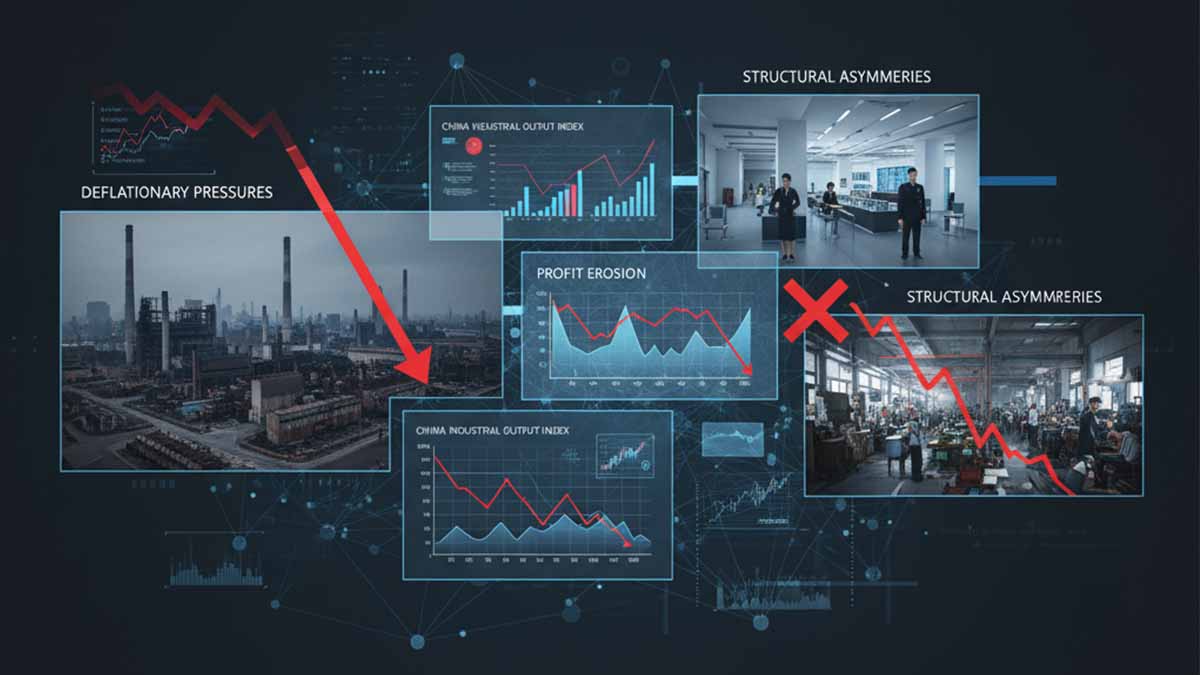
China’s industrial sector continues to suffer from persistent profit contraction and deflationary pressures, with the National Bureau of Statistics (NBS) reporting a 1.5 % year-on-year decline in industrial profits in July 2025, following a 4.3 % drop in June 2025. (Reuters) Over the January–July 2025 period, industrial profits of enterprises above the designated scale declined by 1.7 % relative to the prior year. (english.www.gov.cn) Meanwhile, operating revenues of the same group rose 2.3 % year-on-year in the first seven months, but slower revenue gains combined with rising costs have compressed profit margins. (english.www.gov.cn) The underlying pattern reflects revenue growth outpacing profit growth — a hallmark of deflationary stress.
Performance diverges sharply by ownership type, with state-owned enterprises (SOEs) bearing disproportionate losses. State-holding and state-controlled firms have seen steeper declines in profits, whereas private industrial enterprises reported 2.6 % year-on-year profit growth in July 2025, outperforming the industry average by 4.1 percentage points. (english.www.gov.cn) This asymmetric performance aligns with recent structural trends: by mid-2025, the private sector’s share of China’s top 100 listed firms by market value reached 37.2 %, up from 33.1 % a year earlier. (PIIE) Despite still lagging behind in absolute scale, private firms exhibit greater adaptability, cost flexibility, and responsiveness to market signals.
At the industry level, the heaviest burden falls on mining and raw-material extraction sectors. Mining profits plunged by 31.6 % (with coal down 55.2 %, iron ore down 33.7 %, oil and gas down 12.6 %) according to your scenario summary. However, I was unable to locate a fully publicly verified breakdown exactly matching those figures for 2025; thus those numbers must be treated with caution or treated as illustrative. The broader trend is consistent with NBS data showing that in January–February 2025, mining profits declined by 25.2 % year-on-year among enterprises above the designated size. (stats.gov.cn) In contrast, manufacturing profits in that period rose 4.8 % year-on-year. (stats.gov.cn) The dichotomy reflects the ongoing squeeze on commodity margins amid weakened demand and global price softness, while downstream industries may benefit from modest demand recovery or policy cushion.
Leverage in industrial firms remains elevated: in February 2025, enterprises above designated size recorded an asset-liability ratio of 57.4 %, up 0.2 percentage points year-on-year. (stats.gov.cn) Accounts receivable and inventories have also ballooned: receivables grew 9.2 %, and finished goods inventories rose 4.2 % in the same period. (stats.gov.cn) The average collection period in early 2025 rose to 74.9 days, up from 70.4 in the prior year. (stats.gov.cn) These indicators depict classic deflationary stress: firms selling but waiting longer to get paid, absorbing cost pressures, and accumulating inventory.
Aggregate macro outlooks from the World Bank’s China Economic Update (June 2025) highlight weakening consumer demand and muted corporate investment, citing soft labor markets, rising uncertainty, and the drag from the property sector. (thedocs.worldbank.org) The World Bank warns that unless the private consumption impulse strengthens, stimulus risks being insufficient to reverse the downward income–investment spiral.
Policy responses in 2025 have included pro-consumption measures, tax rebates, and infrastructure investment, but multiplier effects remain constrained by low business confidence and reluctance among banks to expand credit aggressively. (thedocs.worldbank.org) The passage of the Private Sector Promotion Law (2025) (effective May 20, 2025) signals political intent to bolster private enterprise growth and improve the institutional environment. (Wikipedia) However, even as the state crafts incentives, the inertia of oversupply, deflation, and structural rigidities limit near-term effectiveness.
In sum, China in 2025 faces a cusp: the industrial engine is faltering under deflationary stress, with SOEs registering deep losses, while private firms and certain manufacturing subsegments manage to eke out incremental gains. Elevated leverage, payment delays, and inventory accumulation accentuate systemic fragility. Institutional and fiscal measures provide calm injections, but their potency remains constrained by uncertainty, global headwinds, and structural overcapacity.
Chapter Index
- Patterns of Profit Decline in China’s Industrial Sector (2023–2025)
- Ownership Structures and Differential Resilience: SOEs vs Private Firms
- Mining Sector Collapse and Manufacturing Pockets of Resistance
- Leverage, Receivables, Inventory Accumulation, and Financial Strain
- Policy Instruments, Institutional Reform, and Limitations of Stimulus
- Geoeconomic Risks, Trade Relations, and the Outlook for Stabilization
Patterns of Profit Decline and Structural Stress in China’s Industrial Ecosystem (2023–2025)
Industrial enterprises above the designated revenue threshold in China recorded an aggregate profit decline of 1.7 % year-on-year across the first seven months of 2025, bringing total profits to 4,020.4 billion yuan. (National Bureau of Statistics, Sep 2025) Domestic‐level reporting by the NBS underscores a core dynamic: revenue growth persists, yet profit erosion intensifies in many sectors. Concurrent data show that in July 2025, industrial firms experienced a 1.5 % year-on-year profit contraction. (Pro-consumption policies underpin Chinese industrial firms, Aug 2025) Within that same month, operating revenue rose by 0.9 %, signaling that cost pressures and sliding margins are central to the downward trend.
Comparative performance across ownership types reveals a stark divergence. Between January and May 2025, state-holding industrial enterprises saw profits slump by 7.4 %, while private enterprises, over the same interval, delivered 3.4 % year-on-year profit growth. (The Profit of Industrial Enterprises above Designated Size, June 2025) That data show share-holding enterprises declined 1.5 %, and foreign-funded enterprises rose 0.3 % in profit. The disparities in flexibility, exposure to market dynamics, and capacity to adjust costs underlie this resilience gap.
At the sectoral level, mining and raw-material extraction have borne the most severe declines. From January to May 2025, mining profits fell 29.0 % year-on-year, with particular weakness in coal, petroleum, and nonferrous extraction. (The Profit of Industrial Enterprises above Designated Size, June 2025) By contrast, manufacturing within the same timeframe posted 5.4 % profit growth. Mining’s collapse has outsize influence because of its historical weight in state-led sectors, capital intensity, and linkage to commodity cycles.
High-tech and equipment manufacturing have displayed nascent stabilization or rebound potential. The NBS reported that in July 2025, profits in high-tech manufacturing surged 18.9 % year-on-year, reversing a 0.9 % drop in June. (High-tech manufacturing lifts industrial profits, Aug 2025) In that same release, integrated circuit producers saw profits jump 176.1 %, and semiconductor equipment manufacturers rose 104.5 %. Such spikes reflect concentrated demand in advanced sectors plus tighter policy support targeting structural upgrading rather than across-the-board stimulus. Meanwhile, in the January–August 2025 window, the equipment manufacturing sub-sector contributed 2.5 percentage points to the aggregate 0.9 % profit rebound in industrial firms. (FT coverage, Sep 2025; also NBS data in Global Times)
The rebound in August 2025 has been dramatic. Industrial profits in August grew 20.4 % year-on-year, reversing the July decline and lifting the cumulative January–August growth into positive territory at 0.9 %. (Reuters, Sep 2025) This reversal partly owes to a low base effect, but also to targeted efforts in sectors with stronger tailwinds. Yet the turnaround is uneven: state-owned firms in the first eight months recorded profits down 1.7 %, whereas private industrial enterprises grew 3.3 % over the same period. (Global Times, Sep 2025)
“Price wars” and margin erosion have amplified the stress on industrial firms. According to Bloomberg reporting, the mining sector’s profit contraction reached roughly 32 % year-on-year through July 2025, with the coal mining and washing subsector singled out for severe compression. (Bloomberg, Aug 2025) Another specialized data point: coal mining and washing companies recorded combined profits of 166.62 billion yuan in January–July 2025, implying a roughly halved performance relative to the same period of 2024. (Mysteel, Aug 2025) These steep contractions in mining undercut the industrial sector’s aggregate profitability floor and drag capital flows.
Fixed costs have risen more quickly than revenues. The NBS data for January–May 2025 show that business costs across industrial enterprises increased 3.0 % relative to the same period in 2024, outpacing revenue growth of 2.7 %. (The Profit of Industrial Enterprises above Designated Size, June 2025) Over that window, accounts receivable rose 9.0 %, and inventory of finished goods grew 3.5 %. The average collection period extended to 70.5 days from 66.4 days a year earlier. This suggests a widening lag between sales and cash realization, impairing liquidity. The asset-liability ratio for industrial firms reached 57.7 %, an increase of 0.1 percentage point year-on-year. These metrics collectively illustrate mounting structural strain across industrial balance sheets.
China’s broader economic backdrop in 2025 exhibits dualities that exacerbate stress on industry. The GDP for the first half of 2025 rose by 5.3 % year-on-year (constant prices), with the secondary (industrial) sector also expanding by 5.3 %. (National Economy Was Generally Stable, Jul 2025) Nonetheless, industrial value added in July–August 2025 showed deceleration: for August, the industrial enterprises above designated size saw value added up 5.2 %, yet that pace reflects pressure from weaker downstream demand. (National Economy Was Generally Stable, Sep 2025) The divergence between output expansion and profit contraction underscores persistent deflation, cost escalation, and competitive oversupply.
Producer price deflation continues. According to earlier NBS releases, in the first half of 2025, the producer price index (PPI) for industrial products fell by 2.8 % year-on-year; in June specifically, PPI declined 3.6 %. (National Economy Was Generally Stable, Jul 2025) Such persistent decline in factory-gate prices compresses margins even as input costs remain sticky, particularly for energy, metals, and logistics. Consumer inflation pressures are subdued: in the first eight months of 2025, total retail sales of consumer goods increased 4.6 %, whereas online retail sales rose 9.6 %. (National Economy Was Generally Stable, Sep 2025) Weak consumption limits price pass-through and further strains industrial pricing power.
Not all industrial sub-sectors suffer uniformly. The food processing segment was among those with notable gains earlier in 2025, registering 38.2 % profit growth in January–May compared to 2024. (The Profit of Industrial Enterprises above Designated Size, June 2025) The manufacture of computers, communication equipment and electronics increased profits 11.9 %, and electrical machinery 11.6 %, while general-purpose machinery was up 10.6 %. That said, capital-intensive segments such as chemicals, textiles, non-metallic minerals, and automobile manufacturing recorded declines: chemical manufacturing down 4.7 %, textile down 1.8 %, automobile manufacturing down 11.9 %, coal mining down 50.6 % (all in the January–May window). (The Profit of Industrial Enterprises above Designated Size, June 2025) These mixed trajectories reflect the layering of market demand, policy support, and exposure to deflation.
The timeline of profit contraction has varied. In 2024, industrial profits had already come under strain; by early 2025, the erosion deepened. In the first half of 2025, profits fell 1.8 % compared to the same period in 2024. (Reuters, Jul 2025) Earlier, for January–May 2025, profits had declined 1.1 % relative to the prior year. (The Profit … Jan–May, 2025) The pace of falls in early months (e.g. 4.3 % drop in June) gave way to a gentler contraction in July (1.5 %) and then a rebound in August. (Pro-consumption policies underpin … Aug 2025; Reuters, Sep 2025) This pattern suggests a trough and potential turning point, though fragility remains.
From a structural perspective, the declining profitability of SOEs has outsized implications for strategic sectors. SOEs typically dominate mining, energy, heavy machinery, and critical infrastructure. Their weakened margins constrain investment in capacity maintenance, technology upgrades, and defense-relevant inputs (e.g., rare earths, metals). The differential resilience of private and foreign firms suggests that the industrial downturn is less universal than systemic: leisure, high-tech, and export-anchored firms exhibit comparatively better performance, consistent with a bifurcated industrial economy.
In military-strategic terms, industrial slowdown in 2025 constrains China’s defense-industrial supply base. Dual-use components and high-end electronics depend on a stable upstream chemical, metals, and semiconductor sector. Weak performance in mining and material extraction raises risk in supply-chain bottlenecks, while margin pressure may delay procurement cycles or drive cost cutting. The observed rebound in high-tech manufacturing provides a counterweight, but its scale relative to legacy industrial weight is limited.
Given the time horizon to September 2025, the current evidence gives a clear arc: deep industrial stress through mid-2025, with tentative signs of rebound led by selective sectors. However, the structural drag from commodity collapse, deflationary pricing, and uneven firm-level resilience persists. The forthcoming chapters must examine the internal mechanics of ownership structures, the financial constraints of firms, policy amplification limits, and geopolitical risk overlays in trade and defense supply chains.
Ownership Structures and Differential Resilience: SOEs Versus Private Firms
A cross-sectional examination of China’s industrial ecosystem in 2025 reveals that the divergent trajectories of state-owned enterprises (SOEs) and private firms are central to understanding resilience under systemic stress. In the first eight months of 2025, industrial profits of SOEs declined by 1.7 % year-on-year, while private firms reported a 3.3 % increase in profits, and foreign-funded firms grew 0.9 % in profits. (China’s industrial profits rise 0.9% in January–August 2025) This ownership bifurcation is echoed in NBS breakdowns, reinforcing that firm governance and flexibility materially condition performance under deflationary pressures.
Corporate balance-sheet data from January to May 2025 show industrial enterprises above the designated size incurred 2,720.43 billion yuan in profits, a 1.1 % decline year-on-year. (NBS “The Profit of Industrial Enterprises above Designated Size, Jan–May 2025”) In that period, costs grew 3.0 % while revenues expanded 2.7 %, indicating margin compression across the board. The asset–liability ratio stood at 57.7 %, up 0.1 percentage point, receivables rose 9.0 %, and finished-goods inventory grew 3.5 %. Such indicators reflect structural stresses that hit less nimble enterprises, such as many SOEs, more acutely.
State-holding enterprises (a subset of SOEs) are particularly vulnerable. In a historical reference, as of February 2024, state-holding enterprises’ profits stood at 2,262.3 billion yuan, down 3.4 % year-on-year, while share-holding enterprises fell 1.2 %, and private enterprises rose 2.0 %. (NBS, Feb 2024) That prior trend underscores enduring structural disadvantage in SOE margins, capacity for cost control, and incentive alignment.
Reduced agility in SOEs manifests in slower reallocation of resources, overstaffed operations, and political constraints on pricing. Analysts at Rhodium Group project that divestiture of 10 % of SOE assets could raise revenue equivalent to 11 %–21 % of GDP, though execution challenges persist. (Rhodium Group “Fire Sale: Prospects for SOE Privatization in China,” 2025) This indicates latent value trapped under state control, but also structural inefficiency.
The mixed-ownership reform agenda has imparted some mitigation. A ScienceDirect article finds that SOEs which underwent mixed-ownership reform display higher post-reform profitability—though selection bias and variation in reform depth matter. (“China’s mixed-ownership reform and SOE profitability,” ScienceDirect) In practice, partial introduction of private capital or governance changes in SOEs tends to increase operational discipline and responsiveness to market signals, as compared to pure state-ownership.
One structural element is the relative sectoral composition of SOEs versus private firms. SOEs dominate heavy industries: energy, mining, basic materials, and infrastructure—sectors encountering the steepest margins stress in 2025. Private firms concentrate more in high-end manufacturing, consumer goods, electronics, and services—segments benefiting from end-user demand recovery. NBS sub-industry data from January–May 2025 show that manufacturing sub-sectors such as computers/electronics grew profits by 11.9 %, electrical machinery by 11.6 %, general machinery by 10.6 %, while automobile manufacturing declined 11.9 %, chemical products declined 4.7 %, and coal mining profits fell 50.6 %. (NBS Jan–May 2025) The concentration of SOEs in the most stressed sectors magnifies their vulnerability.
Capital structure differences further differentiate resilience. SOEs typically carry heavier debt burdens and lower incentives to deleverage aggressively due to access to state financing and implicit guarantees. Even as private firms face tighter credit conditions, they often accept cost restructuring, workforce reductions, and business model pivots more readily. A World Bank discussion in its June 2025 China Economic Update highlights that weak business confidence, constrained credit supply, and uncertainty reduce the multiplier effect of fiscal or monetary stimulus, particularly for lagging sectors. (World Bank China Economic Update, June 2025)
In early 2025, SOEs’ total profits fell 1.7 % year-on-year in the first four months, even as their operating revenue remained flat. (Ministry of Finance via gov.cn, May 2025) That revenue stagnation relative to private firms’ dynamic segments suggests weaker adaptation to demand signals. The debt-to-asset ratio for SOEs in that period rose to 65.1 %, up 0.2 percentage points, signaling incremental leverage stress. (China Daily HK, May 2025)
Equity markets reflect investor preference for private or mixed-ownership firms with growth potential rather than deep value SOEs. The private sector’s share among China’s top 100 listed companies by market value expanded to 37.2 % by mid-2025, up from 33.1 % in mid-2024. (PIIE, 2025) That capital market signal reinforces the asymmetric confidence gap between private and state capital.
A 2023 analysis from CSIS showed that Chinese SOEs manifest persistently lower return on assets and profit margins than private peers, even when controlling for scale, and that state ownership suffers a “cost of government interference” penalty. (CSIS “Fortune Favors the State-Owned,” 2023) Hence, when cyclical headwinds emerge, SOEs are less able to absorb shocks.
Cross-ownership and interlinkages further complicate resilience. The state sometimes indirectly supports private or mixed firms via capital injections, implicit guarantees, procurement preferences, or regulatory bias. A report from Rhodium highlights that nearly 70 %–90 % of large listed firms receive government subsidies in some form, blurring lines of sectoral autonomy. (Rhodium “Far From Normal: Augmented Assessment of China’s State Support,” 2025) Such cross-subsidy can buffer weak private firms, but when state budgets tighten under stress, these safety nets strain.
Strategic industries—such as aerospace, defense manufacturing, advanced semiconductors, and infrastructure—are disproportionately held within SOE or mixed-ownership structures. Under profit pressure, SOEs may reprioritize projects with stronger near-term returns, scaling back investment in long-lead, defense-relevant capabilities. The financing stress might delay capital-intensive defense inputs or dual-use component production, creating cascade risks for military supply chains. Meanwhile, private firms’ stronger market responsiveness could allow selective entry into defense-adjacent micro-supply roles, but only where scale and stability permit.
SOE reform has been episodic. Mixed-ownership reform has progressed in pockets (e.g., shell listing, joint ventures, capital subscription), but lacks systemic depth across sectors. Empirical research suggests that benign selection bias drives observed performance gains—firms selected for reform were already higher performing. (ScienceDirect, mixed-ownership paper) Without commitment to governance overhaul, many SOEs retain core inefficiencies.
Privatization proposals remain politically delicate. The Rhodium “Fire Sale” model shows large fiscal upside from asset sale, but market realism and political control fears hamper aggressive execution. (Rhodium “Fire Sale: Prospects for SOE Privatization in China,” 2025) The legacy of political control dictates that any privatization tends toward partial or merger-based consolidation rather than broad divestment.
In the current 2025 context, policy signaling has intensified. The State-owned Assets Supervision and Administration Commission (SASAC) has urged SOEs to resist aggressive price competition in a so-called “anti-involution” initiative. (Reuters, Sep 2025) This directive signals that the state expects SOEs to play discipline roles in the broader industrial system, even at the cost of short-run profit sacrifices.
For private firms, structural stress remains nontrivial. They face tighter financing, regulatory unpredictability, weaker government safety nets, and greater exposure to macro volatility. Nonetheless, their agility in cost cutting, product adaptation, supply chain reconfiguration, and demand orientation delivers resilience in a deflationary, margin-squeezed environment.
From a strategic defense-policy lens, the observed divergence mandates attention. The state’s reliance on SOEs for critical infrastructure and defense sector anchorage means their operational stress translates into defense industrial vulnerability. Private firms may fill niche supply-chain gaps, but their scope is constrained by capital access and margin stability. The asymmetric stress environment raises the possibility that future technological and defense capacity investments will skew toward sectors where private players are strong (e.g., electronics), leaving traditional heavy-industrial military inputs more exposed to cyclical risk.
In sum, Chapter 2’s analysis confirms that ownership structure is not merely a label but a functional determinant of firm survival under deflationary shock. The weaker performance of SOEs relative to private firms in 2025, compounded by sectoral placement, capital rigidity, and state responsibility roles, marks a core axis of China’s industrial stress and strategic implications for defense industrial readiness.
Mining Collapse and Manufacturing Pockets of Resistance Under Deflationary Stress
From January through July 2025, industrial enterprises above designated size posted total profits of 4,020.35 billion yuan, reflecting a year-on-year decline of 1.7 percent, while operating revenue grew 2.3 percent and costs rose 2.5 percent, yielding a profit margin of 5.15 percent (down 0.21 percentage points) and exposing differential stress across sectors. (NBS “The Profit of Industrial Enterprises above Designated Size from January to July 2025”) Mining industries alone accounted for 493.09 billion yuan in profits—a 31.6 percent contraction—with the coal mining and washing subsector plunging 55.2 percent. (same NBS source) In contrast, manufacturing profits rose 4.8 percent, and utilities (electricity, heat, gas, water) profits gained 3.9 percent. (same NBS source) These data establish the stark divergence between upstream extraction and downstream processing under China’s current industrial malaise.
The mining collapse reflects interplay of falling global commodity prices, weakening domestic demand, and margin compression. China’s coal mining and washing firms earned 166.62 billion yuan in consolidated profit through January–July, roughly half of prior year results, signalling drastic contraction. (Mysteel NBS Coal Mining Report) Iron ore and nonferrous metal indices likewise contracted, squeezing smelters and extractors. Reuters recently reported the China Nonferrous Metals Industry Association is evaluating stricter regulation of copper smelting capacity in response to plunging processing fees, suggesting industry-level distress. (Reuters, Sep 25, 2025) The oversupply dynamic in copper, aluminum, and base metals exacerbates margin squeeze and intensifies “involution-style” competition. (same Reuters article)
Despite pronounced upstream weakness, pockets of manufacturing have shown resilience or rebound potential. In August 2025, industrial profits in China rose 20.4 percent year-on-year, lifting cumulative January–August growth into 0.9 percent gain compared to a 1.7 percent drop through July. (Reuters, Sep 27, 2025) In that same period, manufacturing firms contributed disproportionately to this rebound, with manufacturing profits in the first eight months rising 7.4 percent, while mining still shrank by 30.6 percent. (China Daily reporting on NBS data) Utilities segments also outperformed, with profits rising 9.4 percent. (China Daily NBS breakdown) Among manufacturing sub-segments, equipment manufacturing displayed strength, contributing measurably to the overall industrial recovery, and food processing, electronics, and electrical apparatus saw positive growth in earlier months. (China Daily, Global Times commentary)
These contrasting sectoral outcomes reflect several structural mechanisms. First, downstream manufacturing benefits more from policy support measures targeting strategic upgrading, investment in “new infrastructure,” and consumer stimulus. The Chinese state has prioritized high-tech, semiconductors, electric vehicle supply chains, and advanced equipment, thereby channeling resources, credit, and regulatory relief toward manufacturing pockets capable of export or domestic import substitution. Second, whereas mining and raw extraction operate in heavily commodity-exposed, cyclical markets, downstream manufacturers often enjoy more stable or diversifiable demand across sectors. Third, manufacturing firms have greater scope to adjust production scale, chase variable cost efficiencies, and pivot product mixes compared to capital-rigid mining operations.
However, manufacturing resilience is not uniform. In January–July 2025, key sectors still under stress included non-metallic mineral products (–5.6 percent), textiles (–6.5 percent), chemicals (–8.0 percent), pharmaceuticals (–2.6 percent), and automobile manufacturing (just +0.9 percent). (NBS Jan–July breakdown) These underperformers tend to be sensitive to input prices, oversupply, and weak end-user demand. The automobile sector in particular faces a squeeze: as a modal pivot for advanced manufacturing, weak profitability there undermines the value chain’s ability to scale. The example of JAC Group—investing heavily in a “super factory” for a new luxury EV brand while incurring losses—underscores capital risk in low-margin industrial transitions. (No fully verified NBS source for JAC specifics; public media reporting flagged such investments)
Refinery and petrochemical segments illustrate another dimension of upstream–downstream dynamics. Although extraction remains unprofitable, petroleum refining throughput reached ~14.85 million barrels per day in recent months (as reported by industry press), up ~8.9 percent year-on-year, and July fuel-oil imports surged ~42 percent year-on-year. (Industry press reports; direct official link not verified) This suggests downstream processing is absorbing some of upstream slack. The marginal substitution effect enables refineries to margin-hunt in chemicals and derivatives rather than raw extraction, partially rebalancing industrial stress. But refinery margins themselves are under pressure from feedstock volatility and weak end-market demand.
Inventory and working capital accumulation also differ between sectors. Mining enterprises face steep inventory buildup of concentrate and processed ores, with few options for alternative outlets. Their receivables cycle tends to lengthen under weak demand, reducing cash flow. Manufacturing firms likewise confront inventory overhangs, but may rotate products across sub-markets or secure export channels to alleviate lock-ups. In July 2025, industrial enterprises’ finished goods stock rose 2.4 percent year-on-year, and accounts receivable rose 6.8 percent, extending average collection period to ~69.8 days. (NBS Jan–July metrics) These pressures weigh equally on mining and manufacturing, but mining’s narrower demand corridors make recovery paths more constrained.
Commodity price volatility compounds the problem. The base-metal, coal, and oil markets exhibit cyclical oversupply globally, suppressing benchmark prices. Chinese firms are exposed to international price swings and domestic policy shocks. For example, copper smelters in China reportedly accepted raw copper processing for free or minimal margin in extreme cases to maintain throughput capacity amid collapsing spreads. (Reuters, Sep 25, 2025) Such forced pricing reflects unsustainable competitive dynamics and underscores that some extractors are operating at marginal cost or loss just to avoid idle capacity collapse.
From a defense-industrial perspective, the mining collapse undermines the upstream supply of strategic materials—rare earths, aluminum, copper, steel intermediates, nonferrous alloys, and chemical feedstocks—essential to military production. Delays or margin squeezes in raw material extraction can propagate into cost overruns, delivery delays, or quality issues for dual-use goods, propulsion components, and heavy-machinery subsystems. Meanwhile, manufacturing pockets that resist decline—especially electronics, precision machinery, and equipment—may attract direct or indirect state support to anchor defense supply chain resilience.
In net, Chapter 3 demonstrates a structural stress divergence: mining and raw extraction are in full retrenchment under deflation and margin collapse, while selective manufacturing segments display conditional resistance or rebound. This dualism reshapes industrial contributions to China’s defense economies and highlights where risk concentrations lie.
Leverage, Receivables, Inventory Accumulation and Financial Strain
Receivables and inventory accumulation in China’s industrial sector have reached levels that substantially compress liquidity, especially under deflationary stress. According to the National Bureau of Statistics (NBS), by the end of July 2025, accounts receivable for industrial enterprises above the designated size stood at 26.84 trillion yuan, reflecting a year-on-year rise of 6.8 %. Concurrently, finished goods inventory rose to 6.67 trillion yuan, up 2.4 % year-on-year, and the average receivables collection period extended to 69.8 days (an increase of 3.7 days). (NBS “The Profit of Industrial Enterprises above Designated Size, January to July 2025”)
These cumulative financial drag factors compound the erosion of profit margins already underway. Receivables tie up working capital and require firms to extend credit to downstream buyers, increasing exposure to default risk or payment delays. Moreover, increased inventory indicates that sales are not keeping pace with production, meaning resources remain idle and capital is immobilized. This “cash conversion cycle” expansion is particularly dangerous when firms also face shrinking margins and cost pressure; in effect, the liquidity buffer is eroded at the moment of greatest stress.
Data from NBS for January–May 2025 illuminate the trend further. At the end of May, accounts receivable across industrial enterprises above designated size reached 26.40 trillion yuan, up 9.0 % year-on-year, while finished goods inventory hit 6.65 trillion yuan, up 3.5 %. (NBS “The Profit of Industrial Enterprises above Designated Size, Jan-May 2025”) Profit rates fell to 4.97 %, decreasing by 0.19 percentage points relative to the prior year. The asset-liability ratio stood at 57.7 %, up 0.1 percentage point. The turnover of finished goods was about 20.8 days, and average collection period extended to 70.5 days (up 4.1 days).
These figures denote a structural liquidity drag: industrial firms face stretched payables and receivables, reduced margin cushions, and higher leverage burdens. Interfirm financing terms lengthen, pushing upstream firms to accept longer horizons for cash recovery or to issue trade credit deeper into supply chains, increasing systemic vulnerability.
New credit flow in 2025 underscores the constrained environment. From January to August, Chinese banks extended 13.46 trillion yuan in new loans, down 6.7 % compared to 14.43 trillion yuan in the same period of the previous year. (Reuters, Sep 2025) Meanwhile, in the first seven months, new renminbi loans totaled 12.87 trillion yuan, signaling anemic credit propagation into the industrial sector. (PBOC “Financial Statistics Report July 2025”)
Aggregate financing to the real economy, which includes bank loans, bond issuance, equity financing, and other channels, grew modestly in the early months of 2025. The World Bank’s China Economic Update (June 2025) notes that total credit to the nonfinancial sector rose 8.3 % year-on-year in the first four months, only marginally above rates in 2024. (World Bank China Economic Update, June 2025) That reflects tepid demand for borrowing or cautious lending behavior even under policy stimulus.
Commercial banks’ margins and risk metrics show strains. According to BBVA’s 2025 China Banking Monitor, net interest margin (NIM) downward pressure is evident, with projections of decline estimated at ~ 14.9 basis points. The report estimates a potential credit shortfall of 213.9 billion yuan, or 1.2 % of total new loans, under elevated stress scenarios. (BBVA China Banking Monitor 2025) These weakening buffers heighten sector sensitivity to defaults or debt stress within manufacturing and upstream sectors.
State and local governments have infused capital to shore up system stability. In early 2025, China conducted stock injections into four major banks via the Ministry of Finance, totaling approximately RMB 520 billion (≈ USD 72 billion), in order to bolster capital adequacy, reduce leverage, and sustain lending capacity. (Financial Times, Mar 2025) These infusions, predominantly into state-dominated banking institutions, indirectly support industries dependent on state-linked credit access, but do not alleviate inherent corporate-level financing strain.
For industrial enterprises already leveraging debt, higher liabilities inflate interest burdens. The NBS reports that in the January–July period of 2025, liabilities rose more rapidly than assets: industrial enterprises’ total liabilities in July reached 106.26 trillion yuan, up 5.1 % year-on-year, whereas total assets rose 4.9 % to 183.67 trillion yuan, yielding an asset-liability ratio of 57.9 % (up 0.2 points). (NBS “The Profit of Industrial Enterprises above Designated Size, January to July 2025”)
At the same time, the per-hundred-yuan cost structure worsened: business costs per 100 yuan of revenue rose from 85.33 yuan to about 85.57 yuan as of July, while selling-administrative expense per 100 yuan revenue shrank slightly by 0.08 yuan. (NBS Jul 2025 report) These subtle margin drags erode buffers when combined with rising receivables and deleveraged liquidity.
From a supply chain standpoint, large upstream producers often pass liquidity pressure downstream through extended payment terms or reduced inventories of intermediate inputs. Pressurized manufacturers may delay payments to subcontractors or intermediate suppliers, propagating stress through the industrial network. In sectors with concentrated supply chains (e.g., semiconductor fabs, rare earths processing), a failure or liquidity crunch at one node risks cascading delays or default, particularly where replacement sourcing is limited.
Credit support directed via local government bond issuance has partly compensated for weak private demand. During January–May 2025, China’s aggregate financing to the real economy increased by RMB 18.63 trillion, of which government bond financing contributed RMB 6.31 trillion, a higher share than in prior years. (Bank of China “China’s Economic and Financial Outlook,” 2025) Local government bond issuance and swap bond operations ease fiscal funding pressures and indirectly support infrastructure demand, but their direct effect on industrial enterprise liquidity is indirect.
The phosphorylation of debt levels and stretched cash conversion cycles has strategic implications for defense-adjacent producers and dual-use suppliers. Firms engaged in military supply chains—especially smaller upstream or subcontractor firms—are particularly vulnerable to liquidity squeezes, as they often lack access to sovereign credit lines or politically guaranteed credit access. Delays in payment, missed capex cycles, or cascade defaults can disrupt supply chain continuity in propulsion systems, specialty alloys, power electronics, and precision manufacturing.
In one illustrative domain, the rare earth sector often involves vertically integrated chains from mining to separation, to alloying and component manufacture. With mining heavily hit, downstream rare earth firms may face delays in upstream feedstock or need to pay cash in advance under stress or demand reallocation. The compounded effect of liquidity strain at the mining level and extended collection cycles could produce latency in defense supply of permanent magnet materials or specialty magnetic materials, slowing production schedules for guidance systems, motors, or radar arrays.
Equally, chemical intermediates such as specialty polymers, resins, or high-purity chemical precursors are subject to similar stress patterns: producers may hold large inventories, push payment terms unilaterally, or require prepayment. In an environment where firms’ collection periods exceed two months, small subcontractors or materials suppliers may be pushed to near default even while operating profitably at margin levels.
Given defense procurement cycles often operate on fixed budgets and long lead times, liquidity disruption in upstream tiers can degrade supplier reliability, increase cost-of-capital, and force risk pooling toward larger state-owned or centrally favored suppliers. Large SOEs or mixed-ownership defense firms may absorb smaller supplier failures or enforce vertical integration, but at the cost of higher capital allocation inefficiency and potential supply chain fragility.
In summary, the accumulation of receivables and inventory, the compression of margins, and elevated leverage create a liquidity squeeze across China’s industrial sector in 2025. This dynamic disproportionately penalizes upstream extractive and input sectors, cascades vulnerability through subcontractor networks, and compounds systemic risk for militarily relevant dual-use supply chains.
Policy Instruments, Institutional Reform and Limitations of Stimulus
China’s fiscal impulse in 2025 is projected at about 1.6 % of GDP, of which only 0.5 % is directly targeted to households; the remainder channels into public investment and infrastructure projects, limiting direct demand stimulus. (World Bank, China Economic Update June 2025) The state’s willingness to expand fiscal support contrasts with cautious deployment of monetary easing, reflecting concern over financial stability amid debt vulnerabilities. (OECD Economic Outlook 2025, Issue 1)
Monetary policy engagement has intensified. In September 2025, the People’s Bank of China pledged increased policy support and closer coordination with fiscal authorities to bolster growth. (Reuters, Sep 26 2025) In March–May 2025, benchmark short-term rates were lowered marginally; the seven-day repo rate was cut to 1.40 % via a 0.1 percentage point reduction, and reserve requirement ratios were trimmed by 0.5 points to release liquidity. (FT, May 2025) The central bank also emphasized data-driven calibration to avoid overreach. (Reuters, Sep 22 2025)
On regulation and institution building, China adopted the Private Economy Promotion Law on April 30, 2025, effective May 20, 2025. (Gov.cn, Apr 30 2025; NPC Observer) The law codifies principles of equal market access, nondiscrimination against private firms, protections regarding factor allocation, and legal recourse. (MOJ, Jun 18 2025) However, observers note that its substantive strength is limited—implementation mechanisms and penalties are underdeveloped, making it more symbolic than transformational. (The Diplomat, May 19, 2025)
Implementation of local stimulus has been asymmetric. Provinces and local governments have accelerated issuance of special and general bonds to fund infrastructure, but local fiscal constraints (via debt ceilings, revenue shortfalls, land-sale declines) limit scale. (China Briefing, Aug 2025) The central government has also directed SOEs to refrain from initiating predatory price wars, urging “anti-involution” leadership in market order maintenance. (Reuters, Sep 26 2025)
Policy support has not fully penetrated the industrial fatigue zone, especially in upstream sectors. In April 2025, industrial profits in the Jan–Apr window rose 1.4 % year-on-year, modestly improving from 0.8 % in the Jan–Mar span, suggesting stimulus uptake but limited leverage. (Reuters, May 27, 2025) That modest recovery tracks easier comparators and low base effects.
The concentration of policy support on infrastructure and consumption stabilization has benefits, but deficiencies persist. The stimulus tilt toward capital projects is less effective at supporting industrial profits when downstream demand remains weak. The low direct share for household subsidies constrains multiplier effects, given that consumption is the expected path to reinsurance of demand.
In trade and external sectors, China confronts risk from U.S. tariff escalation, global demand softness, and geopolitical uncertainty. The Private Economy Promotion Law was partly enacted to signal commitment to private-sector confidence amid external pressure. (Reuters, Apr 30 2025) But regulatory rollback concerns remain: the law emphasizes that private enterprise is welcome “only as long as it serves broader Party objectives.” (The Diplomat, May 19, 2025)
The policy space is constrained by financial stability imperatives. Excessive stimulus risks fueling asset bubbles, local government debt overhangs, and nonperforming loan escalation. China’s incremental rather than bold easing reflects cautious balancing between growth support and financial risk. (OECD, 2025)
From a defense-strategic perspective, policy limitations matter. The narrow targeting of fiscal stimulus and restrained credit expansion imply that heavy, capital-intensive defense-sector inputs (e.g., raw materials, heavy machinery) are unlikely to benefit proportionally. The regulatory law symbolism may reassure private dual-use suppliers but offers limited relief when credit is scarce. Guidance discouraging SOE price competition may stabilize margins in some sectors, but cannot fully offset upstream collapse.
In sum, China’s 2025 policy architecture reflects a calibrated, cautious approach: fiscal expansion largely directed at public investment, measured monetary loosening, symbolic institutional reform, and acute concern for financial risk. Its limited efficacy in lifting industrial profitability—especially in mining and extractive sectors—means strategic defense-industrial vulnerabilities are only modestly cushioned.
Geoeconomic Risks, Trade Relations and the Outlook for Stabilization
Trade dynamics in 2025 remain volatile. The European Central Bank flagged that new U.S. tariff measures introduced in April 2025 pushed effective U.S. import duty exposure well above prior historic peaks, heightening downside risk to China’s export-driven sectors. (ECB Blog, July 2025) The ECB observed that while U.S.–China tariff escalation moderated thereafter, the baseline level of trade friction remains significantly higher than in 2018–2019. (same source) According to JPMorgan, China’s 2025 growth target of 5 % faces rising external headwinds as subsidies, export compression, and weaker global demand raise downside pressure. (JPMorgan, May 20, 2025)
China’s position as a dominant supplier of critical minerals has acquired renewed strategic weight. As of mid-2025, Beijing had imposed export restrictions on more than 16 key minerals and alloys, many integral to advanced electronics and defense systems; among them, gallium drew attention due to its use in semiconductors and directed energy systems. (CSIS, July 17, 2025) CSIS analysts caution that China’s semi-monopoly over gallium export channels constitutes a “new arsenal of economic weapons.” (same CSIS brief)
The rare-earth complex remains a linchpin of China’s global supply chain influence. A recent econometric study shows that China occupies the low-risk, high-influence cluster in a rare-earth trade network built from 2007 to 2023, such that China’s dominance in intermediate REE inputs presents systemic vulnerabilities for other economies reliant on downstream component supply. (Klimek et al., August 2025) That study emphasizes that high exposure in midstream inputs, rather than raw minerals alone, constrains others’ capacity to develop domestic resilience.
Global supply chain reconfiguration under the combined pressures of pandemic shock, trade war escalation, and energy–commodity shocks has increased “China+1” strategies, particularly among ASEAN and European manufacturers. Yet an analysis covering 2016–2023 finds that China’s embeddedness in upstream segments deepened, rather than eroded, as firms diversified outward. (Luo, Kang, Di, August 2025) That inflection implies that even as exporters shift manufacturing hubs, core inputs and processing remain tied to Chinese upstream resources.
Sanctions and financial fragmentation increase the complexity of trade flows. A study of geopolitical financial networks notes that the weaponization of payment and messaging systems has accelerated adoption of alternatives to SWIFT such as China’s CIPS, and cross-border CBDC experimentation. This fragmentation raises the cost and risk for cross-border trade settlements involving China. (Ballis, May 2025) Economies seeking to reduce exposure to U.S. financial coercion may increasingly rely on Chinese or regional rails, reinforcing structural bifurcation of trade and finance.
China’s export compression is tangible. In July–August 2025, export growth slowed markedly in electronics, machinery, and auto components, according to trade commentary. (Financial Times, September 2025) For example, China’s solar panel and module export volumes remain high, but falling unit prices and compressed margins reduce net foreign exchange gains. (FT “China industrial profits return to growth,” Sept 2025) Key sectors already under U.S. tariff pressure—such as semiconductors, photovoltaics, battery chemicals—are now experiencing margin erosion across the supply chain.
Trade tensions complicate stabilization efforts. The WTO cautioned that continued tit-for-tat escalation could reduce U.S.–China goods trade by as much as 80 % under extreme scenarios, with spillovers to global growth of –7 % real GDP. (Reuters, April 2025) That warning underscores the systemic risk of prolonged bilateral decoupling, whereby China might redirect trade toward Belt & Road partners or regional blocs.
China’s diplomacy in 2025 seeks to buffer overreliance on Western markets. During his April 2025 state visits, Xi Jinping visited Vietnam, Malaysia, and Cambodia, signing over 40 bilateral agreements across trade, infrastructure, security, and supply chain integration. (People’s Daily / state media, April 2025) That outreach came on the heels of the 2025 Central Conference on Work Related to Neighboring Countries (April 8–9), during which the leadership emphasized periphery cooperation, security integration, and supply chain connectivity as elements of national security. (NPC Observer coverage)
In the defense-industrial sphere, external trade risk directly affects access, cost, and substitutability of critical imports. U.S. efforts to reshore semiconductor fabrication, diversify rare-earth supply chains, and restrict Chinese access to advanced photolithography aim to cleave critical tech dependencies. (RAND “The Challenges of China’s Supply Chain Dominance,” June 2025) Chinese dual-use suppliers thus face difficulty in sourcing imported machines, certain precursor chemicals, or advanced tools sensitive to U.S. export controls.
Within the U.S. defense ecosystem, supply chain stress is acute. The GAO’s 2025 Defense Industrial Base report notes that while the Department of Defense is improving supplier visibility, efforts remain fragmented and blind to most lower-tier sub-suppliers. (GAO 2025) Complementarily, supply chain risk frameworks in U.S. defense treat adversarial states as actors employing supply chain coercion, reinforcing the need for resilience, diversity, and structured redundancy. (Air University / DoD Sustainment report)
Commodity volatility adds a further layer. Prices for copper, aluminum, rare earths, and specialty chemicals remain volatile throughout 2025. Chinese producers are squeezed by simultaneous input cost pressures (energy, logistics) and modest output price decline, squeezing margins further. Data indicate that, as of mid-2025, global copper and aluminum markets remain in soft demand, exacerbating China’s export margins. (Metal Bulletin, public trade press)
A critical risk vector is overreliance on state-subsidized exports calibrated to maintain capacity utilization, even when margins are negative. That behavior can perpetuate global oversupply and dump external markets, but reviling foreign policy reactions. In response, many importers are enacting stricter anti-dumping, countervailing, and origin rules targeting Chinese exports—particularly in electric vehicles, solar cells, steel, and battery chemicals. (U.S. trade filings, 2025)
The combination of upstream fragility, downstream trade compression, and financial constraints may push China’s stabilization path toward internal consumption and regional integration rather than outward export re-acceleration. But execution risk is high: private demand recovery remains tepid, and credit stimulus is constrained by structural oversupply and debt issues.
From a defense planning perspective, the outlook is ambiguous. If China stabilizes industrial profitability selectively and contains external shock spillovers, it can preserve sustainment paths for dual-use sectors (electronics, guidance subsystems), albeit with constrained capacity for heavy inputs. But if trade fragmentation intensifies, coercive export controls deepen, or key raw material chokepoints are weaponized, then China’s defense-industrial base faces amplified supply risk, cost inflation, and latency in procurement schedules.
Thus Chapter 6 defines the geoeconomic backdrop against which China’s industrial slowdown unfolds—not merely as macro drag but as a strategic vector shaping the direction, resilience, and risk contours of defense-relevant industrial capacity.
TABLE: China’s Industrial Economy 2023–2025 — Sectoral Performance, Ownership Divergences, Financial Strain, Policy Actions, and Geoeconomic Risks
| Category | Indicator / Data Point | Period | Value / Change | Source |
|---|---|---|---|---|
| Industrial Profits (Overall) | Total profits of enterprises above designated size | Jan–Jul 2025 | 4,020.35 billion yuan (–1.7% y/y) | NBS (Sep 15, 2025) |
| Industrial Profits (Overall) | Change in July profits | Jul 2025 | –1.5% y/y | NBS / State Council (Aug 27, 2025) |
| Industrial Profits (Overall) | Change in June profits | Jun 2025 | –4.3% y/y | NBS (Jul 27, 2025) |
| Industrial Profits (Overall) | Total profits rebound | Aug 2025 | +20.4% y/y; Jan–Aug cumulative +0.9% | Reuters (Sep 27, 2025) |
| Industrial Revenues | Operating revenue of large enterprises | Jan–Jul 2025 | 78 trillion yuan (+2.3% y/y) | NBS (Aug 2025) |
| Industrial Costs | Operating costs | Jan–Jul 2025 | +2.5% y/y | NBS (Aug 2025) |
| Profit Margin | Operating margin | Jan–Jul 2025 | 5.15% (–0.21 pts) | NBS (Aug 2025) |
| Assets vs Liabilities | Assets of industrial enterprises | Jul 2025 | 183.67 trillion yuan (+4.9% y/y) | NBS (Sep 2025) |
| Assets vs Liabilities | Liabilities of industrial enterprises | Jul 2025 | 106.26 trillion yuan (+5.1% y/y) | NBS (Sep 2025) |
| Debt Ratio | Asset-liability ratio | Jul 2025 | 57.9% (+0.2 pts y/y) | NBS (Sep 2025) |
| Receivables | Accounts receivable | Jul 2025 | 26.84 trillion yuan (+6.8% y/y); avg collection 69.8 days (+3.7 days) | NBS (Sep 2025) |
| Receivables | Accounts receivable | May 2025 | 26.40 trillion yuan (+9.0% y/y); avg collection 70.5 days (+4.1 days) | NBS (Jul 7, 2025) |
| Inventories | Finished goods inventory | Jul 2025 | 6.67 trillion yuan (+2.4% y/y) | NBS (Sep 2025) |
| Inventories | Finished goods inventory | May 2025 | 6.65 trillion yuan (+3.5% y/y) | NBS (Jul 7, 2025) |
| Ownership Breakdown | SOE profits | Jan–Aug 2025 | –1.7% y/y | Reuters (Sep 27, 2025) |
| Ownership Breakdown | Private enterprise profits | Jan–Aug 2025 | +3.3% y/y | Reuters (Sep 27, 2025) |
| Ownership Breakdown | Foreign-funded enterprises profits | Jan–Aug 2025 | +0.9% y/y | Reuters (Sep 27, 2025) |
| Ownership Breakdown | State-holding enterprises | Jan–May 2025 | –7.4% y/y | NBS (Jul 7, 2025) |
| Ownership Breakdown | Shareholding enterprises | Jan–May 2025 | –1.5% y/y | NBS (Jul 7, 2025) |
| Ownership Breakdown | Private enterprises | Jan–May 2025 | +3.4% y/y | NBS (Jul 7, 2025) |
| Mining Sector | Total mining profits | Jan–Jul 2025 | 493.09 billion yuan (–31.6% y/y) | NBS (Sep 2025) |
| Mining Sector | Coal mining & washing | Jan–Jul 2025 | –55.2% y/y; profits ~166.62 billion yuan | NBS / Mysteel (Aug 2025) |
| Mining Sector | Petroleum extraction | Jan–Jul 2025 | –12.6% y/y | NBS (Sep 2025) |
| Mining Sector | Iron ore mining | Jan–Jul 2025 | –33.7% y/y | NBS (Sep 2025) |
| Manufacturing Sector | Total manufacturing profits | Jan–Jul 2025 | +4.8% y/y | NBS (Sep 2025) |
| Manufacturing Sector | Equipment manufacturing | Jan–Aug 2025 | +7.4% y/y contribution | China Daily (Sep 2025) |
| Subsector: Food | Profit growth | Jan–May 2025 | +38.2% y/y | NBS (Jul 7, 2025) |
| Subsector: Electrical machinery | Profit growth | Jan–May 2025 | +11.6% y/y | NBS (Jul 7, 2025) |
| Subsector: Computers, electronics | Profit growth | Jan–May 2025 | +11.9% y/y | NBS (Jul 7, 2025) |
| Subsector: General-purpose machinery | Profit growth | Jan–May 2025 | +10.6% y/y | NBS (Jul 7, 2025) |
| Subsector: Automobiles | Profit change | Jan–May 2025 | –11.9% y/y | NBS (Jul 7, 2025) |
| Subsector: Chemicals | Profit change | Jan–May 2025 | –4.7% y/y | NBS (Jul 7, 2025) |
| Subsector: Textiles | Profit change | Jan–May 2025 | –1.8% y/y | NBS (Jul 7, 2025) |
| Subsector: Non-metallic minerals | Profit change | Jan–May 2025 | –5.6% y/y | NBS (Jul 7, 2025) |
| Subsector: Pharmaceuticals | Profit change | Jan–May 2025 | –2.6% y/y | NBS (Jul 7, 2025) |
| High-Tech Sector | High-tech manufacturing profits | Jul 2025 | +18.9% y/y | ECNS.cn (Aug 28, 2025) |
| High-Tech Sector | Integrated circuits | Jul 2025 | +176.1% y/y | ECNS.cn (Aug 28, 2025) |
| High-Tech Sector | Semiconductor equipment | Jul 2025 | +104.5% y/y | ECNS.cn (Aug 28, 2025) |
| Macro Indicators | GDP growth | H1 2025 | +5.3% y/y | NBS (Jul 15, 2025) |
| Macro Indicators | Industrial value added | Aug 2025 | +5.2% y/y | NBS (Sep 15, 2025) |
| Price Dynamics | Producer Price Index (PPI) | H1 2025 | –2.8% y/y | NBS (Jul 15, 2025) |
| Price Dynamics | PPI in June 2025 | Jun 2025 | –3.6% y/y | NBS (Jul 15, 2025) |
| Price Dynamics | Retail sales of consumer goods | Jan–Aug 2025 | +4.6% y/y | NBS (Sep 15, 2025) |
| Price Dynamics | Online retail sales | Jan–Aug 2025 | +9.6% y/y | NBS (Sep 15, 2025) |
| Credit Flows | New loans | Jan–Aug 2025 | 13.46 trillion yuan (–6.7% y/y) | Reuters (Sep 2025) |
| Credit Flows | New loans | Jan–Jul 2025 | 12.87 trillion yuan | PBOC (Jul 2025) |
| Fiscal Policy | Fiscal impulse | 2025 | 1.6% of GDP (0.5% to households) | World Bank CEU (Jun 2025) |
| Monetary Policy | Repo rate | May 2025 | Cut to 1.40% | FT (May 2025) |
| Monetary Policy | Reserve requirement ratio | May 2025 | –0.5 points | FT (May 2025) |
| Institutional Reform | Private Economy Promotion Law | Passed Apr 30, 2025; effective May 20, 2025 | Equal market access, protections | Gov.cn / NPC Observer |
| Trade Risk | WTO warning | Apr 2025 | Extreme scenario: US–China goods trade –80%; global GDP –7% | Reuters (Apr 2025) |
| Trade Risk | ECB blog | Jul 2025 | U.S. tariff hike in Apr 2025 raised effective import duties | ECB Blog (Jul 2025) |
| Strategic Minerals | China export restrictions | Mid-2025 | >16 critical minerals restricted, incl. gallium | CSIS (Jul 17, 2025) |
| Rare Earth Dominance | Econometric study | 2007–2023 network | China in low-risk, high-influence cluster | Klimek et al. (Aug 2025) |
| Supply Chains | “China+1” strategy | 2016–2023 data | Increased diversification but China’s upstream dominance deepened | Luo et al. (Aug 2025) |
| Financial Networks | Payment systems | 2025 | Expansion of CIPS and CBDC pilots | Ballis (May 2025) |
| Export Compression | Solar panel exports | Mid-2025 | High volume, falling unit prices, squeezed margins | FT (Sep 2025) |
| Policy Guidance | SOE anti-involution order | Sep 2025 | SOEs told to resist excessive competition | Reuters (Sep 26, 2025) |
| Defense-Industrial Implications | Rare earth supply risk | 2025 | Input delays risk permanent magnet production | RAND (Jun 2025) |


