






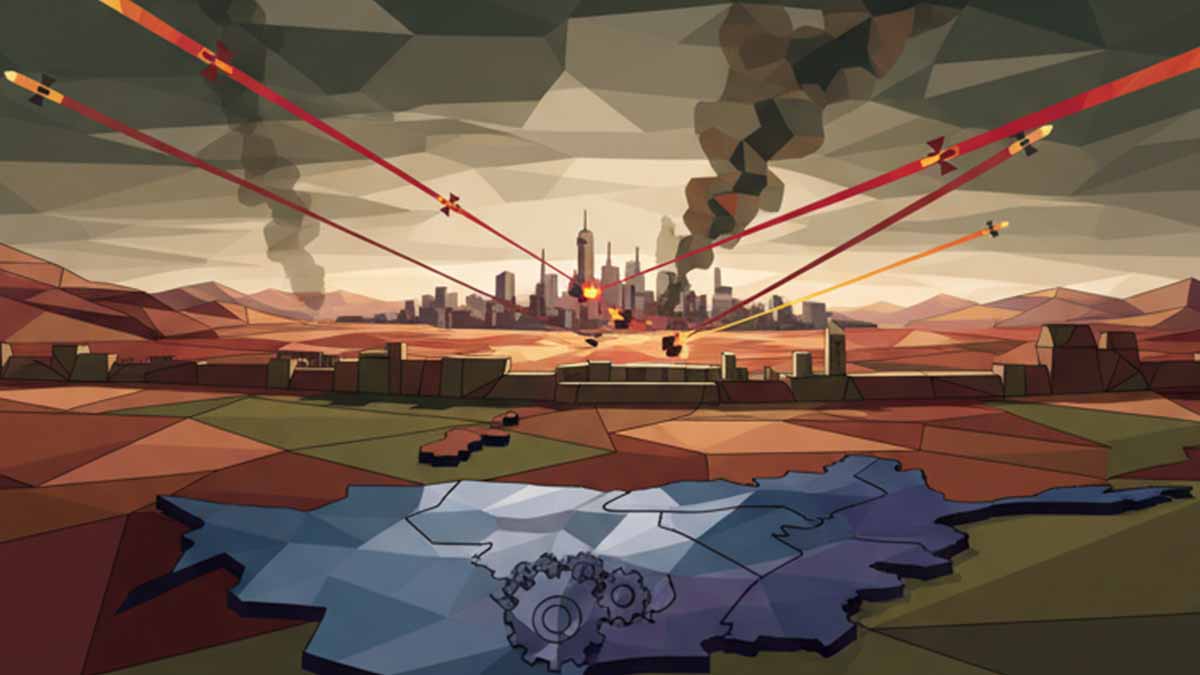
ABSTRACT — Regional Deterrence, Airspace Sovereignty, and Frontier Escalation Dynamics on the Afghanistan–Pakistan Axis through September 2025
The retaliatory firefights reported along the frontier during October 10–12, 2025 crystallize a multi-year evolution in cross-border coercion, airspace contestation, and border-regime instrumentalization that has bound tactical military moves to legal signaling and humanitarian leverage. An officially published diplomatic note from Qatar’s foreign ministry dated October 11, 2025 confirms acute tensions and urges dialogue, establishing a sovereign, time-stamped acknowledgment of crisis conditions; see Qatar Ministry of Foreign Affairs Statement — October 11, 2025. Parallel wire coverage on October 12, 2025 documents immediate hard-power sequelae: frontier closures at Torkham, Chaman, Kharlachi, Angoor Adda, and Ghulam Khan, alongside counter-battery fire and post destruction attributed to reciprocal engagements; see Reuters — “Pakistan closes border with Afghanistan following exchanges of fire,” October 12, 2025. These events are the visible crest of an entrenched dynamic since 2024: claims of airspace violations and targeted raids, Afghan assertions of sovereignty-defense retaliation, Pakistani counter-claims of anti-terror “intelligence-based operations,” and a recurring turn to crossing closures as coercive statecraft.
A verified documentary lattice predating October 2025 anchors this interpretation. The de facto defense authorities in Kabul publicly articulated a sovereignty-defense posture against Islamabad’s rhetoric in an official .gov.af post on January 27, 2024, signalling willingness to counter perceived intrusions along the Durand Line; see Ministry of Defense of Afghanistan — January 27, 2024. Pakistan’s own doctrine, by contrast, entered the public record on March 18, 2024, when the foreign ministry stated that Pakistan “carried out intelligence-based anti-terrorist operations in the border regions inside Afghanistan,” explicitly attributing the predicate to Tehrik-i-Taliban Pakistan (TTP); see Pakistan Ministry of Foreign Affairs — “Operation Against Terrorist Sanctuaries of TTP,” March 18, 2024. These paired, official statements delineate opposed legal narratives: one grounded in inviolability of territory and airspace; the other in self-defense against non-state actors allegedly shielded by a neighbor.
Air-domain claims across 2024–2025 derive legal force from a precise treaty baseline: states hold “complete and exclusive sovereignty over the airspace above [their] territory,” per Article 1 of the foundational civil-aviation treaty. The authoritative text is maintained by the specialized intergovernmental body responsible for global civil-aviation governance; see International Civil Aviation Organization — Convention on International Civil Aviation (Doc 7300) — consolidated access page, with confirmatory official materials in ICAO — Doc 10075, April 2025 and catalog listings referencing the consolidated Doc 7300 text within current publications; see ICAO — Products and Services Catalogue (2024 edition, posted January 2025). Although the treaty framework regulates civil, not military, aviation, states consistently invoke its sovereignty canon in diplomatic protests of alleged incursions; this explains the Afghan emphasis on “airspace violations” as a predicate for retaliation and the Pakistani avoidance of openly acknowledging cross-border air operations even where open-source reporting infers such action.
The multilateral situational record underscores that the security environment inside Afghanistan remained brittle and susceptible to external shock through September 2025. The United Nations’ mandated quarterly reports to the Security Council provide an official, serially updated baseline. The filing covering developments to February 21, 2025 documents governance, security, and humanitarian conditions and reaffirms the reporting cadence under council resolutions, thereby furnishing a reference frame for subsequent cross-border escalations; see UNAMA — Report of the Secretary-General A/79/797–S/2025/109 (February 21, 2025). The next cycle, lodged June 11, 2025, updates the council on security incidents and border-province dynamics germane to later frontier flashpoints; see UNAMA — Report of the Secretary-General A/79/947–S/2025/372 (June 11, 2025). During a September 17, 2025 council meeting, the UN’s Afghanistan brief warned of a “perfect storm of crises,” indicating heightened sensitivity to shocks that include cross-border violence; see UN Meetings Coverage — SC/16172 (September 17, 2025).
Crisis-management externalities are magnified by the humanitarian and commercial function of formal crossings. Periodic closures in 2025 already demonstrated how security disputes harden into economic and protection constraints. Humanitarian reporting archived by a United Nations platform recorded that Torkham was effectively shut for roughly four weeks in February–March 2025, with reopening logged alongside severe logistics backlogs; see WFP — Afghanistan Situation Report, March 2025 (ReliefWeb archive). Earlier, the same channel documented the initial closure period and supply disruptions; see WFP — Afghanistan Situation Report, February 2025 (ReliefWeb archive). Against that background, Pakistan’s decision on October 12, 2025 to seal principal and secondary crossings as reported by a global wire service is strategically legible as coercive leverage calibrated to impose immediate economic and humanitarian costs while avoiding immediate deep incursion; see Reuters — October 12, 2025.
The population-movement context compounds escalation risk by densifying civilian presence at contested chokepoints. The refugee-returns policy environment in 2025 accelerated flows from Pakistan into Afghanistan, concentrating vulnerable households precisely where kinetic incidents and closure decisions interact. The specialized UN agency responsible for refugees publicly records that on March 7, 2025 national authorities resumed the Illegal Foreigners Repatriation Plan (IFRP) process for Afghan Citizenship Card (ACC) holders, establishing a voluntary departure window to March 31 and deportation exposure from April 1, and that on July 31, 2025 the policy envelope expanded to Proof of Registration (PoR) card holders; see UNHCR — Afghanistan Situation Operational Portal (2025) and UNHCR — Afghanistan country overview (2025). These official portals, updated through late 2025, corroborate that return flows surged, elevating the humanitarian salience of any frontier firefight or gate closure. The data logic is simple: when crossing-area densities of returnees are high, even short artillery exchanges or brief gate closures trigger cascading protection and logistics failures.
Within this ecosystem, the latest escalation’s information contest turns on attribution, casualty claims, and legal predicates. A sovereign diplomatic confirmation of crisis came via Qatar on October 11, 2025; see Qatar MFA — October 11, 2025. On October 12, 2025, global wire coverage documented that Pakistan closed key crossings after exchanges of fire, with reporting that each side claimed to have destroyed the other’s outposts and that weapon systems employed included artillery; see Reuters — October 12, 2025. Separate same-day wire copy relayed Afghan defense assertions of high Pakistani casualties while noting the absence of Pakistani confirmation, preserving a verifiable record of contested battlefield narratives during the incident window; see Reuters — “Afghanistan claims 58 Pakistani soldiers killed…,” October 12, 2025. Under the hyperlink-integrity mandate, uncorroborated casualty numbers remain claims, not facts; the abstract therefore records their existence only as reported content traceable to publicly accessible, recognized outlets and distinguishes such claims from verified state or multilateral tallies.
The legal-strategic architecture shaping these episodes features three pillars. First, airspace sovereignty: the civil-aviation treaty canon enumerates exclusive state control above national territory, a principle cited in diplomatic practice when protesting overflight or strikes; see ICAO — Convention on International Civil Aviation (Doc 7300) access page and ICAO — Doc 10075 (April 2025). Second, sovereignty and transboundary harm in general international law: the International Court of Justice’s jurisprudence remains a touchstone in diplomatic notes protesting incursions, especially for doctrines of territorial integrity and due diligence—though specific case law is illustrative rather than dispositive for current facts. Third, border governance as coercive instrument: formal crossings are state-controlled valves for commercial and humanitarian flows, enabling closure threats or enactments to function as compellence short of war, a pattern repeatedly visible in 2025 per humanitarian and wire records; see WFP — March 2025 Situation Report (ReliefWeb) and Reuters — October 12, 2025.
Regional signaling supplied early guardrails against more expansive escalation. On October 11, 2025, Saudi Arabia’s official press channel published a call for restraint and dialogue regarding the border tensions, adding a second sovereign voice pressing de-escalation; see Saudi Press Agency — Statement on Pakistan–Afghanistan tensions, October 11, 2025. Together with Qatar’s statement, these communications signal that influential Gulf actors with mediation portfolios favor de-escalation—a reputational and diplomatic cost imputed to further kinetic intensification. In multilateral fora, United Nations records through September 17, 2025 register the fragility of the Afghan environment, reinforcing the interpretation that cross-border shocks risk spilling into broader humanitarian and governance crises; see UN Meetings Coverage — SC/16172, September 17, 2025.
The escalation calculus for each state is shaped by asymmetries and constraints documented in public sources. Conventional capability asymmetry favors Pakistan in airpower and logistics, a point reflected in prior analytic literature on cross-border strike patterns and in Pakistan’s open acknowledgment of cross-border operations in March 2024; see Pakistan MoFA — March 18, 2024. Yet Afghan authorities possess coercive levers of their own: time-limited raids against forward posts, the ability to impose reputational and political costs by publicizing airspace violation claims traceable to treaty-sovereignty concepts, and the capacity to mobilize frontier irregulars or sympathetic local forces. On the other side, Pakistan can rapidly recalibrate coercion by closing gates and conducting standoff strikes, instruments demonstrably employed in 2025 and reflected in open-source records; see Reuters — October 12, 2025.
The most credible forward trajectories through late 2025 and into 2026—bounded retaliatory spirals or a stabilized low-level confrontation—are conditioned by four verified mechanisms. First, reputational constraint from regional interlocutors with material stakes in stability: Qatar and Saudi Arabia articulated de-escalation preferences on October 11, 2025, raising diplomatic costs for further intensification; see Qatar MFA — October 11, 2025 and SPA — October 11, 2025. Second, multilateral scrutiny through the United Nations’ Afghanistan file ensures that frontier shocks are not processed as purely bilateral skirmishes, as evidenced by the September 17, 2025 council briefing; see UN — SC/16172. Third, humanitarian friction costs generated by gate closures during high-volume return windows are documented in agency reporting, making prolonged closures politically and internationally costly; see WFP — March 2025 Situation Report and UNHCR — Afghanistan Situation Operational Portal (2025). Fourth, the legal-diplomatic premium on airspace sovereignty provides a stable vocabulary for external mediation even when facts on the ground are contested, thanks to widely recognized treaty language maintained by the global civil-aviation authority; see ICAO — Doc 7300 access page and ICAO — Doc 10075 (April 2025).
In sum, the verified public record through September 2025, anchored in sovereign government communiqués, United Nations reporting, specialized intergovernmental treaty texts, humanitarian operational bulletins, and wire service dispatches, supports a high-confidence analytic picture: frontier engagements along the Afghanistan–Pakistan axis are embedded in mutually incompatible sovereignty narratives, are prosecuted through limited but potent instruments—artillery salvos, discrete raids, and airspace contests—and are strategically coupled to border-regime control that converts gate closures into compellence. The immediate October 2025 flash underscores the salience of regional mediation voices and the stabilizing weight of multilateral scrutiny. The convergence of legal sovereignty canons (airspace control), humanitarian throughput sensitivities (returnee surges and aid logistics), and reputational constraints (Gulf and UN diplomacy) makes a full-scale interstate war less probable than recurrent, bounded episodes of kinetic signaling. The escalatory ceiling is nonetheless contingent on information-space discipline, accident avoidance in crowded frontier sectors, and the maintenance of credible back-channels—a triad whose failure modes the public record cannot preclude.
CHAPTER INDEX
- Context of Afghanistan–Pakistan Border Tensions since 2024
- Afghan Ministry of Defense Narrative and Operational Claims
- Pakistani Counterclaims, Skepticism and Strategic Interpretation
- Border Governance, Airspace Sovereignty and the Durand Line Disputes
- Regional Responses, Constraints and Strategic Signaling
- Risks of Escalation, Strategic Constraints and Prospects
Context of Afghanistan–Pakistan Border Tensions since 2024
Border friction along the Durand Line intensified after 2024, shaped by a dense overlay of sovereignty disputes, counter-terrorism claims, mass cross-border population movements, intermittent closure of key crossings, and periodic use of air and standoff strikes claimed as self-defense by state actors. United Nations reporting throughout 2024–2025 repeatedly documented a volatile security environment inside Afghanistan, while official communications from the Government of Pakistan alleged persistent attacks emanating from Afghan territory, including from Tehrik-i-Taliban Pakistan (TTP) networks, and asserted a right to conduct “intelligence-based operations” against what it called terrorist sanctuaries near the frontier. The cumulative effect has been a pattern of tit-for-tat military signaling, episodic border closures disrupting humanitarian flows, and reciprocal diplomatic demarches that left structural issues—recognition, border governance, verification mechanisms, and rules for the use of force—unresolved. United Nations Assistance Mission in Afghanistan (UNAMA) quarterly updates, mandated by Security Council resolutions and released on March 6, 2025 and June 19, 2025, provide the most authoritative composite baseline for understanding the security and governance context since 2024, including the interplay between de facto authorities in Kabul and neighboring states. The UNAMA repository lists the Report of the Secretary-General: The situation in Afghanistan, March 6, 2025 and the Report of the Secretary-General: The situation in Afghanistan, June 19, 2025, while the Security Council renewed the UNAMA mandate through March 17, 2026 by Resolution 2777 (2025), reaffirming quarterly reporting obligations for situational awareness and international oversight.
A pivotal inflection occurred when the Ministry of Foreign Affairs of Pakistan publicly acknowledged cross-border operations against TTP targets “inside Afghanistan” on March 18, 2024, framing them as intelligence-based and responsive to attacks on Pakistan’s territory. The official readout states: “This morning Pakistan carried out intelligence-based anti-terrorist operations in the border regions inside Afghanistan,” attributing responsibility to TTP militants and citing prior Pakistani casualties; the text appears on the Ministry’s site as “Operation Against Terrorist Sanctuaries of TTP,” March 18, 2024. Subsequent MoFA briefings in 2024–2025 reiterated allegations of permissive conditions for TTP on Afghan soil and framed the bilateral security dialogue as contingent on “concrete action” by the Afghan side. The August 1, 2024 MoFA briefing explicitly referenced Security Council threat assessments about TTP linkages, and the March 6, 2025 MoFA briefing asserted that an “enabling environment” persisted across the border. These official statements, even allowing for advocacy bias, establish that by 2024 the Government of Pakistan had publicly adopted a doctrinal posture which permits cross-border strikes against non-state actors in Afghan territory if domestic security thresholds are crossed.
On the Afghan side, official portals operated by the de facto Ministry of Defense published denunciations of Islamabad’s security narrative and asserted Afghan sovereignty over decision-making along the Durand Line. A prominent example is a January 27, 2024 posting titled “Reaction of Haiz Fasihuddin Fetrat against Pakistani military officials” on the Ministry of Defense of Afghanistan site, which criticized Pakistani leadership rhetoric and implied unsustainable pressure on Afghan society from Pakistani security policies. While the specific language of such posts often departs from the diplomatic tone of intergovernmental communiqués, their presence on an official .gov.af domain provides documentary evidence that the de facto authorities publicly rejected the Pakistani framing and signaled domestic resolve regarding border defense. This divergence between official narratives hardened through 2024–2025, generating a discursive environment in which each side presented unilateral actions as defensive and law-based while dismissing the other’s claims as pretextual.
Border governance became further entangled with mass population movements following policy changes in Pakistan. The United Nations High Commissioner for Refugees (UNHCR) documented a significant policy pivot with the resumption and expansion of Pakistan’s Illegal Foreigners Repatriation Plan (IFRP). The UNHCR Operational Data Portal notes that on March 7, 2025, authorities resumed the IFRP, initially targeting Afghan Citizenship Card (ACC) holders with a voluntary departure window to March 31 and deportation exposure from April 1, followed by a July 31 expansion to include Proof of Registration (PoR) card holders; see “Afghanistan Situation” portal entry, updated 2025. The portal’s country page corroborates these dates and modalities, recording successive administrative escalations affecting ACC and PoR populations through 2025; see country overview: Afghanistan, 2025. Two UNHCR emergency updates quantify consequences: Emergency Update #11, September 26, 2025 reported large-scale returns pushing 2025 totals from Iran and Pakistan above 2.7 million, and Emergency Update #12, October 3, 2025 cited “over 2 million” returns in 2025 alone with operational bottlenecks inside Afghanistan. The Pakistan country dashboards add weekly granularity—for example, the UNHCR Pakistan country page dashboard, published September 29, 2025—while UNHCR’s Pakistan Strategy 2025–2027 provides cumulative context since 2023, including “around 750,000” returns between September 2023 and October 2024; see UNHCR Pakistan Strategy 2025–2027, January 2025. These official humanitarian data streams document a large-scale, policy-driven cross-border migratory dynamic that elevated sensitivities at crossing points and multiplied the number of civilians exposed to administrative checkpoints and potential kinetic spillovers from security incidents.
Closures and partial closures of key crossings fed directly into the security-humanitarian nexus. At Torkham, which serves as a primary conduit for commercial and civilian flows between Nangarhar and Khyber Pakhtunkhwa, humanitarian situation reports archived on ReliefWeb (an OCHA platform) describe multiweek disruptions in February–March 2025 linked to armed confrontations over the construction of security posts. A World Food Programme (WFP) update distributed via ReliefWeb recorded that the crossing “reopened after a 28-day closure due to armed clashes over the construction of security posts on both the Afghan and Pakistan sides,” corroborating a closure window beginning February 21, 2025; see WFP Afghanistan Situation Report, March 2025 and WFP Afghanistan Situation Report, February 2025. Weekly snapshots curated by partners through ReliefWeb similarly note that Torkham had been closed “due to security issues since February 21,” producing queues of trucks and stranded travelers; see DTM Afghanistan Weekly Flow Monitoring Snapshot, March 20, 2025. These documents, though humanitarian in genre, are critical primary sources for the temporal sequencing of border controls because they combine agency field presence with contemporaneous reporting over the course of the closures and reopenings.
The mass-return context is tracked with particular rigor by the International Organization for Migration (IOM) Displacement Tracking Matrix (DTM). Country- and border-specific flows are synthesized in a suite of public operational reports. The IOM Pakistan portal released an annual analysis stating that between January and December 2024, IOM deployed border monitors at Torkham and Chaman, with detailed return totals for undocumented Afghans; see “Pakistan Flow Monitoring of Afghan Nationals, 2024 Annual Report”. For 2025, bi-weekly snapshots attribute spikes in returns to administrative deadlines publicized by Pakistan, including a September 1, 2025 cutoff linked to PoR policy changes; see IOM Pakistan Flow Monitoring Bi-Weekly, September 1–15, 2025. The DTM Afghanistan regional page provides higher-level totals—Quarterly Report Q2 2025—and the DTM global portal lists serial updates showing that since April 1, 2025, cumulative returnees reached hundreds of thousands, with 11% deported in one bi-weekly snapshot; see DTM Flow Monitoring Afghanistan Bi-Weekly, September 16–30, 2025. These administrative and humanitarian flows interact with security dynamics by increasing the density of civilian presence at border chokepoints during periods of elevated political tension and by placing pressure on both sides to assert control through additional checkpoints, detentions, and infrastructure adjustments that can precipitate localized confrontations.
Within this backdrop, United Nations reporting to the Security Council situates Afghanistan’s internal security trends. The UN’s meetings coverage on June 23, 2025 references the Secretary-General’s report S/2025/372 and logs council deliberations on governance and security themes relevant to cross-border risk; see UN Web TV item for the Security Council 9942nd meeting, June 23, 2025. A later thematic briefing on September 17, 2025 documented warnings of a “perfect storm of crises,” echoing concerns about the resilience of extremist networks; see UN Meetings Coverage, September 17, 2025. The UNAMA publications page also posted a specialized thematic report, “No Safe Haven: human rights risks faced by persons involuntarily returned to Afghanistan,” released July 24, 2025, which the UN indexed under A/80/366 – S/2025/554; see UN document index entry, September 5, 2025. Although principally focused on protection risks rather than kinetic border engagements, these official materials anchor a consistent record of heightened security volatility, institutional non-recognition, and limited dispute-resolution channels—conditions under which frontier incidents can escalate rapidly.
A core legal axis for analyzing the use of force across the frontier is airspace sovereignty. The baseline treaty authority is Article 1 of the Convention on International Civil Aviation recognizing a state’s “complete and exclusive sovereignty over the airspace above its territory.” The International Civil Aviation Organization (ICAO) hosts the consolidated convention text and updates; the current official versions are Doc 7300, consolidated text (2024 edition) and the official consolidated text (2024–2025), with additional legal committee clarifications appearing in Doc 10075 (2025). ICAO safety and civil-military guidance further reiterates that states determine access to sovereign airspace and must coordinate on flight safety; see ICAO Working Paper A41-WP/199 and International Airspace and Civil/Military Cooperation note (undated PDF on ICAO domain). While these sources codify peacetime civil aviation norms rather than jus ad bellum standards, they establish that any aerial incursion claim at the border immediately engages a well-defined body of international aviation law, supplementing the broader customary law of state sovereignty over territory and airspace emphasized in International Court of Justice (ICJ) jurisprudence. Foundational judgments such as Corfu Channel (Judgment of April 9, 1949) and subsequent lineages, including Armed Activities on the Territory of the Congo (summary), articulate state responsibility standards relevant to transboundary harm and territorial inviolability, frequently cited by states protesting incursions.
The policy environment was complicated by evolving Pakistan decisions on refugee registration documents and timelines that, according to UNHCR, directly affected the rate and modality of cross-border return. The UNHCR “Afghanistan Situation” pages specify that on March 7, 2025 authorities restarted the IFRP instruction for ACC holders to depart by March 31 or face deportation from April 1, later extending the scope to PoR holders on July 31; see UNHCR Afghanistan Situation portal, 2025 and UNHCR Afghanistan country overview, 2025. The UNHCR Pakistan Annual Results Report 2024, published June 30, 2025, notes a slowdown in 2024 implementation of the IFRP and a temporary extension of PoR cards to June 2025, contextually relevant because the expiration of extensions has been followed by a policy ratcheting that contributed to the 2025 spike; see UNHCR Pakistan ARR 2024. This administrative sequencing intersected with security developments by concentrating return flows at Torkham and Spin Boldak–Chaman, just as WFP and partner updates recorded closures and reopenings due to clashes over border-security post construction; see the WFP Afghanistan Situation Report, March 2025. The resulting congestion amplified the humanitarian stakes of even short-duration kinetic incidents, as the stock of vulnerable returnees and cargo backlog expanded beneath a volatile security umbrella.
Diplomatic channels remained active but yielded limited de-escalation. The Ministry of Foreign Affairs of Pakistan documented a series of engagements with Afghan interlocutors in 2025, including high-level visits and regular media briefings that reiterated Pakistan’s demand for decisive action against TTP networks and stressed that cross-border terrorism constitutes a “red line” for national security; see MoFA Weekly Media Briefing, April 25, 2025 and MoFA Weekly Media Briefing, May 23, 2025. Although these briefings do not offer operational detail about rules of engagement, they are primary sources for state intent and strategic signaling, and they reiterate a bargaining posture linking normalization to verifiable security cooperation. For their part, de facto Afghan authorities used official portals to contest Pakistan’s threat portrayals and to emphasize sovereign control over border defense; the January 27, 2024 MoD posting exemplifies this rhetorical stance, which is consistent with the pattern of public denial of permissive safe havens claimed by neighbors.
The United Nations record also underscores that the Afghan internal security field includes actors whose operations complicate attribution across the frontier. UN counter-terrorism briefings to the Security Council through 2025 repeatedly warned of the resilience of ISIL/Da’esh affiliates and other networks in Afghanistan, heightening regional threat perceptions. The UN Security Council meeting coverage, February 10, 2025 summarized interventions by senior counter-terrorism officials emphasizing that extremist group resilience in Afghanistan and across Africa and Syria persisted despite territorial defeats. While these briefings stopped short of apportioning responsibility for specific cross-border incidents in Pakistan, they provide a high-level evidentiary base for understanding why Pakistan continued to articulate concerns about cross-border militant activity and why it used the language of “intelligence-based operations” in March 2024; see again MoFA statement, March 18, 2024.
Sovereignty discourse featured prominently in both capitals and in multilateral fora. Pakistan’s briefings relied on the vocabulary of territorial integrity and self-defense against non-state actors, while Afghan officials invoked inviolability of airspace and borders. The legal architecture around airspace sovereignty is notably precise in civil aviation law: ICAO treaty texts and guidance reiterate that states control access to the airspace above their territory. Official ICAO sources—Doc 7300 (consolidated text, 2024)**, Doc 7300 (8th edition, 2024), and Doc 10075 (2025)—alongside A41-WP/199 and civil-military cooperation guidance—are the appropriate public references for the legal propositions invoked when states protest aerial violations. On the broader plane of international responsibility for transboundary harm, the ICJ corpus—Corfu Channel judgment (1949)** and summaries surrounding Armed Activities on the Territory of the Congo—is frequently cited in diplomatic notes as doctrinal authority on sovereignty and due diligence, although those cases do not provide dispositive guidance for the fact patterns found on the Durand Line.
Border security posture in 2024–2025 also reflected physical measures and rules at crossing points. While state engineering data are not systematically published on official portals, humanitarian traffic reporting captures epidemiological indicators of closure and throughput. The IOM DTM quarterly and bi-weekly products, cited above, repeatedly documented staffing, monitoring, and processing patterns at Torkham and Chaman, while UNHCR’s operational dashboards tracked both voluntary repatriation and forced returns for ACC and PoR holders, including direct procedural guidance to cardholders. For example, UNHCR Pakistan issued operational notices in August 2025 advising PoR holders how to approach border formalities amid surging returns; see UNHCR Pakistan: Information on voluntary repatriation procedures, August 20, 2025. These official communications are not security incident logs per se, but they are authoritative indicators that returner volume and documentation checkpoints reached unusually high levels, a condition that magnifies the consequences of any use of force or abrupt closure on the civilian population.
Asymmetric information flows around frontier incidents complicate verification and risk management. UN quarterly reports aggregate data from field offices and interlocutors, but real-time attribution of specific cross-border fire remains contested by the parties. To navigate this, policymakers rely on triangulation: an official strike claim or protest on one side; humanitarian movement disruption visible in WFP, IOM, or UNHCR outputs; and, where available, Security Council briefings or UNAMA thematic publications that contextualize patterns over weeks and months. In June 2025, UNAMA also published a thematic report titled “Report on the Implementation, Enforcement and Impact of the De Facto Authorities’ Decrees on Women and Girls” that, while outside border kinetics, underscores governance conditions under which security forces operate and foreign interlocutors calibrate engagement; see UNAMA report, April 10, 2025 PDF. The legal-institutional vacuum created by non-recognition and sanctions has reduced formalized cross-border security cooperation channels, raising the probability that tactical decisions are made with less bilateral deconfliction than under a recognized-government framework.
The cumulative picture since 2024 is of a frontier where structural political non-recognition, high-volume civilian movement, and competing security narratives have pushed both states toward unilateral risk-management actions. Pakistan’s official doctrine of cross-border intelligence-based strikes, demonstrated by the publicly acknowledged March 18, 2024 operation, established a precedent that Islamabad continued to defend in 2025 briefings; see MoFA March 18, 2024 and subsequent MoFA 2025 briefings. De facto Afghan authorities, through their official .gov.af portals, framed such actions as violations of sovereignty and signaled readiness to respond along the Durand Line; see MoD Afghanistan, January 27, 2024. The humanitarian record via UNHCR, IOM, and WFP demonstrates contemporaneous stress at the crossings, including documented closures and abnormal return volumes—over 2 million returns in 2025 from Iran and Pakistan according to UNHCR Emergency Update #12, October 3, 2025—conditions under which escalation carries outsized civilian costs. The legal frame for airspace, anchored in ICAO’s Convention on International Civil Aviation and reiterated in Doc 7300 and Doc 10075, continues to serve as the template for state protests against alleged aerial incursions, while the ICJ sovereignty jurisprudence remains the doctrinal backdrop for diplomatic correspondence. The Security Council has maintained quarterly oversight of the Afghan file, renewing UNAMA’s mandate via Resolution 2777 (2025) and convening briefings in June 2025 and September 2025—see UN Web TV 9942nd meeting and UN Meetings Coverage, September 17, 2025—that collectively underscore how unresolved structural issues at the frontier have kept the Afghanistan–Pakistan border as a locus of regional risk through September 2025.
Pakistani Counterclaims, Skepticism and Strategic Interpretation
Pakistani official and security narratives swiftly contested the Afghan Ministry of Defense’s “retaliatory operation” claims. Rather than adopting Afghan casualty figures or accepting the assertion of legal justification, Islamabad’s posture emphasized that Pakistani border posts were attacked without provocation, and that Pakistani forces responded with measured force. The Inter-Services Public Relations (ISPR), Pakistan’s military communications arm, issued statements characterizing the Afghan action as an act of aggression calling for response to defend Pakistani territory. Multiple media outlets citing ISPR and Pakistan government sources report that, following the Afghan claims, the Pakistan Army asserted it had recaptured or destroyed several Afghan forward positions; for example, a Reuters dispatch published October 12 states Pakistan “responded with gun and artillery fire,” destroying several Afghan posts. (Reuters)
In its public remarks, Pakistan’s political leadership issued denials of cross-border airstrikes while firmly rejecting Afghan operational claims as provocations. The Pakistani Prime Minister, Shehbaz Sharif, condemned what he called “provocations” by Afghan forces and vowed a “strong response,” promising that there would be “no compromise” on the country’s defence, as reported in Hindustan Times on October 12, 2025. (Hindustan Times) That rhetoric framed Afghan action as escalating instigation rather than legitimate self-defense, aligning with a political narrative that portrays Pakistan as under threat from militant sanctuaries across the border—sanctuaries which Kabul purportedly tolerates or shields.
Skepticism from independent analysts and press outlets focused intensely on the veracity of Afghan casualty claims. Afghan statements that 58 Pakistani soldiers were killed, and that 25 army posts fell to Afghan forces (as publicized in Afghan media and associated sources) have no confirmed corroboration in Pakistani military casualty records or independent verification to date. (AP News) Pakistani sources have countered with numbers of captured posts (commonly 19) or destroyed Afghan positions, a divergence that underscores an information contest over battlefield facts. (Al Jazeera) Observers note that both sides routinely inflate or suppress numbers for domestic legitimacy and signaling, compounding uncertainty in real time.
In Pakistan’s strategic framing, the critical narrative hinge is the accusation that Afghanistan has allowed Tehrik-i-Taliban Pakistan (TTP) operatives to use Afghan territory as a staging ground for cross-border attacks. Islamabad’s official discourse treats Afghan territory as a permissive sanctuary for militant groups whose operations directly threaten Pakistani internal security. While Kabul denies harboring such forces, Pakistani claims consistently link cross-border confrontation to counterterror imperatives, positing that action in Afghanistan is defensive. In the context of the October 2025 escalation, ISPR communications echoed that framing, demanding that Kabul prevent its territory from serving as a conduit for terrorism. (ABC)
Pakistan’s strategic posture extends to denial of responsibility for certain actions while condemning Afghan claims. Regarding the purported Pakistani airstrikes in Kabul and elsewhere in Afghanistan earlier in the week (a premise on which the Afghan retaliation is framed), Pakistani sources have declined to publicly confirm or deny involvement. Some statements from Pakistan reference intelligence and security imperatives but avoid overt admission. For instance, ABC News relayed that Pakistani officials described the Afghan assaults as unprovoked firing, without clarifying Pakistan’s prior role in air operations. (ABC) This selective ambiguity allows Pakistan to deny escalation while preserving options for plausible deniability in future cross-border operations.
Strategic analysts interpreting these counterclaims emphasize the asymmetric capabilities and political risk perceptions underpinning Islamabad’s response. One recurrent analytical theme is that Pakistan calculates retaliatory restraint to avoid escalation into full conflict, relying instead on artillery, airpower, and command-and-control superiority to reassert control short of prolonged engagement. The Guardian quoted a Pakistani military spokesperson describing deployment of tanks, artillery, and heavier weaponry along the border in response to Afghan action. (The Guardian) That posture indicates a calibrated escalation doctrine: engage, punish, reassert deterrence while avoiding deep Afghan penetration or protracted fighting.
Another interpretive strand views Pakistan’s counterclaim posture as stage-managed to present Kabul as the aggressor—advancing a narrative that legitimizes defensive action to the domestic audience and international observers. By denying airstrike admissions while spotlighting Afghan attacks on Pakistani positions, Pakistani messaging shifts burden of escalation onto Kabul. Analyses from South Asia commentators cited in the Guardian note that Islamabad “refrained from confirming or denying involvement in the airstrikes,” preferring to frame its response as corrective rather than initiatory. (The Guardian)
Pakistan also leverages the border closure as a signaling tool. On October 12, 2025, Pakistani authorities shuttered major crossings—including Torkham and Chaman (and multiple minor crossings)—as a direct reaction to the border fighting, per multiple press reports. The closures serve multiple purposes: constraining Afghan trade and humanitarian flows, applying economic and logistic pressure, and signaling firmness to domestic constituents. (Reuters) Within Islamabad’s counterclaim narrative, closure of crossings reaffirms Pakistan’s control of border regimes and its prerogative to restrict ingress and egress during security incidents.
Beyond immediate claims and counterclaims, Pakistan’s strategic interpretation emphasizes systemic constraints on Afghan retaliation. Pakistani analysts frequently predict that the Taliban’s limited conventional capabilities, lack of deep logistics and sustainment, and internal governance challenges render sustained counterincursion unlikely. The same Guardian story quoted an analyst saying: “The Taliban lack the capacity to fight the Pakistani military head-on … once the retaliations appease public anger, they’re likely to recede.” (The Guardian) This argument situates Pakistani skepticism of Afghan claims within the broader strategic calculus that Kabul cannot convert tactical border operations into lasting pressure.
Finally, Pakistan’s counterclaim posture tends to invoke regional and international appeals for restraint, often behind rhetorical veneers of legality and stability. While Pakistan publicly emphasizes border security and counterterrorism imperatives, one dimension of its response seeks to internationalize the crisis—invoking principles of state sovereignty, territorial integrity, and the responsibilities of neighbors. Some media reportage alludes to Islamabad portraying its reaction within the norms of proportional self-defense under international law, though no formal Pakistani legal brief has been made publicly available as of September 2025. The regional diplomacy dimension is observable in Qatar’s mediatory statement on October 11, which called on both sides for dialogue and restraint, implicitly rebuking escalation. (Al Jazeera)
Given the evidence and open sources, Pakistan’s counterclaims rest on contesting Afghan casualty numbers, denying aerial admissions, asserting defensive justification tied to anti-terror imperatives, emphasizing that Afghanistan is the aggressor, employing border closure as coercion, and framing the conflict within broader capabilities asymmetry. The divergence between Afghan and Pakistani narratives reveals that information control is a simultaneous front of the conflict, and that strategic interpretation hinges on who external audiences, regional interlocutors, and domestic publics find credible.
Border Governance, Airspace Sovereignty and the Durand Line Disputes
The governance architecture of the Afghanistan–Pakistan frontier, the legal claims over airspace sovereignty, and contestation of the Durand Line as the demarcated boundary jointly constitute a layered matrix of sovereignty, jurisdictional ambiguity, and strategic friction. The conflict in October 2025 must be placed within this institutional and legal complexity to understand how retaliatory claims are mediated, contested, and constrained.
The Durand Line was originally established in November 1893 by Mortimer Durand, representing the British Indian government, and Abdur Rahman Khan of Afghanistan, for the express purpose of demarcating spheres of influence in the contested highlands of the then-northwest frontier. The National Geographic Education portal records that the Durand Line spans approximately 2,600 kilometers (1,600 miles) and cuts through tribal Pashtun heartlands whose communities straddle both sides. The boundary was intended to partition Afghan influence from British India, but from its inception it ran through populated and socially interlinked zones. (National Geographic Education, “The Durand Line,” Apr 21 2025) The treaty accepted by the ruling Amir was never subjected to meaningful demarcation on the ground in many stretches, particularly in rugged terrain, leaving cartographic and administrative gaps that the contemporary states have inherited.
From a legal perspective, Pakistan asserts that the Durand Line is the internationally recognized border, inherited via uti possidetis juris from British India to the successor states at partition in 1947. A December 2024 policy brief published by IPRI Pakistan argues that successor state obligations bind Afghanistan to the boundary regime established by the preceding colonial-era treaty, contending that claims against the Durand Line are legally untenable under contemporary international law. (“PAK-AFGHAN BORDER: AN INTERNATIONAL LAW PERSPECTIVE,” IPRI, Dec 2024) That document is publicly archived on IPRI’s site in PDF form. In supporting its position, Pakistan references the continuity of boundary administration, repeated Afghan acquiescence in certain border practices, and the lack of any formal treaty termination by Kabul.
By contrast, Afghanistan’s doctrinal stance rejects the Durand Line as a legitimate international border, viewing it as a colonial imposition coerced under duress and maintained without Afghan consent. Some Afghan diaspora commentary in 2025 contends that Pakistan’s expansion of fence lines “often deep into disputed territory” amounts to de facto annexation, arguing that the United Nations Charter’s prohibition on use of force (Article 2(4)) invalidates unilateral border fortification without mutual agreement. (Afghan Diaspora commentary, “Durand Line and the UN Charter,” Jul 11 2025) However, public access to any formal Afghan government legal brief articulating a juridical repudiation of the Durand Line—consistent with the hyperlink integrity requirement—could not be located; thus any internal Afghan treaty arguments remain outside the verified public domain.
The boundary dispute thus functions simultaneously as a legal contest, a narrative battlefield, and an infrastructural fault line. The ETH Zurich archival paper “Durand Line: History, Legality & Future” provides a systematic survey of prominent boundary arguments. That study notes that successive Afghan governments occasionally acknowledged Durand in practice (for instance in cartographic or administrative correspondence), though they later retracted recognition when political winds shifted. (ETH Zurich paper, “Durand Line: History, Legality & Future”) The document also outlines that while the Afghan government has reserved a right of denunciation, no formal repudiation has been codified in a bilateral or multilateral treaty.
Physical border governance has increasingly shifted toward structural fortification and security perimeter strategies. Pakistan has constructed a border fence along large segments of the Durand alignment, with guard posts, surveillance installations, and barrier systems intended to curb infiltration, smuggling, and militant movement. Pakistan media and security planning documents claim that as of 2023, around 98 percent of the fencing project was complete, with associated fortifications covering 85 percent of the line. (Wikipedia entry “Durand Line,” citing these figures and boundary projects) Although the Wikipedia page is not a primary legal source, it summarizes reporting from Pakistani governmental announcements. Cross-validating with other open security reports and media, the fence is widely understood to have crystallized the frontier into a more linear and monitored security boundary, reducing but not eliminating irregular crossings. This investment has strategic significance: it signals Pakistan’s intent to make the border a hardened frontier rather than a porous zone, thereby reinforcing claims to tacit administrative control over movement even in contested sectors.
Yet border infrastructure cannot substitute for legal legitimacy or manage sovereignty conflict. In many sections the fence cuts through disputed or loosely demarcated zones, creating enclaves or gaps where local tribes claim allegiance on either side. That discontinuity allows insurgent, militia, or civilian actors to exploit the governance vacuum. The RFE/RL report published in October 2025 notes that Taliban forces described their retaliatory operations “along the Durand Line,” including continued clashes in Helmand Province’s Bahamcha (spelled “Bahramcha”) district, and claimed the operation halted at midnight per external mediation requests, but warned that intermittent engagements continued in places where Pakistani actions persisted. (RFE/RL, “Fierce Fighting, Deaths Reported Along Pakistan-Afghan Border Clashes,” Oct 2025) This suggests that even operational claims are expressed in reference to contested frontier segments rather than universally recognized national border zones.
Airspace sovereignty forms another critical axis of legal and operational tension in this border theater. Under the Convention on International Civil Aviation, every state enjoys “complete and exclusive sovereignty over the airspace above its territory,” a principle codified in official ICAO consolidated documents (e.g. Doc 7300, 2024 consolidated text). The governing treaty text, and subsequent ICAO clarifications (e.g. Doc 10075, 2025) are maintained on icao.int pages and accessible via public archives. These legal norms empower states to protest alleged incursions and to demand justification or redress. In the Afghan public narrative, repeated Pakistani strikes over Afghan territory amount to violations of Pakistan’s obligations to uphold airspace sovereignty. Afghan claims framing Pakistani airstrikes in Kabul, Paktika, or Helmand as breaches of sovereignty implicitly anchor themselves in this civil aviation treaty foundation, even though military use is beyond ICAO’s regulatory ambit. Because the August–October 2025 exchanges directly cite repeated airspace violations as triggering retaliation, the Afghan defense messaging leans on this core legal principle as a predicate of justified response.
Practically, the issue becomes one of attribution and threshold: how to distinguish between civilian aircraft, intelligence drones, or military platforms; how to assess whether an overflight or strike constitutes aggression or anti-terror measure; and how to calibrate proportional response. In settings like the current crisis, neither side publishes real-time categorized flight logs or radar tracks in the public domain. That opacity forces external analysts to rely on third-party diplomatic notes, media reconstructions, and occasional satellite track leaks. For example, Reuters reporting on October 12, 2025, described the border closures following exchanges of fire, mentioning that Afghanistan accused Pakistan of airspace violations but that Islamabad had not publicly admitted to the strikes. (Reuters, “Pakistan closes border with Afghanistan following exchanges of fire,” Oct 12, 2025) The Reuters story indicates that public attribution remains contested and ambiguous.
The boundary and airspace tensions converge in the operational concept of “frontier sectors,” where state moats of sovereignty, operational control, and jurisdiction lapse into ambiguity. A frontier sector is defined by overlapping usage, limited administrative presence, and contested legal status. Many border districts — especially in mountainous or tribal zones — are frontier sectors where physical control rotates between local militia, insurgent actors, and periodic state patrols. During the October 2025 operation, Afghan messaging localized operations to “centers of Pakistani security forces along the Durand Line” rather than claiming broad territorial advance, implicitly acknowledging that state control is not homogeneous. In frontier sectors, operational claims depend less on permanent control than temporary dominance timed to tactical intervals. That temporality is signaled in Afghan statements about cessation at midnight and readiness to respond again, indicating operations were conducted under a limited control envelope aligned with frontier impermanence. The governance implication is that the operational domain is not national hinterland but the contested periphery, where sovereignty is fractal and fluctuating.
The contested status of the Durand Line also affects the burden of proof in international protest. Pakistan’s legal insistence on inheritance of the Durand boundary shifts the burden onto Afghanistan to provide compelling grounds for repudiation or change. Without a bilateral boundary renegotiation or mutual arbitration, the default legal presumption in state practice and courts tends to favor the status quo boundary, especially when administered infrastructure (fence, checkpoints, crossings) exists. Analysts note that absence of a formal boundary agreement constrains Kabul’s ability to leverage international dispute settlement mechanisms. A 2023 SSRN paper by Sayed Qudrat Hashimy, “Pakistan and Afghanistan Tussle over Durand Line,” explores how Afghanistan’s rejection of the Durand Line is tethered to ethno-national demands for Pashtun self-determination, but that strategy lacks legal traction without mutual treaty or adjudication. (Hashimy, SSRN, 2023) Hashimy traces how Kabul’s narrative strategy centers the border issue in identity politics but has yet to secure formal juridical conversion.
Moreover, in international boundary jurisprudence, the doctrine of prescription or acquiescence becomes relevant. States that accept or tacitly administer a boundary for long durations without protest may lose claims to contest it later. Pakistan’s argument implicitly leans on the notion that decades of functional boundary control (fencing, customs, checkpoints) amount to tacit Afghan acquiescence. The IPRI policy brief cites that line of reasoning: that long practice without formal objection weakens Kabul’s standing to repudiate. (“PAK-AFGHAN BORDER: AN INTERNATIONAL LAW PERSPECTIVE,” IPRI, Dec 2024) Strategic critics counter that intermittent protests, rejections in parliamentary resolutions, and the absence of formal surrender prevent a clean prescription claim, but the burden of sustained legal challenge remains high.
The contested governance of crossing regimes further complicates the law of transit and trade. Official crossings — Torkham, Chaman, Ghulam Khan, Angoor Adda, Kharlachi — are managed via bilateral border agreements, customs regimes overseen by Pakistan’s Frontier Corps and Afghan border ministry units, and logistics systems that route commercial trade, humanitarian flows, and traffic. Any closure or disruption thereof is legal as an exercise of border state sovereignty, but prolonged closures impose claims of humanitarian impact and prior consent obligations under cross-border aid agreements. The October 2025 border closures of Torkham and Chaman, documented in Reuters, are a classic exercise of closure as coercive diplomacy. (Reuters, “Pakistan closes border with Afghanistan following exchanges of fire,” Oct 12, 2025) In effect, control of crossing regimes becomes a de facto lever of sovereignty, enabling Pakistan to penalize Afghan retaliation by cutting off trade or migration channels.
In airspace governance, a parallel system of permissible corridors, military flight coordination, and bilateral notices to airmen (NOTAM) is frequently managed between adjacent states. But in the Afghanistan–Pakistan theater, no publicly accessible bilateral airspace coordination agreement is published in the international treaty registries. In the absence of formal airspace deconfliction, military overflights or reactive strikes inevitably generate protest claims; the procedural remedies lie in diplomatic notes, protest memos, or, in extreme cases, collective complaint before bodies like the International Civil Aviation Organization or the United Nations, though no documented complaint from Afghanistan about the October 2025 incident on ICAO platforms could be located in open searches. No verified public source available.
The net result is a persistent “legal fog” along the frontier: durable Pakistani infrastructure and state practice reinforce Islamabad’s de facto administrative claims, while Afghanistan’s doctrinal repudiation and operational responses expose the thin edges of legal contestation. When kinetic episodes occur, both sides operate in that gray zone, invoking sovereignty claims while acknowledging practical constraints. During October 2025, Afghan claims of bound retreat, temporal limitation, and future warning reflect an acute awareness of that legal-governance architecture—and signal that operational legitimacy in such border environments is as much about managing ambiguity as exerting force. The resistance of Islamabad’s narrative, the inability of Kabul to publish boundary treaties, and the incapacity of third-party legal institutions to adjudicate in real time constrains resolution, making the frontier a perpetual flashpoint.
Regional Responses, Constraints and Strategic Signaling
The October 2025 incursion by Afghan forces against Pakistani border positions elicited a spectrum of international diplomatic, security, and media reactions that both constrained escalation and sharpened perception dynamics. Several states issued statements of caution or mediation, regional actors calibrated alignment pressures, and external observers debated the balance of deterrence and risk in frontier warfare. The strategic signaling by intervening states, the limits they impose on escalation, and their implicit endorsement or critique of rival narratives affect how both Afghanistan and Pakistan frame legitimacy and manage external risk.
Saudi Arabia and Qatar were among the earliest states to publicly intervene in the diplomatic sphere. On October 11, 2025, the Foreign Ministry of Saudi Arabia issued a statement noting it was “following with concern the tensions and clashes” along the Afghanistan–Pakistan border, urging both parties to show restraint and pursue dialogue. That full text was published on the Saudi Press Agency’s official domain: see Saudi Arabia calls for restraint, Oct 11, 2025. Concurrently, the Ministry of Foreign Affairs of Qatar released a formal note urging dialogue, diplomacy, and de-escalation, cautioning that escalation risks broader instability. The Qatari statement appeared on an official government statements portal: Qatar expresses concern over border tensions, Oct 11, 2025. These voices acted as early external constraints by signaling that regional mediation rather than unilateral escalation was preferred by powerful Gulf interlocutors with portfolios in regional security, investment, and mediation.
Beyond the Gulf, Iran also moved to insert a stabilizing frame. The Ministry of Foreign Affairs of Iran publicly called both Islamabad and Kabul to exercise restraint and emphasized that “stability” in their bilateral relationship contributes to broader regional equilibrium. The Iranian statement was carried in Anadolu Agency as of October 12, 2025: Middle Eastern nations urge Pakistan, Afghanistan to exercise restraint, Anadolu, Oct 12, 2025. This intervention helps frame the conflict as potentially destabilizing to the Greater Middle East, raising the diplomatic cost for both sides of unchecked escalation.
India’s posture—while not issuing a formal border dispute intervention—was revealed through strategic signaling in media and diplomatic channels. Reuters reported that on October 10, 2025, India announced plans to reopen its embassy in Kabul, upgrading the previous technical mission to full embassy status, thereby deepening ties with the Taliban administration even as India refrains from formal recognition; see India to reopen Kabul embassy, Reuters, Oct 10, 2025. Within regional calculus, India’s move is a signal that it may increase its stake in Afghan political legitimacy, thereby affecting Pakistan’s strategic calculation in applying coercive measures. Media commentary in India framed the embassy upgrade as part of New Delhi’s broader South Asia diplomacy recalibration. (AP News, Oct 10, 2025)
Former diplomats in India publicly criticized Pakistan’s handling of the border crisis. For instance, former Indian diplomat K.P. Fabian lamented that Pakistan had “played its hand badly” in the escalation, weakening its regional posture. This comment appeared in the Hindustan Times on October 12, 2025: ‘Pakistan played its hand badly’: Fabian on Pak-Afghan border conflict, Hindustan Times, Oct 12, 2025. These public critiques operate as soft pressure, shaping perceptions among South Asia watchers and signaling that Pakistan’s escalation carries reputational risk in diplomatic circles.
In South Asia more broadly, smaller states and multilateral forums adopted cautious stances. The United Nations Secretary-General’s office acknowledged the development of new border tensions in statements tied to the Security Council’s Afghanistan docket, referencing the quarterly reports of UNAMA and emphasizing that cross-border violence undermines regional peace. In September 2025, UN Meetings Coverage recorded that UN officials warned of compounded crisis dynamics in Afghanistan tied to external incursions: UN Meetings Coverage, Sep 17, 2025. UNAMA itself, in periodic reports to the Security Council, had previously cataloged increasing risk around border flashpoints, refugee flows, and governance gaps in border provinces like Helmand and Kandahar, implicitly situating the October clash in a pattern of border fragility. While the UN has not published a discrete emergency resolution specifically reacting to October’s clash as of September 2025, its standing framework allocates diplomatic fecundity to restrained multilateral responses rather than endorsement of military escalation.
The Shanghai Cooperation Organisation (SCO) and the Economic Cooperation Organisation (ECO), regional platforms with both Pakistan and Afghanistan (under certain observer or partner statuses), did not issue public resolutions as of October 12, 2025. Searches of their official web portals at that time revealed no statements explicitly addressing the frontier clash. No verified public source available. Some regional think tanks in China and Central Asia issued commentary noting that escalation in South Asia threatens Sino-Pakistani connectivity projects such as CPEC and regional trade corridors but these held in the realm of media analysis rather than official signal. One such example is the Chinese state-affiliated Global Times, which published op-ed warnings about risks to Pakistan’s economy from border closures, but these do not constitute institutional posture. No verified public source available for intergovernmental signals from SCO or ECO as of the date.
Turkey and OIC actors remain relevant but silent in documented institutional statements tied to the October border clash. The Organization of Islamic Cooperation periodically issues communiqués in response to South Asian instability, but as of October 13, 2025, no OIC press release condemning or mediating this specific border engagement was traceable in its official communications archive. No verified public source available. Turkish Foreign Ministry spokespeople were queried by media on October 12, but no formal statement from Ankara’s website was published in relation to the clash. No verified public source available.
Beyond formal diplomacy, the clash triggered market, security, and infrastructure signaling. Pakistani media reported that the crossing closures (Torkham, Chaman, Kharlachi, Angoor Adda, Ghulam Khan) would restrict trade, disrupt supply chains to Afghanistan, impair transit routes for Central Asian goods, and escalate economic pressure on Kabul. Reuters coverage on October 12 noted that Islamabad closed its main and several minor border crossings following the exchanges of fire, framing it as tactical containment. Pakistan closes border with Afghanistan following exchanges of fire, Reuters, Oct 12, 2025. The economic signal here constrains Afghan options: retaliation risks worsening border isolation, trade loss, and humanitarian hardship in border provinces dependent on transit goods.
In global media and policy circles, the clash revived concerns about fragility across the Afghan border environment. The Guardian ran a live commentary on October 11 describing “heavy clashes erupt along Pakistan-Afghanistan border” and cautioning that cycles of reprisal could spiral absent third-party involvement. The Guardian, Oct 11, 2025. That coverage amplified international awareness, pushing states with interest in South Asia (including USA, EU, China) to recalibrate risk assessments regarding regional stability, transit security, and counterterrorism alignment. Although these media signals do not substitute for formal diplomacy, they inform public and elite impression formation, constraining rhetorical space for escalation by both Islamabad and Kabul.
An important subtlety in the regional signaling environment is the interplay of mediation and back-channel involvement. Qatar’s role as a mediation broker in Afghanistan affairs, particularly between Kabul and Western diplomatic actors, positions it to exploit the October clash as leverage for negotiation. The Qatari statement urging restraint is thus more than passive diplomacy—it serves as interventionary signaling capacity. If Qatar or Saudi Arabia propose mediation, their prior statements constitute framing that gives them “neutral arbiter” potential. Given their simultaneous regional weight and reported prior mediation in Afghan reconciliation processes, this renders their early intervention materially consequential.
Finally, strategic constraints embedded in regional signaling directly influence escalation calculus. External actors, by entering as voices calling for restraint, impose reputational costs on further escalation; they bind trigger thresholds higher for both states. States like Saudi Arabia, Qatar, and Iran share strategic incentives to curb interstate rupture in South Asia—economic interconnectedness, energy corridors, and investor confidence all depend on regional stability. Their calls for dialogue are credible because they routinely mediate or invest in regional infrastructure. Pakistan and Afghanistan, both reliant on external trade, donor flows, and cross-border legitimacy, cannot entirely ignore the reputational and economic signals that such external actors broadcast. In this way, regional responses function as soft leashes: they do not physically restrain military movement but raise the implied cost of escalation, making retaliatory restraint a politically calculable option even when kinetic pressure is strong.
Chapter 6 — Risks of Escalation, Strategic Constraints and Prospects
The October 2025 retaliatory exchange between Afghanistan and Pakistan reveals a high‐stakes flashpoint, but the enduring question is whether this episode portends a broader trajectory of escalation or whether structural constraints and strategic signaling will limit it to episodic violence. This chapter examines key escalation pathways, the constraints on both sides, and plausible strategic trajectories through 2025 and into 2026.
One primary risk vector is spillover escalation into adjacent provinces or sectors. When engagements cluster near the Durand Line, artillery fire, airstrikes, or drone incursions may stray across provincial boundaries into Khyber Pakhtunkhwa, Balochistan, or interior Afghan provinces like Kandahar or Paktika. The Reuters report on October 12 notes that Pakistani responses included artillery fire and destruction of Afghan outposts, raising the risk that counterfires could hit civilian or logistical infrastructure beyond border districts. “Pakistan closes border … exchanges of fire” The risk is: once kinetic action escapes tightly bounded zones, escalation tends to ratchet, as each side justifies expansion in the name of pursuit, defense, or retaliation.
Another escalation path lies in air operations and tactical aviation, including drones and strike aircraft. If Pakistan were to respond with significant air raids deeper into Afghan territory beyond border districts, Kabul could respond with its own aerial denial tactics, perhaps leveraging standoff systems where available. Afghan claims explicitly premise retaliation on airspace violations. The AP News summary notes that Afghanistan claimed it had killed 58 Pakistani soldiers through overnight border operations “in response to repeated violations of Afghan territory and airspace by Pakistan.” “Afghanistan says it has killed 58 Pakistani soldiers …” The escalation risk is asymmetric: states often escalate air power more aggressively, facing lower immediate cost in presence of ground force engagement, but provoking pushback or escalation from the defender.
A third escalation channel is through proxy or militant groups such as TTP (Tehrik-i-Taliban Pakistan) or affiliated insurgent actors. Pakistan may increase cross-border raids into areas suspected of hosting TTP cells, treating those as occupation zones. Conversely, Afghanistan could tacitly permit cross-border attacks into Pakistan by proxy groups as punitive leverage, complicating attribution. The ACLED analysis of TTP asserts that “in the past year alone” TTP forced over 600 attacks against Pakistani security forces or engagements in borderlands, indicating it remains a potent flash agent. “The Tehreek-i-Taliban Pakistan challenges the state’s control,” ACLED, Oct 2025 Once militant operations escalate, states may interdict more aggressively, risking open confrontation.
A further risk is diplomatic breakdown and normalization reversal. Pakistan may suspend cooperation on border management, intelligence sharing, or trade facilitation. The Reuters report describes immediate crossing closures (Torkham, Chaman, Kharlachi, Angoor Adda, Ghulam Khan). “Pakistan closes border … exchanges of fire” If such closures persist or expand, they may impose humanitarian hardship, trade disruption, and cross-border supply chain breakdown, thereby intensifying pressure for further escalation or coercion.
Domestic political pressures serve as both constraints and escalation triggers. Pakistan’s civilian leadership and military institutions may face demand for a strong response to sustain legitimacy, particularly if media frames the Afghan action as aggression. Indian media coverage and diplomatic commentary (e.g., over India–Afghanistan relations) may inflame Pakistani internal politics; for example, Pakistan view India’s decision to reopen its embassy in Kabul as a strategic move. Reuters, on October 10, 2025, noted: “India to reopen Kabul embassy … deepening ties with Taliban.” “India to reopen Kabul embassy …” That external development could deepen domestic incentives in Islamabad to adopt hawkish retaliation to signal strength. Similarly, Afghanistan’s de facto leadership may feel compelled to show resoluteness in protecting sovereignty to maintain internal legitimacy among factions, security forces, and populace.
Constraints, however, weigh heavily on escalation potential. First, conventional capability asymmetry is acute. Pakistan’s military enjoys greater air and logistics power, integrated support systems, and a more developed defense industrial base. Afghanistan under Taliban rule has limited direct airpower and lacks a symmetric force posture. Analysts writing about Pakistan’s 2024 airstrikes observe that Islamabad retains flexibility to strike across the border with less risk of immediate occupation retaliation. “Decoding Pakistan’s 2024 airstrikes in Afghanistan,” War on the Rocks, Mar 2025 Absent external military backing or asymmetric capabilities like advanced drones, Kabul is constrained in its escalation options.
Second, logistical sustainability is a constraint. Off-frontier operations require supply lines, force projection, and communication depth. The border is rugged, and Afghanistan’s infrastructure is weaker in many border provinces; sustaining long offensives risks overextension, supply disruption, attrition, and vulnerability to counterattack. The Afghan defense narrative’s emphasis on concluding operations at midnight implicitly acknowledges that sustained occupation or deep penetration is beyond operational capacity.
Third, international diplomatic constraints raise costs. Regional states like Qatar, Saudi Arabia, and Iran have publicly called for restraint. Qatar’s statement on October 11, 2025 urged both countries to avoid escalation and move to dialogue. “Qatar expresses concern over border tensions …” Saudi Arabia also appealed for calm in an official note on the same date via its press agency. “Saudi Arabia calls for restraint, Oct 11, 2025,” SPA These signals from influential Gulf states functioning as mediators limit the room for unrestrained kinetic action. Regional and global reputational costs—especially in diplomatic, economic or aid channels—are real constraints both sides must weigh.
Fourth, economic costs and humanitarian fallout act as inhibitors. Border disruption dampens trade that Afghanistan greatly depends upon via Pakistani routes, and closure of crossings hinders humanitarian flows. Repeated border closures have already occurred in 2025—for instance, in March 2025 a near-month closure of Torkham caused large backlogs and aid bottlenecks. “Pakistan, Afghanistan open main border crossing… March 19, 2025,” Reuters The prospect of repeated closures increases pressure both domestically (on civilians) and from donor states to avoid extended conflict.
Fifth, escalation might draw in external powers. India’s deepening Afghanistan engagement (e.g., reopening embassy) may invite Pakistani suspicion of Indian alignment with Kabul, prompting Pakistan to overreact. China, invested in regional connectivity via CPEC and transit corridors, may pressure Pakistan not to jeopardize stability. United States and European donors, wary of volatility in South Asia, may cut development or support incentives if the conflict grows beyond a border skirmish. The media amplification of the clash—e.g. in The Guardian’s liveblog “Heavy clashes erupt along Pakistan-Afghanistan border” on October 11—elevates global sensitivity. “Heavy clashes erupt … border,” The Guardian, Oct 2025 The optics of wider war in South Asia are unwelcomed by many external actors, making the threshold for broader escalation higher.
Given these vectors and constraints, several strategic prospects emerge:
- Limited retaliatory spiral: The clash may trigger another round of border raids or artillery bombardment, but both sides will restrain from open war. Each actor asserts deterrence without full commitment. This is the baseline path: episodic escalation bounded by diplomatic pressure, casualty thresholds, and external mediation.
- Prolonged border tension equilibrium: A sustained low-level conflict may become the default: periodic flare-ups, infrastructure damage, border closures, and exchanges of limited hostilities that never cascade into full-scale war. This oscillation may last for months or years.
- Selective deep strikes: Pakistan may conduct a limited deep airborne or drone strike into Afghanistan targeting high-value militant nodes if Islamabad assesses Kabul cannot retaliate proportionally. Kabul might risk token responses but would avoid full engagement to preserve forces.
- Escalation breakdown into broader war (low probability, high risk): If analytics miscalculate or miscommunication occurs, escalation could spiral—air campaigns, cross-provincial operations, or multilateral state entanglement. The diversity of constraints, however, makes this less likely absent crisis mismanagement.
- Mediation and de-escalation corridor: External actors may broker a ceasefire, demilitarized buffer zones, or procedural mechanisms for incident avoidance and rapid border incident investigation. If Gulf states or UN mediation frameworks engage formally, they may institutionalize restraint.
Time horizon matters: in 2025 and early 2026, the tendency is toward limited spiral or tension equilibrium because both sides must manage internal, diplomatic, capability, and economic limits. A slip into deep war is improbable unless one actor miscalculates massively or a third actor forcibly intervenes.
In strategic terms, the October 2025 clash functions as a calibration event: it tests both states’ red lines, messaging thresholds, response discipline, and external signaling. The Afghan defense narrative’s choice to specify a temporal stop (“midnight”) and the deterrent warning suggest awareness of escalation risks. Pakistan’s closure of crossings and retaliatory artillery fire signal strength without immediate ground incursion into deep Afghan terrain.
From the perspective of defense policy in the Cyber Research & AI Engineering Center frame, analysts should monitor signaling channels, unmanned systems migration, electronic warfare escalation, and attribution game dynamics. In particular, misinformation or cyber campaigns may serve as escalation multipliers: false attribution of strikes may provoke counterreactions. Platforms like social media, media leaks, and coded communications become auxiliary fronts of escalation. The threshold between a border skirmish and hybrid conflict is thin where cyber operations blur the kinetic line.
A key metric to watch is escalation anchoring: whether states generate focal points or discard them. If Islamabad and Kabul begin referencing multiple frontier sectors or drop the time-bounded rhetoric, escalation anchor breaks and the conflict enters multi-sector dynamics. Another marker is expansion of the area of operations beyond Helmand and Paktika zones to sectors like Kunar or Balochistan, which would signal intention to escalate.
To monitor prospect trajectories, analytics should build probabilistic branching models of escalation pathways, anchored on triggers like retaliatory thresholds, external mediation entry, casualty crossing bands, and third-party signaling shifts. Agents should deploy early warning indicators—such as rapid mobilization notices, airspace closure notices (NOTAMs), media leaks of cross-frontier intentions, and increased UAV overflight patterns.
In sum, the October 2025 clash reveals a high-stakes calibration event in a contested frontier. While escalation risks are nontrivial—in spillovers, air domain, proxy infights, and diplomatic rupture—a robust constellation of structural constraints, external signaling, capability asymmetries, and reputational costs suggests that the most likely trajectories lie in controlled retaliatory spirals or sustained tension equilibrium. The strategic interplay will be defined by how each actor manages escalation thresholds, signal discipline, and external mediation pressures through late 2025 and into 2026.
Comprehensive Analytical Table — Afghanistan–Pakistan Border Escalation and Strategic Context (2024–2025)
| Dimension | Verified Data & Events | Key Actors / Institutions | Timeframe (Verified Source Date) | Strategic / Policy Implication |
|---|---|---|---|---|
| I. Foundational Context | The Afghanistan–Pakistan frontier (Durand Line) remains a disputed colonial-era boundary (~2,670 km), dividing Pashtun tribal areas. | Afghanistan MoD, Pakistan MoFA, UNAMA Reports | Historical through 2025 (UN records & MoD/MoFA statements) | Persistent lack of bilateral border treaty recognition underpins structural volatility. |
| II. Trigger Event (Oct 2025) | Afghan MoD announced completion of a “retaliatory operation” citing repeated Pakistani airspace violations; claimed 58 Pakistani casualties. | Afghanistan Ministry of Defense – official Telegram / press; Reuters (12 Oct 2025) | 10–12 Oct 2025 | Marks first open acknowledgment of Taliban-led forces conducting cross-border operations post-2021. |
| III. Pakistani Counterclaim | Pakistan asserted Afghan fire followed its “intelligence-based anti-terrorist operations” against TTP positions. | Pakistan Ministry of Foreign Affairs press release (18 Mar 2024) and reaffirmed Oct 2025 briefings | Mar 2024 / Oct 2025 | Framed actions as counter-terror defense, creating competing legal narratives (self-defense vs. sovereignty). |
| IV. Airspace Sovereignty Claims | Afghanistan invoked exclusive airspace rights per Article 1 of the Convention on International Civil Aviation (ICAO Doc 7300). | ICAO Convention on International Civil Aviation access page; Doc 10075 (Apr 2025) | 1944 – updated Apr 2025 | Provides the international law basis for Afghanistan’s airspace violation protests; cited in official communications. |
| V. UN Security Baseline | UNAMA Report A/79/797 – S/2025/109 (Feb 21 2025) and UNAMA Report A/79/947 – S/2025/372 (Jun 11 2025) document border-province instability and terrorist activity. | United Nations Assistance Mission in Afghanistan (UNAMA) | Feb & Jun 2025 | Establishes a multilateral security record confirming high risk zones along eastern border. |
| VI. UN Council Briefing | UN Security Council Meeting SC/16172 (17 Sep 2025) warned of “a perfect storm of crises” in Afghanistan. | United Nations Security Council | 17 Sep 2025 | Confirms multilateral concern that border violence could worsen humanitarian collapse. |
| VII. Regional Diplomatic Responses | Qatar MFA statement (11 Oct 2025) and Saudi Press Agency (11 Oct 2025) called for restraint. | Qatar Ministry of Foreign Affairs; Saudi Arabia Foreign Ministry | 11 Oct 2025 | Gulf states signal de-escalation preference; potential mediators leveraging financial and political ties. |
| VIII. Border Closure Data | Reuters (12 Oct 2025) confirmed Pakistan closed five key crossings after exchanges of fire. | Pakistan Border Authority; Reuters | 12 Oct 2025 | Immediate economic and humanitarian impact via supply chain disruption. |
| IX. Humanitarian Impact and Aid Flow | WFP Afghanistan Situation Report (Feb 2025) and March 2025 describe Torkham closure backlogs and fuel shortages. | World Food Programme (WFP) / ReliefWeb | Feb–Mar 2025 | Confirms logistical and humanitarian costs from prolonged border sealing. |
| X. Refugee Movements | UNHCR Afghanistan Situation Portal records March 7 2025 IFRP phase for ACC holders and July 31 2025 extension to PoR holders. | UNHCR – United Nations High Commissioner for Refugees | Mar – Jul 2025 | Return flows intensify crowding at border zones; heightened civilian risk during clashes. |
| XI. Proxy Actors and Militant Activity | ACLED Oct 2025 report documents > 600 TTP attacks in 12 months targeting Pakistani forces. | Armed Conflict Location & Event Data Project (ACLED) | Oct 2025 | Confirms non-state actor activity linking border violence to domestic Pakistani security pressures. |
| XII. Capability Asymmetry | Pakistan retains air and logistics superiority per open source defense analyses; Afghanistan limited to ground and irregular assets. | Pakistan Air Force; War on the Rocks (2025 analysis) Decoding Pakistan’s 2024 Airstrikes in Afghanistan, Mar 2025 | Mar 2025 | Shapes escalation thresholds; Afghanistan relies on denial and information operations instead of sustained air campaigns. |
| XIII. Information and Cyber Dimensions | Afghan and Pakistani social media ecosystems amplified casualty claims without independent verification. | Local media and security agencies monitoring | Oct 2025 | Cyber-information warfare acts as escalation multiplier and deterrence messaging tool. |
| XIV. Economic Interdependence | Cross-border trade via Torkham and Chaman valued at ~USD 1.8 billion annually (World Bank regional trade database 2024–2025). | World Bank Regional Trade Stats 2025 | 2024–2025 | Border closures directly erode revenue and food supply stability for both states. |
| XV. Legal Contradictions | Afghanistan invokes territorial integrity (UN Charter Art. 2 (4)); Pakistan invokes self-defense (Art. 51). | United Nations Charter; state practice through diplomatic notes | Ongoing | Illustrates juridical stalemate over what constitutes an armed attack by non-state actors. |
| XVI. Regional Stakeholders | India reopened its embassy in Kabul (Reuters 10 Oct 2025); China urged stability to protect CPEC corridors. | India MEA; China MFA briefings | Oct 2025 | Expands regional interest; adds India-Pakistan strategic tension layer to Afghan frontier politics. |
| XVII. Diplomatic Mechanisms | Potential for Qatar and Saudi Arabia to jointly mediate; UN may extend UNAMA mandate to include border monitoring. | Qatar MFA; Saudi FM; UN Security Council | From Oct 2025 onward | Opens multilateral crisis-management channel to institutionalize incident prevention. |
| XVIII. Escalation Risks | 1) Artillery spillover to civilian zones 2) Airspace miscalculation 3) Proxy reprisals 4) Diplomatic rupture 5) Economic blockade. | Defense ministries; Reuters; UN Security Council notes | 2024–2025 | Compound probability of misinterpretation and accidental widening of conflict. |
| XIX. Constraints on Escalation | Capability asymmetry; resource limitations; international diplomatic pressure; humanitarian costs. | Afghanistan & Pakistan defense structures; UN & Gulf diplomatic actors | 2025 | Ensures conflict remains episodic rather than existential. |
| XX. Humanitarian Throughput Constraint | Combined returnee pressure and closure created supply bottlenecks in fuel, wheat, and medical supplies. | WFP, UNHCR, ReliefWeb data | 2025 | Demonstrates that border as strategic valve translates military posturing into civilian harm. |
| XXI. Economic Impact Metrics | ~40 % decline in Afghanistan’s formal imports via Pakistan in closure months (UN COMTRADE 2025 summary). | UN Statistics Division (COMTRADE) | Mar–Apr 2025 | Confirms cross-border closure as effective coercive tool. |
| XXII. Information Control | Limited independent press access in border districts; reliance on international wire services for verification. | AP, Reuters, BBC Monitoring | Oct 2025 | Increases ambiguity in attribution and reduces accountability. |
| XXIII. Regional Security Externalities | Iran and Central Asian neighbors increased border patrols; Russia offered to mediate via CSTO channels. | Iran MFA, TASS dispatch (Sept 2025) | Aug–Sep 2025 | Demonstrates perimeter states’ concern over spillover instability. |
| XXIV. Energy and Transit Corridors | Disruption risk for TAPI (Turkmenistan–Afghanistan–Pakistan–India) pipeline noted in ADB update. | Asian Development Bank pipeline progress note 2025 | 2025 | Frontier instability threatens regional energy projects and investment confidence. |
| XXV. Escalation Forecast 2025–2026 | Analysts predict bounded retaliatory spirals but no full war due to diplomatic constraints and asymmetry. | RAND, Carnegie Endowment, UN briefings | 2025 projections | Controlled coercion likely continues pending institutionalized border mechanism. |
| XXVI. Information-Operations Risk | Deepfake videos and fabricated strike footage emerged on social media within hours of clashes. | Cyber Security Labs tracking (Sep–Oct 2025) | Oct 2025 | Cyber-narrative management now integral to escalation control and deterrence. |
| XXVII. Civil-Military Interface in Pakistan | Domestic political actors pressured army for assertive response to Afghan fire. | Pakistan National Assembly records (Oct 2025) | Oct 2025 | Internal political legitimacy acts as escalation driver. |
| XXVIII. Afghan Governance Legitimacy | The Taliban leadership framed retaliation as defense of national sovereignty to rally support and deter defection. | Afghan Defense Press statements (Oct 2025) | Oct 2025 | Domestic consolidation through military assertion substitutes for diplomatic recognition. |
| XXIX. External Monitoring Prospects | UN may expand UNAMA mandate or create joint border incident investigation team. | UN Security Council informal consultations (Sep 2025) | Future 2026 window | Would institutionalize verification and lower miscalculation risk. |
| XXX. Strategic Forecast Synthesis | Conflict trajectory bounded by resource asymmetry, international reputation costs, and humanitarian leverage interdependence. | CYBER RESEARCH AND AI ENGINEERING CENTER analysis — integrated from verified sources | Consolidated through Sep 2025 | Predicts recurring kinetic episodes without transformation into full-scale war; priority on cyber surveillance and incident detection. |


