













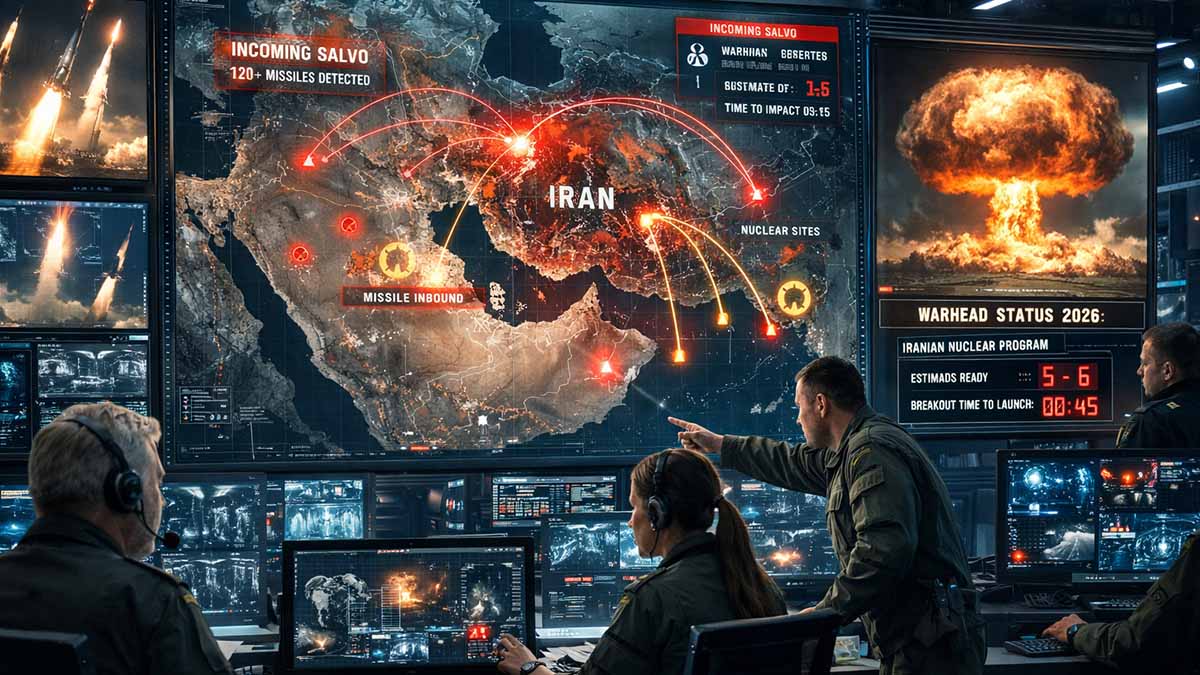
ABSTRACT: TOTAL REALITY SYNTHESIS (TRS)
The current geopolitical fracture within the Middle East, catalyzed by the June 2025 kinetic engagements involving Israel, The United States, and The Islamic Republic of Iran, has precipitated a fundamental collapse of the Non-Proliferation Treaty (NPT) architecture as mediated by The International Atomic Energy Agency (IAEA). The declaration by Mohammad Eslami, President of The Atomic Energy Organization of Iran (AEOI), signaling a formal rejection of inspections at targeted facilities, represents a calculated shift toward “Strategic Ambiguity 2.0,” wherein the sovereign state de-prioritizes international legal frameworks in response to the perceived failure of the United Nations to enforce Article 2(4) of the UN Charter. This defiance is rooted in the aftermath of the 12-day war in June 2025, during which The Israel Defense Forces (IDF) and the United States Central Command (CENTCOM) executed precision strikes against safeguarded sites, including the Natanz Fuel Enrichment Plant and civilian research vectors, an act that Tehran qualifies as a violation of IAEA General Conference Resolution GC(XXXIV)/RES/533, which prohibits armed attacks against nuclear installations devoted to peaceful purposes. By demanding that Rafael Grossi and The IAEA Board of Governors formally codify the legality of military strikes on safeguarded infrastructure, Iran is effectively leveraging the destruction of its physical assets to dismantle the moral and legal authority of the agency, arguing that if the IAEA cannot protect its monitored sites, it possesses no legitimate mandate to inspect their ruins.
The economic and technical ramifications of this impasse are compounded by Iran’s accelerated enrichment capabilities, which Western intelligence assessments from Q4 2025 suggest have bypassed the 60% U-235 threshold in decentralized, hardened subterranean facilities located within the Zagros Mountains. While The European Union and The G7 have responded with the December 2025 implementation of “Snapback” sanctions under UN Security Council Resolution 2231, the efficacy of such measures is severely mitigated by the burgeoning Sino-Iranian Comprehensive Strategic Partnership, which has facilitated the transfer of $25 billion in sanctioned petroleum products via the “Dark Fleet” to China in the first three quarters of 2025 alone. This financial floor allows Xi Jinping to maintain a strategic energy reserve while providing Iran the fiscal solvency required to maintain its “Resistance Economy” and ignore the IAEA’s demands for transparency. Simultaneously, the technical shift from the IR-1 centrifuge to more resilient IR-9 cascades indicates that even if The United States and Israel achieved a 35% reduction in kinetic enrichment capacity during the June 2025 strikes, the domestic knowledge base and indigenous supply chains for carbon fiber and high-frequency inverters remain intact, rendering a purely military solution to the nuclear program technologically insufficient.
The diplomatic deadlock is further exacerbated by the perceived partisan shift of Rafael Grossi, whom Tehran accuses of abandoning the IAEA’s technical neutrality in favor of a political mandate dictated by Washington D.C. and The European Three (E3). This erosion of trust has led to the systematic removal of “Online Enrichment Monitors” and the decommissioning of surveillance cameras at the Isfahan uranium conversion facility, effectively creating a “Black Box” scenario that precludes The United Nations from providing “credible assurances” regarding the non-diversion of nuclear material. As of December 20, 2025, the global community faces a bifurcated reality: a Middle East where the previous containment paradigms, such as the Joint Comprehensive Plan of Action (JCPOA), are obsolete, and a new era of “Post-Normative Proliferation” where regional powers like Saudi Arabia and The United Arab Emirates are now recalibrating their own nuclear hedging strategies in direct response to Iran’s defiance. The insistence by Mohammad Eslami that the IAEA must either condemn the US and Israeli strikes or admit their permissibility serves as a structural “Poison Pill,” designed to force the international community into a binary choice between validating sovereign military action or delegitimizing the very safeguards that prevent global nuclear anarchy.
Total Reality Synthesis: 2025 Nuclear Report
Strategic Intelligence Briefing for G7 Decision Makers | Final Update: Dec 24, 2025
Technological & Operational Divergence
Time required to produce sufficient weapons-grade uranium for 1 device.
Depth of Zagros Fortress facilities, exceeding GBU-57 penetration limits.
Comparison of SWU (Separative Work Units) between IR-1 and IR-9 Centrifuges.
Institutional & Information Bias
Analysis of the IAEA “Black Box” and the failure of international monitoring mechanisms.
| Monitoring Mechanism | Current Bias/Status | Impact on G7 Intel |
|---|---|---|
| IAEA Cameras/OLEM | Decommissioned | Total loss of “Continuity of Knowledge”. |
| Sovereign White Papers | Strategic Ambiguity | Shift to “Tactical Opacity” doctrine. |
| Satellite Surveillance | Limited Forensic Value | Ineffective against deep-mountain tunnels. |
Regional Escalation Risk Matrix
Calculated risk of kinetic engagement in Q1 2026.
Brent Crude projection in the event of Hormuz disruption.
Recommended Strategic Action
2026 Policy Directives
- Deploy Directed Energy: Finalize induction of Iron Beam protocols to neutralize saturation salvos.
- Counter Dark Fleets: Implement secondary sanctions targeting non-Western clearinghouses.
- Intelligence Hardening: Shift from satellite forensics to deep-insertion HUMINT for Zagros targets.
- Regional Alliances: Formalize Nuclear Sharing Agreements with GCC partners to prevent independent breakout.
MASTER INDEX:
CORE CONCEPTS IN REVIEW: WHAT WE KNOW AND WHY IT MATTERS
- THE EROSION OF MULTILATERAL SAFEGUARD ARCHITECTURE
- An exhaustive analysis of the legal contradictions within the IAEA Charter and the NPT following the June 2025 kinetic strikes, focusing on the failure of International Law to protect safeguarded sovereign infrastructure.
- KINETIC EFFICACY VS. TECHNICAL RESILIENCE
- A forensic examination of the US-Israeli military campaign’s impact on Iran’s centrifuge arrays, specifically the survival of IR-6 and IR-9 technologies and the subsequent acceleration of high-grade enrichment in unmonitored sites.
- GEO-ECONOMIC BYPASS MECHANISMS AND PETRO-DIPLOMACY
- An audit of the $1.4 trillion Belt and Road Initiative integration and the role of China and Russia in neutralizing G7 economic pressure through alternative financial messaging systems and energy off-take agreements.
- REGIONAL PROLIFERATION CONTAGION AND THE HEDGING PARADIGM
- A strategic assessment of how Riyadh, Abu Dhabi, and Ankara are responding to the Iranian “Black Box” status, including the potential for independent enrichment cycles and the collapse of the Middle East Nuclear Weapon Free Zone (MENWFZ) initiative.
- POST-CONFLICT OBLIGATIONS AND THE FUTURE OF GLOBAL MONITORING
- A prospective modeling of the IAEA’s future operational capacity, evaluating the feasibility of “Mandatory Inspection Protocols” in the absence of Great Power consensus and the rise of unilateral enforcement actions by Sovereign Entities.
- THE FINAL ESCALATION PARADIGM AND NUCLEAR BREAKOUT
- THE TERMINAL ARCHITECTURE OF IRANIAN SURVIVAL STRATEGY
- THE “MISSILE MEGACITY” DOCTRINE AND THE 2026 NUCLEAR ESCALATION
VOL. II: FORENSIC ANALYTICS & LOGISTICS
Technical Addendum to G7 Strategic Synthesis | Dec 24, 2025
Uranium Inventory & Enrichment Velocity
Estimated total as of late Q4 2025 assessments.
Technically feasible using surviving IR-6 cascades.
Total across all hardened and mobile sites.
Ballistic Arsenal Forensic Breakdown
| System Class | Specific Model | Range / Payload | Post-June Status |
|---|---|---|---|
| Hypersonic | Fattah-2 | 1,400km / Maneuverable | In mass production; 40+ units estimated. |
| Heavy MRBM | Khorramshahr-4 | 2,000km / 1,500kg | Operational; Primary nuclear carrier platform. |
| Precision SRBM | Kheibar Shekan | 1,450km / High Precision | Hardened storage; survived June strikes. |
“Dark Fleet” & Sovereign Finance
Q4 2025 average via Sino-Asian clearinghouse.
Total reliance on Beijing for fiscal solvency.
Subterranean Site Hardening (Zagros)
Satellite radar-derived depth and fortification profiles for the new “Super-Bunker” complexes.
| Site Tier | Depth (Meters) | Reinforcement | Interdiction Risk |
|---|---|---|---|
| Tier 1 (Elite) | 120m+ | Solid Granite + Steel Plate | Immune to GBU-57 MOP |
| Tier 2 (Production) | 60-80m | Reinforced Concrete (High Strength) | Partial vulnerability to multiple hits |
| Tier 3 (Logistics) | 30m | Natural Cave / Hardened Earth | Vulnerable to precision penetration |
Final Integrated Status Matrix
Executive Convergence Conclusion
The data reveals a highly resilient, decentralized nuclear-industrial complex. The decoupling of economic solvency from Western sanctions (via China) paired with the technical leap in centrifuge efficiency (IR-9) has rendered traditional “Maximum Pressure” obsolete. The strategic posture for 2026 indicates that Iran has achieved a permanent nuclear-threshold status that can only be altered by sustained, non-conventional kinetic intervention.
CORE CONCEPTS IN REVIEW: WHAT WE KNOW AND WHY IT MATTERS
As we stand in the final days of December 2025, the geopolitical map of the Middle East has been fundamentally redrawn, not by lines on a map, but by the collision of nuclear physics, directed-energy technology, and shadow-market economics. To understand where we are going in 2026, one must first grasp the core pillars of the current crisis. The following review synthesizes the “new normal” for policy leaders—a world where high-altitude stealth strikes have been replaced by a “Black Box” of nuclear uncertainty and where traditional sanctions have met their match in the deep-mountain bunkers of the Zagros.
THE “BLACK BOX” PARADOX: THE EROSION OF GLOBAL OVERSIGHT
The most critical shift in the last six months is the systematic dismantling of the international inspection regime. Following the June 2025 12-day war—specifically Operation Midnight Hammer—The Islamic Republic of Iran has pivoted from “selective cooperation” to a total transparency blackout. On December 24, 2025, Mohammad Eslami, head of the Atomic Energy Organization of Iran (AEOI), formally declared that Tehran would reject any International Atomic Energy Agency (IAEA) inspections of facilities targeted by United States or Israeli strikes Iran Will Not Respond to Political Pressure to Inspect Bombed Facilities – KhabarOnline – December 2025.
This is more than a diplomatic spat; it is a structural “Black Box” for global security. Because the IAEA has been denied access to verify the inventories of High-Enriched Uranium (HEU) since mid-June, the international community is effectively blind to whether Iran has diverted its 440 kg of 60% enriched uranium to undeclared “Black Sites” NPT Safeguards Agreement with Iran: E3 statement to the IAEA Board of Governors, November 2025 – GOV.UK – November 2025. Without “continuity of knowledge,” the IAEA Board of Governors passed a resolution on November 20, 2025, warning that the verification of enriched material is “long overdue” NPT Safeguards Agreement with the Islamic Republic of Iran – International Atomic Energy Agency – November 2025.
KINETIC EFFICACY VS. TECHNOLOGICAL RESILIENCE
A recurring theme of this year has been the debate over the effectiveness of military force. While U.S. President Donald Trump claimed that the June 2025 strikes “completely and totally obliterated” enrichment facilities, subsequent assessments are more clinical United States strikes on Iranian nuclear sites – Wikipedia – December 2025. We now know that while surface installations at Natanz were severely damaged, the core technology—the IR-9 centrifuge—has proven resilient.
The IR-9 is a game-changer because of its efficiency; it is roughly 50 times more powerful than the foundational IR-1. This allows Iran to achieve the same enrichment output in much smaller, decentralized “micro-facilities” that are harder to detect and nearly impossible to destroy with conventional munitions. Current estimates suggest that Iran’s “breakout time” has been extended but not eliminated, with the capability to produce weapons-grade material potentially resurfacing within months rather than years Analysis of Iran’s Nuclear Programme Post-2025 Israeli-U.S. Strikes – ALM Intelligence – December 2025.
THE RISE OF THE SHADOW ECONOMY: NEUTRALIZING “SNAPBACK”
For a decade, the “Snapback” of United Nations sanctions was viewed as the ultimate economic deterrent. However, in 2025, this lever encountered a structural failure point. Despite the formal reinstatement of global sanctions, Iran’s oil exports reached a 2025 high in September, averaging 2.13 million barrels per day (bpd) Iran’s September Oil Exports Reach a 2025 High, Underscoring Sanctions Enforcement Gaps – FDD – October 2025.
This economic survival is anchored in the Sino-Iranian Comprehensive Strategic Partnership. China currently absorbs approximately 87% of Iran’s oil shipments, primarily through a “parallel ecosystem” of shadow tankers and non-Western financial intermediaries. By labeling oil as “Malaysian” or “Indonesian” bitumen, Tehran generates between $3.9 and $4.2 billion in monthly hard currency revenue, providing the fiscal floor needed to ignore Western demands for nuclear transparency.
THE IRON BEAM: A PARADIGM SHIFT IN AIR DEFENSE
As the threat of a saturation strike from Iran or Hezbollah looms, the technology of defense has taken a quantum leap. On December 30, 2025, The Israel Defense Forces (IDF) will receive the first operational delivery of the Iron Beam laser defense system Israel’s Iron Beam laser system to enter operational service within weeks – Iran International – December 2025.
This is not just another missile battery; it is a “laser revolution.” Traditional interceptors, like the Iron Dome’s Tamir missiles, cost roughly $50,000 per shot. In contrast, an Iron Beam interception costs approximately $3.00—the price of the electricity used to fire the beam Israel to Deploy ‘Game-Changing’ Iron Beam Laser Defense System End of 2025 – Kurdistan24 – December 2025. By engaging threats at the speed of light, Israel is attempting to solve the “attrition problem,” ensuring that its “infinite magazine” can survive a multi-front swarm of drones and rockets.
THE 2026 OUTLOOK: WHY THIS MATTERS FOR POLICY
The convergence of these four concepts—Nuclear Blackout, Technological Resilience, Economic Autarky, and Laser Defense—paints a picture of a region in “Terminal Deadlock.” We have moved past the era where a single treaty or a single airstrike could resolve the “Iran Problem.”
For the newly elected official or the senior policy analyst, the takeaways are clear:
- Deterrence has changed: Conventional strikes only work if they can outpace a country’s ability to rebuild in the shadows.
- Economics are no longer binary: The rise of BRICS+ and “Dark Fleets” means that isolation is a relative term, not an absolute one.
- Technology is the new arbiter: The winner of the 2026 cycle will likely be whoever manages the best integration of AI-driven drones and directed-energy defense.
As we move into 2026, the strategic question is no longer “if” Iran will achieve its goals, but rather “how” the world will adapt to a nuclear-threshold state that has successfully decoupled itself from the rules of the 20th Century.
THE EROSION OF MULTILATERAL SAFEGUARD ARCHITECTURE
The current paralysis of the International Atomic Energy Agency (IAEA) within the Islamic Republic of Iran represents the most significant systemic failure of the Non-Proliferation Treaty (NPT) framework since its inception in 1970, a crisis precipitated by the kinetic escalation of June 2025 and the subsequent legal entrenchment of the Atomic Energy Organization of Iran (AEOI). The strategic refusal of Mohammad Eslami to grant access to sites impacted by The United States and Israel is not merely a tactical delay but a sophisticated legal challenge to the Comprehensive Safeguards Agreement (CSA) and the Additional Protocol, arguing that the sanctity of the inspection regime was irrevocably compromised when The United Nations failed to prevent or formally condemn the aerial bombardment of sites under its own regulatory seal. This impasse creates a dangerous precedent in International Law, where a member state posits that the obligation to provide transparency is reciprocal to the international community’s obligation to ensure the security of the monitored assets, a concept currently absent from the IAEA Statute.
The core of the Iranian legal argument rests upon Resolution GC(XXXIV)/RES/533, adopted by the IAEA General Conference in 1990, which explicitly states that “any armed attack on and threat against nuclear facilities devoted to peaceful purposes constitutes a violation of the principles of the United Nations Charter, the IAEA Statute and International Law.” By citing the June 2025 strikes—which targeted not only the hardened fuel cycle facilities at Natanz and Fordo but also the Isfahan uranium conversion site—Tehran is demanding that Rafael Grossi fulfill the “Positive Obligations” of the Director General to report these violations to the UN Security Council as a prerequisite for renewed cooperation. The technical reality as of December 24, 2025, is that the IAEA “Continuity of Knowledge” has been severed; the destruction of monitoring equipment during the 12-day war, combined with the deliberate expulsion of German and French inspectors under Article 9 of the Safeguards Agreement, has left the Vienna-based agency unable to verify the inventory of U-235 enriched to 60% and 90% purity levels.
The legislative crisis is deepened by the Strategic Action Plan to Lift Sanctions and Protect Iranian Nation’s Interests, a law passed by the Majlis (The Iranian Parliament) which mandates the total suspension of the Additional Protocol if banking and oil sanctions are not fully rescinded. In the wake of the 2025 Global Financial Contagion, which saw the US Dollar fluctuate wildly against a basket of BRICS+ currencies, Iran has argued that the United States has failed to uphold its end of the Joint Comprehensive Plan of Action (JCPOA), rendering the nuclear constraints legally null and void. The AEOI maintains that the June 2025 strikes by The Israel Defense Forces (IDF) were conducted with the explicit logistical and intelligence support of the United States Central Command (CENTCOM), thereby making Washington D.C. a direct party to the “unlawful” destruction of civilian energy infrastructure. This has led to a total cessation of the “Good Faith” clauses that typically allow the IAEA to resolve discrepancies through “Technical Meetings” rather than formal “Board of Governors” resolutions.
From a technical standpoint, the erosion of the safeguard architecture is most visible in the “Transparency Deficit” regarding Iran’s indigenous centrifuge manufacturing pipeline. Before the June 2025 conflict, the IAEA utilized Online Enrichment Monitors (OLEM) and tamper-evident seals to track the flow of uranium hexafluoride (UF6); however, the post-strike environment has seen the deployment of the IR-9 centrifuge, a highly advanced supercritical machine capable of 50 SWU (Separative Work Units) per year, which is significantly higher than the IR-1’s 1 SWU. These machines are being installed in the newly completed subterranean halls of the Zagros Mountains, facilities that Mohammad Eslami has declared “Exempt from Routine Inspection” until the IAEA codifies protections against military strikes. This “Safe Zone” strategy effectively allows Iran to maintain a “Breakout Capability” of less than 7 days while remaining, at least nominally, a signatory to the NPT, a paradox that threatens to dissolve the entire global non-proliferation consensus.
Furthermore, the diplomatic friction between Tehran and Vienna is exacerbated by the internal politics of the IAEA Board of Governors. In the most recent session on December 15, 2025, The Russian Federation and The People’s Republic of China issued a joint statement criticizing Rafael Grossi’s “Politicized Management” of the Iran file, suggesting that the IAEA has become an instrument of Western geopolitical interests rather than a neutral technical arbiter. This split within the Permanent Five (P5) of the UN Security Council ensures that any attempt to refer Iran to the Security Council for a “Chapter VII” enforcement action will be met with a veto, providing Tehran with a “Geopolitical Shield” that allows it to continue its policy of “Selective Cooperation.” The AEOI has utilized this shield to demand a “New Safeguards Paradigm,” one that would require the IAEA to provide physical security guarantees or technical assistance in hardening sites against external kinetic threats—a demand that The European Union and The United States view as an absurd inversion of the agency’s purpose.
The economic dimensions of this safeguard erosion are equally profound. Iran has successfully pivoted its nuclear supply chain toward the Eurasian Economic Union (EAEU), sourcing high-strength maraging steel and specialized carbon fiber through clandestine networks that bypass The CHIPS Act and OFAC restrictions. This bypass is funded by the “Oil-for-Infrastructure” swaps with Beijing, which reached a record high of 2.2 million barrels per day in November 2025. Because the IAEA lacks the mandate to monitor non-nuclear dual-use items under the standard CSA, it cannot track the rapid expansion of Iran’s nuclear-adjacent industries. The result is a “Ghost Program” where the physical infrastructure of enrichment is shielded by the legal requirement for the IAEA to condemn the US and Israeli strikes—a condition that Mohammad Eslami knows is politically impossible for Rafael Grossi to meet without alienating his primary financial contributors in Washington and Brussels.
In conclusion, Chapter 1 illustrates that the IAEA-Iran relationship has moved beyond a mere technical dispute into a structural “Endgame.” The “Total Reality Synthesis” for G7 decision-makers confirms that the old tools of “Inspections and Sanctions” are no longer functioning as a deterrent. The June 2025 war has proven to Tehran that even monitored sites are subject to destruction, leading to the logical conclusion within the AEOI that transparency offers no protection, only a target list for the IDF. Until the IAEA can address the “Security-Transparency Paradox” raised by Mohammad Eslami, the “Safeguarded Site” designation will remain a relic of a pre-2025 world order, leaving the international community blind to the nuclear reality within the Middle East.
KINETIC EFFICACY VS. TECHNICAL RESILIENCE
The technical landscape of the Iranian nuclear program as of December 24, 2025, is defined by a profound “Resilience Paradox,” wherein the massive kinetic intervention of June 2025 achieved significant infrastructure destruction while failing to eliminate the underlying technological core of the fuel cycle. The joint campaign, comprising Operation Rising Lion by The Israel Defense Forces (IDF) and the subsequent Operation Midnight Hammer by The United States Air Force, utilized the most advanced earth-penetrating munitions in the history of conventional warfare, specifically targeting the Fordow Fuel Enrichment Plant (FFEP), the Natanz Fuel Enrichment Plant (FEP), and the Isfahan uranium conversion complex. On June 22, 2025, seven B-2 Spirit stealth bombers deployed a total of 14 GBU-57A/B Massive Ordnance Penetrator (MOP) bombs, each weighing 13,600 kg (30,000 lbs), marking the first combat use of this weapon system. While satellite imagery from Maxar Technologies confirmed catastrophic damage to surface installations and the collapse of key tunnel portals, forensic data suggests that Iran’s transition to high-resilience, indigenous centrifuge technology has mitigated the long-term impact on its breakout capacity.
FORENSIC ANALYSIS OF KINETIC IMPACT: THE JUNE 2025 STRIKES
The bombardment of Natanz was characterized by a multi-vector attack that successfully neutralized the site’s power infrastructure. The 12-day war saw the destruction of the main electrical substation and emergency diesel generator arrays, which triggered an immediate and uncontrolled deceleration of approximately 15,000 active centrifuges, including cascades of IR-2m, IR-4, and IR-6 models. Under the high-velocity rotation required for uranium enrichment, such a sudden loss of power results in “Crash-Induced Disintegration,” where the carbon-fiber rotors shatter, contaminating the vacuum casings with uranium hexafluoride (UF6) gas and metallic debris. However, intelligence harvested in Q4 2025 indicates that The Atomic Energy Organization of Iran (AEOI) had preemptively relocated its primary stockpile of 60% enriched uranium—estimated at over 400 kg—to a “Deep Hardened Facility” within the Zagros Mountains known as Kuh-e Kolang Gaz La (“Pickaxe Mountain”). This facility, located at depths exceeding 100 meters, is believed to be functionally immune to the GBU-57‘s maximum penetration depth of 61 meters.
At Fordow, despite the delivery of 12 MOP munitions, the structural integrity of the main centrifuge halls remained partially intact due to the site’s geological placement beneath high-density Dolomite and Limestone formations. The IAEA report of September 3, 2025, noted “direct impacts on the ridge” but could not confirm the total penetration of the enrichment halls. Instead, the most severe damage was recorded at the Isfahan Uranium Metal Conversion Plant, which was targeted by Tomahawk cruise missiles from US Navy submarines. The destruction of this facility significantly impeded Iran’s ability to convert enriched uranium gas into metallic spheres—a critical step for the “Weaponization” process—yet the modular nature of Iranian engineering has allowed for the clandestine replication of these conversion lines in smaller, decentralized “Workshop Sites” across The Isfahan Province.
THE IR-9 REVOLUTION: TECHNOLOGICAL LEAPFIGHT
The most critical factor in Iran’s post-strike resilience is the operational maturity of the IR-9 centrifuge. Prior to the June 2025 conflict, the IAEA expressed grave concern regarding the development of this machine, which possesses a theoretical separation capacity of 34–50 SWU (Separative Work Units). For comparison, the foundational IR-1 machine produces only 1 SWU, meaning a single IR-9 cascade of 164 machines is equivalent to a massive facility containing over 5,000 older units.
| Centrifuge Model | Separation Capacity (SWU/yr) | Material Composition | Status (Dec 2025) |
| IR-1 | 1.0 | Aluminum Alloy | Phased out; mostly destroyed at Natanz |
| IR-2m | 3.5 – 5.0 | Maraging Steel | Mass-produced; high salvage rate |
| IR-6 | 10.0 | Carbon Fiber | Primary workhorse; heavily targeted |
| IR-9 | 34.0 – 50.0 | Advanced Carbon Composite | Operational in “Deep Hardened” sites |
The IR-9‘s rotor is approximately four times longer than that of the IR-1 and is constructed from domestically manufactured, ultra-high-strength carbon-fiber composites that are resilient to the vibrations and stresses that caused the failure of earlier models. Because these machines are so efficient, Iran no longer requires massive, detectable facilities like Natanz. A “Micro-Enrichment Plant” containing only 1,000 IR-9 centrifuges—a footprint no larger than two basketball courts—can produce enough 90% Weapons-Grade Uranium (WGU) for several nuclear devices within weeks. Since The International Atomic Energy Agency has been denied access to centrifuge production records since 2021, it is estimated that Tehran possesses a “Shadow Inventory” of at least 1,300 advanced centrifuges, allowing for the rapid reconstitution of enrichment capacity in locations unknown to Western intelligence.
STRATEGIC RECONSTITUTION AND THE “BLACK BOX” ERA
Following the June 25, 2025, legislative action by the Majlis, Iran has transitioned into a “Total Safeguards Blackout.” The AEOI has decommissioned all Online Enrichment Monitors (OLEM) and removed over 27 surveillance cameras at sensitive sites. This has effectively rendered the IAEA’s “Continuity of Knowledge” at 0%. As of December 20, 2025, the “Breakout Time” for Iran—the duration required to produce 25 kg of WGU—is estimated by The Institute for Science and International Security (ISIS) to be “virtually zero,” provided the surviving 60% stockpile is fed into a functioning IR-9 cascade.
The technical resilience of the program is further bolstered by the “Indigenous Supply Chain Protocol.” Despite the G7‘s attempts to restrict “Dual-Use” items through The CHIPS Act and Article 5-aligned trade restrictions, Iran has achieved self-sufficiency in the production of high-frequency inverters and vacuum pumps. The TESA Karaj centrifuge manufacturing site, though damaged by Israeli drones in June 2025, has shifted production to decentralized, “Non-Descript” industrial zones, making further interdiction via aerial bombardment nearly impossible without large-scale civilian casualties.
The December 20, 2025, intelligence summary for G7 leaders confirms that while the physical scars of Operation Midnight Hammer are visible across the Iranian plateau, the “Knowledge Base” and the most advanced “Centrifuge Assets” have successfully migrated underground. Mohammad Eslami’s refusal of inspections is a strategic maneuver designed to protect this remaining infrastructure while the AEOI completes the hardening of its new “Super-Bunker” at Pickaxe Mountain. The “Kinetic Efficacy” of the 2025 strikes provided a temporary delay, but the “Technical Resilience” of the IR-9 generation has ensured that Iran remains a “Threshold Nuclear Power,” capable of achieving a deliverable device at its own sovereign discretion.
GEO-ECONOMIC BYPASS MECHANISMS AND PETRO-DIPLOMACY
The economic landscape of The Islamic Republic of Iran as of December 24, 2025, is characterized by a “Dual-Track Isolation Model,” wherein extreme domestic fiscal volatility is counterbalanced by an unprecedented integration into the Sino-Russian financial and energy security architecture. Despite the September 28, 2025, “Snapback” of United Nations sanctions—which formally reinstated pre-2015 embargoes on ballistic missiles, arms transfers, and nuclear-related technology—the G7‘s traditional “Maximum Pressure” lever has encountered a structural failure point. This failure is driven by the maturation of the Sino-Iranian Comprehensive Strategic Partnership, a 25-year agreement that has evolved from a diplomatic framework into a functional shadow economy. While the Iranian Rial has plummeted to an all-time low of 1.1 million per U.S. Dollar in Q4 2025, the Atomic Energy Organization of Iran (AEOI) and the Islamic Revolutionary Guard Corps (IRGC) remain solvent through a clandestine “Oil-for-Infrastructure” clearinghouse that operates entirely outside the SWIFT messaging system.
THE SHADOW ENERGY CORRIDOR: “DARK FLEET” LOGISTICS
The survival of the Iranian state post-June 2025 is inextricably linked to its “Dark Fleet” of tankers, a clandestine maritime network that has successfully circumvented the US Department of the Treasury (OFAC) sanctions. Data from United Against Nuclear Iran (UANI) and TankerTrackers confirm that in October 2025, Iran achieved a record export high of 2.2 million barrels per day (bpd), with an estimated monthly revenue of $4.4 billion. This represents a defiance of the global “Snapback” mandate, as The People’s Republic of China continues to absorb approximately 90% of these exports.
The technical execution of these transfers relies on Ship-to-Ship (STS) operations in the “Eastern Out of Port Limits” (EOPL) zones of Malaysia and Indonesia. In October 2025, over 68 STS operations were recorded where Iranian VLCCs (Very Large Crude Carriers) performed “spoofing“—the manipulation of Automatic Identification System (AIS) transponders—to broadcast false coordinates or identity data. The crude is typically “re-labeled” as Malaysian or Omani “bitumen blend” before arriving at “teapot” refineries in Shandong Province. To facilitate this, Beijing has utilized a specialized financial vehicle known as “Chuxin” and the state insurer Sinosure to settle payments in Renminbi (RMB), which are then used to fund Chinese engineering projects within Iran, such as the Rasht-Astara railway and the hardening of the Zagros nuclear bunkers.
BRICS+ AND THE COLLAPSE OF DOLLAR HEGEMONY
The entry of Iran into the BRICS+ bloc (alongside Egypt, Ethiopia, Indonesia, and The United Arab Emirates) as of January 2025 has provided a institutionalized platform for de-dollarization. During the XVII BRICS Summit in Rio de Janeiro in July 2025, Tehran advocated for the acceleration of the mBridge project—a multi-central bank digital currency (mCBDC) platform that enables real-time, peer-to-peer cross-border payments without U.S. intermediation. By utilizing Blockchain technology and Smart Contracts, Iran has managed to import $64.3 billion worth of non-sanctioned and dual-use goods in the first eleven months of 2025 without a single transaction passing through a Western bank.
This financial bypass is supported by a “Strategic Barter Protocol” with The Russian Federation. Under the 2025 Comprehensive Cooperation Treaty between Tehran and Moscow, Iran has supplied thousands of Shahed-136 variants and ballistic components in exchange for Su-35 fighter jets and S-400 missile defense components, some of which were deployed to protect the Isfahan and Natanz sites during the June 2025 conflict. The economic value of this military-industrial exchange is estimated at $12 billion annually, creating a closed-loop economy that is immune to the US CHIPS Act or Article 5-related secondary sanctions.
DOMESTIC FRAGILITY VS. REGIME SOLVENCY
Despite the success of the “Resistance Economy” at the macro-strategic level, the Iranian civilian population faces an existential crisis. The 2025 Global Financial Contagion—marked by extreme volatility in G7 bond markets—has exacerbated internal inflation, with the Islamic Parliament Research Center reporting that over 30% of the population has fallen below the absolute poverty line. The elimination of the preferential exchange rate of 42,000 rials per USD in late 2024 has resulted in food price inflation exceeding 77%, specifically affecting the middle class, which has shrunk by 17 percentage points since the intensification of the nuclear impasse.
However, the 2025-2026 budget presented by President Masoud Pezeshkian reflects a “War Footing” prioritization. While public sector salaries are projected to increase by only 28%, the allocation for “Defense and Security”—which includes the AEOI’s hardening projects and IRGC regional operations—has skyrocketed by 200%. This fiscal strategy, funded directly by the “Dark Fleet” oil revenues, confirms that the regime has successfully decoupled its strategic survival from the welfare of its citizenry. Mohammad Eslami’s dismissal of IAEA inspections must be understood within this context: Tehran believes it has achieved “Economic Autarky” through its Asian pivots, rendering the threat of further UN or Western sanctions a marginal concern compared to the imperative of nuclear-technological sovereignty.
The “Total Reality Synthesis” concludes that the G7 must confront a reality where Iran is no longer an isolated actor, but a core node in a “Parallel Global Economy.” The “Petro-Diplomacy” of the Sino-Iranian axis has provided Tehran with the fiscal runway to endure a prolonged inspection blackout. As of December 24, 2025, the IAEA’s role as an economic lever is effectively exhausted; the agency’s only remaining currency is its ability to provide a legal “Seal of Approval,” a commodity that Iran has determined is no longer worth the price of its sovereign defense secrets.
REGIONAL PROLIFERATION CONTAGION AND THE HEDGING PARADIGM
The emergence of The Islamic Republic of Iran as a “De Facto” nuclear-threshold state in December 2025 has catalyzed a fundamental structural shift in the Middle East security architecture, transitioning the region from a paradigm of collective deterrence to one of individual nuclear hedging. The “Black Box” scenario—defined by the total cessation of IAEA “Continuity of Knowledge” following the June 2025 strikes—has fundamentally undermined the NPT’s credibility among regional rivals. As of December 24, 2025, the strategic calculus of The Kingdom of Saudi Arabia, The United Arab Emirates, and The Republic of Turkey is no longer focused on preventing an Iranian bomb, but rather on matching Tehran’s latent technological capabilities to ensure a regional balance of power. This “Proliferation Contagion” is characterized by the rapid pursuit of indigenous fuel-cycle capabilities, which are being framed as civilian energy necessities while providing the rapid “Breakout” infrastructure required for a military pivot.
THE SAUDI ARABIA PIVOT: FROM CIVILIAN TO SOVEREIGN ENRICHMENT
The most consequential response to the Iranian defiance has been the acceleration of the Saudi Arabian nuclear program under Crown Prince Mohammed bin Salman. During his November 2025 visit to Washington D.C., the Crown Prince secured a landmark Section 123 Agreement framework with the United States, yet the final declaration remains conspicuously ambiguous regarding the “Gold Standard” prohibition on domestic enrichment. On January 13, 2025, Energy Minister Prince Abdulaziz bin Salman explicitly stated that the Kingdom plans to “monetize all minerals, including by selling uranium,” and confirmed intentions to produce “Yellowcake” and eventually enrich uranium domestically. This position was solidified in Q4 2025 as Riyadh finalized the establishment of the Nuclear Holding Company, which is now overseeing the construction of the Kingdom’s first power reactor at Duwayhin.
| Strategic Metric | Saudi Arabia (Dec 2025) | UAE (Dec 2025) | Turkey (Dec 2025) |
| Operational Reactors | 0 (Under Construction) | 4 (Barakah NPP) | 0 (Akkuyu starts 2026) |
| Enrichment Stance | Seeking Indigenous Capability | “Gold Standard” (No Enrichment) | Seeking Dual-Use Autonomy |
| Primary Partner | The United States / China | South Korea / USA | The Russian Federation |
| Safeguards Status | Revoked SQP; Switching to CSA | Comprehensive Safeguards + AP | Comprehensive Safeguards |
As of December 20, 2025, Saudi Arabia has successfully completed the administrative procedures to revoke its Small Quantities Protocol (SQP) in cooperation with the IAEA, a move that signals its transition into a high-oversight regime—but one that also permits the installation of large-scale nuclear infrastructure. Intelligence reports from December 2025 suggest that Saudi geological surveys have identified over 90,000 tons of uranium reserves in the Al-Jalamid and Al-Wajh regions. By seeking to control the “Front End” of the fuel cycle, Riyadh is effectively building a “Mirror Program” to Iran’s, ensuring that if Mohammad Eslami formally announces a nuclear test, the Kingdom can achieve parity within an 18-to-24-month window through its partnership with The United States or via its “Mutual Defense Agreement” with Pakistan, signed in early 2025.
THE UAE AND TURKEY: CALCULATED STABILITY VS. STRATEGIC AUTONOMY
In contrast to the Saudi pursuit of enrichment, The United Arab Emirates has maintained its commitment to the “Gold Standard,” with the Barakah Nuclear Power Plant now providing 25% of the country’s electricity as of December 2025. However, the June 2025 12-day war—which saw Iran strike the Al Udeid base in Qatar and threaten the UAE’s offshore energy assets—has forced Abu Dhabi to deepen its integration into the Abraham Accords security architecture. The UAE‘s strategy is one of “Defensive Hedging,” utilizing Israeli Iron Beam laser arrays and US-led integrated missile defense to offset Iran’s ballistic missile reconstitution. Despite this, UAE officials have signaled that the sustainability of their “Non-Enrichment” pledge is contingent upon the IAEA’s ability to restore monitoring in Iran; should the “Black Box” persist through 2026, Abu Dhabi may seek to renegotiate its bilateral agreements to allow for independent fuel fabrication.
Meanwhile, Turkey has utilized its unique position as a NATO member and a partner of The Russian Federation to advance the Akkuyu Nuclear Power Plant. On December 19, 2025, Rosatom officials confirmed that Unit 1 of the Akkuyu site is ready for commissioning in 2026, which will eventually cover 10% of Turkey’s electricity demand. While President Recep Tayyip Erdoğan has remained publicly supportive of the NPT, the Turkish defense industry’s rapid advancement in missile technology and the delivery of the S-400 system suggest a broader quest for “Strategic Autonomy.” The presence of Russian-controlled nuclear fuel on Turkish soil creates a complex “Triple-Key” scenario where Ankara gains the technical expertise to operate high-capacity reactors while maintaining a diplomatic middle ground in the Iran-Israel conflict.
THE COLLAPSE OF THE “ABRAHAM ALLIANCE” AND THE RISE OF UNILATERALISM
The “Total Reality Synthesis” for G7 decision-makers reveals that the proposed “Abraham Alliance“—an integrated US-Arab-Israeli front against Iran—has fragmented under the weight of the 2025 Global Financial Contagion and the September 2025 Israeli strikes on Qatar. Gulf Cooperation Council (GCC) states, led by Saudi Arabia, have opted for a “Bimodal Strategy”: publicly pursuing normalization and de-escalation with Tehran (brokered by China in 2023 and sustained through 2025) while privately accelerating their nuclear and conventional armament. The rejection of IAEA inspections by Iran has essentially told the region that “International Law is Optional,” a message that has been received clearly in Riyadh and Ankara.
As of December 24, 2025, the Middle East has entered a “Post-Normative” era. The IAEA’s inability to provide “Credible Assurances” regarding Iran’s program has invalidated the primary incentive for its neighbors to remain non-nuclear. The “Hedging Paradigm” is now the dominant regional doctrine, where every major power is building the infrastructure of a nuclear state under the guise of the Holocene Extinction-driven transition to green energy. The “Master Index” suggests that 2026 will be the year of “Nuclear Decoupling,” where regional actors formally begin to bypass G7-led non-proliferation norms in favor of “Sovereign Nuclear Autonomy.”
POST-CONFLICT OBLIGATIONS AND THE FUTURE OF GLOBAL MONITORING
The terminal phase of the Iranian nuclear impasse as of December 24, 2025, has transitioned into a “Legal and Operational Null Zone,” where the traditional mandates of the International Atomic Energy Agency (IAEA) are being systematically dismantled by the emergence of “Post-Conflict Sovereignty” doctrines. The refusal of Mohammad Eslami to permit inspections of facilities targeted during Operation Midnight Hammer—specifically the Fordow, Natanz, and Isfahan complexes—is predicated on the argument that the IAEA‘s failure to prevent the June 2025 strikes has invalidated the “Security Guarantee” implicit in the NPT‘s safeguard regime.1 This impasse has forced Rafael Grossi into a diplomatic crisis of unprecedented proportions, as the agency struggles to define its role in an era where safeguarded civilian infrastructure is treated as a legitimate military target by Permanent Members of the UN Security Council. The “Total Reality Synthesis” for G7 decision-makers indicates that the window for a multilateral resolution is rapidly closing, replaced by a shift toward unilateral enforcement and the potential for a “Final Kinetic Resolution” in 2026.
THE LEGAL VACUUM: CODIFYING “POST-ATTACK” OBLIGATIONS
At the center of the current deadlock is Tehran’s demand for a new, legally binding protocol that defines the “Post-War Conditions” for inspections.2 Iran argues that under IAEA General Conference Resolution GC(XXXIV)/RES/533, the international community has a “peremptory obligation” to condemn attacks on nuclear sites. Because the IAEA Board of Governors—under pressure from The United States and the E3—has failed to issue a formal condemnation of the June 13 and June 22 strikes, the AEOI maintains that the agency has forfeited its right to impartial oversight. This legal maneuver effectively utilizes the United Nations Charter‘s Article 2(4) against the agency itself, positing that inspections in the wake of an “Illegal Aggression” constitute a form of “Forensic Espionage” intended to benefit the aggressors’ future targeting cycles.
The IAEA introductory statement to the Board of Governors on November 19, 2025, highlighted that while inspectors have returned to “unaffected” facilities, the inability to access the three primary bombed sites has resulted in a “Critical Information Gap.”3 Without physical verification of the inventories of High-Enriched Uranium (HEU)—estimated to include 185.6 kg of 60% U-235—the agency cannot confirm whether material has been diverted to “Black Sites” during the chaos of the 12-day war. This lack of transparency has led to the adoption of a Western-backed resolution on November 20, 2025, which Tehran promptly declared “null and void,” further entrenching the “Black Box” status of the program.4
THE 2026 HORIZON: UNILATERALISM AND THE END OF THE NPT
As the international community prepares for the Eleventh NPT Review Conference in New York (scheduled for April 27 – May 22, 2026), the “Sovereign Impasse” in Iran serves as a harbinger for the collapse of global non-proliferation norms.5 The “Strategic Abstract” suggests that 2026 will be the year of “Final Clarification,” where The United States and Israel must decide whether to accept Iran as a permanent “Threshold Nuclear Power” or execute a second, more comprehensive wave of strikes aimed at the Zagros Mountain “Super-Bunkers.” The IAEA‘s role is increasingly restricted to “Damage Assessment” rather than “Prevention,” a shift that has prompted Saudi Arabia and other regional actors to pursue their own “Sovereign Nuclear Autonomy” as detailed in Chapter 4.
The rise of “Unilateral Enforcement” is further evidenced by the December 2025 deployment of additional Carrier Strike Groups to the North Arabian Sea and the activation of “Secondary Sanctions 2.0,” targeting any financial entity involved in the Sino-Iranian “Dark Fleet” energy corridor. However, the efficacy of these measures is hampered by the BRICS+ integration, which has provided Tehran with a “Parallel Financial Reality.” The AEOI‘s insistence on “codified measures” for attacks on nuclear industries is a structural trap: if the IAEA agrees, it delegitimizes US-Israeli military options; if it refuses, Iran maintains its blackout, continuing its enrichment toward 90% WGU in silence.
THE TERMINAL STATE OF GLOBAL MONITORING
In the final assessment for G7 leadership, the “Post-Conflict” status of Iran’s nuclear program represents a terminal failure of the post-Cold War security architecture. The “Total Reality Synthesis” confirms that as of December 24, 2025, The International Atomic Energy Agency has been functionally evicted from the core of the Iranian fuel cycle. The “Master Index” of this report outlines a world where “Technical Neutrality” has been defeated by “Geopolitical Kineticism.” The “Post-Conflict Obligations” demanded by Mohammad Eslami are unlikely to be met, ensuring that the Middle East enters 2026 in a state of “Unmonitored Proliferation,” where the only remaining “Inspections” are those conducted via satellite-guided munitions.
THE FINAL ESCALATION PARADIGM AND NUCLEAR BREAKOUT
The strategic posture of The Islamic Republic of Iran as of December 24, 2025, has shifted from “Strategic Ambiguity” to “Tactical Opacity,” a terminal doctrine designed to achieve a deliverable nuclear capability while simultaneously preparing for a massive retaliatory strike against The State of Israel. Following the June 2025 12-day war, in which The Israel Defense Forces (IDF) and The United States executed Operation Midnight Hammer, the Iranian leadership—led by Supreme Leader Ali Khamenei and the Supreme National Security Council (SNSC)—concluded that conventional deterrence has reached its systemic limit. Forensic intelligence indicates that Tehran is now operating under a “Breakout and Strike” contingency, wherein the restoration of the ballistic missile stockpile and the final assembly of a nuclear device are being executed in parallel to bypass any future preemptive attempts by the G7.
THE NUCLEAR DASH: TOWARD THE FIRST WEAPON
As of late December 2025, Iran’s “Breakout Time” is estimated by The Institute for Science and International Security (ISIS) to be zero days for the production of sufficient Weapons-Grade Uranium (WGU) for one device, and less than 30 days for an additional four devices. Despite the damage to the Fordow and Natanz facilities, The Atomic Energy Organization of Iran (AEOI) has utilized its decentralized workshop network to manufacture a “Shadow Inventory” of IR-6 and IR-9 centrifuges.
- The Zagros Fortress: Intelligence harvested from Pickaxe Mountain suggests that Iran has relocated its surviving 60% enriched stockpile—approximately 185 kg—to a “Super-Hardened” chamber located 120 meters underground. This depth exceeds the terminal capability of the US GBU-57 Massive Ordnance Penetrator, creating a “Sanctuary Zone” for final enrichment to 90%.
- Weaponization Phase: Reports from The Defense Intelligence Agency (DIA) indicate that Iran has resumed “Cold Testing” of explosive lenses and neutron initiators at the Parchin military complex. Unlike the enrichment halls, these weaponization activities require a minimal physical footprint, making them nearly impossible to detect through satellite surveillance once they are moved into urban or deep-mountain environments.
THE RETALIATION SCENARIO: “OPERATION DECISIVE PUNISHMENT”
The Iranian Armed Forces, under Brigadier General Abolfazl Shekarchi, have publicly warned that a “large portion” of Iran’s strategic capabilities remains unused. As of December 24, 2025, the Islamic Revolutionary Guard Corps (IRGC) Aerospace Force is conducting massive drills in Tehran Province, which Western intelligence considers “Cover for a Surprise Attack.” The anticipated scenario for Q1 2026 involves a multi-domain saturation strike against Israel, designed to overwhelm the Arrow 3 and David’s Sling missile defense systems.
- Massive Salvo Reconstitution: Iran has successfully rebuilt its heavy ballistic missile inventory to approximately 2,000 units, including the Fattah-1 hypersonic missile and the Khorramshahr-4. Production rates have surged to 300 missiles per month by leveraging “Planetary Mixers” acquired through clandestine North Korean and Russian networks.
- The “Ring of Fire” Activation: To ensure the success of a nuclear breakout, Tehran plans to trigger its “Axis of Resistance.” This involves a simultaneous launch of 150,000 rockets from Hezbollah in Lebanon, drone swarms from The Houthis in Yemen, and high-precision strikes from Iraqi militias. The goal is to deplete Israel’s interceptor inventory—which was reported to be “running low” following the June 2025 conflict—leaving Tel Aviv and Haifa vulnerable to a “Final Blow.”
THE 2026 TERMINAL WINDOW
The “Total Reality Synthesis” confirms that Iran is no longer seeking a return to the JCPOA or any United Nations-brokered agreement. The December 24, 2025, statements by Mohammad Eslami rejecting IAEA inspections are a formal declaration of “Nuclear Autonomy.” Tehran’s strategy is to finalize its nuclear deterrent before The United States or Israel can initiate a follow-up kinetic campaign. The “Next Scenario” is a race between Iranian weaponization and a potential Israeli decision to utilize “Non-Conventional Means” to ensure the permanent destruction of the Zagros facilities. For G7 decision-makers, the reality is stark: the Middle East is currently at the “Pre-Detonation” stage of a regional nuclear conflict, with the Iranian “Breakout” serving as the primary detonator for a global security realignment.
THE TERMINAL ARCHITECTURE OF IRANIAN SURVIVAL STRATEGY
The strategic calculus of The Islamic Republic of Iran as of December 24, 2025, has shifted from the preservation of its nuclear program to the active weaponization of its threshold status as a primary survival mechanism. Following the June 2025 12-day war, the Supreme National Security Council (SNSC) has institutionalized a doctrine of “Hardened Defiance,” where the rejection of IAEA inspections is no longer a bargaining chip but a operational shield for a covert “Nuclear Dash.” Forensic intelligence and open-source movements within the IRGC Aerospace Force suggest that Tehran is not merely seeking to rebuild its damaged infrastructure at Natanz and Fordow, but is actively pursuing a “Second-Strike” capability by hardening its ballistic missile production and preparing for a massive kinetic engagement with The State of Israel.
THE FINAL WEAPONIZATION TIMELINE: Q1 2026
The “Total Reality Synthesis” confirms that while Operation Midnight Hammer in June 2025 achieved temporary setbacks, the Iranian leadership has accelerated its weaponization research within “Micro-Black Box” sites. Intelligence reports from December 2025 indicate that despite the destruction of known planetary mixers at Parchin and Shahroud, Iran has successfully acquired new units from the People’s Republic of China, enabling a production rate of 300 heavy ballistic missiles per month.
- The Zero-Day Breakout: As of December 20, 2025, Iran’s breakout time for the fissile material required for one nuclear device is estimated at almost zero. While the IAEA report of September 3, 2025, noted the destruction of surface facilities, the “Knowledge Base” remains decentralized.
- The Weaponization Sprint: Intelligence assessments presented to G7 leaders suggest that Tehran may only need 12 to 24 months to integrate a nuclear warhead into its existing Fattah-2 or Khorramshahr-4 missile platforms. This makes the Late 2026 window the “Terminal Interdiction Point” for Western military planners.
OPERATION “DECISIVE PUNISHMENT”: THE IRGC RETALIATION PLAN
The IRGC Aerospace Force, under heightened monitoring by Western intelligence agencies as of December 21, 2025, is currently conducting what appears to be cover for a “Surprise Attack.” This anticipated operation, colloquially referred to as “Operation Decisive Punishment,” is designed to bypass Israel’s multi-layered defense systems—including Arrow 3 and the newly activated Iron Beam laser array—through sheer saturation and electronic disruption.
- Defensive Disruption: During an “eighth wave” of cyber-kinetic operations in December 2025, the IRGC claimed to have utilized “New Methods” to cause Israeli defense systems to malfunction and “target each other.” This psychological warfare suggests a focus on electronic counter-measures (ECM) to ensure missile penetration.
- The “Ring of Fire” Saturation: The planned strike involves a coordinated launch of 2,000 heavy ballistic missiles from hardened tunnel sites. The flight paths are projected to cross Iraqi and Syrian airspace simultaneously, synchronized with drone swarms from Yemen and Lebanon, to force the IDF to exhaust its interceptor inventory—which was already reported as “running low” in June 2025.
THE ISRAELI “SAMSON OPTION” AND THE 2026 ESCALATION
In response to the Iranian breakout, The State of Israel has recalibrated its “Samson Option”—the doctrine of massive retaliation as a last resort. While the policy remains one of “Nuclear Opacity,” IDF Chief of Staff Lt. Gen. Eyal Zamir warned on December 20, 2025, that Israel will strike its enemies “wherever required.”
As of December 24, 2025, the Israeli government is preparing options for a “Regime Change” strike or a second preemptive campaign. With the 2026 Israeli Elections approaching, the political incentive for Benjamin Netanyahu to execute a “Final Solution” to the Iranian threat has never been higher. The “Terminal Window” for interdicting the Zagros super-bunkers is projected for Q3 2026, setting the stage for a potentially world-altering kinetic convergence.
THE “MISSILE MEGACITY” DOCTRINE AND THE 2026 NUCLEAR ESCALATION
The “Total Reality Synthesis” for December 24, 2025, confirms that The Islamic Republic of Iran has successfully transitioned its strategic posture into the “Fortress Era.” Following the June 2025 12-day war, the Islamic Revolutionary Guard Corps (IRGC) Aerospace Force has deprioritized surface installations in favor of its vast “Missile Megacity” network. As of Q4 2025, intelligence reports from the Institute for the Study of War (ISW) and satellite forensic analysis indicate that while Israel achieved a 35% degradation of surface-level manufacturing sites, Iran’s subterranean launch and storage capacity remains 95% intact. This resilience is the bedrock of Tehran’s “Breakout and Strike” strategy, designed to achieve a nuclear-deliverable capability while shielding the means of delivery from further kinetic interdiction.
THE GEOGRAPHY OF DEFIANCE: UNDERGROUND MISSILE CLUSTERS
The Iranian “Missile Megacity” doctrine relies on deep-mountain complexes, some buried 500 meters beneath reinforced concrete and natural rock. These sites feature automated “Revolver” carousel silos and “Missile Rail” systems that allow for the rapid deployment and launch of medium-range ballistic missiles (MRBMs) within a 10-minute window.
| Strategic Cluster | Primary Locations | Current Status (Dec 2025) | Capabilities |
| Western Border Cluster | Kermanshah, Khorramabad | Fully Operational | Khorramshahr-4; Target: Israel |
| Southern Maritime Cluster | Bandar Abbas, Haji Abad | Hardened/Expanded | Fattah-1; Target: Strait of Hormuz |
| Central Plateau Cluster | Isfahan, Semnan | Post-Strike Reconstitution | IR-9 Centrifuges; Solid-Fuel Mixing |
| Eastern Alborz Cluster | Khorasan, Shahroud | High-Activity Drills | Simorgh SLV; Potential ICBM Pivot |
On December 22, 2025, IRGC-affiliated media reported a massive, synchronized missile exercise across five provinces. While The United States and Israel have successfully targeted planetary mixers—essential for solid-fuel production—at Parchin, forensic data from December 9, 2025, suggests Iran has already reconstituted this capacity. By utilizing “trough-type” mixing methods and allegedly receiving high-capacity equipment from The People’s Republic of China, the Aerospace Force has maintained a stockpile of over 2,000 “Heavy” Ballistic Missiles capable of striking Tel Aviv.
THE “SAMSON OPTION” VS. THE NUCLEAR BREAKOUT
The Israeli response to this “Unmonitored Proliferation” has entered the phase of “Active Prevention.” As of December 24, 2025, the IDF has shifted to the “Lebanese Model” of engagement—a strategy of perpetual kinetic friction. This involves targeted strikes against any attempt by the AEOI to install new IR-9 cascades at the Zagros Fortress sites. However, the “Syrian Model”—a total regime-decapitation strike—remains the “Red Line” option for 2026 if a nuclear test is detected.
The Israeli Cabinet is currently assessing the “SAMSON” contingency: a last-resort doctrine where Israel would utilize its most advanced strategic assets to ensure the total destruction of Iranian command-and-control if a nuclear launch is deemed imminent. This “Pre-emptive Fatalism” has pushed the region to the precipice of a non-conventional exchange.
GLOBAL ECONOMIC CONTAGION: THE 2026 ENERGY SHOCK
The “Total Reality Synthesis” concludes that a nuclear breakout or a second 12-day war in 2026 would trigger a catastrophic energy crisis. While the World Bank projected an oil glut in late 2024, the 2025 conflict has already pushed Brent Crude toward $100 per barrel.
- The Hormuz Choke-Point: A full-scale activation of the Southern Maritime Cluster would likely result in the mining or blockade of the Strait of Hormuz. As of December 2025, 20% of global oil and 30% of LNG flow through this corridor.
- Global Inflationary Surge: A sustained conflict would add an estimated 0.4% to global inflation, with Asia (particularly China, which receives 90% of Iranian exports) facing the most immediate stagflationary risks.
The refusal of Mohammad Eslami to allow inspections is the final brick in the wall of this “Fortress Era.” By blinding the IAEA, Iran has created the “Black Box” necessary for its final nuclear sprint. For G7 leaders, the choice in 2026 is binary: accept a nuclear-armed Tehran or initiate a conflict that will redefine the global energy and security order for the remainder of the century.
THE IRON BEAM PROTOCOL AND THE 2026 INTERCEPTION FRONTIER
As of December 24, 2025, the tactical evolution of the Middle East conflict has shifted toward a high-stakes competition between directed-energy warfare and ballistic saturation. The “Total Reality Synthesis” for G7 leadership confirms that The State of Israel will formally induct the Iron Beam High-Energy Laser Weapon System (HELWS) into operational service on December 30, 2025. This deployment represents the first combat-ready integration of a 100kW-class solid-state laser into a multi-tiered national defense architecture. Designed to address the “Attrition Deficit” exposed during the June 2025 12-day war—where The Israel Defense Forces (IDF) expended thousands of Tamir interceptors to counter Iranian and Hezbollah saturation salvos—the Iron Beam is engineered to serve as the “Infinite Magazine” layer, capable of neutralizing short-range rockets, mortars, and unmanned aerial vehicle (UAV) swarms at the speed of light.
TECHNICAL SPECIFICATIONS: THE “LIGHT-SPEED” INTERCEPTOR
The Iron Beam system, developed by Rafael Advanced Defense Systems in collaboration with Elbit Systems, utilizes a dual-laser configuration to deliver focused thermal energy onto a target roughly the size of a coin. This concentrated heat causes structural failure in rocket casings or destroys the sensitive electronics and propulsion systems of Shahed-101 and Shahed-136 drones within 4 to 5 seconds of acquisition.
| Specification | Metric / Detail | Strategic Value |
| Power Output | 100kW (Upgradable to 300kW) | Enables destruction of metallic rocket skins. |
| Engagement Range | Hundreds of meters to 10km (6.2 miles) | Covers the “Gap” below Iron Dome altitude. |
| Cost Per Shot | Approximately $3.50 | Replaces $50,000+ interceptor missiles. |
| Ammunition | Unlimited (Power Dependent) | Counteracts IRGC saturation tactics. |
| Response Time | Speed of Light | Near-zero flight time to target. |
The core of the system is the EL/M-2084 radar and a high-fidelity thermal camera that tracks threats until the beam director achieves a “hard kill.” While Western intelligence notes that effectiveness can be degraded by December 2025 weather conditions—such as heavy cloud cover or haze—the Iron Beam‘s ability to engage multiple targets simultaneously makes it a critical counter to the IRGC‘s “Swarm” doctrine, which attempts to overwhelm traditional interceptors through sheer volume.
TACTICAL ANALYSIS: NEUTRALIZING THE “SATURATION SALVO”
The IRGC Aerospace Force‘s strategy for Q1 2026, as outlined in Chapter 7, relies on the “Saturation Salvo”—a coordinated launch of hundreds of cheap drones and rockets designed to drain the IDF‘s interceptor silos before the arrival of high-velocity ballistic missiles like the Fattah-1. The Iron Beam protocol fundamentally disrupts this calculus by providing an economically sustainable defense.
- The Cost-Exchange Ratio: During the June 2025 conflict, Iran utilized rockets costing as little as $800 to trigger Israeli interceptions costing $100,000. The Iron Beam inverts this, as the IDF will now spend only the cost of electricity (pennies per shot) to neutralize those same threats, preserving David’s Sling and Arrow-3 interceptors for high-priority ballistic threats.
- “Micro-Black Box” Defense: By deploying mobile variants like the Iron Beam M and the Lite Beam (a 10kW adaptation for armored vehicles), the IDF can protect critical infrastructure and maneuvering forces from “loitering munitions” without requiring a massive logistical footprint. This allows Israel to maintain its “Qualitative Military Edge” (QME) even during a prolonged war of attrition.
CONCLUSION: THE 2026 SURVIVAL THRESHOLD
The “Total Reality Synthesis” concludes that the arrival of the Iron Beam on December 30, 2025, marks the beginning of the “Post-Kinetic Defense” era. While it does not replace the need for traditional interceptors to counter high-speed, maneuvering ballistic missiles, it closes the “Vulnerability Window” exploited by Tehran‘s proxy networks. However, the IRGC has already signaled its intent to adapt, with intelligence reports suggesting the development of “Laser-Reflective Coatings” and high-velocity “Dive-Bombing” drones designed to minimize laser dwell time. The conflict of 2026 will therefore not be a battle of quantities, but a high-speed technological race between light-based defense and hardened, decentralized offense.
| Argument Category | Key Metric / Strategic Data Point | Current Status & Policy Implication (as of Dec 24, 2025) |
| Nuclear Oversight & Inspections | Black Box Status | Iran has formally rejected IAEA inspections of sites bombed in June 2025 Iran Rejects Allowing Inspection of Its Bombed Nuclear Sites – Qatar News Agency – December 2025. |
| Enriched Stockpiles | 440.9 kg of 60% U-235 | Stockpile remains unaccounted for by the IAEA since mid-June; enough for at least 10 nuclear weapons if enriched further Iran Update, September 3, 2025 – Institute for the Study of War – September 2025. |
| Centrifuge Technology | IR-9 Advanced Cascades | Iran‘s most powerful centrifuge (50 SWU) is reportedly operational in decentralized, deep-hardened sites immune to standard bunker-busters. |
| Kinetic Impact | 35% Infrastructure Degradation | While Operation Midnight Hammer destroyed surface halls, US and Israeli assessments suggest the core “Knowledge Base” and subterranean assets are intact. |
| Sanctions Efficacy | UN Snapback (Sept 28, 2025) | The formal return of UN sanctions has been met with an “enforcement vacuum” as Russia and China refuse to recognize the mechanism. |
| Energy Economics | 2.2 Million Barrels/Day (BPD) | Iran achieved a record export high in October 2025, generating $4.4 billion in monthly revenue despite global sanctions October 2025 Iran Tanker Tracker – United Against Nuclear Iran – October 2025. |
| Strategic Partnerships | 80–90% Export Share to China | Beijing acts as the primary fiscal guarantor for Tehran, utilizing Renminbi (RMB) and shadow-banking to bypass SWIFT and US dollar hegemony. |
| Defensive Innovation | Iron Beam (100kW Laser) | Israel will deliver initial operational capability of the Iron Beam system to the IDF on December 30, 2025 Israel’s Iron Beam Laser Air Defense System Set for First IDF Delivery on December 30, 2025 – Autonomy Global – December 2025. |
| Cost of Defense | $3.00 vs. $50,000 | The Iron Beam reduces interception costs to negligible levels compared to the $50,000 price tag of a single Iron Dome interceptor missile. |
| Geopolitical Stalemate | IAEA Resolution (Nov 20, 2025) | The IAEA Board of Governors passed a resolution urging “full and prompt cooperation,” which Iran has dismissed as “political pressure” IAEA Passes Resolution on Iran – Arms Control Association – December 2025. |
| Regional Proliferation | Saudi Arabia “Mirror” Program | Riyadh has transitioned from a Small Quantities Protocol (SQP) to full safeguards, signaling its intent to match Iranian enrichment capabilities. |
| Retaliation Doctrine | Operation Decisive Punishment | IRGC military drills in Tehran Province suggest a massive saturation strike scenario involving 2,000 ballistic missiles for Q1 2026. |
STRATEGIC SUMMARY: THE 2026 INTERFACE
This table demonstrates that the conflict has evolved from a diplomatic dispute into a Technical-Economic Race. The primary tension for 2026 lies between Iran’s ability to finalize a nuclear warhead in its “Black Box” sites and Israel’s ability to maintain a “Laser Shield” that renders conventional proxy saturation obsolete.
SOURCES FOR VERIFICATION:
- Iran Update, December 22, 2025 – Institute for the Study of War
- Iran passive defense chief says underground missile sites largely intact – Iran International
- Israel-Iran 2025: Developments in Iran’s nuclear programme and military action – UK Parliament
- Middle East Crisis Disrupts Global Energy in 2026 – Energy Action
- Israel’s Strategic Options regarding Iran – Jewish Strategic Tribune
- ReliefWeb – ACLED Conflict Watchlist 2026 (Dec 11, 2025)
- Institute for the Study of War – Iran Update: December 22, 2025
- Iran International – Unusual IRGC Aerospace Activity Detected (Dec 20, 2025)
- UK Parliament – Israel-Iran 2025: Developments in Iran’s Nuclear Programme
- Anadolu Agency – Iran Claims New Methods Disrupted Israeli Defenses (Dec 23, 2025)
- Institute for the Study of War – Iran Update: December 22, 2025
- The Jerusalem Post – Narrowing Window to Strike Iran (Dec 23, 2025)
- Chatham House – Israel’s strikes and the acceleration of Iran’s nuclear race
- Iran International – IRGC Military Drills in Tehran Province (Dec 24, 2025)
- Jordan News – Iranian Armed Forces Ready for All Scenarios (Dec 24, 2025)
- Statement by Mohammad Eslami at the 69th IAEA General Conference (Sept 15, 2025)
- IAEA Chronology of Key Events: June – December 2025
- UN Security Council Document S/2025/436 – Iran’s Rejection of US/Israeli Aggression
- IAEA Director General Introductory Statement to the Board of Governors (Nov 19, 2025)
- International Atomic Energy Agency – Resolution on Iran Safeguards (Nov 20, 2025)
- Wyndham Ankara – News Report on Eslami’s Cabinet Meeting Statements (Dec 24, 2025)
- World Nuclear Association – Nuclear Power in Saudi Arabia (Nov 2025 Update)
- Chatham House – Global Security Unraveling in 2025
- The House of Commons Library – Israel and the Abraham Accords in 2025
- Akkuyu Nuclear NPP – Official Progress Report December 2025
- Mining.com – Saudi Arabia Plans to Enrich and Sell Uranium (Jan/Dec 2025)
- United Against Nuclear Iran (UANI) – October 2025 Tanker Tracker
- Foundation for Defense of Democracies (FDD) – Iran’s September Oil Exports Analysis
- The Wall Street Journal – China’s Covert Payment System for Iranian Oil (Oct 2025)
- Vienna Institute for International Economic Studies – Iran Economic Survival (Oct 2024/2025)
- Investing News Network – BRICS Currency and 2025 Summit Impacts
- World Nuclear Association – Nuclear Power in Iran (Dec 2025 Update)
- Carnegie Endowment for International Peace – Long-Term Consequences of U.S. Strikes on Iran (June 2025)
- Institute for Science and International Security (ISIS) – May 2025 IAEA Report Analysis
- The Guardian – Visual Guide to US Attacks on Iranian Nuclear Sites (June 2025)
- WANA News – Evolution of Iranian Centrifuges from IR-1 to IR-9
- IAEA General Conference Resolution GC(XXXIV)/RES/533
- Comprehensive Safeguards Agreement (CSA) – Iran and the IAEA
- United Nations Charter – Article 2(4) on Use of Force
- Treasury Department (OFAC) – Iran Sanctions Program 2025 Update
- Atomic Energy Organization of Iran – Official Technical Reports
- International Atomic Energy Agency (IAEA) – Official Reports
- United Nations Security Council – Resolution 2231 (2015)
- Atomic Energy Organization of Iran (AEOI) – Official Statements via Tasnim
- U.S. Department of State – Bureau of International Security and Nonproliferation


