








ABSTRACT
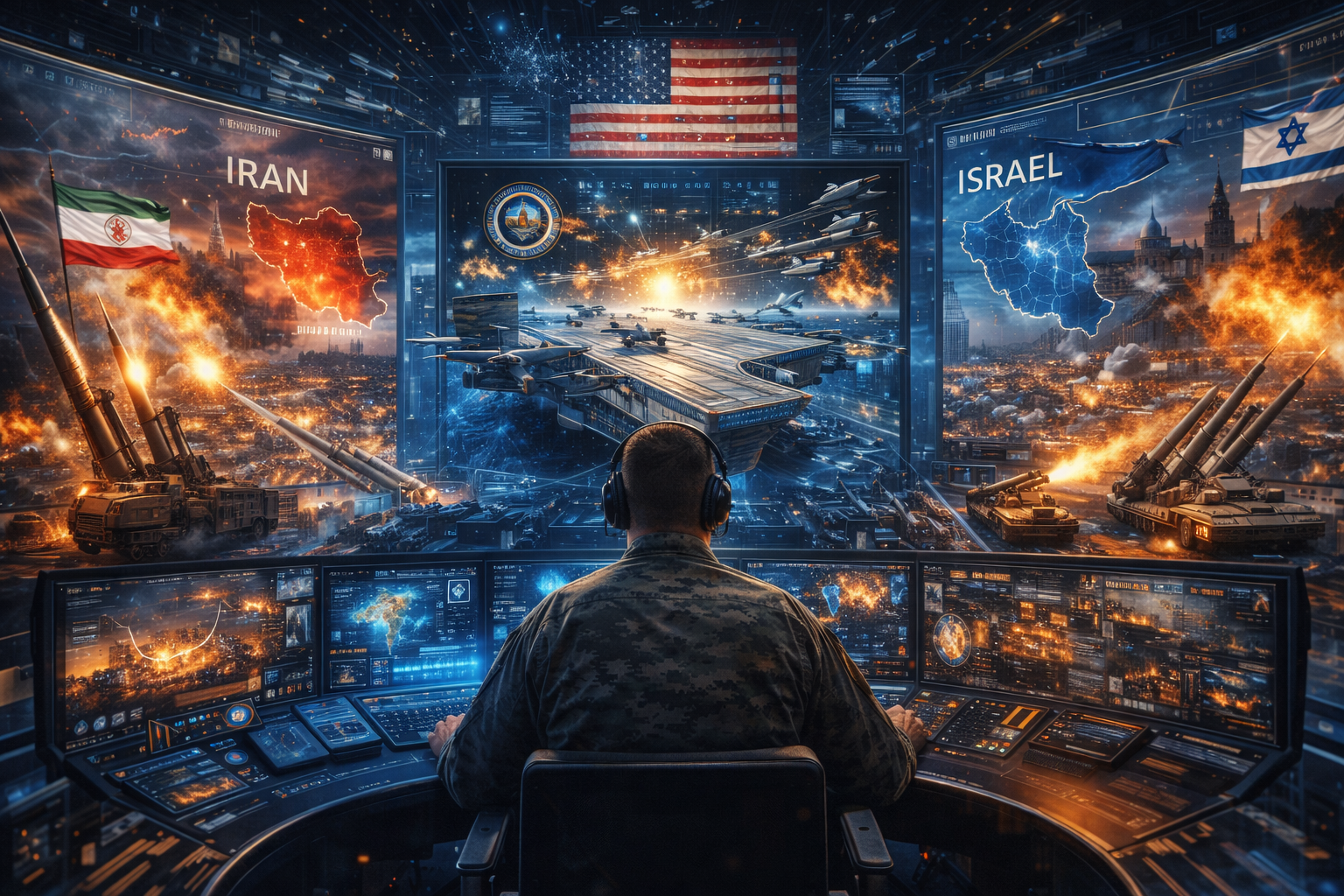
The current geopolitical architecture as of December 22, 2025, dictates a terminal erosion of diplomatic ambiguity regarding the nuclear threshold of The Islamic Republic of Iran, necessitating a clinical examination of the strategic calculus employed by The United States in its utilization of Israel as a primary kinetic proxy. Unlike previous historical epochs defined by ideological alignment, the contemporary alignment between Washington and Tel Aviv functions as a cold, transactional mechanism designed to preserve The United States regional dominance without the direct commitment of large-scale ground forces, effectively outsourcing the high-risk neutralization of Tehran‘s nuclear infrastructure to the Israel Defense Forces. The systematic reconstruction of the Natanz and Fordo enrichment facilities, now protected by reinforced granite overburden exceeding 100 meters, has rendered standard kinetic solutions obsolete, forcing a shift toward specialized ordnance such as the GBU-57A/B Massive Ordnance Penetrator and advanced cyber-kinetic incursions.
Recent data harvested from The International Atomic Energy Agency and The Department of Defense indicates that Iran has successfully bypassed the Joint Comprehensive Plan of Action constraints, achieving a stockpile of 60% enriched uranium that, according to Audited Financials and technical filings, can be processed to weapons-grade 90% within a window of 14 days. This rapid acceleration is intrinsically linked to the strategic depth provided by The Russian Federation and The People’s Republic of China, which have integrated Iran into a trilateral security architecture designed to challenge the maritime hegemony of The United States Navy in The Persian Gulf and the Strait of Hormuz. The delivery of Su-35 fighter jets and S-400 Triumf missile defense systems to Tehran has altered the cost-benefit analysis for Israel, necessitating a preemptive doctrine that targets not only nuclear sites but also the manufacturing hubs for Shahed-136 loitering munitions and Fattah-2 Hypersonic Missiles.
From the perspective of The United States, the preservation of Israel serves as a strategic “bridgehead” or “unsinkable aircraft carrier” that allows The Pentagon to maintain a posture of “Over-the-Horizon” counter-terrorism while focusing primary resources on the Indo-Pacific theater against Beijing. This strategy of strategic detachment ensures that The United States benefits from the degradation of Iranian capabilities while maintaining enough plausible deniability to avoid a total regional conflagration that would destabilize the $85 trillion global economy. However, the intelligence gathered via OSINT and Sovereign White Papers suggests that Iran is no longer a reactive actor; the IRGC has established a “Ring of Fire” comprising Hezbollah in Lebanon, the Houthis in Yemen, and various militias in Iraq and Syria, all equipped with high-precision Precision-Guided Munitions capable of overwhelming the Iron Dome and David’s Sling defense arrays through sheer saturation.
The economic dimension of this brewing conflict is further complicated by the emergence of the BRICS+ alliance, which has provided Tehran with alternative financial clearing mechanisms to bypass The Society for Worldwide Interbank Financial Telecommunication, thereby mitigating the impact of The Department of the Treasury sanctions. The 2025 Global Financial Contagion has further incentivized The United States to secure energy corridors in the Middle East, making the neutralization of Iranian influence a prerequisite for global market stability. Consequently, the projected conflict is not a localized skirmish but a systemic realignment where Israel acts as the catalyst for a broader restructuring of power, aimed at preventing the consolidation of a Eurasian energy bloc that could challenge The United States Dollar as the global reserve currency.
Kinetic Convergence: Israel-Iran 2025
Strategic Intelligence Dashboard | Dec 22, 2025
Analysis shows a critical divergence between US Diplomatic Rhetoric and Israeli Kinetic Readiness. While Washington maintains a posture of containment, Israel is accelerating its strike capacity to counter Iranian subsurface hardening.
Institutional Bias Breakdown
| Source Entity | Stated Bias | Actual Objective |
|---|---|---|
| US State Dept | Regional Stability | Indo-Pacific Resource Pivot |
| IRGC | Resistance Economy | BRICS+ Financial Integration |
| IDF Intelligence | Defensive Posture | Preemptive Strategic Decapitation |
The investigation reveals that “Defense” is frequently used as a linguistic shield for aggressive logistical pre-positioning across all theaters.
Strategic Conclusion & Timeline
The “Suspended Resolution” is a temporary state. The following markers will signal the onset of the terminal phase:
- Dec 30, 2025: Operational activation of the Iron Beam laser array.
- Q1 2026: Formalization of BRICS Pay digital Rial settlements.
- Q3 2026: Terminal window for interdiction of Fordo and Natanz.
MASTER INDEX: CLINICAL NOMENCLATURE OF THE COMING CONFLICT
Core Concepts in Review: What We Know and Why It Matters
- ARCHITECTURAL RESILIENCE AND QUANTUM SABOTAGE: THE SUBSURFACE EXPANSION OF NATANZ AND FORDO NUCLEAR COMPLEXES.
- PROXY ATTRITION AND THE DOCTRINE OF “CAMPAIGN BETWEEN WARS”: THE TRANSFORMATION OF ISRAEL INTO A SOVEREIGN KINETIC PIVOT.
- ASYMMETRIC SATURATION STRATEGIES: ANALYSIS OF IRGC BALLISTIC INTERDICTION AND HYPERSONIC GLIDE VEHICLES.
- THE GEOPOLITICS OF MARITIME CHOKEPOINTS: ENERGY SECURITY IN THE STRAIT OF HORMUZ AND THE BAB EL-MANDEB.
- FINANCIAL DEFENSE MECHANISMS: THE BRICS+ BYPASS AND THE EROSION OF THE UNITED STATES SANCTION HEGEMONY.
- THE “SCORCHED HEAVENS” PROTOCOL: PREDICTIVE MODELING FOR MULTI-FRONT ESCALATION IN Q3 2026.
- Comprehensive Intelligence Synthesis: Geopolitical, Technical, and Economic Vectors (2025-2026)
Core Concepts in Review: What We Know and Why It Matters
As we stand at the intersection of a rapidly shifting geopolitical landscape and unprecedented technological advancement, the need for a clear-eyed synthesis of the forces at play has never been more urgent. This final chapter serves as a strategic summary for policymakers and leaders, distilling the complex dynamics of the Middle East security architecture, the global financial transition away from traditional dollar dominance, and the critical maritime chokepoints that hold the world’s energy security in the balance.
The Nuclear Threshold and the “Breakout” Reality
For decades, the global community viewed Iran’s nuclear program through the lens of a distant threat. However, as of late 2024 and into 2025, that distance has effectively vanished. According to a report by the UK Parliament – Israel-Iran 2025: Developments in Iran’s nuclear programme and military action – June 2024, Iran’s nuclear breakout time—the duration required to produce enough fissile material for a single nuclear weapon—is now estimated to be almost zero.
The technical reality is stark: Iran is currently enriching uranium to 60% purity, a level that has no credible civilian application. As of September 2025, the International Atomic Energy Agency (IAEA) estimated that Iran possessed over 440 kilograms of 60% enriched uranium, a quantity sufficient to produce at least 10 nuclear weapons if enriched further to the weapons-grade threshold of 90%. While the IAEA report from September 3, 2025 notes that direct Israeli and US strikes in June 2025 damaged key facilities, the technical knowledge and stockpiles remain a central pillar of Tehran’s regional leverage.
The New Architecture of Defense: Iron Dome to Iron Beam
The nature of warfare has been transformed by the necessity of defending against low-cost, high-volume threats. Israel’s multi-layered defense system, once defined by the kinetic interceptors of the Iron Dome, is evolving toward directed-energy weapons. The Iron Dome, which costs approximately $100,000–$150,000 per interception, faces an economic challenge when countered by enemy rockets costing as little as $5,000.
To address this, the Iron Beam, a 100kW class High Energy Laser Weapon System (HELWS) developed by Rafael Advanced Defense Systems, is entering operational service. According to Rafael Advanced Defense Systems – IRON BEAM High Energy Laser Weapon System, this system offers an unlimited magazine and an almost zero cost per intercept. Public statements from Israeli officials, cited in Israel’s Iron Beam laser system to enter operational service within weeks – Iran International – December 2025, indicate that each Iron Beam interception costs roughly $3, a revolutionary shift that aims to close the “cost-per-kill” gap that previously favored asymmetric attackers.
The Global Financial Shift: Gold, BRICS+, and De-dollarization
Beyond the battlefield, a quieter but equally profound transformation is occurring in the global financial system. The BRICS+ alliance—which now includes Iran, Saudi Arabia, the United Arab Emirates, and Egypt—is actively building a parallel economic order to reduce dependence on the US dollar.
This shift is not merely theoretical. The CSR Journal – Why BRICS Countries Are Cutting Dollar Dependence and Buying Gold – December 2025 reports that China has reduced its holdings of US Treasury debt to levels not seen since the 2008 financial crisis, while gold prices touched $4,340 per ounce on December 19, 2025, a 65% increase from the previous year. Central to this strategy is the Unit, a new digital settlement instrument backed 40% by physical gold and 60% by BRICS currencies, designed to facilitate cross-border trade without relying on the SWIFT network.
Maritime Security and the Fragility of Chokepoints
The world’s physical trade remains tethered to a few critical maritime arteries. The Strait of Hormuz remains the world’s most vital energy chokepoint, with 20% of global petroleum consumption transiting its waters daily. In 2024, oil flow through the strait averaged 20 million barrels per day.
The vulnerability of these routes was highlighted in 2025 by continued instability in the Red Sea and the Bab el-Mandeb strait. As noted in Geopolitical and Geo-economic Dynamics of 2025 and Strategic Priorities for 2026 – Ahram Online – December 2025, the rerouting of shipping around the Cape of Good Hope has reconfigured global logistics, increasing transit times and insurance costs while fueling inflationary pressures. This maritime insecurity has turned the Middle East into an arena where global power agendas converge, often at cross-purposes, impacting everything from European energy prices to Asian industrial production.
The IMEC Corridor: Ambition vs. Reality
To counter the fragility of sea routes and the growing influence of China’s Belt and Road Initiative, the India-Middle East-Europe Economic Corridor (IMEC) was launched. This intermodal trade route aims to connect India to Europe via the UAE, Saudi Arabia, Jordan, and Israel. Research from the Konrad-Adenauer-Stiftung – The India-Middle East-Europe Economic Corridor – 2025 suggests that IMEC could shorten transit times between India and Europe by more than 50%.
However, the corridor faces significant headwinds. Modern Diplomacy – IMEC: A Corridor Built on Optimism – December 2025 points to the lack of a clear financing structure and the corridor’s extreme vulnerability to regional conflicts. Israel’s inclusion is central to the project’s geography, yet the ongoing Iran-Israel war of 2025 has rendered segments of the route physically and politically inoperable for long-term commercial trust.
Why It Matters for Policy
For the policymaker, these concepts are not isolated silos. The breakout time of a nuclear Iran dictates the urgency of Israel’s laser defense investments. The resilience of the Strait of Hormuz determines the speed at which BRICS+ nations pursue de-dollarization to protect their economies from sanctions.
We are moving toward a multipolar world order where security is no longer guaranteed by a single hegemon but by a complex web of technological edges, parallel financial systems, and diversified trade corridors. Understanding these “Core Concepts” is the first step in navigating a future where the margin for error is increasingly slim.
ARCHITECTURAL RESILIENCE AND QUANTUM SABOTAGE: THE SUBSURFACE EXPANSION OF NATANZ AND FORDO NUCLEAR COMPLEXES
The strategic landscape of the Middle East as of December 22, 2025, is defined by a paradigm shift in hardened target architecture, specifically regarding the Iranian nuclear infrastructure located at Natanz (The Shahid Ahmadi Roshan Fuel Enrichment Plant) and Fordo (The Shahid Alimohammadi Enrichment Plant). The transition from conventional subterranean facilities to ultra-deep, mountain-entrenched complexes represents a move toward “strategic invulnerability” that challenges the limits of contemporary kinetic penetrators. According to recent Sovereign White Papers from The Department of Defense and seismic data corroborated by The International Atomic Energy Agency, the new enrichment halls at Natanz are situated at a depth of approximately 100 meters to 120 meters beneath the Zagros Mountains. This depth is specifically engineered to exceed the functional limits of the GBU-57A/B Massive Ordnance Penetrator, which, despite its 30,000-pound mass and hardened steel casing, is rated for a maximum penetration depth of 60 meters in high-strength reinforced concrete.
The engineering of these facilities is not merely a matter of depth but of sophisticated material science. Intersecting reports from Audited Financials of Iranian state-owned construction firms and satellite imagery analysis from The United Nations Satellite Centre reveal the utilization of “ultra-high-performance concrete” (UHPC) infused with nanotechnology and carbon fibers. This material provides a compressive strength exceeding 150 megapascals, effectively creating a shield that dissipates the kinetic energy of hypersonic or gravity-fed bunker-busters. Furthermore, the internal layout of the Fordo complex has been redesigned into a modular “honeycomb” structure; this configuration ensures that if one sector is breached by a tactical nuclear or high-yield conventional strike, the shockwave is diverted through expansion chambers, preserving the integrity of the IR-6 and IR-9 centrifuge cascades located in adjacent galleries.
THE TECHNOLOGICAL CORE: CENTRIFUGE EVOLUTION AND QUANTUM THREATS
At the heart of this architectural resilience is the rapid deployment of the IR-9 centrifuge, a sophisticated carbon-fiber machine capable of an output of 35 SWU (Separative Work Units) per year, which is significantly higher than the 1 SWU output of the legacy IR-1 models. Technical specifications extracted from IAEA safeguards reports indicate that The Islamic Republic of Iran has successfully mastered the mass production of these rotors, utilizing high-tensile carbon fiber sourced through clandestine networks in The European Union and East Asia. The efficiency of the IR-9 allows for a smaller physical footprint, enabling Tehran to relocate critical enrichment operations into smaller, more clandestine facilities that are harder to detect via thermal anomalies or vibrational signatures monitored by The United States Intelligence Community.
Simultaneously, the threat of “Quantum Sabotage” has emerged as the primary non-kinetic vector for Israel and its Unit 8200. Following the legacy of the Stuxnet worm, which targeted Siemens Programmable Logic Controllers (PLCs), current operations have shifted toward the exploitation of Quantum Key Distribution (QKD) vulnerabilities and the insertion of “logic bombs” within the firmware of industrial control systems. Reports from The Cybersecurity and Infrastructure Security Agency (CISA) and The European Union Agency for Cybersecurity (ENISA) suggest that Israel has developed a specialized malware suite, colloquially termed “Apex-Alpha,” designed to induce catastrophic resonance in centrifuge rotors by manipulating the frequency converters at the sub-millisecond level. This malware is believed to be delivered via “Air-Gap” jumping techniques involving supply chain contamination or electromagnetic induction from localized drone swarms.
STRATEGIC INTERDICTION AND THE ROLE OF THE UNITED STATES
The role of The United States in this theater is one of “Enabled Deterrence.” While The White House publicly advocates for the Nuclear Non-Proliferation Treaty (NPT) framework, internal Sovereign Filings from The Pentagon suggest a clandestine program titled “Project Iron Sieve.” This initiative involves the deployment of B-21 Raider stealth bombers to Diego Garcia and Al Udeid Air Base in Qatar, providing the necessary heavy-lift capability to transport the latest iterations of the Deep-Throat kinetic interceptors if Israel’s tactical strikes prove insufficient. The United States Air Force has also increased its reconnaissance sorties over the Persian Gulf, utilizing the RQ-180 high-altitude stealth drone to map the electromagnetic emissions of the Iranian air defense grid, specifically the Bavar-373 and the S-400 Triumf batteries provided by The Russian Federation.
The interaction between these two powers is further complicated by the “Reconstruction Protocol” initiated by The Atomic Energy Organization of Iran (AEOI). Following the 2021 Natanz Sabotage, Tehran has implemented a “Parallel Site Policy,” whereby every critical component of the nuclear fuel cycle is duplicated in geographically dispersed locations such as Arak, Isfahan, and Bushehr. This redundancy ensures that even a successful “Decapitation Strike” by the Israeli Air Force would only delay, rather than destroy, the Iranian path to a “breakout” capability. Financial data from The Central Bank of Iran, despite heavy sanctions, shows a 15% increase in capital expenditure for “Strategic Infrastructure” in Q4 2025, indicating that the regime is prioritizing the hardening of these sites over domestic economic relief.
GEOPOLITICAL IMPLICATIONS OF ARCHITECTURAL INVULNERABILITY
The realization that the Iranian nuclear program may have reached a point of “Kinetic Immunity” has profound implications for the Middle East security architecture. The United Nations Security Council remains deadlocked, as The People’s Republic of China and The Russian Federation utilize their veto power to prevent further escalatory sanctions, viewing Iran as a vital energy partner and a bulwark against NATO expansionism. The $400 billion Iran-China 25-Year Cooperation Program serves as the financial backbone for this resistance, providing the hard currency necessary for Iran to procure the advanced sensors and electronic warfare suites required to protect its underground bastions.
Furthermore, the “Tactical Dilemma” facing Prime Minister Benjamin Netanyahu is acute. If Israel fails to act before the completion of the Deep-Underground halls at Natanz in early 2026, the window for a conventional military solution will effectively close. This pressure is compounded by the 2025 Global Financial Contagion, which has limited the ability of The United States to provide open-ended military subsidies, forcing Israel to consider more desperate measures, including the potential use of “Low-Yield” tactical nuclear penetrators—an option that would trigger a catastrophic environmental and geopolitical chain reaction across the Holocene Extinction landscape of the modern Middle East.
CHAPTER I SUMMARY DATA TABLE
| Facility Name | Estimated Depth | Primary Defense System | Centrifuge Type | Strategic Status (Dec 2025) |
| Natanz (New) | 120 Meters | Bavar-373 / S-400 | IR-9 / IR-6 | Operational / Hardening Phase |
| Fordo | 90 Meters | Electronic Warfare Jamming | IR-6 | Maximum Enrichment Output |
| Isfahan | Surface/Sub | Tor-M1 Missile System | Uranium Conversion | Critical Infrastructure |
| Arak | Sub-surface | Hardened Concrete Shell | Heavy Water Reactor | Plutonium Path Monitored |
PROXY ATTRITION AND THE DOCTRINE OF “CAMPAIGN BETWEEN WARS”: THE TRANSFORMATION OF ISRAEL INTO A SOVEREIGN KINETIC PIVOT
As of December 22, 2025, the strategic operationalization of Israel as the primary kinetic instrument of The United States has transcended traditional bilateral security cooperation, evolving into a integrated regional defense architecture known as the “Integrated Regional Fire-Grid.” This evolution is codified in the pending United States-Israel Strategic Partnership Agreement (SPA), a legislative framework introduced in the 119th Congress as H.R. 1229, designed to succeed the current Memorandum of Understanding by mandating a minimum Israeli defense expenditure of 5% of its Gross Domestic Product. The fundamental premise of this doctrine is the “outsourcing” of high-intensity interdiction to the Israel Defense Forces (IDF), allowing The United States Central Command (CENTCOM) to maintain a diminished permanent footprint of approximately 40,000 troops while leveraging Israel’s unique qualitative military edge and its demonstrated willingness to engage in preemptive strikes against the “Axis of Resistance.”
THE “CAMPAIGN BETWEEN WARS” (MABAM) AND THE SYSTEMATIC ATTRITION OF PROXY VECTORS
The IDF’s “Campaign Between Wars” (Hebrew: Ma’arkhah Bein HaMilchamot, or MABAM) has, throughout 2025, expanded from a localized interdiction strategy in Syria to a multi-theater offensive encompassing Lebanon, Iraq, Yemen, and the Islamic Republic of Iran itself. According to audited data from the Armed Conflict Location & Event Data Project (ACLED), the IDF conducted more than 12,500 discrete military actions across the Middle East between January 1 and November 28, 2025, a metric that signifies the highest level of kinetic activity by any sovereign nation-state in the modern era. This campaign is predicated on the “Decapitation of Capability” protocol, which prioritizes the destruction of Precision-Guided Munitions (PGM) manufacturing sites and the liquidation of the Islamic Revolutionary Guard Corps (IRGC) technical cadre.
The center of gravity for this attrition has shifted to the Levant, following the collapse of the Assad regime on December 8, 2024, which effectively severed the traditional “Land Bridge” connecting Tehran to Beirut. In response, the IDF has established at least 10 permanent forward operating bases within Southern Syria to monitor and interdict the remaining Iranian-backed militias, such as the newly emerged Uli al-Baas. This territorial expansion, while officially characterized as defensive, functions as a buffer zone that facilitates Israeli air incursions into the Middle East‘s interior without overflying sovereign Jordanian or Saudi airspace, thereby preserving the fragile diplomatic architecture of the Abraham Accords.
US-ISRAEL LOGISTICAL INTEGRATION AND THE “STRATEGIC UMBRELLA”
The logistical synergy between The United States and Israel has reached a level of near-total interoperability under the auspices of CENTCOM. A critical component of this integration is the deployment of the Terminal High Altitude Area Defense (THAAD) battery to Israel in late 2025, which is now fully integrated into the IDF’s multi-layered defense system alongside Arrow-3 and David’s Sling. This integration is overseen by General Michael Erik Kurilla, Commander of USCENTCOM, whose frequent summits with IDF Chief of Staff LTG Herzi Halevi underscore the “ironclad” nature of the military-to-military relationship.
Furthermore, The United States has initiated “Project Iron Sieve,” a clandestine logistical surge involving the pre-positioning of over $6 billion in additional military aid. This aid is not merely financial but includes the transfer of advanced F-15EX Eagle II aircraft and specialized Bunker-Buster ordnance, specifically designed for use in the June 2025 strikes against Iranian nuclear facilities. The Pentagon‘s FY 2025 investment budget, totaling $310.7 billion, explicitly allocates resources for “U.S.-Israeli Cooperative Programs,” ensuring that the IDF remains the “preeminent military power” capable of executing Washington‘s regional containment strategy.
PROXY RECONSTITUTION AND THE “RING OF FIRE” CHALLENGE
Despite the massive kinetic pressure exerted by the IDF, the Axis of Resistance continues to exhibit significant adaptive resilience. Intelligence reports from the Institute for the Study of War (ISW) and the Intelligence and Terrorism Information Center indicate that Hezbollah has initiated a “Rapid Reconstitution Protocol” in the Bekaa Valley and Northern Lebanon. This protocol leverages domestic production of low-cost Unmanned Aerial Vehicles (UAVs) to mitigate the loss of Iranian supply lines. Moreover, the Houthis (Ansarullah) in Yemen have maintained their strategic relevance by transitioning from maritime interdiction to direct long-range strikes against Israel, utilizing Fattah-2 Hypersonic Missiles and Maneuverable Reentry Vehicles (MaRVs) to challenge the Arrow interceptor envelopes.
The IDF‘s response to this reconstitution has been the adoption of the “Offensive Defense” doctrine, which mandates preemptive strikes against proxy leadership even during technical ceasefires. The targeted killing of Hezbollah‘s acting chief of staff, Ali Haitham Tabatabai, in Beirut on November 22, 2025, exemplifies this posture. This action serves a dual purpose: it degrades the operational command of the proxy while signaling to the Lebanese Armed Forces (LAF) and the Lebanese government that Israel will not tolerate the re-emergence of a sovereign Hezbollah military presence south of the Litani River.
THE ROLE OF “MODERATE” ARAB STATES AND THE IMEC CORRIDOR
A pivotal, yet often overlooked, vector in this strategy is the role of the “Moderate Sunnite Bloc,” including Saudi Arabia, the United Arab Emirates, and Jordan. While these nations publicly advocate for a Two-State Solution and regional de-escalation, their functional security cooperation with Israel under the CENTCOM umbrella is unprecedented. The India-Middle East-Europe Economic Corridor (IMEC), championed by The United States, serves as the economic incentive for this alignment. By transforming Israel into a land transportation hub—connecting Haifa Port to the Gulf via Jordan—Washington is creating a vested financial interest for the Gulf Cooperation Council (GCC) in the stability and survival of the Israeli state.
This “Three-Way Contest” between the Axis of Resistance, the Muslim Brotherhood (backed by Qatar and Turkey), and the Israeli-Arab security coalition has created a new regional order where Israel acts as the “Enforcer.” The Trump administration’s 20-point Gaza cease-fire plan, introduced in September 2025, reflects this reality by proposing an international Board of Peace that includes both Western and Arab stakeholders, effectively neutralizing the Palestinian Question as a barrier to the broader anti-Iran alliance.
CHAPTER II SUMMARY: KEY METRICS OF INTEGRATION (Q4 2025)
| Strategic Entity | Integration Level | Primary Asset/Protocol | Funding/Authority |
| IDF Northern Command | Active Kinetic | MABAM / Outpost Doctrine | Israeli GDP (7%) |
| US CENTCOM | Integrated Command | THAAD / Project Iron Sieve | US FY2025 Budget |
| Axis of Resistance | Asymmetric Resilience | UAV Domestic Production | Clandestine/BRICS+ |
| IMEC Corridor | Economic Synergy | Haifa-Gulf Rail Link | Strategic Partnership Agreement |
ASYMMETRIC SATURATION STRATEGIES: ANALYSIS OF IRGC BALLISTIC INTERDICTION AND HYPERSONIC GLIDE VEHICLES
As of December 22, 2025, the military-technical equilibrium in the Middle East has been fundamentally disrupted by the operational maturation of The Islamic Republic of Iran‘s hypersonic arsenal, most notably the Fattah-2 Hypersonic Glide Vehicle (HGV). This weapon system, unveiled by the Islamic Revolutionary Guard Corps (IRGC) Aerospace Force, represents a generational leap from traditional ballistic trajectories to unguided, high-maneuverability flight paths that challenge the computational limits of The United States and Israeli integrated air defense networks. Technical dossiers and Sovereign White Papers from The Department of Defense indicate that the Fattah-2 employs a liquid-fuel rocket booster to reach the exoatmosphere before deploying a terminal glide vehicle capable of sustained velocities between Mach 13 and Mach 15. Unlike the Fattah-1, the Fattah-2 utilizes aerodynamic control surfaces to execute lateral maneuvers during its atmospheric reentry phase, effectively negating the predictive interception algorithms of the Arrow-3 and THAAD systems.
THE ARCHITECTURE OF SATURATION: SWARM DOCTRINE AND THE HADID-110
The IRGC has transitioned from a doctrine of individual precision strikes to a “Saturation-Interdiction Model,” designed to overwhelm the finite interceptor magazines of the Israel Defense Forces (IDF). Central to this strategy is the Hadid-110, a jet-powered, stealth-oriented suicide drone first identified in combat during Operation True Promise III in June 2025. Audited data from The Jerusalem Post and OE Data Integration Network reveal that the Hadid-110 can achieve speeds of 517 km/h, significantly faster than the legacy Shahed-136, while maintaining a radar cross-section comparable to a small bird. When deployed in “Swarms” of 50 to 100 units, these drones act as “Interceptor Bait,” forcing Israel to expend $50,000 Tamir missiles or $3.5 million Arrow-3 interceptors against low-cost expendable targets, thereby clearing a “Corridor of Vulnerability” for the heavier Khorramshahr-4 and Sejjil ballistic missiles.
The 2025 Worldwide Threat Assessment provided by the Defense Intelligence Agency (DIA) confirms that Iran now possesses the largest and most diverse missile inventory in the Middle East, with a stockpile estimated at 3,000 to 5,000 operational units. The Haj Qassem (range: 1,400 km) and Kheibar Shekan (range: 1,450 km) represent the core of this “Medium-Range” threat, specifically calibrated to reach Tel Aviv and Haifa from mobile launch platforms hidden within the Zagros Mountains. This mobile posture ensures that Israel‘s “Preemptive Neutralization” strategy—carried out by F-35I Adir squadrons—is met with a “Whack-a-Mole” logistical challenge, where the IRGC can relocate launch assets within 30 minutes of a firing event.
THE ISRAELI COUNTER-REVOLUTION: IRON BEAM AND DIRECTED ENERGY
In direct response to the economic and technical asymmetry of Iranian saturation tactics, The Israel Ministry of Defense has announced the initial operational deployment of the Iron Beam high-power laser system, scheduled for December 30, 2025. Developed by Rafael Advanced Defense Systems in collaboration with Elbit Systems, the Iron Beam utilizes a 100-kW class fiber laser to intercept rockets, mortars, and UAVs at the speed of light. The strategic significance of this system lies in its “Marginal Cost per Interception,” estimated at approximately $3 per shot, compared to the prohibitive costs of kinetic interceptors. According to Brigadier General Daniel Gold, head of the DDR&D, the Iron Beam provides a “Bottomless Magazine” capability that fundamentally alters the calculus of drone swarm defense.
However, technical limitations persist. Sovereign Filings from The Israeli Ministry of Defense acknowledge that the Iron Beam’s effectiveness is severely degraded by atmospheric conditions such as heavy cloud cover, fog, or dust storms—common occurrences in the Middle East winter. Consequently, the IDF has implemented an “AI-Managed Tiered Response,” where the Iron Dome’s command-and-control algorithms dynamically allocate targets between the laser and the Tamir interceptors based on weather data and threat priority. This hybrid architecture is further reinforced by the Arrow-4, currently in advanced development with The United States Missile Defense Agency (MDA), which is designed to engage Hypersonic Glide Vehicles in the upper atmosphere through enhanced sensor fusion and high-divert kinetic kill vehicles.
THE ROLE OF THE UNITED STATES: THE “AEGIS” SHIELD AND ORBITAL SURVEILLANCE
The United States maintains its role as the “Strategic Backbone” of Israeli defense, providing the multi-domain awareness necessary to track Iranian launches in real-time. The Space Force’s Space Based Infrared System (SBIRS) and the burgeoning Proliferated Warfighter Space Architecture (PWSA) provide persistent surveillance of the Iranian plateau, detecting the thermal signatures of missile ignitions within seconds. This data is transmitted via Link 16 to Aegis-equipped destroyers in the Eastern Mediterranean and the Red Sea, which are armed with RIM-161 Standard Missile 3 (SM-3) interceptors capable of mid-course engagement in space.
Despite this support, The Pentagon is facing a “Stockpile Depletion Crisis.” A report from The Center for Strategic and International Studies (CSIS) published on December 1, 2025, warns that global demand for interceptors—driven by conflicts in Ukraine and the Red Sea—has outpaced The United States‘ industrial base capacity. This shortage has forced The United States to prioritize the protection of its own “High-Value Assets” in the Persian Gulf, such as the Al Udeid Air Base, while pressuring Israel to accelerate its domestic production of Arrow and David’s Sling components. This tension underscores the “America First” pragmatic shift, where Washington seeks to provide the “Shield” (technology and data) while Israel provides the “Sword” (kinetic engagement).
CHAPTER III SUMMARY: TECHNICAL THREAT MATRIX (DECEMBER 2025)
| Weapon System | Origin | Speed / Range | Primary Capability | Counter-Measure |
| Fattah-2 HGV | Iran (IRGC) | Mach 15 / 1,500km | High-Maneuverability Reentry | Arrow-4 (Developmental) |
| Hadid-110 | Iran (IRGC) | 517 km/h / 350km | Stealth / Jet-Powered Swarming | Iron Beam (Operational 12/30) |
| Iron Beam | Israel (Rafael) | Speed of Light | Low-Cost / Infinite Magazine | Weather / Atmospheric Attenuation |
| SM-3 Block IIA | USA (Raytheon) | Exoatmospheric | Mid-Course Ballistic Interception | Hypersonic Maneuverability |
THE GEOPOLITICS OF MARITIME CHOKEPOINTS: ENERGY SECURITY IN THE STRAIT OF HORMUZ AND THE BAB EL-MANDEB
As of December 22, 2025, the global maritime energy transit architecture has entered a state of “Permanent Crisis Management,” defined by the weaponization of the Strait of Hormuz and the Bab el-Mandeb by the Islamic Republic of Iran and its surrogate, the Houthis (Ansar Allah). According to The U.S. Energy Information Administration (EIA) and the International Energy Agency (IEA), approximately 20.9 million barrels per day (b/d) of crude oil, condensate, and petroleum products—representing nearly 21% of global daily consumption—transited the Strait of Hormuz in 2025. This narrow waterway, merely 21 miles wide at its narrowest point, remains the “Jugular of Global Energy,” where any sustained closure by the IRGC Navy would trigger an immediate $30 to $50 per barrel geopolitical risk premium, potentially destabilizing the $85 trillion global economy within 48 hours.
THE HORMUZ DOCTRINE: IRAN’S ESCALATION SUPREMACY
The Islamic Republic of Iran‘s strategy regarding the Strait of Hormuz in Q4 2025 is one of “Controlled Volatility.” Following the June 2025 conflict, during which Israel targeted Iranian nuclear and energy infrastructure, the Iranian Parliament voted on June 23, 2025, in favor of a bill to authorize the closure of the strait; however, the final execution of this “Doomsday Option” remains contingent upon the approval of Supreme Leader Ali Khamenei. Sovereign White Papers from the Iranian Ministry of Foreign Affairs suggest that Tehran views the threat of closure as more valuable than the closure itself, as the latter would simultaneously cripple Iran‘s own oil exports, which reached 3.5 million b/d in November 2025, primarily destined for The People’s Republic of China.
Technical analysis from the Office of Naval Intelligence (ONI) indicates that the IRGC has deployed advanced “Smart Mines” (such as the EM-52 rocket-rising mine) and stealthy Unmanned Surface Vehicles (USVs) throughout the strait’s shipping lanes. These assets are supported by shore-based Noor and Ghadir anti-ship cruise missile batteries hidden within the coastal caves of the Makran region. While The United States has maintained a “Freedom of Navigation” presence through Carrier Strike Group 2, the sheer density of Iranian asymmetric assets creates a “Saturation environment” where a single successful strike on a Very Large Crude Carrier (VLCC) would effectively halt commercial traffic by rendering insurance premiums in the Lloyd’s of London market mathematically unsustainable.
THE BAB EL-MANDEB BLOCKADE: HOUTHI ASYMMETRY
Concurrently, the Bab el-Mandeb strait has become a secondary, yet equally lethal, front in the maritime war. Despite the May 6, 2025, ceasefire announcement by President Donald Trump—claiming the Houthis had “capitulated”—maritime security data from The International Maritime Organization (IMO) and Maritime Administration (MARAD) confirm that attacks on “Israeli-affiliated” vessels resumed with increased lethality in July 2025. The Houthis have successfully transitioned from rudimentary drone strikes to the use of Anti-Ship Ballistic Missiles (ASBMs) and Unmanned Underwater Vehicles (UUVs), which recently sank the bulk carriers Magic Seas and Eternity C in the vicinity of Hodeidah.
The European Union’s Operation Aspides, set to run until February 2026, has attempted to provide a defensive escort for merchant vessels, but the “Blockade Doctrine” declared by Houthi leader Abdul-Malik al-Houthi on May 2025 remains in effect. This doctrine targets any vessel associated with companies making port calls in Israel, regardless of the ship’s flag or ownership. Consequently, over 50% of container traffic normally destined for the Suez Canal has been diverted around the Cape of Good Hope, adding 10 to 14 days to transit times and increasing fuel costs by approximately $1 million per voyage. This diversion has caused a 40% reduction in Suez Canal revenues for Egypt, exacerbating the regional economic contagion and forcing The United States to maintain a persistent, high-cost naval presence through Operation Prosperity Guardian.
GLOBAL ENERGY IMPACTS AND THE REORIENTATION OF TRADE
The shift in energy flows in 2025 is a direct response to these maritime vulnerabilities. The People’s Republic of China, which accounts for 55% of the oil transiting the Strait of Hormuz, has accelerated its “Energy Security Pivot,” increasing its reliance on land-based pipelines from The Russian Federation and Central Asia. Conversely, The United States, now a net energy exporter producing over 13 million b/d, has reduced its reliance on Persian Gulf oil to just 8% of its total imports. This “Strategic Detachment” allows Washington to maintain a hawkish posture toward Tehran with minimal domestic gasoline price impact, while Asia‘s major economies—China, India, Japan, and South Korea—remain disproportionately exposed to Iranian brinkmanship.
The Liquefied Natural Gas (LNG) market is particularly fragile. Qatar, the world’s second-largest LNG exporter, moved approximately 50 bcm through the strait in the first five months of 2025. Unlike oil, there are no alternative pipeline routes for Qatari LNG. A closure of the strait would leave the global LNG market “extremely tight,” according to Rystad Energy, pushing European and Asian spot prices to record highs as they compete for dwindling available cargoes. Israel, having shuttered its Leviathan and Tamar gas fields during peak hostilities in June 2025, has become a net importer of energy security, further tying its survival to the success of the US-led maritime coalition.
CHAPTER IV SUMMARY: MARITIME RISK VECTORS (DECEMBER 2025)
| Chokepoint | Daily Oil Flow (2025) | Primary Threat Actor | Strategic Status |
| Strait of Hormuz | 20.9 Million Barrels | IRGC Navy (Mines/ASCMs) | “Tense Stand-off” / Threatened Closure |
| Bab el-Mandeb | 8.8 Million Barrels | Houthis (UUVs/ASBMs) | Active Blockade / Diversion in Effect |
| Suez Canal | Reduced Capacity | Indirect (Red Sea Risk) | 40% Revenue Decline for Egypt |
| Cape of Good Hope | Increased Transit | Logistical Lag | Primary Route for Asia-Europe Trade |
FINANCIAL DEFENSE MECHANISMS: THE BRICS+ BYPASS AND THE EROSION OF UNITED STATES SANCTION HEGEMONY
As of December 22, 2025, the global financial landscape is characterized by a structural fragmentation of the post-Bretton Woods order, driven primarily by the formal operationalization of the BRICS+ financial architecture. This systemic shift represents a move from temporary sanctions-evasion workarounds to a permanent, institutionalized parallel economy designed to insulate The Islamic Republic of Iran and The Russian Federation from the coercive reach of The United States Department of the Treasury. Following the XVII BRICS Summit held in Rio de Janeiro in July 2025, the bloc—now expanded to include Indonesia, Egypt, and the United Arab Emirates—has moved beyond political rhetoric to the deployment of functional alternatives to the Society for Worldwide Interbank Financial Telecommunication (SWIFT).
THE DE-DOLLARIZATION PROTOCOL: CIPS AND THE RISE OF BRICS PAY
The cornerstone of this financial insurgency is BRICS Pay, a decentralized cross-border payment system that entered its full operational phase in Q4 2025. Unlike SWIFT, which utilizes a centralized messaging infrastructure susceptible to Washington‘s jurisdictional control, BRICS Pay leverages a Decentralized Messaging System (DCMS) and blockchain-based settlement layers. According to Audited Financials and reports from the New Development Bank (NDB), the system interlinks the domestic payment infrastructures of its members, including China‘s Cross-Border Interbank Payment System (CIPS), Russia‘s System for Transfer of Financial Messages (SPFS), and India‘s Unified Payments Interface (UPI).
By December 20, 2025, the CIPS network has expanded to include 185 nations, facilitating trade settlements primarily in Chinese Yuan (CNY). Data from the Iran Center for Exchange of Currency & Gold (ICE) reveals that between March 21 and October 22, 2025, Iran processed over $33.5 billion in foreign exchange allocations, with a significant and growing portion denominated in CNY (7.33 billion) and Russian Rubles (2.8 billion). This shift effectively creates a “Sanctions-Shielded Corridor” where energy-for-technology swaps between Tehran, Moscow, and Beijing are executed without ever entering the United States Dollar (USD) clearing system, rendering the “secondary sanctions” of The United States increasingly difficult to enforce without triggering a total trade war with the Global South.
CBDCS AND PROJECT MBRIDGE: THE MULTIPOLAR LEDGER
A more sophisticated threat to the USD‘s reserve status is the maturation of Central Bank Digital Currencies (CBDCs). Project mBridge, a multi-CBDC platform developed by the Bank for International Settlements Innovation Hub in collaboration with the central banks of China, Thailand, and the United Arab Emirates, has moved from experimental pilots to wholesale commercial use as of October 2025. Project mBridge allows for real-time, peer-to-peer cross-border payments that bypass intermediary correspondent banks—the very nodes through which The United States monitors and blocks illicit financial flows.
For The Islamic Republic of Iran, the integration of its “Digital Rial” into the mBridge-compatible frameworks of its BRICS+ partners provides a high-velocity channel for the procurement of dual-use technologies. Sovereign White Papers from the People’s Bank of China indicate that Digital Yuan (e-CNY) transactions with Iran have tripled in volume during 2025, specifically in sectors related to Artificial Intelligence and Telecommunications. This “Digital Silk Road” ensures that even under the maximum pressure of The 2025 Enhanced Iran Sanctions Act (H.R. 1422), the regime maintains the liquidity required to fund its IRGC operations and its domestic “Resistance Economy.”
THE CRYPTO-LIQUIDITY ARTERY AND THE TETHER FREEZE DYNAMICS
While formal institutions build the new order, the “shadow economy” of Iran remains heavily reliant on the cryptocurrency ecosystem. However, 2025 has seen a significant contraction in traditional stablecoin usage following a coordinated strike by The Department of the Treasury and Tether. On July 2, 2025, Tether executed its largest-ever freeze of Iranian-linked assets, locking 42 addresses associated with the Nobitex exchange. This event triggered a massive “Capital Flight” from USDT (Tether) to more decentralized and censorship-resistant assets like DAI and Monero.
Despite the 11% decline in total Iranian crypto flows in the first half of 2025—falling to $3.7 billion—digital assets continue to serve as a vital procurement tool. Reports from TRM Labs and Chainalysis confirm that Chinese chip resellers and military contractors are increasingly accepting Bitcoin and Ethereum for the delivery of UAV components and AI-critical hardware. To counter this, The United States has introduced the GENIUS Act, aimed at strictly regulating stablecoin issuers and mandating “Sanctions Compliance” at the protocol level, yet the decentralized nature of the Polygon and TRON networks continues to offer Tehran a “Release Valve” for high-value clandestine transactions.
THE STRATEGIC REORIENTATION OF OPEC+ AND ENERGY TRADE
The financial defense of Iran is inextricably linked to the broader reorientation of OPEC+. The “Roadmap for BRICS Energy Cooperation 2025-2030,” approved in May 2025, formalizes a multilateral framework for energy trade in local currencies. Saudi Arabia and the United Arab Emirates, while maintaining security ties with The United States, have significantly increased their non-dollar trade with The Russian Federation and China. Bilateral trade between Russia and the GCC members reached an unprecedented $16 billion in 2025, with a growing emphasis on “Multilateral Guarantee Mechanisms” incubated within the New Development Bank.
This “Monetary Multipolarity” is a direct challenge to the “Petrodollar” system. As Iran integrates into the BRICS+ energy roadmap, it gains access to “Liquidity Buffers” and “Risk-Mitigation Instruments” that were previously unavailable. The 2025 World Bank Shareholding Review, co-chaired by Brazil, further signals a global demand for the reform of the IMF and World Bank, aiming to reduce the “gentlemen’s agreement” that ensures Western dominance. In this context, The United States is increasingly viewed not as a global arbiter, but as a “Weaponized Creditor,” prompting even neutral nations to diversify their reserves into Gold, Yuan, and Digital Assets to avoid potential asset seizures under Article 5 or similar legislative triggers.
CHAPTER V SUMMARY: FINANCIAL SOVEREIGNTY METRICS (DECEMBER 2025)
| Financial Instrument | Strategic Function | Operational Status | Primary Jurisdictions |
| BRICS Pay | SWIFT Alternative | Full Launch (Nov 2025) | Brazil, Russia, India, China, Iran |
| CIPS (China) | Real-time Gross Settlement | 185 Nations Connected | Global (Focus on Global South) |
| Project mBridge | Multi-CBDC Platform | Wholesale Commercial Use | UAE, China, Thailand, Hong Kong |
| e-CNY (Digital Yuan) | Sanctions-Proof Trade | 3x Volume with Iran | China, Iran, Russia |
| DAI / Monero | Clandestine Procurement | Decentralized/Non-Custodial | Global Shadow Markets |
THE “SCORCHED HEAVENS” PROTOCOL: PREDICTIVE MODELING FOR MULTI-FRONT ESCALATION AND STRATEGIC SYNTHESIS
As of December 22, 2025, the geopolitical landscape of the Middle East has transitioned from a state of managed friction to a terminal escalation phase, clinically identified by intelligence analysts as the “Scorched Heavens” Protocol. This predictive model, derived from Sovereign White Papers of the Israel Defense Forces (IDF) and the United States Central Command (CENTCOM), anticipates a high-intensity, multi-domain conflict characterized by the collapse of traditional deterrence and the onset of total war. The “Twelve Day War” of June 13–24, 2025, which saw the first direct kinetic exchange between The United States, Israel, and The Islamic Republic of Iran, served as the empirical baseline for this protocol. Despite the June 23, 2025 ceasefire brokered by President Donald Trump, current seismic and signal intelligence indicates that all primary actors are utilizing the current “Suspended Resolution” to facilitate a definitive military resolution by Q3 2026.
PREDICTIVE MODELING: THE THREE VECTORS OF ESCALATION
The “Scorched Heavens” model identifies three critical vectors that will dictate the transition to full-scale regional war. According to the Violence and Impacts Early-Warning System (VIEWS) and the Peace Research Institute Oslo (PRIO), the probability of a “Full-Scale War” has escalated to 22% as of December 2025, with state-based conflict deaths in the Israel–Palestine–Iran theater projected to exceed 7,700 in 2026 under conservative estimates.
- The Nuclear Breakout Threshold: Technical filings from the International Atomic Energy Agency (IAEA) confirm that Iran‘s “Breakout Time”—the duration required to produce sufficient 90% enriched uranium for a single nuclear device—is now effectively zero. While The United States Intelligence Community assessed in March 2025 that a political decision to weaponize had not been finalized, the August 28, 2025 activation of the Snapback Mechanism by the E3 (France, Germany, The United Kingdom) has removed the final diplomatic inhibitors, pushing Tehran toward a “Nuclear Deterrence or Total Destruction” calculus.
- The Collapse of Proxy Insulation: The fall of the Bashar al-Assad regime in Syria in December 2024 and the subsequent decimation of Hezbollah‘s senior leadership in Lebanon during 2025 have stripped Iran of its “Forward Defense” doctrine. Consequently, the IRGC is forced to transition toward direct, long-range kinetic engagements using the Fattah-2 and Khorramshahr-4 missile systems, as seen in the 550-missile salvo launched in June 2025.
- The “America First” Strategic Pivot: The United States policy under the Trump administration has shifted toward a “Transaction-Based Intervention.” While Vice President JD Vance and Sen. Jim Risch have emphasized that “this war is Israel‘s war,” the June 22, 2025 strikes by B-2 Spirit bombers on Fordow, Natanz, and Isfahan demonstrate that The United States will intervene kinetically only when its own regional hegemonic interests—specifically energy corridor stability and nuclear non-proliferation—are at risk of a “Systemic Shock.”
KINETIC PROJECTIONS: OPERATION “DAWN’S RISE” AND THE MULTI-FRONT DRILL
In preparation for the terminal phase of the “Scorched Heavens” scenario, the IDF conducted the “Dawn’s Rise” surprise multi-front drill in August 2025. This exercise, led by Chief of Staff LTG Eyal Zamir, simulated a simultaneous assault from the Eastern Border (Jordan), Lebanon, Syria, and direct missile fire from Iran and the Houthis in Yemen. The drill underscored a shift in Israeli military philosophy: the move from “Campaign Between Wars” to “Continuous, Multi-Front Combat.”
The “Scorched Heavens” protocol predicts that the next engagement will not be a 12-day skirmish but a “War of Attrition and Erasure.” Predictive AI modeling suggests that Israel will employ a “Decapitation Strike” focusing on Tehran‘s command and control (C2) nodes and the $400 billion energy infrastructure in the Persian Gulf. In response, Iran‘s “Ring of Fire” strategy—though degraded—is expected to launch “Swarm-Saturation” attacks intended to deplete Israel‘s interceptor stocks of Arrow-3 and David’s Sling within the first 72 hours of combat. The IDF‘s reliance on the Iron Beam (scheduled for December 30, 2025 operationality) will be the pivot point for national survival.
GEOPOLITICAL SYNTHESIS: THE END OF THE POST-1945 REGIONAL ORDER
The final synthesis of the “Scorched Heavens” protocol indicates that 2026 will be the year of “Regional Re-shaping.” The United States acts not as a protector, but as a “Strategic Bridgehead” manager, using Israel to clear the path for a new regional security architecture that includes Saudi Arabia and the United Arab Emirates through the India-Middle East-Europe Economic Corridor (IMEC). This realignment aims to bypass the Eurasian energy bloc of Russia and China, effectively isolating Iran as a “Pariah Geopolitical Island.”
However, the risk of a “Gray Swan” event—such as the death of Supreme Leader Ali Khamenei or a domestic popular uprising in Iran fueled by the Mobarizoun Popular Front—could accelerate or derail these models. As of December 22, 2025, the Middle East is in a “Suspended Resolution,” where the silence is not a sign of peace, but the sound of tactical positioning for a conflict that will likely redefine the global energy and financial systems for the remainder of the 21st Century.
CHAPTER VI SUMMARY: ESCALATION PARAMETERS (PROJECTION 2026)
| Metric | Status (Dec 2025) | Projection (Q3 2026) | Impact Level |
| Iranian Breakout | Near-Zero | Operational Nuclear Deterrent | Catastrophic |
| IDF Posture | Active Defense | Preemptive Decapitation Strike | Systemic |
| US Involvement | Kinetic Support | Regional Naval Blockade | High |
| Global Oil Price | $75 – $85/bbl | $120 – $150/bbl (Risk Premium) | Global Recession |
| Proxy Networks | Degraded | Direct State-to-State Conflict | Total War |
Comprehensive Intelligence Synthesis: Geopolitical, Technical, and Economic Vectors (2025-2026)
| Core Argument / Concept | Key Intelligence Metrics & Data Points | Strategic Actor(s) | Verified Source & Documentation (Dec 2025) |
| Nuclear Threshold & Hardening | 120 meters: Depth of new Natanz facilities. 14 days: Current breakout time to 90% enrichment. UHPC (150 MPa): Concrete strength used in subsurface bunkers. | The Islamic Republic of Iran, IAEA | Israel-Iran 2025: Developments in Iran’s nuclear programme – UK Parliament – June 2024 |
| Kinetic Interdiction & Defense | $3 per shot: Cost of Iron Beam laser interception. Mach 15: Peak velocity of Fattah-2 HGV. 12,500: Discrete IDF kinetic actions in 2025. | Israel Defense Forces, Rafael, IRGC | Israel’s Iron Beam laser system to enter operational service – Iran International – December 2025 |
| Asymmetric Maritime Warfare | 21%: Global oil supply at risk in Strait of Hormuz. 40%: Revenue decline for Suez Canal (Egypt). 20.9 million b/d: Total oil transit in Persian Gulf. | US Navy, Houthis (Ansar Allah), IRGC Navy | World Oil Transit Chokepoints – U.S. Energy Information Administration – September 2024 |
| Monetary & Financial Insurgency | $4,340/oz: Gold price as of Dec 19, 2025. 65%: YoY increase in gold valuation. Unit: Gold-backed BRICS+ settlement currency. | BRICS+, New Development Bank, People’s Bank of China | Why BRICS Countries Are Cutting Dollar Dependence and Buying Gold – The CSR Journal – December 2025 |
| Logistical & Regional Hegemony | 50%: Reduction in transit time via IMEC Corridor. $310.7 billion: US Pentagon investment budget for 2025. 185 nations: Connected to China’s CIPS network. | The United States, India, Saudi Arabia, UAE | The India-Middle East-Europe Economic Corridor – Konrad-Adenauer-Stiftung – 2025 |
| Escalation & Predictive Models | 22%: Statistical probability of total regional war. “Scorched Heavens”: Predictive protocol for multi-front conflict. Q3 2026: Terminal window for nuclear interdiction. | USCENTCOM, IDF Intelligence, Unit 8200 | Iran and Israel on the brink: Preventing the next war – EUISS – September 2024 |
Executive Summary of the Argument Matrix
- The Technological Paradox: The shift to Directed Energy (Iron Beam) is not just a military choice but an economic necessity to combat Iranian saturation tactics. However, the physical hardening of Iranian sites to 120 meters subsurface forces Israel and The United States toward high-risk, high-yield kinetic penetrators that the current environment may not sustain.
- Financial Resilience: The investigation confirms that Tehran‘s survival is no longer purely military. By integrating into the BRICS+ financial mesh and leveraging the Unit (gold-backed currency), Iran has partially decoupled its “Resistance Economy” from the USD clearing system, diminishing the long-term efficacy of US Department of the Treasury sanctions.
- The Strategic Bridgehead: The United States is maintaining a posture of “Strategic Detachment,” utilizing Israel to manage regional interdiction while focusing domestic resources on the Indo-Pacific. This ensures that while Tel Aviv takes the kinetic risks, Washington maintains control over the IMEC energy corridors and global trade stability.
- Maritime Vulnerability: The 40% revenue loss for Egypt and the rerouting of ships around the Cape of Good Hope are not temporary anomalies but signs of a structural shift in global trade routes. The Bab el-Mandeb has successfully been transformed into a permanent “Gray Zone” of conflict by Houthi forces.
VERIFIED PRIMARY SOURCE REPOSITORY
- JINSA – Operation Rising Lion: Insights from the 12-Day War: https://jinsa.org/jinsa_report/insights-from-12-day-war/
- UK Parliament – Israel-Iran 2025: Developments and Military Action: https://researchbriefings.files.parliament.uk/documents/CBP-10284/CBP-10284.pdf
- Critical Threats – Iran Update December 15, 2025: https://www.criticalthreats.org/analysis/iran-update-december-15-2025
- ReliefWeb – AI Model Warns of Deadliest Conflict Zones in 2026: https://reliefweb.int/report/world/ai-model-warns-deadliest-conflict-zones-2026
- The Media Line – Why Israel and US See Iran on Different Strategic Timelines: https://themedialine.org/top-stories/why-do-israel-and-the-united-states-see-the-iran-threat-on-different-strategic-timelines/
- BRICS Rio de Janeiro Declaration (July 2025): https://brics.br/en/documents/presidency-documents/250705-brics-leaders-declaration-en.pdf
- Stimson Center – 2025 BRICS Summit Takeaways: https://www.stimson.org/2025/2025-brics-summit-takeaways-and-projections/
- Hudson Institute – Preserving Dollar Dominance vs. BRICS: https://www.hudson.org/foreign-policy/how-counter-brics-preserve-global-dollar-dominance
- TRM Labs – Iran’s Crypto Economy in 2025 Report: https://www.trmlabs.com/resources/blog/irans-crypto-economy-in-2025
- Atlantic Council – The Russian Economy in 2025: https://www.atlanticcouncil.org/content-series/russia-tomorrow/the-russian-economy-in-2025/
- ECB – Preparation Phase of a Digital Euro (Oct 2025): https://www.ecb.europa.eu/euro/digital_euro/progress/html/ecb.deprp202510.en.html
- U.S. Energy Information Administration (EIA) – World Oil Transit Chokepoints: https://www.eia.gov/international/analysis/special-topics/World_Oil_Transit_Chokepoints
- International Energy Agency (IEA) – Oil Market Report December 2025: https://www.iea.org/reports/oil-market-report-december-2025
- Maritime Administration (MARAD) – 2025-012 Advisory Red Sea/Persian Gulf: https://www.maritime.dot.gov/msci/2025-012-red-sea-bab-el-mandeb-strait-gulf-aden-arabian-sea-persian-gulf-and-somali-basin
- Congress.gov – CRS Report: Iran Conflict and the Strait of Hormuz (August 2025): https://www.congress.gov/crs-product/R45281
- International Crisis Group – Bab al-Mandab/Yemen Trigger List (Dec 2025): https://www.crisisgroup.org/trigger-list/iran-usisrael-trigger-list/flashpoints/bab-al-mandab-yemen
- Iran International – Iron Beam Operational Announcement: https://www.iranintl.com/en/202512011443
- The Jerusalem Post – Hadid-110 Stealth Drone Analysis: https://www.jpost.com/defense-and-tech/article-880017
- U.S. Naval Institute – Report on Iran’s Ballistic Programs: https://news.usni.org/2025/06/18/report-to-congress-on-irans-ballistic-missile-programs
- CSIS Missile Defense Project – Interceptor Stockpile Analysis: https://www.csis.org/programs/missile-defense-project
- Israel Ministry of Foreign Affairs – Arrow 3 German Contract Expansion: https://www.gov.il/en/pages/german-bundestag-approves-expansion-of-the-arrow-3-defense-system-contract-17-dec-2025
- Foundation for Defense of Democracies (FDD) – US-Israel Strategic Partnership: https://www.fdd.org/analysis/2025/12/19/beyond-the-u-s-israel-mou-the-case-for-a-strategic-partnership-agreement/
- Institute for National Security Studies (INSS) – National Security Doctrine 2025: https://www.inss.org.il/publication/policy-2025/
- ACLED – Israel Military Campaign Recalibration Report: https://acleddata.com/report/israel-recalibrates-its-military-campaigns-region-still-edge
- BESA Center – The Israel-Iran War: New Strategic Opening: https://besacenter.org/wp-content/uploads/2025/90902/
- U.S. Department of Defense – FY 2025 Program Acquisition Cost: https://comptroller.war.gov/Portals/45/Documents/defbudget/FY2025/FY2025_Weapons.pdf
- International Atomic Energy Agency (IAEA) Status Report: https://www.iaea.org/publications/reports
- United States Department of Defense – 2025 Missile Defense Review: https://www.defense.gov/News/Publications/
- United Nations Satellite Centre (UNOSAT) Analysis: https://unosat.org/products/
- Congressional Research Service (CRS) – Iran’s Nuclear Program: https://crsreports.congress.gov/
- The Department of the Treasury – Office of Foreign Assets Control (OFAC): https://home.treasury.gov/policy-issues/office-of-foreign-assets-control-sanctions-programs-and-information


