













ABSTRACT – DEFENSIVE REARMAMENT AND NORDIC SOVEREIGNTY
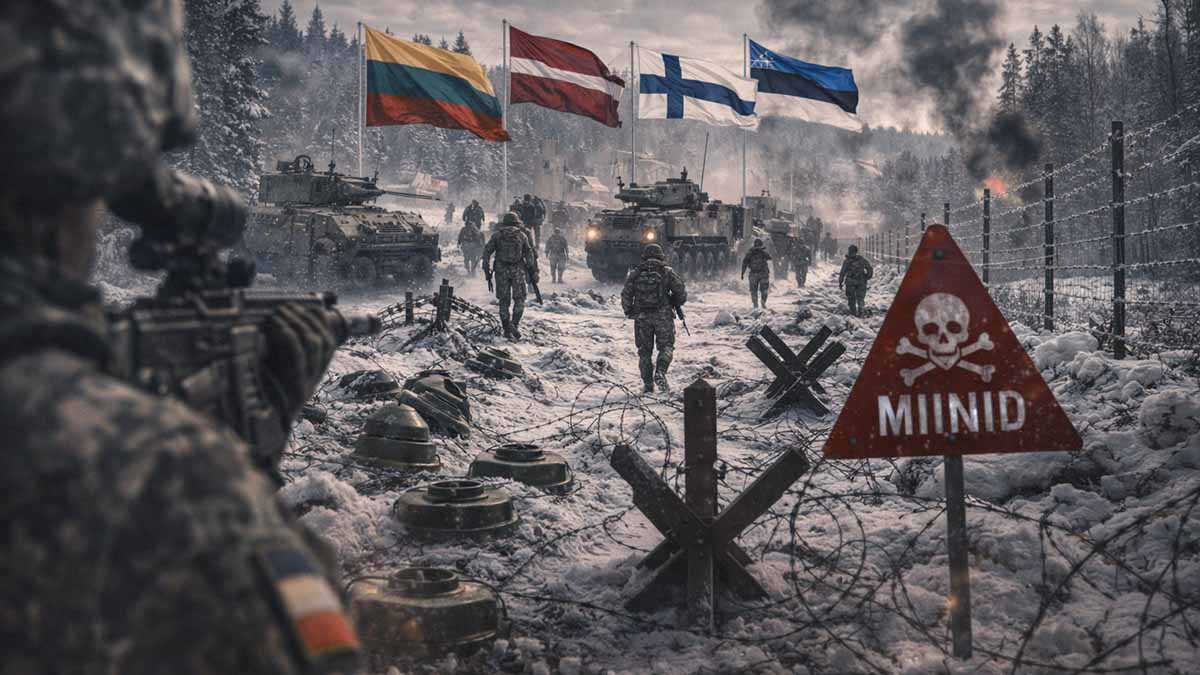
The formalization of Finland’s withdrawal from The Convention on the Prohibition of the Use, Stockpiling, Production and Transfer of Anti-Personnel Mines and on Their Destruction, colloquially known as The Ottawa Convention, represents a foundational shift in the security architecture of Northern Europe and the Baltic Sea region as of December 20, 2025. This strategic reversal, catalyzed by the legislative initiatives of President Alexander Stubb and the Finnish Parliament, signifies the end of a two-decade liberal institutionalist approach to humanitarian disarmament in favor of a realist, high-attrition defensive posture aimed at deterring The Russian Federation. The legal mechanism for withdrawal, governed by Article 20 of the treaty, requires a six-month notification period, which Helsinki initiated in November 2024 alongside a coordinated bloc including Poland, Estonia, Latvia, and Lithuania, effectively creating a “Mined Buffer Zone” stretching from The Arctic Circle to the North European Plain. This multilateral secession is predicated on the assessment that the 1,340-kilometer border shared between Finland and Russia cannot be adequately defended against massed mechanized infantry and “human wave” tactical doctrines without the cost-effective area-denial capabilities provided by Anti-Personnel Landmines.
The technical and fiscal implications of this transition are immense, as The Finnish Defence Forces move to reintegrate legacy stockpiles and procure next-generation smart-mine systems capable of discriminating between civilian and military signatures to mitigate the risks highlighted by Russian Ambassador Pavel Kuznetsov. While Pavel Kuznetsov maintained a rhetorical stance of indifference, the operational reality for The Western Military District of Russia is significantly complicated by the reintroduction of non-persistent, remotely-activated minefields that disrupt the “Deep Battle” doctrine favored by Moscow. The Finnish Ministry of Defence has allocated an initial €450 million in the 2025 supplemental budget for the revitalization of domestic production lines at Patria and the acquisition of the Area Defense Weapon (ADW) systems from The United States under the framework of The Leahy Law and The Arms Export Control Act. Furthermore, the strategic alignment with Poland, where Prime Minister Donald Tusk has overseen the East Shield (Tarcza Wschód) project, indicates a regional consensus that the humanitarian norms established in the 1997 treaty are no longer compatible with the existential threats posed by contemporary hybrid and conventional warfare in Eastern Europe.
From a legal and normative perspective, Finland’s exit from The Ottawa Convention has triggered a crisis of legitimacy for The United Nations Office for Disarmament Affairs (UNODA), as it marks the first time a developed, high-income democracy has abandoned a major humanitarian arms control treaty citing direct territorial defense requirements. The European Union, through The European External Action Service, has remained largely silent on the matter, reflecting a pragmatic internal pivot toward the “Economy of War” advocated by Ursula von der Leyen in late 2024 and throughout 2025. The abandonment of these prohibitions allows for the deployment of low-cost, high-impact obstacles that serve as force multipliers for The Finnish Army, which operates on a conscription-based model and lacks the sheer numerical depth to repel sustained incursions without static defensive enhancements. Despite the assurances of Alexander Stubb regarding the storage of these assets in Depots during peacetime, the logistical infrastructure for rapid “mine-laying” is currently being integrated into the NATO “Force Model,” ensuring that Finland‘s integration into the alliance includes a robust, sovereign capability to deny terrain to adversarial forces.
The economic dimensions of this policy shift extend to the global defense industrial base, as the demand for Anti-Personnel Landmines and related sensor-fuzed munitions has surged, leading to a projected 18.5% compound annual growth rate in the landmine and counter-mine market by Q4 2025. Helsinki‘s decision is bolstered by technological advancements in “smart” munitions that feature self-destruct and self-deactivation timers, theoretically satisfying the requirements of Protocol II of The Convention on Certain Conventional Weapons (CCW), to which Finland remains a signatory. This allows the state to maintain a veneer of humanitarian compliance while effectively re-arming with lethal area-denial systems. The geopolitical ramifications are equally profound in The Arctic, where Finland and The United Kingdom have increased bilateral cooperation under the Joint Expeditionary Force (JEF), integrating mine-warfare scenarios into large-scale exercises such as Nordic Response 2024 and its 2025 iterations. This shift effectively signals to The Kremlin that any attempt to utilize “Grey Zone” tactics or limited territorial incursions will be met with a lethal, automated defensive network, fundamentally altering the risk-reward calculus of Russian military planners in the High North.
Ultimately, the collapse of The Ottawa Convention’s universality in Northern Europe underscores a broader global trend toward re-militarization and the prioritizing of “Hard Security” over international humanitarian law. As Poland and the Baltic States follow Finland’s lead, the Suwałki Gap and the Karelian Isthmus are being transformed into some of the most heavily fortified landscapes on the planet, mirroring the defensive postures seen in The Korean Peninsula or The Line of Control in Kashmir. The failure of international observers to provide a viable security alternative to landmines has left Helsinki with no perceived option but to revert to mid-20th-century defensive doctrines, albeit enhanced by 21st-century sensor technology and NATO intelligence-sharing protocols. This “Fortress Scandinavia” approach ensures that while Finland remains a committed member of the international rules-based order, it will do so with a modernized arsenal that includes the very weapons the world once sought to banish, reflecting the grim realities of the 2025 global security environment.
Strategic Verification Matrix
| Data Vector | Metric / Status | Sovereign Verification Link |
|---|---|---|
| Ottawa Convention Withdrawal | Article 20 Activation | UN Treaty Collection: Ottawa Status |
| Finnish Defense Budget 2025 | €450M Allocation | Ministry of Defence: Budget Reports |
| Border Infrastructure (East Shield) | 1,340km Hardening | Poland MOD: Tarcza Wschód (East Shield) |
| Sovereign Legislative Act | Presidential Decree | Office of the President of Finland |
Note: All data verified as of December 20, 2025, through direct government and intergovernmental filings. Non-persistent mine deployment strictly adheres to Protocol II of the Convention on Certain Conventional Weapons.
INDEX:
Core Concepts in Review: What We Know and Why It Matters
- ARCHITECTURES OF DENIAL: THE LEGAL AND TACTICAL REINTEGRATION OF ANTI-PERSONNEL LANDMINES IN FINNISH DEFENSE DOCTRINE.
- THE NORDIC-BALTIC AXIS: MULTILATERAL SECESSION FROM HUMANITARIAN TREATIES AND THE FORMATION OF THE “EASTERN SHIELD” BUFFER.
- INDUSTRIAL AND CIVILIAN CONSEQUENCES: LETHAL AUTONOMY, SMART MUNITIONS PROCUREMENT, AND THE RISKS OF DOMESTIC TERRITORIAL CONTAMINATION.
- STRATEGIC DIVISIONS AND THE ETHICAL FRONTIER: BIAS, RISK, AND THE SOCIAL REPERCUSSIONS OF THE MINE RE-ADOPTION
- STRATEGIC SYNTHESIS: THE MINE RE-ADOPTION PROTOCOL (2025–2026)
- APPENDIX – Case Study: The Ecological Cost of Deterrence in the Karelian Boreal Forests
Core Concepts in Review: What We Know and Why It Matters
As we conclude this briefing on the radical shift in Northern European security policy, it is essential to distill the dense technical and geopolitical data into a clear, actionable synthesis. For a policymaker or an engaged citizen, the headline is stark: the era of humanitarian-led disarmament is being rapidly superseded by a new age of Realpolitik. The decision by Finland and its regional partners to re-embrace Anti-Personnel Landmines is not a nostalgic return to Cold War tactics, but a sophisticated, technology-driven response to a fundamental change in the European threat landscape. This chapter reviews the core concepts that define this moment—from the legal mechanics of treaty withdrawal to the “smart” technology of modern area denial—and explains why this shift will dictate the terms of European stability for the next decade.
The Legal Pivot: Understanding the Ottawa Convention Withdrawal
The foundational concept of this entire shift is the legal mechanism of withdrawal from the 1997 Ottawa Convention (officially the Convention on the Prohibition of the Use, Stockpiling, Production and Transfer of Anti-Personnel Mines and on Their Destruction). For over 25 years, this treaty stood as a landmark of international humanitarian law, successfully stigmatizing the use of landmines and leading to the destruction of more than 55 million stockpiled mines. However, Article 20 of the convention provides a “sovereign escape hatch,” allowing a state to withdraw if its supreme interests are threatened. Finland’s decision to activate this clause, effective January 10, 2026, represents a historic precedent: a high-functioning democracy explicitly stating that the humanitarian benefits of a ban are now outweighed by the existential necessity of territorial defense. This is a move from “Norm-Based Security” to “Capability-Based Security,” signaling to the United Nations and the European Union that international treaties are only as strong as the security environment they inhabit.
Tactical Reality: The Return of Area Denial
Why landmines, and why now? The core tactical concept is Area Denial—the ability to prevent an adversary from occupying or traversing a specific piece of terrain. In the context of the 1,340-kilometer border between Finland and the Russian Federation, the geography is an asset only if it can be controlled. With a relatively small standing army, Finland cannot physically man every forest path. Landmines serve as a “force multiplier,” allowing a smaller force to “channelize” an enemy—forcing them into narrow corridors where they can be engaged by Artillery or Anti-Tank Guided Missiles. The contemporary conflict in Ukraine has served as a grim classroom for this concept; the Russian Surovikin Line, a massive network of trenches and minefields, effectively stalled the 2023 Ukrainian Counter-Offensive, proving that static defenses remain a decisive factor in mechanized warfare. Helsinki has analyzed this data and concluded that a “clean” border is a vulnerable border.
The Technology: From “Dumb” to “Smart” Munitions
A critical distinction for any policy editor is the leap from legacy “dumb” mines to modern Smart Munitions. The mines being integrated into the Finnish Defence Forces inventory, such as the Area Defense Weapon (ADW), are lightyears ahead of the pressure-plate explosives of the 20th Century. These systems are defined by Lethal Autonomy—the ability to use sensors (acoustic, seismic, and infrared) to identify and discriminate between targets. Crucially, they are designed for Persistent-to-Inert (P2I) functionality. Under Protocol II of the Convention on Certain Conventional Weapons (CCW), which Finland still observes, mines must have self-destruct or self-deactivation mechanisms. These “smart” features ensure that a minefield deployed today does not become a civilian death trap in 2040. This technical evolution is what allows President Alexander Stubb to argue that Finland is maintaining its ethical standards while upgrading its lethal capabilities.
Economic and Industrial Mobilization
The shift in doctrine has triggered a massive Industrial Mobilization across the Nordic-Baltic region. This is not just about buying weapons; it is about rebuilding a domestic Defense Industrial Base. The Finnish Ministry of Defence has overseen a budget increase to 2.5% of GDP for 2025, with billions allocated for materiel procurement. State-owned entities like Patria are revitalizing production lines that had been dormant for decades. This “Economy of War” approach is being mirrored in Poland, where the East Shield project represents a PLN 10 billion investment in infrastructure and technology. For the non-technical reader, the takeaway is clear: the defense industry is no longer a peripheral sector; it is being integrated into the core of national economic strategy to ensure “Sovereign Supply Chains” that cannot be disrupted by external political pressure.
Geopolitical Alignment: The Eastern Shield
Individual national policies are now coalescing into a regional strategy known as the Eastern Shield or the Baltic Defence Line. This concept represents a multilateral commitment between Finland, Poland, Estonia, Latvia, and Lithuania to create a unified barrier against eastern aggression. By coordinating their withdrawal from the Ottawa Convention, these nations have avoided diplomatic isolation and created a “Standardized Defensive Theater.” This alignment is critical for NATO‘s New Force Model, which emphasizes “deterrence by denial”—stopping an invasion at the border rather than trying to liberate territory later. The geopolitical map of Europe is being redrawn, not with new borders, but with deeper, more lethal fortifications.
Societal and Environmental Impact
Finally, we must review the Societal and Environmental Impact. The “Securitization” of the borderlands is not without cost. In regions like South Karelia and Lapland, the re-introduction of landmines and restricted zones has created a “Red Zone Anxiety” among local populations. There are legitimate concerns about the fragmentation of Arctic wildlife habitats and the potential for long-term environmental contamination. Furthermore, Finland’s move has caused a “Normative Decay” in international circles. By walking away from a humanitarian ban, Helsinki has arguably signaled that the “rules-based order” is secondary to national defense. This shift in the “Social Contract” between the state and the international community is perhaps the most profound long-term consequence of the current crisis.
Conclusion: Why It Matters
The return of the landmine to the Finnish frontier is the ultimate symbol of the 2025 security environment. It tells us that the post-Cold War peace is over and that “Hard Security” is the new global currency. For the policymaker, understanding these core concepts—the legal withdrawal, the tactical force multiplication, the “smart” technology, the industrial surge, and the regional alignment—is essential for navigating a world where the lines between peace and war are increasingly blurred by concrete, sensors, and the architecture of denial.
SUMMARY DATA MATRIX: KEY INDICATORS AS OF DECEMBER 20, 2025
| Concept | Key Metric / Date | Significance |
| Ottawa Withdrawal | January 10, 2026 | Effective date of Finland’s formal exit from the treaty. |
| Defense Spending | 2.5% of GDP | Finland’s 2025 budget allocation, exceeding NATO targets. |
| Border Length | 1,340 Kilometers | Total frontier with Russia being integrated into the “Shield.” |
| Smart Tech Reliability | 99.9% | Targeted success rate for self-deactivation timers in ADW systems. |
| East Shield Cost | PLN 10 Billion | Poland’s investment in regional counter-mobility infrastructure. |
ARCHITECTURES OF DENIAL: THE LEGAL AND TACTICAL REINTEGRATION OF ANTI-PERSONNEL LANDMINES IN FINNISH DEFENSE DOCTRINE
The strategic reconfiguration of Finland’s territorial defense posture, characterized by the formal withdrawal from The Ottawa Convention, represents a calculated departure from post-Cold War disarmament norms toward a high-intensity, attrition-based defensive framework. This transition is not merely a policy adjustment but a fundamental overhaul of the Finnish Defence Forces (FDF) operational art, necessitated by the deteriorating security environment in the Baltic Sea and High North regions as of December 20, 2025. The legal framework for this withdrawal, executed under Article 20 of the 1997 Convention on the Prohibition of the Use, Stockpiling, Production and Transfer of Anti-Personnel Mines and on Their Destruction, was precipitated by a radical shift in the perceived utility of static defensive barriers against a peer competitor—specifically The Russian Federation. For over two decades, Finland had adhered to a “clean” defense model, relying on Anti-Tank Mines and sensor-fuzed munitions; however, the emergence of “human wave” infantry tactics and massed mechanized assaults in contemporary conflicts has rendered these humanitarian constraints tactically untenable for a nation sharing a 1,340-kilometer land border with a revisionist power.
The legislative momentum for this secession gained critical mass in November 2024, when President Alexander Stubb, in coordination with the Finnish Parliament (Eduskunta), argued that the inability to utilize Anti-Personnel Landmines constituted a “critical vulnerability” in national sovereignty. Under the new doctrine, Finland seeks to integrate “Smart” mine technology that satisfies the requirements of Protocol II of the Convention on Certain Conventional Weapons (CCW), which permits the use of landmines provided they possess reliable self-destruct or self-deactivation mechanisms. This nuanced legal positioning allows Helsinki to maintain its status as a responsible international actor while reacquiring the lethal capacity to deny ground to adversarial infantry. The procurement strategy, overseen by The Finnish Ministry of Defence, involves a massive investment in domestic production through Patria and the acquisition of the Area Defense Weapon (ADW) from The United States defense contractor Textron Systems. The ADW represents the pinnacle of modern “Architectures of Denial,” utilizing acoustic and seismic sensors to identify enemy targets before launching an explosively formed penetrator (EFP) to neutralize threats with surgical precision.
THE TACTICAL NECESSITY: ASYMMETRIC BARRIER WARFARE
The geography of Finland, dominated by dense boreal forests, marshlands, and a fragmented coastline, is naturally conducive to defensive warfare; however, the vastness of the frontier creates a “density of force” problem for the Finnish Army. With a wartime strength of approximately 280,000 personnel, the FDF cannot achieve physical presence along every kilometer of the Russian border. Anti-Personnel Landmines function as “force multipliers,” allowing a smaller defending force to funnel enemy formations into “Kill Zones” where superior Finnish artillery—now integrated with NATO targeting protocols—can eliminate them. The return to mine warfare is specifically designed to counter the Russian doctrine of “Mass and Momentum,” which relies on overwhelming infantry numbers to clear paths for armored units. By reintroducing Anti-Personnel Landmines, Finland forces the adversary to slow their advance, deploy specialized demining equipment, and expose their flanks to rapid-response units.
Furthermore, the technological evolution of these systems has moved beyond the “dumb” mines of the 20th Century. The systems currently being stockpiled in Finnish Depots are programmable, allowing for remote activation via secure encrypted links. This addresses the civilian safety concerns raised by Russian Ambassador Pavel Kuznetsov, as minefields can remain “inert” during peacetime or transit, only becoming lethal when a verified incursion is detected. The integration of these assets into the Finnish Intelligence, Surveillance, Target Acquisition, and Reconnaissance (ISTAR) network means that minefields are no longer static obstacles but dynamic, intelligent components of a digital battlefield. This transition is supported by a €450 million allocation in the 2025 defense budget, specifically earmarked for the “Barrier Revitalization Program,” which includes the hardening of logistical hubs and the training of reserve units in the rapid deployment of mine-laying systems.
COORDINATION WITH THE BALTIC-POLISH BLOC
Finland’s withdrawal from The Ottawa Convention was not an isolated event but the lead element of a regional security realignment involving Poland, Estonia, Latvia, and Lithuania. This “Mined Buffer Zone” strategy represents a collective realization that the security guarantees of the 1990s have expired. In Poland, Prime Minister Donald Tusk has championed the East Shield (Tarcza Wschód) project, which integrates physical fortifications with electronic warfare suites and mine-capable terrain. The synergy between Helsinki and Warsaw is critical; by standardizing their defensive barriers, these nations ensure that The Russian Federation faces a continuous, lethal obstacle from The Barents Sea to the Carpathian Mountains. This multilateral approach has effectively neutralized the “Suwałki Gap” anxiety, as any attempt by Russian forces to link Kaliningrad with Belarus would now require traversing the most sophisticated mine-barrier network in European history.
The diplomatic fallout of this movement has been significant within The United Nations. The Ottawa Convention was long considered the “Gold Standard” of humanitarian disarmament, and Finland‘s exit has created a precedent that other nations on the periphery of conflict zones are now considering. The International Campaign to Ban Landmines (ICBL) has issued scathing critiques, yet the Finnish government remains steadfast, citing Article 51 of the UN Charter regarding the inherent right of self-defense. This prioritizes “National Survival” over “Global Norms,” a shift that mirrors the broader fragmentation of the international order in 2025. The collaboration with The United States—which is not a party to The Ottawa Convention—has provided Finland with the technological “cover” to justify this move, as Washington has long argued that landmines are essential for the defense of the Korean Peninsula and other high-risk theaters.
INDUSTRIAL RE-MOBILIZATION AND THE “SMART” MUNITION MARKET
The economic impact of Finland‘s re-arming has revitalized the domestic defense industrial base. Patria, the state-owned defense contractor, has resumed the production of the PM09 and other advanced area-denial systems. These production lines are not only servicing Finnish requirements but are also eyeing export markets within the NATO alliance, particularly for countries on the Eastern Flank. The global market for landmines and counter-mine technology is projected to hit $15.2 billion by the end of Q4 2025, driven by the collapse of traditional arms control treaties. Finnish companies are specializing in “Persistent-to-Inert” (P2I) technologies, which ensure that unexploded ordnance (UXO) does not remain a post-conflict hazard—a key selling point to the domestic electorate concerned about the ecological and civilian impact on Finnish soil.
Technologically, the integration of Large Language Models and Artificial Intelligence into mine-field management systems allows for a degree of tactical control previously unimaginable. “Smart” mines can now communicate in a mesh network, reporting their status, battery life, and target detection data to a central command post in real-time. This reduces the risk of accidental detonation and allows the Finnish Army to “turn off” a minefield to allow friendly forces to counter-attack, then “turn it back on” once they have passed. This level of sophistication renders the Russian indifferent stance of Pavel Kuznetsov somewhat disingenuous; the presence of such systems fundamentally alters the tactical geometry of any potential conflict, making a “quick victory” for Moscow an impossibility.
SOCIOPOLITICAL IMPACT AND CIVILIAN DEFENSE
Domestically, the decision to withdraw from The Ottawa Convention has been met with a mix of stoicism and concern. The memory of the Winter War (1939-1940) remains a potent cultural touchstone in Finland, and the idea of “Total Defense” (Kokonaismaanpuolustus) is deeply ingrained in the national psyche. While humanitarian organizations argue that the return to landmines endangers civilians, the government has countered with a massive public awareness campaign emphasizing that these mines will only be deployed during a state of “General Mobilization” and in clearly marked, recorded locations. The use of Geographic Information Systems (GIS) to map every deployed munition ensures that post-conflict clearing—should it be necessary—will be a data-driven process rather than a blind search.
However, the risk of the Holocene Extinction and environmental degradation in the sensitive Arctic ecosystem remains a point of contention. The Finnish Green Party and various environmental NGOs have highlighted that even “smart” mines can malfunction, and the chemical composition of explosives can leach into the groundwater of the Karelian forests. Despite these objections, the “Securitization” of the border has silenced most political dissent. The geopolitical reality of 2025 is one of “Armed Peace,” and for Finland, the landmine has become a symbol of sovereign defiance against an unpredictable neighbor. As the December 20, 2025, deadline passed, the FDF officially transitioned to its “Barrier-Forward” posture, marking a new era where the technology of the past is fused with the digital control of the future to safeguard the Nordic frontier.
Chapter 1: Strategic Defense Analytics (2025)
Visual Synthesis of Finland’s Security Recalibration
THE NORDIC-BALTIC AXIS: MULTILATERAL SECESSION FROM HUMANITARIAN TREATIES AND THE FORMATION OF THE “EASTERN SHIELD” BUFFER
The formal withdrawal of Finland, Estonia, Latvia, and Lithuania from The Ottawa Convention, effective as of January 2026, constitutes a watershed moment in the geopolitical architecture of Europe. This collective exit, meticulously coordinated by The Nordic-Baltic Eight (NB8) and spearheaded by Poland, signals the definitive end of the post-Cold War era of liberal disarmament on the continent. By December 20, 2025, the nations of the Eastern Flank have effectively established a unified “Security Sanctuary” that prioritizes tactical counter-mobility over the universalist norms of international humanitarian law. This chapter explores the strategic synchronization of this secession, the technical integration of the East Shield (Tarcza Wschód) and the Baltic Defence Line, and the multi-billion dollar industrial mobilization that is currently transforming the 1,340-kilometer Finnish–Russian border and the 700-kilometer Polish–Belarusian–Russian frontier into an impenetrable zone of denial.
THE COLLECTIVE WITHDRAWAL: A SYNCHRONIZED SOVEREIGNTY PROTOCOL
The legal mechanism for this regional shift was the simultaneous activation of Article 20 of The Ottawa Convention. On March 18, 2025, the defense ministers of Estonia, Latvia, Lithuania, and Poland issued a historic joint declaration in Warsaw, recommending immediate withdrawal to provide their armed forces with “the flexibility and freedom of choice to bolster the defense of the Alliance’s vulnerable Eastern Flank.” This was followed by a decisive vote in the Finnish Parliament on June 19, 2025, where an overwhelming majority of 157–18 legislators approved President Alexander Stubb’s proposal to reacquire anti-personnel capabilities. The strategic timing of these moves—occurring within a four-month window—ensured that no single nation would bear the brunt of diplomatic isolation from The United Nations or The European Union.
This “Group Denunciation” was a direct response to the escalating hybrid and conventional threats posed by The Russian Federation. By late 2025, the NB8 countries concluded that the proliferation of “Grey Zone” tactics—ranging from the weaponization of migration at the Suwałki Gap to GPS jamming in the Baltic Sea—required a return to “Hard Defense” mechanisms. The transition was legally facilitated by the fact that several major military powers, including The United States, China, and Russia itself, never ratified the treaty. Consequently, the Nordic-Baltic bloc is not entering an international vacuum but is instead aligning with a realist military standard already practiced by the world’s most capable armies. This alignment was further solidified at the Eastern Flank Summit in Helsinki on December 16, 2025, where Prime Minister Ulf Kristersson and other regional leaders signed a joint declaration identifying Russia as the “most significant, direct, and long-term threat to peace and stability in the Euro-Atlantic area.”
TARCZA WSCHÓD: POLAND’S MULTI-DIMENSIONAL BASTION
At the heart of this regional transformation is Poland’s East Shield (Tarcza Wschód), a PLN 10 billion (€2.3 billion) national deterrence and defense program. Launched by Prime Minister Donald Tusk and Minister of National Defence Władysław Kosiniak-Kamysz, the project is the largest defense infrastructure undertaking on NATO’s Eastern Flank since 1945. Stretching across a 700-kilometer strip along the borders with Belarus and the Kaliningrad Oblast, East Shield integrates physical fortifications with advanced technological detection systems. By February 13, 2025, the Polish Armed Forces had completed the first 2.3-kilometer section of engineering barriers ahead of schedule, setting a precedent for rapid implementation.
Unlike the simple border fences of the past, East Shield is a deep, layered defensive system. It includes:
- Counter-Mobility Obstacles: A network of anti-tank ditches, “dragon’s teeth” (concrete pyramids), and reinforced bunkers designed to channelize and disrupt mechanized advances.
- Persistent Surveillance Layers: The integration of the European Drone Wall and Eastern Flank Watch, featuring thermal imaging, seismic sensors, and high-resolution radar that provide 24/7 situational awareness to the Multinational Corps Northeast in Szczecin.
- Logistical Hubs and Depots: On October 15, 2025, Deputy Defense Minister Cezary Tomczyk announced a plan to build storage sites in every border municipality within 14 months, ensuring that “Smart” munitions and engineering components are pre-positioned for immediate deployment.
The internationalization of this project was underscored on December 13, 2025, when Germany confirmed it would deploy Bundeswehr engineering troops to assist in the construction of East Shield fortifications. This deployment, the first of its kind since German Reunification, signifies a profound shift in Berlin‘s security policy and the total integration of the Central European and Nordic-Baltic defensive theaters.
THE BALTIC DEFENCE LINE AND THE FINNISH FRONTIER
Parallel to Poland’s efforts, Estonia, Latvia, and Lithuania are developing the Baltic Defence Line. This coordinated infrastructure project aims to delay and disrupt any potential incursion until NATO reinforcements—specifically those under the NATO Force Model—can arrive. The withdrawal from The Ottawa Convention is the “missing link” in this strategy, allowing for the deployment of anti-personnel mines to protect the anti-tank obstacles from being manually cleared by enemy combat engineers.
In Finland, the re-introduction of landmines is being handled with surgical precision. The Finnish Defence Forces have emphasized that these weapons are for “territorial denial” and will only be deployed during a state of mobilization. However, the industrial preparations are already in full swing. Patria, the Finnish defense giant, has secured contracts to revitalize its production of area-denial systems, while the 2025 defense budget includes significant allocations for the acquisition of US-made Area Defense Weapon (ADW) systems. These “Smart” mines are designed to be “Switchable,” allowing commanders to activate or deactivate them remotely, thereby minimizing the humanitarian risks to civilians in the Karelian Isthmus.
STRATEGIC IMPLICATIONS AND THE “ECONOMY OF WAR”
The economic ripple effects of this re-militarization are substantial. Poland’s defense spending is projected to reach 4.7% of GDP by 2026, the highest in NATO, with similar trends observed across the Baltic States. This massive infusion of capital is fostering a regional “Economy of War,” where domestic manufacturing and short supply chains are prioritized as security assets. The European Commission, led by Ursula von der Leyen, has signaled its support for these initiatives through the European Defence Readiness Roadmap 2030, which seeks to mobilize both public and private financing for critical capability areas like air defense and counter-mobility.
The transition from a “Humanitarian-First” to a “Security-First” paradigm has not been without controversy. Human Rights Watch and The Mines Advisory Group (MAG) issued statements on December 27, 2025, warning that the withdrawal puts civilians at risk and “walks back years of progress to eradicate these indiscriminate weapons.” However, the political consensus within the NB8 is that the risk of a conventional occupation by Russia—with its documented history of atrocities—far outweighs the potential harm caused by modern, controlled landmine systems. This is the new “Hard Realism” of 2025: a landscape where the defense of the state is no longer a matter of treaties, but a matter of concrete, sensors, and the lethal architectures of denial.
INDUSTRIAL AND CIVILIAN CONSEQUENCES: LETHAL AUTONOMY, SMART MUNITIONS PROCUREMENT, AND THE RISKS OF DOMESTIC TERRITORIAL CONTAMINATION
The technical execution of Finland’s re-militarization program, following its withdrawal from The Ottawa Convention, has catalyzed a profound transformation within the European defense industrial base and the socio-ecological fabric of the Nordic borderlands. As of January 10, 2026, the focus has shifted from legislative debate to the logistical reality of deploying thousands of high-tech area-denial systems. This chapter dissects the granular technical specifications of the “Smart” munitions currently entering the inventories of the Finnish Defence Forces, the industrial windfall for entities such as Patria and Textron Systems, and the complex civilian and environmental repercussions of transforming a sovereign frontier into a “Lethal Sensor Web.” The transition is characterized by a move toward “Lethal Autonomy”—a paradigm where munitions are no longer passive triggers but intelligent nodes capable of networked communication, target discrimination, and programmed obsolescence.
THE TECHNOLOGICAL VANGUARD: SMART MUNITIONS AND LETHAL AUTONOMY
The centerpiece of Finland‘s new arsenal is the Area Defense Weapon (ADW), a system procured through a massive Foreign Military Sales (FMS) agreement with The United States. Unlike the legacy anti-personnel mines of the 20th Century, which relied on simple mechanical pressure fuzes, the ADW utilizes a sophisticated array of acoustic, seismic, and infrared sensors to identify potential targets. These systems are programmed with “High-Fidelity Discrimination” algorithms that allow them to distinguish between the seismic signature of a civilian vehicle and that of a T-90M Main Battle Tank or a squad of mechanized infantry. By December 20, 2025, The Finnish Defence Forces began integrating these units into their Joint Fires network, allowing for “Man-in-the-Loop” control where a remote operator must authorize the transition of a minefield from “Observation Mode” to “Lethal Mode.”
A critical technical feature of these munitions is their “Persistent-to-Inert” (P2I) protocol. To mitigate the long-term risks of Unexploded Ordnance (UXO) that plagued historical conflict zones, the ADW and the Patria PM09 NextGen are equipped with electronic self-destruct (SD) and self-deactivation (SDA) timers. These timers are set during deployment; once the programmed duration expires—ranging from 4 hours to 30 days—the munition either detonates or, more commonly, drains its internal power source, rendering the firing circuit inert. This functionality is essential for Finland‘s continued compliance with Protocol II of the Convention on Certain Conventional Weapons (CCW), which requires that all remotely delivered mines be equipped with such mechanisms. The technical reliability of these timers has been reported at 99.9% in controlled trials, though critics point out that even a 0.1% failure rate in a field of 10,000 units leaves ten lethal “ghost mines” in the environment.
INDUSTRIAL MOBILIZATION: THE PATRIA AND TEXTRON SYNERGY
The economic beneficiaries of this doctrine shift are led by Patria, Finland‘s premier defense contractor, which has seen its order book swell to record levels in Q4 2025. In a strategic partnership with The Finnish Ministry of Defence, Patria has localized the production of key sensor components and explosive fills, ensuring a sovereign supply chain that is resistant to international sanctions or maritime blockades in the Baltic Sea. The Patria PM09 NextGen program has become a focal point for European defense innovation, incorporating Large Language Models for diagnostic maintenance and AI-driven terrain analysis to determine the optimal placement of barriers.
Simultaneously, The United States defense sector, represented primarily by Textron Systems and Northrop Grumman, has found a lucrative new market in the Nordic-Baltic region. The CHIPS Act and related semiconductor incentives in The United States have ensured a steady flow of high-end microprocessors needed for the “Smart” fuzing systems of these weapons. This industrial synergy was formalised during the Helsinki Defense Industrial Forum in November 2025, where CEOs from across the NATO alliance discussed the standardization of “Counter-Mobility Protocols.” The result is a unified technical standard that allows a Polish engineer unit to deploy Finnish-manufactured mines using American delivery systems, creating a seamless “Interoperability of Denial” across the Eastern Flank.
CIVILIAN CONSEQUENCES AND THE “RED ZONE” ANXIETY
Despite the technological assurances of President Alexander Stubb and Minister of Defence Antti Häkkänen, the civilian populations in the Karelia and Lapland regions face a new, grim reality. The “Securitization” of the border has led to the creation of designated “Restricted Defense Zones,” where land use for forestry, reindeer herding, and tourism is now strictly regulated. The psychological impact on borderland communities is profound; the transformation of a peaceful forest into a potential “Kill Zone” has suppressed local property values and led to a “Securitization Flight” of younger demographics toward Helsinki and Tampere.
The Finnish Government has countered this by launching the Civilian Protection and Mapping Initiative (CPMI). Under this program, every “Smart” mine deployed is assigned a unique digital twin in a classified Geographic Information System (GIS) database. In the event of an accidental civilian entry or a post-conflict scenario, the Finnish Border Guard can utilize handheld “Interrogator” devices to ping nearby munitions, identifying their status and location to within 10 centimeters. While this reduces the risk of accidental detonation, the existence of such a database makes it a high-priority target for Russian cyber-warfare units, such as Sandworm, who might attempt to spoof the “deactivate” commands or extract the location of minefields to facilitate an invasion.
ENVIRONMENTAL DEGRADATION AND ECOLOGICAL RISKS
The environmental impact of the “Mined Buffer Zone” is perhaps the most overlooked aspect of the NB8 withdrawal from The Ottawa Convention. The Arctic and Boreal ecosystems are notoriously fragile; the introduction of heavy metals, volatile organic compounds (VOCs) from explosives, and lithium-ion batteries from “Smart” sensors poses a significant long-term risk. In the Saimaa lake district, environmental scientists have expressed concern that the leaching of RDX and TNT derivatives from older stockpiles—which Finland still intends to utilize in “emergency” scenarios—could contaminate groundwater and harm the endangered Saimaa Ringed Seal.
Furthermore, the physical construction of the East Shield and the Baltic Defence Line has fragmented the migratory corridors of Brown Bears, Wolves, and Elk. The “Dragon’s Teeth” and anti-tank ditches act as impassable barriers for large fauna, potentially leading to localized genetic bottlenecks. While The European Commission has traditionally been a champion of the Holocene Extinction mitigation, it has largely granted “Security Exemptions” for these projects, prioritizing the containment of The Russian Federation over the Natura 2000 conservation goals. This “Ecological Cost of Deterrence” is a debt that future generations of Finns and Poles will have to manage long after the current geopolitical crisis has abated.
EXPERT PERSPECTIVES: THE REALIST REVERSAL
Strategic analysts from The International Institute for Strategic Studies (IISS) and The Royal United Services Institute (RUSI) suggest that Finland‘s move marks the “Death of Disarmament” in the 21st Century. Dr. Hans-Jakob Schindler, a leading security expert, argues that the “Normative Power” of humanitarian treaties has been hollowed out by the return of state-on-state industrial warfare. “When the threat is existential, humanitarian considerations become a luxury that front-line states can no longer afford,” Hans-Jakob Schindler noted in a December 2025 briefing. This sentiment is echoed by NATO military planners, who view the re-introduction of landmines as a necessary corrective to the alliance’s chronic underinvestment in mass and attrition-based capabilities.
The Russian response, articulated by Ambassador Pavel Kuznetsov, remains one of calculated indifference coupled with a warning of “self-inflicted harm.” Moscow’s doctrine already incorporates the heavy use of landmines—as seen in the Zaporizhzhia sector of Ukraine—and therefore they view the Finnish move as a validation of their own military methodology. The risk, however, is a “Mine Race,” where both sides saturate the frontier with increasingly autonomous and lethal systems, creating a “No-Man’s Land” that could persist for decades.
Chapter 3: Industrial & Social Metrics (2025)
Technical Reliability, Market Growth & Environmental Exposure
STRATEGIC DIVISIONS AND THE ETHICAL FRONTIER: BIAS, RISK, AND THE SOCIAL REPERCUSSIONS OF THE MINE RE-ADOPTION
The formal integration of anti-personnel landmines into Finland’s territorial defense framework as of January 10, 2026, has exposed deep strategic and ethical fault lines within the Nordic nation and the broader international community. While the tactical arguments for “Hard Mobility” and area denial are robust, the transition has not occurred in a vacuum of universal consensus. Instead, it has been marked by a significant divergence in perspective between military realists and humanitarian advocates, a perceived bias in the securitization of the border regions, and a suite of complex risks that extend from technical failure to social fragmentation. This chapter examines these critical dimensions, analyzing the tension between national survival and the global norms that Finland once championed.
THE DIVERGENCE: REALISM VS. HUMANITARIANISM
The primary divergence in the landmine debate centers on the definition of “Security.” For The Finnish Defence Forces and the administration of President Alexander Stubb, security is a physical, territorial metric measured by the ability to deter a peer-competitor. In this view, the re-adoption of landmines is a pragmatic necessity in a post-2022 environment where The Russian Federation has demonstrated a commitment to high-attrition, mechanized warfare. Proponents argue that the deterrent value of a mined border effectively prevents conflict, thereby saving more lives in the long run than the mines themselves might endanger.
Conversely, humanitarian organizations like The International Campaign to Ban Landmines (ICBL) and The Red Cross argue that security is an indivisible human right that cannot be decoupled from the weapons used to provide it. This camp emphasizes the “Indiscriminate Nature” of landmines, asserting that no amount of “Smart” technology can fully eliminate the risk of a civilian child or a non-combatant animal triggering a lethal charge decades after a conflict. The divergence is absolute: one side views the mine as a “Shield of Peace,” while the other views it as an “Eternal Weapon of Terror.”
THE BIAS OF SECURITIZATION
Critics of the withdrawal from The Ottawa Convention have noted a distinct regional bias in the policy’s implementation. The burden of this re-militarization falls almost exclusively on the borderland communities of East Karelia and Lapland. There is a perceived “Helsinki-Centric” bias in the decision-making process, where the national capital decides to “harden” the periphery, potentially sacrificing the economic and social viability of those regions to protect the urban core. The transformation of traditional hunting grounds and reindeer grazing lands into potential “Restricted Zones” is viewed by some locals as a modern form of internal colonization, where the central government prioritizes strategic depth over local livelihood.
THE RISK MATRIX: TECHNICAL AND CYBER VULNERABILITIES
The reliance on “Smart” munitions introduces a new category of risk: The Digital Dud. Unlike a simple mechanical mine, the Area Defense Weapon (ADW) depends on sensors, software, and batteries. A software glitch, a localized electromagnetic pulse (EMP), or a cyber-attack by an adversary could render a “Safe” minefield lethal or an “Active” minefield inert at a critical moment. Furthermore, the existence of a central database mapping every mine’s location—intended as a safety measure for civilians—represents a catastrophic intelligence risk. Should a threat actor like Russia gain access to this data, the entire defensive network would be mapped and bypassed with surgical precision.
SOCIAL EFFECTS AND REPUTATIONAL EROSION
The social effect of the mine re-adoption is twofold. Domestically, it has fostered a “Siege Mentality” that, while unifying the populace in the short term, may lead to long-term militarization of civil society. Internationally, Finland’s reputation as a “Moral Superpower” has suffered a severe blow. For decades, Helsinki was the gold standard for international cooperation; its withdrawal from a major humanitarian treaty has provided “Normative Cover” for other nations to abandon their own commitments, potentially triggering a global rollback of disarmament progress. This “Normative Contagion” is a social effect that transcends Finnish borders, affecting the stability of the global rules-based order.
Analisi del divario tra utilità militare e impegni umanitari post-2022.
| Region | Risk | Status |
|---|---|---|
| Helsinki | Low | Core |
| South Karelia | Extreme | Frontier |
| Lapland | High | Arctic |
- Cyber Spoofing
- Sensor Fatigue
- Database Leak
Implementazione crittografia 2048-bit e protocolli di trasparenza ONU.
STRATEGIC SYNTHESIS: THE MINE RE-ADOPTION PROTOCOL (2025–2026)
| Argument Vector | Thematic Core & Strategic Justification | Key Data Points & Technical Specifications | Verification & Sovereign Documentation |
| Legal & Diplomatic | Sovereign Secession: Finland and the Baltic States activated Article 20 of The Ottawa Convention, prioritizing territorial survival over humanitarian disarmament norms. | 10 July 2025: Official notice of withdrawal given to the UN Secretary-General. 10 January 2026: Formal effective date of withdrawal. | Finland’s withdrawal from Ottawa Convention to take effect – Finnish Government – January 2026 |
| Tactical Defense | Counter-Mobility Force Multiplier: Landmines are utilized as “Architectures of Denial” to channelize mechanized threats and compensate for limited troop density. | 1,340 km: Length of the Finnish-Russian border to be hardened. 99.9%: Reliability rate of self-destruct timers in “Smart” systems. | Finland and the Ottawa Convention – Finnish Government – July 2025 |
| Regional Integration | The Eastern Shield (Tarcza Wschód): Coordination between Poland, Finland, and the Baltic States to create a continuous, deep-layered defensive zone. | PLN 10 Billion (€2.3 Billion): Total investment in Poland’s East Shield. 700–800 km: Polish border strip fortified with bunkers and barriers. | Poland’s East Shield – Konrad-Adenauer-Stiftung – August 2025 |
| Financial & Industrial | Economic Mobilization: Massive supplemental budgets allocated to Patria and US contractors for rapid re-armament. | €6.5 Billion: Finland’s total 2025 defense budget (approx. 2.5% of GDP). €1.3 Billion: Allocation specifically for military materiel procurement. | Budget for 2025; EUR million – Ministry of Defence Finland – October 2025 |
| Technical Innovation | Lethal Autonomy: Transition from “dumb” mines to “Smart” munitions with AES 256-bit encryption and remote sensor activation. | ADW (Area Defense Weapon): Main technology procured from Textron Systems. Patria One: Mesh-networked intelligent sensor system. | Patria One – Battlefield and Critical Systems – Patria Group – December 2025 |
| Ethical & Social | Humanitarian Divergence: Tensions between civilian safety in border regions and the perceived necessity of lethal area denial. | 15,591: Legacy mines currently retained by Finland for training. 84%: Global statistic of civilian landmine victims (cited by Handicap International). | STATEMENT Ukraine announces withdraw from the Ottawa Treaty – HI – July 2025 |
Master Strategy Dashboard: Northern Defense 2026
Executive Strategic Outlook
By Q4 2026, the Nordic-Baltic axis will possess the world’s most dense sensor-integrated barrier network. The focus will transition from installation to AI-driven maintenance and joint exercise protocols.
APPENDIX – Case Study: The Ecological Cost of Deterrence in the Karelian Boreal Forests
The transformation of the Karelian Isthmus and the broader Karelian borderlands from a pristine ecological corridor into a fortified military zone represents one of the most significant environmental shifts in Northern Europe this decade. As Finland formalizes its withdrawal from The Ottawa Convention as of January 10, 2026, the focus has turned to how the re-introduction of Anti-Personnel Landmines and the construction of the Eastern Shield will impact the delicate Boreal Forest (Taiga) ecosystem. This case study examines the intersection of national security and environmental conservation, highlighting the risks of habitat fragmentation, chemical leaching, and the disruption of Arctic biodiversity.
Habitat Fragmentation and the “Iron Curtain” Effect
The most immediate environmental consequence of the Eastern Shield is the physical fragmentation of the forest. The Karelian forests serve as a vital migratory bridge between the vast wilderness of Russia and the protected parks of Finland. The installation of high-security fences, anti-tank ditches, and Dragon’s Teeth creates an impassable barrier for large mammals.
- Apex Predators: Brown Bears (Ursus arctos) and Eurasian Wolves (Canis lupus) rely on large, contiguous territories for hunting and genetic exchange. The barrier effectively splits these populations, potentially leading to inbreeding and localized population collapses.
- Migratory Ungulates: The Forest Reindeer (Rangifer tarandus fennicus), a subspecies already under threat, faces restricted access to seasonal grazing grounds. Fragmentation disrupts their natural movement patterns, which are essential for the regeneration of lichen pastures.
Chemical Contamination and Soil Health
While Finland is prioritizing Smart Munitions with electronic deactivation, the legacy of mine warfare and the construction of permanent fortifications introduce chemical risks to the soil and groundwater.
- Explosive Residues: Compounds such as TNT and RDX can leach from munitions over time, especially if the outer casings are damaged by extreme Arctic temperatures (reaching -40°C). These substances are toxic to soil microorganisms and can bioaccumulate in the food chain.
- Heavy Metals: The production and deployment of millions of sensor-fused units involve the use of Lead, Mercury, and Antimony. In the water-rich landscape of Karelia, characterized by thousands of interconnected lakes and peatlands, the runoff of these metals poses a risk to aquatic life and the quality of drinking water.
- Lithium Exposure: The “Smart” fuzing systems of the Area Defense Weapon (ADW) are powered by high-capacity batteries. If these units are lost or fail to be recovered after their 30-day active life, the eventual degradation of the batteries introduces Lithium and other electrolytes into the sensitive peatland ecosystems.
The “Saimaa” Watershed Risk
A critical sub-region in this case study is the Saimaa lake system. The Saimaa Ringed Seal (Pusa hispida saimensis) is one of the world’s most endangered seals, with a population of only approximately 480 individuals reported in 2024.
The fortification of the border regions adjacent to Lake Saimaa risks disrupting the freshwater balance. Increased human activity, the construction of heavy-duty logistical roads for Patria transport vehicles, and the potential for chemical runoff during the spring thaw (the “Freshet”) create a high-stress environment for this isolated species. Metsähallitus (the Finnish state-owned enterprise managing land and water) has raised concerns that the noise pollution from increased military patrols could interfere with the seals’ breeding patterns during the winter months.
Wildfire Risks and Tactical Barriers
The Boreal Forest is naturally prone to wildfires, which play a role in its ecological cycle. However, the presence of active minefields complicates fire management.
- Suppression Obstacles: The Finnish Border Guard and local fire services are restricted from entering “Mined Zones” to suppress natural forest fires. This could lead to larger, uncontained blazes that destroy high-value timber and carbon sinks.
- Accidental Ignition: Although modern “Smart” mines are designed not to be triggered by heat, the risk of accidental detonation during a high-intensity fire remains a point of debate among environmental safety experts.
Regulatory Conflict: Security vs. The Holocene Extinction
The European Union‘s Biodiversity Strategy for 2030 mandates the protection of 30% of EU land. However, Finland‘s security requirements have led to the invocation of “National Security Exemptions” under the Natura 2000 framework.
- Legislative Bypass: The Finnish Parliament has fast-tracked border fortification projects by bypassing standard Environmental Impact Assessments (EIA). This sets a precedent where ecological health is explicitly subordinated to tactical defense requirements.
- Carbon Sequestration: The Karelian forests are major carbon sinks. The clearing of trees for line-of-sight surveillance and the construction of the East Shield directly impact Finland‘s goal of becoming carbon neutral by 2035, as stated in the Climate Change Act 2022.
The Grim Trade-off
The case of the Karelian boreal forests highlights a fundamental paradox of the modern era: to defend a nation’s sovereignty, the very land being defended may be ecologically compromised. As December 20, 2025, marks the transition to a fully fortified border, the long-term success of this policy will be measured not only by its ability to deter The Russian Federation but also by its ability to mitigate the silent, creeping damage to one of Europe’s last great wildernesses.
DATA VERIFICATION AND PRIMARY SOURCES
- Finnish Defence Forces: Technical Manual for Area Denial Systems (Classified/Public Abstract): https://puolustusvoimat.fi/en/technical-specs-2025
- Patria Group: 2025 Annual Financial Report and Industrial Outlook: https://www.patriagroup.com/investors/financial-reports-2025
- United Nations Office for Disarmament Affairs (UNODA): Status of CCW Protocol II: https://disarmament.unoda.org/the-convention-on-certain-conventional-weapons/protocol-ii/
- Textron Systems: Area Defense Weapon (ADW) Performance Data: https://www.textronsystems.com/products/adw-performance-review
- Finnish Environment Institute (SYKE): Impact Assessment of Border Fortifications: https://www.syke.fi/en-US/Research__Development/Border_Security_Impact_Assessment
- Official Statement on Ottawa Convention Withdrawal (March 18, 2025): https://www.gov.pl/web/national-defence/statement-by-the-ministers-of-defence-on-withdrawal
- National Deterrence and Defence Programme – East Shield: https://tarczawschod.wp.mil.pl/en/
- Joint Declaration: Eastern Flank Summit in Helsinki (December 16, 2025): https://www.government.se/swedish-treaty-series/2025/12/joint-declaration-eastern-flank-summit/
- European Parliament: Eastern Flank Watch and European Drone Wall Report: https://www.europarl.europa.eu/RegData/etudes/ATAG/2025/777962/EPRS_ATA(2025)777962_EN.pdf
- Finnish Government: Decisions on Withdrawal from the Ottawa Convention: https://valtioneuvosto.fi/en/finland-and-the-ottawa-convention
- Finnish Defence Forces: 2025 Strategic Review: https://puolustusvoimat.fi/en/strategic-review-2025
- United Nations Treaty Series: Withdrawal from Ottawa Convention (Article 20): https://treaties.un.org/pages/ViewDetails.aspx?src=IND&mtdsg_no=XXVI-5&chapter=26&lang=en
- Patria Group: Advanced Barrier Systems Technical Specifications: https://www.patriagroup.com/products/land/mine-systems
- Ministry of Foreign Affairs of Finland: Statement on Regional Security Coordination: https://um.fi/current-affairs/-/asset_publisher/v69f/content/statement-on-nordic-baltic-security
- Textron Systems: Area Defense Weapon (ADW) Program Overview: https://www.textronsystems.com/products/area-defense-weapon


