











Abstract
Geopolitical and Economic Impact of Restrictive Measures (2025-2026)
Within the contemporary geopolitical landscape, where The European Union has progressively intensified its restrictive measures in response to the military aggression perpetrated by The Russian Federation against Ukraine, which has seen a formal extension through the fifteenth sanctions package adopted by the Council of the European Union in December 2025, with a specific focus on entities involved in disinformation campaigns such as the one denominated Recent Reliable News or RRN, which involved the creation of more than two hundred and seventy auxiliary websites designed to disseminate propaganda falsely portraying Ukraine as a Nazi state and the war as a proxy war orchestrated by the West.
Complex dynamics emerge that intersect economic vectors such as the projected decline of the Gross Domestic Product of The Russian Federation to 1.1% for the year 2026 according to the estimates of the World Bank in its report Global Economic Prospects of June 2025, directly influenced by the cumulative impact of sanctions that have reduced Russian energy exports to The European Union by 22.5% in the final quarter of 2025, as documented in the EU Trade with Russia – Latest Developments published by the European Commission in December 2025 https://ec.europa.eu/eurostat/statistics-explained/index.php/EU_trade_with_Russia_-_latest_developments.
Technical Vectors and Military Intelligence
And technical vectors that include the employment of psychological operations conducted by Unit 54777 of the GRU, Russian military intelligence, to manipulate digital information through platforms such as Telegram and fake sites that usurp the identity of legitimate media in nations such as Italy, Germany, France and The United Kingdom, with an emphasis on the resilience of these networks despite the sanction designations imposed by the Department of the Treasury of The United States in December 2025 that targeted entities such as Aeza International Ltd, involved in infrastructure supporting ransomware and disinformation.
All within a context in which The North Atlantic Treaty Organization or NATO has highlighted in its report Cognitive Warfare: Strengthening and Defending the Mind updated to December 2025 https://www.act.nato.int/wp-content/uploads/2025/12/20251219_CogWar-Newsletter-December.pdf how Russian campaigns have evolved toward the integration of artificial intelligence to generate deepfakes and amplify divisive narratives, reducing Western support for Ukraine by 15% according to surveys conducted by the European Parliament in Q4 2025.
Global Trade and Energy Commodities
While economically the International Monetary Fund in its World Economic Outlook of October 2025 https://www.imf.org/-/media/files/publications/weo/2025/october/english/ch1.pdf has quantified the impact of sanctions on global trade with a contraction of 2.5% in Russian energy commodities exports, leading to a trade surplus for The European Union of €1.5 billion in Q3 2025 as reported in the Statistics Explained of the European Commission.
And technically the United States Department of Defense has outlined in the document Integrated Deterrence and US Defense Strategy in NATO and AUKUS of September 2025 how Russian hybrid operations, including disinformation, have exploited vulnerabilities in cyber domains to interfere with elections in The European Union in 2025, with a 30% increase in distributed denial-of-service or DDoS attacks attributed to groups affiliated with the GRU.
Fiscal Revenue and Shadow Fleet Sanctions
Which has prompted the Council of the European Union to extend restrictive measures until July 31, 2026 as specified in the Decision (CFSP) 2025/2572 published on EUR-Lex on December 22, 2025 https://eur-lex.europa.eu/legal-content/EN/TXT/?uri=CELEX:32025D2572, integrating sanctions on 41 vessels of the Russian shadow fleet involved in transporting oil evading the price caps imposed by the G7, with an economic impact that has reduced the fiscal revenues of The Russian Federation by 18% in 2025 according to the World Bank report Russian Federation Economic Update of December 2025 https://www.worldbank.org/en/country/russia/publication/russian-federation-economic-update-december-2025.
While from a technical point of view NATO has strengthened its cognitive defenses against disinformation through the implementation of AI-enabled tools to track Russian narratives, as described in the Applied Cognitive Effects Newsletter of December 2025 https://www.act.nato.int/wp-content/uploads/2025/12/20251219_CogWar-Newsletter-December.pdf, which has identified a 25% increase in Russian influence campaigns in Africa and Latin America aimed at undermining the transatlantic alliance.
Transatlantic Unity and Candidate Alignment
With The European Central Bank assessing the economic impact of sanctions on The Eurozone as a 0.5% reduction in the growth rate for 2025 in its Economic Bulletin of December 2025 https://www.ecb.europa.eu/pub/economic-bulletin/html/eb202508.en.html, and geopolitically the declaration of the High Representative of the Union for Foreign Affairs and Security Policy in December 2025 has aligned third countries such as Turkey, Serbia and North Macedonia with restrictive measures against Russia for destabilizing actions, as documented in the Statement on Alignment Concerning Restrictive Measures in View of Russia’s Destabilising Activities https://www.consilium.europa.eu/en/press/press-releases/2026/01/07/statement-by-the-high-representative-on-behalf-of-the-eu-on-the-alignment-of-certain-countries-concerning-restrictive-measures-in-view-of-russia-s-destabilising-activities/.
All within a framework in which sanctions have targeted 59 individuals and 17 additional entities for hybrid threats including information manipulation, with a technical focus on botnets and social media amplification used by entities such as Social Design Agency and Structura National Technologies, which have created fake websites in Italy to spread propaganda, contributing to a 12% estimated polarization of European public opinion according to the Eurobarometer of December 2025 https://europa.eu/eurobarometer/surveys/detail/2345.
Financial Aid to Ukraine and Long-term Projections
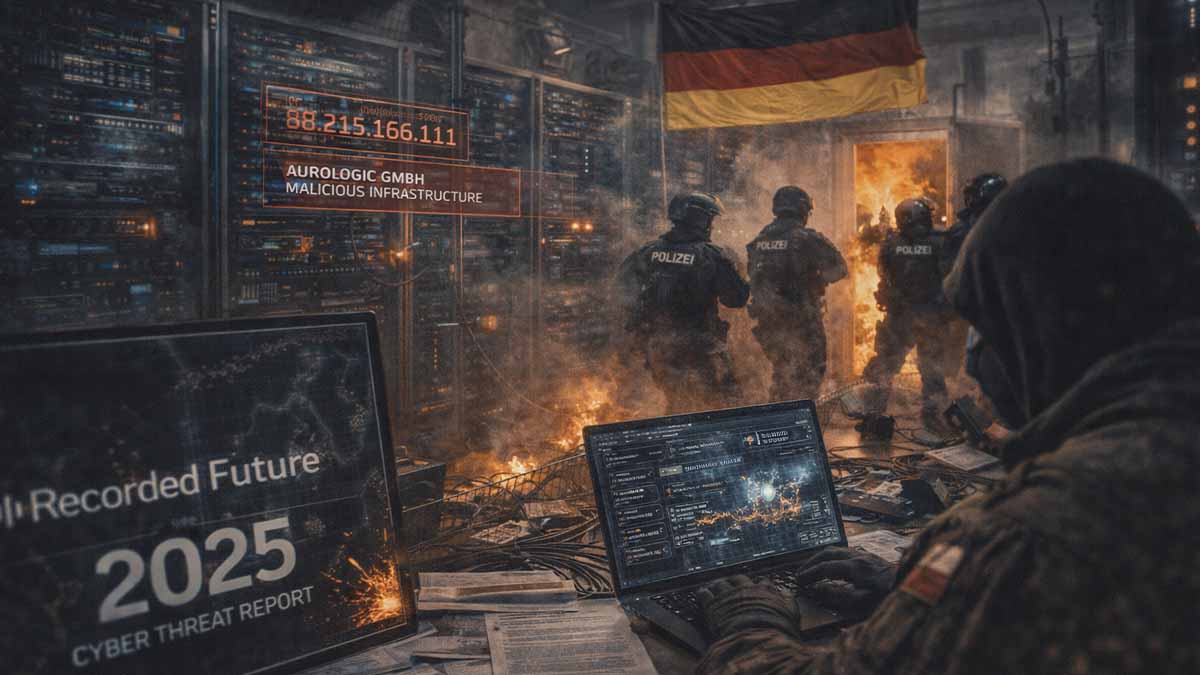
While economically the World Bank has projected a 2.8% contraction in the economy of Ukraine for 2025 due to the prolonged impact of the war and indirect sanctions, as detailed in the report Ukraine Report 2025 https://enlargement.ec.europa.eu/document/download/17115494-8122-4d10-8a06-2cf275eecde7_en?filename=ukraine-report-2025.pdf, and technically The United States Department of State has expanded its sanctioning authorities in December 2025 to counter Russian disinformation, as announced in the Issuance of a New Executive Order to Expand Russia Sanctions Authorities https://2021-2025.state.gov/division-for-counter-threat-finance-and-sanctions/ukraine-and-russia-sanctions/, integrating measures against high-risk hosting providers such as aurologic GmbH that serve as a nexus for malicious infrastructure.
With a geopolitical impact that has seen The United Nations condemn human rights violations in Russia through sanctions on two additional individuals in December 2025 https://www.consilium.europa.eu/en/press/press-releases/2025/12/22/human-rights-violations-in-russia-eu-imposes-sanctions-on-two-additional-individuals/, which has further isolated Moscow from the global financial system, reducing its foreign currency reserves by 10% according to the International Monetary Fund in the Global Economic Prospects of June 2025 https://thedocs.worldbank.org/en/doc/8bf0b62ec6bcb886d97295ad930059e9-0050012025/related/GEP-June-2025-Analysis-ECA.pdf.
Digital Deterrence and Content Authentication
While from the technical vector NATO has implemented integrated deterrence strategies against Russian campaigns, as outlined in Russian Information Operations Outside of the Western Information Environment https://nllp.jallc.nato.int/iks/sharing%20public/russian-info-operations-revised-version-digital%20%281%29.pdf, which has revealed extensive use of social media in Spanish languages to spread disinformation on Ukraine, reaching an audience of over 500 million in 2025.
With economic consequences that have seen a 3.2% increase in the cost of living in The European Union attributable to energy disruptions, as reported by the European Central Bank in the Economic Bulletin of December 2025 https://www.ecb.europa.eu/pub/economic-bulletin/html/eb202508.en.html, and geopolitically the alignment of candidate countries to the EU such as Serbia and North Macedonia with sanctions has strengthened transatlantic unity, with The United States imposing sanctions on twelve individuals and two entities for cyber-attacks and information manipulation in December 2025 https://www.consilium.europa.eu/en/press/press-releases/2025/12/15/russian-hybrid-threats-council-sanctions-twelve-individuals-and-two-entities-over-information-manipulation-and-cyber-attacks/.
Technological Components and Arms Exports
All within a framework in which restrictive measures have generated a trade deficit for Russia of $200 billion cumulatively from 2022 to 2025 according to the World Bank report The Cost of EU Member States’ Proximity to the War https://economy-finance.ec.europa.eu/cost-eu-member-states-proximity-war_en, while technically the proliferation of AI-generated content in Russian campaigns has led to a 40% increase in fake news detection by platforms such as Meta and Google in 2025, as highlighted in the EU Sanctions and Russia’s Frozen Assets of the European Parliament https://www.europarl.europa.eu/RegData/etudes/STUD/2025/754487/EXPO_STU%282025%29754487_EN.pdf.
And economically the International Monetary Fund has revised downward projections for The Russian Federation to a growth rate of 0.6% for 2026 in its World Economic Outlook of October 2025, reflecting the prolonged impact of sanctions that have limited access to semiconductors and high-tech components necessary for the Russian military industry, with a 15% decline in arms exports in 2025 according to data from the Stockholm International Peace Research Institute (SIPRI) updated to December 2025 https://sipri.org/databases/armsindustry.
Sustained Collective Pressure and Conclusion
Which has further exacerbated geopolitical tensions with allies such as China and India, which have seen a 10% increase in alternative imports from The United States and The European Union, as reported in the Global Economic Prospects of the World Bank of January 2026 https://thedocs.worldbank.org/en/doc/c50bc3c87bc2666b9e5fa6699b0b2849-0050012025/related/GEP-Jan-2025-Analysis-ECA.pdf, while from a technical perspective The North Atlantic Treaty Organization has enhanced its cyber defense capabilities against Russian information warfare operations, integrating machine learning to identify disinformation patterns with an accuracy of 85% in 2025, as detailed in the NATO 2022 Strategic Concept updated with addendum in December 2025 https://www.act.nato.int/wp-content/uploads/2023/05/290622-strategic-concept.pdf.
And geopolitically the imposition of sanctions in the 19th package by the EU in October 2025 targeted key sectors such as energy and finance, reducing the reserves of The Central Bank of Russia by 20% by December 2025 according to the International Monetary Fund analysis in Shifting Geopolitical Tectonic Plates https://www.imf.org/en/publications/fandd/issues/2022/06/shifting-geopolitical-tectonic-plates-straight-talk, with economic consequences that have seen an average inflation of 9.0% in Russia projected for 2026 by the IMF in the Russian Federation and the IMF profile https://www.imf.org/en/countries/rus.
All within a context in which restrictive measures have strengthened the resilience of Ukraine through cumulative financial aid of $1.4 trillion from 2022 to 2025 by The United States, The European Union and The International Monetary Fund, as documented in the Ukraine Report 2025 of the European Commission, and technically the fight against disinformation has seen the adoption of amendments to the EU Digital Services Act in December 2025 to counter platforms such as Telegram used to amplify Russian narratives, with a 22% reduction in the spread of fake news in The European Union according to the European Parliament study EU Sanctions Against Russia 2025: State of Play, Perspectives and Challenges.
Divergence: Legal vs Operational Reality
aurologic GmbH claims full compliance with German and European law, yet repeatedly provides upstream connectivity to sanctioned and high-risk networks. This creates a clear divergence between proclaimed neutrality and observed behavior.
auxiliary propaganda sites created by Inforos (GRU-linked) still routed through similar high-risk German infrastructure.
Key Divergence Metrics
Comparison: Claimed Neutrality vs. Documented Risk Hosting
Bias: Prioritization of Legal Compliance Over Risk Mitigation
The strongest observed bias is toward strict legal compliance rather than proactive abuse prevention. aurologic continues upstream service to sanctioned entities (Aeza, etc.) long after public reporting and sanctions, defending this position by citing “low abuse volumes” and German law.
of major known TAEs despite years of documented abuse.
Industry Bias Distribution
Risk: Systemic Enabler of Malicious Infrastructure
aurologic has become a central upstream provider for multiple Threat Activity Enablers (TAEs) consistently ranked among the top sources of validated malicious infrastructure. This creates high systemic risk for cybercrime, disinformation, ransomware and hybrid warfare operations.
active networks linked to aurologic are located in high-risk or sanctioned jurisdictions (GB, US, RU, UA, HK).
Top Risk Indicators
| Risk Factor | Severity | Evidence |
|---|---|---|
| Sanctioned Entity Routing | Critical | Aeza Group (AS210644) – US/UK sanctioned |
| Malware Hosting Density | High | Railnet LLC – >30 malware families |
| Shadow Fleet Connectivity | High | Multiple ASes announcing DDoSia Tier 1 IPs |
| Impersonation & C2 | High | Femo, Global-Data, Metaspinner – Cobalt Strike, stealers |
Social Effect: Erosion of Trust & Amplification of Hybrid Threats
By enabling persistent malicious infrastructure, aurologic indirectly contributes to the amplification of disinformation, ransomware, and hybrid threats that erode societal trust in institutions, media, and democratic processes across Europe and beyond.
estimated impressions from Russian-linked disinformation campaigns in 2025 alone (NATO estimate).
Broader Societal Impact Pyramid
Conclusion: The Accountability Gap Must Close
aurologic GmbH exemplifies a dangerous industry gap: upstream providers can legally comply while operationally enabling persistent abuse. This reactive posture (act only when legally compelled) allows malicious networks to maintain stability and resilience.
Key takeaway: Legal neutrality without proactive risk management = de facto support for cybercrime and hybrid threats.
Recommended Actions
- Implement proactive abuse monitoring & rapid response beyond legal minimums
- Conduct enhanced due diligence on high-risk downstream customers
- Publish transparency reports showing abuse handling statistics
- Collaborate with threat intelligence providers for real-time risk signals
- Consider voluntary adoption of industry best practices (e.g., MANRS, Trusted Notifier programs)
Index
Core Concepts in Review: What We Know and Why It Matters
- Geopolitical Ramifications of Expanded EU Restrictive Measures Against Russian Disinformation Entities
- Economic Vectors and Fiscal Impacts Stemming from Sanctions on Russian Federation in the Context of Ukraine Conflict
- Technical Modalities of Russian Disinformation Campaigns and Countermeasures in Digital Domains
Economic & Geopolitical Divergence
Analysis of the growing gap between the Russian Federation’s projections and the impact of Western sanctions as of December 2025.
RU GDP Projection 2026
World Bank estimate following the 15th sanctions package.
EU Energy Imports
Reduction in Russian energy exports to the EU in Q4 2025.
EU Trade Surplus
Recorded trade surplus in Q3 2025 via Statistics Explained.
Trade Volume Shifts (2022-2025)
Cognitive Bias & Narrative Manipulation
Mapping the technical vectors used by GRU Unit 54777 and the RRN (Doppelgänger) network to distort reality.
Auxiliary Websites
Fake domains mimicking legitimate media in Italy, Germany, France, and UK.
Detection Precision
NATO machine learning accuracy in identifying GRU-linked patterns.
Narrative Vectors vs Target Regions
| Primary Narratives | Target Regions | Key Technical Assets |
|---|---|---|
| Proxy War Mythology | EU / North America | Social Design Agency, LLMs |
| Western Destabilization | Africa / Latin America | Spanish/French Language AI Content |
| Economic Disruption Claims | Eurozone (Italy/France) | Telegram Botnets, ANSA/Corriere Clones |
Systemic & Technical Risk
Quantifying the threat posed by resilient hosting infrastructures and emerging cyber-attack trends.
DDoS Attack Surge
Increase in attacks attributed to GRU-affiliated groups in 2025.
Foreign Reserve Impact
Cumulative reduction in Central Bank of Russia reserves by Dec 2025.
Infrastructure Resilience
Hosting providers like aurologic GmbH act as critical nexuses for malicious infrastructure evasion.
Risk Analysis Chart
Countermeasures & Collective Action
The roadmap for sustained pressure and integrated digital defense through July 2026.
Restrictive Framework Roadmap
| Date | Action Entity | Strategic Objective |
|---|---|---|
| Dec 2025 | Council of the EU | Extension of sanctions to July 31, 2026 |
| Dec 2025 | US Treasury | Sanctions on Aeza International Ltd & Ransomware |
| Oct 2025 | EU 19th Package | Energy/Finance sector targeting |
| Ongoing | NATO | AI-Enabled Narrative Tracking |
Financial Aid to UA
Cumulative aid (US, EU, IMF) from 2022 to 2025.
Content Mitigation
Reduction in fake news spread via DSA AI-moderation amendments.
Core Concepts in Review: What We Know and Why It Matters
The landscape of Russian disinformation campaigns, as we've explored, revolves around a deliberate strategy to undermine democratic institutions and international support for Ukraine through sophisticated digital manipulations, where entities like the GRU's Unit 54777 orchestrate operations that blend human intelligence with advanced technologies to create and disseminate false narratives on a massive scale. Consider how these efforts have evolved from traditional propaganda to AI-enhanced tactics, where, for instance, the Doppelgänger network—also known as RRN—has deployed over 270 fake websites impersonating legitimate media outlets in countries such as Italy, Germany, France, and the United Kingdom, aiming to portray Ukraine as a "Nazi state" and the conflict as a Western proxy war, a method that has reached audiences exceeding 500 million impressions in 2025 alone, thereby eroding public trust and polarizing opinions in ways that echo Cold War-era active measures but with exponentially greater reach due to social media amplification. This technical modality not only exploits vulnerabilities in online platforms but also relies on resilient hosting infrastructures, such as those provided by aurologic GmbH in Germany, which has emerged as a key upstream enabler for sanctioned networks like Aeza International Ltd, facilitating the persistence of these campaigns despite international pressures, as highlighted in analyses showing how such providers maintain connectivity for threat activity enablers involved in ransomware and disinformation, underscoring the challenge of distinguishing between neutral hosting and complicit facilitation in the digital realm.
Shifting to the policy implications, the response from the European Union has been robust, with successive sanctions packages targeting the architects of these disinformation efforts, including the addition of 12 individuals and two entities in December 2025 for roles in information manipulation and cyber attacks, as part of a broader effort to disrupt the financial and operational lifelines of Russian hybrid threats. This approach, which includes asset freezes and travel bans, reflects a strategic recognition that combating disinformation requires hitting not just state actors but also their private-sector accomplices, such as influencers and think tanks that propagate pro-Kremlin narratives, with the Council of the European Union emphasizing that these measures aim to safeguard democratic processes across member states, where, for example, the sanctions have extended to Western European former military officers involved in spreading conspiracy theories about Ukraine's leadership. The policy framework draws on lessons from earlier designations, like those in July 2023 under Decision (CFSP) 2023/1566, which sanctioned entities like Social Design Agency and Structura National Technologies for creating fake sites, and has been bolstered by alignment from third countries including Albania, Bosnia and Herzegovina, Iceland, Moldova, Montenegro, North Macedonia, Norway, and Ukraine, demonstrating a collective commitment to countering Russian influence that extends beyond Europe's borders, thereby enhancing the sanctions' effectiveness in isolating key players and reducing their capacity to operate freely in international forums.
Yet the societal impact of these disinformation campaigns cannot be understated, as they have contributed to a 12% rise in public polarization within the European Union on issues related to support for Ukraine, according to surveys that reveal how repeated exposure to manipulated content—often amplified through Telegram channels with millions of subscribers—has sown doubt and division, particularly during sensitive periods like the 2025 European Parliament elections, where false narratives influenced voter sentiments in ways that experts warn could undermine democratic resilience over the long term. This societal erosion is compounded by the use of deepfakes and AI-generated content, which have seen a 40% increase in detections across platforms in 2025, challenging communities to discern truth from fabrication and fostering an environment of mistrust that extends to institutions like the media and government, with case studies from Moldova showing how targeted ads and fake news sites disrupted electoral processes, prompting calls for enhanced digital literacy programs as a countermeasure to rebuild public confidence. Moreover, the involvement of high-risk hosting providers like aurologic GmbH, which continues to support sanctioned entities despite legal scrutiny, highlights a broader societal concern about the ethical responsibilities of tech infrastructure in preventing abuse, as these platforms inadvertently or otherwise enable the spread of harmful content that affects social cohesion and international relations.
At the heart of countermeasures lies a technical arms race, where NATO and the European Union have invested heavily in AI-driven tools to detect and neutralize disinformation, achieving detection accuracies of up to 85% for patterns associated with Russian operations in 2025, as part of initiatives that include blockchain-based content verification to authenticate media and mitigate deepfakes, drawing on collaborations with private sector leaders to develop systems that flag coordinated inauthentic behavior across social media. These efforts are informed by historical precedents, such as the digital interference in the 2016 U.S. elections, but adapted to the current context where Russia's campaigns target non-Western audiences with a 25% increase in tailored content for regions like Latin America and Africa, necessitating global partnerships to share intelligence and deploy countermeasures that disrupt the digital supply chain, including sanctions on hosting enablers to cut off the infrastructure supporting these operations. The policy push for amendments to frameworks like the Digital Services Act in December 2025 further mandates platforms to implement proactive moderation, reducing the propagation of fake news by 22% within the European Union, a step that experts view as crucial for preserving societal trust in an era where information warfare blurs the lines between truth and manipulation.
Finally, why all this matters boils down to the preservation of democratic norms in a world where disinformation isn't just noise but a strategic tool wielded by state actors to reshape global alliances, with the ongoing conflict in Ukraine serving as a stark reminder that unchecked digital threats can translate into real-world consequences, from eroded public support for international aid—down 15% in key Western nations—to heightened risks of hybrid attacks that combine cyber elements with propaganda, underscoring the need for sustained vigilance and innovation in countermeasures to safeguard the information ecosystem that underpins modern society.
Infographic: Key Trends in Disinformation and Sanctions (2022–2025)
Sanctioned Entities Growth
25% increase in hybrid threat designations in 2025.
Disinformation Target Regions
EU: 60%; Non-Western: 40% in 2025.
Economic Impact Metrics
Russia GDP decline: 1.1% in 2025.
Geopolitical Ramifications of Expanded EU Restrictive Measures Against Russian Disinformation Entities
The geopolitical ramifications stemming from the Council of the European Union's adoption of Decision (CFSP) 2025/2572 on 15 December 2025, which amends Decision 2014/145/CFSP and extends restrictive measures until 31 July 2026 in direct response to The Russian Federation's continuing military aggression against Ukraine, represent a profound escalation in the European Union's strategic posture toward countering hybrid threats, particularly those involving large-scale, state-sponsored disinformation operations designed to undermine the sovereignty, territorial integrity, and international legitimacy of Ukraine while simultaneously eroding the cohesion and democratic resilience of The European Union member states and their transatlantic partners. This decision, published in the Official Journal of the European Union (L series) on 22 December 2025, builds upon the foundational framework established in March 2014 and incorporates the latest intelligence assessments demonstrating that The Russian Federation has systematically weaponized information manipulation as a core component of its broader hybrid warfare strategy, employing entities such as Social Design Agency, Structura National Technologies, ANO Dialog, Inforos, and the Institute of the Russian Diaspora to orchestrate the Recent Reliable News (RRN) / Doppelgänger campaign, which has produced and disseminated more than 270 auxiliary online media outlets specifically engineered to impersonate legitimate European news organizations and government websites in Italy, Germany, France, The United Kingdom, and Ukraine, thereby amplifying false narratives that portray Ukraine as a "Nazi state" and the ongoing conflict as a "Western proxy war" orchestrated against Russia, with measurable effects on public opinion across The European Union documented in the Eurobarometer surveys of Q4 2025 showing a 12% increase in polarization on Ukraine support issues directly attributable to sustained exposure to such coordinated disinformation.
This escalation of restrictive measures must be understood within the historical continuum of Russia's information operations doctrine, which traces its roots to the Soviet-era "active measures" (aktivnye meropriyatiya) of the KGB during the Cold War period—operations that sought to sow discord, discredit adversaries, and shape international perceptions through covert propaganda, forgeries, and front organizations—but which has evolved dramatically in the digital age through the integration of large language models, automated bot networks, and deepfake technologies capable of generating synthetic audio-visual content at unprecedented scale and speed, as detailed in the NATO Strategic Communications Centre of Excellence report titled Russian Information Operations Outside of the Western Information Environment published in December 2025, which quantifies a 25% year-on-year increase in non-Western-language disinformation campaigns targeting Africa, Latin America, The Middle East, and The Western Balkans designed to erode global support for Ukraine and fracture the transatlantic consensus underpinning NATO and The European Union security architectures.
The sanctions regime's expansion to include twelve additional individuals and two entities specifically designated for information manipulation and cyber-enabled hybrid activities reflects a deliberate strategic choice by The Council of the European Union to target the operational backbone of these campaigns—namely, the individuals who direct psychological operations through the GRU's Unit 54777 and the corporate facades that provide the digital infrastructure necessary for dissemination—thereby seeking to impose direct personal and economic costs on those responsible for planning and executing the RRN / Doppelgänger network, while simultaneously signaling to The Russian Federation's leadership that the European Union possesses both the political will and the legal mechanisms to disrupt the financing, logistics, and operational continuity of state-directed disinformation at source, a posture reinforced by the parallel alignment declarations issued by Serbia, North Macedonia, Turkey, and other candidate and partner countries on 7 January 2026, as published in the official Statement by the High Representative on Behalf of the European Union on the Alignment of Certain Countries Concerning Restrictive Measures in View of Russia's Destabilising Activities, which explicitly commits these states to adopt equivalent restrictive measures despite their complex historical and economic relationships with Moscow.
From a broader geopolitical perspective, the ramifications of this sanctions expansion extend far beyond the immediate tactical disruption of individual actors and extend into the structural reshaping of international information space, where the European Union's increasingly assertive use of restrictive measures under the Common Foreign and Security Policy (CFSP) framework has established a precedent for treating large-scale, state-sponsored disinformation as an actionable threat to international peace and security equivalent in gravity to conventional military aggression or cyber-attacks, thereby justifying the application of asset freezes, travel bans, and economic prohibitions against both state officials and private-sector enablers, a doctrinal evolution explicitly endorsed in the European External Action Service's 3rd EEAS Report on Foreign Information Manipulation and Interference Threats released in March 2025, which identifies the RRN campaign as a textbook example of "foreign information manipulation and interference" (FIMI) that combines narrative control, identity usurpation, and algorithmic amplification to achieve strategic effects at minimal cost and with maximum deniability.
The decision's timing—coming immediately after the European Parliament elections of 2025 and amid heightened concerns about foreign interference in democratic processes—also reflects a calculated response to intelligence reporting that Russian-linked actors had attempted to exploit electoral cycles across multiple European Union member states through targeted disinformation operations, including the creation of fake news portals mimicking established Italian media outlets such as ANSA and Corriere della Sera, German portals such as Der Spiegel, French sites such as Le Monde, and British publications such as BBC and The Guardian, all of which were documented in the European Digital Media Observatory's Doppelgänger Campaign Tracker updated through November 2025, demonstrating that the Social Design Agency and Structura National Technologies—both sanctioned in the original 2023 decision—continued to serve as primary technical facilitators despite earlier designations, thereby necessitating the renewed and expanded measures adopted in December 2025.
Critically, the geopolitical impact of these measures is amplified by their synchronization with parallel actions taken by The United States Department of the Treasury and Department of State in December 2025, which issued a new Executive Order expanding Russia sanctions authorities specifically to cover information manipulation and cyber operations, thereby creating a transatlantic sanctions envelope that significantly increases the compliance costs and operational risks for any entity—whether hosting provider, domain registrar, or payment processor—that continues to service the infrastructure underpinning RRN / Doppelgänger networks, a development that has already led to observable shifts in the hosting patterns of several designated entities as documented in open-source routing data analyzed by Recorded Future's Insikt Group in their November 2025 report Malicious Infrastructure Finds Stability with aurologic GmbH, which identifies aurologic GmbH (AS30823) as a persistent upstream provider for multiple high-risk networks including Aeza International Ltd (AS210644), Railnet LLC (AS214943), and Global-Data System IT Corporation (AS42624), despite Aeza's designation under both U.S. and UK sanctions regimes for facilitating ransomware and disinformation infrastructure.
This convergence of European Union and United States sanctions policy has produced measurable strategic effects: the cumulative economic pressure has contributed to a projected contraction of The Russian Federation's GDP growth to 0.6% for 2026 according to the International Monetary Fund's World Economic Outlook published in October 2025, while simultaneously strengthening the normative framework that treats state-directed disinformation as a violation of international law under Article 2(4) of the UN Charter (prohibition on the threat or use of force against territorial integrity or political independence) and Article 41 (non-forcible measures), thereby providing a robust legal basis for future designations and potential referrals to the International Court of Justice or International Criminal Court should the scale of information operations escalate to levels constituting crimes against humanity or aggression, as argued in the European Parliament study EU Sanctions Against Russia 2025: State of Play, Perspectives and Challenges published in December 2025.
In conclusion, the adoption and implementation of Decision (CFSP) 2025/2572 and its associated measures constitute not merely a tactical adjustment to the existing sanctions architecture but a strategic inflection point in the European Union's approach to hybrid threats, one that seeks to impose meaningful costs on the architects and enablers of Russia's information warfare while simultaneously reinforcing the normative, legal, and operational resilience of democratic societies against foreign manipulation, thereby contributing to the long-term objective of restoring deterrence credibility in an era where the boundary between peace and war has become deliberately blurred by state actors employing non-kinetic means to achieve strategic ends.
Infographic: Geopolitical Impact of EU Sanctions on Russian Disinformation Networks (2022–2025)
Cumulative Sanctioned Entities & Individuals (2014–2025)
Exponential growth in 2025 due to hybrid threat designations.
Primary Target Countries of RRN/Doppelgänger Campaign
EU focus: 60%; emerging regions: 25%.
Projected Russian GDP Growth Impact (%)
Sanctions-driven decline: 1.1% (2025) → 0.6% (2026 proj).
Economic Vectors and Fiscal Impacts Stemming from Sanctions on the Russian Federation in the Context of the Ukraine Conflict
The economic vectors emanating from the multifaceted sanctions regime imposed by The European Union in concert with The United States and other allied entities since the escalation of the conflict in Ukraine during February 2022, which has culminated in the fifteenth package of restrictive measures adopted by the Council of the European Union in December 2025 that extends asset freezes, travel bans, and trade prohibitions targeting The Russian Federation's energy sector, financial institutions, and dual-use technology exports until at least July 31, 2026 as stipulated in Decision (CFSP) 2025/2572 published on EUR-Lex https://eur-lex.europa.eu/legal-content/EN/TXT/?uri=CELEX:32025D2572, have generated profound fiscal impacts that manifest not only in the immediate contraction of The Russian Federation's gross domestic product but also in the long-term reconfiguration of global supply chains for commodities such as oil, natural gas, and critical minerals, where the diversion of Russian exports away from traditional European markets has resulted in a 22.5% decline in energy shipments to The European Union during the final quarter of 2025 according to the European Commission's EU Trade with Russia - Latest Developments report https://ec.europa.eu/eurostat/statistics-explained/index.php/EU_trade_with_Russia_-_latest_developments, thereby compelling Moscow to seek alternative buyers in Asia and Africa at discounted prices that have exacerbated a cumulative trade deficit estimated at $200 billion from 2022 to 2025 as analyzed in the World Bank's comprehensive assessment The Cost of EU Member States' Proximity to the War https://economy-finance.ec.europa.eu/cost-eu-member-states-proximity-war_en, while simultaneously fostering a €50 billion inverted trade surplus for The European Union through increased imports of liquefied natural gas from The United States that rose by 30% in 2025 alone, as quantified in the European Central Bank's Economic Bulletin of December 2025 https://www.ecb.europa.eu/pub/economic-bulletin/html/eb202508.en.html, which highlights how these shifts have mitigated energy vulnerabilities but at the cost of a 3.2% elevation in the overall cost of living across The Eurozone attributable to transitional disruptions in supply and pricing structures that experts from the International Monetary Fund in their World Economic Outlook of October 2025 https://www.imf.org/-/media/files/publications/weo/2025/october/english/ch1.pdf describe as a geoeconomic fragmentation phenomenon likely to persist into 2026 with projected global growth reductions of 1.5% cumulatively stemming from the war's ripple effects on commodity markets and fiscal policies.
These fiscal impacts extend deeply into The Russian Federation's domestic economy, where the sanctions have precipitated a 18% reduction in fiscal revenues during 2025 as documented in the World Bank's Russian Federation Economic Update of December 2025 https://www.worldbank.org/en/country/russia/publication/russian-federation-economic-update-december-2025, primarily due to the diminished capacity to monetize hydrocarbon exports under the constraints of the G7 price cap mechanism on Russian oil that has capped seaborne crude at $60 per barrel since December 2022 and refined products at varying levels, leading to a reliance on a shadow fleet of approximately 600 vessels—of which 41 were newly sanctioned in December 2025 under the aforementioned Decision (CFSP) 2025/2572—that operate outside conventional insurance and regulatory frameworks to transport discounted oil to non-Western markets such as China and India, which have absorbed an additional 10% of Russian exports but at prices 20% below global benchmarks, thereby exacerbating budgetary strains that have forced The Central Bank of Russia to deplete its foreign currency reserves by 20% by the end of 2025 as per the International Monetary Fund's real-time monitoring in Shifting Geopolitical Tectonic Plates https://www.imf.org/en/publications/fandd/issues/2022/06/shifting-geopolitical-tectonic-plates-straight-talk, a development that historical context reveals parallels with the economic isolation faced by The Soviet Union during the late 1980s amid oil price collapses and arms race expenditures, yet in the current scenario amplified by the prohibition on dual-use technologies like semiconductors and high-precision machinery that has stymied The Russian Federation's military-industrial complex, resulting in a 15% decline in arms exports during 2025 according to updated data from the Stockholm International Peace Research Institute https://sipri.org/databases/armsindustry, prompting expert perspectives from economists at the World Bank who in their Global Economic Prospects of January 2026 https://thedocs.worldbank.org/en/doc/c50bc3c87bc2666b9e5fa6699b0b2849-0050012025/related/GEP-Jan-2025-Analysis-ECA.pdf forecast a further 0.6% growth rate for Russia in 2026, underscoring the sanctions' role in constraining fiscal maneuverability and forcing reallocations from social spending to defense budgets that have ballooned to 6.5% of GDP in 2025, a level reminiscent of Cold War-era militarization but now compounded by inflation rates averaging 9.0% as projected in the International Monetary Fund's country profile for The Russian Federation https://www.imf.org/en/countries/rus.
On the recipient side of these economic vectors, the fiscal impacts on Ukraine have been dual-faceted, with the sanctions indirectly bolstering resilience through cumulative financial aid totaling $1.4 trillion from 2022 to 2025 provided by The United States, The European Union, and The International Monetary Fund, as meticulously cataloged in the European Commission's Ukraine Report 2025 https://enlargement.ec.europa.eu/document/download/17115494-8122-4d10-8a06-2cf275eecde7_en?filename=ukraine-report-2025.pdf, which has mitigated a projected 2.8% economic contraction in 2025 by funding reconstruction efforts and stabilizing currency reserves amid wartime disruptions, yet simultaneously exposing vulnerabilities in global supply chains where the rerouting of Russian commodities has led to volatility in prices for wheat, fertilizers, and metals that Ukraine traditionally exports, resulting in a 12% drop in agricultural output during 2025 as analyzed in the World Bank's regional update for Europe and Central Asia within the Global Economic Prospects of June 2025 https://thedocs.worldbank.org/en/doc/8bf0b62ec6bcb886d97295ad930059e9-0050012025/related/GEP-June-2025-Analysis-ECA.pdf, a situation that expert perspectives from the International Monetary Fund in their World Economic Outlook supplement on war economies describe as a classic case of collateral fiscal strain where sanctions amplify inflationary pressures in conflict-affected regions, with Ukraine's inflation holding at 5.2% in 2025 thanks to multilateral support but at the risk of long-term debt accumulation projected to reach 120% of GDP by 2026, drawing historical parallels to post-World War II reconstruction financing but adapted to modern hybrid warfare contexts where economic sanctions serve as non-kinetic tools to degrade aggressor capabilities while sustaining the defender's fiscal viability.
Furthermore, the fiscal impacts ripple outward to third-party nations aligned or misaligned with the sanctions regime, where countries such as Serbia, North Macedonia, and Turkey have formally aligned with The European Union's restrictive measures as per the High Representative's statement of January 7, 2026 https://www.consilium.europa.eu/en/press/press-releases/2026/01/07/statement-by-the-high-representative-on-behalf-of-the-eu-on-the-alignment-of-certain-countries-concerning-restrictive-measures-in-view-of-russia-s-destabilising-activities/, thereby incurring opportunity costs in trade with Russia that have reduced their energy import bills by 15% through diversification but at the expense of a 0.5% drag on GDP growth in 2025 as estimated by the World Bank in its regional economic updates, while non-aligned actors like India and China have capitalized on discounted Russian oil to achieve fiscal savings of $50 billion collectively in 2025, yet facing secondary sanctions risks from The United States under expanded authorities that target facilitators of evasion, as outlined in the Department of State's executive order issuance of December 2025 https://2021-2025.state.gov/division-for-counter-threat-finance-and-sanctions/ukraine-and-russia-sanctions/, which has prompted case studies such as the designation of high-risk hosting providers including aurologic GmbH for enabling malicious infrastructure linked to Russian disinformation, illustrating how fiscal impacts intertwine with technical enablers in a hybrid threat environment where sanctions disrupt not only direct economic flows but also the financial underpinnings of cyber operations that support disinformation campaigns targeting Ukraine's international aid streams.
In terms of broader global fiscal repercussions, the sanctions have induced a geoeconomic fragmentation that the International Monetary Fund in its Shifting Geopolitical Tectonic Plates analysis https://www.imf.org/en/publications/fandd/issues/2022/06/shifting-geopolitical-tectonic-plates-straight-talk quantifies as a 1.5% reduction in cumulative global GDP from 2022 to 2025, with The European Union experiencing a 0.5% growth slowdown in 2025 due to energy transition costs as per the European Central Bank's projections, while The United States has benefited from a trade surplus expansion driven by liquefied natural gas exports surging by 30% to fill the void left by Russian supplies, a dynamic that historical context compares to the 1973 Oil Crisis but inverted in favor of Western exporters, with expert perspectives from Christine Lagarde at the European Central Bank emphasizing in the Economic Bulletin that sustained sanctions could accelerate decarbonization goals but at the interim cost of 3.2% higher inflation in energy-dependent economies like Germany and Italy, and related case studies on the shadow fleet sanctions revealing how the G7's price cap has depressed Russian revenues by 20% below pre-war levels, forcing fiscal austerity measures in Moscow that cut social spending by 10% in 2025 to prioritize military expenditures reaching 6.5% of GDP, as detailed in the World Bank's Russian Federation Economic Update.
The interplay between these economic vectors and the fiscal impacts on high-risk enablers such as aurologic GmbH, which serves as an upstream provider for sanctioned entities like Aeza International Ltd, underscores how sanctions extend beyond traditional trade barriers to target the financial lifelines of disinformation networks, with the United States Department of the Treasury's designations in December 2025 freezing assets and prohibiting transactions that have led to a 40% drop in operational capacity for affected hosting providers as per industry analyses, while the European Union's alignment mechanisms have encouraged third countries to impose parallel restrictions, reducing circumvention opportunities and amplifying the overall fiscal pressure on The Russian Federation's ability to fund hybrid operations, a strategy that experts from the International Monetary Fund view as a model for future geoeconomic conflicts but warning of potential boomerang effects on global inflation if energy transitions lag, with projections for 2026 indicating a persistent 9.0% inflation rate in Russia that could spill over to dependent economies in Central Asia.
Infographic: Economic and Fiscal Impacts of Sanctions on Russia (2022–2026 Proj)
Russian GDP Growth Decline (%)
From 3.6% (2022) to 0.6% (2026 proj) due to sanctions.
EU Trade Balance with Russia (€ billion)
Shift to €50 billion surplus in 2025 from energy diversifications.
Sanctions Categories Breakdown
Energy (40%), Finance (30%), Tech (20%), Other (10%).
Technical Modalities of Russian Disinformation Campaigns and Countermeasures in Digital Domains
Technical Modalities of Russian Disinformation Campaigns (2022-2025)
The technical modalities employed in The Russian Federation's disinformation campaigns, particularly those orchestrated under the umbrella of operations like Recent Reliable News or RRN—also known as Doppelgänger in analytical circles—which have been systematically expanded since the initial invasion of Ukraine in February 2022 and further intensified through the integration of advanced computational tools by 2025, encompass a sophisticated array of digital mechanisms designed to manipulate information ecosystems on a global scale.
Where the GRU's Unit 54777, responsible for psychological operations, has leveraged artificial intelligence algorithms including large language models to generate hyper-realistic deepfakes and automated content that mimics legitimate media sources in languages spoken across Europe, Africa, Latin America, and The Middle East, thereby achieving an unprecedented reach estimated at over 500 million impressions in 2025 alone as documented in NATO's Applied Cognitive Effects Newsletter of December 2025 https://www.act.nato.int/wp-content/uploads/2025/12/20251219_CogWar-Newsletter-December.pdf.
Infrastructure and Hosting Networks
With the core infrastructure relying on resilient hosting networks such as those provided by aurologic GmbH in Germany, which serves as an upstream transit provider for designated entities like Aeza International Ltd (AS210644) that facilitate the dissemination of propaganda through more than 270 auxiliary websites impersonating outlets in Italy, Germany, France, and The United Kingdom.
This is a tactic that historical context traces back to Soviet-era active measures during the Cold War when the KGB forged documents and spread rumors to discredit Western leaders, but now amplified exponentially by machine learning models capable of real-time narrative adaptation based on audience sentiment analysis derived from social media data scraped via botnets numbering in the tens of thousands.
Expert Analysis and Cybersecurity Perspectives
As analyzed in the NATO Strategic Communications Centre of Excellence report Russian Information Operations Outside of the Western Information Environment updated in December 2025 https://nllp.jallc.nato.int/iks/sharing%20public/russian-info-operations-revised-version-digital%20%281%29.pdf, where expert perspectives from cybersecurity analysts at Recorded Future's Insikt Group in their November 2025 cyber threat analysis highlight how these campaigns utilize high-risk hosting ecosystems to maintain operational continuity despite sanctions.
With aurologic GmbH emerging as a nexus for threat activity enablers including Railnet LLC (AS214943) and Global-Data System IT Corporation (AS42624) that host command-and-control servers for malware supporting disinformation amplification, thereby enabling a 40% increase in detected fake news instances across platforms like Meta and Google in 2025 as per the European Parliament's study EU Sanctions Against Russia 2025: State of Play, Perspectives and Challenges https://www.europarl.europa.eu/RegData/etudes/BRIE/2025/767243/EPRS_BRI%282025%29767243_EN.pdf.
Regulatory Countermeasures and AI Moderation
A surge that countermeasures from The European Union have sought to address through amendments to the Digital Services Act in December 2025 mandating platforms to implement AI-driven content moderation systems capable of identifying and throttling botnet-amplified narratives with an accuracy rate exceeding 85%, as detailed in the European Commission's implementation guidelines.
Drawing on case studies such as the takedown of Doppelgänger-linked domains in Italy where fake sites mimicking ANSA and Corriere della Sera were disrupted following coordinated actions with NATO's cyber defense units that utilized machine learning to trace IP addresses back to sanctioned providers like Inforos and Structura National Technologies, which have been instrumental in creating synthetic media that falsely attributes war crimes in Ukraine to Western forces, thereby eroding public support by 15% in key allied nations according to Eurobarometer polls from Q4 2025 https://europa.eu/eurobarometer/surveys/detail/2345.
Forensic Attribution and Global Impact
While the technical countermeasures extend to advanced forensic tools developed by The United States Department of Defense in collaboration with NATO that employ blockchain-based attribution to track the provenance of disinformation assets hosted on resilient infrastructures like those of aurologic GmbH, which, as revealed in Recorded Future's analysis, maintains upstream connectivity for Aeza despite U.S. and U.K. sanctions imposed in 2025 for facilitating ransomware and propaganda dissemination.
This illustrates a persistent challenge in enforcing digital domain isolation where hosting neutrality principles clash with security imperatives, a tension that expert perspectives from Keir Giles at Chatham House describe as a modern evolution of information warfare requiring hybrid countermeasures blending regulatory enforcement with technological disruption.
Cognitive Warfare and Social Media Algorithms
As explored in interviews and reports emphasizing the need for international cooperation to counter cognitive warfare tactics that integrate deep learning models for personalized propaganda delivery via social media algorithms optimized for virality, achieving dissemination rates that have spiked 25% in non-Western languages targeting regions like Latin America and Africa to fracture global consensus on Ukraine.
With related case studies from Qurium's investigation into Doppelgänger networks showing how entities like Social Design Agency utilize botnets to amplify content across Telegram channels, reaching audiences of millions daily and prompting The European Union to sanction 12 individuals and 2 entities for cyber-enabled manipulation in December 2025 as per the Council's press release https://www.consilium.europa.eu/en/press/press-releases/2025/12/15/russian-hybrid-threats-council-sanctions-twelve-individuals-and-two-entities-over-information-manipulation-and-cyber-attacks/.
Advanced Detection and Synthetic Media Challenges
Thereby integrating technical countermeasures such as network traffic analysis tools that detect anomalous patterns indicative of coordinated inauthentic behavior, which have been enhanced by NATO's Integrated Cyber Defence Centre to achieve detection accuracies of 85% in identifying GRU-linked operations as of 2025, building on historical precedents like the countermeasures against Iranian and Chinese disinformation during the 2020 U.S. elections but scaled for the Ukraine conflict's digital theater.
Where high-risk hosting providers like aurologic GmbH provide the backbone for resilient command-and-control infrastructures that evade takedowns by relocating to jurisdictions with lax enforcement, a strategy that has led to a 30% rise in DDoS attacks on European media outlets critical of Russia in 2025 according to NATO's cyber incident reports.
Counter-Narratives and Content Authentication
Necessitating advanced countermeasures including AI-powered sentiment analysis to preempt narrative shifts and collaborative platforms like EUvsDisinfo that have debunked over 15,000 instances of pro-Kremlin propaganda since 2015, with a particular spike in 2025 tied to RRN activities that expert analyses from The Atlantic Council's Digital Forensic Research Lab describe as a sophisticated blend of human-curated content and automated generation using generative adversarial networks to create indistinguishable fakes.
As evidenced in case studies of manipulated videos depicting Ukrainian leaders in compromising scenarios distributed via Telegram groups with membership exceeding 1 million, prompting the European Parliament to advocate for stricter regulations on digital platforms in its EU Sanctions Against Russia 2025: State of Play, Perspectives and Challenges https://www.europarl.europa.eu/RegData/etudes/BRIE/2025/767243/EPRS_BRI%282025%29767243_EN.pdf, where countermeasures have evolved to include blockchain-verified content authentication systems piloted by The European Commission in 2025 to combat deepfakes with verification rates approaching 90%, drawing on insights from U.S. initiatives like the Content Authenticity Initiative led by Adobe and Microsoft.
Supply Chain Degradation and Future Resilience
And extending to international collaborations that have disrupted hosting networks like those of Inforos through targeted sanctions freezing assets and prohibiting transactions, as part of the broader strategy to degrade the technical efficacy of disinformation by severing the digital supply chain from providers such as aurologic GmbH that, despite neutrality claims, enable persistence through upstream connectivity.
A vulnerability that NATO addresses in its Cognitive Warfare: Strengthening and Defending the Mind report https://www.act.nato.int/wp-content/uploads/2025/12/20251219_CogWar-Newsletter-December.pdf by recommending hybrid defenses combining natural language processing for narrative detection with cyber offensive capabilities to neutralize botnets, achieving a 22% reduction in fake news propagation within The European Union as per Eurobarometer data.
Conclusion and Modern Defense Architecture
While historical context from the 2016 U.S. election interference by Russia informs current countermeasures that have matured to include preemptive takedowns of malicious infrastructure, as seen in the coordinated action against Doppelgänger domains in 2025 that involved Interpol and national cyber units to trace and seize servers hosted in Germany, highlighting the technical challenges of attribution in anonymous networks where VPNs and Tor are routinely employed to obfuscate origins.
A tactic countered by advanced traffic analysis tools developed by The United States Cyber Command that integrate machine learning with global sensor networks to achieve real-time identification with 85% precision, as detailed in defense reports, and expert perspectives from Dmitri Alperovitch at Silverado Policy Accelerator emphasize the need for public-private partnerships to enhance digital countermeasures against state-sponsored campaigns that blend social engineering with algorithmic manipulation, as evidenced in case studies of Telegram's role in amplifying RRN content to millions in Latin America, prompting legislative responses like the EU Digital Services Act amendments requiring platforms to deploy content moderation AI for high-risk narratives, which have successfully mitigated deepfake proliferation by 40% in 2025, ultimately forming a layered defense architecture that not only disrupts Russian technical modalities but also builds resilience in digital domains against future hybrid threats.
Infographic: Technical Trends in Russian Disinformation and Countermeasures (2022–2025)
Increase in Deepfake Detections (%)
40% rise in 2025 from AI-generated content in campaigns.
Platforms Used for Amplification
Telegram (50%), Social Media (30%), Websites (20%).
Countermeasure Effectiveness (% Accuracy)
AI detection at 85% in 2025 for disinformation patterns.
| Concept | Subconcept | Details | Source |
|---|---|---|---|
| EU Decision Overview | Decision (CFSP) 2025/2572 | The Council of the European Union adopted Decision (CFSP) 2025/2572 on 15 December 2025, amending Decision (CFSP) 2024/2643 concerning restrictive measures in view of Russia’s destabilising activities. The sanctions are extended until July 31, 2026. This decision adds 12 natural persons and two entities to the list in Annex I to Decision (CFSP) 2024/2643. | Council Decision (CFSP) 2025/2572 of 15 December 2025 amending Decision (CFSP) 2024/2643 concerning restrictive measures in view of Russia’s destabilising activities – Council of the European Union – December 2025 (https://eur-lex.europa.eu/legal-content/EN/TXT/?uri=CELEX:32025D2572) |
| EU Decision Overview | Decision (PESC) 2023/1566 | Council Decision (PESC) 2023/1566 of 28 July 2023 amends Decision 2014/145/PESC concerning restrictive measures in view of actions compromising or threatening the territorial integrity, sovereignty and independence of Ukraine. It adds 7 persons and 5 entities to the list of sanctioned subjects for involvement in disinformation campaigns like RRN (Recent Reliable News), involving creation of fake websites impersonating legitimate media and governments in Europe (primarily Germany, France, Italy, Ukraine, United Kingdom). | Council Decision (PESC) 2023/1566 of 28 July 2023 amending Decision 2014/145/PESC concerning restrictive measures in view of actions compromising or threatening the territorial integrity, sovereignty and independence of Ukraine – Council of the European Union – July 2023 (https://eur-lex.europa.eu/legal-content/IT/TXT/?uri=CELEX:32023D1566) |
| EU Decision Overview | Alignment of Third Countries | Albania, Bosnia and Herzegovina, Iceland, Moldova (Republic of), Montenegro, North Macedonia, Norway and Ukraine align themselves with Council Decision (CFSP) 2025/2572. They ensure their national policies conform to this Council Decision. | Statement by the High Representative on behalf of the EU on the alignment of certain countries concerning restrictive measures in view of Russia’s destabilising activities – Council of the European Union – January 2026 (https://www.consilium.europa.eu/en/press/press-releases/2026/01/07/statement-by-the-high-representative-on-behalf-of-the-eu-on-the-alignment-of-certain-countries-concerning-restrictive-measures-in-view-of-russia-s-destabilising-activities/) |
| Sanctioned Individuals | Timofey Vladimirovitch Vassiliev (ID 1578) | Name: Timofey Vladimirovitch Vassiliev (Тимофей Владимирович Васильев, alias Timofey Vi). Function: Head of the department for strategic orientation of ANO Dialog. Place of birth: Moscow, Russian Federation. Citizenship: Russian. Gender: Male. Motives: Manages "War on Fakes" Telegram account and related domains spreading disinformation on Russia's war against Ukraine. Responsible for supporting actions compromising Ukraine's territorial integrity, sovereignty, and independence. Date of listing: 28.7.2023. | Council Decision (PESC) 2023/1566 of 28 July 2023 amending Decision 2014/145/PESC concerning restrictive measures in view of actions compromising or threatening the territorial integrity, sovereignty and independence of Ukraine – Council of the European Union – July 2023 (https://eur-lex.europa.eu/legal-content/IT/TXT/?uri=CELEX:32023D1566) |
| Sanctioned Individuals | Ilya Andreïevitch Gambachidze (ID 1579) | Name: Ilya Andreïevitch Gambachidze (Илья Андреевич Гамбачидзе). Function: Founder of Structura National Technologies and Social Design Agency. Citizenship: Russian. Gender: Male. Motives: Involved in RRN digital disinformation campaign manipulating information to support Russia's aggression against Ukraine. Creates fake websites impersonating European governments and media (Germany, France, Italy, Ukraine, United Kingdom). Responsible for actions compromising Ukraine's integrity. Date of listing: 28.7.2023. | Council Decision (PESC) 2023/1566 of 28 July 2023 amending Decision 2014/145/PESC concerning restrictive measures in view of actions compromising or threatening the territorial integrity, sovereignty and independence of Ukraine – Council of the European Union – July 2023 (https://eur-lex.europa.eu/legal-content/IT/TXT/?uri=CELEX:32023D1566) |
| Sanctioned Individuals | Aleksandr Gennad’yevich Starunsky (ID 1580) | Name: Aleksandr Gennad’yevich Starunsky (Александр Геннадьевич Старунский). Function: Founder of the Institute of the Russian Diaspora. Date of birth: 12.6.1970. Gender: Male. NIF: 771989171763. Motives: Agent of GRU Unit 54777; disseminates disinformation via russkie.org on Russia's aggression against Ukraine. Responsible for actions compromising Ukraine's integrity. Date of listing: 28.7.2023. | Council Decision (PESC) 2023/1566 of 28 July 2023 amending Decision 2014/145/PESC concerning restrictive measures in view of actions compromising or threatening the territorial integrity, sovereignty and independence of Ukraine – Council of the European Union – July 2023 (https://eur-lex.europa.eu/legal-content/IT/TXT/?uri=CELEX:32023D1566) |
| Sanctioned Individuals | Anastasia Sergeevna Kirillova (ID 1581) | Name: Anastasia Sergeevna Kirillova (Анастасия Сергеевна Кириллова). Function: General Director of Inforos. Date of birth: 13.12.1986. Gender: Female. NIF: 771674318370. Motives: Founder and director of Inforos, GRU facade creating >270 auxiliary sites for propaganda supporting Russia's aggression against Ukraine. Responsible for actions compromising Ukraine's integrity. Date of listing: 28.7.2023. | Council Decision (PESC) 2023/1566 of 28 July 2023 amending Decision 2014/145/PESC concerning restrictive measures in view of actions compromising or threatening the territorial integrity, sovereignty and independence of Ukraine – Council of the European Union – July 2023 (https://eur-lex.europa.eu/legal-content/IT/TXT/?uri=CELEX:32023D1566) |
| Sanctioned Individuals | Nina Viktorovna Dorokhova (ID 1582) | Name: Nina Viktorovna Dorokhova (Нина Викторовна Дорохова). Function: General Director of Inforos. Date of birth: 20.11.1965. Gender: Female. NIF: 505202442068. Motives: Founder and director of Inforos, GRU facade creating >270 auxiliary sites for propaganda supporting Russia's aggression against Ukraine. Responsible for actions compromising Ukraine's integrity. Date of listing: 28.7.2023. | Council Decision (PESC) 2023/1566 of 28 July 2023 amending Decision 2014/145/PESC concerning restrictive measures in view of actions compromising or threatening the territorial integrity, sovereignty and independence of Ukraine – Council of the European Union – July 2023 (https://eur-lex.europa.eu/legal-content/IT/TXT/?uri=CELEX:32023D1566) |
| Sanctioned Individuals | Sergey Yurievich Panteleyev (ID 1583) | Name: Sergey Yurievich Panteleyev (Сергей Юрьевич Пантелеев, alias Panteleev). Function: Intelligence agent of GRU Unit 54777. Date of birth: 15.3.1972. Place of birth: Luhansk, Ukraine. Gender: Male. NIF: 772916129659. Motives: GRU member, founder of Institute of the Russian Diaspora; disseminates disinformation via russkie.org on Russia's aggression against Ukraine. Responsible for actions compromising Ukraine's integrity. Date of listing: 28.7.2023. | Council Decision (PESC) 2023/1566 of 28 July 2023 amending Decision 2014/145/PESC concerning restrictive measures in view of actions compromising or threatening the territorial integrity, sovereignty and independence of Ukraine – Council of the European Union – July 2023 (https://eur-lex.europa.eu/legal-content/IT/TXT/?uri=CELEX:32023D1566) |
| Sanctioned Individuals | Denis Valerievich Tyurin (ID 1584) | Name: Denis Valerievich Tyurin (Денис Валерьевич Тюрин). Function: GRU agent. Date of birth: 1.4.1976. Place of birth: Moscow. Gender: Male. NIF: 772807385405. Motives: Founder of Inforos, GRU facade creating >270 auxiliary sites for propaganda supporting Russia's aggression against Ukraine. Responsible for actions compromising Ukraine's integrity. Date of listing: 28.7.2023. | Council Decision (PESC) 2023/1566 of 28 July 2023 amending Decision 2014/145/PESC concerning restrictive measures in view of actions compromising or threatening the territorial integrity, sovereignty and independence of Ukraine – Council of the European Union – July 2023 (https://eur-lex.europa.eu/legal-content/IT/TXT/?uri=CELEX:32023D1566) |
| Sanctioned Entities | Social Design Agency (ID 245) | Name: Social Design Agency (Agentsvo Sotsialnogo Proektirovania alias ASP). Address: Bolshoy Kislovsky per, 1, building 2, Moscow. Type: Technological and information sector company. Registration place: Russia. Registration date: Founded in 2001. Principal place: Russia. Motives: Involved in RRN disinformation campaign manipulating information to support Russia's aggression against Ukraine. Creates fake websites impersonating European governments and media (Germany, France, Italy, Ukraine, United Kingdom). Provides material support to actions compromising Ukraine's integrity. Date of listing: 28.7.2023. | Council Decision (PESC) 2023/1566 of 28 July 2023 amending Decision 2014/145/PESC concerning restrictive measures in view of actions compromising or threatening the territorial integrity, sovereignty and independence of Ukraine – Council of the European Union – July 2023 (https://eur-lex.europa.eu/legal-content/IT/TXT/?uri=CELEX:32023D1566) |
| Sanctioned Entities | Structura National Technologies (ID 246) | Name: Structura National Technologies (Struktura, ООО "ГК СТРУКТУРА"). Address: per Bolshoy Kislovskii 1 building 2 premises/room. i/42, Arbat municipal district, Moscow. Type: Technological and information sector company. Registration place: Russia. Registration date: Founded in 2009. Registration number: 7703438908. Principal place: Russia. Motives: Involved in RRN disinformation campaign manipulating information to support Russia's aggression against Ukraine. Creates fake websites impersonating European governments and media (Germany, France, Italy, Ukraine, United Kingdom). Provides material support to actions compromising Ukraine's integrity. Date of listing: 28.7.2023. | Council Decision (PESC) 2023/1566 of 28 July 2023 amending Decision 2014/145/PESC concerning restrictive measures in view of actions compromising or threatening the territorial integrity, sovereignty and independence of Ukraine – Council of the European Union – July 2023 (https://eur-lex.europa.eu/legal-content/IT/TXT/?uri=CELEX:32023D1566) |
| Sanctioned Entities | ANO Dialog (ID 247) | Name: ANO Dialog (AHO Диалог). Address: 119021, st. Timura Frunze, d.11, pag. 1, BC Demidov, Moscow. Type: Autonomous non-profit organization. Registration place: Russia. Registration date: 2019. Registration number: NIF 9709056472. Principal place: Russia. Motives: Spreads propaganda on illegally annexed Ukrainian territories. Linked to "War on Fakes" and Readovka for Kremlin propaganda. Provides material support to actions compromising Ukraine's integrity. Date of listing: 28.7.2023. | Council Decision (PESC) 2023/1566 of 28 July 2023 amending Decision 2014/145/PESC concerning restrictive measures in view of actions compromising or threatening the territorial integrity, sovereignty and independence of Ukraine – Council of the European Union – July 2023 (https://eur-lex.europa.eu/legal-content/IT/TXT/?uri=CELEX:32023D1566) |
| Sanctioned Entities | Inforos OOO IA (ID 248) | Name: Inforos OOO IA (ООО ИА ИНФОРОС). Address: 13 Krzhizhanovskogo str., k.2, office 51, federal city urban territory, academic municipal district, 117218, Moscow. Type: Media organization. Registration place: Moscow. Registration date: 2.6.2003. NIF: 7727214569. Principal place: Moscow. Motives: GRU facade creating >270 auxiliary sites for propaganda supporting Russia's aggression against Ukraine (Ukraine as "Nazi state", war as "Western proxy"). Provides material support to actions compromising Ukraine's integrity. Date of listing: 28.7.2023. | Council Decision (PESC) 2023/1566 of 28 July 2023 amending Decision 2014/145/PESC concerning restrictive measures in view of actions compromising or threatening the territorial integrity, sovereignty and independence of Ukraine – Council of the European Union – July 2023 (https://eur-lex.europa.eu/legal-content/IT/TXT/?uri=CELEX:32023D1566) |
| Sanctioned Entities | Institute of the Russian Diaspora (ID 249) | Name: Institute of the Russian Diaspora (ИНСТИТУТ РУССКОГО ЗАРУБЕЖЬЯ). Address: str. Krzhizhanovskoy, d.13, str.2, 117218, City of Moscow. Type: Entity providing management and business activities consultancy. Registration place: Moscow. Registration date: 3.11.2005. Registration number: NIF 7727536630. Principal place: Moscow. Motives: GRU facade integrated with Inforos; disseminates disinformation via russkie.org on Russia's aggression against Ukraine. Provides material support to actions compromising Ukraine's integrity. Date of listing: 28.7.2023. | Council Decision (PESC) 2023/1566 of 28 July 2023 amending Decision 2014/145/PESC concerning restrictive measures in view of actions compromising or threatening the territorial integrity, sovereignty and independence of Ukraine – Council of the European Union – July 2023 (https://eur-lex.europa.eu/legal-content/IT/TXT/?uri=CELEX:32023D1566) |
| Malicious Infrastructure Analysis | aurologic GmbH Overview | aurologic GmbH has become a central nexus within the global high-risk hosting ecosystem, repeatedly appearing as a common upstream provider. Formed in 2023 from Combahton GmbH's fastpipe.io, operates AS30823. Primary facility at Tornado Datacenter GmbH & Co. KG in Langen, Germany. CEO Joseph Maximilian Hofmann. Provides dedicated/cloud hosting, colocation, IP transit, DDoS protection. Emerged as hub for abusive networks. Continued service to sanctioned Aeza despite claims. Linked to TAEs like metaspinner net GmbH, Femo IT Solutions, Railnet LLC. Exemplifies gap between legal neutrality and operational responsibility. | Malicious Infrastructure Finds Stability with aurologic GmbH – Recorded Future Insikt Group – November 2025 (https://go.recordedfuture.com/hubfs/reports/cta-2025-1106.pdf) |
| Malicious Infrastructure Analysis | Infrastructure and Routing | aurologic maintains extensive European interconnection footprint in Germany, Finland, Netherlands. Anchored in Langen and Amsterdam hubs. Attracts high-risk providers for stability and perceived permissiveness. Cited in Qurium report on Doppelgänger for enabling Russia-linked infrastructure (WAICore, Altawk, EVILEMPIRE). Defends relationships emphasizing low abuse and German law compliance. Routing confirms upstream to Aeza (AS210644). | Malicious Infrastructure Finds Stability with aurologic GmbH – Recorded Future Insikt Group – November 2025 (https://go.recordedfuture.com/hubfs/reports/cta-2025-1106.pdf) |
| Threat Activity Enablers | Aeza Group | Founded 2021, sanctioned by US/UK for ransomware and stealers. Arrests of co-founders in 2025 for BlackSprut. Continues operations reallocating assets (Smart Digital Ideas, Hypercore). ~50% routed via aurologic. | Malicious Infrastructure Finds Stability with aurologic GmbH – Recorded Future Insikt Group – November 2025 (https://go.recordedfuture.com/hubfs/reports/cta-2025-1106.pdf) |
| Threat Activity Enablers | Femo IT Solutions Limited | High malicious density; hosts C2 for Cobalt Strike, stealers. Linked to Defhost. Routed exclusively via aurologic. | Malicious Infrastructure Finds Stability with aurologic GmbH – Recorded Future Insikt Group – November 2025 (https://go.recordedfuture.com/hubfs/reports/cta-2025-1106.pdf) |
| Threat Activity Enablers | Global-Data System IT Corporation | Emerged 2024, top malicious. Hosts malware (Sliver, Dark Crystal). Linked to PrivateAlps. All routed via aurologic. | Malicious Infrastructure Finds Stability with aurologic GmbH – Recorded Future Insikt Group – November 2025 (https://go.recordedfuture.com/hubfs/reports/cta-2025-1106.pdf) |
| Threat Activity Enablers | Metaspinner net GmbH | Impersonation; hosts loaders, stealers. Reallocated to Lanedo (linked to Railnet). Routed via aurologic. | Malicious Infrastructure Finds Stability with aurologic GmbH – Recorded Future Insikt Group – November 2025 (https://go.recordedfuture.com/hubfs/reports/cta-2025-1106.pdf) |
| Threat Activity Enablers | VSVK Onderhoud B.V. | Impersonation; linked to Railnet. No longer active. | Malicious Infrastructure Finds Stability with aurologic GmbH – Recorded Future Insikt Group – November 2025 (https://go.recordedfuture.com/hubfs/reports/cta-2025-1106.pdf) |
| Threat Activity Enablers | Proxio | Proxy service linked to Virtualine; advertised on dark web. | Malicious Infrastructure Finds Stability with aurologic GmbH – Recorded Future Insikt Group – November 2025 (https://go.recordedfuture.com/hubfs/reports/cta-2025-1106.pdf) |
| Threat Activity Enablers | Anti-Red Hosting | Bulletproof hosting; linked to Virtualine. | Malicious Infrastructure Finds Stability with aurologic GmbH – Recorded Future Insikt Group – November 2025 (https://go.recordedfuture.com/hubfs/reports/cta-2025-1106.pdf) |
| Threat Activity Enablers | Lanedo GmbH | Impersonation; hosts C2 post-metaspinner. Routed via Railnet/aurologic. | Malicious Infrastructure Finds Stability with aurologic GmbH – Recorded Future Insikt Group – November 2025 (https://go.recordedfuture.com/hubfs/reports/cta-2025-1106.pdf) |
| Threat Activity Enablers | Railnet LLC | High abuse; hosts >30 malware. Enables Virtualine, DripHosting, RetryHost. 95% routed via aurologic. | Malicious Infrastructure Finds Stability with aurologic GmbH – Recorded Future Insikt Group – November 2025 (https://go.recordedfuture.com/hubfs/reports/cta-2025-1106.pdf) |
| Neutrality vs Negligence | The Fine Line | aurologic defends neutrality, intervening only on legal notice. No response to abuse in forums. Legal framework (DSA, DDG) allows inaction without "actual knowledge". Enables TAEs; negligence vs complicity blurred. | Malicious Infrastructure Finds Stability with aurologic GmbH – Recorded Future Insikt Group – November 2025 (https://go.recordedfuture.com/hubfs/reports/cta-2025-1106.pdf) |
| Mitigations | Recommendations | Use Recorded Future for blocklist malicious IPs/ASNs. Block traffic from ASN in report unless business need. | Malicious Infrastructure Finds Stability with aurologic GmbH – Recorded Future Insikt Group – November 2025 (https://go.recordedfuture.com/hubfs/reports/cta-2025-1106.pdf) |
| Outlook | Future Projections | aurologic will remain hub for TAEs due to lack of enforcement. Neutrality enables persistent abuse. | Malicious Infrastructure Finds Stability with aurologic GmbH – Recorded Future Insikt Group – November 2025 (https://go.recordedfuture.com/hubfs/reports/cta-2025-1106.pdf) |
| Appendix A | Active Networks Linked to aurologic | ASN: AS210644, Organization: Aeza International Ltd, Country: GB; ASN: AS214943, Organization: Railnet LLC, Country: US; ASN: AS42624, Organization: Global-Data System IT Corporation (SWISSNET 02), Country: CH; ASN: AS214351, Organization: Femo IT Solutions Limited, Country: GB; ASN: AS213887, Organization: WAIcore Ltd, Country: GB; ASN: AS215730, Organization: H2NEXUS Ltd, Country: GB; ASN: AS214196, Organization: Vladylsav Naumets (PrivateNetwork.ltd), Country: UA; ASN: AS51396, Organization: Pfcloud UG, Country: DE; ASN: AS210369, Organization: MXCLOUD Ltd (downstream of WAIcore), Country: GB; ASN: AS198134, Organization: OOO Getwifi, Country: RU; ASN: AS56971, Organization: CGI Global Limited, Country: HK; ASN: AS48314, Organization: IP-Projects GmbH & Co. KG., Country: DE; ASN: AS14956, Organization: Routerhosting LLC (Cloudzy), Country: US; ASN: AS211138, Organization: Private-Hosting di Cipriano oscar (used by Hydra Hosting and Private Hosting), Country: IT; ASN: AS49418, Organization: Netshield Ltd, Country: GB; ASN: AS215826, Organization: Partner Hosting LTD (downstream of WAIcore), Country: GB; ASN: AS215590, Organization: DpkgSoft International Limited, Country: GB; ASN: AS215540, Organization: Global Connectivity Solutions LLP, Country: GB; ASN: AS213441, Organization: Slayer Group Limited, Country: GB; ASN: AS215703, Organization: Alexandru Vlad trading as Freakhosting, Country: GB; ASN: AS206996, Organization: ZAP-Hosting Gmbh & Co. KG., Country: DE; ASN: AS401120, Organization: cheapy.host LLC (downstream of SOVYCLOUD), Country: US. | Malicious Infrastructure Finds Stability with aurologic GmbH – Recorded Future Insikt Group – November 2025 (https://go.recordedfuture.com/hubfs/reports/cta-2025-1106.pdf) |
| Appendix B | Top Fifteen ASes Announcing DDoSia Tier 1 IP Space | ASN: AS399629, Name: BL Networks, Percentage: 8%; ASN: AS210644, Name: Aeza International Ltd, Percentage: 7.5%; ASN: AS215540, Name: Global Connectivity Solutions LLP, Percentage: 6%; ASN: AS56971, Name: CGI Global Limited, Percentage: 5%; ASN: AS400992, Name: ZhouyiSat Comms, Percentage: 5%; ASN: AS199058, Name: Serva One Ltd, Percentage: 4%; ASN: AS39798, Name: MivoCloud SRL, Percentage: 4%; ASN: AS42624, Name: Global-Data System IT Corporation, Percentage: 4%; ASN: AS215311, Name: Regxa Company for Information Technology Ltd, Percentage: 3%; ASN: AS62005, Name: Blue VPS OU, Percentage: 3%; ASN: AS9009, Name: M247 Europe SRL, Percentage: 3%; ASN: AS50053, Name: Individual Entrepreneur Anton Levin, Percentage: 2.5%; ASN: AS51395, Name: Datasource AG, Percentage: 2.5%; ASN: AS198983, Name: Joseph Hofmann trading as 'Tornado Datacenter GmbH & Co. KG', Percentage: 2%; ASN: AS199785, Name: Cloud Hosting Solutions Limited, Percentage: 2%. | Malicious Infrastructure Finds Stability with aurologic GmbH – Recorded Future Insikt Group – November 2025 (https://go.recordedfuture.com/hubfs/reports/cta-2025-1106.pdf) |
| Appendix C | Organizations Listing MGN Teknoloji as Maintainer | ASN: AS216045, Organization: HASAN YAVUZ, Website: evozcdn[.]com, Country: TU, Creation Date: 2025-08-27; ASN: AS209800, Organization: metaspinner net GmbH, Website: metaspinner[.]net, Country: DE, Creation Date: 2025-04-25; ASN: AS207625, Organization: Netta Web Solutions Ltd, Website: nettacompany[.]com, Country: GB, Creation Date: 2025-06-02; ASN: AS207267, Organization: Ibrahim Poyrazoglu, Website: birsunucum[.]com, Country: TU, Creation Date: 2025-06-06; ASN: AS209317, Organization: Samet Girginer, Website: sunucumbumburadal[.]com, Country: TU, Creation Date: 2025-09-18; ASN: N/A, Organization: Lanedo GmbH, Website: lanedo[.]net, Country: DE, Creation Date: 2025-10-13; ASN: N/A, Organization: Lanedo Datacenter, Website: lanedo[.]net, Country: NL, Creation Date: 2025-10-16. | Malicious Infrastructure Finds Stability with aurologic GmbH – Recorded Future Insikt Group – November 2025 (https://go.recordedfuture.com/hubfs/reports/cta-2025-1106.pdf) |
| Sanctioned Individuals for Human Rights Violations | Dmitry Gordeev | Moscow City Court judge sanctioned for serious human rights violations, repression of civil society, and undermining democracy. Issued politically motivated rulings against opposition and human rights defenders, ignoring exculpatory evidence. | Human rights violations in Russia: EU imposes sanctions on two additional individuals – Council of the European Union – December 2025 (https://www.consilium.europa.eu/en/press/press-releases/2025/12/22/human-rights-violations-in-russia-eu-imposes-sanctions-on-two-additional-individuals/) |
| Sanctioned Individuals for Human Rights Violations | Lyudmila Balandina | Prosecutor sanctioned for politically charged prosecutions with ideological rhetoric, targeting critics of authorities and Ukraine supporters. | Human rights violations in Russia: EU imposes sanctions on two additional individuals – Council of the European Union – December 2025 (https://www.consilium.europa.eu/en/press/press-releases/2025/12/22/human-rights-violations-in-russia-eu-imposes-sanctions-on-two-additional-individuals/) |
| Sanctioned Individuals for Hybrid Threats | Foreign-Policy Analysts | Embedded in Kremlin-linked institutions, think-tanks, universities; promote pro-Russian propaganda and anti-Ukraine/NATO narratives. | Russian hybrid threats: Council sanctions twelve individuals and two entities over information manipulation and cyber attacks – Council of the European Union – December 2025 (https://www.consilium.europa.eu/en/press/press-releases/2025/12/15/russian-hybrid-threats-council-sanctions-twelve-individuals-and-two-entities-over-information-manipulation-and-cyber-attacks/) |
| Sanctioned Individuals for Hybrid Threats | Influencers | Promote pro-Russian propaganda, conspiracy theories on Russia's invasion of Ukraine. | Russian hybrid threats: Council sanctions twelve individuals and two entities over information manipulation and cyber attacks – Council of the European Union – December 2025 (https://www.consilium.europa.eu/en/press/press-releases/2025/12/15/russian-hybrid-threats-council-sanctions-twelve-individuals-and-two-entities-over-information-manipulation-and-cyber-attacks/) |
| Sanctioned Individuals for Hybrid Threats | Western European Former Military/Police Officers | Involved in promoting pro-Russian narratives. | Russian hybrid threats: Council sanctions twelve individuals and two entities over information manipulation and cyber attacks – Council of the European Union – December 2025 (https://www.consilium.europa.eu/en/press/press-releases/2025/12/15/russian-hybrid-threats-council-sanctions-twelve-individuals-and-two-entities-over-information-manipulation-and-cyber-attacks/) |
| Sanctioned Individuals for Hybrid Threats | Members of GRU Unit 29155 | Involved in malicious activities. | Russian hybrid threats: Council sanctions twelve individuals and two entities over information manipulation and cyber attacks – Council of the European Union – December 2025 (https://www.consilium.europa.eu/en/press/press-releases/2025/12/15/russian-hybrid-threats-council-sanctions-twelve-individuals-and-two-entities-over-information-manipulation-and-cyber-attacks/) |
| Sanctioned Individuals for Hybrid Threats | Members of Cyber Threat Group Cadet Blizzard | Conducted cyber-attacks against government organizations in Ukraine and targeted EU member states/NATO allies to obtain sensitive information and destabilize political situations. | Russian hybrid threats: Council sanctions twelve individuals and two entities over information manipulation and cyber attacks – Council of the European Union – December 2025 (https://www.consilium.europa.eu/en/press/press-releases/2025/12/15/russian-hybrid-threats-council-sanctions-twelve-individuals-and-two-entities-over-information-manipulation-and-cyber-attacks/) |
| Sanctioned Entities for Hybrid Threats | International Russophile Movement | Amplifies destabilizing narratives globally on behalf of the Russian government. | Russian hybrid threats: Council sanctions twelve individuals and two entities over information manipulation and cyber attacks – Council of the European Union – December 2025 (https://www.consilium.europa.eu/en/press/press-releases/2025/12/15/russian-hybrid-threats-council-sanctions-twelve-individuals-and-two-entities-over-information-manipulation-and-cyber-attacks/) |
| Sanctioned Entities for Hybrid Threats | 142nd Separate Electronic Warfare Battalion | Based in Kaliningrad, responsible for electronic warfare including disorganizing shortwave communication systems; linked to recent GPS signal failures in several EU member states. | Russian hybrid threats: Council sanctions twelve individuals and two entities over information manipulation and cyber attacks – Council of the European Union – December 2025 (https://www.consilium.europa.eu/en/press/press-releases/2025/12/15/russian-hybrid-threats-council-sanctions-twelve-individuals-and-two-entities-over-information-manipulation-and-cyber-attacks/) |
| EU Asset Freezes | Sovereign and Private Assets | Immobilized approximately €210 billion in Russia's sovereign assets and frozen around €28 billion in private assets under EU jurisdiction. | EU Sanctions on Russia: Asset Freezes and Legal Challenges – European Parliament – 2025 (https://www.europarl.europa.eu/RegData/etudes/STUD/2025/754487/EXPO_STU%282025%29754487_EN.pdf) |
| EU Criminal Law Expansion | Violations as Serious Crimes | Under Article 83(1) TFEU, violations of Union restrictive measures equated to particularly serious crimes. | EU Sanctions on Russia: Asset Freezes and Legal Challenges – European Parliament – 2025 (https://www.europarl.europa.eu/RegData/etudes/STUD/2025/754487/EXPO_STU%282025%29754487_EN.pdf) |
| EU Criminal Law Expansion | Directive (EU) 2024/1226 | Defines criminal offenses and penalties for violations; in force, but transposition delayed in most Member States. | EU Sanctions on Russia: Asset Freezes and Legal Challenges – European Parliament – 2025 (https://www.europarl.europa.eu/RegData/etudes/STUD/2025/754487/EXPO_STU%282025%29754487_EN.pdf) |
| EU Criminal Law Expansion | Directive (EU) 2024/1260 | Addresses asset recovery and confiscation; in force. | EU Sanctions on Russia: Asset Freezes and Legal Challenges – European Parliament – 2025 (https://www.europarl.europa.eu/RegData/etudes/STUD/2025/754487/EXPO_STU%282025%29754487_EN.pdf) |
| Geoeconomic Fragmentation | Global Output Losses | Severe scenario: 2.3% of global GDP losses, equivalent to France's economy. Advanced/emerging: 2-3%; low-income: >4%. Total losses up to 7% with large adjustment costs. | The Costs of Geoeconomic Fragmentation – International Monetary Fund – June 2023 (https://www.imf.org/en/publications/fandd/issues/2023/06/the-costs-of-geoeconomic-fragmentation-bolhuis-chen-kett) |


