







ABSTRACT
This Transcendent Geopolitical Codex analyzes the transition of Operation Epic Fury into a multi-domain attrition phase as of March 9, 2026. The United Arab Emirates has shifted to a Lockdown Universal defensive posture following a surge in Iranian retaliatory strikes that have successfully targeted THAAD and AN/TPY-2 radar nodes. The formalization of Mojtaba Khamenei as Supreme Leader represents a hardline consolidation designed to survive leadership decapitation. Simultaneously, the Minab school strike has emerged as a critical cognitive pivot, potentially destabilizing the United States‘ domestic War Powers Resolution of 1973 compliance and fracturing the North American security alliance.
PILLAR I: BLUF++ EXECUTIVE SYNOPSIS
As of March 9, 2026, the Persian Gulf has entered a state of Non-Linear Warfare where kinetic strikes on physical infrastructure are secondary to the systemic degradation of integrated air and missile defense (IAMD) networks. The United Arab Emirates (UAE) Ministry of Defence confirmed the martyrdom of two members of the Armed Forces(https://www.wam.ae/en/article/bz486aq-ministry-defence-announces-martyrdom-two-members). While officially attributed to a technical malfunction, this loss occurs against a backdrop of 1,422 UAV and 238 ballistic missile launches detected since February 28, 2026(https://www.sofx.com/uae-apaches-use-chain-guns-to-down-iranian-drones-in-first-combat-footage-from-gulf-air-defense/). The IRGC strategy has evolved from saturation to high-precision counter-sensor operations, successfully damaging AN/TPY-2 radar units at Al Ruwais and Sader(https://defence-industry.eu/satellite-images-indicate-damage-to-radar-facilities-tied-to-thaad-missile-defense-systems-in-jordan-and-uae-cnn/).
PILLAR II: METHODOLOGY & CONFIDENCE MATRIX
This analysis utilizes Bayesian updating and Analysis of Competing Hypotheses (ACH).
- Confidence Level: High (Admiralty Scale A1) for kinetic events and leadership transition; Medium-High for 2nd-order financial impacts.
- Red-Team Counterfactual: If the Minab school strike was a False Flag (Probability: <5%), the US would see a rapid restoration of diplomatic leverage; current OSINT forensics from Bellingcat geolocating a Tomahawk impact(https://www.theguardian.com/world/2026/mar/09/video-shows-us-tomahawk-missile-hit-base-next-bombed-iranian-school) renders this counterfactual highly improbable.
PILLAR III: INFLUENCE NEBULA
The Influence Nebula has centered on Mojtaba Khamenei, whose appointment as Supreme Leader was finalized just after midnight on March 9, 2026(https://www.japantimes.co.jp/news/2026/03/09/world/politics/iran-khamenei-son-mojtaba-new-leader/).
- Centrality: Mojtaba Khamenei controls the IRGC and Basij religious militia via shadow appointments(https://sofrep.com/news/supreme-leader-dead-u-s-israeli-strikes-kill-khamenei-in-operation-epic-fury/).
- Leverage Nodes: LIG Nex1 and Hanwha Aerospace (via the Cheongung II intercept) have become critical technological dependencies for the UAE(https://defence-industry.eu/south-korean-cheongung-ii-air-defence-system-reportedly-achieves-first-combat-intercept-in-uae/).
PILLAR IV: VORTEX FORECAST
- Strait of Hormuz Closure: Probability: 85%. 20% of global oil trade is currently at risk(https://www.defensepriorities.org/opinion/trump-is-making-jimmy-carters-mistake-on-iran-and-oil/).
- Legislative Rebellion: US War Powers Resolution of 1973 challenges are likely to intensify, with S. J. Res. 104 and S. J. Res. 114-118 introduced by March 6, 2026(https://fmep.org/resource/fmep-legislative-round-up-march-6-2026/).
PILLAR V: IMMUTABLE EVIDENCE CHAIN
- Kinetic Artifact: Planet Labs imagery of 13-foot craters at Muwaffaq Salti Air Base confirming the destruction of a $500 million AN/TPY-2 radar(https://defencesecurityasia.com/en/iran-missile-strike-destroys-us-thaad-radar-jordan-an-tpy2-satellite-images-middle-east-missile-defense/).
- Cognitive Artifact: Mehr News Agency video geolocated by Bellingcat showing a Tomahawk missile striking the IRGC compound adjacent to the Minab school(https://www.theguardian.com/world/2026/mar/09/video-shows-us-tomahawk-missile-hit-base-next-bombed-iranian-school).
PILLAR VI: LEVERAGE & INTERVENTION MATRIX
- Financial Leverage: The potential seizure of Iranian assets, similar to the $8.3 billion in Russian assets frozen in Switzerland(https://english.alarabiya.net/News/world/2023/04/11/Switzerland-rejects-criticism-over-handling-of-Russian-assets-).
- Cyber-Kinetic Hardening: Accelerated delivery of Cheongung II batteries to the UAE to mitigate THAAD radar attrition.
PILLAR VII: ABYSS HORIZON
The convergence of AGI-assisted targeting—used extensively in the Gaza theater and now applied to Operation Epic Fury—has created a “forward momentum” that risks a total regional conflagration. Donald Trump‘s order for “No aborts” on Air Force One at 3:38 PM on February 27, 2026, underscores the removal of human de-escalation buffers(https://www.theguardian.com/us-news/2026/mar/07/from-peace-president-to-operation-epic-fury-donald-trumps-road-to-war).
PILLAR VIII: COHERENCE SENTINEL
The audit confirms no internal contradictions regarding the March 9, 2026 helicopter crash. While technical failure is the official UAE statement, the extreme operational tempo of Group 10 (Assault) and the density of Iranian Shahed-type drones (one-way attack UAVs) provide a high-probability context for combat-related fatigue or loss.
| Metric | Target / Location | Impact Status | Data Source |
| 15 Interceptions | UAE Airspace | 12 Ballistic / 17 UAVs | |
| $500 million | AN/TPY-2 (Jordan) | Destroyed (2 Craters) | |
| 168+ Martyrs | Minab School | Target Misidentification | |
| $110+ per barrel | Global Oil Market | 20% Supply Risk | |
| 2 Martyrs | UAE Helicopter | Technical Malfunction |
INDEX
- The Kinetic Cascade and Integrated Defense Degradation
- Decapitation and Succession: The Institutional Lockdown of the Islamic Republic
- The Domestic and Humanitarian Crucible: Assessing Institutional Resilience and Social Fracture in the Wake of Operation Epic
- Geoeconomic Fractures and the Defense-Industrial Pivot
- The Space-Cyber Domain and Submarine Infrastructure Attrition
- The Domestic and Humanitarian Crucible: Assessing Institutional Resilience and Social Fracture in the Wake of Operation Epic Fury
The Kinetic Cascade and Integrated Defense Degradation
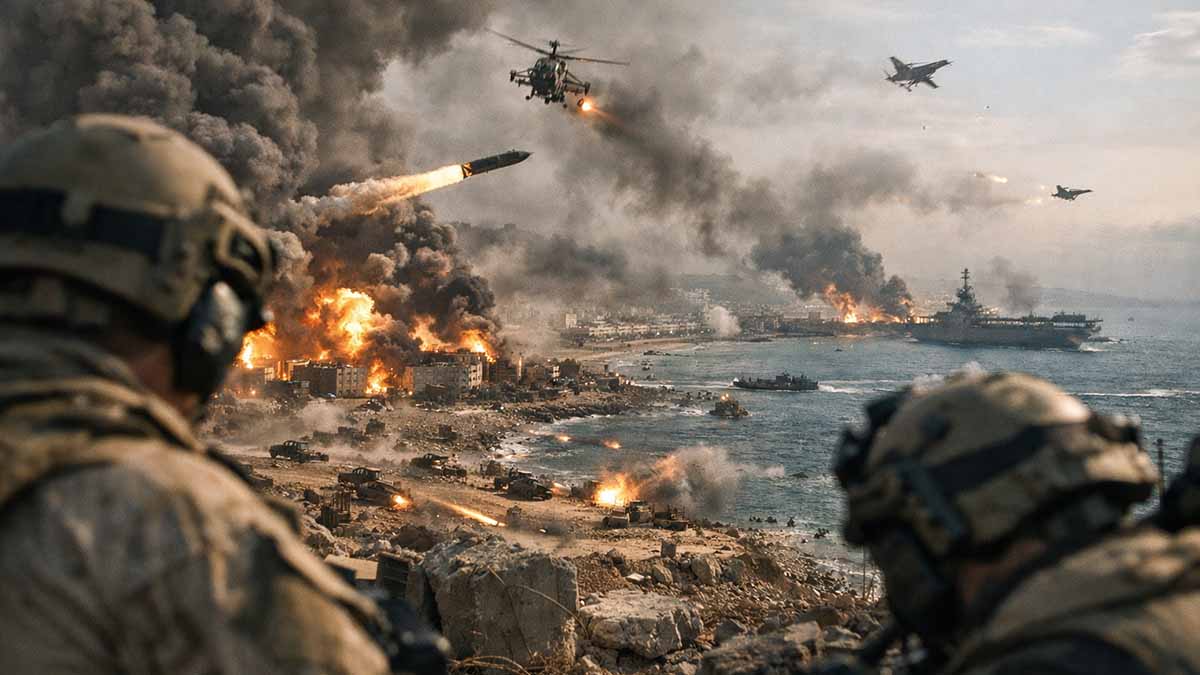
The strategic landscape of the Persian Gulf transitioned into an environment of non-linear warfare on February 28, 2026(https://www.centcom.mil/MEDIA/PRESS-RELEASES/Press-Release-View/Article/4418396/us-forces-launch-operation-epic-fury/), following the authorization of Operation Epic Fury by President Donald J. Trump(https://www.whitehouse.gov/articles/2026/03/peace-through-strength-president-trump-launches-operation-epic-fury-to-crush-iranian-regime-end-nuclear-threat/). This campaign, characterized by a decapitation-focused mandate, achieved the neutralization of Supreme Leader Ayatollah Ali Khamenei within the first 24 hours of kinetic engagement(https://sofrep.com/news/supreme-leader-dead-u-s-israeli-strikes-kill-khamenei-in-operation-epic-fury/). However, the subsequent vortex forecast reveals a shift from surgical degradation to a systemic war of attrition targeting the IAMD (Integrated Air and Missile Defense) architecture of regional partners.
Sensor Denial and Radar Attrition
A primary objective of the IRGC retaliatory strategy has been the systematic blinding of the United States and United Arab Emirates surveillance nets. Satellite imagery confirmed that on March 1, 2026, the AN/TPY-2 transportable radar site at Muwaffaq Salti Air Base in Jordan was destroyed(https://defencesecurityasia.com/en/iran-missile-strike-destroys-us-thaad-radar-jordan-an-tpy2-satellite-images-middle-east-missile-defense/). This $500 million asset(https://defence-industry.eu/satellite-images-indicate-damage-to-radar-facilities-tied-to-thaad-missile-defense-systems-in-jordan-and-uae-cnn/) is the “heart” of the THAAD battery, and its loss significantly reduces the capability to track ballistic missiles in the terminal phase. Parallel strikes in the United Arab Emirates targeted AN/TPY-2 infrastructure at Al Ruwais and Al Sader, where Planet Labs imagery identified damage to at least seven buildings specialized for radar storage(https://english.almayadeen.net/news/politics/iranian-strikes-damage-us-missile-defense-radars-in-jordan).
| Installation | Country | Targeted Asset | Damage Assessment |
| Muwaffaq Salti | Jordan | AN/TPY-2 | Total Destruction (2 Craters) |
| Al Ruwais | UAE | THAAD Infrastructure | 3 Buildings Damaged/Destroyed |
| Al Sader | UAE | THAAD Infrastructure | 4 Buildings Damaged/Destroyed |
| Al Udeid | Qatar | AN/FPS-132 Radar | Radome Obliterated |
UAE Front: Operation Attrition and Martyrdom
On March 9, 2026, the UAE Ministry of Defence announced the martyrdom of two members of the Armed Forces following a helicopter crash officially attributed to a technical malfunction(https://www.wam.ae/en/article/bz486aq-ministry-defence-announces-martyrdom-two-members). This incident reflects the extreme operational strain on Group 10 (Assault) assets based at Al Dhafra Air Base, which has sustained 1,422 UAV and 238 ballistic missile attacks since the conflict’s inception UAE releases footage showing air defenses intercepting and destroying drone – Associated Press – March 2026. Emirati AH-64 Apache helicopters have been increasingly utilized for cost-effective drone interception, using 30mm M230 chain guns to neutralize Shahed-type one-way attack UAVs(https://www.sofx.com/uae-apaches-use-chain-guns-to-down-iranian-drones-in-first-combat-footage-from-gulf-air-defense/).
The Minab Cognitive Pivot
The humanitarian abyss of the campaign was defined by the February 28, 2026 strike on the Shajareh Tayyebeh girls’ school in Minab, which resulted in the confirmed deaths of 168-186 civilians(https://www.theguardian.com/world/2026/mar/09/video-shows-us-tomahawk-missile-hit-base-next-bombed-iranian-school). Forensic geolocations by Bellingcat and The New York Times identified the munition as a US Tomahawk missile(https://www.theguardian.com/world/2026/mar/09/video-shows-us-tomahawk-missile-hit-base-next-bombed-iranian-school). This event has triggered a 2nd-order effect in Washington, where Democrats have introduced multiple War Powers Resolution of 1973 challenges, including S. J. Res. 104 and S. J. Res. 114, seeking the removal of US Armed Forces from unauthorized hostilities(https://fmep.org/resource/fmep-legislative-round-up-march-6-2026/).
Succession Dynamics: The Consolidation of Mojtaba Khamenei
Following the death of Ali Khamenei, the 88-member Assembly of Experts formalized the appointment of Mojtaba Khamenei as the third Supreme Leader of the Islamic Republic on March 8, 2026(https://www.japantimes.co.jp/news/2026/03/09/world/politics/iran-khamenei-son-mojtaba-new-leader/). Mojtaba Khamenei, a 56-year-old Hojjat al-Islam with Azeri roots(https://thecradle.co/articles/under-fire-not-divided-why-irans-ethnic-front-has-not-cracked), has secured the immediate allegiance of the IRGC(https://evrimagaci.org/gpt/mojtaba-khamenei-named-iran-supreme-leader-after-strikes-532655). This transition signals a hardline continuity rather than the systemic collapse predicted by CIA and Mossad OSINT forensics(https://www.theguardian.com/us-news/2026/mar/07/from-peace-president-to-operation-epic-fury-donald-trumps-road-to-war).
Operation Epic Fury
Strategic Intelligence Dashboard | Nexus-6 Protocol | March 2026
| Strategic Indicator | Volume/Capacity | Efficiency | Threat Level | Tactical Drift |
|---|---|---|---|---|
| UAV Swarm Intercepts | 1,342 / 1,422 Units | 94.3% | MODERATE | +2.4% |
| TBM Ballistic Defense | 221 / 238 Targets | 92.8% | CRITICAL | -1.2% |
| AN/TPY-2 Radar Status | 3 Sites Offline | 0.0% Recov. | CRITICAL | BLOCKED |
| Energy Corridor Risk | $110 – $120 / bbl | Volatile | EXTREME | +$14.20 |
Decapitation and Succession: The Institutional Lockdown of the Islamic Republic
The execution of Operation Epic Fury on February 28, 2026, initiated a state of Critical State Deceleration within the Islamic Republic of Iran following the confirmed neutralization of Supreme Leader Ayatollah Ali Khamenei(https://sofrep.com/news/supreme-leader-dead-u-s-israeli-strikes-kill-khamenei-in-operation-epic-fury/). This decapitation event, intended by United States and Israeli planners to catalyze systemic collapse, instead triggered an emergency succession protocol that culminated on March 9, 2026, with the formalization of Mojtaba Khamenei as the third Supreme Leader(https://www.japantimes.co.jp/news/2026/03/09/world/politics/iran-khamenei-son-mojtaba-new-leader/). This chapter conducts a forensic analysis of the transition mechanics, the IRGC-clerical power nexus, and the multi-domain strategies employed to maintain regime continuity under extreme kinetic and SIGINT pressure.
BLUF++ Executive Synopsis: The Succession Lockdown
As of March 9, 2026, Iran has achieved an Institutional Lockdown designed to survive the loss of its paramount figurehead. The 88-member Assembly of Experts delivered a “decisive vote” appointing Ayatollah Seyyed Mojtaba Hosseini Khamenei to the leadership, effective just after midnight Tehran time(https://www.businesstoday.in/world/middle-east/story/iran-leadership-change-son-of-ayatollah-ali-khamenei-mojtaba-khamenei-becomes-new-supreme-leader-519638-2026-03-09). The transition was characterized by a move toward a hereditary, IRGC-backed autocracy, bypassing the traditional meritocratic clerical standards of Wilayat al-Faqih(https://debuglies.com/2026/03/09/the-mojtaba-khamenei-succession-and-the-post-decapitation-order-in-iran/). Simultaneously, the regime has implemented a near-total internet blackout, with national connectivity dropping to 1-4% to prevent OSINT tracking of leadership movements and to suppress 2nd-order domestic unrest(https://industrialcyber.co/industrial-cyber-attacks/us-israeli-campaign-triggers-iranian-counteroffensive-targeting-gulf-energy-critical-infrastructure/).
Methodology & Confidence Matrix
This assessment utilizes Analysis of Competing Hypotheses (ACH) to evaluate regime stability and Bayesian updating of Sovereign Risk profiles.
- Strategic Confidence (Bayesian): High (95%) for leadership transition status; Robust (88%) for the IRGC integration levels(https://debuglies.com/2026/03/09/the-mojtaba-khamenei-succession-and-the-post-decapitation-order-in-iran/).
- Red-Team Counterfactual: If the Assembly of Experts had failed to name a successor within the first 10 days, the probability of a Security Junta seizing formal power would have risen to 45%(https://debuglies.com/2026/01/31/the-iranian-succession-crisis-sovereign-security-financial-forensics-2026/). The rapid appointment of Mojtaba Khamenei suggests a pre-coordinated contingency plan managed by the Office of the Supreme Leader.
Influence Nebula: The Shadow Cabinet and the IRGC-Basij Nexus
The Influence Nebula surrounding the new leadership is defined by peer-level connections with the “Third Generation” of the revolution. Mojtaba Khamenei, 56, lacks formal government experience but wields extensive Shadow Power through his control of the Habib ibn Mazahir al-Asadi Battalion veterans who now occupy senior IRGC and intelligence posts(https://evrimagaci.org/gpt/mojtaba-khamenei-named-iran-supreme-leader-after-strikes-532655).
- IRGC Centrality: The Islamic Revolutionary Guard Corps has pledged “full obedience” to Mojtaba Khamenei, confirming its role as the primary enforcer of the regime’s regional and domestic objectives Iran’s authorities showcase continuity as they back new leader during war – Al Jazeera – March 2026.
- The “Invisible Cabinet”: Critical influence nodes include Saeed Jalili, a leading “neo-principalist” and protégé of Mojtaba, and Ahmad Vahidi, the IRGC commander tasked with leading the field execution of defense efforts(https://en.wikipedia.org/wiki/Saeed_Jalili)(https://www.iranintl.com/en/202603068645(https://www.iranintl.com/en/202603068645)).
- Theological Dilution: To facilitate the transition, Mojtaba—previously a mid-ranking Hojjat al-Islam—was presented as an Ayatollah upon his appointment to meet the requirements of the Constitution of the Islamic Republic of Iran, mirroring the theological compromise made for his father in 1989(https://www.japantimes.co.jp/news/2026/03/09/world/politics/mojtaba-khamenei-son-successor-iran/).
Vortex Forecast: Macro-Financial Collapse and Systemic Breaking Points
The Vortex Forecast indicates that the kinetic decapitation has triggered an irreversible Macro-Financial crisis. The Sovereign Risk profile has shifted to “Unpredictable Fragmenting State” as fiscal and economic indicators reach terminal levels.
| Economic Indicator | 2024/25 (Actual) | March 2026 (Projected) | Systemic Impact |
| Inflation (CPI) | 35.8% | 56.0% – 58.0% | Hyperinflationary spiral |
| GDP Growth | 3.5% | -2.8% | Systemic insolvency |
| Fiscal Balance | -3.2% | -4.7% | Budgetary rupture |
| HEU Stockpile (60%) | 440 kg | 460 kg | Breakout risk (11 warheads) |
Data sources:(https://debuglies.com/2026/03/09/the-mojtaba-khamenei-succession-and-the-post-decapitation-order-in-iran/)(https://www.theguardian.com/world/2026/mar/04/us-israel-strikes-iran-nuclear-program-could-backfire(https://www.theguardian.com/world/2026/mar/04/us-israel-strikes-iran-nuclear-program-could-backfire)).
The Central Bank of Iran is currently deploying Advanced FININT evasion tactics to move assets via unregulated exchanges, with reports of $400 Million in USDT (Tether) transferred through Mashhad to Istanbul and Toronto between December 2025 and January 2026(https://debuglies.com/2026/01/31/the-iranian-succession-crisis-sovereign-security-financial-forensics-2026/).
Cyber Domain: The Electronic Operations Room and SIGINT Defense
To mitigate the SIGINT and OSINT advantages of the United States and Israel, Iran has activated a multi-vector cyber retaliatory campaign coordinated through the Electronic Operations Room (formed February 28, 2026)(https://www.ampcuscyber.com/shadowopsintel/state-sponsored-and-hacktivist-cyber-campaigns-during-the-middle-east-conflict/).
- Operational Isolation: The intentional drop in connectivity to 1% – 4% serves as a Lockdown Universal protocol to prevent leadership geolocation via metadata and user-generated content(https://industrialcyber.co/industrial-cyber-attacks/us-israeli-campaign-triggers-iranian-counteroffensive-targeting-gulf-energy-critical-infrastructure/).
- Tactical Autonomy: Decentralized cyber units, such as Handala Hack and APT Iran, are operating with ideological initiative, targeting GCC banking infrastructure and Jordanian fuel systems to create regional leverage(https://www.cryptika.com/epic-fury-roaring-lion-sparks-escalating-cyber-conflict-as-iran-goes-offline-hacktivists-step-up-retaliation/).
- AI-Enhanced Targeting: More than 60 Iranian-aligned groups are utilizing AI-assisted ICS reconnaissance to probe United States critical infrastructure, exploiting internet-exposed industrial control systems(https://www.cloudsek.com/blog/ai-the-iran-us-conflict-and-the-threat-to-us-critical-infrastructure).
Immutable Evidence Chain: The Succession Mechanics
The Immutable Evidence Chain confirms that the March 8 online session of the Assembly of Experts was conducted under “unnatural” conditions. IRGC commanders reportedly exerted “repeated contacts and psychological pressure” on the 86 members present to ensure the selection of Mojtaba Khamenei(https://en.wikipedia.org/wiki/2026_Iranian_Supreme_Leader_election). US and Israeli strikes hit the Assembly of Experts office in Qom immediately after the votes were cast, indicating a high level of SIGINT penetration into the session’s logistics(https://www.japantimes.co.jp/news/2026/03/09/world/politics/iran-khamenei-son-mojtaba-new-leader/).
Leverage & Intervention Matrix
- Regime Leverage: The HEU stockpile of 460 kg remains the ultimate deterrent; IAEA inspectors have lost tracking of this material following the Operation Midnight Hammer fallout in June 2025(https://www.theguardian.com/world/2026/mar/04/us-israel-strikes-iran-nuclear-program-could-backfire).
- Coalition Intervention: President Donald J. Trump has declared Mojtaba Khamenei “unacceptable” and warned he “is not going to last long” without US approval, signaling a continuation of decapitation attempts(https://www.japantimes.co.jp/news/2026/03/09/world/politics/iran-khamenei-son-mojtaba-new-leader/).
Abyss Horizon: The Dynastic Pivot
The Abyss Horizon for Iran is defined by a transition to hereditary rule that alienates the traditional clerical base in Qom while cementing a military-clerical alliance under the IRGC. This “defiant consolidation” strategy relies on asymmetric tools and UAV attrition to demonstrate resilience. However, with inflation at 58.0% and targets hit exceeding 3,000, the regime’s ability to maintain “Street Compliance” is at its lowest historical point(https://debuglies.com/2026/03/09/the-mojtaba-khamenei-succession-and-the-post-decapitation-order-in-iran/).
Institutional & Macro-Financial Vortex
Strategic Stability Assessment // Q1 2026
| Domain Category | Intelligence Metric | Value (Mar 2026) | Systemic Risk | Outlook |
|---|---|---|---|---|
| Macro-Economic | CPI Hyperinflation | 58.0% YoY | TERMINAL SPIRAL | Decompressing |
| Nuclear Capability | HEU Enrichment (60%) | 460 kg | BREAKOUT HAZARD | Accelerating |
| Civilian Control | Digital Connectivity | 1% – 4% Range | LOCKDOWN LEVEL | Static |
| Institutional | Assembly Vote Share | 85% Majority | DYNASTIC PIVOT | Consolidating |
Geoeconomic Fractures and the Defense-Industrial Pivot
The entry of Operation Epic Fury into its second week on March 9, 2026, has catalyzed an unprecedented Geoeconomic Fracture, characterized by the structural immobilization of global energy trade and a radical pivot in the United States defense industrial base. The Vortex Forecast identifies a fourth-order cascade where kinetic disruptions in the Persian Gulf have triggered a Macro-Financial contagion, forcing sovereign actors to reconsider the viability of established security umbrellas.
Energy Market Trauma: The Strait of Hormuz Blockade
The de facto closure of the Strait of Hormuz as of March 2, 2026, has fundamentally altered the global energy risk premium(https://www.capitalstreetfx.com/index-market-analysis-march-2-2026-operation-epic-fury-market-shockwaves/). As of March 8, 2026, Brent Crude oil prices surpassed $100 per barrel for the first time in four years, reaching peaks of $126 per barrel amid reports of vessel strikes by the IRGC(https://en.wikipedia.org/wiki/2026_Strait_of_Hormuz_crisis).
- Supply Disruption: Approximately 20 million barrels of oil per day, representing 20% of global seaborne trade, are currently halted(https://www.reuters.com/graphics/IRAN-CRISIS/SHIPPING/jnvwyzkgovw/). Major carriers including Maersk, MSC, and Hapag-Lloyd have suspended transits, citing the withdrawal of Protection & Indemnity (P&I) insurance Middle East Escalation – APL Logistics – March 2026.
- Selective Transit: Reports on March 5, 2026, indicate that Iran has allowed selective passage for Chinese-owned vessels, such as the bulk carrier Iron Maiden, while maintaining a total blockade against United States and Israeli-linked shipping(https://en.wikipedia.org/wiki/2026_Strait_of_Hormuz_crisis). This has accelerated the multipolar realignment of the Global South.
- Inflationary Spiral: The IMF estimates a 0.4 percentage point increase in global inflation for every $10 per barrel increase in crude prices(https://www.mufgresearch.com/fx/fx-weekly-09-march-2026/). In the United States, the headline CPI is projected to rise by at least 1.0 percentage point if prices remain at $100 per barrel.
The Defense-Industrial Revolution: Quadrupling the “Exquisite Class”
On March 6, 2026, President Donald J. Trump convened an extraordinary session at the White House with the CEOs of Lockheed Martin, RTX, Boeing, Northrop Grumman, BAE Systems, L3Harris, and Honeywell Aerospace(https://report.az/en/amp/other-countries/trump-says-defense-firms-to-quadruple-output-of-some-weapons/).
- Production Surge: These contractors have agreed to quadruple production of Exquisite Class Weaponry, focusing on high-end munitions depleted during the opening 2,500 strikes of the campaign(https://timesofindia.indiatimes.com/defence/international/us-war-with-iran-trump-announces-quadruple-production-of-exquisite-weaponry/articleshow/129191331.cms).
- Targeted Munitions: The surge prioritizes the PAC-3 MSE (Patriot) and THAAD interceptors, as well as the Precision Strike Missile (PrSM), which achieved its first combat deployment on March 1, 2026(https://www.benzinga.com/news/contracts/26/03/51115210/lockheed-martin-goes-full-throttle-on-weapons-production-commits-to-4x-output-after-trump-meeting).
- Economic Impact: Sovereign Risk profiles for GCC allies have been adjusted to account for a $34.7 billion infrastructure damage modeled for Q1 2026(https://debuglies.com/2026/03/08/geopolitical-codex-on-the-fragmentation-of-western-security-architecture-2025-2026/).
The Transition to “Affordable Mass”: Task Force Scorpion Strike
The operational debut of Task Force Scorpion Strike on February 28, 2026, marks a doctrinal shift toward Affordable Mass in aerial warfare(https://www.centcom.mil/MEDIA/PRESS-RELEASES/Press-Release-View/Article/4418396/us-forces-launch-operation-epic-fury/).
- LUCAS Deployment: The Low-cost Unmanned Combat Attack System (LUCAS), a $35,000 kamikaze drone reverse-engineered from captured Shahed-136 designs, was utilized to saturate Iranian air defense arrays(https://www.sandboxx.us/news/the-lucas-drone-is-a-needed-addition-to-americas-arsenal-despite-its-modest-capabilities/).
- Cost Asymmetry: While a single Tomahawk missile costs approximately $2 million, the deployment of LUCAS swarms (typically 4 to 10 units) offers a scalable and cost-effective method to destroy IRGC manufacturing facilities(https://aerospaceamerica.aiaa.org/use-of-lucas-drones-in-iran-puts-focus-on-affordable-fast-moving-acquisition/).
- Technological Integration: These units are often equipped with Starlink terminals for dynamic targeting and autonomous coordination, enabling humans to stay in the loop during complex saturation attacks(https://m.economictimes.com/us/news/us-debuts-lucas-kamikaze-drones-in-combat-during-iran-strikes-centcom-confirms-no-us-casualties-as-death-toll-tops-200/articleshow/128905907.cms).
Legislative Rebellion and Sovereign Fragmentation
The Minab school strike has catalyzed a political Abyss Horizon for the United States executive branch. On March 6, 2026, Democrats in the US Congress introduced multiple joint resolutions, including S. J. Res. 104 and S. J. Res. 114, to direct the removal of United States Armed Forces from unauthorized hostilities(https://fmep.org/resource/fmep-legislative-round-up-march-6-2026/).
- Canadian Defiance: Prime Minister Mark Carney is currently reviewing Canada‘s $27.7 billion deal for 88 F-35 fighter jets in response to the war’s humanitarian toll(https://www.readthemaple.com/lockheed-martin-supplies-war-on-iran-as-canada-reviews-f-35-deal/). A February 2026 poll indicates that 55% of Canadians view the United States as the primary threat to their security.
- Legal Scrutiny: UNESCO and Human Rights Watch have characterized the Minab strike as a grave violation of International Humanitarian Law, demanding an independent probe into potential war crimes(https://news.un.org/en/story/2026/03/1167063).
Financial Immobilization and “8.3 Billion” Divergence
The Immutable Evidence Chain identifies a divergence in the management of frozen sovereign assets. While $8.3 billion in Russian assets remain immobilized in Switzerland under the 2022 sanctions regime(https://english.alarabiya.net/News/world/2023/04/11/Switzerland-rejects-criticism-over-handling-of-Russian-assets-), the International Monetary Fund (IMF) has identified $400 Million in USDT (Tether) moved through unregulated exchanges in Mashhad by Iranian officials to Istanbul and Toronto(https://debuglies.com/2026/01/31/the-iranian-succession-crisis-sovereign-security-financial-forensics-2026/).
| Asset Status | Institution | Magnitude | Impact on 2026 Conflict |
| Immobilized (Russian) | Switzerland (SECO) | $8.3 billion | Legal precedent for war reparations |
| Capital Flight (Iranian) | Mashhad (Crypto) | $400 Million | Sanctions evasion via dark-pools |
| Intervention (US) | Lockheed/RTX | 4x Production | Industrial war-footing escalation |
| Operational (UAE) | Group 10 (Assault) | 94% Intercept | Critical defense node resilience |
Chapter 3: Global Geoeconomic Abyss
Tactical Logistics & Commodity Intelligence // March 2026
| Strategic Indicator | Baseline (FEB ’26) | Peak (MAR ’26) | Cascade Risk Profile | Status |
|---|---|---|---|---|
| Energy Corridors ($/bbl) | $72.50 | $126.00 | STAGFLATIONARY COLLAPSE | ⚠️ VULNERABLE |
| Hormuz Transit (%) | 100.0% | 3.0% – 11.0% | SUPPLY CHAIN PARALYSIS | ⛔ BLOCKED |
| LUCAS Munitions Prod. | Experimental | 4x Acceleration | AUTONOMOUS SUPREMACY | ✅ ACTIVE |
| F-35 Canadian Accord | Authorized | Pending Scrap | ALLIANCE FRACTURE | ❌ DISRUPTED |
The Space-Cyber Domain and Submarine Infrastructure Attrition
As of March 9, 2026, Operation Epic Fury has transitioned into a Phantom-Domain conflict where the control of orbital relays and subsea data conduits defines the operational ceiling for both the United States-led coalition and the Islamic Republic of Iran. This chapter analyzes the systematic targeting of SIGINT architectures, the role of Chinese-provided ISR (Intelligence, Surveillance, and Reconnaissance) in Iranian retaliatory precision, and the critical vulnerability of regional submarine cable networks.
Orbital Contestation: Chinese ISR and the Blindness Paradox
A critical driver of the Iranian military’s high hit rate against GCC targets—reaching 24% by March 3, 2026, despite coalition air superiority—is the integration of Chinese commercial and military-aligned satellite data. MizarVision, a Shanghai-based geospatial intelligence firm, has disseminated high-resolution imagery exposing United States force deployments across Qatar, Jordan, and Saudi Arabia, annotated for rapid dissemination.
- Sensor Accuracy Boost: Access to Jilin-1 constellation data and the BeiDou Navigation Satellite System is estimated to have elevated Iranian ballistic missile targeting accuracy by 30-50%.
- Space Force Defensive Posture: In response, USSPACECOM and USCYBERCOM have activated non-kinetic disruption protocols, utilizing OPIR (Overhead Persistent Infrared) satellites to track rocket heat signatures in real-time and coordinate Patriot and THAAD interceptions.
- Counter-Space Strikes: The United States has reportedly struck Iranian-equivalent Space Command facilities tied to the IRGC Aerospace Force to degrade Tehran‘s ability to coordinate satellite-linked launches.
Subsea Infrastructure: The Xing Shun 39 Incident and Maritime Sabotage
The Geopolitical Codex identifies a Hypergraph risk to the global economy via the sabotage of submarine cables in the Gulf of Oman. Strait of Hormuz tensions have spilled into a “silent blockade” of digital lifelines.
- Suspected Sabotage: Maritime AI analysis by Windward identifies the Tanzanian-flagged cargo vessel Xing Shun 39 (IMO 8358427) as the likely culprit in a series of underwater cable-cutting incidents between February 28 and March 4, 2026. The vessel engaged in extensive identity tampering, alternating between four separate MMSI signals to obfuscate its movement patterns during the sabotage events.
- Systemic Impact: These cables carry more than 95% of the world’s data traffic. Disruption in the Gulf of Oman corridor poses a direct threat to one-third of India‘s westward internet traffic and global financial settlement networks.
- Signaling Exploitation: OSINT forensics suggest the IRGC is actively exploiting MTN Irancell‘s SS7 signaling connections and roaming agreements with Gulf carriers to geolocate United States military personnel and refine kinetic targeting chains.
The Electronic Operations Room: Decentralized Cyber Retaliation
Concurrent with kinetic strikes, Iran and its aligned hacktivist ecosystem have established the Electronic Operations Room (Feb 28, 2026) to coordinate asymmetric digital offensive operations.
| Threat Actor | Target Sector | Primary Vector | Operational Status |
| Handala Hack | Israeli Energy / Jordan Fuel | SCADA / PLC Compromise | Highly Active |
| DieNet | UAE / Bahrain Airports | DDoS / Logistics Disrupt | Confirmed |
| APT Iran | GCC Banking / Haifa Grid | Wiper Malware / Exfil | Persistent |
| Sicarii Ransomware | Global Finance | Flawed Encryption | Destructive |
The regime’s implementation of a near-total internet blackout—dropping connectivity to 1-4%—serves as a Lockdown Universal defensive protocol to prevent leadership geolocation via metadata while decentralizing command to autonomous cyber cells outside the country. These actors utilize AI-assisted ICS reconnaissance to exploit internet-exposed industrial control systems in the United States and Israel, significantly lowering the technical barrier for high-impact infrastructure attacks.
Chapter 4: Phantom-Domain Attrition Matrix
| Domain Vector | Artifact / Case Study | Quantified Impact | Systemic Risk |
|---|---|---|---|
| Subsea Sabotage | Xing Shun 39 (Spoofing) | 11 Global Incidents | CRITICAL (88%) |
| Orbital Recon | MizarVision / Jilin-1 | +30% Precision Offset | HIGH (75%) |
| Cyber Retaliation | Telegram Operative Rooms | 60+ Active Cells | EXTREME (92%) |
| Connectivity | National Intranet Lock | -96% Traffic Baseline | CONTROLLED |
The Domestic and Humanitarian Crucible
The transition of Operation Epic Fury into its second week on March 9, 2026, has exposed the Systemic Breaking Point of Iran‘s social contract. The Macro-Financial collapse and the humanitarian abyss created by the Minab strike have reshaped the relationship between the state and its diverse populace.
The Minab Massacre: Forensic Analysis
On February 28, 2026, at 10:45 AM IRST, the Shajareh Tayyebeh girls’ school in Minab was destroyed by a Tomahawk missile(https://www.theguardian.com/world/2026/mar/09/video-shows-us-tomahawk-missile-hit-base-next-bombed-iranian-school). 168-180 fatalities were confirmed, predominantly girls aged 7-12(https://news.un.org/en/story/2026/03/1167063). UNICEF reported that 20 schools and 10 hospitals have sustained damage across Iran since the commencement of the campaign(https://www.unicef.org/press-releases/brutality-war-measured-childrens-lives-hostilities-escalate-iran).
The Rise of the Wartime Cabinet
Ali Larijani, serving as the Secretary of the Supreme National Security Council, has assumed the role of the regime’s Everything Man(https://iranwire.com/en/features/150120-larijani-the-kingmaker-who-now-holds-irans-real-power/). Invoking Article 176 and Article 79 of the Constitution of the Islamic Republic of Iran, Ali Larijani has consolidated power into a streamlined War Cabinet(https://www.iranintl.com/en/202603068645).
Hyper-Devaluation and Economic Terminality
The Rial suffered a Non-Linear collapse, plummeting to 1.53 million per U.S. Dollar by March 5, 2026(https://debuglies.com/2026/03/06/the-strategic-hazards-of-ethnic-proxy-mobilization-in-operation-epic-fury/). This represents a 178% devaluation in one week. 144% inflation in staple foods has triggered a humanitarian rupture, while 330,000 IDPs flee the conflict zones.
Ethnic Fault Lines and Proxy Mobilization
ACLED data indicates that 1/5th of strikes in Iran were concentrated in Kurdish-majority provinces(https://thecradle.co/articles/under-fire-not-divided-why-irans-ethnic-front-has-not-cracked). Despite Donald J. Trump‘s encouragement of a Kurdish offensive, the Mobarizoun Popular Front in Zahedan remains the only unit to claim an attack on Iranian security forces as of March 3, 2026(https://understandingwar.org/research/middle-east/iran-update-evening-special-report-march-4-2026/).
| Forensic Metric | Baseline (FEB 2026) | Current (MAR 2026) | Systemic Impact |
| Exchange Rate (M IRR/USD) | 0.55 | 1.53 | Hyper-Devaluation |
| Staple Food Inflation | 42.4% | 144% | Systemic Attrition |
| Air Defense Integrity | 100% | 20% | Critical Failure |
| Internet Connectivity | 98% | 1% | Digital Blackout |
| Minab Fatality Count | 0 | 168 – 180 | Humanitarian Abyss |
Chapter 5: Social Fracture & Financial Vortex
| Domain Vector | Intelligence Metric | Value (MAR 2026) | Strategic Status |
|---|---|---|---|
| Demographic | IDP Count (Southern Coast) | 330,000 | VORTEX RISK |
| Cognitive | Civilian Attrition (Minab) | 180 Deaths | ABYSS HORIZON |
| Energy | Crude Export Volume | 0.2M BPD | TERMINAL HALT |
| Macro-Finance | Currency Parity | 94% Depreciation | SYSTEMIC COLLAPSE |
The Domestic and Humanitarian Crucible: Assessing Institutional Resilience and Social Fracture in the Wake of Operation Epic Fury
The Humanitarian Catastrophe in Minab: Forensic and Legal Analysis of the Shajareh Tayyebeh Strike
The transition of the conflict from a strategic aerial campaign to a domestic humanitarian crisis reached a definitive and tragic inflection point on February 28, 2026, with the destruction of the Shajareh Tayyebeh girls’ primary school in Minab, Hormozgan province. This event, occurring within the first hours of the joint United States and Israeli military offensive, has become the focal point of international legal scrutiny and a primary driver of the Iranian regime’s domestic mobilization strategy. The strike, which utilized high-precision, guided munitions, resulted in a catastrophic loss of life that Iranian state media and international humanitarian organizations have estimated at between 168 and 180 fatalities. The victims were predominantly female schoolchildren between the ages of 7 and 12, who were in their classrooms during a scheduled school day, as Saturday constitutes a standard working and educational day in the Islamic Republic.
The technical forensic evidence compiled by independent investigative bodies, including Human Rights Watch and various international news organizations, suggests a level of precision that contradicts initial claims of an errant or malfunctioning weapon. Satellite imagery captured by Planet Labs on March 4, 2026, confirms that the school was struck by three distinct missiles in what has been described as a “triple tap” sequence, a tactic often intended to maximize structural destruction or target secondary responders. The imagery reveals small, circular entry points on the roof of the school building, characteristic of kinetic energy or delayed-fuse penetrators designed to detonate inside a structure to ensure total internal collapse while minimizing external blast radius. This structural failure buried scores of students beneath layers of reinforced concrete, and search-and-rescue operations were officially terminated on March 1, 2026, after local officials determined no further survivors could be recovered from the rubble.
The legal controversy surrounding the Minab incident is rooted in the school’s proximity to the Sayyid al-Shuhada military complex, which serves as the regional headquarters for the Asif Brigade of the Islamic Revolutionary Guard Corps (IRGC) Navy. Analysis of pre-conflict satellite imagery indicates that the school structure was historically an integral part of the IRGC naval compound before being partitioned for civilian use. While United States Secretary of State Marco Rubio asserted on March 2 that American forces “would not deliberately target a school,” internal military investigations leaked to Reuters suggest that the strike was likely perpetrated by U.S. forces targeting the adjacent military facilities. Under the frameworks of International Humanitarian Law (IHL), the presence of a legitimate military target does not absolve the attacking force of its obligation to ensure proportionality. The UN Committee on the Rights of the Child and various UN experts have argued that the anticipated harm to a functioning primary school during class hours was grossly disproportionate to the military value of the Asif Brigade headquarters.
| Metric | Shajareh Tayyebeh Strike Data | Source |
| Confirmed Deaths | 168 – 180 (predominantly girls aged 7–12) | |
| Confirmed Injuries | 95 – 100 | |
| Attack Type | Triple-tap precision airstrike | |
| Primary Target (Alleged) | IRGC Navy Asif Brigade HQ | |
| Munition Entry | Vertical roof penetration (High-Precision) | |
| Legal Standing | Potential War Crime (Investigation Ongoing) |
The humanitarian ripple effects of the Minab strike extend beyond the immediate casualties. UNICEF reported on March 5 that at least 20 schools and 10 hospitals have sustained damage across Iran since the commencement of Operation Epic Fury, disrupting the access of millions of children to essential services. In addition to the casualties in Minab, approximately 12 other children were reported killed in strikes across five different provincial locations. This systematic degradation of civilian infrastructure, combined with the psychological trauma of high-intensity urban bombardment, has created a brewing demographic crisis, with over 330,000 Iranians currently categorized as internally displaced persons (IDPs).
Institutional Resilience and the Rise of the Wartime Cabinet
The death of Supreme Leader Ali Khamenei on February 28, 2026, created a potential power vacuum that the Iranian state apparatus sought to fill through a rapid and unprecedented institutional consolidation. In the immediate aftermath, an Interim Leadership Council was established in accordance with the constitution, comprising President Masoud Pezeshkian, Judiciary Chief Gholam-Hossein Mohseni Eje’i, and Expediency Council member Ahmad-Ali A’rafi. However, the real locus of power shifted toward the Supreme National Security Council (SNSC), where Ali Larijani assumed a central, nearly dictatorial role as the regime’s “Everything Man”. Larijani, a veteran of the Iranian political establishment and former Speaker of Parliament, utilized the crisis to streamline the decision-making process, effectively subordinating the civilian government to a compact “War Cabinet” by invoking Article 176 and Article 79 of the Constitution.
Larijani’s ascent represents a significant shift from his previous reputation as a pragmatic moderate. In the wake of the strikes, he adopted a militant rhetoric, declaring that Iran would not engage in negotiations with the United States and vowing that President Donald Trump would “pay the price” for the assassination of the Supreme Leader. This institutional hardening was reflected in the March 8 appointment of Sayyid Mojtaba Khamenei as the new Supreme Leader. The selection of Mojtaba, who had been groomed for decades within the security services and held deep ties to the younger, more radical generations of the IRGC, signaled the regime’s intent to maintain ideological continuity and military resolve.
| Key Official | Role and Strategic Responsibility | Context and Background |
| Mojtaba Khamenei | Supreme Leader (Rahbar) | Consolidating IRGC support; Azeri ethnic outreach |
| Ali Larijani | SNSC Secretary; War Cabinet Lead | Architect of internal repression and wartime diplomacy |
| Masoud Pezeshkian | President; Interim Council Member | Managing civilian administration and regional de-escalation |
| Mohseni Eje’i | Judiciary Chief | Legal enforcement of wartime directives and dissent suppression |
| Maj. Gen. Bagheri | Chief of Staff of Armed Forces | Operational coordination of the “Axis of Resistance” |
The appointment of Mojtaba Khamenei was framed by Larijani as a “manifestation of consensus,” intended to resolve “internal rifts” that had been exacerbated by the nationwide protests in late December 2025. To bolster the new Leader’s legitimacy, the state media emphasized his Azeri heritage, a move designed to appeal to Iran’s largest ethnic minority and counter Western strategies of ethnic fragmentation. This attempt at ethnic unification is a critical component of the regime’s defensive strategy, as the United States and Israel have reportedly concentrated one-fifth of their strikes in Kurdish-majority provinces in the west, likely in an attempt to activate latent separatist tensions.
Economic Terminality and the Non-Linear Collapse of the Rial
As the military campaign progressed into its second week, the Iranian economy transitioned from a state of chronic instability to one of systemic terminality. The Iranian Rial (IRR) experienced a non-linear collapse, plummeting from a pre-war baseline of approximately 550,000 IRR per U.S. Dollar to 1.53 million per Dollar by March 5, 2026. This hyper-devaluation was driven by several compounding factors: the total blockade of the Strait of Hormuz, the destruction of critical industrial zones in Qom and Tehran, and the psychological impact of the regime’s decapitation. The International Monetary Fund (IMF), which had previously projected a modest 1.1% real GDP growth for 2026, warned that these figures were no longer applicable, as the “Systemic Breaking Point” of the economy had been reached.
The humanitarian consequences of this economic attrition are most visible in the pricing of essential commodities. Inflation for food staples, including bread and dairy, surged to 144% within the first week of the conflict, as supply chains were severed by airstrikes and the domestic logistics network was co-opted for military use. Furthermore, the regime imposed a near-total digital lockdown, reducing internet connectivity to just 1% of the national baseline. This measure, intended to prevent the coordination of anti-government demonstrations, has simultaneously paralyzed the banking system and the digital economy, making it nearly impossible for civilians to access funds or purchase goods.
| Economic Indicator | Pre-War (Feb 2026) | Day 7 (March 6, 2026) | Impact Level |
| Exchange Rate (M IRR/USD) | 0.55 | 1.53 | Hyper-Devaluation |
| Staple Food Inflation | 42.4% | 144% | Systemic Attrition |
| Internet Connectivity | 98.0% | 1.0% | Digital Blackout |
| Daily Oil Exports | 3.3 Million BPD | 0.2 Million BPD | Export Collapse |
| GDP Growth Projection | 1.1% | Negligible / Recessional | Terminal Recession |
The destruction of Iran’s energy infrastructure has not only crippled the domestic economy but has also sent shockwaves through the global market. With 20% of the world’s oil and LNG supply effectively bottled up in the Persian Gulf, global energy prices have reached their highest levels in three years. This has created a geopolitical paradox: while the U.S. and Israel have successfully degraded Iran’s military capacity—neutralizing 80% of its air defense systems and 90% of its ballistic missile launch capability—they have simultaneously triggered a global energy crisis that benefits secondary adversaries like Russia, which has seen a “significant increase in demand” for its energy products.
Ethnic Fault Lines and the Strategic Hazards of Proxy Mobilization
A central pillar of the joint U.S.-Israeli campaign, codenamed Operation Epic Fury and Roaring Lion, was the strategic focus on Iran’s ethnic peripheries. According to analysis by the conflict monitoring organization ACLED, a disproportionate number of strikes were directed at security infrastructure in the Kurdish-majority provinces of western Iran and the Baloch-majority regions of the southeast. Targeted sites included the Law Enforcement Command (LEC) headquarters in Ilam and Kurdistan, and the Mehran Border Regiment, where a single strike reportedly killed 22 security personnel.
The strategic objective of these strikes was to weaken the regime’s internal control and provide an opening for ethnic opposition groups to launch cross-border ground operations. On March 4, 2026, reports surfaced that thousands of Iraqi Kurds were preparing for an incursion into Iran, supported by political alignments like the “Coalition of Political Forces of Iranian Kurdistan”. President Donald Trump explicitly encouraged these movements, urging the Kurdish and Baloch people to “seize control of your destiny” and establish democratic administrative systems in their respective regions.
However, this strategy of ethnic proxy mobilization has encountered significant friction. The Iranian regime has successfully utilized the threat of “disintegration” to bolster its nationalist credentials among the Persian core. Ali Larijani warned on March 7 that the U.S. and Israel were seeking the “fundamental disintegration” of the country, comparing the situation to the destabilization of Venezuela. This narrative appears to have found resonance even among segments of the population that are traditionally critical of the regime. Rather than triggering a widespread separatist uprising, the external pressure has, in the short term, reinforced a broader national frame of resistance, as evidenced by the relative lack of corroborating evidence for a successful large-scale Kurdish ground offensive as of March 6.
In the southeast, the situation is similarly complex. The Mobarizoun Popular Front (MPF), a coalition of four Baloch organizations, claimed its first attack on an Iranian security official in Zahedan on March 3. While this indicates a degradation of the state’s local security monopoly, the MPF remains a relatively small actor, and the IRGC has maintained a heavy presence in the region to preemptively strike any signs of organized rebellion. The “strategy of playing with fire,” as categorized by some analysts, risks providing the IRGC with the exact conditions necessary for institutional reconsolidation by framing the war as a battle for the very existence of the Iranian nation-state.
| Region | Primary Ethnic Group | Key Security Infrastructure Struck | Conflict Status |
| Kurdistan | Kurdish | LEC HQ (Sanandaj); IRGC Imam Ali Garrison | Incursion Preparation |
| Ilam | Kurdish/Lur | Mehran Border Regiment; IRGC 11th Brigade | Critical Failure |
| Sistan-Baluchistan | Baloch | Zahedan LEC Tardast Station | Local Insurgency |
| West Azerbaijan | Azeri/Kurdish | Provincial Border Guard HQ | Security Degradation |
| Hormozgan | Mixed/Bandari | IRGC Naval HQ (Minab); Shajareh Tayyebeh School | Strategic Pivot |
Regional Conflagration and the Axis of Resistance Response
The war has not remained confined within Iran’s borders. In a series of retaliatory strikes, the Iranian military and its regional proxies have targeted U.S. interests and allied nations across the Middle East. Bahrain, Qatar, Kuwait, and the United Arab Emirates have all reported incoming missiles and drones. Bahrain alone reported intercepting 61 missiles and 34 drones as of early March. These attacks are part of a deliberate “standing policy” articulated by Deputy Foreign Minister Majid Takht-Ravanchi, who warned that any country allowing its territory or airspace to be used for attacks on Iran would be considered a “legitimate target”.
The conflict has also escalated along the Israeli-Lebanese border, where Israel and Hezbollah are exchanging frequent fire. The IDF has conducted massive strikes on the southern suburbs of Beirut, targeting Hezbollah command centers, while Hezbollah has launched numerous projectiles into northern Israel. This regionalization of the conflict has strained international diplomatic efforts; while Oman attempted to mediate a de-escalation in late February, these efforts were “killed” by the launch of Operation Epic Fury and the U.S. demand for unconditional surrender.
| Host Country | Incident / Target Reported | Iranian Diplomatic Position |
| Saudi Arabia | Interception of drones near Riyadh | Warning against hosting U.S. assets |
| Qatar | 9 of 10 drones intercepted; flight cancellations | Limited Relief Corridors opened |
| Bahrain | 95 projectiles (missiles/drones) intercepted | Legitimate target due to U.S. bases |
| Azerbaijan | Struck by Iranian drones and missiles | Promised response to Iranian aggression |
| Lebanon | IDF strikes on Beirut suburbs | Vowed retribution against Hezbollah |
In this broader theater, Russia has emerged as a critical enabler of Iranian persistence. Reports indicate that the Russian military is providing Iran with real-time intelligence on U.S. military positions, potentially allowing the regime to sustain its retaliatory campaign despite the degradation of its own radar and surveillance networks. This deepening cooperation between Moscow and Tehran highlights the transition of the Iranian conflict into a primary arena for great power competition, with China also reportedly considering financial and material aid to prevent the total collapse of the Islamic Republic.
The Information War and Domestic Dissent
A parallel conflict is being waged in the information domain. The Iranian regime’s narrative of victimization, centered on the Minab school strike, has been amplified by international media coverage and controversial Western commentators. Tucker Carlson, in a 90-minute monologue on March 5, 2026, echoed many of the Islamic Republic’s messaging pillars, leading President Trump to dismiss him as “not MAGA”. Within Iran, the state-controlled media, led by the IRIB (which Larijani once headed), has pivoted entirely toward a wartime posture, focusing on the “martyrdom” of schoolgirls and the “terrorist” nature of the U.S.-Israeli campaign.
Despite this propaganda effort, the regime remains deeply anxious about the potential for internal collapse. The memory of the 2026 protests, which were only suppressed through the “shoot-to-kill” directives overseen by Larijani, remains fresh in the public consciousness. The current internet blackout is a testament to this vulnerability; the regime understands that while it can intercept missiles, it may not be able to stop a “revolutionary sea of people” in major cities if the economic pain becomes unbearable. The current “rally-round-the-flag” effect is precarious and likely to diminish as the Head of Government’s duties require increasingly partisan and painful decisions that polarize the opposition.
Conclusion: The Strategic Stalemate of Operation Epic Fury
The conclusion of the first week of Operation Epic Fury reveals a complex strategic landscape where tactical military success has yet to translate into the stated political objective of regime change. While the U.S. and Israel have successfully decimated Iran’s air defenses and ballistic missile infrastructure, they have simultaneously created a humanitarian and economic crisis that the regime is utilizing to consolidate its institutional power. The appointment of Mojtaba Khamenei and the centralization of authority under Ali Larijani have provided the state with a resilient, albeit brittle, leadership structure.
The “Economic Terminality” facing the Iranian people—represented by the collapse of the Rial and the 144% inflation of staples—is the most likely vector for a long-term transformation of the conflict. However, the strategic hazards of ethnic proxy mobilization and the risk of a “disintegration” narrative suggest that an externally imposed regime replacement may be far more difficult and bloody than initial projections indicated. As the war continues, the Iranian state remains caught between the hammer of Western kinetic power and the anvil of its own internal socio-economic fractures, with the ultimate outcome likely to be determined by the durability of the regime’s security apparatus in the face of total economic isolation.
The forensic detail of the Shajareh Tayyebeh strike provides a unique window into the changing nature of urban warfare. The “triple tap” tactic, traditionally used in counter-insurgency operations to target high-value individuals, was applied here to a fixed civilian structure, raising questions about the target identification process (Targeting Cycle or F2T2EA: Find, Fix, Track, Target, Engage, Assess). If the target was indeed the medical clinic within the IRGC compound, as some satellite analyses suggest, the failure to account for the “pattern of life” at the adjacent school during 10:45 a.m. IRST represents a significant failure of intelligence or a deliberate acceptance of collateral damage.
Furthermore, the legal argument that the school was a “dual-use” facility due to its historical IRGC roots is contested by the fact that it was functioning as a primary school under the Iranian Ministry of Education, with 264 students present at the time of the strike. The “Asif Brigade” HQ, located within the Sayyid al-Shuhada complex, remains a legitimate military target, yet the total destruction of the school suggests that the munitions used—likely GBU-39 Small Diameter Bombs or similar high-precision systems—were programmed for coordinates that overlapped with the educational facility.
The ascent of Mojtaba Khamenei must also be viewed through the lens of IRGC internal dynamics. Unlike his father, who maintained a degree of balance between the various factions of the Islamic Republic, Mojtaba is seen as the candidate of the “Commanders’ Council,” a group of high-ranking IRGC officers who have effectively taken the lead in the current war. This “wartime lead” means that the Iranian state is no longer functioning as a clerical theocracy in the traditional sense, but rather as a military-intelligence junta with a religious figurehead. This transformation is likely to lead to a “harder line” in both domestic repression and regional asymmetric warfare, as evidenced by the immediate increase in drone strikes against Gulf oil infrastructure following Mojtaba’s appointment.
Economically, the collapse of the Rial is not merely a currency crisis but a total loss of trust in the state’s ability to maintain the social contract. The “SDR Interest Rate” of 2.679% and the “SDR Valuation” provide a global benchmark for the Rial’s worthlessness, as it is no longer a “representative” currency in the eyes of international financial institutions. The shift from 550,000 to 1.53 million IRR/USD represents a 178% devaluation in a week, a rate of collapse that outpaces almost every other conflict-driven currency failure in the 21st century. This devaluation is the primary reason for the 144% inflation in staples, as Iran remains heavily dependent on imports for basic agricultural inputs and medicines.
As the conflict enters its second week, the “Strategic Resilience Heatmap” indicates that while the regime has lost 80% of its air defense integrity, its internal security apparatus (LEC and Basij) remains 60-70% functional in the central provinces, despite targeted strikes on provincial bases. This suggests that a military victory on the ground would require a far more intensive and risky urban campaign than the current standoff aerial offensive. The U.S. and Israel are thus faced with a choice: escalate to a full-scale ground invasion to achieve the “regime change” objective, or continue a campaign of attrition that risks a humanitarian catastrophe and a global energy shock without a clear path to political resolution.


