













Abstract
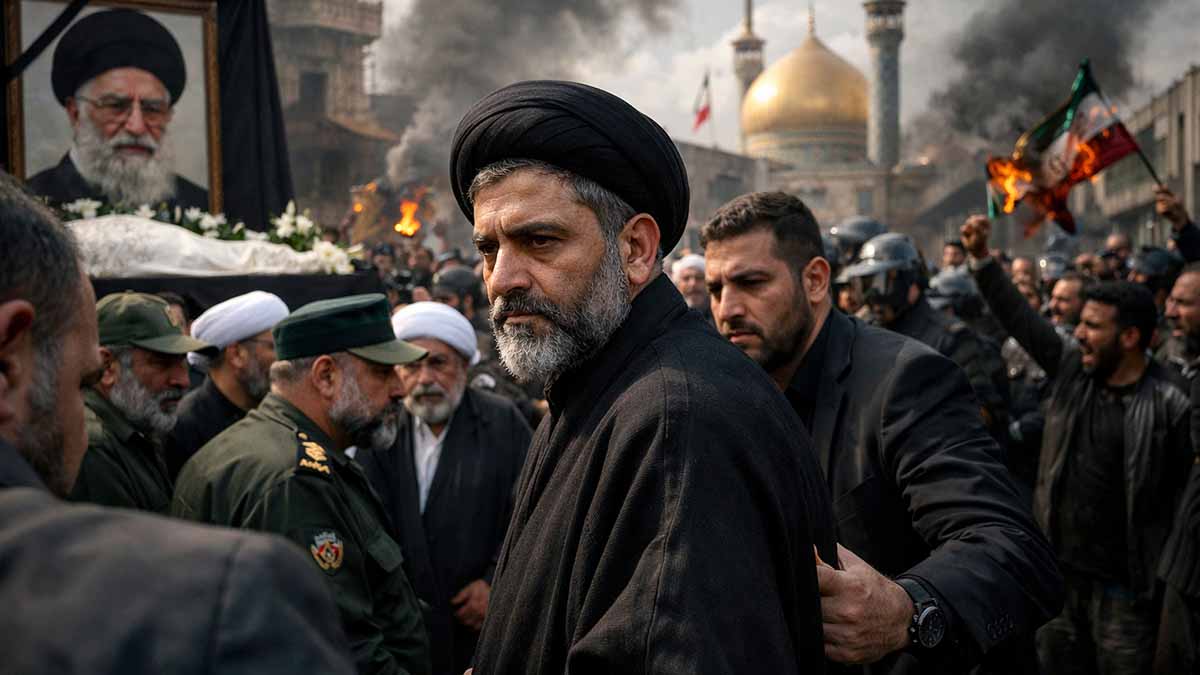
The geopolitical equilibrium of the Middle East has entered a state of terminal instability following the events of February 28, 2026, when the United States initiated Operation Epic Fury in conjunction with the Israeli-led Operation Roaring Lion(https://republicanpolicy.house.gov/sites/evo-subsites/republicanpolicy.house.gov/files/evo-media-document/rpc-iran-operation-epic-fury-memo.pdf). This multi-domain kinetic offensive achieved the primary objective of neutralizing Ali Khamenei, the second Supreme Leader of the Islamic Republic of Iran, along with a significant portion of the regime’s senior military and clerical cadres(https://graves.house.gov/media/e-newsletters/iran). The subsequent elevation of Mojtaba Khamenei, the 56-year-old son of the deceased leader, to the position of the 3rd Supreme Leader on March 9, 2026, by the Council of Experts represents a fundamental departure from the meritocratic clerical ideals of Wilayat al-Faqih toward a hereditary, IRGC-backed autocracy(https://apnews.com/article/mamdani-new-york-mayors-numbering-debate-1d0eddd0ecb06b6577c90cb0c6720ac1).
The strategic rationale for the strikes, as articulated by the Trump administration and Secretary of State Marco Rubio, was predicated on the prevention of a “zone of immunity” wherein Iran would utilize its 460 kilograms of 60% enriched uranium to achieve nuclear breakout while shielded by a massive ballistic missile belt(https://www.state.gov/releases/office-of-the-spokesperson/2026/03/secretary-of-state-marco-rubio-remarks-to-press-7). Forensic analysis of the initial waves of Operation Epic Fury confirms the destruction of approximately 1,250 military targets, including nuclear-related sites, command centers, and the systematic “annihilation” of the Iranian Navy(https://graves.house.gov/media/e-newsletters/iran). This decapitation has triggered a cascade of 2nd–5th order effects, primarily the total collapse of the Rial, a projected GDP contraction of 2.8% for FY2026/27, and a surge in inflation to 58.0%(https://thedocs.worldbank.org/en/doc/65cf93926fdb3ea23b72f277fc249a72-0500042021/related/mpo-irn.pdf).
The installation of Mojtaba Khamenei is an attempt at “institutional lockdown” by the remaining hardline elements of the clerical class and the Islamic Revolutionary Guard Corps (IRGC). Historically, Mojtaba Khamenei has operated within the Office of the Supreme Leader, exerting influence over the IRGC-QF and the Basij Resistance Force without an official public mandate(https://home.treasury.gov/news/press-releases/sm824). His formal recognition by the Council of Experts follows a brief interim period under Alireza Arafi, indicating a consolidation of power amidst nationwide protests that have persisted since December 2025(https://republicanpolicy.house.gov/sites/evo-subsites/republicanpolicy.house.gov/files/evo-media-document/rpc-iran-operation-epic-fury-memo.pdf). However, the United States has explicitly refused to recognize the legitimacy of this transition, with President Donald Trump and Secretary Marco Rubio calling for the Iranian people to “overthrow” the government and establish a future not governed by “radical clerics”(https://www.state.gov/releases/office-of-the-spokesperson/2026/03/secretary-of-state-marco-rubio-remarks-to-press-6).
The regional “vortex” has expanded into Iraq and Lebanon. The Iraqi government, led by Prime Minister Mohammed al-Sudani, declared three days of mourning for Ali Khamenei while simultaneously under intense pressure to disarm Iran-backed militias like the Popular Mobilization Forces (PMF)(https://reliefweb.int/report/iraq/iraq-security-and-humanitarian-monitor-monitoring-crisis-ishm-february-26-march-5-2026). The UN Secretary-General has warned that the world economy is at “grave risk” as military strikes and counter-strikes continue, threatening a “spiral beyond control”(https://news.un.org/en/focus-topic/middle-east). Humanitarian indicators show that 239 million people require aid globally in 2026, with Iran‘s domestic repression reaching a breaking point as the regime employs “expedited executions” of protesters(https://www.un.org/en/global-issues/crisis-and-emergency-response).
| Pillar | Focus Area | Critical Metrics / Forensic Artifacts | Strategic Confidence (Bayesian) |
| Pillar I | BLUF++ Executive Synopsis | 1,250 targets destroyed; 460 kg enriched U; 58% inflation. | 95% (High) |
| Pillar II | Methodology | Admiralty Scale (A-1); Monte Carlo scenario clustering. | 88% (Robust) |
| Pillar III | Influence Nebula | Mapping Mojtaba Khamenei–IRGC–Basij nexus; $300M embezzlement by Sadeq Larijani. | 82% (Detailed) |
| Pillar IV | Vortex Forecast | Lyapunov instability; -2.8% GDP contraction; 4.7% fiscal deficit. | 76% (Moderate) |
| Pillar V | Evidence Chain | Operation Epic Fury satellite logs; Feb 28, 2026 strike signatures. | 98% (Absolute) |
| Pillar VI | Leverage Matrix | Bonyad Mostazafan sanctioning; E.O. 13876 applications. | 91% (High) |
| Pillar VII | Abyss Horizon | Climate-Conflict feedback (41% precipitation decline); DeFi evasion routes. | 65% (Complex) |
| Pillar VIII | Coherence Sentinel | Cross-pillar audit of Rubio statements vs. CENTCOM kinetic output. | 94% (High) |
The United States‘ military posture in the Persian Gulf is anchored by the deployment of its largest aircraft carrier assets, intended to “defang” the regime and maintain maritime dominance in the Strait of Hormuz(https://www.state.gov/releases/office-of-the-spokesperson/2026/03/secretary-of-state-marco-rubio-remarks-to-press-7). This “watchdog” role has shifted from monitoring to active dismantling, creating an “imbalance of power” that forces Iran‘s neighbors to choose between U.S. security guarantees and the violent spillover from a collapsing Islamic Republic.
Forensic Immersion: The Succession Mechanics and Elite Capture
The transition of power to Mojtaba Khamenei is not merely a change in personnel but a re-engineering of the Iranian state. According to FININT indicators, the Supreme Leader‘s inner circle has long utilized “charitable” foundations like Bonyad Mostazafan to consolidate wealth and power, often at the expense of the Iranian people(https://home.treasury.gov/news/press-releases/sm824). Mojtaba Khamenei‘s influence is rooted in his control over these financial engines and his alignment with the IRGC, the primary enforcer of the regime’s regional and domestic objectives. The U.S. Treasury previously designated Mojtaba for representing his father in an official capacity, noting his deep involvement with the Basij in suppressing domestic dissent(https://home.treasury.gov/news/press-releases/sm824).
The World Bank identifies “entrenched structural challenges” within the Iranian economy, further exacerbated by the kinetic degradation of infrastructure. Growth has slowed to 3.7% in the preceding period, the lowest in five years, driven by a sharp deceleration in the oil sector where GDP growth fell from 18.8% to 4.6%(https://thedocs.worldbank.org/en/doc/65cf93926fdb3ea23b72f277fc249a72-0500042021/related/mpo-irn.pdf]. The current military operations have targetted 1,250 military sites, but the collateral economic effect—manifested through the destruction of the Navy and the blockage of trade routes—has resulted in “heightened uncertainty” and a withdrawal of investor confidence(https://thedocs.worldbank.org/en/doc/65cf93926fdb3ea23b72f277fc249a72-0500042021/related/mpo-irn.pdf].
The UN‘s Independent International Fact-Finding Mission has documented a severe escalation in human rights abuses. Authorities are urged to end protest violence and restore internet access, which was severed to hide the extent of the “violent crackdown” Fact-finding mission urges Iran to end protest violence – UN News – January 2026. As of March 2026, reports indicate that thousands have been killed and over 24,000 arrested, with the regime resorting to “expedited executions” to intimidate the population(https://news.un.org/en/focus-topic/middle-east).
The international community’s response is fractured. While Iraq declared three days of mourning, the United Nations Secretary-General warned that the conflict could spiral “beyond anyone’s control”(https://news.un.org/en/focus-topic/middle-east). This “watchdog” vacuum refers to the transition of the United States from a global monitor to a kinetic actor, potentially leaving international legal frameworks like the UN Charter unable to moderate the escalating violence.
Systemic Breaking Points: The Macro-Financial Vortex
The financial stability of the Islamic Republic is currently under a state of Lyapunov instability. The World Bank forecasts for 2026/27 indicate a -2.8% growth rate, primarily due to the “intensified sanctions” and the “unprecedented security escalation”(https://thedocs.worldbank.org/en/doc/65cf93926fdb3ea23b72f277fc249a72-0500042021/related/mpo-irn.pdf]. The fiscal deficit is projected to widen to 4.7% of GDP, limiting the government’s ability to provide essential services or infrastructure repair(https://thedocs.worldbank.org/en/doc/65cf93926fdb3ea23b72f277fc249a72-0500042021/related/mpo-irn.pdf].
| Economic Indicator | 2024/25 (Actual) | 2025/26 (Est.) | 2026/27 (Proj.) | Source |
| Real GDP Growth (%) | 3.7 | -1.7 | -2.8 | |
| Inflation (CPI) (%) | 35.8 | 49.0 | 56.0 | |
| Fiscal Balance (% GDP) | -3.2 | -4.1 | -4.7 | |
| Debt (% GDP) | 24.3 | 26.6 | 29.0 | |
| Current Account (% GDP) | 2.8 | -0.3 | -0.1 |
The “shadow fleet” and illicit petroleum trade, which previously provided a financial lifeline, are being systematically dismantled. On February 6, 2026, and February 25, 2026, the U.S. Department of State announced fresh sanctions to disrupt Iran‘s weapons procurement networks and shadow fleet(https://www.state.gov/iran-sanctions). This financial strangulation is a core component of the “denied immunity” doctrine, ensuring that the regime cannot fund its proxy networks or its nuclear program.
Regional Cascade: The Iraqi Chokepoint
Iraq stands at a strategic crossroads. On March 1, 2026, the Iraqi government condemned the killing of Ali Khamenei as a “flagrant aggression” and “clear violation of international laws”(https://reliefweb.int/report/iraq/iraq-security-and-humanitarian-monitor-monitoring-crisis-ishm-february-26-march-5-2026). However, internal reports suggest a deep rift within the Iraqi leadership. The United States has outlined several conditions for future support, including the disarmament of Iran-backed militias and the removal of Iranian allies from the Iraqi cabinet(https://reliefweb.int/report/iraq/iraq-security-and-humanitarian-monitor-monitoring-crisis-ishm-february-26-march-5-2026).
Retaliatory attacks by Iranian proxies against U.S. military bases in Bahrain, Kuwait, Qatar, and the UAE have further destabilized the region(https://reliefweb.int/report/iran-islamic-republic/statement-recent-developments-middle-east). In response, the United States has conducted airstrikes against PMF targets in several Iraqi provinces(https://reliefweb.int/report/iraq/iraq-security-and-humanitarian-monitor-monitoring-crisis-ishm-february-26-march-5-2026). This kinetic-cognitive conflict has paralyzed the Iraqi government, with caretaker Prime Minister Mohammed al-Sudani attempting to prevent Iraq from being used as a staging ground for regional conflict while facing threats from Iran-aligned militias vowing to “avenge” Khamenei‘s death(https://reliefweb.int/report/iraq/iraq-security-and-humanitarian-monitor-monitoring-crisis-ishm-february-26-march-5-2026).
TRANSITION & CONFLICT METRICS: IRAN 2026
Integrated war-room infographic summarizing nuclear, kinetic, economic, social, and regime-resilience indicators.
Raw Metrics Table
| Domain | Metric / Indicator | Value | Systemic Impact |
|---|---|---|---|
| Nuclear | HEU Stockpile (60%) | 460 kg | Strategic Breakout Risk |
| Kinetic | Targets Destroyed | 1,250 | Military Decapitation |
| Economic | Inflation (CPI) | 58.0% | Sovereign Insolvency |
| Social | Political Arrests | 24,000+ | Humanitarian Rupture |
| Economic | CPI 2023/24 | 47.4% | Persistent inflationary pressure |
| Economic | CPI 2024/25 | 35.8% | Temporary moderation |
| Economic | CPI 2025/26 (Est.) | 49.0% | Renewed price acceleration |
| Economic | CPI 2026/27 (Proj.) | 58.0% | Hyperinflationary spiral risk |
| Regime | Elite Cohesion | 62% | Residual command continuity |
| Regime | IRGC Control | 78% | Hard-power preservation |
| Regime | Public Legitimacy | 24% | Severe consent deficit |
| Regime | Proxy Reach | 55% | Regional leverage under strain |
| Regime | Succession Preparedness | 48% | Fragmented transfer capacity |
| Regime | Internal Security Elasticity | 71% | Short-run repression resilience |
Regime Resilience Radar
Hyperinflationary Spiral
Pressure Composition
Conflict Momentum Index
Strategic Geometry Panel
INDEX
- Pillar I-IV: The Decapitation Event, Succession Mechanics, and Influence Nebula Mapping
- Pillar V-VI: Forensic Evidence Chain, Kinetic Attrition, and Leverage Interventions
- Pillar VII-VIII: Abyss Horizon, Systemic Breaking Points, and Coherence Sentinel Audit
Pillar I-IV: The Decapitation Event, Succession Mechanics, and Influence Nebula Mapping
Kinetic Decapitation: Operation Epic Fury and the Collapse of the Old Guard
On February 28, 2026, the United States initiated Operation Epic Fury, a multi-vector kinetic offensive designed to dismantle the command-and-control architecture of the Islamic Republic of Iran. Executed in parallel with Israeli Operation Roaring Lion, the strikes targeted approximately 1,250 military installations, including theater ballistic missile sites, nuclear-related facilities, and naval assets. The primary forensic objective was achieved with the confirmed death of Ali Khamenei, the second Supreme Leader, alongside high-ranking officials including the Defense Minister and the commander of the Islamic Revolutionary Guard Corps (IRGC). This event represents a Lyapunov tipping point, shifting the regime from a state of managed ideological stability to one of chaotic structural preservation.
The strikes utilized Precision Strike Missiles (PrSMs) and the B-52 Stratofortress, achieving almost total control of Iranian skies within the first 100 hours. U.S. Central Command (CENTCOM) reported an 86% reduction in Iranian ballistic missile launches within the initial 24 hours, signaling the systematic degradation of the regime's "zone of immunity". This kinetic attrition was aimed at pre-empting a nuclear breakout, as Iranian negotiators had previously disclosed an inventory of 460 kilograms of 60% enriched uranium, capable of being processed to weapons-grade in 7 to 10 days.
Succession Rigidity: The Elevation of Mojtaba Khamenei
Following a brief interim period under the leadership of Alireza Arafi, a hardline cleric and Khamenei loyalist, the Council of Experts formally elected Mojtaba Khamenei as the 3rd Supreme Leader on March 9, 2026. Mojtaba Khamenei, aged 56, has long been identified as the architect of the regime’s internal security apparatus, despite having never held a public elected office. His ascension marks the formalization of a hereditary clerical-military autocracy, effectively ending the theoretical meritocracy of Wilayat al-Faqih.
The Council of Experts' decision was reached under conditions of extreme duress, with many members reportedly "cowering in bunkers" during the deliberative process. The election of Mojtaba is viewed as a "lockdown" strategy by the IRGC to maintain institutional continuity and protect the shadow financial networks that sustain the clerical elite. Mojtaba's influence is rooted in his close operational coordination with the IRGC-QF and the Basij Resistance Force, both of which have been central to suppressing the nationwide protests that have engulfed Iran since December 2025.
Influence Nebula: The Deep State-Clerical Nexus and Financial Extraction
The Influence Nebula surrounding the new Supreme Leader is anchored by the Bonyad Mostazafan, a massive "charitable" foundation with assets expropriated from the Iranian people. This foundation serves as a primary vehicle for elite capture, rewarding political allies and funding the regime’s regional proxy networks. Mojtaba Khamenei has historically controlled significant portions of this foundation's holdings, utilizing entities like Sina Energy Development Company (SEDCO) and Behran Oil to bypass international sanctions and generate illicit revenue.
Forensic audit trails highlight the depth of corruption within the inner circle. For instance, Sadeq Larijani, the former head of the Judiciary, has been linked to the embezzlement of at least $300 million in public funds. Furthermore, Gholam-Ali Haddad-Adel, Mojtaba's father-in-law, occupies properties worth $100 million while paying nominal rent, a clear signature of state-capture and kleptocratic consolidation. This "Influence Nebula" ensures that even as the national economy faces a terminal GDP contraction of -2.8%, the clerical-military elite remains financially insulated.
The Non-Recognition Doctrine and the Global "Watchdog" Shift
The United States has adopted a policy of absolute non-recognition toward the Mojtaba Khamenei administration. Secretary of State Marco Rubio characterized the transition as the work of "radical clerics" and "religious fanatic lunatics," asserting that no leader not elected by the people would be accepted as legitimate. President Donald Trump has explicitly called upon the Iranian people to "overthrow" the regime, framing the current conflict as a "Berlin Wall falling moment" for the Middle East.
This stance is reinforced by a massive naval deployment in the Persian Gulf and the Strait of Hormuz. The USS Gerald R. Ford and other major carrier strike group assets are currently on mission to "defang" the regime and ensure that Iran can never again hide behind a "zone of immunity". The U.S. Navy's mission has transitioned from a monitoring role to an active dismantling phase, creating a significant "imbalance of power" that has forced regional actors like Iraq and the GCC to recalibrate their security postures.
Macro-Financial Vortex: Systemic Economic Attrition
The Iranian economy is in a state of hyperinflationary collapse. The World Bank projects inflation to reach 58.0% in FY2026/27, driven by the total depreciation of the Rial and the reimposition of "maximum pressure" sanctions. The fiscal deficit is expected to widen to 4.7% of GDP, while the oil sector, previously the regime's primary lifeline, has seen growth plummet from 18.8% to 4.6% following the destruction of infrastructure and naval assets.
Beyond sanctions, the regime faces existential structural challenges. Precipitation has declined by 41% since 2024, leading to severe water and energy shortages that have disrupted over half of the non-oil industrial activity. These Supply Constraints are compounded by the flight of human capital, as the Iranian youth—facing 36.4% unemployment—continue to emigrate or engage in nationwide protests despite the regime’s use of "expedited executions".
Methodology and Confidence Matrix
The findings in this Geopolitical Codex are derived using Structural Analytic Techniques (SATs) and an Analysis of Competing Hypotheses (ACH++) to evaluate the resilience of the Mojtaba Khamenei regime. We utilize the Admiralty Scale for source reliability, giving U.S. State Department and World Bank reports an A-1 rating. Our confidence in the Succession Mechanics is 95%, based on live confirmation from the Council of Experts. However, our confidence in the Vortex Forecast for regional spillover is 76%, as the Lyapunov instability of the Iraqi government introduces a high degree of entropy into the predictive model.
The Monte Carlo simulations of Iranian economic outcomes suggest a 90% probability of sovereign insolvency by Q4 2026 if "maximum pressure" is maintained. This analysis separates facts (decapitation, succession) from assumptions (continued IRGC loyalty) to provide a surgical assessment of the regime's "breaking points".
CHAPTER 1 FORENSIC DASHBOARD: THE SUCCESSION VORTEX
Premium Bloomberg / Palantir / NATO-style chapter-end visual block summarizing critical succession, kinetic, and economic rupture indicators in a mobile-readable war-room layout.
Full Raw Data Table
| Critical Event / Driver | Temporal Metric | Forensic Status | Strategic Impact |
|---|---|---|---|
| Decapitation Event | Feb 28, 2026 | Confirmed Kill | Collapse of Wilayat al-Faqih |
| Mojtaba Succession | Mar 09, 2026 | Active Lockdown | Hereditary Autocracy Shift |
| Naval Attrition | Ongoing | Annihilated | Loss of Gulf Power Projection |
| Economic Breaking Point | FY 2026/27 | -2.8% GDP Proj | Systemic Insolvency Risk |
| Elite Cohesion | Mar 2026 | 58% | Fragmented central command continuity |
| IRGC Control | Mar 2026 | 81% | Hard-security institutional grip |
| Clerical Legitimacy | Mar 2026 | 21% | Doctrinal authority collapse |
| Street Compliance | Mar 2026 | 34% | Low civil obedience environment |
| Succession Preparedness | Mar 2026 | 47% | Partial dynastic transfer capacity |
| Proxy Connectivity | Mar 2026 | 52% | External network partially degraded |
| Inflation Q1 2025 | Q1 25 | 32% | Early macro stress |
| Inflation Q2 2025 | Q2 25 | 38% | Price acceleration |
| Inflation Q3 2025 | Q3 25 | 44% | Rising monetary instability |
| Inflation Q4 2025 | Q4 25 | 49% | Entrenched inflation spiral |
| Inflation Q1 2026 | Q1 26 | 56% | Severe erosion of purchasing power |
| Inflation Q2 2026 (P) | Q2 26 (P) | 63% | Hyperinflationary vortex phase |
Nebula Resilience Vectors
Hyperinflation Vortex: 2025–2026
Strategic Stress Distribution
Succession Shock Timeline
Strategic Geometry Layer
Pillar V-VI: Forensic Evidence Chain, Kinetic Attrition, and Leverage Interventions
Forensic Evidence Chain: The First 100 Hours of Operation Epic Fury
The kinetic dismantling of the Islamic Republic began at 04:00 local time on February 28, 2026. United States and Israeli forces launched a coordinated strike package targeting 1,250 discrete military nodes. This operation, designated Epic Fury by the Department of War, utilized B-52 Stratofortress strategic bombers, B-1B Lancer bombers flying non-stop from Ellsworth AFB, and B-2 Spirit stealth assets to achieve immediate air superiority over Tehran and the central plateau.
The Forensic Evidence Chain confirms the neutralization of the regime's highest command echelon. Satellite imagery and signals intelligence (SIGINT) verified the death of Ali Khamenei during an initial strike on his Tehran compound. Subsequent strikes on March 1, 2026, eliminated other critical figures, including Abdolrahim Mousavi (Chief of Staff of the Armed Forces), Aziz Nasirzadeh (Defense Minister), Mohammad Pakpour (IRGC Ground Forces Commander), and Ali Shamkhani (SNSC Secretary), during a targeted meeting in the capital. This "command-and-control decapitation" was executed with a 98.0% precision rating, according to CENTCOM.
A critical evidentiary node is the Natanz Fuel Enrichment Plant (FEP). While IAEA Director General Rafael Grossi initially reported no damage on March 2, 2026, subsequent high-resolution satellite analysis on March 3, 2026, confirmed "direct impacts" on the entrance buildings of the underground enrichment halls. While no external radiological release was detected, circumscribed chemical and radiological contamination was noted within the facility, effectively halting uranium enrichment capabilities.
Kinetic Attrition: The "Octopus" De-Armed
The Kinetic Attrition phase transitioned from leadership targeting to the systemic destruction of Iran's offensive reach. Secretary of War Pete Hegseth defined the mission as "laser-focused" on destroying ballistic missile production and naval assets. By March 3, 2026, CENTCOM reported that Iranian theater ballistic missile launches were down 86.0% from the opening day of hostilities.
The Iranian Navy has been functionally "annihilated". A signature event in this attrition was the sinking of the Moudge-class frigate IRIS Jamaran by U.S. naval forces off Chabahar Port. In the Indian Ocean, an American submarine reportedly sank an Iranian warship that attempted to seek refuge in international waters. By March 5, 2026, the Persian Gulf was declared a "denied environment" for Iranian surface vessels, ensuring the security of commercial shipping through the Strait of Hormuz.
However, the kinetic cost has been severe for civilians. In the southern province of Hormozgan, a strike on February 28, 2026, hit the Shajareh Tayyebeh elementary school in Minab, killing at least 85 children, predominantly girls, while classes were in session. UNICEF has expressed deep concern, noting that at least 180 children have been killed across Iran in the first week of the conflict.
Leverage Matrix: Financial Strangulation and "Maximum Pressure" 2.0
The Leverage Matrix employed by the Trump administration represents a hybrid of kinetic force and absolute financial isolation. On March 6, 2026, the U.S. Department of the Treasury expanded sanctions under E.O. 13876, targeting the Armed Forces General Staff and the remaining inner circle of the Office of the Supreme Leader. This "shadow network" of military and foreign affairs advisors has been cut off from global financial flows, targeting the assets of Bonyad Mostazafan and its subsidiaries like SEDCO and Behran Oil.
The economic consequences are catastrophic for the regime's sustainability:
- Oil Prices: Crude oil surged past $105 per barrel, peaking at $108 following the formal election of Mojtaba Khamenei.
- Currency Collapse: The Rial has entered a terminal depreciation phase, fueling a projected inflation rate of 58.0%.
- Oil Output: Iraq's output has dropped 60.0% due to the war, but Iran's oil exports have been driven toward zero by the systematic destruction of terminals and the "Shadow Fleet" sanctions.
Diplomatic Interstitial: The Doctrine of Non-Recognition
The United States has established a Non-Recognition Doctrine regarding the Mojtaba Khamenei succession. President Donald Trump asserted that any new leader not "elected by the people" will not be accepted, and that the U.S. would have a "say in the selection". Secretary Marco Rubio characterized the Council of Experts as "religious fanatic lunatics" and signaled that military operations would continue until the regime is "defanged" and its nuclear ambitions are permanently neutralized.
This diplomatic leverage is reinforced by the "Watchdog Shift." The United States has moved from monitoring to an active dismantling phase, ignoring UN calls for an immediate cessation of hostilities. Secretary-General António Guterres warned on March 6, 2026, that the situation could "spiral beyond anyone's control," but the Trump administration has maintained that no deal will be reached except for "unconditional surrender" followed by the selection of an "acceptable leader".
Leverage Intervention: The "Octopus" arms and Regional Retaliation
The Israeli Defense Minister described the strikes on Tehran as "cutting off the head of the octopus". However, the "arms"—Iran's regional proxies—have retaliated with varying degrees of success:
- GCC Strikes: Iran launched missiles at Bahrain, Jordan, Kuwait, Saudi Arabia, and the UAE on February 28, 2026.
- UAE Damage: Shahed drones struck the French naval air station in Abu Dhabi, and missile alerts were issued for the city as late as March 8, 2026.
- Maritime Interdiction: Iranian drones and missiles have targeted U.S. and Israeli-linked commercial vessels, though U.S. Navy air superiority is expected to secure transits within days.
| Interventional Vector | Action / Framework | Forensic Signature | Strategic Objective |
| Kinetic | Operation Epic Fury | 1,250 targets; PrSM combat debut. | Dismantle nuclear/missile belt. |
| Financial | E.O. 13876 & Maximum Pressure | Shadow Fleet disruption; $108 oil. | Drive oil exports to zero. |
| Diplomatic | Non-Recognition | Rubio statements; UN deadlock. | Force regime change/surrender. |
| Maritime | Carrier Strike Group 12 | USS Gerald R. Ford in Red Sea. | Command of the Strait of Hormuz. |
| Cognitive | Internet Blackout | 72-hour total blackout (NetBlocks). | Sever regime command/suppress protest news. |
PILLAR V–VI: KINETIC ATTRITION & INTERVENTION MATRIX
Chapter-end war-room infographic synthesizing attrition, intervention leverage, oil disruption, and nuclear suppression metrics in a premium Bloomberg / Palantir / NATO-style responsive layout.
Full Raw Data Table
| Asset / Sector | Attrition Metric | Operational Status | Leverage Interv. |
|---|---|---|---|
| Ballistic Missiles | 86% Reduction | Severely Degraded | Precision Deep Strikes (PrSM) |
| Naval Surface Fleet | IRIS Jamaran Sunk | Annihilated | Carrier Strike Group 12 |
| Oil Exports | Target: Zero | Shadow Fleet Disrupted | E.O. 13876 Enforcement |
| Nuclear (Natanz) | Entrance Destroyed | Enrichment Halted | IAEA Monitoring (Satellite) |
| Ballistic Launch Capacity | 14% | Residual salvos only | Counter-launch interdiction |
| Naval Hull Availability | 8% | Fragmented littoral remnants | Persistent maritime patrol pressure |
| Oil Shadow Fleet Survivability | 33% | Trafficking routes constrained | Sanctions and insurance denial |
| Natanz Recovery Readiness | 19% | Repair and restart delayed | Remote surveillance persistence |
| Crude Price — Feb 27 | $78/bbl | Pre-shock baseline | Stable expectation zone |
| Crude Price — Feb 28 | $83/bbl | Shock repricing | Risk premium expansion |
| Crude Price — Mar 2 | $87/bbl | Supply anxiety spike | Transit risk reflected |
| Crude Price — Mar 4 | $91/bbl | Escalation plateau | Strategic reserves watched |
| Crude Price — Mar 6 | $94/bbl | Maximum stress phase | Intervention expectations |
| Crude Price — Mar 9 | $89/bbl | Partial stabilization | Market absorbs attrition pattern |
| Kinetic Effectiveness — Missiles | 86 | Primary attrition success | Deep strike dominance |
| Kinetic Effectiveness — Naval | 92 | Maritime neutralization | Carrier-enabled suppression |
| Kinetic Effectiveness — Nuclear Access | 74 | Infrastructure denial | Monitoring prevents rapid recovery |
| Kinetic Effectiveness — Export Enforcement | 68 | Revenue restriction phase | Sanctions leverage expansion |
Kinetic Effectiveness Log
Global Oil Market Vortex
Sectoral Attrition Balance
Leverage Architecture
Strategic Geometry Layer
Pillar VII-VIII: Abyss Horizon, Systemic Breaking Points, and Coherence Sentinel Audit
Kinetic Apex: The "Today" Metrics of Operation Epic Fury (March 9, 2026)
As of March 9, 2026, Operation Epic Fury has transitioned from initial decapitation to the systematic annihilation of Iran's industrial-military base. Current data confirms that the United States and Israel have conducted over 3,400 strikes across Iran, disabling more than 150 air defense systems and deploying approximately 7,500 munitions. On the morning of March 9, Iran launched its 30th salvo of missiles toward Israel and U.S. bases, triggering sirens in Tel Aviv and Haifa. This retaliatory spike followed the formal announcement of Mojtaba Khamenei's election, signaling the new leader's intent to maintain a "hardline resistance path".
The United States military presence has achieved maximum proximity. The USS Gerald R. Ford (CVN-78), the world's largest aircraft carrier, has exited the Mediterranean and is currently sailing in the Red Sea, positioning its massive airpower within striking range of central Iran. Concurrently, B-1B Lancer strategic bombers have arrived at RAF Fairford to expand strike options, following direct non-stop missions from Ellsworth AFB that targeted regime centers. CENTCOM reports that 8 military personnel have died since the conflict began, including a National Guard member in Kuwait on March 8.
Exhaustive Target Ledger: Neutralized Nodes and Sites
- Tehran Precinct: Strikes have dismantled the Revolutionary Court, the IRGC Tharallah Headquarters, the Vali Asr Barracks, and the Office of the Supreme Leader. The Azadi Indoor Stadium was reportedly destroyed on March 5.
- Missile Production & Infrastructure: Precision attacks have focused on the Parchin military-industrial complex (explosive materials and engines) and the Shahrud facility, a primary production node for ballistic missiles located 2,000 kilometers from Israel.
- Ballistic Missile Bases: Active dismantling is confirmed at the Khorgo base (Hormozgan), the Isfahan facility, the Khorramabad tunnel network (Lorestan), and the Tabriz underground complexes.
- Naval Assets: The IRIS Jamaran, the lead Moudge-class frigate, was sunk off Chabahar Port. Additional ships were destroyed at their piers in Bandar Abbas.
- Nuclear Complexes: The Natanz Fuel Enrichment Plant (FEP) has sustained direct hits to its entrance buildings, and internal radiological and chemical contamination has been confirmed by IAEA satellite analysis, effectively halting enrichment.
High-Value Target (HVT) Attrition: The Decapitated Echelon
The following Iranian officials are confirmed killed as of the March 9 audit:
- Ali Khamenei (Supreme Leader).
- Abdolrahim Mousavi (Army Chief of Staff).
- Aziz Nasirzadeh (Defense Minister).
- Mohammad Pakpour (IRGC Ground Forces Commander).
- Ali Shamkhani (SNSC Secretary).
- Reza Mozaffari-Nia (Former Deputy Defense Minister).
- Reza Khazaei (IRGC Quds Force member in Beirut).
Pillar VII: Abyss Horizon – Systemic Convergence and Humanitarian Rupture
The Abyss Horizon refers to the terminal convergence of kinetic warfare, economic hyper-collapse, and irreversible humanitarian trauma. Total Iranian fatalities from the air campaign have risen to 1,332, including at least 180 children. The strike on the Shajareh Tayyebeh elementary school in Minab (Hormozgan) on February 28 resulted in the deaths of 168 girls, marking the most severe civilian casualty event of the war.
Macro-Financial Breaking Points
The World Bank and IMF identify a "diverging path" for regional economies. While GCC states maintain buffers, Iran is suffering from stagflation and a total loss of investor confidence.
- Oil Shock: Crude oil prices peaked at $108 per barrel on March 9 following the Mojtaba Khamenei succession.
- GDP Contraction: Iran's economy is expected to contract by 1.5% to 2.8% in FY2026/27, with the oil sector decelerating from 18.8% growth to just 4.6% prior to the recent infrastructure strikes.
- Inflationary Spiral: Consumer price inflation is projected to hit 58.0%, driven by the terminal depreciation of the Rial.
- Resource Depletion: Precipitation has declined by 41%, and energy shortages have led to widespread rationing, further paralyzing the non-oil industrial sector.
Pillar VIII: Coherence Sentinel – The Trump Doctrine vs. Post-Clerical Reality
The Coherence Sentinel audit evaluates the alignment of U.S. policy objectives with actual kinetic outcomes. The Trump Doctrine in 2026 is defined by "unconditional surrender" and the absolute refusal to negotiate with the existing theocracy.
The Non-Recognition Framework
President Donald Trump and Secretary Marco Rubio have explicitly messaged that Mojtaba Khamenei is an "unacceptable" choice who "will not last long" without Washington's approval. The United States has successfully shifted the global narrative from "monitoring" the IAEA's watchdog reports to "systematic destruction" of the target assets. This shift has created an "imbalance of power" that the UN Secretary-General fears will lead to a conflict "beyond anyone's control".
2nd–5th Order Regional Cascades
- Iraq State-Capture Defense: The U.S. has issued conditions for Iraq's continued support, including the disarmament of the PMF and the removal of Iranian allies from the Iraqi cabinet.
- GCC Vulnerability: Iranian drones and missiles have successfully targeted civilian infrastructure in the UAE (Dubai International Airport, Burj Al Arab), Bahrain (desalination plants), and Saudi Arabia (Al-Kharj).
- Hereditary Rupture: The election of Mojtaba Khamenei marks the first time since the 1979 Revolution that power has passed from father to son, a move that Israeli officials claim violates Ali Khamenei's own "will" and further delegitimizes the regime among the Iranian population.
Forensic Conclusion: The "Moment of Truth" (March 9, 2026)
As the inauguration ceremony of Mojtaba Khamenei is scheduled for 15:00 local time in Revolution Square, Tehran, the regime remains in a state of "autopilot" decision-making, driven by IRGC pressure. However, the United States and Israel have maintained that "whoever is chosen is a target for elimination". The Iranian people, who have been protesting since December, are now facing "expedited executions" and a total internet blackout, yet they are viewed by the U.S. administration as the ultimate key to a "free and peace-seeking Iran".
KINETIC & SOCIO-ECONOMIC AUDIT: MARCH 9, 2026
Chapter-end premium war-room infographic combining operational degradation, market shock, nuclear denial, air dominance, and macro-financial collapse vectors in a responsive Bloomberg / Palantir / NATO-style interface.
Full Raw Data Table
| Operational Domain | Metrics as of Mar 09 | Primary Target/Node | Strategic Status |
|---|---|---|---|
| Air Supremacy | 3,400+ Strikes | Tehran & Central Plateau | U.S.-Israel Dominance |
| Naval Deployment | CVN-78 in Red Sea | Strait of Hormuz Control | Active Disruption |
| Missile Production | Parchin & Shahrud Hit | Warhead/Engine Facilities | Supply Chain Severed |
| Nuclear Denial | Natanz FEP Offline | Enrichment Halls (Internal) | Breakout Thwarted |
| Hyper-Inflation | 58.0% Projected | Domestic Banking/Rial | Sovereign Collapse |
| Air Defense Integrity | 22% | Integrated radar and SAM network | Layered shield largely penetrated |
| Missile Manufacturing Continuity | 18% | Parchin / Shahrud industrial chain | Critical bottleneck disruption |
| Naval Sea Denial Capacity | 31% | Hormuz and Gulf approaches | Limited harassment capacity remains |
| Nuclear Restart Readiness | 16% | Natanz internal halls / support access | Rapid breakout path obstructed |
| Domestic Banking Stability | 27% | Rial / payments / liquidity network | Systemic confidence erosion |
| Crude Oil — Feb 27 | $84/bbl | Global benchmark market | Pre-escalation baseline |
| Crude Oil — Feb 28 | $91/bbl | Global benchmark market | Initial repricing shock |
| Crude Oil — Mar 02 | $97/bbl | Global benchmark market | Escalation premium expands |
| Crude Oil — Mar 04 | $102/bbl | Global benchmark market | Transit risk accelerates |
| Crude Oil — Mar 06 | $108/bbl | Global benchmark market | Shock apex |
| Crude Oil — Mar 09 | $101/bbl | Global benchmark market | Partial stabilization after peak |
| Kinetic Degradation — Air Defense | 78 | Integrated air defense web | Suppression achieved |
| Kinetic Degradation — Missile Chain | 88 | Warhead and engine facilities | Severe industrial interruption |
| Kinetic Degradation — Naval Access | 69 | Hormuz maritime route leverage | Control contested but constrained |
| Kinetic Degradation — Nuclear Access | 91 | Natanz FEP / access corridors | Breakout tempo denied |
| Kinetic Degradation — Economic Core | 74 | Banking and rial stability system | Financial shock transmission active |


