












Abstract
The geopolitical equilibrium of the Indo-Pacific region entered a state of heightened entropy during the window of April 6–8, 2026, as the Democratic People’s Republic of Korea (DPRK) effectively transitioned its military posture from traditional nuclear deterrence to a sophisticated, multi-domain asymmetric overmatch strategy. This paradigm shift was manifested in a series of highly synchronized weapon systems tests conducted by the Academy of Defence Science and the Missile Administration, which focused on the operationalization of “soft-kill” capabilities and high-intensity kinetic platforms. At the center of this developmental surge was the Hwasongpho-11 Ka (externally identified as the KN-23), a solid-fueled Short-Range Ballistic Missile (SRBM) that has undergone a fundamental transformation into a delivery vehicle for advanced Cluster Munitions. The Missile Administration confirmed that the Hwasongpho-11 Ka, when deployed with its new submunition warhead, is capable of generating power densities sufficient to “reduce to ashes” any target across a geographic area of 6.5 to 7 hectares. This lethal area, approximately equivalent to 17.3 acres or 10 football pitches, represents a critical escalation in the DPRK‘s ability to achieve “Steel Rain” saturation, designed to overwhelm the Republic of Korea (ROK) air defense architecture through massive target fragmentation.
The technical characteristics of the Hwasongpho-11 Ka reveal a system optimized for theater-wide penetration and survivability against sophisticated interceptors. With a physical architecture measuring approximately 8.77 meters in length and 1.1 meters in diameter, the missile supports an estimated mass of 8,729 kilograms according to 2026 flight simulation assessments, which significantly expands upon earlier CSIS estimates of 3,415 kilograms. Its quasi-ballistic trajectory—characterized by a low apogee of 60 kilometers and the capacity for terminal “pull-up” maneuvers—enables it to exploit the “blind spots” of current regional defenses. Specifically, the flight profile is engineered to remain below the optimal tracking and engagement floor of high-altitude systems such as the Terminal High Altitude Area Defense (THAAD) while simultaneously operating at speeds and maneuverability levels that challenge the reaction time of the MIM-104 Patriot (PAC-3) batteries. During the April 8, 2026 tests, projectiles launched from the Wonsan area demonstrated a variable range capability between 240 kilometers and 700 kilometers, splashdown occurring in international waters south of Russia and west of Japan, thereby proving the ability to hold the entire Korean Peninsula and maritime chokepoints within a single strike envelope.
Beyond kinetic saturation, the DPRK’s April 2026 spree marked the successful testing of non-kinetic “soft-kill” assets, including Electromagnetic Pulse (EMP) devices and Carbon Fiber Bombs. The Academy of Defence Science and General Kim Jong Sik have labeled these as “special assets of strategic nature,” signaling their intent to integrate these tools into a broader unified strike doctrine. The EMP systems are designed to utilize high-intensity electromagnetic energy to catastrophically fail the sensitive microelectronics of advanced military platforms, specifically targeting the integrated sensor suites and communication arrays of South Korea’s F-35A stealth fighter fleet and Aegis-class destroyers. Complementing this is the operationalization of Carbon Fiber Bombs (Blackout Bombs), which function by dispersing nickel-coated conductive strands to short-circuit and neutralize industrial power grids. Drawing on lessons from historical deployments—such as the 1999 NATO air campaign in Yugoslavia where similar munitions disabled 70% of the national power supply—the DPRK aims to paralyze South Korea’s command-and-control infrastructure and civilian economy without the need for high-yield explosives.
This technological evolution is intrinsically linked to a hardening of the DPRK’s “Two Separate Hostile States” doctrine. Despite reconciliatory gestures from South Korean President Lee Jae-myung, including an apology on April 6, 2026, for unauthorized drone incursions, the Pyongyang leadership has rejected such overtures as “daydreams of foolish people”. The DPRK‘s First Vice Foreign Minister Jang Kum Chol and Kim Yo Jong have utilized these weapons tests to communicate a message of technical overmatch, stating that Seoul will face “unbearable costs” if sovereignty violations recur. This posture is further bolstered by the DPRK’s deepening alignment with the Russian Federation and the People’s Republic of China (PRC), with DPRK–PRC trade returning to pre-pandemic levels in 2025. The presence of Chinese Foreign Minister Wang Yi in Pyongyang during the April 2026 testing window underscores a strategic buffer that empowers the DPRK to continue its WMD development in defiance of United Nations sanctions.
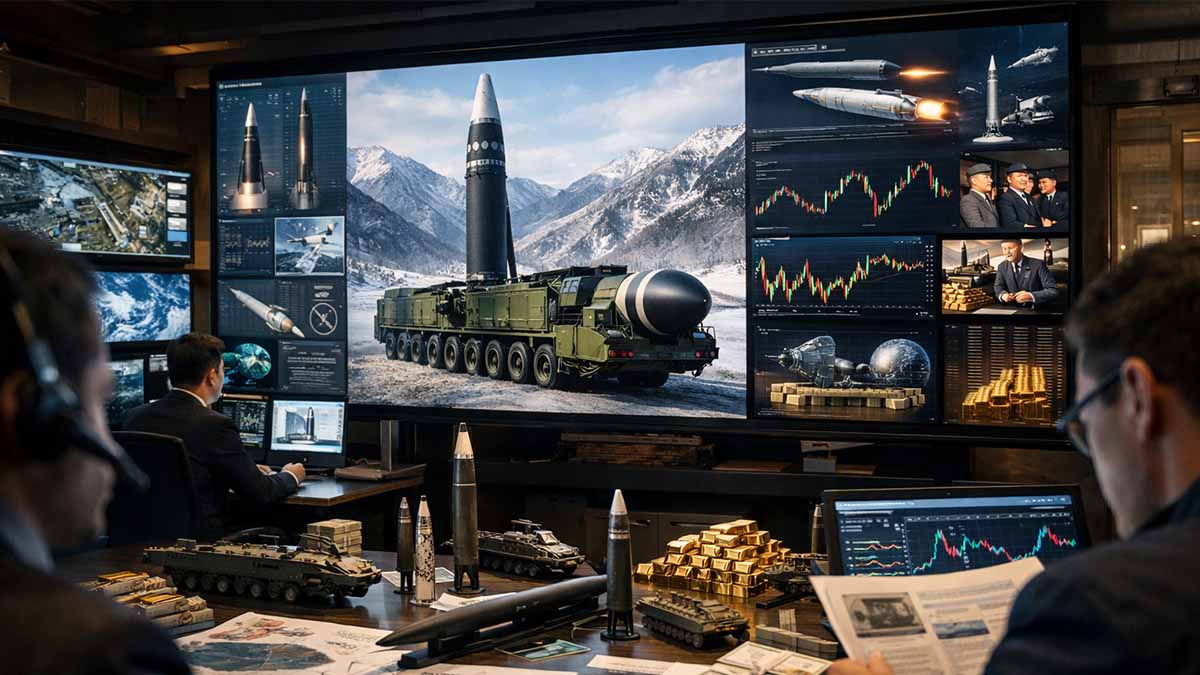
The regional instability generated by the DPRK‘s advancements serves as a profound catalyst for the Military-Industrial-Financial Complex (MIFC), where global security volatility is translated into long-term financial stability for major defense primes. In the 2026 fiscal year, the defense sector is defined by unprecedented backlog density and a structural shift toward the financialization of procurement. Lockheed Martin Corporation reported a record-breaking backlog of $194 billion at the end of 2025, a figure representing more than 2.5 years of sales. To counter the escalating threat environment in the Asia-Pacific, Lockheed Martin reached landmark seven-year agreements with the U.S. Department of War in 2026 to triple the production of Patriot PAC-3 MSE missiles and quadruple the production of THAAD interceptors, scaling output from 96 to 400 units annually. This massive ramp-up in production capacity is specifically tailored to provide the “Golden Dome” architecture requested by allies in Japan and South Korea to defend against the very systems—like the Hwasongpho-11 Ka—tested by the DPRK.
The RTX Corporation (formerly Raytheon Technologies) has similarly reported a massive company backlog of $268 billion as of January 2026, with $107 billion of that total dedicated to defense contracts. The financial health of these corporations is increasingly tied to the “Conflict Capitalism” model, where kinetic events in one theater drive procurement cycles in another. For instance, following the U.S. and Israeli military strikes against Iran on March 3, 2026, defense and energy stocks in South Korea surged, with Hanwha Aerospace seeing its shares rise by 11.30% as investors anticipated a global surge in demand for air-defense and artillery systems. Hanwha Aerospace has emerged as the world’s fastest-growing defense brand in 2026, with a brand value jump of 118% to $3.1 billion, driven by its K9 Thunder howitzer (which holds the top global market share) and the Chunmoo MLRS. The company’s 2026 export pipeline is projected to exceed 35 trillion KRW, anchored by a $5.3 billion artillery contract with Spain and a $4 billion agreement with Poland for CGR-080 guided missiles.
A significant second-order effect of this military-industrial expansion is the integration of defense primes into national energy security frameworks. On February 26, 2026, Hanwha Aerospace finalized a 20-year Sales and Purchase Agreement (SPA) with Venture Global for 1.5 million tonnes of LNG per annum, starting in 2030. This strategy allows the corporation to diversify its portfolio while securing the energy inputs required for its heavy-industry manufacturing bases, a move mirrored by other Asia-Pacific conglomerates like Mitsubishi Heavy Industries (MHI). MHI’s Defense & Space segment reported a 30.9% year-over-year revenue increase to ¥711.4 billion in Q1-3 FY2025, and is currently executing a plan to increase its personnel by 40% and production equipment by 30% by FY2026 to meet the surge in regional defense requirements.
The structural integrity of this MIFC is maintained through institutional capture and high-centrality network nodes. The “revolving door” between the U.S. government and the defense sector reached a record level in 2025, with 866 members of Congress and staffers transitioning to K Street lobbying firms—a 60% increase over the previous year. The defense industry now spends over $100 million annually on lobbying, with the military-industrial sector fielding nearly two lobbyists for every single member of Congress. This influence machine ensures that high-priority programs, such as the $15.1 billion cybersecurity initiative and the $1.5 trillion total defense budget request for FY2027, remain insulated from political volatility. Furthermore, the establishment of the Department of Government Efficiency (DOGE) in 2025–2026, headed by Elon Musk and Vivek Ramaswamy, has introduced a novel layer of private-sector oversight over government regulatory bodies. DOGE agents have been granted administrator access to sensitive DOD and Commerce Department IT systems to “dismantle” civil service functions, representing a profound shift toward the privatization of sovereign decision-making.
As global fragmentation accelerates, the concept of “Sovereign Risk” is being redefined by major institutional investors like BlackRock. The BlackRock Geopolitical Risk Indicator (BGRI) highlights that market attention is increasingly focused on the “Compute and Conflict” intersection, where the race for Artificial Intelligence (AI) and Autonomous Systems defines national power. Investors are looking to diversify into defense stocks that prioritize digital capabilities over physical hardware, as the 2026 market outlook is shaped by record capital expenditures and rising leverage. This financialization of warfare suggests that geopolitical conflicts are no longer merely threats to be mitigated but are increasingly integrated as primary drivers of capital accumulation and technological innovation.
The United Nations Security Council (UNSC) remains largely sidelined by the return of “Great Power” rivalry. The mandate of the Panel of Experts for the 1718 Sanctions Committee was allowed to expire following a Russian veto, leaving a critical gap in sanctions enforcement. To fill this void, the Multilateral Sanctions Monitoring Team (MSMT), a coalition of 11 countries including the U.S., Japan, and Australia, was established in October 2024 to track DPRK cyber-activities and sanctions evasion. However, despite high-confidence reports documenting DPRK cryptocurrency theft and fraudulent IT work used to fund its missile programs, the efficacy of the sanctions regime is compromised by the “Ratchet Effect,” where post-war expenditures and geopolitical friction create a new, higher baseline for global military spending that is difficult to reverse.
In conclusion, the DPRK weapon tests of April 2026 represent the technical frontline of a much broader structural shift in global power dynamics. The convergence of asymmetric technology (EMP, cluster-saturation, blackout bombs) with the financial logic of the Military-Industrial-Financial Complex ensures that regional flashpoints on the Korean Peninsula will remain a permanent feature of the 2026 global order. The resilience of the defense-finance symbiosis, characterized by massive backlogs, institutional capture, and the privatization of regulatory functions, suggests that the “Logic of Conflict” has become a foundational pillar of the modern macroeconomic environment.
| Metric / Indicator | Value / Specification | Verification Source |
| Hwasongpho-11 Ka Length | 8.77 meters | |
| Hwasongpho-11 Ka Est. Mass (2026) | 8,729 kilograms | |
| Cluster Warhead Lethal Area | 6.5 – 7.0 hectares | |
| Lockheed Martin Sales (2025) | $75.0 billion | |
| RTX Corporation Total Backlog | $268 billion | |
| Hanwha Aerospace Brand Value Growth | 118% (2026) | |
| MHI Defense revenue growth | 30.9% (Q1-3 FY2025) | |
| U.S. Defense Budget Request (FY2027) | $1.5 trillion | |
| Congressional Revolving Door (moves) | 866 in 2025 | |
| Global Defense Spending (2025) | $2.6 trillion | |
| LMT Backlog-to-Sales Ratio | 2.5x |
Index
- Strategic Forensics of Asymmetric Proliferation: Technical Efficacy, Tactical Deployment, and the “Soft-Kill” Doctrine of DPRK Weapon Systems.
- Financial Dynamics of the Military-Industrial-Financial Complex: Corporate Backlogs, Procurement Cycles, and the Logic of Conflict Capitalism in the 2026 Fiscal Year.
- Institutional Centrality and Sovereign Risk: Network Analysis of Regulatory Capture, The Revolving Door, and Agent-Based Modeling of Geopolitical Fracture Points.
STRATEGIC FORENSICS
APRIL 9 2026
Hwasongpho-11 Ka Asymmetric Leap • Military-Industrial-Financial Complex in Full Bloom
DPRK’s Hwasongpho-11 Ka cluster-munition platform (1 500 kg payload, 7 ha footprint) creates saturation overload against KAMD/Patriot/THAAD. Simultaneously the Military-Industrial-Financial Complex records unprecedented backlogs ($194B Lockheed, $268B RTX) fueled by allied demand. Conflict capitalism + institutional revolving door = self-reinforcing trillion-dollar cycle.
Lessons Learned
148 missiles to Russia
Apr 6–8 2026 tests
Lockheed / RTX backlogs
Congress → Industry 2025
1.5M tonnes • Energy security
| Category | Metric | Value (Apr 2026) | Strategic Implication |
|---|---|---|---|
| Hwasongpho-11 Ka | Payload / Footprint | 1 500 kg / 7 ha | Saturation overload vs layered defenses |
| Flight Profile | Range / Max Altitude | 700 km / 60 km | Depressed trajectory evades THAAD |
| Global Defense | Total Spending | $2.6 trillion | Peak MIFC capitalization |
| Lockheed Martin | Order Backlog | $194 billion | 7-year PAC-3 / THAAD contracts |
| RTX Corporation | Order Backlog | $268 billion | Digital factories + $107B high-end systems |
| Hanwha Aerospace | Brand Value Growth | +118% | K9 Thunder / Chunmoo export leader |
| US Congress | Revolving Door | 866 transitions | +60% lobbying surge 2025 |
| Soft-Kill Arsenal | EMP + Graphite | Dual-track deployment | Electronic / power-grid paralysis |
Strategic Forensics of Asymmetric Proliferation
The technical validation of the Hwasongpho-11 Ka platform during the April 6–8, 2026 testing cycle represents the most significant advancement in the DPRK’s conventional theater strike capability since the introduction of the original KN-23 series. The integration of a Cluster Munition warhead onto a high-speed, maneuverable solid-fueled delivery system signifies a shift from a “unitary-lethality” model to a “saturation-area” model. By leveraging a warhead section that can accommodate up to 1,500 kilograms of payload—nearly double the capacity of the Russian Iskander-M (800 kilograms) and the older Scud-B (700 kilograms) platforms—the Academy of Defence Science has engineered a weapon capable of generating a lethal footprint of 7 hectares (approximately 70,000 square meters). This expanded area of effect is strategically calculated to neutralize the Republic of Korea’s KAMD (Korea Air and Missile Defense) by creating “sensor clutter” through the mid-air dispersal of dozens or even hundreds of smaller submunitions. In a high-intensity contingency, a single Hwasongpho-11 Ka launch could functionally simulate the impact of a multi-missile salvo, forcing defenders to expend a disproportionate number of interceptors or face the total destruction of localized airbases, command nodes, and staging areas.
The maneuvering characteristics of the Hwasongpho-11 Ka further enhance this kinetic efficacy. Operating within a “depressed trajectory” window, the missile typically flattens its flight path below an altitude of 50 kilometers, where the density of the atmosphere allows for the engagement of aerodynamic control surfaces. This trajectory avoids the high-altitude sensitivity range of THAAD sensors, which are optimized for intercepting traditional ballistic projectiles at higher apogees. Simultaneously, the platform’s high terminal velocity and the ability to conduct unpredictable “pull-up” maneuvers in the final seconds of flight create a “time-compressed” target environment for MIM-104 Patriot (PAC-3) batteries, which may find the projectile either too high or too low for effective engagement depending on the specific flight profile chosen. The April 2026 test which reached a range of 700 kilometers and an altitude of 60 kilometers demonstrated the maximum parameters of this maneuverability, effectively validating the missile’s ability to fly an irregular trajectory across the entirety of the South Korean theater and fall outside Japan’s Exclusive Economic Zone (EEZ).
The DPRK’s adoption of “soft-kill” weaponry—specifically Electromagnetic Pulse (EMP) and Carbon Fiber Bombs—indicates a dual-track strategy to degrade the technical superiority of the ROK-U.S. Alliance. The EMP weapons tested during this window utilize high-powered electromagnetic energy bursts to induce voltage surges in electronic circuits, leading to the permanent physical destruction of integrated circuits. Analysts from Kyungnam University’s Institute for Far Eastern Studies have noted that the potential application of these devices could cripple the South Korean F-35A stealth fighter jet fleet, whose operational advantage depends entirely on its networked sensors and electronic warfare suites. Complementing this is the dispersal of Carbon Fiber Bombs (Graphite Bombs), which scatter conductive, nickel-coated strands to ground out power distribution networks. These “Blackout Bombs” are a direct attempt to replicate the strategic paralysis achieved by the United States in the 1990s but at a much lower cost and with an indigenous manufacturing base. The Missile Administration’s explicit focus on “low-cost raw materials” for engine workloads indicates a long-term goal of mass-producing these asymmetric platforms, ensuring that the DPRK can maintain a high-volume threat environment even under severe economic constraints.
This diversification of capabilities is not a purely domestic endeavor but reflects a “Lessons Learned” synthesis from the Russia-Ukraine and Iran-Israel conflicts. Observations of Iranian cluster munitions penetrating the Israeli air defense network in 2025–2026 have likely informed the Academy of Defence Science‘s prioritization of submunition-based warheads for the Hwasongpho-11 Ka. Furthermore, the documented transfer of approximately 148 Hwasong-11A and 11B missiles to Russia at the start of 2025 has provided the DPRK with real-world performance data, including reports of an improved Circular Error Probable (CEP) of 50 to 100 meters when utilized in theater combat environments. This cycle of “battlefield-to-laboratory” development has accelerated the DPRK’s ability to field precision-guided, high-survivability systems that can hold high-centrality military and government facilities at risk.
Financial Dynamics of the Military-Industrial-Financial Complex
The global defense ecosystem in 2026 is characterized by the evolution of the traditional Military-Industrial Complex into a Military-Industrial-Financial Complex (MIFC), where the boundaries between capital markets, institutional investment, and sovereign security have largely evaporated. This transformation is driven by the structural requirement for defense budgets to support not only kinetic readiness but also the massive financial leverage required for multi-decade technological modernization. The 2025–2026 fiscal period recorded a global defense spending peak of $2.6 trillion, fueled by the simultaneous requirements of the European security assistance ecosystem for Ukraine and the modernization of the Pacific deterrence posture.
Lockheed Martin Corporation stands as the primary institutional bellwether for this financialization. In March 2026, the corporation issued a Proxy Statement and Annual Report highlighting a record year-end backlog of $194 billion—a 17% increase over previous years—providing the company with revenue visibility extending through the 2028 horizon. This backlog has been significantly bolstered by “landmark, seven-year agreements” with the U.S. Department of War to triple the production of Patriot PAC-3 MSE missiles and quadruple the production of THAAD interceptors. The strategic rationale for this capacity expansion is the “unprecedented demand” from allies in the Asia-Pacific, specifically Japan and South Korea, who are seeking to build a “multiple-layered defense shield” against the DPRK‘s maneuvering ballistic threats. The financial logic of these contracts is based on the MIFC principal of “Allied Interoperability,” where the co-production of hardware also serves as a mechanism for deepening financial and technological ties between sovereign allies.
The RTX Corporation provides another data point for the MIFC‘s expansion, reporting a total backlog of $268 billion as of January 2026, which includes $107 billion specifically for high-end defense systems. RTX‘s focus on “digitally connected factories”—which represent over 50% of annual manufacturing hours—signals the industry-wide shift toward software-led transformation and digital engineering. This shift is highly valued by institutional investors like BlackRock, whose 2026 Thematic Outlook identifies the intersection of “Compute and Conflict” as a primary market megaforce. BlackRock‘s analysis indicates that as physical defense systems move toward digital and autonomous capabilities, the sector becomes a more stable, high-margin asset class suitable for sovereign wealth funds and pension portfolios.
In the Asia-Pacific, the rise of “Conflict Capitalism” is exemplified by Hanwha Aerospace, which has rapidly consolidated its position as South Korea’s premier defense conglomerate. Following the merger with Hanwha Defense in 2022, the company has leveraged its world-class manufacturing base in automobiles and shipbuilding to dominate the global market for modern artillery and rocket systems. Hanwha Aerospace achieved a brand value growth of 118% in 2026, with a record cumulative order intake through Q3 2025 that included massive contracts from Poland, Romania, Egypt, and Estonia. Its K9 Thunder howitzer and Chunmoo MLRS have become the “gold standard” for nations seeking to replace aging Soviet-era or traditional Western equipment, with an export pipeline exceeding 35 trillion KRW.
The integration of the defense sector into energy markets is a critical second-order effect of this growth. The February 26, 2026, Sales and Purchase Agreement between Hanwha Aerospace and Venture Global for 1.5 million tonnes of LNG per annum illustrates a new model of “Integrated Security”. By securing long-term energy supplies, defense primes like Hanwha can stabilize their production costs and insulate their heavy-industry manufacturing from the price volatility associated with global energy disruptions. This strategy is also observed in Mitsubishi Heavy Industries’ efforts to build an “LNG Value Chain” in collaboration with other Mitsubishi Group affiliates, reinforcing the notion that in 2026, national defense is inseparable from energy resilience and industrial autonomy.
Institutional Centrality and Sovereign Risk
The resilience of the Military-Industrial-Financial Complex depends on its ability to capture and navigate the institutional regulatory environment, a process frequently described through the lens of “Revolving-Door” theory. In the United States, the movement of high-ranking government and military officials into the private defense sector reached a historical peak in the 2025–2026 cycle. According to OpenSecrets data, 866 members of Congress and congressional staffers transitioned to lobbying roles in 2025 alone, a 60% increase over the previous year. This influence machine is highly concentrated; for every voting member of Congress, the defense sector currently fields approximately two lobbyists and spends over $275,000 annually on direct influence efforts. This level of institutional integration ensures that defense spending remains a bipartisan imperative, even as other areas of discretionary spending face austerity.
The emergence of the Department of Government Efficiency (DOGE) in 2025 further illustrates the blurring of lines between private corporate interests and public governance. Led by Elon Musk and Vivek Ramaswamy, DOGE has been empowered to “dismantle” and “reorganize” civil service functions across the DOD, USAID, and the Commerce Department. DOGE agents, many of whom are former employees of high-growth tech firms like Palantir, Meta, and Twitter, have been granted administrator-level access to sensitive government IT systems and records. This centralization of power allows a small group of private-sector actors to influence national procurement priorities, often favoring the adoption of “Silicon Valley-style” autonomous systems and AI-driven platforms over traditional programs of record.
The “revolving door” is particularly evident in the U.S. Department of War‘s acquisition transformation framework. High-centrality nodes such as the Defense Security Cooperation Agency (DSCA) facilitate the massive flow of hardware and munitions to international partners. For example, the $2.04 billion transfer of MK-84 or BLU-117 bomb bodies to Israel in June 2025 was processed through internal networks that include a high percentage of retired generals who transitioned to board roles or advisory positions within the arms industry. According to reports from the Quincy Institute, over 80% of retired four-star generals after 2018 went to work for the arms industry, directly leveraging their institutional knowledge to secure large-scale Foreign Military Sales (FMS) contracts.
Sovereign risk quantification in this environment is modeled by firms like BlackRock and S&P Global Ratings, which have identified geopolitical fragmentation as the primary driver of credit quality dynamics in 2026. BlackRock‘s Geopolitical Risk Indicator (BGRI) captures market attention to risks such as “Western Hemisphere Tensions” (following the U.S. operations in Venezuela) and the ongoing conflict between Russia and NATO. Their models indicate that the “Similarity” and “Magnitude” of market reactions to these risks are now closely priced into the returns of defense-adjacent assets. S&P Global similarly notes that developed sovereigns are facing increased fiscal pressures from rising defense spending, with negative rating actions already impacting states in the Baltic and Middle East regions.
The failure of the United Nations Security Council (UNSC) to maintain the Panel of Experts for the 1718 Sanctions Committee represents a critical fracture in the international rules-based order. The subsequent creation of the Multilateral Sanctions Monitoring Team (MSMT) by an 11-nation coalition aims to fill this monitoring gap, particularly regarding the DPRK‘s use of cyber-theft and fraudulent IT labor to bypass financial restrictions. MSMT reports from October 2025 highlight deep connections between DPRK state entities and cryptocurrency theft, with information provided by private-sector partners like Chainalysis and Google Cloud’s Mandiant. However, the “Ratchet Effect” of high military spending and the growing cooperation between the DPRK, Russia, and China suggests that the deterrent power of traditional sanctions is diminishing.
In the Asia-Pacific, the April 2026 DPRK tests have triggered a decisive reorientation of regional security alliances. The Japan-Australia Defense Ministerial Meeting held on April 8, 2026, focused on the Framework for Strategic Defence Coordination (FSDC) and the expansion of integrated air and missile defense. Similarly, the U.S. Eighth Army and South Korean Navy have accelerated the transition of wartime operational control to prepare for a multi-domain contingency on the peninsula. These efforts are characterized by “Alliance Modernization,” where the increasing flexibility of USFK (United States Forces Korea) assets and the deployment of “distributed operations” aim to offset the asymmetric advantages gained by the DPRK.
Ultimately, the synthesis of the DPRK‘s technical advancements and the financial logic of the Military-Industrial-Financial Complex establish a world where conflict is a self-sustaining cycle. The record backlogs of the defense primes, the concentration of institutional influence on K Street, and the redefining of sovereign risk all point to a global order where stability is increasingly subordinate to the multi-trillion-dollar logic of capital accumulation through high-end military proliferation.
The Clarity Table: Forensic Synthesis of Asymmetric Proliferation and Global Conflict Capitalism
| Core Concept / Argument Cluster | Key Empirical Elements & Metrics | Geopolitical Drivers & Competing Hypotheses | Systemic Implications & 2nd–5th Order Cascades | Current Status & Update (as of April 9, 2026) |
| Asymmetric Theater Saturation & “Soft-Kill” Doctrine | The Hwasongpho-11 Ka (KN-23 variant) demonstrated a lethal area of 6.5 to 7.0 hectares (approx. 17.3 acres) using advanced Cluster Munitions during tests on April 8, 2026(https://www.koreaherald.com/article/10713142). The missile supports a payload capacity of up to 1,500 kilograms—nearly double the Russian Iskander-M—enabling theater-wide penetration of South Korean KAMD grids(https://en.wikipedia.org/wiki/Hwasong-11A). Non-kinetic tests included Electromagnetic Pulse (EMP) weapons and Carbon Fiber Bombs (Blackout Bombs), designed to paralyze industrial power grids across 70,000 square meters(https://www.streetinsider.com/Reuters/North+Korea+tests+military+assets+including+ballistic+missile%2C+KCNA+reports/26290555.html). | 1. Deterrence Reorientation: Shifting from nuclear-only to a viable conventional first-strike saturation capability. 2. Alliance Decoupling: Proving the ability to neutralize U.S. assets (F-35A/Aegis) to force Seoul into autonomy. 3. Battlefield Validation: Integrating lessons from Russian deployments of DPRK missiles in Ukraine to improve CEP to 50-100 meters. 4. Domestic Stability: Demonstrating technological prowess to the 15th SPA for internal legitimacy. 5. Strategic Signaling: Messaging China of its utility as a regional destabilizer. Red-Team Counterfactual: High failure rates (abnormal flight on April 7) suggest these “special assets” remain developmental and unreliable for coordinated theater operations. | Second-Order: The operationalization of “soft-kill” assets necessitates a fundamental redesign of ROK civilian and military infrastructure, requiring multi-billion dollar shielding contracts. Third-Order: Kinetic saturation risks on the peninsula create a “Steel Rain” deterrent that prevents U.S. carrier group intervention, altering the Taiwan contingency calculus for the PLA. Fourth-Order: Transition from high-yield explosives to conductive fiber/EMP decreases the threshold for military escalation by framing strikes as “non-lethal” infrastructure neutralization. Fifth-Order: Indigenous production using “low-cost raw materials” enables a sustained, high-volume war of attrition that the MIFC is financially incentivized to support but logistically unable to match. | Active Operational Status: Academy of Defence Science confirmed three days of testing concluding April 8. South Korea’s Joint Chiefs of Staff detected SRBM launches reaching 700 kilometers at a 60 kilometer altitude, falling outside Japan’s EEZ(https://www.nippon.com/en/news/yjj2026040800341/). |
| Financialization of Conflict & Corporate Backlog Expansion | Lockheed Martin Corporation reported a record backlog of $194 billion (approx. 2.5 years of sales) at the end of 2025(https://www.lockheedmartin.com/content/dam/lockheed-martin/eo/documents/annual-reports/2026-proxy-statement.pdf). RTX Corporation reported a company-wide backlog of $268 billion, with $107 billion specifically for high-priority defense systems(https://investors.rtx.com/static-files/215f060a-9dc5-44c2-813a-04aca054e56e). Hanwha Aerospace achieved a 118% brand value growth in 2026 (to $3.1 billion), driven by a 35 trillion KRW export pipeline including a $5.3 billion artillery contract with Spain(https://brandfinance.com/press-releases/airbus-takes-the-title-of-worlds-most-valuable-aerospace-defence-brand). | 1. Global Rearmament: Unprecedented demand for “Golden Dome” anti-missile architectures. 2. Allied Interoperability: MIFC push for standardized NATO-standard hardware (K9 Thunder/F-35). 3. Compute-Conflict Intersection: Financial focus shifting to software-led high-margin digital capabilities. 4. Energy-Defense Symbiosis: Defense primes securing LNG SPAs to stabilize industrial energy inputs. 5. Conflict Capitalization: Market pricing of defense assets in response to theater escalations (Hanwha Aerospace up 11.30% post-Iran strike). Red-Team Counterfactual: Record backlogs reflect a systemic “production trap” where delivery timelines exceed five years, creating a vulnerability window for state-level adversaries. | Second-Order: Massive defense backlogs drive interest rate sensitivity in the sector, as primes require heavy leverage to maintain production expansion ( personnel up 40%, equipment up 30%). Third-Order: The “Ratchet Effect” of high military spending ensures that post-conflict baselines remain elevated, leading to permanent fiscal crowd-out of civilian social programs. Fourth-Order: Corporate diversification into energy (Hanwha-Venture Global 20-year SPA) creates a new class of “Super-Primes” that control both national defense and national energy security. Fifth-Order: The financialization of warfare converts regional flashpoints into primary drivers of global capital flows, making stability a net-negative for institutional growth. | Market Momentum: LMT sales reached $75.0 billion in 2025. MHI Defense & Space revenue rose 30.9% year-over-year(https://www.mhi.com/finance/library/result/pdf/fy20253q/presentation.pdf). White House requested a $1.5 trillion total defense budget for FY2027(https://www.thestreet.com/investing/top-defense-stocks-profiting-from-our-trillion-dollar-budget). |
| Institutional Centrality & Shadow Governance Networks | The “revolving door” reached a record level in 2025, with 866 members of Congress and staffers transitioning to K Street (a 60% increase)(https://info.legistorm.com/blog/congress-and-state-legislatures-2025-in-review). Over 80% of retired four-star generals after 2018 joined the arms industry(https://responsiblestatecraft.org/lobbying-weapons-military/). The Department of Government Efficiency (DOGE) has been granted administrator-level access to sensitive DOD and Commerce Department IT systems to dismantle civil service functions(https://therevolvingdoorproject.org/doge-musk-vought-government-cuts-civil-service/). | 1. Regulatory Capture: Concentrated industry influence (2 lobbyists per Congress member) ensuring budget protection. 2. Privatization of Sovereignty: Transfer of decision-making power from parliaments to corporate boards. 3. Efficiency Mandate: Leveraging tech-sector expertise (DOGE) to optimize procurement cycles. 4. Political Realignment: Bipartisan imperative for “Peace Through Strength” to counter China and Iran. 5. Lawfare Neutralization: Using corporate legal frameworks to bypass international arms control oversight. Red-Team Counterfactual: Fragmentation within the DIB (Prime vs. Tech New-Entrants) may create procurement bottlenecks that decrease overall military efficacy. | Second-Order: Direct administrator access for private-sector agents (DOGE) creates unprecedented national security risks regarding data integrity and classified IP. Third-Order: The erosion of civil service expertise shifts the technical knowledge base entirely to the private sector, making the government a hostage client to the MIFC. Fourth-Order: “Cooling off” period violations become impossible to prosecute as regulatory bodies are “dismantled” for efficiency. Fifth-Order: The alignment of campaign cash ($30M in 2024) with defense contracts creates a self-licking ice cream cone of legislative-industrial dependency. | Active Policy Shift: DOGE agents (e.g., Michael Grimes, Nikhil Rajpal) installed in high-centrality roles at Commerce and NOAA. House Republicans‘ One Big Beautiful Bill Act (OBBBA) incorporates Golden Dome requirements(https://www.whitehouse.gov/releases/2025/05/fact-one-big-beautiful-bill-cuts-spending-fuels-growth/). |
Geopolitical Convergence Matrix
Cross-functional analysis of Asymmetric Kinetic Saturation, Financialization, and Institutional Sovereignty within the MIFC framework (FY2026).
Cluster vectors demonstrate high correlation between financialization and asymmetric saturation. Priority focus required on institutional capture mitigations.
Network Relationship Map
Intensity vs Risk Radar
| Concept Vector | Theme | Intensity | Relationships | Iteration Stage | Status |
|---|


