












In a rapidly evolving landscape of military technology, the Russian military has deployed state-of-the-art drones capable of performing surgical strikes with unprecedented precision in its special military operation in Ukraine.
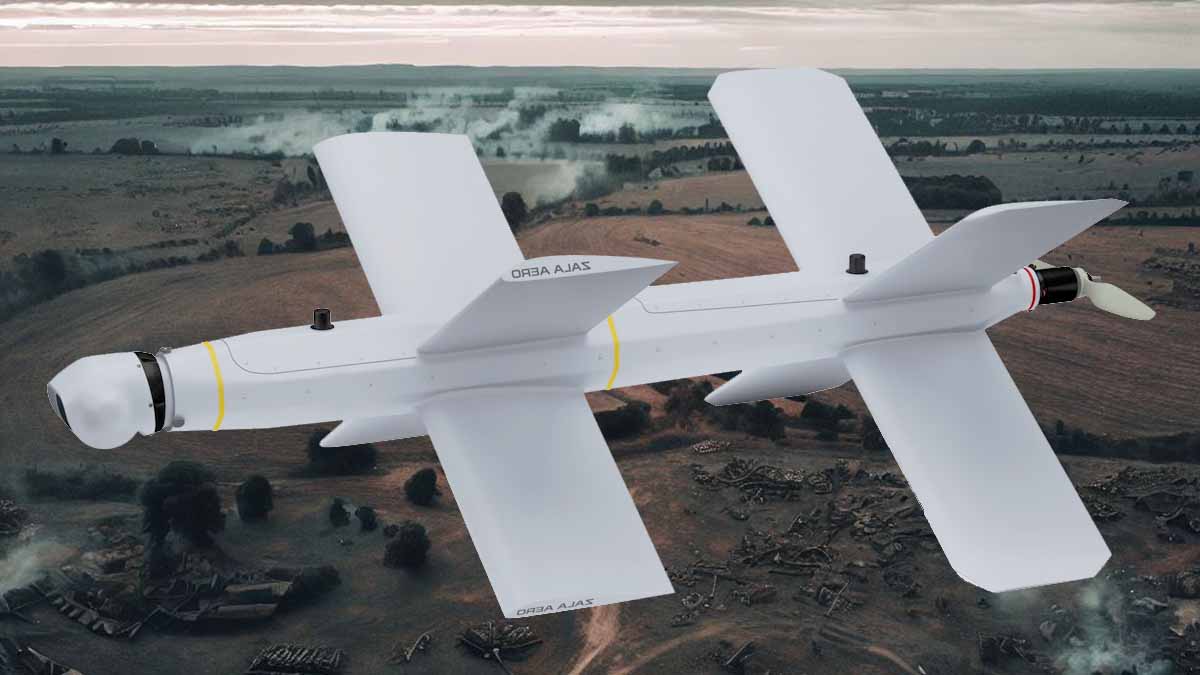
These advanced drones, known as Lancet loitering munition, have provided Russia with a significant advantage on the battlefield. Recent footage released by the Russian Ministry of Defense has showcased the airborne troops using Lancet drones to devastating effect, particularly against Ukrainian tanks.
In the realm of modern warfare, where technological advancements are constantly pushing the boundaries of what is possible, the Lancet loitering munition has emerged as a game-changer for the Russian military. These highly advanced drones are not only formidable in their own right but also rely on a symbiotic relationship with recon drones to maximize their effectiveness on the battlefield.
The Lancet drones are often referred to as ‘kamikaze drones,’ a term that aptly describes their role and function. These drones are disposable, and once they are launched on a mission, there is no expectation of their return. Instead, their primary objective is to carry out precise, high-impact strikes on enemy targets and then self-destruct upon completion of their mission. It’s a strategy that leverages the ultimate sacrifice of the drone to ensure the destruction of the target.
What sets the Lancet apart from many other drone systems is its integration with recon drones, which play a critical role in the overall success of the mission. The recon drone is the first to venture across the front line, acting as an advanced scout. Its mission is to identify and locate high-priority targets, which could include enemy tanks, artillery, or other strategic assets. Once the recon drone has successfully pinpointed the target, it then transmits the precise coordinates to the Lancet loitering munition.
This coordination between the recon drone and the Lancet is where the true synergy lies. The Lancet relies on real-time data provided by the recon drone to ensure accuracy and reduce the risk of collateral damage. This means that the Lancet can adjust its course mid-flight, responding to changes in the target’s position or any unexpected developments on the battlefield. This adaptability is crucial for ensuring that the mission’s objectives are met with the utmost precision.
However, unlike the Lancet, the recon drone has a different fate awaiting it after it has completed its mission. Unlike its kamikaze counterpart, the recon drone must make its way back to the base safely. This is achieved through the deployment of a parachute, allowing the valuable drone to return intact and ready for further assignments. Moreover, the recon drone’s return journey can serve another essential purpose—it can be used to escort another Lancet drone to its designated target.
The role of recon drones in these operations is multi-faceted. They not only serve as the eyes and ears of the Lancet, identifying and designating targets, but they also contribute to the efficiency of the mission by ensuring that Lancet drones are guided accurately to their objectives. This collaborative approach minimizes the margin for error and increases the overall effectiveness of the loitering munition system.
The Advancement of Russian Kamikaze Drones
The escalation of conflict in Ukraine has shed light on Russia’s evolving drone capabilities. These next-generation kamikaze drones, with a much longer operational range, have become a cause for concern for Ukraine. The increased range allows these drones to reach Ukraine’s main air bases, placing its valuable military assets at risk.
Recent reports have highlighted the potency of these drones, emphasizing their extended reach. A significant incident was captured on social media, where an explosives-laden Russian drone successfully struck a Ukrainian MiG-29 fighter jet at the Dolgintsevo air base near Krivoy Rog in the Dnepropetrovsk Region.
A second drone, believed to be an observer, monitored the attack from overhead. This event raised questions about the effectiveness of Ukraine’s air defenses, especially considering the considerable distance between the air base and the frontline, approximately 45 miles (72 kilometers).
The Lancet drones developed by Russia are lauded as highly effective, but their previous range did not extend this far. The report suggests that the strike on the Ukrainian MiG at Dolgintsevo may have been the debut of a new variant, known as Izdeliye 53, signaling a significant step in the evolution of the Lancet drones. These new drones are designed to be nearly impossible to stop, presenting a dire challenge to Ukraine’s defense forces.
The publication cited footage, posted on the prominent social media platform X (formerly Twitter), showing an explosives-laden Russian drone strike on a Ukrainian MiG-29 fighter jet at Dolgintsevo air base near Krivoy Rog, in the Dnepropetrovsk Region.
The Izdeliye-53, also known as Z-53, is a next-generation loitering munition developed by ZALA Aero affiliate Aeroscan. These drones are capable of carrying payloads of up to five kilograms and are designed to operate in groups, communicating and coordinating with one another to identify and target ground-based threats, from enemy anti-air and rocket artillery installations to armored vehicles.
Unlike their predecessors, the Z-53 drones are deployed from small, ground-based tubes resembling mortars, offering increased flexibility and mobility. This innovative design allows for easy transportation, either as tube launchers or 2×2 batteries using light vehicles.
Implications for Ukraine
The expanded operational range of these new Lancet drones presents Ukraine with a critical challenge, particularly as it anticipates the arrival of secondhand European F-16 fighter jets. Denmark and the Netherlands have committed to transferring F-16s to Ukraine, following pilot training in the United States. This move is seen as a potential boost to Ukraine’s air capabilities, but the threat posed by Russia’s Lancet drones casts a shadow over this development.
The recent Russian Aerospace Forces strike on the Dolgintsevo airfield on September 11 serves as a stark reminder of the vulnerability of Ukrainian military assets. The attack resulted in the destruction of two MiG-29 jets and three Su-25 warplanes belonging to Ukraine’s air force, demonstrating the effectiveness of Russia’s drone warfare strategy.
Conclusion
The utilization of advanced kamikaze drones by the Russian military in Ukraine represents a significant shift in modern warfare. These drones, with their extended operational range and precision targeting capabilities, have enabled Russia to conduct surgical strikes while minimizing risks to its troops.
As Ukraine grapples with the evolving threat, it must adapt its defense strategies to counter the menace posed by the Lancet loitering munition and other advanced drone technologies. The conflict in Ukraine serves as a stark reminder of the rapid advancements in military technology and the need for nations to continuously innovate and defend against emerging threats.


