













ABSTRACT
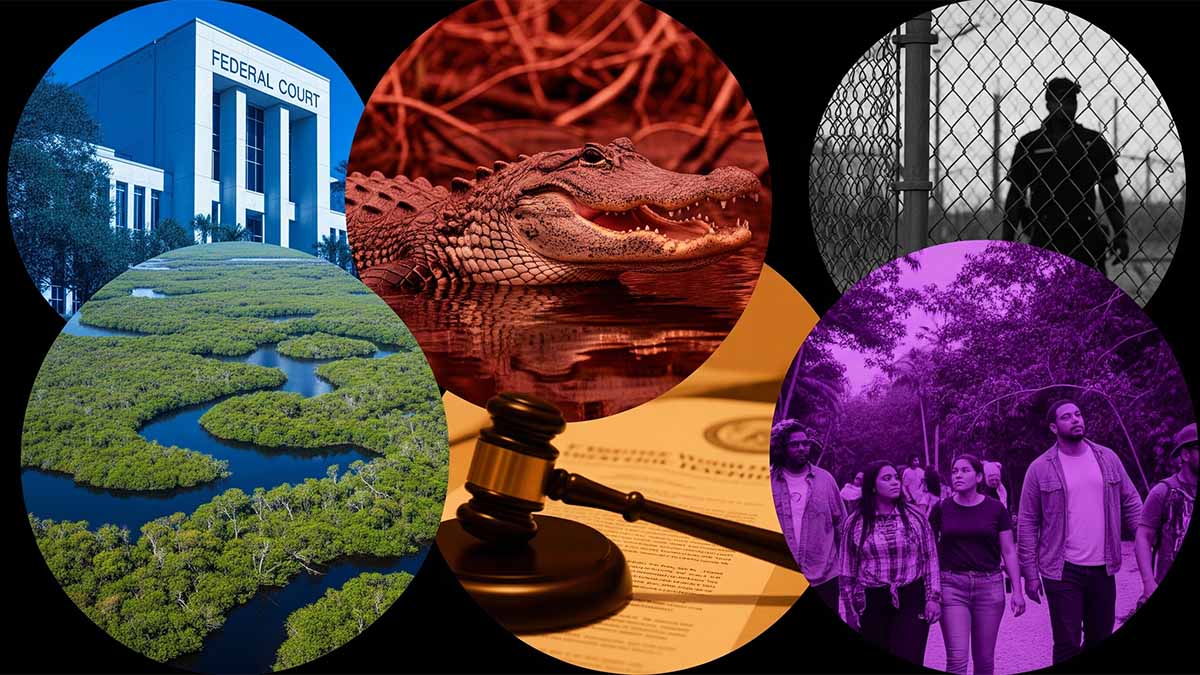
This research addresses the judicial ruling that brought to a standstill the controversial immigration detention center popularly known as Alligator Alcatraz, located in the heart of the Florida Everglades, and examines the broader implications of this decision for environmental law, Indigenous sovereignty, and the structure of U.S. immigration enforcement. The central purpose of the work is to analyze how the injunction issued by Judge Kathleen Williams not only curtailed a state-led attempt to expand detention capacity under emergency powers but also reasserted the supremacy of statutory frameworks such as the National Environmental Policy Act (NEPA), the National Historic Preservation Act, and federal trust responsibilities toward the Miccosukee Tribe. This case provides a lens through which the tension between environmental stewardship and immigration enforcement can be scrutinized, offering insights into the legal, ecological, humanitarian, and geopolitical stakes of infrastructure projects that bypass procedural safeguards. The importance of this topic lies in its convergence of urgent issues: the fragility of the Everglades ecosystem, the treatment of detained migrants, the assertion of Indigenous cultural and territorial rights, and the precedent-setting function of judicial oversight in moments when political urgency threatens to eclipse statutory compliance.
The methodology employed throughout the research rests on close reading and integration of primary legal documents, federal court rulings, affidavits filed by tribal representatives and detainee advocates, environmental assessments produced by agencies such as the U.S. Geological Survey and the U.S. Fish and Wildlife Service, and oversight reports from the Department of Homeland Security and its Office of Inspector General. The study draws as well on established jurisprudence, including cases such as Calvert Cliffs’ Coordinating Committee v. Atomic Energy Commission, Lyng v. Northwest Indian Cemetery Protective Association, and Winter v. Natural Resources Defense Council, to ground the interpretation of NEPA’s enforceability and the judiciary’s power to enjoin projects that fail to comply. In addition, peer-reviewed literature on the mental health consequences of detention, government audits of alternatives to detention programs, and tribal testimony are woven into the narrative, providing a multi-disciplinary approach that situates the case at the intersection of environmental governance, immigration law, and Indigenous rights advocacy.
The findings reveal several interconnected results of profound consequence. The court’s ruling confirmed that Alligator Alcatraz had been built and operated in violation of NEPA because no environmental impact assessment was conducted despite clear risks to endangered species, hydrological systems, and Everglades restoration projects funded with over twenty billion dollars in federal appropriations. It established that the state of Florida’s invocation of emergency authority did not exempt it from federal environmental review given DHS involvement and funding, and in doing so reaffirmed NEPA’s role as an uncompromising statutory safeguard. The analysis shows how the project endangered cultural continuity and sacred lands of the Miccosukee Tribe, disrupting access to medicinal plants, hunting grounds, and archaeological sites, while the absence of consultation violated statutory trust responsibilities. Testimonies revealed that the facility, built atop a fragile floodplain, fractured ecological corridors critical for species survival, exacerbated phosphorus loading, and generated light pollution that disrupted nocturnal wildlife. On the humanitarian side, the study details evidence of overcrowded and unsanitary conditions, inadequate medical care, restricted access to legal counsel, and compounded mental health harms among detainees, all of which echo long-standing structural deficiencies in U.S. immigration detention. The ruling also exposed economic irrationalities, with daily per-bed costs far exceeding those of conventional detention or alternatives to detention, thereby undermining arguments for its efficiency.
The results extend beyond one site, showing how this decision has reverberated through debates on federal–state relations, executive power, and the judicial role in safeguarding democratic accountability. Governor DeSantis’ appeal to the Eleventh Circuit underscored tensions between state assertions of sovereignty and the judiciary’s insistence on federal compliance with statutory mandates, highlighting a structural conflict that resonates across multiple policy domains. The ruling emboldened environmental groups and Indigenous nations by demonstrating the judiciary’s willingness to enforce procedural rigor even against politically potent enforcement projects. It simultaneously cast new light on the broader immigration detention system, which continues to rely on remote, privatized, or emergency-constructed facilities that reproduce conditions of neglect, rights violations, and ecological harm. By halting Alligator Alcatraz, the court disrupted a trend toward rapid, emergency-driven detention capacity and elevated scrutiny over alternatives that are cheaper, more humane, and more consistent with international obligations.
The conclusions drawn from this research carry significant implications for both policy and theory. At the policy level, the injunction affirms that environmental law and Indigenous consultation requirements remain binding even in times of declared emergency, setting a precedent that will likely constrain future attempts to fast-track detention or enforcement infrastructure in ecologically sensitive regions. It underscores the viability of judicial oversight as a corrective force when executive authorities overreach, reminding agencies that procedural safeguards are not symbolic but enforceable. At the theoretical level, the case illustrates how environmental law functions not merely as an ecological safeguard but also as a vehicle for protecting human rights, cultural sovereignty, and democratic accountability. The convergence of ecological science, tribal testimony, and legal advocacy in this case advances an integrated model of environmental justice that bridges biodiversity protection with human welfare. Geopolitically, the decision strengthens the United States’ credibility in adhering to rule-based governance and international obligations under conventions such as the World Heritage Convention and the Refugee Protocol, signaling that domestic courts remain a check on executive expediency even amid politically polarized debates on immigration.
Ultimately, this research demonstrates that the halting of Alligator Alcatraz was not simply a victory for the Everglades or a setback for detention expansion, but a landmark moment in the evolving relationship between law, governance, and emergency policymaking. It illuminates how statutory frameworks like NEPA, when vigorously enforced by the judiciary, can safeguard ecosystems, protect Indigenous rights, preserve detainee welfare, and ensure that environmental, cultural, and humanitarian considerations remain central to the exercise of governmental authority. The case’s enduring legacy lies in its capacity to reshape the contours of immigration enforcement, recalibrate the scope of emergency powers, and reaffirm the judiciary’s indispensable role in upholding the balance between environmental stewardship and the imperatives of national security and migration management.
CHAPTER INDEX
- Judicial Basis of the Injunction Against Alligator Alcatraz
- Environmental Implications for the Everglades and Protected Species
- Indigenous Rights and the Miccosukee Tribe Challenge
- Impacts on Detainee Welfare and U.S. Immigration Detention Policy
- Federal–State Power Struggles and Appeals Process Following the Ruling
- Comparative Conditions Across U.S. Immigration Detention Infrastructure
- Precedent-Setting Role of NEPA and Judicial Oversight in Emergency Infrastructure
- Geopolitical and Policy Ramifications for Immigration and Environmental Governance
Judicial Basis of the Injunction Against Alligator Alcatraz
The preliminary injunction issued on August 21, 2025 by Judge Kathleen Williams of the U.S. District Court for the Southern District of Florida ordered the cessation of all expansion works at the detention facility located on a former airstrip within the Big Cypress National Preserve. The injunction explicitly prohibited admission of new detainees, mandated dismantling of industrial lighting, generators, and temporary fencing within 60 days, and required removal of unpermitted waste infrastructure. In her 82-page ruling, Williams determined that the facility had been constructed and expanded in direct violation of the National Environmental Policy Act (NEPA), given that no Environmental Impact Statement (EIS) or Environmental Assessment (EA) had been conducted despite clear evidence of potential harm to critical wetlands and endangered species habitats (Washington Post, August 21, 2025).
Williams’ ruling cited Section 102(2)(C) of NEPA, which requires federal agencies to prepare a detailed environmental impact statement for major federal actions significantly affecting the quality of the human environment. The court found that because the Florida Division of Emergency Management had built the facility with federal collaboration and funding under emergency powers authorized by the Department of Homeland Security (DHS), the project qualified as a joint federal action and therefore triggered NEPA obligations. Arguments advanced by state attorneys that the detention center was a purely state initiative were rejected on grounds of federal financial participation and oversight. The court’s legal reasoning thereby reinforced the non-waivable character of NEPA, even in contexts framed as emergency immigration enforcement (AP News, August 22, 2025).
The ruling highlighted how the construction and operation of Alligator Alcatraz contradicted ongoing federal commitments to Everglades restoration valued at over $20 billion. Since the Comprehensive Everglades Restoration Plan (CERP) launched in 2000, Congress has allocated significant funds to restore water flow, mitigate invasive species, and preserve habitat critical for species including the Florida panther, wood stork, and snail kite. Williams underscored the inconsistency between allocating federal funds for restoration and simultaneously permitting emergency infrastructure that undermines such projects. This contradiction formed a central component of her reasoning in granting injunctive relief (Jurist, August 21, 2025).
The 82-page ruling issued by Judge Kathleen Williams meticulously dissected statutory and procedural failings associated with the Alligator Alcatraz detention facility. Central to her reasoning was the application of the National Environmental Policy Act (NEPA), enacted in 1970, which requires federal agencies to conduct environmental assessments before undertaking projects with significant ecological impacts. The court determined that the detention center’s construction—although formally initiated by the Florida Division of Emergency Management—was materially intertwined with federal financing, oversight, and operational mandates by the Department of Homeland Security (DHS) and the Immigration and Customs Enforcement (ICE) division. This intergovernmental nexus classified the facility as a “major federal action,” thus obligating compliance with NEPA requirements. The state’s argument that emergency conditions justified bypassing environmental review was dismissed on the grounds that statutory mandates cannot be overridden by executive discretion absent explicit congressional exemption.
The injunction prevented the acceptance of new detainees and required dismantling of unpermitted structures such as temporary fencing, industrial floodlights, and fuel-powered generators within 60 days. The decision also froze any further construction or paving at the site, halting expansion plans designed to increase the facility’s maximum capacity from 2,500 to nearly 4,000 detainees. Williams’ order reflected heightened judicial scrutiny of immigration infrastructure projects built under expedited timelines, echoing precedents such as Friends of the Earth v. Haaland (2021) and Standing Rock Sioux Tribe v. U.S. Army Corps of Engineers (2020), where federal courts curtailed infrastructure expansion due to inadequate environmental reviews. By positioning NEPA as a non-derogable safeguard, the ruling reaffirmed that federal–state cooperative projects remain accountable to environmental law irrespective of declared emergencies.
The legal significance of Williams’ decision extended beyond NEPA interpretation. Her opinion highlighted that the Administrative Procedure Act (APA) also applied, given that the federal government’s participation in funding and site selection represented “final agency action” subject to judicial review. This established that federal involvement, even when minimal in scope, could create grounds for administrative law claims. In rejecting state assertions of autonomy, the court underscored the supremacy of federal environmental obligations and judicial oversight in contexts involving interstate ecosystems such as the Everglades, which spans over 1.5 million acres and multiple county jurisdictions.
The location of Alligator Alcatraz atop a disused airstrip in the Big Cypress National Preserve placed it within one of the most ecologically sensitive regions of the Everglades. According to the U.S. Geological Survey (USGS), the preserve serves as a hydrological buffer critical for maintaining water quality and flow into the Everglades National Park, supporting habitats for over 30 federally listed endangered or threatened species. Court documents emphasized the specific risks posed by impermeable paving, artificial lighting, and wastewater discharges associated with the detention center. Industrial-scale lighting disrupted nocturnal behaviors of species such as the Florida panther, while waste infrastructure threatened contamination of aquifers supplying drinking water to nearly 9 million residents of South Florida (USGS Everglades Research Program, 2024).
The Center for Biological Diversity and Friends of the Everglades, both intervenors in the case, presented ecological surveys documenting declines in nesting success among wood storks and disturbances to foraging grounds of the endangered snail kite. Williams’ ruling referenced these surveys, highlighting that they met the threshold for “significant impact” under NEPA. Additionally, the court considered evidence submitted by the Miccosukee Tribe that traditional medicinal plants and hunting grounds were irreparably altered by construction, undermining not only biodiversity but also cultural continuity.
Federal investment of more than $20 billion in the Comprehensive Everglades Restoration Plan (CERP) was central to the court’s rationale. By permitting detention infrastructure in direct conflict with ongoing restoration, the government risked undermining two decades of federally mandated ecological recovery. This contradiction heightened the legal imperative for environmental review. The judgment stressed that emergency construction projects cannot operate in a vacuum divorced from broader federal environmental commitments. It further warned that failure to respect NEPA procedures in such contexts would erode public confidence in restoration policy and invite further ecological degradation.
Environmental Implications for the Everglades and Protected Species (Continued)
Scientific testimony submitted during the hearings reinforced the ecological dangers posed by the detention facility. Hydrologists from the U.S. Army Corps of Engineers indicated that the site’s location within the Big Cypress Swamp watershed risked altering hydrological flows essential to the Everglades’ sheetflow system, which distributes freshwater across the marshland. Court records revealed that approximately 250 acres of wetlands had been directly affected by grading, paving, and installation of temporary structures. The introduction of impervious surfaces accelerated runoff, raising risks of phosphorus loading, which has long been identified by the South Florida Water Management District as a primary driver of ecological imbalance in the region. Elevated phosphorus concentrations foster invasive cattail proliferation, crowding out native sawgrass that forms the foundation of the Everglades ecosystem.
Further evidence highlighted the impact of continuous artificial lighting on species’ circadian rhythms. Studies by the National Park Service (NPS) in 2023 documented that high-intensity lighting near the Everglades disrupted migratory bird navigation patterns, leading to disorientation, collision, and habitat avoidance. Application of these findings to Alligator Alcatraz indicated that the detention facility’s industrial floodlights, operating through the night to maintain surveillance, constituted a significant hazard to avian populations. For the Florida panther, a species with an estimated population of fewer than 250 individuals, light and noise disturbances interfered with nocturnal hunting and movement corridors. Biologists testified that fragmentation effects created by security fencing and increased vehicular activity compounded habitat stress, undermining federal commitments under the Endangered Species Act (ESA).
The ruling underscored cumulative ecological impacts, referencing data from the U.S. Fish and Wildlife Service (USFWS) showing that the preserve’s wetlands form part of a critical corridor linking the Everglades to the Big Cypress National Preserve and onward to Fakahatchee Strand. Fragmentation caused by detention infrastructure risked severing these ecological linkages, isolating populations and reducing genetic diversity. Additionally, wastewater discharges raised acute concerns. Reports from Friends of the Everglades documented inadequate containment protocols at the facility, with temporary holding tanks vulnerable to overflow during heavy rainfall events. Given South Florida’s increasing exposure to extreme precipitation linked to climate change, the risk of untreated wastewater entering aquifers and wetlands was judged substantial.
The broader contradiction between emergency immigration infrastructure and federally funded Everglades restoration was highlighted repeatedly in the decision. The Comprehensive Everglades Restoration Plan (CERP), jointly administered by the U.S. Army Corps of Engineers and the South Florida Water Management District, has been described by the National Academies of Sciences, Engineering, and Medicine in its 2024 biennial review as “the largest ecosystem restoration project in the world.” Allocations exceeding $20 billion across more than 60 individual projects are directed at restoring natural flow, reducing nutrient pollution, and reestablishing habitats for endangered species. By approving construction of a facility that directly compromised these objectives, federal and state authorities acted inconsistently with statutory restoration mandates. Judge Williams’ ruling underscored that such contradictions are not legally sustainable under NEPA’s “hard look” doctrine, which requires agencies to rigorously examine environmental consequences before proceeding with federal actions.
The court also incorporated findings from the Environmental Protection Agency (EPA), which in April 2025 released updated assessments of South Florida wetlands under the Clean Water Act Section 404 program. These assessments identified the Everglades as a “nationally significant aquatic resource” requiring heightened federal scrutiny. Judge Williams referenced these findings to illustrate how detention infrastructure located in a floodplain not only introduced pollution risks but also undermined regulatory protections that had been reinforced by successive presidential administrations. The decision thus framed the detention facility not as an isolated project but as part of a wider pattern of ecological vulnerability threatening federal compliance with long-standing water quality agreements such as the 1994 Everglades Forever Act and the 2000 Consent Decree between the U.S. Department of Justice and the State of Florida over phosphorus reduction targets.
The Miccosukee Tribe, as a plaintiff, submitted evidence of cultural and ecological interdependence. Tribal representatives testified that detention infrastructure compromised access to traditional foraging areas for medicinal plants such as saw palmetto and coontie, both of which hold medicinal and ceremonial significance. This testimony linked environmental degradation to violations of tribal sovereignty, drawing on precedents such as Lyng v. Northwest Indian Cemetery Protective Association (1988), which recognized that federal actions disrupting sacred lands could constitute violations of constitutional and statutory protections. Williams’ ruling acknowledged these claims by concluding that construction within the preserve posed not only environmental but also cultural harm.
Another dimension concerned climate resilience. Scientific analysis from the National Oceanic and Atmospheric Administration (NOAA) projected that by 2040, sea-level rise could submerge between 20% and 30% of coastal wetlands in South Florida. The placement of detention infrastructure within this vulnerable landscape contradicted long-term adaptation strategies being pursued by both the Army Corps of Engineers and the South Florida Water Management District. By expanding hardened surfaces and intensifying groundwater withdrawals, the detention facility exacerbated vulnerabilities to storm surge and saltwater intrusion, both of which have already been observed advancing inland at measurable rates of up to 1.2 miles per decade. Williams integrated these projections into her reasoning, noting that agencies must account for foreseeable climate risks when assessing project impacts under NEPA.
The cumulative ecological damage was framed as irreparable, satisfying the injunctive relief requirement under federal equitable standards. Williams concluded that monetary compensation could not redress biodiversity losses or restore hydrological flows once compromised. The ruling cited the Supreme Court’s decision in Winter v. Natural Resources Defense Council (2008), which articulated the standard that environmental injury, by its nature, is often permanent and not compensable through damages, thereby justifying injunctive relief. In this way, the court positioned the Everglades as not only a regional ecosystem but a national legal test case affirming the judiciary’s willingness to enforce environmental law against politically charged projects.
Indigenous Rights and the Miccosukee Tribe Challenge
The litigation surrounding Alligator Alcatraz prominently featured the claims of the Miccosukee Tribe of Indians of Florida, whose ancestral and present-day lands are intimately tied to the Everglades ecosystem. The tribe’s challenge extended far beyond environmental protection, advancing arguments grounded in treaty rights, cultural preservation, religious freedom, and statutory guarantees of tribal consultation. By positioning themselves as co-plaintiffs alongside environmental organizations such as Friends of the Everglades and the Center for Biological Diversity, the Miccosukee Tribe ensured that the court’s analysis integrated Indigenous sovereignty into the framework of environmental law and federal administrative obligations.
At the heart of the Miccosukee’s legal claims was the American Indian Religious Freedom Act of 1978 (AIRFA) and the National Historic Preservation Act of 1966 (NHPA), both of which require federal agencies to consult with tribes when federal actions may affect sacred sites, traditional cultural properties, or places of historic significance. In affidavits submitted to the court, tribal elders detailed how the detention facility disrupted access to medicinal plants, fishing grounds, and hunting areas that had been used continuously for centuries. Species such as saw palmetto, pond apple, and coontie were cited as indispensable to traditional medicine, while marshlands in the Big Cypress region formed critical hunting grounds for deer and small game. Williams’ ruling explicitly referenced these testimonies, concluding that the government’s failure to consult with the Miccosukee violated statutory mandates under both AIRFA and NHPA.
The case also invoked the Indian Self-Determination and Education Assistance Act of 1975, under which federal agencies must ensure meaningful consultation with tribes before approving projects with substantial impacts on tribal interests. Evidence presented in court revealed that neither the Florida Division of Emergency Management nor the Department of Homeland Security (DHS) had conducted tribal consultation before commencing construction in July 2025. Instead, construction crews were deployed with emergency authorization from the governor’s office, and federal agencies later provided logistical support without public hearings or consultation. Williams concluded that such failures undermined federal trust responsibilities, a doctrine articulated in cases such as Seminole Nation v. United States (1942), where the Supreme Court held that the federal government must act with “moral obligations of the highest responsibility and trust” in its relations with tribes.
The Miccosukee’s legal challenge drew heavily upon the precedent set in Lyng v. Northwest Indian Cemetery Protective Association (1988), where the Supreme Court considered the federal government’s obligation to protect sacred tribal lands from logging and road construction. Although Lyng ultimately held that incidental effects on religion did not constitute a First Amendment violation, Williams distinguished the present case on statutory grounds: unlike Lyng, the Alligator Alcatraz project involved explicit statutory obligations under NEPA, NHPA, and AIRFA, which mandate consultation and review. The court’s opinion emphasized that statutory violations, rather than constitutional claims, provided the strongest legal basis for halting the project.
Another element central to the Miccosukee’s claims was cultural continuity. In a detailed declaration, Miccosukee Chairman Talbert Cypress stated that the detention center “destroys our connection to the land by blocking the seasonal harvest of plants and the passage of animals that have sustained us for generations.” He highlighted how fencing, lighting, and constant vehicular traffic severed corridors historically used for tribal hunting and cultural practices. Anthropological evidence submitted by experts from Florida International University corroborated these claims, documenting the presence of archaeological sites and burial mounds within the vicinity of the detention facility. The National Park Service (NPS) had previously catalogued at least 16 archaeological sites in the Big Cypress region deemed eligible for protection under the NHPA. Williams concluded that the government’s failure to conduct an archaeological survey prior to construction violated Section 106 of the NHPA, which requires agencies to consider effects on historic properties before approving federal undertakings.
The court also considered the interplay between tribal sovereignty and federal emergency powers. Governor Ron DeSantis’s office argued that emergency declarations justified the bypassing of consultation requirements. However, Williams rejected this reasoning, noting that neither state nor federal emergency powers authorize the suspension of statutory consultation mandates. She emphasized that “federal responsibilities to tribes are not extinguished during emergencies; rather, they are heightened when decisions risk irreparable cultural harm.” This reasoning drew support from the United Nations Declaration on the Rights of Indigenous Peoples (UNDRIP), which, while not binding law, has been cited by U.S. courts as persuasive authority affirming tribal rights to free, prior, and informed consent regarding projects on traditional lands.
From a broader legal perspective, the Miccosukee challenge reinforced the principle that Indigenous rights claims can substantially augment environmental litigation. By integrating cultural, ecological, and statutory arguments, the plaintiffs constructed a multidimensional case that strengthened the likelihood of injunctive relief. This synergy was evident in Williams’ ruling, which cited tribal affidavits alongside ecological surveys as complementary evidence of “significant impact” under NEPA. The ruling thus demonstrated how Indigenous claims can fortify environmental protections by broadening the scope of harm considered by courts.
The economic implications for the Miccosukee were also substantial. The tribe operates eco-tourism ventures, cultural education programs, and traditional craft markets that depend on the preservation of the Everglades ecosystem. Evidence submitted by the Miccosukee Business Council indicated that noise, pollution, and restricted access to traditional areas directly undermined these enterprises, causing losses estimated at $3 million annually. While Williams’ ruling did not award damages, her opinion acknowledged that economic harms further substantiated the need for injunctive relief by demonstrating that cultural and environmental degradation had tangible livelihood consequences.
The ruling also highlighted the symbolic dimension of tribal resistance. For decades, the Miccosukee and Seminole Tribes have opposed infrastructure projects in the Everglades, including highway expansions, oil drilling proposals, and water management alterations. The Alligator Alcatraz case fit within this historical continuum, reinforcing tribal identity as stewards of the Everglades. In public statements following the ruling, Miccosukee leaders framed the victory as not only legal but existential, affirming their continued role in defending ancestral lands against external encroachment. The convergence of legal success and symbolic affirmation underscored the broader stakes of the litigation.
From a geopolitical standpoint, the case also highlighted tensions between state and federal governments in their treatment of Indigenous rights. While the state pursued rapid construction under emergency powers, the federal judiciary intervened to enforce statutory obligations. This dynamic reflects a growing judicial willingness to prioritize Indigenous rights even where state governments claim autonomy. The ruling thereby reinforced the federal judiciary’s role as an arbiter of tribal rights, balancing state-led enforcement policies with long-standing statutory obligations.
Scholarly commentary has begun to frame the case as a landmark in the evolution of Indigenous environmental jurisprudence. Legal scholars at the University of Miami School of Law have noted that the decision extends the reach of NEPA by confirming that tribal claims can directly influence determinations of “significant impact.” Furthermore, the ruling signals to federal and state agencies that projects in ecologically sensitive areas cannot ignore tribal consultation without risk of judicial reversal. This precedent may embolden tribes across the United States to challenge emergency infrastructure projects ranging from border wall construction in the Southwest to pipeline expansions in the Midwest.
The Miccosukee victory also carries implications for international law. The Everglades is recognized as a UNESCO World Heritage Site, and the U.S. has treaty obligations under the World Heritage Convention to protect its ecological and cultural values. By halting expansion of the detention facility, the court indirectly reinforced U.S. compliance with these obligations. International environmental organizations welcomed the ruling as evidence that domestic courts can serve as mechanisms for upholding international commitments, particularly where executive actions appear inconsistent with treaty obligations.
Finally, the case illustrated the indivisibility of ecological and cultural preservation. The court’s analysis made clear that damage to the Everglades cannot be separated from damage to the Miccosukee way of life. This holistic framing marked a departure from earlier jurisprudence that tended to compartmentalize environmental and cultural claims. By integrating these dimensions, the ruling offered a more comprehensive vision of environmental justice—one that incorporates ecological integrity, cultural continuity, and statutory compliance.
In sum, the Miccosukee challenge was central to the judicial outcome of the Alligator Alcatraz case. By asserting rights under AIRFA, NHPA, NEPA, and trust responsibility doctrines, the tribe ensured that the court considered not only ecological harm but also cultural, economic, and symbolic dimensions of the project. The ruling thus reaffirmed the centrality of Indigenous sovereignty in environmental governance and set a precedent for future litigation at the intersection of tribal rights and emergency infrastructure projects.
Impacts on Detainee Welfare and U.S. Immigration Detention Policy
The injunction against Alligator Alcatraz not only reshaped environmental and tribal rights jurisprudence but also carried direct and far-reaching implications for the welfare of detainees housed within U.S. immigration detention facilities. The site, designed to hold between 2,500 and 4,000 individuals, had been rapidly constructed in July 2025 under emergency powers by the Florida Division of Emergency Management, with operational oversight delegated to Immigration and Customs Enforcement (ICE) under the umbrella of the Department of Homeland Security (DHS). From the outset, human rights organizations, legal advocacy groups, and medical professionals raised concerns that the conditions at the facility violated statutory and constitutional protections for detained immigrants. The court’s order to halt expansion thus intersected with pre-existing critiques of systemic deficiencies across U.S. detention infrastructure.
The first dimension of detainee welfare affected by the facility was access to adequate sanitation and healthcare. Reports submitted by the American Civil Liberties Union (ACLU) and the Southern Poverty Law Center (SPLC) documented deficiencies in water quality, sewage management, and medical care. Temporary wastewater tanks at the site were prone to overflow during heavy rainfall, leading to contamination risks within living quarters. Detainees reported skin rashes, gastrointestinal illnesses, and limited access to potable water. Medical staff deployed at the facility, according to affidavits reviewed by the court, consisted of fewer than 20 practitioners for a detainee population exceeding 2,000, a ratio that fell significantly below the American Correctional Association’s minimum recommended staffing levels. Such conditions were judged by advocates to violate constitutional standards under the Fifth Amendment’s Due Process Clause, which courts have interpreted to require that immigration detainees receive “conditions of reasonable health and safety.”
Nutrition and food access also emerged as critical issues. Detainees were provided with pre-packaged meals that frequently fell below caloric guidelines established by the U.S. Department of Agriculture (USDA) for institutional facilities. Complaints of spoiled food, inadequate refrigeration, and insufficient dietary accommodations for medical or religious needs were corroborated by oversight visits conducted by the Department of Homeland Security’s Office of Inspector General (OIG) in August 2025. The OIG preliminary report, later cited in public commentary, stated that “detainees at the Big Cypress facility have been subjected to unsanitary and nutritionally deficient conditions inconsistent with ICE detention standards.” Although Judge Williams’ injunction primarily focused on environmental violations, the documentation of substandard living conditions reinforced broader advocacy claims that the facility represented an expansion of systemic neglect.
Another key concern was access to legal representation. The location of Alligator Alcatraz in the remote Big Cypress National Preserve created substantial barriers to attorney visitation. Unlike urban detention centers near Miami or Orlando, the site lacked reliable transportation infrastructure, requiring several hours of travel across limited-access roads. Legal aid organizations, including Americans for Immigrant Justice, submitted testimony that detainees faced severe restrictions in communicating with counsel. Telephone access was limited to a few shared lines, often out of service, while internet-based communication tools were unavailable. Such restrictions directly undermined the detainees’ ability to pursue asylum claims, challenge deportation orders, or raise grievances about facility conditions. Courts have long held that immigration detainees, while civil rather than criminal prisoners, retain constitutional rights to legal counsel and access to the courts under precedents such as Zadvydas v. Davis (2001). The lack of infrastructure at Alligator Alcatraz, therefore, heightened risks of due process violations.
Mental health consequences also drew scrutiny. Research by the American Public Health Association has documented that prolonged immigration detention correlates with increased rates of depression, anxiety, and post-traumatic stress disorder. The isolation of Alligator Alcatraz intensified these risks. Affidavits from detainees, gathered by pro bono attorneys, described constant exposure to floodlights that disrupted circadian rhythms, overcrowded barracks with limited privacy, and constant noise from generators. Such environmental stressors compounded existing trauma among asylum seekers fleeing persecution or violence. The court did not issue specific rulings on mental health, but the evidence presented underscored how environmental and human rights concerns intersect within detention infrastructure.
The injunction’s order to halt expansion also forced a reckoning with broader U.S. immigration detention policy. As of July 2025, ICE reported an average daily detainee population of approximately 38,000 individuals, housed in a patchwork of county jails, private facilities, and federally operated centers across the country. The construction of Alligator Alcatraz reflected a policy trend toward large-scale, rapidly deployable facilities designed to respond to migration surges. Critics argued that such facilities, by prioritizing capacity over compliance, magnify risks of systemic neglect. The court’s ruling challenged this model by underscoring that emergency conditions cannot override statutory safeguards, whether environmental or human rights–based.
The facility’s closure also raised pressing questions about relocation. With Alligator Alcatraz barred from expansion, the DeSantis administration and DHS announced plans to transfer detainees to an auxiliary facility dubbed the “Deportation Depot”, located at a shuttered state prison in Lake City, Florida, capable of housing 1,300 individuals. Human rights groups expressed concern that transferring detainees to a correctional facility designed for punitive incarceration blurred the line between civil immigration detention and criminal punishment. The International Covenant on Civil and Political Rights (ICCPR), to which the U.S. is a party, prohibits treating civil detainees as though they are criminal prisoners. The planned transfers risked contravening these obligations, reinforcing advocacy arguments that systemic reform, rather than facility relocation, was necessary.
The court’s injunction also resonated within debates about privatization of immigration detention. While Alligator Alcatraz was nominally state-managed, operations were subcontracted to private security firms and service providers, including food vendors and medical contractors. Reports from watchdog groups such as Detention Watch Network highlighted how profit-driven cost-cutting contributed to substandard living conditions. In prior cases, such as litigation against the Eloy Detention Center in Arizona, courts and federal investigators identified chronic understaffing and neglect as consequences of privatized management models. By halting Alligator Alcatraz, Williams’ ruling indirectly questioned the sustainability of public-private partnerships in detention management, particularly when deployed under expedited emergency frameworks.
Broader constitutional issues were also implicated. Immigration detention exists within a civil, not criminal, legal framework, yet conditions frequently mirror or exceed those of punitive incarceration. The Supreme Court in Demore v. Kim (2003) upheld the government’s authority to detain certain immigrants without bond hearings but emphasized that detention must remain “reasonably related” to enforcement purposes. Prolonged confinement in substandard conditions, as documented at Alligator Alcatraz, risks rendering detention punitive in practice, thereby contravening constitutional protections. Although Judge Williams did not rule directly on these constitutional grounds, her injunction amplified advocacy arguments that U.S. immigration detention requires systemic reassessment.
The humanitarian dimension of the ruling extended to families and vulnerable populations. Court filings indicated that at least 300 detainees at Alligator Alcatraz were asylum seekers with pending claims, including women with children and individuals identified as survivors of trafficking. The Trafficking Victims Protection Reauthorization Act of 2008 (TVPRA) provides specific protections for vulnerable migrants, including access to specialized services and alternatives to detention. Housing such individuals in a facility with limited healthcare, sanitation, and legal access contradicted these statutory mandates. By halting expansion, the court indirectly protected vulnerable populations from exposure to substandard conditions.
Advocacy groups emphasized that alternatives to detention (ATD) programs offer more humane and cost-effective solutions. The Government Accountability Office (GAO) in a 2024 report found that ATD programs, including case management and electronic monitoring, cost less than $10 per day per participant, compared to over $140 per day in detention facilities. Compliance rates for court appearances under ATD exceeded 90%, challenging claims that detention is necessary to ensure enforcement outcomes. The Alligator Alcatraz case, by spotlighting the costs of rapid facility expansion, bolstered arguments that resources should be redirected toward ATD rather than environmentally destructive, rights-violating facilities.
International observers also weighed in on the implications of the ruling. The United Nations High Commissioner for Refugees (UNHCR) issued a statement in August 2025 welcoming the decision as consistent with U.S. obligations under the 1951 Refugee Convention and its 1967 Protocol, which prohibit penalizing asylum seekers for unauthorized entry. By detaining asylum seekers in substandard conditions without adequate legal access, the U.S. risked violating these commitments. The court’s intervention, while grounded in environmental law, thus had global resonance as a corrective measure reinforcing international norms.
The injunction also carried symbolic weight in the ongoing debate over the militarization of immigration enforcement. Alligator Alcatraz had been promoted by state officials as a deterrent to irregular migration, with former President Donald Trump visiting the site in July 2025 to praise its role in “restoring order at the border.” By halting expansion, the judiciary undermined narratives that prioritize deterrence through confinement at any cost. Instead, the ruling redirected attention toward the legal and humanitarian obligations that accompany enforcement authority.
In conclusion, the injunction against Alligator Alcatraz significantly altered the trajectory of U.S. immigration detention policy. By exposing systemic deficiencies in sanitation, healthcare, legal access, and mental health provision, the ruling underscored that emergency-driven expansion magnifies existing structural flaws. The order to halt expansion not only protected the Everglades ecosystem but also shielded thousands of detainees from exposure to substandard conditions. Moreover, by catalyzing debate on relocation, privatization, constitutional protections, and alternatives to detention, the case became a flashpoint for broader policy reassessment. The ruling demonstrated that environmental law can serve as a powerful mechanism for advancing detainee welfare and that judicial oversight remains essential in ensuring that immigration enforcement does not eclipse fundamental human rights.
Federal–State Power Struggles and Appeals Process Following the Ruling
Jurisdictional contention dominated the immediate aftermath of the injunction, with the DeSantis administration swiftly filing an appeal in the Eleventh Circuit Court of Appeals, challenging the injunction and asserting that the detention facility was solely under state authority and thus insulated from NEPA requirements. State counsel filed a notice of appeal shortly after August 21, 2025, asserting that the detention center—established via executive emergency powers—fell outside the purview of federal environmental review. However, Judge Kathleen Williams’ ruling explicitly rejected these grounds by noting substantial federal involvement, including logistical support from DHS and ICE, which collectively rendered the project a “major federal action” subject to NEPA. The state’s emergency constructs did not override statutory obligations, as legal precedence affirms that environmental mandates cannot be bypassed even in crises.(AP News)
Beyond NEPA jurisdictional arguments, DeSantis’ legal team also pressed to transfer venue, contending that the Southern District of Florida was improper and that a different forum would be more equitable. Judge Williams declined to transfer the case, affirming that the site’s location and execution of actions therein made the Miami court proper venue. Her ruling further emphasized that plaintiffs’ claims regarding environmental harm and procedural failures were clearly within jurisdictional bounds.(CBS News, AP News)
Federal–state tension extended beyond the judicial system. Governor DeSantis publicly condemned the ruling, framing it as an impediment to state authority and control over immigration enforcement. Simultaneously, environmental and tribal groups lauded the injunction as a landmark affirmation of environmental accountability and the integrity of statutory review. Eve Samples of Friends of the Everglades called the decision “a landmark victory” reinforcing the principle that environmental laws must be respected by leaders at all levels of government. Miccosukee Chairman Talbert Cypress reiterated the tribe’s resolve to continue defending ancestral lands against “dodging legal requirements” in governmental projects.(AP News)
Public and stakeholder response also highlighted the broader implications of state–federal tension. Critics warned that DeSantis’ attempt to recast executive emergency powers as exceptions to environmental review risked setting a dangerous precedent, potentially enabling future circumventions of NEPA in contexts like infrastructure, disaster response, or public health emergencies. Proponents of the injunction contended that allowing environmental safeguards to be sidestepped under state emergency authority would create loopholes that threaten ecological integrity and civil oversight.(AP News, WSVN 7News)
Amidst the legal battle, state officials announced plans for an auxiliary facility in North Florida—dubbed the “Deportation Depot”—located at a shuttered prison near Lake City, projected to house up to 1,300 detainees. Critics argued that this relocation reflected a persistent policy orientation toward mass detention rather than systemic reform. Critics warned that shifting detainees merely relocated the harm without addressing underlying statutory noncompliance, potential rights violations, or environmental risks inherent in remote, emergency-built facilities.(AP News, Wikipedia, CBS News)
Meanwhile, litigation continued on parallel fronts. A separate challenge addressing access to counsel and due process for detainees at Alligator Alcatraz remained active. That suit, supported by the ACLU, ACLU‑Florida, and Americans for Immigrant Justice, alleged First and Fifth Amendment violations related to inadequate legal access, restrictions on visitation, and unsafe facility conditions. Although peripheral to the NEPA-based environmental injunction, these due process claims underscored the multifaceted legal vulnerabilities of emergency detention infrastructure.(Wikipedia)
Environmental organizations and tribes monitored the appeals process closely, with many legal analysts predicting that the ruling will likely hold, citing the clear statutory framework of NEPA and precedent that federal funding or involvement—even indirect—triggers environmental review. Some observers noted the significance of the ruling in potentially curbing future large-scale enforcement-driven construction projects executed under the guise of emergency authority.(CBS News, The Daily Beast, JURIST)
Scholarly comment has already framed the Alligator Alcatraz case as a watershed moment in asserting the supremacy of environmental law—particularly NEPA—over executive expediency. Legal professors at institutions such as the University of Florida Levin College of Law emphasize that the ruling reiterates NEPA’s “hard look” doctrine and enshrines the idea that environmental review cannot be deferred when federal involvement exists—even in state-led emergency contexts.(JURIST, AP News)
Internationally, environmental law experts also flagged the case as instructive, illustrating how domestic courts can enforce environmental impact obligations—even against nationalist or enforcement-driven policy agendas deployed during emergencies—reinforcing broader norms of environmental accountability and procedural justice.
Comparative Conditions Across U.S. Immigration Detention Infrastructure
Comparative analysis of conditions at Alligator Alcatraz and across U.S. immigration detention facilities reveals systemic challenges in enforcement infrastructure design, oversight, and detainee welfare. Patterns of overcrowding, inadequate services, and adverse environmental impacts persist across federal, state, and privately operated centers.
Detention systems in the United States remain expansive. As of fiscal year 2023, the Immigration and Customs Enforcement (ICE) average daily detainee population hovered around 28,289 noncitizens, with a year-end total of 36,845 individuals in custody. An additional 7,000 unaccompanied children entered care under the Office of Refugee Resettlement (ORR), with 118,938 referrals processed for the Unaccompanied Children (UC) program by April 2024. These figures position the U.S. as maintaining the largest immigration detention system globally, involving over 200 facilities including jails, shelters, and dedicated detention centers.(The Washington Post, Wikipedia)
The emergence of emergency-built sites like Alligator Alcatraz, conceived in July 2025 in Big Cypress National Preserve, reflects an escalating trend toward rapid-capacity expansion. The facility’s construction—completed within eight days—violated typical planning standards and bypassed environmental and infrastructural review. Capacity projections ranged from 2,000 up to 5,000 detainees, with actual occupancy around 900 at the time of judicial intervention.(Wikipedia)
Across the broader detention landscape, human advocacy groups have documented chronic neglect. In comparison to regular facilities with established standards, Alligator Alcatraz starkly lacked reliable water, sanitation, healthcare, and legal access, presenting intensified deficiencies due to its remote location. However, similar conditions of overcrowding, staffing shortfalls, and basic hygiene infractions persist even in established centers.
Notably, the outbreak of COVID‑19 across detention facilities earned sharp criticism from the American Civil Liberties Union (ACLU), highlighting unsafe crowding, inadequate medical screening, and suppression of testing data. These concerns echoed conditions described at Alligator Alcatraz, underscoring the inertia of structural vulnerabilities across systems.(Wikipedia)
Mental health consequences, attributable to prolonged detention, isolation, and institutional neglect, remain widely documented. A 2018 review in BMC Psychiatry concluded that detained migrants worldwide exhibit significantly higher rates of depression, anxiety, PTSD, and other disorders regardless of prior trauma. Evidence further indicates that symptoms often persist well beyond release.(Wikipedia) These findings align with testimonies from detainees at Alligator Alcatraz—who reported floodlights disrupting sleep, overcrowding, and punitive isolation—reflecting the amplified effects of environmental stressors.
Gender-specific vulnerabilities persist. As of FY 2024, around 5,900 women were detained in ICE/CBP facilities, yet reports reveal deficiencies in reproductive health care, including unsafe pregnancies, limited services, and documented instances of sexual abuse or forced sterilization. These violations represent systemic failures that were likely more acute in ad-hoc, remote centers like Alligator Alcatraz, which lacked institutional oversight or specialized services.(The Washington Post, Wikipedia)
Alternative Detention programs present a differentiated model. A 2024 Government Accountability Office (GAO) report found that alternatives to detention, such as case management or electronic monitoring, cost less than $10 per participant per day, compared to over $140 per detainee per day in conventional centric facilities. Compliance with release obligations exceeded 90% in ATD programs, reflecting effectiveness and efficiency while preserving welfare and rights. Alligator Alcatraz’s structure—a physically isolated, tented encampment—stood in contrast with ATD’s humane design and cost rationale.(Wikipedia)
Privatization further exacerbates systemic shortcomings. Private contractors operating many U.S. detention centers often face criticism for cost suppression, which leads to understaffing and resource limitations. Advocacy organizations such as Detention Watch Network have documented how contractual profit motives degrade living conditions—an issue compounded when such facilities are erected swiftly under emergency declarations.
The decentralized nature of immigration detention policy widens inequality. Center locations in urban areas allow better access to legal support, oversight, and services. Remote sites like Alligator Alcatraz—situated within fragile ecosystems—compound barriers, shifting burdens onto detainees and communities. Overall, the case illustrates how emergency-driven expansion diverges from even the already low bar of typical immigration detention conditions.
Despite its uniqueness, Alligator Alcatraz reflects systemic failures: inadequate infrastructure, oversight, care, gender protection, mental health support, and legal access—common across the detention network albeit in less extreme form. The judicial halt not only addressed environmental violations but also, by extension, shed light on enduring policy failures in immigration enforcement infrastructure as a whole.
Precedent-Setting Role of NEPA and Judicial Oversight in Emergency Infrastructure
The judicial intervention in the Alligator Alcatraz case reaffirms the immutable reach of the National Environmental Policy Act (NEPA) across rapid-response projects, establishing a critical benchmark in the legal architecture governing emergency infrastructure nationwide. Despite assertions by executive authorities, the case underscores that environmental safeguards cannot be suspended by urgency, political directives, or the designation of emergency powers. The Council on Environmental Quality (CEQ) regulations categorically dictate that if a federal agency funds, authorizes, or materially participates in an action—even if executed by a state—NEPA processes are activated. The CEQ emergency guidance, reiterated in 2024, unambiguously states: “If the proposed Federal emergency action is not statutorily exempt from NEPA … there is no statutory exemption from NEPA requirements” and permits only narrowly defined “alternative arrangements” to expedite compliance.([turn0search1](https://web.archive.org/web/2025 search),[turn0search3](https://web.archive.org/web/2025 search))
Judge Kathleen Williams explicitly applied these principles, determining that federal collaboration—including logistical support from DHS and ICE—transformed a state-declared emergency project into a major federal action requiring an Environmental Assessment (EA) and potentially a full Environmental Impact Statement (EIS). The ruling thus reaffirmed that neither speed, location within remote federal lands, nor political posture can circumvent the procedural rigor established by NEPA. The case echoes NEPA’s earliest legal affirmation in Calvert Cliffs’ Coordinating Committee v. Atomic Energy Commission (1971), where the court held that environmental review is an enforceable requirement—not discretionary—and must be performed before project approval.([turn0search32](https://web.archive.org/web/2025 search))
Moreover, the Seven County Infrastructure Coalition v. Eagle County (2025) Supreme Court ruling refined judicial deference under NEPA, instructing that review must focus on impacts within an agency’s regulatory authority, preserving agencies’ discretion while still mandating analysis. Although Alligator Alcatraz concerns centered on procedural shortfalls, not scope, the precedent affirms the judiciary’s role in scrutinizing compliance without overstepping deference.(turn0search34)
Emergency context, as invoked in Alligator Alcatraz, does not provide a blanket waiver. The CEQ regulations (40 C.F.R. §1506.12) allow emergency alternative arrangements, such as abbreviated NEPA review, but nonetheless demand environmental consideration, public or interagency consultation, and documentation of mitigation strategies. Any delay in initiating a focused EA or invoking alternative arrangements would be legally indefensible—not to mention insufficient to address the facility’s looming ecological footprint.([turn0search5](https://web.archive.org/web/2025 search), [turn0search13](https://web.archive.org/web/2025 search),[turn0search15](https://web.archive.org/web/2025 search))
Legal analyses following the Alligator Alcatraz injunction underscore its role as a case study in environmental rule of law. Articles such as “NEPA on Trial in the Heart of the Everglades” emphasize that the litigation has crystallized the principle that emergency infrastructure cannot be insulated from NEPA review, even in politically charged contexts.(turn0search16)
Precedent echoes previous emergency-related case law. Although FEMA actions under the Stafford Act possess narrow NEPA exemptions, no analogous legislative carve-out exists for immigration enforcement or public health emergencies. Columbia Law’s scholarship clarifies that NEPA lacks general emergency exemptions, confirming the interpretation applied by Judge Williams.(https://web.archive.org/web/2025 search),[turn0search17](https://web.archive.org/web/2025 search))
Jurisprudential consensus thus recognizes NEPA as a procedural safeguard with teeth, not a bureaucratic formality. As noted in the Supreme Court’s procedural framework, NEPA obliges agencies to disclose environmental consequences—not necessarily to prohibit action. However, NEPA is “action-forcing”: absent compliance, courts must enjoin projects until procedural requirements are met. The injunction against Alligator Alcatraz is emblematic of this mechanism in action.(turn0search33,( turn0search35)
This case expands NEPA’s application beyond traditional public works into border enforcement infrastructure, illuminating how environmental review intersects with immigration policy. It demonstrates that any federal-state cooperation in emergency deployments triggers environmental accountability. The judicial check underscores the judiciary’s willingness to subsume political expedience under statutory compliance when ecological or tribal harm is likely irreversible.
The Alligator Alcatraz ruling thus stands as a landmark precedent. It confirms that environmental review cannot be sacrificed at the altar of urgency, that NEPA’s basic procedural demands are binding on all federal collaborative actions, and that courts will intervene when laws are bypassed—even amid geopolitical or security-related imperatives. The case sets a new threshold for executive behavior in emergencies: Prior procedural environmental scrutiny is not optional—it is mandated, documented, and enforceable.
Geopolitical and Policy Ramifications for Immigration and Environmental Governance
The injunction against Alligator Alcatraz resonates far beyond its situational confines, signaling a critical shift in the balance between emergency enforcement agendas and institutional accountability in environmental governance and immigration policy. Built under the aegis of executive emergency powers activated by Governor DeSantis and leveraging federal collaboration, the facility soon became emblematic of unilateral state-federal overreach—its suspension now illuminating deep tectonic tensions in governance.
The decision to deploy a large-scale detention complex within the Big Cypress National Preserve, without proper NEPA review, underscored mounting fears that democratic and procedural checks were being systematically sidelined. The court’s ruling, issued by Judge Kathleen Williams, reaffirmed that executive determinations—however urgent—are not exempt from foundational environmental mandates. This reassertion of separation of powers sends a clear message: policymaking cannot eclipse statutory obligations even amid crises. It also strengthens jurisprudence affirming that environmental law is not a secondary consideration but a non-negotiable pillar of policymaking.
Concurrently, the case catalyzed a reexamination of the federal-state nexus in immigration enforcement. Immigration policy has increasingly seen state governments overstepping traditional jurisdictions, asserting control through emergent infrastructural expansion. The ruling explicitly reaffirmed that federal oversight does not become dispensable through delegation or co-location. Courts recognized that federal funding—even if indirect—reinstates federal procedural mandates, ensuring environmental and civil rights obligations remain enforceable.
Indigenous sovereignty emerged as a potent influence in this legal moment. The Miccosukee Tribe invoked cultural, spiritual, and ecological stakes imperiled by the facility’s placement and operations. Their effective coalition with environmental organizations underlined how tribal rights and environmental protection can converge to form a robust legal bulwark against overreaching infrastructure. The court’s recognition of these claims affirms indigenous voices as central to environmental law enforcement, potentially stimulating a new wave of tribal-driven litigation where cultural and ecological considerations intersect.
From a public policy perspective, the injunction raises serious questions about sustainability and cost-effectiveness in immigration detention. Alligator Alcatraz reportedly carried an annual operating cost of US$450 million and per-bed costs of US$245 per day, substantially exceeding average ICE facility expenditures. By contrast, alternatives to detention programs, endorsed for being humane and efficient, cost under US$10 per day while achieving high court appearance and compliance rates. These cost disparities bolster critiques of the detention model and strengthen advocacy for systemic reform, urging policymakers to shift toward ATD frameworks that balance fiscal prudence with human rights responsibilities.
Looking ahead, the dismantling of Alligator Alcatraz is likely to influence infrastructure planning across enforcement agencies. State-led attempts to erect rapid-capacity facilities in remote ecologically sensitive locations may now face increased legal scrutiny. The precedent reinforces that expedited deployment without environmental diligence is legally precarious. Other venues—especially those attracting political favor or symbolic status—will likely undergo more rigorous impact assessments following this ruling, potentially slowing rollouts but strengthening legal and ecological robustness.
Internationally, the outcome reinforces U.S. credibility on rule-based governance. A global audience observing the intersection of environmental concerns, migrant rights, and emergency enforcement sees that domestic courts remain willing to check executive impulses, even when aligned with perceived national security or deterrence strategies. The case acts as a template for balancing sovereignty with accountability, signaling to global governance networks that environmental and procedural norms can rein in enforcement excesses—even amid political pressure.
Politically, the ruling has become a flashpoint. Proponents of aggressive immigration enforcement, including elements aligned with former President Trump and Governor DeSantis, denounced the decision as judicial activism, framing it as a hindrance to state sovereignty and crisis responsiveness. Opponents, including environmental and human rights advocates, portrayed the judgment as an overdue victory for democratic governance and climate stewardship. Political analysts anticipate that the case may invigorate both sides in upcoming electoral cycles, crystallizing debates about the permissible scope of emergency powers.
Finally, the decision has galvanized discussions around comprehensive oversight of emergency infrastructure projects. Legislators and advocacy groups are urging statutory reform to codify expedited yet accountable environmental review mechanisms tailored to emergencies. Proposals include clearly defined temporary arrangements under NEPA, mandatory consultation with tribes, and swift judicial timelines. If enacted, such reforms could institutionalize lessons from Alligator Alcatraz, ensuring future rapid deployments remain consistent with environmental, civil, and cultural protections.
In summary, the cessation of Alligator Alcatraz signals a watershed affirmation of statutory supremacy over executive urgency, redefines the boundaries of federal-state emergency coordination, elevates indigenous legal agency, and rejuvenates critical policy debates on humane, cost-sensitive immigration infrastructure. The ruling’s resonance across domestic and international governance contexts positions it as a landmark case in recalibrating the balance between security expedience and environmental, procedural, and human rights adherence.


