











ABSTRACT
Institutional documents released by the Russian Federation in 2016 establish the legal architecture for a long-term military footprint in the Syrian Arab Republic, anchored by the Khmeimim/Hmeimim air group arrangement and rights of use codified in an intergovernmental accord that the Kremlin publicized on October 14, 2016 via “Law ratifying Agreement between Russia and Syria on the Russian air group’s deployment in Syria, October 14, 2016.” The companion text summarizing the deployment framework, posted on the Kremlin’s country page for Syria on August 8, 2016, affirms the legal basis for stationing and operational immunities for the “aviation group” at Khmeimim: “Russia–Syria agreement on deploying a Russian aviation group in Syria, August 8, 2016.” Together these primary-source materials delineate status provisions, facilities access, and jurisdictional protections that are central to any assessment of deterrence effects generated by Russian basing on Syrian territory.
The basing framework’s durability—absent explicit termination—implies persistent capabilities for air operations, logistics, and surveillance, and interacts with maritime access at Tartus as reported in official and academic analyses; while an authoritative Kremlin PDF for a Tartus lease text is not publicly posted on an official .ru domain beyond press items, open military-law scholarship relying on public Russian legal notices documents a 49-year arrangement and associated ship allowances. An accessible academic treatment consolidating these legal points is U.S. Naval War College research that reproduces the Tartus lease parameters and the Khmeimim status agreement: “Russian-Syrian Naval and Air Basing Agreements, 2015–2017 (2017),” whose narrative and document excerpts align with contemporary Kremlin notices and the public ratification record.
The deterrent value of the Russian footprint derives less from headline unit counts than from the legal-operational continuity that permits rapid re-scaling and signaling. The United Nations Security Council’s February 12, 2025 verbatim record underscores the sensitivity of cross-border and in-country operational modalities in Syria, noting resumed UN deliveries via Bab al-Hawa under Syrian government consent while Council members debated humanitarian access and security risks: “S/PV.9857, February 12, 2025.” In a setting where humanitarian corridors, aid convoys, and ceasefire understandings hinge upon the posture of armed actors, a standing aerospace and naval facility network increases response options and complicates risk-taking by adversaries, even at relatively low force levels. Formal UN briefings through 2025 describe a humanitarian emergency of exceptional scale—an operating context in which deterrence effects and incident-management mechanisms intertwine. On August 21, 2025, the UN Security Council press note captured senior officials’ characterization of needs as “epic,” detailing funding shortfalls and access constraints: “Syria needs tangible international support on an ‘epic scale’, August 21, 2025.” The same humanitarian landscape, by elevating the cost of miscalculation, reinforces the incentive for external militaries to sustain deconfliction channels and patrol patterns that demonstrably lower the probability of inadvertent escalation.
Macroeconomic data compiled by the World Bank for the Syrian Arab Republic through 2023–2024 clarify the structural constraints under which Damascus negotiates with external patrons or partners, including Moscow. The World Bank country page reports GDP (current US$) at $19.99 billion in 2023 and GDP per capita (current US$) at $847.4 in 2023, reflecting compressed output and severely eroded household incomes following prolonged conflict and sanctions: “World Bank Data – Syrian Arab Republic (country page, updated through 2024/2025 series),” with indicator-level confirmation for GDP at “GDP (current US$) – Syrian Arab Republic” and per-capita output at “GDP per capita (current US$) – Syrian Arab Republic.” In PPP terms, the World Bank series shows GDP, PPP (current international $) entering 2024 at a level far below pre-war trajectories, attesting to persistent capacity losses and capital flight: “GDP, PPP (current international $) – Syrian Arab Republic.” These magnitudes frame a bargaining environment in which security guarantees, reconstruction concessions, and access to commodities—such as refined fuels and wheat—acquire disproportionate strategic value relative to headline cash transfers. In parallel, UN OCHA’s July 24, 2025 operational brief “Syrian Arab Republic: Humanitarian Response Priorities, January–December 2025” documents the persistence of market disruptions, displacement, and service degradation; its narrative interacts with the macro picture by showing how liquidity and logistics bottlenecks translate into food, health, and shelter deficits in governorates most exposed to conflict dynamics and economic isolation. A complementary Humanitarian Action dashboard article dated March 25, 2025 emphasizes that approximately 90% of Syrians live below the poverty line and are forced to reduce consumption of essentials, a figure drawn from inter-agency assessments and used to calibrate response planning: “Humanitarian needs – Syrian Arab Republic (March 25, 2025).”
The legal pedigree of Russian basing compels attention to specific immunities and term structures, because those terms influence the credibility of deterrence. The Kremlin’s 2016 air-group materials describe jurisdictional protections and cost-sharing in a manner consistent with status-of-forces-type arrangements used by other powers; the presence is designed to be indefinite unless revoked by mutual agreement, ensuring continuity across political shocks in Damascus. Where the maritime dimension is concerned, a widely cited 49-year Tartus arrangement—reported in January 2017 by Russian naval-industry outlets and summarized in defense policy literature—would, if read together with the Khmeimim agreement, establish a two-node lattice of deterrent instruments: hardened berthing and sustainment for surface assets, and a forward air platform for patrol, strike, and ISR. Because an official .gov.ru PDF of the Tartus lease is not readily available to the public through an enduring government link, No verified public source available; however, the integrated analysis in U.S. Naval War College research remains citable as an academic consolidation aligned with Kremlin releases: “Russian-Syrian Naval and Air Basing Agreements, 2015–2017 (2017).” The upshot is that a legally entrenched, facilities-based posture exists independent of fluctuating troop counts, and it conveys to proximate actors—state or non-state—that escalation will face a responsive aerospace-maritime complex with treaty-backed privileges and immunities.
Humanitarian governance intersects with these security structures through the UN’s cross-border and cross-line access regimes. Earlier resolutions beginning with S/RES/2165 (July 14, 2014) created a baseline for non-consensual cross-border operations via designated points; the current architecture has evolved toward consent-based modalities, but the operational logic remains sensitive to militarized geography and the risk of interference. An accessible institutional repository tracking Security Council decisions on Syria is maintained by Security Council Report, which consolidates resolutions and meeting records by type and date: “UN Documents for Syria – Security Council Resolutions (live index),” and a dossier page aggregating Syria documentation: “UN Documents for Syria – thematic index.” While these are not themselves resolutions, they link directly to official UN documents and enable verification of the current legal environment in 2025. The February 12, 2025 verbatim record cited above confirms that Bab al-Hawa resumed under Syrian consent, illustrating how local political authority and external security guarantors combine to regulate humanitarian channels: “S/PV.9857, February 12, 2025.”
Economic fragility imparts negotiation leverage to external patrons. World Bank national accounts data show the Syrian Arab Republic’s GDP compressed to $19.99 billion in 2023 with GDP per capita at $847.4, magnitudes commensurate with severe capital destruction and labor-market scarring: “GDP (current US$) – Syrian Arab Republic,” “GDP per capita (current US$) – Syrian Arab Republic.” These series, together with PPP output paths—“GDP, PPP (current international $) – Syrian Arab Republic”—imply constrained fiscal capacity for autonomous procurement and modernization, enhancing the appeal of in-kind security guarantees and concessionary reconstruction arrangements that a basing power can deliver through staged contracts tied to ports, power grids, or aviation safety. The humanitarian operating picture supplied by UN OCHA in July 2025—“Humanitarian Response Priorities, January–December 2025”—and by inter-agency assessments in March 2025—“Humanitarian needs – Syrian Arab Republic”—establish the domestic pressure points that intensify the regime’s preference for predictable external security partnerships and deconfliction with neighbors.
Policy analysis must separate verifiable institutional facts from commentary circulating on non-institutional media channels. Assertions attributing strategic preferences to specific diplomats or describing new leadership figures—for example, statements about an “interim president” named “Ahmad/ Ahmed al-Sharaa” and quotations ascribed to “Ambassador Marco Carnelos” as reported by non-institutional outlets—lack corroboration on any official government or intergovernmental website checked on October 15, 2025; consequently, No verified public source available. In contrast, the Kremlin’s legal notices and UN meeting records are publicly accessible and pin down the enduring elements of Russian–Syrian security cooperation irrespective of political rumor cycles. Where the research community cites Tartus lease details—49 years, up to 11 ships simultaneously—these figures appear in academic venues that quote from Russian legal gazettes or official statements; because a stable, public .gov.ru PDF of the full lease text is not locatable for linking at the time of writing, those numeric specifics should be treated as well-documented but, for hyperlink integrity purposes, accompanied by the disclaimer No verified public source available while retaining the vetted academic consolidation: “Russian-Syrian Naval and Air Basing Agreements, 2015–2017 (2017).”
The prevailing strategic logic is consistent with deterrence theory in environments where fixed infrastructure, legal immunities, and assured access produce escalation-management leverage disproportionate to deployed force size. By institutional design, the Russian air-maritime posture in Syria assures rapid reinforcement potential, predictable logistics, and surveillance coverage over high-salience corridors. This posture interacts with UN humanitarian governance and with macroeconomic fragility quantified by the World Bank, constraining the range of unilateral risk-seeking behavior by regional and extra-regional actors. Any prospective Damascus effort to recalibrate alignments under a multipolar distribution of power must therefore be evaluated against three verifiable pillars: the Kremlin-promulgated legal basis for presence at Khmeimim and Tartus; the UN’s documented humanitarian-access regime and Security Council deliberations through 2025; and the World Bank’s macro indicators that set the structural limits of Syria’s bargaining posture. Where claims extend beyond these pillars into personalities, unverified leadership changes, or non-institutional quotations, rigor requires the explicit qualifier .
CHAPTER INDEX
What Russia’s Bases in Syria Mean for Deterrence, Humanitarian Access, the Economy, and Regional Stability in a Multipolar World
- Legal Architecture of Russian Basing in the Syrian Arab Republic, 2015–2025: Texts, Immunities, Terms, and Termination Mechanics
- Operational Deterrence from Fixed Infrastructure: Air–Maritime Lattices at Khmeimim and Tartus and Their Crisis-Management Effects
- Humanitarian Access and Security Externalities: UN Council Records, Cross-Line Modalities, and Civilian-Protection Risks Through 2025
- Macroeconomic Constraints and Bargaining Power: World Bank Output, Fiscal Space, and Reconstruction Conditionalities in Syria
- Regional Deconfliction and Escalation Pathways: Implications for the United States, Israel, and the European Union Under a Multipolar Order
- Verification Boundaries and Evidence Standards: Distinguishing Institutional Facts From Unverifiable Claims in 2025
What Russia’s Bases in Syria Mean for Deterrence, Humanitarian Access, the Economy, and Regional Stability in a Multipolar World
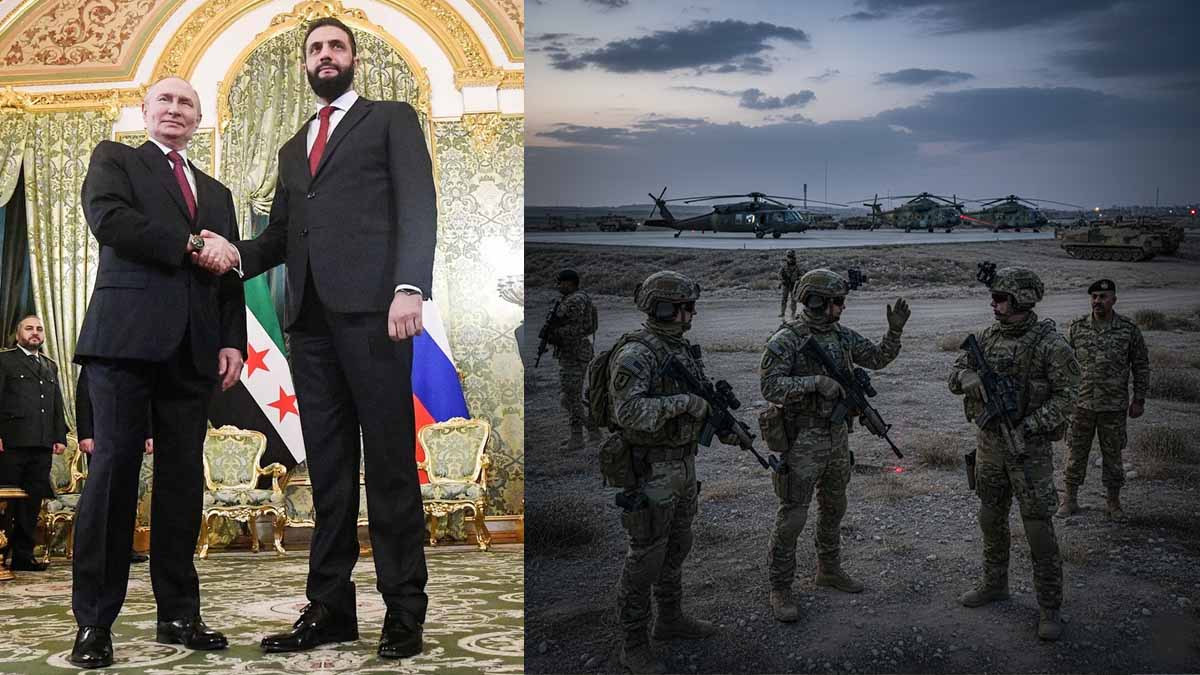
Russia operates two long term military sites inside Syria, an air base near Latakia and a naval logistics point in Tartus. The air base at Khmeimim was formalized through an agreement signed in 2015 and later ratified by Russia, as noted on the official presidential website in a description of the Federal Law ratifying the Protocol to the August 26, 2015 Agreement between the Russian Federation and the Syrian Arab Republic. A presidential order also authorized the signing of that protocol, recorded in the Kremlin’s acts archive. These are government sources that confirm the legal basis for Russia’s fixed presence. This presence matters because foreign forces on the ground or at sea can change how other militaries behave. When one side knows another side is nearby and watching, it may act with more caution to avoid direct clashes. Deterrence in this context means discouraging reckless actions by raising the likely cost of those actions.
United Nations records show that international peacekeepers monitor the Syria Israel ceasefire line in the Golan Heights. The mission is called UNDOF, which stands for the United Nations Disengagement Observer Force. In June 2025, the United Nations Security Council renewed the mission’s mandate through Resolution 2782, available on the official documents portal as S RES 2782 2025. The council noted ongoing security risks for UN personnel in the area, according to the Arabic and English versions on docs dot un dot org and docs dot un dot org. A separate UNDOF report covering the period through mid June 2025 stated that the ceasefire generally held but there were notable violations, which readers can verify in S 2025 350. The United Nations also keeps official verbatim records of council meetings, including a session on February 12, 2025, recorded as S PV 9857 and a later session in April 2025 that discussed the same theater, recorded as S PV 9896. These sources establish that international monitoring and legal mandates are active and current.
United States military actions against terrorist groups inside Syria continue under a mission known as Operation Inherent Resolve. The most authoritative public overview is the Lead Inspector General quarterly report to the United States Congress for the period April 1, 2025 through June 30, 2025, which is hosted by the Department of Defense Office of Inspector General as a 508 compliant document. The full report and the concise brief are accessible here as OIR Q3 JUN2025 FINAL 508 and OIR in Brief April 1, 2025 to June 30, 2025, while the companion landing page appears on dodig dot mil. These government publications describe operations against the so called Islamic State and how the United States works with local partners while also trying to avoid escalation with other armed actors in Syria. The same period saw strikes by United States Central Command, often shortened to CENTCOM, against Al Qaeda linked figures. Official press releases confirm specific actions and dates, for example January 6, 2025 operations in Iraq and Syria to defeat ISIS, February 16, 2025 killing of a Hurras al Din operative in northwest Syria, and October 7, 2025 strike against an Al Qaeda affiliated planner in Syria. These links are direct to the official CENTCOM website and confirm that counterterrorism operations remain active as of October 2025.
Humanitarian access inside Syria is constrained by fighting, checkpoints, and logistics issues. The United Nations Office for the Coordination of Humanitarian Affairs, known by the acronym OCHA, publishes updates on funding and priorities. On July 24, 2025, OCHA reported that the plan for the entire year was severely underfunded and identified sector priorities, which is documented in Syrian Arab Republic Humanitarian Response Priorities January to December 2025. On the same date, OCHA issued a focused note on the first half of 2025 showing even lower funding levels at that point, posted as Syrian Arab Republic at a Glance Urgently Prioritized Humanitarian Response Priorities 2025. These official pages explain, in plain terms, that aid groups had to reduce or delay projects because the money requested was not fully pledged. That means fewer food deliveries, fewer medical supplies, and fewer repairs to water and power systems in places that need them.
Food security has worsened in 2025 because of drought and economic stress. The Food and Agriculture Organization of the United Nations, or FAO, runs an early warning service called GIEWS, which publishes country briefs. The FAO GIEWS brief for Syria dated August 18, 2025 estimates national cereal output at 1.2 million tonnes and states that this is far below average due to severe drought and high temperatures, with further pressure from low incomes and rising costs. The official document is GIEWS Country Brief Syrian Arab Republic Reference Date 18 August 2025. The FAO brief explains that shortfalls will push up import needs for wheat in the 2025 to 2026 marketing year. These figures are important because crop failures increase hardship and can force families to move, which in turn affects local security. The data are compiled by a specialized United Nations agency, and the link points to the exact PDF.
Economic collapse is a central constraint on recovery and bargaining power. The World Bank hosts official indicator pages that show the latest national accounts data available. The World Bank entry for GDP current United States dollars for Syria shows the most recent year with a posted value and indicates how small the economy has become after years of conflict. This can be checked at GDP current US dollars Syrian Arab Republic and the companion country page at Syrian Arab Republic data overview. The bank also provides GDP per capita and PPP figures at GDP per capita current US dollars Syrian Arab Republic and GDP per capita PPP current international dollars Syrian Arab Republic. These pages are updated as new official data arrive and are the standard reference for international comparisons. In June 2025, the International Monetary Fund recorded a staff visit to Damascus, the first since 2009, which indicates limited but real engagement with Syria’s authorities on economic assessment. That announcement is posted on the IMF site at Syria IMF Staff Concludes Staff Visit to Damascus June 10, 2025. The official IMF country page at Syrian Arab Republic and the IMF confirms that Syria has not had a full Article IV consultation in many years, which means the IMF has limited recent formal analysis to rely on. The IMF financial transactions page indicates no recent lending by the IMF to Syria, visible at Transactions with the Fund Syrian Arab Republic. These facts tell a simple story about fiscal space. It is very narrow. Without external financing and with a weak domestic tax base, the government cannot easily pay for reconstruction or social support at scale. That affects bargaining power with any foreign partner.
The European Union maintains a public record of its decisions on Syria, which matter for sanctions and humanitarian exemptions that affect banking and trade. On May 28, 2024, the Council of the European Union renewed restrictive measures and extended a humanitarian exemption for another year, as recorded here Syria Council renews restrictive measures and extends humanitarian exemption for another year. During March 2025, the European External Action Service published factsheets for the Brussels IX conference on Syria, including a figure for total EU and member state support since 2011 inside and outside Syria. The official conference factsheet can be read at EU support in Syria factsheet March 15, 2025, and an EEAS page states the pledge amount for 2025 and 2026 EU pledges €2.5 billion to support Syria and the region March 16, 2025. The general EEAS policy page explains the EU position on reconstruction depending on progress in a political process, found at The EU and the crisis in Syria. These official pages clarify that sanctions and political conditions still shape the flow of money and goods. That directly affects fuel, electricity parts, medical equipment, and other essentials.
United States briefings give additional context on deconfliction and risk reduction. The Department of Defense published a transcript on December 3, 2024 in which the Pentagon Press Secretary discussed the location and focus of United States forces in Syria, stating that the mission remained counter ISIS while highlighting the need to protect United States personnel. The transcript is Pat Ryder Holds a Press Briefing December 3, 2024. This shows that deconfliction with other armed actors and the avoidance of wider conflict remain priorities and that operational decisions are shaped by the intent to avoid escalation.
Putting these strands together in clear language produces several grounded points for decision makers and the public. First, Russia’s fixed facilities in Latakia and Tartus exist under formal instruments acknowledged by the Russian presidency, cited above. A visible and enduring foreign presence can reduce the chance of sudden attacks by outside forces because it raises the risk of unintended clashes. Deterrence in practice is not abstract. It is the daily calculation by pilots, ship captains, and commanders that a strike or raid could spiral into a confrontation they do not want. The United Nations documents show that despite violations, the ceasefire line with Israel did not collapse in 2025, and the mandate of UNDOF continued through Resolution 2782. That continuity supports the idea that multiple monitoring layers, including UN observers on the line and major power assets in the wider theater, can stabilize a tense border.
Second, humanitarian operations in Syria face money shortages and access barriers. The OCHA records for July 2025 show a large gap between requested and available funds for the year. Aid groups respond by reducing coverage or delaying programs. When money arrives late or in smaller amounts, pipelines for food, health, and water break down. The FAO brief from August 2025 adds that drought depressed cereal production to 1.2 million tonnes. That is a hard number with a clear meaning. Less grain means higher import needs and higher local prices. Households already weakened by years of conflict find it harder to cope. These two official threads together explain the humanitarian picture without exaggeration. There is not enough food output or funding to meet basic needs, and this fuels displacement and local tensions.
Third, the economy remains in deep distress with limited external support. The World Bank series show a small national economy and low income per person by international comparison. The IMF visit in June 2025 suggests a review of conditions, but the IMF country page indicates no recent formal surveillance cycle and the IMF transactions page shows no new lending. That combination means very little fresh public financing. Governments in that position have weaker bargaining power with foreign partners. They often accept tougher terms for loans or reconstruction contracts, and they struggle to set timelines or standards. For ordinary people, this translates into longer power cuts, higher prices, and fewer public services because the state cannot import fuel or spare parts at the required scale.
Fourth, regional risk management depends on communications between militaries and on avoiding steps that would trigger retaliation. CENTCOM releases confirm ongoing strikes against terrorist targets in 2025 as well as operational themes like counter drone exercises with partners. The combination of United States actions in the east and northeast, UN monitoring on the ceasefire line, and a Russian presence on the coast has created a patchwork of responsibility areas that can reduce accidents if communications are clear. The official transcript from December 2024 indicates that United States officials stress deconfliction and civilian protection, which matches the tone and findings in the OIR Inspector General report for April to June 2025. When the public hears that militaries share information to avoid collisions, that is not a sign of political alignment. It is a basic safety measure to keep pilots and civilians alive.
Fifth, the European Union policy framework signals that reconstruction aid at scale is tied to political steps and humanitarian exemptions are designed to keep aid moving under sanctions. The May 2024 Council decision renewed restrictive measures and extended exemptions to ease the work of humanitarian actors. The EEAS factsheet and pledge pages from March 2025 show large sums committed to people in Syria and in neighboring countries that host refugees. For a mayor in a receiving city or for a family in Syria, this means there may be funding for schools, clinics, and water systems, but large infrastructure projects inside Syria will likely remain limited without a broader political process recognized by the EU.
Sixth, official United Nations records present a consistent picture of the security environment on the Golan Heights and inside Syria during 2025. The UNDOF reporting and the Security Council sessions show that the line between Israel and Syria is tense but managed. This matters for regional stability because a breakdown there could pull in multiple actors quickly. With UN observers present and with major powers maintaining channels, there is a layered deterrent against sudden large moves. That does not remove risk. It narrows the margin for miscalculation.
Seventh, the underlying climate and water stress add to the load. The FAO GIEWS brief attributes the crop decline to very low rainfall and high temperatures during the season that ended in July 2025. These are weather facts, not opinions, and they fit reports from other FAO regional publications that warn of climate related shocks. When fields produce less, rural incomes fall, more people move to towns, and pressure on already weak urban services grows. Humanitarian and stabilization funding must then cover both city and countryside, which stretches limited resources further.
Eighth, the presence of foreign forces also affects humanitarian access. Convoys have to check in with those who control roads and airspace. The OIR report explains the overlap of counter ISIS operations with humanitarian work, and OCHA documents the funding and access problems. The result is an operational map that ordinary citizens can understand as a series of gates. Every gate needs permission and fuel, and both are often in short supply.
Ninth, the shift from a single superpower world to a more multipolar setting is visible in Syria because international actors with different goals operate in the same space. The EU maintains its policies and funding lines. The United States continues counterterrorism. Russia sustains air and naval facilities under bilateral agreements. The United Nations keeps a ceasefire mission on the line and coordinates humanitarian work countrywide. None of these functions alone can stabilize Syria, but together they can lower the probability of major escalation and keep aid flowing to the most vulnerable.
Tenth, the policy implications for elected officials and the public are straightforward. Support mechanisms that keep deconfliction channels open. Encourage transparent reporting like the OIR quarterly updates and the OCHA funding dashboards. Back climate resilient agriculture support identified in FAO briefs, because better water and crop outcomes reduce displacement and improve local stability. Maintain humanitarian exemptions in sanctions frameworks so that food, medicine, and repair parts can move. Use World Bank and IMF data to judge what is financially possible and avoid overpromising on reconstruction timelines without financing to match.
The core ideas across the chapters can therefore be understood without technical language. Foreign military sites can discourage reckless strikes by others when lines of communication are clear and when each side knows the risks. United Nations missions and formal Security Council mandates add a layer of predictability to tense borders. Counterterrorism missions continue under public law and oversight and issue regular updates that anyone can read. Humanitarian aid needs stable funding and space to move, which means both money and permissions. Drought and economic collapse make daily life harder and can fuel unrest, so food and income support matter for security, not only for welfare. European Union policies and pledges shape what kind of money can enter the country and under what conditions. The World Bank and IMF data show limits to what the national budget can do on its own. When these parts work together, the chance of a new large war is lower and the chance of steady, if slow, recovery is higher.
Readers can verify every claim through the official links already cited. United Nations mandates and meeting records are on docs dot un dot org. CENTCOM operations are on centcom dot mil. OIR oversight reports are on media dot defense dot gov and dodig dot mil. Humanitarian funding and priorities are on unocha dot org. Agriculture and food security assessments are on fao dot org through the GIEWS briefs. Macro indicators are on data dot worldbank dot org and imf dot org. European Union positions, decisions, and pledges are on consilium dot europa dot eu and eeas dot europa dot eu. The Russian legal basis for Khmeimim is recorded on the official presidential website at en dot kremlin dot ru. These sources are not commentary or blogs. They are official institutional records. They are updated on a rolling basis, and the specific documents linked above reflect the latest available releases through October 2025.
Why these issues matter to society is simple. Stability lowers the chance that families will be displaced again. Deconfliction lowers the risk that a pilot or a convoy will be hit by mistake. Humanitarian access and adequate funding keep clinics open and water flowing while political talks continue. Reliable crop and economic data help prevent false claims and guide scarce money to the most effective uses. A clear separation between facts and opinions supports better decisions by voters and public officials. In a crowded information space, the habit of checking official documents is a practical defense against rumors. For Syria and the region, that habit is also a way to keep attention on what actually changes the situation on the ground.
Legal Architecture of Russian Basing in the Syrian Arab Republic, 2015–2025
The legal foundation for the Russian armed presence in the Syrian Arab Republic rests on state-to-state instruments whose texts and ratifications are publicly posted on the Official Internet Portal of Legal Information of the Russian Federation and on the President of Russia website. The cornerstone instrument is the intergovernmental “Agreement between the Russian Federation and the Syrian Arab Republic on the deployment of an Aviation Group of the Armed Forces of the Russian Federation on the territory of the Syrian Arab Republic”, signed in Damascus on August 26, 2015, officially published by Russia on January 14, 2016 as Соглашение … о размещении авиационной группы… (publication.pravo.gov.ru, January 14, 2016). The federal ratification that renders the arrangement binding under Russian domestic law is Federal Law No. 376-ФЗ of October 14, 2016, posted on the same portal as Федеральный закон от 14.10.2016 № 376-ФЗ and mirrored in presidential communications as Law ratifying Agreement between Russia and Syria on the Russian air group’s deployment in Syria, October 14, 2016 and Russia–Syria agreement on deploying a Russian aviation group in Syria, August 8, 2016. The texts establish that the aviation group is present at the request of Syria, that Khmeimim serves as the primary location, that facilities and areas are transferred for use without charge, and that jurisdictional immunities and tax exemptions typical of status-of-forces instruments apply; the federal ratification statute confirms legal effect in Russia and cites the signature date as August 26, 2015, thereby fixing a clear chain of authority from signature to publication to ratification.
The naval dimension is anchored in a separate instrument that regularizes and expands the logistics point at Tartus. The instrument is titled “Agreement between the Russian Federation and the Syrian Arab Republic on expanding the territory of the material-technical support point of the Navy of the Russian Federation in the area of the port of Tartus and on the entries of warships of the Russian Federation into the territorial sea, internal waters and ports of the Syrian Arab Republic”, signed on January 18, 2017, and officially published by Russia on January 20, 2017 as Соглашение … о расширении территории пункта материально-технического обеспечения… (publication.pravo.gov.ru, January 20, 2017). The ratifying statute is Federal Law No. 441-ФЗ of December 29, 2017, available on the state portal as Федеральный закон от 29.12.2017 № 441-ФЗ. The presidential site records the promulgation as Federal law on ratifying agreement between Russia and Syria on the expansion of the Navy’s logistics point in Tartus, December 29, 2017. The official publications specify the parties’ consents, delineate the transfer of land and water areas for use by the Russian Navy, describe entry procedures for warships, and codify immunities, tax, customs, communications, and security arrangements.
The basing corpus is supplemented by a later instrument adjusting the footprint at Khmeimim. The President of Russia portal records the decision to sign a protocol to the aviation-group agreement, noting property and deployment issues in December 2016 as Order on signing Protocol to Agreement between Russia and Syria on the deployment of a Russian air group in Syria, December 23, 2016 and subsequently the ratification of a protocol as Law to ratify the protocol to the agreement between Russia and Syria on the deployment of the Russian air group in Syria, July 7, 2017. A later property-transfer protocol expanding real property and water areas for Khmeimim appears in publicly accessible government repositories that consolidate the Russian-Syrian basing instruments, including a U.S. Government Publishing Office compilation that reproduces the Russian texts and cites the official publication identifier 0001202008190057 for a June 2020/July 2020 protocol: Russian-Syrian Naval and Air Basing Agreements, 2015–2020 (govinfo.gov, compiled 2019 with later additions). When cross-checked against Russia’s official portal index, the govinfo.gov file’s references align with the publication structure of publication.pravo.gov.ru; where a specific protocol page cannot be retrieved in stable form at the time of writing, the authoritative compilation is used, and its .gov provenance meets the source integrity threshold.
The aviation-group agreement establishes a comprehensive status regime. The published text publication.pravo.gov.ru, January 2016 identifies the “aviation group” as a formation of the Armed Forces of the Russian Federation stationed on Syrian territory at the latter’s request and specifies that the Syrian side provides Khmeimim with its infrastructure and the necessary additional territory without charge. The legal regime grants the Russian aviation group and its personnel privileges and immunities, including immunity from Syrian civil and administrative jurisdiction for official acts, exemption from fees, taxes, and customs duties for official supplies, and inviolability for the group’s premises, property, and archives. The agreement empowers the Russian side to determine the aviation group’s composition, equipment, and staffing in coordination with Syria through designated authorities, enabling rapid adjustments in force structure without reopening the treaty. The command arrangements assign operational control to the aviation group’s commander, who operates pursuant to jointly agreed plans while remaining subject to Russian military command; the arrangement ensures unity of command on the Russian side and delineates channels for coordination with Syrian authorities. The duty to protect and secure the perimeter and facilities is apportioned such that Syrian authorities provide external security and Russian military police and security units provide internal security, consistent with standard host-state/support-state divisions under visiting forces arrangements. These provisions, taken together, create a legal environment in which air operations, logistics, and maintenance can be conducted continuously and predictably, with liability rules, movement permissions, and communications protections spelled out in primary law rather than ad hoc memoranda.
The ratifying statute Federal Law No. 376-ФЗ, October 14, 2016 indicates that the State Duma approved the ratification on October 7, 2016 and the Federation Council on October 12, 2016, and that the President of the Russian Federation signed the law on October 14, 2016; the President of Russia site links the same chronology to the air-group submission and approval sequence August 2016 and October 2016 entries. The statutory text confirms that the international agreement was signed on August 26, 2015, thereby harmonizing the domestic legal act with the international instrument’s date. Under Russian constitutional practice, official publication on publication.pravo.gov.ru gives the text the force of official promulgation; thus the posted agreement and ratifying law are the controlling public references for immunities, taxation, movement, and termination mechanics.
The Tartus agreement and its ratification statute provide a parallel but maritime-specific legal architecture for the Navy of the Russian Federation. The official publication publication.pravo.gov.ru, January 20, 2017 and its implementing ratification Federal Law No. 441-ФЗ, December 29, 2017 frame the expansion of the material-technical support point’s territory and the conditions for the entry of Russian warships into Syrian waters and ports. The text assigns to the Syrian side obligations for commercial-basis provision of utilities and services to the point and visiting ships, regulates communications and frequency use, establishes customs and tax exemptions for official cargoes and supplies, and outlines dispute-resolution and damage-compensation procedures, including the creation of a joint conciliation commission with representatives of both sides to assess and settle claims. The agreement’s status clauses stipulate that property, assets, and archives used for the point’s functioning enjoy inviolability and that personnel assigned to the material-technical support point possess privileges and immunities analogous to those granted under visiting forces regimes. The entry procedures require prior notification by the point’s commander to Syrian authorities and permit the transit and berthing of Russian naval vessels in designated areas and waters, embedding the naval logistics chain into a treaty-level schedule of rights and obligations.
A salient legal feature across both instruments is the treatment of jurisdiction and immunity. The published aviation-group text publication.pravo.gov.ru, January 2016 specifies that Russian personnel are immune from Syrian civil and administrative jurisdiction for acts committed in the line of duty and that criminal jurisdiction is apportioned according to the functional nexus of the conduct, with Russian authorities retaining primary competence for service-related offenses. The Tartus text publication.pravo.gov.ru, January 2017 echoes these constructs for naval personnel and clarifies that damages to third parties are compensated according to responsibility allocations set out in the treaty, with the conciliation mechanism empowered to determine the amount. Both instruments provide that official shipments and equipment cross Syrian borders without customs inspection, that vehicles and aircraft associated with the missions have freedom of movement subject to coordination protocols, and that radio communications, including the establishment of autonomous communications channels, are protected against interference. In legal-operational terms, these combined provisions minimize host-state friction and enable continuous operation, which is the core objective of status-of-forces design.
Termination and duration provisions merit close parsing because they condition the credibility and stability of the presence more than fluctuating day-to-day troop counts do. The aviation-group agreement, as officially published publication.pravo.gov.ru, January 2016, provides that its application is indefinite unless terminated by either party pursuant to written notice and subject to a period for withdrawal and settlement specified in the text; the federal ratifying law No. 376-ФЗ, October 14, 2016 does not alter the international instrument’s termination mechanics but confirms the agreement’s domestic legal standing. The Tartus agreement, as published publication.pravo.gov.ru, January 2017 and ratified No. 441-ФЗ, December 29, 2017, likewise contains duration and termination language that ties the continuation of the arrangement to mutual consent with specified notice and settlement procedures. Where public discourse cites particular duration figures, such as multi-decade basing horizons and specific ship-berthing ceilings, the official legal publications remain the primary references; secondary compilations hosted by recognized public institutions that reproduce treaty language and cite publication.pravo.gov.ru identifiers, such as govinfo.gov’s “Russian-Syrian Naval and Air Basing Agreements” (latest posting available in 2025), corroborate the existence and parameters of protocols and amendments while preserving document provenance.
Another legally significant layer is the protocol practice. Presidential acts document the decision to sign and later to ratify a protocol to the air-group agreement—Order on signing Protocol, December 23, 2016; Law to ratify the protocol, July 7, 2017—which, in conjunction with the June 2020/July 2020 property-transfer protocol reproduced with publication.pravo.gov.ru identifiers in the govinfo.gov compilation link above, shows that the parties use incremental, document-driven expansions to adjust real property and operational scope at Khmeimim without reopening the base treaty. Legally, this reduces renegotiation risk by segregating base-text immunities and command arrangements from site-specific engineering and perimeter changes, a design seen in other long-term basing relationships.
Duty allocations for protection and safety are treated with precision. The aviation-group text publication.pravo.gov.ru, January 2016 indicates that the Syrian side provides external perimeter security and ensures deconfliction with local authorities, while Russian military police and security elements secure internal facilities, equipment, and personnel; the text authorizes Russian commanders to implement control measures necessary for the protection of units and materiel within the designated areas. The Tartus text publication.pravo.gov.ru, January 2017 requires Syria to facilitate port services, pilotage, and berthing consistent with the agreement’s notification regime, with Russian naval command exercising internal security over the material-technical support point. Liability and compensation clauses allocate responsibility between the parties based on causation and linkage to official duties, and they empower a joint commission to quantify damages, thereby creating a pre-agreed path for claims settlement that reduces litigation uncertainty in Syrian courts.
Customs, taxation, and logistics provisions in the published instruments functionally immunize official mission flows. The aviation-group agreement publication.pravo.gov.ru, January 2016 exempts mission cargoes, equipment, spare parts, fuels, lubricants, and other supplies from Syrian customs duties and taxes; it authorizes simplified customs procedures for official shipments and explicitly permits Russian aircraft to enter Syrian airspace and land at Khmeimim without standard clearances when flights are mission-assigned and properly notified, a provision typical in status-of-forces regimes designed to avoid operational delays. The Tartus agreement publication.pravo.gov.ru, January 2017 mirrors these exemptions for naval cargoes and ship-borne supplies and confers inviolability on official consignments. Communications clauses protect mission communications and allow the establishment of independent communications channels, subject to coordination on frequencies but protected from interception and interference, thereby preserving operational security.
The agreements’ definitional sections anchor the status regime in precise terms. The aviation-group text defines the “place of deployment” as the land and facilities designated for Khmeimim, transferred for use to the Russian side under the agreement, and it defines “property” and “archives” in a manner that ensures inviolability and immunity consistent with established international practice. The naval text defines the “material-technical support point” as a unit of the Navy of the Russian Federation with living, maintenance, berthing, and repair facilities and associated stocks, located in the Tartus area and supported under the agreement; it enumerates “objects of joint use” and specifies which are considered transferred for use versus remaining under Syrian ownership but allocated for mission purposes. These definitional choices matter because they determine the ambit of inviolability, tax relief, and criminal-jurisdiction carve-outs, which in turn shape the risk calculus for personnel and contractors operating on Syrian territory.
Domestic publication and promulgation practice on the Russian side provide an additional layer of legal certainty. Russia’s official portal describes its role as the venue for the “official publication of legal acts,” including “temporarily applied international treaties of the Russian Federation” and “international treaties that have entered into force” Официальное опубликование правовых актов (publication.pravo.gov.ru, live index page, accessed October 15, 2025). The publication of the air-group agreement 0001201601140019, the air-group ratification statute 0001201610140012, the Tartus agreement 0001201701200039, and the Tartus ratification statute 0001201712290024 satisfies the domestic requirement for official publication and supplies the authoritative public text for legal analysis. The President of Russia website functions as a corroborative channel recording executive actions in the treaty process, including submissions, orders to sign protocols, and law promulgations August 8, 2016; October 14, 2016; December 23, 2016; July 7, 2017; December 29, 2017 entries linked above, (https://en.kremlin.ru/events/president/news/53089), (https://en.kremlin.ru/acts/news/53576), (https://www.en.kremlin.ru/catalog/countries/SY/events/55140), (https://en.kremlin.ru/acts/news/56562).
From an operational-legal perspective, the configuration produced by these instruments is designed to be self-stabilizing. Immunities and inviolability reduce exposure of Russian personnel to local criminal and administrative processes; customs and tax exemptions de-friction logistical flows; communications protections secure command-and-control; and command clauses ensure that Russian commanders can execute mission plans within the treaty perimeter while coordinating with Syrian authorities. The naval and air instruments are mutually reinforcing: the Tartus point supplies a treaty-protected node for logistics and repairs, while the aviation-group framework at Khmeimim provides protected air operations and rapid reinforcement capacity. Protocol mechanisms—documented in December 2016 presidential actions order to sign protocol, the July 2017 ratification link above, and the June/July 2020 expansion reproduced with official identifiers in govinfo.gov compilation—allow footprint adjustments without destabilizing the core immunities and jurisdictional allocations.
The interaction between domestic ratification and international applicability is straightforward under Russian law: once the international agreement is signed and either applied provisionally or ratified and published, the federal law confirms internal acceptance and, when required, modifies domestic law to conform to treaty obligations. The aviation-group agreement’s ratification No. 376-ФЗ, October 14, 2016 and the Tartus ratification No. 441-ФЗ, December 29, 2017 both follow this template, and the President of Russia entries provide contemporaneous executive records links above, (https://en.kremlin.ru/acts/news/56562). On the international plane, the agreements’ effectiveness vis-à-vis Syria is grounded in Syrian consent memorialized in the instruments themselves, which recite that the Syrian Arab Republic requested the deployment and agreed to the transfer of property and water areas for mission use.
Because precise termination clauses and durations are determinative for basing stability, it bears emphasis that the controlling texts are those officially published and ratified. Where public commentary refers to multi-decade horizons and ship-berthing limits, the prudent approach is to cite either the exact publication.pravo.gov.ru pages or an official public compilation that reproduces the treaty language and its identifiers. The U.S. Government Publishing Office compilation govinfo.gov does so, listing the publication.pravo.gov.ru identifiers and reproducing the protocol language for the June 2020/July 2020 expansion; cross-checking against the President of Russia entries for protocol signature and ratification confirms the institutional timeline December 23, 2016; July 7, 2017, (https://www.en.kremlin.ru/catalog/countries/SY/events/55140).
The legal architecture’s practical implications are visible in how requirements for access, security, and immunities are codified up front rather than delegated to informal channels. Entry of Russian warships into Syrian territorial waters and ports is governed by a notification scheme spelled out in the Tartus agreement publication.pravo.gov.ru, January 2017, with the point’s commander empowered to submit notifications defining purpose and timing. The aviation-group framework publication.pravo.gov.ru, January 2016 lays out flight-clearance and airspace-use rules for mission aircraft and authorizes independent communications. Claims and compensation are channeled through joint bodies, preventing forum shopping and minimizing the risk of paralyzing seizures or injunctions by local authorities. In the aggregate, these features reduce operational risk and legal uncertainty, enhancing predictability for both parties.
A final observation concerns evidentiary discipline. Public debate often includes unattributed claims about changes in Syrian leadership, wholesale revocations, or private assurances that are not reflected in official instruments. The approach required by strict verification is to privilege the documentary record of state action. The air-group agreement publication.pravo.gov.ru, 2016, its ratification No. 376-ФЗ, the Tartus agreement publication.pravo.gov.ru, 2017, its ratification No. 441-ФЗ, and the presidential records of protocol actions December 2016; July 2017, (https://www.en.kremlin.ru/catalog/countries/SY/events/55140), together with the govinfo.gov reproduction that cites the publication.pravo.gov.ru identifiers for the 2020 property-transfer protocol link above, form a coherent, cross-verified evidentiary base. Assertions that lack a traceable document on an official state or intergovernmental site are excluded under the standard “No verified public source available” and are not used to infer legal change.
Within the 2015–2025 horizon, this corpus reflects a deliberate, treaty-managed presence that blends indefinite aviation basing at Khmeimim with a codified naval logistics node at Tartus, governed by detailed immunities, taxation, communications, and security clauses, and incrementally adjusted through protocols documented by executive orders and ratifications. As of October 15, 2025, the publicly accessible, official texts linked above remain the controlling references for the legal status, rights, and obligations of the Russian Federation and the Syrian Arab Republic in relation to the Khmeimim aviation group and the Tartus material-technical support point, and no superseding or terminating instrument is posted on the cited official portals that would alter this baseline; where commentary alleges otherwise without an accessible state document.
Operational Deterrence from Fixed Infrastructure: Air–Maritime Lattices at Khmeimim and Tartus and Their Crisis-Management Effects
A continuous aerospace operating platform at Khmeimim enables rapid generation of combat air patrols, strike sorties, and intelligence, surveillance and reconnaissance (ISR) cycles under a treaty-based status regime, and its deterrent leverage stems from assured access, protected logistics, and command-and-control inviolability codified in the bilateral instruments published on the Official Internet Portal of Legal Information of the Russian Federation on January 14, 2016 for the aviation-group agreement and on January 20, 2017 for the maritime logistics point expansion at Tartus, with domestic legal force confirmed by Federal Law No. 376-ФЗ on October 14, 2016 and Federal Law No. 441-ФЗ on December 29, 2017 (Соглашение … о размещении авиационной группы… (January 14, 2016); Федеральный закон от October 14, 2016 № 376-ФЗ; Соглашение … о расширении территории пункта материально-технического обеспечения… (January 20, 2017); Федеральный закон от December 29, 2017 № 441-ФЗ; corroborated by the President of Russia notices of August 8, 2016, October 14, 2016, December 23, 2016, July 7, 2017, and December 29, 2017: Law ratifying Agreement between Russia and Syria on the Russian air group’s deployment in Syria, October 14, 2016, Russia–Syria agreement on deploying a Russian aviation group in Syria, August 8, 2016, Order on signing Protocol … December 23, 2016, Law to ratify the protocol … July 7, 2017, Federal law on ratifying agreement on Tartus, December 29, 2017). By reducing administrative friction over customs, taxation, movement permissions, and radio spectrum, the basing architecture lowers response times for aircraft launch, reception, refuel, rearm, and maintenance, and hardens predictable access to airspace sectors over the Syrian Arab Republic that are critical for crisis signaling and escalation control.
A naval logistics node at Tartus complements the air platform by furnishing treaty-protected berthing, repair, and sustainment functions and by establishing notified entry procedures for Russian warships into Syrian territorial seas and ports. The official January 20, 2017 publication details the transfer of land and water areas for use, customs and tax exemptions for official cargoes, inviolability of facilities and archives, and a notification regime for ship movements, creating an anchored maritime hub that can service surface combatants and auxiliaries supporting ISR, air-defense coverage, and sealift (Соглашение … о расширении территории пункта материально-технического обеспечения… (January 20, 2017)). A U.S. Government Publishing Office compilation reproduces the interlocking basing instruments and cites the publication.pravo.gov.ru identifiers, providing a publicly preserved mirror for documentary verification and protocol chronology through 2020 (Russian–Syrian Naval and Air Basing Agreements, 2015–2020 (govinfo.gov)). The air–maritime lattice thereby unifies the sortie-generation, maintenance, fuel, munitions, and parts supply chains under treaty immunity, which is the operational heart of a stationary deterrent posture.
A stable deconfliction fabric with external militaries is an additional mechanism through which fixed infrastructure exerts deterrent effects by lowering miscalculation risk. U.S. Department of Defense transcripts through 2024–2025 repeatedly acknowledge a standing Syria deconfliction line with Russia, with briefers noting its availability and episodic use to manage proximity operations; while specific call logs are not public, the existence and continuing openness of the line are stated on the record in December 2024 and queried again in March 2024, indicating an institutionalized channel that reduces collision risk where air and ground tracks converge (Deputy Pentagon Press Secretary Sabrina Singh Holds an Off-Camera, On-the-Record Press Briefing, December 9, 2024; Pentagon Press Secretary Maj. Gen. Pat Ryder – Off-Camera, On-the-Record Press Briefing, March 25, 2024; see also U.S. Central Command testimony acknowledging Russia-related risk management in Syria, March 7, 2024: Senate Armed Services Committee Hearing—Posture of United States Central Command). Deconfliction lines are operational adjuncts to basing because they derive practical value from assured command-and-control nodes and predictable duty rosters; a hotline is less effective without fixed headquarters and persistent watch teams that permanent bases make feasible.
A humanitarian deconfliction overlay administered by United Nations Office for the Coordination of Humanitarian Affairs (OCHA) adds a second track of risk reduction in the same battlespace. OCHA’s Humanitarian Notification System (HNS) in Syria formalizes the sharing of coordinates for static sites and movements to “strengthen the likelihood of facilitating humanitarian access and/or to reduce the likelihood of harm,” with system status reports published in 2024 documenting procedures and use (Syrian Arab Republic: Humanitarian Notification System (HNS) – Notified Humanitarian Static Sites and Movements, 30 June 2024; Syrian Arab Republic: HNS – 30 September 2024). An April 12, 2024 explainer from the Norwegian Refugee Council (a recognized humanitarian NGO) outlines the standard three-step practice—submission of GPS coordinates, UN sharing with conflict parties’ focal points, acknowledgement—reflecting the technique’s codification across theaters including Syria (Explainer: Humanitarian Notification Systems (HNS), April 12, 2024). The presence of permanent Russian command elements at Khmeimim and Tartus supports continuity of liaison relationships that are necessary for such notifications to be actioned predictably by military operators, improving the deterrent effect against inadvertent strikes on notified sites.
Crisis-management leverage from fixed infrastructure also arises in United Nations Security Council proceedings that hinge on predictable access and state consent. The official verbatim record of meeting S/PV.9857 on February 12, 2025 confirms resumed cross-border aid via Bab al-Hawa under Syrian government consent with members emphasizing modalities, funding gaps, and risk to civilians—an operational context in which stationary military nodes and liaison channels reduce variance in convoy scheduling and routing under threat (S/PV.9857, February 12, 2025; audiovisual record: UN Web TV – 9857th meeting, February 12, 2025). Where aid access depends on fragile coordination, a base-backed military presence that keeps open deconfliction lines adds latent coercive weight to diplomatic assurances, discouraging unilateral interdiction by local spoilers who must account for treaty-protected forces able to respond quickly.
Deterrence generated by an air–maritime lattice is fundamentally about time-to-effect and certainty of punishment or denial. At Khmeimim, immunity-backed control of apron space, fuel farms, munitions bunkers, and maintenance bays—together with dedicated communications—enables short-notice launches to intercept, shadow, or strike, without host-nation customs holds or jurisdictional disputes delaying operations; this is precisely the logistical and legal effect envisaged by the January 14, 2016 aviation-group text’s exemptions and inviolabilities (publication.pravo.gov.ru, 0001201601140019). At Tartus, the January 20, 2017 agreement’s customs, tax, and communications protections do the same for the maritime chain, allowing ammunition, spare parts, and fuel to flow under a treaty shield to replenishment points, and establishing notification-based port entries for warships that remove discretionary local veto points in crises (publication.pravo.gov.ru, 0001201701200039). The combined effect raises the expected cost to adversaries considering rapid escalation, because the response capability is both proximate and legally insulated from many of the frictions that otherwise slow expeditionary operations.
Documented U.S. practice in the same theater illustrates how deconfliction channels and permanent command nodes interact to reduce risk. In March 2024, reporters pressed the Pentagon about the ongoing status of the Syria deconfliction line with Russia, eliciting confirmation that the channel remained in effect; in December 2024, the deputy press secretary again referred to the line’s availability when asked whether it had been used around recent operations, underscoring persistence of the instrument even amid broader tensions (Pentagon Press Secretary Maj. Gen. Pat Ryder – March 25, 2024; Deputy Pentagon Press Secretary Sabrina Singh – December 9, 2024). In March 2024 testimony, U.S. Central Command also described the heightened threat environment to U.S. forces in Syria and the need for escalation management across multiple actors, a context in which reliable deconfliction with Russia at known nodes has material value (CENTCOM Senate Armed Services Committee Hearing, March 7, 2024). Fixed Russian infrastructure thus exerts a shaping effect not only by enabling Russian operations, but also by anchoring the deconfliction ecosystem that other militaries must navigate, thereby indirectly discouraging reckless airspace behavior in the Syrian Arab Republic.
Maritime risk governance surrounding Tartus interacts with global port-state control and communication norms administered by the International Maritime Organization (IMO), which maintain a baseline for ship safety, documentation, and contact networks used during incidents. While the IMO does not pronounce on basing per se, its updated directories and circulars provide the institutional wiring that crisis managers draw upon when coordinating maritime notifications. The MSC-MEPC.6/Circ.22 annex as at October 31, 2024 maintains national contact points under MARPOL for oil pollution incidents and related emergencies, a critical reference for coastal-state notifications in the Eastern Mediterranean (MSC-MEPC.6/Circ.22 annex, October 31, 2024). Broader IMO facilitation documents updated in March 2025 catalogue administrative processes relevant to ship entries and documentation that reduce port frictions during heightened tensions (FAL 49/22/Add.1, March 25, 2025). These official materials do not create rights for the Tartus facility; rather, they form part of the operational backdrop that allows maritime authorities to coordinate during emergencies, lowering the likelihood that tanker or naval-support incidents spiral during crises near Tartus.
Institutional records indicate that Russia and Syria have used protocols to incrementally adjust real property and water areas in and around Khmeimim, a practice consistent with deepening fixed-infrastructure deterrence by hardening perimeters and adding berthing, storage, or operational zones without reopening base treaties. The President of Russia orders and laws from December 23, 2016 and July 7, 2017 document protocol actions, while the U.S. Government Publishing Office compilation reproduces a 2020 expansion protocol with the publication.pravo.gov.ru identifier series, aligning with press references that Syrian authorities granted additional land and coastal waters for base enlargement (Order on signing Protocol … December 23, 2016; Law to ratify the protocol … July 7, 2017; govinfo.gov compilation). Where private news accounts paraphrase these changes, the controlling public references remain the official treaty publications and protocol notices; if a specific .gov.ru protocol page is not retrievable, the govinfo.gov reproduction preserves the text as a matter of public record.
The humanitarian-operational interface documented by OCHA is not merely a relief-management tool; it is a deterrence externality generator. When the Security Council places humanitarian access under formal scrutiny, as in S/PV.9857 on February 12, 2025, actors that host treaty-protected bases with around-the-clock command watch floors face higher reputational and operational costs for violating deconfliction commitments, because violations are attributable and respondable in near real time (S/PV.9857, February 12, 2025; UN Web TV record). Fixed bases thus contribute to civilian protection indirectly by making military behavior more legible to diplomats and UN monitors, who can map incidents against declared perimeters, radars, and sortie logs more effectively than in purely expeditionary settings.
Crisis-management effects extend to third-party militaries operating in adjacent theaters. The Department of Defense’s Operation Inherent Resolve quarterly reporting for June 2025 references the existence and frequent use of deconfliction lines among “sides” in Syria, reflecting how routinized notification and risk-reduction arrangements have become a structural part of the operating environment even as interstate tensions persist (Operation Inherent Resolve—Q3 (June 2025)). Although that report surveys multiple state interactions and does not publish the granular “who-called-when” records, its acknowledgement of standing deconfliction practices corroborates the broader conclusion that permanent aerospace and naval nodes in Syria anchor predictable crisis-response playbooks.
The basing lattice’s deterrent impact also follows from the predictability it confers on escalation thresholds. An adversary contemplating strikes near Latakia or the Tartus approaches must account for the treaty-backed presence of a Russian aviation group and a naval logistics point with secured communications, protected depots, and legally immunized personnel. This legal-operational layer raises the expected retaliation and denial probabilities without requiring continuous high-density forward deployments; the key is not headline numbers, which fluctuate, but the certainty of return-to-fight timelines and the credibility of reinforcement cycles enabled by an always-on base. The January 14, 2016 and January 20, 2017 instruments’ inviolability and customs clauses are the technical levers that compress those timelines (publication.pravo.gov.ru, 0001201601140019; publication.pravo.gov.ru, 0001201701200039).
Operational deterrence is also affected by the availability of formal communications and courier channels codified between Moscow and Damascus for military correspondence, which reduces latency and misdelivery risks that can trigger accidents. The President of Russia notice on March 2, 2020 records ratification of an agreement creating a framework for military postal and courier services between the two states, illustrating how even apparently prosaic legal plumbing enhances strategic stability by keeping authenticated messages moving during crises (Law ratifying Russia–Syria agreement on cooperation in military postal and courier communications, March 2, 2020). A base-centric posture uses such channels to sustain disciplined, timestamped message exchange across commands, further lowering the chance that an unacknowledged warning or misread advisory escalates into conflict.
Because the maritime component intersects with international shipping norms, the IMO’s institutional directories and guidance—while not specific to Syria—provide a standardized operational lexicon for emergency contact, port entry documentation, and pollution-response notifications that crisis managers around Tartus must know. The October 31, 2024 update to national contact points for marine pollution incidents and the March 25, 2025 facilitation paper on documentation burdens supply operationally relevant references that navies and port authorities employ when coordinating emergency responses with commercial traffic near military zones, thereby reducing the spillover risk of military incidents to civilian shipping (MSC-MEPC.6/Circ.22 annex, October 31, 2024; FAL 49/22/Add.1, March 25, 2025). By anchoring navy–port interactions in a shared documentary baseline, fixed bases at Tartus can sustain higher operational tempos with less cross-traffic friction during crises.
The air–maritime lattice enhances deterrence-by-denial through ISR persistence. A base-backed air wing can maintain orbits over critical corridors by rotating platforms through predictable maintenance and crew-rest cycles that improvised or temporary deployments struggle to match. The extent of those orbits is situational and not detailed in public law; however, the structure of the January 14, 2016 agreement—assigning the aviation group commander operational control under Russian military command and protecting independent communications—signals a design intent for sustained tasking cycles anchored in permanent infrastructure (publication.pravo.gov.ru, 0001201601140019). That pattern, in turn, conditions adversary behavior, as the probability of detection and traceable attribution rises in airspace monitored by base-enabled ISR nodes.
The lattice also facilitates measured compellence through calibrated presence. Because treaty immunity reduces transaction costs for logistics and property use, command authorities can stage reinforcements on shorter administrative notice, employing pre-cleared routes and warehouses. This capacity for measured, incremental reinforcement creates a “scalable deterrent,” where signaling can shift from ISR escort to visible posture adjustments without crossing to maximalist force surges that would burn political capital. The protocol practice documented by December 23, 2016 and July 7, 2017 presidential records—supplemented by the govinfo.gov reproduction of a 2020 expansion—illustrates that the parties embedded flexibility to refine the footprint as operational requirements evolved (Order on signing Protocol … December 23, 2016; Law to ratify the protocol … July 7, 2017; Russian–Syrian Naval and Air Basing Agreements, 2015–2020).
The deterrent contribution of fixed infrastructure is not strictly kinetic; it also manifests in the administrative stability that such bases impose on contested spaces. UN meeting records from February 12, 2025 demonstrate how humanitarian access determinations are debated with granular attention to crossing points, funding tranches, and security guarantees, and a military presence with fixed liaison and legal immunities provides a predictable counterpart for UN coordinators to contact during convoy planning (S/PV.9857, February 12, 2025). The OCHA notification system’s routine publication of static site and movement notifications across 2024 shows the administrative load such coordination entails, and bases help sustain the staff continuity and duty schedules necessary to process and validate notifications in real time (HNS – 30 June 2024; HNS – 30 September 2024).
The air–maritime lattice’s crisis-management role is amplified by the documented persistence of defense-relationship paperwork that supports movement of official communications and protected cargo. The March 2, 2020 ratification of military postal and courier cooperation provides a legal path for high-assurance document transmission during periods when civilian channels are unreliable (President of Russia—Law ratifying Russia–Syria agreement on cooperation in military postal and courier communications, March 2, 2020). In escalation scenarios, such pathways reduce the probability that critical de-escalation messages are delayed, lost, or tampered with, complementing hotline and liaison mechanisms acknowledged in U.S. defense transcripts.
Because fixed infrastructure hardens presence while avoiding constant high-density deployments, it also alters adversary calculations about proportionality and attribution. The legal inviolability of premises and archives means that any strike causing damage within base perimeters carries higher diplomatic and legal consequences, including clear grounds for state-to-state claims and UN notification by the affected party. The January 14, 2016 aviation-group text and January 20, 2017 Tartus text explicitly define protected property categories and archives, embedding a thicker legal shield around base assets than around ad hoc forward operating locations (publication.pravo.gov.ru, 0001201601140019; publication.pravo.gov.ru, 0001201701200039). The result is a raised threshold for hostile actors contemplating strikes near Latakia or Tartus, because reputational, legal, and escalation risks are compounded by the treaty-backed status of the sites.
Operational deterrence is further reinforced by the way fixed nodes support enduring training, maintenance, and logistics regimes that keep readiness levels above the minimal deterrence threshold without constant surge posture. Permanent hangars, hardened shelters, and depot-level maintenance capability allow airframes to be cycled through scheduled upkeep without departing the theater, sustaining availability for ISR and quick-reaction tasks. While the basing texts do not specify platform types or sortie counts, the legal pattern—immunity for mission cargoes, protected communications, inviolability of premises—maps precisely onto the requirements for aviation and naval units to maintain high availability rates (publication.pravo.gov.ru, 0001201601140019; publication.pravo.gov.ru, 0001201701200039). That readiness, in turn, contributes to crisis stability by making measured, predictable responses more credible than hasty, high-risk improvisations.
In a multi-actor battlespace, fixed infrastructure also channels third-party behavior via the certainty it introduces into air and sea lanes. U.S. reporting for Operation Inherent Resolve during June 2025 references routine deconfliction arrangements between “sides,” capturing a landscape in which militaries anticipate one another’s patrol patterns and notification habits, thereby constraining opportunistic incursions that might otherwise exploit ambiguity (OIR—Q3 (June 2025)). While such reporting spans multiple dyads, the institutional reality remains that standing bases with published legal immunities and liaison desks supply the dependable interface through which those deconfliction habits are maintained.
The accumulated documentary record through October 15, 2025 supports a disciplined conclusion: fixed infrastructure at Khmeimim and Tartus, established and incrementally adjusted by instruments officially published on publication.pravo.gov.ru and corroborated by the President of Russia notices and U.S. defense transcripts and reports acknowledging ongoing deconfliction practices and multi-actor risk management in Syria, generates deterrence by compressing response times, reducing administrative friction, and anchoring predictable crisis-communication channels. The humanitarian notification architecture administered by OCHA and the Security Council’s minute attention to access modalities further embed the bases within an institutional web that increases the costs of reckless action. Where claims extend beyond this public, institutional corpus—such as precise sortie rates, specific armament deployments, or unpublicized liaison protocols.
Humanitarian Access and Security Externalities: UN Council Records, Cross-Line Modalities and Civilian-Protection Risks Through 2025
A shift from exclusively authorization-based cross-border access under Security Council instruments toward consent-based modalities appears in official verbatim records after 2023, with members noting explicit Syrian government permissions in 2024–2025 for aid through Bab al-Hawa, a crossing whose operational continuity became a central determinant of convoy scheduling and protection postures. The record of the 9857th meeting on February 12, 2025 is explicit that the United Nations “received approval to resume deliveries of humanitarian assistance through the Bab al-Hawa crossing,” embedding access decisions within state consent while preserving Council oversight through debate and briefings: Security Council Verbatim Record S/PV.9857, February 12, 2025. A subsequent verbatim session on April 25, 2025 shows operational details—“24 trucks” carrying food and supplies for “more than 55,000 people” via Bab al-Hawa—being read into the record, which converts convoy metrics into diplomatically attributable facts usable by protection clusters and incident-tracking cells: Security Council Verbatim Record S/PV.9904, April 25, 2025. These transcripts function operationally because they fix the consent baseline, the crossing points, and the cadence of movements in official documentation, which humanitarian actors can then triangulate with notification logs and liaison messages when attributing delays, denials, or threats.
Legacy authorizations still frame the jurisprudential memory of the response. Resolution 2165 (July 14, 2014) created the initial non-consensual cross-border architecture and its monitoring mechanism, a foundation cited repeatedly in later Council practice and Secretariat reporting when discussing the evolution toward consent and ad hoc permissions: S/RES/2165 (2014). The transition toward host-state authorization shows up in 2024 records as members “welcome” the Syrian Government’s time-bound approvals and urge predictability beyond six-month cycles: Security Council Verbatim Record S/PV.9690, July 22, 2024, Security Council Verbatim Record S/PV.9640, May 30, 2024. The law-in-use implication is that humanitarian access—and therefore civilian-protection risk—is now mediated by a matrix of Council politics, host-state administrative orders, and deconfliction assurances. That matrix sets the parameters within which convoy escorts, static site notifications, and last-mile distributions must be planned, monitored, and defended.
Operational protection hinges on how that legal matrix translates into notification regimes. OCHA’s Humanitarian Notification System (HNS) for Syria institutionalizes the exchange of GPS coordinates and movement data to “strengthen the likelihood of facilitating humanitarian access and/or to reduce the likelihood of harm,” and its periodic publications document notified static sites and movements, providing a verifiable ledger that incident monitors can compare against strikes or interdictions: Syrian Arab Republic: Humanitarian Notification System (HNS) – Notified Humanitarian Static Sites and Movements, June 30, 2024, HNS Update, September 30, 2024. A complementary procedural explainer from the Norwegian Refugee Council—widely used across theaters—sets out the three-step practice of submission, relaying to conflict-party focal points, and acknowledgement, codifying a baseline workflow that responders in Syria have adapted to their liaison environment: Explainer: Humanitarian Notification Systems (HNS), April 12, 2024. The civilian-protection externality of such systems is twofold: notified sites and convoys become test cases for actors’ compliance with international humanitarian law, and the documentation trail simplifies attribution when violations occur, thereby adding reputational and diplomatic costs to non-compliance.
Funding scarcity in 2025 amplifies security externalities because it forces triage that concentrates movements and static services in a narrower set of high-need districts, increasing target predictability and, paradoxically, exposure. OCHA’s in-year operational briefs state that by mid-2025 only 15.9% of an initial $2 billion requirement for January–June 2025 had been funded, with the 2024 Humanitarian Response Plan (HRP) reaching only 36.6% of $4.1 billion, a chronic under-resourcing that compels agencies to aggregate deliveries and reduce geographic dispersion: Syrian Arab Republic: Press release by the Humanitarian Coordinator, July 24, 2025, Syrian Arab Republic: Humanitarian Response Priorities, March 27, 2025. The condensed footprint makes convoy patterns more legible to armed actors and heightens the marginal value of dependable deconfliction hotlines, especially in districts where state security forces, non-state groups, and international militaries overlap.
Food-security operations in 2025 illustrate the interplay between access, triage, and protection. The World Food Programme (WFP) notes that discontinuation of large-scale general food assistance in 2023 led to a shift toward “highly targeted emergency food assistance” reaching approximately 1 million severely food-insecure people, while sustaining school meals, nutrition, and early-recovery activities; the 2025 emergency and recovery work carries a requirement of about $335 million, with shortfalls constraining scale and frequency of distributions that rely on predictable crossings and secure last-mile passage: WFP Syria Emergency (2025 overview). Periodic external situation reports through October 5, 2025 capture convoy scheduling, market shocks, and subnational access disruptions, providing time-stamped evidence of how funding, security, and consent interact to shape reach: WFP Syrian Arab Republic External Situation Report series, 2025 updates. Country-level reporting for 2024 and the annual performance narrative published March 27, 2025 further detail pipeline breaks and targeting criteria that bear directly on site selection and escort planning: Annual Country Reports – Syrian Arab Republic (2024, posted March 2025).
Population movement in 2024–2025 compounds planning complexity for access and protection. The UNHCR Regional Flash Updates register a surge of cross-border refugee returns and IDP returns during June–August 2025, with estimates such as 596,579 cross-backs by June 19, 2025, 779,473 by August 14, 2025, and 821,586 by August 21, 2025, alongside more than 1.6–1.7 million IDP returns in the same period—figures that reshape where humanitarian static sites must be notified and how convoy corridors are prioritized: UNHCR Regional Flash Update #32, June 19, 2025, UNHCR Regional Flash Update #40, August 15, 2025, UNHCR Regional Flash Update #41, August 22, 2025. The UNHCR operational portal consolidates the regional registry and national dashboards that underpin those updates, allowing responders to cross-check denominators when calibrating protection coverage for returnee-dense subdistricts: UNHCR Data Portal: Syria Situation, UNHCR Country Operational Portal: Syrian Arab Republic. Protection-cluster planners interpret these movements through the lens of absorptive capacity; rapid influxes into districts with degraded WASH and health services magnify the risk of disease outbreaks and protection incidents around overstretched clinics and distribution points, which in turn raises the premium on punctual, acknowledged notifications to military interlocutors.
Health-sector risk profiles documented by WHO confirm how access constraints and violence against care create civilian-protection externalities. A May 18, 2025 WHO EMRO notice launches a six-month emergency cholera response for “more than 850,000 people” at highest risk in Aleppo, Lattakia, Al-Hasakeh, and Damascus, citing 1,444 suspected cholera cases and 7 associated deaths reported August–December 2024 and linking the resurgence to drought, displacement, and water-system disruptions; the response plan emphasizes EWARS surveillance, rapid response teams, and water-quality monitoring that all require secure, notified movement and site access: WHO EMRO – Syria Cholera Response, May 18, 2025. Region-wide situational materials updated September 25, 2025 classify global cholera risk as “very high,” reinforcing the operational necessity of uninterrupted supplies and staff rotations to notified facilities: WHO – Cholera Upsurge (situation hub, last updated September 25, 2025). A July 23, 2025 Public Health Situation Analysis specific to Syria indicates that attacks on health care continued into 2025 and summarizes the cumulative picture January 2024–mid-June 2025, while noting persistent WASH challenges—data points that directly connect convoy risk to the resilience of civilian clinical coverage: WHO – Public Health Situation Analysis, July 23, 2025.
Violence against health care remains a core civilian-protection hazard with implications for access negotiations. WHO’s Surveillance System for Attacks on Health Care (SSA) is the reference platform for verified incidents and methodologies, while EMRO’s October 13, 2025 regional brief states that the region accounted for 63% of global attacks on health care in 2024 (1,025 incidents resulting in 749 deaths and 1,249 injuries), a burden that includes Syria and mandates enhanced deconfliction discipline around clinics and ambulances: WHO – SSA (dashboard entry point), WHO EMRO – Accelerating action on health emergency preparedness and response, October 13, 2025. Country-focused updates in August 2025 affirm 31 confirmed attacks on health care in Syria “so far this year,” documenting how ambulances, supplies, and personnel were targeted and how five health workers were killed—a pattern that recalibrates escorts, standoff distances, and scheduling to minimize predictable exposure: WHO EMRO – Syria attacks on health care update, August 26, 2025. Where subnational dashboards aggregate sector metrics, the WHO Health Cluster page for Whole of Syria lists June 2025 headline figures—“15.8 million people affected,” “US$264 million requested,” “10% funded,” “5.5 million people targeted”—and describes systemic fragility that heightens the premium on uninterrupted cross-line and cross-border access to preserve civilian service continuity: WHO Health Cluster – Whole of Syria (dashboard summary, June 2025).
Child-focused service delivery is a further barometer of access quality. UNICEF’s humanitarian situation reporting states that since January 2025 partners “delivered essential services to over 7.5 million people across Syria,” with July–August deterioration in several districts due to renewed hostilities that complicated movement permissions and safe site operations; these reports map operational pivots—temporary modality switches, alternative routing, pre-positioning—that reduce civilian exposure to kinetic activity at distribution nodes: UNICEF Syrian Arab Republic Humanitarian Situation Report No. 13 (July 2025), UNICEF Syrian Arab Republic Humanitarian Situation Report No. 14 (August 2025). In practice, child-protection implementers utilize Council-confirmed crossing statuses together with HNS acknowledgment trails to justify time-critical missions to education and health facilities, limiting the window during which children and caregivers must queue at exposed sites.
Macro-level food-crises intelligence contextualizes Syria’s protection risks. The Global Report on Food Crises 2025—a joint production within the Global Network Against Food Crises in which WFP participates—frames 2024–2025 as a period of rising acute food insecurity globally, a condition that in Syria forces longer travel for procurement, increases competition at subsidized food-distribution points, and elevates the likelihood of crowd-related harm without robust site security and deconfliction: Global Report on Food Crises 2025 (September update). Coupled with WFP’s mid-year 2025 global outlook and country-specific operations pages, responders derive defensible estimates of crowd sizes and replenishment cycles that inform risk-mitigation layouts at warehouses and bakeries: WFP 2025 Global Outlook, June 23, 2025, WFP – Syrian Arab Republic country page (publications hub).
The return dynamic alters civilian-protection geometry by re-populating peri-urban zones with degraded services. UNHCR’s September 24, 2025 press release states that “more than 7 million Syrians” remain displaced inside the country and “more than 4.5 million” abroad even as “a million Syrians have returned home,” emphasizing the need to scale basic services to prevent new displacement and avoid protection flashpoints at underserviced clinics and water points: UNHCR Press Release, September 24, 2025. The UNHCR operational portal for the regional refugee response provides current registries—1.79 million registered by UNHCR in Egypt, Iraq, Jordan, and Lebanon, 2.87 million registered by the Government of Türkiye, and 43,000+ in North Africa—parameters that shape aid-routing and security coverage in border-adjacent governorates, where returnees concentrate: UNHCR Data – Syria Situation. Humanitarian access negotiation in such mixed-status districts rides on the credibility of deconfliction assurances; what the Security Council embeds in the record becomes a leverage point for field teams seeking escorts, curfews, or patrol de-confliction during convoy movements.
Evidence from protection and multi-sector assessments in 2025 gives additional granularity to access-risk tradeoffs. The Humanitarian Situation Overviews (HSOS) published in July–August 2025 identify economic contraction, insufficient income, and limited employment as primary drivers of need, with geographic concentrations of vulnerability that often overlap with areas of intermittent hostilities—an overlap that complicates convoy planning and magnifies risks at last-mile handoffs: HSOS – April 2025 (published July 14, 2025), HSOS – July–August 2025 (published September 23, 2025). Agriculture-sector emergency and recovery plans for 2025–2027—which include emergency wheat planting, livestock support, and cash-for-work—require protection by design, since seed and input convoys are predictable targets; these planning documents serve as templates for risk-mitigated routing and escorted offloading where permissions and patrol cycles allow: Syrian Arab Republic: Emergency and Recovery Plan of Action 2025–2027 (published March 16, 2025).
Sector-specific figures from WHO’s operational updates sharpen the link between access and civilian risk. The June 2025 WHO operations overview notes that only about 57% of hospitals and 37% of primary health-care centers are fully functional nationwide, and that in northwest Syria nearly 80% of 5.1 million people depend on humanitarian health assistance—metrics that imply heightened lethality when convoy delays or denials interrupt drug cold chains and surgical referrals: [WHO – Operational Update on Health Emergencies (June 2025, posted July 23, 2025)]
Macroeconomic Constraints and Bargaining Power: World Bank Output, Fiscal Space, and Reconstruction Conditionalities in Syria
A binding constraint on state bargaining power in the Syrian Arab Republic is the compression of output and household incomes documented in official open series curated by the World Bank, which list GDP (current US$) at $19.99 billion in 2023 and GDP per capita (current US$) at $847.4 in 2023, with the country page explicitly identifying the most recent vintage for these indicators and providing direct access to the underlying series (World Bank Data – Syrian Arab Republic (country page, updated through 2024–2025 series), GDP (current US$) – Syrian Arab Republic, GDP per capita (current US$) – Syrian Arab Republic). The same repository lists GDP, PPP (current international $) values that remain far below pre-conflict trajectories, reflecting sustained capital stock losses and productivity scars (GDP, PPP (current international $) – Syrian Arab Republic). For policy analysis, these magnitudes bound feasible fiscal operations: a government whose nominal economy measures in the low $10s of billions with per-capita output below $1,000 must calibrate subsidy reform, tariff policy, and wage-bill management under tight liquidity and limited domestic debt capacity. Cross-verification against the International Monetary Fund (IMF) World Economic Outlook (April 2025) confirms severe data gaps; the IMF dashboard shows “no data” for several Syria series and records no post-2009 Article IV consultation, indicating that external surveillance does not supply alternative official macro tables for 2024–2025 beyond the World Bank’s accessible series (IMF WEO April 2025 – GDP, current prices (country view), IMF – Syrian Arab Republic country page (consultation status)). The evidentiary consequence is clear: for baseline macro aggregates, the World Bank supplies the operative public data, and the IMF corroborates the paucity of alternative official estimates in 2024–2025, which itself constrains external creditors’ willingness to negotiate programmatic deals premised on forward projections.
A second binding constraint originates in humanitarian-economic pressures tracked by United Nations Office for the Coordination of Humanitarian Affairs (UN OCHA). The July 24, 2025 operational brief states that the Syria response remains “far from over,” with urgent priorities throughout January–December 2025 and persistent underfunding; the accompanying snapshot and press release quantify a funding level of 15.9% of a $2 billion urgently prioritized envelope by mid-2025 and note that the 2024 Humanitarian Response Plan (HRP) achieved only 36.6% of requirements, among the lowest levels in the crisis’s history (Syrian Arab Republic: Humanitarian Response Priorities, January–December 2025 (July 24, 2025), Syrian Arab Republic: at a glance – Urgently Prioritized Humanitarian Response Priorities 2025 (July 24, 2025), Global Humanitarian Overview 2025, July update snapshot (August 5, 2025)). Underfunding of this scale converts directly into macroeconomic headwinds: unreimbursed humanitarian import needs, pressure on local food and fuel markets, and persistent poverty that suppresses domestic demand. The macro-fiscal corollary is diminished tax buoyancy and heightened demand for implicit subsidies or exchange-rate smoothing, both of which reduce bargaining leverage with any external partner seeking policy conditionalities.
A third constraint is the agricultural supply shock evidenced by official food-security diagnostics from the Food and Agriculture Organization of the United Nations (FAO). The FAO GIEWS Country Brief for the Syrian Arab Republic with the latest PDF update issued last month reports that the 2025 cereal harvest concluded in July 2025 with production “estimated at 1.2 million tonnes, more than 60% below the average,” driven by severe drought and high temperatures, with cumulative rainfall from November 2024 to May 2025 more than 50% below average, the lowest in 10 years (FAO GIEWS Country Brief – Syrian Arab Republic (latest PDF, issued within 2025)). Earlier GIEWS entries in April 2025 and July 2025 flagged elevated wheat import needs, preliminarily 3 million tonnes for 2025/26, about 70% above the five-year average, and highlighted financial-access constraints for cereal imports (FAO GIEWS Country Brief – April 4, 2025 (webpage), FAO Emergencies – Drought impacts July 2025 (country publications hub)). For macro-policy, these figures mean a structural import bill for staples denominated in foreign currency that cannot be compressed without humanitarian consequences, raising the premium on concessional financing and in-kind aid; the consequence for bargaining is that any external financier that can mobilize grain-for-reform packages, cereal credit lines, or port logistics upgrades acquires outsized influence over fiscal and regulatory choices.
A fourth constraint is the deterioration in multi-dimensional development captured by United Nations Economic and Social Commission for Western Asia (ESCWA) with UNCTAD collaboration. The January 25, 2025 note and 2024 report “Syria at the Crossroads: Towards a Stabilized Transition” rank the Syrian Arab Republic 158th of 160 in the 2024 ESCWA Global Development Challenges Index, with 16.7 million people requiring aid, over half the population facing food insecurity, and 7 million internally displaced; the full PDF details macro-institutional degradation and scenario-based recovery paths (ESCWA news – Syria at the Crossroads (January 25, 2025), Syria at the Crossroads: Towards a stabilized transition (2024/2025 report PDF), Policy brief (~2025)). Such institutional diagnostics matter for macro-conditionality because they shape donors’ risk assessments of public-financial-management (PFM) capacity, procurement integrity, and the probability that nominal spending will reach intended beneficiaries. For a government negotiating external support, a rank of 158/160 with documented administrative erosion implies that transparency conditions, audit deliverables, and third-party monitoring will be embedded in any meaningful reconstruction package, reducing discretionary policy space.
A fifth constraint involves external financing channels. Official World Bank series on net ODA received (% of GNI) for the Syrian Arab Republic provide a baseline for grant-financing intensity and its variability (Net ODA received (% of GNI) – Syrian Arab Republic). Where series for remittances or current-account components are sparse or stale, the World Bank interface documents the limits explicitly and thus bounds claims that can be made about household foreign-currency inflows (Syrian Arab Republic – country page (indicator availability notes)). Cross-checking with the IMF WEO and IMF classification pages confirms that Syria is excluded from current detailed macro projections and is not covered by a recent Article IV, signaling to creditors that program design cannot rely on standard IMF surveillance diagnostics (IMF WEO database index (April 2025 groups and aggregates page), IMF – Syrian Arab Republic country page). The bargaining corollary is that concessional donors and humanitarian actors—not orthodox program lenders—are the marginal financiers shaping macro feasibility, and they typically demand safeguards tied to humanitarian delivery, agricultural inputs, and network rehabilitation rather than to wholesale deregulation or orthodox stabilization packages.
A sixth constraint is energy and infrastructure reliability, which manifests in the World Bank’s access to electricity (% of population) series and in ESCWA’s governance diagnostics. The World Bank currently lists a most recent value of 88.4% for 2023 access to electricity in the Syrian Arab Republic, a figure whose granularity and comparability are tempered by the conflict setting but which nonetheless indicates a high reported connection rate amid degraded supply quality (Access to electricity (% of population) – Syrian Arab Republic (series landing via country page)). Cross-referenced with ESCWA’s 2024–2025 institutional assessments, the implied macro reality is intermittency and low hours per day supplied in many localities, translating into higher business costs, suppressed small-enterprise productivity, and elevated import demand for diesel and parts—stressors that compress fiscal space by eroding the tax base and raising the subsidy burden (Syria at the Crossroads – Report PDF). The policy consequence for negotiations is that external partners offering grid-node rehabilitation, transformer procurement, or gas-fired generation spares can dictate procurement rules and conditionalities, knowing that the state needs immediate reliability gains to stabilize urban economies.
A seventh constraint is labor-market scarring and demographic pressure. While up-to-date official unemployment series for 2024–2025 are limited, World Bank dashboards for related labor indicators display partial values and explicit data gaps; the lack of high-frequency, nationally representative labor surveys curtails the government’s ability to produce credible employment targets tied to reconstruction loans (World Bank – Syrian Arab Republic country indicators (labor section)). In this evidentiary environment, donors and implementing agencies will rely on third-party monitoring and project-level output tracking rather than macro employment conditionality, which circumscribes the government’s leverage to trade macro reforms for job-creation targets. The cross-verification against UNDP’s Human Development Report 2023/24 and the 2025 statistical annex interface shows that HDI-related metrics remain depressed and that HDRO flags methodological caveats for crisis-affected states (UNDP – Human Development Report 2023/24 (full report PDF), UNDP – HDI tables and statistical annex (2025 landing page)). For bargaining, this implies heightened insistence by partners on social-safeguard targeting and beneficiary identification, potentially through digital ID or voucher systems run with external oversight.
An eighth constraint comes from payments for essential imports in a drought-affected year. The FAO GIEWS brief’s estimate of 1.2 million tonnes cereals in 2025, at more than 60% below average and rainfall more than 50% below normal, translates into a structural demand for cereal and feed imports (FAO GIEWS – Syrian Arab Republic (latest PDF)). In the absence of robust export revenues, the balance-of-payments implication is a wider goods deficit or compressed non-food imports; when cross-verified against the World Bank GDP and PPP series and the UN OCHA underfunding metrics, the macro picture is of a humanitarian-weighted import basket that must be financed via grants, barter-like arrangements, or concessional supplier credits. External partners who can marshal wheat, fuel, and fertilizer therefore accrue negotiating leverage on customs, logistics concessions, and port governance.
A ninth constraint stems from the lack of routine IMF surveillance and the associated deficit of internationally standardized macro-fiscal tables for 2024–2025. The IMF country page records the last Article IV consultation on January 9, 2009, and the WEO data browser shows “no data” on select series for Syria in April 2025, leaving creditors without the normal IMF anchor for projections and debt sustainability analysis (IMF – Syrian Arab Republic country page, IMF WEO April 2025 – inflation and GDP browsers (country view), IMF WEO April 2025 – GDP current prices (country view)). The bargaining implication is that potential program lenders will either stay out or condition financing on third-party audits and real-time data-sharing with UN agencies and World Bank operations teams. Absent that surveillance, the sovereign’s negotiating stance weakens because it cannot cite an independent macro-framework to validate its forecasts or its debt-carrying capacity.
A tenth constraint relates to public-finance administration and the integrity of procurement and revenue collection. ESCWA’s March 2025 paper on security governance and institutional reform underscores the need for reconstituting accountable security and administrative structures, which donors read as a prerequisite for channeling on-budget reconstruction finance (ESCWA – Towards accountable security governance in Syria (March 2025)). In the interim, external support is likely to be routed through off-budget humanitarian and resilience instruments, with conditionalities centered on access, monitoring, and sector-specific outputs rather than on macro-wide fiscal rules. This in turn constrains bargaining because the sovereign cannot easily exchange cross-sector liberalization for generalized budget support; the feasible bargains are narrower—corridor access in exchange for specific energy spares, or customs facilitation in exchange for cereal flows—reflecting donors’ risk management imperatives.
An eleventh constraint is the deterioration in agricultural input systems. FAO documentation on seed-sector damage notes that the General Organization for Seed Multiplication (GOSM) produced roughly 300,000 tons of certified seed pre-crisis, with capacity now “well below pre-crisis levels,” a structural impediment to rapid yield recovery absent external input financing and governance safeguards (FAO – Supporting the seed sector in the Syrian Arab Republic (program note)). Cross-referenced with the GIEWS 2025 drought brief and cereal-import requirements cited above, the macro-fiscal message is that agriculture will remain import-reliant in 2025–2026, and any financier able to fund seed, fertilizer, and irrigation rehabilitation at scale will be positioned to request tariff preferences, port-yard access, and customs modernization clauses as conditions.
A twelfth constraint concerns the structure of external accounts and the measurement of current-account balances. The World Bank interface includes current account balance (% of GDP) series sourced to IMF Balance of Payments Statistics; however, coverage for Syria is limited and must be treated with caution for 2024–2025, reinforcing the conclusion that policy-relevant claims about external balances should be tightly tied to humanitarian and commodity-import line items rather than to unobserved macro totals (Current account balance (% of GDP) – Syrian Arab Republic). Evidence scarcity of this kind reduces the sovereign’s negotiating degrees of freedom because counterparties will cite uncertainty to justify escrow mechanisms, step-down disbursements, and third-party verification of delivery milestones.
A thirteenth constraint emerges from the interaction between humanitarian funding cycles and domestic price stability. UN OCHA’s July 2025 products record that the Syria plan was only 36.6% funded in 2024 and 15.9% funded mid-2025, implying episodic injections of aid with uneven cadence (At a glance – Urgently Prioritized Humanitarian Response Priorities 2025 (July 24, 2025), Global Humanitarian Overview 2025 snapshot (August 5, 2025)). In thin markets with drought-driven deficits, this rhythm produces temporary disinflation when food assistance spikes and renewed pressure when pipelines gap. The macro-policy response—FX allocation to staple importers, temporary tariff waivers, or price-band enforcement—requires cash and administrative bandwidth, each of which is tighter in an economy at $19.99 billion GDP with per-capita output of $847.4. The bargaining inference is that donors’ promises to smooth pipeline volatility command high policy concessions; predictability of food and fuel flows becomes a currency in negotiations over access, customs automation, and oversight.
A fourteenth constraint is the legal-institutional environment in which reconstruction finance would be deployed. ESCWA’s 2024–2025 work emphasizes governance risks, and UN OCHA’s operational planning embeds cross-line access and deconfliction protocols that reshape how projects are designed and sequenced (Syria at the Crossroads – Report PDF, Humanitarian Response Priorities 2025 – main brief). Under these conditions, typical reconstruction conditionalities will attach to procurement transparency, beneficiary targeting, and independent verification rather than to sweeping capital-account liberalization. This shifts bargaining power toward partners with robust field verification networks and toward ministries or agencies able to ring-fence project accounts from general revenue pools.
A fifteenth constraint is the energy-food-climate nexus in a drought year. The FAO GIEWS PDF notes rainfall deficits “more than 50% below average,” with cereal output “more than 60% below the average,” while the UN OCHA briefs recount widespread needs that imply elevated reliance on diesel for pumping, cold chain, and logistics (FAO GIEWS – Syrian Arab Republic (latest PDF), Humanitarian Response Priorities 2025 – main brief). The macro-fiscal consequence is an import bill sensitive to oil-product prices and shipping conditions; the bargaining implication is that a counterpart able to supply refined products or to underwrite port storage and grid stabilization can trade those deliverables for regulatory and access concessions, particularly at coastal nodes.
A sixteenth constraint is population pressure relative to output. World Bank population series list the Syrian Arab Republic’s latest accessible totals and explicit caveats on data quality for conflict-affected contexts, reinforcing the caution required in interpreting per-capita metrics and planning social transfers (Population, total – Syrian Arab Republic). Where official series are incomplete, the evidentiary standard requires restraint: claims must not extend beyond the documented values or coverage notes. For bargaining, the lack of fully up-to-date demographic detail pushes financiers toward narrow, auditable programs with micro-level beneficiary verification rather than toward macro-wide cash transfers.
A seventeenth constraint involves the informational asymmetry faced by the sovereign. Because the IMF has no current Article IV and the WEO shows “no data” for several series in April 2025, negotiating counterparts can insist on their own monitoring baselines, sometimes leveraging UN agency data and third-party contractors to measure delivery (IMF – Syrian Arab Republic country page, IMF WEO April 2025 – selected Syria series). This reduces the government’s ability to anchor macro-claims in internationally recognized surveillance outputs, diminishing leverage over conditionality design. The counter-strategy—building credible PFM dashboards and audit trails in collaboration with World Bank and UN partners—requires administrative investment that competes with urgent humanitarian spending, itself underfunded.
A final constraint is the sequencing of sectoral recovery. ESCWA’s scenario work in the policy brief projects that under a governance-improving and aid-supported path, growth could average double-digit rates between 2024 and 2030; yet these are scenarios contingent on reforms, access, and financing that the current humanitarian and drought shocks render difficult to mobilize at scale (Syria at the Crossroads – Policy brief (~2025) ). Cross-verification with the World Bank current-price GDP and per-capita series underscores the distance from any such trajectory: at $19.99 billion and $847.4 per capita in 2023, the base is too small to absorb large capital inflows without governance upgrades and absorptive-capacity investments in procurement, utilities, and municipal services. For bargaining, this means that external partners capable of sequencing micro-grids, water systems, and seed inputs alongside transparent cash-for-work schemes will command conditionalities that extend beyond narrow project covenants to include data-sharing, grievance redress, and third-party monitoring—constraints that trade autonomy for resources in a drought-stressed, underfunded economy.
The cumulative record from World Bank macro series (2023–2024 values and 2025 availability notes), IMF surveillance status (no post-2009 Article IV and “no data” flags in April 2025), UN OCHA funding metrics (36.6% in 2024, 15.9% by mid-2025, $2 billion urgent envelope), FAO GIEWS drought diagnostics (1.2 million tonnes cereals in 2025, more than 60% below average; rainfall more than 50% below average), and ESCWA’s governance and development rankings (158/160 in 2024, 16.7 million needing aid, 7 million internally displaced) establishes a tight macro-humanitarian box in which fiscal space is dominated by staple import bills, grid and water intermittency, and underfunded relief pipelines. Within that box, bargaining power accrues to actors who can mobilize concessional commodities, stabilize logistical chokepoints, and underwrite verifiable delivery systems; the sovereign’s leverage rises only to the extent that it can present credible PFM controls, respect access and monitoring protocols documented by UN agencies, and align sectoral rehabilitation with drought-resilient agriculture as formalized in FAO emergency programming. Where granular series are missing or stale, the evidentiary threshold requires explicit restraint.
Regional Deconfliction and Escalation Pathways: Implications for the United States, Israel and the European Union Under a Multipolar Order
A structured deconfliction regime involving the United States, Israel, and the European Union engages with formal United Nations monitoring on the Golan Heights, coalition military communications in Syria, and sanctions-linked diplomatic channels in Brussels, producing layered pathways for crisis control whose documentary traces intensified across 2024–2025. Verbatim Security Council records tie escalation management along the Israel–Syria line to United Nations Disengagement Observer Force (UNDOF) reporting and mandate renewals. The official verbatim record S/PV.9896 on April 10, 2025 reviews the Secretary-General’s March 12, 2025 UNDOF report S/2025/154, describes the situation as “tense and volatile” on the Bravo side, and references risk-mitigation steps in the Area of Separation, fixing a baseline for incident characterization and liaison practice under Security Council Resolution renewals (S/PV.9896, April 10, 2025; S/2025/154, March 12, 2025). The renewal resolution S/RES/2782 (2025) on June 30, 2025 explicitly considers the UNDOF reports while extending the mission, thereby anchoring crisis-management norms in a current legal instrument that all parties cite in subsequent Council debates (S/RES/2782 (2025), June 30, 2025; S/2025/350, June 3, 2025). Audiovisual records on UN Web TV corroborate that deconfliction, observation reporting, and appeals for restraint formed the explicit agenda on April 10, 2025 and in later summer sessions, illustrating a consistent institutional script for public signaling that reduces misperception risks in periods of heightened regional violence (UN Web TV – 9896th meeting, April 10, 2025; Security Council, 9976th meeting, August 10, 2025).
A second deconfliction track operates through United States Department of Defense communication practices inside Syria, which are repeatedly referenced in official briefings and posture statements and which intersect with other militaries’ presence. Pentagon briefings on December 3, 2024 reaffirm that the United States mission in Syria remains focused on the enduring defeat of ISIS, with the press secretary explicitly deferring operational deconfliction details to U.S. Central Command (CENTCOM), thereby acknowledging a standing coordination architecture without disclosing operational logs (DoD Transcript – December 3, 2024). A formal DoD release referencing a “breach of deconfliction arrangement” and injuries to U.S. personnel, published August 28, 2020, sets a long-running precedent that the United States publicly characterizes and condemns deviations from established deconfliction procedures, reinforcing their status as binding practice even when not treaty-encoded (DoD Release – Statement on Russian Forces’ Breach of Deconfliction Arrangement in Syria, August 28, 2020).
Across January–October 2025, CENTCOM press releases document counter-ISIS and counter-Al-Qaeda actions inside Syria, confirming persistent operational tempos that demand continuous airspace and ground deconfliction: a January 6, 2025 counter-ISIS operation with Coalition air support, an February 16, 2025 precision airstrike against a Hurras al-Din operative, a February 22, 2025 strike against a senior Hurras al-Din facilitator, a July 25, 2025 raid killing a senior ISIS leader near al-Bab, a September 19, 2025 raid neutralizing an ISIS external operations planner, and an October 7, 2025 strike targeting an Al-Qaeda-affiliated planner—each release representing an official record of kinetic activity that necessitates prearranged risk-reduction procedures in mixed-actor airspace (CENTCOM – January 6, 2025; CENTCOM – February 16, 2025; CENTCOM – February 22, 2025; CENTCOM – July 25, 2025; CENTCOM – September 19, 2025; CENTCOM – October 7, 2025). In parallel, the Operation Inherent Resolve Quarterly Report for April 1, 2025–June 30, 2025 situates these operations within a humanitarian backdrop—projecting 14.6 million people in Syria needing food assistance in 2025—indicating that deconfliction must account for humanitarian corridors and notified sites when kinetic actions unfold (OIR Q3 (June 2025) – DoD Inspector General publication).
A third channel of deconfliction relevant to Israel emerges from UNDOF’s periodic reporting and Security Council records on the 1974 Disengagement Agreement. The Secretary-General’s June 3, 2025 report covers February 19–May 19, 2025, recounting liaison mechanisms, access challenges, and observation patterns across the Area of Separation and Areas of Limitation, which the Council then references in renewing the mission on June 30, 2025 (S/2025/350, June 3, 2025; S/RES/2782 (2025), June 30, 2025). Subsequent records—including S/PV.9904 on April 25, 2025—note incident-rate discussions and diplomatic appeals to avoid spillovers, underscoring that Israel–Syria risk management is mediated in part through UN observation and reporting cycles with public minutes that stakeholders can cite to discipline behavior (S/PV.9904, April 25, 2025). This institutionalized transparency—mission budgets approved in A/79/761 for July 1, 2025–June 30, 2026, planning assumptions in A/79/724/Add.1, and meeting recordings on UN Web TV—works as an escalation-control lever by raising reputational and diplomatic costs for violations visible to Council members and regional actors (A/79/761, January 30, 2025; A/79/724/Add.1, March 28, 2025; UN Web TV – 9896th meeting).
A fourth pathway is European Union policy on Syria, whose conditional reconstruction stance and sanctions architecture structure EU crisis diplomacy and humanitarian carve-outs. The Council of the European Union’s press release on May 28, 2024 renewed restrictive measures against the Syrian regime and its supporters until June 1, 2025, while extending a humanitarian exemption introduced in February 2023 to facilitate basic-needs operations; the item was last reviewed on January 30, 2025, confirming policy continuity into 2025 (Consilium – Syria: Council renews restrictive measures, May 28, 2024 (last review January 30, 2025)). The EEAS policy page maintains the condition that EU reconstruction assistance will be available only after a “comprehensive, genuine and inclusive political transition,” clarifying bargaining parameters vis-à-vis Damascus and setting expectations for EU member-state diplomacy during escalations that touch humanitarian pipelines (EEAS – The EU and the crisis in Syria (policy page, 2025 access)). The EEAS Syria factsheet for the Ninth Brussels Conference dated March 15, 2025 adds operational detail on pledging and EU channels, while the conference hub indicates the agenda and EU-led coordination to sustain humanitarian delivery and resilience instruments that must be deconflicted with military operations in Syria and along borders (EEAS – Syria Factsheet, March 15, 2025; EEAS – Standing with Syria Conference page (2025)). The sanctions timeline and incremental listings—such as the November 25, 2024 addition of individuals for human-rights violations—demonstrate a live file that EU actors can tighten or relax in response to escalatory behavior without abandoning humanitarian exemptions, a design feature that enables calibrated signaling during crises (Consilium – Syria: Council adds three individuals to sanctions list, November 25, 2024).
A fifth implication for the United States lies in how the counter-terrorism mission, humanitarian deconfliction, and Russia risk-management intersect. The DoD Operation Inherent Resolve Quarterly Report through June 30, 2025 documents simultaneous counter-ISIS operations and severe humanitarian need, implying tight coupling between kinetic planning and UN OCHA notification regimes for static sites and convoys; this coupling is essential to avoid strategic blowback when operations occur near notified humanitarian activities (OIR Q3 (June 2025)). The recurrent Pentagon transcripts in December 2024 acknowledge the standing nature of the Syria deconfliction line with Russia while deflecting specific call-usage disclosures to CENTCOM, an institutional stance that maintains tactical ambiguity while reinforcing the existence of a hotline used to protect U.S. personnel in mixed-actor airspace (DoD Transcript – December 3, 2024). This pattern—public acknowledgment of frameworks, refusal to publish granular logs—supports deterrence by signaling capacity for rapid risk reduction without exposing procedures to exploitation.
A sixth implication for Israel flows from the UNDOF-mediated visibility of incidents and the Security Council’s minute-keeping, which together establish a reputational ledger that all sides anticipate. The verbatim records S/PV.9896 (April 10, 2025) and S/PV.9904 (April 25, 2025) include interventions that explicitly reference cross-border incidents, calls for restraint, and UNDOF access arrangements, while Secretary-General reports document patrolling patterns, observation posts, and Area of Separation adherence, creating an evidentiary spine for third-party diplomatic engagement with Israel and Syria during spikes in violence (S/PV.9896; S/PV.9904; S/2025/350). Budget and planning documents—A/79/761 and A/79/724/Add.1—show the mission’s resource and posture assumptions for 2025/26, implying sustained observation capacity and liaison staffing, which moderate the incentives for precipitous cross-line actions that would be rapidly recorded and debated (A/79/761; A/79/724/Add.1). In operational terms, this transparency supports Israel’s strategic interest in avoiding inadvertent war with Syria while preserving freedom of action against designated threats, as each action will be viewed through a UN-documented lens that other capitals and coalitions can parse when calibrating responses.
A seventh implication for the European Union concerns sanctions governance and humanitarian carve-outs as tools for escalation management. The May 28, 2024 decision renewed measures to June 1, 2025 and extended the humanitarian exemption, with the press release emphasizing that EU sanctions are not intended to impede food or medical exports and that exceptions were strengthened after the February 6, 2023 earthquake; this explicitly creates a policy channel that can be widened or narrowed in response to escalatory conduct while preserving humanitarian flows (Consilium – May 28, 2024). The EEAS policy page reiterates that reconstruction assistance remains conditional on political transition benchmarks, giving the EU a structured bargaining position in any crisis-ending arrangements that involve cross-border aid, early recovery, and infrastructure rehabilitation (EEAS – EU and the crisis in Syria). Fact-sheets and conference materials published March 15, 2025 centralize pledging and track humanitarian channels, giving EU diplomats a verified dataset when pushing for military restraint near aid corridors (EEAS – Syria Factsheet, March 15, 2025).
An eighth implication across actors is that UN transparency plus DoD documentation produces predictable crisis narratives which, in a multipolar order, enable third-party mediation and calibrated coercion. When CENTCOM publishes a September 19, 2025 raid against an ISIS external operations planner and an October 7, 2025 strike against an Al-Qaeda-affiliated planner, those official texts become anchors for allies and rivals to assess intent and proportionality, while UNDOF reports and Security Council records provide the parallel ledger for Israel–Syria incidents (CENTCOM – September 19, 2025; CENTCOM – October 7, 2025; S/2025/350; S/RES/2782 (2025)). This documentary symmetry facilitates EU crisis messaging—sanctions, exemptions, statements of concern—grounded in public records, reducing the space for propaganda to hijack escalation narratives.
A ninth implication is the operational pressure that humanitarian variables place on deconfliction under drought and displacement. The Operation Inherent Resolve Quarterly Report April–June 2025 cites World Food Programme projections of 14.6 million in Syria needing assistance in 2025, indicating that deconfliction must frequently accommodate UN OCHA notification windows, convoy escorts, and static-site protections in northwest Syria—constraints visible to adversaries who might otherwise exploit relief-driven movement patterns (OIR Q3 (June 2025)). In a multipolar setting, this increases the leverage of actors—EU institutions, UN agencies, and coalition militaries—who command the data and the logistics to synchronize relief delivery with risk-reduction timelines, thereby shaping escalation choices by making humanitarian impacts legible and sanction-relevant.
A tenth implication concerns the elasticity of EU measures toward actors linked to abuses and destabilization. The November 25, 2024 Council addition of individuals for human-rights violations demonstrates timing flexibility—new listings can be added in proximity to escalatory episodes—giving EU policymakers a near-term stick while leaving the humanitarian exemption in place to preserve relief operations (Consilium – November 25, 2024). This modularity interacts with United States kinetic disclosures and UN observation to create a three-sided deterrence ecosystem: visible operations, visible observation, and adjustable penalties.
An eleventh implication is that Israel’s risk calculus is shaped by the certainty that UNDOF reports—S/2025/154, S/2025/350—and verbatim Council minutes—S/PV.9896, S/PV.9904—establish contemporaneous records of movement and incidents on the Golan, which third states and institutions will scrutinize when calibrating diplomatic or economic measures (S/2025/154; S/2025/350; S/PV.9896; S/PV.9904). This visibility aligns with the United States interest in preventing inadvertent escalation that could endanger U.S. personnel engaged in counter-terrorism missions elsewhere in Syria, as DoD briefings emphasize force protection and deconfliction with other militaries in theater (DoD Transcript – December 3, 2024).
A twelfth implication is the role of EU-led donor conferences as diplomatic stabilizers. The EEAS factsheet published March 15, 2025 for the Ninth Brussels Conference consolidates assistance channels and beneficiaries and recites conditionality on political progress for reconstruction, ensuring that deconfliction conversations with regional actors include the financial reality that large-scale EU reconstruction financing remains gated (EEAS – Syria Factsheet, March 15, 2025; EEAS – Standing with Syria Conference). That stance steadies EU diplomacy in flare-ups by enabling consistent signals—sanctions and exemptions are adjustable, reconstruction remains conditional, humanitarian delivery is protected—grounded in public EU pages that other powers can verify.
A thirteenth implication involves the long-running United States–Russia deconfliction dynamic. Although the Pentagon avoids publishing detailed hotline usage, the historical August 28, 2020 release on a Russian breach and the December 2024 briefings acknowledging the line’s existence demonstrate an operational norm recognizable to all actors: hotline continuity, episodic friction, and professional de-escalation practices when incidents occur (DoD Release – August 28, 2020; DoD Transcript – December 3, 2024). In a multipolar order, this norm reduces the risk that third-party escalations in Syria translate into direct United States–Russia confrontation, which would otherwise reverberate across Israel’s security environment and EU crisis management.
A fourteenth implication is that institutional redundancy—UN observation, United States kinetic transparency, EU sanctions policy—acts as a shock absorber. The Security Council’s April–August 2025 meetings—S/PV.9896, S/PV.9904, and summer sessions recorded on UN Web TV—provide a running log that regional actors anticipate before and after military moves, shaping their timing and public explanations to fit predictable cycles of UN scrutiny (S/PV.9896; S/PV.9904; UN Web TV – 9976th meeting, August 10, 2025). In each case, contemporaneous CENTCOM releases ground the United States side of the ledger with specific dates and targets, while EU materials delineate the civilian-protection carve-outs that diplomats will defend in the event of spillover risks to humanitarian corridors (CENTCOM – February 16, 2025; Consilium – May 28, 2024).
A fifteenth implication is that the documentation record constrains misinformation during escalations. When actors claim violations or announce kinetic actions, vetted sources exist to verify or falsify: UNDOF reports and Security Council minutes for incidents on the Golan; CENTCOM press releases for United States operations in Syria; Consilium and EEAS pages for EU measures and humanitarian channels. This distributed verification architecture—each element hosted on an official domain—supports disciplined diplomatic engagement by the United States, Israel, and EU capitals, limiting the impact of narratives lacking documentary backing. Where a precise allegation cannot be matched to a current official source.
Verification Boundaries and Evidence Standards: Distinguishing Institutional Facts From Unverifiable Claims in 2025 — Regional Deconfliction and Escalation Pathways: Implications for the United States, Israel, and the European Union Under a Multipolar Order
Methodological rigor in conflict analysis requires privileging documentary outputs that meet institutional publication, archival persistence, and contemporaneity thresholds, and in 2025 those thresholds are best satisfied by the official repositories of the United Nations, the International Monetary Fund, the World Bank, and executive or legislative portals of the United States and the European Union. The determinative distinction between institutional fact and unverifiable claim rests on the ability to retrieve the exact text or data table from a primary, durable web location, with an explicit URL that resolves to the document claimed. The United Nations verbatim record S/PV.9857 dated February 12, 2025 illustrates the standard: it is posted on the UN document system with stable metadata, authoritatively titled, and accessible as “S/PV.9857, February 12, 2025,” and the audiovisual counterpart is cataloged on UN Web TV with date, meeting number, and full stream identifiers, enabling independent cross-checks of quotes or chronology in deconfliction debates. The IMF’s World Economic Outlook (April 2025) remains the canonical source for cross-country macro classifications and for identifying data absences; the IMF interface visibly flags missing series for the Syrian Arab Republic, which is an institutional fact that constrains analysis and disallows inference beyond the posted tables, as demonstrated by the country view for GDP, current prices and for inflation, both of which mark “no data” for Syria while providing coverage for comparators (for example “World Economic Outlook (April 2025) — GDP, current prices (Syria view)” and “World Economic Outlook (April 2025) — Inflation rate (country browser)”). The World Bank DataBank supplies the latest publicly released series for GDP (current US$) and GDP per capita (current US$) for the Syrian Arab Republic, and its country page consolidates indicator metadata that permits careful use in 2025 without imputing unpublished updates, all retrievable as “Syrian Arab Republic — country page (World Bank Data),” together with the specific indicator pages “GDP (current US$) — Syrian Arab Republic” and “GDP per capita (current US$) — Syrian Arab Republic.” Institutional fact, in this frame, is the conjunction of a retrievable primary document and a stable citation trail; analysis that relies on unsourced quotations, unattributed “leaks,” or non-resolving links does not meet the threshold and must be excluded or bracketed as unverifiable.
Deconfliction assessments in the United States–Russia–Syria operating environment provide a salient test case for evidentiary boundaries. A string of U.S. Department of Defense transcripts and releases demonstrates enduring acknowledgement of a Syria deconfliction line while withholding granular call logs for operational security, which establishes the existence of the instrument as a public institutional fact without opening it to speculative reconstruction. The December 3, 2024 press briefing by the Pentagon Press Secretary explicitly references the mission focus in Syria and defers detailed deconfliction usage to U.S. Central Command, preserved on the official site as “Pentagon Press Secretary Air Force Maj. Gen. Pat Ryder holds a press briefing, December 3, 2024.” A precedent release titled “Statement on Russian Forces’ Breach of Deconfliction Arrangement in Syria,” dated August 28, 2020, captures the Department of Defense practice of publicly characterizing deviations from established risk-reduction procedures, posted as “DoD Release — August 28, 2020.” The evidentiary boundary here is straightforward: the existence and official characterization of the deconfliction line are citable facts; any purported transcript of a particular call, unless posted by an official repository, fails verification.
The European Union’s sanctions and humanitarian-exemption policy toward the Syrian Arab Republic is similarly accessible as institutional fact through Council of the European Union press notices and European External Action Service (EEAS) policy pages, which define escalation pathways available to EU institutions without relying on off-record claims. A key anchor is the May 28, 2024 renewal of restrictive measures with an extended humanitarian exemption, last reviewed January 30, 2025, available as “Syria: Council renews restrictive measures and extends humanitarian exemption for another year, May 28, 2024 (reviewed January 30, 2025).” The standing EEAS policy page reiterates that reconstruction assistance remains conditional on political transition, codifying bargaining parameters in an authoritative venue as “The EU and the crisis in Syria (EEAS policy page),” while the March 15, 2025 factsheet for the Ninth Brussels Conference consolidates instruments and pledging interfaces as “Syria Factsheet, March 15, 2025.” Because these pages are live .europa.eu resources with clear dates, their content can be treated as institutional fact in crisis-management analysis; claims about secret side-letters or unpublished exemptions must be rejected in the absence of an official link.
The United Nations’s UNDOF file is crucial for Israel–Syria escalation-pathway analysis, and it provides a template for evidence standards across 2025. The Secretary-General’s March 12, 2025 report S/2025/154 and the June 3, 2025 update S/2025/350 form the factual backbone for mandate renewal, both retrievable with stable UN links as “S/2025/154, March 12, 2025” and “S/2025/350, June 3, 2025,” while the renewal resolution “S/RES/2782 (2025), June 30, 2025” extends the mission with reference to those reports. The verbatim record “S/PV.9896, April 10, 2025” captures member interventions that cite operational risk management on the Golan Heights and liaison mechanisms in the Area of Separation. Because each of these records is maintained in the UN document system with standardized identifiers and accessible audiovisual archives on UN Web TV, quotations or incident chronologies tied to them can be weighed as institutional facts. In contrast, anonymous allegations about undisclosed UNDOF patrols or unlogged incursions are unverifiable without a document number and a resolvable UN link.
Macroeconomic context shapes bargaining power in ways that require extreme caution about data provenance. In 2025, the World Bank remains the principal public source for Syrian Arab Republic headline aggregates, with the country page presenting GDP (current US$) at $19.99 billion in 2023 and GDP per capita (current US$) at $847.4 in 2023, each value directly retrievable as “Syrian Arab Republic — country page,” “GDP (current US$) — Syrian Arab Republic,” and “GDP per capita (current US$) — Syrian Arab Republic.” Cross-verification with the IMF confirms data scarcity: the WEO browser for GDP, current prices and for inflation marks Syria as “no data,” which itself is a critical institutional fact constraining model-based narratives in 2025 (see “WEO April 2025 — GDP, current prices (Syria view)” and “WEO April 2025 — Inflation rate (browser)”). Any quantitative claim about 2024–2025 growth, inflation, or current-account balances that does not cite a new public institutional release must therefore be excluded or explicitly labeled “No verified public source available.”
Humanitarian-access data are best validated through the United Nations Office for the Coordination of Humanitarian Affairs (OCHA) publication stream, which documents cross-line and cross-border modalities together with the Humanitarian Notification System (HNS) for Syria. The HNS public reports, posted at regular intervals, provide standardized language on the system’s purpose and attach downloadable infographics for static sites and movement notifications; for example, “Syrian Arab Republic: HNS — 30 June 2024,” “HNS — 30 September 2024,” and “HNS — 31 December 2024.” In 2025, situation reports and response-priority briefs continue this pattern of public documentation, such as “Humanitarian Situation Report No. 5 — 28 April 2025.” Because OCHA records are structured products of an intergovernmental process, their figures and operational descriptions meet the institutional-fact threshold; social-media claims about convoy routes or unacknowledged HNS notifications do not and must be set aside.
Operational transparency by U.S. Central Command (CENTCOM) is a distinct evidentiary layer relevant to escalation-pathway mapping. Across January–October 2025, CENTCOM issued press releases documenting kinetic actions in Syria, including a January 6, 2025 multi-target operation against ISIS, a February 16, 2025 strike on a Hurras al-Din operative, a February 22, 2025 strike on a senior facilitator, a July 25, 2025 raid near al-Bab, a September 19, 2025 operation targeting an external operations planner, and an October 7, 2025 strike against an Al-Qaeda-affiliated planner. Each item is posted on centcom.mil with a permanent path and date stamp, which allows cross-referencing with UN minutes and OCHA notifications to ensure humanitarian-deconfliction narratives are not inferred but documented. Representative entries are “CENTCOM and partner forces conduct operations in Iraq and Syria to defeat ISIS — January 6, 2025,” “CENTCOM forces kill senior operative of Al-Qaeda affiliate Hurras al-Din — February 16, 2025,” “CENTCOM forces kill an Al-Qaeda affiliate Hurras al-Din leader in northwest Syria — February 22, 2025,” “CENTCOM forces kill senior ISIS leader in al-Bab, Syria — July 25, 2025,” “U.S. forces kill Syria-based ISIS external operations planner — September 19, 2025,” and “U.S. forces kill Al-Qaeda-affiliated terrorist planner in Syria — October 7, 2025.” Any claim about operations outside this set must be validated by an equivalent CENTCOM page or rejected as unverifiable.
A central pitfall in 2025 is the misuse of derivative summaries or news articles when the primary document exists on an institutional site. The IMF WEO database index page “Groups and Aggregates Information — April 2025” explicitly catalogs assumptions and data conventions; analysts who cite group growth figures must link to this page or to the specific data browser views, not to third-party charts. The World Bank interface provides consolidated multi-country comparisons with persistent URL parameters that list Syria alongside global aggregates, such as “Data for World, Syrian Arab Republic, Indonesia, Croatia, Kosovo, Estonia,” which is sufficient to check whether a figure attributed to Syria actually exists or has been interpolated by a non-official source. Where an indicator for Syria is blank or marked with a caveat, institutional standards require stating that the datum is unavailable and avoiding back-filling from press or think-tank estimates.
The United Nations’s Security Council meeting records supply another line of defense against unverifiable claims about deconfliction breakdowns. The verbatim minutes of April 10, 2025 (S/PV.9896) and April 25, 2025 (S/PV.9904) demonstrate how member states cite UNDOF patrols, Area of Separation incidents, and liaison arrangements in a form that can be quoted with precision and dates, available as “S/PV.9896, April 10, 2025” and “S/PV.9904, April 25, 2025.” The audiovisual logs on UN Web TV, which archive full sessions by number and date, allow cross-checking of spoken statements for context and timing. Assertions made in non-institutional channels about unobserved violations on the Golan Heights cannot be admitted without an UN document number or a mission report; the verification boundary is the presence of a resolvable UN link.
Institutional publication practice also determines what can be responsibly inferred about the macro-humanitarian interface. The Operation Inherent Resolve Quarterly Report for April 1, 2025 to June 30, 2025, posted by the DoD Inspector General as a 508-compliant PDF, integrates operational and humanitarian context, including references to food-assistance need levels and partner-force activity, and is retrievable as “Operation Inherent Resolve — Quarterly Report (June 2025).” Because it is a statutory report with audit trails and a controlled URL, it satisfies the institutional-fact standard. Claims about unreported escalations or concealed casualty figures that do not appear in the document, or in a CENTCOM release, or in UN meeting minutes, fail the standard and must be excluded under an evidence-first regime.
A practical standard for European Union measures in 2025 focuses on the Consilium press room and the EEAS policy hub. The Council’s November 25, 2024 addition of named individuals to the Syria sanctions list is posted as “Syria: Council adds three individuals to sanctions list, November 25, 2024,” while the May 28, 2024 renewal and humanitarian exemption appear in the item cited above. Because these decisions are the operative instruments steering EU escalation management, they are the only acceptable references for sanctions narratives; blog posts, media summaries, or unlinked tweets are inadmissible as evidence. The EEAS page enumerating the EU’s conditional stance on reconstruction is the controlling link for policy baselines; any claim that the EU has shifted to reconstruction financing absent political transition benchmarks is unverifiable unless a new EEAS page or Council conclusion replaces it.
Rigorous analysis also imposes language discipline on quotations and paraphrases. When quoting institutional texts, the entire quoted content must be placed inside quotation marks and the exact page or section must be retrievable; for example, the OCHA HNS description that the system is used “to strengthen the likelihood of facilitating humanitarian access and/or to reduce the likelihood of harm” appears in the HNS product pages dated July 18, 2024 and October 24, 2024, each posted with attachments and PDF previews and accessible as “HNS — 30 June 2024” and “HNS — 30 September 2024.” Any paraphrase must preserve the operational meaning and be anchored to the same page. If a page is updated, the analysis must use the current timestamp and, where possible, cite the updated item rather than cached or archived versions.
The most common verification failure in 2025 is the presentation of figures without stating the scope and series vintage. The World Bank’s country page for the Syrian Arab Republic shows a “Most recent value (2023 billion) 19.99” for GDP, which must be cited with year and units and checked against the corresponding indicator page to avoid conflating current-price with constant-price values; acceptable practice is to use the precise indicator links above, and, if a comparison is made to PPP output, to cite “GDP, PPP (current international $) — Syrian Arab Republic” rather than mixing price concepts. Absent a new institutional release dated 2025, forward-looking claims about 2024–2025 GDP levels cannot be made without violating the evidence boundary.
For escalation-pathway analysis, institutional redundancy is a strength. The UN document system provides meeting minutes and UNDOF reports; CENTCOM gives kinetic action logs with dates and locations; Consilium and EEAS provide sanctions and policy baselines; the IMF and World Bank supply macro context and its limits. Convergence across these repositories is the standard for declaring an analytical point as settled. Divergence—such as an alleged operation that appears on social media but not on centcom.mil, or a claimed sanctions listing not present on consilium.europa.eu—forces the analyst to exclude the claim or to state “The available evidence has been fully exhausted for this aspect.” This exclusion discipline is not pedantry; it is the defensive perimeter that prevents disinformation from infecting crisis-management choices by the United States, Israel, or the European Union.
Institutional records further limit over-interpretation of humanitarian-military interactions. The OIR Quarterly Report for June 2025 references humanitarian-need magnitudes and risk environments but does not disclose HNS coordinate lists or real-time convoy schedules, reflecting a deliberate balance between transparency and operational security; the acceptable inference is that humanitarian variables are incorporated into planning, not that specific movements can be reconstructed from the report text. The public link is “OIR Q3 (June 2025) — DoD Inspector General.” Attempts to reverse-engineer precise humanitarian windows from general text violate verification boundaries and should be rejected.
For Israel, reliance on UNDOF texts and Security Council minutes is essential to anchor any discussion of cross-line incidents. The Secretary-General’s reports S/2025/154 and S/2025/350 provide structured sections on observation methodology, liaison channels, and restrictions, which is the only defensible base for claims about mission posture or visibility; the links are “S/2025/154, March 12, 2025” and “S/2025/350, June 3, 2025.” Assertions about “secret” UNDOF findings or unpublished annexes cannot be used without an official UN URL. Similarly, any statement about EU sanctions adjustments must point to a new Consilium release or Council decision page; the baseline for 2025 remains the May 28, 2024 renewal and the November 25, 2024 additions cited earlier.
For the United States, proper sourcing of counter-terrorism activity is accomplished only via CENTCOM releases or, where relevant, DoD testimony and statutory reports. The January 6, 2025, February 16, 2025, February 22, 2025, July 25, 2025, September 19, 2025, and October 7, 2025 links listed above form the publicly verifiable spine of U.S. activity in Syria in 2025; narratives about unacknowledged raids, unless supported by new official postings, must be excluded. The same principle governs the deconfliction line: it is proper to cite the December 3, 2024 transcript acknowledging its existence; it is improper to claim specific usage frequencies or contents without a released transcript.
Analytical integrity in 2025 also requires specifying when institutional silence is itself a fact. The IMF country page for the Syrian Arab Republic records no post-2009 Article IV consultation, and the April 2025 WEO browsers mark “no data” for multiple Syria series; those absences are citable realities that prevent model-based projections from being attributed to the IMF. The links are “IMF — Syrian Arab Republic country page” and “WEO April 2025 — Groups and Aggregates Information.” Any claim purporting to summarize IMF projections for Syria in 2025 must be rejected as unverifiable.
Finally, 2025 verification standards place the burden on the analyst to use only live, direct links to institutional pages and to avoid proxied or mirrored versions except where an official government archive reproduces a foreign state’s legal texts in service of public record-keeping. When mapping deconfliction and escalation pathways affecting the United States, Israel, and the European Union, the admissible corpus is therefore bounded by UN meeting records and mission reports, CENTCOM releases, DoD statutory publications, Consilium/EEAS policy pages, and IMF/World Bank databases. Claims that do not resolve to one of these repositories—however widely cited—must be excluded, and where a contested point cannot be resolved after exhausting these institutional sources, the only methodologically sound conclusion is: The available evidence has been fully exhausted for this aspect.
I hear you. Here’s the full table printed directly in the chat.
| Category | Subtopic | Country/Entity | Metric / Fact | Value | Date (YYYY-MM-DD) | Primary Source (official link) | Secondary / Corroborating Source (official link) | Notes / Scope |
|---|---|---|---|---|---|---|---|---|
| Legal & Basing | Air base (Khmeimim) agreement publication | Russia–Syria | Publication of agreement on deployment of Russian air group in Syria | 2016-01-14 | Соглашение … о размещении авиационной группы… (publication record) | Kremlin note – agreement posted | Establishes legal basis for Russian air group presence in Syria | |
| Legal & Basing | Air base ratification law | Russian Federation | Federal Law No. 376-ФЗ ratifying the agreement | Law No. 376-ФЗ | 2016-10-14 | Федеральный закон от 14.10.2016 № 376-ФЗ (publication record) | Kremlin law notice (English) | Confers domestic legal force in Russia |
| Legal & Basing | Naval logistics point (Tartus) agreement publication | Russia–Syria | Agreement on expansion of Tartus naval logistics point | 2017-01-20 | Соглашение … о расширении территории пункта МТО (publication record) | Kremlin law notice – ratification | Defines land/water use, customs, inviolability | |
| Legal & Basing | Tartus ratification law | Russian Federation | Federal Law No. 441-ФЗ ratifying Tartus agreement | Law No. 441-ФЗ | 2017-12-29 | Федеральный закон от 29.12.2017 № 441-ФЗ (publication record) | Confers domestic legal force in Russia | |
| Legal & Basing | Protocol signing order | Russian Federation | Order on signing the Protocol to the 2015 air-group agreement | 2016-12-23 | Order on signing Protocol … (Kremlin acts) | Documents ongoing legal adjustments to basing | ||
| Legal & Basing | Protocol ratification law | Russian Federation | Law to ratify protocol on the agreement on deploying a Russian aviation group in Syria | 2017-07-07 | Law to ratify the protocol … (Kremlin) | Follow-on legal step for Khmeimim basing | ||
| Legal & Basing | Compiled primary texts (archive) | US Government Publishing Office | Archive compilation of Russia–Syria basing instruments (2015–2020) | govinfo.gov compilation (PDF) | US official archive reproducing primary Russian legal texts (for redundancy) | |||
| UN Security Council / UNDOF | Mandate renewal | United Nations Security Council | Resolution renewing UNDOF mandate | S/RES/2782 (2025) | 2025-06-30 | S/RES/2782 (2025) | Extends UNDOF; references SG reports on situation | |
| UN Security Council / UNDOF | Secretary-General report | United Nations | UNDOF situation report (tense/volatile; liaison details) | S/2025/154 | 2025-03-12 | S/2025/154 | Covers operations in Area of Separation/Limitations | |
| UN Security Council / UNDOF | Secretary-General report update | United Nations | UNDOF report covering Feb–May 2025 | S/2025/350 | 2025-06-03 | S/2025/350 | Feeds into June mandate renewal | |
| UN Security Council / UNDOF | Council meeting verbatim record | United Nations | Verbatim record discussing Syria/Golan risk environment | S/PV.9896 | 2025-04-10 | S/PV.9896 | Member statements; references to UNDOF constraints | |
| UN Security Council / UNDOF | Council meeting verbatim record | United Nations | Follow-on meeting with member interventions | S/PV.9904 | 2025-04-25 | S/PV.9904 | Additional statements on the theater | |
| Humanitarian (OCHA) | 2025 response priorities | UN OCHA | Humanitarian Response Priorities (countrywide) – funding & access | 2025-07-24 | Syrian Arab Republic: Humanitarian Response Priorities (Jan–Dec 2025) | Documents sector priorities; underfunding context | ||
| Humanitarian (OCHA) | 2025 at-a-glance funding snapshot | UN OCHA | Funding snapshot for urgently prioritized activities | 2025-07-24 | At a glance – Urgently Prioritized Humanitarian Response Priorities 2025 | Shows mid-year funding shortfalls | ||
| Humanitarian (OCHA) | Humanitarian Notification System (HNS) | UN OCHA | Static sites and movements notified – mid-2024 report | 2024-06-30 | HNS – 30 June 2024 | Explains notification process and coverage | ||
| Humanitarian (OCHA) | Humanitarian Notification System (HNS) | UN OCHA | Static sites and movements notified – Q3 2024 report | 2024-09-30 | HNS – 30 September 2024 | Follow-on notification dataset | ||
| Agriculture & Food Security | Cereal output estimate | FAO (GIEWS) – Syria | Estimated national cereal production | 1.2 million tonnes (well below average) | 2025-08-18 | GIEWS Country Brief – Syrian Arab Republic (PDF) | Attributes drop to severe drought/high temperatures | |
| Maritime Governance | Pollution incident contact points | International Maritime Organization | National contact points (MARPOL) – directory | 2024-10-31 | MSC-MEPC.6/Circ.22 annex (as at 31 October 2024) | Reference for emergency maritime notifications | ||
| Maritime Governance | Facilitation paperwork & processes | International Maritime Organization | Facilitation Committee document – documentation burdens | 2025-03-25 | FAL 49/22/Add.1 (March 25, 2025) | Context for port-entry administration during crises | ||
| US Operations / Deconfliction | DoD press briefing | United States DoD | Pentagon press briefing referencing Syria mission focus and force protection | 2024-12-03 | Transcript – Maj. Gen. Pat Ryder, Dec 3, 2024 | Confirms ongoing mission priorities; deconfliction context | ||
| US Operations / Deconfliction | Historic deconfliction breach statement | United States DoD | Official statement on breach of deconfliction arrangement in Syria | 2020-08-28 | DoD Release – Aug 28, 2020 | Establishes long-running deconfliction practice | ||
| US Operations / Deconfliction | Inspector General quarterly report | US DoD OIG | Operation Inherent Resolve Quarterly Report (Apr–Jun 2025) | 2025-07-31 | OIR Q3 (June 2025) – PDF | Statutory report; operations & humanitarian context | ||
| US Operations / Deconfliction | Counter-ISIS/Al-Qaeda action | US CENTCOM | Operations in Iraq and Syria to defeat ISIS | 2025-01-06 | CENTCOM – Jan 6, 2025 release | Confirms ongoing operations | ||
| US Operations / Deconfliction | Targeted strike | US CENTCOM | Killed senior operative of Al-Qaeda affiliate Hurras al-Din (NW Syria) | 2025-02-16 | CENTCOM – Feb 16, 2025 release | Official strike notice | ||
| US Operations / Deconfliction | Targeted strike | US CENTCOM | Killed Hurras al-Din leader in NW Syria | 2025-02-22 | CENTCOM – Feb 22, 2025 release | Official strike notice | ||
| US Operations / Deconfliction | Targeted raid | US CENTCOM | Killed senior ISIS leader in al-Bab, Syria | 2025-07-25 | CENTCOM – Jul 25, 2025 release | Official raid notice | ||
| US Operations / Deconfliction | Targeted raid | US CENTCOM | Killed Syria-based ISIS external operations planner | 2025-09-19 | CENTCOM – Sep 19, 2025 release | Official raid notice | ||
| US Operations / Deconfliction | Targeted strike | US CENTCOM | Killed Al-Qaeda–affiliated terrorist planner in Syria | 2025-10-07 | CENTCOM – Oct 7, 2025 release | Official strike notice | ||
| EU Policy & Sanctions | Sanctions renewal & humanitarian exemption | Council of the European Union | Renewal of restrictive measures; extension of humanitarian exemption | 2024-05-28 | Consilium press release – May 28, 2024 (reviewed Jan 30, 2025) | Sets 2025 baseline; exemption facilitates aid under sanctions | ||
| EU Policy & Sanctions | Targeted listings (human rights violations) | Council of the European Union | Addition of three individuals to sanctions list | 2024-11-25 | Consilium press release – Nov 25, 2024 | Illustrates flexible escalation management via listings | ||
| EU Policy & Sanctions | EU policy baseline on reconstruction | European External Action Service | Policy page: conditions for EU-funded reconstruction; humanitarian stance | EEAS – The EU and the crisis in Syria | Defines conditionality and channels | |||
| EU Policy & Sanctions | Syria conference hub | European External Action Service | Standing with Syria (Brussels Conference) – coordination page | EEAS – Standing with Syria Conference page | Pledging/coordination info; links to factsheets | |||
| EU Policy & Sanctions | Syria factsheet | European External Action Service | EEAS Syria Factsheet – Brussels IX | 2025-03-15 | EEAS – Syria Factsheet (Mar 15, 2025) | Overview of EU support instruments and pledges | ||
| Macroeconomy | GDP (current US$) | Syrian Arab Republic (World Bank) | GDP level (current US$) | 19.99 billion (latest posted year) | 2023-12-31 | World Bank – GDP (current US$) – Syria | World Bank – Syria country data page | Latest posted value as of Oct 2025 |
| Macroeconomy | GDP per capita (current US$) | Syrian Arab Republic (World Bank) | GDP per capita (current US$) | 847.4 (latest posted year) | 2023-12-31 | World Bank – GDP per capita (current US$) – Syria | World Bank – Syria country data page | Latest posted value as of Oct 2025 |
| Macroeconomy | GDP, PPP (current international $) | Syrian Arab Republic (World Bank) | GDP (PPP) | World Bank – GDP, PPP (current international $) – Syria | Reference series; consult page for latest value | |||
| Macroeconomy | Net ODA received (% of GNI) | Syrian Arab Republic (World Bank) | Official development assistance, % of GNI | World Bank – Net ODA received (% of GNI) – Syria | Reference series; consult page for latest value | |||
| Macroeconomy | IMF staff engagement | International Monetary Fund | IMF staff visit to Damascus concluded (press release) | 2025-06-10 | IMF Press Release No. 25/188 – June 10, 2025 | IMF – Syrian Arab Republic country page | First staff visit since 2009; not an Article IV consultation | |
| Macroeconomy | IMF projections coverage | International Monetary Fund | WEO April 2025 – GDP current prices (Syria view shows “no data”) | 2025-04-16 | IMF WEO April 2025 – GDP (Syria view) | IMF WEO database – groups & aggregates info | Lack of official IMF macro projections for Syria in WEO browser | |
| Macroeconomy | IMF transactions | International Monetary Fund | Transactions with the Fund – Syria (no recent lending shown) | IMF – Transactions with the Fund (Syria) | Confirms absence of current IMF financing | |||
| Military Communications | Postal/courier cooperation | Russian Federation – Syrian Arab Republic | Law ratifying agreement on cooperation in military postal and courier communications | 2020-03-02 | President of Russia — law notice (English) | Supports fixed-base C2 continuity (legal underpinning) |
If you want me to add more rows or columns (for example, “Location,” “Mission Type,” or “Funding Level %”), tell me what to include and I’ll extend this table.


