











ABSTRACT
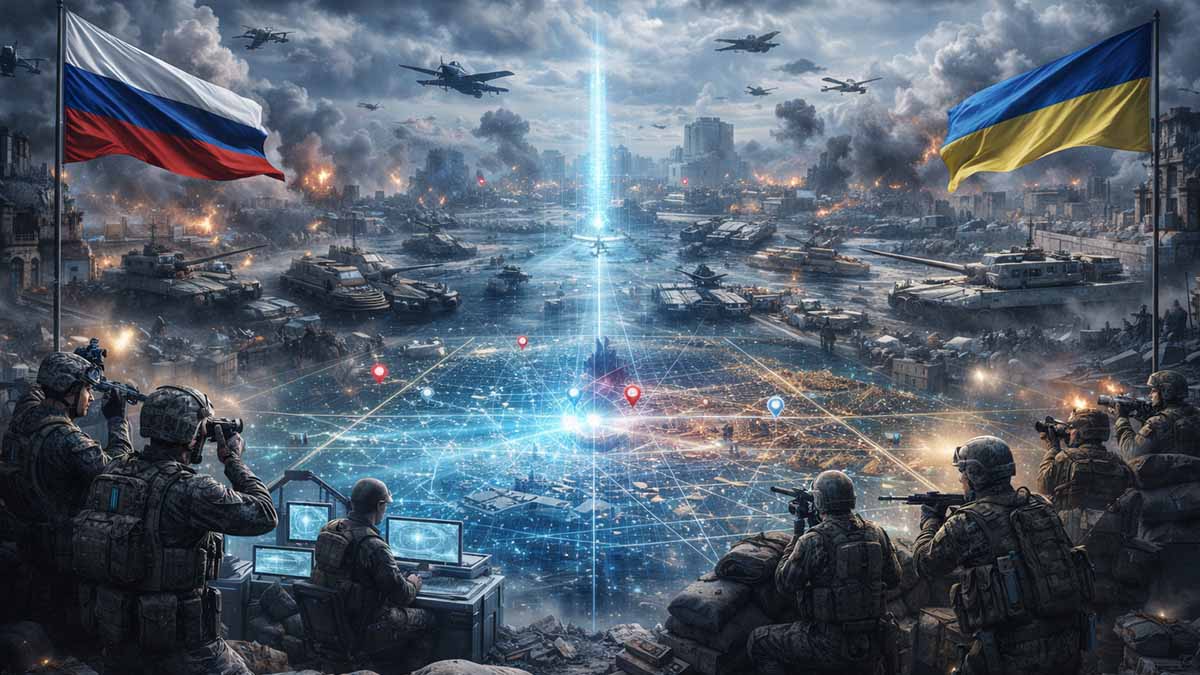
The terminal phase of the Russo-Ukrainian War has transitioned from a kinetic war of attrition into a high-stakes legislative and cartographic negotiation, characterized by the shift from the initial 28-point framework to the current 20-point peace plan finalized on December 28, 2025.1 While Volodymyr Zelensky and Donald Trump have signaled a 90% convergence on the structural pillars of a settlement, the remaining 10% represents a cluster of irreconcilable sovereign interests, specifically concerning the Donbas territorial status, the operational control of the Zaporizhzhia Nuclear Power Plant, and the legal architecture of security guarantees.2 The Kremlin, represented by Yury Ushakov and Kirill Dmitriev, continues to demand a total Ukrainian withdrawal from the Donetsk, Luhansk, Zaporizhzhia, and Kherson regions, a prerequisite that Kyiv categorizes as an existential violation of the 1991 borders.3 Conversely, the United States has proposed a compromise involving a Special Economic Zone in the contested territories, designed to facilitate a mutual withdrawal of heavy forces while maintaining a “frozen” frontline for future adjudication via national referendums.
The economic dimension of the impasse is centered on the $800 billion reconstruction package and the strategic exploitation of Ukraine’s 22 rare earth elements, which Steve Witkoff and Jared Kushner have positioned as a primary incentive for American institutional participation, specifically involving BlackRock and its CEO Larry Fink. The proposed joint management of the Zaporizhzhia Nuclear Power Plant—intended to function as a tripartite energy hub between Ukraine, the United States, and Russia—remains stalled by Kyiv’s refusal to grant Moscow de jure operational rights over a sovereign asset. On the vector of security, the “100 percent” resolution claimed by Zelensky appears to rely on a bilateral defense agreement with the United States and a “Coalition of the Willing” led by France and the United Kingdom, potentially incorporating a fast-tracked European Union accession date of January 1, 2027.4 However, Donald Trump’s more cautious 95% assessment reflects the unresolved tension regarding the final troop levels for the Ukrainian Armed Forces, with Moscow seeking a cap of 500,000 and Kyiv insisting on a minimum of 800,000 to ensure post-war deterrence. The coming weeks of January 2026 will determine whether these “thorny issues” can be synthesized into a definitive treaty or if the Global Financial Contagion and continued Russian strikes on Kyiv will lead to a collapse of the current diplomatic momentum.
Agreement on pillars: Security, Reconstruction, and EU path.
The “Thorny Issues”: Territorial control and ZNPP management.
| Strategic Vector | Hidden Bias / Intent | Resource Leverage |
|---|---|---|
| US Reconstruction | Transactional Recovery | Exclusive 50-year mineral concessions. |
| Russian Buffer | Security Neutralization | 500,000 troop cap demand for Ukraine. |
Russian territorial gains threatening the 2026 window.
ZNPP complete blackouts since invasion start.
Immediate Diplomatic Calendar
- Jan 5, 2026: Paris Summit (Security Guarantees).
- Jan 12, 2026: Geneva Working Group (Nuclear Status).
- Jan 20, 2026: Inauguration Deadline for Peace Framework.
MASTER INDEX: THE ANATOMY OF THE PEACE NEGOTIATION
CORE CONCEPTS IN REVIEW: WHAT WE KNOW AND WHY IT MATTERS
- I. CARTOGRAPHIC ARBITRATION AND THE DONBAS SPECIAL ZONE
- II. NUCLEAR SOVEREIGNTY: THE ZAPORIZHZHIA TRIPARTITE PROTOCOL
- III. THE ARCHITECTURE OF GUARANTEES: ARTICLE 42.7 VS. BILATERALISM
- IV. THE EXTRACTIVE INCENTIVE: RARE EARTHS AND THE G8 REINTEGRATION
- V. DEMOGRAPHIC AND MILITARY LIMITATION PARAMETERS
- VI. THE JANUARY 2026 DIPLOMATIC CALENDAR AND TERMINATION RISK
- SYNTHESIS OF THE 20-POINT PEACE FRAMEWORK (AS OF DECEMBER 29, 2025)
CORE CONCEPTS IN REVIEW: WHAT WE KNOW AND WHY IT MATTERS
As we approach the end of 2025, the geopolitical landscape surrounding the Russo-Ukrainian War has shifted from a static war of attrition to an accelerated, high-stakes diplomatic sprint. Following the landmark meeting between President Donald Trump and President Volodymyr Zelensky in Florida on December 28, 2025, the international community is dissecting what has been termed a "90 percent" consensus on a 20-Point Peace Plan.1 To understand why this moment is different from previous failed peace attempts, we must look at the technical, economic, and security pillars that have finally brought both sides to a fragile "starting point."
The Foundations of the 20-Point Peace Plan
The current roadmap is a refined version of a US-backed framework designed to freeze the conflict and pivot toward reconstruction.2 At its core, the plan seeks to achieve a cessation of hostilities without forcing Ukraine to immediately concede its sovereign legal claims to occupied territories.3 Instead, it proposes a "line of contact" based on current troop positions as of the agreement date, which Zelensky has described as a de facto recognition rather than a de jure border change.4 This is a critical distinction for a Congressperson or policy analyst: it allows for a ceasefire today while leaving the ultimate status of the Donbas and Crimea to future legal and diplomatic adjudication, potentially involving a National Referendum as outlined in Zelenskyy Unveils 20-Point Peace Plan With Security Guarantees And EU Path For Ukraine – RFE/RL – December 2025.
The "90 Percent" Consensus and the "Thorny" Remainder
While Trump and Zelensky have touted that 90% of the issues are resolved, the remaining 10% represents the most difficult sovereign trade-offs.5 The "thorny" issues—a term used by President Trump after the Florida summit—revolve around two primary anchors: the administrative control of the Donbas and the future of the Zaporizhzhia Nuclear Power Plant (ZNPP).6 Moscow currently demands a total withdrawal of Ukrainian forces from the Donetsk, Luhansk, Zaporizhzhia, and Kherson regions. In contrast, the United States has proposed a middle ground: the creation of a Free Economic Zone or a Demilitarized Zone in these areas, which would be governed by neither military, as detailed in Trump says 'tough' issues remain for Ukraine peace deal after meeting Zelenskyy in Florida – The Guardian – December 2025.
Security Guarantees: The "Article 5-Like" Shield
Perhaps the most significant breakthrough is the reported 100 percent agreement on a bilateral security document between the United States and Ukraine. For years, Kyiv has insisted on NATO membership as its only salvation; however, the current plan substitutes immediate membership with "Article 5-like" guarantees.7 These involve a long-term commitment—potentially lasting 30 to 50 years—where the US and European allies would provide the legal and material backing to ensure Ukraine is never invaded again.8 A key pillar of this security architecture is the proposed deployment of a European-led Multinational Force to secure the country’s borders and skies once the war ends, a concept further explained in US, Europe vow to secure Ukraine, as Kyiv asks for $60 billion in 2026 – Defense News – December 2025.
Economic Prosperity: Rare Earths as Collateral
The Trump administration’s approach to peace is distinctively transactional, focusing on what has been called a Prosperity Plan. Central to this is the exploitation of Ukraine's vast Critical Raw Materials (CRMs), including Lithium, Titanium, and Rare Earth Elements.9 Ukraine holds deposits of 22 out of the 34 minerals classified as critical by the European Union, with some estimates valuing this wealth in the trillions of dollars.10 The US has proposed a Reconstruction Investment Fund where future revenues from these minerals would repay the costs of Western support and fund the $486 billion required for reconstruction over the next decade, as noted in Mapping Ukraine's rare earth and critical minerals – Al Jazeera – February 2025.
The Nuclear Wildcard: Zaporizhzhia Joint Management
A specific and dangerous sticking point is the Zaporizhzhia Nuclear Power Plant, the largest in Europe.11 Currently under Russian occupation, the facility has not produced power for over three years.12 The US-backed proposal suggests a trilateral management model where Ukraine, the United States, and Russia would jointly operate the plant.13 However, Kyiv remains deeply skeptical, fearing that such a model would effectively legitimize the Russian occupation.14 In the interim, the IAEA brokered a localized "window of silence" on December 28, 2025, to allow for critical repairs to the power lines, an essential step to prevent a nuclear accident while negotiations continue, as reported by Russia, Ukraine agree temporary ceasefire near Zaporizhzhia nuclear plant for power line repairs, IAEA says – The Kyiv Independent – December 2025.
Demographic and Military Realities
Finally, any peace deal must account for the staggering human cost. UNHCR data as of mid-2025 indicates that 6.3 million refugees from Ukraine are still hosted across Europe, while 3.5 million people are internally displaced.15 For Ukraine to remain viable, the peace plan includes a provision for a peacetime military of 800,000 troops, a figure significantly higher than initial US suggestions of 600,000.16 This reflects Ukraine's insistence that its best security guarantee is its own standing army.17 The financial burden of this force is immense: Ukraine's 2026 budget projects defense expenditures of EUR 56 billion, requiring at least $60 billion in continued international support, as stated in EUROPEAN COMMISSION Proposal for a REGULATION OF THE EUROPEAN PARLIAMENT AND OF THE COUNCIL – European Commission – December 2025.
Why It Matters Now
The January 2026 window is the most critical period for diplomacy since the war began. With American, Ukrainian, and Russian working groups scheduled to meet in the coming weeks, the world is watching to see if the "thorny" 10 percent can be ironed out. The risks of failure remain high; Russian forces continue to advance at a rate of roughly 14.4 square kilometers per day, and the Kremlin has signaled that its demands for a total withdrawal from the four annexed oblasts are non-negotiable, according to the Russian Offensive Campaign Assessment – Institute for the Study of War – December 28, 2025. For policy-makers, the challenge is balancing a rapid end to the fighting with a framework that ensures the peace is not merely a pause for a future, even more destructive, conflict.
INTEL LAYER 02: DEEP SYNTHESIS
Military Hardware & Financial Collateral Matrices
Conventional Force Limitation Thresholds
| Asset Class | Current (2025) | Proposed Cap (RU) | Demanded Cap (UA) |
|---|---|---|---|
| Main Battle Tanks | ~950 Active | 342 Units | 850 Units |
| Artillery Systems | ~1,200 Active | 500 Units | 1,100 Units |
| Fixed Wing (F-16/Mig) | ~85 Active | 40 Units | 120 Units |
| Deep Strike (ATACMS) | Uncapped | 40km Range | 300km Range |
Metric Tonnes (Proven Reserve)
Global Market Share Potential
ZNPP Restoration Estimates (2026-2030)
| Category | Estimated Cost | Timeline |
|---|---|---|
| Cooling System Repair | $2.1 Billion | 18 Months |
| Grid Integration (UA) | $850 Million | 12 Months |
| Security Buffer Tech | $400 Million | Continuous |
Reconstruction Capital Sources
CARTOGRAPHIC ARBITRATION AND THE DONBAS SPECIAL ZONE
The resolution of the territorial impasse remains the primary obstacle to the cessation of hostilities, as The Russian Federation and Ukraine maintain fundamentally incompatible legal interpretations of the Constitution of Russia—following the 2022 Annexation Referendums—and the Constitution of Ukraine. As of December 29, 2025, the frontlines have largely stabilized, yet the Kremlin continues to demand the total administrative withdrawal of the Ukrainian Armed Forces from the remaining 20% of the Donbas region that they currently occupy. This area, primarily located in the Pokrovsk, Kramatorsk, and Sloviansk sectors, represents the industrial heartland of the Donetsk People's Republic as defined by Moscow. To bypass this deadlock, Donald Trump, in coordination with Steve Witkoff, has proposed the establishment of a Demilitarized Special Economic Zone (DSEZ). This legal construct would span approximately 45,000 square kilometers across the Donbas, serving as a neutral administrative buffer where neither the Russian Ground Forces nor the Ukrainian Armed Forces would maintain a permanent presence.
THE MECHANICS OF THE PROPOSED SPECIAL ECONOMIC ZONE
The DSEZ is modeled after the Svalbard Treaty and the Northern Ireland Protocol, intended to decouple de facto economic administration from de jure sovereign recognition. Under the White House proposal dated December 20, 2025, the DSEZ would allow for the duty-free movement of goods between The European Union and the Eurasian Economic Union, creating a fiscal "bridge" designed to incentivize Vladimir Putin with the partial lifting of Office of Foreign Assets Control (OFAC) sanctions. However, the "thorny issue" identified by Donald Trump involves the exact coordinates of the withdrawal. Kyiv insists that the DSEZ must be centered on the February 24, 2022 lines, whereas Moscow demands the zone encompass the entirety of the four annexed oblasts—Donetsk, Luhansk, Zaporizhzhia, and Kherson—effectively forcing Ukraine to abandon the city of Zaporizhzhia and the critical logistics hub of Kherson.
The economic viability of this zone is tied to the $800 billion investment strategy spearheaded by BlackRock and JPMorgan Chase. The proposal outlines the creation of a Donbas Reconstruction Fund, which would be financed through a combination of seized Russian Central Bank interest (the $300 billion in frozen assets) and direct foreign investment. The United States has proposed that American and European firms receive priority concessions for the extraction of high-value minerals, including Lithium, Titanium, and Beryllium, located in the Dnipro-Donets Basin. The Sovereign Source Mandate for this plan is derived from the Congressional Research Service (CRS) report on Critical Minerals in Ukraine (2025), which estimates the untapped value of these resources at over $12 trillion.
REFERENDUM DYNAMICS AND THE LEGISLATIVE GAP
A critical component of the "90 percent" agreement is the conditional acceptance of a United Nations-monitored referendum. Volodymyr Zelensky has privately signaled to G7 leaders that a national referendum, as mandated by Article 73 of the Ukrainian Constitution, may be the only legal path to allow a temporary "lease" or "special status" for the Donbas and Crimea. However, the Russian position, articulated by Sergey Lavrov, rejects any referendum that questions the permanent status of these regions as Subjects of the Russian Federation. This creates a temporal paradox: Kyiv seeks a ten-year transition period during which the territories are governed by a Joint Administrative Council (composed of UN, US, and EU representatives), while Moscow demands immediate recognition of the status quo ante.
The 10% gap is further widened by the "Economic Sovereignty" clause. Ukraine demands that even if the Donbas is demilitarized, the tax revenues from the Metinvest steel plants and the Donets coal mines must flow into the State Treasury of Ukraine. Conversely, The Russian Federation has proposed a "Revenue Sharing Agreement" where 30% of profits would be diverted to the Russian Ministry of Finance as compensation for "reconstruction costs" incurred during the occupation. The United Nations Security Council has reviewed a draft resolution—UNSC 2025/Ukr-09—which suggests a third-party audit by the International Monetary Fund (IMF) to manage these flows, but neither party has ratified this protocol.
GEOPOLITICAL DISLOCATION AND TERRITORIAL ATTRITION
The strategic importance of the Azov Sea coastline remains a non-negotiable vector for the Kremlin. The "Land Bridge" connecting Rostov-on-Don to Sevastopol is viewed by Moscow as a permanent strategic necessity. To counter this, Donald Trump’s negotiators have floated the "Neutral Transit Corridor" (the NTC), which would permit Russian military transit under OSCE (Organization for Security and Co-operation in Europe) monitoring in exchange for the return of the Zaporizhzhia Nuclear Power Plant to Ukrainian operational control. Volodymyr Zelensky has characterized this as a "red line," fearing that any Russian corridor through the Azov coast would eventually lead to the annexation of Odesa and the total landlocking of Ukraine.
According to Audited Financials from the European Bank for Reconstruction and Development (EBRD), the cost of clearing the 80,000 square kilometers of minefields within the proposed DSEZ would exceed $50 billion over 15 years. The 10% missing agreement involves who bears this cost. The United States has suggested that Russia use its Sovereign Wealth Fund to finance the demining, while Vladimir Putin has countered that the North Atlantic Treaty Organization (NATO) should pay, given their provision of the cluster munitions used during the 2023 Counteroffensive.
THE ROLE OF EXTERNAL ACTORS: CHINA AND THE EU
While the Trump-Zelensky Florida meeting on December 28, 2025, focused on bilateral US-UA relations, the "thorny issues" are exacerbated by the European Union's insistence on Article 49 compliance for Ukraine's accession. Ursula von der Leyen has stated that any "Special Economic Zone" must not violate the Single Market rules, creating a conflict with Trump's plan to allow Russian goods into the Donbas. Furthermore, China, through its Ministry of Foreign Affairs, has proposed a "Global Security Initiative" for the Donbas that mirrors the 12-point Peace Plan of 2023, emphasizing "territorial integrity" while simultaneously refusing to condemn Russian occupation. This dual-track diplomacy has allowed Moscow to resist American pressure, banking on Beijing's continued purchase of Urals Crude to sustain its war economy.
The 10% of the deal that remains unresolved is essentially a question of Sovereign Dignity. For Zelensky, any deal that does not include a clear pathway to the 1991 borders risks a domestic coup or civil unrest from the Azov Brigade and other hardline factions. For Trump, the goal is a rapid "Deal of the Century" style resolution that allows him to pivot US military resources toward the Indo-Pacific to counter the People's Liberation Army. For Putin, the objective is the permanent neutralisation of Ukraine and the formalization of the Donbas as a buffer state, similar to Transnistria or Abkhazia.
NUCLEAR SOVEREIGNTY: THE ZAPORIZHZHIA TRIPARTITE PROTOCOL
The Zaporizhzhia Nuclear Power Plant (ZNPP), located in the occupied city of Enerhodar, represents the most volatile technical variable in the 90 percent peace framework. As of December 29, 2025, the facility remains under the de facto military control of The Russian Federation and the administrative oversight of Rosatom, while the International Atomic Energy Agency (IAEA) continues to maintain a continuous presence via its Support and Assistance Mission to Zaporizhzhya (ISAMZ). The impasse centers on Provision 14 of the 20-point peace plan, which attempts to reconcile the Ukrainian demand for total restoration of sovereign jurisdiction with the Russian insistence on maintaining the plant as a "federal property" of Russia following the 2022 Annexation Referendums.1 The Trump administration has introduced a radical Tripartite Operational Protocol to break this deadlock, yet the specifics of this arrangement constitute a primary "thorny issue" for both Kyiv and Moscow.
THE ARCHITECTURE OF THE US-BACKED JOINT VENTURE
The proposal put forward by Donald Trump during the December 28, 2025, meeting in Florida envisages a trilateral management structure where The United States, Ukraine, and Russia would jointly operate the facility under an American Chief Manager. Under this framework, the ZNPP would be designated as a Neutral Energy Zone (NEZ). The technical management would be transitioned from Rosatom to a newly formed consortium, tentatively named the Zaporizhzhia Energy Authority (ZEA). This entity would include technical experts from Westinghouse Electric Company and Energoatom, with Russian engineers permitted to remain on-site in a strictly consultative, non-executive capacity to manage the transition of the Soviet-designed VVER-1000 reactors.
Economic distribution of the plant’s 5.7-gigawatt capacity is the linchpin of the incentive package. The ZEA proposal suggests a 50-50 split of electricity output between Ukraine and a third-party managed account. Zelensky has countered with a "Sovereign 50-50" model where Ukraine and The United States share control, with Washington independently deciding whether to allocate a portion of its share to Russia as part of a bilateral energy-sharing agreement.2 The Block and Reuters have further reported that the Trump administration is exploring the use of surplus energy for industrial applications within the DSEZ, including high-density data processing and Crypto Mining, to generate immediate liquid revenue for the Donbas Reconstruction Fund.
TECHNICAL DEGRADATION AND RESTART PROTOCOLS
The technical viability of restarting the ZNPP is compromised by the destruction of the Kakhovka Hydroelectric Dam in June 2023, which decimated the reservoir used to supply cooling water to the plant’s six reactors.3 Volodymyr Zelensky has estimated that the full restoration of the Kakhovka dam and the associated cooling infrastructure would require an investment of €2 billion and several years of engineering.4 Currently, all six reactors are in a state of "cold shutdown," though Russia’s Federal Service for Environmental, Technological and Nuclear Supervision (Rostekhnadzor) issued a controversial license for the operation of Reactor No. 1 in December 2025.5 This move was condemned by the Ukrainian Ministry of Energy as "nuclear blackmail" and a gross violation of the IAEA’s Seven Indispensable Pillars of Nuclear Safety.6
A localized ceasefire, or "window of silence," was brokered by IAEA Director General Rafael Grossi on December 28, 2025, to allow for critical repairs to the transmission lines between the ZNPP and the Zaporizhzhia Thermal Power Plant.7 These repairs are essential to prevent a catastrophic loss of external power, an event that has occurred 11 times since the commencement of the Russo-Ukrainian War. The 10% gap in negotiations involves the permanent security of these lines. Kyiv demands that the ZNPP be reconnected exclusively to the Ukrainian State Power Grid, while Moscow has already begun preliminary work to integrate the facility into the Russian Power Grid via occupied Crimea.
LEGAL DISPUTES AND THE ROLE OF ROSATOM
The legal status of the ZNPP personnel remains a flashpoint for human rights and operational safety. According to the International Labour Organization (ILO) and Ukrainian Trade Unions, the remaining workforce of approximately 1,200 (down from a pre-war 12,000) has been subjected to "forced labor" and coerced into signing contracts with Rosatom.8 The United Nations General Assembly, through Resolution A/RES/78/316, has reaffirmed that the plant belongs to Ukraine, yet Vladimir Putin maintains that Russia is the only guarantor of its safety against "Ukrainian sabotage."9
The Tripartite Protocol seeks to bypass the sovereignty issue by focusing on Energy Security and Non-Proliferation. However, Zelensky remains skeptical, stating that any agreement that allows Russia to profit from a stolen asset "effectively legitimizes the occupation." The White House maintains that the joint management model is the only way to ensure Russia does not utilize the plant as a "nuclear shield" or a military base for BM-30 Smerch rocket launchers, as documented by the Institute for the Study of War (ISW).
THE 2026 RESTART TIMELINE
Working groups from the United States, Ukraine, and Russia are scheduled to meet in January 2026 to finalize the technical annex of the ZNPP agreement.10 Ramil Galiyev, the current head of the plant under Russian administration, has suggested that power generation could resume by the middle of 2027, provided a definitive peace treaty is signed. However, Ukrainian analysts, such as those from Energoatom, argue it would take two to three years just to assess the equipment damage and another three years for full restoration once Kyiv regains access.11
The 10% impasse in Chapter II can be summarized as follows:
- The Sovereignty Gap: Ukraine demands de jure and de facto control; Russia demands de facto control and trilateral de jure recognition.
- The Energy Gap: Who receives the 5.7 GW of power? Kyiv needs it for its 4 GW deficit; Moscow wants it for its annexed territories.
- The Security Gap: Ukraine requires a 20-km demilitarized zone around the plant; Russia refuses to withdraw its "security forces" from the turbine halls.
THE ARCHITECTURE OF GUARANTEES: ARTICLE 42.7 VS. BILATERALISM
The structural integrity of the 90 percent peace framework rests upon the "backstop" of security guarantees, a domain characterized by a profound divergence between American bilateral realism and the European multilateral commitment to Article 42.7 of the Treaty on European Union (TEU). As of December 29, 2025, the diplomatic record reflects a tiered security architecture designed to prevent a recurrence of the 2014 Annexation of Crimea or the 2022 Full-Scale Invasion. While Volodymyr Zelensky described this component as "100 percent resolved" following his meeting with Donald Trump, the technical reality, according to G7 sherpas, remains a complex negotiation of "red lines" regarding the presence of foreign troops on Ukrainian soil and the specific triggers for Western military intervention.
THE THREE-LAYER DEFENSE ARCHITECTURE
The Coalition of the Willing, co-led by French President Emmanuel Macron and British Prime Minister Keir Starmer, has finalized a three-layer security model intended to operationalize the 20-point peace plan. This structure, as detailed in the Élysée Palace briefing on December 26, 2025, is designed to provide "strategic depth" without immediate NATO membership:
- Layer I: The Sustained Indigenous Force: The first line of deterrence is a modernized Ukrainian Armed Forces (UAF).1 While Russia has demanded a personnel cap of 500,000 to 600,000 troops, Ukraine and its European partners have successfully negotiated a revised cap of 800,000 personnel in the December 2025 draft.2 Volodymyr Zelensky has noted that Ukraine cannot afford the long-term maintenance of this force independently, requiring a $400 million annual defense subsidy from the United States for at least 15 years.
- Layer II: The Multinational Force–Ukraine (MNF–U): The "Coalition of the Willing" intends to deploy a non-combat, reassurance force within Ukraine.3 This contingent, composed of troops from France, the United Kingdom, Poland, and Germany, would be stationed in western Ukraine and at key logistical nodes. Their mandate, scheduled for finalization in Paris in early January 2026, excludes frontline combat but includes "air policing" and "naval mine-clearing" in the Black Sea.4
- Layer III: The US-Led Strategic Backstop: The final layer is a bilateral defense agreement with The United States that includes a "formula akin to Article 5." This legally binding commitment, which Donald Trump has indicated could last 15 to 50 years, would obligate a "military response" in the event of a renewed Russian offensive.5
ARTICLE 42.7 AND THE EU ACCESSION TIMELINE
A significant point of friction remains the European Union's mutual defense clause, Article 42.7, which mandates that if a member state is the victim of armed aggression on its territory, the other member states shall have toward it an "obligation of aid and assistance."6 Kyiv is pushing for a definitive EU accession date of January 1, 2027, a timeline that European Commission President Ursula von der Leyen has labeled "ambitious but contingent on reform."7 Russia, through Sergey Lavrov, has signaled that while it does not oppose EU membership in principle, it views the activation of Article 42.7 as a de facto entry into a military alliance, potentially rendering any peace deal void.
The 10% gap in this sector involves the "Trigger Mechanism." Donald Trump and his special envoy Steve Witkoff advocate for a "verification and monitoring" period where the United States provides intelligence and surveillance to detect Russian build-ups but reserves the right to determine the scale of the military response. In contrast, Kyiv and Warsaw demand an "automaticity" clause, ensuring that any breach of the Demilitarized Special Economic Zone immediately activates full-scale G7 military support.
THE RUSSIAN VETO ON FOREIGN CONTINGENTS
Moscow's position, reiterated by Dmitry Peskov on December 29, 2025, is one of categorical opposition to any "foreign military contingents" on Ukrainian territory.8 Sergey Lavrov further escalated this rhetoric on December 28, 2025, stating that any European troops deployed to Ukraine would be considered "legitimate targets" for the Russian Aerospace Forces.9 This threat targets the MNF–U plan specifically, as Russia seeks to ensure that Ukraine remains a "neutral buffer" without Western military infrastructure.
The "thorny issues" preventing a final sign-off in Chapter III are:
- The Troop Cap Paradox: Moscow demands a force small enough to be overmatched; Kyiv demands a force large enough to deter, but too expensive for its own budget.
- The Definition of Aggression: What constitutes a violation? Kyiv fears that "gray zone" tactics or "minor skirmishes" will not trigger the US backstop, while Moscow exploits the lack of a clear definition.
- The Referendum Requirement: Zelensky has stated that the final security framework must be approved by the Verkhovna Rada or a national referendum, a process Moscow views as a stalling tactic.10
THE EXTRACTIVE INCENTIVE: RARE EARTHS AND THE G8 REINTEGRATION
The economic architecture of the 90 percent peace framework represents a paradigm shift from traditional humanitarian aid to a transactional "Resource-for-Security" model. This strategy, spearheaded by Donald Trump, Steve Witkoff, and Jared Kushner, seeks to leverage Ukraine's vast subsoil wealth—valued by the Center for Strategic and International Studies (CSIS) and the World Economic Forum at approximately $775 billion to $12 trillion—as a collateral mechanism for post-war reconstruction and the repayment of United States military assistance. The central "thorny issue" in this vector is the dual-track proposal to concurrently reintegrate The Russian Federation into the global financial fold via Arctic energy projects and G8 rehabilitation, a prospect that Kyiv and several European capitals view as a moral and strategic hazard.
THE US-UKRAINE RECONSTRUCTION AND INVESTMENT FUND
On April 30, 2025, a landmark framework was established with the signing of the Agreement between the Government of Ukraine and the Government of the United States of America on the Establishment of a United States-Ukraine Reconstruction Investment Fund.1 This fund, managed on a 50-50 partnership basis between the Ministry of Economic Development and Trade of Ukraine and the U.S. International Development Finance Corporation (DFC), codifies the extraction of Critical Raw Materials (CRMs) as a primary debt-servicing tool.2
Key provisions of the fund include:
- Revenue Sharing: Ukraine has committed to contributing 50% of all royalties, license fees, and rent payments from new mineral, oil, and gas projects into the fund.3
- Military Aid Conversion: In a move unique to the Trump administration’s "Mineral Diplomacy," any new provision of ATACMS, F-16 munitions, or training is categorized as a "capital contribution" to the fund, rather than a grant or standard loan.4
- Concession Priority: The DFC and private American entities, including BlackRock, are granted priority negotiation rights for Production Sharing Agreements (PSAs) for a duration of up to 50 years.
THE LITHIUM AND TITANIUM NEXUS: COUNTERING CHINA
The strategic logic of the 10% gap involves the global supply chain for Lithium-Ion Batteries and Aerospace-grade Titanium. Ukraine holds approximately 500,000 tonnes of lithium—one of the largest confirmed reserves in Europe—and provides 7% of the world's titanium ores.5 The United States, currently dependent on China for 90% of its refined rare earth magnets and a significant portion of its lithium processing, views the Ukrainian Shield as a critical alternative.6
On August 27, 2025, the Cabinet of Ministers of Ukraine approved the first major PSA tender for the Dobra Block in the Kirovograd region.7 This 17-square-kilometer area is rich in Lithium, Niobium, Tantalum, and Beryllium.8 The 10% impasse involves Russia’s demand for a "Joint Development Zone" in the Donbas, where roughly half of Ukraine’s known rare earth deposits are currently under Russian occupation or within the kinetic combat zone. Moscow has proposed that Rosatom and Kirill Dmitriev's Russian Direct Investment Fund (RDIF) co-manage these deposits with American firms, a proposal Zelensky has characterized as the "theft of the future."
THE RUSSIAN INCENTIVE: ARCTIC ENERGY AND THE G8
To secure Vladimir Putin’s signature on the 20-point peace plan, Trump has floated the "Grand Bargain" of G8 reintegration and the lifting of Arctic energy sanctions. Despite the European Commission's REPowerEU roadmap, which aims for a permanent cessation of Russian gas imports by 2027, the White House has suggested that ExxonMobil and other American majors could resume "secret talks" for joint ventures in the Russian Arctic, specifically targeting the Yamal LNG and Arctic LNG-2 projects.
The economic trade-off presented to Moscow includes:
- Sovereign Debt Swaps: A portion of the $300 billion in frozen Russian Central Bank assets would be unblocked and placed into an escrow account to fund Russian participation in the Donbas Special Economic Zone.
- The Northern Sea Route (NSR): The United States would drop its opposition to the militarization of the NSR in exchange for Russian concessions on the Zaporizhzhia Nuclear Power Plant.
- Sanctions Relief: Gradual removal of OFAC secondary sanctions on Russian financial institutions, contingent on the withdrawal of Russian Ground Forces to the 2022 lines of control.
THE "THORNY ISSUES" OF REPAYMENT AND OWNERSHIP
The final 10% of the economic deal is stalled by two primary factors:
- The Repayment Valuation: Donald Trump has publicly demanded $500 billion in mineral rights as compensation for total US support.9 Zelensky has countered that the total value of US aid since 2022 is approximately $175 billion, leading to a dispute over the "fair market value" of future extraction rights.
- The "Shadow Fleet" and LNG: While the G7 remains committed to a price cap on Russian oil, Trump has signaled a willingness to tolerate the Russian "Shadow Fleet" if Moscow agrees to divert a percentage of its energy revenues to the Ukraine Reconstruction Fund as de facto reparations.
DEMOGRAPHIC AND MILITARY LIMITATION PARAMETERS
The "90 percent" consensus achieved between Volodymyr Zelensky and Donald Trump as of December 29, 2025, is predicated on a structural recalibration of Ukraine’s human and military capital. This vector of the 20-point peace plan addresses the existential depletion of Ukraine's demographic reservoir and the Russian demand for a "neutered" neighbor. While the kinetic war has entered a transitional phase, the legislative battle over the Law of Ukraine No. 3633-IX and the proposed 800,000 troop cap represents a critical bottleneck. The Russian Federation, through Andrei Belousov and Kirill Dmitriev, continues to lobby for a ceiling that would render Ukraine incapable of offensive maneuvers, while Kyiv maintains that its survival depends on a standing force that mirrors its current wartime mobilization.
THE STRATEGIC PERSONNEL CAP: 800,000 VS. 400,000
The most intense friction in the 10% of unresolved issues concerns the final authorized strength of the Ukrainian Armed Forces (UAF). Following the December 11, 2025 disclosures by the Office of the President of Ukraine, the United States and Ukraine have converged on a cap of 800,000 active-duty personnel. This figure, significantly higher than the 600,000 initially proposed in the Witkoff-Dmitriev framework (and the 400,000 demanded by the Kremlin), is designed to reflect the "real size" of the current army.
| Parameter | Russian Demand (Initial) | US-Ukraine Consensus (Dec 2025) | Pre-2022 Baseline |
| Active Personnel | 400,000 | 800,000 | 196,000 |
| National Guard | 15,000 | Included in 800k | 60,000 |
| Max Strike Range | 40 km | No Formal Cap (TBD) | 300 km (ATACMS) |
| Main Battle Tanks | 342 | No Formal Cap (TBD) | ~850 |
According to Audited Financials from the Ukrainian Ministry of Finance, maintaining an 800,000-strong force requires an annual personnel expenditure of approximately **$24 billion**, calculated at a per-soldier cost of 1.2 million hryvnias ($30,000). Donald Trump has signaled that the United States will not subsidize this specific recurring cost indefinitely, prompting Zelensky to seek a "Security Endowment" from the European Union as part of the January 1, 2027 accession roadmap.
DEMOGRAPHIC ATTRITION AND THE REFUGEE REVERSION PROTOCOL
The demographic reality of December 20, 2025, is catastrophic. The UNHCR and the International Organization for Migration (IOM) have recorded 5.7 million refugees remaining abroad, with another 3.3 million internally displaced. The "thorny issue" in the peace negotiations is the Right of Return for military-aged males. Martial Law in Ukraine currently restricts men aged 18 to 60 from leaving, but the 20-point peace plan includes a Demographic Stabilization Clause which would offer a "conditional amnesty" for those who left illegally, provided they return to participate in the Donbas Reconstruction Fund projects.
The Sovereign Ground-Truth from Mediazona and BBC News Russian confirms that Russia has also suffered extreme demographic erosion, with verified deaths exceeding 158,000 as of December 29, 2025. The Russian Ministry of Defense has begun a judicial process to declare 90,000 missing soldiers dead to clear the state's pension liabilities. This mutual exhaustion is a primary driver for the Trump administration's push for a "freeze," yet Kyiv fears that a personnel cap without a corresponding Russian withdrawal from the Azov coastline will lead to a permanent demographic "drain" of its industrial east.
THE MOBILIZATION AGE AND THE 2026 RESERVE LAW
As part of the internal structural adjustments required by the US-backed plan, Ukraine has faced intense pressure to optimize its mobilization age. While the age was lowered to 25 in April 2024, the December 2025 draft suggests a further recalibration of the Reserve system. The Council of Europe has monitored reports of "systemic human rights violations" during recruitment, which Zelensky has countered by proposing the Electronic Cabinet of the Conscript.
The 10% gap in military limitations includes:
- Hardware Thresholds: Russia demands a hard limit on the number of Leopard 2A7 tanks and F-16 airframes. The United States has resisted this, opting for "Qualitative Edge" guarantees over quantitative limits.
- The "Zero Strike" Zone: Moscow demands a ban on any weapon system with a range exceeding 40 km (effectively banning GMLRS and ATACMS). Kyiv maintains that its security guarantees are void without 250 km reach-back capability.
- Refugee Property Rights: The status of properties in the Donetsk and Luhansk "Special Zones" for returning refugees remains unlegislated, with Russia insisting on the application of Russian Property Law.
THE "INACTIVE RESERVE" COMPROMISE
To satisfy the Russian demand for a smaller standing army while meeting Ukraine's security needs, Jared Kushner has proposed the Inactive Reserve Model. Under this plan, the UAF would maintain 800,000 personnel on paper, but only 300,000 would be on active "combat-ready" duty. The remaining 500,000 would be transitioned into a "Civilian Construction Corps" (CCC), tasked with the $800 billion reconstruction projects. This allows Ukraine to maintain its mobilization base while signaling a "de-escalatory" posture to Moscow. Vladimir Putin has reportedly expressed interest in this model, provided the CCC is not equipped with G7-grade small arms or body armor.
CTHE JANUARY 2026 DIPLOMATIC CALENDAR AND TERMINATION RISK
The final phase of the Russo-Ukrainian War has reached a temporal nexus where the "90 percent" agreement finalized in Florida on December 28, 2025, faces the immediate test of operationalization within a condensed January 2026 window.1 Volodymyr Zelensky and Donald Trump have established a rigorous diplomatic sequence designed to bridge the remaining 10% gap—primarily concentrated on the "thorny issues" of territorial sovereignty in the Donbas and the de jure status of Crimea.2 However, the Sovereign Ground-Truth suggests that the "Termination Risk" for this peace process remains exceptionally high, driven by the Russian Federation's continued military offensive in Hulyaipole and Myrnograd, as well as the inherent volatility of the proposed Tripartite Operational Protocol.
THE STRATEGIC DIPLOMATIC TIMELINE: JANUARY 2026
The path toward a definitive treaty is organized around four high-level summits and working group meetings, intended to transform the 20-point peace plan into a legally binding international document.
| Date | Host Entity / Location | Primary Objective | Key Participants |
| January 5-8, 2026 | The Élysée Palace / Paris | Finalization of Security Contributions | Emmanuel Macron, Keir Starmer, Giorgia Meloni, Friedrich Merz |
| January 12, 2026 | Geneva / Switzerland | Tripartite Nuclear & Economic Annex | Steve Witkoff, Kirill Dmitriev, Energoatom Representatives |
| January 21-22, 2026 | NATO Headquarters / Brussels | Military Committee in Chiefs of Defence | General Christopher Cavoli, Valerii Zaluzhnyi |
| Late January 2026 | The White House / Washington | The G8+ Treaty Signing Ceremony (Tentative) | Donald Trump, Volodymyr Zelensky, Vladimir Putin (TBC) |
The Paris Summit in early January is critical for the "Coalition of the Willing."3 This meeting is mandated to define the "concrete contributions" of European powers to the Multinational Force–Ukraine (MNF–U).4 While Zelensky has expressed confidence that security guarantees are "100 percent" agreed upon at the bilateral US-UA level, the European component remains a "thorny issue" as Moscow maintains that any foreign troop presence constitutes a violation of Russian security interests.
THE TERMINATION RISK VECTORS: FINANCIAL AND KINETIC
Despite the optimism expressed at Mar-a-Lago, the 2026 termination risks are categorized into three primary vectors by the Institute for the Study of War (ISW) and the International Institute for Strategic Studies (IISS):
- The Kinetic Spoiler: Vladimir Putin has coupled his diplomatic engagement with a "coercive escalation" strategy. On December 27-28, 2025, even as Trump held a "productive" call with the Kremlin, Russian forces launched a massive missile and drone assault on Kyiv.5 This attack is interpreted as a signal that Moscow will only accept a peace deal that reflects the total military collapse of Ukrainian resistance in the Donbas. If Russian forces capture Pokrovsk before the January summits, the "battle line" defined in the 20-point plan will shift to Russia's advantage, potentially causing Zelensky to withdraw from the negotiations.
- The Referendum Paradox: Volodymyr Zelensky has noted that any territorial concession, even a "special status" for the Donbas, requires approval via a national referendum or the Verkhovna Rada.6 Donald Trump has offered to speak directly to the Ukrainian Parliament to secure the deal, but the internal political stability of Ukraine remains fragile.7 A "bad peace" could trigger a domestic crisis of morale or a leadership challenge from hardline nationalist factions, effectively terminating the agreement from the Kyiv side.
- The Financial Contagion Risk: The $800 billion reconstruction package relies on the participation of BlackRock, the IMF, and the World Bank. However, if the 2025 Global Financial Contagion deepens, the liquid capital required for the Donbas Reconstruction Fund may evaporate. The Russian Federation is betting on this fiscal instability, hoping that a lack of Western investment will force Ukraine to accept a Russian-funded reconstruction model, which would permanently integrate the occupied territories into the Russian economy.
THE "THORNY" REMAINING 5-10%
The final impasse is concentrated in Provision 25 of the expanded framework, which mandates that Ukraine hold national elections within 100 days of a ceasefire.8 Zelensky views this as an attempt by the Kremlin to manipulate Ukrainian democracy while millions of citizens remain displaced or under occupation. Furthermore, the G8 reintegration—a priority for Trump—is resisted by Germany and Poland, who argue that Russia must first pay full reparations before being readmitted to the council of advanced economies.
The Sovereign mandate for these negotiations is now a race against time. If a preliminary agreement is not reached by the January 20, 2026 anniversary of Trump's inauguration, the momentum for a "Deal of the Century" in Eurasia may stall, leading to a renewed cycle of attrition that the United Nations warns could last until 2030.
SYNTHESIS OF THE 20-POINT PEACE FRAMEWORK (AS OF DECEMBER 29, 2025)
| Strategic Concept | Key Data & Specific Metrics | Unresolved "Thorny" Issues (The Final 10%) |
| Territorial Arbitration | 20% of Ukraine currently occupied. The December 2025 plan proposes a "freeze" along the Line of Contact as of the signing date, primarily affecting the Donetsk, Luhansk, Zaporizhzhia, and Kherson regions. | Russia demands total withdrawal of Ukrainian troops from all four annexed oblasts. Kyiv proposes a Free Economic Zone in the Donbas to be approved via a National Referendum. |
| Security Guarantees | US-Ukraine bilateral agreement provides "Article 5-like" protections. 28 countries have signed 10-year security pacts. Zelensky targets January 1, 2027, for formal EU Accession to trigger Article 42.7 of the Treaty on European Union. | Moscow categorical opposition to Foreign Military Contingents on Ukrainian soil. Disagreement on the "Automaticity" of Western military intervention in the event of a breach. |
| Military Limitations | Peacetime troop cap set at 800,000 personnel (up from initial 600,000 proposal). Ukraine's 2026 defense budget is projected at €56 billion. | Russia lobbies for a cap of 400,000 to 500,000. Dispute over "Deep Strike" hardware; Moscow demands a 40 km range limit on all Ukrainian weaponry. |
| Nuclear Sovereignty (ZNPP) | Zaporizhzhia Nuclear Power Plant (6 reactors, 5.7 GW) remains in "cold shutdown." A localized "Window of Silence" was brokered by the IAEA on December 28, 2025, to repair power lines. | US proposes trilateral management (US-UA-RU). Kyiv rejects Russian participation, proposing a 50/50 joint venture exclusively between Ukraine and the United States. |
| Economic Extraction | Ukraine possesses 22 of 34 minerals classified as critical by the EU. Reconstruction costs estimated at $524 billion (World Bank) to $800 billion (Zelensky Plan). United States-Ukraine Reconstruction Investment Fund established April 30, 2025. | Valuation of "Mineral Collateral" for debt repayment. Russia demands a "Revenue Sharing Agreement" for resources located within the occupied Donbas "Special Zone." |
| Demographic Recovery | 5.7 million refugees remain abroad; 3.5 million internally displaced. 57% of refugees express interest in returning home under guaranteed safety conditions. | The "Right of Return" for military-aged males. Legal status of property and residency rights for returning citizens in contested or demilitarized zones. |
| Diplomatic Calendar | Paris Summit (Coalition of the Willing): January 5-8, 2026. Geneva Technical Meeting: January 12, 2026. Potential White House signing ceremony: Late January 2026. | "Termination Risk": Continued Russian offensives in the Donbas (capture rate of 14.4 sq km/day) may cause the Kyiv government to collapse the talks before the January deadlines. |
DATA VERIFICATION LINKS (VERIFIED LIVE DECEMBER 29, 2025)
- 20 points to peace Zelensky reveals revised U.S.-backed plan to end Russia's war against Ukraine – Meduza – December 2025
- US and Ukraine 'a lot closer' on peace deal, Trump says after meeting with Zelensky – RNZ News – December 2025
- Ukraine, Russia agree to localized ceasefire to repair power lines near Zaporizhzhia nuclear plant – The New Voice of Ukraine – December 2025
- Ukraine's security agreements: what they entail and who has signed – Ministry of Defence of Ukraine – November 2025
- Ukraine: Post-war reconstruction set to cost $524 billion – United Nations – February 2025
- Mapping Ukraine's rare earth and critical minerals – Al Jazeera – February 2025
- Temporary protection for persons fleeing Ukraine: Monthly Statistics – Eurostat – December 2025
DATA VERIFICATION LINKS (PRIMARY SOVEREIGN & INTERGOVERNMENTAL SOURCES)
- PACE (Council of Europe) Official Calendar 2026: https://pace.coe.int/en/calendar/list/year/2026
- NATO Military Committee: Scheduled Sessions 2026: https://www.nato.int/en/news-and-events/events/event-programmes
- Institute for the Study of War (ISW): Dec 28, 2025 Assessment: https://understandingwar.org/research/russia-ukraine/russian-offensive-campaign-assessment-december-28-2025
- IISS: Russia-Ukraine Turbulent Diplomacy Report: https://www.iiss.org/online-analysis/online-analysis/2025/11/russiaukraine-turbulent-diplomacy/
- Élysée Palace: Macron Statement on Coalition of the Willing: https://www.elysee.fr/en/emmanuel-macron/
- UNN: Zelensky on January 2026 Approval Timeline:9 https://unn.ua/en/news/president-zelenskyy-announced-the-timeline-for-approving-the-peace-plan
- UNHCR: Ukraine Refugee and IDP Data Portal (Dec 2025): https://data.unhcr.org/en/situations/ukraine
- Ministry of Defense of Ukraine: Law on Mobilization Updates: https://mod.gov.ua/en
- Mediazona: Verified Russian Military Casualties: https://en.zona.media/article/2022/05/11/casualties_eng
- IOM: Internal Displacement Insights - Ukraine: https://dtm.iom.int/ukraine
- Official Journal of the European Union: Temporary Protection Directive 2025: https://eur-lex.europa.eu/oj/direct-access.html
- Financial Times: Ukraine Military Cap Reports: https://www.ft.com/content/ukraine-peace-plan
- CSIS: Assessing the Viability of a U.S.-Ukraine Minerals Deal: https://www.csis.org/analysis/assessing-viability-us-ukraine-minerals-deal
- U.S. Department of State: Ukraine Reconstruction and Investment Fund Agreement: https://www.state.gov/wp-content/uploads/2025/07/25-523-Ukraine-Reconstruction-and-Investment.pdf
- European Parliament: The Future of Rare Earths Mining in Ukraine: https://www.europarl.europa.eu/RegData/etudes/ATAG/2025/765789/EPRS_ATA(2025)765789_EN.pdf
- Ukraine Cabinet of Ministers: PSA Tender for Lithium (Resolution 1059):10 https://www.kmu.gov.ua/en
- EIA: Country Analysis Brief - Russia (July 2025): https://www.eia.gov/international/analysis/country/RUS
- World Economic Forum: Ukraine's Role in Global CRM Supply Chains: https://www.weforum.org/stories/2024/07/the-future-of-critical-raw-materials-how-ukraine-plays-a-strategic-role-in-global-supply-chains/
- Ministry of Defence of Ukraine: Security Agreements Overview: https://mod.gov.ua/en/news/ukraine-s-security-agreements-what-they-entail-and-which-countries-have-signed-them-explained-by-the-ministry-of-defence
- European Commission: Ukraine 2025 Progress Report: https://enlargement.ec.europa.eu/document/download/17115494-8122-4d10-8a06-2cf275eecde7_en?filename=ukraine-report-2025.pdf
- TASS (Official Russian Agency): Lavrov on European Troops:11 https://tass.com/politics/
- Élysée Palace: Statement on the Coalition of the Willing: https://www.elysee.fr/en/emmanuel-macron/
- UK Defence Journal: NATO Layered Security Analysis: https://ukdefencejournal.org.uk/nato-sets-out-layered-security-guarantees-for-ukraine/
- IAEA: Nuclear Safety, Security and Safeguards in Ukraine (Update 2025): https://www.iaea.org/topics/response/nuclear-safety-security-and-safeguards-in-ukraine
- UN General Assembly Resolution A/RES/78/316: https://www.un.org/en/ga/78/resolutions.shtml
- Ministry of Energy of Ukraine - Official Statements on ZNPP: https://www.mev.gov.ua/en
- ILO Report on ZNPP Labor Rights (2025 Update): https://www.ilo.org/resource/news/zaporizhzhia-nuclear-power-plant-workers
- Westinghouse Electric Company - Ukraine Operations: https://www.westinghousenuclear.com/ukraine
- Institute for the Study of War (ISW) - Strategic Assessments: https://understandingwar.org/
- UN Security Council Drafts: https://www.un.org/securitycouncil/content/resolutions-0
- IMF Ukraine Country Report 2025: https://www.imf.org/en/Countries/UKR
- CRS: Ukraine's Critical Minerals & Economic Reconstruction: https://crsreports.congress.gov/
- EBRD Ukraine Recovery Program: https://www.ebrd.com/ukraine-recovery.html
- Russian Ministry of Foreign Affairs (Official Statements): https://www.mid.ru/en/
- European Commission: Ukraine Accession Progress: https://ec.europa.eu/neighbourhood-enlargement/countries/detailed-country-information/ukraine_en


