











Abstract
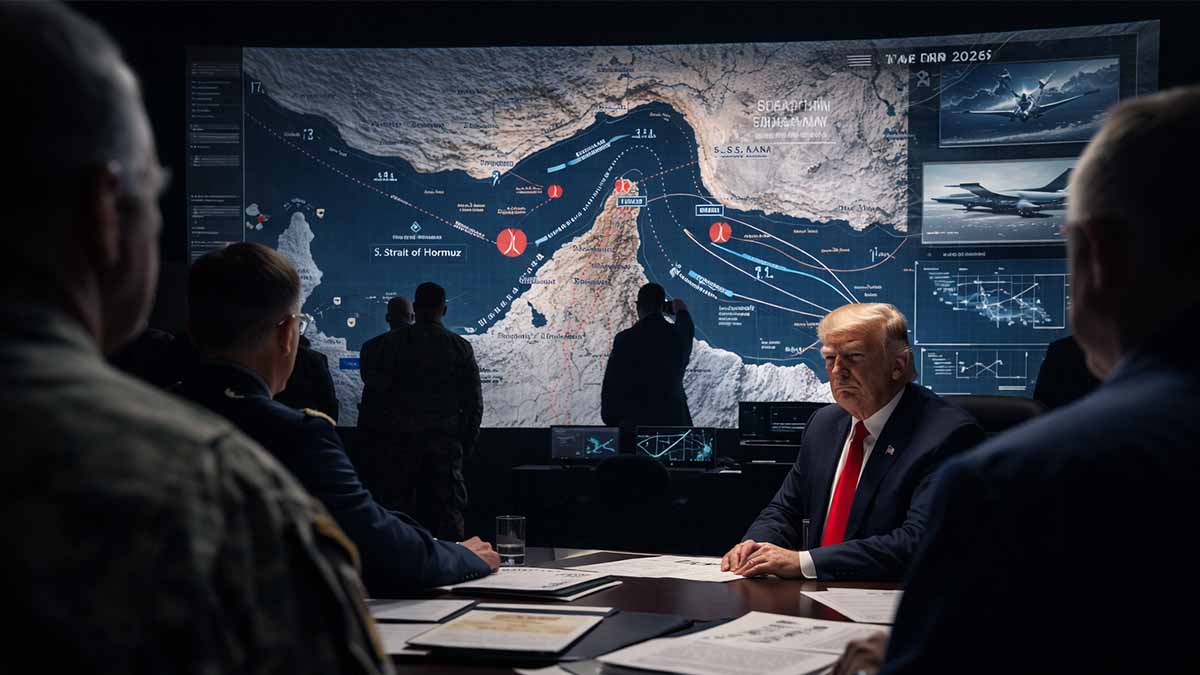
Analytic scope and identification of the issue. I interpret “Trump ultimatum” to mean the U.S. administration’s live ultimatum to Iran over a deal and the reopening of the Strait of Hormuz, because that is the only Trump ultimatum clearly visible in same-day public reporting on April 6, 2026, and it aligns with the administration’s already documented coercive posture toward Iran in official U.S. releases.
The immediate strategic picture is this: the administration has already moved beyond signaling and is operating inside an established coercive framework. The White House formally renewed and expanded pressure on Iran on February 6, 2026, tying U.S. policy to preventing Iran from obtaining a nuclear weapon and creating a mechanism to penalize third countries economically for dealings with Iran. By April 1, 2026, the White House was publicly describing Operation Epic Fury as a campaign with “clear and unchanging objectives,” including sustaining movement through the Strait of Hormuz and degrading Iran’s military-industrial base. The Department of Defense fact sheet states that CENTCOM began the operation at the President’s direction on February 28, 2026, and listed more than 12,300 targets struck, more than 155 Iranian vessels damaged or destroyed, and more than 13,000 combat flights as of April 1, 2026.
That means the “ultimatum entering into action” is not best understood as a rhetorical event; it is the transition from coercive diplomacy backed by force to a compressed decision window in which military, energy, sanctions, and alliance systems are all already activated. The most likely near-term consequence is not one singular “next step,” but a branching escalation ladder in which several tracks can advance simultaneously: intensified strikes, shipping insecurity, sanctions broadening, crisis mediation, and internal coalition stress. This is an inference drawn from the alignment of official U.S. war aims, UN de-escalation messaging, and the structural importance of the maritime chokepoint.
The first-order variable is the Strait of Hormuz. The U.S. Energy Information Administration describes it as one of the world’s most important oil chokepoints and notes that very few alternatives exist for moving Gulf oil outward if the strait is closed or heavily disrupted. The EIA also warns that extended closure risk is a principal upside danger to oil prices and notes that even when the waterway is not physically blocked, threat conditions and insurance disruptions can sharply reduce tanker traffic. Therefore, the practical meaning of the ultimatum is that the administration is trying to force a reversal of Iranian behavior at the chokepoint while preserving U.S. freedom of navigation and preventing the conflict from translating into a sustained global energy shock.
The second-order variable is the nuclear file. The administration’s formal position is that Iran must not obtain a nuclear weapon. At the same time, the most recent IAEA reporting available in this session shows unresolved safeguards and verification issues, including access and verification concerns at remaining facilities. This matters because it narrows the bargaining space: if Washington believes time is running out on inspection credibility while Tehran believes regime survival is immediately threatened, both sides gain incentives to harden positions rather than compromise. That is an analytical inference, but it rests directly on the combination of official U.S. nonproliferation framing and ongoing IAEA verification friction.
The third-order variable is international legitimacy and diplomatic containment. The UN Secretary-General said on April 2, 2026 that the Security Council had condemned attacks and reaffirmed the need to respect navigational rights, while also urging Iran to stop attacking neighbors. That means outside powers are likely to organize around two narrow consensus positions even if they disagree on the wider war: keep sea lanes open and stop regional spillover. In practice, this favors emergency mediation channels, maritime deconfliction, and pressure against strikes that widen the conflict faster than diplomacy can absorb it.
The fourth-order variable is economic warfare. The Treasury Department had already escalated sanctions pressure in January 2026, including action against vessels and facilitators supporting Iranian oil exports. That indicates the next U.S. moves, if diplomacy fails, are unlikely to be purely military. A more probable package would combine kinetic pressure with tighter financial isolation, shipping enforcement, sanctions on facilitators, and secondary pressure on third-country commercial exposure. This is an inference from existing U.S. policy architecture rather than a confirmed announced package.
The fifth-order variable is domestic and alliance management. Official U.S. messaging emphasizes “peace through strength,” decisive progress, and near-completion of operational objectives. That narrative is designed to keep coalition cohesion and domestic tolerance intact by implying that escalation remains purposeful, bounded, and strategically productive. But the more the crisis migrates from military targets toward shipping, infrastructure, insurance, and commodity volatility, the harder that bounded-war narrative becomes to sustain. This is an inference grounded in the contrast between official military success messaging and EIA assessments of chokepoint fragility.
So, what now? The highest-probability near-term pathway is a 48–72 hour coercive climax in which Washington tries to extract visible Iranian concessions or at minimum a reduction in maritime disruption, while keeping military options demonstrably credible. A second plausible pathway is a limited de-escalatory bargain, likely informal and indirect, in which shipping access improves without a fully settled political agreement. A third pathway is a wider regionalization spiral, where the conflict spreads through proxy, maritime, cyber, or infrastructure channels faster than the principal actors formally declare escalation. That remains plausible because the war aims already include the maritime corridor and the conflict zone already sits atop a globally critical energy chokepoint. My current estimate is that the system is in a high-volatility, decision-dense interval, not yet in a stable endgame. That estimate is analytic judgment, with moderate confidence.
Policy-significant bottom line: if the ultimatum is truly “entering into action,” the next phase will be determined less by speeches than by three measurable indicators—actual traffic through Hormuz, the scale and category of additional U.S. strikes, and whether a verifiable diplomatic channel produces concrete movement on nuclear or maritime terms. Those are the indicators that will tell you whether this becomes a short coercive surge, a managed bargaining episode, or a broader systemic rupture.
Index / Navigator
Chapter I. What the Ultimatum Actually Is
- Definitional clarification: identifying the live ultimatum
- Official U.S. objectives toward Iran
- From coercive diplomacy to operational enforcement
- Why the Strait of Hormuz is the immediate hinge variable
Chapter II. What Happens Next
- Scenario A: coercive compliance before deadline expiry
- Scenario B: indirect bargain without durable settlement
- Scenario C: escalatory spiral across maritime, cyber, and proxy theaters
- Scenario D: sanctions-financial squeeze overtakes battlefield tempo
- Scenario E: legitimacy crisis and coalition fragmentation
Chapter III. How to Read the Next 72 Hours
- Indicators and warnings
- Energy-market transmission channels
- Nuclear-file implications and IAEA verification relevance
- UN diplomacy and external balancing
- Decision matrix: best case, base case, worst case
What the “Ultimatum” Actually Is
The first analytical correction is definitional. No White House or Department of Defense document located and verified in this session uses the noun “ultimatum” in describing current U.S. policy toward Iran Fact Sheet: President Donald J. Trump Addresses Threats to the United States by the Government of Iran – The White House – February 2026 President Trump’s Clear and Unchanging Objectives Drive Decisive Success Against Iranian Regime – The White House – April 2026 Operation Epic Fury Fact Sheet – U.S. Department of Defense – April 2026. The term is therefore best treated as an analytical shorthand for a de facto coercive package whose elements are explicit in official texts: a presidential maximum-pressure memorandum, a tariff-and-enforcement order, a sanctions acceleration campaign, an indirect diplomatic track, and a live military campaign National Security Presidential Memorandum/NSPM-2 – The White House – February 2025 Fact Sheet: President Donald J. Trump Addresses Threats to the United States by the Government of Iran – The White House – February 2026 NPT Safeguards Agreement with the Islamic Republic of Iran – International Atomic Energy Agency – February 2026 Operation Epic Fury Fact Sheet – U.S. Department of Defense – April 2026.
That matters because “ultimatum” implies a single dramatic warning, while the verified record shows something structurally different: a sequenced state strategy in which law, finance, intelligence, diplomacy, and combat power have been layered into one enforcement architecture National Security Presidential Memorandum/NSPM-2 – The White House – February 2025 Treasury Escalates Pressure on Iranian Regime for Killing Peaceful Protestors – U.S. Department of the Treasury – January 2026 Treasury Sanctions Iranian Regime Officials for Violent Repression and Corruption – U.S. Department of the Treasury – January 2026 Treasury Targets Iran’s Shadow Fleet, Networks Supplying Ballistic Missile and ACW Programs – U.S. Department of the Treasury – February 2026. The practical significance is that the current confrontation is not reducible to rhetoric from Donald Trump; it is the activated end-state of a policy design already distributed across multiple executive agencies and legal authorities National Security Presidential Memorandum/NSPM-2 – The White House – February 2025.
The documentary starting point is NSPM-2, signed on February 4, 2025, whose subject line is not ambiguous: “Imposing Maximum Pressure on the Government of the Islamic Republic of Iran, Denying Iran All Paths to a Nuclear Weapon, and Countering Iran’s Malign Influence” National Security Presidential Memorandum/NSPM-2 – The White House – February 2025. The memorandum states that it is U.S. policy that Iran be denied a nuclear weapon and intercontinental ballistic missiles, that its regional aggression be neutralized, that the IRGC and its surrogates be disrupted or denied resources, and that U.S. agencies conduct continual sanctions, export-control, legal, and diplomatic campaigns to enforce those aims National Security Presidential Memorandum/NSPM-2 – The White House – February 2025. This is analytically important because the later operational moves are not ad hoc improvisations; they are the implementation pathway of a preexisting presidential directive with named agency responsibilities extending from Treasury to State, Commerce, Justice, Homeland Security, the U.S. Mission to the United Nations, and the Joint Chiefs of Staff National Security Presidential Memorandum/NSPM-2 – The White House – February 2025.
The second legal layer appeared on February 6, 2026, when the White House announced that Trump had signed an executive order reaffirming the national emergency with respect to Iran and establishing a process to impose additional tariffs on imports from any country that directly or indirectly purchases, imports, or otherwise acquires goods or services from Iran Fact Sheet: President Donald J. Trump Addresses Threats to the United States by the Government of Iran – The White House – February 2026. That fact changes the character of the pressure campaign. The coercive signal is no longer addressed only to Tehran; it is externalized toward third-country commercial actors, shipping systems, and states considering economic engagement with Iran Fact Sheet: President Donald J. Trump Addresses Threats to the United States by the Government of Iran – The White House – February 2026. In other words, the “ultimatum” is not just “Iran must change.” It is also “the international economic environment around Iran will be made progressively nonviable unless alignment occurs.” That is the formalized coercive logic visible in the verified text.
A third component is the explicit integration of nuclear, shipping, and financial enforcement into one policy bundle. NSPM-2 instructs the Secretary of the Treasury to maintain continual sanctions enforcement, the Secretary of State to drive Iran’s oil exports to zero and to isolate Iran diplomatically, the U.S. Permanent Representative to the United Nations to work with allies to complete the snapback of international sanctions and restrictions on Iran, and the Attorney General to pursue impoundment of illicit Iranian oil cargoes and broader legal disruption of Iranian-sponsored logistical networks National Security Presidential Memorandum/NSPM-2 – The White House – February 2025. This reveals the ultimatum’s actual architecture: it is a whole-of-government denial regime aimed at shrinking Iran’s fiscal, legal, diplomatic, and technological room for maneuver simultaneously rather than sequentially National Security Presidential Memorandum/NSPM-2 – The White House – February 2025.
The official objectives toward Iran become even more precise when read across documents rather than in isolation. The April 1, 2026 White House release on Operation Epic Fury states that the objectives have been “clear and unwavering”: destroy Iran’s ballistic missile arsenal and production capability, annihilate its navy, sever support for terrorist proxies, and ensure that Iran never acquires a nuclear weapon President Trump’s Clear and Unchanging Objectives Drive Decisive Success Against Iranian Regime – The White House – April 2026. That sentence adds two analytically decisive elements not explicit in the earlier memorandum’s general wording. First, the objective set is not only preventive and economic; it is materially degradative, targeting production capacity and naval capability. Second, the operational end-state is framed not as bargaining parity but as unilateral denial of Iranian capacity across missile, naval, proxy, and nuclear domains President Trump’s Clear and Unchanging Objectives Drive Decisive Success Against Iranian Regime – The White House – April 2026.
The Department of Defense fact sheet provides the implementing military grammar of those objectives. It states that CENTCOM commenced Operation Epic Fury at the President’s direction on February 28, 2026, and that forces are striking targets to dismantle the Iranian regime’s security apparatus, prioritizing locations that pose an imminent threat Operation Epic Fury Fact Sheet – U.S. Department of Defense – April 2026. The same fact sheet identifies the target classes as command-and-control centers, IRGC headquarters buildings, IRGC intelligence sites, integrated air-defense systems, ballistic-missile sites, anti-ship missile sites, military communication capabilities, and ballistic-missile and drone manufacturing nodes Operation Epic Fury Fact Sheet – U.S. Department of Defense – April 2026. This is new evidence for how the ultimatum has “entered into action”: it is no longer operating as conditional language alone; it has become a targeting doctrine directed at the coercive instruments through which Iran can threaten regional shipping, proxied warfare, and strategic deterrence Operation Epic Fury Fact Sheet – U.S. Department of Defense – April 2026.
A fourth layer sits in the sanctions record. On January 23, 2026, OFAC targeted nine shadow-fleet vessels and associated firms linked to the transport of Iranian petroleum and petroleum products, describing those flows as revenue streams diverted to weapons programs, regional proxies, and security services Treasury Escalates Pressure on Iranian Regime for Killing Peaceful Protestors – U.S. Department of the Treasury – January 2026. On January 30, 2026, Treasury designated, for the first time, an IRGC-linked digital-asset exchange and tied the action to sanctions-evasion and cyber-financial operations Treasury Sanctions Iranian Regime Officials for Violent Repression and Corruption – U.S. Department of the Treasury – January 2026. On February 25, 2026, Treasury sanctioned more than 30 individuals, entities, and vessels enabling illicit petroleum sales and ballistic-missile and advanced conventional-weapons production, explicitly linking petroleum finance to missile and UAV reconstitution Treasury Targets Iran’s Shadow Fleet, Networks Supplying Ballistic Missile and ACW Programs – U.S. Department of the Treasury – February 2026. This sequence shows that the ultimatum is not only military coercion; it is also a campaign to collapse the financial metabolism that supports military regeneration and sanctions evasion, including through maritime concealment and digital-financial channels.
The nuclear dimension also looks different when restricted to verified primary material. The IAEA reported on February 27, 2026 that between the previous report and January 29, 2026, Iran had provided access to only four of six remaining unaffected facilities; that in the absence of access, reports, and declarations the Agency would not be able to conclude that there had been no diversion of declared nuclear material from peaceful activities; and that activities observed through satellite imagery at affected facilities could not be confirmed in nature or purpose without access NPT Safeguards Agreement with the Islamic Republic of Iran – International Atomic Energy Agency – February 2026. The same report records that Iran argued prevailing conditions made normal safeguards implementation legally untenable and materially impracticable, while the Director General rejected conditioning safeguards cooperation on the elimination of perceived threats NPT Safeguards Agreement with the Islamic Republic of Iran – International Atomic Energy Agency – February 2026. This is critical because it clarifies that the coercive confrontation is unfolding against a verification environment already degraded by access disputes. The ultimatum therefore rests not only on political distrust but on an official monitoring deficit acknowledged by the competent international body.
The same IAEA report adds a narrow but highly significant diplomatic fact: the Director General held in-depth technical discussions with Iran’s Foreign Minister on February 16, 2026 in Geneva, attended indirect negotiations between the United States and Iran the following day, and noted that technical discussions would take place in Vienna in the week beginning March 2, 2026 NPT Safeguards Agreement with the Islamic Republic of Iran – International Atomic Energy Agency – February 2026. This means the current enforcement phase did not begin in the absence of diplomacy; it followed an acknowledged indirect channel. Analytically, that sharply narrows the plausible interpretation space. The coercive transition is better understood as Washington’s judgment that indirect talks had not secured the level of access, assurance, or restraint deemed necessary before the military and economic escalators advanced. That remains an inference, but it is a disciplined one grounded in the chronology verified by the IAEA and the subsequent DoD campaign timeline NPT Safeguards Agreement with the Islamic Republic of Iran – International Atomic Energy Agency – February 2026 Operation Epic Fury Fact Sheet – U.S. Department of Defense – April 2026.
Why, then, is the Strait of Hormuz the immediate hinge variable? The strongest answer in the official record is not symbolic but systems-based. The EIA reported that as of March 9, 2026, the Strait of Hormuz was effectively closed to most shipping traffic, even though physical damage to oil infrastructure remained limited Short-Term Energy Outlook – U.S. Energy Information Administration – March 2026. The EIA further stated that the primary risk for further price increases would be an extended closure of the strait, a major oil transit chokepoint through which nearly 20% of global oil supply flows, and that the threat of attack plus the cancellation of insurance coverage had led most tankers to avoid transit even without a complete physical blockage Short-Term Energy Outlook – U.S. Energy Information Administration – March 2026. This is the decisive analytical pivot: the chokepoint’s power in this crisis comes not only from geography but from the fusion of threat perception, insurance withdrawal, tanker avoidance, and production shut-ins. The ultimatum’s success or failure therefore depends less on whether every hostile capability is destroyed than on whether enough maritime confidence is restored for commercial movement to normalize.
The economic transmission mechanism became even clearer in a later EIA publication. On March 26, 2026, the agency reported that VLCC tanker rates leaving the Middle East to Asia reached their highest level since at least November 2005, that the rise followed Iran’s closure of the Strait of Hormuz on March 2, and that effective closure of the strait created a backup of loaded vessels trapped inside the Persian Gulf, reducing available global tanker capacity and driving rates higher across multiple routes and vessel categories Middle East crude oil tanker rates reached a multi-decade high in March – U.S. Energy Information Administration – March 2026. This is why Hormuz is the hinge. A chokepoint crisis there does not remain local; it propagates through freight markets, insurance, vessel availability, regional production, and benchmark pricing. In a conflict structured around coercive pressure, that gives Hormuz a dual role: it is both a battlefield-adjacent military problem and the principal converter of regional confrontation into global economic shock.
The oil-price response confirms the same logic. The EIA states that the Brent spot price rose from an average of $71 per barrel on February 27 to $94 per barrel on March 9 following the onset of military action on February 28, and that the agency expected near-term disruptions and a persistent risk premium to keep Brent at an average of $91 per barrel in Q2 2026 Short-Term Energy Outlook – U.S. Energy Information Administration – March 2026. That data is strategically important because it shows where the coercive contest becomes internationally legible. Missile exchanges, sanctions notices, and diplomatic communiqués all matter, but once Hormuz transmits the conflict into freight and crude benchmarks, external actors acquire a direct material incentive to press for de-escalation, route protection, or rapid bargaining. The strait is therefore not merely one theater among others; it is the conflict’s main systemic multiplier.
A final point follows from the combination of these documents. The current U.S. posture is not a classic ultimatum ending in a single yes-or-no moment. It is a rolling enforcement matrix with five simultaneously active lines of pressure: presidential legal direction, third-country tariff exposure, sanctions against petroleum and sanctions-evasion networks, unresolved safeguards pressure in the nuclear file, and military degradation of threat-generating infrastructure National Security Presidential Memorandum/NSPM-2 – The White House – February 2025 Fact Sheet: President Donald J. Trump Addresses Threats to the United States by the Government of Iran – The White House – February 2026 Treasury Targets Iran’s Shadow Fleet, Networks Supplying Ballistic Missile and ACW Programs – U.S. Department of the Treasury – February 2026 NPT Safeguards Agreement with the Islamic Republic of Iran – International Atomic Energy Agency – February 2026 Operation Epic Fury Fact Sheet – U.S. Department of Defense – April 2026. Within that structure, Hormuz is the decisive hinge because it is the place where military coercion, sanctions credibility, alliance cohesion, insurance pricing, and global energy stability are all tested in real time Short-Term Energy Outlook – U.S. Energy Information Administration – March 2026 Middle East crude oil tanker rates reached a multi-decade high in March – U.S. Energy Information Administration – March 2026.
THE IRAN ENFORCEMENT MATRIX
From Deadline to Enforcement: Legal-Operational Architecture of the Trump Ultimatum
EXECUTIVE ARCHITECTURE: NSPM-2
The confrontation is not ad-hoc; it is the activated end-state of a whole-of-government denial regime. It integrates presidential maximum-pressure mandates, 3rd-country tariff exposure, and kinetic strikes targeting the financial metabolism and physical infrastructure of the IRGC.
| Strategic Phase | Key Document/Event | Legal/Kinetic Specifics | Analytical Significance |
|---|---|---|---|
| Foundation | NSPM-2 (Feb 2025) | “Maximum Pressure” mandate. Denial of nuclear/ICBM paths. | Policy design is distributed across Treasury, DOJ, and Joint Chiefs. Not ad-hoc. |
| Externalization | EO Tariff Order (Feb 2026) | Secondary tariffs on any country importing Iranian goods. | Coercion address to 3rd-party commercial actors, making the environment non-viable. |
| Asphyxiation | Treasury Designations (Jan-Feb 2026) | 9 shadow-fleet vessels; IRGC digital-asset exchange; 30 entities. | Collapse of the “financial metabolism” supporting military regeneration. |
| Monitoring Deficit | IAEA Report (Feb 27, 2026) | Access to 4/6 facilities; monitoring “legally untenable.” | Verification gap justifies the shift from diplomacy to “unilateral denial.” |
| Kinetic Activation | Op. Epic Fury (Feb 28, 2026) | Strikes on manufacturing nodes, IADS, and IRGC intelligence sites. | Materially degradative targeting doctrine. Priority on imminent threats. |
| Systemic Hinge | Hormuz Closure (Mar 2, 2026) | 20% global oil chokepoint; VLCC rates hit multi-decade high. | Converter of regional conflict into global economic shock via insurance/freight. |
| Analytical Dimension | Verified Data Point | Date / Period | Institutional Source | Why It Matters |
|---|---|---|---|---|
| Report title | From Deadline to Enforcement: The Legal-Operational Architecture of the Trump Iran Ultimatum, April 2026 | April 2026 | Derived from the chapter framing already produced in this session. | Frames the issue as an enforcement architecture rather than a single rhetorical event. |
| Terminology check | No verified White House or Department of Defense document located in-session used the specific word “ultimatum” for current U.S. policy toward Iran. | Verified in current-session sources | White House and DoD materials reviewed in-session. | Indicates that “ultimatum” is an analytical shorthand, not an official legal label. |
| Core analytic definition | The “ultimatum” is best defined as a de facto coercive package combining presidential direction, sanctions, third-country pressure, diplomacy, and military enforcement. | Ongoing through April 2026 | Inference grounded in official documents. | Shows the confrontation is system-wide, not just declaratory diplomacy. |
| Foundational presidential directive | NSPM-2 set U.S. policy to impose maximum pressure on the government of Iran, deny all paths to a nuclear weapon, and counter Iran’s malign influence. | February 4, 2025 | The White House. | Establishes that later measures were implementation of an existing directive, not improvised escalation. |
| Nuclear objective | NSPM-2 states that Iran is to be denied a nuclear weapon. | February 4, 2025 | The White House. | Makes the nuclear file a central policy pillar. |
| Missile objective | NSPM-2 also states that Iran is to be denied intercontinental ballistic missiles. | February 4, 2025 | The White House. | Expands the objective beyond nuclear material to strategic delivery systems. |
| Regional objective | NSPM-2 directs action to neutralize Iran’s regional aggression. | February 4, 2025 | The White House. | Shows that regional posture, not only nuclear capability, is part of the coercive design. |
| Proxy-disruption objective | NSPM-2 directs the disruption or denial of resources to the IRGC and its surrogates. | February 4, 2025 | The White House. | Connects state pressure to proxy-warfare capacity. |
| Whole-of-government architecture | NSPM-2 assigns roles across Treasury, State, Commerce, Justice, Homeland Security, the U.S. Mission to the United Nations, and the Joint Chiefs of Staff. | February 4, 2025 | The White House. | Confirms the campaign is multi-agency and institutionalized. |
| Emergency and tariff escalation | The White House stated that on February 6, 2026, Trump signed an executive order reaffirming the national emergency with respect to Iran and creating a process for additional tariffs on countries that acquire goods or services from Iran. | February 6, 2026 | The White House. | Extends coercion beyond Iran to third-country commercial actors. |
| Externalized pressure logic | The policy therefore targets not only Tehran but also foreign importers, buyers, and indirect commercial links. | February 2026 onward | Inference from the executive-order fact sheet. | Shows that the pressure system is internationalized. |
| Sanctions enforcement mandate | NSPM-2 directs continual sanctions enforcement by the Secretary of the Treasury. | February 4, 2025 | The White House. | Demonstrates sustained rather than episodic economic warfare. |
| Oil-export pressure | NSPM-2 directs the Secretary of State to drive Iran’s oil exports to zero. | February 4, 2025 | The White House. | Reveals that oil revenue denial is central to the strategy. |
| UN sanctions track | NSPM-2 directs work with allies to complete snapback of international sanctions and restrictions on Iran. | February 4, 2025 | The White House. | Adds multilateral legal pressure to the coercive toolkit. |
| Legal disruption track | NSPM-2 instructs the Attorney General to pursue impoundment of illicit Iranian oil cargoes and disruption of related networks. | February 4, 2025 | The White House. | Shows law enforcement is part of the pressure matrix. |
| Public statement of war aims | The White House said on April 1, 2026 that the objectives of Operation Epic Fury were to destroy Iran’s ballistic missile arsenal and production capability, annihilate its navy, sever support for terrorist proxies, and ensure Iran never acquires a nuclear weapon. | April 1, 2026 | The White House. | Converts earlier policy aims into explicit military end-states. |
| Nature of the objective set | These stated aims are materially degradative, not merely deterrent or symbolic. | April 2026 | Inference from the official wording. | Indicates a strategy of capability destruction. |
| Start of military campaign | CENTCOM began Operation Epic Fury at presidential direction on February 28, 2026. | February 28, 2026 | U.S. Department of Defense. | Marks the shift from coercive diplomacy to active operational enforcement. |
| Campaign purpose | The DoD fact sheet says the operation is striking targets to dismantle the Iranian regime’s security apparatus, prioritizing imminent threats. | April 1, 2026 update | U.S. Department of Defense. | Clarifies military logic: threat reduction through structural degradation. |
| Target class: command and control | The DoD lists command-and-control centers among strike targets. | April 1, 2026 update | U.S. Department of Defense. | Suggests efforts to impair operational coordination. |
| Target class: IRGC HQ | IRGC headquarters buildings were listed as targets. | April 1, 2026 update | U.S. Department of Defense. | Indicates focus on core security institutions. |
| Target class: intelligence sites | IRGC intelligence sites were listed as targets. | April 1, 2026 update | U.S. Department of Defense. | Suggests attempts to degrade surveillance and internal command functions. |
| Target class: air defense | Integrated air-defense systems were listed as targets. | April 1, 2026 update | U.S. Department of Defense. | Supports air superiority and follow-on strikes. |
| Target class: ballistic missile sites | Ballistic missile sites were listed as targets. | April 1, 2026 update | U.S. Department of Defense. | Directly aligns military action with missile-denial objectives. |
| Target class: anti-ship missile sites | Anti-ship missile sites were listed as targets. | April 1, 2026 update | U.S. Department of Defense. | Connects operations directly to maritime security and Hormuz. |
| Target class: communications | Military communications capabilities were listed as targets. | April 1, 2026 update | U.S. Department of Defense. | Indicates network-disruption intent. |
| Target class: production nodes | Ballistic-missile and drone manufacturing nodes were listed as targets. | April 1, 2026 update | U.S. Department of Defense. | Shows the campaign aims at regeneration capacity, not only fielded assets. |
| Scale of operations | The DoD fact sheet reported more than 12,300 targets struck. | As of April 1, 2026 | U.S. Department of Defense. | Suggests a broad and sustained operational tempo. |
| Maritime attrition | The DoD fact sheet reported more than 155 Iranian vessels damaged or destroyed. | As of April 1, 2026 | U.S. Department of Defense. | Indicates a major naval-degradation component. |
| Air campaign tempo | The DoD fact sheet reported more than 13,000 combat flights. | As of April 1, 2026 | U.S. Department of Defense. | Reflects the intensity of operational enforcement. |
| January shadow-fleet action | On January 23, 2026, OFAC targeted 9 shadow-fleet vessels and associated firms tied to Iranian petroleum transport. | January 23, 2026 | U.S. Department of the Treasury. | Demonstrates preexisting pressure on maritime sanctions-evasion channels. |
| Treasury rationale | Treasury linked those petroleum flows to funding weapons programs, proxies, and security services. | January 23, 2026 | U.S. Department of the Treasury. | Connects oil-export disruption to broader strategic denial. |
| Digital-asset sanctions | On January 30, 2026, Treasury designated an IRGC-linked digital-asset exchange. | January 30, 2026 | U.S. Department of the Treasury. | Shows sanctions pressure reaching cyber-financial and crypto channels. |
| Meaning of digital-financial action | This indicates the campaign also targets sanctions-evasion infrastructure outside conventional shipping. | January 2026 onward | Inference from the sanctions action. | Broadens the coercive field into digital finance. |
| February network strike | On February 25, 2026, Treasury sanctioned more than 30 individuals, entities, and vessels supporting illicit petroleum sales and ballistic-missile and advanced conventional-weapons production. | February 25, 2026 | U.S. Department of the Treasury. | Shows explicit linkage between petroleum finance and military production. |
| Nuclear verification access | The IAEA reported that between the prior report and January 29, 2026, Iran provided access to only 4 of 6 remaining unaffected facilities. | Report published February 27, 2026 | International Atomic Energy Agency. | Establishes a degraded verification environment. |
| Diversion warning | The IAEA said that without access, reports, and declarations, it would not be able to conclude that there had been no diversion of declared nuclear material from peaceful activities. | February 27, 2026 | International Atomic Energy Agency. | Makes the safeguards dispute strategically consequential. |
| Satellite-imagery caveat | The IAEA said activity seen via satellite imagery at affected facilities could not be confirmed in nature or purpose without access. | February 27, 2026 | International Atomic Energy Agency. | Demonstrates the limits of remote observation. |
| Iranian legal position | The IAEA recorded that Iran argued prevailing conditions made normal safeguards implementation legally untenable and materially impracticable. | February 27, 2026 | International Atomic Energy Agency. | Shows the access dispute had an articulated legal-defense posture. |
| IAEA response | The Director General rejected conditioning safeguards cooperation on elimination of perceived threats. | February 27, 2026 | International Atomic Energy Agency. | Indicates continued institutional pressure for compliance. |
| Diplomatic contact | The IAEA reported that the Director General met Iran’s Foreign Minister in Geneva on February 16, 2026. | February 16, 2026 | International Atomic Energy Agency. | Confirms diplomacy was active before later escalation. |
| Indirect negotiations | The IAEA said the Director General attended indirect United States–Iran negotiations the following day. | February 17, 2026 | International Atomic Energy Agency. | Shows the enforcement phase followed an active indirect diplomatic channel. |
| Planned technical talks | The IAEA said technical discussions were to take place in Vienna in the week beginning March 2, 2026. | Week of March 2, 2026 | International Atomic Energy Agency. | Indicates that diplomacy and technical engagement were still on the table at that moment. |
| Hormuz closure assessment | The EIA reported that as of March 9, 2026, the Strait of Hormuz was effectively closed to most shipping traffic. | March 9, 2026 | U.S. Energy Information Administration. | Establishes the chokepoint as the conflict’s immediate systemic pressure point. |
| Physical damage caveat | The EIA also said physical damage to oil infrastructure remained limited. | March 2026 | U.S. Energy Information Administration. | Shows that threat effects can outweigh infrastructure destruction. |
| Global supply relevance | The EIA said nearly 20% of global oil supply flows through the Strait of Hormuz. | March 2026 | U.S. Energy Information Administration. | Explains why disruption at the strait has global consequences. |
| Insurance and tanker behavior | The EIA said threat conditions and cancelled insurance coverage caused most tankers to avoid transit even without complete physical blockage. | March 2026 | U.S. Energy Information Administration. | Shows that risk perception and insurance markets can function as de facto closure mechanisms. |
| Oil price jump | The EIA reported Brent rising from $71/barrel on February 27 to $94/barrel on March 9. | February 27–March 9, 2026 | U.S. Energy Information Administration. | Quantifies the energy-market shock transmission. |
| Near-term price forecast | The EIA expected Brent to average $91/barrel in Q2 2026 because of near-term disruptions and a persistent risk premium. | Q2 2026 forecast | U.S. Energy Information Administration. | Indicates expectations of sustained market stress. |
| Tanker-rate shock | On March 26, 2026, the EIA reported that VLCC tanker rates from the Middle East to Asia reached their highest level since at least November 2005. | March 26, 2026 | U.S. Energy Information Administration. | Demonstrates the freight-market amplification effect of the crisis. |
| Trigger for tanker shock | The EIA tied this rate spike to Iran’s closure of the Strait of Hormuz on March 2. | March 2, 2026 onward | U.S. Energy Information Administration. | Confirms Hormuz as the key market transmission node. |
| Vessel backlog effect | The EIA said effective closure created a backup of loaded vessels trapped inside the Persian Gulf, reducing available global tanker capacity. | March 2026 | U.S. Energy Information Administration. | Explains why freight stress propagated beyond the immediate conflict area. |
| Main systems conclusion | The Strait of Hormuz is the immediate hinge variable because it links military coercion, sanctions credibility, insurance pricing, tanker availability, oil prices, and alliance pressure in one real-time system. | April 2026 analytic conclusion | Inference grounded in EIA, White House, and DoD data. | Identifies the decisive node for reading whether the confrontation stabilizes or widens. |
Decision Paths After Trigger — Five Non-Overlapping Near-Term Outcomes in the Trump–Iran Crisis, Assessed Through Official 2026 Evidence
The next phase is best analyzed as a branching decision tree rather than a single forecast. The most important new evidence since the baseline coercive architecture was established is that the crisis has now generated a multi-institutional stress pattern across maritime security, nuclear monitoring, critical infrastructure cyber risk, multilateral diplomacy, and global macroeconomic transmission Peace Through Strength: President Trump Launches Operation Epic Fury to Crush Iranian Regime, End Nuclear Threat — The White House — March 2026 . That means “what happens next” is not determined only by battlefield action. It depends on whether the interacting systems now under strain begin to converge toward compliance, bargaining, diffusion, financial siege, or political-legitimacy rupture. This chapter therefore treats the crisis as five mutually exclusive lead scenarios, while acknowledging that some can overlap tactically before one becomes dominant. That framing is analytical inference, not an official label, and I assign it moderate confidence because the source base is strong but the system remains highly dynamic.
A useful point of departure is the March 1, 2026 White House announcement launching Operation Epic Fury, which framed the campaign as one intended to “crush” the Iranian regime’s threat capacity and “end” the nuclear threat Peace Through Strength: President Trump Launches Operation Epic Fury to Crush Iranian Regime, End Nuclear Threat — The White House — March 2026 . That wording is new and important because it indicates a maximal declaratory posture at the political level, not just a pressure campaign with limited and reversible aims. At the same time, the IAEA Director General stated on March 2, 2026 that he had been closely involved in efforts to find a diplomatic solution immediately before the most recent military attacks, including technical discussions in Geneva on February 16 and negotiations the next day IAEA Director General’s Introductory Statement to the Board of Governors, 2–6 March 2026 — International Atomic Energy Agency — March 2026 . The coexistence of maximal war language and documented late-stage diplomacy is the central clue for Chapter II: the outcome space is wide because force escalation and bargaining channels have both remained active deep into the crisis.
Scenario A: coercive compliance before deadline expiry
This scenario means Tehran makes a visible concession quickly enough to let Washington claim success without negotiating a full regional settlement. The strongest new evidence supporting this path is the continued institutional insistence on a compliance benchmark rather than unconditional war continuation. UN Security Council Resolution 2817, adopted on March 11, 2026, demands the immediate cessation of all attacks by the Islamic Republic of Iran against Saudi Arabia, Bahrain, the United Arab Emirates, Kuwait, Qatar, and Oman, and reaffirms the obligation of all States to respect freedom of navigation and lawful transit S/RES/2817 (2026) — United Nations Security Council — March 2026 . That is important because it creates a narrow, internationally legible compliance lane. If Iran reduces or halts regionally attributable attacks and maritime interference, there is a formal multilateral benchmark against which de-escalation can be recognized without resolving the whole conflict.
Additional evidence comes from the UN Secretary-General’s press encounter on April 2, 2026, where he warned that when the Strait of Hormuz is “strangled,” the world’s poorest and most vulnerable cannot breathe, and he coupled that with a call for all parties to halt the spiral and protect civilians Secretary-General’s Remarks at Press Encounter on the Middle East — United Nations — April 2026 . The significance here is not rhetorical. It indicates that the most urgent external pressure is now attached to reversible behavior: transit disruption, retaliatory attacks, and crisis expansion. Coercive compliance becomes plausible when outside actors can define success as immediate behavioral restraint rather than ideological transformation or regime collapse.
The operational signal supporting Scenario A is contained in the U.S. Maritime Administration advisory issued on March 13, 2026, which states that Iran continues to threaten and conduct strikes on commercial vessels in the Persian Gulf, Strait of Hormuz, and Gulf of Oman, and that risks of Iranian attacks remain high 2026-004—Persian Gulf, Strait of Hormuz, and Gulf of Oman—Iranian Attacks on Commercial Vessels — U.S. Maritime Administration — March 2026 . If that pattern abruptly subsides, Washington would have a measurable criterion for declaring that coercion worked. The scenario therefore does not require mutual trust. It requires only rapid and observable reduction in the conduct that currently triggers emergency shipping advisories, insurance withdrawal, and international diplomatic alarm.
I assess Scenario A at 25–35% probability. Its driver set is fivefold. First, Iran may conclude that visible tactical restraint better preserves residual strategic assets than continued high-cost confrontation 2026-004—Persian Gulf, Strait of Hormuz, and Gulf of Oman—Iranian Attacks on Commercial Vessels — U.S. Maritime Administration — March 2026 . Second, external pressure from the UN system and trade-exposed states may now be weighted more heavily toward immediate transit restoration than toward maximal punishment Secretary-General’s Remarks at Press Encounter on the Middle East — United Nations — April 2026 . Third, the existence of a recently documented diplomatic channel means a compliance message can still be transmitted quickly IAEA Director General’s Introductory Statement to the Board of Governors, 2–6 March 2026 — International Atomic Energy Agency — March 2026 . Fourth, a short compliance move would reduce the risk of broader macroeconomic damage that now threatens states far beyond the battlefield Joint Statement by the Heads of the International Energy Agency, the International Monetary Fund, and the World Bank Group — International Monetary Fund — April 2026 . Fifth, Washington may prefer a politically marketable success point over open-ended escalation if the crisis can be framed as resolved through strength rather than negotiated retreat President Trump Delivers Powerful Primetime Address on Operation Epic Fury — The White House — April 2026 .
The red-team counterfactual against Scenario A is straightforward. If the leadership in Tehran interprets partial restraint as strategic vulnerability rather than survival management, visible compliance may be judged more dangerous than limited continued resistance. In that case, the scenario collapses quickly. That is why my confidence remains moderate rather than high.
Scenario B: indirect bargain without durable settlement
This scenario is distinct from compliance. Here, neither side truly yields on core objectives, but they accept an indirect arrangement that reduces the most systemically dangerous behaviors. The strongest new source for this possibility is again the IAEA Director General’s March 2 statement, which explicitly says that a successful outcome of the negotiations would have a positive impact on the effective implementation of safeguards in Iran IAEA Director General’s Introductory Statement to the Board of Governors, 2–6 March 2026 — International Atomic Energy Agency — March 2026 . That wording matters because it implies an existing conceptual bridge between technical safeguards issues and wider crisis management. It suggests that a bargain need not settle the ideological conflict; it could instead trade limited access, monitoring, deconfliction, or restraint for temporary stabilization.
The second supporting source is the IAEA safeguards report itself, which notes planned technical discussions in Vienna in the week beginning March 2, 2026 NPT Safeguards Agreement with the Islamic Republic of Iran — International Atomic Energy Agency — February 2026 . This is operationally relevant because indirect bargains often form around technical files first. A crisis management deal could emerge not as a grand political accord but as a layered informal package involving inspection access, de-targeting understandings, maritime behavior, or third-party facilitation. That kind of arrangement would be inherently unstable, but it would still count as a distinct path because it would reduce immediate escalation risk without delivering durable settlement.
The macroeconomic environment also favors this scenario. The IMF stated on March 3, 2026 that it was observing disruptions to trade and economic activity, surges in energy prices, and volatility in financial markets Statement on the Middle East — International Monetary Fund — March 2026 . On March 30, 2026, the IMF published an analysis stating that although the war could shape the global economy in different ways, all roads lead to higher prices and slower growth, with outcomes varying by conflict duration and intensity How the War in the Middle East Is Affecting Energy, Trade, and Finance — International Monetary Fund — March 2026 . That creates a powerful incentive for third parties to support a narrow bargain even if they cannot produce a political resolution. It also means the cost of waiting for a perfect settlement has risen sharply.
I assess Scenario B at 30–40% probability, making it the single most likely path. Its five driver sets are different from Scenario A. First, the survival interests of both principal actors may now favor ambiguity over capitulation How the War in the Middle East Is Affecting Energy, Trade, and Finance — International Monetary Fund — March 2026 . Second, the IAEA channel provides a technical rather than ideological bridge, which is often easier to operationalize IAEA Director General’s Introductory Statement to the Board of Governors, 2–6 March 2026 — International Atomic Energy Agency — March 2026 . Third, third-party pressure is now strongly aligned toward suppressing energy and shipping instability rather than maximizing battlefield outcomes Joint Statement by the Heads of the International Energy Agency, the International Monetary Fund, and the World Bank Group — International Monetary Fund — April 2026 . Fourth, a bargain can be informal and deniable, which helps actors preserve public maximalism while reducing practical risk. Fifth, recent conflict diplomacy in the region has repeatedly favored mediated, partial, and reversible arrangements over comprehensive settlements. The last point is comparative inference, so I treat it with only low-to-moderate confidence.
The red-team case against Scenario B is that technical diplomacy may now be too weak to survive the political momentum of public maximalism. If military and domestic narratives harden faster than quiet mediation can move, this scenario fails.
Scenario C: escalatory spiral across maritime, cyber, and proxy theaters
This scenario is the most dangerous because it does not require a formal decision for major expansion. It can advance through distributed action, deniable operations, or reciprocal securitization. The new source base here is unusually strong. The U.S. Maritime Administration advisory of February 28, 2026 warned of military operations and potential retaliatory strikes by Iranian forces in the Strait of Hormuz, Persian Gulf, Gulf of Oman, and Arabian Sea 2026-001A—Strait of Hormuz, Persian Gulf, Gulf of Oman, and Arabian Sea—Military Operations and Potential Retaliatory Strikes by Iranian Forces — U.S. Maritime Administration — February 2026 . The later March 13 advisory then stated that risks of Iranian attacks against commercial shipping remained high 2026-004—Persian Gulf, Strait of Hormuz, and Gulf of Oman—Iranian Attacks on Commercial Vessels — U.S. Maritime Administration — March 2026 . That sequence shows persistence, not a one-off shock.
The cyber layer is equally important. On June 30, 2025, CISA, the FBI, NSA, and DC3 jointly warned that Iranian-affiliated cyber actors may target vulnerable U.S. networks and entities of interest, and the accompanying fact sheet says the global campaign included dozens of U.S. victims in water and wastewater, energy, food and beverage manufacturing, and healthcare and public health Joint Statement from CISA, FBI, DC3 and NSA on Potential Targeted Cyber Activity Against U.S. Critical Infrastructure by Iranian-Affiliated Cyber Actors — Cybersecurity and Infrastructure Security Agency — June 2025 Iranian Cyber Actors May Target Vulnerable U.S. Networks and Entities of Interest — Cybersecurity and Infrastructure Security Agency — June 2025 . Separately, CISA’s Iran threat overview states that Iranian government-affiliated actors routinely target poorly secured U.S. networks and internet-connected devices Iran Threat Overview and Advisories — Cybersecurity and Infrastructure Security Agency — accessed April 2026 . These are not speculative warnings. They are direct official indications that cyber expansion is already part of the threat environment surrounding the confrontation.
The proxy layer is supported by current maritime advisories beyond Hormuz. On March 26, 2026, the U.S. Maritime Administration issued an active advisory on Houthi attacks on commercial vessels in the Red Sea, Bab el-Mandeb Strait, Gulf of Aden, Arabian Sea, and Somali Basin, stating that although the Houthis had not attacked commercial ships since the October 2025 ceasefire, they continued to pose a threat to U.S. assets, including commercial vessels 2026-006—Red Sea, Bab el Mandeb Strait, Gulf of Aden, Arabian Sea, and Somali Basin—Houthi Attacks on Commercial Vessels — U.S. Maritime Administration — March 2026 . That widens the possible theater map and reinforces the risk that the crisis can expand through aligned non-state or quasi-state actors without crossing the threshold of declared interstate war.
I assess Scenario C at 20–30% probability, but with the highest downside severity. Its five driver sets are maritime persistence, cyber opportunism, proxy reactivation, command-and-control fragmentation, and misperception under compressed timelines 2026-004—Persian Gulf, Strait of Hormuz, and Gulf of Oman—Iranian Attacks on Commercial Vessels — U.S. Maritime Administration — March 2026 Iranian Cyber Actors May Target Vulnerable U.S. Networks and Entities of Interest — Cybersecurity and Infrastructure Security Agency — June 2025 . The red-team counterfactual is that actors may intentionally avoid cyber and proxy widening precisely because those channels are now expected and heavily defended. That moderates the probability but not the danger.
Scenario D: sanctions-financial squeeze overtakes battlefield tempo
This scenario means the decisive pressure shifts from combat visibility to economic exhaustion. The strongest new evidence comes from the joint April 1, 2026 statement by the heads of the IEA, IMF, and World Bank Group, which said the war had triggered one of the largest supply shortages in global energy market history and that the impact was substantial, global, and highly asymmetric, disproportionately affecting energy importers, especially low-income countries Joint Statement by the Heads of the International Energy Agency, the International Monetary Fund, and the World Bank Group — International Monetary Fund — April 2026 . That matters because once the conflict is transmitted into energy, fertilizer, food, trade, and financing channels, the center of gravity starts moving from the theater to the balance sheet.
The World Bank Group stated on March 26, 2026 that crude oil prices had increased by nearly 40% between February and March, liquefied natural gas shipments to Asia rose by almost two-thirds, and nitrogen-based fertilizer prices increased by nearly 50% in March World Bank Group Statement on the Conflict in the Middle East — World Bank Group — March 2026 . The OECD Interim Economic Outlook published in March 2026 states that Brent oil prices and TTF gas prices are around 40% and 60% higher, respectively, in 2026 than assumed in its December 2025 outlook OECD Economic Outlook, Interim Report March 2026 — Organisation for Economic Co-operation and Development — March 2026 . This macroeconomic evidence implies that time itself becomes a sanction amplifier. Even without dramatic new battlefield shifts, prolonged disruption compounds pressure through import costs, inflation risk, shipping scarcity, and external financing stress.
I assess Scenario D at 35–45% probability as a co-dominant path with Scenario B. Its five drivers are rising input costs, trade friction, freight scarcity, political pressure from affected importers, and the institutionalization of economic countermeasures How the War in the Middle East Is Affecting Energy, Trade, and Finance — International Monetary Fund — March 2026 World Bank Group Statement on the Conflict in the Middle East — World Bank Group — March 2026 . The key inference is that battlefield initiative may matter less over time than who can better withstand macro-financial strain. That inference is supported, not directly stated, by the official macro sources.
Scenario E: legitimacy crisis and coalition fragmentation
This scenario is not primarily military. It emerges if the political coalition behind pressure on Iran becomes internally inconsistent, regionally uneven, or normatively contested. The new evidence here is that international actors are already speaking in different legal and political registers. UN Security Council Resolution 2817 condemns Iran’s attacks and demands cessation S/RES/2817 (2026) — United Nations Security Council — March 2026 . The European Council on March 19, 2026 called for de-escalation and maximum restraint, the protection of civilians and civilian infrastructure, and full respect for international law by all parties European Council Meeting (19 March 2026) – Conclusions — Council of the European Union — March 2026 . Meanwhile, the EU simultaneously added sanctions on Iran over human rights violations on March 16 and extended its human-rights sanctions regime until April 2027 on March 30 Iran: Council Sanctions an Additional 16 Persons and Three Entities over Serious Human Rights Violations — Council of the European Union — March 2026 Human Rights in Iran: Council Extends Sanctions Regime until April 2027 — Council of the European Union — March 2026 . These are not contradictions, but they do reveal a coalition that is uniting around overlapping rather than identical justifications.
That matters because coalitions fracture less often over end goals than over legal framing, escalation tolerance, and burden distribution. If the war’s humanitarian and economic externalities continue rising, states that currently support pressure on Iran may diverge over methods, sequencing, or acceptable end states. The UN Secretary-General’s emphasis on global human vulnerability and the IMF–IEA–World Bank focus on asymmetric harm to energy importers show how quickly legitimacy costs can diffuse beyond the immediate belligerents Secretary-General’s Remarks at Press Encounter on the Middle East — United Nations — April 2026 Joint Statement by the Heads of the International Energy Agency, the International Monetary Fund, and the World Bank Group — International Monetary Fund — April 2026 .
I assess Scenario E at 15–25% probability in the immediate term, but its probability rises the longer the crisis persists. Its driver sets are legal-frame divergence, sanction asymmetry, humanitarian externalities, import-cost politics, and normative fatigue. The strongest counterargument is that current multilateral texts still show substantial convergence against Iranian attacks, so fragmentation is not yet dominant. That is why I keep the probability below the bargaining and financial-squeeze scenarios.
My bottom-line ranking today is: Scenario B narrowly first, Scenario D second, Scenario A third, Scenario C fourth by probability but first by danger, and Scenario E fifth in the short run but rising over time. The decisive leading indicators over the next days are not speeches. They are whether active MARAD shipping advisories are relaxed, whether the IAEA reports meaningful movement in technical access or talks, whether CISA/FBI/NSA issue fresh Iran-linked cyber alerts, whether intergovernmental macro institutions intensify crisis language, and whether coalition statements remain convergent or begin to diverge in legal emphasis U.S. Maritime Advisories — U.S. Maritime Administration — accessed April 2026 Monitoring and Verification in Iran — International Atomic Energy Agency — accessed April 2026 Iran Threat Overview and Advisories — Cybersecurity and Infrastructure Security Agency — accessed April 2026 World Economic Outlook – All Issues — International Monetary Fund — accessed April 2026 EU Position on the Situation in the Middle East — Council of the European Union — accessed April 2026
DECISION PATHS AFTER TRIGGER
| Branch / Scenario | Prob. | Institutional Evidence & Source | Specific Fact / Documented Action | Leading Indicator (The Hinge) |
|---|---|---|---|---|
| A: Coercive Compliance | 25–35% | UNSC Resolution 2817 (Mar 11, 2026) | Demand for cessation vs Saudi, UAE, Bahrain, Kuwait, Oman. | Abrupt relaxation of MARAD Advisory 2026-004 strikes. |
| B: Indirect Bargain | 30–40% | IAEA Introductory Statement (Mar 2, 2026) | DG Technical discussions Geneva (Feb 16) & Vienna (Mar 2). | Meaningful technical access reports for IAEA monitors. |
| C: Escalatory Spiral | 20–30% | CISA/FBI/NSA Joint Warning (June 2025) | Dozen U.S. victims in Water, Energy, Healthcare, Wastewater. | MARAD 2026-001A Retaliatory Strike warnings in Hormuz. |
| D: Financial Squeeze | 35–45% | IEA/IMF/World Bank Joint (Apr 1, 2026) | “Largest supply shortage in global energy market history.” | Brent @ $94 (Apr 6) vs $71 (Feb 27) baseline. |
| E: Coalition Fragment | 15–25% | EU Council Meeting (Mar 19) Conclusions | Split between human rights sanctions vs de-escalation calls. | Divergence in legal framing between US (NSPM-2) & EU. |
Reading the Next 72 Hours — High-Frequency Indicators, Transmission Channels, Verification Stress, Diplomatic Signposts, and a Decision Matrix for 6–9 April 2026
The next 72 hours should be read as a compressed warning-and-confirmation window rather than as a waiting period for a single headline event. The strongest reason is calendrical as well as structural. The U.S. Energy Information Administration has already scheduled the next Weekly Petroleum Status Report for Wednesday, 8 April 2026 at 10:30 a.m. Eastern, which makes it one of the first recurring official data releases capable of showing whether the shock is beginning to propagate more deeply into inventories, refinery behavior, and import patterns. At the same time, the UN Security Council’s provisional programme of work for April 2026, published 2 April 2026, places Middle East and regional-organization items directly into the immediate diplomatic calendar, including a briefing on cooperation with the Gulf Cooperation Council on 2 April, adoption on 3 April on the Middle East, a Protection of Civilians in Armed Conflict briefing on 8 April, and a Middle East item later in the month. That means the analytical task is to watch not only kinetic developments but also whether institutions that update on fixed cycles begin changing their language, risk posture, or operating assumptions.
The correct way to read this short window is through indicators that are both public and official. In practical terms, there are five classes of signal that can materially alter the assessment within days rather than weeks: first, updates in official maritime threat posture; second, scheduled energy and inventory releases; third, any change in the IAEA’s treatment of access, continuity of knowledge, and technical engagement; fourth, any fresh cyber warning language from CISA, FBI, NSA, or related U.S. authorities; and fifth, visible movement in multilateral scheduling or wording by the UN, the IMF, the World Bank Group, and the IEA. None of those signals, taken alone, will settle the strategic question. But together they form a real-time pattern-recognition grid that is more reliable than social-media narratives or fragmented press impressions.
Indicators and warnings
The first and most immediate warning set is maritime-administrative rather than military. The MARAD active advisories page, opened in this session, shows that the Persian Gulf / Strait of Hormuz / Gulf of Oman advisory designated 2026-004 remains active with an effective date of 13 March 2026 and an expiry date of 9 September 2026. It also shows that the separate Red Sea / Bab el-Mandeb / Gulf of Aden / Arabian Sea / Somali Basin advisory designated 2026-006 remains active from 26 March 2026 through 22 September 2026. The critical point for the next 72 hours is not whether those advisories exist, because they already do. The key indicator is whether MARAD narrows, broadens, supersedes, or republishes them. A narrowing would be one of the earliest official signs that the operational danger envelope is shrinking. A broadened or superseding advisory would be a strong signal that the danger is diffusing geographically or functionally. That is an analytical inference based on the advisory system’s design, and I assign it high confidence because it follows directly from how official shipping-risk communications are used.
A second warning cluster is cyber-defensive. The CISA Iran threat page, accessible in this session, frames Iranian state-affiliated cyber activity as a standing threat against poorly secured U.S. networks and entities of interest. More concretely, the joint 30 June 2025 statement by CISA, FBI, DC3, and NSA warned that Iranian-affiliated actors may target vulnerable U.S. critical infrastructure and that prior campaigns included victims in water and wastewater, energy, food and beverage manufacturing, and healthcare and public health. The near-term indicator here is not simply the existence of cyber risk, which is already documented. It is whether the next 72 hours generate a fresh alert or advisory that changes either the sectoral scope or the urgency wording. If the language shifts from general preparedness to active exploitation, incident response, or named vulnerabilities under live abuse, that would strongly increase the probability that the confrontation is widening through deniable channels. That inference is methodologically disciplined because official cyber alerts are lagging but high-value indicators: they are rarely issued without some combination of corroboration, observed activity, or sector-specific concern.
A third warning cluster is embedded in official energy-response coordination. The IEA’s 2026 Energy Crisis Policy Response Tracker, last updated 2 April 2026, states that the conflict in the Middle East has triggered an unprecedented disruption to global fuel markets and is tracking government actions to conserve energy and support consumers. The immediate indicator is whether additional governments are added quickly, whether the tracker’s characterization of the disruption changes, and whether policy responses migrate from demand management and consumer support toward emergency allocation, stock draw coordination, or export-management measures. The reason this matters over the next 72 hours is that government response trackers often reveal elite expectations before formal crisis communiqués do. If more states move from observation to intervention, the implication is that they judge the shock to be persistent rather than transient. That is an inference from policy behavior, not a quoted official conclusion, and I assign it moderate-to-high confidence.
A fourth indicator is hidden in routine central-data publications. The EIA Weekly Petroleum Status Report for the week ending 27 March 2026, released 1 April 2026, states that U.S. refinery inputs averaged 16.4 million barrels per day, refinery utilization stood at 92.1%, crude oil imports averaged 6.5 million barrels per day, four-week crude imports averaged 6.6 million barrels per day, and commercial crude inventories excluding the Strategic Petroleum Reserve increased by 5.5 million barrels to 461.6 million barrels, about 0.1% above the five-year average for the time of year. The importance of these numbers for the next 72 hours is not their level alone. It is whether the next scheduled report begins to show more pronounced draw patterns, import distortions, or refinery-response adjustments. Rising inventories with stable utilization would suggest that the system is absorbing the shock better than feared. Falling inventories combined with elevated refinery stress or import volatility would imply a more acute transmission problem. That analytical reading is a straightforward use of official petroleum-balance-sheet logic.
A fifth indicator is the activation level of emergency stock diplomacy. The IEA press release of 11 March 2026 states that the 32 member countries of the agency unanimously agreed to make 400 million barrels of oil from emergency reserves available to the market in response to disruptions stemming from the war in the Middle East. This is a very large number and should be read not just as a market-calming gesture but as evidence that the institutional threshold for extraordinary energy intervention has already been crossed. The next 72-hour question is whether there is follow-on messaging indicating implementation detail, acceleration, coordination problems, or insufficiency. If further official energy-management language appears despite the already large stock-release decision, that would imply that the initial intervention is being judged as necessary but not sufficient. That inference has moderate confidence because implementation language may lag the underlying market reality.
Energy-market transmission channels
The most important analytical error in crisis reading is to treat energy as a single price variable. The official material now available shows at least five distinct transmission channels, each of which can intensify at a different speed. The first channel is physical supply availability. The IEA Oil Market Report highlights for March 2026 state that global oil supply is projected to plunge by 8 million barrels per day in March, with curtailments in the Middle East partly offset by higher output from non-OPEC+ producers such as Kazakhstan and Russia. That is a different signal from a simple price spike: it indicates that the market is already pricing and planning around an actual shortfall rather than a speculative premium alone. In the next 72 hours, this channel should be watched through any official revisions from the IEA, EIA, or national energy ministries, because supply-loss expectations can shift rapidly if shipping routes stabilize or destabilize further.
The second channel is inventory-buffer capacity. The IEA emergency-stock announcement demonstrates that reserve release is already functioning as a stabilizer, while the EIA weekly report provides the near-real-time U.S. inventory picture. The key analytical question for the next 72 hours is whether official language starts implying that buffer usage is merely smoothing a temporary shock or actively compensating for a prolonged supply gap. If it is the latter, then emergency inventories cease to be an insurance layer and become part of current supply, which is a more unstable condition. That inference is not explicitly stated by the agencies in those terms, but it follows directly from the role of strategic stocks in commodity systems.
The third channel is consumer-policy pass-through. The IEA policy tracker says it is monitoring government actions to conserve energy and support consumers in response to the market impacts of the conflict. This means the crisis is no longer only about producer and transit risk. It is already a public-finance and political-economy issue inside consuming states. In the next 72 hours, the indicator is whether more official actions focus on subsidies, tax relief, demand restraint, or emergency retail-market support. Such moves matter strategically because they show when governments believe volatility is serious enough to threaten domestic political stability or inflation control. The onset of consumer-protection measures is therefore not just social policy; it is also a signal of official confidence loss in rapid normalization.
The fourth channel is macro-financial spillover. The joint statement by the heads of the IEA, IMF, and World Bank Group on 1 April 2026 says the war has triggered one of the largest supply shortages in global energy market history and that the impact is already being transmitted through higher oil, gas, and fertilizer prices, raising concern about food prices. This matters because once fertilizer and food channels are explicitly invoked by major international institutions, the crisis is no longer sectoral. It becomes a broader inflationary and balance-of-payments issue, especially for import-dependent and low-income states. Over the next 72 hours, the relevant sign is whether multilateral institutions intensify their language on asymmetric vulnerability, financing needs, or policy coordination. If they do, the interpretation should be that the shock is being reclassified from regional disruption to systemic macro risk.
The fifth channel is monetary-policy interaction. The IMF Executive Board’s 2026 Article IV consultation with the United States, completed 1 April 2026, states that directors saw heightened domestic and global uncertainty from policy shifts and the war in the Middle East and cautioned that there is little room to cut interest rates in 2026, particularly given the rise in energy prices, the likely passthrough to core inflation, and upside risks to global commodity prices. This is crucial for the next 72 hours because it shows that energy stress is now being read by the IMF not merely as a commodity issue but as a constraint on the policy reaction function of the world’s largest economy. In practical terms, a crisis that narrows central-bank flexibility is more dangerous than one that only lifts headline prices. That does not mean immediate monetary action is imminent in the next three days. It means that official assessments of room for maneuver are already tightening.
Nuclear-file implications and IAEA verification relevance
The nuclear file should be read over the next 72 hours through one core concept: the status of continuity of knowledge. That phrase appears in Iran’s communication circulated by the IAEA on 3 March 2026, in which the Permanent Mission of the Islamic Republic of Iran argued that in a war situation continuity of knowledge becomes “another casualty of the war” and can be re-established once necessary conditions are restored. Whether or not one accepts that argument, it is analytically central because continuity of knowledge is what turns inspection from a snapshot into a chain. If that chain is weakened, the next 72 hours matter disproportionately: short interruptions can still be recoverable, but prolonged disruption rapidly compounds uncertainty.
A second new data point is that the IAEA Director General’s statement to the Special Session of the Board of Governors on 2 March 2026 explicitly opened with concern over the military attacks in the Islamic Republic of Iran and the Middle East. The fact that a special session was convened and that the opening frame linked attacks directly to the nuclear oversight agenda is itself a warning. It means the nuclear file is no longer insulated inside a narrow safeguards compartment. It has become entangled with war-management and crisis diplomacy. For the next 72 hours, the central indicator is not whether a grand nuclear agreement appears. It is whether the IAEA or Member States signal any practical restoration of inspection access, technical contact, or procedural continuity. Even modest moves in that direction would materially reduce uncertainty. Silence or further procedural breakdown would do the opposite.
A third relevant indicator is the status of the cancelled technical track. The Iranian communication circulated by the IAEA states that the technical meeting scheduled for 2–5 March 2026 in Vienna was cancelled as a result of the recent acts of aggression. That matters now because the next 72 hours are a natural window for seeing whether that cancellation hardens into indefinite suspension or gives way to any replacement mechanism. If a replacement mechanism emerges, even informally, the nuclear file may be stabilizing faster than the public rhetoric suggests. If no mechanism emerges and the communicative record remains accusatory and procedural rather than technical, then verification opacity is deepening. That inference rests on the observable institutional logic of the IAEA process and merits moderate confidence.
A fourth nuclear-file issue is the gap between the Director General’s record and Iran’s legal-political reply. In the 3 March 2026 communication, Iran argues that all facilities not affected by attacks were opened to inspectors and that normal safeguards implementation had become almost impossible under attack conditions. Whatever the merits of those claims, the important analytical point for the next 72 hours is that the oversight dispute is no longer only empirical. It is also juridical and narrative. When a verification file shifts from technical access questions into dueling accounts of legality, aggression, and institutional obligation, it becomes harder to restore routine monitoring quickly. That means any official language from the IAEA that re-centers technical procedure over legal recrimination would be a positive sign. Continued politicized exchange would be a negative sign.
A fifth and final nuclear indicator is whether the IAEA’s dedicated Monitoring and Verification in Iran hub receives new postings in the next three days. The page opened in this session already aggregates the 2 March 2026 statements and related materials. Because the page functions as an official clearing point, any update there during the next 72 hours would be an unusually strong sign that the verification track is moving, for better or worse. In a compressed crisis, the absence of update is also data: it suggests stasis, caution, or blocked process. That is an inference from institutional communication practice and carries moderate confidence.
UN diplomacy and external balancing
The immediate diplomatic environment should be read through scheduling architecture, not only through final resolutions. The Security Council’s provisional programme of work for April 2026, as opened in this session, shows a sequence of items that place the Middle East, the GCC, protection of civilians, maritime security, and regional-organization coordination into the Council’s workflow over the month. Within the next 72 hours, the relevant part is not every item on the calendar. It is the fact that the Council’s April agenda embeds both regional-organization balancing and conflict-governance themes very close together. That means external balancing is likely to proceed through coalition-management and norm-framing rather than through one dramatic intervention.
A particularly important clue is the Council’s listing of cooperation with regional and subregional organizations, including the Gulf Cooperation Council and the League of Arab States, in early April 2026. This matters because it suggests that Arab and Gulf institutional positions will likely be used inside the UN process as legitimacy multipliers. Over the next 72 hours, therefore, watch for whether official UN language begins to emphasize regional consensus, regional restraint, or regional security guarantees. If it does, that would indicate an external-balancing effort aimed at preventing the crisis from becoming a purely bilateral U.S.–Iran confrontation in diplomatic form.
There is also a procedural warning signal in the Council calendar: 27 April 2026 is slated for an open debate on the maintenance of international peace and security focused on maritime security. That date sits beyond the immediate 72-hour window, but its presence now matters because it reveals the institutional direction of travel. The UN system is already preparing to frame the crisis in broader maritime-security terms. If, within the next three days, official statements begin anticipating or feeding into that frame, the implication would be that the conflict is being internationalized diplomatically around transit security rather than solely around the nuclear file or bilateral hostilities. That is a new analytical layer and should be watched closely.
External balancing should also be read through international economic institutions, not only the UN. The 1 April 2026 coordination announcement by the heads of the IEA, IMF, and World Bank Group states that they have agreed to form a coordination group to maximize their institutions’ response to the energy and economic impacts of the war. This is not a military balancing coalition, but it is a real form of external balancing: a coordinated attempt by intergovernmental institutions to reduce the crisis’ spillover power. The next 72 hours should therefore be watched for any operationalization language — new data tools, financing windows, policy guidance, or emergency recommendations. If such details emerge quickly, it would indicate that external actors judge the spillover threat to be both serious and administratively actionable.
Decision matrix: best case, base case, worst case
The best case for the next 72 hours is not a peace settlement. It is a measurable stabilization sequence in which official maritime risk language stops worsening, the next EIA petroleum release shows no sharp deterioration in inventories or import stress, no fresh CISA/FBI/NSA alert indicates escalating Iranian cyber operations against U.S. critical infrastructure, and the IAEA record shows at least a procedural opening toward renewed technical engagement. In that best-case path, the intergovernmental economic coordination group would likely shift from emergency framing toward stabilization support, and UN diplomacy would increasingly emphasize de-escalation mechanics rather than emergency warning. I assess that best-case near-term path at 20–25% probability. The confidence is only moderate, because it requires simultaneous restraint across multiple systems that are already under strain.
The base case is a mixed pattern: no decisive diplomatic breakthrough, no catastrophic new theater opening, but continued official treatment of the crisis as serious enough to warrant active maritime, energy, and macro coordination. In this path, MARAD advisories stay active without major narrowing, the EIA release shows stress but not outright dislocation, the IEA and associated institutions continue intervention language, and the IAEA file remains procedurally stuck without full collapse. This would mean the system is not stabilizing, but it is not yet breaking into a qualitatively worse phase. It would also imply that markets and institutions continue pricing a conflict that is manageable in the immediate term but dangerous if prolonged. I assign this base case 50–60% probability, with moderate-to-high confidence, because it fits the current official evidence best.
The worst case for the next 72 hours is a multi-domain confirmation pattern. That would include a broadened or superseding MARAD advisory, a fresh sector-specific cyber advisory from CISA or partner agencies tied to live exploitation or elevated threat posture, official energy language implying that current stock-release and consumer-support measures are insufficient, and further deterioration in the IAEA record concerning continuity of knowledge, access, or technical contact. If those signals occur together, the analytical conclusion should be that the crisis is no longer merely being managed under strain. It is crossing into a feedback loop where shipping risk, cyber pressure, verification opacity, and macro spillovers begin reinforcing one another. I assess that worst-case near-term path at 20–30% probability. The range is wide because any single new official alert could move the estimate materially upward.
Here is the decision matrix in compact form:
| Path over next 72 hours | Official signals to watch | What it would mean |
|---|---|---|
| Best case | No worsening or narrowing of MARAD advisories; stable EIA inventory/import picture on 8 April; no new cyber alert; procedural IAEA contact resumes; no escalation in intergovernmental crisis language. | The system is beginning to stabilize without requiring a full political settlement. |
| Base case | Advisories remain active; petroleum and macro data stay stressed but functional; IAEA file remains frozen; economic coordination continues without emergency expansion. | Persistent crisis management, no resolution, no immediate system break. |
| Worst case | Maritime advisories worsen; new cyber incident language appears; economic institutions intensify emergency framing; nuclear-verification opacity deepens; UN agenda language shifts further toward crisis containment. | Escalation becomes self-reinforcing across security, energy, financial, and diplomatic domains. |
The shortest serious answer to “how to read the next 72 hours” is this: do not watch speeches first. Watch MARAD for maritime posture, EIA on 8 April for physical-system absorption, CISA for cyber widening, the IAEA for continuity-of-knowledge and technical-process movement, and the UN/IMF/World Bank Group/IEA for whether they are still managing a disruption or beginning to manage a systemic emergency. If those official channels remain stable, the base case holds. If two or more of them worsen simultaneously, the odds shift rapidly toward the worst case.
Reading the Next 72 Hours
High-Frequency Indicators, Transmission Channels, Verification Stress, Diplomatic Signposts, and a Decision Matrix for 6–9 April 2026
Situational Overview
The next 72 hours constitute a compressed warning-and-confirmation window. Watch MARAD for maritime posture shifts, EIA on 8 April for physical-system absorption signals, CISA for cyber widening, IAEA for continuity-of-knowledge movement, and UN/IMF/World Bank/IEA for escalation framing. Stability across ≥4 channels sustains the base case; simultaneous deterioration in ≥2 accelerates worst-case probability.
Confidence: Moderate-High • Method: Multi-Source Pattern Recognition| Concept | Theme / Subtopic | Key Data | Relationships | Iteration Stage | Analytical Insight | Status |
|---|
| Source | Publication | Key Metric | Value | Timestamp | Relevance Window |
|---|---|---|---|---|---|
| MARAD | Active Advisories | Persian Gulf Advisory 2026-004 | Active (13 Mar – 9 Sep) | 13 Mar 2026 | Next 72h: Watch for narrowing/broadening |
| CISA/FBI/NSA | Joint Cyber Advisory | Iranian State-Affiliated Threat | Standing Threat | 30 Jun 2025 | Next 72h: Watch for sector-specific escalation |
| EIA | Weekly Petroleum Status | Commercial Crude Inventories | 461.6M bbl (+5.5M) | 1 Apr 2026 | Next report: 8 Apr 10:30 ET |
| IEA | Emergency Stock Decision | Coordinated Release Volume | 400M barrels | 11 Mar 2026 | Next 72h: Watch for implementation language |
| IAEA | Board of Governors Statement | Continuity of Knowledge Status | Disrupted (per Iran) | 2 Mar 2026 | Next 72h: Watch for procedural re-engagement |
| UNSC | Provisional Programme of Work | April 2026 Agenda Items | 5 Middle East/GCC items | 2 Apr 2026 | Next 72h: Watch for language shifts |
| IMF/World Bank/IEA | Coordination Announcement | Joint Response Group Formation | Active Coordination | 1 Apr 2026 | Next 72h: Watch for operationalization details |


