









Abstract
The current U.S.–Iran file cannot be understood as a conventional bilateral negotiation over a single technical question, because the live official record shows that the issue now sits at the intersection of nuclear safeguards, regional war termination, maritime security in the Strait of Hormuz, sanctions architecture, and a wider contest over the regional order in which Russia, China, the Gulf monarchies, and Israel each affect the bargaining space even when they are not formal parties to the core channel. The most current official U.S. position that can be verified from the sources reviewed is not a return to the original 2015 Joint Comprehensive Plan of Action (JCPOA) as such, but a harder-line posture combining the declared objective that Iran cannot have a nuclear weapon with evidence of direct or indirect contacts and a broader post-crisis negotiation track; the White House publicly stated in April 2026 that Iran had agreed to a ceasefire and to the reopening of the Strait of Hormuz while the administration negotiated a broader peace arrangement, and the U.S. Department of State separately acknowledged that there were “some direct talks” and messages involving persons inside Iran and the United States, primarily through intermediaries, which indicates that a diplomatic channel exists but that it is embedded in coercive bargaining rather than in a stable restoration framework.
That distinction matters because the phrase “possible agreement close to the JCPOA” is analytically too loose unless one first specifies which layers of the original architecture remain viable. The original JCPOA framework, as reflected in the archived official U.S. State Department description of Implementation Day, was built around a reciprocal exchange: Iran accepted restrictions and monitoring on the nuclear side in return for sanctions relief, while United Nations Security Council Resolution 2231 (2015) created the legal umbrella for implementation and the timetable for the eventual termination of prior UN sanctions measures. The official UN Security Council background page still identifies Resolution 2231 (2015) as the operative multilateral framework that endorsed the JCPOA, set specific restrictions applicable to all states, and established an implementation timetable culminating in Termination Day ten years from Adoption Day provided the reinstatement mechanism was not triggered in the interim. In other words, the legally relevant multilateral skeleton remained identifiable even as the political substance of the bargain degraded over time, which means any “new agreement” can only be “close” to the original arrangement in a partial and functional sense—focused on ceilings, inspections, and de-escalation sequencing—rather than as a simple resurrection of the 2015 package.
The key constraint on any fresh arrangement is the safeguards picture documented by the International Atomic Energy Agency (IAEA). The most recent official IAEA reporting available in the reviewed material, GOV/2026/8 of 27 February 2026, states that the Agency was still seeking facilitation from Iran to verify activity at one of the two remaining unaffected nuclear facilities and at a location outside facilities, and it records that during the period under review Iran had provided access only to four of six remaining unaffected facilities. That is not a minor procedural dispute; it means that any future agreement must operate under conditions of residual verification friction, contested access, and a trust deficit formally registered by the international safeguards authority itself. At the same time, the IAEA maintains a separate official reporting track specifically on Iran and Resolution 2231 (2015), which underscores that the problem is not merely political rhetoric from hostile capitals but an ongoing technical and legal monitoring process with unresolved issues. As a result, the real baseline is neither “full diplomatic restoration” nor “pure war footing,” but a mixed environment in which limited diplomacy remains possible because all sides still face high costs from uncontrolled escalation, while a comprehensive and durable accord remains difficult because the verification and sequencing disputes have not been fully closed.
Against that backdrop, the most defensible answer to the question of what a live U.S.–Iran agreement would actually look like is that the feasible zone is a narrow one: a containment-and-freeze arrangement rather than a grand bargain. Such an arrangement would most likely involve some combination of restrictions on the most sensitive elements of Iran’s nuclear program, renewed or enhanced IAEA access modalities, deconfliction understandings on regional escalation, and selected economic or sanctions-related relief that stops well short of comprehensive normalization. The reason is visible in the official U.S. messaging itself: the White House language reviewed does not present diplomacy as trust-based reconciliation, but as the political consolidation of gains after coercive pressure and active military confrontation; likewise, the State Department acknowledgement of talks is framed within a wider security context rather than as a stand-alone nonproliferation exercise. This is the hallmark of a coercive diplomatic environment in which negotiations are used to lock in tactical advantages, reduce the risk of immediate escalation, and postpone the next crisis, not to dissolve the underlying rivalry.
On the Iranian side, the most rigorous way to define the “real strategy” is not with essentialist claims about national character, but with a strategic model grounded in observable behavior and institutional constraints. The best-fit model is strategic ambiguity plus calibrated coercion plus regime-survival bargaining. Iranian official material repeatedly presents the country as willing to pursue diplomacy if its rights are recognized and sanctions pressure is addressed, while simultaneously defending its military and regional posture as necessary for deterrence and sovereignty. Official Iranian messaging accessible through government-linked foreign ministry channels continues to frame the failure of earlier nuclear diplomacy as the result of the U.S. withdrawal and inadequate European delivery of economic dividends, while also presenting diplomacy as acceptable when it produces practical and tangible sanctions relief; other official Iranian material emphasizes regional dialogue, trust-building, and diplomatic means to prevent war while protecting Iranian rights. None of that proves sincerity in a moral sense, but it does show a coherent bargaining line: diplomacy is acceptable to Tehran only when it preserves autonomy, avoids capitulation optics, and produces concrete relief.
That bargaining line interacts with Iran’s long-developed security doctrine. The doctrine is not best described as “never give up” in a romantic or civilizational sense; it is better described as an institutional commitment to avoid strategic surrender by keeping multiple levers active at once. First, Iran seeks to preserve a technically advanced and politically usable nuclear file without necessarily crossing the threshold into an openly declared weapons posture, because threshold capability generates bargaining power even if it does not culminate in a bomb. Second, Iran treats regional depth—through relationships and aligned actors across Lebanon, Iraq, Syria, the Red Sea theater, and the wider Gulf environment—as a distributed deterrent network that raises the cost of pressure from stronger adversaries. Third, Iran uses diplomacy not as an alternative to leverage but as one component of leverage, opening channels when it needs time, economic breathing room, or a way to divide the coalition arrayed against it. Fourth, Iran invests heavily in narrative contestation, insisting in official forums that its nuclear program is peaceful and that it is the aggrieved party in sanctions and military confrontations, because legitimacy claims matter for coalition-building with non-Western partners and for the politics of multilateral institutions. The strategic logic is therefore cumulative: preserve optionality, avoid decisive weakness, stretch adversary timelines, and ensure that any attack on one layer of capability still leaves other layers available.
This is exactly why a purely technical reading of the nuclear negotiations is insufficient. The Strait of Hormuz remains one of the central structural variables in the entire bargaining system, because official U.S. Energy Information Administration (EIA) data identify it as the world’s most important oil transit chokepoint. The EIA states that in 2024 oil flow through the strait averaged about 20 million barrels per day, roughly 20% of global petroleum liquids consumption, and that in the first half of 2025 total oil flows averaged 20.9 million barrels per day, still around 20% of global petroleum liquids consumption; the same official source also records that about 20% of global LNG trade transited the strait in 2024, primarily from Qatar. That means any crisis involving maritime access, transit assurance, port closure, or naval interdiction immediately scales from a bilateral confrontation into a global macroeconomic shock channel touching energy prices, shipping insurance, supply security, inflation expectations, and alliance cohesion. In consequence, the diplomacy around Iran is also maritime diplomacy, and any agreement that ignores the transit-security question would be strategically incomplete.
The official material reviewed also cuts against one specific claim in the user-supplied background: I did not find an official primary source in this session confirming a sustained U.S. Navy blockade of all maritime traffic entering and exiting Iranian ports beginning 13 April on the terms described there. By contrast, the official White House statement reviewed says Iran agreed to a ceasefire and to the reopening of the Strait of Hormuz while broader peace negotiations proceeded. Because the live official record available to me here supports the latter proposition and not the former, the analytically safer conclusion is that the current phase is one of coercive de-escalation and managed reopening rather than a cleanly documented total maritime quarantine. That matters because threat inflation and threat understatement produce equally bad analysis; the correct practice is to use only what the verified official record supports.
Within that setting, Russia’s role is real but bounded. The reviewed official Russian Foreign Ministry material confirms continuing high-level engagement with Iran, including a 9 April 2026 telephone conversation between Foreign Minister Sergey Lavrov and Foreign Minister Abbas Araghchi, and other official Russian foreign ministry material from 2026 shows Moscow maintaining active diplomacy across the Middle East, including with major Arab states. This supports the proposition that Russia seeks to remain embedded in the regional diplomatic geometry at a moment when direct U.S.–Iran contacts, maritime reopening, and post-conflict arrangements are all in flux. But Russia’s strategic interest is not identical to Iran’s or to that of the Gulf monarchies. Moscow benefits from being seen as an indispensable interlocutor and from constraining exclusive U.S. diplomatic ownership of the file; it also benefits from a regional environment that does not spiral into uncontrolled war, because catastrophic disruption can damage broader system stability and create outcomes no outside balancer can confidently manage. At the same time, Russia has every incentive to preserve enough friction to keep itself relevant. Its mediation line is therefore best understood not as neutral stabilization but as influence-maximizing brokerage under conditions of multipolar fragmentation.
The Gulf states sit inside the same logic of constrained maneuver. Official Iranian sources continue to stress neighborhood diplomacy and object strongly to externalized disputes over sovereignty issues with the Persian Gulf Cooperation Council states, while official Russian diplomacy has sustained engagement with both Iran and leading Arab capitals. The practical implication is that the Gulf monarchies are not waiting passively for either Washington or Tehran to define the order for them; they are hedging across multiple great-power relationships, seeking enough external protection to deter direct attack while simultaneously reducing the probability that they become the first-line battlefield in a U.S.–Iran showdown. In such a system, normalization between Iran and the Gulf is not a sentimental reconciliation project but a risk-management exercise designed to lower the chance that regional infrastructure, export capacity, and regime legitimacy are held hostage to a single escalation cycle.
From a methodological standpoint, the most convincing Analysis of Competing Hypotheses would separate at least five possible explanations for Iran’s present course. The first hypothesis is a maximum deterrence model, under which Tehran seeks to retain as much nuclear and regional leverage as possible while stopping short of a trigger that would unify all adversaries behind maximal military action. The second is a sanctions-relief model, under which Iran is primarily trying to stabilize its economy through a narrower bargain that reduces external pressure without compromising strategic independence. The third is a time-buying model, under which diplomacy is used mostly to prevent adversaries from acting at the moment of their highest readiness while Iran reconstitutes capabilities and political space. The fourth is a bloc-positioning model, under which coordination with Russia and China is meant to strengthen Iran’s leverage by showing that it cannot be isolated in the Western system. The fifth is a regime-security model, under which all external behavior is subordinated to the imperative of preventing internal vulnerability, elite fracture, and the appearance of capitulation. The official record reviewed in this session best supports a blended interpretation in which the regime-security, maximum deterrence, and time-buying models carry the most explanatory weight, while the sanctions-relief and bloc-positioning dimensions operate as important but secondary force multipliers.
That blended interpretation leads to a harder but more accurate conclusion about the prospects for an agreement “close to the JCPOA.” If “close” means a fully restored 2015 political environment with broad reciprocal confidence, durable implementation, and a stable path toward normalization, then the current official evidence does not support optimism. If “close” means a narrower instrument that temporarily restrains the most dangerous parts of the nuclear file, expands monitoring, reduces the immediate probability of maritime or regional escalation, and buys time for all sides after the 2025–2026 crisis, then such an outcome is more plausible. The official U.S. record shows a willingness to combine military coercion with post-crisis negotiation; the official IAEA record shows unresolved but still active safeguards engagement rather than a dead file; the official UN framework under Resolution 2231 (2015) still supplies the multilateral legal vocabulary; and official Iranian messaging still leaves space for diplomacy so long as dignity, sovereignty, and tangible gains are preserved in the narrative. Those are the ingredients of a constrained, temporary, and crisis-shaped agreement, not of a final settlement.
The best strategic forecast, therefore, is not peace versus war in absolute terms, but a recurring cycle of coercion, limited diplomacy, verification contestation, and regional deterrence bargaining. In that cycle, Iran will likely continue to avoid obvious surrender points, preserve enough opacity to keep adversaries uncertain, and use negotiations to secure space rather than closure. The United States will likely continue to insist publicly on the non-acquisition of a nuclear weapon, prefer agreements that can be presented as enforcing that red line, and retain coercive options as a bargaining backdrop. Russia will continue to present itself as a broker and balancer because diplomatic relevance in a fragmented regional order is itself a strategic asset. The Gulf monarchies will continue to hedge, seeking de-escalation without strategic dependence on a single external patron. The result is a security environment in which the most realistic near-term success is a limited stabilization package that lowers immediate risks without eliminating the structural drivers of the conflict. That is the real meaning of a possible U.S.–Iran agreement in the current phase: not reconciliation, not trust, not strategic convergence, but a provisional arrangement inside a larger and continuing contest over deterrence, access, legitimacy, and regional order.
Index
- Negotiation reality: what is actually on the table between the United States and Iran
- Iran’s real strategy: strategic ambiguity, calibrated coercion, survivability, and regional depth
- Russia, the Gulf states, and the post-crisis order: mediation, deterrence, and the next escalation pathways
Negotiation reality: what is actually on the table between the United States and Iran
The negotiation reality between the United States and Iran in 2026 is not the restoration of the old JCPOA in its original political form, but the attempted construction of a narrower, crisis-shaped arrangement built around four simultaneously active baskets: first, restraints and verification mechanisms on the most proliferation-sensitive parts of Iran’s nuclear programme; second, management of military escalation following the 2026 war crisis; third, maritime de-escalation tied to the Strait of Hormuz and wider energy-market stabilization; and fourth, selective sanctions and licensing decisions that can create limited economic space without constituting full normalization. The official record is unusually clear on the existence of a live diplomatic channel: the IAEA states in GOV/2026/8 that the Director General attended indirect negotiations between the United States of America and Iran on 17 February 2026, and attended a following round on 26 February 2026, providing advice on verification issues, while noting that the negotiations were ongoing and that a successful outcome would positively affect safeguards implementation in Iran. Separately, U.S. Secretary of State Marco Rubio said on 30 March 2026 that there were “messages and some direct talks” between people inside Iran and the United States, primarily through intermediaries, confirming that the channel had both indirect and at least partially direct elements rather than being a rumor or media fabrication.
What this means in practical terms is that the talks are not centered on abstract reconciliation, regime transformation, or a comprehensive regional settlement, but on whether both sides can define a workable minimum that lowers the probability of immediate renewed war while preserving their own public red lines. On the U.S. side, the official posture remains coercive and declaratory: the White House stated in March 2026 that President Trump had made clear Iran cannot have a nuclear weapon, and the administration’s public communications in April 2026 framed post-strike diplomacy not as détente but as the political exploitation of military pressure after what it called Operation Epic Fury. In that same White House statement, the administration said Iran had agreed to a ceasefire and to the reopening of the Strait of Hormuz while the administration negotiated a broader peace agreement. The implication is that Washington is not approaching the file as a classic confidence-building process; it is trying to convert coercive advantage into a controlled follow-on negotiation whose immediate function is to cap escalation, secure maritime transit, and impose terms on the nuclear file sufficient to prevent a near-term dash to weaponization.
On the Iranian side, the official and semi-official material points to a different but internally coherent negotiating logic. The government-linked Iranian Foreign Ministry statement disseminated by the Embassy of the Islamic Republic of Iran in Rome in February 2026 explicitly says that the United States and Iran were “in the midst of a diplomatic process” even as Tehran accused Washington and Israel of military aggression, and it claims that Iran entered negotiations to demonstrate the illegitimacy of any excuse for attack while asserting that it was simultaneously prepared for defense. That is strategically important because it shows the Iranian line is not “talks versus resistance” but “talks under coercion while preserving resistance.” It suggests that what Tehran wants on the table is not surrender, not unilateral rollback, and not a Western-scripted return to 2015, but a formula in which Iran keeps sovereign dignity, preserves core deterrent options, secures material economic relief, and avoids appearing to have negotiated under humiliation. This is reinforced by government-linked Iranian messaging that presents negotiations as acceptable when they produce practical and tangible sanctions removal, while continuing to insist that the nuclear issue is inseparable from broader recognition of Iranian rights and security.
The nuclear basket itself is therefore narrower and more technical than the public shouting suggests, but also more fragile than optimistic diplomacy would imply. The official IAEA reporting shows that this is not a case where diplomats can simply announce political goodwill and move on; the verification architecture remains damaged and contested. In GOV/2026/8, the IAEA says that after the 17 February and 26 February 2026 negotiation rounds it regarded a successful outcome as potentially beneficial to safeguards implementation, but the same report also records continuing verification problems, including the need for Iran to facilitate access in order to verify activity at certain sites and the fact that Iran had provided access to only part of the remaining unaffected facilities. In parallel, the IAEA’s official reporting chain on verification and monitoring in light of United Nations Security Council resolution 2231 (2015) makes clear that the older JCPOA-linked monitoring ecosystem has been badly degraded; the IAEA reported in May 2025 that from 8 May 2019 onward Iran stopped implementing its nuclear-related commitments under the JCPOA step by step and that from 23 February 2021 it stopped implementing them altogether, including the Additional Protocol, with the result that the Agency no longer had the same monitoring and verification tools connected to the original arrangement. In plain terms, what is on the table is not the simple reactivation of a fully functioning old monitoring order, because that order has already been partially dismantled in practice. What is actually on the table is an attempt to rebuild enough monitoring access, enough data continuity, and enough inspector leverage to make a new freeze or cap credible.
The legal and diplomatic architecture around the talks is also more complicated than many public summaries admit. The original JCPOA implementation framework, as preserved in the archived official U.S. Department of State materials, was tied to Implementation Day on 16 January 2016, when the IAEA verified that Iran had carried out specified key nuclear commitments, and it rested on the broader umbrella of United Nations Security Council resolution 2231 (2015). But the official UN record reviewed here shows that the 2231 environment changed sharply in 2025. Official UN documents and DPPA material indicate that after the Council did not adopt a resolution to continue the termination of measures, sanctions were reinstated on 27 September 2025 under the terms of resolution 2231 (2015), and Rosemary DiCarlo briefed the Security Council on the resulting snapback-related divisions in December 2025. This matters because it means the new negotiations are taking place in a post-snapback environment rather than in the original 2015–2016 legal-political setting. So when analysts ask whether the parties can achieve a deal “close to the JCPOA,” the correct answer is that they may be able to reproduce some functions of the old deal—caps, access, sequencing, partial relief—but not the original multilateral confidence structure that existed before the reimposition of sanctions and the collapse of continuous implementation.
The sanctions basket is one of the clearest indicators that the negotiations are about selective calibration rather than total reversal. Official Treasury material shows the United States continuing an aggressive economic pressure campaign even while diplomacy is live. On 25 February 2026, Treasury announced sanctions targeting Iran’s shadow fleet and networks supporting ballistic missile and related programs, explicitly stating that the action furthered NSPM-2 and describing it as part of continued maximum economic pressure against Iran’s sanctions-evasion, proliferation, and petroleum networks. On 15 April 2026, Treasury targeted an illicit oil smuggling network run by Iranian regime elite and a Hizballah gold scheme said to benefit Iran’s military, while on 4 days ago from the search snapshot it also designated commanders tied to Iran-backed Iraqi militias. At the same time, OFAC issued Iran-related General License U on 20 March 2026, authorizing the delivery and sale of certain Iranian-origin crude oil and petroleum products loaded on vessels as of March 20, 2026, following General License T in January 2026 authorizing limited safety, environmental, and cargo offloading transactions involving certain blocked persons or vessels. Taken together, these official measures strongly suggest that the economic side of the talks is not about comprehensive sanctions dismantlement; it is about a highly managed mix of continued pressure, targeted disruption of shadow trade and procurement, and carefully bounded carve-outs or licenses where Washington sees a practical need.
The maritime basket is equally central, and here the official energy data explain why. The U.S. Energy Information Administration states that the Strait of Hormuz is the world’s most important oil transit chokepoint, that oil flows through the strait averaged about 20 million barrels per day in 2024, and that in the first half of 2025 they averaged 20.9 million barrels per day, still around 20 percent of global petroleum liquids consumption; the same source says about 20 percent of global LNG trade also transited the strait in 2024. This means any negotiation after the 2026 crisis had to include a Hormuz component, whether formally stated or not, because energy transit security is not a side issue but one of the main reasons outside powers and Gulf producers cannot tolerate unconstrained escalation. The White House statement that Iran agreed to the reopening of the Strait of Hormuz while broader peace talks were being negotiated is therefore not a decorative line; it is evidence that maritime de-escalation is part of the bargaining package. The likely practical content here is not a grand treaty on Gulf security but mutual restraint around transit, shipping access, and the avoidance of actions that would immediately re-trigger a global price shock and insurance crisis.
A further layer on the table is the question of what kind of deal each side can politically survive. For Washington, any agreement must be sellable as stricter, tougher, and more enforceable than the old JCPOA, because the administration’s own public language has been built around the claim that prior engagement failed and that force plus pressure restored leverage. For Tehran, any agreement must be narratable as proof that Iran did not capitulate and that the United States was compelled to recognize realities on the ground. This is why the likely zone of overlap is not a grand normalization compact but a narrower freeze-for-space formula: Iran accepts limits, pauses, or transparency measures on the most dangerous elements of the nuclear program and possibly regional de-escalation understandings; the United States offers bounded sanctions flexibility, licensing, or non-escalation commitments while keeping the broader sanctions framework and coercive capacity intact. The existence of simultaneous sanctions escalation and limited licensing from Treasury, simultaneous negotiation and safeguards friction in the IAEA record, and simultaneous public toughness and admitted talks in U.S. official statements all point to the same conclusion: the current negotiations are about crisis management under duress, not strategic reconciliation.
The most realistic way to define what is actually on the table, then, is as a six-part package of interlocking but unequal elements: nuclear restraint, verification repair, maritime de-escalation, selective sanctions modulation, post-crisis military risk reduction, and political face-saving on both sides. What is almost certainly not on the table, based on the official record reviewed here, is full normalization of U.S.–Iran relations, abandonment by Iran of its wider deterrent ecosystem, or a complete rollback to the original political world of 2015–2016. Instead, the live diplomatic reality is an unstable, technically dense, coercively shaped bargaining process in which the IAEA has a direct advisory role on verification, the White House is trying to consolidate military outcomes into a broader peace arrangement, Treasury is mixing punishment with narrow licensing adjustments, and Iran is signaling that it will negotiate only from a position that preserves sovereignty, deterrence, and domestic legitimacy. In high-level analytical terms, the negotiation is about whether both sides can create a temporary equilibrium of controlled non-breakout and controlled non-war. If they can, the result may be described politically as an agreement “close” to the old framework. If they cannot, the official evidence suggests the system is already structured to slide back quickly into sanctions escalation, safeguards confrontation, and renewed regional military risk.
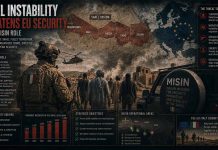
US–IRAN NEGOTIATION REALITY 2026
Crisis-Shaped Minimum Viable Arrangement • Not JCPOA Restoration • April 21, 2026
Not full normalization. Live channel confirmed. Nuclear restraint + verification repair + Hormuz de-escalation + selective sanctions modulation + military risk reduction + face-saving. Post-snapback environment. Coercive advantage converted into controlled bargaining. IAEA advisory role active.
| BASKET | WHAT IS ON THE TABLE | CURRENT STATUS (21 APR 2026) | NOT ON THE TABLE |
|---|---|---|---|
| Nuclear | Restraints on proliferation-sensitive elements + new verification mechanisms | IAEA attended Feb rounds • partial access • damaged JCPOA monitoring | Full 2015 JCPOA restoration or unlimited enrichment |
| Military | Post-Operation Epic Fury de-escalation + ceasefire management | Messages and indirect/direct talks confirmed by Rubio | Complete abandonment of regional deterrence |
| Maritime | Hormuz reopening + energy transit security (20.9M bpd at stake) | Iran agreed to reopening during negotiations | Grand Gulf security treaty |
| Sanctions | Selective modulation + General Licenses (oil, safety) while maintaining pressure | Treasury actions + limited carve-outs continue | Comprehensive sanctions removal or full normalization |
| Verification | Repair of safeguards access and data continuity | IAEA GOV/2026/8 notes ongoing talks and potential benefits | Automatic return to pre-2019 Additional Protocol |
| Political | Face-saving language for both sides | Tehran frames as resistance + talks; Washington as leverage exploitation | Regime change or strategic reconciliation |
Iran’s real strategy: strategic ambiguity, calibrated coercion, survivability, and regional depth
The most defensible high-level reading of Iran’s current grand strategy is not that it is improvising from crisis to crisis, and not that it is pursuing a single ideological script detached from material constraints, but that it is operating a layered doctrine whose center of gravity is regime survivability under permanent pressure. The clearest official outside assessment in the material reviewed for this session is the 2026 Annual Threat Assessment of the U.S. Intelligence Community, which states that Iran’s strategic position faces “extreme challenges” because of potentially regime-threatening conflict and domestic unrest, but that it “retains the ability to project power in the region and to suppress internal threats to the regime’s hold on power.” That formulation is important because it captures the dual logic that explains most of Tehran’s behavior: externally, the state seeks to preserve leverage across several domains at once; internally, it treats vulnerability, elite fracture, and visible capitulation as existential risks. From that perspective, nearly every major move by Iran—its nuclear bargaining line, its insistence on enrichment, its financing architecture, its proxy relationships, and its diplomacy with neighboring states—fits into a single strategic template: never permit adversaries to reduce the state to one channel of pressure, one battlefield, or one decisive point of failure.
The first pillar of that strategy is strategic ambiguity, especially on the nuclear file. Official Iranian messaging does not present the nuclear program as a negotiable prestige project that can simply be traded away for temporary calm; it presents it as part of the country’s lawful and sovereign technological base. In the official Iranian Foreign Ministry update on the latest Iran–U.S. negotiations, spokesman Esmail Baqaei said that the “only subjects” under discussion were the nuclear issue and the lifting of sanctions, that sanctions relief was the key criterion for judging U.S. seriousness, and that the continuation of uranium enrichment in Iran was “a fundamental principle” and any proposal undermining that right was “unacceptable.” In a separate official Foreign Ministry item on 22 February 2026, Foreign Minister Abbas Araghchi told IAEA Director General Rafael Grossi that Iran was determined to engage constructively and to use diplomacy to secure the “legitimate rights and interests” of the Iranian people in the field of peaceful nuclear energy under the NPT and international law. The strategic meaning is straightforward: Tehran is willing to negotiate ceilings, procedures, and sequencing, but it is signaling that it will not accept a formula that equates diplomacy with technological surrender. That is ambiguity by design: the state leaves room for negotiation over scope and tempo while hardening the principle that the program itself remains legitimate and nationally owned.
What makes this ambiguity operational rather than rhetorical is the gap between declared willingness to engage and the incomplete verification picture documented by the IAEA. In GOV/2026/8, the IAEA reports that between the previous report and 29 January 2026, Iran provided access to only four of the six remaining unaffected facilities and that, without access, reports, and declarations, the Agency could not fulfill core safeguards tasks at affected sites; the same report records that the Director General attended the 17 February 2026 indirect negotiations between the United States and Iran and the following round on 26 February 2026, advising on verification issues, while noting that a successful outcome would positively affect safeguards implementation. In other words, Iran is not rejecting diplomacy, but it is preserving a bargaining environment in which access, reporting, and technical clarity remain contingent and therefore politically valuable. This is exactly how strategic ambiguity functions in statecraft: not as chaos, but as a managed zone between full transparency and open rupture, where the uncertainty itself becomes a source of leverage.
The second pillar is calibrated coercion. Iran’s official line is not pacifist, and it does not present diplomacy as a substitute for deterrence. The Office of the Supreme Leader published remarks on 1 February 2026 in which Ayatollah Ali Khamenei said that if the United States started a war “this time, it will be a regional war,” and later, in remarks published on 3 January 2026, he said Iran placed “no trust” in the words of an enemy that he described as deceitful and treacherous. Those statements are not just propaganda slogans; they reveal the signaling architecture of the state. Iran wants adversaries to believe that any attempt to isolate the conflict to a single, punishable, bilateral engagement will fail because escalation will spread horizontally across the region and vertically across domains. This is the logic of calibrated coercion: not to maximize violence at every moment, but to ensure that any adversary contemplating compellence must price in uncertainty, spillover, and the risk of multi-theater retaliation.
That coercive doctrine is reinforced by the official U.S. sanctions record, which indirectly maps the machinery that Washington itself believes Iran uses to sustain pressure capabilities. On 25 February 2026, OFAC said it had sanctioned more than 30 individuals, entities, and vessels enabling illicit petroleum sales and supporting Iran’s ballistic missile and advanced conventional weapons production. The same Treasury statement said that additional vessels in Iran’s shadow fleet serve as a primary source of revenue for financing “domestic repression, terrorist proxies, and weapons programs,” and that multiple networks enabled the IRGC and MODAFL to secure sensitive machinery and precursor materials for reconstituting missile and advanced conventional weapons production, including UAVs. In a separate Treasury action, OFAC said IRGC-Qods Force and MODAFL proceeds were routed through shadow-banking facilitators, overseas front companies, and cryptocurrency, and that these proceeds support regional proxy groups and the development of ballistic missiles and UAVs. Whether one adopts the U.S. policy framing or not, these official actions document a strategic pattern: Iran does not rely on a single overt military budget line to create leverage; it disperses capability through oil revenues, illicit transport, shadow finance, procurement networks, and deniable support mechanisms. That dispersion is what makes coercion calibrated rather than crude.
The third pillar is survivability, and this is where Iran’s doctrine becomes most coherent. Survivability in the Iranian case does not mean merely surviving an invasion; it means ensuring that no adversary can produce a fast, decisive, system-level collapse through sanctions alone, through air power alone, through diplomacy alone, or through domestic destabilization alone. The U.S. Intelligence Community assessment that Iran can still suppress internal threats while projecting regional power aligns with that logic, and so do Iranian official narratives that link negotiation, national rights, military self-defense, and economic resilience into one package. The Foreign Ministry statement released by the Embassy of the Islamic Republic of Iran in Rome during the 2026 conflict explicitly said Iran had entered a diplomatic process even while preparing to defend itself, portraying the country as simultaneously open to diplomacy and ready for resistance. This is not a contradiction inside the Iranian worldview; it is the doctrine. Diplomacy buys time, legitimacy, and potential sanctions relief. Defensive readiness prevents diplomacy from turning into compelled submission. Economic evasion networks reduce the probability that sanctions can force a strategic collapse. Internal security capacity protects the center while external crises are managed. Taken together, these layers create a state posture oriented toward enduring pressure rather than resolving the sources of pressure once and for all.
The fourth pillar is regional depth, which is the mechanism by which Iran transforms local vulnerability into distributed deterrence. The most cautious way to describe this, using the official record reviewed here, is that Washington continues to identify Iran-backed and Iran-aligned armed actors across the region as a live security problem, while Tehran presents its regional diplomacy and security posture as the defense of sovereignty and the management of instability created by others. On 17 April 2026, the U.S. Department of State said it was taking action against militia commanders in Iraq, identifying Kata’ib Hizballah, Kata’ib Sayyid al-Shuhada, and Harakat Ansar Allah al-Awfiya as “Iran-backed terror groups.” Treasury has separately described IRGC-Qods Force funding flows as supporting regional proxy groups, and recent pressure actions describe maximum economic pressure on Iran and its regional proxies. From the Iranian side, official Foreign Ministry material shows intense diplomatic activity with Qatar, Egypt, the United Arab Emirates, Pakistan, Oman, Turkey, India, Saudi Arabia, and China, with repeated emphasis on regional stability, shipping security, and the need to manage the consequences of ongoing conflict. The result is a two-track reality: one security architecture that adversaries describe as an Iran-backed proxy web, and one diplomatic architecture that Iran describes as neighborhood engagement and stabilization. Analytically, both tracks matter because together they constitute regional depth: relationships, influence, and instruments beyond Iran’s borders that complicate any effort to isolate the country strategically.
This regional-depth strategy is also tied to geography and maritime leverage. Official Iranian messaging to India in March 2026 stated that shipping insecurity in the Persian Gulf was a product of U.S. destabilizing actions, while simultaneously reaffirming Iran’s “principled approach to safeguarding shipping security.” Whether one accepts that framing or not, the official statement shows that Tehran sees shipping and the Persian Gulf not as secondary arenas but as central spaces in which sovereignty, blame attribution, and deterrence are contested. Because the Strait of Hormuz remains a globally critical chokepoint, Iran’s ability to influence perceptions of risk there has strategic value well beyond the naval balance alone. This is part of what regional depth means in practice: it is not just about non-state partners or ideological alignments, but about holding positional influence over routes, crises, and adjacent states whose own interests force them to take Iranian preferences seriously even when they mistrust Tehran.
A fifth and often overlooked component is narrative discipline under conditions of pressure. Iran’s official institutions work continuously to ensure that diplomacy never appears to erase resistance, and that resistance never appears to foreclose diplomacy. The Supreme Leader’s office emphasizes distrust of U.S. assurances and warns that any war will become regional; the Foreign Ministry insists simultaneously on constructive engagement, sovereign nuclear rights, sanctions relief, and neighborhood diplomacy; Iran’s communication to the IAEA in INFCIRC/1343 argues that the state’s cooperation and goodwill have been ignored and that military attacks and external measures created a situation in which normal safeguards implementation became extremely difficult. Even though outside observers will dispute parts of that narrative, the strategic function is clear: to preserve domestic cohesion, justify policy flexibility without admitting weakness, and present Iran internationally as a state defending rights rather than defying rules. Narrative discipline is therefore not cosmetic. It is part of how the state preserves room to maneuver between escalation and negotiation.
If these pillars are integrated, the real strategy of Iran can be summarized as follows. Strategic ambiguity preserves bargaining leverage on the nuclear file and prevents adversaries from locking Tehran into a fully transparent, fully controllable compliance architecture. Calibrated coercion raises the expected cost of direct pressure by signaling that conflict will expand across theaters and instruments rather than remain localized. Survivability ensures that the regime is not dependent on one revenue source, one diplomatic channel, one military instrument, or one narrative for its continued existence. Regional depth extends deterrence outward, so that pressure on the center must always account for risks in Iraq, the Gulf, the maritime domain, and the wider political geography of the Middle East. This does not mean Iran is omnipotent, and it does not mean every move is successful. The official IAEA record shows serious constraints and unresolved verification disputes; the official U.S. sanctions record shows sustained pressure on finance, shipping, missiles, and procurement; the official U.S. intelligence record says Iran faces potentially regime-threatening pressures. But it does mean that the state is not operating randomly. It is pursuing a doctrine designed to avoid decisive defeat by forcing every opponent to confront a larger, more entangled, and more persistent problem than the one they initially intended to solve.
The practical implication for analysis is that negotiations with Iran are always negotiations with this doctrine, not merely with a technical nuclear dossier. Any proposal that asks Iran to trade away ambiguity, coercive capacity, survivability tools, and regional depth all at once is almost certain to fail because it would amount, from Tehran’s perspective, to negotiated strategic disarmament. The more realistic bargaining space lies in partial arrangements that cap the most dangerous outputs of this doctrine without pretending to erase the doctrine itself. That is why Iran insists publicly that enrichment remains non-negotiable in principle, that sanctions relief is the metric of seriousness, that diplomacy can proceed, and that regional stability should be managed through engagement with neighbors. Each of those positions protects one pillar of the strategy. In that sense, the state’s behavior is best understood not as simple deception but as a structured attempt to preserve freedom of action under siege.
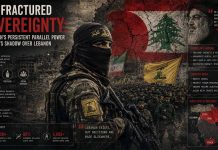
STRATEGIC AMBIGUITY & REGIME SURVIVABILITY
Deep-Dive Mapping of the Layered Iranian Grand Strategy Doctrine (Post-2026 Analysis)
1. Strategic Ambiguity
Managed zone between transparency and rupture. Enrichment as a “fundamental principle” while leaving room for tempo negotiations.
2. Calibrated Coercion
Ensures adversaries price in regional spillover. Signaling horizontal escalation across theaters to deter pinpoint strikes.
3. Survivability
Dispersion of capability through shadow finance, cryptocurrency, and dual military budgets to prevent system-level collapse.
4. Regional Depth
Distributed deterrence via militia commanders in Iraq, Yemen, and Lebanon. Neighborhood engagement as stabilization.
| Strategic Pillar | Mechanism / Evidence | Official Outside Assessment | Current Status |
|---|---|---|---|
| Strategic Ambiguity | Nuclear bargaining; INFCIRC/1343 reports | IAEA GOV/2026/8 (Verification Gap) | High Leverage |
| Calibrated Coercion | Shadow-fleet financing; Proxy revenue | OFAC Feb 2026 Designations | Operational |
| Survivability | Shadow-banking; MODAFL procurement | 2026 Annual Threat Assessment (USIC) | Regime Stable |
| Regional Depth | KH, KSS, & Harakat Ansar Allah Al-Awfiya | Dept of State Action (April 17, 2026) | Distributed |
Russia, the Gulf states, and the post-crisis order: mediation, deterrence, and the next escalation pathways
The post-crisis order now taking shape around Russia, the Gulf states, and Iran is neither a restored regional balance nor a simple reversion to the pre-war status quo; it is a more fractured but also more structured environment in which every principal actor is trying to prevent the next round of escalation from occurring on terms set entirely by someone else. The official record reviewed in this session shows that Russia is actively sustaining diplomatic contact with Iran at high level, including Sergey Lavrov’s 9 April 2026 telephone conversation with Abbas Araghchi, and a later official Russian Foreign Ministry note stating that Araghchi informed Lavrov of the details of Iran–U.S. talks held in Islamabad on 11 April and that the Russian side welcomed continued commitment to a negotiated solution. Those official records matter because they show that Moscow is not a distant commentator but an embedded participant in the diplomatic traffic surrounding the conflict. At the same time, the official GCC record shows a very different regional mood: the 50th Extraordinary Meeting of the GCC Ministerial Council said on 1 March 2026 that it rejected and condemned in the strongest terms what it called Iranian attacks targeting GCC countries, describing them as a serious violation of sovereignty, good-neighbourliness, international law, and the UN Charter; the GCC–EU extraordinary meeting on 5 March 2026 likewise condemned those attacks and called on Iran to cease them immediately. This means the post-crisis regional order is being built on two simultaneous tracks: one in which Russia seeks relevance through brokerage and direct access to Tehran, and another in which the Gulf monarchies seek de-escalation but from a starting point of heightened distrust and recent direct security injury rather than from any assumption of restored confidence.
This duality is the core fact that any serious analysis must start from. Russia’s objective is not identical to that of the Gulf states, even when both say they favor de-escalation. The official Russian Foreign Ministry record indicates that Moscow has been in repeated contact with Iranian leadership throughout the crisis period, including on 2 April, 5 April, 9 April, and after the 11 April Islamabad talks, which implies more than symbolic diplomacy and suggests a sustained effort to remain embedded in the negotiation and crisis-management channel. That pattern is consistent with Russia’s broader regional method: it prefers to be the state that can talk to every camp without fully subordinating itself to any one of them, because its strategic value rises when regional actors fear exclusion from diplomacy or abandonment by traditional patrons. By contrast, the official GCC-UK ministerial statement on 15 March 2026 shows the Gulf side hardening around a more explicit security reading of Iran, recalling prior urges for Iran to curb its nuclear programme and ballistic missile programme and to refrain from destabilising activities, including the use of proxies and interference in the domestic affairs of states; the same statement also emphasized that GCC member states had made extensive diplomatic efforts prior to the attacks and that their territories would not be used to launch attacks against Iran. That last point is strategically central because it reveals the emerging Gulf doctrine: the monarchies want deterrence and protection, but they are also trying to deny Tehran an argument that they are merely forward operating platforms for U.S. or allied attack. This is not neutrality; it is hedging under fire.
Within this geometry, Oman stands out as the most operationally consequential Gulf actor because the official record confirms that it is not merely issuing generic appeals but actively facilitating the U.S.–Iran channel and working the maritime-security problem in parallel. The Omani Foreign Ministry announced on 22 February 2026 that talks between the United States and Iran would resume on Thursday, and on 27 February 2026 it stated that Foreign Minister Sayyid Badr Albusaidi met U.S. Vice President JD Vance in Washington and shared details of the ongoing negotiations and the progress achieved so far. On 5 April 2026, the same ministry reported that Oman and Iran held undersecretary-level talks with specialists from both countries to discuss possible options for ensuring smooth passage through the Strait of Hormuz during the regional crisis. The official Iranian Foreign Ministry separately confirmed on 23 February 2026 that Araghchi and Albusaidi discussed the latest status of the indirect Iran–U.S. negotiations and arrangements for the next round of nuclear talks. Taken together, these records establish Oman as the state most directly linking the diplomatic track to the maritime track, which is vital because the crisis cannot be stabilized if the nuclear file and the chokepoint file are treated as separate. Muscat’s role is therefore not ornamental mediation; it is process engineering at the precise intersection where nuclear bargaining, escalation control, and energy transit meet.
Qatar occupies a different but equally revealing place in the post-crisis order. Official Qatari statements show that Doha supports diplomacy and de-escalation, but has been careful to deny that it is itself conducting direct U.S.–Iran mediation, while also speaking in unusually sharp terms about direct Iranian attacks on its territory and infrastructure. On 21 February 2026, Qatar’s foreign ministry said that the Prime Minister and Foreign Minister had discussed de-escalation with Abbas Araghchi, emphasized the continuation of U.S.–Iran negotiations, and reiterated support for efforts aimed at reducing tensions and achieving peaceful solutions. Yet on 24 March 2026, the official spokesman stressed that Qatar was not engaging in any direct mediation efforts between the United States and Iran, though it backed diplomatic efforts to end the war. More strikingly, on 19 March 2026 the Prime Minister and Foreign Minister called the Iranian attacks on Qatar, including the targeting of the Ras Laffan energy complex, a dangerous escalation and an unacceptable violation threatening regional stability; he said the attack affected a natural gas facility and had significant repercussions for global energy supplies. This means Qatar is not operating as a sentimental bridge between antagonists, but as a highly exposed gas-power state trying to preserve room for diplomacy while making clear that it will not normalize direct attacks on its own strategic assets. In post-crisis structural terms, Qatar is signaling that diplomatic continuity with Iran is possible, but only if Tehran stops trying to externalize conflict onto Gulf infrastructure.
The United Arab Emirates is articulating a complementary logic centered on infrastructure protection and the global consequences of regional escalation. Official UAE material shows that Abu Dhabi participated in the 5 March 2026 extraordinary EU–GCC foreign ministers’ meeting on what it called Iranian aggression against GCC states. On 18 March 2026, the UAE Ministry of Foreign Affairs said that targeting energy facilities linked to the South Pars field—which it described as an extension of Qatar’s North Field—represented a serious escalation and a direct threat to global energy security, as well as to regional security and stability. This official framing is analytically important because it reveals how at least one major Gulf capital is trying to internationalize the costs of escalation: not only by emphasizing sovereignty violations, but by presenting attacks on Gulf-linked energy infrastructure as threats to the global system, thereby strengthening the case for outside diplomatic, legal, and possibly security support. The UAE is thus helping shape a post-crisis order in which critical infrastructure security becomes not merely a national issue but a collective regional and global public-good question. That is likely to matter in future bargaining because it expands the coalition of actors with a material stake in restraining further Iran–Gulf confrontation.
From an energy-security perspective, the emerging order is being built under the shadow of demonstrated vulnerability rather than hypothetical risk. The official U.S. Energy Information Administration record reviewed in this session shows that the military action in the region and the subsequent effective or de facto closure of the Strait of Hormuz had immediate, measurable macroeconomic effects. EIA reported on 10 March 2026 that Brent settled at $94 per barrel on 9 March, about 50% above the beginning of the year, as petroleum shipments through the strait fell and Middle East oil production was shut in. In its April 2026 Short-Term Energy Outlook, EIA said that oil flows through the Strait of Hormuz remained limited, causing storage to fill rapidly in countries relying on the waterway for exports, and estimated that Iraq, Saudi Arabia, Kuwait, the UAE, Qatar, and Bahrain collectively shut in 7.5 million barrels per day of crude oil production in March, rising to 9.1 million barrels per day in April under its assumptions before easing as traffic resumed. EIA also stated that the conflict and effective closure of the strait led the International Energy Agency members to agree to a coordinated emergency release of strategic oil stocks in March 2026, and it described the disruptions to LNG exports through the strait as increasing demand for cargoes from outside the strait, with disruptions mostly concentrated in Qatar representing over 10 Bcf/d, or roughly 20% of global supply, in the cited outlook. These official data points mean that the post-crisis order is not being designed in an abstract geopolitical vacuum; it is being shaped under a newly validated understanding that Gulf infrastructure and transit disruption can rapidly cascade into production shut-ins, price shocks, strategic stock releases, and re-routing pressures across global energy markets.
This energy dimension is precisely why Russia’s role is more complicated than the phrase “mediator” suggests. On one level, Moscow benefits from a regional environment in which its diplomatic access to Iran and its continued relevance to non-Western crisis management are visible. On another level, Russia also benefits financially when conflict or transit risk places upward pressure on hydrocarbon markets. But these benefits are not unlimited, because a fully uncontrolled regional war that permanently degrades export infrastructure, triggers broader external intervention, or produces chaotic price spikes followed by demand destruction would create strategic uncertainty rather than bankable leverage. The safest way to describe Russia’s position, using the official record available here, is that it is pursuing brokerage without ownership: it remains in regular contact with Tehran, welcomes the continuation of negotiations, and presents itself as a power that can contribute to diplomatic solutions, but it does so from a position that avoids formal responsibility for regional stabilization while still letting it harvest political relevance from fragmentation. That is why Moscow’s ideal outcome is neither a decisive Western-aligned settlement nor an all-consuming regional war, but a managed instability in which every actor needs channels and no actor can monopolize them.
The Gulf monarchies, for their part, are converging around a post-crisis doctrine that can be summarized as deterrence without open-front alignment. The official GCC and GCC-UK statements show three key elements of this doctrine. First, they are treating the recent attacks as real violations of sovereignty, not as collateral effects of someone else’s war. Second, they continue to insist that Iran curb not only its nuclear activities but also its ballistic missile program, proxy relationships, and interference in neighboring states. Third, they emphasize that their territories were not to be used to launch attacks against Iran, which is effectively a public attempt to preserve strategic autonomy and reduce the risk of becoming automatic retaliation targets. This is a structurally important shift because it means the Gulf states are trying to keep the benefits of Western or external security ties while simultaneously signaling that they do not consent to being treated as mere appendages of an anti-Iran war machine. In long-range terms, that position may encourage more indigenous air and missile defense integration, more critical-infrastructure hardening, more diversified great-power hedging, and more effort to build deconfliction channels with Iran that remain usable even when the wider regional system is under strain.
The next escalation pathways are therefore likely to cluster around three interlocking arenas rather than around a single decisive battlefield. The first arena is the maritime-energy corridor, especially the Strait of Hormuz, where any renewed disruption can quickly revalidate emergency oil releases, production shut-ins, and infrastructure vulnerability. The second arena is the Iraq–Gulf proxy belt, where the United States is still taking official action against commanders of Iran-aligned militia groups that it says threaten U.S. personnel and undermine Iraq’s sovereignty, showing that the proxy question has not been bracketed out of the post-crisis order but remains one of its live tripwires. The third arena is the nuclear-verification and negotiation track, because if the diplomatic process stalls or if one side concludes the other is using talks only to consolidate battlefield or technological gains, then pressure can migrate rapidly from the technical file back into regional coercive signaling. These arenas are mutually reinforcing: maritime insecurity hardens Gulf and Western negotiating positions; proxy escalation makes it harder for Gulf states to sustain de-escalatory outreach; and nuclear deadlock increases the temptation for all sides to reprice coercive options.
A high-level Analysis of Competing Hypotheses suggests at least five mutually exclusive frameworks for the emerging post-crisis order. Under the first hypothesis, managed restoration, the region drifts toward a limited equilibrium in which Omani mediation, Gulf hedging, and restrained Iranian behavior produce a modestly more stable order focused on transit security and bounded nuclear understandings. Under the second hypothesis, brokered multipolarity, Russia, Oman, and selected Gulf actors collectively erode the old assumption that only the United States can own the regional security architecture, producing a more distributed but more transactional diplomatic environment. Under the third hypothesis, hardened containment, the attacks on GCC territory and infrastructure permanently raise Gulf threat perceptions, leading to tougher missile-defense integration, sharper anti-proxy coordination, and less patience for symbolic reconciliation with Tehran. Under the fourth hypothesis, cyclical coercive equilibrium, diplomacy continues but functions mainly as a pause mechanism between successive rounds of maritime, proxy, and nuclear pressure. Under the fifth hypothesis, systemic relapse, a single new strike on energy infrastructure, a failed negotiation round, or an escalatory proxy action collapses the tentative order and returns the region to acute crisis. Based on the official evidence reviewed here, the strongest near-term fit is a mix of the second, third, and fourth hypotheses: a more multipolar diplomatic scene, a more security-conscious Gulf, and an order stabilized only provisionally by the memory of how costly the last escalation proved to be.
The strategic bottom line is that the post-crisis order is not a peace order. It is an order of constrained maneuver, where Russia seeks to institutionalize its value as a broker, Oman operationalizes diplomacy at the seam between the nuclear and maritime tracks, Qatar and the UAE insist that regional infrastructure and sovereignty cannot be treated as expendable, and the wider GCC tries to combine deterrence, de-escalation, and strategic autonomy in a single posture. That order can hold for a time because every actor now has fresh official evidence of how quickly the system can generate energy shocks, direct attacks on critical facilities, and cross-border escalation. But it remains fragile because the underlying contradictions are unresolved: Iran still wants deterrent depth and freedom of action, the Gulf states still want security without subordination, Russia still wants relevance without full responsibility, and the broader external powers still approach the region through overlapping but not identical priorities. The next phase is therefore unlikely to be defined by formal settlement. It is more likely to be defined by whether these actors can keep the post-crisis order inside the zone of managed instability rather than allowing it to slip back into open systemic rupture.
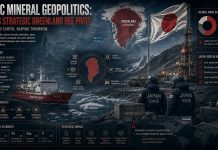
RUSSIA, GULF STATES & POST-CRISIS ORDER
Mediation • Deterrence • Next Escalation Pathways • April 21, 2026
Russia brokers for relevance while Gulf states harden deterrence without full alignment. Oman links nuclear & maritime tracks. Qatar and UAE internationalize infrastructure attacks. Energy shocks (9.1M bpd shut-in, $94 Brent) validate vulnerability. Next pathways: Hormuz, Iraq proxies, nuclear deadlock. Strongest fit: multipolar diplomacy + hardened Gulf posture + provisional stability.
Strongest near-term mix: 2 + 3 + 4 — multipolar diplomacy, hardened Gulf, provisional stability
| ACTOR | OFFICIAL POSITION / ACTION | STRATEGIC LOGIC | IMPLICATION FOR ORDER |
|---|---|---|---|
| Russia | Lavrov–Araghchi calls (2,5,9 Apr) • Welcomes negotiated solution after Islamabad talks (11 Apr) | Brokerage without ownership • Maintain relevance in fragmented diplomacy | Erodes US monopoly on regional architecture |
| Oman | Facilitates US–Iran channel • Undersecretary talks on Hormuz (5 Apr) • Vance meeting (27 Feb) | Links nuclear bargaining to maritime security | Operational seam between tracks |
| Qatar | Condemns attacks on Ras Laffan • Denies direct mediation but supports de-escalation | Exposed gas power preserving diplomatic room while defending infrastructure | Infrastructure attacks not normalized |
| UAE | Internationalizes South Pars / North Field attacks as threat to global energy security | Makes infrastructure a collective public good issue | Expands coalition for restraint |
| GCC | Strong condemnation of Iranian attacks (1 & 5 Mar) • Urges curb on nuclear, missiles, proxies | Deterrence without open-front alignment • Preserve strategic autonomy | Hardened posture + hedging |


