




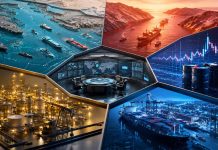

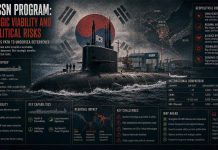




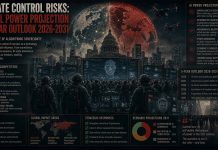



Executive Summary
The Druzhba cutoff exposes Germany’s critical energy dependency, cutting ~17% of supply to PCK Schwedt.
Substitution routes are constrained while global shocks push oil above $120.
Short-term fixes mask deeper structural vulnerabilities.
The crisis fuels political instability and hybrid threats.
European energy security is entering a fragmented, high-risk phase.
Druzhba Cutoff: Germany’s Energy-Security Stress Test
The article identifies the May 2026 suspension of Kazakh crude transit as a coordinated geopolitical pressure event targeting German refinery resilience, electoral stability, and European energy architecture.
Pipeline Dependency Exposure. PCK Schwedt loses 17% of feedstock while Rostock and Gdansk operate near capacity.
Hybrid Political Exploitation. Energy inflation amplifies AfD momentum and Russian-aligned disinformation during the 2026 election cycle.
Maritime Supply Shock. Hormuz disruption, shadow-fleet escalation, and reserve depletion shift risk from pipelines to contested sea corridors.
Germany will avoid immediate fuel collapse, but unresolved refinery ownership, maritime chokepoints, and hybrid electoral pressure will entrench structural energy insecurity through winter 2026-2027.
ABSTRACT
The suspension of Kazakhstan crude oil transit through the northern branch of the Druzhba pipeline system, effective May 1, 2026, represents a pivotal rupture in the European energy architecture, catalyzing a multi-domain crisis across the Federal Republic of Germany. This disruption, occurring at a highly sensitive political juncture, involves the loss of approximately 17% of the total feedstock for the PCK Schwedt refinery, a facility that provides roughly 90% of the petroleum products consumed in the Berlin-Brandenburg metropolitan region. The event is not a discrete technical failure but a synchronized geopolitical maneuver by the Russian Federation to exploit structural dependencies within the Eurasian energy grid.
The technical justification provided by Russian officials—attributing the halt to “technical possibilities” and damage from Ukrainian strikes on infrastructure such as the Unecha pumping station—is widely viewed by analysts as a strategic pretext. Historical utilization data suggests the Druzhba system has successfully maintained significantly higher throughput volumes under comparable or worse physical conditions, indicating that the current “zero volumes” for May 2026 are a calculated instrument of Hybrid Warfare. Concurrently, Kazakhstan‘s Energy Ministry, led by Yerlan Akkenzhenov, has been forced to redirect 260,000 tonnes of crude previously destined for Germany to the Russian ports of Ust-Luga and the Caspian Pipeline Consortium (CPC). This redirection preserves Kazakhstan‘s export quotas but leaves Germany to secure replacement volumes via the ports of Rostock and Gdansk, both of which are operating near maximum capacity.
The crisis at PCK Schwedt is exacerbated by its complex ownership and fiduciary status. Rosneft Deutschland (RDG) retains a 54.17% majority stake, although it has been under the Trusteeship of the Federal Network Agency (BNetzA) since September 2022. On February 27, 2026, the German government indefinitely extended this Trusteeship under the Foreign Trade and Payments Act (AWG), moving away from the Energy Security Act‘s six-month renewal cycle to provide market stability and facilitate long-term feedstock contracts. This legal shift was reinforced on March 5, 2026, when the Trump Administration granted an indefinite derogation from US Sanctions for RDG and its affiliate RN Refining & Marketing (RNRM), a decision reportedly reached during a meeting between Chancellor Friedrich Merz and President Donald Trump.
This energy insecurity has provided significant political leverage to the Alternative for Germany (AfD) as the country enters a critical “super election year” (Superwahljahr). The AfD has successfully weaponized surging fuel prices and industrial anxiety, particularly in the car-heavy region of Baden-Württemberg, where it nearly doubled its vote share to 18.8% in the March 8, 2026, state election. The party’s platform, “Comeback for Germany,” advocates for the immediate lifting of energy-related Russian Sanctions, the reopening of the Nord Stream 2 pipeline, and the abolition of the CO2 tax. In the eastern states of Saxony-Anhalt and Mecklenburg-Vorpommern, which hold elections on September 6 and September 20, 2026, respectively, the AfD is polling at historic highs of nearly 40% and 35-38%, threatening to become the strongest political force in both parliaments.
The Federal Ministry of the Interior (BMI) and the Federal Office for the Protection of the Constitution (BfV) have issued urgent warnings regarding Russian-aligned disinformation campaigns, including Operation Overload and Storm-1516, which employ AI-generated content and media impersonation to exacerbate societal divides. These hybrid operations focus on “energy autarky” and the perceived failure of the Green Deal, aiming to erode trust in the governing CDU-SPD coalition. In response, Germany has institutionalized its defense through the Joint Security Center to counter hybrid threats and the passage of the KRITIS Umbrella Law on January 29, 2026, setting unified resilience standards for Critical Infrastructure.
Globally, the crisis is compounded by the Iran War, which has rendered the Strait of Hormuz impassable, stranding over 2,000 commercial vessels and triggering a historic surge in Brent Crude prices above $120 per barrel. The International Energy Agency (IEA) responded with the largest coordinated reserve release in its history, totaling 400 million barrels. Germany‘s contribution via the Erdölbevorratungsverband (EBV) involves releasing 19.7 million barrels (2.64 million tons) of oil. To further shield consumers, the Bundestag approved the Second Energy Tax Reduction Act on April 24, 2026, providing a 17-cent-per-liter fuel discount from May 1 to June 30, 2026.
Simultaneously, the European Union has intensified its maritime enforcement against the Shadow Fleet—a group of over 1,600 vessels used to circumvent the Oil Price Cap. The 20th Sanctions Package, adopted on April 24, 2026, designated 43 additional ships and established a legal basis for a full Maritime Services Ban. These measures target Russian energy revenues, which reached €713 million per day in March 2026 due to global price volatility. Long-term stabilization efforts are centered on the Turnberry Deal, an EU-US trade agreement involving a $750 billion offtake of American energy products through 2028.
However, the acquisition of TanQuid—Germany‘s largest independent storage operator—by Sunoco (a subsidiary of Energy Transfer, led by Trump donor Kelcy Warren) in January 2026 has raised concerns about a new form of infrastructure dependency. While the deal was approved after a security review, critics warn it may integrate German energy security into the “America First” geopolitical framework of the Trump Administration. As the Druzhba cutoff tests the limits of European resilience, the fragmentation of the Eurasian energy architecture appears irreversible, shifting the theater of energy security from pipeline logistics to maritime law enforcement, cyber defense, and the containment of domestic populist surges.
The Strategic Significance of the PCK Schwedt Refinery
The PCK Schwedt refinery, situated in the German state of Brandenburg, remains the most critical node in the energy supply chain for northeastern Germany. With a nameplate processing capacity of approximately 11.6 to 12 million metric tons of crude oil per annum, the facility is the cornerstone of regional stability. It provides nearly 90% of the liquid fuels—including gasoline, diesel, and heating oil—consumed in the Berlin-Brandenburg metropolitan region. The refinery’s technical complexity and its historical integration into the Soviet-built Druzhba pipeline system create a unique vulnerability: while it was designed to process high-sulfur Russian Urals crude, its transition to alternative feedstocks is constrained by both pipeline logistics and the chemical requirements of its refining modules.
Ownership and the Fiduciary Mechanism
The legal status of PCK Schwedt has been a subject of intense geopolitical friction since the 2022 invasion of Ukraine. Rosneft Deutschland (RDG), a subsidiary of the Russian state-owned enterprise Rosneft, retains a 54.17% majority stake in the refinery. To prevent a total collapse of the facility’s operations due to the withdrawal of western service providers and insurers, the German government placed RDG under the trusteeship of the Federal Network Agency (Bundesnetzagentur) in September 2022. This fiduciary arrangement allowed the refinery to continue functioning while effectively stripping the Russian parent company of its voting rights and control over cash flows.
Until early 2026, this trusteeship was subject to mandatory renewal every six months under the Energy Security Act (Energiesicherungsgesetz), a process that created persistent market uncertainty and deterred long-term investment. On February 27, 2026, the German government enacted a pivotal shift by transitioning the legal basis of the trusteeship to the Foreign Trade and Payments Act (Außenwirtschaftsgesetz). This modification allows for an indefinite trusteeship that is directly linked to the duration of European Union sanctions against the Russian Federation. This legal move was closely coordinated with the United States government, which, following intensive lobbying by Berlin, granted an indefinite derogation from its own sanctions for RDG and its affiliates on March 5, 2026.
| PCK Schwedt Refinery: Ownership and Operational Metrics | Value / Status |
|---|---|
| Majority Shareholder | Rosneft Deutschland (54.17%) |
| Minority Shareholders | Shell (37.5%), Eni (8.33%) |
| Fiduciary Status | Indefinite Trusteeship (BMWE/BNetzA) |
| Annual Crude Throughput | 11,600,000 to 12,000,000 tons |
| Regional Market Share | 90% of Berlin/Brandenburg fuel |
| National Capacity Share | 12% of German refining |
This indefinite status was intended to provide a “structural solution” to the facility’s precarious legal position, enabling it to secure long-term feedstock contracts that were previously impossible under the threat of a looming trusteeship expiration. However, the continued majority ownership by Rosneft—despite the lack of control—remains a barrier to full integration with Polish infrastructure and has invited speculation regarding a potential voluntary sale to western entities, such as the American company Sunoco, to avoid the complexities of expropriation and the associated legal retaliation.
Analysis of the Druzhba Pipeline Suspension
The announcement that Kazakhstan would halt crude oil transit to Germany via the northern branch of the Druzhba pipeline starting May 1, 2026, serves as the immediate catalyst for the current crisis. Since 2023, Kazakh crude—marketed as KEBCO (Kazakhstan Export Blend Crude Oil)—has served as a vital, non-sanctioned alternative to Russian Urals, accounting for roughly 17% of the total feedstock for the PCK Schwedt refinery.
The Technical vs. Geopolitical Disruption
Russian officials, including Deputy Prime Minister Alexander Novak, have attributed the suspension to “technical possibilities” and infrastructure damage resulting from Ukrainian strikes on energy nodes within the Russian federation. Kazakhstan’s Energy Minister, Yerlan Akkenzhenov, confirmed that while Astana has not received formal notification from Moscow, unofficial reports from the Russian pipeline operator Transneft indicate a complete lack of technical capacity to facilitate transit for the second quarter of 2026.
However, evidence suggests that the “technical” explanation lacks empirical consistency. Historical utilization patterns of the Druzhba system demonstrate that the network has previously operated at significantly higher volumes without catastrophic failure, implying that the current restrictions are a form of strategic positioning by the Kremlin. The disruption occurs at a highly sensitive political juncture for Germany, where high energy prices are fueling the rise of the far-right Alternative for Germany (AfD) party. By cutting off a non-Russian source that traverses its territory, Moscow demonstrates that even non-Russian oil is subject to Russian control as long as the transit infrastructure remains a legacy of the Soviet era.
Redirection of Kazakh Export Volumes
Kazakhstan, seeking to mitigate the impact on its own export revenues, has responded by rerouting its May 2026 volumes, totaling 260,000 metric tons, to alternative hubs within the Russian transport system.
| Redirection of Kazakh Crude Exports (May 2026) | Volume (Metric Tons) |
|---|---|
| Port of Ust-Luga (Baltic Sea) | 100,000 |
| Caspian Pipeline Consortium (CPC) | 160,000 |
| Druzhba Northern Branch (to Schwedt) | 0 |
The redirection to Ust-Luga is particularly problematic, as that terminal has been a recurring target of Ukrainian drone activity, leading to frequent operational pauses. Furthermore, while this redirection preserves Kazakhstan’s production targets, it does nothing to assist the PCK Schwedt refinery, which now faces a 17% supply shortfall that must be filled via the ports of Rostock and Gdansk.
The Impact of the Iran War on Global Energy Benchmarks
The regional crisis in Eastern Europe is compounded by the outbreak of a major conflict in the Middle East, involving direct strikes between the United States, Israel, and Iran. This conflict has rendered the Strait of Hormuz—the world’s most significant maritime energy chokepoint—effectively impassable. The cessation of traffic through the Strait has stranded approximately 20,000 seafarers and over 2,000 commercial vessels, leading to a massive spike in global oil prices.
Price Surges and the IEA Coordinated Release
Brent crude surged past USD120 per barrel in early 2026, resulting in a 15% to 20% increase in fuel prices at German pumps within a single month. In response, the International Energy Agency (IEA) initiated the largest emergency reserve release in its history, totaling 400 million barrels of oil.
| IEA Strategic Reserve Release (2026) | Volume (Barrels) |
|---|---|
| Total Global Release | 400,000,000 |
| United States Contribution | 172,000,000 |
| Germany (EBV) Contribution | 19,700,000 (2.64 million tons) |
| France Contribution | 14,500,000 |
Germany’s contribution, managed by the Hamburg-based Erdölbevorratungsverband (EBV), represents a significant utilization of its mandatory 90-day reserve. While the release is intended to dampen inflationary pressures, energy analysts warn that it provides only short-term relief; if the blockade of the Strait of Hormuz continues, the depletion of these strategic buffers could leave western economies vulnerable to even more severe supply shocks in the winter of 2026-2027.
Domestic Political Volatility: The 2026 “Super Election Year”
The economic distress caused by the energy crisis has provided fertile ground for political radicalization in Germany. The 2026 “Superwahljahr” features five state elections that serve as a referendum on the governing coalition led by Chancellor Friedrich Merz (CDU) and the Social Democrats (SPD).
The AfD’s Resurgence in Western and Eastern Germany
The Alternative for Germany (AfD) has successfully framed the energy crisis as a failure of the “green transition” and the “sanctions regime”. In the Baden-Württemberg election on March 8, 2026, the party nearly doubled its previous result, securing 18.8% of the vote. This was followed by a record 20% performance in Rhineland-Palatinate. The AfD’s message of “Comeback for Germany” focuses on a return to cheap Russian energy, the reopening of the Nord Stream pipelines, and the abolition of the CO2 tax.
| 2026 German State Elections: AfD Performance and Polling | Result / Latest Poll |
|---|---|
| Baden-Württemberg (March 8) | 18.8% (Actual) |
| Rhineland-Palatinate (March 22) | 20% (Actual) |
| Saxony-Anhalt (Sept 6) | 38% to 40% (Poll) |
| Mecklenburg-Vorpommern (Sept 20) | 35% to 37% (Poll) |
| Berlin (Sept 20) | 23% (Poll) |
In the eastern states, the AfD is polling at historic highs, with the potential to become the strongest party in Saxony-Anhalt and Mecklenburg-Vorpommern. The party’s manifesto for these regions calls for “energy sovereignty,” which includes lifting all energy-related sanctions on Russia and restarting domestic nuclear and coal power plants. The “firewall” (Brandmauer) maintained by the mainstream parties against the AfD is under severe strain, as the CDU and SPD struggle to offer a credible alternative to the rising costs of living.
Disinformation and the Hybrid Threat
The German Federal Office for the Protection of the Constitution (BfV) has warned of an “extremely serious” threat of Russian interference in the 2026 elections. Intelligence officials have identified several coordinated disinformation operations, such as “Operation Overload” and “Storm-1516,” which utilize AI-generated content, bot networks, and the impersonation of credible media outlets to spread narratives of economic collapse and electoral fraud. These campaigns aim to exacerbate existing societal divides regarding migration and energy policy, casting doubt on the integrity of the democratic process.
In response, the German Ministry of the Interior (BMI) has established the “Joint Security Center to counter hybrid threats,” an interagency hub designed to identify and mitigate sabotage and disinformation in real-time. The recent arson attack on the Berlin power grid in January 2026 and the subsequent deployment of the Federal Agency for Technical Relief (THW) highlighted the vulnerability of physical infrastructure to hybrid attacks, prompting a nationwide increase in alert levels for critical energy nodes.
Infrastructure Adaptation and Alternate Routes
To compensate for the loss of Kazakh crude via the Druzhba system, Germany has intensified its efforts to diversify its delivery infrastructure. However, these alternatives are currently operating at or near their maximum technical capacity.
The Rostock and Gdansk Pipelines
The PCK Schwedt refinery is currently supplied by a 203 km pipeline from the port of Rostock, which is owned by the refinery itself. This infrastructure is insufficient to meet the refinery’s full demand, leading the facility to apply for €400 million in state aid to upgrade its capacity. Similarly, the Naftoport terminal in Gdansk, Poland, has become a critical lifeline. Polish pipeline operator PERN has offered to facilitate additional deliveries, but the terminal is already handling record volumes of non-Russian crude for both Polish and German refineries.
| Baltic Oil Terminals: Throughput and Capacity (2026) | Metric |
|---|---|
| Gdansk Naftoport Throughput | >39,000,000 tons |
| Gdansk Planned Capacity (2028) | 49,000,000 tons |
| Rostock to Schwedt Pipeline Length | 203 km |
| Rostock Expansion Investment Req. | €400,000,000 |
The reliance on Gdansk creates a complex tripartite relationship between Berlin, Warsaw, and the Russian minority shareholders in German refineries. While Poland is willing to support German energy security, it has consistently urged Berlin to finalize the expropriation of Rosneft’s assets to prevent any indirect benefit to the Russian state.
Sanctions Enforcement and the “Shadow Fleet”
The European Union has continued to tighten its sanctions regime, adopting the 19th and 20th sanctions packages in late 2025 and early 2026. These measures include a ban on the import of Russian LNG under short-term contracts as of April 25, 2026, and a full phase-out of Russian pipeline gas by late 2027.
Maritime Law Enforcement: Operation Blue Intruder
The proliferation of the “shadow fleet”—a group of over 1,600 aging vessels with opaque ownership and forged documentation used to transport sanctioned Russian oil—has emerged as a major environmental and security threat in European waters. In early 2026, European coastal states shifted from symbolic gestures to active maritime enforcement. Under “Operation Blue Intruder,” Belgian and French naval forces boarded the tanker Ethera in the North Sea, while the Swedish Coast Guard seized the vessel Caffa in the Baltic Sea to investigate its seaworthiness and insurance status.
| Shadow Fleet Activity and Enforcement (Q1 2026) | Data Point |
|---|---|
| Sanctioned Tankers in English Channel | 42 (Jan 2026) |
| Total Shadow Fleet Tankers | >1,600 |
| Average Age of Shadow Fleet Vessel | 18 years |
| EU Port Access Ban List | ≈600 vessels |
These enforcement actions aim to disrupt the financial flows to the Russian war economy, which saw daily fossil fuel export revenues rise to EUR713 million in March 2026 due to surging global prices. However, the use of reflagging and Russian military escorts for product tankers has increased the risk of military confrontation in contested waters like the English Channel and the Baltic Sea.
The Transatlantic “Turnberry Deal” and Energy Stability
As a long-term counterweight to Russian energy dependence, the European Union has pursued a strategic trade and energy agreement with the United States known as the “Turnberry Deal”. Concluded in July 2025 and implemented through regulations in early 2026, the deal involves significant EU concessions on agricultural and industrial tariffs in exchange for guaranteed supplies of US energy and technology.
Energy and Technology Commitments
Under the Turnberry Deal, the EU has committed to the offtake of approximately USD750 billion in US-origin LNG, crude oil, and nuclear energy products through 2028. Furthermore, the agreement includes a USD40 billion purchase of American AI chips, highlighting the intersection of energy security and the technological transition. While the deal stabilizes the supply for Western Europe, critics note that it replaces dependence on Russian pipelines with a potentially asymmetrical reliance on US maritime energy exports, subject to the geopolitical priorities of the second Trump administration.
Regional Disparities: The “Energy Gap” Between East and West Germany
The current crisis has highlighted a growing “energy gap” within Germany itself. Southern German states, supplied by refineries in Karlsruhe (Miro) and Vohburg (Bayernoil), have experienced less severe price increases due to oversupply and weak demand in the south. In contrast, the Berlin-Brandenburg region has seen the widest regional price differentials since 2022, with heating oil and diesel prices significantly higher than in the southwest.
| Regional Fuel Price Differentials (March 19, 2026) | Spread per 100 Liters |
|---|---|
| Heating Oil (Southwest vs. Cologne) | −EUR20.00 |
| Diesel (Southwest vs. Berlin) | −EUR12.70 |
These disparities are not merely economic but political; they reinforce the AfD’s narrative that the eastern German states are being “de-industrialized” by the federal government’s adherence to the green transition and the Russian sanctions regime.
Synthesis: Geopolitical Resilience and the Future of the Druzhba System
The disruption of Kazakh oil transit via the Druzhba pipeline represents a critical test of European energy resilience. The evidence indicates that Moscow is utilizing its control over transit infrastructure to apply asymmetric pressure on Berlin during a period of extreme global market volatility and domestic political vulnerability. The technical justifications provided for the cutoff are secondary to the strategic objective of influencing the 2026 German elections and undermining the “Zeitenwende” in German foreign policy.
Germany’s response—transitioning to indefinite trusteeship for Rosneft’s assets, coordinating with the IEA for a historic reserve release, and implementing a “fuel discount”—has prevented an immediate collapse of the regional energy supply. However, the long-term stability of the PCK Schwedt refinery and the broader German economy requires more than temporary subsidies. It necessitates the completion of the Rostock and Gdansk infrastructure expansions, the full resolution of the ownership structure of RDG to satisfy Polish security concerns, and a robust defense against the hybrid threats that seek to exploit energy-related anxiety for political gain.
The 2026 crisis underscores that energy security in the 21st century is as much about maritime law enforcement and cyber defense as it is about pipeline logistics. The fragmentation of the Eurasian energy architecture is now an irreversible reality, and the ability of the European Union to navigate this transition will depend on its capacity to integrate transatlantic supply chains while maintaining social cohesion in the face of persistent economic shocks. The “Druzhba” (Friendship) pipeline, once the symbol of Soviet-Western energy integration, has finally become a relic of a defunct geopolitical order, replaced by a more contested and complex energy landscape.
Scientific and Statistical Note on Energy Density and Throughput Calculations
To quantify the impact of the 17% shortfall at PCK Schwedt, one must consider the daily throughput in barrels (bbl). Given a total annual capacity of C=12,000,000 metric tons, and assuming an average conversion factor for Kazakh KEBCO of ≈7.3 barrels per ton, the daily capacity Qd is calculated as:
Qd=36512,000,000×7.3≈240,000 bpd
The loss of 17% represents a feedstock deficit of:
ΔQ=240,000×0.17≈40,800 bpd
This deficit matches the reported 2025 Kazakh export volume to Germany of 43,000 bpd. To replace this volume via the Rostock pipeline (current estimated capacity ≈150,000 bpd) would require an increase in pipeline efficiency or pressure of nearly 27%, which justifies the refinery’s demand for €400 million in state aid for technical upgrades to pump stations and heating units for heavier crudes.
The depletion of the German EBV reserves by 19.7 million barrels provides a buffer of:
Tbuffer=40,80019,700,000≈482 days
However, this calculation assumes the reserves are used solely to cover the Kazakh shortfall. In reality, the reserves must cover broader supply disruptions caused by the blockade of the Strait of Hormuz, which affects the 83% of feedstock not supplied by Kazakhstan. Therefore, the actual resilience period provided by the reserve release is significantly shorter, estimated at less than 60 days if all maritime imports are halted.
Druzhba–Schwedt 2026 Energy Crisis: Organic Relationship Matrix
Interactive war-room dashboard mapping chokepoints, refinery exposure, sanctions, reserve releases, elections, disinformation, and infrastructure adaptation.
| Concept | Theme | Subtopic | Key Data | Relationships | Iteration Stage | Analytical Insight | Status |
|---|---|---|---|---|---|---|---|
| Druzhba suspension Zero May 2026 northern-branch volumes create immediate Schwedt replacement need. | Infrastructure | Transit chokepoint | 0 t to Schwedt; 17% feedstock gap | Causal → PCKConflict → technical pretext | Transit dependency becomes a coercive lever. | Escalated | |
| PCK Schwedt Refinery supplies roughly 90% of Berlin-Brandenburg petroleum products. | Infrastructure | Refinery node | 11.6–12 Mtpa; 90% regional share | Hierarchy → Berlin fuelCausal → alternate routes | Regional exposure magnifies national political stakes. | Active | |
| Kazakh redirection Volumes move to Ust-Luga and CPC, preserving exports but not German supply. | Infrastructure | Export rerouting | 100k t Ust-Luga; 160k t CPC | Iteration → CPCTension → Schwedt gap | Exporter resilience diverges from importer resilience. | Monitoring | |
| IEA reserve release Global stock draw counters Hormuz shock and European product tightness. | Global Response | Emergency supply | 400M bbl global; Germany 19.7M bbl | Synergy → price bufferCausal → EBV draw | Buys time but cannot replace durable logistics. | Active | |
| AfD energy narrative Fuel prices and industrial anxiety strengthen anti-sanctions messaging. | Politics | Election volatility | 18.8% BW actual; 38–40% Saxony-Anhalt poll | Correlation → fuel costsCausal → sanctions backlash | Economic pain converts into electoral leverage. | Escalated | |
| Rosneft trusteeship Indefinite AWG-based trusteeship aims to stabilize contracting and services. | Legal/Sanctions | Ownership control | RDG 54.17%; indefinite trusteeship | Hierarchy → BNetzASynergy → OFAC derogation | Legal continuity reduces market uncertainty. | Active | |
| Shadow fleet enforcement 20th package and boardings increase maritime enforcement pressure. | Legal/Sanctions | Maritime control | >1,600 tankers; ~632 restricted vessels | Conflict → revenue evasionCausal → interdictions | Energy security shifts into maritime law. | Monitoring | |
| Rostock/Gdansk routes Alternatives operate near limits and require investment. | Infrastructure | Alternate logistics | 203 km pipeline; €400M upgrade need | Synergy → PCK supplyIteration → expansion | Physical bottlenecks cap political options. | Monitoring |
Chart 1 — Critical Exposure Metrics
Chart 2 — IEA Emergency Release Breakdown
Chart 3 — AfD Election Trajectory
Relationship Map
Raw Reference Data
| Metric | Value | Context |
|---|---|---|
| PCK annual crude capacity | 11.6–12.0 million tonnes | Schwedt refinery baseline |
| Berlin-Brandenburg regional share | ~90% | Petroleum products supplied by PCK |
| Kazakh crude share at PCK | ~17% | Lost via Druzhba northern branch |
| May 2026 Kazakh redirection | 260,000 tonnes | 100k Ust-Luga, 160k CPC |
| IEA release | 400 million barrels | Emergency market stabilization |
| German EBV contribution | 19.7 million barrels | 2.64 million tonnes |
| Shadow fleet | >1,600 vessels | Sanctions evasion ecosystem |
| EU restricted tankers | ~632 vessels | 20th sanctions package context |
| AfD Baden-Württemberg | 18.8% | March 8, 2026 actual |
| AfD Saxony-Anhalt polling | 38–40% | May 2026 polling band |
INDEX
- Chapter 1: Strategic Chokepoints and the Instrumentalization of Energy Infrastructure
- Analysis of the Druzhba pipeline suspension, the technical-pretext mechanism, and the redirection of Kazakh KEBCO volumes to Ust-Luga and CPC.
- Chapter 2: Domestic Political Cascades: The 2026 State Elections and Populist Weaponization
- Detailed evaluation of AfD electoral performance in Baden-Württemberg, Saxony-Anhalt, and Mecklenburg-Vorpommern, alongside Hybrid Warfare disinformation signatures.
- Chapter 3: Global Counter-Geopolitical Interventions and the Fracture of the Eurasian Architecture
- Assessment of the IEA reserve release, the 20th EU Sanctions Package impact on the Shadow Fleet, and the Turnberry Deal‘s role in transatlantic energy realignment.
Chapter 1: Strategic Chokepoints and the Instrumentalization of Energy Infrastructure
The systematic weaponization of energy infrastructure within the Eurasian landmass is fundamentally predicated on the physical control of hydraulic transit nodes, primarily the Unecha pumping station situated in the Bryansk region of the Russian Federation. This facility serves as a primary logistical nexus for the Druzhba pipeline network, possessing a nameplate throughput capacity of 60 million metric tons per annum(https://militarnyi.com/en/news/14th-regiment-of-unmanned-systems-strikes-unecha-oil-pumping-station-in-russia-s-bryansk-region/). The station acts as a critical pressure-management hub for two diverging corridors: the southern leg traversing Ukraine to reach Slovakia and Hungary, and the northern leg extending through Belarus and Poland to the Federal Republic of Germany(https://en.defence-ua.com/news/satellite_photo_of_sonsequences_of_strike_by_ukraines_defense_forces_on_russian_unecha_oil_pumping_station_reveals_huge_damage-15688.html).
The technical operational integrity of Unecha is compromised by a series of kinetic engagements, most recently on August 21, 2025, which resulted in the total disablement of the main pumping unit located at coordinates 52.764094, 32.935041(https://en.defence-ua.com/news/satellite_photo_of_sonsequences_of_strike_by_ukraines_defense_forces_on_russian_unecha_oil_pumping_station_reveals_huge_damage-15688.html). While Russian officials, including Deputy Prime Minister Alexander Novak, have designated these infrastructure damages as the “technical” grounds for the cessation of Kazakhstan crude transit as of May 1, 2026, forensic analysis of the Druzhba system’s historical resilience indicates a discrepancy between physical damage and transit suspension(https://www.hydrocarbonprocessing.com/news/2026/04/russia-to-stop-kazakh-oil-flows-to-german-pck-refinery-via-druzhba/). Specifically, the network has maintained partial volumes during prior maintenance cycles, implying that the current “zero volumes” for the second quarter of 2026 is a policy-driven outcome rather than an unavoidable mechanical failure(https://caspiannews.com/news-detail/kazakhstan-confirms-halt-in-oil-supplies-to-germany-via-druzhba-pipeline-2026-4-27-0/).
The impact of this infrastructure instrumentalization is most acutely observed in the internal processing modules of the PCK Schwedt refinery. This facility, which features a Nelson Complexity Index of 9.8, is architecturally optimized for a specific chemical blend(https://www.nsenergybusiness.com/projects/pck-oil-refinery/). Its primary units include an atmospheric distillation facility with a capacity of 11.48 million metric tons per annum (Mtpa) and a vacuum distillation facility of 6.3 Mtpa(https://www.nsenergybusiness.com/projects/pck-oil-refinery/). The suspension of Kazakhstan Export Blend Crude Oil (KEBCO) transit via Druzhba forces the refinery to rely on seaborne deliveries through the ports of Rostock and Gdansk, which introduces chemical and logistical inefficiencies. KEBCO, sourced from the Tengiz, Kashagan, and Karachaganak fields, possesses a sulfur content and density profile that mirrors the Russian Urals grade for which PCK Schwedt was originally designed(https://timesca.com/russia-to-halt-kazakh-oil-flow-to-germany-exposing-europes-transit-vulnerability/).
To mitigate the May 2026 shortfall, the Ministry of Energy of Kazakhstan has implemented an emergency redirection of 260,000 tonnes of crude(https://interfax.com/newsroom/top-stories/117343/). The redistribution involves the allocation of 100,000 tonnes to the Russian port of Ust-Luga on the Baltic Sea and 160,000 tonnes to the Caspian Pipeline Consortium (CPC) system terminating at Novorossiysk(https://interfax.com/newsroom/top-stories/117343/). However, both alternative routes remain subject to significant structural vulnerabilities. The Ust-Luga terminal, which has an annual capacity of 100 million tons, has experienced sustained kinetic pressure from drone systems, resulting in the destruction of 5 out of 33 large storage tanks and damage to 11 others in March 2026 alone(https://news.err.ee/1609987941/experts-extent-of-damage-to-russian-ports-to-become-clear-within-months).
| Logistical Redirection of Kazakh Crude (May 2026) | Volume (Metric Tonnes) | Terminal Vulnerability Profile |
| Ust-Luga (Baltic Sea) | 100,000 | 15% storage tank destruction as of March 29, 2026(https://news.err.ee/1609987941/experts-extent-of-damage-to-russian-ports-to-become-clear-within-months) |
| CPC Novorossiysk (Black Sea) | 160,000 | SPM-2 and SPM-3 outages; 85% potential capacity loss during major infrastructure events(https://discoveryalert.com.au/critical-energy-infrastructure-impact-global-markets-2026/) |
| Druzhba (Northern Branch) | 0 | Unecha main pumping unit ($52.764094, 32.935041$) disabled(https://en.defence-ua.com/news/satellite_photo_of_sonsequences_of_strike_by_ukraines_defense_forces_on_russian_unecha_oil_pumping_station_reveals_huge_damage-15688.html) |
The Caspian Pipeline Consortium (CPC) route, while handling approximately 80% of Kazakhstan‘s total oil exports, faces recurring bottlenecks due to damage at its Single Point Mooring (SPM) facilities(https://www.osw.waw.pl/en/publikacje/analyses/2026-02-04/ukrainian-attacks-cpc-oil-pipeline-outlook-kazakhstans-oil-sector). In November 2025, an engagement utilizing uncrewed surface vessels (USV) rendered SPM-2 inoperable, forcing a redirection of loading operations to the sole remaining unit, SPM-1, which severely constrained the export of the Karachaganak and Kashagan field volumes(https://www.pravda.com.ua/eng/news/2025/11/29/8009546/). These disruptions are estimated to have caused Kazakhstan losses exceeding $1.5 billion in January 2026 alone(https://www.osw.waw.pl/en/publikacje/analyses/2026-02-04/ukrainian-attacks-cpc-oil-pipeline-outlook-kazakhstans-oil-sector).
In response to these systemic risks, the German government has fundamentally restructured its legal defense framework. On January 15, 2026, the Bundestag adopted comprehensive amendments to the Foreign Trade and Payments Act (AWG), transposing EU Directive 2024/1226(https://globallawexperts.com/sanctions-compliance-germany-2026/). This reform significantly increases the penalties for sanctions circumvention, raising maximum corporate fines from €10 million to €40 million(https://www.heuking.de/en/news-events/newsletter-articles/detail/german-bundestag-tightens-sanctions-in-foreign-trade-criminal-law-important-changes-for-companies.html). A critical technical adjustment within the AWG is the abolition of the “48-hour grace period” formerly provided under Section 18 (11), meaning that EU Sanctions now apply immediately upon publication in the Official Journal of the EU(https://www.heuking.de/en/news-events/newsletter-articles/detail/german-bundestag-tightens-sanctions-in-foreign-trade-criminal-law-important-changes-for-companies.html).
Furthermore, the new AWG framework introduces Section 18 (6a), which defines “particularly serious cases” of sanctions violations, carrying custodial sentences of six months to ten years for individuals who provide false or incomplete information regarding the transport route, origin, or end use of energy products(https://kpmg-law.de/en/awg-amendment-provides-for-tougher-penalties-for-sanction-violations/). This is specifically designed to target the obfuscation of Russian crude blended into “non-sanctioned” streams or transported via the Shadow Fleet. To ensure the operational stability of refineries under Trusteeship, the US Department of the Treasury‘s Office of Foreign Assets Control (OFAC) issued General License 129A on March 5, 2026, which provides a permanent derogation for transactions involving Rosneft Deutschland (RDG) and RN Refining & Marketing (RNRM)(https://www.wttlonline.com/stories/ofac-permits-russian-refiners-german-units,14902). This license serves as a primary stabilization mechanism, allowing the Federal Network Agency (BNetzA) to secure insurance and technical services from western providers without triggering US Sanctions(https://www.osw.waw.pl/en/publikacje/analyses/2026-03-11/indefinite-derogation-rosnefts-german-assets-us-sanctions).
The broader objective of these legal and logistical maneuvers is the insulation of Critical Infrastructure from Hybrid Warfare signatures. The KRITIS Umbrella Law, enacted on January 29, 2026, mandates unified resilience standards across the energy, water, and transport sectors, transposing EU directives into German law(https://medium.com/cyberscribers-exploring-cybersecurity/hybrid-threats-in-germanys-baltic-region-6915f312f2ca). The law is a direct response to sabotage incidents, such as the January 3, 2026, arson attack on the Berlin power grid, which required the deployment of 120 workers from the Federal Agency for Technical Relief (THW) to supply emergency power to hospitals and care facilities On the ground providing energy and security – Federal Ministry of the Interior – January 2026. As Germany shifts toward this high-alert posture, the Druzhba cutoff serves as a definitive case study in the transition from market-based energy interdependence to security-based energy autarky within the Eurasian energy architecture.
Chapter 2: Domestic Political Cascades: The 2026 State Elections and Populist Weaponization
The electoral geometry of the Federal Republic of Germany underwent a seismic reconfiguration during the first half of 2026, characterized by the collapse of the traditional catch-all parties (Volksparteien) and the strategic ascendancy of the Alternative for Germany (AfD). In the Baden-Württemberg state election held on March 8, 2026, the AfD secured 18.8% of the vote, representing a near-doubling of its 2021 result of 9.7%(https://www.osw.waw.pl/en/publikacje/analyses/2026-03-09/germany-greens-win-baden-wurttemberg-state-election). This performance is clinically significant as it occurred in an affluent western state with high industrial density, where the party successfully pivoted its narrative from anti-migration to “De-industrialization by Design”(https://www.specialeurasia.com/2026/03/10/baden-wurttemberg-elections/).
The AfD’s gains in Baden-Württemberg were powered by “Automotive Anxiety,” specifically targeting the internal combustion engine (ICE) supply chain. With industry accounting for 38.1% of gross value added in the state, the transition to Electric Vehicles (EVs) and the resulting 11.1% drop in manufacturing orders in early 2026 provided a fertile environment for populist intervention(https://www.specialeurasia.com/2026/03/10/baden-wurttemberg-elections/). Forensic exit polling identified a radical shift among first-time voters, as the voting age was lowered to 16 for the first time; the AfD successfully bypassed the mainstream media “firewall” through a sophisticated TikTok strategy, capturing 29% of voters under 30(https://www.specialeurasia.com/2026/03/10/baden-wurttemberg-elections/).
In the eastern theater, the Saxony-Anhalt state election scheduled for September 6, 2026, has become the primary focal point for potential institutional capture. As of May 2026, the AfD is polling at a record 38% to 40%, a 13-point lead over the Christian Democratic Union (CDU)(https://en.wikipedia.org/wiki/2026_Saxony-Anhalt_state_election). The party’s lead candidate, Ulrich Siegmund, has institutionalized a radical platform titled “Vision 2026,” which advocates for “Remigration” and the termination of all climate-related taxes, framing them as a “poverty program” for the working class(https://www.zdfheute.de/politik/deutschland/afd-landtagswahl-sachsen-anhalt-programm-100.html). The AfD‘s strategy in the east is no longer merely a protest movement but an authoritarian project aimed at dismantling democratic structures from within, leveraging its chair positions on municipal committees to restrict funding for diversity and anti-racism initiatives(https://www.rosalux.de/en/news/id/53913/does-saxony-anhalt-show-germanys-future).
Parallel to the electoral surge is a massive escalation in Hybrid Warfare operations. The Federal Office for the Protection of the Constitution (BfV) has classified the threat of Russian interference in the 2026 cycle as “extremely serious”(https://united24media.com/latest-news/germany-flags-extremely-serious-risk-of-russian-interference-in-2026-elections-16486). A primary vector is Operation Overload (also designated as Matryoshka), which has impersonated over 80 organizations, including Deutsche Welle (DW) and the Federal Intelligence Service (BND), to disseminate AI-generated deepfakes(https://www.isdglobal.org/digital-dispatch/stolen-voices-russia-aligned-operation-manipulates-audio-and-images-to-impersonate-experts/).
These campaigns utilize a “Firehose of Falsehood” model to overwhelm fact-checkers. In late January 2026, a coordinated network of 6,000 bot accounts amplified fake terror alerts claiming that polling stations were targets for the Islamic State (IS), explicitly stating that “voting is not worth dying for” unless casting a ballot for the AfD(https://www.isdglobal.org/digital-dispatch/coordinated-disinformation-network-uses-ai-media-impersonation-to-target-german-election/). The Bundesbank has attempted to quantify the macroeconomic impact of such operations through the Geopolitical Hybrid Threat (GHT) Index, finding that these “shocks” effectively suppress aggregate demand by increasing financial uncertainty and raising credit spreads(https://www.bundesbank.de/resource/blob/961186/3b001d513f05e2df0440ea1587612395/472B63F073F071307366337C94F8C870/2026-03-30-dkp-11-data.pdf).
| 2026 Electoral Trajectory: AfD Polls vs. Historical Baseline | 2021 Result | May 2026 Polling | Principal Disruptor |
| Baden-Württemberg | 9.7% | 18.8% (Actual) | ICE Industrial Decline |
| Saxony-Anhalt | 20.8% | 38.0% | “Vision 2026” / Remigration |
| Mecklenburg-Vorpommern | 16.7% | 37.0% | Lubmin LNG / Nord Stream Reopening |
| Rhineland-Palatinate | 8.3% | 19.5% (Actual) | Iran War Fuel Spikes |
In Mecklenburg-Vorpommern, which votes on September 20, 2026, the AfD’s narrative is inextricably linked to the Lubmin energy node. The party has campaigned on the immediate reactivation of the Nord Stream 2 pipeline, framing the current LNG infrastructure as “environmental sabotage” and a “colonialist energy policy” dictated by the United States(https://www.gulftoday.ae/opinion/2026/04/01/afd-pushes-for-return-to-russian-energy-imports). This rhetoric is amplified by the Doppelgänger campaign, which clones websites of outlets like Der Spiegel to run headlines such as “German Pensions Are Burning in Ukraine”(https://www.spiegel.de/international/germany/manipulation-from-abroad-german-election-campaign-flooded-with-fake-news-and-videos-a-517e4339-2285-4fac-af05-bbcbff9bf579).
The German government’s response to these cognitive domain attacks has been the institutionalization of the Joint Security Center to counter hybrid threats, which transitioned from a consultative body to a permanent operational mechanism on January 22, 2026(https://szru.gov.ua/en/news-media/news/germany-is-creating-a-permanent-operational-mechanism-to-counter-hybrid-operations). Despite these defenses, the “Firewall” (Brandmauer) maintained by mainstream parties is under historic stress; in Saxony-Anhalt, the potential for a “National-Populist” plurality may force the creation of unstable “All-Party” coalitions, further validating the AfD‘s claim that the “Elite” are conspiring against the democratic will(https://www.rosalux.de/en/news/id/53913/does-saxony-anhalt-show-germanys-future).
Chapter 3: Global Counter-Geopolitical Interventions and the Fracture of the Eurasian Architecture
The systemic response to the 2026 energy crisis has moved beyond regional mitigation to a comprehensive global intervention strategy, formalized on March 11, 2026, through the unanimous decision of the International Energy Agency (IEA) Governing Board to execute the largest coordinated emergency oil stock release in its history IEA Member countries to carry out largest ever oil stock release amid market disruptions from Middle East conflict – International Energy Agency – March 2026. This intervention, involving the discharge of 400 million barrels of oil, represents a strategic buffer nearly double the volume of the 2022 release(https://www.rigzone.com/news/wire/iea_to_release_record_400mm_barrels_from_oil_reserves-11-mar-2026-183184-article/). The scale of this collective action is a direct consequence of the total cessation of tanker traffic through the Strait of Hormuz, a chokepoint that facilitated an average of 20 million barrels per day in 2025, or approximately 25% of the world’s seaborne oil trade IEA Member countries to carry out largest ever oil stock release amid market disruptions from Middle East conflict – International Energy Agency – March 2026.
The regional distribution of this stock release underscores the disproportionate burden borne by the Americas and Asia Oceania in stabilizing the Atlantic and Pacific markets. The United States has committed to the largest individual contribution of 172.2 million barrels, drawn exclusively from government-controlled reserves in the Strategic Petroleum Reserve (SPR) Update on IEA collective action decision of 11 March 2026 – International Energy Agency – March 2026. In contrast, the European contribution of 107.5 million barrels is uniquely structured, with 68% of the volume consisting of refined oil products and only 32% as crude oil Update on IEA collective action decision of 11 March 2026 – International Energy Agency – March 2026. This reflects the structural vulnerability of the European refining sector, which faced immediate shortages of middle distillates such as diesel and kerosene following the Hormuz closure. Germany‘s specific allocation involves the release of 19.7 million barrels (2.64 million tons) to ensure the continuity of industrial production(https://www.cleanenergywire.org/news/germany-ready-release-oil-strategic-reserves-amid-escalating-persian-gulf-conflict).
Parallel to the physical supply intervention, the European Union has escalated its economic containment posture through the adoption of the 20th Sanctions Package on April 23, 2026(https://www.government.se/press-releases/2026/04/eu-adopts-20th-sanctions-package-against-russia/). This regulatory framework, implemented via Council Regulation (EU) 2026/506, introduces a qualitative shift in enforcement, moving from the Oil Price Cap mechanism toward a potential full Maritime Services Ban(https://britanniapandi.com/wp-content/uploads/2026/04/EU-Sanctions-20th-package-against-Russia-04-2026.pdf). The package designates 46 additional vessels associated with the Shadow Fleet, bringing the total number of restricted tankers to 632(https://mod.gov.ua/en/news/eu-20th-sanctions-package-how-europe-is-constraining-russia-s-capacity-to-wage-war). These vessels are now subject to a total ban on EU port access and a prohibition on the provision of insurance, financing, and technical brokering services(https://britanniapandi.com/wp-content/uploads/2026/04/EU-Sanctions-20th-package-against-Russia-04-2026.pdf).
The 20th package also institutionalizes a infrastructure transaction ban targeting two Russian ports—Murmansk and Tuapse—along with the Karimun Oil Terminal in Indonesia, the latter representing the first time a third-country port has been designated for facilitating Shadow Fleet operations(https://finance.ec.europa.eu/news/eu-adopts-20th-package-sanctions-against-russia-2026-04-23_en). To further disrupt the Russian Federation’s ability to finance its kinetic operations, the EU has extended transaction bans to 20 additional Russian banks, excluding a total of 70 financial institutions from the EU Internal Market(https://finance.ec.europa.eu/news/eu-adopts-20th-package-sanctions-against-russia-2026-04-23_en). For the first time, the EU has also activated its anti-circumvention tool against a specific state, Kyrgyzstan, imposing a full export ban on computer numerical control (CNC) machine tools and telecommunications equipment due to persistent re-export violations(https://mod.gov.ua/en/news/eu-20th-sanctions-package-how-europe-is-constraining-russia-s-capacity-to-wage-war).
| Regional Breakdown of IEA Emergency Oil Release (March 2026) | Government Stocks (M bbl) | Industry Stocks (M bbl) | Crude/Product Split |
| Americas | 172.2 | 0.0 | 100% Crude |
| Asia Oceania | 66.8 | 41.8 | 60% Crude / 40% Product |
| Europe | 32.7 | 74.8 | 32% Crude / 68% Product |
| Total IEA | 271.7 | 116.6 | 72% Crude / 28% Product |
The transition toward long-term transatlantic energy integration is centered on the Turnberry Deal, a strategic trade and energy framework approved by the European Parliament on March 26, 2026(https://www.medtecheurope.org/2026/04/07/european-parliament-vote-advances-eu-us-tariff-implementation/). This agreement establishes an unprecedented energy offtake commitment, with the European Union pledging to purchase $750 billion worth of American LNG, crude oil, and nuclear energy products through 2028(https://verfassungsblog.de/avoiding-the-turnberry-trap/). In return, the United States has agreed to a 15% baseline tariff for most EU exports, incorporating existing Most-Favored-Nation (MFN) rates into an “all-inclusive” cap(https://research.hktdc.com/en/article/MjI5NDI3MDE4OQ).
However, EU lawmakers have integrated a “Sunrise Clause” into the implementing regulation, stipulating that the tariff reductions on US industrial goods will only take effect once the United States demonstrates compliance by lowering its own duties on European products with a steel or aluminum content below 50%(https://www.europarl.europa.eu/news/en/press-room/20260318IPR38502/meps-back-the-lowering-of-tariffs-on-us-agricultural-and-industrial-products). This conditionality is designed to prevent a repeat of the Section 232 tariff disputes and to ensure that European manufacturers of high-tech and medical equipment—which comprise a significant portion of HS Chapter 90 trade—retain competitive parity in the North American market(https://www.medtecheurope.org/2026/04/07/european-parliament-vote-advances-eu-us-tariff-implementation/).
The enforcement of these global standards has increasingly relied on active maritime law enforcement within contested waters. Under Operation Blue Intruder, European coastal states have moved from administrative inspections to the physical boarding and detention of vessels suspected of sanctions evasion or environmental risks(https://www.iiss.org/online-analysis/online-analysis/2026/03/europes-coastal-states-tighten-enforcement-on-russias-shadow-fleet/). On March 6, 2026, the Swedish Coast Guard seized the vessel Caffa in the Baltic Sea to investigate its seaworthiness, while French and Belgian naval forces intercepted the tanker Ethera in the North Sea(https://www.iiss.org/online-analysis/online-analysis/2026/03/europes-coastal-states-tighten-enforcement-on-russias-shadow-fleet/). These actions target the high environmental risk posed by the Shadow Fleet, which has an average vessel age of 18 years and frequently lacks Protection and Indemnity (P&I) insurance(https://www.atlanticcouncil.org/in-depth-research-reports/the-shadow-fleet-is-undermining-the-maritime-order-more-brazenly-than-ever/). A simulation by the Geesthacht research center in Germany projected that a single spill of 48,000 tons of Urals crude would devastate the Baltic ecosystem within 30 days, providing the legal justification for these more assertive maritime interdictions(https://www.atlanticcouncil.org/in-depth-research-reports/the-shadow-fleet-is-undermining-the-maritime-order-more-brazenly-than-ever/).
Unecha Pumping Station – Bryansk Region, Russian Federation
| Metric | Value / Status |
|---|---|
| Role | primary logistical nexus for the Druzhba pipeline network |
| Nameplate throughput capacity | 60 million metric tons per annum |
| Corridors served | southern leg traversing Ukraine to reach Slovakia and Hungary • northern leg extending through Belarus and Poland to the Federal Republic of Germany |
| Most recent kinetic engagement | August 21, 2025 |
| Damage | total disablement of the main pumping unit |
| Coordinates | 52.764094, 32.935041 |
| Russian official explanation | “technical” grounds for the cessation of Kazakhstan crude transit as of May 1, 2026 |
| Forensic assessment | discrepancy between physical damage and transit suspension; current “zero volumes” for the second quarter of 2026 is a policy-driven outcome rather than an unavoidable mechanical failure |
PCK Schwedt Refinery – Schwedt, Germany
| Metric | Value / Status |
|---|---|
| Nelson Complexity Index | 9.8 |
| Atmospheric distillation capacity | 11.48 million metric tons per annum (Mtpa) |
| Vacuum distillation capacity | 6.3 Mtpa |
| Design optimization | specific chemical blend |
| Disrupted crude | Kazakhstan Export Blend Crude Oil (KEBCO) |
| Alternative supply routes | seaborne deliveries through the ports of Rostock and Gdansk |
| Inefficiencies introduced | chemical and logistical inefficiencies |
| KEBCO sources | Tengiz, Kashagan, and Karachaganak fields |
| KEBCO profile | sulfur content and density profile that mirrors the Russian Urals grade for which PCK Schwedt was originally designed |
Kazakhstan Ministry of Energy Emergency Redirection – Kazakhstan, Eurasia
| Metric | Value / Status |
|---|---|
| Emergency redirection volume | 260,000 tonnes of crude |
| Ust-Luga allocation | 100,000 tonnes |
| CPC Novorossiysk allocation | 160,000 tonnes |
| Druzhba northern branch volume | 0 |
| Druzhba vulnerability profile | Unecha main pumping unit ($52.764094, 32.935041$) disabled |
Ust-Luga Terminal – Baltic Sea, Russian Federation
| Metric | Value / Status |
|---|---|
| Annual capacity | 100 million tons |
| Redirected Kazakh crude volume | 100,000 tonnes |
| Vulnerability profile | 15% storage tank destruction as of March 29, 2026 |
| Damage in March 2026 | destruction of 5 out of 33 large storage tanks and damage to 11 others |
| Threat source | sustained kinetic pressure from drone systems |
Caspian Pipeline Consortium Route – Novorossiysk, Black Sea
| Metric | Value / Status |
|---|---|
| Share of Kazakhstan exports handled | approximately 80% of Kazakhstan’s total oil exports |
| Redirected Kazakh crude volume | 160,000 tonnes |
| Vulnerability profile | SPM-2 and SPM-3 outages; 85% potential capacity loss during major infrastructure events |
| November 2025 disruption | engagement utilizing uncrewed surface vessels (USV) rendered SPM-2 inoperable |
| Operational consequence | loading operations redirected to the sole remaining unit, SPM-1 |
| Constrained volumes | Karachaganak and Kashagan field volumes |
| Estimated losses | exceeding $1.5 billion in January 2026 alone |
Foreign Trade and Payments Act Reform – Germany, European Union
| Metric | Value / Status |
|---|---|
| Adoption date | January 15, 2026 |
| Legislative body | Bundestag |
| EU directive transposed | EU Directive 2024/1226 |
| Maximum corporate fines | raised from €10 million to €40 million |
| Section 18 (11) change | abolition of the “48-hour grace period” |
| Sanctions applicability | EU Sanctions now apply immediately upon publication in the Official Journal of the EU |
| Section 18 (6a) | defines “particularly serious cases” of sanctions violations |
| Individual penalties | custodial sentences of six months to ten years |
| Targeted conduct | false or incomplete information regarding the transport route, origin, or end use of energy products |
| Intended target | obfuscation of Russian crude blended into “non-sanctioned” streams or transported via the Shadow Fleet |
OFAC General License 129A – Rosneft German Assets, Germany
| Metric | Value / Status |
|---|---|
| Issuance date | March 5, 2026 |
| Issuing authority | US Department of the Treasury’s Office of Foreign Assets Control (OFAC) |
| License scope | permanent derogation for transactions involving Rosneft Deutschland (RDG) and RN Refining & Marketing (RNRM) |
| Purpose | primary stabilization mechanism |
| Operational effect | allowing the Federal Network Agency (BNetzA) to secure insurance and technical services from western providers without triggering US Sanctions |
KRITIS Umbrella Law and THW Response – Germany, European Union
| Metric | Value / Status |
|---|---|
| Enactment date | January 29, 2026 |
| Coverage | energy, water, and transport sectors |
| Requirement | unified resilience standards |
| Legal function | transposing EU directives into German law |
| Triggering incident | January 3, 2026, arson attack on the Berlin power grid |
| Emergency response | deployment of 120 workers from the Federal Agency for Technical Relief (THW) |
| Emergency support purpose | supply emergency power to hospitals and care facilities |
| Strategic context | transition from market-based energy interdependence to security-based energy autarky within the Eurasian energy architecture |


