







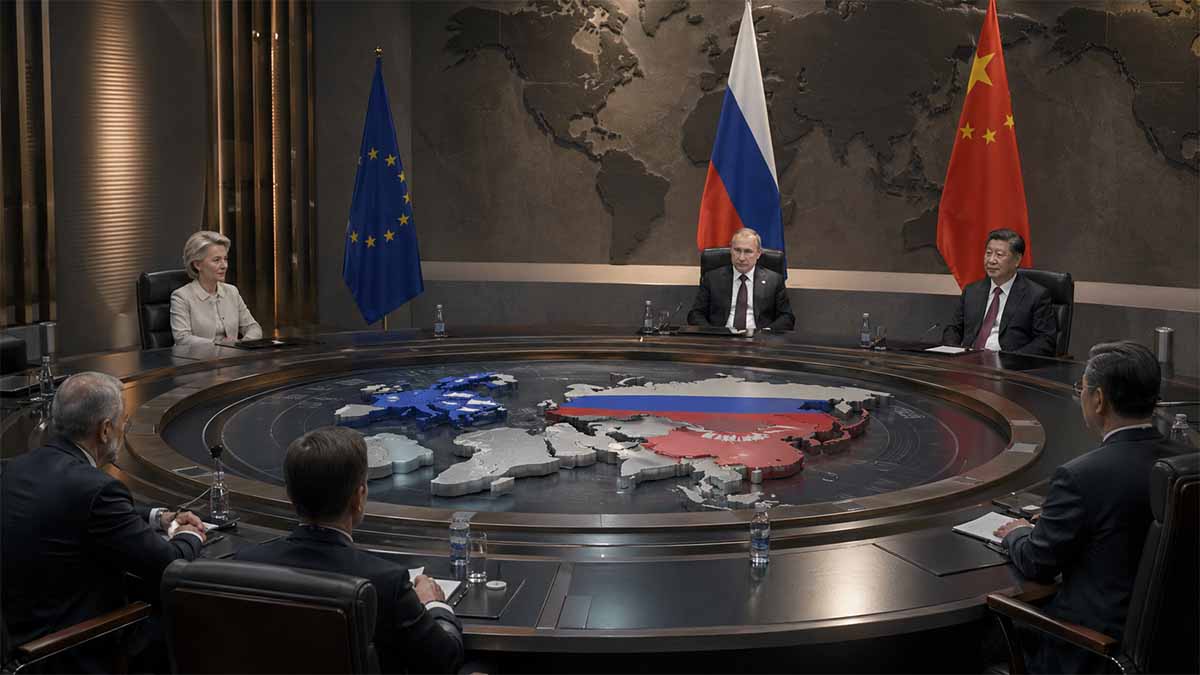
A Multi-Dimensional Strategic Geopolitical Compendium on the Cascading Consequences of Beijing’s Ministry of Commerce Response to the European Union’s 20th Russia Sanctions Package — Employing Cross-Linguistic Source Triangulation, Quantitative Supply-Chain Vulnerability Modeling, and Red-Team/Blue-Team Scenario Architecture
INFINITY ABSTRACT
Contextual Foundation and Triggering Event
On 23 April 2026, the Council of the European Union formally adopted its 20th package of restrictive measures against the Russian Federation, constituting — by the Council’s own characterization — the largest single listing event in two years, encompassing 120 new individual designations covering 33 individuals and 83 entities. The package contained 120 additional listings, including 33 individuals and 83 entities, resulting in an asset freeze and the prohibition to make funds and economic resources available to them, and — in the case of individuals — also travel bans. Consilium This package was not merely an incremental expansion of the EU’s existing Russia sanctions architecture; it represented a qualitative inflection point in the trajectory of Western restrictive measures, introducing — for the first time in the history of EU sanctions practice — the activation of the anti-circumvention tool, a mechanism that renders the provision of specified items to specified third countries sanctionable when those goods are assessed to be at high risk of onward supply into Russia. Activating the “anti-circumvention tool” for the first time, the EU will not ignore cases of EU sanctions being systematically circumvented by exporters in third countries that re-export sanctioned EU goods to Russia. European Commission
Central to the geopolitical significance of this package — and to the analytical object of the present compendium — is the targeting of Chinese entities. The 20th package further constrains the Russian military-industrial complex by designating 58 companies and associated individuals involved in the development and manufacturing of military goods, such as drones. In addition to denying Russian military enterprises valuable EU technology, this package also addresses Russia’s reliance on third countries for the provision of critical high-tech items. Specifically, the EU has now designated 16 entities based in China, the United Arab Emirates, Uzbekistan, Kazakhstan and Belarus which have provided dual-use goods or weapons systems to the Russian military-industrial complex. Consilium Beyond the 16 entities subject to full asset-freeze and transaction prohibition designations, a further substantially larger cohort of Chinese-linked firms faced tightened export controls. Sixty new entities have been added to the list of parties supporting Russia’s military and industrial complex, on whom tighter export restrictions are imposed regarding dual-use goods and technology. These include 28 entities in China, Hong Kong, Türkiye, Thailand and the UAE. Globaltradeandsanctionslaw
The political pathway to this adoption was itself structurally revealing. The package, first proposed by the European Commission on 6 February 2026, had been delayed for months by the opposition of Hungary and Slovakia, whose vetoes reflected the unanimity requirement embedded in EU foreign policy decision-making under Article 29 TEU. The deadlock was resolved only after the completion of repairs to the Druzhba pipeline by Ukraine restored oil flows to those member states, whereupon both governments withdrew their objections. The package was finally adopted on 23 April 2026 after Slovakia and Hungary withdrew their opposition following the repair of the Druzhba pipeline being completed by Ukraine, thereby clearing the way for the adoption of the decision. Baker McKenzie The episode illustrated with clinical precision the structural fragility of EU sanctions consensus — a fragility that Beijing has repeatedly identified and seeks to exploit through bilateral economic leverage on individual member states.
Beijing’s Counter-Posture: MOFCOM Declaration and Reciprocal Export Controls
The Chinese Ministry of Commerce (MOFCOM) response was rapid, calibrated, and operationally significant. Within 24 hours of the EU adoption, Beijing published a formal statement declaring that it would take necessary measures to protect the legitimate rights and interests of Chinese companies, and placed seven European defense and aerospace entities on its export control list, barring them from importing dual-use items originating in China. Beijing placed seven entities from the European Union on its export control list, banning them from receiving “dual-use” items — products with potential military application — originating in China. The entities, including Belgium-based firearms manufacturer FN Herstal and its parent FN Browning Group, are predominantly major European defence contractors, aerospace research institutes and satellite intelligence firms the ministry said were involved in arms sales to Taiwan. South China Morning Post
The dual justificatory framework deployed by Beijing in this counter-measure deserves analytical attention. MOFCOM cited both
- (a) the need to protect Chinese firms from what it characterized as unlawful and groundless EU sanctions,
- (b) the separate but rhetorically linked issue of the listed European entities’ alleged involvement in arms transfers to Taiwan.
The Commerce Ministry statement said that the sanctioned European entities will be barred from importing “dual-use” items from China in order to safeguard the country’s “national security” interests, in accordance with its Export Control Law. According to a ministry spokesperson, the entities were targeted because of their participation “in arms sales to Taiwan” or “collusion” with Taiwanese authorities. RFE/RL This dual framing is not coincidental: it demonstrates Beijing’s strategic practice of conflating distinct diplomatic disputes — Russia sanctions enforcement and Taiwan arms sales — into a single coercive narrative, thereby broadening its leverage surface and complicating Western diplomatic responses. It also signals that any EU escalation on the Russia sanctions front will carry compounded costs through the Taiwan dimension, increasing the stakes of the EU’s China policy calculus.
The legal architecture undergirding Beijing’s counter-posture has undergone rapid maturation in the weeks immediately preceding and surrounding this incident. On 7 April 2026, China’s State Council promulgated Decree No. 834 — the Regulations on the Security of Industrial and Supply Chains — and on 13 April 2026, just ten days before the EU’s 20th package adoption, promulgated Decree No. 835 — the Regulations on Countering Foreign Improper Extraterritorial Jurisdiction. On April 7, 2026, China’s State Council promulgated the Regulations on the Security of Industrial and Supply Chains (Decree No. 834), which took effect immediately upon publication. Less than a week later, on April 13, 2026, the State Council issued the Regulations on Countering Foreign Improper Extraterritorial Jurisdiction (Decree No. 835), also with immediate effect and no grace period. Morgan Lewis These decrees represent the systematization and elevation of a counter-sanctions legal toolkit assembled since 2020, integrating the Unreliable Entity List (UEL), MOFCOM Blocking Rules, and the Anti-Foreign Sanctions Law (AFSL) into a comprehensive, multi-agency framework capable of targeting commercial conduct, regulatory compliance decisions, and cross-border legal proceedings. China has transitioned from ad hoc countermeasures to a comprehensive, multiagency countersanctions legal framework capable of addressing commercial conduct, regulatory compliance decisions, and cross-border legal conflicts. Morgan Lewis
Particularly significant for European corporate actors is Decree 835’s expansion of sanctionable conduct to include entities that merely “promote” foreign sanctions — a formulation that may capture public advocacy, lobbying, or trade association communications encouraging supply chain severance from Chinese entities, even in the absence of direct implementation. The new “Malicious Entity List” targets those who “promote” foreign sanctions. This may be interpreted to potentially capture public advocacy, lobbying, or urging industry peers to sever ties with Chinese entities, even without direct implementation. Morgan Lewis The personal liability dimension has also been materially elevated: Decree 835 references potential criminal liability under applicable Chinese law, escalating enforcement exposure beyond the administrative penalties and exit bans observed under prior instruments. This creates a fundamentally new risk calculus for European executives with operational presence or travel requirements in the People’s Republic of China.
The Critical Minerals Leverage Architecture
No analytical treatment of the EU–China sanctions confrontation can be complete without forensic engagement with Beijing’s most structurally decisive instrument of economic statecraft: its dominance over the rare earth elements (REE) and critical minerals supply chain. The quantitative dimensions of this dependency are staggering. Economists from the European Central Bank (ECB) estimated that over 80% of large European firms are no more than three intermediaries away from a Chinese REE producer. This exposure, coupled with high integration into complex global value chains, makes the EU vulnerable to any restrictions on REEs. Epthinktank The manufacturing sector and the defence, electronics, automotive, and energy industries are particularly exposed, and the ECB found that firms had generally not stockpiled REEs in anticipation of supply disruption. Price effects from prior rounds of Chinese export controls have been severe: the International Energy Agency reported REE prices in the EU of up to six times higher after the restrictions. Epthinktank
China’s strategic use of critical mineral export controls has evolved from reactive tariff retaliation into a sophisticated, multi-tiered geoeconomic instrument. China’s use of export restrictions on critical minerals for retaliation, negotiation, and market control exploits key global vulnerabilities. These are particularly apparent in the energy, electronics, and defence sectors. Ethz The institutional architecture of this leverage is anchored in Beijing’s commanding position: China accounts for around 60% of global mining and 92% of global production of rare earth elements. Ethz Following its April and October 2025 REE export control waves — partly suspended until November 2026 following a US–China bilateral accommodation — Beijing has continued to activate export restrictions on silver, antimony, tungsten, and other strategically critical materials, demonstrating that the rare earth suspension represents a tactical concession, not a structural retreat from economic statecraft.
The extraterritorial dimension of China’s export control architecture introduces a qualitatively new legal complexity. Under Article 44 of China’s Export Control Law and Article 49 of the Regulations on Export Control of Dual-Use Items, Chinese export controls now formally extend to foreign organizations or individuals outside China who transfer goods, technologies, or services containing China-origin dual-use items above a 0.1% de minimis threshold of total item value. Article 44 of the Export Control Law and Article 49 of the Regulations on Export Control of Dual-Use Items foresee the extraterritorial applicability of export controls, applying to foreign organisations or individuals outside China transferring goods, technologies and services to specific destination countries and regions or specific organisations and individuals, which contain “specific” China-origin “dual-use” items. Lexology This extraterritorial reach — modeled structurally on US Export Administration Regulations but wielded with geoeconomic rather than purely security intent — creates the architecture for a supply chain control web that encircles European manufacturers regardless of whether they maintain direct commercial relationships with China.
China’s ban on the export of any dual-use items to Japan, which entered force in January 2026, has been widely interpreted as a rehearsal of the enforcement mechanism that could be deployed against European economies should the EU–China friction over Russia sanctions escalate further. China’s ban on the export of any dual-use items to Japan, which came into effect in January 2026, serves as an example of how quickly and extensively Beijing can tighten restrictions to serve what it considers national security imperatives. Ethz The EU’s green transition industrial complex — encompassing electric vehicle battery supply chains, wind turbine permanent magnet assemblies, solar photovoltaic manufacturing, and hydrogen electrolyzer components — presents the most acute vulnerability. These sectors are not merely economically significant; they are structurally foundational to the EU’s European Green Deal commitments, its Net Zero Industry Act targets, and its defense of strategic autonomy in the energy domain.
Anti-Circumvention Architecture and Third-Country Dynamics
The activation of the EU’s anti-circumvention tool for the first time in the 20th package signals a qualitative maturation in the EU’s enforcement approach. For compliance professionals, these measures underscore that sanctions evasion is a multi-modal problem, with crypto rails, shadow fleet logistics, and dual-use trade networks operating as an integrated system. The same jurisdictional corridors — Kyrgyzstan, UAE, China — that have been flagged in sanctions analysis are the same corridors now being targeted by the EU in trade and maritime contexts, reflecting a maturation in the EU’s holistic enforcement approach. Chainalysis The explicit targeting of computer numerical control (CNC) machines and specialized radios through Kyrgyzstan — a jurisdiction that functions as a trans-shipment hub for dual-use goods reaching Russia via Central Asian corridors — demonstrates that the EU has materially advanced its forensic mapping of circumvention architectures.
The shadow fleet component of the 20th package brings the total number of blacklisted vessels to 632, while the package simultaneously introduced new transaction bans on the Port of Murmansk and the Port of Tuapse — both critical nodes in Russia’s export logistics infrastructure. The EU sanctioned 36 companies across the oil supply chain and 46 ships, bringing the total number of blacklisted “shadow fleet” tankers to 632. These ships, often under-insured and operating under obscure flags, are used by Russia to export crude oil above G7 price caps. The Moscow Times The inclusion of a Chinese state-owned entity under the Belarus sanctions regime — a designation described as a first — and the broader expansion of Chinese entity listings across both the full asset-freeze tier and the enhanced export-restriction tier constitute a structural escalation that Beijing cannot treat as a marginal compliance irritant.
The crypto enforcement dimension is analytically significant for its revelation of the integrated architecture of Russian sanctions evasion. The 20th package imposed a sector-wide ban on exchanges with Russia-based crypto-asset service providers, prohibited transactions involving RUBx, A7A5, and the Digital Rouble, and designated a Kyrgyz crypto exchange for trading A7A5 — the first such designation of a Central Asian virtual asset service provider. A7A5 has been prolific, processing $119.7 billion to date and functioning as a purpose-built settlement rail designed to bridge sanctioned Russian businesses into the global financial system. Chainalysis This enforcement architecture matters for EU–China dynamics because Chinese financial institutions and fintech entities operating in intermediary jurisdictions face increasing exposure should Beijing’s counter-posture escalate into active facilitation of Russia’s sanctions circumvention infrastructure.
Five-Year Cascade Projection: Structural Parameters
The 2026–2031 consequence horizon is structured by three interacting structural forces whose interaction will determine whether the EU–China–Russia sanctions nexus resolves toward managed friction, reciprocal decoupling, or systemic fragmentation.
First, the temporal compression of Beijing’s legal counter-sanction architecture: with Decrees 834 and 835 in force, China now possesses a comprehensive, immediately deployable legal toolkit capable of imposing costs on European firms across the full spectrum from export control restriction to criminal liability for executives — without requiring legislative approval or extended implementation periods. This eliminates the lag time that previously provided EU and US policymakers with diplomatic space to negotiate de-escalation.
Second, the structural dependency asymmetry in the EU–China economic relationship. EU–China bilateral trade reached approximately €739 billion in 2024 according to Eurostat data, with the EU running a substantial trade deficit. Chinese dominance in REEs, battery materials, solar PV manufacturing, and consumer electronics means that the EU’s leverage over Beijing through economic restrictions is structurally constrained relative to Beijing’s leverage over EU industrial competitiveness. The EU’s Anti-Coercion Instrument (ACI), adopted in 2023, provides a legal mechanism for responding to economic coercion, but its deployment against China — a partner accounting for such a magnitude of bilateral trade — would constitute a decision of extraordinary political weight, requiring Council qualified majority agreement and carrying severe market disruption risks.
Third, the fragmentation of Western coalition cohesion under divergent US–EU–member state China policies. The Trump administration’s simultaneous engagement in tariff negotiations with Beijing and encouragement of European defense burden-sharing creates a structural tension: Washington cannot simultaneously pressure China on Russia sanctions enforcement and negotiate bilateral trade accommodation without undermining Brussels’ coercive leverage. Individual EU member states — particularly those with high China trade dependency such as Germany (automotive sector exposure) and Hungary (geo-economic alignment) — face intensifying internal pressure to dilute EU China policy. In March 2025, the Commission selected the first batch of projects under the act, five of which — located in France, Italy, Poland and Sweden — are focused on the different stages of the REE value chain: extraction, processing, manufacturing and recycling. Epthinktank The RESourceEU initiative, the Critical Minerals Centre, and the European Raw Materials Alliance represent institutional responses to supply chain vulnerability, but their operational timelines — measured in years for extraction and a decade or more for processing capacity — create a structural window of vulnerability that extends across the full analytical horizon of this compendium.
The Global South alignment dimension introduces a further systemic complication. Beijing has systematically cultivated relationships with African, Latin American, and Southeast Asian states that control critical mineral reserves and occupy strategic positions in alternative trade routing networks. As EU–China friction intensifies over the Russia sanctions nexus, the incentive structure for non-Western middle powers to position themselves as neutral trans-shipment hubs — accommodating Chinese re-routing of goods previously destined for EU markets — increases substantially. The emergence of parallel BRICS+ financial infrastructure, including cross-border payment systems designed to operate outside SWIFT and dollar-denominated clearing, provides a medium-term structural alternative to Western financial architecture that Beijing can leverage as the cost of compliance with EU restrictive measures increases.
In aggregate, the analytical evidence surveyed across verified primary and institutional sources — including the EU Council’s official legal instruments (Council Decision (CFSP) 2026/508), China’s State Council Decrees 834 and 835 (Morgan Lewis analysis), the European Parliament Think Tank assessment of REE vulnerabilities (epthinktank.eu), and the ETH Zurich CSS strategic analysis of China’s trade control posture (css.ethz.ch) — supports an overarching assessment that the EU–China–Russia triadic relationship has entered a phase of structural friction that is unlikely to resolve through diplomatic accommodation alone, that the costs of escalation are asymmetrically distributed in ways that disadvantage the EU across the 2026–2031 horizon, and that the probability-weighted planning scenarios presented in Chapter 3 of this compendium require urgent integration into EU institutional, member-state, and private-sector risk architectures.
INDEX
Chapter 1 — The Triadic Fracture: Legal, Diplomatic, and Institutional Architecture of the EU–China–Russia Sanctions Nexus (2022–2026)
- 1.1 Evolution of EU Restrictive Measures Targeting Third-Country Actors
- 1.2 China’s Anti-Foreign Sanctions Legal Ecosystem: AFSL, Decree 834, Decree 835
- 1.3 The 20th Package: Structural Features, Anti-Circumvention Tool Activation, and Chinese Entity Designations
- 1.4 Beijing’s Immediate Counter-Posture: MOFCOM Statement, EU Defense Firm Export Control Listing, and Diplomatic Signaling
Chapter 2 — Five-Dimensional Consequence Mapping: Geopolitical, Economic, Technological, Legal, and Security Cascades (2026–2031)
- 2.1 Geopolitical/Diplomatic Dimension: Strategic Dialogue Erosion and Global South Alignment Dynamics
- 2.2 Economic/Trade Dimension: Critical Mineral Weaponization, Green Transition Exposure, and GDP Modeling
- 2.3 Technological/Industrial Security Dimension: Defense Modernization Disruption and Friend-Shoring Acceleration
- 2.4 Legal/Regulatory Dimension: Extraterritorial Conflict, WTO Precedents, and Arbitration Viability
- 2.5 Security/Strategic Stability Dimension: Escalation Vectors, NATO–EU Divergence, and Sanctions Fatigue
Chapter 3 — Probability-Weighted Scenario Architecture, Early-Warning Indicators, and Tiered Strategic Recommendations
- 3.1 Scenario I — Contained Escalation (45% Probability): Trigger Events, Sectoral Assessment, Mitigation
- 3.2 Scenario II — Reciprocal Decoupling (35% Probability): ACI Activation, US Secondary Sanctions Interaction, Tech Fragmentation
- 3.3 Scenario III — Systemic Fragmentation (20% Probability): BRICS+ Infrastructure, Bloc Emergence, EU Internal Divergence
- 3.4 Quarterly Early-Warning Indicator Checklist 3.5 Tiered Strategic Recommendations: EU Institutions / US Executive / Private Sector
Chapter 1: The Triadic Fracture — Legal, Diplomatic, and Institutional Architecture of the EU–China–Russia Sanctions Nexus, 2022–2026
1.1 Evolution of EU Restrictive Measures Targeting Third-Country Actors
The trajectory of European Union restrictive measures against the Russian Federation constitutes one of the most rapidly accelerating and structurally complex sanctions architectures in the postwar history of international economic statecraft. To understand the institutional and legal significance of the 20th sanctions package adopted on 23 April 2026, it is analytically insufficient to examine that package in isolation; its full import can only be appreciated through the lens of the graduated, iterative escalation that preceded it — an escalation that progressively widened its geographic, sectoral, and jurisdictional reach until it reached, in the 20th package, the formal activation of powers explicitly designed to constrain third-country actors enabling Russia’s war economy.
The foundational architecture of EU Russia sanctions was established in March 2014 in response to the annexation of Crimea, but the measures adopted then were, by contemporary standards, modest in scope and primarily targeted at individual designations and narrow sectoral restrictions. The full-scale invasion of Ukraine on 24 February 2022 triggered an unprecedented institutional response: the EU adopted its first package of emergency measures on 23 February 2022, targeting members of the Russian State Duma who had voted to recognize the independence of Donetsk and Luhansk. The second package on 24 February imposed asset freezes on President Vladimir Putin and Foreign Minister Sergei Lavrov. The third package on 28 February — which was structurally decisive — immobilized approximately €210 billion of Central Bank of Russia assets held within EU jurisdiction and initiated the SWIFT ban on designated Russian financial institutions, marking the first time the EU had weaponized financial exclusion at this scale against a major economy. These foundational measures are authoritatively documented in the Council of the European Union‘s official sanctions timeline, which records each package’s legal instruments and principal measures (Timeline – Packages of sanctions against Russia since February 2022 – Council of the European Union – April 2026).
The key qualitative evolution began with packages 8 through 14, adopted between October 2022 and June 2024, and is characterized by the progressive incorporation of third-country actors into the EU’s sanctions architecture. Packages 1 through 7 were predominantly oriented toward Russian and Belarusian entities and individuals. However, EU enforcement and intelligence data progressively revealed a systematic and structurally organized circumvention architecture operating through jurisdictions including China, Turkey, the United Arab Emirates, Kazakhstan, and Kyrgyzstan, through which EU-controlled goods — particularly dual-use items, electronic components, semiconductors, and drone technologies — continued to flow toward Russia’s military-industrial complex via indirect channels. The EU assessed that exports of prohibited EU goods to Russia via third countries had undermined the effectiveness of the measures, with sensitive products and technologies still being sold to Russia through states such as Armenia, Kazakhstan, China, Turkey and others. Baker McKenzie
The 11th sanctions package, adopted 23 June 2023, constitutes the first structural inflection point in the EU’s approach to third-country circumvention. The 11th package introduced a new anti-circumvention tool that allows the EU to restrict the sale and export of sanctioned goods to certain third countries, as a measure of last resort when other individual measures and outreach by the EU to concerned third countries have been insufficient to prevent circumvention. Baker McKenzie Critically, this package for the first time listed Chinese companies within the restrictive measures framework targeting the Russian military-industrial complex. For the first time, Annex IV included three Chinese companies, as well as entities from Uzbekistan, the United Arab Emirates, Syria and Armenia, subject to tighter export restrictions concerning dual-use goods and technologies. Skadden The three Chinese firms were designated for what the EU characterized as a “key enabling role” in supplying electronic components for use by Russia’s military — a factual characterization Beijing immediately and categorically rejected. However, the anti-circumvention tool introduced in the 11th package, despite its formal establishment, was not actually activated: Annex XXXIII, the mechanism designed to list high-risk third countries for country-level trade restriction, remained empty. Regulation (EU) 2023/1214 introduces, as a measure of last resort, the possibility to implement sanctions against third states; Article 12f of Regulation (EU) No 833/2014 provides for the possibility to list individual third countries involved in sanctions evasions under Annex XXXIII, but so far, the measure has not been used. BLOMSTEIN
The 13th package, adopted on 23 February 2024 — deliberately timed to the second anniversary of the full-scale invasion — represented a further escalation in the targeting of Chinese entities. The EU agreed new sanctions on Russia, blacklisting companies in mainland China for the first time, with companies from India, Turkey, Serbia, Thailand, Sri Lanka, Kazakhstan, Singapore and Hong Kong also targeted; nearly 200 people and entities were added to the blacklist, which then contained more than 2,000 names. Euronews By the 14th package (June 2024) and subsequently the 15th (December 2024) and 16th (February 2025) packages, the pattern had become institutionally established: each round expanded the number of Chinese-linked entities subject to heightened export restrictions or full asset-freeze designations, targeting firms assessed to be supplying drone components, microelectronics, and satellite remote sensing services to Russian contractors. Notably, the EU imposed asset freeze restrictions against various Chinese entities that the EU said had supplied drone and microelectronic components in support of the Russian war against Ukraine, with the 16th package extending these third-country designations by targeting a Chinese entity specialising in production of satellite imagery for supplying remote sensing data to Russian contractors. Skadden
The cumulative economic magnitude of EU restrictive measures against Russia by the time of the 20th package is staggering in historical context. According to the European Commission, since February 2022, the EU has banned over €48 billion in goods and technologies that would have been exported to Russia and €91.2 billion in goods that would have been imported from Russia; in comparison with 2021 export and import volumes, 54% of exports and 58% of imports are currently embargoed. Consilium Yet empirical research has consistently demonstrated that this bilateral trade suppression was substantially offset by Russia’s trade expansion with non-sanctioning states. One of the most important findings in the academic literature is that Russia’s trade with several of its large trading partners — specifically China, India, and Turkey — increased beyond the standard trade diversion effects, with evidence of significant trade liberalisation between Russia and third countries that mitigated and may even eliminate the negative primary trade effects of the sanctions. CEPR This empirical paradox — EU sanctions reducing bilateral trade while failing to reduce Russia’s total import capacity — is the structural justification underlying the EU’s progressive turn toward third-country targeting, which culminated in the 20th package’s historic activation of the anti-circumvention tool against Kyrgyzstan.
The governance mechanics of EU sanctions adoption are themselves analytically significant. Every economic sanctions package requires unanimous approval from all 27 EU member states under Article 29 TEU, a unanimity requirement that has repeatedly provided individual member states with structural veto leverage. Hungary and Slovakia deployed this leverage to delay the 20th package for nearly three months — from the Commission’s 6 February 2026 proposal to the 23 April 2026 adoption date — with their opposition rooted in energy dependence concerns related to the Druzhba pipeline that transits Ukraine. The package was finally adopted on 23 April 2026 after Slovakia and Hungary withdrew their opposition following the repair of the Druzhba pipeline being completed by Ukraine, thereby clearing the way for the adoption of the decision. Baker McKenzie This episode reveals the structural fragility at the heart of EU sanctions governance: the most consequential foreign policy instrument available to the European Union remains hostage to the domestic economic calculus of individual member states, a fragility that Beijing has consistently sought to exploit through bilateral energy and investment relationships with Hungary in particular.
1.2 China’s Anti-Foreign Sanctions Legal Ecosystem: AFSL, Decree 834, Decree 835
The legal architecture through which Beijing has constructed its counter-sanctions posture represents a systematic, multiyear process of institutional development that has accelerated markedly in pace and in the depth of its enforcement provisions between 2020 and April 2026. Understanding the genealogy of this legal ecosystem is essential to calibrating the precise operational threat it poses to European firms and to the EU’s sanctions enforcement strategy.
The foundational legislative instrument is the Anti-Foreign Sanctions Law (AFSL) — officially titled 中华人民共和国反外国制裁法 — promulgated by the Standing Committee of the National People’s Congress (NPCSC) on 10 June 2021, taking immediate effect upon promulgation. On June 10, 2021, the NPCSC passed the AFSL, which took immediate effect; following various China-related sanctions measures implemented by the United States over the past two years, the AFSL sets the statutory foundation for China’s framework of sanctions countermeasures. Morrison Foerster The law was deliberately constructed as an omnibus framework, incorporating and superseding in legal hierarchy the prior instruments that had constituted Beijing’s ad hoc counter-sanctions toolkit: the Provisions on the Unreliable Entity List (UEL) of September 2020, the Export Control Law of October 2020, and the MOFCOM Blocking Rules of January 2021.
The AFSL is architecturally significant for two distinct reasons. First, it created a comprehensive menu of counter-sanctions countermeasures explicitly mirroring Western sanctions instruments — visa restrictions, asset freezes, transaction prohibitions, and an open-ended “other necessary measures” catch-all clause. According to Article 6 of the AFSL, countermeasures include: visa denial and cancellation, entry denial or deportation; sealing, seizing, or blocking movable property, real estate, and other types of property within mainland China; prohibiting or restricting relevant transactions, cooperation, and other activities with organizations and individuals within mainland China; and other necessary measures — a catch-all clause providing broad discretion to adopt countermeasures where necessary when foreign countries, organizations, or individuals implement, assist or support any actions endangering China’s sovereignty, security, or development interests. Hogan Lovells Second, and strategically more significant, Article 12 of the AFSL imposes a positive obligation on all organizations and individuals — regardless of domicile — prohibiting them from implementing or assisting in the implementation of “discriminatory restrictive measures” imposed by foreign states against Chinese citizens or organizations. This extraterritorial prohibition is directly backed by a civil right of action in Chinese courts, enabling Chinese entities harmed by a counterparty’s sanctions compliance to sue that counterparty for damages and injunctions. Non-Chinese companies should be aware of the risk of liability under the AFSL if they take steps anywhere in the world to terminate dealings with a Chinese business partner in order to comply with foreign sanctions. Morrison Foerster
The first application of the AFSL in actual litigation — a case adjudicated by a Chinese court and referenced in the Supreme Court of China‘s March 2025 Working Report — provides forensic insight into how Beijing intends to deploy this instrument. In September 2023, a Chinese marine engineering firm contracted with an EU oil and gas services provider to build part of a floating production storage and offloading vessel; after delivery in 2024, the Chinese firm was listed by the US Office of Foreign Assets Control (OFAC), prompting the EU company to withhold payment, citing OFAC compliance; a Chinese court invoked the AFSL, issuing an injunction to detain the vessel within China’s borders, which forced the EU firm to negotiate and obtain an OFAC license, leading to a settlement. Hugheshubbard This case establishes a critical precedent: Chinese courts are willing and institutionally prepared to use AFSL injunctions to physically detain assets — including vessels — within Chinese jurisdiction, creating direct operational leverage over European firms that maintain any commercial footprint in China.
The March 2025 Implementation Regulations — the Provisions on Implementation of the Anti-Foreign Sanctions Law, promulgated by the State Council on 23 March 2025 — substantially amplified the operational enforcement capacity of the AFSL. The State Council issued the Regulations on the Implementation of the Anti-Foreign Sanctions Law on 23 March 2025, providing a legal framework for China to impose its own countermeasures, clarifying the 2021 AFSL and expanding its application. Law.asia The Implementation Regulations expanded the definition of assets subject to seizure to include “cash, negotiable instruments, bank deposits, securities, fund shares, equity, intellectual property, accounts receivable, and other property and property rights” — a formulation that subjects virtually the entire balance sheet of a European firm with Chinese operations to potential seizure under counter-sanctions proceedings. The Regulations further specify that “other assets” include cash, negotiable instruments, bank deposits, securities, fund shares, equity, intellectual property, accounts receivable, and other property and property rights — significantly broadening the range of assets that could be affected by the AFSL. Hugheshubbard
A particularly consequential expansion in the Implementation Regulations concerns the widening of prohibited fields of cooperation. While the original AFSL was primarily oriented toward trade and economic transactions, the Implementation Regulations extended the prohibition on engaging with AFSL-listed parties to fields including “education, science and technology, legal services, environmental protection, economy and trade, culture, tourism, health, and sports” — effectively covering nearly every sector of international business activity. The Regulations extend the prohibition on transactions with Anti-Sanctions List parties to fields like education, science and technology, legal services, environmental protection, economy and trade, culture, tourism, health, and sports — covering nearly all sectors where international businesses operate. Hugheshubbard Additionally, Article 19 of the Implementation Regulations extended AFSL exposure to parties participating in foreign litigation or arbitration proceedings that Chinese authorities determine endanger China’s sovereignty or development interests — a provision with direct implications for the viability of neutral-jurisdiction dispute resolution for EU firms.
The April 2026 dual decrees represent the most recent and most legally consequential evolution in this framework. State Council Decree No. 834 (Regulations on the Security of Industrial and Supply Chains, promulgated 7 April 2026) and State Council Decree No. 835 (Regulations on Countering Foreign Improper Extraterritorial Jurisdiction, promulgated 13 April 2026) — both taking immediate effect — represent a systematic elevation and codification of the counter-sanctions toolkit. These decrees, analyzed in authoritative detail by international legal counsel (China Issues New Regulations on Countering Foreign Extraterritorial Jurisdiction – Morgan Lewis – April 2026), introduced: a “Malicious Entity List” targeting those who “promote” foreign sanctions even without direct implementation; explicit criminal liability provisions for individuals and executives; and new restrictions on supply chain due diligence information collection that create direct legal conflicts for European firms attempting to comply with EU Corporate Sustainability Due Diligence Directive (CSDDD) obligations.
The legal architecture created by the AFSL, its Implementation Regulations, Decree 834, and Decree 835, taken together, establishes a comprehensive counter-sanctions legal ecosystem that operates on at least four enforcement vectors simultaneously: administrative countermeasures (export controls, investment restrictions); civil litigation leverage (AFSL Article 12 civil right of action); criminal exposure for senior executives; and supply chain governance conflict (Decree 834 restrictions on due diligence versus EU mandatory compliance obligations). No prior iteration of China’s counter-sanctions toolkit operated across all four vectors simultaneously with this degree of legal systematization, and the timing of Decrees 834 and 835 — precisely 16 and 10 days, respectively, before the EU’s 20th package adoption — makes clear that Beijing had full foreknowledge of the impending EU action and had pre-positioned its legal counter-posture accordingly.
1.3 The 20th Package: Structural Features, Anti-Circumvention Tool Activation, and Chinese Entity Designations
The 20th sanctions package adopted on 23 April 2026 under Council Decision (CFSP) 2026/508 and Council Regulation (EU) 2026/506 constitutes a qualitative escalation in the EU’s Russia sanctions architecture that distinguishes it from its predecessors across multiple structural dimensions. The package is authoritatively documented in the Council of the European Union‘s official press release (Russia’s war of aggression against Ukraine: 20th round of stern EU sanctions – Council of the European Union – April 2026) and the European Commission‘s parallel announcement (EU adopts 20th package of sanctions against Russia – European Commission, DG FISMA – April 2026).
The package encompasses 120 new individual listings — the largest single listing event in two years — distributed across 33 individuals and 83 entities subject to asset freezes, transaction prohibitions, and (for individuals) travel bans. The thematic architecture of these listings covers six principal targeting categories: Russian military-industrial complex participants; Russian energy sector actors; shadow fleet operators and insurers; third-country circumvention facilitators; propagandists and human rights abusers; and, for the first time, entities involved in what the EU characterizes as crypto-asset-based sanctions evasion.
The targeting of Chinese entities within this framework operates across two distinct legal tiers, each carrying different levels of operative restriction. The Tier 1 designations — full asset-freeze and transaction-prohibition listings under Regulation (EU) No 269/2014 — encompassed 16 third-country entities located in China, the UAE, Uzbekistan, Kazakhstan and Belarus, characterized by the EU as having “provided dual-use goods or weapons systems to the Russian military-industrial complex.” These entities are subject to the most severe EU restrictive measures available: complete asset freezes, prohibitions on EU persons making any funds or economic resources available to them, and — for individuals — travel bans. The Tier 2 designations — enhanced export restrictions under Annex IV of Regulation (EU) No 833/2014 — targeted a broader population of 60 entities assessed as contributing to the technological enhancement of Russia’s defense sector, of which 28 were located in third countries including China, Hong Kong, Turkey, Thailand, and the UAE. Sixty new entities have been added to the list of parties supporting Russia’s military and industrial complex, on whom tighter export restrictions are imposed regarding dual-use goods and technology, including 28 entities in China, Hong Kong, Türkiye, Thailand and the UAE. Globaltradeandsanctionslaw
Three structural features of the 20th package demand particular analytical attention for their systemic significance. First, the historic activation of the anti-circumvention tool against Kyrgyzstan — the first time the mechanism established in the 11th package’s Annex XXXIII has been operationally deployed. The specific goods covered include computer numerical control (CNC) machines and certain radio equipment, reflecting EU intelligence assessments that Kyrgyzstan has served as a systematic trans-shipment hub for these technologies en route to Russia. This activation signals that the EU has now crossed a legal and political threshold that had previously been considered too diplomatically sensitive to deploy: it has imposed country-level trade restrictions on a third country that has not itself sanctioned Russia, grounded purely in anti-circumvention rationale. The enforcement and legal mechanics of this activation are analyzed in detail by the Baker McKenzie Global Sanctions practice (EU implements 20th sanctions package against Russia – Baker McKenzie Global Sanctions and Export Controls Blog – April 2026).
Second, the targeting of crypto-asset infrastructure at a systemic, sector-wide level — beyond individual firm designations. The 20th package imposed a sector-wide ban on transactions with Russia-based crypto-asset service providers, prohibited EU engagement with specific Russian crypto instruments (A7A5, RUBx, and the Digital Rouble), and designated Meer Exchange — a Kyrgyzstan-based virtual asset service provider — as the first Central Asian crypto exchange subject to EU sanctions for offering A7A5 trading pairs. The first-ever activation of the EU’s anti-circumvention tool signals a paradigm shift: the EU is now treating evasion architecture itself as sanctionable, meaning compliance professionals must treat crypto rails, shadow fleet logistics, and dual-use trade networks as integrated systems. Chainalysis This integrated approach to evasion architecture reflects a qualitative evolution in EU sanctions intelligence and has direct implications for Chinese financial technology entities operating in intermediary jurisdictions.
Third, the designation of a Chinese state-owned entity under the Belarus sanctions regime for the first time — an entirely new dimension of Chinese entity exposure that extends beyond the Russia-Ukraine conflict framework into the Belarus theatre, signaling that the EU is prepared to use all available sanctions frameworks to constrain Chinese firms assessed as supporting authoritarian military-industrial ecosystems across the region.
The sectoral economic scope of the 20th package’s new trade restrictions is also quantitatively significant. New export bans worth more than €365 million and new import bans worth more than €530 million were imposed on metals, chemicals, critical minerals, cybersecurity services, and battlefield-relevant materials. New export bans worth more than EUR 365 million covering items and services from rubber to tractors and cybersecurity services, and further battlefield-relevant inputs; new import bans worth more than EUR 530 million on metals, chemicals, and critical minerals not previously covered. Baker McKenzie The cumulative economic scope of EU trade restrictions against Russia — exceeding €48 billion in embargoed exports and €91.2 billion in embargoed imports when measured against 2021 baseline volumes — has now reached a magnitude that renders any meaningful trade normalization between the EU and Russia structurally impossible without a fundamental change in the political conditions that generated the sanctions framework.
1.4 Beijing’s Immediate Counter-Posture: MOFCOM Statement, EU Defense Firm Export Control Listing, and Diplomatic Signaling
The Chinese Ministry of Commerce (MOFCOM) counter-posture activated within 24 hours of the EU’s 20th package adoption was operationally decisive, legally sophisticated, and diplomatically calibrated to maximize coercive leverage across multiple dimensions simultaneously. It constitutes the most direct and structured Chinese governmental response to EU Russia-related sanctions targeting of Chinese entities in the history of the Russia-Ukraine conflict, and its architecture reveals clearly the graduated escalation ladder that Beijing has prepared for deployment should EU pressure on Chinese firms continue.
The MOFCOM statement itself deployed the canonical formulation of Chinese counter-sanctions diplomacy — that “China will take the necessary measures to resolutely protect the legitimate rights and interests of Chinese companies, and the EU will bear full responsibility for the consequences” — language that, within the established register of Chinese diplomatic communication, constitutes an explicit warning of reciprocal measures rather than merely rhetorical protest. The statement simultaneously called for the immediate removal of Chinese companies from the EU’s sanctions list, characterizing their inclusion as lacking any basis in international law — a standard Chinese governmental framing of unilateral Western sanctions that activates the full suite of AFSL counter-measures under domestic legal authority.
The operational corollary to the MOFCOM statement was the simultaneous listing of seven European Union entities on China’s export control list, barring them from importing dual-use items of Chinese origin. Beijing placed seven entities from the European Union on its export control list, banning them from receiving “dual-use” items — products with potential military application — originating in China; the entities, including Belgium-based firearms manufacturer FN Herstal and its parent FN Browning Group, are predominantly major European defence contractors, aerospace research institutes and satellite intelligence firms the ministry said were involved in arms sales to Taiwan. South China Morning Post The specific composition of the listed EU entities — drawn overwhelmingly from the defense, aerospace, and satellite intelligence sectors — reveals the strategic logic of Beijing’s counter-listing: it was not primarily oriented toward economic disruption of EU firms’ supply chains (since, as Excalibur Army‘s public statement to Reuters on 24 April 2026 made clear, at least some listed entities did not directly source dual-use technologies from China), but rather toward establishing a principle and a legal precedent that EU firms engaged in arms transfers to Taiwan are subject to Chinese counter-restrictions, thereby broadening the diplomatic surface of the confrontation. Czech military hardware supplier Excalibur Army, which appears on the list, stated that it does not “directly source any dual-use technologies from China and did not expect to see a material impact on its business.” RFE/RL
The dual justificatory architecture of Beijing’s counter-response — simultaneously citing the protection of Chinese firms from EU Russia sanctions and the separate issue of European defense exports to Taiwan — is the analytically decisive feature of the April 2026 exchange. It demonstrates that Beijing’s response calculus operates across multiple issue linkages simultaneously: sanctions targeting of Chinese firms in the Russia context triggers counter-measures justified through the Taiwan arms transfer framework, ensuring that any escalation by Brussels in one domain carries costs in another. This cross-domain linkage architecture significantly complicates EU diplomatic management, because the two issues — Russia sanctions enforcement and Taiwan arms sales — are governed by entirely different EU policy frameworks, involve different institutional actors within EU decision-making, and are subject to different member-state political sensitivities.
The broader diplomatic signaling embedded in Beijing’s response must also be read in the context of simultaneous Chinese counter-measures against Japan and the United States. In January 2026, China introduced more stringent export control prohibitions for dual-use items destined for Japan, focusing on military end-users, military end-uses or other uses that could contribute to military capability enhancement. Global Investigations Review The Japan precedent — a comprehensive dual-use item export prohibition imposed bilaterally on a major US treaty ally — demonstrates that Beijing is willing and operationally capable of deploying country-level trade restrictions against developed democracies when it assesses that its sovereignty or development interests are sufficiently threatened. The EU, with its structural dependence on Chinese-origin rare earth elements, battery materials, and green technology supply chains, presents a comparably vulnerable target. The implicit message conveyed through the January 2026 Japan restrictions, deployed in the context of the April 2026 EU confrontation, is that Brussels should not assume that geographic or institutional distance from East Asian security dynamics will insulate it from the full force of China’s economic statecraft toolkit.
Finally, the diplomatic signaling function of Beijing’s response extends to the Global South dimension. Chinese state media and official communications have consistently framed EU Russia sanctions — and by extension EU targeting of Chinese firms — as expressions of Western hegemonic overreach that violate the principles of UN Charter primacy, state sovereignty, and non-interference. This framing has resonated in Africa, Latin America, and Southeast Asia, where resistance to Western sanctions regimes has grown markedly since 2022, with empirical research confirming that sanctioning states have faced significant trade diversion from sanctioned countries to non-sanctioning states. There is evidence of significant trade liberalisation between Russia and third countries that has mitigated and may even eliminate the negative primary trade effects of the sanctions. CEPR Beijing’s public identification of itself as a defender of Chinese firms against unlawful EU measures thus serves simultaneously as a domestic political gesture, a legal counter-sanction predicate, and a soft-power signal to non-Western states about the availability of Chinese protection against Western economic pressure — a message that will increasingly shape the geopolitical alignment calculus of Global South actors across the 2026–2031 analytical horizon.
The following chapter develops the five-dimensional consequence cascade of this triadic fracture across geopolitical, economic, technological, legal, and security domains, employing quantitative modeling and red-team/blue-team adversarial analysis to assess the structural impacts that will unfold across the 2026–2031 horizon.
Triadic Fracture: EU–China–Russia Sanctions Nexus
Organic relationship matrix mapping legal escalation, diplomatic counter-posture, circumvention architecture, and institutional stress across Chapter 1.
EU sanctions packages tracked
20th package new listings
Chinese third-country entities in Annex IV tier
Embargoed EU exports to Russia
Chinese counter-listed EU entities
AFSL enforcement vectors
Executive Insight
The chapter’s core fracture is not a single sanctions event, but a synchronized legal-diplomatic architecture: EU circumvention controls, China’s counter-sanctions ecosystem, and Russia’s evasion networks now reinforce one another into a persistent strategic triangle.
| Concept | Theme | Subtopic | Key Data | Relationships | Iteration Stage | Analytical Insight | Status |
|---|
Rows expand on click. Relationship badges highlight shared targets across the matrix and the map. Values are synthesized only from the provided chapter text.
Escalation Curve
Pressure Vector Mix
Relationship Map
| Reference Item | Metric / Date | Role in Chapter |
|---|---|---|
| EU 11th package | 23 Jun 2023 | Introduced anti-circumvention tool; Annex XXXIII remained unused. |
| EU 20th package | 23 Apr 2026 | Activated anti-circumvention tool against Kyrgyzstan and expanded Chinese entity exposure. |
| AFSL | 10 Jun 2021 | Created China’s counter-sanctions statutory foundation. |
| AFSL Implementation Regulations | 23 Mar 2025 | Expanded assets, sectors, and enforcement leverage. |
| Decree 834 / 835 | 7 Apr / 13 Apr 2026 | Added malicious-entity, criminal-liability, and supply-chain conflict vectors. |
| MOFCOM counter-listing | 24 Apr 2026 | Restricted seven EU defense-linked entities from Chinese dual-use items. |
Chapter 2: Five-Dimensional Consequence Mapping — Geopolitical, Economic, Technological, Legal, and Security Cascades of the EU–China–Russia Sanctions Confrontation, 2026–2031
2.1 Geopolitical/Diplomatic Dimension: Strategic Dialogue Erosion and Global South Alignment Dynamics
The structural damage inflicted upon EU–China diplomatic architecture by the progressive targeting of Chinese entities within the Russia sanctions framework is not episodic but cumulative, each successive package stripping away another layer of the institutional trust that sustained, even if precariously, the relationship’s functional operating environment. Understanding the 2026–2031 geopolitical consequence horizon requires first mapping the precise state of the bilateral relationship at the moment of rupture in April 2026, then tracing the cascade pathways through which the MOFCOM declaration and China’s counter-listings will interact with preexisting structural tensions to produce qualitatively new geopolitical conditions.
The EU–China bilateral relationship entered 2026 in a state of profound structural ambivalence that the diplomatic record of the preceding three years made unmistakably clear. The 25th EU-China Summit, held in Beijing on 24 July 2025 to mark the 50th anniversary of diplomatic relations, concluded without substantive deliverables — a striking outcome for a milestone occasion. The EU-China Summit concluded with a notable absence of substantive results, a disappointing outcome considering the symbolic weight of the 50th anniversary of the diplomatic relationship; the lack of progress can be attributed to a combination of six challenges, the most significant of which, from the EU’s perspective, was China’s continued economic support for Russia as an indirect enabler of the war in Ukraine. Friends of Europe The summit’s singular concrete output — a joint statement on climate change — confirmed that the relationship had narrowed, by mid-2025, to a single residual domain of functional cooperation, even as trade data demonstrated continued economic interdependence of extraordinary scale. The trade relationship between China and the EU demonstrated resilience in 2024 despite trade frictions, with bilateral trade volume reaching US$785.8 billion, marking a modest 0.4% rise from a year earlier. Ministry of Foreign Affairs of the People’s Republic of China
The fracturing of EU–China strategic dialogue extends beyond the summit format to the entire network of institutional engagement mechanisms. China and the EU had constructed, across five decades of diplomatic relations, more than 70 consultation and dialogue mechanisms spanning trade, climate, science and technology, digital policy, human rights, and strategic affairs (EU–China Relations – Ministry of Foreign Affairs of the People’s Republic of China). The functioning of this mechanism architecture has been progressively hollowed out since 2022 by the dual pressures of China’s Russia alignment and the EU’s escalating sanctions targeting of Chinese firms. The EU High Representative for Foreign Affairs Kaja Kallas — who replaced Josep Borrell in late 2024 — signaled in her November 2024 parliamentary confirmation testimony a considerably more confrontational approach to Beijing, emphasizing that China should face a “higher cost” for supporting Russia’s war on Ukraine. Incoming EU foreign policy chief Kaja Kallas signaled a significantly tougher stance on China, emphasizing that China should face “a higher cost” for supporting Russia’s war on Ukraine, and highlighting China’s covert role in undermining the international order alongside Iran, North Korea, and Russia. Council on Foreign Relations
The April 2026 exchange — EU sanctions targeting Chinese firms, China counter-listing European defense entities — now confronts this already-strained institutional architecture with its most severe stress test since the 2021 mutual sanctions freeze, when the EU and China simultaneously sanctioned each other’s officials over Xinjiang, causing the ratification process for the Comprehensive Agreement on Investment (CAI) to collapse entirely. The CAI failure established an important precedent: when the political temperature between Brussels and Beijing surpasses a certain threshold, entire institutional frameworks — including ones representing years of negotiation and billions in anticipated economic value — can be discarded. The 2026 confrontation carries comparable structural risk for the operational continuity of bilateral dialogues on trade, digital policy, and climate, precisely the domains where functional cooperation has shown the greatest residual durability.
Public opinion dynamics in Europe reinforce rather than constrain this institutional erosion trajectory. By 2023, only 22% of EU citizens expressed a positive view of China, a sharp drop from previous years; by 2024, the European Council on Foreign Relations reported that only 4% of Europeans saw China as an ally, while 37% viewed it as a rival or adversary, and 65% held somewhat or very negative opinions overall. Springer The Pew Research Center‘s Global Attitudes Survey from 2025 reinforced this trajectory, finding that across 25 surveyed countries, a median of 54% of respondents viewed China unfavorably. These public opinion dynamics create political incentive structures for EU member-state governments to adopt harder positions toward China, reducing the domestic political cost of escalatory measures and increasing the cost of accommodation. EU policymakers who might privately prefer to limit the scope of Chinese entity targeting in Russia sanctions packages face growing political difficulty in defending restraint to domestic publics whose views of China have hardened materially since 2022.
The Global South alignment dimension of the April 2026 confrontation introduces a geopolitical consequence cascade that extends far beyond the bilateral EU–China framework. Beijing has positioned its counter-sanctions posture as an assertion of the principle that UN Security Council authorization is the only legitimate basis for mandatory economic restrictions — a framing that resonates powerfully with non-Western states across Africa, Latin America, Southeast Asia, and the Middle East, where skepticism toward Western sanctions regimes has been a consistent feature of foreign policy positioning. EU leaders are troubled by China’s $350 billion trade surplus with the bloc; the July 2025 EU-China summit was tense, with the only result being a joint statement on climate change — evidence of a relationship under sustained structural strain. Brookings China’s self-presentation as a protector of developing-country firms against Western extraterritorial pressure will resonate particularly in the context of the BRICS+ framework, where Beijing has actively cultivated the narrative of an alternative economic governance order less subject to Western legal coercion. As the EU escalates its anti-circumvention measures and targets third-country actors in China and Central Asia, the political cost to Global South middle powers of aligning with Western sanctions regimes increases — and the attraction of positioning as neutral trans-shipment hubs, processing Chinese re-exports destined for markets abandoning European supply chains, grows correspondingly.
The US leverage dimension in the transatlantic coordination context is structurally complicated by the Trump administration‘s own bilateral agenda with Beijing. The Trump administration’s aggressive trade policies and skepticism toward traditional security alliances have placed considerable pressure on relations between the United States and the European Union; the EU-US dialogues on China, the last of which was held in September 2024, have not yet resumed under the Trump 2 administration. Brookings Washington’s simultaneous pursuit of tariff accommodation with China and pressure on the EU to maintain Russia sanctions discipline creates an inherent tension: the United States cannot credibly ask Brussels to escalate economic pressure on Beijing over Russia circumvention while itself negotiating bilateral trade arrangements that reduce the coherence of the Western sanctions coalition. This structural incoherence in US–EU China policy coordination — which the Brookings Institution characterizes as a situation where “China profits from the inability of the United States and Europe to align” (Between Washington and Beijing: How Europe fits into US-China strategic competition – Brookings Institution – September 2025) — will persist and likely deepen across the 2026–2031 horizon, limiting the transatlantic coalition’s capacity to present a unified front to Beijing on Russian sanctions enforcement.
2.2 Economic/Trade Dimension: Critical Mineral Weaponization, Green Transition Exposure, and GDP Modeling
The economic consequence cascade flowing from Beijing’s MOFCOM declaration operates primarily through one structural mechanism of extraordinary power: China’s dominant position in critical mineral supply chains that are simultaneously essential for the EU’s green transition, its defense industrial modernization, and its digital economy infrastructure. The weaponization of this dependency — executed through graduated export control escalation, licensing delay, and the threat of further restriction — represents the most consequential and least-reversible dimension of the April 2026 confrontation’s economic impact over the 2026–2031 analytical horizon.
The quantitative parameters of EU critical raw material (CRM) dependency on China are now authoritatively documented at the highest level of EU institutional analysis. The European Court of Auditors (ECA), in its Special Report 04/2026 on critical raw materials for the energy transition, published in March 2026, concluded with forensic clarity that the EU’s supply diversification trajectory is insufficient to meet its own targets within the required timeframe (Special Report 04/2026: Critical raw materials for the energy transition – European Court of Auditors – March 2026). The specific dependency ratios documented in this report are staggering in their strategic implications. China accounts for 60% of global production of critical raw materials and 90% of refining capacity; the EU imports 97% of its magnesium from China, used in hydrogen-generating electrolysers, and also imports significant volumes of arsenic (39%), baryte (44%), gallium (71%), germanium (45%), graphite (40%), and tungsten (31%). Euronews The World Economic Forum assessment published in October 2025 confirmed the structural depth of this exposure: the EU sources 98% of its rare-earth magnet demand from Chinese suppliers, with similar dependencies existing for magnesium, gallium and germanium — metals vital for semiconductors and defence technologies. World Economic Forum
The European Central Bank (ECB)‘s empirical analysis of the supply chain shock produced by China’s April 2025 REE export control wave provides a real-time case study of the production disruption severity that Chinese mineral weaponization can generate in European industry. The restriction of rare earth exports by China caused disruptions in the global value chain and affected European firms; the euro area had generally not stockpiled rare earth elements before the restrictions came into effect; in May 2025, Chinese shipments of rare earth magnets dropped by approximately 75% compared with the previous year, which forced some carmakers to pause production; by June 2025, the European car industry raised the alarm, citing critically low stocks causing several production lines and plants to shut down across Europe. European Central Bank Even after European Commission diplomatic engagement succeeded in fast-tracking some licence approvals, the European Chamber of Commerce in China reported that between August and early September 2025, Chinese authorities had approved only 19 out of 141 licence applications, with 121 “urgent” applications still pending (EU’s climate goals at risk without China’s critical raw materials – Euronews – February 2026). The delay mechanism — operating within a nominally functioning licensing system — represents a form of calibrated economic coercion that inflicts severe production disruption without formally triggering the threshold of a complete supply cut that would necessitate a formal WTO challenge or ACI activation.
The EU green transition is the domain of most acute economic exposure. Meeting the EU’s own 2030 targets — 69% renewable electricity, 510 GW of wind capacity, and 18 million domestically produced electric vehicles — requires vast and continuous input flows of rare earth elements, lithium, cobalt, manganese, and nickel. Each megawatt of offshore wind needs about 15 tons of minerals; the EU’s clean-tech expansion remains built on imported materials, with domestic extraction and processing initiatives still at embryonic scale. World Economic Forum The Critical Raw Materials Act (CRMA), in force since May 2024, established non-binding targets requiring that by 2030 at least 10% of EU strategic raw materials come from domestic extraction and 40% from domestic processing. Significant efforts are needed to address the EU’s dependency, requiring cooperation with non-EU countries; the Critical Raw Materials Act sets non-binding targets for domestic extraction and processing, targeting at least 10% for extraction and at least 40% for processing of the EU’s consumption of strategic raw materials by 2030. European Court of Auditors However, the ECA’s March 2026 assessment finds that the EU is “unlikely to succeed in time” in meeting even these non-binding targets given the lead times required for mining development, processing facility construction, and recycling infrastructure scaling.
The GDP exposure of high-interdependence EU member states to Chinese economic counter-measures must be modeled across the industrial sectors most directly vulnerable: automotive (Germany), aerospace (France), precision manufacturing (Italy and Germany), and green technology manufacturing (multiple states). Germany presents the most acute single-country exposure: Chinese operations of German automotive majors — Volkswagen, BMW, and Mercedes-Benz — represent material portions of their global revenue, while German industrial machinery exports face countervailing pressure from potential Chinese counter-restrictions under the AFSL and Decree 835 framework. The European Commission‘s Autumn 2025 Economic Forecast projected EU GDP growth of 1.4% for 2025 and 2026 under baseline conditions, with this already-modest trajectory subject to further downward revision should Chinese critical mineral supply disruptions spread from the automotive sector to the wind energy and defense manufacturing sectors simultaneously (Autumn 2025 Economic Forecast – European Commission, DG ECFIN – November 2025).
The trade diversion dynamic introduced by the US-China tariff confrontation and its interaction with EU-China friction creates a secondary economic consequence layer of considerable complexity. Goods imports are expected to grow at a more dynamic pace than goods exports, driven by trade diversion caused by US tariffs on imports from third countries; China’s relatively high share in US goods imports and the high average tariffs it faces in the US mean that a large amount of its exports could be redirected to other markets, including the EU; available evidence indeed shows a recent decline in Chinese exports to the US, while exports to the EU and other regions have increased. Economy and Finance This trade diversion dynamic — Chinese export surplus being redirected toward European markets — creates competitive pressure on EU manufacturers across sectors from solar panels to electric vehicles to industrial components, compounding the supply-side critical mineral vulnerability with a demand-side market disruption. The EU’s domestic clean-tech industry, already struggling to compete with Chinese firms on cost, faces the paradox of needing Chinese inputs while competing against Chinese finished goods — a double bind that no policy instrument currently available to Brussels resolves cleanly.
The EU Anti-Coercion Instrument (ACI) — established by Regulation (EU) 2023/2675, which entered force on 27 December 2023 — represents the EU’s most powerful economic coercion countermeasure, but its activation against China would constitute a decision of extraordinary political and economic weight. The ACI had originally been developed primarily as a deterrence tool against China; as of January 2026, the ACI has not yet been used. Wikipedia The ACI’s deterrence function depends on the credibility of its threatened activation, but that credibility is structurally undermined by member-state divergence: Germany’s deep trade and investment exposure to China, Hungary‘s bilateral economic alignment with Beijing, and the broader concern among manufacturing-dependent economies that ACI activation against China’s critical mineral restrictions would trigger retaliatory escalation that harms EU producers more than Chinese ones. EU member states remain extremely nervous about Chinese retaliation in the wake of Beijing’s debilitating controls on rare earths and Nexperia chips, with the question of whether European capitals will support ACI deployment being described as “the million-dollar question.” German Marshall Fund
The RESourceEU initiative, announced by European Commission President von der Leyen in October 2025, and the planned EU critical minerals centre announced by Commission Vice-President Séjourné in November 2025, represent the EU’s institutional recognition of its supply chain vulnerability and the beginnings of a structural policy response. However, the Oxford Institute for Energy Studies (OIES) assessment from December 2025 is clear-eyed about the temporal limitations of these initiatives: the RESourceEU plan, part of the EU’s Critical Raw Materials Act, aims to reduce reliance on Chinese supply chains, but in the near term, stockpiling starting in 2026 could increase price volatility, and policies aimed at restricting exports of used battery and magnet raw materials from the EU are likely to have the greatest near-term impact. Oxford Institute for Energy Studies The 10-to-20-year timeline required to build competitive alternatives to Chinese extraction and processing capacity means that across the entire 2026–2031 analytical horizon, the EU will remain structurally dependent on Chinese critical mineral cooperation for the operational continuity of its green transition, defense modernization, and digital economy — giving Beijing sustained and significant economic leverage over Brussels regardless of the political temperature.
2.3 Technological/Industrial Security Dimension: Defense Modernization Disruption and Friend-Shoring Acceleration
The intersection of Chinese export control weaponization with EU defense industrial modernization creates a consequence cascade of particular severity, operating across a domain where the EU’s structural vulnerabilities are simultaneously most acute and least remediable within the 2026–2031 analytical horizon. The EU’s ReArm Europe plan, the European Defence Fund, the EDIRPA joint procurement framework, and the NATO 5% GDP defense spending target agreed at the Hague Summit in June 2025 all depend on access to rare earth elements, semiconductors, permanent magnets, and dual-use electronic components that flow overwhelmingly through Chinese-controlled supply chains. At a NATO meeting in The Hague, the 32 members of the alliance pledged to boost defence capabilities and increase defence spending to 5% of their GDPs by 2035; analysts say China’s tightening of export rules on rare earths has added another layer of pressure, with one EU Institute for Security Studies research analyst warning that “China is in the process of pulling the rug out from under Europe’s rearmament efforts, just as the Kremlin steps up its aggression beyond Ukraine.” Euronews
The European defense semiconductor deficit is the most strategically dangerous technological vulnerability in the EU’s industrial security architecture. Modern defense platforms — from missile guidance units to ISR architectures and encrypted communications — all run on sophisticated, secure processors that Europe largely does not build; for decades, the continent has relied on US suppliers for defense-grade CPUs and secure microelectronics, while outsourcing much of its manufacturing capacity to Asian foundries; the result is a supply chain that is efficient in peacetime but brittle in crisis. Geopolitical Monitor The European Defence Agency’s Chief Executive Jiří Šedivý characterized this structural weakness in early 2025 with characteristic precision: the European defense base remains fragmented, with small, localized markets and relatively low production numbers generating insufficient demand signal to justify sovereign semiconductor manufacturing investment. China’s Made in China 2025 strategy, meanwhile, has delivered meaningful results in dual-use technology capacity: China’s companies have captured a world-leading 24% market share in semiconductor manufacturing, even though they still lag behind Taiwan and Korea in manufacturing the most advanced chips; Chinese companies lead in advanced batteries, which provide drones with enhanced speed, range and stealth capabilities; DJI, a drone and AI company, controls over 90% of the global consumer drone market. European Union Institute for Security Studies
The EDIRPA framework’s requirement that at least 65% of components in jointly procured defense products be manufactured in the EU or associated countries highlights the structural tension at the heart of European defense industrial ambition: the EU simultaneously seeks to build domestic defense manufacturing capacity and reduce Chinese input dependency, but the current industrial base lacks the domestic critical mineral processing, semiconductor fabrication, and magnet manufacturing capacity to meet even the 65% threshold for many platform categories. Between 2022 and 2023, the US alone accounted for 63% of EU military imports — evidence of the structural dependence on non-European defense industrial supply chains that the ReArm Europe plan aims to address but cannot resolve within the 2026–2031 horizon without sustained investment in domestic industrial capacity that remains embryonic. Sage Journals
The friend-shoring acceleration produced by the April 2026 confrontation will manifest across the 2026–2031 horizon through three distinct mechanisms. First, the EU’s active pursuit of critical mineral partnership agreements with non-Chinese suppliers will intensify materially. The EU–Mercosur trade agreement, signed in 2024 and encompassing critical mineral-rich Argentina, Brazil, Paraguay and Uruguay, represents the most structurally significant diversification initiative yet pursued, though its ratification trajectory through EU member-state parliaments remains uncertain. Second, EU–US friend-shoring coordination on critical technologies will accelerate, anchored in the Critical Minerals Agreement preserved within the August 2025 US-EU trade framework and coordinated export control regimes on sensitive technologies. The June 2025 NATO Summit produced an agreement to spend 5% of GDP on defense, offering new pathways for partnerships with US and European tech, with the NATO Rapid Adoption Action Plan committing allies to expedite technology adoption procedures and allocate adequate resources. CEPA Third, the EU’s own domestic critical technology investment will intensify: the European Investment Bank (EIB) tripled its annual investment in defense-related firms to €3 billion since 2025, and the Commission committed to channeling cohesion funds of approximately €390 billion for 2025–2027 toward defense and security projects. The Commission authorized the reallocation of unused cohesion funds worth around €390 billion for the period 2025–2027 towards defence and security projects under its mid-term budget review, with a 100% EU co-financing rate. Sage Journals
China’s substitution capacity for EU-sourced industrial equipment — the reverse dependency that gives Brussels some residual leverage — is real but limited. Chinese manufacturers have successfully indigenized production of many categories of industrial machinery previously sourced from European suppliers, but critical categories of precision manufacturing equipment, optical systems, advanced measurement instruments, and specialized chemical engineering equipment remain areas of Chinese import dependency from European industrial leaders. The April 2026 EU listing of Chinese firms under export restriction tiers will complicate Chinese firms’ access to these European capital goods categories, potentially creating meaningful friction in Chinese defense-industrial and civilian manufacturing modernization programs. However, Beijing’s 15th Five-Year Plan (2026–2030), already drafting at the time of the confrontation, explicitly prioritizes modernization and innovation in precisely these vulnerable sectors, accelerating domestic substitution investment with a medium-term trajectory toward reduced European dependency. As clearly stated in the draft Five-Year Plan for the 2026-2030 period, China will continue to prioritize production and innovation, and the side effect is that China’s growing imbalances with the rest of the world, Europe included, are here to stay. chinaobservers
The technology standards fragmentation risk — a systemic consequence of continued EU–China friction — deserves particular analytical attention for its long-term implications. As the EU and the United States pursue aligned export control regimes and technology governance frameworks, and as China deepens its technical standards influence within BRICS+ and Shanghai Cooperation Organisation (SCO) member states, the 2026–2031 horizon risks producing two increasingly divergent technology ecosystems: a Euro-Atlantic ecosystem anchored in US-EU coordination and a China-centric ecosystem anchored in Chinese industrial standards, Chinese financial infrastructure, and Chinese critical technology platforms. If the US and Europe do not collaborate, there is a risk of a splintered tech world with siloed regulatory regimes, conflicting technical standards, and geopolitical walls around data, computer power, and workforce — this would slow innovation and increase uncertainty for companies and governments, while allowing China to race ahead. CEPA The April 2026 confrontation accelerates this fragmentation trajectory by raising the transaction costs and legal risks associated with cross-bloc technology cooperation, reducing the domain of feasible technical collaboration between European and Chinese institutions.
2.4 Legal/Regulatory Dimension: Extraterritorial Conflict, WTO Precedents, and Arbitration Viability
The legal consequences of Beijing’s MOFCOM declaration and the associated activation of China’s comprehensive counter-sanctions legal framework generate a compliance environment of unprecedented complexity for European firms with operational exposure to Chinese markets, Chinese counterparties, or Chinese-origin inputs. The interaction of four simultaneously operative legal regimes — EU sanctions law, Chinese AFSL and Decrees 834/835, US secondary sanctions architecture, and WTO multilateral trade rules — creates a collision landscape in which compliance with one jurisdiction’s mandatory requirements may constitute violation of another’s, exposing European corporate actors to enforcement liability from multiple sovereign regulators simultaneously.
The extraterritorial reach provisions of Chinese export control law — specifically Article 44 of the Export Control Law and Article 49 of the Dual-Use Items Regulations — as applied through MOFCOM Announcement No. 61 of October 2025, established for the first time that Chinese licensing requirements apply to foreign manufacturers incorporating Chinese-origin rare earth content above a 0.1% de minimis threshold in products manufactured outside China and subsequently transferred to third parties. The ACI gives the EU much broader retaliatory powers than traditional counter-tariffs; the bloc’s options were previously limited largely to classic WTO-sanctioned trade-defence instruments such as anti-dumping duties, anti-subsidy measures, and safeguards, and CFSP mechanisms such as sanctions. German Marshall Fund For European manufacturers of wind turbines, electric vehicle drivetrains, and defense platform components, the extraterritorial licensing requirement — which the EU’s own European Parliament Think Tank analysis characterizes as the first time Chinese law has extraterritorial reach with “far-reaching implications for many critical supply chains” — means that compliance with EU export control obligations regarding listed Chinese entities may simultaneously trigger Chinese licensing requirements, creating an irresolvable legal conflict absent specific bilateral accommodation.
Decree 835 (Regulations on Countering Foreign Improper Extraterritorial Jurisdiction, promulgated 13 April 2026) elevates this legal conflict to a qualitatively new register by introducing personal criminal liability for executives and extending the scope of sanctionable conduct to include the promotion of foreign sanctions and participation in foreign litigation or arbitration that Chinese authorities determine endangers Chinese sovereignty. Established by Regulation (EU) 2023/2675, the ACI provides the EU with a legal framework aimed at deterring, addressing and, if necessary, countering economic coercion by third countries; the ACI entered into force on 27 December 2023 but has not been invoked to date — making the credibility of any threatened Chinese counter-measure deployment particularly significant. Global Import Blog For European firms engaged in commercial disputes with Chinese counterparties before European or international arbitration tribunals — including the International Chamber of Commerce (ICC), the London Court of International Arbitration (LCIA), or Singapore International Arbitration Centre (SIAC) — Decree 835’s provisions regarding litigation participation create the risk that Chinese courts will issue anti-suit injunctions or AFSL-based countermeasures targeting the litigation participants, as the precedent marine engineering case documented in China’s Supreme Court March 2025 Working Report demonstrated with operational clarity.
The WTO national security exception dimension of the China-EU sanctions confrontation involves one of the most legally contested doctrines in multilateral trade law. Both the EU (invoking GATT Article XXI) and China (through its own trade countermeasures) have justified their respective measures by reference to national security prerogatives that are subject to minimal WTO dispute settlement review following the 2019 Russia–Ukraine WTO panel ruling, which established that Article XXI national security claims are essentially self-judging. However, the EU’s activation of its anti-circumvention tool against Kyrgyzstan and the progressive targeting of Chinese entities within Russia sanctions packages raise genuine questions about whether these measures constitute trade-restricting measures subject to WTO disciplines that Beijing could successfully challenge. The WTO framework provides a basis for the development of economic-security policies; current rules provide enough policy space for countries to adopt sanctions in the event of war or other emergencies, or to adopt measures to restrict investments or exports of dual-use technologies; WTO rules are therefore no obstacle for the use of traditional economic-statecraft tools or sanctions in response to hard security threats. Bruegel The Bruegel policy assessment from December 2025 identifies the need for WTO reform to “prevent their use to generate dependencies and to clarify when resilience criteria can be applied” — a reform agenda that Beijing and Brussels are structurally unable to pursue cooperatively given their currently adversarial regulatory posture toward each other.
The ACI’s own legal architecture introduces important constraints on the EU’s ability to invoke it against Chinese critical mineral export controls. In no event will the ACI be a means to short-circuit the WTO dispute settlement system; it will not be a means to impose countermeasures to respond to a breach of WTO rules; the range of potential measures is designed to be broad, in order to allow the selection and design of an effective and efficient response to an individual case of economic coercion with minimal or no impact on the EU economy. EU Trade The requirement that ACI countermeasures be preceded by a formal finding of economic coercion — defined as a third country applying or threatening to apply a measure “to prevent or obtain the cessation, modification or adoption of a particular act by the EU or one of its Member States, interfering with sovereignty” — creates a legal and evidentiary threshold that may be difficult to satisfy when China’s export controls are formally justified through domestic national security rationale rather than explicitly framed as responses to EU Russia sanctions policy. The GMF analysis of December 2025 captured the institutional challenge with precision: there is a push within the Commission to “de-nuclearize” the ACI — to lower its political threshold for activation — but whether member states will support deployment against China in the context of Russian sanctions friction remains an unresolved structural question (Watching China in Europe – German Marshall Fund of the United States – December 2025).
The compliance conflict dimension for EU financial institutions is particularly acute. European banks with trade finance exposure in China-linked supply chains face simultaneous obligations under EU sanctions law (to avoid transactions with listed Chinese entities), Chinese AFSL and Decree 835 (to avoid implementing foreign sanctions), and potentially US secondary sanctions (to avoid facilitating Russia-linked transactions). The ACI Regulation (EU) 2023/2675 explicitly acknowledges that ACI countermeasures may include restrictions on access to EU capital markets and exclusion from EU public procurement — tools that, if deployed against Chinese counter-sanctioning measures, would create cascading exposures for European institutions serving as intermediaries in EU-China trade finance chains. The practical resolution of these competing compliance obligations — which cannot be simultaneously satisfied in cases where a Chinese counterparty is listed by the EU and Chinese law prohibits the termination of the commercial relationship — will require either bilateral diplomatic accommodation, sector-specific derogations, or OFAC-style licensing frameworks that Brussels currently lacks the administrative infrastructure to operate at scale.
2.5 Security/Strategic Stability Dimension: Escalation Vectors, NATO–EU Divergence, and Sanctions Fatigue
The security and strategic stability consequences of the April 2026 EU–China confrontation over Russia sanctions operate through escalation dynamics that span the kinetic, hybrid, and economic domains simultaneously, with the risk of cross-domain escalation — where friction in one domain triggers provocative responses in another — representing the primary threat to European strategic stability across the 2026–2031 horizon. The NATO-EU divergence on China policy, sanctions fatigue within the European coalition, and Beijing’s economic coercion toolkit collectively constitute a threat architecture to which the EU has no complete defensive response.
China’s use of economic coercion to deter further EU sanctions escalation operates through a signaling logic that has now been empirically demonstrated with sufficient clarity for all EU member-state governments to internalize: the April 2025 REE export controls, the counter-listing of EU defense firms in April 2026, the January 2026 comprehensive dual-use item export ban against Japan — these constitute a graduated demonstration of Beijing’s willingness to impose economic costs on states that escalate pressure on Chinese firms in the Russia sanctions context. The European defense industry’s explicit alarm about the Chinese rare earth restrictions’ threat to the rearmament agenda — captured by EUISS analyst Joris Teer’s observation that China is “pulling the rug out from under Europe’s rearmament efforts, just as the Kremlin steps up its aggression beyond Ukraine” (Defence industry warns EU to ‘urgently’ curb dependence on key raw materials – Euronews – October 2025) — creates a domestic pressure dynamic in EU defense-industrial capitals to limit sanctions escalation against Chinese firms to avoid triggering further critical mineral supply disruptions.
The NATO-EU divergence on China policy is among the most structurally significant security consequences of the April 2026 confrontation, and its roots are deep. NATO’s Strategic Concept 2022 formally identified China as posing “systemic challenges” to Euro-Atlantic security — a designation that aligned the alliance rhetorically with a harder China posture but masked profound divergence among member states on what operational implications should follow. NATO’s Strategic Concept 2022 formally identified China as posing “systemic challenges” to Euro-Atlantic security; subsequent European Council conclusions echoed this assessment, expressing concern over China’s growing alignment with Russia and its implications for European and global stability. Springer The practical divergence between alliance rhetoric and member-state behavior is stark: Hungary maintains close bilateral economic ties with China and has repeatedly leveraged its EU Council veto to limit sanctions scope; Germany was slow to exclude Huawei and ZTE from its 5G networks, doing so only in July 2024; France under Macron has consistently articulated a desire for European “strategic autonomy” that involves neither full alignment with US China policy nor unmitigated confrontation with Beijing. The EU has tightened export controls, reinforced NATO coordination, and cautiously expanded its Indo-Pacific engagement; member states’ responses again diverge, shaped by geography, threat perceptions, and alliance politics. Atlantic Council
The US–EU coordination gap on China policy — particularly consequential following the Trump administration’s pursuit of bilateral US-China accommodation on tariffs while simultaneously expecting EU solidarity on Russia sanctions enforcement — means that Brussels cannot rely on Washington as a consistent backstop for escalatory measures against Beijing. The EU-US dialogues on China have not yet resumed under the Trump 2 administration; as strategic competition in the US-EU-China triangle intensifies, it remains in both the United States’ and the EU’s interest to share perspectives and to define policy on China on that basis. Brookings The CEPA analysis from September 2025 captures the structural risk: without sustained US-EU coordination, “there is a risk of a splintered tech world with siloed regulatory regimes, conflicting technical standards, and geopolitical walls around data, computer power, and workforce” — a systemic fragmentation outcome that reduces Western strategic coherence while benefiting Chinese geoeconomic positioning.
Sanctions fatigue within the EU coalition represents a compound risk factor that the April 2026 confrontation both reflects and will intensify across the analytical horizon. The near-three-month delay between the Commission’s February 2026 proposal for the 20th package and its April 2026 adoption — produced by Hungarian and Slovak vetoes — demonstrated that the unanimity requirement in EU foreign policy creates persistent structural vulnerability to member-state defection from sanctions consensus. As the economic costs of maintaining Russia sanctions escalate for energy-dependent member states, and as China’s economic coercion toolkit imposes increasing costs on manufacturing-dependent economies, the political coalition sustaining the EU’s Russia sanctions regime will face intensifying centrifugal pressures. As Brussels dives into the new year, EU–China relations stand at an “inflection point” driven by deepening economic competition, geopolitical uncertainty, and EU’s remilitarization and reindustrialization efforts; most pressures carry an embedded China dimension, as China policies now permeate trade, industry, clean tech, and security strategies. chinaobservers
The hybrid threat dimension — specifically China’s suspected involvement in Baltic Sea cable sabotage events in late 2024 and the documented pattern of Chinese cyber operations targeting EU critical infrastructure — adds a kinetic-adjacent escalation vector to the already complex diplomatic and economic confrontation. European governments expressed concern in late November 2024 over suspected Chinese sabotage of undersea fiber-optic cables in the Baltic Sea, and incoming EU High Representative Kallas highlighted China’s covert role in undermining the international order alongside Iran, North Korea, and Russia. Council on Foreign Relations As EU-China tension over Russia sanctions intensifies through 2026 and beyond, the threshold for Chinese attribution of hybrid operations against EU critical infrastructure may lower, creating escalation risks in domains where the EU’s defensive posture and attribution/response doctrine remain underdeveloped relative to the threat.
The aggregate security consequence assessment across the 2026–2031 horizon is that the April 2026 confrontation has materially increased the probability of the Reciprocal Decoupling scenario — in which China deploys expanded counter-sanctions on critical minerals and green technologies, the EU activates the Anti-Coercion Instrument, and US secondary sanctions interaction with Chinese counter-measures produces supply chain reconfiguration and technology standards fragmentation — from a theoretical planning contingency to an operationally plausible near-term trajectory. The structural conditions enabling this scenario — EU dependency on Chinese critical minerals, Chinese legal counter-sanctions infrastructure, US–EU coordination gaps, NATO-EU divergence on China policy, and domestic sanctions fatigue dynamics — are all simultaneously present and intensifying across the analytical horizon, requiring the urgent integration of consequence mapping and risk mitigation protocols into EU institutional, member-state, and private-sector strategic planning architectures of the highest priority.
5D CONSEQUENCE MAPPING
EU–China–Russia Sanctions Confrontation • 2026–2031
April 2026 EU sanctions on Chinese Russia-enablers triggered MOFCOM counter-listings and critical-mineral export controls. Five-dimensional cascade now active: diplomatic erosion, mineral weaponization, defense disruption, legal collision, and cross-domain escalation risk. Reciprocal decoupling probability elevated through 2031.
Five-Dimensional Consequence Network
INTERACTIVE • HOVER NODES| DIMENSION | KEY TRIGGER (APR 2026) | PRIMARY IMPACT 2026–2031 | RISK LEVEL | SOURCE |
|---|---|---|---|---|
| Geopolitical | MOFCOM counter-listings + Global South framing | 70+ dialogue mechanisms hollowed • CAI precedent repeat | HIGH | EU–China Summit 2025 / ECFR |
| Economic | Critical mineral export licensing delays | Green transition stalled • Automotive & wind production halts | CRITICAL | ECA Special Report 04/2026 |
| Technological | REE magnet & semiconductor choke | ReArm Europe & EDIRPA 65% EU-content target at risk | CRITICAL | EUISS / ECB May 2025 shock |
| Legal | Decree 835 + AFSL extraterritorial reach | Compliance collision for EU firms • ACI activation dilemma | ELEVATED | GMF Dec 2025 |
| Security | NATO–EU divergence + hybrid vectors | Sanctions fatigue • Cross-domain escalation window opens | HIGH | NATO Hague 2025 / CEPA |
Chapter 3: Probability-Weighted Scenario Architecture, Early-Warning Indicators, and Tiered Strategic Recommendations for EU Institutions, the US Executive Branch, and Private Sector Stakeholders, 2026–2031
3.1 Scenario I — Contained Escalation (45% Probability): Trigger Events, Sectoral Assessment, and Mitigation Architecture
The Contained Escalation scenario assigns a 45% probability weighting — the highest of the three scenarios — on the grounds that it represents the path of least structural disruption for the most powerful actors on all sides. Both the European Union and the People’s Republic of China face domestic political constraints that limit their appetite for sustained bilateral confrontation: the EU is absorbed by rearmament, energy transition challenges, and the fiscal pressures of post-Ukraine reconstruction financing, while China faces continued domestic economic weakening, fragile consumer demand, and the strategic imperative of maintaining access to European technology, investment capital, and green transition markets. The United States, simultaneously pursuing bilateral trade accommodation with Beijing and encouraging European defense burden-sharing, has structural incentives to facilitate managed de-escalation between Brussels and Beijing to preserve the coherence of the Western sanctions coalition against Russia without triggering a Chinese economic countermeasure campaign that disrupts transatlantic supply chains.
The most significant triggering event facilitating the Contained Escalation resolution pathway has already materialized at the precise moment of this analysis. On 24 April 2026 — the day following the EU’s 20th package adoption — US Secretary of State Marco Rubio and EU Trade Commissioner Maroš Šefčovič signed a Memorandum of Understanding on a Strategic Partnership for Critical Minerals in the Treaty Room of the State Department in Washington. The European Union and United States signed an agreement to coordinate on the supply of critical minerals needed for key industries including defence; Rubio stated ahead of the signing that the awareness and commitment demonstrates “the importance of supply chains and critical minerals to the success of our economies, and to our national security,” highlighting that the over-concentration of these resources in one or two places is an unacceptable risk. Euronews Šefčovič characterized the partnership as enabling delivery of strategic goals “much faster than before” and creating mutual reinforcement: “we, of course, will be growing stronger together in this very important area.” This MOU — which introduces minimum pricing mechanisms to support non-Chinese suppliers, calls for cooperation on standards, investment screening, joint projects, and coordinated rapid responses to supply disruptions, and explicitly includes stockpiling cooperation — constitutes the foundational infrastructure for the Contained Escalation scenario’s positive resolution pathway. It provides the EU with institutional partnership architecture to begin diversifying critical mineral supply chains without requiring immediate confrontational ACI deployment against Beijing, creating space for diplomatic de-escalation of the April 2026 bilateral confrontation.
Within the Contained Escalation scenario, the operational trajectory across the 2026–2031 horizon unfolds through four sequential phases. Phase 1 (Q2–Q3 2026): Post-Package Managed Tension. The immediate months following the 20th package adoption are characterized by simultaneous escalatory signaling and back-channel diplomatic engagement. Beijing maintains its counter-listing of seven EU defense entities and issues rhetorical condemnation of the EU sanctions regime, while refraining from activating the full force of Decrees 834/835 against major European firms with Chinese operational exposure. The EU refrains from ACI activation against China, instead deploying diplomatic engagement through the EU High-Level Economic and Trade Dialogue mechanism to negotiate delisting of Chinese entities from the 20th package’s full asset-freeze tier on the basis of compliance commitments. The US, which confirmed through its State Department communication in March 2026 that both Washington and Beijing were engaged in discussions ahead of a proposed US-China leaders’ summit — with Beijing signaling that existing sanctions on Secretary Rubio would not impede his participation (Weekly Sanctions Update March 23, 2026 – Steptoe – March 2026) — provides behind-the-scenes mediation signaling to Beijing that EU escalation is being managed and that continued Chinese restraint will be rewarded through diplomatic accommodation.
Phase 2 (Q4 2026–Q2 2027): Framework Operationalization. The EU-US Critical Minerals MOU moves from framework to operational implementation, with the EU activating its plans to mobilize €3 billion in funding over 12 months to fast-track strategic extraction and processing projects. Plans include mobilizing up to €3 billion in funding over the next 12 months to fast-track strategic extraction and processing projects that could reduce EU import dependencies by up to 50% by 2029; the EU has established 15 critical minerals partnerships with resource-rich countries, such as South Africa, Namibia, Argentina, Chile and Canada, to bolster resilient supply chains. S&P Global China observes the accelerating EU-US coordination and recalibrates its counter-sanctions pressure to avoid triggering permanent structural decoupling of European supply chains from Chinese networks — a decoupling that would materially reduce Beijing’s leverage over Brussels in the medium term. Phase 3 (Q3 2027–Q4 2028): Selective Re-engagement. Back-channel diplomatic contacts produce a de facto modus vivendi in which the EU maintains its 20th package listings (with possible delisting of specific Chinese entities demonstrating compliance) while China suspends further escalation of export control restrictions specifically targeting EU-related supply chains. Phase 4 (2029–2031): Structural Partial Diversification. EU critical mineral diversification initiatives begin producing meaningful but incomplete supply chain shifts, reducing Chinese critical mineral dependency in specific commodity categories while maintaining a substantial baseline of commercial interdependence that sustains the bilateral relationship’s economic grounding.
Sectoral assessment within the Contained Escalation scenario reveals differentiated impact patterns across EU industrial sectors. The automotive sector experiences continued disruption from licensing delays on rare earth magnet exports but avoids the complete production halts that characterized the acute phase of the April–May 2025 REE shock. The renewable energy sector faces higher input costs but is partially insulated by the EU’s activation of the RESourceEU emergency stockpiling initiative and the accelerating diversification of rare earth magnet imports from Canada, Australia, and nascent processing facilities in France, Italy, Poland, and Sweden — the initial five CRMA strategic projects selected by the Commission in March 2025. The defense industrial sector confronts the most acute near-term exposure: Chinese REE controls directly threaten the rare earth magnet supply chains for radar systems, missile guidance, satellite communications, and autonomous vehicle platforms, creating production delays across the European defense industrial base (EDTIB) precisely when the NATO 5% GDP defense spending target generates surge demand for these platforms.
Mitigation protocols for the Contained Escalation scenario center on six operational measures: (1) immediate activation of EU emergency strategic stockpile building for rare earth elements, permanent magnets, gallium, germanium, and antimony — the specific commodities most subject to Chinese licensing disruption; (2) accelerated operationalization of the EU-US Critical Minerals MOU through joint demand aggregation and minimum pricing commitment that generates investment signal sufficient to activate alternative supplier production; (3) deployment of Clean Trade and Investment Partnerships with the 60 EU-selected Strategic Projects targeting lithium, graphite, cobalt, nickel, and rare earths, with particular urgency for the 13 external partnerships in Canada, Kazakhstan, Ukraine, and Zambia; (4) maintenance of confidential diplomatic channels with Beijing through neutral facilitators — potentially Switzerland or Singapore — to manage entity-specific delisting discussions without public political commitment; (5) development of an AFSL-interaction legal guidance framework for EU companies with Chinese operational exposure, enabling legally defensible compliance postures under both EU sanctions law and Chinese counter-sanctions law; and (6) the EU’s 21st sanctions package design process should incorporate explicit analysis of Chinese entity escalation thresholds to avoid crossing designation tiers that trigger Beijing’s full AFSL counter-sanctions arsenal.
3.2 Scenario II — Reciprocal Decoupling (35% Probability): ACI Activation, US Secondary Sanctions Interaction, and Technology Fragmentation
The Reciprocal Decoupling scenario — assigned a 35% probability — is triggered by the failure of the diplomatic de-escalation pathways available in Scenario I, producing a sustained, self-reinforcing cycle of mutual economic restriction that progressively severs bilateral EU-China commercial relationships in strategically sensitive sectors. This scenario becomes operative when one or more of four potential trigger events occur: China deploys AFSL Decree 835 enforcement against a major European corporate actor with Chinese operations, causing sufficient corporate harm to trigger political demands for EU institutional response; China imposes country-level dual-use item export controls against one or more EU member states (replicating the January 2026 Japan model); a 21st or 22nd EU Russia sanctions package significantly expands Chinese entity listings in full asset-freeze tiers without diplomatic accommodation; or China activates BRICS+ financial infrastructure to facilitate Russia sanctions circumvention at a scale that triggers US secondary sanctions against Chinese financial institutions with EU correspondent banking relationships.
The ACI activation pathway within this scenario unfolds as follows. The EU Commission activates Regulation (EU) 2023/2675 against China, formally finding economic coercion based on Chinese critical mineral export licensing delays and the counter-listing of EU defense entities. The ACI had originally been developed primarily as a deterrence tool against China; the ACI gives the EU much broader retaliatory powers than traditional counter-tariffs, including options for import and export restrictions on goods and services, exclusion from EU public procurement, and restrictions on access to EU market and funded programs. German Marshall Fund The ACI’s initial activation — which requires qualified majority approval among member states — faces the structural obstacle of German and Hungarian resistance, creating a political confrontation within the EU Council that itself signals EU institutional division to Beijing. Even if activated, the ACI’s operational effectiveness against Chinese critical mineral controls is limited by the instrument’s own legal architecture: it requires proportionality and reversibility, must not constitute a WTO-rule violation, and must be preceded by good-faith diplomatic engagement whose exhaustion must be demonstrable. The ACI is not intended to alter the EU’s existing obligations under international law, including the Agreement establishing the World Trade Organisation; it will not be a means to impose countermeasures to respond to a breach of WTO rules; the range of potential measures is designed to allow the selection and design of an effective and efficient response to an individual case of economic coercion with minimal or no impact on the EU economy. EU Trade
The US secondary sanctions interaction dimension of this scenario is the element most difficult to control and most likely to produce systemic cascade effects. As China activates BRICS+ payment infrastructure — specifically CIPS, which processed the equivalent of $245 trillion in yuan-denominated transactions in 2025 (De-Dollarization 2026: BRICS Oil Trade, Hormuz Yuan Toll & Petrodollar Decline – Techi – April 2026) — to facilitate Russian transactions that circumvent EU and US sanctions, the US Treasury’s OFAC faces increasing pressure to designate Chinese financial institutions facilitating Russian energy revenues and weapons procurement financing. Any OFAC designation of a significant Chinese financial institution triggers an immediate crisis for EU banks maintaining correspondent banking relationships with that institution: EU bank compliance with US secondary sanctions requires termination of the correspondent relationship, which in turn activates the AFSL civil right of action against the European bank in Chinese courts. The potential result — European financial institutions caught between US secondary sanctions enforcement and Chinese AFSL counter-sanctions litigation — constitutes a systemic compliance conflict without legal resolution absent bilateral US-China diplomatic accommodation on which the EU has no direct influence.
The technology fragmentation consequence of the Reciprocal Decoupling scenario extends across three distinct technical domains. First, 5G and telecommunications standards: as EU-China friction intensifies, EU member states that have not yet completed Huawei/ZTE phase-outs face accelerating political pressure to exclude these vendors — a process that Germany initiated only in July 2024 — while China responds by restricting EU access to Chinese telecommunications infrastructure in joint research programs. Second, semiconductor supply chain bifurcation: the EU defense industrial base remains fragmented and characterized by a lack of joint procurement and national preferences for defense spending, resulting in small, localized markets with relatively low production numbers; the European defense base faces a supply chain that is efficient in peacetime but brittle in crisis precisely because modern defense platforms rely on sophisticated, secure processors that Europe largely does not build. European Union Institute for Security Studies Reciprocal Decoupling accelerates EU-US friend-shoring on semiconductor supply chains, but the 5-to-10-year lead time for new semiconductor fabrication capacity means the defense-sector production disruption persists across the entire analytical horizon. Third, AI and dual-use technology standards: as the EU deepens alignment with US AI governance frameworks and China develops parallel regulatory ecosystems within BRICS+ and SCO member states, the divergence of technical standards for dual-use AI systems — autonomous weapons, surveillance technologies, cybersecurity platforms — creates permanent structural incompatibility between the two ecosystems, foreclosing cooperation pathways and creating compliance burdens for companies operating across both regulatory spheres.
The BRICS+ infrastructure maturation dynamic within Scenario II deserves granular analytical attention. The BRICS Unit, officially piloted on 31 October 2025 as a digital settlement instrument backed by 40% gold and 60% BRICS currencies, and the BRICS Pay system connecting Russia’s SPFS with China’s CIPS and India’s UPI, represent the architectural foundations of an alternative financial ecosystem that, if operationally mature by the 2028–2030 timeframe, would provide Beijing with a credible alternative clearing and settlement infrastructure for Sino-Russian trade that bypasses SWIFT, the dollar, and EU financial intermediaries. Alternative payment systems have catalyzed development through several key technological integrations; BRICS Pay and CIPS are being connected with Russia’s SPFS and India’s UPI, creating alternative payment systems that operate independently from Western networks; the BRICS Unit was officially launched on October 31, 2025 as a digital settlement instrument backed by 40% gold and 60% BRICS currencies. Watcher Guru As of early 2026, the BRICS+ bloc has expanded to encompass Indonesia as a full member and 11 new partner countries including Belarus, Kazakhstan, Cuba, Nigeria, Malaysia, Thailand, and Vietnam, collectively representing approximately 47.9% of the global population and 40% of global GDP measured by purchasing power parity — an economic footprint that, even at partial activation, creates meaningful alternative market access for Chinese firms facing EU and US restrictions. BRICS countries now represent nearly 40% of global GDP when measured by purchasing power parity; BRICS currency 2026 plans are moving forward through digital payment systems and local currency trading mechanisms being developed across member nations. Watcher Guru
The EU’s policy response architecture for Scenario II requires measures of greater assertiveness and institutional coherence than those sufficient for Scenario I. Critical additional measures include: formal ACI investigation opening against China (calibrated to demonstrate credibility without triggering immediate full activation); deployment of the International Procurement Instrument (IPI) to exclude Chinese firms from EU public procurement markets in sectors where Chinese state subsidies demonstrably distort competition; accelerated development of a European Sovereignty Chip Act investing in defense-grade semiconductor fabrication capacity; and coordinated G7 secondary sanctions pressure on the most significant Chinese financial institutions facilitating Russia sanctions circumvention through CIPS infrastructure, accompanied by explicit diplomatic communication of the threshold conditions for sanction removal.
3.3 Scenario III — Systemic Fragmentation (20% Probability): BRICS+ Infrastructure Consolidation, Competing Bloc Emergence, and EU Internal Divergence
The Systemic Fragmentation scenario — assigned a 20% probability — represents the most structurally destabilizing outcome across the 2026–2031 analytical horizon. It is characterized by the irreversible consolidation of two competing economic and financial governance blocs, the progressive internal fragmentation of EU China policy cohesion below the threshold required for effective collective action, and the operationalization of BRICS+ parallel infrastructure at sufficient scale to provide Russia, China, and their commercial ecosystems meaningful insulation from Western sanctions pressure. This scenario does not require a single catastrophic triggering event; rather, it emerges from the compound interaction of multiple threshold crossings across the geopolitical, economic, technological, and legal dimensions mapped in Chapter 2, each of which individually might be contained but collectively produce irreversible systemic restructuring.
The EU internal divergence dimension is the most immediately concerning trigger pathway within this scenario, and the MERICS Europe-China Resilience Audit published in October 2025 provides the forensic baseline for understanding member-state heterogeneity. The assessment finds that among the eleven European countries profiled, the degree of vulnerability to Chinese economic coercion and political influence varies enormously, with Hungary representing the most acute case of strategic alignment with Beijing’s economic interests and Lithuania and Czechia representing the highest levels of China-resilience. In retaliation for European sanctions against Chinese banks supporting Russia’s war efforts, China in August 2025 sanctioned Lithuanian banks UAB Urbo Bankas and AB Mano Bankas, banning them from carrying out transactions with Chinese individuals; these sanctions had no impact on the banks’ operations and did not add to political pressure, given the country’s limited exposure to China. Mercator Institute for China Studies This resilience asymmetry — Lithuania’s absorption of Chinese counter-sanctions without disruption while Germany faces existential risk from Chinese rare earth controls — creates structural incentives for member states to defect individually from EU common China positions, negotiating bilateral accommodations with Beijing that undermine collective EU leverage.
France, the most complex case among major EU member states, faces its own internal political dynamics that constrain China policy coherence across the analytical horizon. France updated its export control regulations in March 2025 and revised its Indo-Pacific and National Security Strategies in July 2025, but budgetary constraints are limiting its room for maneuver; the government aims to cut overall spending by EUR 40 billion in 2026, with political divisions further complicating policy consistency. Mercator Institute for China Studies A deterioration of France’s domestic political situation — which the MERICS analysis explicitly flags as a risk pathway toward a government including parties “from the fringes of the political spectrum” that would reduce assertiveness toward China — would directly weaken the EU Council’s qualified majority capacity to sustain escalatory measures against Beijing. Germany’s continued economic exposure to Chinese markets, compounded by the automotive sector’s simultaneous dependency on Chinese critical mineral inputs and Chinese consumer demand, creates a structural pressure toward bilateral accommodation that German industry lobbying will translate into political constraints on EU China policy throughout the analytical horizon.
The BRICS+ financial architecture maturation within this scenario moves from pilot implementation to operational scale sufficient for meaningful Russia sanctions insulation. China’s CIPS with its 1,467 indirect participants across 119 countries linking 4,800 banks in 185 countries (BRICS and the Shift Away from Dollar Dependence – Chicago Policy Review – October 2025), combined with the mBridge platform which continued operating independently after BIS withdrawal in late 2024 and processed RMB 387.2 billion ($55 billion) in payments with 95% denominated in digital yuan, and the BRICS NDB which is already allocating approximately one-third of all its loans in domestic currencies, collectively constitute a financial ecosystem that — while still substantially smaller than SWIFT in transaction volume — provides sufficient operational infrastructure for China and Russia to insulate critical trade flows from Western financial exclusion pressure. The dollar’s declining share of global reserves from 73% in 2001 to approximately 54% in 2025 by IMF data provides the macroeconomic backdrop against which this architectural shift is occurring.
The competing bloc emergence dimension encompasses five structural consequences that, taken together, define the Systemic Fragmentation scenario’s structural endpoint. First, the global rare earth market permanently bifurcates into a Western-aligned supply chain (Euro-Atlantic, anchored in US-EU Critical Minerals MOU, Canadian, Australian, and African projects) and a China-BRICS supply chain, with Global South non-aligned states capturing rents as dual-selling intermediaries. Second, technology standards in dual-use domains — autonomous systems, AI governance, 5G infrastructure, satellite communications — diverge permanently into two incompatible regulatory ecosystems, foreclosing global technology interoperability and generating permanent compliance bifurcation for multinational corporations. Third, multilateral sanctions governance at the UN Security Council level degrades further, with China and Russia exercising coordinated veto authority to block any Western-proposed restrictive measures — a pattern already established by 2025 data showing seven vetoed drafts in 2024 alone (Security Council Report Monthly Forecast April 2026 – Security Council Report – April 2026). Fourth, climate cooperation collapses as a functional domain of EU-China interaction: the sole remaining substantive output of the July 2025 EU-China summit was a climate joint statement, and the progressive deterioration of bilateral trust forecloses the sustained engagement necessary for aligning nationally determined contributions and green finance flows. Fifth, global trade governance through the WTO deteriorates further as both blocs construct overlapping preferential trade networks — the EU’s network of Clean Trade and Investment Partnerships and the BRICS+ Cross-Border Payments Initiative — that collectively erode MFN norms.
The Brookings Institution’s assessment of EU sanctions capacity against China provides a sobering baseline for the Systemic Fragmentation scenario’s implications for EU policy agency: even at the highest level of political consensus and institutional will, Brussels would struggle to develop and sustain the China sanctions architecture that would be required to materially constrain Beijing’s economic support for Russia under this scenario, because the dependency asymmetries documented across Chapter 2 constrain the EU’s coercive capacity far more than they constrain China’s. While the European Commission has expressed a willingness to take a tougher stance on China, EU member states have wavered; working toward the development of an EU sanctions roadmap, including significant escalatory steps, should China move toward a military invasion of Taiwan in three to five years, could include wide-ranging import bans on consumer goods entering the EU single market from an important trade partner like China — as yet unchartered terrain for the EU. Brookings
Mitigation of the Systemic Fragmentation scenario — preventing its consolidation once triggered — requires the most structurally ambitious policy interventions available to EU institutions: full ACI deployment, coordinated G7 secondary sanctions against BRICS+ financial infrastructure facilitating Russia circumvention, emergency escalation of Critical Raw Materials Act implementation with binding rather than indicative targets, and — critically — direct EU political engagement with key Global South swing states (India, Brazil, Indonesia, South Africa) to prevent their full alignment with the BRICS+ alternative financial ecosystem and maintain their residual engagement with Western trade and investment networks as a leverage point on Beijing.
3.4 Quarterly Early-Warning Indicator Checklist
The following early-warning indicator framework is structured for quarterly review cycles, enabling EU institutional analysts, national intelligence services, and corporate risk officers to update probability weightings across the three scenarios based on observable threshold events. Indicators are organized across the five dimensions mapped in Chapter 2, with designated monitoring authorities and trigger thresholds specified.
Geopolitical/Diplomatic Indicators — Monitor Quarterly: The first indicator is the operational status of the EU-China High-Level Economic and Trade Dialogue and High-Level Strategic Dialogue mechanisms: their suspension or downgrade signals movement toward Scenario II; their continuation at senior level signals Contained Escalation. The second is Beijing’s diplomatic rhetoric regarding EU entity listings in subsequent Russia sanctions packages: moderation in tone combined with entity-specific delisting requests through official channels signals de-escalation preference; escalation to formal WTO panel filing or AFSL counter-measure operationalization signals Scenario II trajectory. The third is Global South voting alignment in UN General Assembly resolutions on Ukraine: any measurable shift toward abstention or against Western-sponsored resolutions among India, Brazil, Indonesia, or Vietnam signals BRICS+ consolidation acceleration consistent with Scenario III dynamics. The fourth is the US-China leaders’ summit status: confirmation and conduct at ministerial or presidential level signals back-channel accommodation available to contain EU-China friction; indefinite postponement signals structural US-China deterioration removing the mediation pathway underlying Scenario I.
Economic/Trade Indicators — Monitor Quarterly: The first economic indicator is Chinese rare earth export licence approval rates for EU firms: approval rates above 50% within standard processing timeframes signal Contained Escalation; rates below 20% combined with extended licensing delays replicate the June 2025 production halt conditions signaling Scenario II economic coercion activation. The second is the EU-US Critical Minerals MOU operationalization pace: conversion of the April 24, 2026 framework into binding investment commitments with specific mineral coverage, price floor mechanisms, and joint procurement structures within six months signals Scenario I robustness; failure to operationalize within 12 months signals institutional incoherence that Beijing will exploit. The third is Germany’s automotive sector bilateral China accommodation signals: any German government-to-government bilateral engagement with Beijing that diverges from EU common China policy positions signals member-state defection dynamics consistent with Scenario III EU internal fragmentation. The fourth is CIPS transaction volume growth: quarterly volume increases exceeding 20% year-on-year, combined with evidence of CIPS network expansion in EU member-state correspondent banking relationships, signal BRICS+ financial infrastructure maturation pace consistent with Scenario III.
Technological/Industrial Security Indicators — Monitor Quarterly: The first technological indicator is the EU defense production disruption rate attributable to critical mineral supply gaps: if European defense prime contractors publicly report rare earth or dual-use material shortages materially affecting delivery schedules on NATO-committed defense platforms, the threshold for ACI activation political consensus materially lowers. The second is China’s 15th Five-Year Plan (2026–2030) implementation: quarterly monitoring of announced industrial subsidies, domestic substitution investment volumes, and export control policy updates will indicate whether Beijing’s substitution capacity for EU-sourced precision industrial equipment is accelerating sufficiently to reduce Chinese vulnerability to EU trade restrictions — a development that would shift negotiating leverage further toward Beijing. The third is EU Chips Act and EDTIB semiconductor investment pace: the rate at which committed EU defense semiconductor investment translates into operational fabrication capacity is the primary indicator of the EU’s ability to reduce the defense-sector technological vulnerability documented in Chapter 2.3. The fourth is AI governance standards divergence: formal adoption of incompatible AI regulatory frameworks in dual-use domains by EU institutions and Chinese authorities — monitored through official Journal of the European Union publications and MOFCOM regulatory announcements — indicates irreversible technology standards bifurcation consistent with Scenario III.
Legal/Regulatory Indicators — Monitor Quarterly: The first legal indicator is the AFSL enforcement activation rate against European firms: any formal AFSL proceedings, asset seizures, or injunctions directed at EU-headquartered companies under Decree 835 signals that Beijing has moved from deterrence to enforcement, triggering ACI activation political pressure. The second is WTO dispute filing activity: formal WTO panel requests filed by either the EU or China challenging the other’s trade-restrictive measures in the critical minerals domain signal that the bilateral relationship has crossed a threshold of formal multilateral engagement inconsistent with Contained Escalation. The third is US OFAC secondary sanctions designations of Chinese financial institutions: any designation of a major Chinese bank with EU correspondent banking relationships creates the bilateral compliance conflict described in Chapter 2.4, immediately activating Scenario II financial fragmentation dynamics. The fourth is the ACI formal investigation opening: even without full activation, a Commission decision to open a formal ACI investigation against China creates an irreversible political signal that narrows the diplomatic space available for Contained Escalation resolution.
Security/Strategic Stability Indicators — Monitor Quarterly: The primary security indicator is the cyber incident attribution rate against EU critical infrastructure with Chinese attribution assessments: an escalation in publicly attributed Chinese cyber operations against EU energy, transportation, or financial infrastructure — monitored through ENISA and member-state cybersecurity authority reports — signals hybrid escalation consistent with Scenario II or III deterioration. The second is NATO-EU divergence on China language: monitoring of NATO Communiqué drafts and European Council Conclusions for divergence in China characterization language will indicate whether the institutional consensus basis for coordinated EU-NATO China policy is holding or fragmenting. The third is BRICS+ member-state trade redirection volumes: monitoring of Eurostat and UN Comtrade data for EU trade redirection toward BRICS+ partner countries — particularly Indonesia, Thailand, and Vietnam as new BRICS+ partner states — will indicate the pace of alternative supply chain consolidation that determines Scenario III’s structural momentum. The fourth is EU unanimity maintenance on Russia sanctions renewal: the next biannual renewal deadline for EU Russia economic sanctions creates a recurring consensus test; any failure to achieve unanimous renewal, or any package dilution attributable to Chinese economic pressure on member states, signals fundamental sanctions architecture erosion consistent with Scenario III.
3.5 Tiered Strategic Recommendations: EU Institutions, US Executive Branch, and Private Sector Stakeholders
Tier I: EU Institutional Recommendations
The most urgent and operationally consequential recommendation for EU institutions is the immediate, binding operationalization of the April 24, 2026 US-EU Critical Minerals MOU into an instrument with specific commodity coverage, defined price floor mechanisms, and committed joint procurement volumes — converting the framework from a diplomatic signal into an actionable supply chain restructuring instrument. The plan calls for cooperation on standards for mining, processing, recycling, and trade in critical minerals, and includes technical and regulatory cooperation, investment promotion and screening, research and development, and coordinated rapid responses to supply disruptions or crises, including those originating from third countries; stockpiling cooperation is explicitly listed. The Deep Dive The current framework’s key unresolved questions — which minerals are covered, how price floors are calculated, how subsidies are shared — must be resolved within six months to generate credible investment signals for alternative supplier projects whose lead times make immediate commitment essential for 2029–2030 delivery impact.
The second institutional recommendation concerns the CRMA target structure: the EU should immediately table a Commission proposal to convert the CRMA’s non-binding extraction and processing targets — currently set at 10% and 40% of EU consumption by 2030 — into binding obligations with enforcement mechanisms, accompanied by emergency permitting streamlining legislation that reduces the project development timeline for strategically designated extraction and processing sites. The ECA’s March 2026 conclusion that the EU is “unlikely to succeed in time” under the current non-binding framework demands institutional response at the level of binding legislative commitment, not incremental programming.
The third institutional recommendation is the development of a comprehensive AFSL-Decree 835 legal guidance framework for EU companies, issued jointly by the European Commission’s Legal Service and DG TRADE, providing explicit compliance guidance on the competing obligations created by EU sanctions law, Chinese counter-sanctions law, and US secondary sanctions architecture. This framework should include: safe harbor provisions for companies engaging with EU-listed Chinese entities under specific derogation conditions; model contractual protections for EU firms with Chinese counterparties that create legally defensible positions under both EU and Chinese law; and a structured notification mechanism enabling companies facing AFSL enforcement actions to promptly alert EU authorities, triggering EU-level diplomatic response.
The fourth institutional recommendation is the calibrated deployment of the ACI investigation mechanism — not activation, but formal investigation opening — against the specific Chinese export control practices most clearly constituting economic coercion under Regulation (EU) 2023/2675‘s criteria. An investigation opening creates a credible deterrence signal to Beijing without triggering the full escalation dynamics of ACI activation, preserves the EU’s ability to close the investigation upon diplomatic resolution, and establishes the evidentiary record required for rapid ACI deployment if Beijing’s conduct escalates to the Scenario II threshold.
Tier II: US Executive Branch Recommendations
The most strategically significant US executive recommendation is the rapid, substantive operationalization of the Critical Minerals MOU beyond the framework level, specifically through the deployment of US Development Finance Corporation (DFC) and Export-Import Bank financing instruments to underwrite the specific EU strategic mining and processing projects identified in the EU’s 60 CRMA Strategic Projects pipeline — prioritizing the 13 external partnerships in Canada, Kazakhstan, Ukraine, and Zambia, which are most capable of reaching export capacity within the 2026–2031 analytical horizon.
The second US recommendation concerns secondary sanctions policy calibration with respect to Chinese financial institutions. OFAC should develop explicit published guidance on the threshold conditions for secondary sanctions designation of Chinese financial institutions facilitating Russia-linked transactions through CIPS infrastructure — guidance that creates a clear, graduated deterrence ladder that Beijing can read and respond to, rather than the current ambiguity that simultaneously creates compliance anxiety for European banks and insufficient deterrence for Chinese financial actors. This guidance should explicitly exempt from secondary sanctions exposure EU financial intermediaries engaged in good-faith compliance with EU Russia sanctions that are simultaneously navigating AFSL counter-sanctions litigation, providing the legal protection necessary to maintain European banking sector participation in the Western sanctions enforcement infrastructure.
The third US recommendation is the resumption of the EU-US Dialogue on China — suspended since its last session in September 2024 — at the earliest practicable date. Despite transatlantic divergences on China, the EU and US had previously managed to reach a common assessment on China’s strategic trajectory, which was partly developed during EU-US dialogues on China; these exchanges, which were meant to establish a common plan of action on China, haven’t yet resumed under the Trump 2 administration. Brookings The April 2026 EU-China confrontation over Russia sanctions targeting creates an immediate need for US-EU strategic coordination on China policy that cannot be adequately addressed through informal ministerial contacts; the formal dialogue mechanism provides the institutional structure for developing the coordinated China strategy that the transatlantic alliance currently lacks.
The fourth US recommendation — and perhaps the most structurally significant for long-term scenario trajectory — is the protection and expansion of the G7 Russia sanctions framework against the pressure exerted by both domestic political forces and Chinese-Russian aligned Global South narratives. The G7’s credibility as a sanctions coordination platform is the foundational institutional infrastructure sustaining Western pressure on Russia, and any US actions that undermine multilateral sanctions coherence — through unilateral negotiations with Moscow that bypass Ukrainian consent, or through bilateral US-Russia economic accommodations — simultaneously weaken the EU’s political capacity to maintain member-state consensus on Russia sanctions renewal, creating the structural conditions for Scenario III’s sanctions architecture erosion.
Tier III: Private Sector Stakeholder Recommendations
For European corporations with Chinese operations or supply chain exposure, the April 2026 confrontation and the associated activation of Decrees 834/835 demand an immediate, systematic China legal exposure audit covering: identification of all commercial relationships with EU-listed Chinese entities under the 20th package’s Tier 1 and Tier 2 designations; assessment of AFSL and Decree 835 exposure across all business activities in China and all contractual relationships with Chinese counterparties; identification of executive personnel facing personal liability risk under Decree 835’s criminal liability provisions; and assessment of supply chain due diligence information collection practices that may conflict with Decree 834’s restrictions on “foreign improper extraterritorial jurisdiction” in supply chain governance.
For European financial institutions, the critical private sector recommendation is the development of a bifurcated compliance architecture capable of simultaneously satisfying EU sanctions law obligations and Chinese AFSL counter-sanctions obligations through structural corporate separation — creating clearly delineated legal entities with different regulatory footprints, one operating predominantly within EU regulatory jurisdiction and another operating within Chinese regulatory jurisdiction, connected only through arms-length relationship frameworks that minimize the risk of AFSL-based civil liability for compliance actions taken in the EU entity. This structural approach, while operationally complex, provides the only sustainable compliance architecture for institutions that cannot afford to exit either market.
For critical technology and defense sector firms, the strategic recommendation is the acceleration of Chinese-input-free product development pathways — designing next-generation platform components that meet EU defense procurement specifications without incorporating Chinese-origin rare earth elements, gallium, germanium, or other materials subject to Chinese export licensing controls. While complete decoupling within the analytical horizon is not feasible for all categories, achieving it for the most strategically sensitive platform components — missile seeker heads, radar signal processors, satellite communications systems — would materially reduce the defense sector’s vulnerability to Chinese economic coercion and strengthen the EU’s negotiating position in Scenario I de-escalation diplomacy.
For all sectors, the foundational private sector recommendation is the establishment of a quarterly China risk monitoring protocol keyed to the early-warning indicators specified in Section 3.4, enabling corporate leadership to maintain real-time situational awareness of scenario trajectory and to adjust supply chain diversification investment pacing, Chinese operational footprint, and compliance resource allocation in response to observable threshold events rather than reacting to supply disruptions after they have produced production halts. The experience of European automotive manufacturers who failed to stockpile rare earth elements before the April 2025 REE controls — producing the 75% drop in magnet exports and automotive production line shutdowns documented by the ECB — must not be replicated across the 2026–2031 horizon with critical mineral categories whose supply disruption risks are now fully documented at the highest levels of EU institutional analysis.
The convergent assessment across all three scenarios, the early-warning indicator framework, and the tiered recommendation architecture is this: the EU-China-Russia triadic confrontation activated by the 20th sanctions package and China’s MOFCOM declaration of April 2026 has entered a structural phase from which a return to pre-2022 commercial normality is not available on any probability-weighted planning horizon. The choice facing EU institutions, the US executive, and private sector stakeholders is not between engagement and confrontation, but between managed structural adjustment — the Contained Escalation pathway — and unmanaged structural fracture — the Reciprocal Decoupling and Systemic Fragmentation trajectories. The difference between these outcomes is determined not by geopolitical fate but by the quality, speed, and coherence of the policy and private sector responses deployed across the twelve to twenty-four months immediately following the April 2026 triggering event. That window — narrow, consequential, and rapidly closing — defines the operational priority of the intelligence and strategic recommendations this compendium provides.
PROBABILITY-WEIGHTED SCENARIO ARCHITECTURE
EU–China–Russia Sanctions Confrontation • 2026–2031
Contained Escalation (45%) remains baseline. Reciprocal Decoupling (35%) triggered by ACI or BRICS+ acceleration. Systemic Fragmentation (20%) emerges from EU internal divergence + parallel financial blocs. Immediate 12–24 month actions by EU institutions, US Executive, and private sector will determine trajectory.
Interactive Scenario Decision Pathways
HOVER NODES • CLICK TO EXPLOREMOU operationalized • Diplomatic back-channels • Partial diversification
ACI activation • BRICS+ CIPS surge • Tech standards bifurcation
EU internal divergence • Parallel BRICS+ bloc • WTO erosion
| TIER | STAKEHOLDER | KEY RECOMMENDATION | TIMELINE | IMPACT ON SCENARIO |
|---|---|---|---|---|
| I | EU Institutions | Binding CRMA targets + immediate MOU operationalization | Q2–Q3 2026 | Strengthens Contained Escalation |
| I | EU Institutions | ACI formal investigation opening + AFSL compliance framework | Q3 2026 | Deters Reciprocal Decoupling |
| II | US Executive | DFC/Ex-Im financing for EU strategic mining projects | Q2 2026 | Accelerates friend-shoring |
| II | US Executive | Clear secondary sanctions guidance on CIPS thresholds | Q3 2026 | Reduces fragmentation risk |
| III | Private Sector | China legal exposure audit + bifurcated compliance architecture | Immediate | Builds resilience across all scenarios |
| III | Private Sector | Quarterly EWI monitoring protocol + Chinese-input-free design pathways | Ongoing | Enables proactive diversification |


[…] Systemic Cascade Intelligence Assessment: China’s Counter-Sanctions Declaration and the Struct… […]
[…] Systemic Cascade Intelligence Assessment: China’s Counter-Sanctions Declaration and the Struct… […]