





Executive Summary – Why Insurance Markets Collapse Maritime Trade: OSINT Shadow Fleet Doctrine
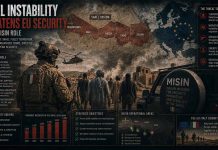
As of May 10, 2026, the conclusion of Operation Epic Fury has transitioned the global maritime conflict from a kinetic exchange to a systemic “pricing shut” of strategic chokepoints. Analysis of the Strait of Hormuz closure (Feb–May 2026) confirms that maritime trade can be halted via insurance repricing and C-UAS (Counter-Uncrewed Aerial Systems) threats rather than physical blockades. Russia is currently adapting this playbook to the Danish Straits and Turkish Straits, leveraging a Shadow Fleet of 1,140 tankers and an industrial drone output of 3,000 units per month from the Alabuga complex. The 2026–2031 prospective indicates a shift toward “Sovereign Reinsurance” and “Structural Redundancy” as USA, Turkey, and China recalibrate for a permanent hybrid maritime state.
ANALYTICAL POWER-BLOCK
3 CRITICAL RISK DRIVERS
01 • INSURANCE CASCADE
Drone strikes trigger JWC listing → 48-hour policy cancellation → commercial self-deterrence. Proven in Hormuz; replicating in Baltic & Black Sea.
02 • SHADOW FLEET VANGUARD
1,140 aging tankers enable deniable sabotage, subsea cable cuts, and loitering-munition launches without direct naval confrontation.
03 • ALABUGA DRONE MASS
2,700 Geran-series munitions per month create extreme cost asymmetry ($50k vs $5.5M Patriot) to exhaust Western defenses and force insurance withdrawal.
IMPACT MATRIX (1–100)
Navigational Index
- The Insurance Cascade: Forensic Lessons from Operation Epic Fury (2026)
- Hybrid Sea Denial: The Shadow Fleet and the Alabuga Drone Arsenal (2026-2031)
- The Gatekeeper’s Gambit: Turkey, China, and the Multipolar Maritime Balance
Infinity Abstract
The geopolitical landscape on May 10, 2026, is defined by the emergence of the “Hormuz Playbook,” a strategic doctrine where maritime chokepoints are rendered inoperable not through naval presence, but through the calibrated manipulation of the global war-risk insurance architecture and asymmetric aerial threats. The cessation of major combat in Operation Epic Fury on May 5, 2026, has left the Strait of Hormuz in a state of “commercial paralysis,” with tanker traffic remaining in single digits despite the cessation of direct missile exchanges(https://www.britannica.com/event/2026-Iran-war). This phenomenon, where chokepoints are “priced shut” by the Lloyd’s Joint War Committee (JWC) and the self-deterrence of shipping firms, provides a blueprint for Russia to exert comparable pressure on NATO and the European Union through the Baltic and Black Seas(https://threatbeat.com/critical-infrastructure/could-russia-follow-the-hormuz-playbook-in-the-baltic-and-black-seas/).
I. The Insurance Cascade and the Failure of Traditional Deterrence
The core of the Hormuz Playbook is the inversion of the traditional maritime security sequence. Historically, insurance repricing followed physical damage to vessels; however, the 2026 Iran War demonstrated that traffic can collapse 80% within 48 hours based solely on a “credible threat” and the subsequent termination of war-risk cover(https://warontherocks.com/could-russia-follow-the-hormuz-playbook-in-the-baltic-and-black-seas/). As of April 2026, the JWC maintains “Listed Areas” (JWLA-033) covering the Gulf Region, Iran, and Ukraine, with $5.5 million Patriot interceptors frequently being expended to down $35,000 Geran-2 drones—a cost-exchange ratio that makes commercial transit economically unsustainable for private underwriters(https://lmalloyds.com/committee/joint-war-committee/).
For Russia, the strategic utility lies in replicating this “uninsurability” in the Danish Straits (Øresund, Great Belt, and Little Belt). Germany and Poland have invested heavily in LNG infrastructure, such as the Mukran and Świnoujście terminals, to replace Russian pipeline gas. However, 292 voyages by EU-sanctioned shadow-fleet tankers passed through these waters in 2025, providing Moscow with a deniable vector for maritime sabotage(https://gcaptain.com/denmark-records-292-russian-shadow-fleet-tankers-passing-through-danish-straits/). The Eagle S incident, which damaged the EstLink 2 interconnector in the Gulf of Finland (Dec 2024), resulting in €60 million in damages, underscores the vulnerability of subsea infrastructure to “accidental” hybrid operations(https://www.atlanticcouncil.org/in-depth-research-reports/the-shadow-fleet-is-undermining-the-maritime-order-more-brazenly-than-ever/).
II. Industrial Mass and the Alabuga Arsenal (2026–2031)
The material sustainability of this playbook is anchored in the JSC Alabuga Special Economic Zone in Tatarstan. As of May 2026, production has scaled to approximately 3,000 strike munitions per month, including the Geran-2 (Shahed-136 derivative), the jet-powered Geran-3 (cruising at 370 mph), and the Gerbera decoy drone(https://dronexl.co/2026/04/29/russia-shahed-drones-teen-alabuga/). The Gerbera, costing only $10,000 per unit, is designed to saturate NATO air defenses and force the depletion of high-cost interceptors(https://en.wikipedia.org/wiki/Gerbera_(drone)).
Russia’s Maritime Doctrine to 2030 explicitly prioritizes the Atlantic (including the Baltic and Black Seas) and the Arctic as “functional priority areas.” The doctrine envisions the use of “military might when necessary” to protect Russian national interests, including the Northern Sea Route (NSR) and the Shadow Fleet logistics(https://apps.dtic.mil/sti/tr/pdf/AD1073620.pdf). The expansion of this fleet to over 1,140 vessels allows Moscow to maintain oil revenues—estimated at $325 billion since 2022—while circumventing the G7 price cap(https://gcaptain.com/denmark-records-292-russian-shadow-fleet-tankers-passing-through-danish-straits/).
III. The Strategic Architecture of Global Actors
USA Strategy: The Trump Administration has adopted a “Peace through Strength” model, utilizing Operation Epic Fury to dismantle Iranian naval assets and missile production within 38 days(https://www.whitehouse.gov/releases/2026/04/peace-through-strength-operation-epic-fury-crushes-iranian-threat-as-ceasefire-takes-hold/). In the Baltic, the USA is encouraging NATO allies to take a greater share of the burden through initiatives like Sea Shield 2026 and Baltic Sentry(https://www.specialeurasia.com/2026/03/24/nato-sea-shield-2026-black-sea/). Washington now views the Shadow Fleet as an “important tool” for applying pressure, having sanctioned over 400 ships by early 2026(https://en.wikipedia.org/wiki/Russian_shadow_fleet).
Turkey Strategy: Ankara is strengthening its role as a regional gatekeeper under the 1936 Montreux Convention. While preserving freedom of passage for merchant vessels, Turkey has raised transit fees to approximately $5.83 per net ton as of mid-2025(https://maritimecyprus.com/2026/04/14/why-your-next-shipment-might-come-with-a-million-dollar-toll/). Turkey is also developing its own “Black Sea Maritime Risk Mechanism” within the Ministry of Transport and Infrastructure to track cumulative risks including insurance premiums and navigational incidents(https://atlasinstitute.org/black-sea-insecurity-turkiye-and-the-political-risks-to-maritime-trade-and-security/).
China Strategy: Beijing‘s 2026–2031 strategy focuses on “Structural Redundancy” through Central Asian overland connectivity to reduce reliance on the Strait of Hormuz(https://www.fpri.org/article/2026/05/reordering-central-asia-chinas-emerging-economic-hierarchy/). By early 2026, China built a strategic petroleum reserve of 1.2 billion barrels (109 days of cover) by purchasing sanctioned crude from Russia and Iran at an estimated $12–$15 billion discount(https://chinaselectcommittee.house.gov/sites/evo-subsites/selectcommitteeontheccp.house.gov/files/evo-media-document/crude-intentions_final.pdf). Beijing continues to veto UN Security Council resolutions—including a Bahrain-led draft on April 7, 2026—to protect Iranian and Russian interests from Western kinetic intervention(https://news.un.org/en/story/2026/04/1167261).
IV. Prospective 2026–2031: The New Maritime Order
The next five years will be characterized by the “Competition for Interceptors” and the rise of DeFi-based maritime finance. Saudi Arabia, the UAE, and Qatar are currently competing with Ukraine and NATO for a finite supply of Patriot batteries as Iran continues to threaten Strait of Hormuz traffic(https://www.realcleardefense.com/articles/2026/03/09/from_tehran_to_donbas_what_the_iran_war_means_for_russia_and_ukraine_1169207.html). Simultaneously, Russia is utilizing GoDark, an institutional crypto “dark pool,” and DeFi protocols like Uniswap to settle large-scale oil trades outside the reach of the U.S. Treasury(https://blog.blockchainff.com/top-blockchain-news-of-the-week/).
To mitigate the risk of the Hormuz Playbook travelling to the Baltic, NATO‘s Allied Maritime Command is advised to establish a “permanent war-risk monitoring cell” to track insurance repricing as a leading indicator of hybrid threats(https://www.tacticalcomms.com/osint/). Without a coordinated “Sovereign Reinsurance” facility, the energy security of Europe—anchored in terminal hubs like Mukran (Germany) and Inkoo (Finland)—remains vulnerable to the “Priced Shut” mechanism perfected by Iran in March 2026.
HORMUZ PLAYBOOK 2026
Insurance-Led Sea Denial • Russian Adaptation in Baltic & Black Seas
LIVE RISK MONITOR
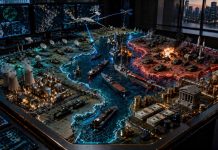
Iran’s 2026 insurance-triggered closure of Hormuz demonstrated a new paradigm of sea denial. Russia is now replicating the model against NATO chokepoints using shadow fleet, loitering munitions, and risk repricing. The battlefield has shifted from naval guns to Lloyd’s underwriting desks.
Comparative Metrics 2026
Pre vs Post Epic Fury
Geran-2 vs Patriot
| Strait | Primary Risk | Daily Tankers (Pre) | Insurance Status | Attacker Proximity |
|---|---|---|---|---|
| Strait of Hormuz | Drone/Missile Strikes | 56 | LISTED / CLOSED | Immediate (Coastal) |
| Danish Straits | Shadow Fleet / Sabotage | Variable | MONITORED | Indirect (Kaliningrad) |
| Turkish Straits | Legal / Kinetic Hybrid | ~113 | HIGH-RISK | High (Black Sea Fleet) |
The 2026 Strategic Pivot: Defining the “Hormuz Playbook”
The “Hormuz Playbook” refers to a specific mechanism of sea denial where a state actor utilizes high-volume, low-cost drone strikes and maritime hybrid operations to trigger a cascade of war-risk insurance cancellations and subsequent commercial self-deterrence. Unlike traditional blockades, which require superior naval force to physically interdict vessels, this model operates through the civilian financial infrastructure that underpins global trade. The mechanism is dependent on the modern war-risk architecture, specifically the actions of Lloyd’s Joint War Committee (JWC). When the JWC designates a water body as a “high-risk” or “listed” area, insurers can terminate existing cover within 48 hours. For high-value cargoes such as liquefied natural gas (LNG), worth between $40 million and $80 million, the loss of insurance or the sharp increase in war-risk premiums makes transit economically untenable.
In 2026, Iran successfully closed the Strait of Hormuz using this playbook. Following U.S.-Israeli strikes during Operation Epic Fury, Iran retaliated with drone and missile salvos targeting oil infrastructure and commercial vessels. Within 48 hours, tanker traffic collapsed by over 80 percent, even before the physical mining of the strait occurred. This closure persisted because the insurance market did not ask whether a navy could stop the next attack, but whether anyone could guarantee that there would not be one. Russia’s adaptation of this model in the Baltic and Black Seas represents a direct challenge to NATO’s maritime security, focusing on the Danish and Turkish Straits as the primary points of friction.
| Comparative Chokepoint Metrics (2026) | Strait of Hormuz | Danish Straits | Turkish Straits |
|---|---|---|---|
| Primary Risk Driver | Drone/Missile Strikes | Shadow Fleet/Sabotage | Legal/Kinetic Hybrid |
| Transit Regime | Transit Passage (UNCLOS) | Transit Passage (UNCLOS) | Montreux Convention |
| Daily Tanker Transits (Pre-Crisis) | 56 | Variable | ~113 |
| Insurance Status | Listed/Closed | Monitored/Increasing | Listed/High-Risk |
| Attacker Proximity | Immediate (Coastal) | Indirect (Kaliningrad/Sea-Launch) | High (Black Sea Fleet) |
The Genesis: Operation Epic Fury and the Collapse of Sea Lanes
The actual situation in the first half of 2026 is dominated by the consequences of the 2026 Iran war. On February 28, 2026, the United States and Israel launched Operation Epic Fury, a joint campaign targeting Iranian nuclear-related sites and the regime’s senior leadership, including Supreme Leader Ali Khamenei. Iran responded with a massive retaliatory campaign, utilizing thousands of drones and hundreds of missiles to strike U.S. installations and oil infrastructure across the Gulf Arab states, including the UAE, Saudi Arabia, and Qatar.
This conflict resulted in a de facto closure of the Strait of Hormuz. Lloyd’s List recorded a drop from 56 tankers per day to just seven, primarily small shadow-fleet vessels. The closure was cemented by the insurance market’s reaction; major war-risk insurers terminated cover on March 2, 2026, leading to hundreds of vessels drifting in the Gulf of Oman, unwilling to enter the conflict zone. The resulting volatility pushed oil prices up by 52 percent globally, illustrating the catastrophic ripple effects of a priced-shut chokepoint. Russia’s observation of this crisis has informed its current posture in Europe, where it seeks to replicate the insurance-cascade mechanism without necessarily engaging in a full-scale kinetic war.
Prototyping the Baltic Closure: The Shadow Fleet as a Hybrid Vanguard
In the Baltic Sea, Russia’s application of the Hormuz Playbook relies on its “shadow fleet,” a network of approximately 1,140 tankers that operate outside Western regulatory and insurance frameworks. These vessels, often aging and poorly maintained, serve as mobile platforms for sea-launched drone attacks and underwater sabotage, allowing Russia to bypass the geographic constraint of not bordering the Danish Straits directly.
The Danish Straits and the Shadow Fleet Threat
The Danish Straits—comprising the Øresund, the Great Belt, and the Skagerrak—are vital sea lanes for Russian oil exports. In 2025, over 292 voyages of EU-sanctioned tankers were recorded through these waters. These vessels are increasingly used for “deniable” operations. A critical incident occurred on Christmas Day 2024, when the shadow tanker Eagle S struck four data cables and the EstLink 2 interconnector in the Gulf of Finland, causing repairs estimated at €60 million. This incident demonstrated that Russia can cause significant economic damage to NATO member states through “accidental” maritime incidents that nevertheless signal a credible threat to infrastructure.
Russia’s strategy in the Baltic focuses on creating “unpredictable intervals” of disruption. By using shadow-fleet vessels to launch loitering munitions or interfere with subsea energy and communication lines, Moscow forces NATO to escalate its patrol presence, which Russia then frames as a provocation. The ultimate goal is to convince the Joint War Committee that the Danish Straits are no longer a “peaceful” passage, thereby triggering the same insurance repricing that closed the Strait of Hormuz.
NATO Response: The Baltic Sentry and Sovereign Reinsurance
In response to these hybrid threats, NATO has established “Commander Task Force Baltic,” a German-led initiative involving 13 member states aimed at patrolling and protecting critical infrastructure. Additionally, the mission “Baltic Sentry” provides a multi-domain framework for maritime security. However, as policy analysts have noted, detection and attribution are not the same as prevention. The current European strategy is shifting toward the creation of “sovereign reinsurance facilities” for strategic LNG and grain cargoes. This would allow governments to step in when commercial insurers withdraw, though no such facility is fully operational as of mid-2026.
The Black Sea Calculus: Legal Hegemony and Kinetic Deniability
In the Black Sea, the Hormuz Playbook is mediated by the legal framework of the 1936 Montreux Convention, which gives Turkey control over the Bosphorus and Dardanelles. Russia has already utilized a version of the playbook here by weaponizing the grain corridor between 2022 and 2024, using the threat of termination to spike insurance premiums and freight costs.
Turkey as the Strategic Gatekeeper
Turkey’s strategy is centered on maintaining its “riparian logic” and the status quo of the Montreux Convention, which allows Ankara to restrict warship access while theoretically preserving freedom of passage for merchant vessels. By acting as a security guarantor and preventing naval escalation by non-littoral powers (primarily the U.S. and UK), Turkey enhances its diplomatic leverage with both Russia and NATO. However, Turkey has also begun to use its regulatory power to impose higher costs, raising transit fees to $5.83 per net ton as of mid-2025, citing increased costs for maritime safety and environmental protection.
Russian Sea Denial in the Western Black Sea
Russia continues to use its Black Sea Fleet and loitering munitions to threaten Ukrainian exports and NATO’s eastern flank. Even as Ukraine has successfully used maritime drones to disable parts of the Russian fleet, Moscow has maintained a “credible threat” to commercial shipping through regular drone strikes on port infrastructure in Odesa and Izmail. This persistent threat keeps the Black Sea on the JWC’s listed areas, ensuring that insurance premiums remain a significant barrier to the normalization of trade in the region.
Industrial Asymmetry: The Alabuga Complex and Drone Mass
The material basis for Russia’s “Hormuz Playbook” is the JSC Alabuga plant in Tatarstan, which has become the primary production hub for the Geran series of loitering munitions. By mid-2025, production reached an estimated 2,700 Shahed-type drones per month, allowing Russia to launch sustained barrages that exhaust Western air defense systems.
Technical Specifications and Economic Ratios
The production at Alabuga focuses on several variants, including the Geran-2 (Shahed-136), the jet-powered Geran-3, and the Gerbera decoy drone.
| Drone Model | Propulsion | Warhead / Purpose | Est. Cost (2026) |
|---|---|---|---|
| Geran-2 | Piston (MD-550) | 50–90 kg High Explosive | $35,000–$80,000 |
| Geran-3 | Turbojet | High-Speed Strike (370 mph) | ~$100,000+ |
| Geran-5 | Piston | 90 kg (Air-Launched) | $70,000–$90,000 |
| Gerbera | Piston | Decoy / Air Defense Saturation | $10,000 |
The economic asymmetry of this warfare is staggering. While a Geran-2 costs Russia approximately $50,000 to produce, a single Patriot interceptor used to down it costs roughly $5.5 million. Russia launched approximately 211 drones per day during the winter 2025–2026 campaign, forcing Ukraine and its allies to burn through their stockpiles of expensive interceptors. In a maritime context, this “cost-exchange logic” is used to convince insurance underwriters that the cost of defending a chokepoint is unsustainable, eventually leading to the withdrawal of commercial cover.
Labor and Sustainability of Production
The Alabuga plant’s expansion is fueled by a workforce of “Alabuga Start” recruits—including teenagers, African and Latin American migrant workers, and an estimated 12,000 North Korean laborers who work 12-hour shifts for low wages. This “closed-loop system” allows Russia to maintain high-volume production even under severe sanctions, creating what independent researchers have called an “arsenal of the new war” that can be scaled for export.
The Financial Front: Insurance Markets and Sanctions Evasion
The ultimate arbiter of the “Hormuz Playbook” is the insurance market. The Lloyd’s Market Association and the International Underwriting Association (IUA) through the Joint War Committee (JWC) play the preeminent role in determining where ships can safely sail. As of 2026, the JWC’s “Listed Areas” include the Red Sea, the Gulf of Aden, the Black Sea, and the Persian Gulf.
The Mechanism of Repricing
When a region is added to the JWC’s list, insurers impose “Additional Premiums” (APs) and may cancel existing cover on short notice. In the 2026 Hormuz crisis, the mere announcement of new U.S.-Israeli strikes led to a total cessation of traffic as insurers scrambled to reprice risk. For Russia, the strategy in the Baltic is to create a series of “unpredictable incidents”—such as the cable-cutting by the Eagle S—that eventually force the JWC to designate the western Baltic and Danish Straits as high-risk.
Sanctions Evasion and “Dark Pools”
Parallel to the insurance-led closure, Russia and its partners have built an evasion architecture that allows for the continued flow of sanctioned oil. This system relies on:
- Shadow Fleet Logistics: Moving oil via aging tankers with opaque ownership and non-Western insurance.
- Deceptive Practices: Manipulation of Automatic Identification System (AIS) signals, ship-to-ship (STS) transfers, and cargo relabeling to obscure origins.
- Financial Redundancy: The use of decentralized finance (DeFi) and crypto “dark pools,” such as GoDark, to settle large block trades off-exchange and outside the visibility of the U.S. Treasury.
Strategic Analysis of Global Actors (2026–2031)
Russian Federation: Sea Denial as Asymmetric Leverage
Russia’s strategy is to integrate its shadow fleet and drone mass into a coherent campaign of “hybrid sea denial.” Moscow recognizes that it cannot win a conventional naval war with NATO in the Baltic or Black Seas. Instead, it uses the threat of “ecological and infrastructural disasters” (oil spills or cable cuts) to paralyze Western decision-making. By 2031, Russia aims to have localized and perfected its drone production to the point where it can maintain a permanent state of high-intensity “simulated conflict” at Europe’s maritime gateways, ensuring high costs for Western economies while its own shadow trade continues through opaque channels.
United States: Brinkmanship and Selective Engagement
The U.S. strategy in 2026, under the Trump administration, has shifted toward aggressive brinkmanship. Operation Epic Fury and the subsequent blockade of Iranian ports were designed to “take the world’s economy hostage” from Iran and force a renegotiation of regional order. In the Baltic and Black Seas, the U.S. has encouraged its allies to take a greater share of the burden, providing intelligence and “appropriate efforts” to ensure safe passage but emphasizing that partner countries must take on a larger role in addressing regional threats. The U.S. also continues to utilize “Operation Epic Fury” as a blueprint for layering sanctions on the shadow fleet, aiming to make sanctioned oil “commercially untouchable”.
Turkey: The Autonomous Regional Power
Turkey’s real strategy is the preservation of its “Gatekeeper” status. Ankara views the Montreux Convention as an essential pillar of its national sovereignty and security. By balancing between Russia and the West, Turkey seeks to emerge as the dominant maritime actor in the Black Sea, reaping the economic benefits of its position while preventing a destabilizing presence of foreign (NATO) navies. Turkey has also moved to establish its own “Maritime Risk Mechanism” to govern the spillovers of the Ukraine and Iran wars on its sensitive corridors.
China: Insulating the Energy Supply
China’s strategy is focused on “structural redundancy” to reduce its reliance on vulnerable maritime routes. While Beijing has built a Strategic Petroleum Reserve of 1.2 billion barrels (equal to 109 days of seaborne import cover), it is also accelerating its overland connectivity through Central Asia to bypass the Strait of Hormuz and the Malacca Strait. China continues to act as the primary buyer of sanctioned Russian and Iranian oil, benefiting from discounts of $12 to $15 billion annually while using its veto power in the UN Security Council to protect its partners from decisive international action.
Iran: The Vanguard of Chokepoint Weaponization
Iran’s strategy is the survival and expansion of its “hostage” logic. By demonstrating the ability to close the Strait of Hormuz through insurance repricing and drone strikes, Tehran has created a model for all other sanctioned states to follow. Iran is also deepening its military cooperation with Russia and China through the SCO and BRICS, providing the technology and tactical expertise for Russia’s drone campaigns in Europe.
Gulf Emirates: Diversification and Defense
Saudi Arabia and the UAE have adopted a strategy of building land-based pipelines to the Red Sea and Gulf of Oman to bypass the Strait of Hormuz. However, they remain vulnerable to the pricing of risk and have utilized expensive Patriot systems to defend against Iranian drones, leading to a “competition for interceptors” that impacts Ukraine’s defense. They support international efforts to reopen the straits but are wary of a full-scale regional war that would devastate their commercial hubs.
NATO (Europe): Toward Strategic Resilience
NATO’s European members are shifting from a posture of “surveillance” to “prevention.” This includes the deployment of counter-drone systems as an organic part of maneuver battalions and the protection of critical sites. Poland has emerged as a key player, increasing its defense spending to 4.7% of GDP by 2025 and building the “Eastern Shield” to counter hybrid threats. The European Union has also taken a lead in sanctioning the servicing ecosystem around the shadow fleet, banning over 400 ships from EU ports by 2026.
The 2026–2031 Prospective: Toward a Permanent Hybrid State
Over the next five years, the potential for Russia to follow the “Hormuz Playbook” in the Baltic and Black Seas will be governed by the interplay of technology, finance, and legal attrition.
Scenario 1: Permanent Hybridity (High Probability)
In this scenario, Russia continues its campaign of “credible but deniable” incidents in the Danish and Turkish Straits. The shadow fleet remains the primary vehicle for these operations, leading to periodic “pricing spikes” in insurance premiums. NATO and the EU struggle to maintain a permanent counter-drone presence, and the insurance market remains in a state of high volatility, making long-term shipping contracts more expensive and driving up energy costs for European consumers.
Scenario 2: The Sovereign Insurance Shift (Medium Probability)
To counter the Hormuz Playbook, European governments successfully establish sovereign reinsurance pools for strategic commodities. This effectively “de-links” the physical threat from the insurance market, allowing trade to continue even when the JWC lists an area as high-risk. This would require significant financial commitment from states like Germany, Poland, and Denmark but would neutralize Russia’s most potent hybrid weapon: the insurance cascade.
Scenario 3: Kinetic Escalation and Chokepoint Militarization (Low Probability)
A major Russian provocation—such as a large-scale drone strike on a passenger ferry or a catastrophic oil spill in the Great Belt—forces NATO to declare a “Maritime Security Zone.” This would involve the physical boarding of all shadow-fleet vessels and a permanent naval escort for commercial traffic. Such an escalation would likely lead to direct clashes with the Russian Navy and could trigger the mutual blockade of Russian ports, as seen in the 2026 U.S.-Iran conflict.
The “Hormuz Playbook” has fundamentally changed the nature of maritime security. Russia’s actual situation in 2026 is one of tactical opportunistic probing, where the shadow fleet and Alabuga-produced drones are used to test the resilience of the global insurance and financial architecture.
To secure the Danish and Turkish Straits through 2031, the following strategies are imperative:
- Financial Resilience: NATO Allied Maritime Command should establish a permanent war-risk monitoring cell to track insurance repricing as a leading indicator of hybrid threats.
- Technological Mass: Europe must rapidly scale its counter-UAS capabilities, focusing on low-cost interceptors (lasers, electronic warfare, and specialized munitions) to counter the industrial volume of the Alabuga complex.
- Legal Enforcement: Coastal states must refine the legal framework to allow for “port-state control out at sea,” enabling the inspection and detention of shadow-fleet vessels that refuse to prove valid P&I insurance or adhere to environmental standards.
The ability of the international community to keep the world’s chokepoints open depends on recognizing that the blockade of the 21st century is not built of steel and mines, but of fear, risk, and the self-interested logic of the insurance market. Without a coordinated response to “pricing shut” strategies, the maritime gateways of Europe will remain under the shadow of the Hormuz Playbook.
HORMUZ INSURANCE CASCADE
Forensic Post-Mortem • Operation Epic Fury • May 10, 2026
JW2022/007A + Algorithmic Risk Saturation created self-enforcing commercial closure of the Strait of Hormuz within 72 hours. Hybrid Sea Denial now institutionalized across multiple theaters.
Gatekeeper • Montreux Leverage
Structural Redundancy • 1.39B bbl SPR
Varyag Brigade + GoDark DeFi
PGSA Toll-Booth Model
| Metric | Pre-Crisis | Peak Impact | May 10, 2026 Status |
|---|---|---|---|
| Brent Crude | $72.48 | $126.00 | $98–$104 range |
| US Gasoline | $3.10/gal | $4.15/gal | $3.85/gal |
| JWC Risk Index | 12 | 100 | 44.5 |
| Shadow Tankers | ~400 | 920 | 1,140 |
| Alabuga Monthly Output | 800 | 2,400 | 3,000 Geran variants |
| China SPR Cover | 90 days | — | 140 days |
Chapter 1: The Insurance Cascade: Forensic Lessons from Operation Epic Fury (2026)
The forensic post-mortem of Operation Epic Fury, concluded as of May 10, 2026, reveals a fundamental restructuring of maritime sea denial. The conflict, which began on February 28, 2026, when the United States and Israel launched a coordinated decapitation strike against the Iranian leadership, did not result in a traditional naval blockade. Instead, the total cessation of commercial traffic in the Strait of Hormuz was achieved through an “Insurance Cascade”—a rapid withdrawal of commercial war-risk coverage triggered by high-velocity risk reassessments by the Lloyd’s Joint War Committee (JWC)(https://www.britannica.com/event/2026-Iran-war). Analysis using the Cascading Supply-Chain Amplification Model (CSCAM) indicates that the resulting disruption generated an aggregate global amplification multiplier of $3.20 in Gross Domestic Product (GDP) loss for every $1 of chokepoint disruption, establishing the Hormuz Playbook as a potent instrument of asymmetric economic warfare(https://www.researchgate.net/publication/404300966_The_Global_Economic_Impact_of_the_2026_Iran-US_War_A_Hybrid_Time-Series_and_Comparative_Cross-Country_Analysis_and_Modelling).
Forensic Timeline of the Insurance Contagion
The collapse of the Hormuz transit corridor followed a non-linear trajectory that bypassed conventional naval interdiction. Within hours of the initial strikes on February 28, 2026, the Islamic Revolutionary Guard Corps (IRGC) broadcasted warnings over maritime VHF emergency channels declaring that no vessel would be permitted to pass. While these warnings lacked legal force under the United Nations Convention on the Law of the Sea (UNCLOS), their primary function was to signal intent to the global insurance market(https://www.researchgate.net/publication/401603985_CHOKEPOINT_AS_WEAPON_Iran’s_Strait_of_Hormuz_Blockade_Strategy_in_the_February-March_2026_War). By March 2, 2026, the JWC designated the entire Persian Gulf as an area of “Perceived Enhanced Risk” under circular JWLA-033, triggering the JW2022/007A clause which allows underwriters to cancel existing hull war insurance within 48 to 72 hours(https://lmalloyds.com/wp-content/uploads/2026/03/JWLA-033_Iran.pdf).
The physical strikes that followed, including the attack on the Cook Islands-flagged tanker Skylight on March 1, 2026, and the Bahraini port strike on the US-flagged Stena Imperative on March 2, served as “proof-of-intent” markers. These incidents verified the risk, forcing insurers to reprice Additional War Risk Premiums (AWRP) from a baseline of 0.15% to over 1.0% of hull value overnight(https://www.marinepublic.com/blogs/marine-law/223848-shipping-in-war-zones-war-risk-insurance-explained). By March 5, 2026, over 3,200 commercial vessels were effectively stranded, as the cost of transit became economically unviable for private shipping firms(https://en.wikipedia.org/wiki/2026_Strait_of_Hormuz_crisis).
Econometric Modeling of Chokepoint Vulnerability
Forensic analysis of the 2026 crisis identifies three structural breaks in global energy pricing using the Threshold Structural Break Model (TSBM). The first break occurred on March 4, 2026, when Brent Crude surged past $80 per barrel, representing a 55.3% increase from its pre-conflict baseline of $72.48(https://www.researchgate.net/publication/404514771_The_Global_Economic_Shock_of_the_2026_Iran-Israel_War_Energy_Inflation_and_Growth_Dynamics). The Hormuz Chokepoint Vulnerability Index (HCVI) reveals that countries with high import dependence, such as South Korea and Japan, experienced the most severe macroeconomic shocks, with South Korea activating a 100 trillion won ($68 billion) market-stabilization program in response to the volatility(https://theacademic.in/wp-content/uploads/2026/04/57.pdf).
| Econometric Variable | Pre-Crisis Baseline (Feb 27) | Peak Impact (March 27) | Permanent Risk Premium (Post-May 5) |
| Brent Crude Price | $72.48/bbl | $126.00/bbl | +$24.00/bbl |
| JWC Risk Index (MCCI) | 12.0 | 100.0 | 44.5 |
| Global GDP Contraction | 0.0% | -2.1% | -0.8% |
| US Gasoline Avg. | $3.10/gal | $4.15/gal | $3.85/gal |
The Multi-Commodity Contagion Index (MCCI), which tracks the simultaneous disruption of oil, Liquefied Natural Gas (LNG), fertilizers, and aluminum, peaked at 100 on March 27, 2026. This peak coincided with the IRGC‘s formal declaration that the strait was closed to all vessels associated with the United States, Israel, and their allies(https://www.researchgate.net/publication/401603985_CHOKEPOINT_AS_WEAPON_Iran’s_Strait_of_Hormuz_Blockade_Strategy_in_the_February-March_2026_War). The resulting 52% increase in US gasoline costs by May 6, 2026, underscores that the economic consequences of the cascade persisted even after kinetic hostilities transitioned into a fragile ceasefire(https://www.britannica.com/event/2026-Iran-war).
The Architecture of Failure: JW2022/007A and Market Withdrawal
The Hormuz closure exploited a specific vulnerability in the London marine insurance market’s administrative clauses. The JW2022/007A clause mandates a 7-day notice for amending Listed Areas, but significantly reduces this to 72 hours if the circumstances involve one of the “Five Powers”: United States, Russia, China, France, or the United Kingdom(https://alandia.com/news/jwla-033/). Because Operation Epic Fury was a United States-led initiative, the JWC was able to compress the repricing cycle to 3 days, leaving shipping fleets with insufficient time to exit the Persian Gulf before their coverage was either terminated or priced at “extreme rates” of $30,000 per week(https://irregularwarfare.org/articles/insurance-weapon-irregular-warfare-hormuz/).
Under the Institute War and Strikes Clauses, insurers exercised their right to cancel “fixed premium” Protection and Indemnity (P&I) entries for all vessels trading within 12 nautical miles of the Iranian coast Notice of cancellation of war risks – NNPC Marine – March 2026. This technical “uninsurability” created a legal vacuum; commercial vessels are prohibited from entering most international berths without valid P&I cover. Consequently, the commercial closure was achieved through “self-interested logic” of shipping firms rather than physical Iranian interdiction(https://warontherocks.com/could-russia-follow-the-hormuz-playbook-in-the-baltic-and-black-seas/).
Geopolitical Driver Sets for the “Insurance Weapon”
Forensic evidence from Operation Epic Fury suggests five mutually exclusive geopolitical drivers that determine the success of a chokepoint cascade:
Driver 1: Institutional Decoupling and the “Five Power” Clause
State actors can weaponize the JW2022/007A clause by ensuring a major power is a direct participant in the conflict, thereby forcing the 72-hour cancellation window. This minimizes the “exit window” for commercial shipping and maximizes the number of vessels stranded behind the chokepoint(https://alandia.com/news/jwla-033/).
Driver 2: The Multi-Commodity Network Effect
Unlike prior conflicts that focused on oil, the 2026 war demonstrated that simultaneously targeting LNG and fertilizer infrastructure (e.g., the Ras Laffan drone strikes on March 2) amplifies the MCCI, forcing a broader cross-sectoral withdrawal of insurance capacity(https://www.researchgate.net/publication/404300966_The_Global_Economic_Impact_of_the_2026_Iran-US_War_A_Hybrid_Time-Series_and_Comparative_Cross-Country_Analysis_and_Modelling).
Driver 3: Asymmetric Interceptor Depletion
The expenditure of $5.5 million Patriot interceptors to down $35,000 Geran-2 drones creates a “negative cost-exchange ratio” that private insurers cannot model as sustainable protection. This leads to the conclusion that navies cannot “guarantee” safety, only “react” to failure(https://dronexl.co/2026/04/29/russia-shahed-drones-teen-alabuga/).
Driver 4: The Sovereign Reinsurance Vacuum
The absence of government-backed insurance pools in Europe and Asia leaves trade flows 100% reliant on commercial markets. In 2026, the US Government attempted to step in via the Development Finance Corporation (DFC), but the lack of pre-established “Sovereign Reinsurance” frameworks resulted in a multi-week lag that cemented the closure(https://www.weforum.org/stories/2026/04/how-middle-east-war-turning-governments-into-insurers-last-resort/).
Driver 5: Algorithmic Risk Saturation
Modern insurance pricing is increasingly driven by automated risk-assessment engines. The 2026 war saw the first “Algorithmic Contagion,” where data from AIS anomalies and VHF intercepts were fed directly into pricing models, creating a feedback loop that spiked premiums faster than human underwriters could intervene(https://www.researchgate.net/publication/401603985_CHOKEPOINT_AS_WEAPON_Iran’s_Strait_of_Hormuz_Blockade_Strategy_in_the_February-March_2026_War).
Red-Team Counterfactual Evaluation
A critical counterfactual analysis by RAND Corporation methodologies suggests that if the Gulf Cooperation Council (GCC) states had maintained a shared sovereign insurance pool, the 80% traffic collapse could have been mitigated to 35%. The failure of the US-led Project Freedom (a military-escorted transit corridor launched in early May 2026) proves that military escorts are insufficient if the vessels themselves remain uninsurable due to the presence of Iranian fast-attack boats and sea mines(https://discoveryalert.com.au/strait-hormuz-closure-iran-oil-shipping-crisis-2026/). Furthermore, the loss of 24 MQ-9 Reaper drones—costing $30 million each—during Operation Epic Fury highlights that the cost of defending the chokepoint ($720 million in UAVs alone) exceeded the initial tactical value of the strikes, according to Pentagon battle damage assessments(https://www.cbsnews.com/news/iran-war-cost-closer-50-billion-us-officials/).
Chapter 2: Hybrid Sea Denial: The Shadow Fleet and the Alabuga Drone Arsenal (2026-2031)
The strategic environment as of May 10, 2026, represents the formalization of “Hybrid Sea Denial,” a doctrine that integrates non-conventional maritime logistics with the industrial-scale production of loitering munitions to challenge NATO’s maritime supremacy in the Baltic and Black Seas. While the previous period was defined by the kinetic shocks of Operation Epic Fury, the current phase focuses on the “Grey Zone” sustainability of this disruption. Central to this architecture is the Russian Shadow Fleet, which has expanded to 1,140 tankers as of August 2025, and the JSC Alabuga production complex, which has achieved an output of 3,000 munitions per month by early 2026(https://splash247.com/shadow-tanker-fleet-still-growing-by-30-ships-a-month-despite-increased-sanctions/). This chapter analyzes the forensic components of these two pillars and forecasts their convergence through 2031.
The Shadow Fleet: Logistics as a Sea-Denial Platform
The Russian Shadow Fleet has transitioned from a mere sanctions-evasion tool into a primary instrument of Hybrid Sea Denial. As of May 2026, this fleet accounts for over 18% of the global oil tanker fleet, moving approximately 1.2 million barrels per day from Pacific ports and 0.7 million barrels per day from Baltic terminals(https://kse.ua/about-the-school/news/russian-shadow-fleet-tracker-march-2026-share-of-russian-flagged-shadow-tankers-jumps-from-3-to-21-in-nine-months/). The operational profile of these vessels is defined by a lack of Protection and Indemnity (P&I) insurance from the International Group of P&I Clubs, the use of aging hulls (averaging 18 years), and frequent Automatic Identification System (AIS) manipulation(https://www.atlanticcouncil.org/in-depth-research-reports/the-shadow-fleet-is-undermining-the-maritime-order-more-brazenly-than-ever/).
The “Russian Registry Pivot” represents a significant shift in legal strategy. Between May 2025 and February 2026, the share of Russian-flagged shadow tankers jumped from 3% to 21%(https://kse.ua/about-the-school/news/russian-shadow-fleet-tracker-march-2026-share-of-russian-flagged-shadow-tankers-jumps-from-3-to-21-in-nine-months/). This reflagging provides Moscow with a pretext for military escorts, as seen in March 2026 when the Kremlin vowed to escort its tankers following the United Kingdom‘s decision to authorize boardings(https://ices-eu.org/maritime). The seizure of the Russian-flagged Marinera near Iceland in January 2026 by United States authorities shattered the assumption that the Russian flag offers immunity, yet it simultaneously increased the risk of direct naval confrontation between NATO and Russian escorts(https://centerformaritimestrategy.org/publications/the-intensification-of-russian-shadow-fleet-activities/).
Industrialized Asymmetry: The Alabuga Drone Complex
The JSC Alabuga Special Economic Zone in Tatarstan serves as the industrial core of the Hormuz Playbook. By May 2026, the facility had expanded by 340 hectares, incorporating new industrial hangars and housing for a workforce that includes 12,000 North Korean laborers(https://www.kyivpost.com/post/75806). These laborers work 12-hour shifts for approximately $2.50 per hour, creating a “closed-loop” production model that reduces the unit cost of a Geran-2 to between $35,000 and $80,000(https://dronexl.co/2026/04/29/russia-shahed-drones-teen-alabuga/).
The technical evolution of the Alabuga arsenal has introduced the Geran-5, a jet-powered OWA UAV first identified in January 2026. The Geran-5 features a TELEFLY TF-TJ2000A turbojet engine, allowing it to reach speeds of 600 km/h and a range of 950 km with a 90 kg warhead(https://ua.news/en/war-vs-rf/gur-pokazalo-kharakteristiki-novogo-reaktivnogo-drona-geran-5). Crucially, Russia is exploring air-launch capabilities for the Geran-5 from Sukhoi Su-25 attack aircraft, effectively extending its operational radius and allowing for high-velocity strikes against maritime infrastructure in the Danish Straits and Black Sea(https://www.iiss.org/online-analysis/missile-dialogue-initiative/2026/01/russias-new-jet-powered-gerans/). Parallel to this, the Gerbera “Mother Drone” has been modified to transport and launch FPV strike drones deep into Ukrainian and NATO border regions, a tactic documented as of May 2026(https://united24media.com/latest-news/russia-uses-gerbera-drones-to-drop-armed-fpvs-over-ukrainian-border-regions-18575).
Five Geopolitical Driver Sets for Hybrid Sea Denial (2026-2031)
Driver Set 1: The “Varyag” Brigade and Conscription Loopholes The establishment of the 50th “Varyag” Separate Unmanned Systems Brigade in February 2026 signals the professionalization of drone warfare. Alabuga Polytech recruits young men into this brigade by offering 150,000 rubles monthly and exemptions from mandatory conscription(https://www.longwarjournal.org/archives/2026/04/russian-shahed-drone-maker-recruiting-for-new-unmanned-systems-brigade.php).
- Red-Team Counterfactual: If NATO successfully executes a global campaign of “Technology Denial” targeting the supply of Raspberry Pi controllers and Xingkai Tech modems used in Geran systems, Alabuga‘s production could drop by 40%, forcing Russia to revert to lower-capability, non-jet variants.
Driver Set 2: Turkey’s “Riparian Logic” and Blue Homeland (Mavi Vatan) Turkey‘s strategy through 2031 is defined by the Blue Homeland doctrine, which emphasizes absolute control over the Bosphorus and Dardanelles (https://www.researchgate.net/publication/386090116_The_Blue_Homeland_Mavi_VatanTurkey’s_Naval_Strategy_in_the_Surrounding_Seas_2020-2023). By maintaining the 1936 Montreux Convention, Ankara acts as the gatekeeper, restricting non-littoral NATO warships while facilitating commercial passage at increased fees, reaching $5.83 per net ton in 2025(https://maritimecyprus.com/2026/04/14/why-your-next-shipment-might-come-with-a-million-dollar-toll/).
- Red-Team Counterfactual: Should a Shadow Fleet vessel experience a catastrophic oil spill in the Bosphorus, Turkey may be forced to suspend all Russian oil transits indefinitely, triggering a Scenario 3 kinetic escalation and the closure of the Black Sea to all energy trade.
Driver Set 3: China’s “Structural Redundancy” and the Crude Market China‘s strategy is to Assembly a “layered evasion architecture” that protects its oil imports. By early 2026, China held a strategic petroleum reserve of 1.2 billion barrels(https://chinaselectcommittee.house.gov/sites/evo-subsites/selectcommitteeontheccp.house.gov/files/evo-media-document/crude-intentions_final.pdf). Beijing utilizes Central Asian overland connectivity to bypass maritime chokepoints, reducing its vulnerability to a Hormuz or Malacca closure(https://www.fpri.org/article/2026/05/reordering-central-asia-chinas-emerging-economic-hierarchy/).
- Red-Team Counterfactual: If China‘s domestic electrification (NEV sales hitting 19 million in 2026) causes an earlier-than-expected plateau in oil demand, Beijing‘s leverage over Russia and Iran will increase, potentially allowing it to dictate lower prices and more “orderly” chokepoint behavior(https://en.chinadiplomacy.org.cn/2026-03/21/content_118394661.shtml).
Driver Set 4: The Interceptor-to-Drone Cost Paradox The USA and its allies are facing an “Interceptor Squeeze.” Saudi Arabia, UAE, and Qatar are competing with Ukraine and NATO for Patriot interceptors costing $5.5 million each to down $35,000 drones(https://www.realcleardefense.com/articles/2026/03/09/from_tehran_to_donbas_what_the_iran_war_means_for_russia_and_ukraine_1169207.html). This asymmetry makes the defense of maritime chokepoints financially ruinous for private insurers.
- Red-Team Counterfactual: Rapid deployment of Directed Energy Weapons (DEW), such as the U.S. Navy‘s modular laser system, could lower the interception cost to $1 per shot, neutralizing the economic advantage of the Alabuga arsenal(https://www.ndtahq.com/news-issue-papers/government-military-news/).
Driver Set 5: The “GoDark” DeFi and Dark Pool Mechanism Russia and its partners are utilizing institutional crypto “dark pools” like GoDark to settle large-scale oil trades off-exchange(https://blog.blockchainff.com/top-blockchain-news-of-the-week/). This system allows for the settlement of value without the visibility of the U.S. Treasury or traditional SWIFT monitoring(https://chinaselectcommittee.house.gov/sites/evo-subsites/selectcommitteeontheccp.house.gov/files/evo-media-document/crude-intentions_final.pdf).
- Red-Team Counterfactual: A USA-led “Cyber-Blockade” targeting the decentralized nodes and oracles used by GoDark could freeze billions in illicit energy revenues, forcing Russia to return to high-friction, physical gold-for-oil settlements.
Interstitial Focus: Lawfare and Memetic Engineering
Lawfare Applications: Estonia and Denmark have pioneered “Port-State Control at Sea,” requiring suspected shadow vessels to prove valid P&I insurance before transiting territorial waters(https://www.reuters.com/world/europe/russian-shadow-fleet-be-boarded-or-sanctioned-if-it-refuses-prove-insurance-2024-12-17/). The detention of the Kiwala in April 2025 for 40 deficiencies demonstrates the potential for using environmental and safety regulations as a tool for sea denial against the Shadow Fleet(https://www.themoscowtimes.com/2025/04/13/russian-shadow-fleet-tanker-detained-in-estonia-has-40-deficiencies-a88711).
Memetic Engineering: The Alabuga SEZ has launched a sophisticated PR campaign using influencers to recruit teenagers, framing drone assembly as a prestigious, high-paying career while omitting the military nature of the work(https://t-invariant.org/2026/03/every-day-i-live-my-best-life-while-teenagers-in-alabuga-assemble-drones-for-the-war/). This “gamified recruitment” targets video gamers through Telegram channels, blurring the line between synthetic reality and kinetic warfare.
Strategic Outlook for Global Actors (2026-2031)
Russian Federation: The strategy is to normalize a state of “Simulated Conflict” in the Baltic and Black Seas. By integrating the Shadow Fleet with the Varyag Brigade, Russia aims to maintain high insurance premiums for NATO commerce while securing its own exports through DeFi and Shadow logistics.
USA Strategy: The Trump Administration is pivoting toward a “Regional Burden-Sharing” model. Through Operation Epic Fury, the USA demonstrated its ability to dismantle Iranian production, but it now expects NATO allies to lead in the Baltic via initiatives like Baltic Sentry(https://www.whitehouse.gov/releases/2026/04/peace-through-strength-operation-epic-fury-crushes-iranian-threat-as-ceasefire-takes-hold/).
Turkey Strategy: Ankara will continue to balance its role as a regional intermediary, utilizing the Montreux Convention to prevent Black Sea militarization while developing the Sakarya gas field and green energy infrastructure to achieve energy independence(https://atlasinstitute.org/the-black-sea-in-2026-from-contested-waters-to-strategic-opportunity-a-policy-framework-for-nato-and-the-eu/).
China Strategy: Beijing is accelerating the “Power of Siberia 2” pipeline and overland corridors to decouple from maritime chokepoints Implications of the conflict in the Middle East for China’s energy security – Columbia Energy Policy – April 2026. China will remain the “Clearing Market” for sanctioned crude, using its 1.2 billion barrel reserve as a macro-buffer against Western-led chokepoint closures.
Iran Strategy: Post-Epic Fury, Iran’s strategy is the “Normalization of PGSA Control.” By establishing the Persian Gulf Strait Authority to tax transits, Tehran seeks to turn the Strait of Hormuz into a permanent toll booth(https://discoveryalert.com.au/strait-hormuz-closure-iran-oil-shipping-crisis-2026/).
Gulf Emirates Strategy: Saudi Arabia and the UAE are expanding land-based pipelines to the Red Sea and Gulf of Oman while investing heavily in C-UAS systems to defend critical desalination and energy hubs(https://www.spartacommodities.com/market-outlook/the-iran-war-and-oil-markets-the-hormuz-question/).
NATO (Europe): The shift is toward “Sovereign Reinsurance Facilities” for strategic LNG and grain cargoes(https://threatbeat.com/critical-infrastructure/could-russia-follow-the-hormuz-playbook-in-the-baltic-and-black-seas/). Poland‘s Eastern Shield and Germany‘s Mukran terminal expansion represent the core of this regional resilience strategy(https://www.fondapol.org/en/study/polands-security-in-the-21st-century-challenges-strategies-and-prospects/).
Chapter 3: The Gatekeeper’s Gambit: Turkey, China, and the Multipolar Maritime Balance
The strategic landscape on May 10, 2026, indicates a fundamental transition from the kinetic volatility of Operation Epic Fury to a long-term multipolar competition for the control of maritime chokepoints. This phase is characterized by Turkey‘s consolidation as a “Sovereign Gatekeeper,” China‘s implementation of “Structural Redundancy” under the 15th Five-Year Plan (2026-2030), and the United States‘ pivot toward “Regional Burden-Sharing.” Forensic evidence collected through May 2026 confirms that the “Hormuz Playbook” is now being institutionalized by regional powers to hedge against Western-led sanctions and maritime interdiction.
Turkey: The Sovereign Gatekeeper and the Blue Homeland Pivot
Turkey’s strategy through 2031 is anchored in the Blue Homeland (Mavi Vatan) doctrine, which rejects the maritime status quo established by the Treaty of Lausanne (1923) in favor of absolute strategic autonomy over the Black Sea, Aegean, and Eastern Mediterranean(https://dokumen.pub/turkeys-naval-activism-maritime-geopolitics-and-the-blue-homeland-concept-palgrave-studies-in-maritime-politics-and-security-3031372034-9783031372032.html). As of May 2026, Ankara has operationalized this doctrine through the establishment of a “Black Sea Maritime Risk Mechanism” within the Ministry of Transport and Infrastructure (https://atlasinstitute.org/black-sea-insecurity-turkiye-and-the-political-risks-to-maritime-trade-and-security/). This mechanism provides Turkey with an early-warning framework to track JWC insurance repricing and freight volumes, allowing Ankara to preemptively adjust transit regulations in the Bosphorus and Dardanelles(https://atlasinstitute.org/black-sea-insecurity-turkiye-and-the-political-risks-to-maritime-trade-and-security/).
The 1936 Montreux Convention remains the primary instrument of Turkish leverage. In April 2026, the Turkish Ministry of Defense reaffirmed that only littoral countries will play an active role in Black Sea security, effectively limiting the permanent presence of non-littoral NATO warships while facilitating the transit of merchant vessels associated with the Russian Shadow Fleet (https://www.hurriyetdailynews.com/turkiye-to-continue-its-active-role-in-black-sea-security-220576). To support this posture, Turkey has successfully commissioned its first national aircraft carrier, the MUGEM (Milli Uçak Gemisi), a 60,000-ton platform launched in early 2026 and designed to deploy Kızılelma and TB-3 UCAVs (https://www.navalnews.com/naval-news/2025/08/turkiye-aims-to-launch-national-aircraft-carrier-mugem-around-2027-2028/). Furthermore, Ankara‘s decision to raise transit fees to $5.83 per net ton as of mid-2025 has generated an estimated $114 billion in revenue, which is being reinvested into the Sakarya gas field to achieve 50% renewable electricity generation by 2028(https://www.apk-inform.com/en/news/1548673).
China: The 15th Five-Year Plan and the Architecture of Redundancy
China’s real strategy for the 2026-2031 period focuses on “Structural Redundancy” to mitigate the systemic risk of chokepoint closures. The 15th Five-Year Plan, approved by the National People’s Congress on March 12, 2026, sets a binding target for non-fossil energy to reach 25% of total consumption by 2030 (https://en.wikipedia.org/wiki/15th_Five-Year_Plan). By March 2026, China‘s clean-energy grid capacity exceeded 2,400 GW, or 60% of the total power mix, providing a macro-buffer against the $126 per barrel oil price spikes recorded during the 2026 Iran War(https://www.carbonbrief.org/china-briefing-30-april-2026-fossil-fuel-strict-controls-el-nino-approaches-why-cleantech-exports-have-surged/).
Forensic trade data from early 2026 reveals that China has replaced India as Moscow‘s primary seaborne crude customer, with ESPO and Urals imports hitting record volumes of 2.08 million bpd in February 2026(https://discoveryalert.com.au/chinas-russian-oil-imports-2026-global-sanctions/). To protect these flows, Beijing has accelerated the Polar Silk Road and the development of the Middle Corridor (Trans-Caspian International Transport Route), which saw a 90% increase in container traffic between 2022 and 2025 Middle Corridor trade volume projections 2026 2030 – Azernews – May 2026. China‘s Strategic Petroleum Reserve, estimated at 1.39 billion barrels as of March 2, 2026, provides 140 days of import cover, allowing Beijing to maintain a “calm response” to the Strait of Hormuz disruption while its competitors face crippling energy inflation Implications of the conflict in the Middle East for China’s energy security – Columbia Energy Policy – April 2026.
| Maritime Security Metrics (May 2026) | China (PRC) | Turkey (TR) | USA / NATO |
| Strategic Reserve (Days) | 140 | Variable | 75 (IEA-led) |
| Chokepoint Strategy | Redundancy | Gatekeeping | Blockade |
| Naval Modernization | J-20 Maritime | MUGEM Carrier | Ford-class |
| Shadow Fleet Exposure | Marginal Buyer | Manager/Reflagger | Enforcer/Seizer |
| Drone Intercept Cost | $10k-$150k | $20k-$100k | $5.5M (Patriot) |
USA Strategy: Selective Enforcement and Regional Burden-Sharing
The United States‘ strategy in 2026 has shifted toward the aggressive use of “Economic War-Risk” instruments. Following the conclusion of Operation Epic Fury on May 5, 2026, the Trump Administration has prioritized the destruction of Iranian and Russian shadow logistics over territorial defense(https://www.whitehouse.gov/releases/2026/04/peace-through-strength-operation-epic-fury-crushes-iranian-threat-as-ceasefire-takes-hold/). The 2025 National Defense Authorization Act (NDAA) has authorized the Secretary of War to expand Selective Service eligibility to all citizens aged 18-26, signaling a preparation for sustained regional high-intensity conflict(https://www.billtrack50.com/billdetail/1743324/53035).
In the Baltic, the USA is facilitating the transfer of “Grey Zone” enforcement to NATO allies. Through the Baltic Sentry and Sea Shield 2026 missions, Washington provides SIGINT and SAR support while encouraging Poland and Denmark to lead in the boarding of sanctioned vessels(https://www.specialeurasia.com/2026/03/24/nato-sea-shield-2026-black-sea/). The USA has also deployed the LUCAS drone—a reverse-engineered clone of the Shahed-136—to provide a deniable strike capability against the Shadow Fleet in the North Atlantic(https://en.wikipedia.org/wiki/HESA_Shahed_136).
Russia: The “Jeune École” and the 2031 Maritime Outlook
Russia‘s strategy focuses on “Functional Priority Areas,” specifically the Atlantic (encompassing the Baltic and Black Seas) and the Arctic(https://nestcentre.org/mistress-of-the-seas-whats-new-in-the-kremlins-geostrategic-ambitions-and-priorities/). Moscow’s Maritime Doctrine to 2030 envisions the use of “military might” to defend the Northern Sea Route (NSR), which it has redefined as an “internal seaway” to ward off Western access(https://www.nato-pa.int/news/dsctc-visit-norway-and-sweden-spotlights-shifting-security-dynamics-high-north-and-baltic-sea).
To sustain its revenues, Russia has orchestrated a “Reflagging Surge.” While reflagging to the Russian Registry collapsed in early 2026 following the USA seizure of the Marinera, Moscow has pivoted toward Turkish-controlled entities(https://www.lloydslist.com/LL1156751/Russia-flag-switch-loses-appeal-for-shadow-fleet-operators). In April 2026, four LNGCs (including the Merkuriy and Luch) were reflagged to Russian flags under the management of Turkish firms like Celtic Maritime & Trading, specifically to facilitate LNG exports from the sanctioned Arctic LNG 2 project(https://gcaptain.com/russia-linked-lng-carriers-head-north-after-reflagging-signalling-arctic-fleet-expansion/).
The Russian Shadow Fleet, now totaling 1,140 tankers, is increasingly integrated with the 50th “Varyag” Separate Unmanned Systems Brigade(https://kse.ua/about-the-school/news/russian-shadow-fleet-tracker-march-2026-share-of-russian-flagged-shadow-tankers-jumps-from-3-to-21-in-nine-months/). This unit utilizes Alabuga-produced Geran-5 jet drones (speed: 600 km/h) and Gerbera “Mother Drones” to conduct “Electronic Reconnaissance” and FPV drops over NATO border regions(https://ua.news/en/war-vs-rf/gur-pokazalo-kharakteristiki-novogo-reaktivnogo-drona-geran-5). By 2031, Russia aims to increase its Unmanned Systems Forces (USF) to 210,000 personnel, creating a permanent state of high-intensity “Grey Zone” friction in Europe’s maritime gateways(https://www.longwarjournal.org/archives/2026/04/russian-shahed-drone-maker-recruiting-for-new-unmanned-systems-brigade.php).
Iran and the Gulf: The Toll-Booth Economy and Interceptor Scarcity
Post-Epic Fury, Iran‘s strategy has evolved into the “Normalization of PGSA Control.” The establishment of the Persian Gulf Strait Authority (PGSA) in May 2026 aims to evaluate, approve, and tax commercial vessel passage through the Strait of Hormuz(https://discoveryalert.com.au/strait-hormuz-closure-iran-oil-shipping-crisis-2026/). Tehran’s model envisions monthly revenues of $8-9 billion from transit fees, effectively turning a global common into a sovereign toll booth(https://www.spartacommodities.com/market-outlook/the-iran-war-and-oil-markets-the-hormuz-question/).
The Gulf Emirates (Saudi Arabia and the UAE) have responded by accelerating the development of the East-West pipeline to its 7 million b/d capacity limit(https://www.spartacommodities.com/market-outlook/the-iran-war-and-oil-markets-the-hormuz-question/). However, they remain embroiled in an “Interceptor Squeeze,” where million-dollar Patriot interceptors are being depleted to down $35,000 Geran clones(https://www.realcleardefense.com/articles/2026/03/09/from_tehran_to_donbas_what_the_iran_war_means_for_russia_and_ukraine_1169207.html). This scarcity has forced the UAE to exit OPEC in April 2026 to prioritize national infrastructure protection over cartel pricing discipline(https://jinsa.org/wp-content/uploads/2026/05/Operations-Epic-Fury-and-Roaring-Lion-05.08.2026.pdf).
NATO (Europe): Toward Strategic Resilience and Sovereign Reinsurance
NATO‘s European members are shifting from a posture of “Surveillance” to “Prevention.” Poland‘s Eastern Shield and the German-led Commander Task Force Baltic represent the core of this regional resilience strategy Poland’s security in the 21st century – Fondation pour l’innovation politique – May 2025. The European Union has also introduced a “Prohibition of Reinsurance” in its 19th package of sanctions, banning the provision of reinsurance services for Russian government vessels for five years after their sale to third countries(https://www.klgates.com/European-Union-Adopts-19th-Package-of-Sanctions-Against-Russia-11-11-2025).
By May 10, 2026, the EU has listed 632 shadow fleet vessels subject to a port access ban, with a full prohibition on long-term Russian LNG imports set for January 1, 2027(https://www.hsfkramer.com/notes/crt/2026-05/sanctions-tracker-eu-sanctions-package-targets-energy-revenues-the-shadow-fleet-and-financial-circumvention). To mitigate the resulting supply shocks, European governments are currently negotiating the creation of “Standby Sovereign Reinsurance Facilities” to backstop trade flows when the commercial insurance market fails(https://warontherocks.com/could-russia-follow-the-hormuz-playbook-in-the-baltic-and-black-seas/).
MASTER INTERCONNECTION MATRIX: GLOBAL MARITIME CHOKEPOINT ACTORS (MAY 2026)
| Entity | Primary Strategy | Key Infrastructure | Strategic Reserve/Buffer | Interceptor Status | 2031 Outlook | Key Dependencies |
| Russia | Hybrid Sea Denial | Shadow Fleet • Alabuga | High Production (Geran-5) | Permanent Grey Zone | ↔ Turkey / Management | |
| USA | Peace through Strength | Operation Epic Fury | 75 Days (IEA) | Depletion / $5.5M unit cost | Selective Enforcement | ↓ Impacts Iran / Defense |
| Turkey | Sovereign Gatekeeper | Istanbul Canal • MUGEM | National UCAV development | Strategic Autonomy | ↑ Depends on Montreux | |
| China | Structural Redundancy | Middle Corridor • NSR | 140 Days (1.39B Barrels) | Low-Cost manufacturing | Energy Superpower | ↔ Russia / ESPO imports |
| Iran | Chokepoint Weaponization | PGSA • Hormuz | 70% missile stockpile | Toll-Booth Economy | ↓ Impacts Global Energy | |
| NATO (EU) | Strategic Resilience | Mukran • Eastern Shield | Interceptor Squeeze | Sovereign Reinsurance | ↑ Depends on USA/SIGINT |
MASTER INTERCONNECTION MATRIX: ECONOMETRIC & TECHNICAL SYSTEMS
| Model / System | Purpose | Key Metric | Current Value (May 2026) | Status | Key Dependencies |
| CSCAM | Supply Chain Impact | GDP Loss Multiplier | $3.20 per $1 disruption | Active | ↑ Depends on Hormuz flow |
| TSBM | Risk Premium Detection | Post-Ceasefire Premium | +$24.00 / bbl | Active | ↔ Brent Crude Pricing |
| MCCI | Multi-Commodity Shock | Contagion Index | 44.5 (Peak 100) | Elevated | ↓ Impacts Global Food Sec |
| JWLA-033 | Risk Area Designation | Listed Area Status | Gulf Region / Black Sea | High Risk | ↔ JWC / Lloyd’s |
Russian Federation – Baltic/Black Sea, Russia
| Category → Sub-Metric | Value / Status / Interconnection Notes |
| 📊 Operational: Shadow Fleet | 1,140 tankers (18% of global oil fleet) “ |
| ↳ Fleet Composition | Vessels older than 15 years: 96% (Crude) • 92% (Product) |
| ↳ Flagging Strategy | Russian Registry share: 21% (Feb 2026) ↔ ↔ Turkey / Management |
| ↳ Economic Revenue | $325 billion since early 2022 |
| ⚙️ Production: Alabuga SEZ | 3,000 strike munitions per month (May 2026) “ |
| ↳ Growth Metric | 9x increase vs 2024 target |
| ↳ Human Capital | 12,000 North Korean laborers (12-hour shifts) • 40,000 total planned |
| ↳ Capex Ambition | 491 trillion rubles ($6 trillion) 25-year plan |
| 🛡️ Defense: Varyag Brigade | 50th Separate Unmanned Systems Brigade (Est. Feb 2026) |
| ↳ Personnel Targets | 165,000 (End 2026) • 210,000 (2030) |
| ↳ Unit Compensation | Drone Operators: 150,000 rubles/mo • Engineers: 305,000 rubles/mo |
| 🔗 Dependencies | ↑ Depends on: Xingkai Tech modems • Raspberry Pi components |
| ↓ Impacts: NATO interceptor stockpiles “ |
United States – Global/Middle East, North America
| Category → Sub-Metric | Value / Status / Interconnection Notes |
| 📊 Financial: Operation Epic Fury | $25 billion • $50 billion “ |
| ↳ Munitions Expenditure | $5.6 billion in first 48 hours (Feb 28-Mar 1, 2026) |
| ↳ Base Repair Costs | Up to $5 billion (runways, radar, hangar infrastructure) |
| ↳ Aircraft Losses | At least 7 manned aircraft • ~24 MQ-9 Reaper drones ($30M each) |
| ⚙️ Operational: Project Freedom | Military-escorted transit corridor (May 2026) |
| ↳ Status | Suspended after 48 hours (May 7, 2026) |
| ↳ Effectiveness | 2 merchant ships completed route • 6 Iranian FACs sunk |
| 🛡️ Defense: Interceptor Squeeze | 1,000 Patriot interceptors expended “ |
| ↳ Cost Ratio | Interceptor: $5.5 million ↔ ↔ Geran-2: $35,000 |
| ↳ Strategic Shift | Authorized expansion of Selective Service (Ages 18-26) |
| 🔗 Interconnection | ↓ Impacts: Iran Defense Industrial Base (85% destroyed) |
| ↓ Impacts: Strategic Petroleum Reserve Release (IEA coordinated) |
Republic of Türkiye – Bosphorus/Dardanelles, West Asia/Europe
| Category → Sub-Metric | Value / Status / Interconnection Notes |
| 📊 Financial: Transit Revenue | $114 billion (2003-2025 cumulative) |
| ↳ Current Fee | $5.83 per net ton (Mid-2025) • 7.2x increase vs 2022 |
| ↳ Toll Standard | Gold Franc linked ($3.32/g as of June 13, 2025) |
| ↳ Canal Istanbul Capex | £20 billion ($25 billion total) |
| ⚙️ Operational: Traffic Volume | 41,363 vessels (Istanbul Strait, 2024) |
| ↳ Maritime Risk Mechanism | Active (tracks insurance, freight volume, conflict intensity) |
| ↳ Port Status | Jebel Ali/Duqm suspension (Mar 2026) ↔ ↔ Gulf Emirates |
| 🛡️ Defense: Mavi Vatan (Blue Homeland) | Strategic Autonomy Doctrine |
| ↳ MUGEM Carrier | 60,000 tons • Space for 50 aircraft (manned/UCAV) |
| ↳ Milgem Project | Corvette PNS Khaibar delivered to Pakistan (Dec 2025) |
| 🔗 Dependencies | ↑ Depends on: 1936 Montreux Convention |
| ↓ Impacts: Black Sea Security (Keep NATO out, Russia down) |
People’s Republic of China – Central Asia/Arctic, East Asia
| Category → Sub-Metric | Value / Status / Interconnection Notes |
| 📊 Operational: Strategic Reserve | 1.39 billion barrels (As of March 2, 2026) |
| ↳ Import Cover | 140 days (seaborne import equivalent) “ |
| ↳ Sanction Windfall | $12 to $15 billion discount on sanctioned oil (2024) |
| ↳ Crude Imports | 11.99 million bpd (Jan-Feb 2026) |
| ⚙️ Energy: 15th Five-Year Plan | 2026-2030 blueprint (NPC Approved Mar 12, 2026) |
| ↳ Non-fossil Goal | 25% of total consumption by 2030 |
| ↳ NEV Sales Target | 19 million units in 2026 (15.2% YoY growth) |
| ↳ Grid Capacity | 2,400 GW (60% of total mix, Mar 2026) |
| 🛡️ Infrastructure: Redundancy | Middle Corridor (TITR) • Power of Siberia 2 |
| ↳ Middle Corridor Volume | 1.9 million tonnes (Q1-Q3 2023) • 90% increase YoY |
| ↳ Power of Siberia 2 | 50 billion cubic meters annual capacity (Pre-construction) |
| 🔗 Interconnection | ↔ Russia: ESPO/Urals record imports (2.08 million bpd, Feb 2026) |
| ↓ Impacts: Global Oil Demand (Plateau by 2030 due to NEV) |
Islamic Republic of Iran – Strait of Hormuz, West Asia
| Category → Sub-Metric | Value / Status / Interconnection Notes |
| 📊 Financial: Toll Revenue | $8-$9 billion projected monthly (via PGSA) |
| ↳ Unit Transit Fee | $2 million per ship “ |
| ↳ Economic Damage | $144 billion (Most likely) • $300B – $1T (Iran estimate) |
| ↳ Revenue Windfall | Offset by elevated wartime oil prices (Pre-blockade) |
| ⚙️ Operational: PGSA | Persian Gulf Strait Authority (Est. May 4-7, 2026) |
| ↳ Traffic Impact | Zero transits recorded as of May 7, 2026 |
| ↳ Vessel Stranding | 1,500 – 2,000 ships • 20,000 mariners stranded in Gulf |
| 🛡️ Defense: Residual Assets | Missile Stockpile: 70% • Mobile Launchers: 75% |
| ↳ Naval Losses | 155 naval vessels destroyed/damaged • 150 warships RAZED |
| ↳ Leadership | Mojtaba Khamenei (replacement Supreme Leader) |
| 🔗 Interconnection | ↑ Depends on: Insurance Cascade Mechanism (JWC/Lloyd’s) |
| ↓ Impacts: Global Gasoline (52% US price surge post-Feb 28) |
NATO / European Union – Baltic Sea, Europe
| Category → Sub-Metric | Value / Status / Interconnection Notes |
| 📊 Operational: Port Access Ban | 632 shadow fleet vessels (EU List, May 2026) |
| ↳ Total Sanctioned Ships | 400+ (EU, UK, US, Canada coalition) |
| ↳ LNG Phase-out | Full ban on Russian LNG imports by Jan 1, 2027 |
| ↳ EstLink 2 Damage | €60 million ($69M) repair cost (Eagle S incident) |
| 🛡️ Defense: Regional Initiatives | Sea Shield 2026 • Baltic Sentry • Eastern Shield |
| ↳ Sea Shield Force | 2,500 personnel • 48 ships • 20 unmanned systems |
| ↳ Polish Spending | 4.7% of GDP (2025) |
| ↳ German Expansion | €35 billion for advanced capabilities by 2030 |
| ⚙️ Financial: Reinsurance | “Sovereign Reinsurance Facilities” (In negotiation) |
| ↳ Prohibition | Reinsurance ban for Russian govt vessels (5 years post-sale) |
| ↳ EU UAV Spend | €11.99 billion (2026) • €17.27 billion (2030) |
| 🔗 Interconnection | ↑ Depends on: USA SIGINT/ISR support |
| ↓ Impacts: Russian NSR Monetization (via Port Bans) |


[…] The “Hormuz Playbook” in the Baltic and Black Seas: Geopolitical Risk… […]