













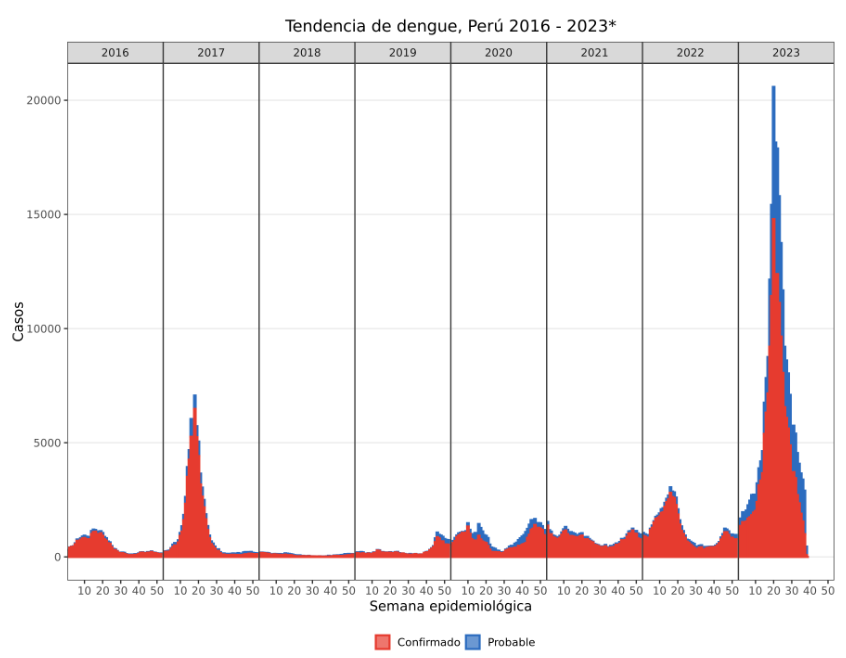
Her account, like many others in Piura, serves as a grim reminder of the devastating outbreak that has plagued this region. Latin America is witnessing its worst-ever outbreak of dengue fever, a mosquito-borne disease known as “break-bone fever” due to its excruciating symptoms.
A Devastating Tragedy
In June, Fer María Jimena Morales began experiencing symptoms of dengue after attending school in Piura. She initially complained of vomiting and severe body pains, which escalated when her eyes started to bleed. An emergency flight to the capital, Lima, failed to save her, and within a week, the young girl known for her joyful spirit and love for dancing was lost forever. Rosa Morales, still in shock, struggles to find words to describe her grief, leaving her feeling empty and alone.
The Epicenter of an Unprecedented Outbreak
Shockingly, Piura alone accounts for more than 75,000 cases and over a quarter of the total deaths. This puts immense pressure on an already overburdened healthcare system, risking a complete collapse.

Fragile Healthcare System at the Brink
María Lupu Girón, president of the Medical Federation of Piura, warns that the healthcare system is on the verge of a catastrophic collapse. Inadequate resources and staffing further aggravate the situation. Approximately 90% of healthcare facilities in Piura lack the necessary supplies and personnel. Doctor Marcos Alban Albornoz at the San Pedro health center attests to the crisis, mentioning that his team has treated up to 80 patients daily, overwhelming their 30-bed capacity. Delays in processing test results have compounded the problem, with authorities in Lima taking up to 20 days to complete the process.
Factors Fueling the Dengue Outbreak
While dengue outbreaks are common in Peru during the rainy season when mosquitoes breed, several factors contribute to the surge in cases. Urbanization plays a significant role in driving larger outbreaks as increasing population density brings humans and mosquitoes into closer contact. Additionally, lapses in mosquito control measures and the effects of climate change extend the mosquito’s lifespan and shift transmission zones.
A 2021 study published in The Lancet Planetary Health warns that, by the end of the century, as many as 8.5 billion people could be at risk of dengue if carbon emissions continue to rise. The study predicts 4.7 billion more people in affected areas than the 1970-1999 average, highlighting the global scope of the problem. Although two dengue vaccines have been approved for use in the European Union, they remain unapproved in Peru.
Inadequate Government Response
Government efforts to combat the outbreak include fumigation to eradicate Aedes aegypti mosquito larvae, which spreads dengue, and campaigns encouraging residents to use mosquito nets and prevent open water receptacles. However, critics argue that the government’s response has been inadequate and plagued by incompetence. Claudia Quezada, an epidemiologist from Piura, highlights the importance of early detection through community outreach teams but laments that insufficient funding has hindered epidemic surveillance.
Protests and Insufficient Funding
The crisis in Piura has led to widespread protests by health workers, who demand better wages and increased funding. While the region requested 76 million soles to combat dengue, it was allocated a meager three million soles, which amounts to approximately £0.33 per person. Health workers argue that such limited resources hinder their ability to effectively fight the epidemic.
Residents Left Unprotected
The dire situation in Piura is exacerbated by poverty rates and the lack of municipal water access for many residents. Mosquitoes are rampant, and despite requests from the community, authorities have failed to fumigate affected areas. This leaves residents like Maria Griselda Galan Castillo, who recently battled dengue herself, and her children vulnerable. With the rainy season approaching, there is fear that another, even more devastating wave of dengue may soon strike.
Conclusion
The dengue outbreak in Piura, Peru, paints a grim picture of the catastrophic consequences of an uncontrolled epidemic. Insufficient resources, inadequate government response, and a healthcare system teetering on the brink have combined to create a crisis with far-reaching implications. It is essential for both regional and national authorities to take immediate and comprehensive action to address the outbreak, protect vulnerable populations, and prevent the further spread of this deadly disease.
What is Dengue Fever?
Dengue fever, often referred to as “break-bone fever” due to its painful symptoms, is a viral infection caused by the dengue virus, primarily transmitted through the bite of the Aedes mosquito. This disease is common in regions with warm climates, such as parts of Southeast Asia, the Pacific Islands, the Caribbean, and Central and South America. Understanding the causes, symptoms, and treatment of dengue fever is essential for managing and preventing its spread.
Causes and Transmission
The dengue virus is primarily transmitted to humans through the bite of infected female Aedes mosquitoes, most commonly Aedes aegypti and Aedes albopictus. These mosquitoes are particularly active during the day, with peak biting periods in the early morning and late afternoon. While the virus cannot spread from person to person directly, an infected individual can serve as a host for the virus, which is then passed on to other mosquitoes when they bite.
Symptoms of Dengue Fever
Dengue fever presents a wide range of symptoms that can vary from mild to severe. The incubation period, which is the time between being bitten by an infected mosquito and the onset of symptoms, typically ranges from 4 to 10 days. Common symptoms include:
- Sudden High Fever: The fever can reach up to 104°F (40°C) and often comes on suddenly.
- Severe Headaches: Intense headaches, often accompanied by pain behind the eyes, are a common symptom.
- Joint and Muscle Pain: This pain can be so severe that it gives rise to the nickname “break-bone fever.”
- Skin Rash: A rash typically appears within a few days of the onset of fever.
- Mild Bleeding: This may manifest as nosebleeds, gum bleeding, or easy bruising.
- Fatigue and Weakness: Patients often experience profound fatigue and weakness.
In severe cases, dengue fever can progress to dengue hemorrhagic fever or dengue shock syndrome, both of which are life-threatening conditions characterized by bleeding, severe organ damage, and a rapid drop in blood pressure.
Diagnosis
Diagnosing dengue fever usually involves a combination of clinical evaluation, a patient’s medical history, and specific laboratory tests. Doctors may order blood tests, such as the reverse transcription-polymerase chain reaction (RT-PCR) or the enzyme-linked immunosorbent assay (ELISA), to detect the presence of the dengue virus or specific antibodies.
Treatment
There is no specific antiviral treatment for dengue fever. Instead, treatment focuses on managing the symptoms and providing supportive care. Here are the key aspects of treating dengue fever:
- Stay Hydrated: Dengue fever can cause severe dehydration, so drinking plenty of fluids is crucial. Oral rehydration solutions can help replace lost electrolytes.
- Pain Relief: Over-the-counter pain relievers like acetaminophen (paracetamol) can alleviate fever, pain, and discomfort. Avoid non-steroidal anti-inflammatory drugs (NSAIDs) like aspirin, ibuprofen, and naproxen, as they can increase the risk of bleeding.
- Rest: Rest is essential to help the body recover from the infection.
- Close Medical Monitoring: For severe cases, or if warning signs of dengue hemorrhagic fever or dengue shock syndrome appear, hospitalization may be necessary. In these cases, close monitoring of vital signs, blood counts, and organ function is critical.
- Prevent Further Mosquito Bites: Infected individuals should protect themselves from further mosquito bites to prevent the spread of the virus. Using mosquito nets, screens, and repellents can be effective.
Prevention
Preventing dengue fever primarily involves controlling mosquito populations and protecting against mosquito bites. Measures include:
- Eliminating Breeding Sites: Reducing standing water in containers and around the home to deprive mosquitoes of breeding grounds.
- Using Mosquito Repellents: Applying mosquito repellent on exposed skin and clothing, particularly during peak mosquito activity hours.
- Wearing Protective Clothing: Long-sleeved shirts, pants, and socks can provide physical protection.
- Installing Window and Door Screens: This helps keep mosquitoes out of living spaces.
- Community Involvement: Public health efforts to reduce mosquito populations through fumigation and community education are also essential in preventing dengue outbreaks.
Conclusion
Dengue fever is a serious health concern in regions where Aedes mosquitoes are prevalent. Understanding the causes, symptoms, and treatment of dengue is vital in managing this disease. While there is no specific antiviral treatment, supportive care, hydration, and pain relief can help patients recover. However, the most effective strategy for managing dengue fever is through prevention, which involves reducing mosquito populations and protecting individuals from mosquito bites. Public health efforts and community involvement are crucial in the fight against this potentially life-threatening disease.
reference link : https://www.dge.gob.pe/sala-situacional-dengue/diaria/


