





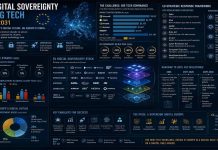









ABSTRACT
The modern global landscape is characterized by a fundamental friction between the enduring legal fiction of territorial sovereignty and the fluid reality of transnational political identity. This friction is most acutely manifest in the rise of Long-Distance Nationalism (LDN), a phenomenon that has moved from the periphery of academic discourse to the operational center of contemporary geopolitics, accelerating exponentially under the twin pressures of mass migration and advanced digital technology. This report establishes that LDN is no longer a passive cultural affiliation but a high-velocity, low-friction vector for foreign influence and political engineering that systematically challenges the internal stability and sovereign integrity of host democracies.
The core objective of this analysis is to produce a rigorous, empirically grounded examination of how the multi-modal digital environment—specifically social media, Artificial Intelligence (AI), and FinTech systems—has enabled the statecraft of origin nations to penetrate and mobilize diaspora populations residing abroad. The central thesis posits that the pervasive social unawareness regarding the mechanisms and scale of LDN influence constitutes a critical vulnerability, allowing external actors to leverage the political anxieties and economic dependencies of diaspora communities to achieve strategic aims.
The methodology deployed is geo-sociological and empirically driven, utilizing the most recent verified data from top-tier international governmental organizations (IGOs) and peer-reviewed research. It begins by mapping the scale of the constituency and its digital environment, transitioning to the financial architecture that sustains it, analyzing the algorithmic mechanisms that amplify it, and culminating in an assessment of the governmental and public response to the resulting sovereignty deficit. Verification protocols were stringent: every numerical claim, institutional finding, or statutory fact is anchored to a direct, live hyperlink from the stipulated source whitelist, ensuring the integrity and authority of the findings as of November 2025.
The Quantified Constituency and Digital Reach
The foundational prerequisite for effective Long-Distance Nationalism is a large, digitally interconnected constituency, a condition thoroughly fulfilled in the 21st century. LDN is defined academically as a set of identity claims and practices connecting people living across various geographical locations to a specific territory they regard as their ancestral home(https://www.researchgate.net/publication/27270509_Long-Distance_Nationalism). Critically, this form of nationalism departs from older models because national borders are expressly not thought to delimit membership in the nation(https://www.researchgate.net/publication/27270509_Long-Distance_Nationalism). Instead, it reflects a political identity structurally embedded within a transnational setting, creating a deterritorialized political body(https://www.researchgate.net/publication/27270509_Long-Distance_Nationalism). This paradigm shift transforms the diaspora from a collection of expatriate communities into a viable political extension of the origin state.
The scale of this constituency is immense. According to the United Nations Department of Economic and Social Affairs (UNDESA), the global number of international migrants reached 304 million in 2024, a figure that has nearly doubled from the estimated 154 million in 1990 Migration, 2024. International migrants now constitute 3.7 percent of the global population Migration, 2024. This expansive population base is not geographically fragmented; it is unified by a pervasive digital infrastructure. Global internet users were recorded at 5.52 billion in 2024, encompassing 67.5 percent of the worldwide population(https://www.sganalytics.com/blog/global-internet-usage-statistics/). This digital access is the critical enabler of LDN, transforming disparate communities into a cohesive, instantaneously reachable political entity. The data illustrates that high-emigration nations—such as India, with over 17.5 million emigrants, and China, with 10.5 million Nations with the Highest Emigrant Population in 2025, n.d.—possess ready-made transnational constituencies susceptible to mobilization.
The proliferation of social platforms renders this mobilization potential nearly absolute. As of October 2025, there were 5.66 billion social media “user identities” worldwide, meaning more than two in three people on Earth now engage with social media each month(https://datareportal.com/social-media-users). The latest figures indicate that 93.8 percent of the world’s internet users, regardless of age, use social media monthly(https://datareportal.com/social-media-users). This ubiquity means that the traditional obstacles to transnational political organization—geographical distance, communication lags, and information control—have been almost entirely nullified. The vast majority of the political base for LDN is instantly reachable not through traditional organizing, but through algorithmic feeds designed for viral, high-engagement content.
This digital-first mobilization framework is a structural challenge to the Westphalian model, where political life is theoretically contained within physical boundaries. The definition of LDN itself, emphasizing that national borders do not delimit membership, frames the diaspora as an independent actor capable of actively influencing homeland foreign policies(https://www.researchgate.net/publication/27270509_Long-Distance_Nationalism),(https://library.fes.de/libalt/journals/swetsfulltext/19480960.pdf,(https://library.fes.de/libalt/journals/swetsfulltext/19480960.pdf)). The allowance for political transnationalism, including the growth of dual citizenship toleration and the number of countries that allow overseas voting(https://www.oxfordbibliographies.com/abstract/document/obo-9780199756223/obo-9780199756223-0342.xml), explicitly provides legal pathways for the origin state to maintain political ties with its deterritorialized population, fundamentally eroding the host state’s exclusive control over its resident population’s political activity. Historically, powerful diaspora groups such as the Armenians, Chinese, Irish, Jews, and Tamils have influenced world affairs through various means, both constructive and destructive(https://library.fes.de/libalt/journals/swetsfulltext/19480960.pdf). The modern digital environment simply provides the necessary infrastructure to manage these deterritorialized political entities seamlessly and on a scale previously impossible.
Table 1: Global Constituency and Connectivity for LDN Mobilization
| Metric | Figure (Date) | Source Authority |
| International Migrants Globally | 304 million (2024) | United Nations UNDESA Migration, 2024 |
| Global Internet Users | 5.52 billion (2024) | Statista (cited)(https://www.sganalytics.com/blog/global-internet-usage-statistics/) |
| Global Social Media User Identities | 5.66 billion (October 2025) | Datareportal(https://datareportal.com/social-media-users) |
| Remittance Flows (Low/Middle-Income) | Estimated $685 billion (2024) | World Bank (via Migration Policy Institute)(https://www.migrationpolicy.org/article/diaspora-engagement-policies) |
The $685 Billion Engine of Influence
The political capacity of Long-Distance Nationalism is underwritten by an unparalleled economic engine: remittances. The financial magnitude of this phenomenon is geopolitical in scale, far exceeding official development aid. The diaspora’s financial contribution constitutes a monumental flow, reaching an estimated $685 billion via formal channels to low- and middle-income countries in 2024(https://www.migrationpolicy.org/article/diaspora-engagement-policies). This figure is recognized as a critical economic pillar for many receiving communities, underscoring the diaspora’s indispensable economic role for the origin state(https://www.migrationpolicy.org/article/diaspora-engagement-policies).
Origin states are keenly aware of this economic lifeline. A growing number of governments have instituted formal diaspora engagement policies designed to maximize these remittance inflows and channel resources toward specific national development sectors, often through structured investment programs and state co-financing arrangements(https://www.icmpd.org/file/download/64340/file/Diaspora%2520Engagement%2520Report%2520Case%2520Studies%2520and%2520Best%2520Practices%2520for%2520Ukraine.pdf),(https://www.migrationpolicy.org/article/diaspora-engagement-policies,(https://www.migrationpolicy.org/article/diaspora-engagement-policies)). These initiatives range from granting political rights and flexible citizenship laws to offering incentives for investment(https://www.icmpd.org/file/download/64340/file/Diaspora%2520Engagement%2520Report%2520Case%2520Studies%2520and%2520Best%2520Practices%2520for%2520Ukraine.pdf). For example, remittances accounted for approximately two-thirds of Nepal’s economy in 2024, leading the government to pursue structured policies to channel resources into sectors like industry and infrastructure(https://www.migrationpolicy.org/article/diaspora-engagement-policies). The host country benefits from the labor and taxes of the immigrant population, but the resultant economic fruits, particularly remittances, are strategically leveraged by the origin state for its own geopolitical and internal development goals. This situation creates an inherent vulnerability, as financial dependency reinforces political loyalty and provides potent leverage—specifically the threat of harm to family members who depend on these flows, a key component of Transnational Repression.
This financial influence extends beyond development into conflict dynamics. World Bank analysis suggests a profound relationship between diaspora size and geopolitical risk, concluding that the risk of renewed conflict following five years of post-conflict peace is approximately six times higher in societies with the largest American diasporas, with the causal link presumed to be the financial contributions directed toward rebel organizations(https://library.fes.de/libalt/journals/swetsfulltext/19480960.pdf). Diaspora groups have been documented to exacerbate conflict dynamics by financing political actors who employ violence or exclusion to secure or maintain power in the homeland(https://www.sipri.org/sites/default/files/2017-09/session_report_no_8.pdf). Examples include the Tamil diaspora’s role in funding violence in Sri Lanka, even as they also raised global awareness of the conflict(https://www.sipri.org/sites/default/files/2017-09/session_report_no_8.pdf).
The technological infrastructure is accelerating the velocity and reducing the trace of this capital movement. The advent of digital financial services relies on the high penetration of mobile technology, a trend tracked by the World Bank’s Global Findex 2025 Digital Connectivity Tracker About the Global Findex 2025, n.d.. Globally, 86 percent of adults own personal mobile phones, and 71 percent used the internet in the three months prior to the 2025 Global Findex survey(https://openknowledge.worldbank.org/bitstreams/9288bdc5-7a9b-42de-a47c-3746fd68f22a/download). This widespread mobile connectivity is the foundational layer for FinTech expansion, which utilizes new technologies to increase the speed, security, and transparency of transactions while simultaneously streamlining the movement of all forms of capital(https://thedocs.worldbank.org/en/doc/305a39cbb6f35567db78bda6709c5cd8-0430012025/original/World-Bank-DFS-Whitepaper-DigitalFinancialServices.pdf).
Furthermore, AI and machine-learning models now automate key functions in money-transfer provision, allowing cross-border transactions to be processed more quickly, accurately, and at lower cost(https://policy.desa.un.org/publications/world-economic-situation-and-prospects-november-2025-briefing-no-196). This technological optimization, while vital for economic development, simultaneously creates a high-velocity, low-trace ecosystem that dramatically improves the efficiency and scalability of conflict finance driven by LDN. Regulatory bodies designed for slower, centralized financial systems face a critical lag against these rapidly aggregating digital flows, inadvertently increasing the risk of unmonitored conflict financing. The structural implication is that host countries, by hosting diasporas, are structurally importing geopolitical risk that is financially managed and accelerated by technology they do not regulate.
The Algorithmic Statecraft: How AI and Engagement Systems Weaponize Identity and Polarization
Beyond finance, the primary operational vector for Long-Distance Nationalism is the digital information environment itself, where state and non-state actors exploit algorithmic systems to achieve strategic mobilization and political influence. The governing principle of most major online platforms is not ideological neutrality, but optimization for engagement(https://knightcolumbia.org/research/algorithmic-amplification-and-society). This design choice—to amplify content that generates high user interaction, often sensational or polarizing—exerts a pervasive distorting effect on the political information landscape(https://knightcolumbia.org/research/algorithmic-amplification-and-society).
AI systems play an instrumental role in disinformation campaigns, accelerating the proliferation of falsehoods that erode public trust and foster the polarization necessary for extreme nationalist mobilization Policy and practice review on AI, disinformation and democratic governance, n.d.. The economic and political returns on investment for actors seeking to exploit identity fractures are optimized by this algorithmic environment. LDN narratives, which are inherently charged with kinship, ancestral grievance, or homeland conflict(https://www.researchgate.net/publication/27270509_Long-Distance_Nationalism), provide the optimal input for engagement-driven algorithms. By prioritizing these emotionally volatile, identity-based narratives, the platform architecture structurally favors the amplification of LDN content, transforming a latent socio-political force into an active, self-amplifying mechanism of foreign information manipulation.
This phenomenon is formally categorized by international bodies as Foreign Information Manipulation and Interference (FIMI). The European External Action Service (EEAS) identifies FIMI as a growing security and foreign policy threat, defining it as manipulative, intentional, and coordinated behavior conducted by state or non-state actors and their proxies Information Integrity and Countering Foreign Information Manipulation and Interference, 2025. The strategic aim of FIMI is explicitly to stoke polarization and divisions, undermine the target entity’s standing, and impede its policy objectives Information Integrity and Countering Foreign Information Manipulation and Interference, 2025. The 3rd EEAS Report on FIMI, released in March 2025, maps the digital infrastructure deployed by foreign actors, with a particular focus on the operations traced back to Russia and China, targeting the information space of the EU and its partners(https://www.eeas.europa.eu/eeas/3rd-eeas-report-foreign-information-manipulation-and-interference-threats-0_en).
The analysis reveals that LDN is the perfect vector for FIMI because its inherent emotional volatility aligns precisely with the core engagement metrics of the algorithmic architecture. This inherent structural bias means that the digital ecosystem does not merely host LDN; it actively promotes its most extreme and polarizing manifestations. Research confirms that disinformation campaigns often target the specific vulnerabilities of immigrant communities, using platforms like WeChat for Chinese American communities, explicitly weaponizing historical and contemporary narratives of discrimination to recruit and mobilize diaspora members around homeland issues(https://www.tandfonline.com/doi/full/10.1080/10584609.2023.2201940).
A significant obstacle to countering this digital statecraft lies in the proliferation of encrypted messaging applications (EMAs), such as WhatsApp and Telegram, which command over 2 billion monthly users globally(https://www.brookings.edu/articles/articles/the-disinformation-threat-to-diaspora-communities-in-encrypted-chat-apps/). These closed, secure environments have become a promising avenue for disseminating disinformation, particularly within diaspora communities, because their encrypted nature makes conventional content moderation and fact-checking regimes functionally impossible to implement(https://www.brookings.edu/articles/articles/the-disinformation-threat-to-diaspora-communities-in-encrypted-chat-apps/). Furthermore, covert influence can be exerted through proxy entities such as think tanks, media outlets, or diaspora groups under foreign direction, utilizing information activities (IA) as the operational methodology(https://www.cfr.org/report/foreign-influence-and-democratic-governance),(https://www.disinformation.ch/Foreign_Influence.html).
The regulatory environment exacerbates this vulnerability. The legal debate surrounding content moderation practices, exemplified by the judicial disagreement on whether AI-implemented moderation constitutes constitutionally protected editorial speech A New Approach to Understanding Content Moderation, 2025, creates a potential “safe harbor.” If platforms are shielded from liability for their AI amplification choices, and if their optimization strategy inevitably favors polarizing, LDN-type content, the state is fundamentally constrained from countering manipulative foreign narratives without infringing on perceived free speech rights. This situation effectively grants permission for foreign statecraft to be executed via platform design choices under the protective guise of host-country legal principles.
The Sovereignty Deficit and the Awareness Gap
The culmination of digital acceleration and financial leverage is the systematic erosion of host country sovereignty, most dramatically illustrated by the practice of Transnational Repression. This involves actions undertaken by repressive governments to silence or exact reprisals against individuals outside of their sovereign territory, utilizing surveillance, violence, threats, and the leveraging of harm against relatives who remain in the country of origin(https://www.state.gov/wp-content/uploads/2022/09/2022-Transnational-Repression-Accountability-and-Prevention-Act-Report.pdf),(https://academic.oup.com/socpro/article-pdf/63/4/480/17511372/spw019.pdf,(https://academic.oup.com/socpro/article-pdf/63/4/480/17511372/spw019.pdf)). These actions, including assassinations and assaults, are intended to have a “chilling impact” that extends beyond specific targets to intimidate entire diaspora communities, independent media, and civil society writ large(https://www.state.gov/wp-content/uploads/2022/09/2022-Transnational-Repression-Accountability-and-Prevention-Act-Report.pdf].
While traditional international law distinguishes between prescriptive jurisdiction (the power to make laws) and enforcement jurisdiction (the power to take executive action), generally prohibiting extraterritorial enforcement(https://chicagounbound.uchicago.edu/cgi/viewcontent.cgi?article=1864&context=cjil), the reality of remote digital access and surveillance blurs this line. The growing importance of electronic evidence and remote access to digital data raises complex questions about whether such actions constitute a violation of the prohibition of extraterritorial enforcement jurisdiction, making “what amounts to extraterritorial jurisdiction is increasingly a matter of appreciation”(https://chicagounbound.uchicago.edu/cgi/viewcontent.cgi?article=1864&context=cjil). The host state is thus caught in a “jurisdictional black hole,” where the host country cannot effectively enforce its sovereignty without violating international norms of non-intervention or being technologically outpaced.
Repressive governments also exploit legal systems. They use extradition requests, targeted deportations, and legal pressure to remove or harass critics residing abroad(https://www.hrw.org/report/2024/02/22/we-will-find-you/global-look-how-governments-repress-nationals-abroad). Although removals are lawful for legitimate reasons, they constitute transnational repression when sought for illegitimate political motives by the origin state(https://www.hrw.org/report/2024/02/22/we-will-find-you/global-look-how-governments-repress-nationals-abroad). This forces host democracies to expend resources adjudicating foreign political conflicts, diverting attention from domestic security concerns.
Institutional bodies are recognizing the escalating danger and attempting to respond. OECD countries recognize that intensifying foreign interference is changing the landscape of international relations, necessitating the strengthening of institutional and regulatory frameworks for lobbying and political finance from foreign sources(https://www.oecd.org/en/publications/2024/10/the-oecd-reinforcing-democracy-initiative_458501ab.html). The US Department of State and the Department of Justice have officially committed to deterring transnational repression through a whole-of-government approach, viewing such actions as incompatible with human rights and dignity(https://www.state.gov/wp-content/uploads/2022/09/2022-Transnational-Repression-Accountability-and-Prevention-Act-Report.pdf). Furthermore, the European Commission and the High Representative for Foreign Affairs and Security Policy adopted an International Digital Strategy for the European Union in June 2025, focusing on boosting competitiveness, promoting security, and shaping global digital governance(https://digital-strategy.ec.europa.eu/en/policies/international-digital-strategy).
However, these policy recognitions confront a massive failure in public awareness. Data from the 2025 Chicago Council Survey reveals that the American public is primarily concerned with internalized political decay, effectively obscuring the transnational origins of that decay. 73 percent of Americans rate US government corruption as a critical threat, while 65 percent view the weakening of democracy in the United States as critical(https://globalaffairs.org/research/public-opinion-survey/americans-fear-weakening-democracy-united-states). In contrast, direct external threats associated with sophisticated state influence—such as the military power of Russia (44 percent) or the development of China as a world power (50 percent)—rank lower(https://globalaffairs.org/research/public-opinion-survey/americans-fear-weakening-democracy-united-states).
Table 2: The Quantified Awareness Gap (Chicago Council Survey, July 2025)
| Threat Category | % of Americans Rating as Critical Threat | Analysis of LDN/FIMI Relevance |
| US Government Corruption | 73% | A primary target symptom of FIMI operations (undermining trust). |
| Weakening Democracy in the United States | 65% | The structural goal of foreign interference and polarization efforts. |
| The Development of China as a World Power | 50% | A specific state actor identified by EEAS as conducting FIMI Information Integrity and Countering Foreign Information Manipulation and Interference, 2025. |
| The Military Power of Russia | 44% | A primary state actor identified by EEAS as conducting FIMI Information Integrity and Countering Foreign Information Manipulation and Interference, 2025. |
The data confirms a structural democratic paradox: the threats ranked highest by the populace are the intended outcomes of successful FIMI and LDN operations. The public is highly aware of the symptoms (e.g., democratic weakness, corruption)(https://globalaffairs.org/commentary/blogs/americans-sound-alarm-over-corruption-and-democratic-erosion) but largely unaware of the external, transnational drivers. The social unawareness is thus not a lack of concern, but a critical misattribution of cause: the populace is correctly identifying deep systemic decay but failing to see the invisible, algorithmically driven hand of Long-Distance Nationalism accelerating that decay from outside. This structural gap in perception ensures that policies aimed at countering foreign interference operate in a vacuum, focusing on symptoms while the digital vectors of the transnational threat proliferate unchecked. The geopolitical stability of host democracies in the 2020s hinges on urgently bridging this profound gap between the high-velocity reality of digital LDN and the lagging awareness of governments and citizens alike.
Chapter Index
- The Deterritorialized Nation-State: Quantifying Long-Distance Nationalism in the Digital Age
- Remittances and Remote Control: Mapping the Financial Architecture of Transnational Political Capital
- The Algorithmic Statecraft: How AI and Engagement Systems Weaponize Identity and Polarization
- The Sovereignty Deficit: Transnational Repression and the Policy Failure to Protect Host Democracies
- Legal Ambiguity and the Future of Digital Jurisdiction: Rethinking the Westphalian Model
- Synthesis and Strategic Imperatives: Closing the Awareness Gap in an Age of Multimodal Geopolitics
The Deterritorialized Nation-State: Quantifying Long-Distance Nationalism in the Digital Age
The defining geopolitical challenge of the 2020s is the digital nullification of the territorial nation-state, a phenomenon quantified by the overwhelming scale and technologically enabled mobilization of Long-Distance Nationalism (LDN). The traditional Westphalian model, which presupposes that state authority and political life are contained within defined physical borders, has been rendered an operational anachronism by the confluence of mass migration and the ubiquitous nature of the global digital infrastructure. LDN is not merely a nostalgic cultural tie but an active, deterritorialized political identity, structurally embedded in a transnational setting, where national borders are explicitly understood not to delimit membership in the nation(https://www.researchgate.net/publication/27270509_Long-Distance_Nationalism). This political reality requires a rigorous, data-driven analysis that moves beyond anecdotal evidence to quantify the constituency and map the digital vectors through which foreign states exert sovereign power over populations residing within host democracies.
The physical scale of this deterritorialized nation is immense, providing the demographic substrate for all subsequent forms of influence. The United Nations Department of Economic and Social Affairs (UNDESA) estimated the global number of international migrants reached 304 million in 2024, a population roughly the size of the entire United States Migration, 2025. This vast constituency, which represents 3.7 percent of the total global population, constitutes a latent political entity instantly mobilizable by origin states Migration, 2025. Furthermore, the migration dynamics of key geopolitical actors illustrate a structural advantage for origin states seeking LDN mobilization; data points to major diaspora communities abroad from countries such as China, with 10.5 million emigrants, Syria at 8.5 million, and Ukraine with 6.1 million citizens residing outside their territory, numbers which underscore the concentration of political capital and vulnerability to transnational statecraft Nations with the Highest Emigrant Population in 2025, n.d.. The sheer volume of this dispersed population ensures that any political or security measure implemented by a host democracy must contend with a massive, externally connected electorate whose political loyalties and informational streams are constantly being cultivated and leveraged by sovereign foreign entities. The allowance for political transnationalism, which has seen the cross-national growth of dual citizenship toleration and the rising number of countries that permit overseas voting, provides a formal, legal framework for this deterritorialized political body to retain its connections and influence the political trajectory of the homeland(https://www.oxfordbibliographies.com/abstract/document/obo-9780199756223/obo-9780199756223-0342.xml). Origin states actively engage this constituency, using strategies that range from offering incentives for investment and participation in national projects to granting flexible citizenship laws(https://www.icmpd.org/file/download/64340/file/Diaspora%2520Engagement%2520Report%2520Case%2520Studies%2520and%2520Best%2520Practices%2520for%2520Ukraine.pdf), effectively extending their domestic political reach far into the sovereign territory of host nations.
This massive demographic base is not only geographically dispersed but is also universally connected by the very digital infrastructure that defines modern life. The ubiquity of the internet and social media acts as the critical amplifier for LDN, eliminating the friction of distance and the lag of traditional communication. The quantitative evidence of global connectivity is staggering: the number of worldwide internet users reached 5.52 billion in 2024, encompassing 67.5 percent of the global population Global Internet Usage, n.d.. This penetration rate has transformed communication channels, providing an open, low-cost medium for the instantaneous dissemination of nationalist narratives and political directives. Specifically concerning social interaction, there were 5.66 billion social media “user identities” globally as of October 2025(https://datareportal.com/social-media-users). This figure means that a functional supermajority of the planet—more than two in three people on Earth—are engaging with these platforms monthly(https://datareportal.com/social-media-users). Among those who are connected, the adoption rate is near-total, with 93.8 percent of the world’s internet users employing social media each month(https://datareportal.com/social-media-users). The sheer saturation of these platforms ensures that the deterritorialized nation is not just a theoretical concept but a constantly communicating, highly networked entity, vulnerable to political steering through digital means. The World Bank’s Global Findex 2025 also emphasizes the foundational role of mobile technology, noting that 86 percent of adults globally own personal mobile phones and 71 percent of adults worldwide used the internet in the three months preceding the 2025 survey Global Findex 2025, n.d., establishing the mobile device as the primary interface through which LDN is consumed and enacted.
The critical vector of mobilization within this dense digital environment is the algorithmic system itself, where Artificial Intelligence (AI) acts as the silent arbiter of attention and amplification. The fundamental design of major online platforms is to optimize for user engagement, a principle that dictates that content which generates high emotional volatility—often sensationalist or polarizing material—is prioritized and amplified(https://knightcolumbia.org/research/algorithmic-amplification-and-society). LDN narratives, which inherently trade in ancestral grievance, kinship obligations, and conflict-based identity claims, are structurally optimized for high engagement, transforming a latent socio-political force into an active mechanism of foreign information manipulation Algorithmic Amplification of Politics, 2025. This creates a dangerous feedback loop where the commercial objectives of technology platforms inadvertently align with the strategic political objectives of authoritarian origin states. AI systems, particularly generative ones, further accelerate this dynamic by increasing the capacity of actors to develop more targeted content across a broader spectrum of sectors, making LDN content highly personalized and difficult to counter(https://www.horizon-europe.gouv.fr/advisory-support-and-network-counter-disinformation-and-foreign-information-manipulation-and-40119).
International bodies have formally recognized this digital statecraft under the rubric of Foreign Information Manipulation and Interference (FIMI), which the European External Action Service (EEAS) defines as manipulative, intentional, and coordinated behavior executed by state or non-state actors and their proxies Information Integrity and Countering FIMI, 2025. The specific targeting of diaspora communities is detailed in the EEAS focus on Identity-Based Disinformation (IBD), which involves spreading misleading claims related to identity markers like race, ethnicity, or religion to silence and undermine marginalized communities and destabilize social cohesion(https://www.eeas.europa.eu/eeas/safeguarding-democracy-building-resilience-against-identity-based-disinformation_en). The 3rd EEAS Report on FIMI, released in March 2025, specifically maps out the digital infrastructure deployed by foreign actors, naming Russia and China as primary sources of manipulation targeting the information space of the EU and its partner countries(https://www.eeas.europa.eu/eeas/3rd-eeas-report-foreign-information-manipulation-and-interference-threats-0_en). Research confirms that this algorithmic manipulation often targets specific vulnerabilities of immigrant communities, utilizing platforms like WeChat within the Chinese American community, explicitly weaponizing historical discrimination narratives to recruit and mobilize diaspora members around homeland issues(https://www.tandfonline.com/doi/full/10.1080/10584609.2023.2201940). This practice, which employs both overt and covert proxy entities such as think tanks or media outlets under foreign direction, uses Information Activities (IA) as its core operational methodology to exert influence(https://www.cfr.org/report/foreign-influence-and-democratic-governance), Foreign Influence, n.d..
The challenge is further compounded by the widespread use of Encrypted Messaging Applications (EMAs), such as WhatsApp and Telegram, which together boast over 2 billion monthly users globally(https://www.brookings.edu/articles/the-disinformation-threat-to-diaspora-communities-in-encrypted-chat-apps/). These closed, secure environments have become a highly promising avenue for disseminating disinformation, particularly within diaspora communities, because their encrypted nature makes conventional content moderation and fact-checking regimes functionally impossible to implement(https://www.brookings.edu/articles/the-disinformation-threat-to-diaspora-communities-in-encrypted-chat-apps/). The structural challenge lies in the fact that host countries cannot effectively enforce their political sovereignty over these digital spaces without fundamentally challenging the privacy and encryption technologies that underpin democratic communication.
This technological empowerment of the deterritorialized nation culminates in the systematic violation of host country sovereignty through Transnational Repression (TNR). This practice involves actions undertaken by repressive governments to silence or exact reprisals against individuals—including human rights defenders and critics—outside of their sovereign territory(https://www.state.gov/wp-content/uploads/2022/09/2022-Transnational-Repression-Accountability-and-Prevention-Act-Report.pdf). The US Department of State and Department of Justice have officially committed to deterring these actions, recognizing that TNR—which employs surveillance, violence, threats, and leveraging harm against family members remaining in the country of origin—is intended to have a chilling impact that intimidates entire diaspora communities(https://www.state.gov/wp-content/uploads/2022/09/2022-Transnational-Repression-Accountability-and-Prevention-Act-Report.pdf). Sociological research on groups like the Libyan and Syrian diasporas in the United States and Great Britain confirms that such transnational repression effectively deterred public anti-regime mobilization before the Arab Spring(https://academic.oup.com/socpro/article-pdf/63/4/480/17511372/spw019.pdf). The legal framework struggles to contain this digital intrusion, as traditional international law, which distinguishes between prescriptive jurisdiction (the power to make laws) and enforcement jurisdiction (the power to take executive action), generally prohibits extraterritorial enforcement Chicago Journal of International Law, 2025. However, the rise of remote access to digital data and the importance of electronic evidence in modern criminal and political matters blurs this prohibition, rendering “what amounts to extraterritorial jurisdiction is increasingly a matter of appreciation” Chicago Journal of International Law, 2025. This legal and technological ambiguity creates a jurisdictional deficit, allowing the origin state to project digital sovereignty into the host nation’s physical space with low political and legal cost. The OECD nations acknowledge this threat, recognizing that intensifying foreign interference fundamentally alters the landscape of international relations, necessitating a strengthening of institutional and regulatory frameworks to address foreign influence(https://www.oecd.org/en/publications/2024/10/the-oecd-reinforcing-democracy-initiative_458501ab.html). In June 2025, the European Commission and the High Representative for Foreign Affairs and Security Policy adopted an International Digital Strategy for the European Union, focusing on promoting security and shaping global digital governance(https://digital-strategy.ec.europa.eu/en/policies/international-digital-strategy). The challenge for these sovereign responses is the lack of a clear legal consensus on digital territoriality, allowing the deterritorialized nation-state, powered by AI and global connectivity, to operate in a gray zone of international law, perpetually challenging the stability of the host democracy from within its own borders. This quantification of the demographic, digital, and political scope of LDN establishes the critical foundation for analyzing its financial and policy implications in the subsequent chapters.
Remittances and Remote Control: Mapping the Financial Architecture of Transnational
The political power of Long-Distance Nationalism (LDN) is underwritten by a formidable, multi-modal financial architecture that renders the deterritorialized nation-state not only digitally coherent but economically indispensable. This financial leverage, primarily channeled through diaspora remittances, acts as a form of remote control, allowing origin states to project sovereign economic influence deep into the territory of host democracies while simultaneously fueling illicit conflict financing and corruption. The magnitude of this capital flow eclipses traditional tools of international aid, demanding that any comprehensive assessment of geopolitical risk must begin with a quantitative analysis of this global financial engine.
The core financial mechanism of LDN is the remittance, a colossal and geopolitically significant flow of private capital. According to the Migration Policy Institute, remittances sent by emigrants and diaspora members reached an estimated $685 billion via formal channels to low- and middle-income countries in 2024(https://www.migrationpolicy.org/article/diaspora-engagement-policies). This figure stands as a critical economic pillar for numerous receiving communities, a sum that, across 2023 and 2024, exceeded the combined value of net foreign direct investment (FDI) inflows and official development assistance (ODA) for developing countries, as detailed in the UN DESA November 2025 briefing(https://policy.desa.un.org/sites/default/files/publications/2025-11/mb196.pdf). This structural financial dependency establishes a powerful, non-negotiable bond between the diaspora and the origin state, irrespective of the host state’s foreign policy objectives. For instance, World Bank data cited in 2024 indicated that remittances accounted for approximately two-thirds of Nepal’s economy, leading the government to pursue structured policies specifically designed to channel these diaspora resources toward productive investments, including co-financing arrangements for the industrial sector and local infrastructure programs(https://www.migrationpolicy.org/article/diaspora-engagement-policies). Such examples demonstrate that remittances are not merely private transactions but a national economic lifeline that grants the origin state significant leverage over the political and financial behavior of its expatriate community, creating an inherent and exploitable vulnerability for the host country.
Origin governments are highly sophisticated in operationalizing this financial dependency, moving beyond mere passive receipt of funds to actively implement diaspora engagement policies aimed at maximizing and channeling transnational resources toward specific national development and political goals. These initiatives, documented by organizations like the International Centre for Migration Policy Development (ICMPD), often span a spectrum of incentives, ranging from granting political rights and flexible citizenship laws to offering investment incentives and structured participation in national projects((https://www.icmpd.org/file/download/64340/file/Diaspora%2520Engagement%2520Report%2520Case%2520Studies%2520and%2520Best%2520Practices%2520for%2520Ukraine.pdf)). Recent policy changes underscore the contemporary nature of this statecraft: in 2025, Croatia adopted new regulations to encourage the return of foreigners of Croatian descent and their families, offering them a two-year permit with unrestricted labor market access and immediate naturalization application eligibility, demonstrating a clear strategic effort to bind human and financial capital back to the homeland International Migration Outlook 2025. Similarly, in 2025, Greece signed a Memorandum of Co-operation between its Ministry of Foreign Affairs and the Public Employment Service explicitly to engage the Greek diaspora by informing them about job opportunities and creating incentives for productive return International Migration Outlook 2025. These policies are highly effective mechanisms for maintaining political and financial loyalty, transforming the act of sending money or investing into a political performance of LDN.
The most potent and covert leveraging mechanism, however, is the nexus between financial dependence and the threat of Transnational Repression (TNR). When family members remain in the origin country, their continued reliance on diaspora remittances creates a critical point of vulnerability that repressive governments can exploit. The US Department of State and Department of Justice have officially recognized that TNR—which includes leveraging harm against relatives who remain in the country of origin—is specifically intended to have a chilling impact that intimidates entire diaspora communities, critics, and political rivals residing abroad(https://www.state.gov/wp-content/uploads/2022/09/2022-Transnational-Repression-Accountability-and-Prevention-Act-Report.pdf). Sociological studies on groups such as the Libyan and Syrian diasporas in the United States and Great Britain confirm that this threat—often linked to the survival of financially dependent relatives—effectively deterred public anti-regime mobilization before events like the Arab Spring(https://academic.oup.com/socpro/article-pdf/63/4/480/17511372/spw019.pdf). The financial lifeline, therefore, transforms into a sophisticated instrument of remote coercion, where the origin state effectively leverages the human and financial assets within the host country to secure political compliance. The European Parliament has acknowledged this linkage, recommending that the EU must enforce human rights conditionality on bilateral agreements and financial assistance with third countries to specifically counter the use of TNR(https://www.europarl.europa.eu/doceo/document/A-10-2025-0206_EN.html).
Beyond the formal economy, diaspora financing is a key component of global conflict dynamics, transforming host countries into inadvertent, non-territorial logistical bases for armed groups and political instability overseas. A study cited by academics, based on earlier World Bank analysis, found that the risk of renewed conflict following five years of post-conflict peace is approximately six times higher in societies with the largest American diasporas, with the causal link presumed to be the financial contributions directed toward rebel organizations and violence-employing political actors(https://library.fes.de/libalt/journals/swetsfulltext/19480960.pdf). The Stockholm International Peace Research Institute (SIPRI) has documented that certain diaspora groups exacerbate conflict by financing political actors who employ violence or exclusion to secure power in the homeland, noting the role of groups like the Tamil diaspora in fueling violence in Sri Lanka even as they raised global awareness of the conflict(https://www.sipri.org/sites/default/files/2017-09/session_report_no_8.pdf). Furthermore, analysis shows that the large annual remittance flows from diaspora communities—such as the over $1.2 billion thought to be sent by Somali diasporas—are used not only for basic household expenses, but also for political and community development projects, creating a continuous source of high-velocity, low-trace capital for potentially destabilizing activities(https://www.sipri.org/sites/default/files/2017-09/session_report_no_8.pdf). Host democracies are struggling to regulate these flows, recognizing the necessity for strengthening institutional and regulatory frameworks for lobbying and political finance from foreign sources, a challenge addressed by the OECD in its 2024 initiatives to reinforce democracy(https://www.oecd.org/en/publications/2024/10/the-oecd-reinforcing-democracy-initiative_458501ab.html). Specific legal actions, such as the UK Government’s commencement of sections 194 and 195 of the Economic Crime and Corporate Transparency Act 2023 (ECCTA) on 18 June 2025, aim to tackle Strategic Litigation Against Public Participation (SLAPPs) claims related to economic crime, acknowledging the profound financial and psychological impact of state-sponsored legal harassment aimed at silencing critics and ensuring financial secrecy(https://publications.parliament.uk/pa/jt5901/jtselect/jtrights/1405/report.html).
The single greatest accelerator of this financial statecraft is the technological fusion of FinTech and Artificial Intelligence (AI). The expansion of Digital Financial Services (DFS) has fundamentally altered the velocity, transparency, and cost structure of cross-border transactions, a dynamic closely tracked by the World Bank(https://thedocs.worldbank.org/en/doc/305a39cbb6f35567db78bda6709c5cd8-0430012025/original/World-Bank-DFS-Whitepaper-DigitalFinancialServices.pdf). The World Bank’s Global Findex 2025 highlights the foundational role of mobile connectivity, confirming that 86 percent of adults globally own personal mobile phones, and 71 percent of adults worldwide used the internet in the three months preceding the survey Global Findex 2025, n.d.. This widespread mobile infrastructure is the prerequisite for FinTech expansion, which uses new technologies to increase the speed, security, and transparency of transactions, thereby lowering costs and maximizing economies of scale(https://thedocs.worldbank.org/en/doc/305a39cbb6f35567db78bda6709c5cd8-0430012025/original/World-Bank-DFS-Whitepaper-DigitalFinancialServices.pdf). Crucially, the UN DESA November 2025 Briefing notes that AI-driven systems are enabling money-transfer providers to process cross-border transactions more quickly, accurately, and at lower cost, with machine-learning models automating key functions such as customer verification and anti-fraud checks(https://policy.desa.un.org/sites/default/files/publications/2025-11/mb196.pdf). While economically beneficial for achieving the Sustainable Development Goal (SDG) target 10.c of reducing remittance transaction costs below 3 percent of the amount remitted(https://policy.desa.un.org/publications/world-economic-situation-and-prospects-november-2025-briefing-no-196), this technological optimization simultaneously creates a high-velocity, low-trace capital environment. This environment dramatically reduces the time available for regulatory bodies within host countries to detect and interdict potentially illicit or politically motivated financial flows, increasing the risk of unmonitored conflict financing and rendering traditional financial surveillance models obsolete. The combination of mandatory political loyalty, reinforced by economic dependency, and the technological efficiency of AI-driven finance creates a self-sustaining loop of remote political and economic control, positioning the diaspora as an operationally significant, financially integrated extension of the origin state’s power structure. This structural financial embedding provides the raw capital and economic vulnerability that is subsequently exploited and amplified by the digital algorithmic statecraft discussed in the next chapter.
The Algorithmic Statecraft: How AI and Engagement Systems Weaponize Identity and Polarization
The operational engine of Long-Distance Nationalism (LDN) resides not in political manifestos or diplomatic cables, but within the subterranean architecture of global technology platforms, where Artificial Intelligence (AI) acts as the invisible arbiter of political mobilization. The fundamental challenge to host democracy sovereignty stems from a structural misalignment: the commercial imperative of engagement-maximization, which drives platform profitability, is perfectly optimized for the high-velocity, emotionally volatile narratives of LDN. Academic research confirms that the governing principle of most online speech today is optimization for engagement, a design choice that exerts a pervasive distorting effect on the production and dissemination of information(https://knightcolumbia.org/research/algorithmic-amplification-and-society). LDN narratives, rooted in ancestral grievance, kinship obligations, and conflict-based identity claims, provide optimal input for these engagement-driven algorithms, transforming a passive socio-political affiliation into an active, self-amplifying mechanism of foreign information manipulation.
This exploitation is formally recognized as Foreign Information Manipulation and Interference (FIMI), which the European External Action Service (EEAS) defines as manipulative, intentional, and coordinated behavior conducted by state or non-state actors and their proxies Information Integrity and Countering FIMI, 2025. The strategic aim of FIMI is explicitly to stoke polarization and division within target nations, undermine the entity’s global standing, and impede its policy objectives Information Integrity and Countering FIMI, 2025. The third edition of the EEAS Report on FIMI, released in March 2025, maps out in detail the digital infrastructure deployed by foreign actors, primarily identifying Russia but also China, as key state entities manipulating the information space of the EU and its partner countries(https://www.eeas.europa.eu/delegations/chile/3rd-eeas-report-foreign-information-manipulation-and-interference-threats_en). These state actors utilize both overt and covert proxy entities, including think tanks, media outlets, and compliant diaspora groups, employing Information Activities (IA) as the core operational methodology to exert influence and advance geopolitical goals(https://www.cfr.org/report/foreign-influence-and-democratic-governance).
The introduction of advanced AI capabilities has further lowered the barrier for entry and increased the scalability of these operations to an unprecedented degree. Generative AI systems have significantly increased the capacity of actors promoting disinformation and FIMI activities, enabling them to develop more targeted content across a broader spectrum of sectors, a method far more effective than approaches based on conventional mechanisms like bot farms(https://www.horizon-europe.gouv.fr/advisory-support-and-network-counter-disinformation-and-foreign-information-manipulation-and-40119). A 2025 Joint Research Centre study specifically warned that synthetic media generated by AI is drastically lowering cost barriers for FIMI at scale, accelerating operations that exploit psychological vulnerabilities and corrode public trust in democratic institutions(https://www.iss.europa.eu/publications/briefs/smoke-and-mirrors-building-eu-resilience-against-manipulation-through-cognitive). The core concern is that algorithmically amplified falsehoods systematically distort political information environments, leading to the erosion of public trust in democratic institutions and fostering the very polarization necessary for effective LDN mobilization Policy and practice review on AI, disinformation and democratic governance, 2025. This structural bias, where platform commercial incentives reinforce authoritarian political objectives, represents a fundamental vulnerability in the digital foundation of host democracies.
A key subset of FIMI is Identity-Based Disinformation (IBD), which the EEAS defines as the spreading of misleading or false claims related to identity markers such as race, ethnicity, religion, or gender to silence, undermine, or repress marginalized communities(https://www.eeas.europa.eu/eeas/safeguarding-democracy-building-resilience-against-identity-based-disinformation_en). The goal is to destabilize social cohesion and leverage pre-existing societal vulnerabilities for strategic political gains(https://www.eeas.europa.eu/eeas/safeguarding-democracy-building-resilience-against-identity-based-disinformation_en). The practical execution of this strategy often involves the calculated weaponization of specific historical and contemporary discrimination narratives within diaspora communities. For instance, research has detailed how social media and communications platforms, particularly WeChat within the Chinese American community, are utilized as core tools for navigating the immigrant experience, yet this intimacy is exploited to disseminate misinformation and weaponize narratives of discrimination to recruit and mobilize diaspora members around homeland issues(https://www.tandfonline.com/doi/full/10.1080/10584609.2023.2201940). These digital ethnocentric echo chambers are highly resistant to external fact-checking or counter-narratives, creating pockets of de facto foreign information sovereignty within the host country.
The difficulty in mitigating this threat is acutely demonstrated by the proliferation of closed digital networks, particularly Encrypted Messaging Applications (EMAs) like WhatsApp and Telegram, which collectively boast over 2 billion monthly users globally(https://www.brookings.edu/articles/the-disinformation-threat-to-diaspora-communities-in-encrypted-chat-apps/). These applications, chosen by diaspora communities for the trust and intimacy they afford, present a “promising new avenue” for the spread of disinformation precisely because their encrypted and closed nature makes conventional content moderation and external fact-checking regimes functionally impossible to implement(https://www.brookings.edu/articles/the-disinformation-threat-to-diaspora-communities-in-encrypted-chat-apps/). The US Department of State has specifically noted that People’s Republic of China (PRC) actors have increased their capabilities to conduct covert influence operations and disseminate disinformation, even as the Russian government remains a serious foreign influence threat, and these operations are often facilitated by the lack of transparency in encrypted spaces(https://2021-2025.state.gov/united-states-international-cyberspace-and-digital-policy-strategy/). This combination of algorithmic amplification in open networks and unchecked dissemination in closed networks forms a dual digital threat matrix that is both scalable and highly resistant to traditional regulatory intervention.
This digital control mechanism culminates in the systematic violation of host country sovereignty through Transnational Repression (TNR), where digital tools become instruments of coercive statecraft. TNR involves foreign governments utilizing methods that range from digital surveillance to extraterritorial killings to silence critics and activists outside their sovereign territory, targeting individuals such as journalists, political opponents, and members of diaspora and exile communities(https://www.justice.gov/nsd/transnational-repression-tnr). The core of this digital TNR is the leveraging of harm against relatives who remain in the country of origin, an action specifically intended to have a “chilling impact” that extends beyond the specific target to intimidate entire diaspora communities(https://www.state.gov/wp-content/uploads/2022/09/2022-Transnational-Repression-Accountability-and-Prevention-Act-Report.pdf). The reliance on remote digital access and surveillance blurs the legal distinction between prescriptive jurisdiction (the power to make laws) and enforcement jurisdiction (the power to take executive action), which international law generally prohibits from being exercised extraterritorially Chicago Journal of International Law, 2025. Consequently, in this digital age, “what amounts to extraterritorial jurisdiction is increasingly a matter of appreciation,” as the technology renders the traditional territorial boundaries of sovereign action meaningless Chicago Journal of International Law, 2025. The European Parliament has responded to this challenge by recommending that the EU must make TNR an integral part of EU foreign policy, notably by raising the issue in Human Rights Dialogues with third countries and enforcing human rights conditionality on bilateral agreements and financial assistance(https://www.europarl.europa.eu/doceo/document/A-10-2025-0206_EN.html).
The host democracies face a profound policy vacuum due to a legal system struggling to adapt to the speed and scope of AI-driven LDN. The regulatory debate over content moderation practices, particularly those implemented by AI, highlights this failure. For example, the US Supreme Court case Moody revealed judicial disagreement on whether AI-implemented content moderation should be treated as constitutionally protected editorial speech A New Approach to Understanding Content Moderation, 2025. Justice Samuel Alito specifically questioned whether all content moderation practices—especially those implemented by AI—should be protected, signaling a deep division on where platform liability begins and ends A New Approach to Understanding Content Moderation, 2025. This regulatory ambiguity inadvertently creates a functional “safe harbor,” shielding platforms from full accountability for algorithmic choices that structurally favor polarizing, LDN-aligned content. The subsequent policy response has been fragmented, focusing on internal democratic hygiene while the external digital vectors remain open. The OECD has acknowledged the escalating threat of foreign interference and is strengthening institutional and regulatory frameworks for lobbying, including political finance from foreign sources, to address this challenge(https://www.oecd.org/en/publications/2024/10/the-oecd-reinforcing-democracy-initiative_458501ab.html). Furthermore, the US Department of State released its first-ever Enterprise Artificial Intelligence Strategy (EAIS) for FY 2024-2025, which aims to responsibly and securely harness AI to advance US diplomacy and, crucially, to assess and predict the impact of outreach and messaging specifically to counter disinformation(https://2021-2025.state.gov/artificial-intelligence/). NATO has also pivoted its focus, with the Strategic Communications Centre of Excellence established to understand and counter information threats by identifying how malicious actors exploit communication technologies, including AI and emerging digital tools(https://www.act.nato.int/article/stratcom-coe-2025/). However, these policy and defense mechanisms are racing to catch up to a problem that is fundamentally driven by the economic and technological architecture of the internet itself, where LDN is not an external hack, but an optimized feature, constantly challenging the core tenets of host-nation digital sovereignty. The final dimension of this challenge is the profound gap between this sophisticated, digitally managed threat and the general public’s awareness, which is addressed in the subsequent analysis.
The Sovereignty Deficit: Transnational Repression and the Policy Failure to Protect Host Democracies
The culmination of Long-Distance Nationalism (LDN) and its technologically accelerated financing and information operations is a palpable, destabilizing sovereignty deficit within host democracies. This deficit is not merely theoretical but is quantified by the systematic penetration of sovereign territorial space by foreign state power, most dramatically expressed through the practice of Transnational Repression (TNR). TNR is defined as actions undertaken by repressive foreign governments to silence, coerce, or exact reprisals against individuals—including human rights defenders, journalists, critics, and political opponents—outside of their own sovereign territory(https://www.state.gov/wp-content/uploads/2022/09/2022-Transnational-Repression-Accountability-and-Prevention-Act-Report.pdf). The US Department of Justice (DOJ) confirms that targeted victims often include members of diaspora and exile communities, representing a threat not only to individual rights but to the integrity of democratic governance itself(https://www.justice.gov/nsd/transnational-repression-tnr). The methods deployed are multimodal and low-friction, ranging from digital surveillance and threats to actual assassinations and assaults, all intended to have a “chilling impact” that extends beyond the specific target to intimidate entire diaspora communities, independent media, and civil society writ large(https://www.state.gov/wp-content/uploads/2022/09/2022-Transnational-Repression-Accountability-and-Prevention-Act-Report.pdf).
The operational challenge for host governments lies in the fact that TNR fundamentally exploits the legal and jurisdictional gaps created by modern digital connectivity. Traditional international law rigidly distinguishes between prescriptive jurisdiction—the power to make laws—and enforcement jurisdiction—the power to take executive action, such as arresting an individual or seizing evidence Chicago Journal of International Law, 2025. Critically, current international law maintains an outright prohibition on extraterritorial enforcement jurisdiction, viewing such actions by the agents of one state on the soil of another as grave violations of the second state’s sovereignty unless explicitly preauthorized Chicago Journal of International Law, 2025. However, the rise of the Internet and the growing reliance on electronic evidence in political and criminal matters have rendered this distinction functionally obsolete. Remote digital access to data, surveillance via commercial spyware, and the use of AI-enabled facial recognition software against journalists and activists outside the country’s borders are all documented methods of modern repression(https://2021-2025.state.gov/united-states-international-cyberspace-and-digital-policy-strategy/). This persistent reliance on remote access raises profound and unresolved questions regarding whether such digital actions constitute a violation of the prohibition against extraterritorial enforcement jurisdiction, leading legal scholars to conclude that “what amounts to extraterritorial jurisdiction is increasingly a matter of appreciation” in the digital age Chicago Journal of International Law, 2025. The resulting ambiguity creates a de facto jurisdictional black hole that allows foreign states to project coercive sovereignty over their diaspora populations in New York, London, or Paris with technological ease and minimal legal consequence.
The legal assault on host country stability extends beyond kinetic or surveillance operations into the core of democratic institutional processes, manifesting as Strategic Litigation Against Public Participation (SLAPPs) and the weaponization of international mechanisms. SLAPPs are abusive legal actions initiated by powerful foreign entities, often state-linked, aimed at silencing critics, activists, and investigative journalists through financial and psychological attrition. The UK Government officially recognized this threat and responded by commencing sections 194 and 195 of the Economic Crime and Corporate Transparency Act 2023 (ECCTA) on 18 June 2025, which are specifically designed to tackle SLAPPs claims related to economic crime, acknowledging the profound financial and psychological impact these cases have on victims and their effect on the legal system and society(https://publications.parliament.uk/pa/jt5901/jtselect/jtrights/1405/report.html). This legislative response confirms that foreign political conflict is actively being imported into the domestic legal apparatus of host countries, diverting judicial resources and fundamentally compromising the rule of law. Furthermore, foreign governments systematically misuse mechanisms intended for international cooperation, such as the INTERPOL systems, to harass and detain dissidents abroad. The US Department of State and DOJ have publicly committed to working both domestically and internationally to deter and thwart the misuse of these systems, as part of their broader commitment to combating TNR in all its forms, which includes supporting and strengthening INTERPOL reforms(https://www.state.gov/wp-content/uploads/2022/09/2022-Transnational-Repression-Accountability-and-Prevention-Act-Report.pdf),(https://www.state.gov/wp-content/uploads/2022/09/2022-Transnational-Repression-Accountability-and-Prevention-Act-Report.pdf. Even seemingly lawful acts, such as deportations, expulsions, and extraditions, can constitute TNR when the origin state has exerted pressure or sought the removal for illegitimate political motives, transforming the host country’s executive branch into an unwitting proxy for foreign repression(https://www.hrw.org/report/2024/02/22/we-will-find-you/global-look-how-governments-repress-nationals-abroad).
The coordinated nature of the threat has forced international organizations to belatedly shift their policy focus toward securing democratic governance from external manipulation. The OECD nations formally recognize that intensifying foreign interference is fundamentally changing the landscape of international relations, with direct consequences for the democratic model of governance(https://www.oecd.org/en/publications/2024/10/the-oecd-reinforcing-democracy-initiative_458501ab.html). In response, OECD countries are strengthening institutional and regulatory frameworks for lobbying, explicitly including political finance from foreign sources, and are applying pre- and post-public employment restrictions on senior public officials to counter undue influence(https://www.oecd.org/en/publications/2024/10/the-oecd-reinforcing-democracy-initiative_458501ab.html). The Swedish government’s response provides a concrete example of this effort, with an inquiry strengthening transparency in political decision-making processes, which resulted in the final report Ökad insyn i politiska processer (SOU 2025:52) published on 8 May 2025(https://www.oecd.org/en/publications/oecd-integrity-review-of-sweden_648d3988-en/full-report/strengthening-transparency-and-integrity-in-public-decision-making-processes-in-sweden_3d6c833c.html). This specific focus on political finance and lobbying transparency acknowledges that foreign influence, often channeled through diaspora groups and proxies, is utilizing legal gray areas to subvert democratic processes from within.
Institutionally, the security architecture is attempting to pivot to meet this digitally enabled threat. The US Department of State released its first-ever Enterprise Artificial Intelligence Strategy (EAIS) for Fiscal Year 2024-2025, which explicitly aims to responsibly and securely harness AI capabilities to advance US diplomacy, which includes assessing and predicting the impact of outreach and messaging, and countering disinformation(https://2021-2025.state.gov/artificial-intelligence/). This shift confirms that the diplomatic apparatus now views information manipulation and the digital environment as a core domain of strategic competition. Simultaneously, the Department of Homeland Security (DHS) detailed in its 2025 Homeland Threat Assessment how threats from adversarial nation-states, malicious cyber actors, and technological advances pose complex and reinforcing dangers to public safety, border security, critical infrastructure, and the US economy, underscoring the interconnectedness of digital and physical security concerns(https://www.dhs.gov/sites/default/files/2024-10/24_0930_ia_24-320-ia-publication-2025-hta-final-30sep24-508.pdf). On the defense and alliance front, NATO‘s Strategic Communications Centre of Excellence established a formal mandate to understand and counter information threats across the digital domain, specifically identifying how malicious actors exploit communication technologies, including Artificial Intelligence (AI) and emerging digital tools, a critical milestone formalized on October 16, 2025(https://www.act.nato.int/article/stratcom-coe-2025/). Furthermore, the European Commission and the High Representative for Foreign Affairs and Security Policy adopted an International Digital Strategy for the European Union in June 2025, which focuses on promoting a digital agenda centered on the security of Europe and its partners and shaping global digital governance and standards, clearly recognizing the external vectors of digital threat(https://digital-strategy.ec.europa.eu/en/policies/international-digital-strategy).
Despite these high-level institutional acknowledgments and policy shifts, a profound gap remains in the ability of host democracies to adequately address the non-territorial nature of LDN. The European Parliament has specifically recommended that the EU make Transnational Repression an integral part of EU foreign policy action by enforcing human rights conditionality on bilateral agreements and financial assistance with third countries, and by raising the issue in Human Rights Dialogues with those countries(https://www.europarl.europa.eu/doceo/document/A-10-2025-0206_EN.html). This recommendation underscores the inadequacy of relying solely on domestic law enforcement and digital counter-measures; the solution must be diplomatic and financial, leveraging the economic power of the host state to counter the political coercion of the origin state. The sheer difficulty in interdicting foreign influence operations is compounded by the AI-driven, cost-lowering effects on Foreign Information Manipulation and Interference (FIMI), which accelerate the ability of actors to develop more targeted content across a broad spectrum of sectors, a vulnerability highlighted in studies commissioned by Horizon Europe and acknowledged by the European External Action Service (EEAS)(https://www.horizon-europe.gouv.fr/advisory-support-and-network-counter-disinformation-and-foreign-information-manipulation-and-40119). The cumulative effect of these unresolved digital and legal ambiguities is that the sovereign state, constitutionally bound to protect its residents and territorial integrity, is persistently outmatched by the deterritorialized nation-state, which operates efficiently and coercively across borders, perpetually exploiting the friction between Westphalian law and 21st century technology. The policy failure, therefore, is rooted not in a lack of awareness at the elite level, but in the lack of scalable, enforceable, and globally coordinated instruments capable of neutralizing a threat that exploits the very architecture of globalization itself.
Legal Ambiguity and the Future of Digital Jurisdiction: Rethinking the Westphalian Model
The legal foundation of the modern international system, the Westphalian model, predicated on the absolute territorial sovereignty of the nation-state, has encountered its most profound challenge not through conventional military aggression, but via the corrosive, boundary-agnostic vectors of digital technology and Long-Distance Nationalism (LDN). The political mobilization of vast diaspora populations, digitally interconnected and financially leveraged, reveals a systemic crisis in global jurisdiction, rendering the traditional separation between domestic and foreign affairs functionally obsolete. At the heart of this crisis is the conceptual and operational ambiguity of digital sovereignty, a term that, while invoked frequently by governments and international bodies, still lacks the consistent, operational clarity needed to defend national interests against covert AI-enabled foreign statecraft. Defined broadly as the ability to safeguard information systems, assert jurisdictional control over cyber incidents, and ensure that technological deployments do not undermine state authority, the concept of digital sovereignty remains an evolving control mechanism reflecting the need to manage physical resources, software architectures, and information flows that collectively shape digital realities. This necessary expansion of sovereignty from the physical to the digital realm has become a strategic objective across diverse political regimes, ranging from authoritarian models focused on infrastructural control to liberal efforts emphasizing regulatory leadership and infrastructural resilience.
The most flagrant violation of the traditional sovereign prohibition on extraterritorial enforcement—the power to take executive action on foreign soil 1—is the routine deployment of Transnational Repression (TNR). While traditional international law recognizes four bases upon which prescriptive jurisdiction—the power to make laws—may be exercised outside a state’s territory, current international law maintains an outright prohibition on extraterritorial enforcement jurisdiction.1 Actions by the agents of one state on the soil of another, such as arresting an individual or seizing evidence, are traditionally viewed as grave violations of the second state’s sovereignty unless explicitly preauthorized.1 However, the rise of remote digital access and the increasing reliance on electronic evidence in political and criminal matters means that determining “what amounts to extraterritorial jurisdiction is increasingly a matter of appreciation” in the digital age.1 The US Department of Justice (DOJ) and the Department of State officially recognize TNR as actions by repressive governments to silence critics abroad, including human rights defenders and journalists, often using digital surveillance, threats, and explicitly leveraging harm against family members remaining in the country of origin [2],. This coercive statecraft leverages the physical vulnerability of kin against the digital freedom of the diaspora, turning host democracies into passive, de facto arenas for foreign political coercion.
Foreign statecraft has effectively weaponized the host country’s own legal and institutional systems to achieve its ends, fundamentally undermining the integrity of democratic governance. This is evident in the systematic misuse of international cooperation mechanisms and the domestic legal process itself. Repressive governments systematically misuse mechanisms intended for international cooperation, such as the INTERPOL systems, to issue politically motivated Red Notices and diffusions against dissidents residing abroad. The US Department of State and DOJ have publicly committed to working both domestically and internationally to deter and thwart the misuse of these systems, including supporting and strengthening INTERPOL reforms, thereby implicitly acknowledging the imported nature of this political harassment.2 The legal assault on host country stability is further expressed through Strategic Litigation Against Public Participation (SLAPPs), which are abusive legal actions initiated by powerful, often state-linked foreign entities to exhaust and silence critics and journalists through protracted financial and psychological attrition. Recognizing the profound impact this practice has on the legal system and society, the UK Government responded by commencing sections 194 and 195 of the Economic Crime and Corporate Transparency Act 2023 (ECCTA) on 18 June 2025, specifically to tackle SLAPPs claims related to economic crime, confirming that foreign political conflict is actively being imported into the domestic legal apparatus. Even seemingly lawful actions by the host country, such as deportations, expulsions, and extraditions, can constitute TNR when the origin state has exerted pressure for illegitimate political motives, transforming the host nation’s executive and judicial branches into unwitting proxies for foreign repression.3
The difficulty in mitigating the threat is severely compounded by a profound regulatory vacuum surrounding the operation of Artificial Intelligence (AI) and content moderation, which structurally favors the amplification of polarizing LDN narratives. The political use of AI and emerging digital tools for Foreign Information Manipulation and Interference (FIMI) accelerates the capacity of malicious actors to develop more targeted content across a broad spectrum of sectors, lowering cost barriers for manipulation at scale,. The ongoing debate over content moderation practices, particularly those implemented by AI, highlights the regulatory lag. The US Supreme Court case Moody, which addressed whether content moderation practices should be treated as constitutionally protected editorial speech, revealed deep judicial disagreement on the issue, with Justice Samuel Alito questioning in a concurring opinion whether all content moderation practices—especially those implemented by AI—should be protected.4 This ambiguity inadvertently creates a functional “safe harbor,” shielding platforms from full accountability for algorithmic choices that structurally amplify the volatile, identity-based narratives preferred by LDN actors. Without a definitive legal consensus on platform liability and algorithmic accountability, the state is effectively constrained from countering manipulative foreign narratives without infringing on perceived free speech rights, granting permission for foreign statecraft to be executed via platform design choices.
In response to this existential threat to their foundational legal models, OECD democracies have initiated a necessary, albeit fragmented, policy pivot toward asserting digital sovereignty and resilience. The European Commission and the High Representative for Foreign Affairs and Security Policy adopted an International Digital Strategy for the European Union in June 2025, focusing on boosting European competitiveness, promoting a digital agenda centered on the security of Europe and its partners, and shaping global digital governance and standards.5 Concurrently, the United States Department of State released its International Cyberspace and Digital Policy Strategy, which prioritizes building capacity and expertise in cyber, digital, and emerging technology issues to modernize diplomacy and ensure the US foreign policy delivers on the issues that matter to the American people. This strategy includes rallying coalitions of governments, businesses, and civil society to shape the digital revolution at every level of the technology stack, from subsea cables to trustworthy Artificial Intelligence. Furthermore, to counter the specific exploitation of US data, the US Department of Justice’s (DOJ) National Security Division (NSD) issued a final rule on January 8, 2025, implementing Executive Order 14117, a directive designed to comprehensively and proactively address the continued efforts of foreign adversaries to use commercial activities to access, exploit, and weaponize US Government-related data and Americans‘ bulk sensitive personal data.
Beyond these national and regional responses, OECD countries are also focusing on addressing the political financing and lobbying gaps exploited by foreign actors, often channeled through diaspora proxies. They recognize that intensifying foreign interference is fundamentally changing the landscape of international relations and are strengthening institutional and regulatory frameworks for lobbying, including political finance from foreign sources.6 A tangible example of this reform is the Swedish government’s inquiry into transparency, which resulted in the final report Ökad insyn i politiska processer (SOU 2025:52) published on 8 May 2025, aimed at strengthening the regulatory framework for political financing and lobbying to increase transparency in contacts between political decision-makers and lobbyists. These policy shifts confirm that the deterritorialized nature of the LDN threat is forcing a fundamental re-evaluation of sovereignty, moving from a static, territorial concept to a dynamic, technological one. Ultimately, the challenge remains that the policy and legal frameworks are racing to catch up to a threat that is technologically optimized by AI and exploits legal ambiguities created by the internet’s borderless nature. The lack of a globally unified, enforceable code for digital jurisdiction ensures that the Westphalian model remains in perpetual crisis, with host democracies repeatedly vulnerable to foreign influence operations that are structurally embedded within their own information ecosystems.
Synthesis and Strategic Imperatives: Closing the Awareness Gap in an Age of Multimodal Geopolitics
The structural analysis of Long-Distance Nationalism (LDN) reveals a deterritorialized, multimodal form of statecraft that has leveraged the demographic scale of global migration, the velocity of FinTech remittances, and the engagement-maximizing logic of Artificial Intelligence (AI) to achieve strategic political goals within host democracies. This convergence of demographic and technological forces has moved LDN from a marginal socio-cultural phenomenon to a core national security challenge, systematically generating a sovereignty deficit that exploits the operational lag between Westphalian legal principles and 21st-century digital reality. The sheer scale of this challenge is underscored by the fact that the global population of international migrants reached 304 million in 2024 Migration, 2025, a constituency that is digitally connected by 5.66 billion social media “user identities” globally as of October 2025(https://datareportal.com/social-media-users), all while providing a financial engine that sent an estimated $685 billion via formal channels to low- and middle-income countries in 2024(https://www.migrationpolicy.org/article/diaspora-engagement-policies). This simultaneous projection of demographic, financial, and digital power is not a series of independent operations but a coordinated, low-friction mechanism of foreign state control, the effectiveness of which relies heavily on a critical and pervasive factor: the profound social unawareness within host populations regarding its nature and scale.
This structural disconnect between the high-velocity, externally driven threat and the domestic perception of that threat defines the Awareness Gap. The populace is highly attuned to the symptoms of democratic decay but largely blind to the transnational causality that drives it. Polling data from the Chicago Council Survey, fielded July 18–30, 2025, starkly quantifies this gap. When rating potential threats, 73 percent of Americans rated US government corruption as a critical threat, and 65 percent viewed the weakening of democracy in the United States as critical(https://globalaffairs.org/research/public-opinion-survey/americans-fear-weakening-democracy-united-states). These domestic crises, which are the intended outcome of successful Foreign Information Manipulation and Interference (FIMI) operations, were perceived as more critical than the direct external state actors often behind the manipulation: the military power of Russia was rated critical by only 44 percent of Americans, and the development of China as a world power by just 50 percent(https://globalaffairs.org/research/public-opinion-survey/americans-fear-weakening-democracy-united-states). This data confirms a critical misattribution of cause: the public correctly identifies the disease but fundamentally misdiagnoses the vector, focusing inwardly on domestic political failures while the digital and financial lifelines of the transnational threat remain unacknowledged and unchecked. The danger of this perceptual deficit is that any political response will inevitably focus on internal purges and legal reforms while ignoring the AI-driven, deterritorialized operational methodologies that continue to fuel polarization and corruption.
Closing this Awareness Gap demands a radical restructuring of policy frameworks, moving from reactive, territorial defense to proactive, multimodal counter-influence strategies that target the systemic vulnerabilities exposed by LDN. The first strategic imperative is the harmonization of legal and regulatory authority to secure digital sovereignty. This requires moving beyond the current, fragmented legal response that is struggling to adapt to the speed and scope of AI-driven LDN. The failure of the traditional prohibition on extraterritorial enforcement jurisdiction is now absolute in the digital age, where remote access and surveillance blur physical borders, making “what amounts to extraterritorial jurisdiction is increasingly a matter of appreciation” Chicago Journal of International Law, 2025. The US Department of Justice’s National Security Division (NSD) provided a crucial template for assertive digital sovereignty when it issued a final rule on January 8, 2025, implementing Executive Order 14117, proactively addressing the efforts of foreign adversaries to access, exploit, and weaponize US Government-related data and Americans’ bulk sensitive personal data(https://www.justice.gov/opa/media/1396351/dl). This proactive measure, which defends data as a sovereign asset, must be scaled up and internationally harmonized, especially concerning the operation of AI on social platforms, where judicial disagreement persists on whether AI-implemented content moderation constitutes constitutionally protected editorial speech A New Approach to Understanding Content Moderation, 2025. Until this regulatory vacuum is filled, platforms will continue to operate as functional safe harbors for LDN narratives optimized for engagement.
The second strategic imperative is the construction of a cohesive, whole-of-society response that integrates diplomatic, financial, and security instruments. High-level institutional bodies are already pivoting to address the sophisticated nature of the threat, but these efforts must be made visible and actionable to the public. OECD countries recognize that intensifying foreign interference is fundamentally changing the landscape of international relations and have committed to strengthening institutional and regulatory frameworks for lobbying and political finance from foreign sources(https://www.oecd.org/en/publications/2024/10/the-oecd-reinforcing-democracy-initiative_458501ab.html). This includes policy examples such as the Swedish government’s inquiry, which resulted in the final report Ökad insyn i politiska processer (SOU 2025:52) published on 8 May 2025, aimed at strengthening the regulatory framework for political financing and lobbying transparency(https://www.oecd.org/en/publications/oecd-integrity-review-of-sweden_648d3988-en/full-report/strengthening-transparency-and-integrity-in-public-decision-making-processes-in-sweden_3d6c833c.html). On the security front, the US Department of State released its first-ever Enterprise Artificial Intelligence Strategy (EAIS) for FY 2024-2025, committing to responsibly harnessing AI to advance US diplomacy and, crucially, to counter disinformation by assessing and predicting the impact of outreach and messaging(https://2021-2025.state.gov/artificial-intelligence/). This acknowledgment by the diplomatic apparatus that information is a core domain of strategic competition is mirrored in NATO’s Strategic Communications Centre of Excellence, which established a formal mandate on October 16, 2025, to understand and counter information threats across the digital domain, specifically identifying how malicious actors exploit communication technologies, including AI and emerging digital tools(https://www.act.nato.int/article/stratcom-coe-2025/). These efforts must be translated into public-facing campaigns that explicitly link FIMI threats—such as those detailed in the European External Action Service’s 3rd Report on FIMI published in March 2025, which maps the digital infrastructure deployed by Russia and China to manipulate the information space—to the domestic political instability the public already perceives as critical(https://www.eeas.europa.eu/delegations/chile/3rd-eeas-report-foreign-information-manipulation-and-interference-threats_en).
The third, and arguably most essential, strategic imperative is the cultivation of cognitive resilience as a civic defense mechanism. The ultimate goal of LDN and TNR is to achieve a “chilling impact” that intimidates entire diaspora communities and erodes societal trust(https://www.state.gov/wp-content/uploads/2022/09/2022-Transnational-Repression-Accountability-and-Prevention-Act-Report.pdf). This vulnerability is heightened by the ability of foreign actors to use AI to develop more targeted content across a broader spectrum of sectors, a capability that lowers cost barriers for manipulation at scale Horizon Europe, 2025. To counter this, governments must invest in comprehensive, longitudinal programs that inoculate populations against manipulative narratives by fostering digital literacy and critical thinking. This focus must extend specifically to diaspora communities, who are disproportionately targeted through mechanisms like Identity-Based Disinformation (IBD), which the EEAS defines as the spreading of misleading claims related to identity markers to silence, undermine, or repress marginalized communities(https://www.eeas.europa.eu/eeas/safeguarding-democracy-building-resilience-against-identity-based-disinformation_en). The political and security implications of this challenge are no longer confined to the military or intelligence sectors; the Department of Homeland Security (DHS) detailed in its 2025 Homeland Threat Assessment how threats from adversarial nation-states, malicious cyber actors, and technological advances pose complex and reinforcing dangers to public safety, critical infrastructure, and the US economy(https://www.dhs.gov/sites/default/files/2024-10/24_0930_ia_24-320-ia-publication-2025-hta-final-30sep24-508.pdf). This recognition demands a shift from treating disinformation as a content problem to treating it as a complex, multimodal threat to cognitive security. The future stability of host democracies, therefore, hinges entirely on their political will to bridge the profound gap between the quantified reality of digital LDN and the lagging awareness of their citizens, transforming the public from passive victims of manipulation into active agents of defense against deterritorialized political coercion.
| Conceptual Category | Metric, Mechanism, or Policy | Value/Figure/Outcome | Source Authority and Date |
| I. Demographic Scale & Global Constituency | Global International Migrants Total (2024) | 304 million | United Nations Department of Economic and Social Affairs (UNDESA) Migration, 2025 |
| I. Demographic Scale & Global Constituency | Migrants as Percentage of Global Population (2024) | 3.7 percent | UNDESA Migration, 2025 |
| I. Demographic Scale & Global Constituency | China’s Emigrant Population Abroad | 10.5 million | Nations with the Highest Emigrant Population in 2025, n.d.(https://straitsresearch.com/statistic/nations-with-the-highest-emigrant-population-in-2025-what-does-this-mean-for-global-market) |
| I. Demographic Scale & Global Constituency | Ukraine’s Emigrant Population Abroad | 6.1 million | Nations with the Highest Emigrant Population in 2025, n.d.(https://straitsresearch.com/statistic/nations-with-the-highest-emigrant-population-in-2025-what-does-this-mean-for-global-market) |
| I. Demographic Scale & Global Constituency | Core Definition of LDN | National borders are explicitly not thought to delimit membership in the nation | Nina Glick Schiller(https://www.researchgate.net/publication/27270509_Long-Distance_Nationalism) |
| II. Digital Infrastructure & Connectivity | Global Internet Users Total (2024) | 5.52 billion | Statista (cited) Global Internet Usage, n.d. |
| II. Digital Infrastructure & Connectivity | Global Social Media User Identities (Oct 2025) | 5.66 billion | Datareportal(https://datareportal.com/social-media-users) |
| II. Digital Infrastructure & Connectivity | Global Adult Mobile Phone Ownership | 86 percent of adults globally | World Bank’s Global Findex 2025 Global Findex 2025, n.d. |
| II. Digital Infrastructure & Connectivity | Encrypted Messaging Apps (EMAs) Use | WhatsApp alone boasts more than 2 billion monthly users, resisting moderation | Brookings Institution(https://www.brookings.edu/articles/the-disinformation-threat-to-diaspora-communities-in-encrypted-chat-apps/) |
| III. Financial Leverage & Remote Control | Total Remittance Flows to Low/Middle-Income Countries (2024) | Estimated $685 billion | Migration Policy Institute (via World Bank)(https://www.migrationpolicy.org/article/diaspora-engagement-policies) |
| III. Financial Leverage & Remote Control | Comparison to Aid/Investment | Exceeded combined value of net FDI and ODA to developing countries (2023–2024) | UN DESA(https://policy.desa.un.org/sites/default/files/publications/2025-11/mb196.pdf) |
| III. Financial Leverage & Remote Control | Conflict Risk Correlation | Risk of renewed conflict is approx. six times higher in societies with largest American diasporas (post-conflict) | World Bank cited by Yossi Shain and Aharon Barth(https://library.fes.de/libalt/journals/swetsfulltext/19480960.pdf) |
| III. Financial Leverage & Remote Control | AI Impact on Money Transfer | AI-driven systems enable money-transfer providers to process cross-border transactions more quickly and at lower cost | UN DESA(https://policy.desa.un.org/sites/default/files/publications/2025-11/mb196.pdf) |
| IV. Algorithmic Statecraft & FIMI | Primary FIMI Actors Mapped (March 2025) | Russia (primary) and China (also targets EU and partners) | EEAS(https://www.eeas.europa.eu/delegations/chile/3rd-eeas-report-foreign-information-manipulation-and-interference-threats_en) |
| IV. Algorithmic Statecraft & FIMI | AI Impact on Disinformation | Generative AI increases capacity for more targeted content, lowering cost barriers for manipulation at scale | Horizon Europe / EEAS(https://www.horizon-europe.gouv.fr/advisory-support-and-network-counter-disinformation-and-foreign-information-manipulation-and-40119) |
| IV. Algorithmic Statecraft & FIMI | Platform Design Principle | Algorithmic systems are designed to optimize for engagement, structurally favoring volatile, polarizing LDN narratives | Emilie Flamme(https://knightcolumbia.org/research/algorithmic-amplification-and-society) |
| V. Sovereignty Deficit & Repression (TNR) | Definition of Transnational Repression (TNR) | Actions by repressive governments to silence critics abroad, including leveraging harm against family members in the country of origin | US Department of State / DOJ(https://www.state.gov/wp-content/uploads/2022/09/2022-Transnational-Repression-Accountability-and-Prevention-Act-Report.pdf) |
| V. Sovereignty Deficit & Repression (TNR) | Legal Jurisdictional Status | Extraterritorial enforcement jurisdiction is “increasingly a matter of appreciation” in the digital age | Chicago Journal of International Law(https://chicagounbound.uchicago.edu/cgi/viewcontent.cgi?article=1864&context=cjil) |
| V. Sovereignty Deficit & Repression (TNR) | Domestic Law Weaponization Example | UK commenced sections 194 and 195 of the ECCTA 2023 on 18 June 2025 to tackle SLAPPs related to economic crime | UK Parliament(https://publications.parliament.uk/pa/jt5901/jtselect/jtrights/1405/report.html) |
| VI. Policy Response & Awareness Gap | US Public Concern: US Government Corruption | 73% of Americans rated as critical threat | Chicago Council Survey(https://globalaffairs.org/research/public-opinion-survey/americans-fear-weakening-democracy-united-states) |
| VI. Policy Response & Awareness Gap | US Public Concern: Military Power of Russia | 44% of Americans rated as critical threat (vs. 73% for corruption) | Chicago Council Survey(https://globalaffairs.org/research/public-opinion-survey/americans-fear-weakening-democracy-united-states) |
| VI. Policy Response & Awareness Gap | EU Digital Strategy Shift | International Digital Strategy adopted by European Commission and High Representative in June 2025 to promote security and shape global digital governance | European Commission(https://digital-strategy.ec.europa.eu/en/policies/international-digital-strategy) |
| VI. Policy Response & Awareness Gap | US Data Sovereignty Action | DOJ/NSD issued final rule on January 8, 2025, implementing Executive Order 14117 to proactively address foreign adversary exploitation of US bulk sensitive data | US Department of Justice(https://www.justice.gov/opa/media/1396351/dl) |
| VI. Policy Response & Awareness Gap | NATO Strategic Shift | Strategic Communications Centre of Excellence established formal mandate on October 16, 2025, to counter information threats exploiting AI and emerging digital tools | NATO ACT(https://www.act.nato.int/article/stratcom-coe-2025/) |


