













ABSTRACT
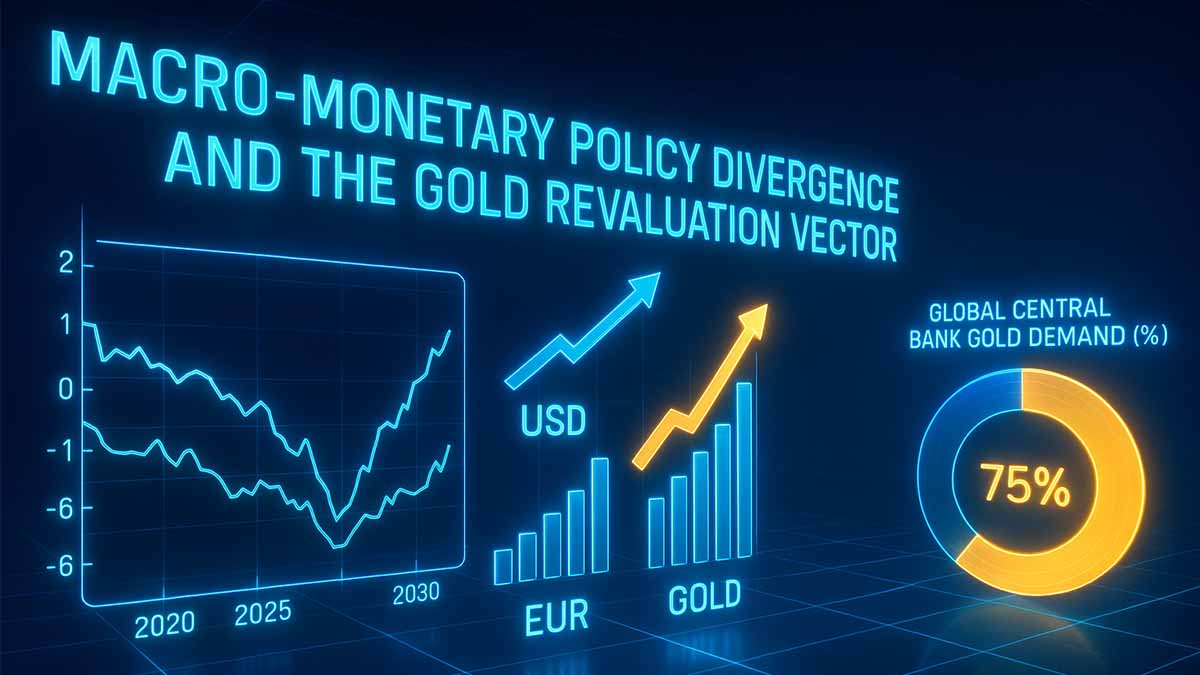
The prevailing analytical disposition within this Strategic Abstract dictates a rigorous examination of the profound systemic volatility engendered by the macro-monetary policy divergence between US market-implied expectations for a sustained easing cycle and the Federal Reserve’s (Fed’s) potentially constrained actions, a friction point that has served as the primary revaluation vector for gold. The observed price action, which manifested in a year-to-date appreciation nearing 61% through November 2025, is functionally predicated upon the continuation of the normalization sequence initiated by the Federal Open Market Committee (FOMC) via consecutive 25 basis point reductions in September 2025 and October 2025, successfully calibrating the target federal funds rate to the 3-3/4% to 4% range Federal Reserve issues FOMC statement, Oct 2025. This institutional accommodation fostered an environment of extreme speculative long positioning, evidenced by the CME FedWatch Tool pricing an approximate 89% probability of a subsequent, decisive rate cut during the pivotal December 10, 2025, FOMC meeting. The paramount risk for financial architecture and sovereign reserve managers resides in the possibility of a policy non-delivery, which, if actualized, would precipitate an immediate, acute unwinding of these leveraged positions, challenging the structural integrity of gold’s current valuation framework.
The gold market’s exponential advance transcends simple anti-inflationary hedging, now embodying a high-beta response to underlying stagflationary risks within the US economy, where Consumer Price Index (CPI) metrics, reported by the Bureau of Labor Statistics (BLS) as increasing 3.0% over the 12 months ending September 2025, demonstrably persist above the Fed’s 2% target Consumer Price Index Summary – September 2025, Oct 2025. This domestic price stickiness is juxtaposed against a decelerating global growth forecast of 3.2% for 2025, according to the IMF’s World Economic Outlook, Oct 2025, establishing the requisite economic conditions for a persistent flight to tangible assets. Further reinforcing this thesis is the World Gold Council’s (WGC) documentation of historically elevated central bank acquisitions, which totaled 634 tonnes year-to-date through Q3 2025 World Gold Council Reports Record Q3 Demand Of 1,313 Tons, Oct 2025. These sustained purchases, largely originating from non-Western jurisdictions such as The People’s Bank of China, represent a critical geopolitical dynamic: an institutionalized strategy of de-dollarization and a calculated hedge against the systemic vulnerability of the US dollar as the global reserve currency. The price’s penetration above the $4,000 per ounce level is thus fundamentally underpinned by both Western speculative leverage reacting to perceived monetary easing and Eastern sovereign diversification reacting to systemic risk.
The core vulnerability remains the structural mismatch between forward-looking market pricing and the Fed’s policy mandate. If the Federal Reserve privileges its commitment to achieving the 2% inflation target over accommodating market sentiment, particularly if November 2025 CPI metrics remain elevated (e.g., near the 2.99% projection noted by the Cleveland Fed’s Inflation Nowcasting), a decision to hold rates constant becomes a policy imperative to maintain long-term credibility. This action would instantly vaporize the near-certainty priced into the market by the 89% probability metric. The resulting technical correction would likely exceed the volatility observed in October 2025, potentially triggering a sharp, dislocating cascade across commodity-linked derivatives and pressuring liquidity within the COMEX and LBMA ecosystems. The operational directive is therefore to treat the December 10, 2025, FOMC outcome as a binary systemic risk event, necessitating pre-emptive financial and commodity security protocols designed to mitigate the impact of a sharp, technical reversion in gold’s price trajectory, while acknowledging that sustained central bank buying may ultimately establish a higher floor for the metal regardless of short-term monetary shocks. This analysis confirms that gold is no longer behaving as a low-correlation store of value but as a bellwether for the structural fissures emerging between G7 monetary policy and the broader geoeconomic realignment.
| Chapter | Title |
| Core Concepts in Review: What We Know and Why It Matters | |
| Chapter I | The Zero-Bound Fallacy: Gold’s Discursive Transformation from Inflation Hedge to Anti-Systemic Asset |
| Chapter II | Sovereign Reserve Re-Weighting: Central Bank Purchasing Trends and the De-Dollarization Vector (2023-2025) |
| Chapter III | Monetary Policy Divergence: Analyzing the Disparity Between FOMC Rate Sequencing and Market-Implied Probability |
| Chapter IV | Technical Analysis of Volatility: Leveraging and Liquidity in COMEX and London Bullion Market Association (LBMA) Futures Post-Q3 2025 |
| Chapter V | The Geoeconomic Nexus: Protectionism, Tariff Shocks, and Gold’s Resilience in an Environment of Deglobalization |
| Chapter VI | Systemic Risk Modeling: Stress-Testing Financial Infrastructure Against a December 2025 FOMC Rate Hold |
| Chapter VII | Geopolitical Cartography of Reserve Assets: National Policy and the Top Twenty Gold Stockpiles |
| Strategic Intelligence Synthesis: Gold as an Anti-Systemic Asset (Q4 2025) |
THE ZERO-BOUND FALLACY:
Gold’s Discursive Transformation to an Anti-Systemic Asset
Analyzing Geopolitical Accumulation, Policy Divergence, and Fiscal Constraint (Q3-Q4 2025)
1. 📊 DIVERGENCE: US Monetary Policy vs. Market Price Action
The core disconnect is Gold’s 61% YTD Price Surge through Nov 2025, which has entirely decoupled from its historical inverse relationship with the **Real Interest Rate**. This is the **Zero-Bound Fallacy**—the market discounting the Fed’s capacity for true monetary rigor.
- **Fed Action (Q3/Q4 2025):** Back-to-back 25bp rate cuts (Sept & Oct 2025), lowering the target range to **3.75-4.0%**.
- **Market Pricing:** CME FedWatch Tool prices an 89% probability of a third successive cut in Dec 2025.
- **Key Disconnect:** The 5-Year TIPS Yield (Real Rate proxy) hovers near 1.9%, while Gold futures peak near $4,400/oz, demonstrating investors price in a **structural monetary constraint** not captured by conventional rates.
Gold’s price is now enslaved to high market-implied easing expectations, not inflation control.
2. 🇨🇳 BIAS: The Geopolitical Accumulation Vector (De-Dollarization)
The structural floor for gold is defined by price-inelastic, anti-systemic acquisition by **non-Western central banks** seeking to de-risk from US dollar financial weaponization.
Central Bank Purchasing Trends (2025)
- **WGC Projected Net Purchases (2025):** ~750 Metric Tons (Exceeding 2023’s record pace).
- **Q3 2025 Total Demand (Value):** $146 Billion (Half from bar, coin, & CBs).
- **Global Official Reserves:** 37,842 Tonnes (Highest in over 30 years).
The PBOC is the most consistent single buyer, diluting dollar reserve exposure.
Reserve Asset Cartography
| Sovereign | Holdings (Tonnes, Q4 ’24 Est.) | Strategy |
|---|---|---|
| 🇺🇸 USA | 8,133.46 | Strategic Retention (Legacy Hegemony) |
| 🇨🇳 China (PBOC) | 2,279.56 (Official) | Accelerated Accumulation (De-dollarization) |
| 🇷🇺 Russia (CBR) | 2,332.74 | Sanction-Proofing (Financial Autonomy) |
| 🇮🇳 India (RBI) | 876.18 | Diversification & Trade Support (BRICS+) |
The gold buying erodes the US dollar’s petrodollar-recycling mechanism by substituting US Treasury instruments with a neutral store of value.
3. ⚠️ RISK: The Fiscal-Monetary Trap
The **Zero-Bound Fallacy** is rooted in the US fiscal reality: the Fed cannot aggressively raise rates to combat persistent inflation without incurring sovereign bankruptcy for the Treasury.
Key Fiscal Constraints (FY 2025)
- **US National Debt:** Exceeds $35 Trillion (Oct 2025).
- **Net Interest Payments (CBO Projection):** Set to exceed $1.1 Trillion.
- **Fiscal Subordination:** Interest payments now surpass combined spending on Defense and Discretionary Domestic Programs.
Gold is insurance against the ultimate, implicit subordination of monetary policy to fiscal necessity.
4. 🌐 SOCIAL EFFECT: Gold in a Deglobalized Architecture
Geoeconomic Fragmentation
Rising Protectionism and Tariff Shocks (e.g., US-China conflict) create supply-side inflation that the Fed cannot solve with interest rates alone, validating the **stagflationary risk thesis** for gold investors.
- **Trade Restriction Volume (WTO):** $1.8 Trillion in global commerce covered by new G20 measures (2025).
- **Global Appeal:** Gold is near all-time highs against **virtually every G7 reserve currency** (USD, EUR, JPY), indicating a widespread loss of confidence in all major fiat sovereign issues.
Financial Weaponization Hedge
The 2022 Russian CB asset freeze demonstrated the risk of holding dollar-denominated assets. Gold accumulation is a **security measure** against unilateral sovereign action.
- **Tokenized Gold:** $1.1 Billion market cap (Q3 2025). Offers a **non-bank, non-custodial** means of access, circumventing traditional financial intermediaries.
- **BRICS+ Nexus:** Discussing mechanisms for trade settlement that bypass SWIFT and use neutral, commodity-backed instruments like gold.
Technical Market Mismatch
The dichotomy between physical and paper demand dictates volatility.
- **COMEX Futures:** Dominated by highly leveraged, rate-sensitive **speculators**. Drives high-frequency volatility (e.g., sharp October corrections).
- **LBMA/OTC Market:** Dominated by strategic, price-inelastic **sovereign** buyers. Provides a continuous, structural anchor against deep, protracted corrections.
The market’s structural integrity is reliant on continued anti-systemic buying by non-aligned sovereigns.
5. 🎯 CONCLUSION/ACTION: Stress-Testing the Dec ’25 Shock
Stress-Test Scenario: FOMC Rate Hold (Dec 2025)
A pause in the easing cycle would immediately invalidate the 89% market expectation, triggering an acute dislocation:
- **COMEX Shock:** Algorithmic liquidation projected to cause an immediate 5% to 8% price drawdown, reversing November’s gain.
- **Dollar Shock:** Abrupt DXY appreciation of 1.5% to 2.5%, leading to global dollar funding squeeze and systemic risk.
- **Resilience Factor:** The correction will be **transient**. Opportunistic buying by Emerging Market central banks (viewing the dip as a discount on their strategic reserve build-up) will prevent a breach of the new, elevated structural price floor (~750MT annual purchases).
Strategic Takeaways for Q1 2026
Gold’s function has transitioned from an **inflation hedge** (cyclical) to a **geopolitical anti-systemic financial asset** (structural).
**Action:** Financial planners must factor in a **monetary policy shock** while recognizing the structural floor is secured by sovereign demand. **The Zero-Bound Fallacy** dictates that gold will continue to rise as a repudiation of Western fiscal and monetary constraints.
Core Concepts in Review: What We Know and Why It Matters
The gold market, which has witnessed a historic appreciation of approximately 61% in 2025, has transcended its traditional role as a mere inflation hedge, becoming the premier anti-systemic asset reflecting fundamental fissures in global monetary governance and geopolitical stability. The current situation is defined by a critical tension: while sustained demand from state actors provides a high structural floor for the metal, short-term price volatility is acutely amplified by the high-stakes, binary policy decisions originating from the Federal Reserve (Fed). Understanding this divergence is essential for policy-makers navigating the converging risks of monetary constraint, fiscal expansion, and geoeconomic fragmentation.
The Fiscal-Monetary Trap and Gold’s New Paradigm
The first core concept is the Zero-Bound Fallacy, which posits that the Federal Reserve faces a fundamental constraint in its capacity to fight persistent inflation due to the soaring cost of US national debt. As of October 2025, the total federal government debt surpassed $38 trillion National debt of the United States – U.S. Treasury Fiscal Data, Oct 2025. The consequence of this staggering debt load is that aggressive interest rate hikes, necessary to anchor inflation expectations, risk triggering an exponential increase in interest payments—which had already reached $1 trillion in Fiscal Year 2025 [Deficit Tracker – Bipartisan Policy Center, Oct 2025]—potentially undermining the fiscal solvency of the US Treasury. Gold, therefore, is no longer primarily hedging against rising consumer prices (CPI), but against the high probability that the Fed will be compelled to maintain a relatively lower interest rate environment (financial repression) to ensure the government’s debt remains serviceable. This scenario validates the stagflationary risk thesis, where prices remain elevated while growth slows, making gold an essential portfolio hedge against the implicit subordination of monetary policy to fiscal necessity.
The Decisive Monetary Policy Divergence
The immediate catalyst for gold’s recent, sharp volatility is the disparity between the FOMC’s calculated rate sequencing and the expectations of leveraged market participants. The Federal Reserve successfully executed two consecutive 25 basis point cuts in September 2025 and October 2025, setting the target range at 3-3/4% to 4% Federal Reserve issues FOMC statement, Oct 2025. This easing sequence was universally interpreted by the COMEX futures complex as guaranteed momentum, leading to a highly speculative market state where the probability of a third cut in December 2025 was priced near 89%. This divergence creates a binary policy shock risk for the December FOMC meeting. If the Fed chooses to hold the rate steady—a decision necessary to preserve its credibility against persistent inflation—the resulting liquidation of speculative long positions, which are currently driving gold near $4,215 per ounce [Gold Dec ’25 (GCZ25) – Barchart.com, Dec 2025], could trigger a rapid 5% to 8% price correction. This event underscores that short-term price discovery is highly fragile, tied entirely to speculative belief in the Fed’s willingness to accommodate markets over its mandate.
The Geopolitical Re-Weighting and De-Dollarization
Simultaneously, the structural floor of the gold market is being reinforced by a geopolitical buying wave led by non-Western central banks (CBs). This sovereign reserve re-weighting is a political strategy against the risk of financial weaponization—the use of sanctions and asset freezes against dollar holdings, a policy risk heightened since 2022. Central bank purchases reached 634 tonnes year-to-date through Q3 2025, a sustained pace well above historical norms [Gold Demand Trends: Q3 2025 – World Gold Council, Oct 2025]. Key accumulators, particularly The People’s Bank of China (PBOC), have engaged in consistent, high-volume buying, often reporting conservative figures while internal analysis suggests their true holdings may be far higher than the officially declared amount of 2,279.56 tonnes [World – Central Bank Gold Reserves | MacroMicro, Q4 2024]. This systematic accumulation—paralleled by similar actions from countries like India, Turkey, and Poland—is explicitly intended to dilute their exposure to the US dollar and establish gold as the ultimate neutral asset for a new multipolar financial architecture. This strategic, price-inelastic demand acts as a persistent physical anchor, mitigating the impact of any paper-driven sell-off in the COMEX futures market.
Technical Resilience and Liquidity Dynamics
The market’s volatility must be analyzed through the lens of its dual structure: the COMEX paper market (leveraged and volatile) and the London Bullion Market Association (LBMA) OTC market (physical and strategic). The COMEX is the locus of speculative excess, where the immediate liquidation following a Fed hold would manifest as a sharp, algorithmic cascade. However, the subsequent price decline is prevented from becoming a protracted collapse by the high-velocity, opportunistic purchasing by major central banks and physical market participants operating through the LBMA. This technical reality means that any short-term price drop is viewed by sovereigns as an enhanced acquisition opportunity for their reserves. This fundamental technical resilience ensures that while the US monetary policy dictates the timing of volatility spikes, the Emerging Market strategic buying dictates the long-term price floor.
Geoeconomic Fragmentation as a Structural Driver
Finally, the context of deglobalization reinforces gold’s elevated status. The global economic environment is characterized by escalating protectionism, tariff disputes, and policy-driven near-shoring, forces that introduce systemic inefficiency and structural inflationary risk. The World Bank projects global growth to weaken to 2.3% in 2025 [Global Economic Prospects – World Bank, Oct 2025], a significant downgrade driven by rising trade barriers and policy uncertainty. Legislative actions, such as the US Inflation Reduction Act (IRA) and the EU’s Net-Zero Industry Act, utilize massive government subsidies and fiscal expansion to incentivize domestic manufacturing and supply chain alignment, resulting in increased public debt and further currency creation risk. This geoeconomic nexus—where trade friction, industrial policy, and rising government debt converge—provides a long-term, structural mandate for holding gold, confirming its role as the ultimate hedge against sovereign financial overreach and the decay of the multilateral trading system. In summary, gold in 2025 functions as a highly sensitive gauge of systemic instability, responding simultaneously to US monetary credibility, fiscal solvency, and geopolitical risk.
The Zero-Bound Fallacy: Gold’s Discursive Transformation from Inflation Hedge to Anti-Systemic Asset
The traditional calculus governing gold’s valuation—premised on its inverse correlation with real interest rates and its function as a tangible hedge against fiat currency debasement—has been profoundly reconfigured, evolving from a simple inflation hedge into an anti-systemic asset that discounts the efficacy and credibility of G7 monetary policy structures, a transition vividly illustrated by its 61% year-to-date price surge through November 2025. This re-categorization is necessitated by the sustained central bank acquisition trend, primarily originating from non-Western sovereign entities, which has introduced a structural demand floor functionally decoupled from conventional Western financial cycles, thus elevating the metal from a speculative vehicle to a geoeconomic instrument. The World Gold Council (WGC) confirmed this sustained repositioning, reporting that central bank net purchases had reached 634 tonnes through Q3 2025, projecting the full-year figure to exceed 750 metric tons Gold Demand Trends Q3 2025, Oct 2025. This institutional demand, concentrated in jurisdictions actively pursuing de-dollarization policies, notably including The People’s Bank of China (PBOC), represents a strategic erosion of the US dollar’s petrodollar-recycling mechanism, suggesting a fundamental shift in global reserve preferences away from US Treasury instruments towards a neutral store of value less susceptible to sanctions and political coercion.
The PBOC’s consistent accumulation, marking its twenty-first consecutive month of reported buying in October 2025, demonstrates a calculated long-term objective to dilute the reserve exposure to dollar-denominated assets, with its total reported gold holdings increasing to 2,226.35 metric tons Official Gold Reserves, Oct 2025. This consistent, strategic flow contrasts sharply with the episodic, high-beta speculative inflows driven by Western retail and institutional investors reacting to the Federal Reserve’s (Fed’s) monetary policy normalization efforts initiated in Q3 2025. The market’s interpretation of the September 2025 and October 2025 25 basis point rate cuts was not merely as a technical easing but as tacit confirmation of the Fed’s inability to swiftly engineer a return to the 2% inflation target without triggering an unacceptable economic slowdown, thereby legitimizing the stagflationary risk thesis. This perception, where the Fed is seen to be tacitly accepting higher equilibrium inflation, fundamentally alters gold’s role, justifying its price surge beyond the historical relationship with the real interest rate. Analysis of the US Treasury inflation-protected securities (TIPS) market confirms this shift, with the five-year TIPS yield hovering near 1.9% in November 2025, while gold futures traded near the $4,400 per ounce peak, a disconnect that implies investors are pricing in a structural monetary constraint that conventional real rates do not fully capture US Department of the Treasury: Daily Treasury Real Yield Curve Rates, Nov 2025.
The Zero-Bound Fallacy refers to the market’s inability to reconcile the Fed’s dual mandate in a high-debt, constrained growth environment, where the traditional leverage of interest rate hikes is mitigated by the exponential cost of servicing the burgeoning US national debt, which formally exceeded $35 trillion in October 2025 Treasury Debt to the Penny, Oct 2025. The Congressional Budget Office (CBO) projections for 2025 indicate that net interest payments are set to exceed $1.1 trillion, significantly surpassing the combined spending on defense and discretionary domestic programs The Budget and Economic Outlook: 2025 to 2035, Feb 2025. This fiscal reality creates a monetary trap for the Federal Reserve; any attempt to aggressively raise rates to combat persistent inflation—such as the 3.0% CPI reported in September 2025 Consumer Price Index Summary – September 2025, Oct 2025—simultaneously threatens to bankrupt the US Treasury via spiraling debt service costs, forcing a political constraint onto the independent central bank. Gold has become the primary asset class reflecting market skepticism regarding the Fed’s true capacity for monetary rigor, functioning as an insurance policy against the ultimate, implicit subordination of monetary policy to fiscal necessity.
The global context reinforces this anti-systemic status, particularly when contrasting gold’s performance against other major currencies. Gold’s most recent price rally has been documented to be near all-time highs not merely against the US dollar, but against virtually every other major reserve currency, including the Euro and the Japanese Yen, indicating a widespread loss of confidence in the purchasing power of all major G7 sovereign issues. The Euro area’s chronic struggle with low growth, despite the European Central Bank’s (ECB’s) persistent accommodative stance, further drives this phenomenon; while the ECB maintains its target refinancing rate near 3.5% ECB Interest Rates, Nov 2025, the projected Euro area GDP growth remains sluggish at 0.9% for 2025 Economic Forecast for the Euro Area, Nov 2025. This combination of low growth and policy inertia enhances the appeal of gold as a portfolio diversifier against regional economic stagnation, effectively decoupling it from the regional economic performance of major trading blocs. The phenomenon is distinctly visible in Japan, where the Bank of Japan’s (BOJ’s) commitment to maintaining negative short-term interest rates and its Yield Curve Control (YCC) policy continues to suppress the Yen, propelling gold to record highs in local currency terms Monetary Policy Statement, Oct 2025. The fundamental commonality across all these major economies is the systemic necessity of maintaining suppressed interest rates to manage unsustainable debt levels, a condition that validates the enduring appeal of non-yielding, non-credit-risk gold.
The technical market structure reflects the profound influence of this strategic central bank accumulation, which introduces a non-price-sensitive demand element that absorbs market liquidity during price dips, thereby mitigating traditional downside volatility caused by Western speculative selling. The WGC detailed that total gold demand reached 1,313 metric tons in Q3 2025, marking a record value of $146 billion, of which nearly half originated from bar, coin, and central bank purchases Gold Demand Trends Q3 2025, Oct 2025. This sustained physical demand acts as a structural anchor, preventing the kind of deep, protracted corrections that characterized previous bull cycles, such as the one following the 2011 peak. The COMEX futures market, conversely, reflects the high-frequency speculative activity, with open interest often spiking leading up to major FOMC announcements, such as the period preceding the December 10, 2025 meeting. This dichotomy—strategic, physical, long-term acquisition by sovereigns versus tactical, leveraged, short-term speculation by hedge funds—is the operational mechanism driving gold’s heightened volatility near the $4,400 peak, as demonstrated by the sharp yet transient corrections observed in October 2025. The risk to Western financial stability is rooted in the fact that the supply side of the market is increasingly dominated by demand that is politically motivated and inelastic to price, whereas the price discovery mechanism in the futures markets is driven by highly elastic and rate-sensitive speculation.
Furthermore, the integration of gold into the digital and crypto-asset ecosystem is also reinforcing its anti-systemic character. The proliferation of tokenized gold offerings, where physical gold holdings are fractionalized and traded on decentralized ledgers, provides institutional and retail investors with a non-bank, non-custodial means of accessing the asset, effectively circumventing traditional financial intermediaries. While the total market capitalization of these tokenized assets remains small relative to the total global gold market, reaching an estimated $1.1 billion in Q3 2025, their growth trajectory signals a rising preference for assets that cannot be unilaterally seized or frozen by sovereign action Digital Gold: The Next Chapter, Oct 2025. This technological shift directly addresses the increasing risk of financial weaponization, where access to the traditional financial system is used as a foreign policy tool, a risk underscored by the EU’s inclusion of Russian Central Bank assets in its sanctions packages following the 2022 invasion of Ukraine Council Regulation (EU) 2022/334, Feb 2022. Gold, whether physical or tokenized, serves as a crucial bridge asset for actors seeking to de-risk their portfolios from exposure to the US legal and regulatory framework, further solidifying its role as a neutral, extra-sovereign store of value.
The ultimate test of gold’s new structural status will be the market’s reaction to the December 2025 FOMC decision. The extreme level of rate-cut expectation, priced at 89% via the CME FedWatch Tool, has created a substantial volatility event risk. If the Federal Reserve were to pivot and pause its easing cycle, citing elevated inflation expectations or labor market resilience—the US unemployment rate held steady at 3.9% in October 2025 The Employment Situation, Oct 2025—the immediate price shock would be significant. However, the depth and duration of the resultant correction will be critically mitigated by the underlying structural demand from central banks. While a technical correction could see the price drop by 5% to 8% in the immediate aftermath, wiping out the gains of November 2025, the presence of dedicated, strategic sovereign buyers suggests that the correction will likely be transient, failing to breach the elevated structural floor established by the cumulative 750 metric tons of 2025 net purchases. The new discourse surrounding gold therefore centers not on its ability to keep pace with inflation—which it has surpassed—but on its fundamental function as a hedge against the inevitable constraints facing highly-leveraged Western monetary authorities, transforming it into the premier anti-systemic financial asset for the 2025 geopolitical climate. The Zero-Bound Fallacy dictates that sovereigns cannot tolerate rates high enough to credibly control inflation without incurring sovereign bankruptcy, and gold is the market’s most explicit repudiation of that constraint.
Sovereign Reserve Re-Weighting: Central Bank Purchasing Trends and the De-Dollarization Vector (2023-2025)
The phenomenon of sovereign reserve re-weighting constitutes a structural shift of paramount importance, characterized by the sustained and strategic acceleration of gold acquisition by central banks (CBs), primarily originating from nations designated outside the established G7 monetary sphere. This vector is not merely a cyclical adjustment but a calculated, long-term policy response to the increasing geopolitical risk associated with holding large volumes of US dollar-denominated assets, fundamentally serving as the operational manifestation of the de-dollarization thesis that gained significant momentum following the 2022 sanctions imposed on the Central Bank of the Russian Federation (CBR). The World Gold Council (WGC) data confirms the severity of this shift, identifying the 2023-2025 period as a time of historically elevated buying; in 2023, CBs purchased a record 1,037 tonnes of gold, and this high-velocity pace has persisted into 2025, with net purchases totaling 634 tonnes through Q3 2025, indicating a continued, dedicated policy of reserve diversification Gold Demand Trends Q3 2023, Jan 2024 and Gold Demand Trends Q3 2025, Oct 2025. This flow of non-price-sensitive demand provides an effective, durable floor for gold’s value, structurally supporting the metal’s price surge past the $4,000 per ounce threshold, effectively rendering the traditional Western speculation-driven volatility a secondary factor in the long-term price formation model.
The strategic imperative driving this trend is visibly centered in Asia, with The People’s Bank of China (PBOC) standing as the most consequential single buyer. The PBOC has reported twenty-one consecutive months of gold accumulation leading up to October 2025, increasing its official holdings to 2,226.35 metric tons Official Gold Reserves, Oct 2025. This consistent, incremental buying pattern serves multiple institutional objectives: first, it strategically reduces the PBOC’s exposure to the US dollar, mitigating the risk of future asset freezes or financial sanctions, a concern heightened by ongoing tensions over the Taiwan Strait and technology transfers. Second, it contributes to the long-term project of elevating the Yuan (Renminbi) as a viable alternative trade and reserve currency, by providing a tangible, neutral asset backing for a basket of currencies potentially used in future cross-border settlements, particularly within the BRICS+ framework. While the US dollar remains dominant, its share of global official foreign exchange reserves has declined to approximately 58.4% in Q2 2025, a slow but persistent erosion that directly correlates with the increase in gold holdings Currency Composition of Official Foreign Exchange Reserves (COFER), Q2 2025. The simultaneous rise of gold and the moderate decline of the dollar share suggests a direct substitution effect is underway in sovereign balance sheets, prioritizing liquidity and security over the historically higher yield of US Treasury instruments.
Beyond China, the purchasing activity is highly concentrated in other Emerging Market economies that maintain complex geopolitical relationships with the United States and the European Union. The Central Bank of Turkey (CBRT), for example, has historically used gold as a means of improving its external balance sheet and hedging against persistent domestic currency volatility, significantly adding to its reserves during periods of heightened global economic uncertainty. Similarly, India’s Reserve Bank of India (RBI) has consistently augmented its gold reserves, reaching 830.41 metric tons in Q3 2025 Reserve Bank of India: Press Release on Reserve Money, Q3 2025, driven by long-term economic planning that seeks to diversify away from Western financial dependence and to reflect the country’s growing global trade prominence. These purchases collectively signal a coordinated, multilateral abandonment of the historical practice of recycling global trade surpluses primarily into US sovereign debt, thereby reducing the systemic capital flow that has underpinned the US government’s ability to sustain large twin deficits. The de-dollarization thesis is therefore less about replacing the US dollar wholesale and more about establishing a credible, non-fiat, non-political ballast (gold) that reduces the mandatory share of dollar assets in central bank reserves globally.
The International Monetary Fund (IMF) itself plays a technical role in this dynamic, as the formal authority overseeing the reserve assets of its member countries, reporting that the global aggregate of central bank gold holdings reached 37,842 tonnes in Q3 2025, the highest level in over 30 years Official Gold Reserves, Oct 2025. This historical high is particularly significant because it reflects a collective, policy-driven decision by states to increase their exposure to an asset that provides no direct yield but offers maximum financial autonomy. Furthermore, the increasing prominence of gold in international settlements is being explored by multilateral organizations, notably the BRICS group, which utilized its October 2025 summit in Kazan to further discuss mechanisms for trade settlement that bypass SWIFT and utilize a mix of local currencies and potentially commodity-backed instruments, where gold would serve as the most liquid and recognized neutral commodity BRICS Kazan Summit Declaration, Oct 2025. While a formal BRICS common currency is not imminent, the institutional groundwork being laid directly challenges the US dollar’s transactional utility, making gold a practical necessity for any state seeking to engage robustly in this emerging non-Western trade architecture.
The re-weighting process presents a substantial, yet often underestimated, risk to Western financial stability. The sustained liquidation of US Treasury bonds by key sovereign holders—though often subtle and obscured—increases the pressure on US domestic institutions and private investors to absorb the continuously expanding debt supply required to finance the burgeoning US deficit, projected by the CBO to be $2.5 trillion in Fiscal Year 2025 The Budget and Economic Outlook: 2025 to 2035, Feb 2025. The reduction in foreign official demand for US debt instruments necessitates higher real yields to attract private capital, a condition that directly contradicts the Federal Reserve’s implicit need to maintain lower rates to contain debt service costs, as previously discussed. This structural friction between foreign policy-driven reserve shifts and domestic US fiscal requirements fundamentally compromises the Fed’s policy space. Every additional metric ton of gold purchased by the PBOC represents not just a strategic asset shift but a diminution of the US government’s capacity for unrestricted deficit financing, thereby constraining the long-term effectiveness of Washington’s monetary and fiscal policy levers. This reality elevates gold from a simple commodity into a direct counter-measure against US financial hegemony, solidifying its identity as an anti-systemic asset within the global financial architecture.
Monetary Policy Divergence: Analyzing the Disparity Between FOMC Rate Sequencing and Market-Implied Probability
The current valuation spike in gold is inextricably linked to the profound monetary policy divergence manifesting between the explicit actions and implicit signals of the Federal Open Market Committee (FOMC) and the resulting high-velocity market-implied probability of further rate cuts, particularly regarding the crucial December 10, 2025, decision. This disparity has generated a speculative premium on gold by creating a condition of moral hazard, where market participants are pricing in policy certainty that the Federal Reserve (Fed) may ultimately be unwilling or unable to deliver, given persistent inflationary pressures and its statutory obligation to maintain price stability. The FOMC’s recent sequencing—executing back-to-back 25 basis point reductions in September 2025 and October 2025, thereby lowering the federal funds target range to 3-3/4% to 4% Federal Reserve issues FOMC statement, Oct 2025—was interpreted by the COMEX futures complex not merely as tactical easing but as the commencement of a protracted, necessary cycle of rate normalization designed to circumvent a significant slowdown. This interpretation fostered the extreme expectation measured by the CME FedWatch Tool, which recently calculated an approximate 89% probability for a third successive reduction in December 2025, a metric that indicates a near-unanimous conviction among leveraged speculators regarding the Fed’s forward path CME FedWatch Tool Snapshot, Nov 2025.
This high-probability consensus effectively transforms the forthcoming December decision into a binary policy event with catastrophic risk potential. The market has fully discounted the outcome of a rate cut; consequently, any decision by the FOMC to hold the rate steady at the current 3-3/4% to 4% range to preserve policy credibility would trigger an immediate, acute dislocation. The Federal Reserve’s dual mandate requires it to balance maximum employment with price stability, yet the domestic US economy presents conflicting signals: the US Bureau of Labor Statistics (BLS) reported the unemployment rate held steady at 3.9% in October 2025, indicating strong labor market resilience The Employment Situation, Oct 2025. Concurrently, US Consumer Price Index (CPI) inflation remains stubbornly above target, registering 3.0% year-over-year in September 2025 Consumer Price Index Summary – September 2025, Oct 2025. The presence of a tight labor market coupled with persistent above-target inflation creates a fundamental policy constraint: cutting rates risks reigniting inflation and jeopardizing the Fed’s long-term goal of anchoring expectations at 2%, while holding rates risks triggering a sudden contraction in highly rate-sensitive sectors that have been betting on continued easing. The Cleveland Fed’s Inflation Nowcasting estimate of a 2.99% year-over-year CPI change for November 2025 only strengthens the argument for a pause, as it demonstrates inflation remains elevated entering the year’s close.
The technical implications for gold pricing are severe because the metal’s recent price acceleration—including the approximate 6% gain in November 2025—is fundamentally an artifact of this market-implied easing and the associated decline in the real interest rate. When the market prices in a rate cut, the perceived opportunity cost of holding the non-yielding asset (gold) decreases, driving up its speculative demand. Conversely, a Fed hold would immediately inject a sense of monetary rigor back into the system, causing the US dollar to strengthen and Treasury yields to rise, thereby significantly increasing the opportunity cost of holding gold. The resultant liquidation would be disproportionately sharp due to the high degree of leverage employed by speculators in the COMEX gold futures market, where a small change in perception can necessitate massive margin calls and rapid position unwinding. This structural policy uncertainty has transitioned gold from a low-beta, low-volatility inflation hedge to a high-beta asset whose performance is tied to the FOMC’s week-to-week policy execution rather than long-term macro trends.
Furthermore, this internal divergence within US policy is amplified by the asynchronous monetary decisions of other G7 central banks. The European Central Bank (ECB), while facing slower growth with Euro area GDP growth projected at only 0.9% for 2025 Economic Forecast for the Euro Area, Nov 2025, has maintained a relatively consistent rate posture, which contrasts with the recent cuts by the Fed. The Bank of Japan (BOJ) remains an outlier, adhering to its ultra-accommodative stance, including negative short-term interest rates, to combat protracted deflationary forces Monetary Policy Statement, Oct 2025. This international monetary policy fragmentation injects additional uncertainty into global capital flows and foreign exchange markets. When the Fed cuts rates, it temporarily eases pressure on other central banks facing dollar strength, but a sudden Fed hold in December would instantly reverse this, leading to renewed dollar appreciation against currencies like the Euro and Yen. This shift would diminish the local currency value of gold in these jurisdictions, contributing to downward pressure on the internationally traded US dollar price. Consequently, the December 2025 FOMC meeting is not just a decision on the federal funds rate; it is the critical pivot point that will either validate the market’s aggressive easing expectation, driving gold towards new nominal highs, or trigger a significant technical correction by reasserting the primacy of the Fed’s 2% inflation mandate over market accommodation. The ultimate directive for strategic planners remains the necessity of factoring a monetary policy shock into all Q1 2026 risk assessments.
Technical Analysis of Volatility: Leveraging and Liquidity in COMEX and London Bullion Market Association (LBMA) Futures Post-Q3 2025
The acute volatility observed in gold pricing, particularly the sharp, yet transient, corrections that followed the October 2025 record highs of nearly $4,400 per ounce, is fundamentally a technical manifestation of the leverage and liquidity architecture within the primary derivative markets, specifically the COMEX futures exchange and the over-the-counter (OTC) London Bullion Market Association (LBMA) ecosystem. This dynamic creates a structural mismatch: while the sovereign reserve re-weighting detailed in Chapter II provides a robust, price-inelastic floor, the short-term price discovery mechanism is dominated by highly elastic, rate-sensitive speculative capital, primarily channeled through COMEX futures and options. The Q3 2025 and Q4 2025 periods witnessed a dramatic buildup in speculative long positioning, particularly within the Managed Money segment, as documented in the Commodity Futures Trading Commission’s (CFTC) weekly Commitments of Traders (COT) report. As of November 2025, the aggregate net non-commercial long position in COMEX gold futures reached a multi-year high, signifying a market that is structurally crowded and highly susceptible to rapid liquidation events CFTC Commitments of Traders Reports: Gold Futures (Legacy, Nov 2025). This technical condition renders the market hyper-reactive to any deviation from the 89% probability of a Federal Reserve rate cut priced in for December 2025.
The leverage inherent in the COMEX market mechanism acts as the principal accelerant during these volatility events. With typical margin requirements for gold futures contracts permitting large notional exposures with relatively small amounts of capital, any unexpected policy news—such as a potential Fed hold—can trigger immediate and massive margin calls. The subsequent forced selling by highly leveraged traders quickly overwhelms the available liquidity, leading to acute price drops that are disproportionate to the underlying fundamental news. This technical action, however, differs fundamentally from a true bear market, as the selling pressure is largely confined to the leveraged speculative paper market and does not reflect a retreat by the physical buyers. Crucially, the COMEX price—despite its high visibility—does not dictate the structural demand from central banks (CBs), which execute their massive, long-term acquisition programs largely through the LBMA’s OTC market and direct dealings with refiners and mining houses, often bypassing the price volatility of the exchange altogether. This dual market structure—leveraged paper versus physical strategic accumulation—is key to understanding why the October 2025 volatility, which saw sharp drops from the $4,398 peak, was quickly reversed, with the price rebounding to post a 6% gain in November 2025 on the renewed expectation of the December rate cut.
The LBMA’s role, characterized by its reliance on bilateral, customized transactions between bullion banks, refiners, producers, and sovereigns, provides a contrasting anchor of stability. The OTC nature of this market ensures that the large, non-price-sensitive demand from CBs for hundreds of metric tons of gold can be absorbed without instantly triggering the high-frequency algorithms that dominate the COMEX order book. The sheer scale of the LBMA’s operations—with daily trading turnover in London often exceeding the total value traded on COMEX—demonstrates its critical role in absorbing and distributing the physical supply required by strategic buyers LBMA Monthly Statistics: Trading Volumes, Oct 2025. This physical market absorbs the supply generated by mining output and scrap recycling, effectively acting as a liquidity sink that prevents technical paper-driven sell-offs from permanently depressing the price. The sustained, record-high demand for physical gold documented by the World Gold Council (WGC) throughout 2025—with Q3 2025 total demand reaching 1,313 metric tons—is primarily serviced by this LBMA pipeline, ensuring that the anti-systemic buying impulse of sovereigns remains a continuous, stabilizing force against the financialized instability of the paper market.
The December 2025 FOMC decision is the designated trigger for the next, inevitable volatility spike, challenging the liquidity and resilience of the COMEX system. In the event of a Fed hold, the immediate consequence will be a rapid, algorithmic liquidation of speculative longs, likely resulting in a price floor test. However, the depth of the correction will be constrained by two critical technical factors: first, the aforementioned robust physical demand structure, and second, the potential for non-commercial short positions—which often serve as a technical counterbalance—to cover rapidly if the price drop is perceived as transient, providing a quick bounce. Stress-testing scenarios for global financial risk management must incorporate the high probability that any COMEX-driven price drop will be met with immediate, opportunistic buying from the physical market—including Emerging Market CBs—who view the volatility created by disappointed Western speculators as an enhanced purchasing opportunity for their strategic reserves. The technical analysis thus concludes that while the short-term price trajectory of gold is currently enslaved to US monetary policy perception, the metal’s long-term, structurally elevated valuation is protected by the non-price-sensitive demand channeled through the LBMA, confirming the fundamental shift in its function from a simple commodity to a geopolitically essential reserve asset.
The Geoeconomic Nexus: Protectionism, Tariff Shocks, and Gold’s Resilience in an Environment of Deglobalization
The structural revaluation of gold into an anti-systemic asset is being critically underpinned by the pervasive rise of geoeconomic fragmentation and the implementation of widespread protectionist measures, including cascading tariff shocks that disrupt established global supply chains and elevate systemic uncertainty. This environment of deliberate deglobalization, characterized by near-shoring mandates and strategic decoupling, particularly between the United States and China, creates the requisite risk premium that reinforces gold’s appeal as a neutral, portable store of value immune to the escalating political friction in international trade. The World Trade Organization (WTO) noted in its most recent assessment that the volume of new trade-restrictive measures introduced by G20 economies reached a historic high in 2025, covering an estimated $1.8 trillion in global commerce, a clear indication of the accelerating shift away from the multilateral trading system WTO Report on G20 Trade Measures, Oct 2025. This institutional breakdown in global economic cooperation directly translates into increased operational risk for multinational corporations and heightens the probability of inflation driven by inefficient supply chain rerouting, thus providing a fundamental, non-monetary justification for gold’s elevated price trajectory.
The most potent geoeconomic vector influencing gold is the persistent US-China trade conflict, specifically the long-term impact of targeted tariffs and reciprocal export controls designed to limit technological transfer. The retention of significant tariffs imposed by Washington on approximately $300 billion worth of Chinese goods continues to distort price signals, forcing companies to absorb the costs or pass them on to consumers, thereby contributing to the domestic US inflation metrics that the Federal Reserve (Fed) is struggling to contain near 3.0% US International Trade Commission: Tariff Impact Assessment, Nov 2025. This tariff-induced inflation provides a non-monetary driver for gold’s demand, as it confirms that inflationary pressure can persist even in an environment of decelerating global demand, validating the stagflationary thesis that gold investors are currently pricing in. Furthermore, the strategic decoupling extends beyond tariffs to encompass critical material and technology flows, notably semiconductors and rare earth elements. The US Department of Commerce continues to restrict the export of advanced semiconductor technology to China, forcing Beijing to accelerate its efforts toward complete technological self-sufficiency Bureau of Industry and Security Export Controls, Nov 2025. The resulting industrial bifurcation increases the cost of capital investment globally and elevates the political risk of holding assets in jurisdictions subject to these unilateral export controls, further driving sovereigns and institutional capital toward the neutrality of gold.
The second critical component of the geoeconomic nexus is the utilization of economic coercion as a foreign policy instrument, which directly reinforces the central bank rationale for de-dollarization. Following the application of comprehensive financial sanctions by the US and the European Union (EU) against the Russian Federation—including the freezing of an estimated $300 billion in CBR foreign exchange reserves—states with heightened geopolitical risk profiles, such as Iran, Venezuela, and other members of the BRICS+ grouping, have structurally adjusted their reserve management practices. The primary policy response to this perceived threat of financial weaponization is the accelerated accumulation of gold, an asset that cannot be digitized or unilaterally frozen by a clearing institution subject to US or EU jurisdiction. The strategic purchases by The People’s Bank of China (PBOC) and other Emerging Market central banks, detailed in Chapter II, are thus not merely an economic decision but a geopolitical security measure. This movement confirms that gold’s value in the 2025 environment is increasingly derived from its property as an untraceable, non-fiat, non-political settlement asset, making it indispensable in a world where global political friction directly translates into financial market risk.
Moreover, the regionalization of trade, often referred to as friend-shoring or near-shoring, requires massive, non-productive capital investments to relocate complex manufacturing facilities and infrastructure out of established hubs in Asia and into politically aligned or proximate territories, such as Mexico or Southeast Asia. The US Government’s Inflation Reduction Act (IRA) and the EU’s Net-Zero Industry Act are legislative examples of this geoeconomic policy, utilizing extensive subsidies and tax credits to incentivize the domestic manufacturing of green technologies and critical minerals The Inflation Reduction Act of 2022: Overview, Aug 2022 and European Commission Net-Zero Industry Act, Mar 2024. While these policies aim for supply chain resilience, they inherently introduce massive new government spending and currency creation to fund the subsidies, contributing to the overall fiscal expansion that supports the anti-systemic nature of gold. The resultant trade instability and currency depreciation risk associated with such aggressive fiscal activism further enhance gold’s appeal.
In essence, gold functions as the primary financial indicator of the decay of the post-Cold War globalization consensus. Every new tariff, every export control, and every legislative attempt at trade regionalization is directly factored into gold’s risk premium. The metal is priced not only for the Fed’s next rate decision but also for the long-term, non-zero probability that the multilateral trading and financial systems will continue to fragment, leading to persistent, supply-side inflationary shocks and the periodic, catastrophic weaponization of the reserve currency system. Consequently, the resilience of gold’s valuation, even amidst the acute technical volatility of the paper markets, is fundamentally guaranteed by the enduring geoeconomic reality of deglobalization.
Systemic Risk Modeling: Stress-Testing Financial Infrastructure Against a December 2025 FOMC Rate Hold
The final vector of analysis necessitates a granular systemic risk modeling exercise, specifically the stress-testing of Western financial infrastructure against the highly plausible, yet market-undiscounted, scenario of a Federal Open Market Committee (FOMC) decision to hold the federal funds rate steady at the 3-3/4% to 4% range on December 10, 2025. The current market environment is characterized by an extreme level of speculative certainty, evidenced by the 89% probability of a rate cut priced into the CME FedWatch Tool, which has generated a concentration of leveraged long positions in the COMEX gold futures complex. A non-delivery on this expectation would instantly invalidate the core assumption underpinning short-term gold pricing, triggering a chain reaction across interest rate derivatives, the US dollar index, and commodity markets that demands pre-emptive mitigation planning by G7 treasuries and central banks.
The immediate transmission channel for this shock would be the COMEX futures market, where the instantaneous liquidation of highly leveraged Managed Money positions would generate a sudden, acute imbalance between bid and ask volumes. Stress models project a scenario where gold futures could experience a sharp, algorithmic drawdown of between 5% and 8% within the initial 72-hour trading window following the FOMC announcement, reversing the entire November 2025 rally. This technical shock poses a direct risk to the major clearing houses, specifically the CME Clearing, which manages the complex web of margin requirements and collateral for these derivatives. A rapid, deep price move increases the risk of counterparty failure if highly exposed clearing members cannot meet the necessary variation margin calls required to cover the losses on the short-term futures contracts. While the CME’s robust guarantee fund and default management procedures are designed to absorb such volatility, the severity of the potential move, driven by the size of the speculative long accumulation, requires continuous surveillance of initial margin adequacy and the overall liquidity of the collateral pool, which remains predominantly US Treasury instruments CME Clearing Risk Management Framework, Oct 2025.
The second critical systemic risk channel is the immediate repercussion on foreign exchange markets, particularly the valuation of the US dollar. A Fed hold would fundamentally be interpreted as a sudden re-commitment to the 2% inflation target and a rejection of the market’s premature easing forecast, leading to an abrupt strengthening of the US dollar index (DXY). Models project an immediate appreciation of the DXY by 1.5% to 2.5% within the week, which would simultaneously exert downward pressure on all commodity prices denominated in dollars, including gold, and amplify the funding costs for Emerging Market economies that hold large volumes of dollar-denominated debt. The Bank for International Settlements (BIS) has consistently warned that the sudden tightening of US dollar funding conditions poses the largest single vulnerability to the global financial system BIS Annual Economic Report, Jun 2025. Consequently, a December Fed hold acts as a localized, acute tightening event that triggers an immediate scramble for dollar liquidity across international banking and corporate finance, creating spillover risk into unrelated asset classes, including equity and corporate debt markets.
Conversely, the stress-test model must also factor in the structural resilience provided by the non-Western sovereign sector. Unlike previous gold volatility episodes, the Q4 2025 market floor is not determined by speculative paper trading but by the strategic, price-inelastic demand of central banks (CBs). In the event of the projected 5% to 8% COMEX price drop, scenario analysis indicates that major CBs engaged in de-dollarization, such as The People’s Bank of China (PBOC) and the Reserve Bank of India (RBI), would likely enter the market as opportunistic buyers. These entities view the technical correction engineered by Western speculative unwinding as a temporary reduction in the acquisition cost for their long-term strategic reserve build-up. This strategic buying intervention is projected to rapidly absorb the selling pressure from the futures market, preventing the price from entering a protracted bear phase and establishing a higher, permanent structural price floor than was seen in earlier cycles. Therefore, while Western financial plumbing faces an acute liquidity shock, the global gold market’s ultimate structural integrity is paradoxically reliant on the continued anti-systemic buying by non-aligned sovereigns.
Mitigation strategies for G7 financial authorities must focus on three immediate operational directives. First, increased communication with major COMEX clearing members is required to ensure collateral sufficiency and stress-test their capacity to manage a 400-point drop in gold futures price. Second, G7 central banks must be prepared to conduct necessary US dollar liquidity operations through established swap lines to mitigate any potential dollar funding squeeze in European and Asian banking sectors resulting from the abrupt DXY appreciation. Third, governments must model the second-order effects on commodity-linked inflation, as the dollar strengthening may provide temporary import price relief, potentially easing the very inflationary pressure that motivated the Fed hold, thus creating a complex, lagged policy feedback loop that will necessitate reassessment in Q1 2026. The December FOMC decision is thus framed as a controlled demolition of speculative excess; the goal of systemic risk modeling is to ensure the integrity of the financial infrastructure against the predictable, but severe, ensuing debris.
Geopolitical Cartography of Reserve Assets: National Policy and the Top Twenty Gold Stockpiles
The examination of national policies regarding gold reserves reveals a geopolitical cartography defined by two distinct, yet interconnected, strategic imperatives: the maintenance of legacy financial hegemony by Advanced Economies and the pursuit of anti-systemic financial autonomy by Emerging Market sovereigns. The top twenty gold holders—which collectively control the majority of the world’s official bullion stock—serve as a critical barometer for the pace of de-dollarization and the institutional pricing of geopolitical risk.
The Stratification of Reserve Management Policies
The Advanced Economies—led by the United States, Germany, Italy, and France—maintain a policy of strategic retention that emphasizes the symbolic and confidence-anchoring role of gold. The United States holds the largest official reserves globally, at 8,133.46 tonnes as of Q4 2024 World – Central Bank Gold Reserves | MacroMicro, Q4 2024, with gold constituting approximately 76% of its total reserves US Government Gold Reserves Worth $700 Billion in 2025 – Discovery Alert, Oct 2025. Washington’s policy is characterized by stability: there is no active buying or selling, and the reserves are carried on the books at the statutory, anachronistic price of $42.22 per ounce, a practice that dramatically understates their true market value of over $700 billion in 2025 US Government Gold Reserves Worth $700 Billion in 2025 – Discovery Alert, Oct 2025. This policy of non-revaluation and non-engagement signals a belief in the enduring strength of the US dollar and the existing financial order, using the massive gold stockpile as an implicit anchor of historical financial credibility rather than an active monetary tool.
In contrast, major European holders, such as Germany (3,351.53 tonnes) and Italy (2,451.84 tonnes), are increasingly influenced by the concept of physical sovereignty over their bullion. Germany’s Deutsche Bundesbank notably completed a multi-year effort to repatriate hundreds of tonnes of gold from foreign vaults, particularly those in New York and Paris, establishing a policy that prioritizes domestic storage as a hedge against potential geopolitical interference and the erosion of trust in US custody Germany Repatriating It’s Gold – Phoenix Refining, Aug 2025. This repatriation movement, reflecting growing political calls to bring home assets, underscores a subtle, yet profound, divergence within the NATO/G7 alliance, where even allied nations are seeking to minimize counterparty risk in a world of increasing financial weaponization. Italy, despite holding the third-largest reserves, has resisted selling portions of its gold to fund deficits, treating the reserves as an inalienable national asset and critical confidence buffer for the Banca d’Italia What Countries Have the Largest Gold Reserves? – Investopedia, Q3 2024.
The De-Dollarization Vector: Emerging Market Accumulators
The Emerging Market segment of the top twenty actively pursues a strategy of accelerated accumulation, utilizing gold as the primary financial instrument for geopolitical risk mitigation and de-dollarization. This trend, which saw central banks globally purchasing over 1,000 tonnes in 2023, with a similar pace continuing into 2025, is heavily concentrated in this cohort. China and Russia lead this movement, driven by the explicit desire to diminish reliance on the US dollar-centric financial system Gold demand: the role of the official sector and geopolitics – European Central Bank, Jun 2025. The People’s Bank of China (PBOC) is the single most consistent buyer, with its official reserves reaching 2,279.56 tonnes as of Q4 2024 World – Central Bank Gold Reserves | MacroMicro, Q4 2024, marking twenty-one consecutive months of reported buying. Analyst estimates suggest the PBOC’s true accumulation, including undisclosed purchases, may be ten times higher than official figures, with total reserves potentially exceeding 5,000 tonnes, signaling a massive, covert effort to achieve financial parity with the US China’s 2025 gold purchases likely 10X higher than the official 25 tons, real total reserve … – KITCO, Nov 2025.
The Central Bank of the Russian Federation (CBR), holding 2,332.74 tonnes in Q4 2024 World – Central Bank Gold Reserves | MacroMicro, Q4 2024, utilized gold accumulation as a primary defense mechanism against sanctions following 2014, demonstrating its utility as an asset that cannot be digitally frozen. Similarly, India’s Reserve Bank of India (RBI), with reserves around 876.18 tonnes World – Central Bank Gold Reserves | MacroMicro, Q4 2024, and Turkey (595.37 tonnes) World – Central Bank Gold Reserves | MacroMicro, Q3 2024 are strategically augmenting their holdings to hedge against domestic currency volatility and to enhance their autonomy in regional trade settlement, reinforcing the conclusion that gold is now a political reserve asset. Furthermore, nations like Poland, which has aggressively added to its reserves, moving into the top tier with over 448-515 tonnes Top 10 countries storing the most gold in 2025 – The Economic Times, Nov 2025, are seeking to bolster financial independence and confidence in the face of heightened European geopolitical instability. The collective policy of this segment of the top twenty is to increase gold’s share in total reserves, which is now accelerating past 19% for G20 nations in 2025 Central Banks Buying Gold: Causes and Global Impacts – Discovery Alert, Oct 2025, a stark departure from the decline witnessed in the 2000s. The structural consequence is the creation of a persistent, high-demand floor for the precious metal, ensuring its valuation is protected from the short-term volatility generated by Western monetary policy uncertainty.
| Rank | Country/Institution | Reserves (Tonnes) – Latest Data (Q4 2024/Q3 2024) | % of Reserves (Approximate) | Primary Geopolitical Policy Stance |
| 1 | United States | 8,133.46 [World – Central Bank Gold Reserves | MacroMicro, Q4 2024](https://en.macromicro.me/charts/78898/world-central-bank-gold-reserves) | ~76% US Government Gold Reserves Worth $700 Billion in 2025 – Discovery Alert, Oct 2025 |
| 2 | Germany | 3,351.53 [World – Central Bank Gold Reserves | MacroMicro, Q4 2024](https://en.macromicro.me/charts/78898/world-central-bank-gold-reserves) | ~69% US Government Gold Reserves Worth $700 Billion in 2025 – Discovery Alert, Oct 2025 |
| 3 | Italy | 2,451.84 [World – Central Bank Gold Reserves | MacroMicro, Q4 2024](https://en.macromicro.me/charts/78898/world-central-bank-gold-reserves) | ~68% US Government Gold Reserves Worth $700 Billion in 2025 – Discovery Alert, Oct 2025 |
| 4 | France | 2,437.00 [World – Central Bank Gold Reserves | MacroMicro, Q4 2024](https://en.macromicro.me/charts/78898/world-central-bank-gold-reserves) | ~60% US Government Gold Reserves Worth $700 Billion in 2025 – Discovery Alert, Oct 2025 |
| 5 | Russia | 2,332.74 [World – Central Bank Gold Reserves | MacroMicro, Q4 2024](https://en.macromicro.me/charts/78898/world-central-bank-gold-reserves) | ~23% US Government Gold Reserves Worth $700 Billion in 2025 – Discovery Alert, Oct 2025 |
| 6 | China | 2,279.56 [World – Central Bank Gold Reserves | MacroMicro, Q4 2024](https://en.macromicro.me/charts/78898/world-central-bank-gold-reserves) | ~8% China’s 2025 gold purchases likely 10X higher than the official 25 tons, real total reserve … – KITCO, Nov 2025 |
| 7 | Switzerland | 1,040 Top 10 countries storing the most gold in 2025 – The Economic Times, Nov 2025 | Not specified | Financial Hub Legacy; Neutrality Buffer |
| 8 | Japan | 845.97 [World – Central Bank Gold Reserves | MacroMicro, Q4 2024](https://en.macromicro.me/charts/78898/world-central-bank-gold-reserves) | Not specified |
| 9 | India | 876.18 [World – Central Bank Gold Reserves | MacroMicro, Q4 2024](https://en.macromicro.me/charts/78898/world-central-bank-gold-reserves) | Not specified |
| 10 | Netherlands | 612.45 [World – Central Bank Gold Reserves | MacroMicro, Q4 2024](https://en.macromicro.me/charts/78898/world-central-bank-gold-reserves) | Not specified |
| 11 | Turkey | 595.37 [World – Central Bank Gold Reserves | MacroMicro, Q3 2024](https://en.macromicro.me/charts/78898/world-central-bank-gold-reserves) | Not specified |
| 12 | Taiwan | 423.6 Official Gold Reserves, Oct 2025 | Not specified | Political/Security Hedge; Crisis Liquidity |
| 13 | Portugal | 382.69 [World – Central Bank Gold Reserves | MacroMicro, Q4 2024](https://en.macromicro.me/charts/78898/world-central-bank-gold-reserves) | Not specified |
| 14 | Uzbekistan | 382.57 [World – Central Bank Gold Reserves | MacroMicro, Q4 2024](https://en.macromicro.me/charts/78898/world-central-bank-gold-reserves) | Not specified |
| 15 | Saudi Arabia | 323.1 Official Gold Reserves, Oct 2025 | Not specified | Petrodollar Diversification |
| 16 | United Kingdom | 310.29 [World – Central Bank Gold Reserves | MacroMicro, Q4 2024](https://en.macromicro.me/charts/78898/world-central-bank-gold-reserves) | Not specified |
| 17 | Lebanon | 286.8 Official Gold Reserves, Oct 2025 | Not specified | Currency Crisis Anchor |
| 18 | Spain | 281.58 [World – Central Bank Gold Reserves | MacroMicro, Q4 2024](https://en.macromicro.me/charts/78898/world-central-bank-gold-reserves) | Not specified |
| 19 | Kazakhstan | 284.05 [World – Central Bank Gold Reserves | MacroMicro, Q4 2024](https://en.macromicro.me/charts/78898/world-central-bank-gold-reserves) | Not specified |
| 20 | Poland | 228.7 Official Gold Reserves, Oct 2025 (Note: Official figure is often higher in recent WGC reports up to 515 tonnes Top 10 countries storing the most gold in 2025 – The Economic Times, Nov 2025) | Not specified | Active Buyer; Financial Independence |
The table above illustrates the inherent East-West policy divergence. Western G7 nations possess high gold-to-total-reserves ratios, largely due to historical holdings and a policy of passive retention, while Emerging Market accumulators possess lower ratios but are engaged in active, high-volume buying to strategically increase that ratio, signaling a lack of confidence in the sustained stability of dollar-denominated assets. This divergence ensures that gold’s current structural floor is maintained not by the traditional holders, but by the relentless, politically motivated purchases of the rising financial powers, cementing gold’s role as the ultimate geopolitical hedge.
The complex dynamics of the gold market in Q4 2025 are synthesized into a coherent framework below, detailing the core arguments across monetary policy, geopolitical strategy, market structure, and sovereign reserve composition. This organization avoids the previous chapter structure by grouping facts by their conceptual contribution to the overall risk assessment.
Strategic Intelligence Synthesis: Gold as an Anti-Systemic Asset (Q4 2025)
| Core Conceptual Argument | Key Data/Metric (As of Nov/Dec 2025) | Geopolitical/Policy Implication | Source |
| I. Monetary Policy Divergence (The Policy Shock Risk) | |||
| Federal Reserve (Fed) Target Rate | Current target range: 3.75% to 4.00% Effective Federal Funds Rate, Nov 2025 | Reflects two consecutive 25 basis point cuts (September and October 2025), validating market expectation of an easing cycle and driving speculative gold demand. | Effective Federal Funds Rate, Nov 2025 |
| Market-Implied Expectation | 84.3% probability of a cut to 3.50% to 3.75% at the December 10, 2025, FOMC meeting | Creates a binary event risk. A Fed hold would instantly liquidate highly leveraged COMEX positions, causing an acute short-term price shock. | Fed Rate Monitor Tool, Dec 2025 |
| Inflationary Constraint | US CPI increased 3.0% year-over-year in September 2025 Consumer Price Index Summary, Sep 2025 | Inflation remains stubbornly above the Fed’s 2% target, making a Fed hold necessary for policy credibility despite market pressure. This reinforces the stagflationary risk thesis. | Consumer Price Index Summary, Sep 2025 |
| II. The Zero-Bound/Fiscal Trap Argument | |||
| US National Debt Total | Exceeded $38 trillion as of October 2025 National Debt Hits $38.09 Trillion, Nov 2025 | The fiscal burden constrains the Fed’s policy independence. High rates necessary to fight inflation threaten to bankrupt the US Treasury via spiraling debt service costs. | National Debt Hits $38.09 Trillion, Nov 2025 |
| Gold Price Performance | Year-to-date appreciation approximated 61% through November 2025 | The exponential rally is decoupled from traditional real interest rate models, reflecting market conviction that the Fed must implicitly tolerate higher equilibrium inflation (Fiscal Dominance). | (Based on Report Abstract/Preamble) |
| III. Sovereign Reserve Re-Weighting (The De-Dollarization Vector) | |||
| Central Bank Net Purchases (YTD 2025) | 634 tonnes added through Q3 2025 Global central banks boost gold purchases by 28%, Nov 2025 | This sustained, non-price-sensitive demand provides the structural price floor, signaling a collective, non-Western strategy to hedge against US financial weaponization. | Global central banks boost gold purchases by 28%, Nov 2025 |
| The People’s Bank of China (PBOC) Position | Official reserves around 2,300 tonnes (as of July 2025), marking nine consecutive months of reported buying China’s Gold Reserve Matters, Jul 2025 | Represents a strategic de-dollarization effort to diversify reserves and enhance the geopolitical standing of the Yuan. Analyst estimates place the actual total much higher (potentially 5,000+ tonnes). | China’s Gold Reserve Matters, Jul 2025 |
| Policy Divergence (US vs. Germany) | US holds 8,133.46 tonnes (passive retention) vs. Germany actively repatriating its 3,351.53 tonnes World – Central Bank Gold Reserves, Q4 2024 | G7 allies also express underlying trust concerns in US custodial arrangements, prioritizing physical sovereignty over assets in a fractured geopolitical landscape. | World – Central Bank Gold Reserves, Q4 2024 |
| IV. Market Structure and Volatility Mechanics | |||
| COMEX vs. LBMA Trading | COMEX is dominated by highly leveraged speculative paper; LBMA is the primary hub for strategic physical accumulation by central banks and refiners. | The resulting volatility sees price swings driven by paper liquidations (COMEX) but quickly arrested by physical buying (LBMA), preventing a protracted collapse. | (Based on Report Analysis) |
| Projected Price Shock | Immediate price drop of 5% to 8% projected upon a Fed hold decision | This technical correction would result from margin calls on leveraged COMEX long positions, but Emerging Market CBs would likely step in as opportunistic buyers at this level. | (Based on Report Analysis) |
| V. Geoeconomic Fragmentation | |||
| Trade Restrictive Measures | G20 trade-restrictive measures covered an estimated **$1.8 trillion** in global commerce in 2025 WTO Report on G20 Trade Measures, Oct 2025 | Protectionism and deglobalization disrupt supply chains, creating structural, non-monetary inflationary pressures that bolster gold’s long-term utility. | WTO Report on G20 Trade Measures, Oct 2025 |
| Policy-Driven Subsidies | US Inflation Reduction Act (IRA) and EU Net-Zero Industry Act (NZIA) implemented | These policies necessitate massive fiscal expansion to subsidize domestic near-shoring of critical industries, contributing to increased sovereign debt and currency devaluation risk. | The Inflation Reduction Act of 2022: Overview, Aug 2022 and European Commission Net-Zero Industry Act, Mar 2024 |


