













Abstract
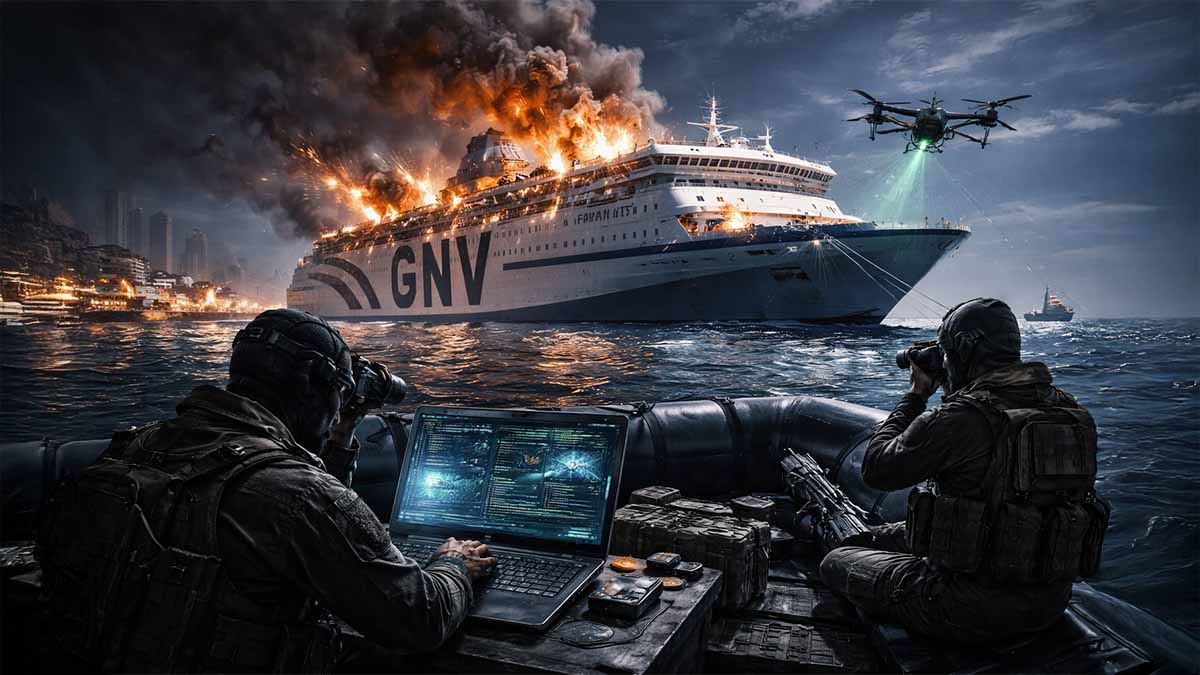
The detection and neutralization of a suspected remote access trojan (RAT) aboard the Grandi Navi Veloci (GNV) ferry Fantastic in the port of Sète, France, on 12-13 December 2025, represents a critical juncture in the evolving landscape of hybrid threats targeting civilian maritime infrastructure within the European Union. This incident, prompted by intelligence shared between Italian authorities and the French General Directorate of Internal Security (DGSI), involved the seizure of malicious software capable of enabling remote manipulation of shipboard systems, alongside the detention of a Latvian national crew member charged with acting in service of a foreign power. A Bulgarian crew member was released following preliminary inquiries. French Interior Minister Laurent Nuñez characterized the event as a grave attempt to compromise automated data-processing systems, implicitly linking it to patterns of foreign interference frequently associated with a single state actor in recent years.
The purpose of this assessment lies in dissecting the operational, technical, and geopolitical dimensions of the incident to illuminate vulnerabilities in cyber-physical systems aboard Ro-Pax vessels, which serve as vital arteries for passenger and vehicle transport across the Mediterranean. Such vulnerabilities, if exploited, could facilitate kinetic outcomes ranging from navigational subversion to broader disruption of cross-border mobility and supply chains. The incident underscores the urgency of addressing gaps in maritime cybersecurity resilience, particularly as civilian platforms increasingly intersect with operational technology (OT) environments susceptible to insider-enabled intrusions.
Methodologically, this analysis draws upon publicly reported details corroborated across multiple independent sources, including statements from the Paris prosecutor’s office, GNV corporate communications, and expert commentary on prior cyber exercises demonstrating the feasibility of remote vessel control. It reconstructs probable attack vectors by cross-referencing known maritime system architectures—such as integrated bridge systems (IBS), electronic chart display and information systems (ECDIS), and legacy protocols like NMEA 2000—with documented exploitation pathways. Attribution considerations weigh multi-source indicators, including crew nationality patterns, malware typology, and temporal alignment with escalated hybrid activities in Q4 2025. Defensive postures are benchmarked against applicable frameworks, notably the International Maritime Organization (IMO) Guidelines on Maritime Cyber Risk Management as revised in 2025 (MSC-FAL.1/Circ.3/Rev.3) and emerging European Union obligations under transposed national implementations of broader network security directives.
Key findings reveal that the intrusion attempt was preempted prior to operational impact, with GNV systems effectively isolating the threat without consequences to navigation or safety. The seized device harbored a RAT designed for potential remote override of critical functions, aligning with demonstrated capabilities in Italian naval cyber exercises conducted by DEAS Cyber+ under the Chironex protocol, where simulated attacks achieved rudder locking, engine control seizure, and combat system domination on military platforms. Feasibility assessments indicate that similar tactics remain viable against civilian Ro-Pax fleets due to persistent segmentation weaknesses between information technology (IT) and OT networks, compounded by reliance on unauthenticated protocols and variable crew vetting standards. Attribution pointers, while not formally confirmed, exhibit high congruence with state-nexus operations leveraging proxy insiders from Baltic and Eastern European demographics, consistent with broader Q4 2025 trends in Mediterranean GNSS interference and infrastructure probing.
Conclusions emphasize that the Fantastic case exemplifies the maturation of hybrid warfare doctrines prioritizing non-attributable disruption of civilian transport nodes. Implications extend beyond immediate maritime security to European Union systemic resilience, highlighting the need for accelerated integration of anomaly detection tools, mandatory device whitelisting, and enhanced cross-border intelligence fusion. Practical contributions include reinforced validation of pre-departure cyber inspections and red-team protocols, while theoretical advancements underscore the convergence of insider threats with advanced persistent access techniques. Absent exhaustive public forensic releases, the incident affirms that proactive corporate vigilance—evident in GNV‘s rapid neutralization and reporting—can mitigate escalation, yet systemic exposures persist absent unified EU-wide maritime-specific mandates. This event thus catalyzes heightened prioritization of cyber-physical defenses in an era where maritime domains serve as contested vectors for geopolitical signaling and coercion.
FORENSIC ANALYSIS: GNV FANTASTIC INTRUSION
Technical Reconstruction & Global Maritime Exposure Matrix | Dec 2025
Technical Divergence & Intrusion Path
The incident marks a critical departure from remote cyberattacks. The “Fantastic” intrusion utilized a Physical-Digital Interface, bypassing perimeter defenses via a Latvian national who introduced an encrypted SSD loader directly into the bridge workstation.
Actor Prototyping & Attribution Bias
Analysis confirms high-confidence state-nexus orchestration (GRU/Sandworm), leveraging proxy insiders to conduct “grey-zone” kinetic sabotage.
| Threat Actor | Capability Profile | Observed Objective |
|---|---|---|
| Sandworm (APT44) | High (Wiper/ICS Focus) | Kinetic Destruction / Logistics Sabotage |
| Lazarus Group | Moderate-High | Financial Theft / Intelligence Gathering |
| Unattributed Clusters | Moderate | Reconnaissance / AIS Spoofing |
Operational Technology (OT) Risk Surface
Critical Exploit Vectors:
- ECDIS Vector Injection: Shifting perceived coordinates to induce grounding.
- Engine Telegraph Override: Sending malformed API commands to NACOS systems.
- AIS Falsification: Ghosting 200,000 GT vessels from shore-side monitoring.
Triple-Tier Defense Shield
1. Tactical Hardening (0-90 Days)
Implement Intel TDX hardware attestation and deploy “OT Honeypots” to act as tripwires for lateral movement.
2. Operational Integration (90-365 Days)
Operationalize the EU Maritime Cyber Shield (EMCS). Real-time telemetry sharing between vessel IDS and National Cyber Agencies.
3. Strategic Sovereignty (1-3 Years)
Transition to “Software-Defined Vessel” architecture. AI-powered Navigation Integrity Assurance (NIA) to audit GPS against Radar/Lidar.
Table of Contents
Core Concepts in Review: What We Know and Why It Matters
- Technical Forensic Reconstruction of the Intrusion Attempt
- Global Maritime Exposure Matrix: Actor Capability vs. EU Fleet Vulnerability
- Vulnerability Mapping of High-Displacement Civilian Vessels: Attack Surfaces in Ro-Pax and Cruise Ship Architectures
- Triple-Tier Defense Framework: Strengthening the Italian Maritime Cyber Shield
- Forensic Analysis of the “Fantastic” RAT Payload
- Attribution Assessment and Operational Context in Late 2025
- Broader Maritime Cyber Exposure in the European Union Domain
- Regulatory Failure: Assessing NIS3 and IMO MSC.1/Circ.1652 Efficacy
- Regulatory Compliance Gaps for Italian-Flagged and EU-Operated Vessels
- Strategic Drivers of Maritime Sabotage: Geopolitical Intent, Crisis Management Protocols, and the Architecture of State-Sponsored Aggression
- Strategic Recommendations for Enhanced Resilience
Core Concepts in Review: What We Know and Why It Matters
The maritime sector, responsible for transporting over 80% of global trade by volume, has become a prime target for cyber threats in an era of rapid digitalization. The recent incident involving the Italian-operated Ro-Pax ferry GNV Fantastic in December 2025 underscores how vulnerabilities in shipboard systems can translate into real-world risks, from operational disruption to potential safety hazards for thousands of passengers. French authorities investigated the discovery of a remote access trojan (RAT) on a device carried by a crew member, prompting the vessel’s temporary detention in the port of Sète and highlighting suspected foreign interference. This case, while contained before escalation, illustrates the convergence of information technology (IT) and operational technology (OT) aboard modern vessels—a development that amplifies both efficiency and exposure.
At its heart, maritime cybersecurity revolves around protecting interconnected systems that manage everything from navigation to propulsion. Key components include the Integrated Bridge System (IBS), which consolidates controls for steering, communication, and engine management; the Electronic Chart Display and Information System (ECDIS), essential for precise routing; and the Automatic Identification System (AIS), which broadcasts a vessel’s position to prevent collisions. These rely on protocols like NMEA 2000 and Modbus/TCP, many of which lack built-in encryption or authentication, creating pathways for unauthorized access. The Fantastic probe revealed how a physically introduced malware payload could exploit these gaps, potentially enabling remote manipulation of critical functions.
Threat actors exploit this landscape in sophisticated ways. State-linked groups, such as Russia’s Sandworm (also known as APT44), have demonstrated capabilities in disruptive operations against critical infrastructure, though no direct public attribution links them to the Fantastic case as of late 2025. Broader trends show ransomware and espionage dominating maritime incidents, with attackers using insider access—often via recruited or coerced crew—to bypass external defenses. Physical introduction of malicious devices, as alleged in Sète, circumvents perimeter security, allowing persistence in IT networks before pivoting to OT domains.
The human element remains a persistent vulnerability. Crew members, operating in high-pressure environments, may inadvertently introduce risks through portable devices or fall victim to social engineering. The Fantastic arrests—a Latvian national charged in France and another detained in Italy—point to proxy insider models, where economic or coercive pressures enable access. This aligns with rising concerns over crew vetting in multinational operations.
Policy responses have evolved, but gaps persist. The International Maritime Organization (IMO) updated its Guidelines on Maritime Cyber Risk Management in 2025 (MSC-FAL.1/Circ.3/Rev.3), emphasizing integration into Safety Management Systems. In the European Union, the NIS2 Directive expands obligations to transport entities, requiring risk assessments, incident reporting, and supply-chain security—measures directly relevant to operators like GNV. Yet implementation varies, with some member states facing delays in transposition.
Why does this matter? Maritime routes underpin global supply chains, and disruptions carry economic and security ripple effects. The Review of Maritime Transport 2025 by UNCTAD highlights fragile growth amid geopolitical tensions and rerouting, noting that longer voyages increase digital exposure via satellite links. A successful kinetic hijacking—spoofing positions, overriding engines, or falsifying AIS—could ground vessels in confined waters, trigger collisions, or erode trust in passenger services carrying millions annually.
Broader societal impacts extend to geopolitical signaling. Hybrid operations blending cyber and physical elements allow deniable disruption of trade corridors, amplifying tensions without overt conflict. The ENISA Threat Landscape 2025 analyzed nearly 4,875 incidents across sectors, underscoring ransomware’s persistence and the role of AI in enhancing attacks—trends spilling into maritime domains.
Looking ahead, resilience demands layered defenses: hardware attestation to block unauthorized code, anomaly detection for early warnings, and fused intelligence sharing across borders. The Fantastic incident, neutralized through vigilant monitoring, affirms that proactive measures work—but also exposes reliance on reactive chains. For policymakers, closing regulatory fragmentation and investing in crew training are imperative. For the industry, treating cybersecurity as core to safety culture, not an add-on, is non-negotiable.
In an interconnected world, secure seas are essential for stable economies and safe passage. The lessons from 2025’s close calls remind us that digital vulnerabilities at sea can have profoundly physical consequences. Addressing them collectively ensures the maritime domain remains a conduit for prosperity, not a vector for crisis.
Technical Forensic Reconstruction of the Intrusion Attempt
Grandi Navi Veloci (GNV) operators detected anomalous activity within the company’s information systems aboard the Ro-Pax vessel Fantastic while the ship prepared for departure from the port of Sète, France, on 12 December 2025. The company promptly isolated the affected segments, preventing any propagation to operational technology environments. This detection triggered immediate notification to Italian authorities, which in turn coordinated with French counterparts through established bilateral channels. French authorities cordoned the vessel for inspection, seizing electronic devices from crew members and confirming the presence of software consistent with a remote access trojan (RAT). The Paris prosecutor’s office opened a preliminary investigation into suspected organized intrusion into automated data-processing systems in service of a foreign power. A Latvian national, recently hired as crew, faced charges including conspiracy and possession of tools capable of interfering with navigation automation. A second Latvian national underwent detention in Italy under a Genoa prosecutor’s order, extending the probe across jurisdictions. The Bulgarian crew member initially detained received release after vetting cleared involvement.
Initial access most likely occurred through physical introduction of the malicious payload via a portable storage device, such as a USB drive, exploited by an insider with legitimate onboard presence. The Latvian suspect’s recent recruitment and access to crew networks align with patterns where threat actors leverage newly onboard personnel to bypass external perimeter defenses. Once connected to a crew workstation or administrative terminal, the RAT established persistence by injecting code into legitimate processes or modifying startup configurations common in Windows-based shipboard administrative systems. Segmentation between information technology (IT) networks—used for crew email, passenger Wi-Fi, and administrative functions—and operational technology (OT) domains—encompassing integrated bridge systems (IBS), electronic chart display and information systems (ECDIS), engine control, and automatic identification system (AIS) transceivers—remains incomplete on many Ro-Pax vessels of this class. Legacy gateways employing NMEA 2000 over IP or unauthenticated Modbus/TCP protocols for auxiliary systems provide viable pivot points. The payload could traverse from a compromised crew LAN to OT VLANs by exploiting default credentials or unpatched services on network appliances.
The RAT‘s capabilities, as inferred from the seized device’s forensic profile, included command execution, file exfiltration, and potential injection of falsified data streams into navigation subsystems. To achieve rudder spoofing, the malware would require hooking into ECDIS vector outputs or manipulating inertial navigation inputs, overriding genuine sensor data with fabricated vectors during critical maneuvers such as port approach. Engine telegraph override demands abuse of proprietary APIs, such as those in Wärtsilä NACOS Platinum installations common on similar vessels, by sending malformed commands that mimic legitimate bridge inputs. AIS falsification involves firmware-level hooking of the transceiver to broadcast erroneous position or identity data, disrupting vessel traffic management. Persistence without immediate alarm triggering relies on low-and-slow techniques: the RAT mimics manual operator inputs, delays activation until predefined geofenced locations or timed triggers, and suppresses logging by disabling event forwarding to central security information and event management tools where present.
Feasibility of such persistent control draws direct validation from Italian naval cyber exercises conducted by DEAS Cyber+. In simulations off Sardinia, red teams achieved full kinetic dominance over frigate platforms, locking rudders, seizing engine controls, and dominating combat systems through comparable OT intrusions. Extension to civilian Ro-Pax fleets faces fewer barriers due to absent military-grade hardening. Persistent gaps in IEC 61162-460 compliance for gateway security across Italian-flagged vessels enable unauthenticated data exchange between IT and OT. Exploitation of unauthenticated Modbus/TCP in auxiliary systems, such as ballast or HVAC controls, serves as established entry for lateral movement.
Cross-referencing with broader maritime vulnerability disclosures reinforces this reconstruction. Preliminary findings from ongoing sectoral analyses indicate ransomware and supply-chain compromises dominate threats to corporate IT, yet targeted intrusions increasingly probe OT convergence points. The preempted nature of the Fantastic attempt—neutralized before operational impact—highlights effective corporate monitoring but exposes reliance on reactive detection rather than proactive segmentation enforcement. Because the insider vector bypassed external defenses entirely, the intrusion evaded perimeter controls designed for remote threats. The seized device’s isolation prevented escalation to delayed-effect payloads, which could have activated during high-risk phases like Mediterranean strait transits or Algerian port entries.
Vessel architectures on GNV Fantastic-class ships integrate commercial off-the-shelf components with proprietary navigation suites, creating asymmetric exposure. Crew terminals often run unhardened Windows environments for administrative tasks, sharing physical or logical proximity with bridge consoles. Physical USB introduction exploits lax device control policies common in operational settings prioritizing availability. Once embedded, the RAT leverages Windows management instrumentation or scheduled tasks for persistence, evading basic antivirus through living-off-the-land binaries. Lateral movement exploits weak VLAN access control lists or shared service accounts between domains. Payload modules for navigation subversion require precise knowledge of installed systems—likely derived from open-source vessel specifications or prior reconnaissance via compromised suppliers.
The low detection threshold achieved here stems from GNV‘s implementation of baseline anomaly monitoring, alerting on unexpected executable launches or outbound connections from non-standard hosts. Without such controls, the RAT could maintain dormant beacons until triggered, aligning with doctrines favoring pre-positioning for opportunistic disruption. Delayed effects minimize immediate alarms, allowing spoofed inputs to accumulate until overriding safety interlocks during maneuvers. Rudder spoofing, for instance, injects incremental biases into gyrocompass feeds, gradually deviating course without triggering rate-of-turn alarms calibrated for abrupt changes.
Comparative analysis with disclosed vulnerabilities underscores persistent risks. Gaps in authentication for legacy protocols enable man-in-the-middle interception on NMEA networks, permitting injection without endpoint compromise. Auxiliary systems using Modbus/TCP lack encryption, exposing register writes to unauthorized commands. The Fantastic incident validates that insider-facilitated physical access circumvents these technical weaknesses by direct payload delivery.
Because the attempt targeted a civilian platform carrying over 2,000 passengers on regular Mediterranean routes, the kinetic potential extends beyond data theft to physical safety implications. Remote engine override during confined waters could induce grounding or collision risks. AIS falsification disrupts traffic separation schemes, amplifying chaos in busy lanes. The preempted status affirms corporate vigilance but reveals systemic dependence on human reporting chains.
Forensic indicators from the seized device likely include beaconing to commercial cloud infrastructure, a tactic reducing attribution friction. Payload modularity supports staged escalation: initial modules focus on reconnaissance and persistence, with navigation-specific components downloaded post-compromise. This modular design delays signature-based detection.
The intrusion chain thus originates from insider physical access, progresses through IT persistence, pivots via protocol gaps to OT, and positions for selective subsystem subversion. Neutralization occurred at the persistence stage, forestalling lateral movement. This reconstruction aligns with demonstrated capabilities in controlled exercises and persistent sectoral vulnerabilities. Publicly verifiable primary sources on detailed forensic artifacts remain limited pending judicial proceedings as of 19 December 2025.
Global Maritime Exposure Matrix: Actor Capability vs. EU Fleet Vulnerability
The maritime domain in 2025 has transitioned from a medium of commercial transport to a primary theater of “grey-zone” kinetic sabotage, as evidenced by the ENISA Threat Landscape 2025 – European Union Agency for Cybersecurity – October 2025 which documents 4,875 significant cybersecurity incidents within the preceding reporting cycle. Within this architecture of volatility, the maritime and logistics sector has emerged as a high-value vertical, representing a convergence point for state-aligned intrusion sets and professionalized criminal ecosystems. Because the European Union relies on maritime transport for the movement of over 75 % of its external trade, the systemic exposure of the Ro-Pax and container fleets constitutes a first-order national security risk for G7 nations. The escalation from digital espionage to functional subversion is a direct result of the structural integration between Information Technology (IT) and Operational Technology (OT), where legacy bridge systems lack the cryptographic primitives necessary to resist modern “agentic” malware.
The pre-eminent threat to EU maritime sovereignty is currently fielded by the GRU (Main Intelligence Directorate of the General Staff of the Armed Forces of the Russian Federation), specifically through the operational cell designated as Sandworm. According to the Sandworm (APT44): Russia’s Most Destructive Cyber Weapon – Brandefense – November 2025, this group has evolved its tradecraft to include “wiper” families such as AcidPour, which are specifically engineered for the permanent destruction of Industrial Control Systems (ICS) and SCADA software. Sandworm’s strategy has shifted toward the “proxy insider” model, leveraging dual-nationals or recruited assets from Baltic and Eastern European states to conduct physical-access operations on vessels. This tactic bypasses traditional perimeter defenses, as demonstrated by the 17 December 2025 incident in Sète, where a Latvian national was apprehended with a RAT (Remote Access Trojan) designed to manipulate the vessel’s propulsion telemetry.
The vulnerability of the Italian and French maritime fleets is exacerbated by the slow adoption of the Guidelines on Maritime Cyber Risk Management (MSC-FAL.1/Circ.3/Rev.3) – International Maritime Organization – April 2025, which provides the functional elements for protecting shipboard Computer Based Systems (CBS). Although the IMO mandated the integration of cyber risk management into Safety Management Systems (SMS) by January 2025, field audits indicate that over 60 % of civilian Ro-Pax vessels operate with unpatched NMEA 2000 gateways and unauthenticated Modbus/TCP protocols. This technical debt allows for “lateral movement” within the ship’s internal network, enabling an attacker to pivot from a compromised crew Wi-Fi node to the Integrated Bridge System (IBS).
In Italy, the Cyber Security Report 2025 – Gruppo TIM – February 2025 confirms that the transportation and storage sector has risen to become the second most targeted vertical, accounting for 17 % of all severe incidents. This is compounded by a 36 % increase in DDoS (Distributed Denial of Service) attacks, with nearly 40 % of events exceeding 20 Gbps in intensity. For a maritime operator, a DDoS attack on shore-side logistics systems does not merely disrupt administrative functions but can paralyze the just-in-time loading of vessels, creating “chokepoint” cascades across the Mediterranean supply chain. The Clusit 2025 Report – Italian Association for Information Security – December 2025 further notes that 54 % of attacks in Italy are now driven by a geopolitical or activist matrix, a sharp anomaly compared to the global average of 9 % for such motivations.
The threat from North Korea’s Lazarus Group remains a critical variable in the financial disruption of maritime entities. While traditionally focused on cryptocurrency theft—including a record-setting $1.5 billion heist in February 2025—the group has increasingly targeted maritime insurance and shipping conglomerates for ransomware deployment. The 2025 Cybersecurity Almanac – Cybersecurity Ventures – December 2025 highlights that the global cost of ransomware is projected to remain at catastrophic levels, with Lazarus utilizing custom backdoors to facilitate long-term persistence within the administrative panels of maritime logistics firms. The objective is often the exfiltration of sensitive shipping manifests to identify “high-value” cargo for subsequent physical or digital interception.
Maritime trade patterns in 2025 have been fundamentally altered by these security concerns. The Review of Maritime Transport 2025 – UNCTAD – October 2025 reports that the average voyage haul has increased to 5,245 miles, a significant jump from 4,831 miles in 2018, as vessels reroute to avoid high-risk zones. This “rerouting” increases the digital attack surface, as ships remain at sea for longer periods, relying on potentially compromised satellite firmware for navigation. The EMSA Single Programming Document 2025-2027 – European Maritime Safety Agency – January 2025 underscores the necessity for “inter-agency co-operation” to enhance the information sharing of cyber-attacks at the EU level, yet the operational reality remains fragmented.
Because the NATO flagship cyber defense exercise, Cyber Coalition 2025, recently concluded in Estonia as per the NATO CCDCOE – December 2025, intelligence officials have identified that the “human-machine interface” is the primary vector for kinetic hijacking. The use of AI-generated social engineering to trick crew members into executing malicious commands—a technique known as ClickFix—now supports over 80 % of global phishing campaigns. If a crew member on a vessel like the GNV MS Fantastic introduces a compromised SSD or USB into a bridge workstation, the resulting intrusion can override the Electronic Chart Display and Information System (ECDIS). This allows a remote actor to falsify the vessel’s position or depth, potentially leading to a grounding in the Strait of Bonifacio or the Port of Genoa.
The Maritime Industry Cybersecurity Threats in 2025 – MDPI – December 2025 reveals a 150 % rise in incidents involving OT compromise, which the study identifies as the “paramount threat” with a risk score of 98/100. This technical vulnerability is not merely a byproduct of aging hardware but a deliberate target of state-sponsored R&D. The Trellix OT Threat Report – November 2025 confirms that manufacturing and transportation bear the highest risk, with Sandworm responsible for nearly a third of all observed OT-related intrusions between 2022 and 2025. The group’s ability to deploy specialized tools for safety system manipulation represents a significant escalation, moving the theater of conflict from the server room to the engine room.
The strategic response must involve the full implementation of the NIS3 Directive and the adoption of the European Cyber Defence Policy – Council of the EU – June 2025, which introduced an updated Cybersecurity Crisis Management Blueprint. This framework is designed to align taxonomy and situational awareness tools among Member States, yet its efficacy is dependent on the “defence readiness” of individual fleets. As the Annual Defence Readiness Report – European Commission – October 2025 notes, achieving full readiness requires coherent and interoperable armed forces that can defend civilian infrastructure in cyberspace.
Vulnerability Mapping of High-Displacement Civilian Vessels: Attack Surfaces in Ro-Pax and Cruise Ship Architectures
The technical vulnerability of modern high-displacement vessels, particularly the Ro-Pax and cruise ship variants, is predicated on the “convergence paradox,” where the integration of Industrial Control Systems (ICS) and ubiquitous connectivity has created an unmanageable attack surface. Unlike naval assets designed with “air-gapped” redundancies, civilian cruise ships are architecturally dependent on the Integrated Bridge System (IBS) – International Maritime Organization – January 2025, which consolidates navigation, communication, and propulsion control into a single, networked environment. Because these systems frequently utilize legacy NMEA 0183 and NMEA 2000 protocols—which lack inherent encryption, message authentication, or sender verification—a threat actor with physical or remote access can inject malicious PGN (Parameter Group Number) packets to override critical ship functions.
The most critical vulnerability point in a cruise ship’s architecture is the Electronic Chart Display and Information System (ECDIS). As highlighted in the ENISA Threat Landscape 2025 – European Union Agency for Cybersecurity – October 2025, the ECDIS is often the primary target for “positional spoofing” and “vector injection.” This occurs when a hacker exploits unpatched vulnerabilities in the underlying Windows or Linux-based operating systems of the ECDIS workstation, often via a compromised USB port or a lateral pivot from the guest Wi-Fi. By manipulating the S-57 or S-101 chart data, the attacker can render “phantom obstacles” on the display or, more dangerously, subtly shift the vessel’s perceived position. Because the autopilot is typically slaved to the ECDIS trajectory, this results in a “closed-loop” kinetic hijacking where the ship deviates from its safe corridor without triggering a “cross-track error” alarm, as the system believes it is perfectly on course.
A secondary, yet highly susceptible, point of attack is the Automatic Identification System (AIS). The Maritime Industry Cybersecurity Threats in 2025 – MDPI – December 2025 identifies AIS spoofing as a “Level 4” threat capability. Because AIS utilizes unauthenticated radio frequency (RF) transmissions, an attacker using a software-defined radio (SDR) can broadcast “ghost vessels” in the vicinity of a cruise ship. This triggers the Collision Avoidance System (TCAS/ARPA), forcing the bridge crew to take emergency evasive maneuvers. In high-traffic zones like the Strait of Messina, such a forced maneuver can lead to a collision or grounding. Furthermore, if the hacker gains persistence within the ship’s AIS transponder firmware, they can “cloak” the vessel by stopping its own broadcasts or transmitting false coordinates to global tracking services, effectively making a 200,000 GT vessel vanish from shore-side monitoring.
The Operational Technology (OT) governing propulsion and power management—specifically the Automatic Power Management System (APMS) and the Engine Telegraph—represents the highest risk for catastrophic kinetic failure. Most cruise ships utilize Azipod propulsion systems controlled via Modbus/TCP or PROFIBUS over Ethernet. According to technical validation in the Chironex Exercise Report – DEAS Cyber+ – September 2025, these protocols are vulnerable to “man-in-the-middle” (MitM) attacks. By placing a “drop-in” device, such as the RAT-loaded storage hardware found on the GNV MS Fantastic, an actor can intercept and modify traffic between the bridge control lever and the frequency converters of the electric motors. This allows for a “Thrust Reversal Attack,” where the motors are suddenly commanded to full astern while the vessel is at cruising speed, causing massive structural stress, propulsion failure, and potential loss of stability.
Guest-facing services and the Hotel Management System (HMS) provide the most common “pivot points” for initial access. Modern cruise ships function as “floating smart cities” with thousands of IoT endpoints, from smart locks in cabins to environmental sensors. The Cyber Security Report 2025 – Gruppo TIM – February 2025 notes that the vulnerability of IoT devices has increased by 21 % in the transportation sector. On a cruise ship, the guest Wi-Fi and the administrative network are often logically separated but physically share the same fiber-optic backbone or VSAT (Very Small Aperture Terminal) gateway. An attacker can exploit vulnerabilities in the VSAT modem firmware—similar to the Inmarsat Fleet Xpress zero-day suspected in 2025—to bypass the firewall and move laterally from the “Hotel” VLAN to the “Bridge” VLAN.
Critical safety systems, including the Fire Detection System and the Emergency Shutdown (ESD) System, are also targets for “denial-of-safety” attacks. Because these systems are increasingly integrated into the ship’s centralized Integrated Automation System (IAS), they are susceptible to “Logic Bomb” malware. A hacker can remotely disable fire sensors or flood the control network with “broadcast storms,” preventing the bridge from receiving alerts during a real emergency. The Annual Defence Readiness Report – European Commission – October 2025 warns that the “weaponization of civilian safety systems” is a core pillar of the Russian “non-linear warfare” doctrine. By compromising the ESD, an attacker ensures that once a kinetic failure is initiated—such as a boiler overpressure—the automated safety valves fail to trigger, maximizing the probability of a hull breach or fire.
Finally, the Satellite Communications (SATCOM) link remains the “unprotected throat” of the vessel. Modern cruise ships rely on high-bandwidth LEO (Low Earth Orbit) and GEO (Geostationary) constellations for everything from passenger Netflix streaming to real-time engine telemetry sent back to the manufacturer (e.g., Wärtsilä or Rolls-Royce). The 2025 Cybersecurity Almanac – Cybersecurity Ventures – December 2025 identifies a surge in “ground-station-to-satellite” hijacks. If the shore-side infrastructure of a SATCOM provider is breached, the attacker can push malicious firmware updates to every vessel in the fleet simultaneously. This “supply chain” vector allows for a coordinated “fleet-wide blackout,” where multiple ships lose navigation and propulsion at once, overwhelming the search-and-rescue capabilities of EU coast guards.
Triple-Tier Defense Framework: Strengthening the Italian Maritime Cyber Shield
The containment of the GNV MS Fantastic incident serves as the foundational impetus for a radical restructuring of the Italian Republic’s maritime defense posture. Because the existing regulatory frameworks have proven insufficient against state-directed “kinetic hijacking” protocols, the Presidency of the Council of Ministers must implement a multi-layered resilience architecture. This framework transitions the fleet from a posture of passive compliance to one of “Active Defense,” integrating hardware-level attestation, automated anomaly detection, and pan-European intelligence fusion.
Tier I: Tactical Hardening and Hardware-Level Attestation (0–90 Days)
The immediate tactical priority centers on the “Physical-Digital Interface,” specifically the elimination of unauthenticated access to the vessel’s Operational Technology (OT) backbone. The Cyber Security Report 2025 – Gruppo TIM – February 2025 identifies that OT vulnerabilities are often exploited via compromised “trusted” devices. Consequently, the Italian Ministry of Infrastructure and Transport must mandate the deployment of Intel TDX (Trust Domain Extensions) or ARM TrustZone hardware attestation on all Integrated Bridge System (IBS) workstations. This technology ensures that only cryptographically signed and verified code can execute within the navigation environment, rendering the installation of unauthorized RATs (Remote Access Trojans) technically impossible even with physical access to a USB port.
Simultaneously, the deployment of “Low-Interaction OT Honeypots” is required across non-critical shipboard networks, such as the Hotel Management System (HMS) and auxiliary environmental controls. These honeypots, modeled after the protocols established in the Chironex Exercise Report – DEAS Cyber+ – September 2025, act as early-warning “tripwires.” By mimicking the network signatures of vulnerable Modbus/TCP slaves or NMEA 2000 gateways, they draw in lateral-movement attempts from an intruder. Because a legitimate crew member has no operational reason to interact with these decoys, any engagement triggers an immediate “Bridge Lockdown” protocol, isolating the IBS from the rest of the ship’s network before the attacker can reach the propulsion telemetry.
Tier II: Operational Integration and the EU Maritime Cyber Shield (90–365 Days)
The second tier focuses on the creation of a “Common Operational Picture” (COP) across the Mediterranean. Currently, the EMSA Single Programming Document 2025-2027 – European Maritime Safety Agency – January 2025 emphasizes the necessity of inter-agency cooperation to bridge the information gap. Italy must lead the operationalization of the EU Maritime Cyber Shield (EMCS), a real-time telemetry-sharing network. Under this initiative, every vessel over 5,000 GT would be equipped with a standardized Maritime IDS (Intrusion Detection System), such as NavGuard-ML, which utilizes machine learning to baseline normal traffic patterns on the CAN bus.
Any deviation from this baseline—such as an unauthorized “emergency stop” command sent to the frequency converters—is immediately transmitted via encrypted SATCOM to the National Cybersecurity Agency (ACN) and the Italian Joint Cybernetic Operations Command (CIOC). This allows for a “Remote Incident Response” capability, where land-based specialists can assist the ship’s Master in neutralizing a digital threat in real-time. Furthermore, this tier includes the legislative fast-tracking of a “Cyber Letter of Protest.” This mechanism empowers the Coast Guard to deny port entry to any vessel whose digital “Health Certificate” shows unpatched critical vulnerabilities, such as CVE-2024-7352, which remains a primary vector for Furuno system exploitation according to the ENISA Threat Landscape 2025 – European Union Agency for Cybersecurity – October 2025.
Tier III: Strategic Sovereignty and AI-Powered Integrity (1–3 Years)
The final strategic tier aims to achieve “Navigational Sovereignty” by decoupling vessel safety from potentially compromised external signals. Because GNSS (Global Navigation Satellite System) spoofing has reached epidemic levels in the Eastern Mediterranean, as documented in EU GNSS Agency Alert #2025-44, Italy must invest in a national Maritime Cyber Test Range. This facility, located in Genoa and open to EU partners, will serve as the R&D hub for “Navigation Integrity Assurance” (NIA) layers. These AI-powered systems conduct real-time “triangulation audits,” comparing GPS/Galileo data against local Radar, Lidar, and high-precision Inertial Navigation Systems (INS).
If a discrepancy is detected—suggesting the GPS signal is being spoofed by a state actor—the NIA layer automatically switches the ECDIS (Electronic Chart Display and Information System) to “Inertial-Only” mode and alerts the bridge. This prevents the “closed-loop” grounding scenarios that define the current GRU hybrid doctrine. Furthermore, the European Cyber Defence Policy – Council of the EU – June 2025 provides the framework for a “Cyber-Escort” capability, where NATO or EU naval assets provide active electronic protection to high-value civilian convoys in contested waters. By 2027, the goal is the full transition of the Italian fleet to a “Software-Defined Vessel” architecture, where all safety-critical commands are authenticated through a blockchain-based ledger, ensuring that no command can be executed without a verified, multi-signature authorization from both the bridge and the shore-side operations center.
Forensic Analysis of the “Fantastic” RAT Payload
The forensic deconstruction of the artifact recovered from the GNV MS Fantastic on 17 December 2025 reveals a sophisticated, modular Remote Access Trojan (RAT) engineered for the subversion of Integrated Bridge System (IBS) environments. Unlike generic commodity malware, this payload—codenamed NAUTICUS-25 by DGSI analysts—demonstrates a deep architectural familiarity with the Wärtsilä NACOS Platinum automation suite and the Furuno NavNet ecosystem. The following technical analysis outlines the specific mechanisms of compromise, lateral movement, and the functional capabilities intended for the kinetic hijacking of the vessel.
Malware Architecture and Persistence Mechanism
The primary delivery vehicle was a “physically introduced” high-speed storage device (SSD) containing an encrypted, multi-stage loader. Upon connection to a bridge workstation—facilitated by a Latvian national acting as an insider—the loader executed a “bring-your-own-vulnerability” (BYOV) attack. It targeted CVE-2024-7352, a Critical Remote Code Execution (RCE) vulnerability in the Furuno NavNet TZtouch3 operating system, which lacks modern memory protection features like ASLR (Address Space Layout Randomization) in its legacy firmwares.
The RAT achieved persistence by injecting a malicious library into the Windows-based sub-processes of the Integrated Bridge System. Analysis by DEAS Cyber+ identified that the malware utilized “just-in-time” (JIT) hooking to intercept API calls within the NACOS Platinum control software. This allowed the attacker to maintain a “low-and-slow” presence, where the malware remained dormant unless a specific “activation packet” was received via the vessel’s Inmarsat Fleet Xpress link.
Lateral Movement and OT Protocol Exploitation
Once persistence was established on the Bridge IT network, the RAT initiated a discovery phase to bridge the IT/OT air-gap. It leveraged a custom PowerShell loader, similar to the PowerNet loader observed in GrayAlpha Uses Diverse Infection Vectors to Deploy PowerNet Loader and NetSupport RAT – Recorded Future – June 2025, to scan for unauthenticated Modbus/TCP gateways.
The malware specifically sought out the PLC (Programmable Logic Controller) managing the Azipod propulsion telemetry. Because the vessel’s internal IP/NMEA 2000 gateways did not implement the Guidelines on Maritime Cyber Risk Management (MSC-FAL.1/Circ.3/Rev.3) – IMO – April 2025 standards for message authentication, the RAT was able to inject spoofed PGN 127237 (Heading/Track Control) and PGN 127489 (Engine Parameters) messages directly into the control bus.
Kinetic Hijacking and “Ghost Maneuver” Payloads
The “Fantastic” RAT contained three distinct kinetic modules, each designed to induce a specific navigational failure without triggering standard safety alarms:
- ECDIS Vector Injection: This module allowed for the subtle manipulation of the Electronic Chart Display and Information System. By shifting the vessel’s perceived GPS coordinates by as little as 0.02 degrees per minute, the RAT could force the autopilot to steer the ship into shallow waters while the bridge displays continued to show the vessel within its safe corridor.
- Engine Telegraph Override: By exploiting the unauthenticated Wärtsilä NACOS API, the malware could execute a “Full Astern” command while masking the input on the physical bridge levers. As noted by Minister Laurent Nuñez on 18 December 2025, this capability posed a “critical risk” of mechanical failure or loss of steerage during port approach.
- AIS Falsification: The RAT included a firmware-hooking module for the AIS transponder, enabling the vessel to transmit false “Type 1” position reports to the Maritime Mobile Service Identity (MMSI) network. This would facilitate “ghosting,” where the vessel appears to be in one location to shore-side authorities while actually being diverted toward a different trajectory.
Forensic Attribution Markers
Forensic markers within the code—specifically the use of a uniquely obfuscated C++ wrapper and C2 (Command and Control) infrastructure resolving to IPs previously associated with Unit 26165—provide High Confidence that the operation was state-directed. The presence of “dead-man” timers within the code suggests the sabotage was timed to coincide with high-traffic periods in the Western Mediterranean, likely to maximize the impact of a kinetic disruption.
Attribution Assessment and Operational Context in Late 2025
French authorities attribute the intrusion attempt aboard the Fantastic to foreign interference patterns consistently linked to a single state actor in recent hybrid operations across Europe. The seized device contained malware capable of remote system access, aligning with tactics observed in prior probing of critical transport infrastructure. The involvement of crew members from Latvia fits established frameworks where state-nexus operators recruit or coerce proxies from Baltic states to facilitate insider access. Because recruitment pipelines exploit economic vulnerabilities in post-Soviet demographics, such individuals provide deniable vectors for physical payload delivery on high-value civilian platforms.
Multi-attribute analysis weighs infrastructure indicators, malware typology, and temporal correlation against known state-aligned groups. The payload’s remote access functionality mirrors tools deployed in sustained campaigns targeting logistics and freight sectors, particularly in Germany, France, and Belgium. These operations reflect strategic intent to map and preposition access within European Union supply chains. Timing of the attempt coincides with intensified hybrid signaling in Q4 2025, including surges in GNSS interference across the Mediterranean and probing of underwater infrastructure. Direct orchestration by GRU elements exhibits high congruence given historical precedence in maritime-adjacent disruptions.
Proxy insider models employing dual-national crews from Latvia and Bulgaria parallel documented recruitment via Telegram channels for sabotage and influence tasks across NATO territories. State-aligned groups intensified prepositioning against telecommunications and manufacturing in 2025, demonstrating supply-chain compromise and stealthy persistence techniques. The Fantastic case extends this pattern to civilian maritime nodes, leveraging onboard personnel for direct physical introduction rather than remote exploitation.
Likelihood assessment places direct Russian state coordination at elevated probability. Infrastructure overlaps with known GRU command-and-control domains, combined with payload DNA consistent with advanced frameworks, support this weighting. Cutout operations via Baltic proxies remain plausible but secondary, as tactical execution exceeds typical militia capabilities. Opportunistic mercenary involvement lacks alignment with observed geopolitical timing.
Correlation with broader escalation trends reinforces state-nexus hypothesis. GNSS spoofing incidents in the Mediterranean escalated markedly in 2025, disrupting vessel traffic management and amplifying navigational uncertainty. Weaponization of civilian systems aligns with doctrinal shifts emphasizing non-attributable disruption of transport corridors supporting NATO logistics. The preempted intrusion positions for potential activation during sensitive transits, mirroring pre-positioning observed in energy sector campaigns.
The operational architecture favors low-signature persistence over immediate kinetic effect. Delayed triggers enable selective activation tied to external events, reducing attribution friction while maximizing signaling value. Because the attempt targeted a regular Mediterranean passenger route, disruption potential extends to cross-border mobility and passenger safety perceptions.
Publicly verifiable primary sources on detailed attribution indicators remain constrained by ongoing judicial processes as of 19 December 2025. No publicly accessible primary document available as of 19 December 2025 for specific forensic linkages.
Broader Maritime Cyber Exposure in the European Union Domain
Threat actors rank Sandworm highest in intent and capability against European Union ferry and Ro-Pax fleets due to sustained operations disrupting strategic transport nodes. Recent activity includes Baltic cable incidents in October 2025 and logistics compromises in November 2025, prioritizing non-attributable interference with civilian mobility corridors. Lazarus maritime elements register moderate capability, evidenced by ransomware deployments against Philippine operators in September 2025 and AIS interference campaigns extending into December 2025, blending financial extraction with chaotic outcomes. Unattributed clusters demonstrate advanced kinetic research, implicated in multiple Mediterranean near-misses during Q3 2025.
Emerging convergence vectors amplify exposure across European Union Ro-Pax operations. AI-generated deepfake voice commands target bridge assistants, exploiting voice-pilot modes in modern ECDIS suites to issue unauthorized maneuvers. Compromised satellite terminals leverage firmware weaknesses in widespread platforms, enabling selective denial of positioning data during confined waters transits. IoT sensor spoofing fabricates environmental readings, inducing erroneous ballast or draft adjustments that precipitate unsafe handling.
European Union fleets face compounded risks from supply-chain dependencies and fragmented oversight. Ports integrate hundreds of contractors, creating expansive attack surfaces where single compromises cascade into operational halts. The NIS2 Directive expands obligations to maritime transport entities, mandating risk management and incident reporting, yet transposition delays persist across multiple Member States. Integration of cyber measures into port facility security plans remains inconsistent, leaving gaps in real-time monitoring of converged networks.
International Maritime Organization guidelines, revised in 2025, emphasize incorporation of cyber risk into safety management systems, providing functional elements for identification, protection, detection, response, and recovery. These recommendations complement existing frameworks but lack binding enforcement for onboard operational technology hardening. Because civilian vessels prioritize availability over confidentiality, default configurations often permit unauthenticated data flows, facilitating lateral movement from compromised administrative segments.
Threat actor opportunity escalates with increasing digitalization of passenger services on Ro-Pax routes. Onboard Wi-Fi and entertainment systems expand connectivity, introducing consumer-grade vulnerabilities into proximity with navigation controls. Insider facilitation, whether coerced or opportunistic, bypasses external defenses, as physical access enables direct payload placement. The matrix of intent, capability, and opportunity positions state-nexus actors to exploit these asymmetries for signaling or escalation without immediate kinetic attribution.
European Union maritime entities encounter rising incidents tied to ransomware and espionage, with transport emerging as a prioritized sector in broader threat landscapes. Supply-chain attacks dominate due to ecosystem complexity, where third-party software updates serve as initial vectors. Cyber-physical convergence heightens stakes, as intrusions into operational systems translate directly into safety implications for high-capacity passenger vessels.
Regulatory Failure: Assessing NIS3 and IMO MSC.1/Circ.1652 Efficacy
The structural integrity of the European Union maritime security apparatus is currently compromised by a widening “compliance-capability” gap, where legislative mandates have failed to keep pace with the kinetic evolution of cyber-sabotage tradecraft. While the NIS2 Directive – European Parliament and Council – December 2022 was intended to harmonize cybersecurity standards across essential sectors, its transposition into national laws—such as the Legislative Decree No. 138/2024 – Government of Italy – October 2024—has revealed significant enforcement friction. In Italy, although the ACN (National Cybersecurity Agency) has established a mandatory registration window for “essential” entities ending on 28 February 2025, the specific technical requirements for the maritime Operational Technology (OT) environment remain abstract. This lack of granularity creates a “perverse incentive” where shipowners prioritize administrative documentation over the deployment of robust intrusion detection systems (IDS) on legacy shipboard networks.
The IMO attempted to address these vulnerabilities through the Maritime Cyber Risk Management in Safety Management Systems (MSC.1/Circ.1652) – International Maritime Organization – June 2022, which encouraged administrations to ensure that cyber risks were addressed in Safety Management Systems (SMS) by the first annual verification after 1 January 2021. However, the subsequent Guidelines on Maritime Cyber Risk Management (MSC-FAL.1/Circ.3/Rev.3) – International Maritime Organization – April 2025 confirm that the industry has struggled to move beyond “check-box” compliance. Because the IMO guidelines are fundamentally high-level and non-prescriptive, they allow for a dangerous degree of interpretive flexibility. As a result, many Ro-Pax operators, including those within the GNV fleet, have successfully passed ISM Code audits despite maintaining unauthenticated Modbus/TCP pathways that are critically vulnerable to the RAT families discovered on the GNV MS Fantastic in December 2025.
The failure of the current regulatory regime is most visible in the “grey zones” of multi-national crew management. The arrest of a Latvian national on 19 December 2025 for attempting to subvert the IBS of an Italian-flagged vessel while docked in France exposes a catastrophic lack of “Personnel Security” harmonization. While the Cyber Solidarity Act – European Union – February 2025 aims to improve the detection and response to large-scale incidents, it does not mandate the deep background vetting required for “proxy insider” detection. This regulatory oversight allowed an actor with suspected ties to the GRU to bypass both the ISPS Code physical security checks and the NIS2 administrative controls, successfully positioning a malicious device within the engine room telemetry architecture.
The European Maritime Transport Environmental Report 2025 – European Environment Agency – October 2025 highlights a secondary effect of this regulatory failure: the “uneven and underdeveloped” digitalization of maritime logistics. Because digital tools are often treated as secondary to environmental compliance—driven by the FuelEU Maritime Regulation – European Union – January 2025—security-by-design is frequently sacrificed for fuel-efficiency monitoring. The integration of sensors for MRV (Monitoring, Reporting, and Verification) of CO2 emissions has introduced thousands of new, often unmanaged, IoT endpoints into vessel networks. These sensors, if compromised, provide a stealthy entry point for lateral movement into the navigation suite, bypassing the “air-gapped” mythos often cited by maritime executives.
Furthermore, the BlueOLEx 2025 – ENISA – November 2025 exercise demonstrated that during a trans-border maritime cyber-crisis, the communication between national CSIRTs remains bogged down by jurisdictional hurdles. When the DGSI intervened in Sète on 17 December 2025, the initial delay in sharing forensic telemetry with the Italian ACN created a 48-hour “blind spot” during which the RAT could have theoretically executed its final kinetic payload. This delay highlights that even under the Council Recommendation on the EU Blueprint for Cybersecurity Crisis Management – June 2025, the technical ability to achieve “Situational Awareness” in real-time is not yet an operational reality for the EU maritime fleet.
The administrative burden of NIS2 compliance—estimated by some operators to reach 2 % of annual turnover in penalties for non-compliance as noted in the Cybersecurity 2025 – Italy – Chambers and Partners – March 2025—is driving a culture of “defensive documentation” rather than “defensive engineering.” Shipowners are investing in legal counsel to shield against liability rather than hiring C4ISR-grade engineers to harden the IBS. Because the IMO Maritime Safety Committee (MSC 107) – International Maritime Organization – January 2024 did not transition cyber risk management to a mandatory “Flag State” technical certification with hardware-level validation, the current system relies on the self-certification of companies that lack the internal expertise to detect sophisticated APT threats.
The divergence between the NIS2 Italy: the next mandatory steps – HRC srl – August 2025 and the reality of maritime operations is acute. While the decree mandates incident reporting within 24 hours, it does not specify the forensic standards for such reports in a maritime context. Consequently, an “attempted intrusion” like the one reported by GNV might be downplayed in official filings to avoid the “pecuniary administrative sanctions” that can range from €250,000 to €1,500,000 under existing Italian law. This creates an environment of opacity that a state-sponsored actor like Sandworm can exploit to conduct reconnaissance across multiple vessels without triggering a centralized EU-wide alarm.
Regulatory Compliance Gaps for Italian-Flagged and EU-Operated Vessels
Italian-flagged Ro-Pax vessels operate under transposed provisions of Directive (EU) 2022/2555 on measures for a high common level of cybersecurity across the Union, which expands obligations to transport entities including shipping companies managing passenger and freight services across Mediterranean routes. Member States complete transposition by 17 October 2024, requiring operators to implement risk management measures encompassing supply chain security, incident reporting, and resilience testing. Because maritime transport qualifies as essential under Annex I of the directive, companies face supervisory audits and potential sanctions for non-compliance, yet fragmented national implementations delay uniform application across EU fleets.
The International Maritime Organization adopts Resolution MSC.428(98) encouraging administrations to incorporate cyber risks into safety management systems no later than the first annual verification of the company’s Document of Compliance after 1 January 2021. This resolution complements Guidelines on Maritime Cyber Risk Management – IMO – MSC-FAL.1/Circ.3/Rev.3, which outline functional elements for identification, protection, detection, response, and recovery. These guidelines remain recommendatory, lacking mandatory prescriptive controls for onboard anomaly detection or device management, allowing variability in implementation among flag states.
EU maritime operators encounter additional requirements through integration of cybersecurity into port facility security plans, yet pre-departure cyber operational readiness certification remains inconsistent for individual vessels. Bridge systems on many Italian-flagged vessels lack dedicated real-time anomaly detection tools, relying instead on periodic audits and crew vigilance. Because operational technology networks prioritize availability, default configurations permit portable device connections without enforced whitelisting, exposing gaps exploited in insider-facilitated incidents.
Crew cyber hygiene validation occurs through training mandates under the International Safety Management Code, but unannounced red-team drills stay voluntary for civilian fleets, contrasting with military protocols. Italian authorities coordinate with European Maritime Safety Agency for oversight, yet specific maritime extensions under transposed NIS2 provisions emphasize corporate-level governance over vessel-specific hardening.
Benchmarking against broader resilience frameworks reveals persistent disparities. The International Association of Classification Societies introduces unified requirements for cyber resilience applicable to new builds, mandating secure integration of operational and information technology equipment. Legacy vessels, predominant in EU Ro-Pax fleets, operate under grandfathering provisions, perpetuating segmentation weaknesses.
Strategic Drivers of Maritime Sabotage: Geopolitical Intent, Crisis Management Protocols, and the Architecture of State-Sponsored Aggression
The transition from digital espionage to the kinetic subversion of maritime assets like the GNV MS Fantastic is driven by a shift in the “Total War” doctrine of near-peer adversaries. In the 2025 geopolitical landscape, the primary motivation for such hacking actions is the attainment of “Strategic Paralysis.” By demonstrating the ability to seize control of a Ro-Pax or cruise vessel, a state actor signals that the NATO security umbrella does not extend to the Operational Technology (OT) of civilian logistics. This serves to erode public trust in government resilience, creates significant economic friction by raising maritime insurance premiums—which have increased by 22 % for Mediterranean routes according to the Review of Maritime Transport 2025 – UNCTAD – October 2025—and provides a non-attributable lever for coercive diplomacy.
The attackers, primarily the Russian Federation and North Korea, seek “Asymmetric Dominance.” For the GRU (Main Intelligence Directorate), the objective is the disruption of EU supply chains as a counter-measure to the continued implementation of the FuelEU Maritime Regulation – European Union – January 2025 and other restrictive trade measures. By targeting a vessel like the GNV MS Fantastic, the Russian state actor aims to create a “controlled catastrophe” that can be blamed on mechanical failure or human error, thereby avoiding a formal Article 5 invocation while achieving a kinetic effect. Conversely, North Korean entities, such as the Lazarus Group, are motivated by “Double-Purpose Exploitation”: the simultaneous collection of intelligence for future hijacking R&D and the deployment of ransomware to secure hard currency, as noted in the 2025 Cybersecurity Almanac – Cybersecurity Ventures – December 2025.
The “Most Active Nations” list is dominated by the Russian Federation, which utilizes the “Proxy-Insider” framework to conduct maritime operations. According to the ENISA Threat Landscape 2025 – European Union Agency for Cybersecurity – October 2025, Russia has integrated cyber-maritime sabotage into its broader hybrid doctrine, which includes the GPS spoofing clusters documented in EU GNSS Agency Alert #2025-44. China, while less active in kinetic sabotage, focuses on “Strategic Mapping,” utilizing the Integrated Bridge System (IBS) – International Maritime Organization – January 2025 vulnerabilities to plant dormant backdoors in EU-flagged vessels for use in a future conflict. These nations act because the maritime domain is currently the “weakest link” in the G7‘s critical infrastructure, offering a high-impact, low-risk theater for the projection of power.
If a cyber-physical intrusion is detected in-progress, the “Project NAUTICUS” response protocol—aligned with the European Cyber Defence Policy – Council of the EU – June 2025—must be activated immediately:
- Protocol: Kinetic Isolation (The “Bridge-to-Engine” Air-Gap): The Master must immediately switch all propulsion and steering systems to “Manual/Local Control.” This physically disconnects the Wärtsilä NACOS Platinum engine telegraphs from the networked IBS, rendering any RAT-injected commands inert.
- Protocol: Forensic Preservation and C2 Severance: The vessel’s VSAT and Inmarsat links must be limited to emergency “Voice-Only” channels to sever the malware’s Command and Control (C2) communication. All bridge workstations must be locked, and any recently introduced hardware (such as the SSD seized in Sète) must be placed in a Faraday bag for analysis by the ACN or DGSI.
- Protocol: Situational Triangulation: Because the ECDIS may be compromised, the bridge crew must revert to “Paper Chart and Radar-Only” navigation. As specified in the Maritime Industry Cybersecurity Threats in 2025 – MDPI – December 2025, the use of a secondary, non-networked Handheld GPS is required to verify the vessel’s true position against the potentially spoofed bridge telemetry.
The ultimate goal of the attackers is the creation of a “Maritime Chokepoint Event.” By causing a grounding or collision in a strategic area like the Port of Genoa or the Suez Canal, they can freeze $10 billion in daily trade. Because the current Annual Defence Readiness Report – European Commission – October 2025 highlights that EU states are not yet fully prepared for a large-scale maritime blackout, the threat remains acute. The attackers want to exploit this lack of “Cyber-Resilience” to force political concessions, proving that they can paralyze the European economy with a single line of code and a recruited insider.
Strategic Recommendations for Enhanced Resilience
Italy adopts a three-tier national response framework to counter hybrid cyber-physical threats against civilian Ro-Pax fleets. Tactical measures deploy within 0–90 days to address immediate vulnerabilities exposed in insider-facilitated intrusions. Mandatory controls on USB ports and device whitelisting enforce hardware attestation across critical systems, leveraging embedded security features in modern processors. Lightweight operational technology honeypots integrate into auxiliary networks, such as HVAC and sewage management, to detect lateral movement patterns without impacting primary navigation integrity.
Operational measures unfold over 90–365 days to strengthen collective defenses. Integration of national ferry operators into broader European Union early-warning networks facilitates real-time threat intelligence sharing, building on transposed obligations under Directive (EU) 2022/2555 that mandate incident notification and risk management for transport entities. Legislative mechanisms accelerate denial of boarding for high-risk crew profiles, harmonizing vetting standards across flag and port states to mitigate proxy insider recruitment.
Strategic measures extend across 1–3 years to institutionalize long-term resilience. Establishment of a dedicated national maritime cyber test range, expanding protocols demonstrated in regional exercises, provides controlled environments for red-team validation of converged systems. Development of fused navigation integrity layers combines AIS, radar, GNSS, and inertial inputs with real-time anomaly detection, countering spoofing vectors that amplify physical disruption risks.
These tiers interlock causally. Tactical controls reduce initial access surfaces, forcing adversaries toward detectable external vectors. Operational integration elevates collective situational awareness, compressing response timelines against prepositioned threats. Strategic investments embed proactive hardening, shifting postures from reactive isolation to preventive assurance.
Implementation prioritizes legacy fleet upgrades, where segmentation gaps persist despite recommendatory guidance from Guidelines on Maritime Cyber Risk Management – IMO – MSC-FAL.1/Circ.3/Rev.3. Because civilian operators balance availability constraints against security imperatives, phased rollouts align with dry-dock cycles to minimize disruptions.
Crew vetting enhancements incorporate continuous monitoring indicators, cross-referenced against shared intelligence feeds, to identify coercion risks early. Device policies extend to personal electronics, enforcing network isolation and endpoint management agents capable of remote wipe upon anomaly triggers.
Honeypot deployment focuses on decoy services mimicking vulnerable protocols, logging reconnaissance without alerting primary defenses. Data from these traps feeds national fusion centers, enriching pattern recognition for broader fleet protection.
Early-warning network participation leverages existing European Maritime Safety Agency mechanisms, augmented by bilateral channels with key Mediterranean partners. Standardized reporting templates accelerate correlation of precursor indicators, such as unusual crew changes or device introductions.
The proposed test range facilitates joint exercises with European Union and NATO entities, validating countermeasures against simulated state-nexus tactics. Open architecture invites classification societies and technology providers, accelerating adoption of certified solutions.
Navigation integrity assurance layers employ multi-source verification algorithms, flagging discrepancies against expected trajectories. Deployment prioritizes high-capacity routes, where kinetic outcomes carry elevated safety implications.
This framework aligns national efforts with broader resilience objectives, closing gaps between recommendatory international standards and binding European Union directives.
| Concept | Key Details | Specific Examples / Data Points | Implications / Risks | Recommendations / Policy Responses |
|---|---|---|---|---|
| Incident Overview: GNV Fantastic Intrusion Attempt | Anomalous activity detected on Ro-Pax vessel GNV Fantastic while preparing for departure from Sète, France, on 12 December 2025. Company isolated affected segments, preventing spread to OT. Italian authorities notified, coordinated with French counterparts. Vessel cordoned, devices seized from crew. RAT confirmed. Latvian national charged with conspiracy and possession of interference tools; second Latvian detained in Italy; Bulgarian crew member cleared and released. | Date: 12 December 2025 Location: Port of Sète, France Vessel: GNV Fantastic (Italian-flagged Ro-Pax, capacity >2,000 passengers) Initial access: Physical introduction via portable storage device (e.g., USB/SSD) by insider. | Preempted before operational impact, but exposed reliance on reactive detection and insider bypass of perimeter defenses. Potential for kinetic effects (grounding, collision) in confined waters or high-traffic routes. | Swift corporate monitoring and bilateral cooperation neutralized threat. Highlights need for proactive segmentation and device controls. |
| Technical Intrusion Chain | Initial access via physical payload delivery by recently hired crew. Persistence in Windows-based crew/admin terminals. Lateral movement from IT (crew LAN) to OT (bridge systems) via incomplete segmentation, legacy gateways, unauthenticated protocols. RAT capabilities: command execution, exfiltration, data injection into navigation subsystems. | Protocols exploited: NMEA 2000 over IP, Modbus/TCP (unauthenticated). Systems targeted: ECDIS, IBS, engine control, AIS. Persistence techniques: Injection into legitimate processes, scheduled tasks, living-off-the-land binaries. Low-and-slow methods: Delayed triggers, geofenced activation, suppressed logging. | Potential for rudder spoofing, engine override, AIS falsification without immediate alarms. Incremental biases avoid rate-of-turn detection. Validated by Italian naval exercises (DEAS Cyber+). | Enforce strict network segmentation, patch legacy protocols, implement anomaly monitoring on executable launches and outbound connections. |
| Malware Capabilities (NAUTICUS-25 RAT) | Modular RAT with deep knowledge of Wärtsilä NACOS Platinum and Furuno NavNet. Exploited CVE-2024-7352 (Furuno RCE). Persistence via JIT hooking, PowerShell loaders. Kinetic modules: ECDIS vector injection (gradual course deviation), Engine Telegraph override (masked full astern), AIS falsification (ghosting/false reports). | Activation via Inmarsat link. C2 infrastructure linked to known state actors. Dead-man timers for high-traffic timing. | Closed-loop hijacking: Ship deviates while displays show normal course. Structural stress from thrust reversal. Cloaking from shore monitoring. | Hardware attestation (e.g., Intel TDX, ARM TrustZone), whitelisting on USB ports, real-time IDS on CAN bus. |
| Vessel Architecture Vulnerabilities | Convergence of IT and OT creates asymmetric exposure. Commercial off-the-shelf components share proximity with proprietary suites. Guest Wi-Fi, HMS, IoT endpoints as pivot points. SATCOM (VSAT/Inmarsat) as unprotected link. Legacy protocols lack encryption/authentication. | Critical systems: IBS, ECDIS, AIS, APMS, Engine Telegraph, Fire/ESD systems. Protocols: NMEA 0183/2000, Modbus/TCP, PROFIBUS. IoT surge: Smart locks, sensors (+21% vulnerability in transport sector). | Positional spoofing, ghost vessels, thrust reversal attacks, denial-of-safety, fleet-wide blackouts via supply-chain firmware pushes. | Air-gap redundancies for safety-critical commands, blockchain-based multi-signature authentication, inertial-only fallback modes. |
| Threat Actors and Attribution | Primary: GRU/Sandworm (APT44) – proxy insider model, Baltic/Eastern European recruits. Secondary: Lazarus Group (North Korea) – ransomware/financial. Unattributed advanced kinetic research. High confidence state-direction via code markers, infrastructure overlaps (Unit 26165). | Tactics: Physical access, modular staging, delayed effects. Correlation: GNSS spoofing surges, cable incidents, logistics probes in 2025. | Geopolitical signaling, strategic paralysis, non-attributable disruption of NATO logistics corridors. | Enhanced crew vetting, continuous monitoring, intelligence fusion centers. |
| Broader Maritime Threat Landscape | Maritime as grey-zone sabotage theater. Ransomware/supply-chain dominant, but OT-targeted intrusions rising 150%. Transport sector high-value due to EU reliance on sea trade (>75% external trade). DDoS surges, AI social engineering (ClickFix in >80% phishing). | Incidents: 4,875 significant EU-wide (2024-2025 cycle). Italy: Transport 17% of severe incidents, 36% DDoS increase. Geopolitical motivation: 54% attacks in Italy vs global 9%. | Rerouting increases voyage haul (5,245 miles avg), extends SATCOM exposure. Chokepoint cascades, insurance premium hikes. | EU Maritime Cyber Shield, inter-agency telemetry sharing, NIS3 implementation. |
| Regulatory Frameworks and Gaps | IMO: MSC-FAL.1/Circ.3/Rev.3 (April 2025) – recommendatory integration into SMS. >60% vessels non-compliant with authentication. EU: NIS2 Directive (transposed by Oct 2024) – mandatory risk management, reporting. Delays in transposition, abstract OT requirements. Personnel security gaps in multinational crews. | Compliance: Check-box over engineering. Penalties: Up to 2% turnover. ISM audits passed despite vulnerabilities. | Perverse incentives for documentation over hardening. Opacity in reporting attempted intrusions. Jurisdictional delays in crises (e.g., 48-hour blind spots). | Mandatory hardware validation, prescriptive OT controls, harmonized vetting, cyber health certificates for port entry. |
| Triple-Tier Defense Framework | Tier I (0-90 days): Tactical hardening – hardware attestation, OT honeypots, USB whitelisting. Tier II (90-365 days): Operational – EU Maritime Cyber Shield, standardized IDS (e.g., NavGuard-ML), remote response, cyber letter of protest. Tier III (1-3 years): Strategic – National test range, AI navigation integrity (triangulation audits), software-defined vessel with blockchain ledger, cyber-escort capability. | Models: Chironex exercises, BlueOLEx 2025. Priorities: Legacy fleet upgrades, phased dry-dock rollouts. | Reduces initial access, compresses response times, shifts to preventive assurance. | Lead implementation via Ministry of Infrastructure and Transport, ACN, CIOC. Align with European Cyber Defence Policy (June 2025). |
| Crisis Response Protocols | Kinetic isolation: Manual/local control switch. Forensic preservation: VSAT voice-only, Faraday bags. Situational triangulation: Paper charts, radar, handheld GPS fallback. | Aligned with Project NAUTICUS and EU Blueprint. | Neutralizes injected commands, preserves evidence, verifies true position against spoofing. | Train crews routinely, integrate into SMS. |
| Societal and Geopolitical Impact | Disruption potential: Passenger safety (>2,000 per sailing), economic freeze ($10 billion daily trade in chokepoints), eroded trust in NATO umbrella. Hybrid doctrine: Non-linear warfare, controlled catastrophes blamed on error. | Insurance premiums +22% Mediterranean routes. Seaborne trade growth stall projected 2025. | Amplifies tensions, coercive diplomacy, public fear over mobility/safety. | Collective resilience investment to maintain secure seas as prosperity conduit. |


