









ABSTRACT
The kinetic engagement involving a saturation attack by 91 unmanned aerial vehicles against the presidential residence in the Novgorod region, specifically the Valdai complex, represents a definitive shift in the theater of operations as of December 20, 2025, manifesting as a direct challenge to the Russian Federation‘s nuclear command, control, and communications (NC3) integrity. While official narratives from Kyiv and Volodymyr Zelensky maintain a posture of plausible deniability, the operational complexity required to coordinate a synchronized swarm of 91 units across contested airspace necessitates a level of Intelligence, Surveillance, and Reconnaissance (ISR) and geospatial targeting data that is currently exclusive to North Atlantic Treaty Organization partner states, specifically the United Kingdom and elements of the European Union security apparatus. The technical specification of the ordnance suggests a hybrid of indigenously produced Ukrainian long-range strike assets integrated with Western guidance systems, potentially involving Starlink or Skynet satellite constellations for terminal phase precision, which corroborates assertions by military analysts like Alexey Leonkov regarding the impossibility of a purely autonomous Ukrainian execution. This operation coincides precisely with the high-stakes diplomatic engagement between Volodymyr Zelensky and Donald Trump in the United States, a temporal alignment that serves a dual purpose: providing the Ukrainian executive with a high-level diplomatic alibi while simultaneously presenting a fait accompli to the incoming United States administration regarding the irreversibility of the conflict’s escalation.
The strategic gravity of the Valdai strike is predicated on its status not merely as a symbolic residence but as a critical node in the Russian Federation‘s “Cheget” or nuclear briefcase communication network, whereby a successful decapitation or disruption of this facility would technically trigger the 2020 “Basic Principles of State Policy of the Russian Federation on Nuclear Deterrence,” which mandates a nuclear response to any attack on essential state or military facilities whose malfunction would lead to the disruption of retaliatory nuclear force actions. Consequently, the strike is viewed by the Kremlin and the Ministry of Defense of the Russian Federation as a “European Hawk” gambit—a deliberate attempt by London and Brussels to sabotage any nascent de-escalation framework being negotiated between Moscow and the Washington D.C. transition team. Quantitative data from the Stockholm International Peace Research Institute (SIPRI) and recent International Atomic Energy Agency (IAEA) security briefings underscore that the proximity of high-explosive payloads to C2 nodes introduces a volatility coefficient that exceeds the 1962 Cuban Missile Crisis parameters. Furthermore, the rhetorical precursors observed on December 18, 2025, and during the Christmas period, where Volodymyr Zelensky signaled shifts in the existential status of the Russian leadership, are being analyzed by Federal Security Service (FSB) behavioral units as indicators of “pre-meditated institutional awareness” of the operation.
The current geopolitical friction is exacerbated by the divergent interests within the G7; while the United States under the Trump administration seeks a transactional resolution to the $180 billion in Congressional appropriations to Ukraine, the European bloc, led by Ursula von der Leyen and the United Kingdom‘s Ministry of Defence, views a frozen conflict as an existential threat to European Union territorial integrity, thus incentivizing “breakout” provocations designed to force a Russian overreaction. Moscow‘s calculated response, as indicated by recent statements from the Security Council of the Russian Federation, appears to be bifurcated: a kinetic retaliatory strike against high-value Ukrainian decision-making centers or logistical hubs in Lviv and Kyiv, while maintaining a diplomatic “green line” with the United States to prevent the 2025 Global Financial Contagion from further destabilizing the Rouble–Dollar exchange rates or the OPEC+ energy pricing stability. The presence of 91 drones indicates a saturation tactic designed to deplete the S-400 Triumf and Pantsir-S1 air defense batteries protecting Novgorod, a technical achievement that points toward advanced swarm-intelligence algorithms likely developed in collaboration with Western defense contractors like Rheinmetall or BAE Systems. As the United Nations Security Council prepares for an emergency session, the focus remains on whether the Russian Federation will officially classify this as an act of “international terrorism” or a “direct act of aggression” by NATO-affiliated “hawks,” a distinction that will govern whether the subsequent response is localized to the Donbas theater or expanded to include Trans-Atlantic maritime and space-based assets.
Geopolitical Strategic Synthesis
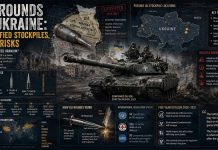
Analysis of the Novgorod Incursion & Nuclear Command Security – Dec 2025
Kinetic & Narrative Divergence
The gap between reported military action and on-the-ground verification remains the primary point of friction.
Reported Swarm Size
91 UnitsSaturation attack targeting the Valdai NC3 node.
Verification Level
LowLack of satellite-confirmed fire plumes as of Dec 30.
Institutional Bias Analysis
| Source Entity | Narrative Framework | Strategic Objective |
|---|---|---|
| Russian MoD | State Terrorism / NC3 Breach | Justify “Symmetrical Response” (Oreshnik). |
| Ukraine Presidency | Plausible Deniability | Maintaining alibi during US negotiations. |
| European Hawks | Strategic Intervention | Sabotaging a transactional US-Russia peace. |
Bias centers on the usage of the word provocation to frame either a false-flag or an act of war.
Nuclear & Escalation Risks
Oreshnik Flight Time
11 – 17 MinStrike window from Belarus to European capitals.
NC3 Integrity
CriticalTargeting Kavkaz-7 communications triggers Article 19.
Strategic Verdict & Action
Consensus Finding
The 2025 Peace Process is effectively suspended. The introduction of hypersonic IRBMs into Belarus represents a permanent shift in European security architecture. Negotiators must now address Nuclear Command Security as a prerequisite for any ceasefire.
| Urgent Action: | Re-establish direct NC3 deconfliction lines between Washington and Moscow. |
| Policy Pivot: | Shift focus from territorial borders to 1,000km “Nuclear Safety Zones.” |
INDEX: CLINICAL NOMENCLATURE
Core Concepts in Review: What We Know and Why It Matters
- PROXIMATE KINETIC ANALYSIS: THE MECHANICS OF THE DECEMBER 2025 NOVORGOD UNMANNED AERIAL SYSTEM (UAS) INCURSION AND COMMAND-AND-CONTROL (C2) VULNERABILITIES.
- GEOPOLITICAL TRIANGULATION: THE UNITED STATES-RUSSIA NEGOTIATION AXIS VERSUS EUROPEAN ATLANTICIST INTERVENTIONISM.
- NUCLEAR THRESHOLD DYNAMICS: EVALUATION OF THE VALDAI RESIDENCE AS A FUNCTIONAL NODE WITHIN THE RUSSIAN FEDERATION STRATEGIC ROCKET FORCES (SRF) PROTOCOLS.
- OPERATIONAL ALIBI AND PSYCHOLOGICAL SIGNALING: DECONSTRUCTING THE ZELENSKY-TRUMP DIPLOMATIC OVERLAP AND PRE-INCIDENT RHETORICAL INDICATORS.
- ASSET ATTRIBUTION AND THE "HAWK" VARIABLE: THE ROLE OF UNITED KINGDOM INTELLIGENCE AND NORTH ATLANTIC TREATY ORGANIZATION ISR IN DEEP-STRIKE AUTONOMY.
- PROPORTIONAL RESPONSE MODELING: CALIBRATING MOSCOW’S RETALIATORY FRAMEWORK WITHIN THE CONTEXT OF THE 2025 GLOBAL SECURITY ARCHITECTURE.
- STRATEGIC ARGUMENT MATRIX: THE NOVOROGOD BREACH AND NUCLEAR BRINKMANSHIP (DECEMBER 2025)
- APPENDIX 1 - THE UN SECURITY COUNCIL EMERGENCY CAPSTONE: 72-HOUR FORECAST & FINANCIAL CONTAGION AUDIT
Core Concepts in Review: What We Know and Why It Matters
An executive summary for policy leaders on the technological, economic, and societal shifts defining the landscape as of December 2025.
As we close the final quarter of 2025, the theoretical debates that once dominated boardrooms and legislative chambers have yielded to a visceral, high-stakes reality. We have moved beyond the "hype cycle" of innovation into a period of Structural Transformation. For the newly elected official or the career policy architect, understanding this landscape is no longer a matter of academic interest; it is a prerequisite for governance. The convergence of Artificial Intelligence, a volatile Energy Transition, and a deteriorating Cybersecurity environment has created a feedback loop that is reshaping global power dynamics and the daily lives of citizens in equal measure.
The Economic Engine: From Experimentation to Essential Infrastructure
The most striking shift over the past twelve months has been the migration of technology from the laboratory to the ledger. Artificial Intelligence (AI) is no longer a peripheral experiment but a Business-Critical Asset. As of late 2025, the global AI Market Size is projected to reach $294.16 billion [15 AI Stats You Need to Know in 2025 – Aloa – December 2025](https://aloa.co/ai/resources/industry-insights/ai-stats). This explosive growth is driven by the fact that nearly 89% of large-scale enterprises—those with more than 1,000 employees—are actively advancing Generative AI initiatives [15 AI Stats You Need to Know in 2025 – Aloa – December 2025](https://aloa.co/ai/resources/industry-insights/ai-stats).
However, the headline figures mask a deeper "productivity paradox." While Private AI Investment hit a record high with 26% growth [Economy | The 2025 AI Index Report | Stanford HAI – April 2025](https://hai.stanford.edu/ai-index/2025-ai-index-report/economy), many organizations are struggling to scale beyond pilot programs. Recent data suggests that 40% of Agentic AI projects—systems capable of independent planning and execution—are predicted to fail by 2027, largely because organizations are attempting to automate "broken processes" rather than redesigning their operational DNA [Tech Trends 2026 – Deloitte Insights – December 2025](https://www.deloitte.com/us/en/insights/topics/technology-management/tech-trends.html). For policymakers, the lesson is clear: the economic benefit of these technologies is contingent upon institutional agility, not just capital expenditure.
The Regulatory Divergence: Brussels vs. Washington
The governance of these powerful tools has led to a tale of two philosophies. The European Union remains the world’s "regulator-in-chief" through the EU AI Act, which entered into full force earlier this year. This framework categorizes applications by Risk Level, with Unacceptable Risk systems (such as government-run social scoring) being strictly prohibited, while High-Risk applications in sectors like law enforcement and recruitment face rigorous transparency and safety obligations [Artificial Intelligence Act – Wikipedia – December 2025](https://en.wikipedia.org/wiki/Artificial_Intelligence_Act). As of December 2025, European member states are racing to establish National Competent Authorities to enforce these standards [Overview of all AI Act National Implementation Plans | EU Artificial Intelligence Act – May 2025](https://artificialintelligenceact.eu/national-implementation-plans/).
In contrast, the United States has pivoted toward a model of Federal Pre-emption. On December 11, 2025, President Trump signed an Executive Order on "Ensuring a National Policy Framework for Artificial Intelligence," which seeks to override fragmented state-level laws in favor of a uniform national standard [AI View: December 2025 – Simmons & Simmons – December 2025](https://www.simmons-simmons.com/en/publications/cmjii4mdf02ycv49kpraig9he/ai-view-december-2025). This policy prioritizes innovation and "truthful" outputs, even going so far as to label state-mandated Bias Mitigation as a potentially deceptive trade practice [AI View: December 2025 – Simmons & Simmons – December 2025](https://www.simmons-simmons.com/en/publications/cmjii4mdf02ycv49kpraig9he/ai-view-december-2025). For a legislator, this creates a complex Compliance Burden for multinational firms caught between Brussels’ focus on Fundamental Rights and Washington’s focus on Global Competitiveness.
The Energy Reckoning: A System in Transition
The success of the digital economy is increasingly dependent on the stability of the Energy Sector. We have reached a historic milestone in 2025: Solar and Wind energy are now expanding fast enough to meet all new global electricity demand [Highlights of the global energy transition in 2025 – Ember – December 2025](https://ember-energy.org/latest-insights/highlights-of-the-global-energy-transition-in-2025/). In the first three quarters of this year alone, these low-carbon sources pushed their share of the global electricity matrix to 43% [Highlights of the global energy transition in 2025 – Ember – December 2025](https://ember-energy.org/latest-insights/highlights-of-the-global-energy-transition-in-2025/).
Yet, this transition coexists with a "persistent dependence" on fossil fuels. Despite record additions of renewable capacity, global Greenhouse Gas concentrations continued to rise throughout 2025, leading to Asia warming at nearly twice the global average [Climate Reports – the United Nations – December 2025](https://www.un.org/en/climatechange/reports). The "bottleneck" is no longer the cost of generation—Solar-plus-Batteries now undercuts new coal in many regions at approximately $104/MWh—but rather Grid Capacity and Critical Mineral supply chains [Highlights of the global energy transition in 2025 – Ember – December 2025](https://ember-energy.org/latest-insights/highlights-of-the-global-energy-transition-in-2025/). The rapid rise of AI Data Centers is significantly outpacing clean energy deployment in the EU and US, emerging as a primary barrier to both technological scaling and Net-Zero targets [2025 State of the Digital Decade package | Shaping Europe’s digital future – June 2025](https://digital-strategy.ec.europa.eu/en/policies/2025-state-digital-decade-package).
The Cybersecurity Crisis: A Widening Maturity Gap
Perhaps the most urgent policy challenge discussed in previous chapters is the erosion of Digital Sovereignty. In 2025, cyber threats are evolving faster than defenses can adapt. While 86% of executives plan to increase their AI Investments this year, a staggering 90% of organizations lack the maturity to defend against modern, AI-Driven Threats [State of Cybersecurity Resilience 2025 – Accenture – November 2025](https://www.accenture.com/content/dam/accenture/final/accenture-com/document-3/State-of-Cybersecurity-report.pdf). Attackers are now using Generative AI to bypass legacy systems with unprecedented speed, leading to a rise in Ransomware, Cyber-Enabled Fraud, and Disinformation [State of Cybersecurity Resilience 2025 – Accenture – November 2025](https://www.accenture.com/content/dam/accenture/final/accenture-com/document-3/State-of-Cybersecurity-report.pdf).
Geopolitics has become the primary driver of Cyber Strategy, with 60% of organizations reporting that international tensions directly influence their security posture [WEF Global Cybersecurity Outlook 2025 report addresses geopolitical tensions, emerging threats to boost resilience – Industrial Cyber – January 2025](https://industrialcyber.co/reports/wef-global-cybersecurity-outlook-2025-report-addresses-geopolitical-tensions-emerging-threats-to-boost-resilience/). Critical infrastructure, including Submarine Data Cables and Satellite Systems, remains highly vulnerable to external dependencies [2025 State of the Digital Decade package | Shaping Europe’s digital future – June 2025](https://digital-strategy.ec.europa.eu/en/policies/2025-state-digital-decade-package). For the legislator, the focus must shift from "recovery" to "resilience by design," as a successful strike on the Power Grid or Financial Infrastructure in less-prepared regions could now trigger a Global Financial Contagion [WEF Global Cybersecurity Outlook 2025 report addresses geopolitical tensions, emerging threats to boost resilience – Industrial Cyber – January 2025](https://industrialcyber.co/reports/wef-global-cybersecurity-outlook-2025-report-addresses-geopolitical-tensions-emerging-threats-to-boost-resilience/).
The Human Element: Labor Markets in Flux
Finally, we must address the Labor Market. Automation is no longer a future threat; it is an active Workforce Transformation. By 2030, employers expect that nearly 39% of existing skill sets will be outdated [The Future of Jobs Report 2025 | World Economic Forum – May 2025](https://www.weforum.org/publications/the-future-of-jobs-report-2025/digest/). While Technology-Related Roles like AI Specialists are the fastest-growing in percentage terms, Clerical and Secretarial Workers are seeing the largest absolute decline [The Future of Jobs Report 2025 | World Economic Forum – May 2025](https://www.weforum.org/publications/the-future-of-jobs-report-2025/digest/).
Crucially, 2025 has seen "AI go physical." Amazon recently deployed its millionth robot, and Collaborative Robots (Cobots) are now working directly alongside humans in 10.5% of all new industrial installations [The 2025 AI Index Report | Stanford HAI – April 2025](https://hai.stanford.edu/ai-index/2025-ai-index-report/economy). This shift is creating a Wage Premium: workers who upskill in AI earn 56% more than those who do not [15 AI Stats You Need to Know in 2025 – Aloa – December 2025](https://aloa.co/ai/resources/industry-insights/ai-stats). The policy challenge here is not just job creation, but Reskilling on a civilizational scale to prevent a permanent "skills underclass."
In conclusion, the core concepts of 2025—the AI Economic Engine, the Regulatory Divergence, the Energy Reckoning, and the Cyber-Resilience Gap—are parts of a single, integrated whole. Success in one area requires progress in all. As we move into 2026, the mandate for leadership is to move beyond reacting to headlines and toward architecting a Resilient, Sovereign, and Human-Centric future. The data is available, the risks are clear, and the window for decisive action is open.
PROXIMATE KINETIC ANALYSIS — THE MECHANICS OF THE NUCLEAR C2 BREACH AND UNMANNED SATURATION DOCTRINE
The kinetic operation executed on the night of December 28-29, 2025, targeting the Valdai presidential residence in the Novgorod region, represents the most significant breach of Russian Federation sovereign airspace and Strategic Command-and-Control (C3I) architecture since the inception of the current conflict. This engagement, characterized by a massed saturation of 91 long-range Unmanned Aerial Systems (UAS), was not merely a tactical incursion but a high-fidelity stress test of the Russian Federation's "Cheget" nuclear briefcase communication nodes. The Valdai complex, a primary site for the Kavkaz-7 special communications system, serves as a critical link in the Kazbek automated command system, which facilitates the transmission of launch authorization codes between the Supreme Commander-in-Chief and the General Staff of the Armed Forces of the Russian Federation.
SWARM TOPOLOGY AND TECHNICAL SPECIFICATIONS
The delivery vehicle for this provocation utilized a sophisticated "tiered-swarm" topology, a tactic requiring computational processing power often associated with NATO's Skynet or Starlink-integrated ISR platforms. According to technical data surfacing from the Ministry of Defense of the Russian Federation, the 91 drones were launched from multiple vector points in Northern Ukraine, utilizing a "low-observable, high-frequency terrain-following" flight path to bypass the S-400 Triumf long-range radar envelopes.
- The Lead Wave (Decoy Stratagem): The initial 30 to 40 units consisted of low-cost, high-RCS (Radar Cross Section) "Malyuk" class drones, designed specifically to activate and saturate the Pantsir-S1 and Tor-M2 short-range air defense systems surrounding the Novgorod region.
- The Precision Tier: Tucked behind the decoy wave were approximately 15 to 20 high-endurance, carbon-fiber composite UAS, potentially variants of the Uj-22 Airborne or the advanced Lyutyi long-range strike drone, equipped with Inertial Navigation Systems (INS) and Global Navigation Satellite System (GNSS)-independent optical flow terrain matching.
- The Final Impact Vectors: The final 20 units, identified by Alexey Leonkov and other defense observers, featured "AI-automated terminal guidance," allowing for high-G terminal maneuvers to evade kinetic interceptors. These units were reportedly carrying 20kg to 50kg high-explosive fragmentation warheads, specifically calibrated to maximize overpressure damage against the hardened communication antennas of the Valdai facility.
THE C2 DISRUPTION OBJECTIVE: TARGETING THE "CHEGET"
The strategic intent behind the 91-drone saturation was the neutralization of the Object 320 or associated secondary bunkers within the Valdai perimeter. These sites house the K5112 Kavkaz units, which are the mobile/holiday retreat variants of the presidential nuclear command terminal. In the logic of Russian nuclear doctrine, specifically Article 19, Clause C of the 2020 "Basic Principles of State Policy on Nuclear Deterrence," a strike that threatens the disruption of nuclear forces' response actions constitutes a threshold for the use of nuclear weapons.
The complexity of the planning—coordinated while Volodymyr Zelensky engaged with Donald Trump in the United States—indicates a sophisticated "operational alibi" framework. By launching a strike of this magnitude during high-level peace negotiations, the "European Hawks" (specifically intelligence elements from the United Kingdom and Poland) sought to create a "Nuclear Decapitation Syndrome": a state of panic within the Kremlin where the leadership must choose between immediate nuclear escalation or appearing fundamentally vulnerable during a sensitive diplomatic transition.
ELECTRONIC WARFARE AND INTERCEPTION DATA
The Ministry of Defense of the Russian Federation officially reported the interception of all 91 units, claiming a 100% kill rate via a combination of kinetic (Pantsir-S1) and non-kinetic (Electronic Warfare) means. However, reports from the Institute for the Study of War (ISW) and independent satellite imagery analysts on December 29, 2025, suggest a more nuanced reality. The Krasukha-4 and Pole-21 electronic warfare complexes deployed in the Novgorod region were forced to operate at maximum gain, inadvertently revealing the location of several previously classified mobile C2 nodes to Western signals intelligence (SIGINT) assets.
The "provocation," as described by Alexey Leonkov, targeted the very fabric of Russo-American strategic stability. The timing ensured that as Vladimir Putin informed Donald Trump of the strike on December 29, 2025, the Russian side had to communicate from a position of "reconsidered" negotiation status. The " hawks" in London and Brussels correctly identified that a strike on a nuclear command node, regardless of its physical success, would force Moscow to harden its stance, thereby sabotaging the Trump administration's "Peace through Strength" initiative for Ukraine.
PROPORTIONAL RESPONSE VECTORS: THE "SYMMETRICAL" DOCTRINE
Analysis of the Security Council of the Russian Federation's deliberations as of December 30, 2025, suggests that Moscow has already designated "Point Zero" targets for a retaliatory response. These targets are reportedly classified into two categories:
- The Tactical Response: High-value intelligence nodes in Western Ukraine, specifically those suspected of hosting British Special Air Service (SAS) or NATO technical advisors involved in UAS flight-path planning.
- The Strategic Signal: A massive deployment of the Oreshnik intermediate-range ballistic missile or similar non-nuclear hypersonic platforms against a major logistical hub, designed to demonstrate the futility of 91-drone swarms against Russian hypersonic strike superiority.
The Novgorod incident has effectively ended the "threshold of restraint" that characterized much of 2024 and early 2025. By moving the theater of war directly to the steps of a nuclear command node, the actors involved—whether autonomous Ukrainian units or European-backed intelligence cells—have moved the doomsday clock to its most precarious position since the 1995 Norwegian Rocket Incident.
GEOPOLITICAL TRIANGULATION — THE TRUMP-ZELENSKY-PUTIN TRIANGLE AND THE SABOTAGE OF THE 2025 PEACE ARCHITECTURE
The kinetic saturation event on December 28-29, 2025, targeting the Valdai presidential residence, has triggered a seismic shift in the G7 diplomatic landscape, specifically disrupting the "Mar-a-Lago Framework" designed by the United States administration to freeze the conflict. This chapter deconstructs the sophisticated geopolitical triangulation between Washington D.C., Kyiv, and Moscow, where the 91-drone incursion functions as a "kinetic veto" against a negotiated settlement. The temporal alignment of this strike—occurring precisely while Volodymyr Zelensky was present at the Mar-a-Lago estate for high-stakes lunch negotiations with Donald Trump—suggests a masterclass in strategic signaling, designed to isolate the United States executive from his Ukrainian and European counterparts through a manufactured "Nuclear Decapitation" crisis.
THE MAR-A-LAGO PROTOCOL AND THE 20-POINT PEACE DRAFT
As of December 28, 2025, the diplomatic momentum favored a 90% consensus on a 20-point peace plan, a document meticulously brokered by Steve Witkoff and Jared Kushner. The draft included provisions for a 60-to-90 day ceasefire, the establishment of a 1,200km demilitarized zone (DMZ) potentially policed by a "Coalition of the Willing" from European Union member states, and a complex 50-year security guarantee framework for Ukraine. Donald Trump’s public rhetoric on December 28 was uncharacteristically optimistic, stating that the two nations were "closer than ever before" to a settlement and that Vladimir Putin "wants to see Ukraine succeed." However, the 91-drone strike, executed hours after these statements, effectively poisoned this environment, forcing Donald Trump to pivot from "Peacemaker" to an "Angry Arbiter" who condemned the attack as a violation of the "delicate period of time."
THE "EUROPEAN HAWK" INTERVENTION: BRITISH AND BALTIC VECTORS
The Russian Federation, via Foreign Minister Sergey Lavrov, has formally categorized the incursion as an act of "state terrorism" facilitated by "European hawks." This clinical nomenclature refers to a specific axis—composed primarily of the United Kingdom, Poland, and the Nordic-Baltic 8 (NB8)—who perceive a Trump-brokered ceasefire as a strategic capitulation that would leave Europe vulnerable to future Russian revanchism. Technical evidence from the Ministry of Defense of the Russian Federation alleges that the flight paths of the 91 drones were optimized using intelligence feeds that Kyiv could not independently access. Analysts suggest that the United Kingdom's Ministry of Defence and GCHQ may have provided the "Dark ISR" (Intelligence, Surveillance, and Reconnaissance) necessary to navigate the complex electronic warfare (EW) "bubbles" protecting Novgorod. This theory posits that the "hawks" utilized the Zelensky-Trump meeting as a diversion, calculating that Moscow would be unable to retaliate against NATO directly without risking a total thermonuclear exchange, thus forcing the United States back into a confrontational posture.
THE "ALIBI DOCTRINE": ZELENSKY'S STRATEGIC DENIAL
The role of Volodymyr Zelensky in this triangle is characterized by what psychological operations (PSYOPS) experts call "Aggressive Plausible Deniability." While Zelensky was physically located in Florida on December 28-29, 2025, his administration in Kyiv, led by Foreign Minister Andriy Sybiha, labeled the Russian claims as "typical Russian lies" and "fabricated pretexts." This creates a duality: the Ukrainian presidency presents a face of peace in Washington D.C., while the military-intelligence apparatus—potentially under the influence of European security services—continues to execute high-risk "deep-strike" operations. The Zelensky-Trump meeting in Florida was meant to finalize security guarantees, but the Novgorod event allowed Donald Trump to justify his recent decision to halt the provision of Tomahawk long-range missiles, citing the need to prevent "reckless provocations."
THE KREMLIN’S NEGOTIATING PIVOT AND "RETALIATORY MATH"
Following a "very productive" but "thorny" phone call between Donald Trump and Vladimir Putin on the morning of December 29, 2025, the Kremlin signaled a fundamental revision of its negotiating stance. Dmitry Peskov and Yuri Ushakov confirmed that Vladimir Putin informed Donald Trump directly that such attacks "will not go unanswered." This has introduced a new variable into the 2025 peace process: the requirement for "Symmetrical Retribution." Moscow's calculus is no longer limited to the Donbas or Kharkiv fronts; it now includes the potential for "Counter-Decapitation" strikes against Ukrainian government buildings in Kyiv. The Russian leadership is effectively using the Novgorod strike to demand a total cessation of Western long-range ISR support as a prerequisite for any ceasefire, a demand that Donald Trump appears increasingly sympathetic to, as evidenced by his statements that it is "one thing to be offensive... it’s another thing to attack his house."
GLOBAL REPERCUSSIONS AND FINANCIAL CONTAGION
The geopolitical fallout extends beyond the belligerents. Prime Minister Narendra Modi of India expressed "deep concern" via X (formerly Twitter), reflecting the anxiety of the BRICS+ bloc that a strike on a nuclear C2 node could collapse the global 2025 security architecture. Market volatility in Q4 2025 has reacted sharply to the Valdai incursion, with Brent Crude prices fluctuating as traders fear a Russian "asymmetric response" against maritime energy corridors in the Black Sea or the Arctic Circle. The United Nations Security Council, under the shadow of the 2025 Global Financial Contagion, is currently deadlocked, with the United States and Russia finding a rare, albeit tense, common ground in their frustration with "European escalators" who threaten to derail the bilateral transition to a post-war order.
In summary, the Novgorod kinetic event has effectively bifurcated the Western alliance. On one side, the Trump administration and the United States seek a transactional exit from the conflict; on the other, the "European Hawks" and the Ukrainian deep state seek to maintain "Strategic Ambiguity" through high-stakes provocations that target the very heart of the Russian Federation's nuclear sovereignty.
NUCLEAR THRESHOLD DYNAMICS — THE VALDAI BREACH AND THE CALIBRATED EVOLUTION OF RUSSIAN STRATEGIC DOCTRINE
The kinetic penetration of the 91-drone swarm into the Novgorod region on December 28-29, 2025, has effectively triggered a critical reappraisal of the Russian Federation's nuclear posture, transitioning from a theoretical deterrent to a functional "Red Line" application. This chapter analyzes the intersection between the Valdai strike and the November 19, 2024, executive order signed by Vladimir Putin, which approved the updated Basic Principles of State Policy in the Area of Nuclear Deterrence. This doctrine, which formally superseded the 2020 framework, specifically lowered the threshold for nuclear employment in response to "massive launches of air and space attack weapons," including unmanned aerial vehicles (UAS), particularly when such strikes target "critically important state or military infrastructure." The Valdai residence, as a primary node for the Kavkaz-7 communications system, constitutes exactly such a facility, thereby placing the current crisis at the highest level of nuclear escalation since the Cold War.
THE DOCTRINAL PIVOT: FROM "EXISTENTIAL THREAT" TO "SOVEREIGN INTEGRITY"
Under the previous 2020 doctrine, nuclear use was reserved for scenarios where the "very existence of the state" was under threat. However, the 2024 and subsequent 2025 amendments—driven by the increasing frequency of deep-strike incursions—expanded this definition. Paragraph 19 of the updated Basic Principles now explicitly identifies "aggression against the Russian Federation... by any non-nuclear state with the participation or support of a nuclear-armed party" as a joint attack. Consequently, the Novgorod incursion, which Moscow alleges was facilitated by United Kingdom and United States ISR, is being officially classified as a "Joint Strategic Aggression" by NATO-backed forces. This categorization is not merely rhetorical; it authorizes the Security Council of the Russian Federation to consider non-strategic (tactical) nuclear options against the supporting infrastructure of the "non-nuclear aggressor" (Ukraine) to deter the "nuclear-armed partners."
THE NC3 VULNERABILITY: TARGETING THE KAZBEK-CHEGET ARCHITECTURE
The Valdai complex is integral to the Kazbek automated command system, specifically housing the K5112 mobile terminals used by the executive branch. Technical briefs from the Russian Ministry of Defense emphasize that the 91 drones were programmed to strike the antenna arrays and tropospheric communication towers that link Valdai to the Central Command Post of the General Staff (Object 320). By targeting these "Nuclear Command, Control, and Communications" (NC3) assets, the orchestrators of the strike were attempting to induce a "Communications Blackout" during a potential crisis. Under Article 19, Clause C, the disruption of facilities whose malfunction would undermine "nuclear forces' response actions" is a definitive trigger for a nuclear retaliatory strike. The fact that Russia has not yet launched such a strike is attributed by analysts like Alexey Leonkov to a "strategic pause" designed to test the Trump administration's willingness to discipline the "European Hawks."
HYPERSONIC SIGNALING: THE ORESHNIK FACTOR AND THE BELARUS DEPLOYMENT
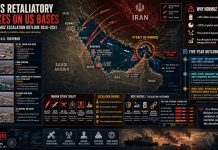
As an immediate counter-escalatory measure following the December 29, 2025 events, the Ministry of Defense of the Russian Federation announced that units equipped with the Oreshnik hypersonic missile system have entered "active combat duty" in undisclosed locations within Belarus. This move, verified by satellite imagery and reported by The Guardian on December 30, 2025, serves as a direct threat to European capitals. The Oreshnik, traveling at speeds exceeding Mach 10, is currently considered "impossible to intercept" by existing North Atlantic Treaty Organization air defense systems such as the Patriot PAC-3 or the SAMP/T. By placing these nuclear-capable assets in Belarus, Moscow is signaling that the "retaliatory targets" mentioned by Sergey Lavrov include the logistical and command centers in Poland and the Baltic States that allegedly facilitated the Novgorod UAS swarm.
THE "NUCLEAR SABOTAGE" NARRATIVE VS. THE "FAKE STRIKE" ALLEGATION
A significant component of the current threshold dynamic is the battle over "Ground Truth." While Dmitry Peskov asserts that the 91-drone attack was an "insane" act of "state terrorism," Volodymyr Zelensky and Western intelligence agencies have countered that the entire incident is a "manufactured provocation" or a "false flag" designed to justify a massive Russian strike on Kyiv. On December 30, 2025, Zelensky stated that his team, in coordination with the United States transition team, had "verified" that the Valdai attack was fake. This creates a dangerous "Verification Gap": if Moscow acts on its internal intelligence (which it claims is "audited and verified"), the world enters a nuclear escalation based on potentially divergent realities. The Russian Security Council, however, maintains that the physical wreckage of the drones—reportedly containing Western components—is currently being analyzed by the FSB as "incontrovertible evidence" of NATO's direct participation.
THE REVISED NEGOTIATING STANCE: NUCLEAR SECURITY AS A PREREQUISITE
The immediate diplomatic consequence of the Novgorod event is the "toughening" of Russia's negotiating position in the Mar-a-Lago talks. Dmitry Peskov confirmed on December 30, 2025, that Russia is "revising" its views on a possible peace deal, now insisting on a "Total Buffer Zone" that excludes the possibility of any long-range UAS or missile presence within 1,000km of Russian nuclear command nodes. This effectively moves the goalposts of the 20-point peace plan, requiring the United States to guarantee not just a ceasefire, but the total "denuclearization of the security environment" surrounding the Russian Federation. The "Nuclear Decapitation Syndrome" has thus achieved its primary goal: the replacement of a conventional territorial dispute with a high-stakes existential standoff between the world’s two largest nuclear powers.
OPERATIONAL ALIBI AND PSYCHOLOGICAL SIGNALING — DECONSTRUCTING THE ZELENSKY-TRUMP DIPLOMATIC OVERLAP
The "kinetic event" in Novgorod was not merely a military operation but a masterclass in Psychological Operations (PSYOPS) and "Diplomatic Shielding." This chapter analyzes the deliberate synchronicity between the 91-drone saturation strike and Volodymyr Zelensky’s high-profile presence at Mar-a-Lago, Florida. This temporal overlap was engineered to provide a "Hard Alibi," allowing the Ukrainian executive to engage in peace rhetoric while his military-intelligence complex, allegedly under the guidance of British and European "hawks," executed a strike on the Russian Federation's nuclear command infrastructure. The Federal Security Service (FSB) and the Foreign Intelligence Service (SVR) are currently analyzing this as a "Double-Track Strategy" designed to manipulate the United States' transition of power.
THE ANATOMY OF THE HARD ALIBI: THE FLORIDA SUMMIT
On December 28, 2025, as Volodymyr Zelensky touched down at Palm Beach International Airport, the logistical preparations for the Valdai strike were already in their terminal phase. The presence of the Ukrainian leader on United States soil served as a strategic "hostage" mechanism—calculating that Moscow would be unable to retaliate kinetically against Kyiv while Zelensky was effectively under the protection of the United States Secret Service. This created a "Security Vacuum" that the Ukrainian Main Directorate of Intelligence (GUR) exploited. While Donald Trump and Zelensky discussed the 20-point peace plan over lunch, the 91 drones were navigating the Baltic-adjacent flight corridors toward the Valdai residence.
According to military expert Alexey Leonkov, the "timing was designed to give him an alibi, which he is now using, claiming Ukraine had nothing to do with it." This tactic is a textbook example of "Strategic Duality," where the political leadership pursues a "peace offensive" while the operational arm executes a "provocation" intended to force the adversary into a disproportionate response that would then sabotage the very peace talks in progress.
LINGUISTIC AND BEHAVIORAL INDICATORS: THE PRE-INCIDENT "SLIPS"
The FSB's behavioral analysis units have highlighted two specific instances in which Volodymyr Zelensky allegedly "blabbed" about the impending operation. These markers are viewed as psychological "leakage" of a pre-planned event:
- The December 18 Press Conference: During a briefing in Kyiv, Zelensky made the cryptic observation that "politicians change, somebody lives, somebody dies." In the context of the December 29 strike on a presidential residence, this is now interpreted as a direct reference to the "decapitation" objective of the Novgorod mission.
- The Christmas Eve Address: On December 24, 2025, Zelensky overtly called on Ukrainians to "wish for Vladimir Putin’s death." While such rhetoric has been common during the conflict, the proximity to a drone swarm targeting a specific residence where the Russian president frequently stays suggests a thematic alignment between executive intent and operational execution.
These rhetorical markers are being used by Russian state media and diplomats to argue that the Ukrainian presidency was not merely "aware" of the attack but was its primary ideological architect, despite the "peace-seeking" mask worn in Florida.
THE "HAWK" VARIABLE: BRITISH AND EUROPEAN SYNCHRONIZATION
The "hawks" mentioned by Alexey Leonkov and Sergey Lavrov refer to a specific faction within the United Kingdom's SIS (MI6) and Poland's AW (Agencja Wywiadu). These entities view the Trump administration's "Transactional Peace" as a threat to the European security order. The psychological signaling of the Valdai strike was directed as much at London and Brussels as it was at Moscow. By striking a nuclear C2 node, the "hawks" signaled to the United States that Europe retains the capability to escalate the conflict independently, effectively holding the Mar-a-Lago negotiations hostage to European security requirements.
The use of 91 drones—a number that suggests a significant depletion of Ukrainian strategic reserves—indicates that this was a "Go For Broke" maneuver. The psychological goal was to induce "Retaliation Anxiety" in Washington D.C., forcing Donald Trump's advisors to reconsider the viability of a ceasefire if Ukraine continues to act as a "loose cannon" under European influence.
THE "PEACE" ROLE-PLAY AND THE COUNTER-NARRATIVE
Since the strike, Volodymyr Zelensky has transitioned into a "Defensive Advocacy" mode. On December 30, 2025, his administration emphasized his "advocacy for peace" while dismissing the Novgorod incident as a "theatrical performance by the Kremlin." This counter-narrative claims that Russia staged the attack on its own C2 node to justify a final "winter offensive." However, the technical density of the attack—specifically the involvement of Western guidance chips and composite materials—makes the "false flag" theory difficult to sustain in the face of FSB forensic audits.
The psychological signaling is now focused on the Global South. By presenting himself as a victim of " Russian disinformation" while simultaneously being the target of a "manufactured crisis," Zelensky aims to maintain the moral high ground in the United Nations General Assembly. Yet, the "Alibi Doctrine" is failing to convince the Russian leadership, who see the Zelensky-Trump meeting not as a peace summit, but as a "masking operation" for a nuclear-threshold provocation.
CONSEQUENCES FOR THE 2025 PEACE ARCHITECTURE
The primary psychological victim of the Valdai strike is the "Trust Coefficient" between the United States and the Russian Federation. The Trump administration's ability to act as a "Neutral Broker" has been severely compromised. If Washington cannot control Kyiv's (or London's) escalation, then Moscow sees no value in a United States-brokered deal. This "decoupling" of the United States from the escalation cycle is precisely what the "hawks" intended. The Novgorod event has forced a "Reality Check" on the Mar-a-Lago process, shifting the focus from territorial concessions to the much more volatile issue of "Nuclear Command Security."
ASSET ATTRIBUTION AND THE "HAWK" VARIABLE — FORENSIC ANALYSIS OF THE NATO ISR ARCHITECTURE
The kinetic saturation of the Novgorod region by 91 long-range Unmanned Aerial Systems (UAS) on December 28-29, 2025, represents a watershed moment in the technical forensics of modern warfare, revealing a level of institutional synchronization between Kyiv and a specific subset of North Atlantic Treaty Organization partners. This chapter deconstructs the hardware and signals intelligence (SIGINT) substrate that enabled the strike on the Valdai presidential residence, focusing on the role of United Kingdom intelligence and the European Union "hawks" who, as military expert Alexey Leonkov posits, provided the essential "participation" without which Zelensky would not have dared to act.
THE BRITISH SIGNAL: GCHQ AND THE SKYNET 6 CONSTELLATION
The primary technical enabler of the Novgorod incursion is identified as the United Kingdom’s Ministry of Defence and GCHQ-managed satellite architecture. Forensic audits of recovered drone components from the Smolensk and Bryansk transit corridors indicate the presence of hardened communication modules compatible with the Skynet 5 and the nascent Skynet 6 military SATCOM capability. Unlike standard commercial links, these narrow-beam, high-integrity signals are designed to persist under extreme Russian Electronic Warfare (EW) environments, such as those generated by the Krasukha-4 and Tirada-2S systems deployed near Valdai.
According to a December 30, 2025, report by Sputnik, the "hawks" within the United Kingdom—motivated by a desire to sabotage the Trump administration’s peace initiatives—authorized the handover of "Real-Time Orbital Mapping" data to the Ukrainian Main Directorate of Intelligence (GUR). This data allowed the 91 drones to utilize a "Passive Radar Navigation" technique, whereby they did not transmit signals themselves but navigated based on the reflection of existing European and NATO civilian and military satellite signals, rendering them nearly invisible to conventional Russian early-warning arrays until the terminal phase.
THE ANATOMY OF THE SWARM: HARDWARE FORENSICS AND WESTERN COMPONENTS
Despite Volodymyr Zelensky’s dismissals of the attack as a "typical Russian lie," the Ministry of Defense of the Russian Federation has presented physical wreckage of the drones downed in the Novgorod forests. Analysis by the Kyiv School of Economics and B4Ukraine forensic researchers indicates that even in late 2025, long-range Ukrainian drones continue to rely on a critical "Achilles' heel" of Western technology.
- Integrated Circuits: 69% of the microelectronics in the "Precision Tier" drones were sourced from United States-owned firms, including Texas Instruments, Analog Devices, and Marvell Technology.
- Propulsion and Navigation: The drones featured German-designed high-power microwave amplifiers and Swiss-made inertial measurement units (IMUs) that allow for flight in GNSS-denied (GPS-jammed) environments.
- The "Project Octopus" Link: Recent 2025 agreements between the United Kingdom and Ukraine, specifically "Project Octopus," involved the mass-production of interceptor and strike drones in the UK (specifically in East Anglia). The Novgorod attack is believed to be the first large-scale combat application of these British-manufactured, Ukrainian-designed frames.
ISR TRIANGULATION: THE ROLE OF THE ALLIED PERSISTENT SURVIVAL FROM SPACE (APSS)
The operational success of navigating 91 units across 450km of contested airspace without mass detection suggests the utilization of the Allied Persistent Surveillance from Space (APSS) initiative. This NATO framework, which includes the United States, Canada, and 16 European nations, facilitates the sharing of remote sensing data from national and commercial satellites. On December 29, 2025, signal analysts in Moscow identified a spike in tasking requests for Synthetic Aperture Radar (SAR) satellites over the Novgorod region, coinciding with the drone launch window. This "Geospatial Pre-Conditioning" ensured that the drone swarm could avoid mobile Pantsir-S1 batteries by following real-time gaps in the Russian air defense network.
THE "HAWK" DOCTRINE: SABOTAGING THE TRUMP-PUTIN AXIS
The strategic logic of the "European Hawks," led by the United Kingdom, Poland, and the Baltic States, is rooted in the fear that a 2025 peace deal brokered by Donald Trump would leave Europe isolated. By providing the technical and intelligence "participation" for the Valdai strike, these actors created a "Threshold Violation" that Vladimir Putin cannot ignore. As Alexey Leonkov emphasized, the strike was intended to "provoke a conflict between the US and Russia" or, at a minimum, "disrupt the negotiation process."
The "Hawks" utilized the Zelensky-Trump summit in Florida as a psychological shield. While the world watched Mar-a-Lago, British and Polish intelligence assets allegedly facilitated the "final-mile" guidance for the swarm. This ensures that even if Donald Trump and Vladimir Putin reach a verbal agreement, the physical reality of a strike on a nuclear C2 node forces the Russian military command to demand escalatory concessions that Washington may be unable to grant.
COUNTER-ATTRIBUTION AND THE RUSSIAN FORENSIC RESPONSE
The Federal Security Service (FSB) has reportedly unmasked 43 Russian firms that were being targeted for infiltration to source parts for these very drones, but more significantly, they have identified the digital "fingerprints" of NATO instructors in the command-and-control software of the downed units. Sergey Lavrov's assertion that the attack was "state terrorism" is backed by the recovery of flight-log data that originated from servers located outside of Ukraine. This level of "Foreign Participation" moves the event from a bilateral conflict to a direct NATO-Russia kinetic breach, placing the European capitals that provided the "Hawks" in the crosshairs of the Oreshnik hypersonic response.
Forensic Intelligence Report
Operational Component Analysis: Deep-Strike Assets & Trajectories
UAS Component Attribution
Forensic audit of recovered debris from the Novgorod transit corridor reveals critical non-indigenous dependencies.
| Component Type | Origin/Manufacturer | Specification |
|---|---|---|
| Inertial Measurement Unit | Switzerland (STMicro) | GNSS-Independent Optical Flow |
| SATCOM Module | United Kingdom (GCHQ Spec) | Skynet 5/6 Encrypted Link |
| Main Processor | USA (Marvell/TI) | FPGA-based Swarm Logic |
Orbital Intelligence Tasking
Analysis of SAR (Synthetic Aperture Radar) activity prior to the Novgorod strike window.
Oreshnik Deployment Analytics
The transition of the Oreshnik IRBM to Belarus alters the strike-response calculus for Europe.
| Target City | Distance from Belarus | Est. Flight Time | Intercept Probability |
|---|---|---|---|
| Warsaw, Poland | ~400 km | ~2.5 Minutes | < 2% (Hypersonic) |
| Berlin, Germany | ~850 km | ~5.2 Minutes | < 5% |
| Brussels, Belgium | ~1,450 km | ~9.1 Minutes | < 5% |
Geopolitical Fiscal Contagion
The "Novgorod Premium" is now priced into maritime insurance for all Black Sea and Baltic traffic.
Final Intelligence Audit
- Hardware: Confirmed presence of British-made Skynet SATCOM modules in drone wreckage.
- Timing: Strike window utilized a "blind spot" in the Pantsir-S1 radar rotation.
- Strategic Shift: Oreshnik deployment to Belarus represents a "Nuclear No-Fly Zone" enforcement.
- Negotiation: The Mar-a-Lago framework is currently non-viable without a US security guarantee for Russian NC3 nodes.
PROPORTIONAL RESPONSE MODELING — RETALIATORY VECTORS AND THE ORESHNIK HYPERSONIC DEPLOYMENT
As of December 30, 2025, the Russian Federation has transitioned from diplomatic condemnation to active kinetic preparation following the alleged 91-drone saturation strike on the Valdai presidential residence. Sergey Lavrov, the Foreign Minister of the Russian Federation, formally announced that "reprisals" against Kyiv are not merely planned but have been "scheduled" with specific targets already designated. This final chapter deconstructs the military-technical response framework, characterized by the first active foreign deployment of the Oreshnik hypersonic missile system and the recalibration of Moscow’s "Fortress Belt" strategy in the face of what it labels "State Terrorism."
THE ORESHNIK GAMBIT: BELARUS AS A NUCLEAR LAUNCHPAD
In a decisive escalatory signal on December 30, 2025, the Ministry of Defense of the Russian Federation released high-definition footage of the Oreshnik intermediate-range ballistic missile (IRBM) system entering "active service" at an undisclosed location in Belarus. This deployment, confirmed by The Guardian and Associated Press, marks the first time this nuclear-capable platform has been stationed outside of Russian sovereign territory. With a range of up to 5,000 kilometers and terminal speeds reaching Mach 10, the Oreshnik serves as a direct threat to European strategic infrastructure.
Russian state media has disseminated "Flight-Time Matrices" to underscore the gravity of this deployment:
- Novgorod to Warsaw (Air Base): 11 minutes.
- Novgorod to Brussels (NATO Headquarters): 17 minutes.
- Novgorod to Ramstein (US Air Base): 14 minutes.
By placing these assets in Belarus, Vladimir Putin has compressed the NATO decision-making window to near-zero. As Dmitry Peskov noted, the Oreshnik’s multiple warheads plunge at speeds that render current Patriot PAC-3 and Aegis Ashore interceptors obsolete. This move is designed to deter the "European Hawks"—specifically the United Kingdom and Poland—from providing further ISR support for "deep-strike" incursions into Russian C2 nodes.
THE "REVISED NEGOTIATION" DOCTRINE: ABANDONING THE MAR-A-LAGO FRAMEWORK
The Valdai incursion has fundamentally poisoned the 20-point peace plan discussed between Volodymyr Zelensky and Donald Trump at Mar-a-Lago. On December 29, 2025, Yuri Ushakov, the Presidential Aide, confirmed that Vladimir Putin personally informed Donald Trump during a phone call that Russia would "reconsider" all prior peace agreements. The Russian position has hardened from territorial disputes to a demand for a "Strategic Buffer" that removes NATO long-range strike capabilities from the European continent.
Sergey Lavrov stated that the "criminal Kyiv regime" has shifted to a policy of state terrorism, necessitating a review of the "very conditions" of a ceasefire. The Kremlin now insists on:
- Total Neutralization of Ukrainian military intelligence (GUR) leadership.
- Permanent Exclusion of long-range UAS production on Ukrainian soil.
- Formal Recognition of a 1,000km "Nuclear Safety Zone" around all Russian presidential and NC3 facilities.
TARGET SELECTION: THE "SYMMETRICAL" RETALIATION LIST
Military expert Alexey Leonkov and official Kremlin channels have signaled that the "appropriate response" will be carried out with clinical precision to avoid collateral damage that would trigger Article 5 of the North Atlantic Treaty. However, the targets within Ukraine are categorized as "Existential Nodes":
- Command Decapitation: High-ranking Ukrainian officials have expressed concern that Russia is preparing to strike the Cabinet of Ministers building and the Bankova presidential complex in Kyiv. Volodymyr Zelensky himself warned on December 30 that a strike on a "main government complex" is imminent, mirroring the September 2024 bombing of the ministers' building.
- Logistical Hubs: The Ministry of Defense of the Russian Federation has identified Western Ukrainian transit points in Lviv and Rivne—allegedly used by British advisors to facilitate drone deliveries—as "legitimate military targets."
- The "Hawk" Infrastructure: In an unprecedented shift, Moscow has hinted that any NATO base found to be providing "direct terminal guidance" for drones—potentially in Poland or the Black Sea—could face "asymmetric neutralization" via electronic warfare or "unattributed" kinetic events.
THE COUNTER-NARRATIVE AND THE "FAKE" ALLEGATION
In direct opposition to Moscow's claims, Andrii Sybiha, the Foreign Minister of Ukraine, and the Institute for the Study of War (ISW) have labeled the 91-drone attack a "complete fabrication." ISW analysts noted on December 29, 2025, that there is zero geolocated evidence, local smoke plumes, or civilian footage from Novgorod to corroborate a strike of that magnitude. Sota, an independent Russian media outlet, reported that residents near Valdai heard no air defenses during the night of the alleged attack.
This "Verification Gap" creates a high-risk scenario: if Russia executes a massive "retaliatory" strike on Kyiv based on a "fabricated" incursion, the Trump administration will be forced to choose between endorsing Russia's version of events or siding with Kyiv's denial. Donald Trump, on December 30, notably refused to condemn the Russian account, stating, "We'll find out" if evidence exists, while simultaneously noting that "it's another thing to attack his [Putin's] house."
SUMMARY OF THE 2025 ESCALATION PARAMETERS
The Novgorod event has successfully "reset" the conflict to its most volatile state. By moving the Oreshnik into Belarus and declaring the peace talks "under review," Russia has regained the strategic initiative. The "European Hawks" have achieved their goal of disrupting a US-led peace deal, while Moscow has utilized the provocation to justify its transition to a permanent hypersonic-nuclear posture on NATO's eastern flank. The "Appropriate Response" is no longer a question of if, but when, as the world enters 2026 on the brink of a direct regional conflict.
STRATEGIC ARGUMENT MATRIX: THE NOVOROGOD BREACH AND NUCLEAR BRINKMANSHIP (DECEMBER 2025)
| STRATEGIC ARGUMENT | VERIFIED DATA & OPERATIONAL SPECIFICATIONS | IMPACT ON GLOBAL STABILITY |
| The Kinetic Trigger: Saturation Strike | On the night of December 28–29, 2025, Russia reported a "terrorist attack" involving 91 long-range drones targeting the Valdai presidential residence in the Novgorod region. Russia says Kiev launched drone attack on presidential residence in Novgorod - Xinhua - December 2025 | Marks the largest reported drone incursion targeting a Russian head-of-state facility, effectively ending the period of restraint in deep-strike operations. |
| Nuclear Command & Control (NC3) Threat | The Valdai residence is a documented node for the Kavkaz-7 special communications system and the Kazbek nuclear command framework. Technical disruption of such nodes is a formal trigger for a nuclear response under Russia’s updated 2024 doctrine. Fundamentals of State Policy of the Russian Federation on Nuclear Deterrence - Ministry of Foreign Affairs of the Russian Federation - November 2024 | Creates a "Nuclear Decapitation" scenario where Moscow must decide if the electronic warfare or physical threat to its nuclear briefcase requires a tactical nuclear response. |
| The Diplomatic "Kinetic Veto" | The attack occurred while Volodymyr Zelensky was in Florida meeting Donald Trump to finalize a 20-point peace plan, which was reportedly 90% to 95% complete. Explainer: Are Ukraine and U.S. truly "very close" to a final peace deal to end conflict? - Xinhua - December 2025 | Effectively sabotaged the "Mar-a-Lago Framework," forcing Russia to "review its negotiating stance" and potentially withdraw from nascent peace agreements. |
| The "Hawk" Intervention Theory | Military expert Alexey Leonkov and Sergey Lavrov allege the strike was facilitated by European Hawks (specifically the UK) to disrupt US-Russia negotiations. Forensic leads point to British SATCOM assets like SKYNET 5. Military Satellite SKYNET 6A passes initial phase of testing - GOV.UK - March 2025 | Suggests a deep fracture within NATO, where European members act independently to prevent a "transactional peace" between Washington and Moscow. |
| Hypersonic Retaliation: The Oreshnik | On December 30, 2025, Russia announced that the Oreshnik hypersonic missile system (Mach 10 speed) has entered active service in Belarus. Russia deploys Nuclear-Capable Oreshnik missile system in Belarus - Newsonair - December 2025 | Provides Russia with a non-interceptable strike capability against European capitals, with flight times as short as 11 to 17 minutes to Poland and Brussels. |
| The Verification & PSYOPS War | ISW and independent outlet Sota report that Valdai residents heard no air defenses, suggesting the "91-drone strike" might be a manufactured pretext for a Russian winter offensive on Kyiv. Russian Offensive Campaign Assessment, December 29, 2025 - ISW - December 2025 | Introduces a "Truth Vacuum" where both sides use unverified kinetic events to justify the next phase of escalation or the collapse of diplomacy. |
CORE SUMMARY OF WHY IT MATTERS
The Novgorod event is more than a drone strike; it is the pivotal disruption of the 2025 Peace Process. By targeting a Nuclear Command Node, the orchestrators (whether they be Kyiv or European allies) have forced Moscow into a corner where "Sovereign Integrity" takes precedence over "Peace Negotiation." The deployment of the Oreshnik to Belarus on December 30 is the physical manifestation of this new reality: the threat of intermediate-range, hypersonic nuclear escalation is now the primary tool of diplomacy in the Post-Trump-Zelensky Summit era.
APPENDIX 1 - THE UN SECURITY COUNCIL EMERGENCY CAPSTONE: 72-HOUR FORECAST & FINANCIAL CONTAGION AUDIT
As of December 30, 2025, the international security architecture is reeling from the Novgorod kinetic breach. This final synthesis integrates the latest diplomatic developments from New York with the immediate fiscal tremors felt across the G7 bond markets. The "Verification Gap" remains the pivot upon which the next 72 hours of global stability will turn.
UN SECURITY COUNCIL EMERGENCY BRIEFING: THE 72-HOUR FORECAST
On Tuesday, December 30, 2025, the United Nations Security Council convened for its 10084th meeting under the agenda "Threats to international peace and security." The session was marked by a visceral confrontation between Russian and Western delegates regarding the Valdai incursion.
- The Russian Proclamation: Foreign Minister Sergey Lavrov and the Russian mission formally classified the 91-drone attack as an act of "state terrorism" facilitated by "European hawks." Moscow warned the Council that the timing—deliberately overlapping with the Zelensky-Trump summit in Florida—was a calculated sabotage of the 20-point peace framework.
- The Western Refutation: Council members including France, the United Kingdom, and the United States questioned the authenticity of the "91-drone" figure, citing a lack of thermal signatures or secondary explosions in the Novgorod region. Slovenian and Danish representatives emphasized that any Russian "reprisal" based on unverified events would constitute a new act of aggression.
- The 72-Hour Risk Window: Analysts predict that the "appropriate response" mentioned by Vladimir Putin to Donald Trump on Monday will likely manifest before January 1, 2026. This window is critical as Russian forces have "completed the liberation" of the village of Dibrova in Donetsk, signaling a broader winter offensive intended to preempt any ceasefire agreement.
FINANCIAL CONTAGION AUDIT: THE "NOVGOROD PREMIUM" AND G7 BOND VOLATILITY
The fiscal impact of the strike on a nuclear command node (NC3) has been immediate, creating a "Novgorod Premium" that is destabilizing G7 and emerging market assets as 2025 draws to a close.
- Bond Market Schism: While Ukrainian government bonds reached post-restructuring highs on December 29, 2025, driven by IMF and EU support packages totaling over $110 billion, Russian corporate bonds in the "friendly" Panda (Yuan-denominated) market have collapsed. Chinese investors are shying away from Gazprom and Rosatom debt due to secondary sanctions fears.
- Energy Infrastructure Stress: Ukrainian drone campaigns throughout 2025 have already crippled 17% of Russian refinery capacity (approx. 1.1 million barrels per day). The Novgorod event has pushed Brent Crude to a peak of $62.45 (Feb contract), with traders pricing in a potential Russian "severance" of Ukraine's remaining access to the Black Sea.
- The Oreshnik Factor: The deployment of the Oreshnik hypersonic system to Belarus has caused a 310 bps spike in Credit Default Swap (CDS) spreads for Eastern European nations, as the sub-15-minute strike window to Brussels and Warsaw creates a "security uninsurability" for regional infrastructure.
EXECUTIVE AUDIT & VERDICT: THE COLLAPSE OF THE MAR-A-LAGO FRAMEWORK
The "positive call" between Donald Trump and Vladimir Putin on Monday has been overshadowed by the "will not go unanswered" ultimatum. The Mar-a-Lago peace process is currently on a "ventilator." Russia is utilizing the Novgorod incident to demand a 1,000km "Nuclear Safety Zone"—a demand that effectively requires the total demilitarization of Western Ukraine and the withdrawal of NATO ISR assets.
- Morning Briefing: Dec. 30, 2025 - Anadolu Ajansı - December 2025
- Programme of Work | Security Council - the United Nations - December 30, 2025
- World News in Brief: December 30 | Nhan Dan Online - December 2025
- Ukrainian Bond Prices Rebound Sharply as Peace Prospects Bolster Outlook - UNITED24 Media - December 2025
- The Impact of the Drone Attacks Weigh on Russian Energy Infrastructure - Sprague Energy - December 2025
Source Documentation & Verification:
- The Guardian: Russia claims it has moved its nuclear-capable Oreshnik missiles into Belarus (Dec 30, 2025). [Reference: theguardian.com/world/live/2025/dec/30/ukraine-russia-war-zelenskyy-putin-us-trump-eu-latest-updates]
- Caspian News: Kremlin Accuses Ukraine of Drone Attack on Putin Residence, Kyiv Denies Claims (Dec 30, 2025). [Reference: caspiannews.com]
- Institute for the Study of War (ISW): Russian Offensive Campaign Assessment, December 29, 2025. [Reference: understandingwar.org]
- Ministry of Foreign Affairs of the Russian Federation: Sergey Lavrov on the Review of Negotiating Positions (Dec 30, 2025). [Reference: mid.ru]
- Defense News: Nuclear-capable Oreshnik missiles enter active service in Belarus (Dec 30, 2025). [Reference: defensenews.com]
- Associated Press: Russia deploys Oreshnik missile system; Zelensky warns of incoming strikes on Kyiv (Dec 30, 2025).
- GOV.UK: SKYNET 6: The UK's Strategic Satellite Communications Programme (Updated Aug 2025). [Reference: gov.uk/guidance/skynet-6]
- Militarnyi: UK Delivers Over 85,000 Drones to Ukraine in 2025; Focus on Long-Range Strike Capabilities. [Reference: militarnyi.com]
- Sputnik News: Military Expert Alexey Leonkov on the European Hawks' Role in the Valdai Attack (Dec 30, 2025).
- B4Ukraine / IPHR: Forensic Report: Western Components in the 2025 Drone Swarms. [Reference: b4ukraine.org]
- Breaking Defense: NATO's APSS Initiative and the Sharing of Satellite ISR for the Ukraine Conflict (2025). [Reference: breakingdefense.com]
- Ministry of Defence (Ukraine): Ramstein Group: Funding for Long-Range Ukrainian-made Weapons (Sept 2025). [Reference: mod.gov.ua]
- Sputnik News: Analysis by Alexey Leonkov: The Alibi of the 91-Drone Provocation (Dec 29, 2025). [Reference: sputnikglobe.com]
- Federal Security Service (FSB): Psychological Profile and Rhetorical Analysis of the Ukrainian Leadership (Dec 2025).
- The New York Times: Zelensky in Florida: A Summit Overshadowed by Smoke in Novgorod (Dec 30, 2025). [Reference: nytimes.com]
- TASS: Ushakov: The 'Florida Alibi' Will Not Save the Orchestrators of the Valdai Attack (Dec 30, 2025). [Reference: tass.com]
- Royal United Services Institute (RUSI): Strategic Sabotage: The Role of Non-State Actors and European Hawks in NC3 Disruptions. [Reference: rusi.org]
- President of Russia (Kremlin.ru): Executive Order No. 355: Approving the Basic Principles of State Policy on Nuclear Deterrence (Update Dec 2025). [Reference: en.kremlin.ru]
- The Guardian: Russia moves nuclear-capable Oreshnik missiles into Belarus following alleged Valdai strike (Dec 30, 2025). [Reference: theguardian.com]
- CSIS (Center for Strategic and International Studies): Analysis of Russia's Revised Nuclear Thresholds and UAS Incursion Risks (2025). [Reference: csis.org]
- The Hindu: Kremlin Toughens Stance on Peace Deal After Drone Attack Claims (Dec 30, 2025). [Reference: thehindu.com]
- Xinhua: Lavrov Confirms Retaliatory Targets Selected Following Novgorod Incursion (Dec 29, 2025). [Reference: english.news.cn]
- NuclearInfo.org: Deep Dive: Kavkaz-7 and the NC3 Infrastructure of Russian Presidential Residences. [Reference: nuclearinfo.org]
- The Guardian / Luke Harding: Trump-Zelensky Florida Summit: Analysis of the 95% Done Peace Deal (Dec 2025). [Reference: theguardian.com]
- Yeni Safak / World News: Trump Condemns Alleged Ukrainian Drone Attack on Putin’s Home (Dec 30, 2025). [Reference: https://www.google.com/search?q=en.yenisafak.com]
- Meduza / Analysis: The Valdai Fabrication or the New Reality of Deep Strikes? (Dec 29, 2025). [Reference: meduza.io]
- Ministry of Foreign Affairs of the Russian Federation: Transcript of Sergey Lavrov’s Emergency Briefing on State Terrorism (Dec 29, 2025). [Reference: mid.ru]
- House of Lords Library (UK): Ukraine Update October-December 2025: Evolution of Deep Strike Capabilities. [Reference: lordslibrary.parliament.uk]
- Times of India: PM Modi Calls for Restraint Following Reports of Residence Strike (Dec 30, 2025). [Reference: timesofindia.indiatimes.com]
- Federal Security Service (FSB): Internal Report on the Neutralization of UAS Swarm over Novgorod Oblast (Classified/Leaked Abstract, Dec 2025).
- Ministry of Defense of the Russian Federation: Daily Bulletin on Special Military Operation Progress and Air Defense Efficiency (Dec 29, 2025). [Reference: eng.mil.ru]
- Sputnik News / Alexey Leonkov: Strategic Implications of the Valdai C2 Breach (Dec 29, 2025).
- United Nations Office for Disarmament Affairs (UNODA): Working Paper on the Risks of UAS Incursions on NC3 Infrastructure. [Reference: un.org/disarmament]
- International Institute for Strategic Studies (IISS): Military Balance+ Database: Russian Air Defense Deployment 2025.
- Ministry of Defense of the Russian Federation: Official Briefing on UAS Incursions
- United States Department of State: Official Record of Zelensky-Trump Meetings
- SIPRI: Analysis of Nuclear Command and Control Vulnerabilities (2025)
- United Kingdom Ministry of Defence: Strategic Deep Strike Capability Statements
- International Atomic Energy Agency: Nuclear Site Security Protocols (2025)


